
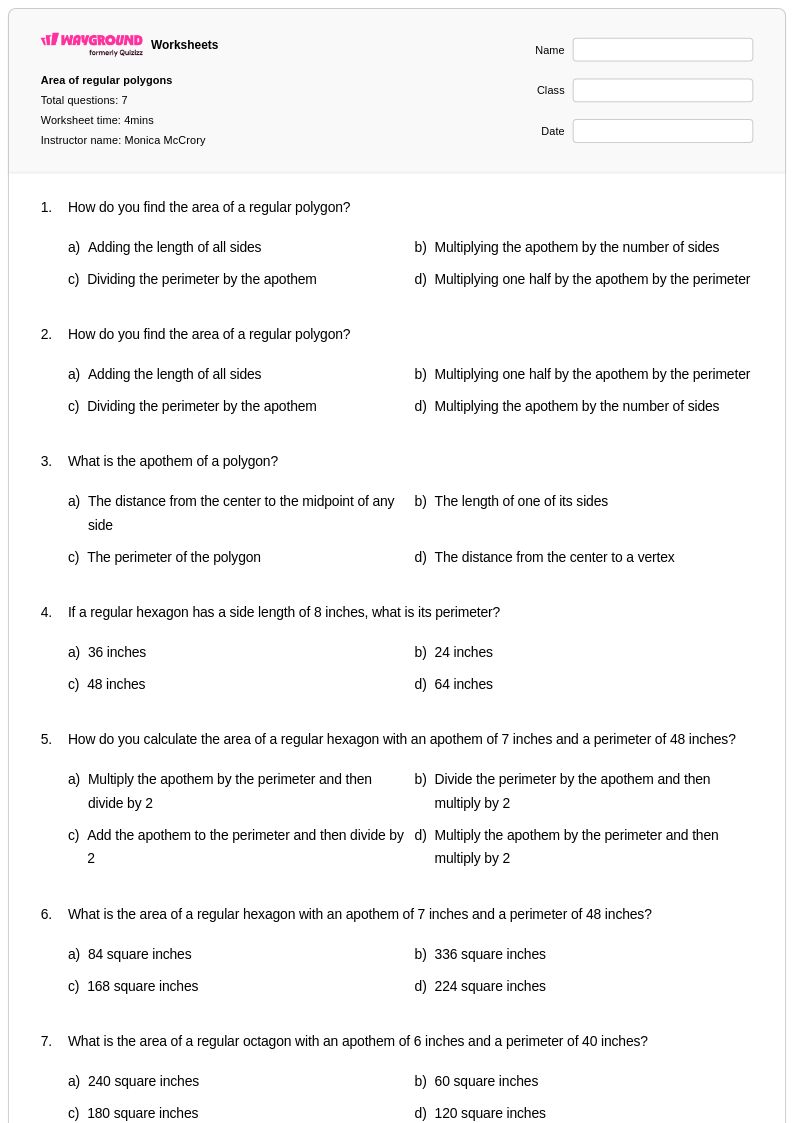
7 P
7th
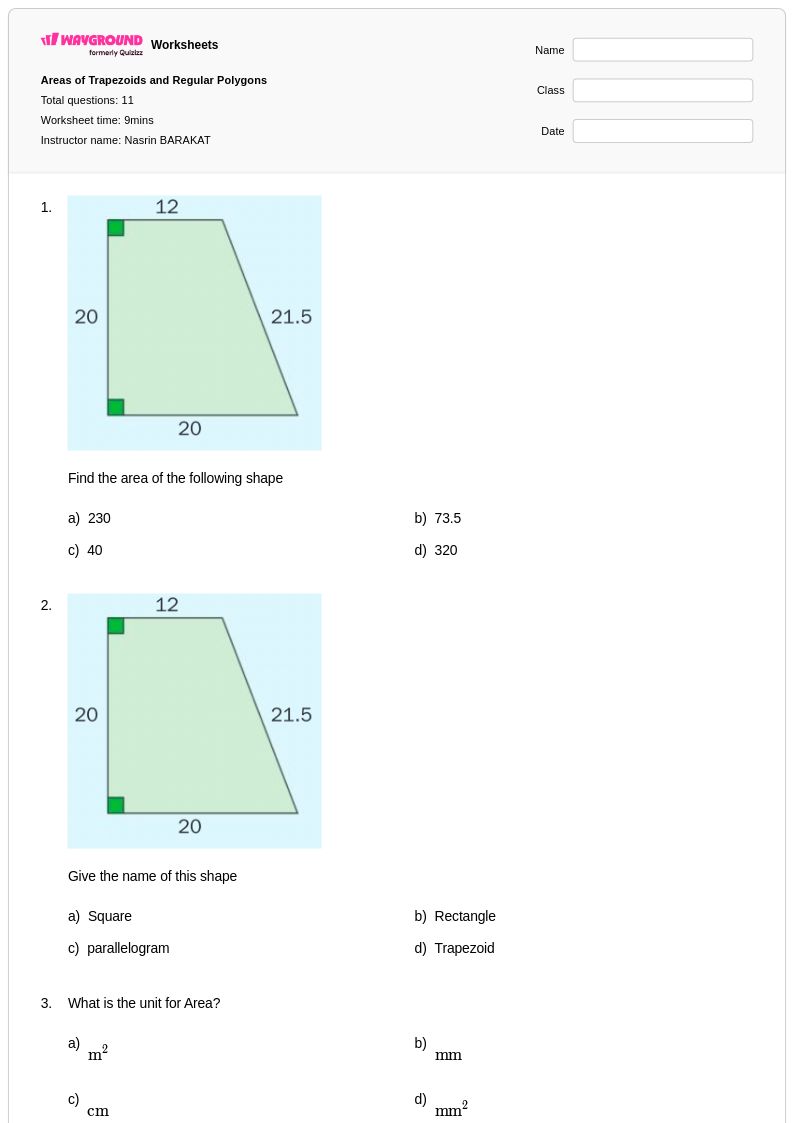
11 P
7th
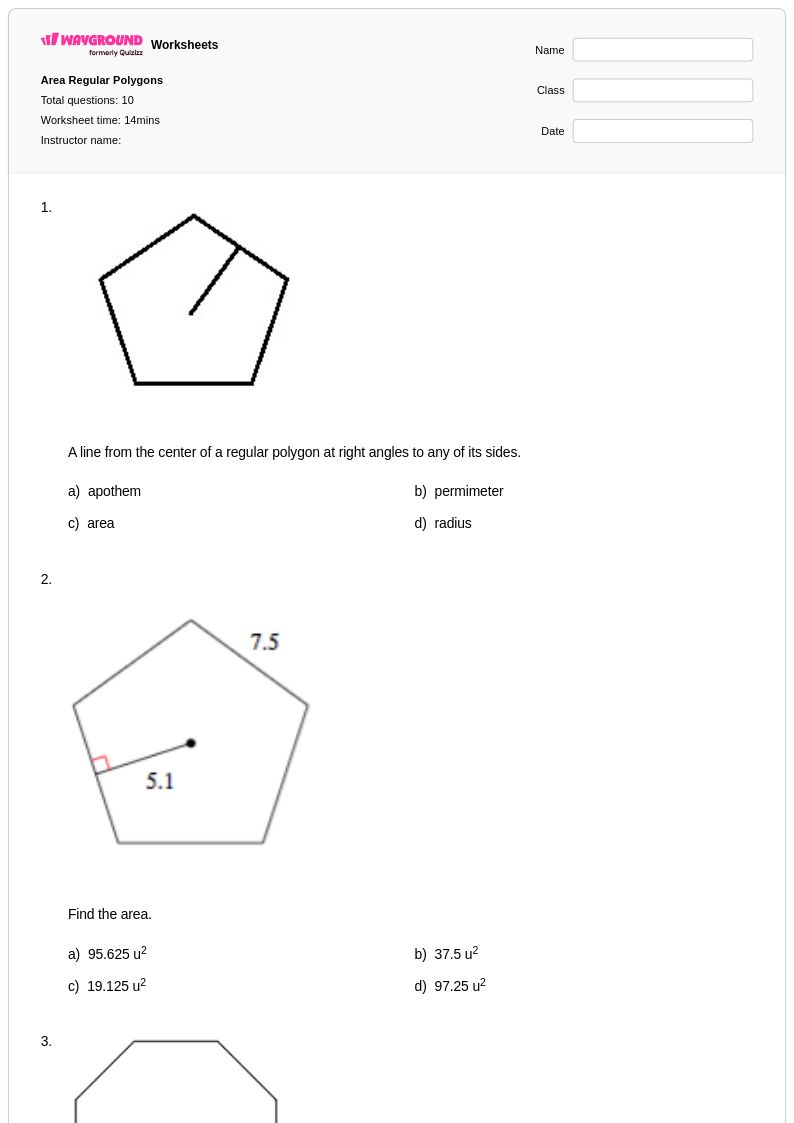
12 P
7th
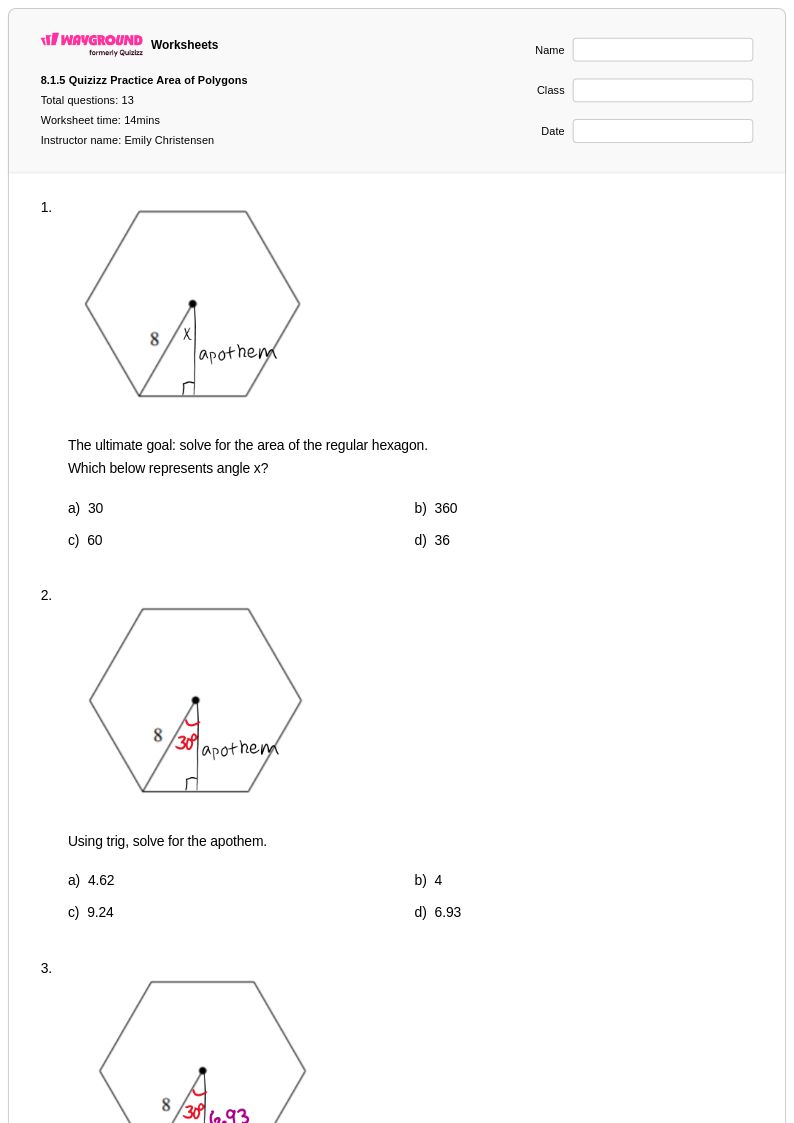
13 P
7th - 12th
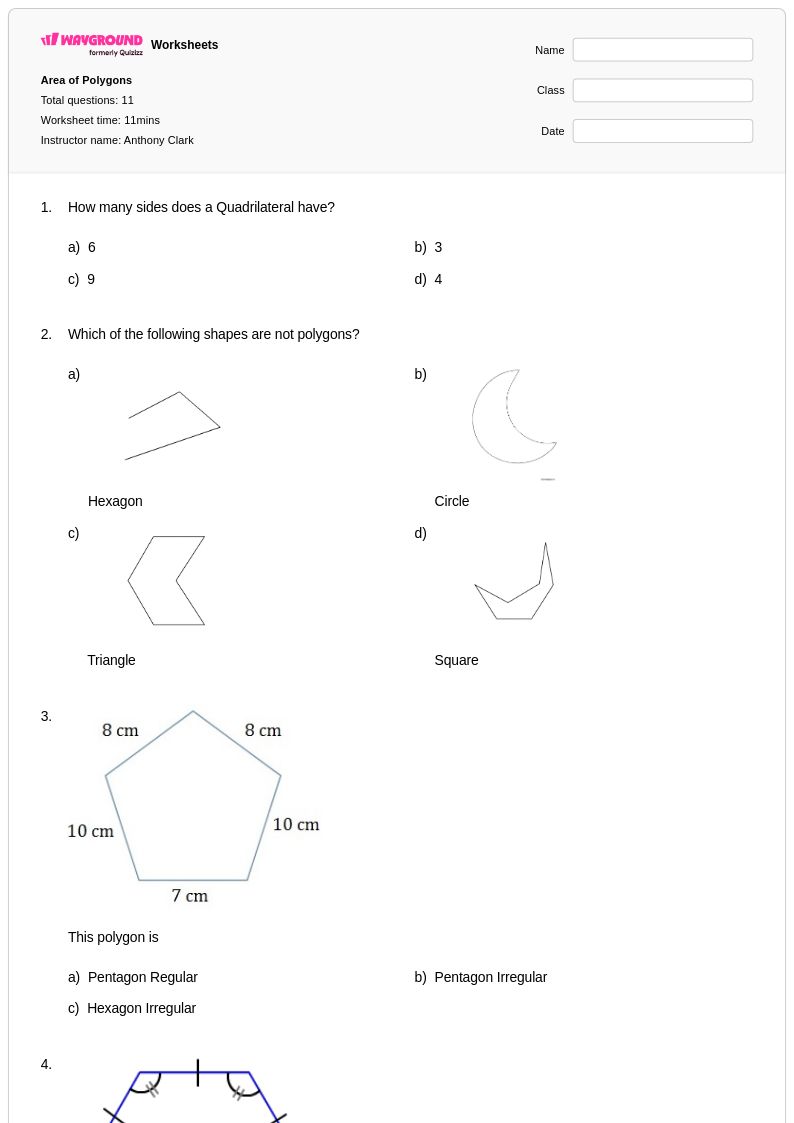
11 P
6th - Uni
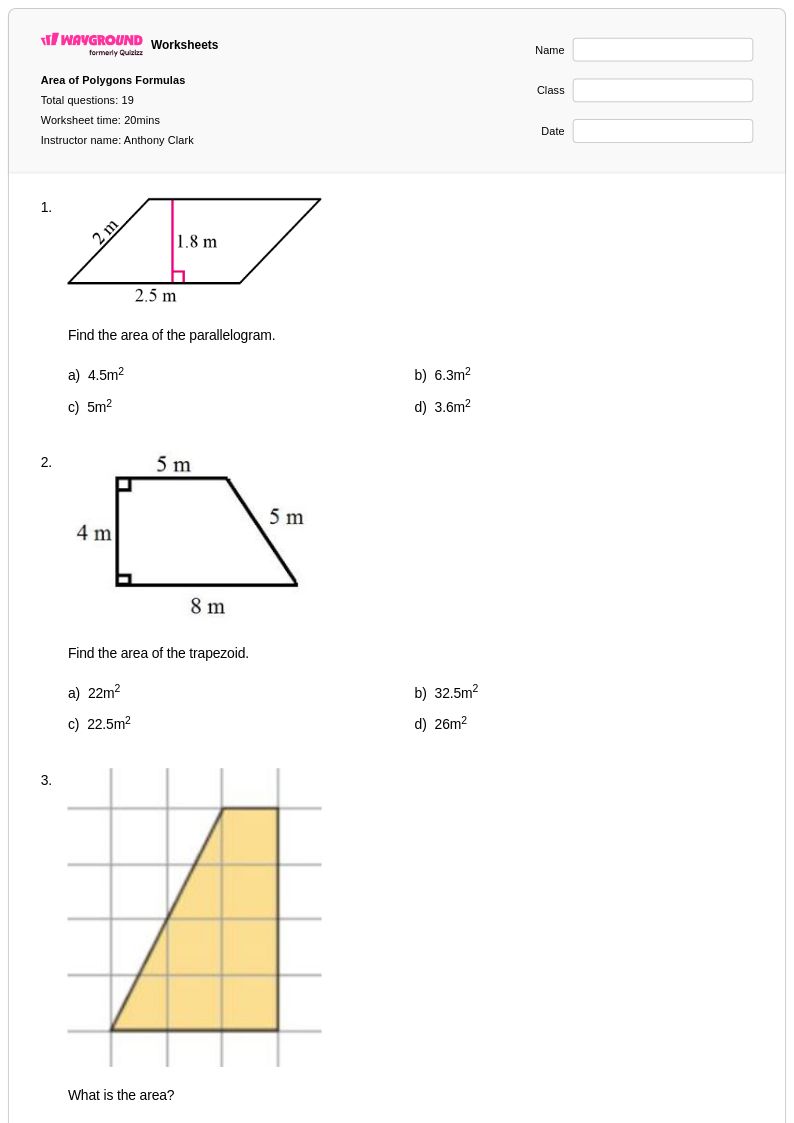
20 P
6th - Uni
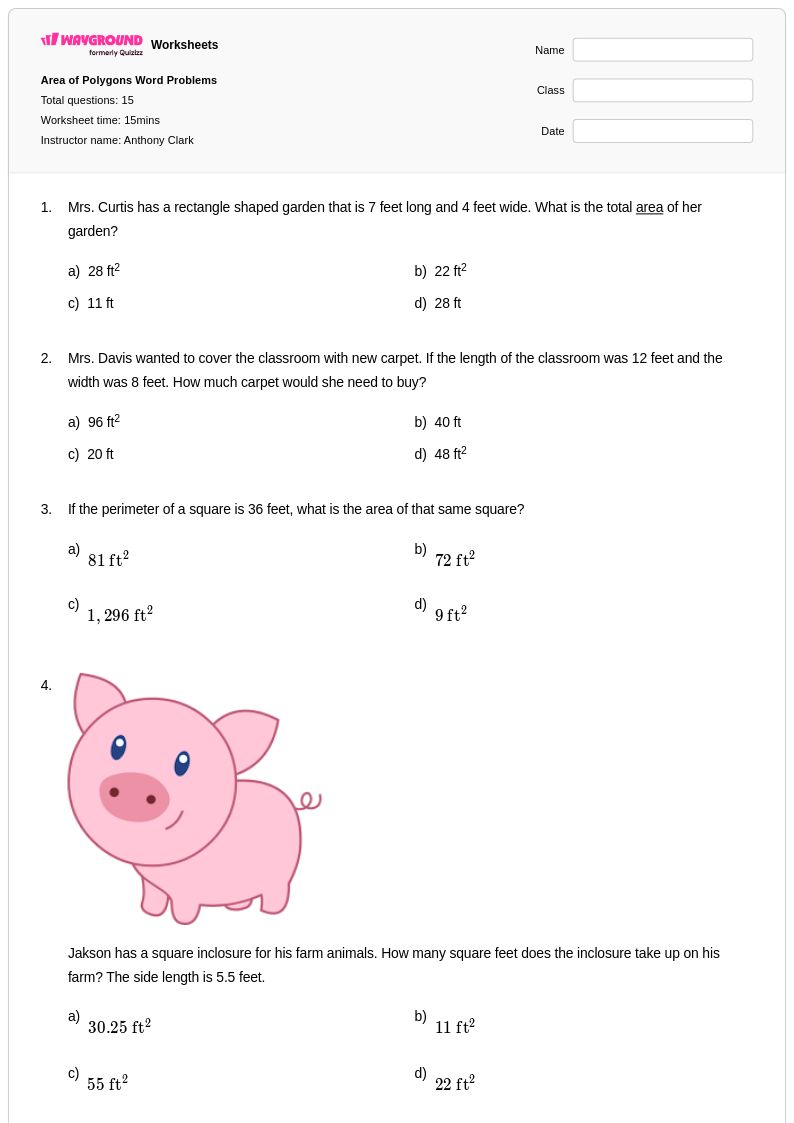
15 P
6th - Uni
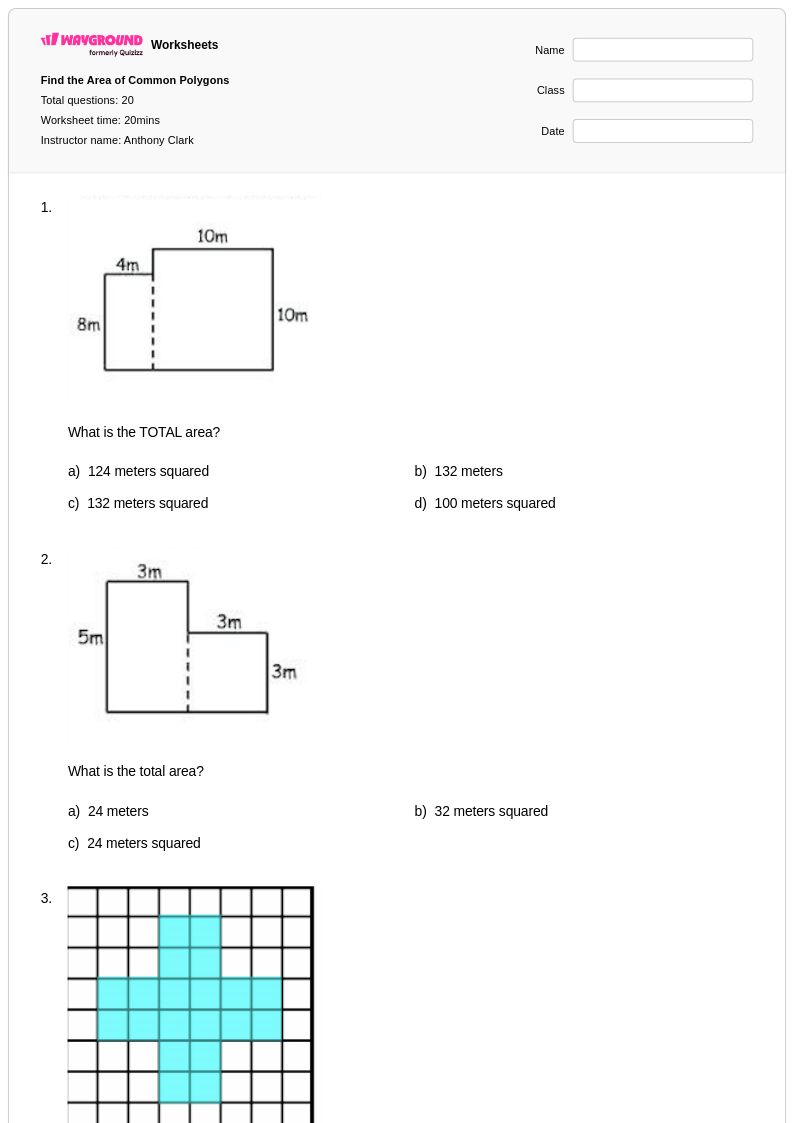
20 P
6th - Uni
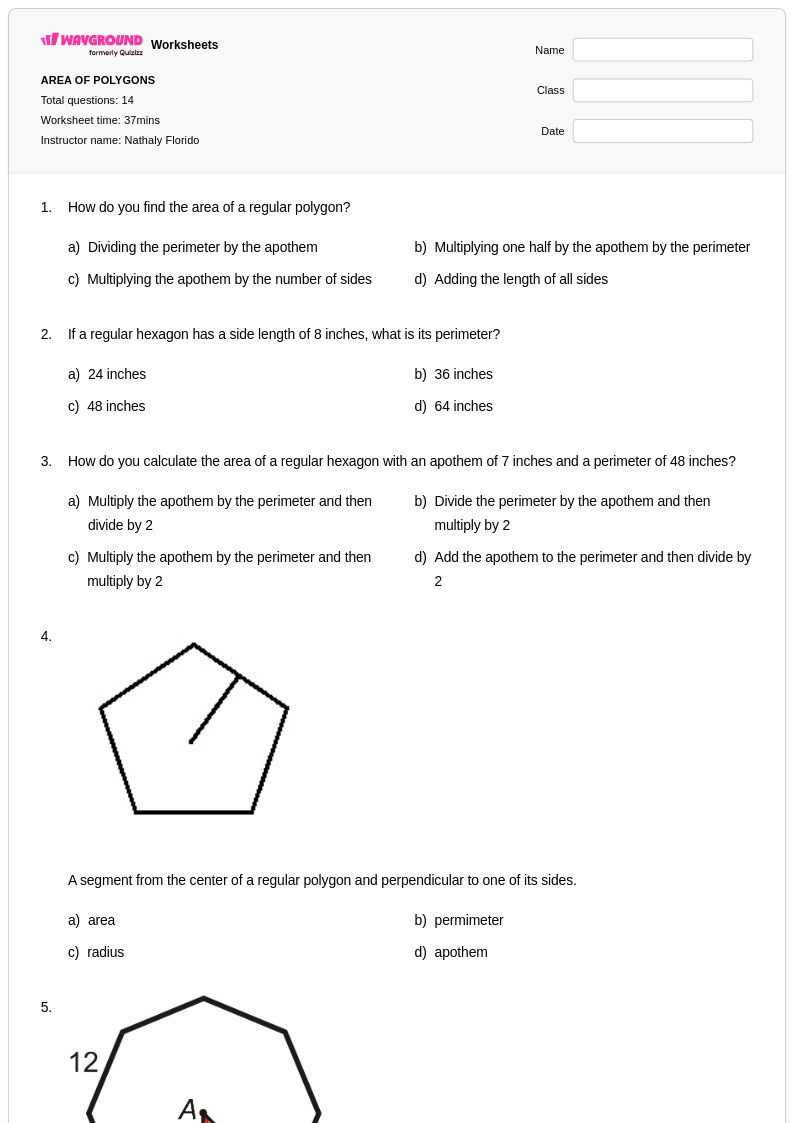
14 P
6th - 8th
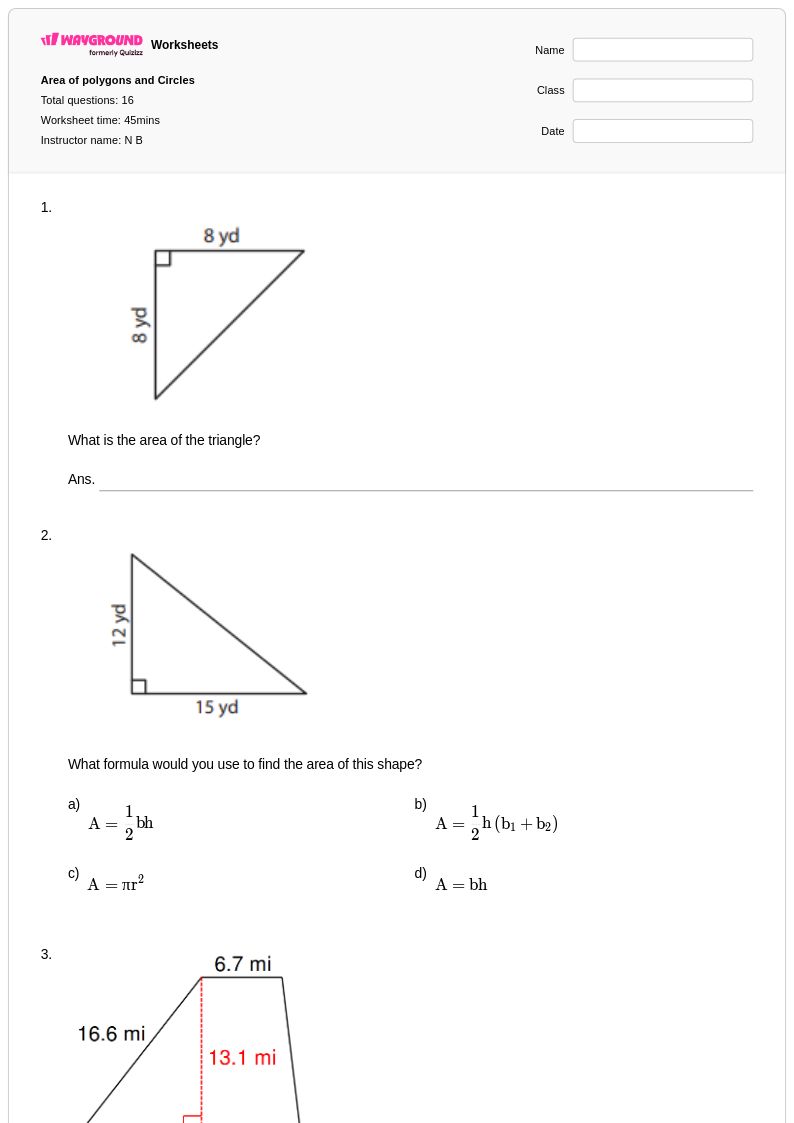
16 P
6th - 8th
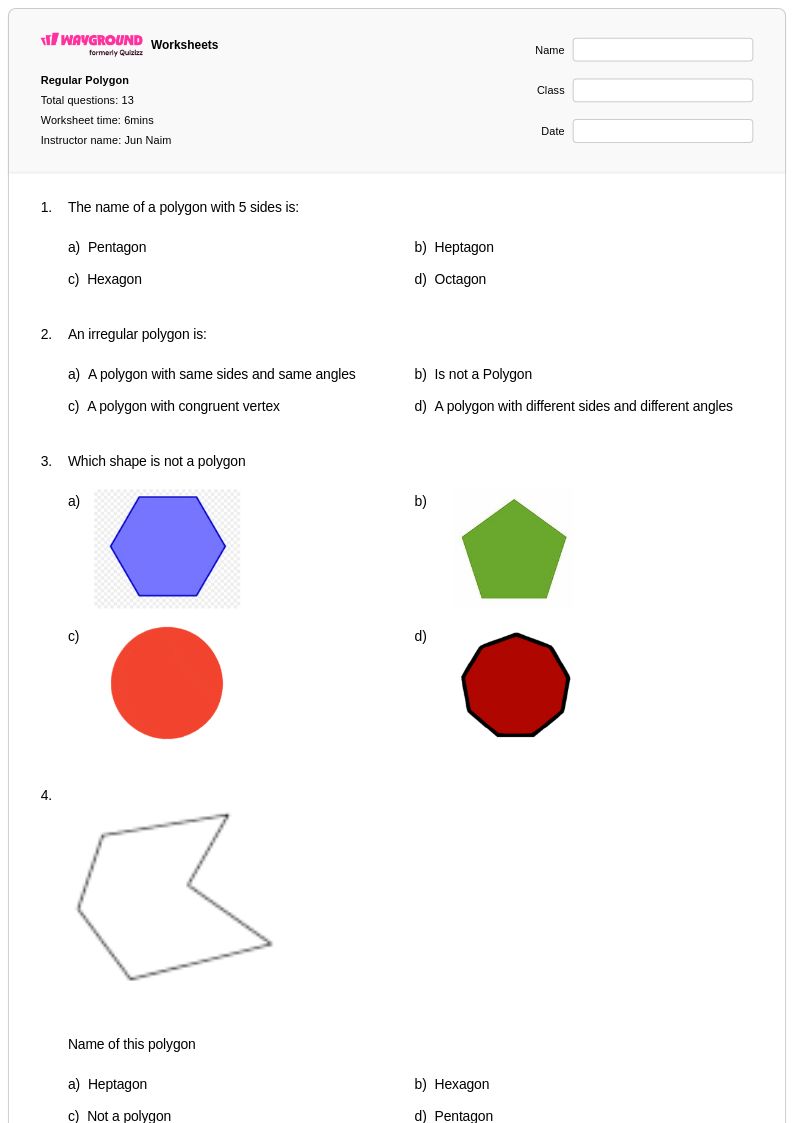
13 P
7th - 8th
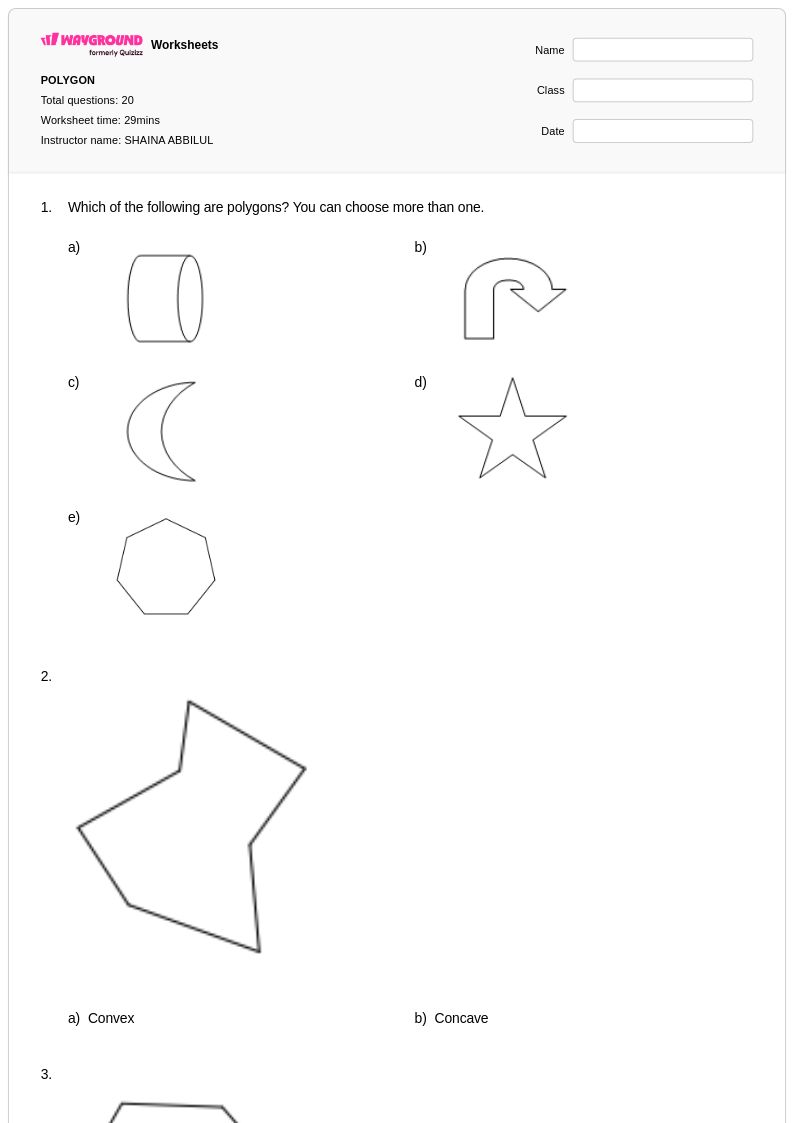
20 P
7th
20 P
5th - Uni
20 P
6th - Uni
20 P
6th - Uni
20 P
6th - Uni
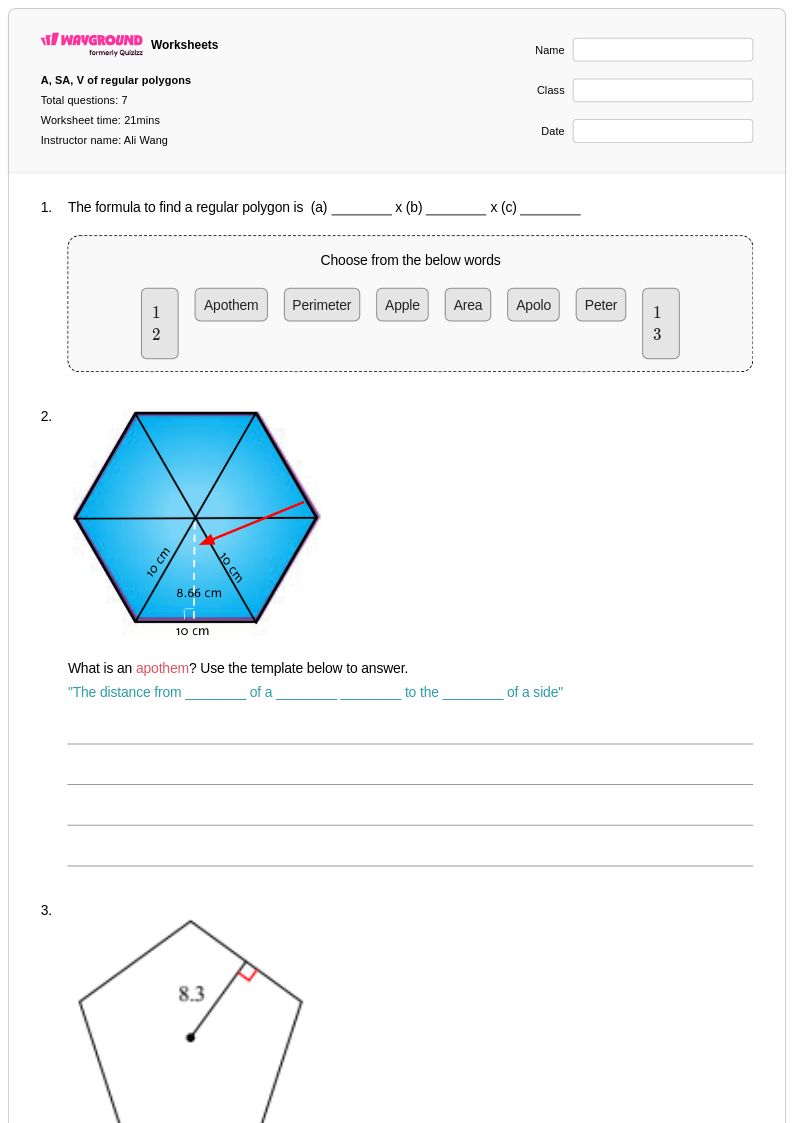
7 P
7th
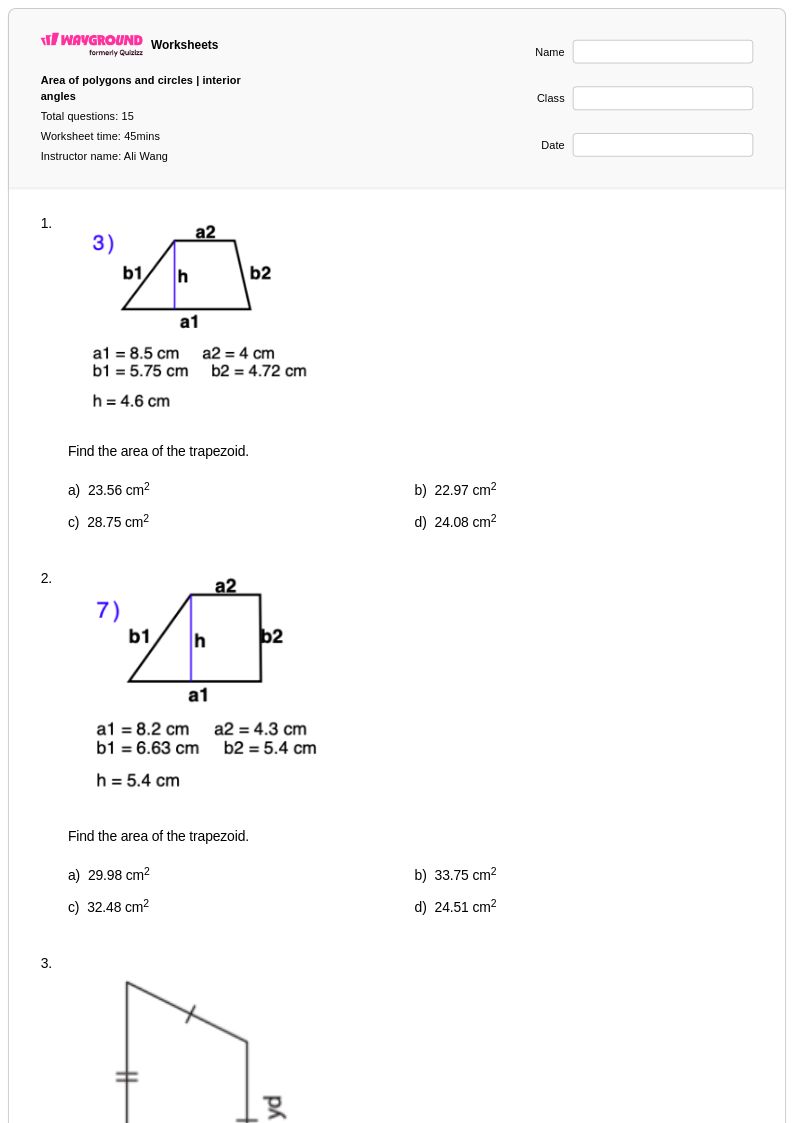
15 P
7th
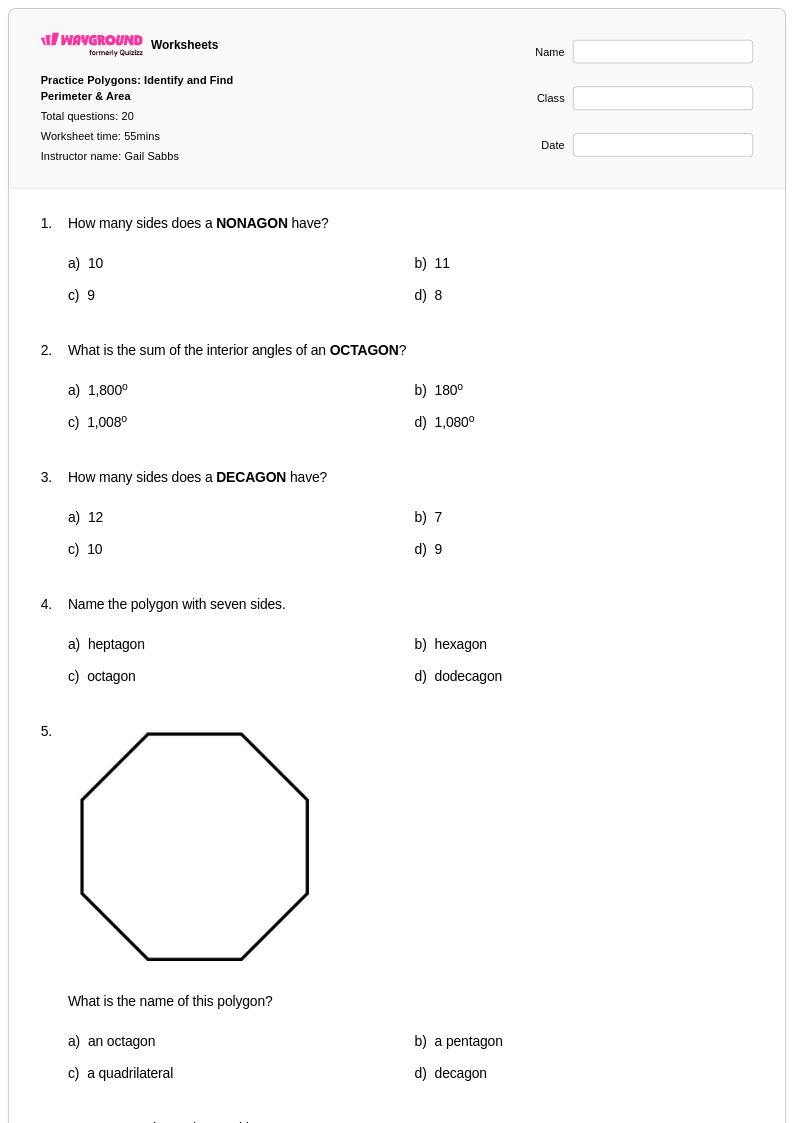
20 P
7th
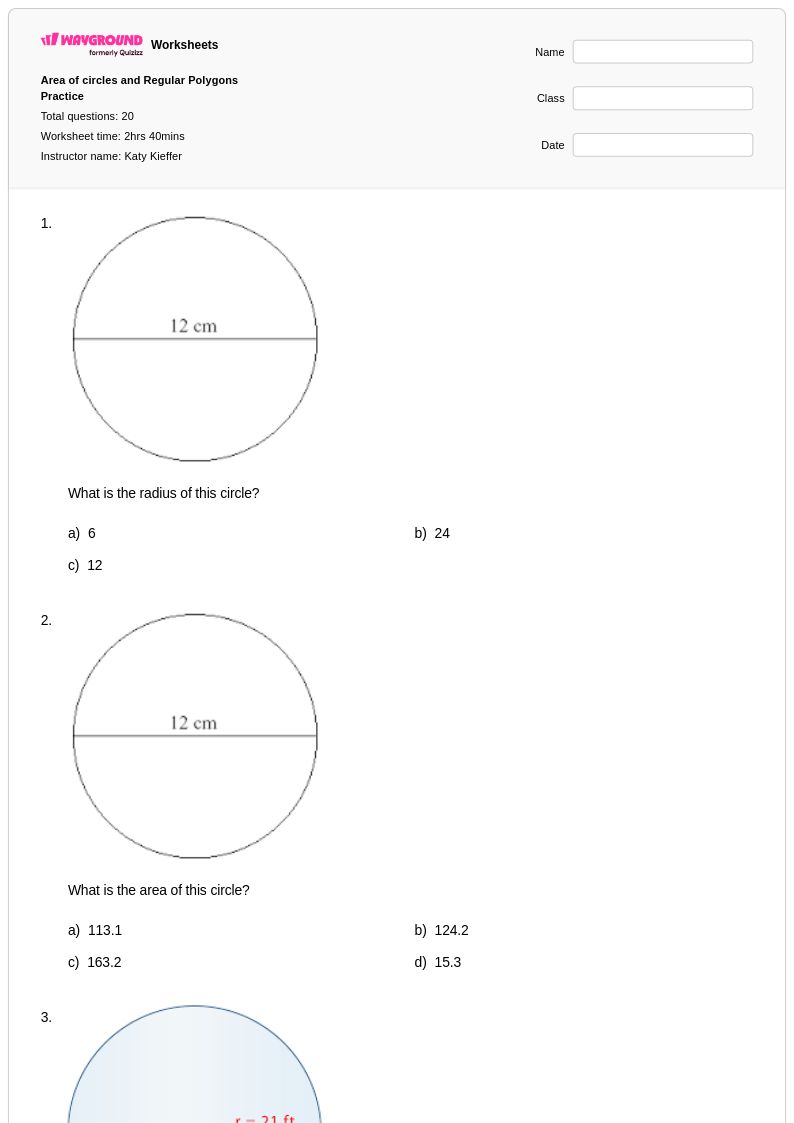
20 P
7th - 10th
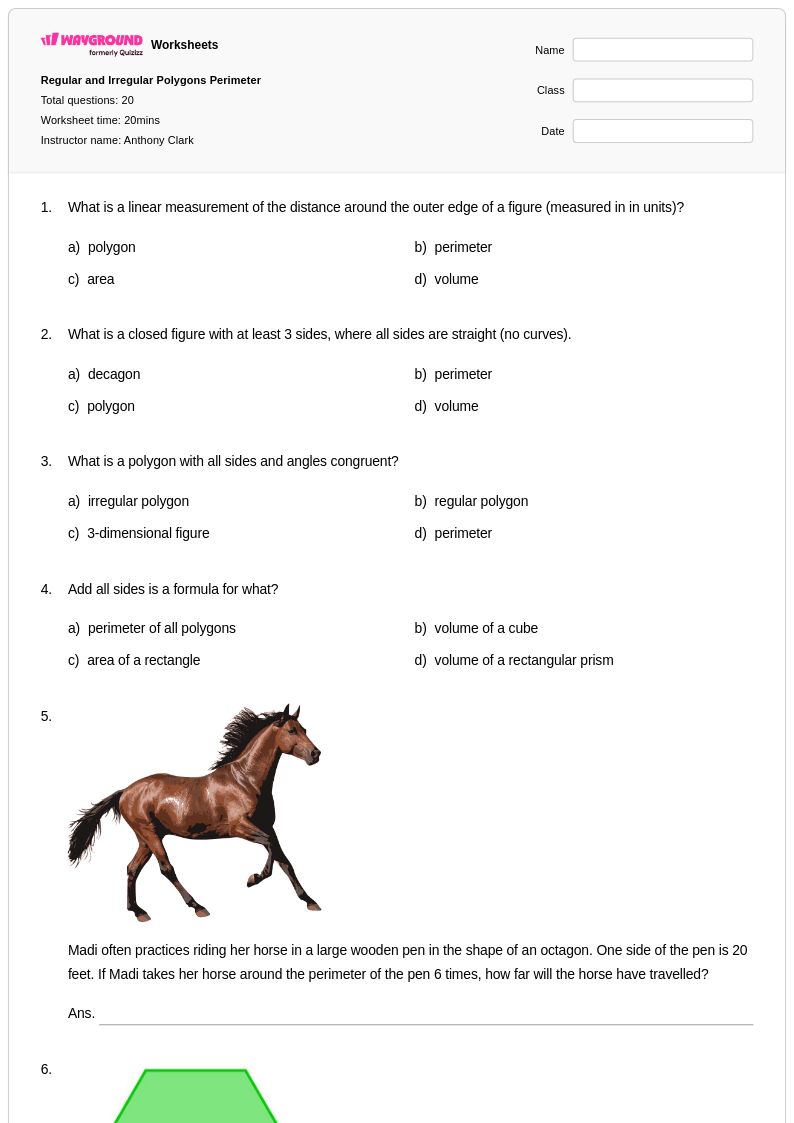
20 P
5th - Uni
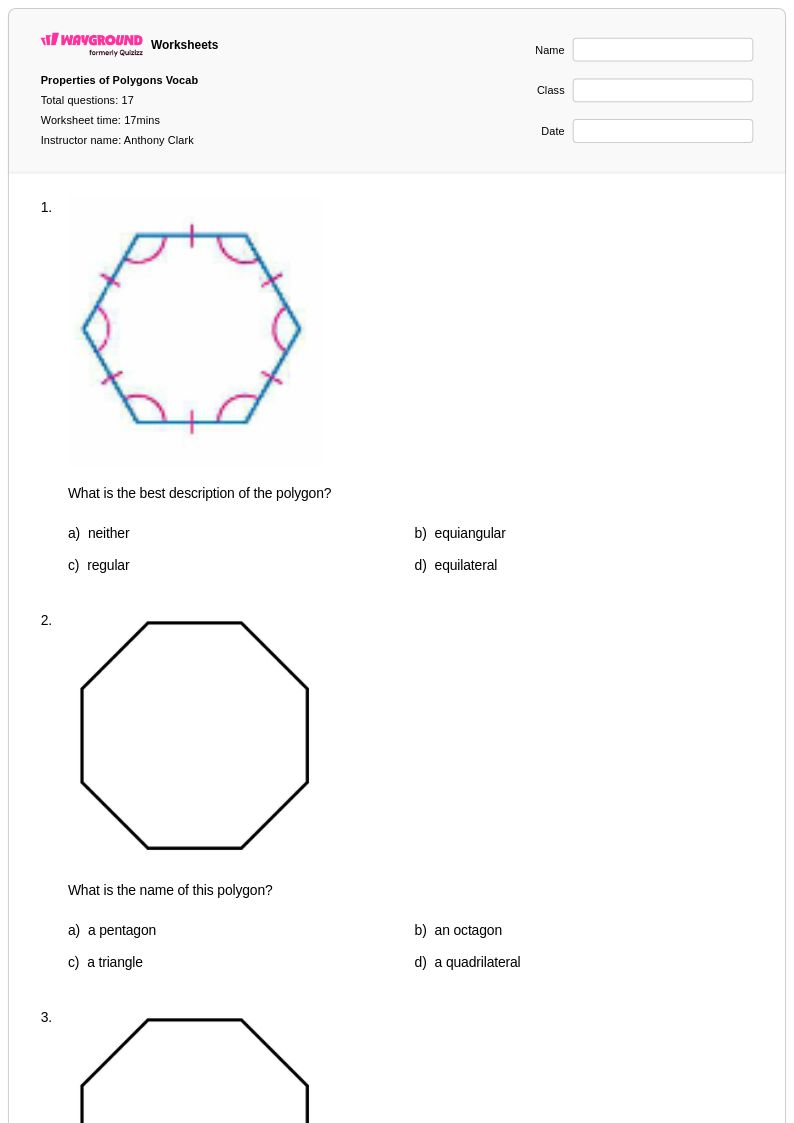
17 P
4th - Uni
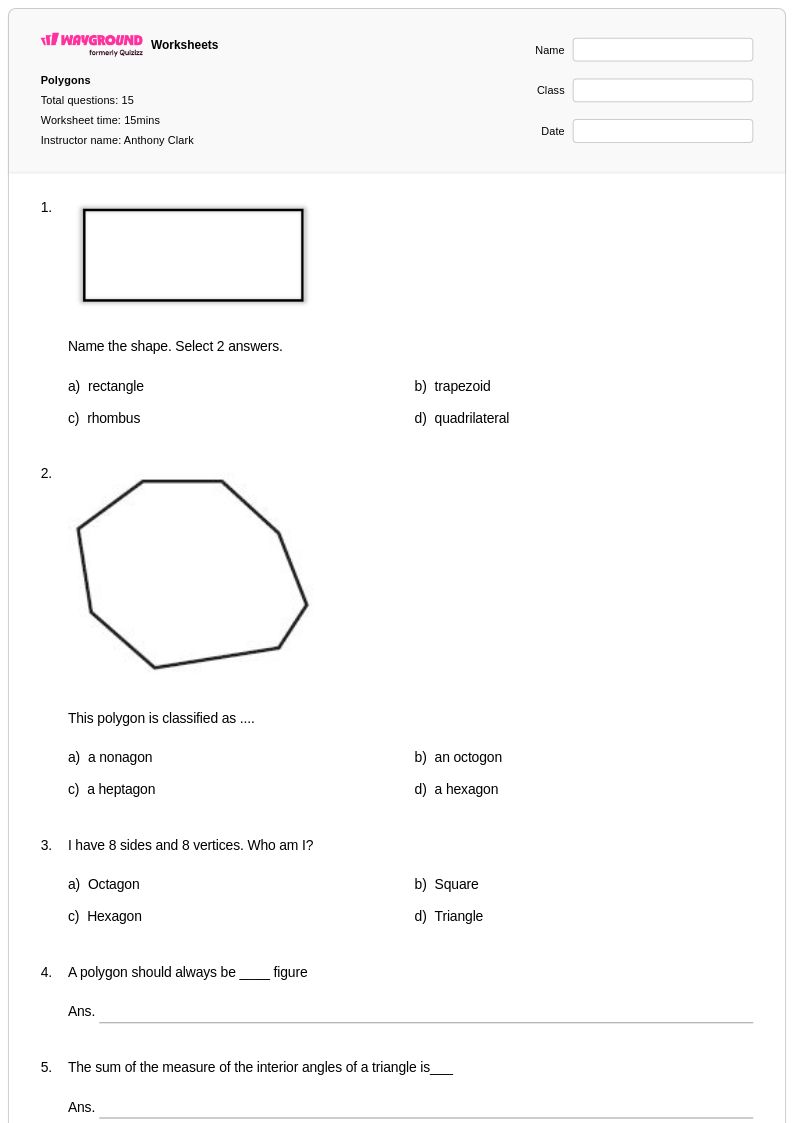
15 P
5th - Uni
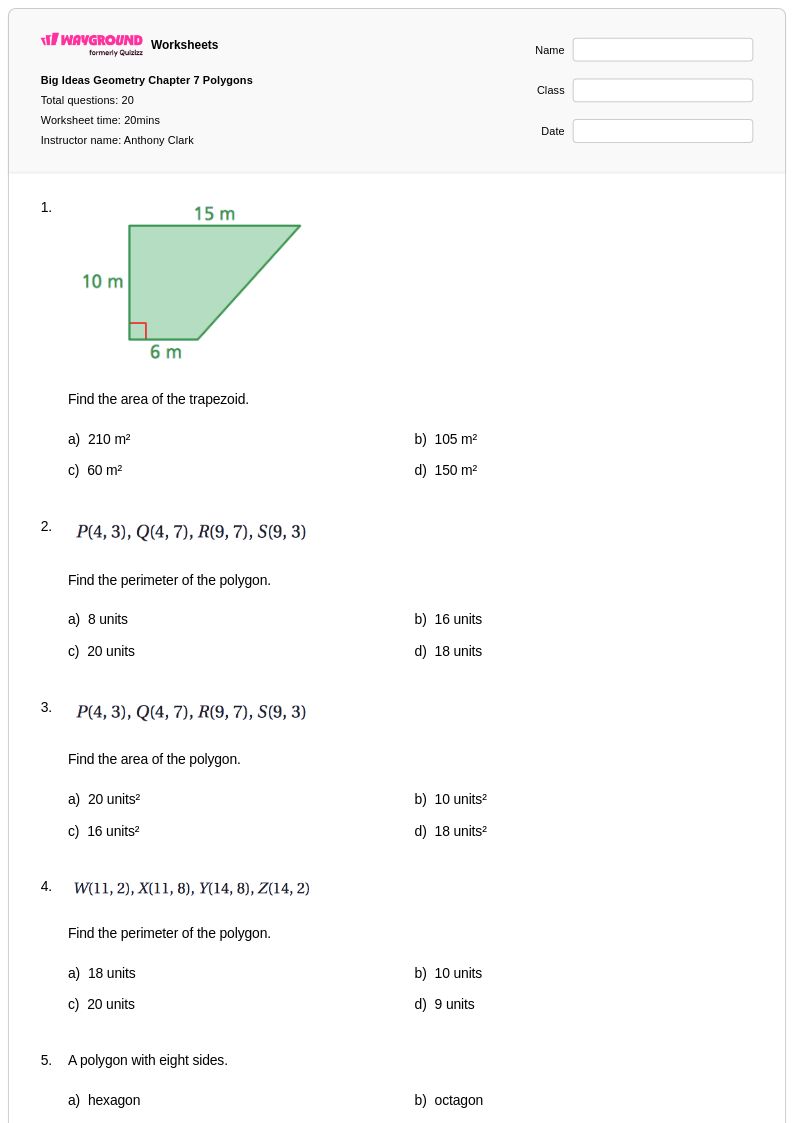
20 P
6th - Uni
Przeglądaj Area of Regular Polygons arkusze ćwiczeń według ocen
Przeglądaj inne arkusze tematyczne dla class 7
Explore printable Area of Regular Polygons worksheets for Class 7
Area of regular polygons worksheets for Class 7 students available through Wayground (formerly Quizizz) provide comprehensive practice with calculating the area of equilateral triangles, squares, regular pentagons, hexagons, and other uniform geometric shapes. These expertly designed printables strengthen students' understanding of apothem, perimeter, and the fundamental area formula for regular polygons while building fluency with more complex geometric calculations. Each worksheet collection includes detailed answer keys and systematic practice problems that guide seventh graders through the step-by-step process of identifying key measurements, applying appropriate formulas, and developing spatial reasoning skills essential for advanced geometry concepts.
Wayground (formerly Quizizz) empowers educators with millions of teacher-created resources specifically focused on regular polygon area calculations, featuring robust search and filtering capabilities that allow instructors to locate materials perfectly aligned with Class 7 mathematics standards and individual classroom needs. The platform's differentiation tools enable teachers to customize worksheets for varying skill levels, while flexible formatting options provide both printable pdf versions for traditional classroom use and digital formats for interactive learning environments. These comprehensive features streamline lesson planning by offering ready-to-use materials for skill practice, targeted remediation for students struggling with polygon concepts, and enrichment activities that challenge advanced learners to explore more complex regular polygon applications.
FAQs
How should I teach the area of regular polygons in Grade 7?
What practice problems are useful for Grade 7 regular polygon area lessons?
What are common errors when seventh graders find the area of regular polygons?
How do I assign a Wayground area of regular polygons worksheet?
Is regular polygon area practice aligned with Common Core math?
How can I support students who struggle with apothems and polygon diagrams?
Is area of regular polygons appropriate for Grade 7?