Free Printable Author's Point of View Worksheets for Class 11
Class 11 students can master identifying author's point of view with Wayground's comprehensive collection of free reading comprehension worksheets, featuring engaging printables, practice problems, and detailed answer keys in convenient PDF format.
Explore printable Author's Point of View worksheets for Class 11
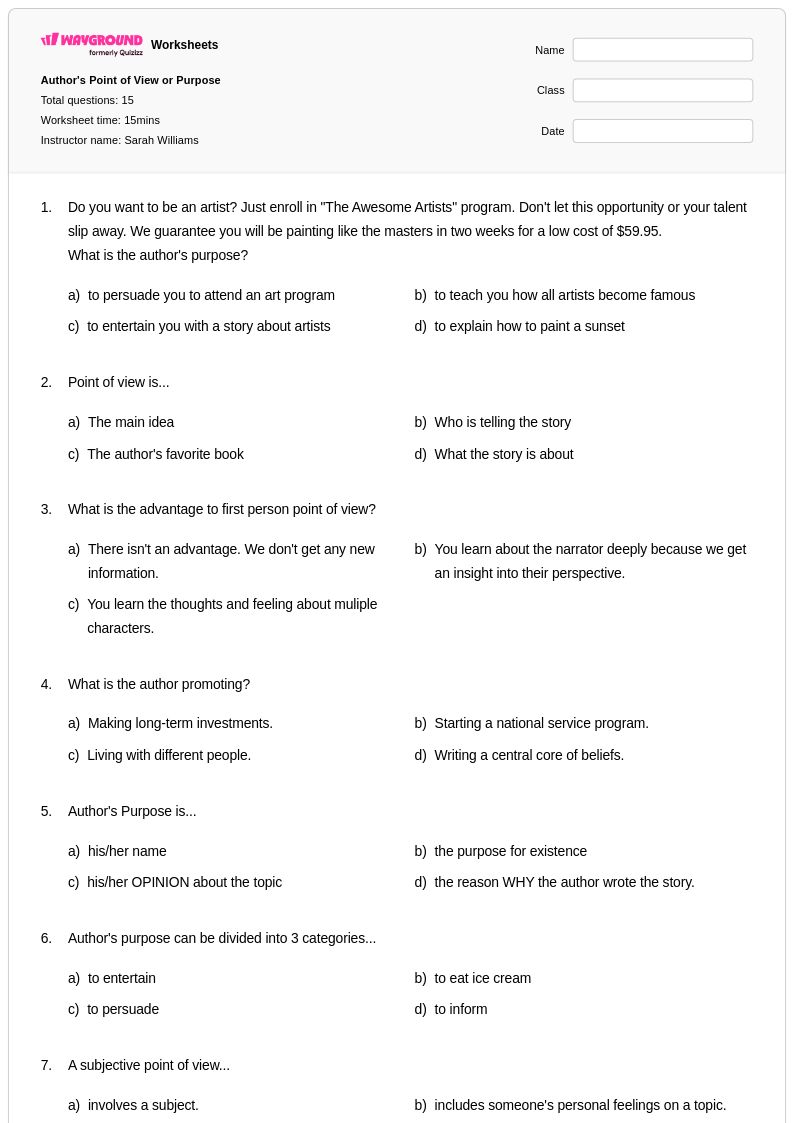
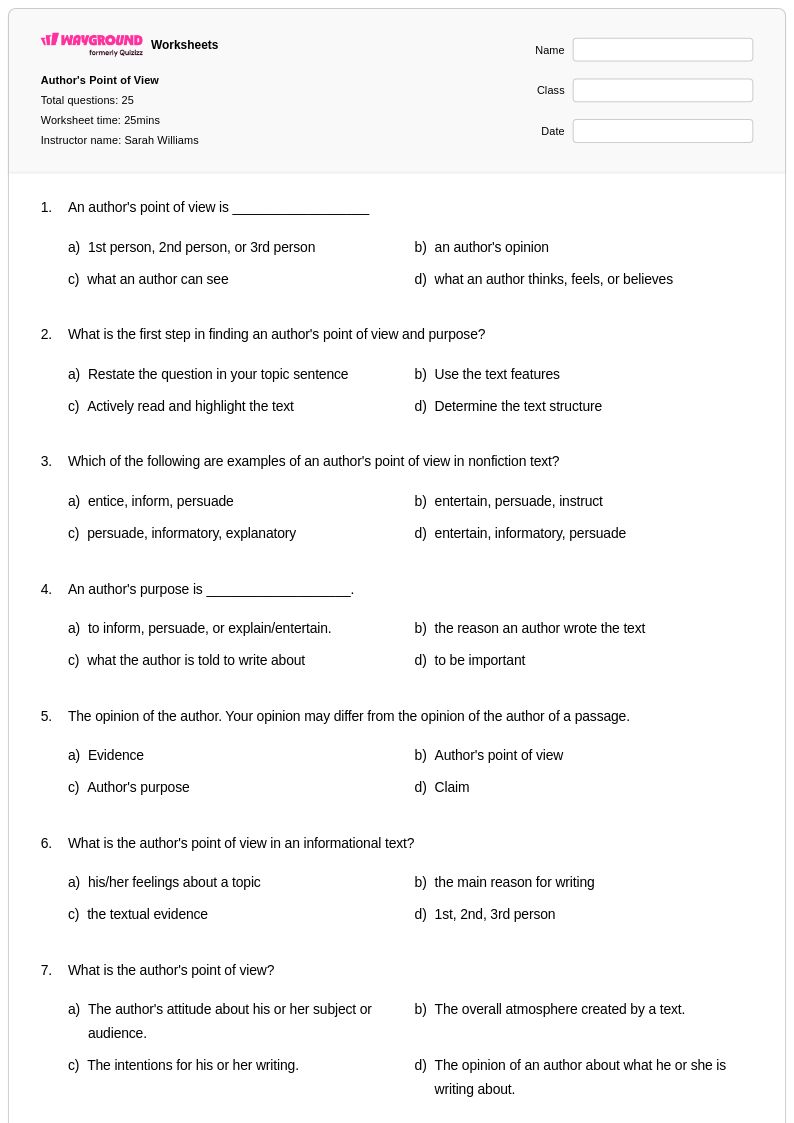
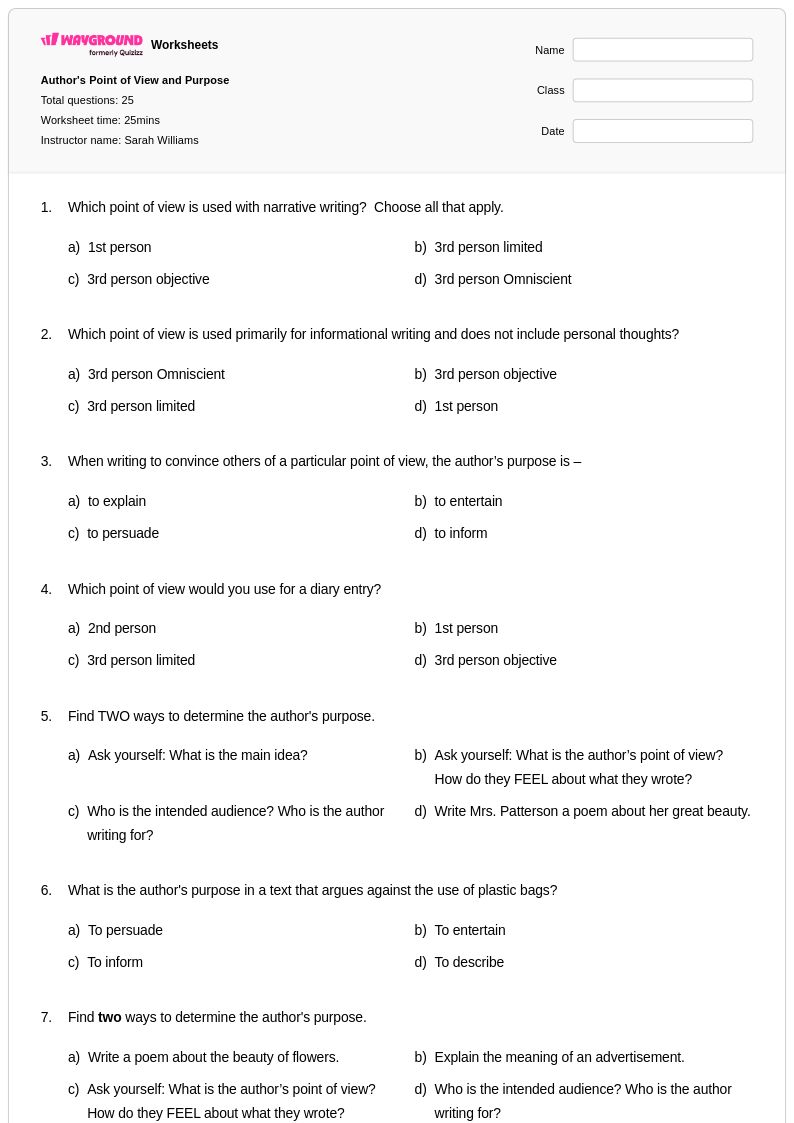
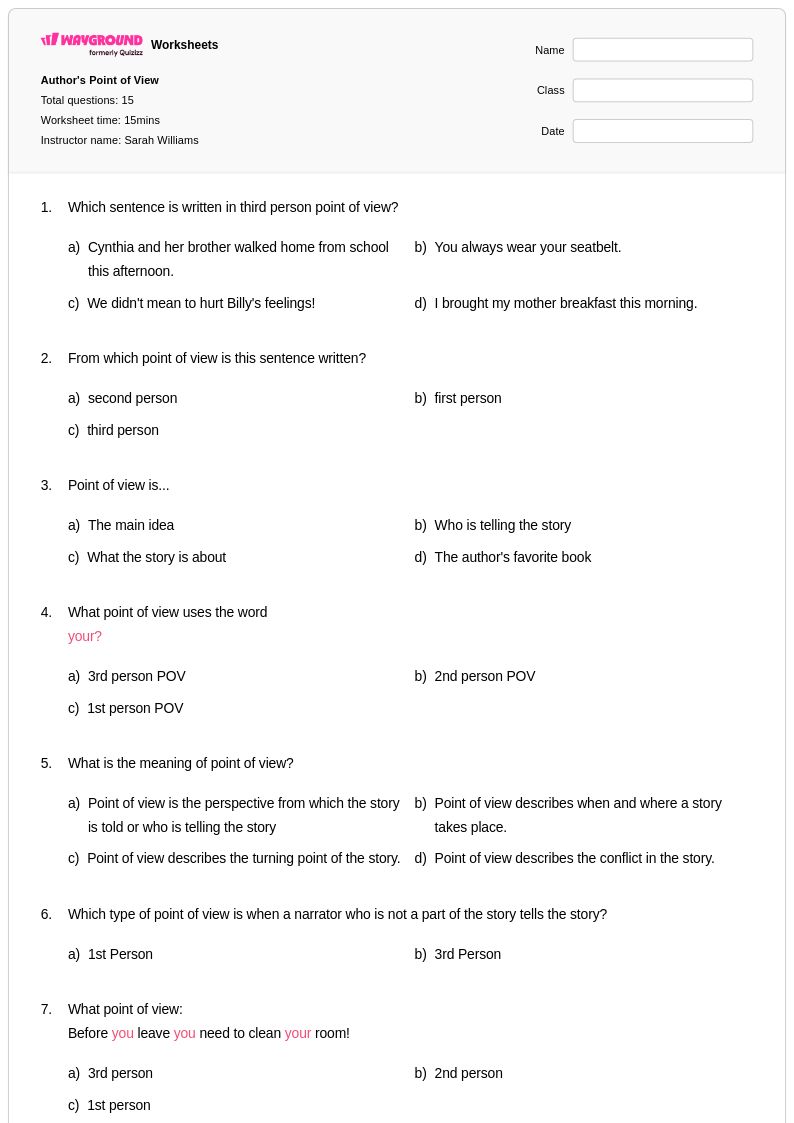
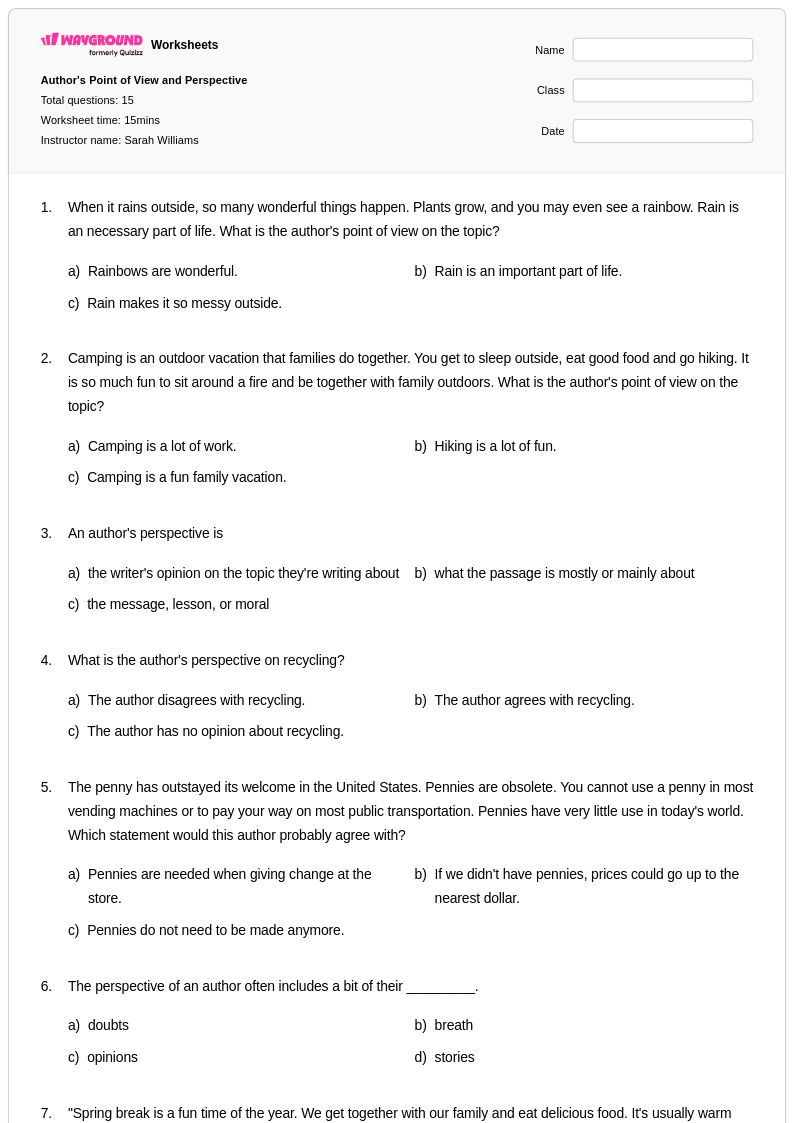
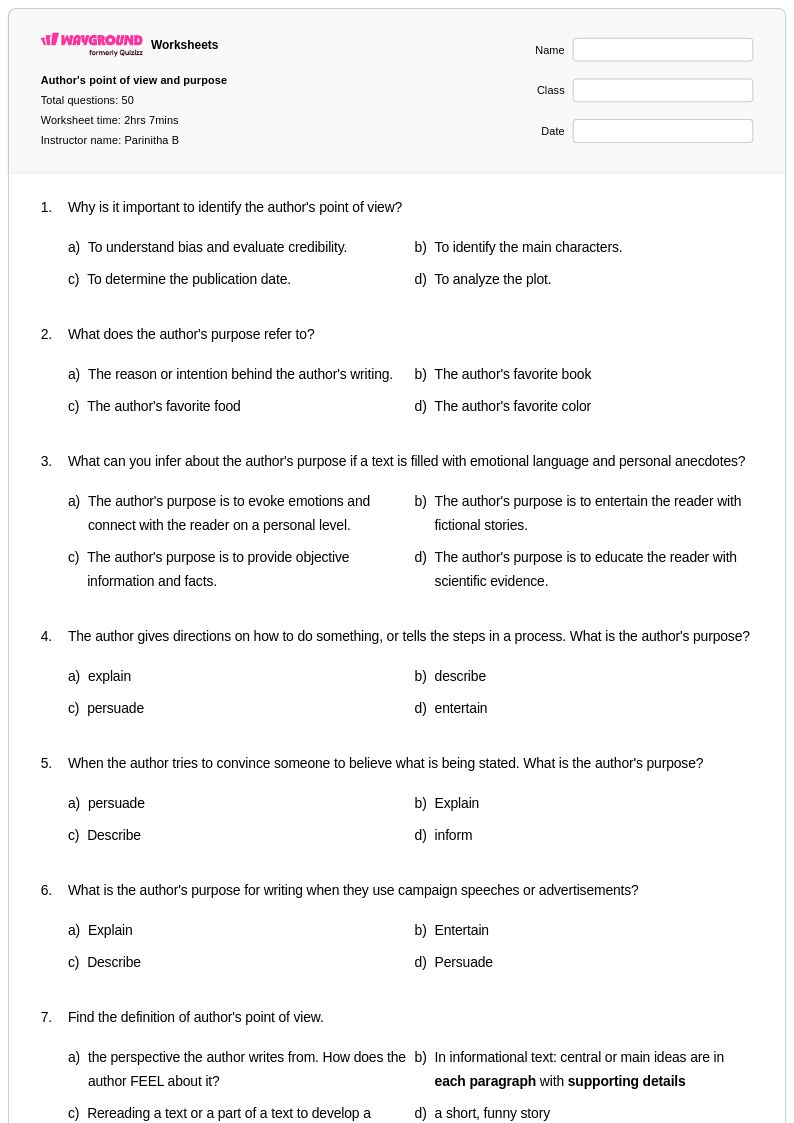
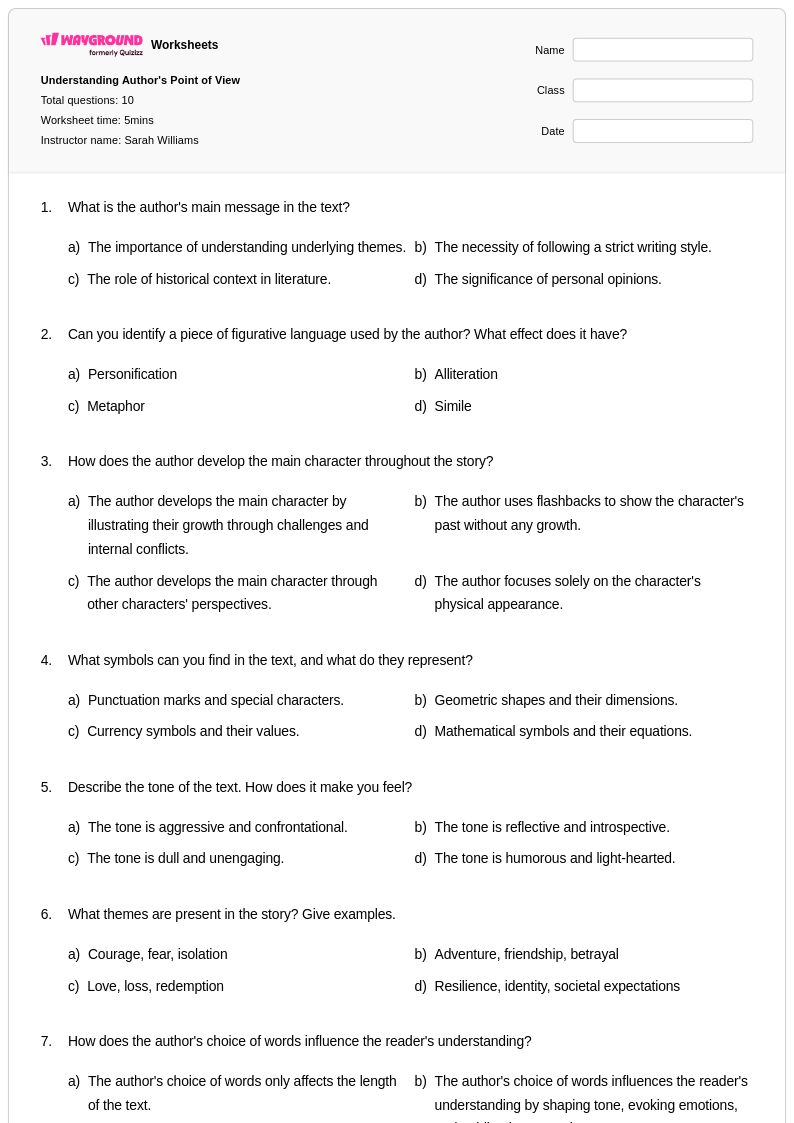
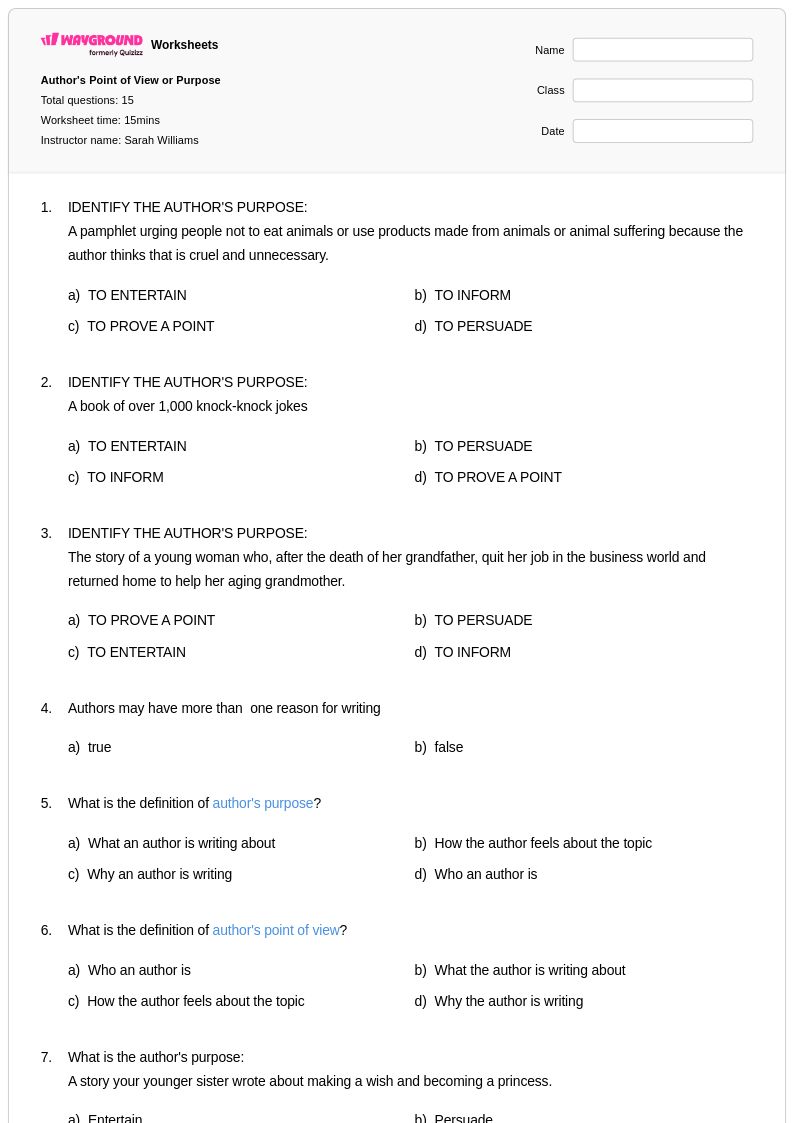
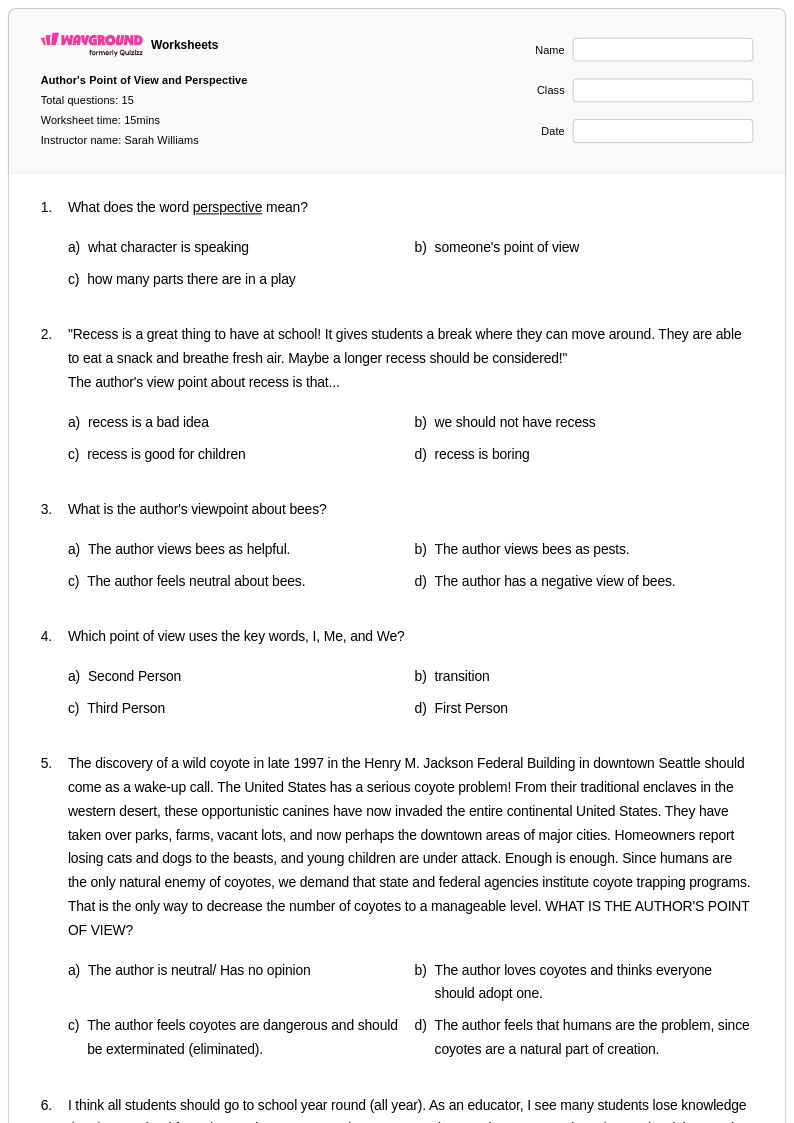
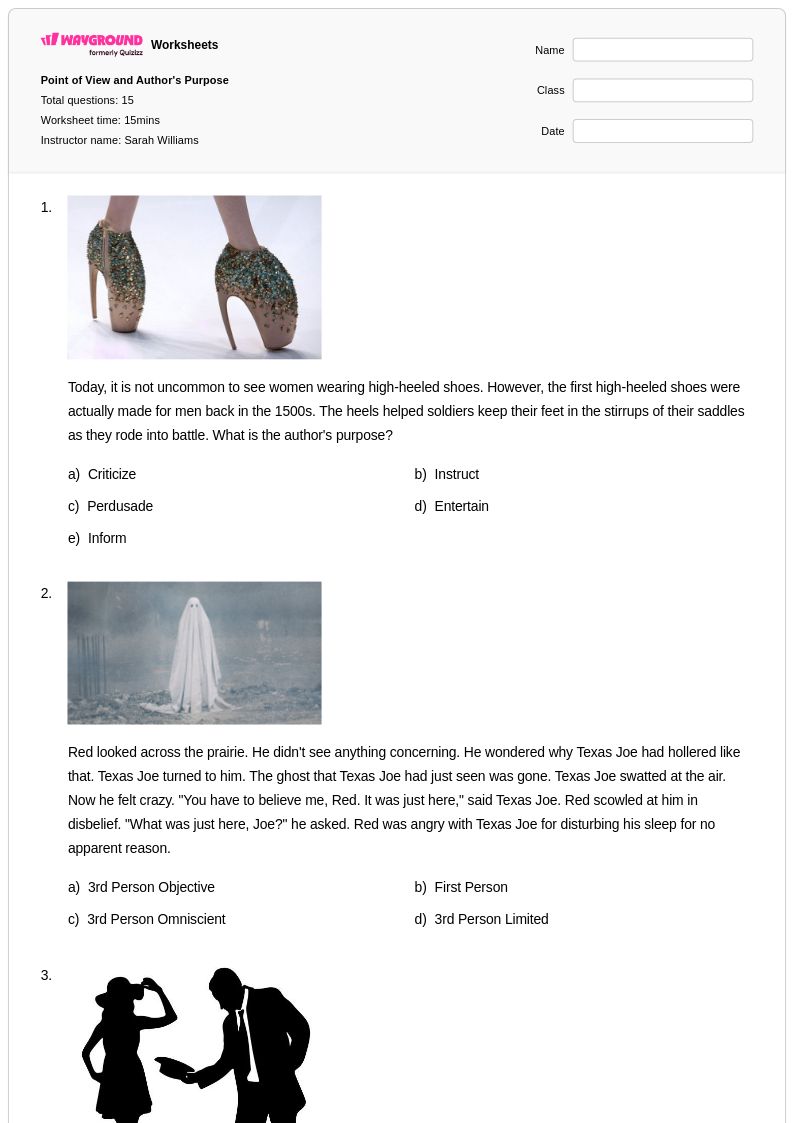
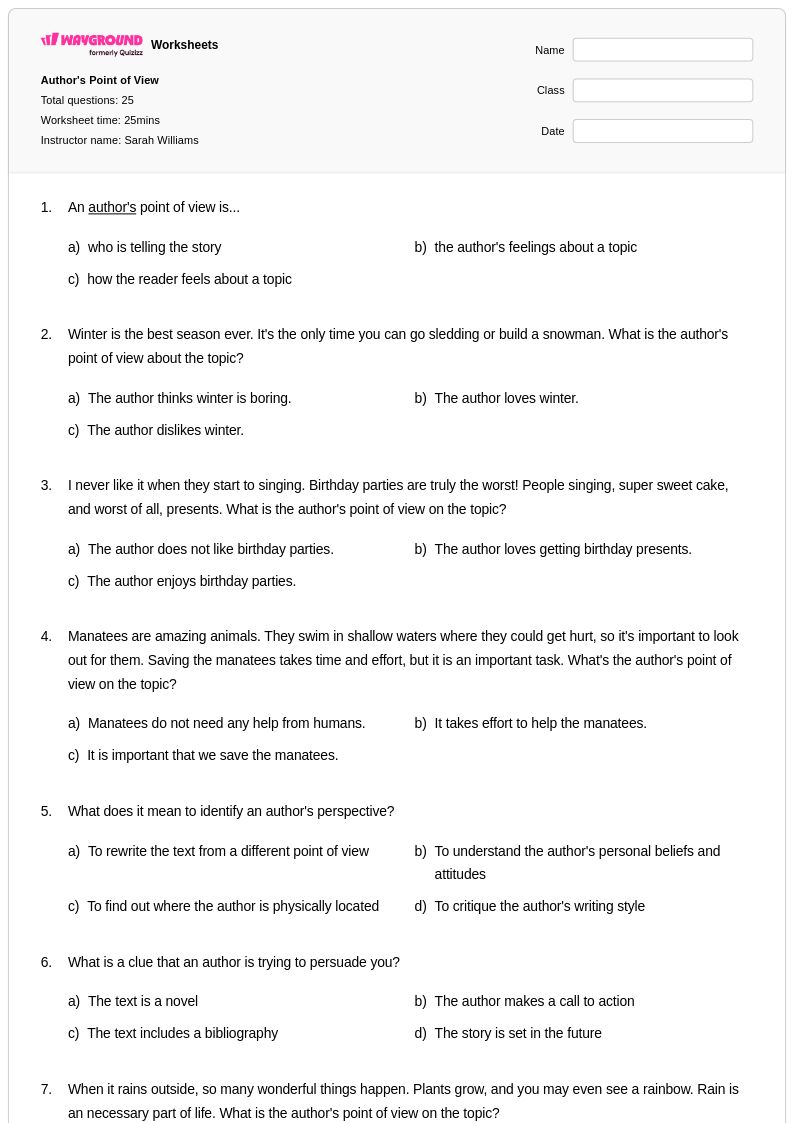
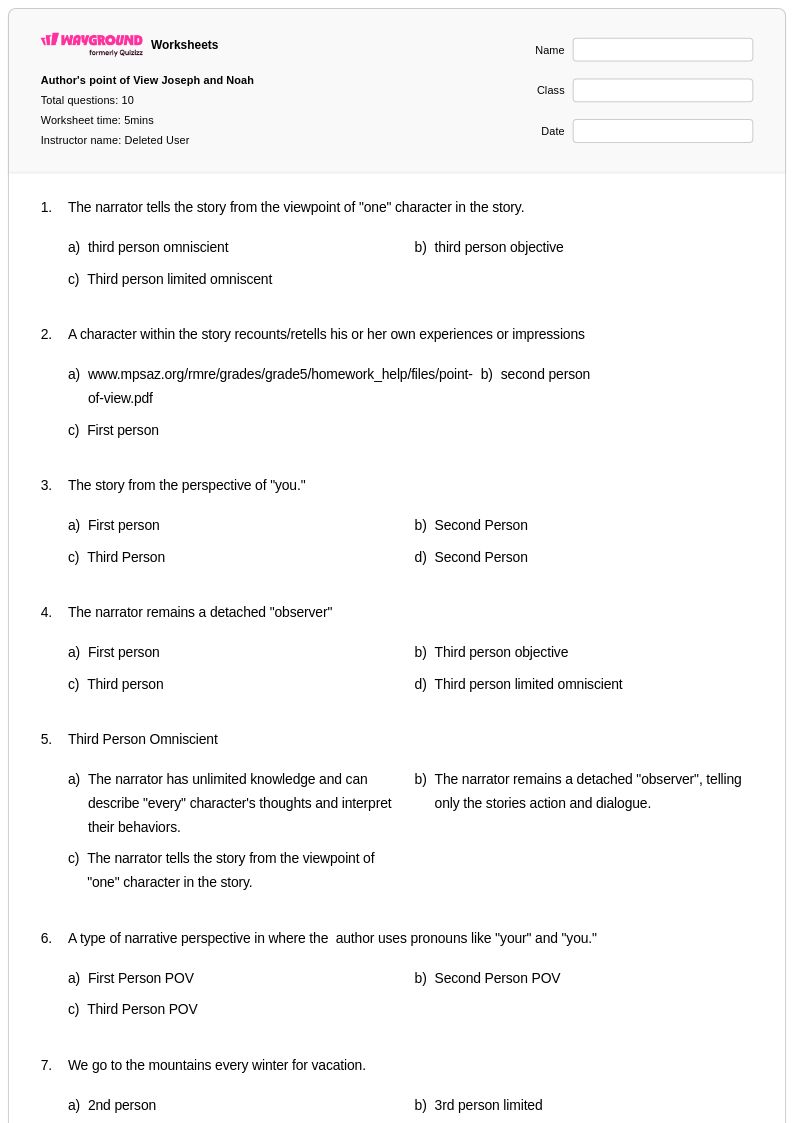
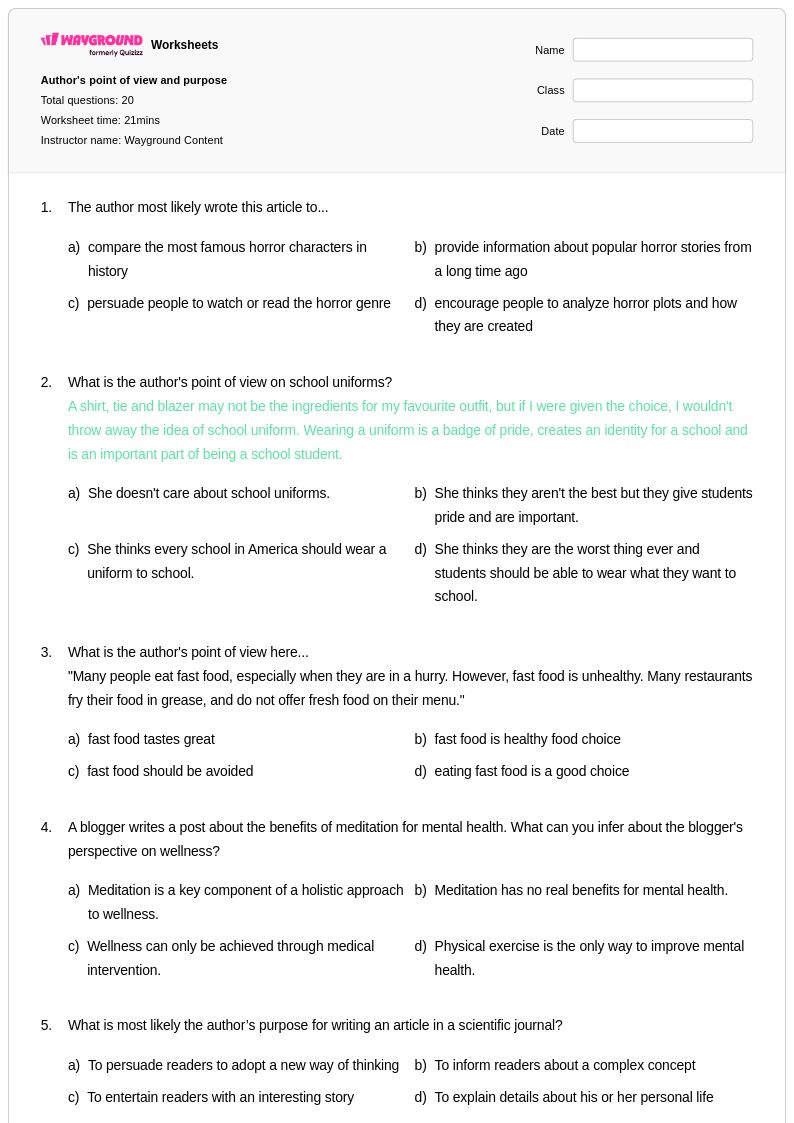
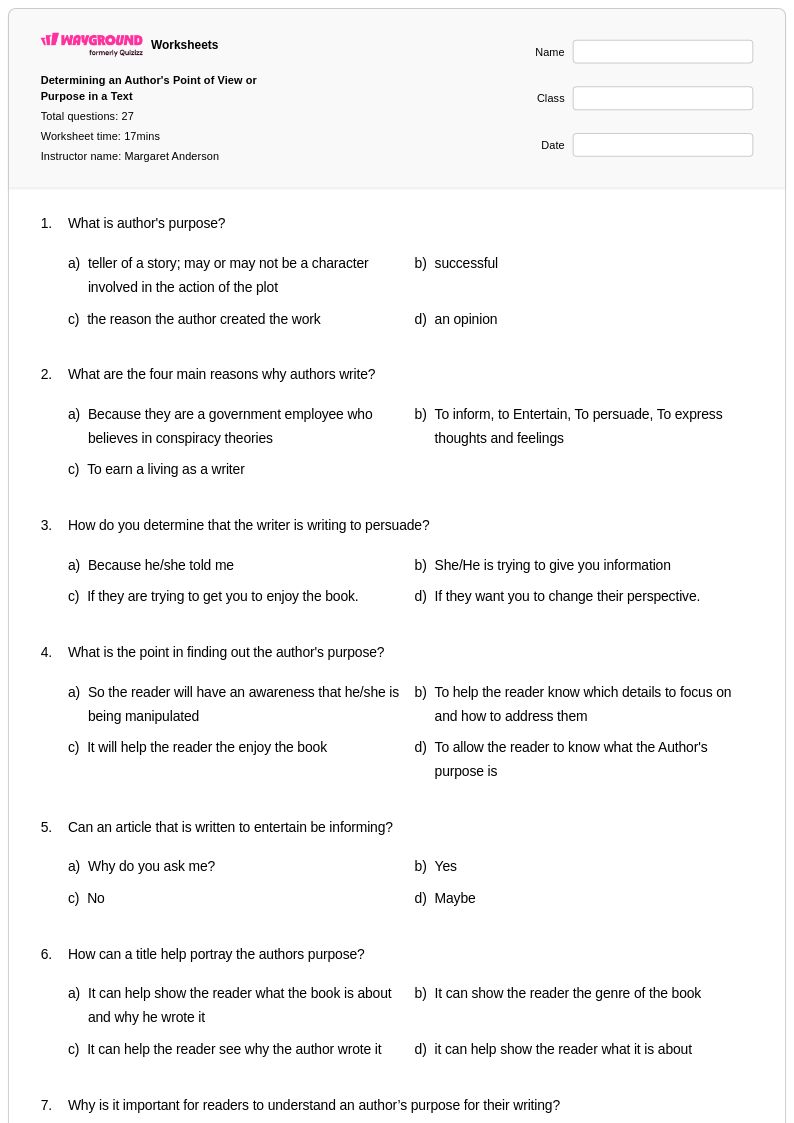
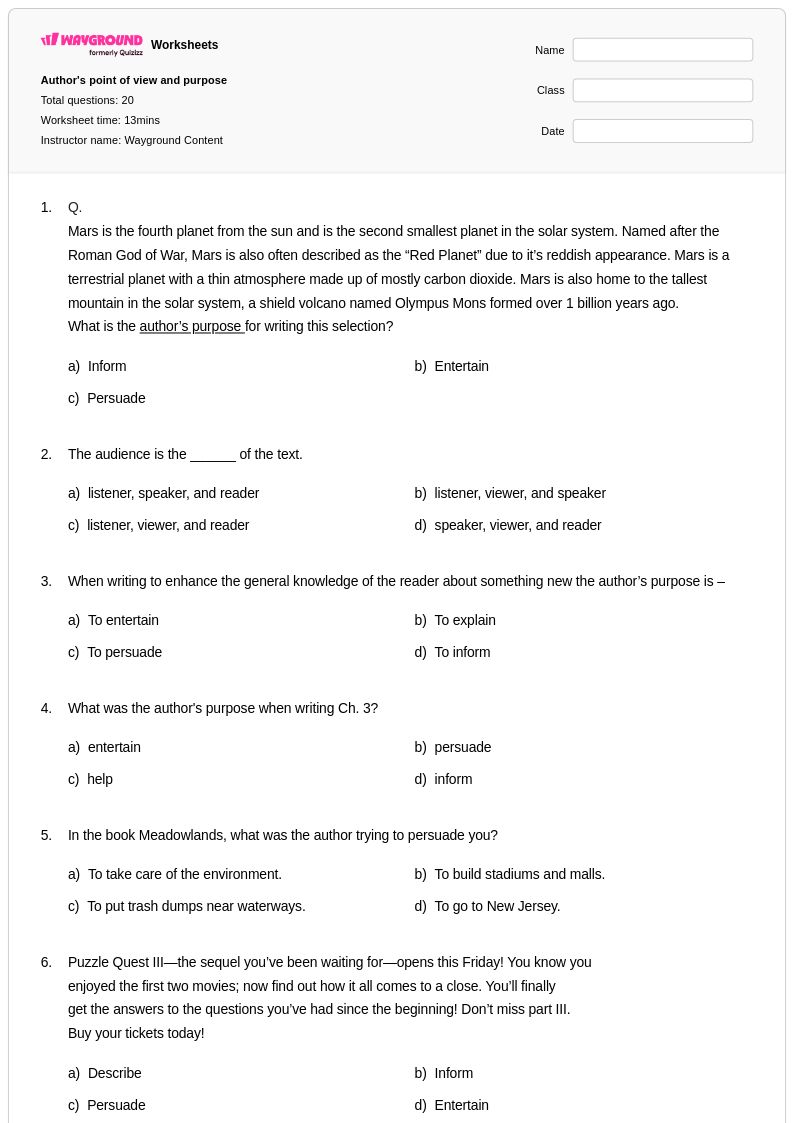
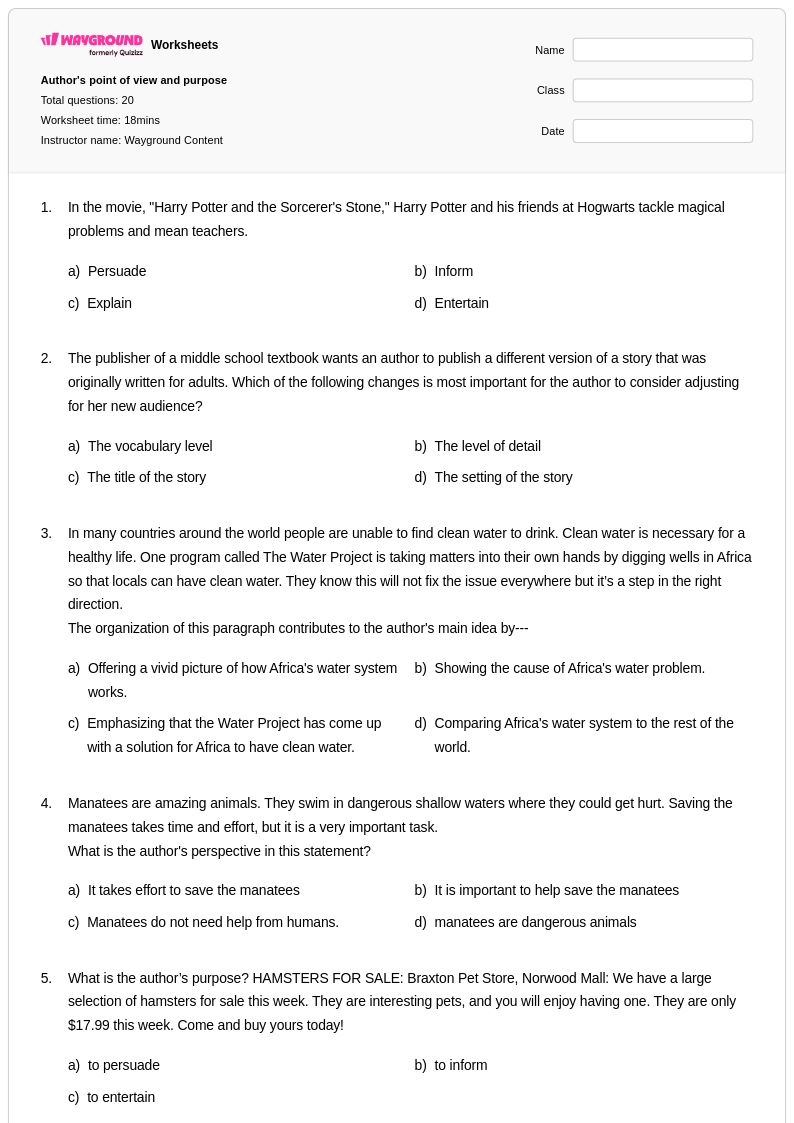
Author's point of view worksheets for Class 11 students available through Wayground (formerly Quizizz) provide comprehensive practice in identifying and analyzing how writers express their perspectives, biases, and attitudes within various texts. These carefully designed worksheets strengthen critical reading skills by helping students recognize subtle author positioning, understand how word choice and tone reveal viewpoint, and distinguish between objective reporting and subjective commentary across fiction, nonfiction, and persuasive texts. Each worksheet collection includes detailed answer keys to support independent learning, with free printable pdf formats that make classroom distribution seamless. Practice problems progress systematically from identifying explicit author statements to inferring implicit viewpoints through literary devices, rhetorical strategies, and contextual clues that elevate analytical thinking at the eleventh-grade level.
Wayground (formerly Quizizz) empowers teachers with millions of educator-created resources specifically targeting author's point of view analysis, featuring robust search and filtering capabilities that align with state reading standards and curriculum objectives. The platform's differentiation tools enable instructors to customize worksheet difficulty levels, modify question formats, and adapt content complexity to meet diverse student needs within Class 11 classrooms. Teachers can access materials in both printable and digital pdf formats, facilitating flexible lesson planning whether conducting in-person instruction, remote learning, or hybrid approaches. These comprehensive worksheet collections support targeted remediation for struggling readers, provide enrichment opportunities for advanced students, and offer consistent skill practice that builds the sophisticated textual analysis abilities essential for college-level reading comprehension and critical thinking success.
FAQs
How do I teach author's point of view to students?
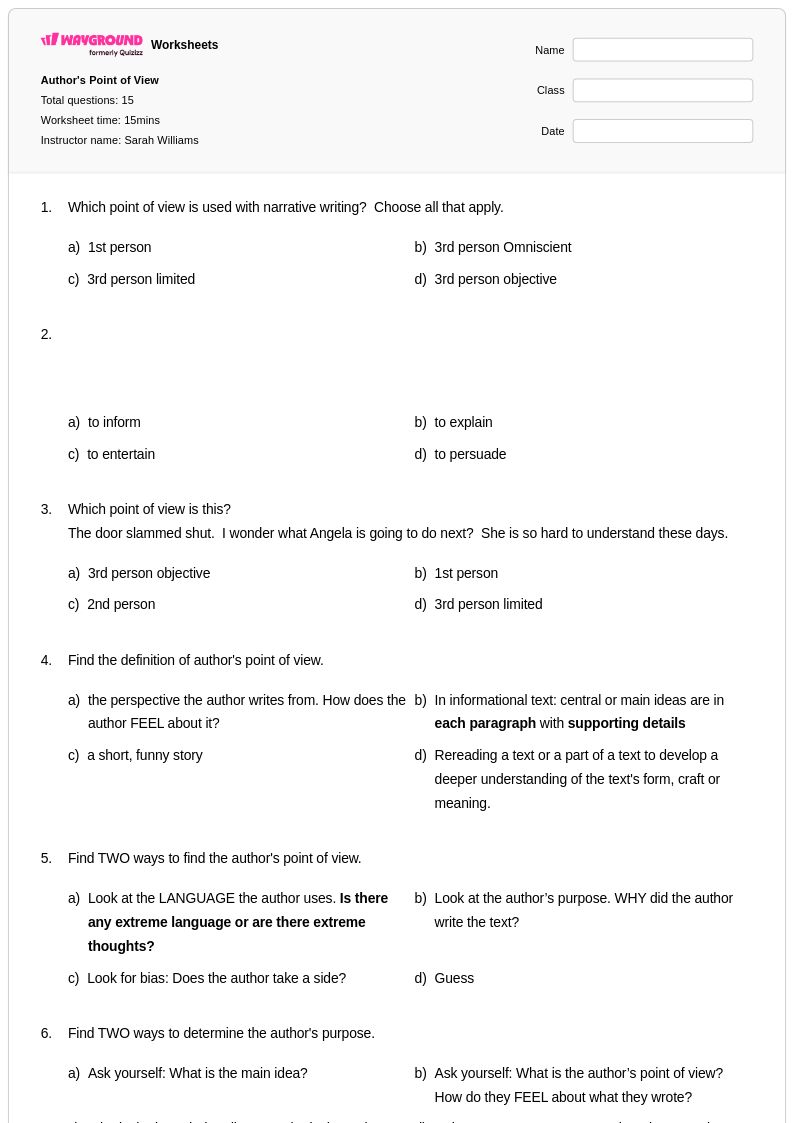
Start by distinguishing between narrative point of view (first, second, third person) and authorial perspective, which encompasses the author's bias, purpose, and stance toward a subject. Use paired texts on the same topic written from contrasting perspectives to make authorial choices visible and concrete. Ask students to identify specific word choices, tone shifts, and what information the author includes or omits, since these are the clearest indicators of perspective. Moving from obvious examples in opinion pieces to subtler bias in informational texts builds the analytical depth students need.
What exercises help students practice identifying author's point of view?
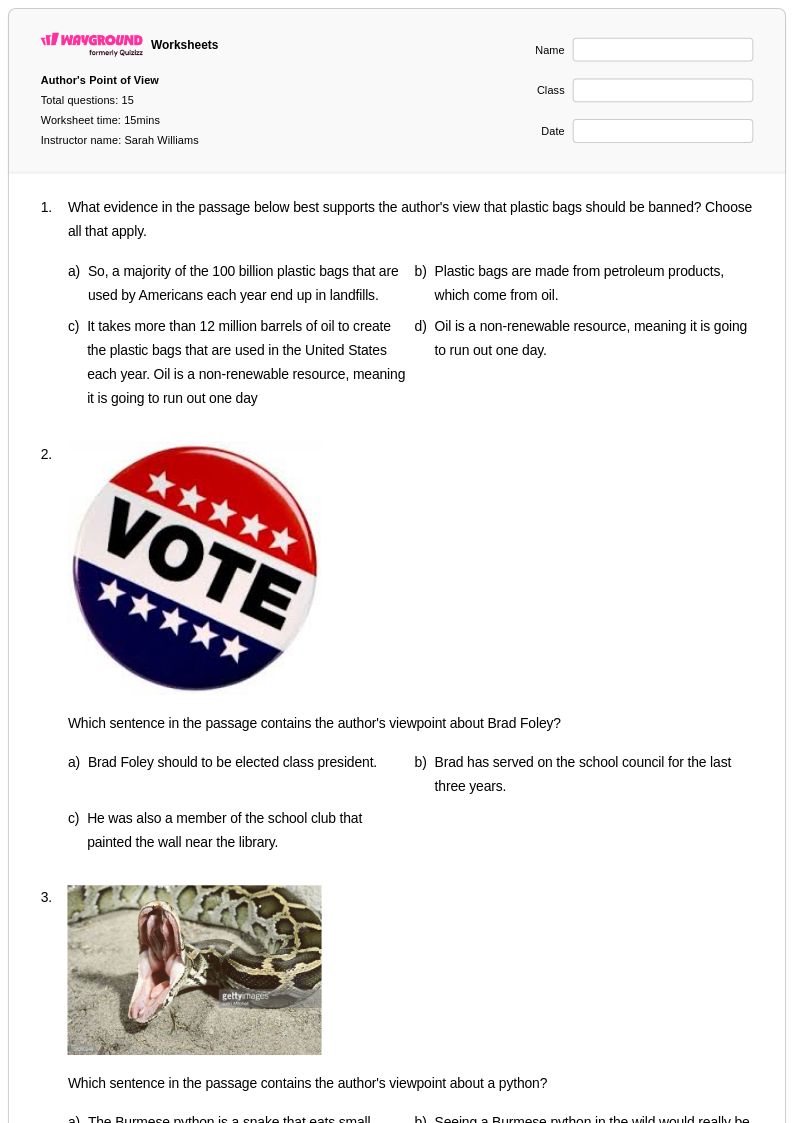
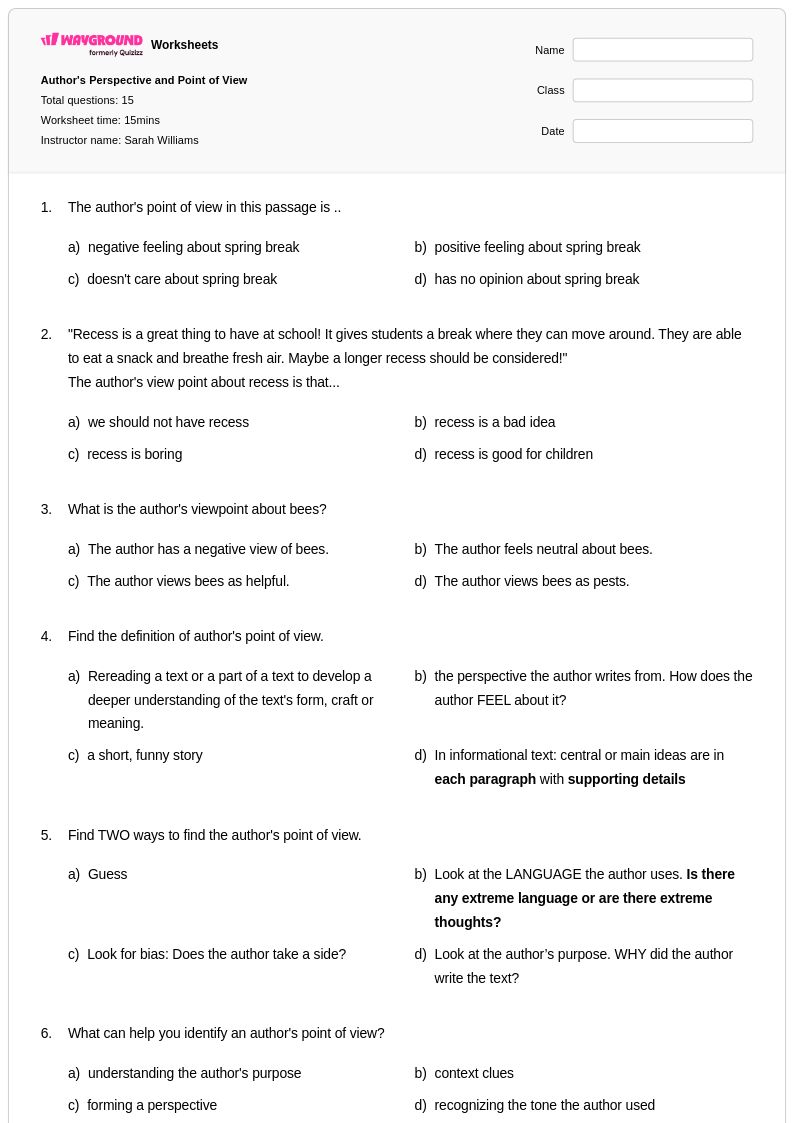
Effective practice exercises include annotating short passages to flag loaded language and tone, comparing two texts on the same event or topic to identify differing perspectives, and completing structured graphic organizers that prompt students to cite textual evidence for their claims about authorial stance. Author's point of view worksheets that present excerpts from both fiction and nonfiction texts give students practice recognizing how perspective operates differently across genres. Requiring students to write a justification using specific lines from the text, rather than general impressions, sharpens the analytical habit.
What mistakes do students commonly make when analyzing author's point of view?
The most common error is conflating the narrator's point of view with the author's point of view, particularly in fiction, where students assume the narrator speaks for the author. Students also frequently confuse author's purpose with author's perspective, treating 'to inform' or 'to persuade' as a complete answer rather than examining the specific stance embedded in the writing. Another persistent misconception is that nonfiction is objective by default, which causes students to overlook bias in informational texts. Targeted practice with nonfiction excerpts that contain subtle word choice and selective detail helps correct this assumption.
How can I differentiate author's point of view instruction for students at different reading levels?
For struggling readers, begin with highly opinionated, single-paragraph texts where the author's stance is explicit, and provide sentence frames to scaffold evidence-based responses. On-level students benefit from analyzing longer passages where perspective is embedded in tone and word choice rather than stated directly. Advanced students can work with complex texts that contain unreliable narrators or subtle ideological bias, requiring them to evaluate credibility and corroborate claims across multiple sources. Wayground supports individual student accommodations including Read Aloud for audio support, reduced answer choices to lower cognitive load, and adjustable font sizes through Reading mode, making it easier to deliver differentiated practice within the same assignment.
How do I use author's point of view worksheets in my classroom?
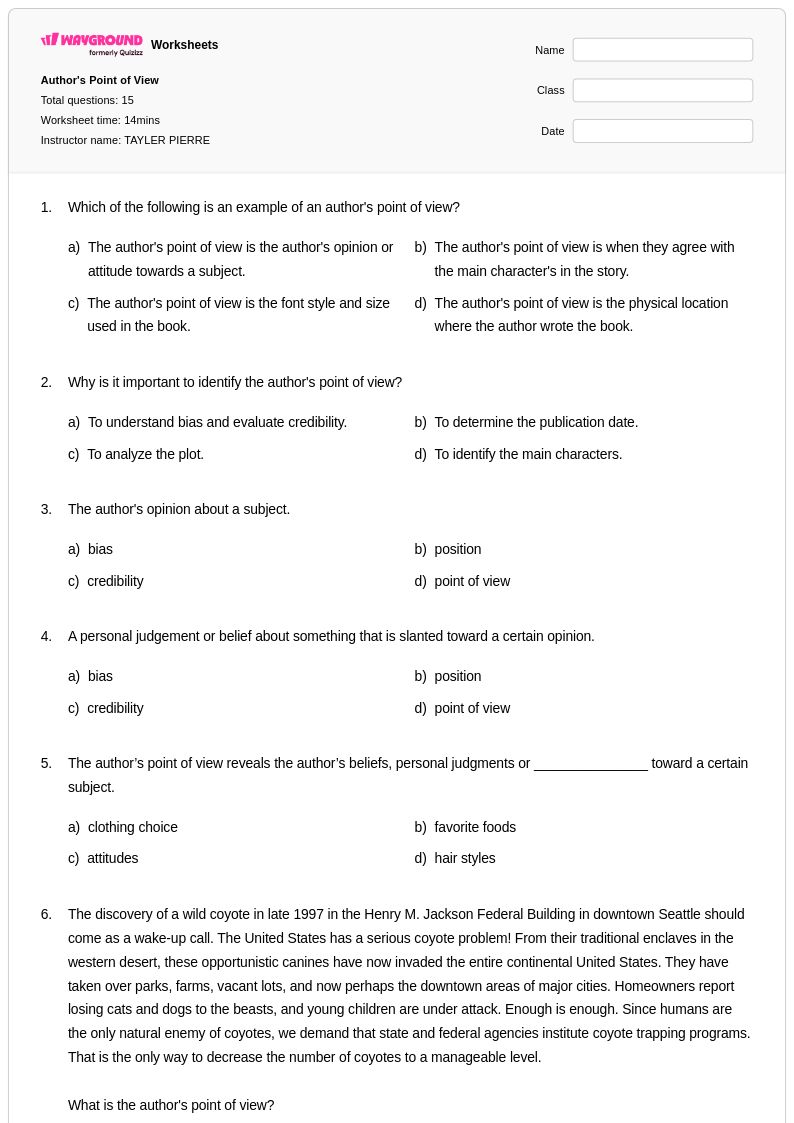
Author's point of view worksheets work well as guided practice after direct instruction, as independent reading comprehension checks, or as bell-ringer activities using short passages. Each worksheet includes a complete answer key, which supports self-assessment, small-group discussion, or teacher-led review. These worksheets are available as printable PDFs for traditional classroom use and in digital formats for technology-integrated environments, and teachers can also host them as a quiz directly on Wayground to collect and review student responses efficiently.
How is author's point of view different from author's purpose?
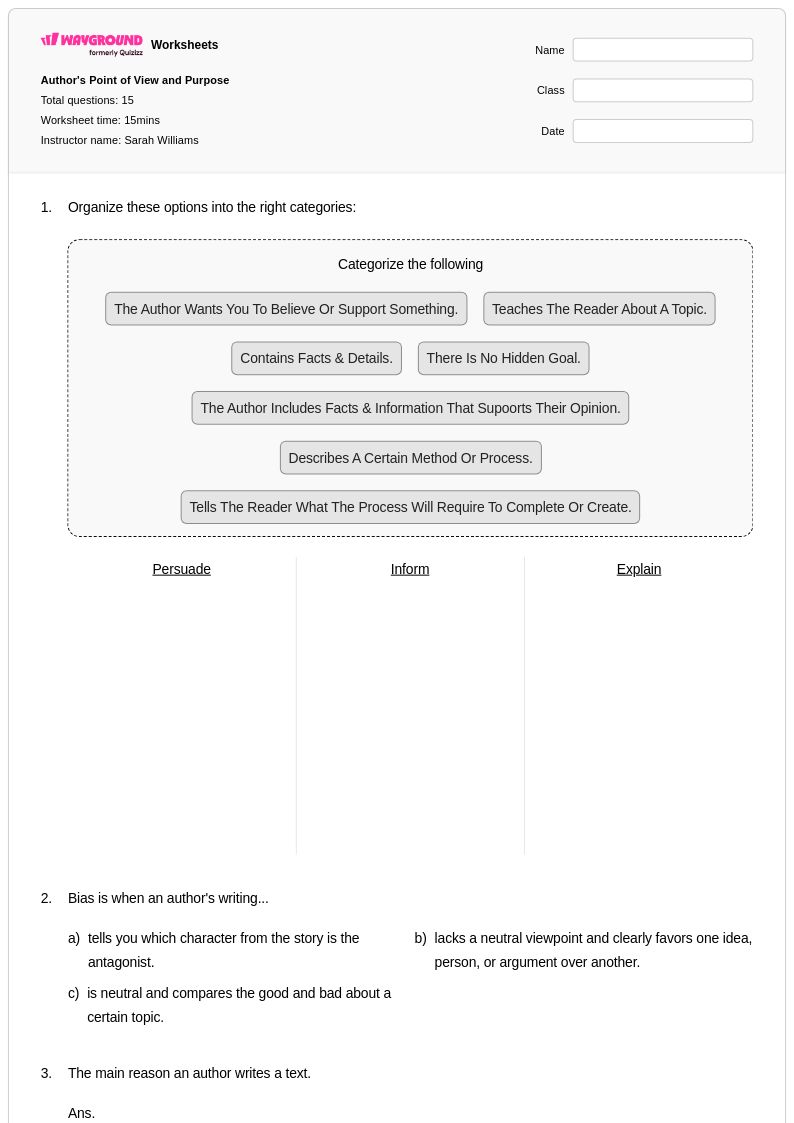
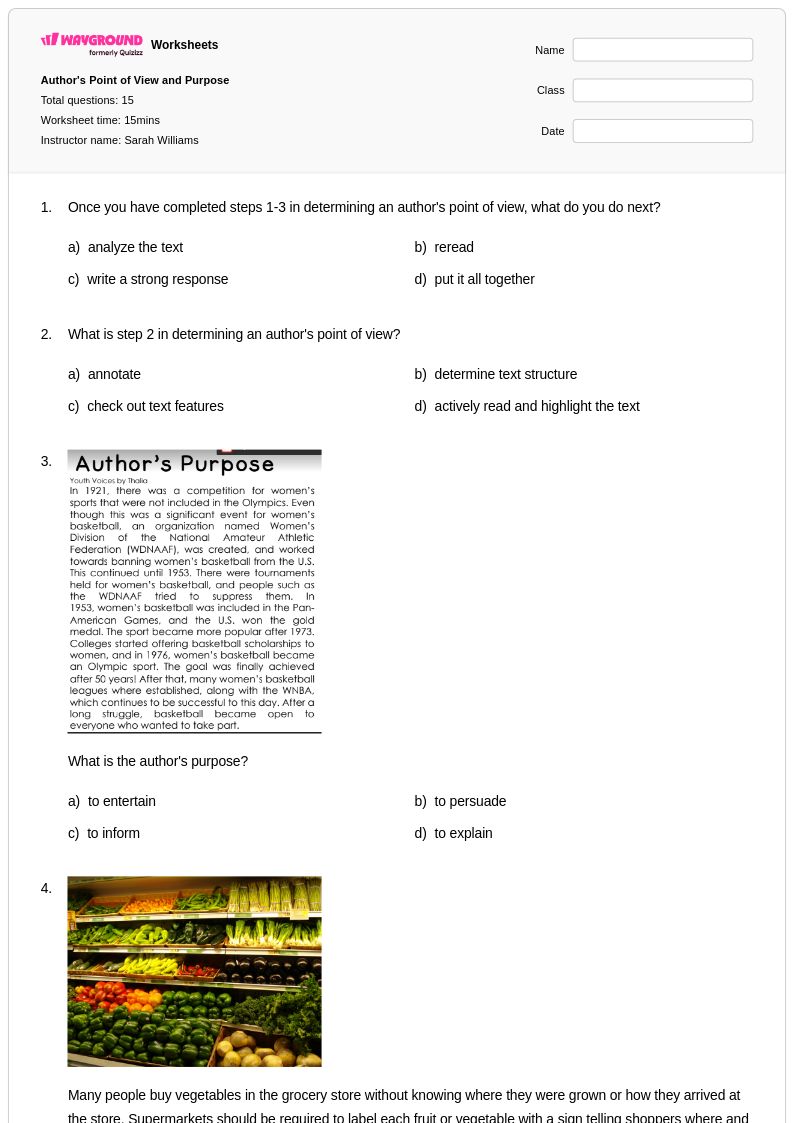
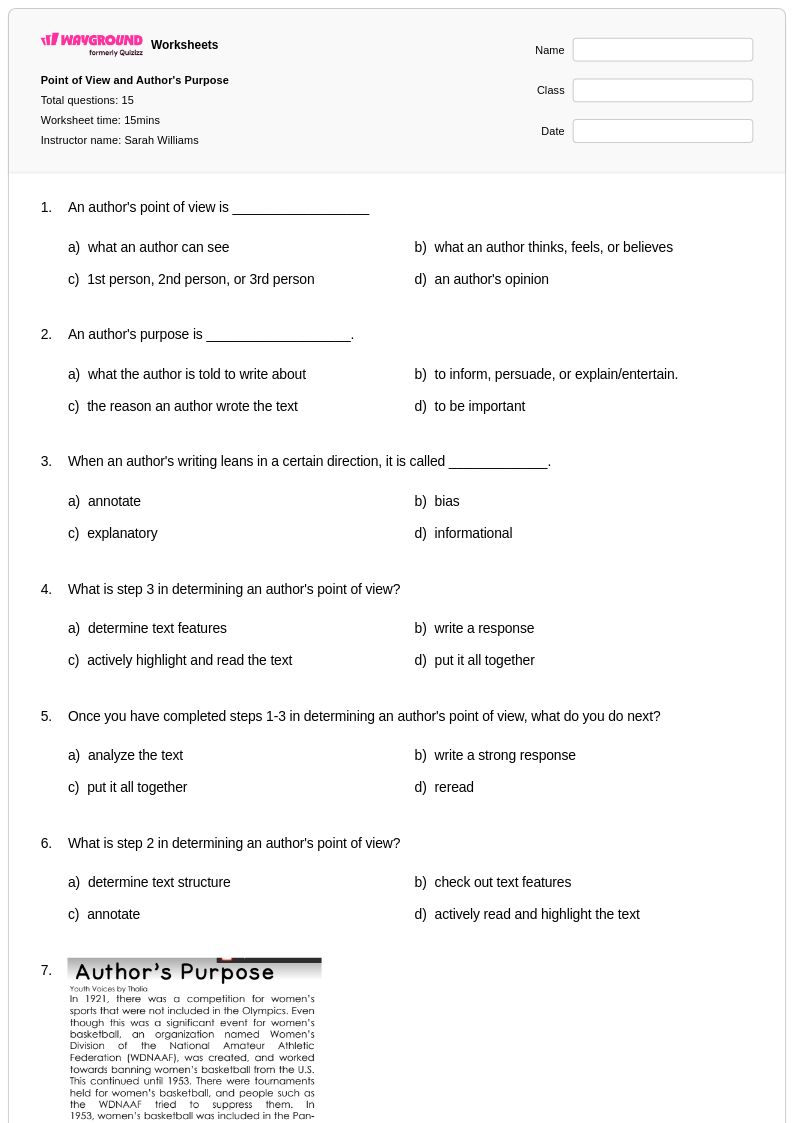
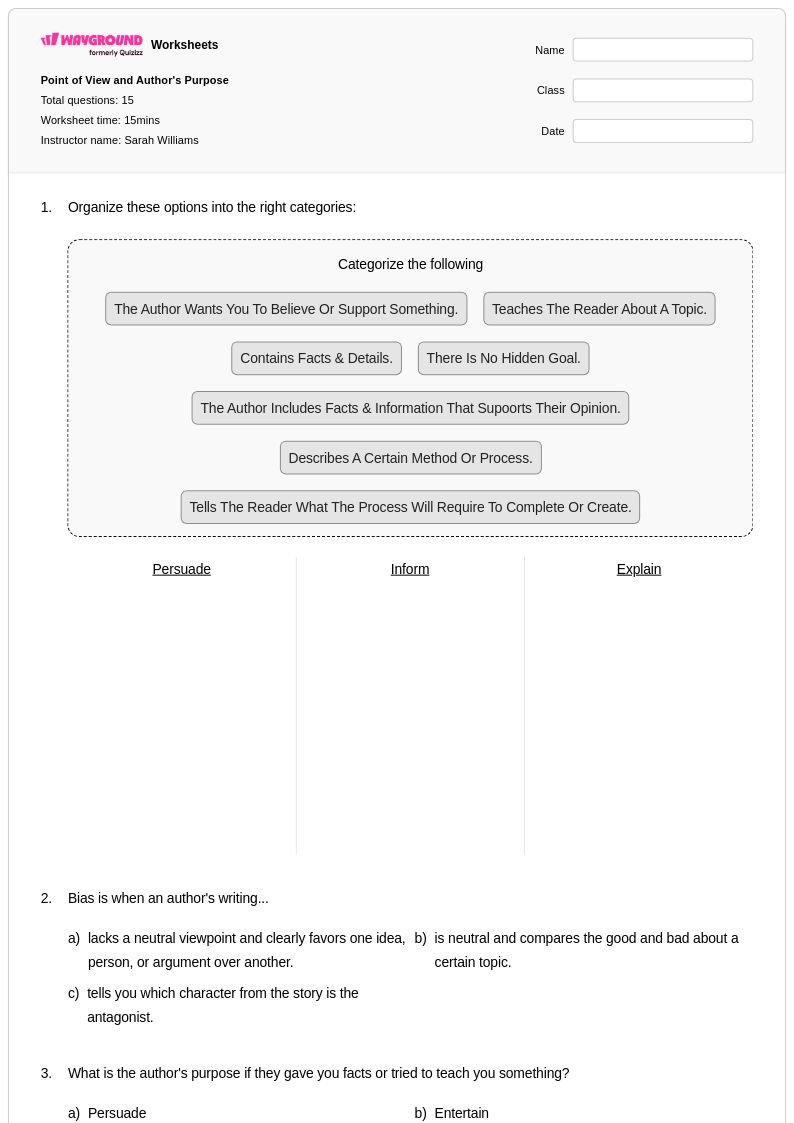
Author's purpose refers to the general reason a text was written, typically to inform, persuade, or entertain, while author's point of view refers to the specific perspective, bias, or stance the author brings to that purpose. Two authors can both write to inform about the same event but present it from opposing viewpoints depending on their background, beliefs, and rhetorical choices. Teaching students to identify both is important because purpose explains what the author is trying to do, while point of view reveals how their perspective shapes the way they do it.