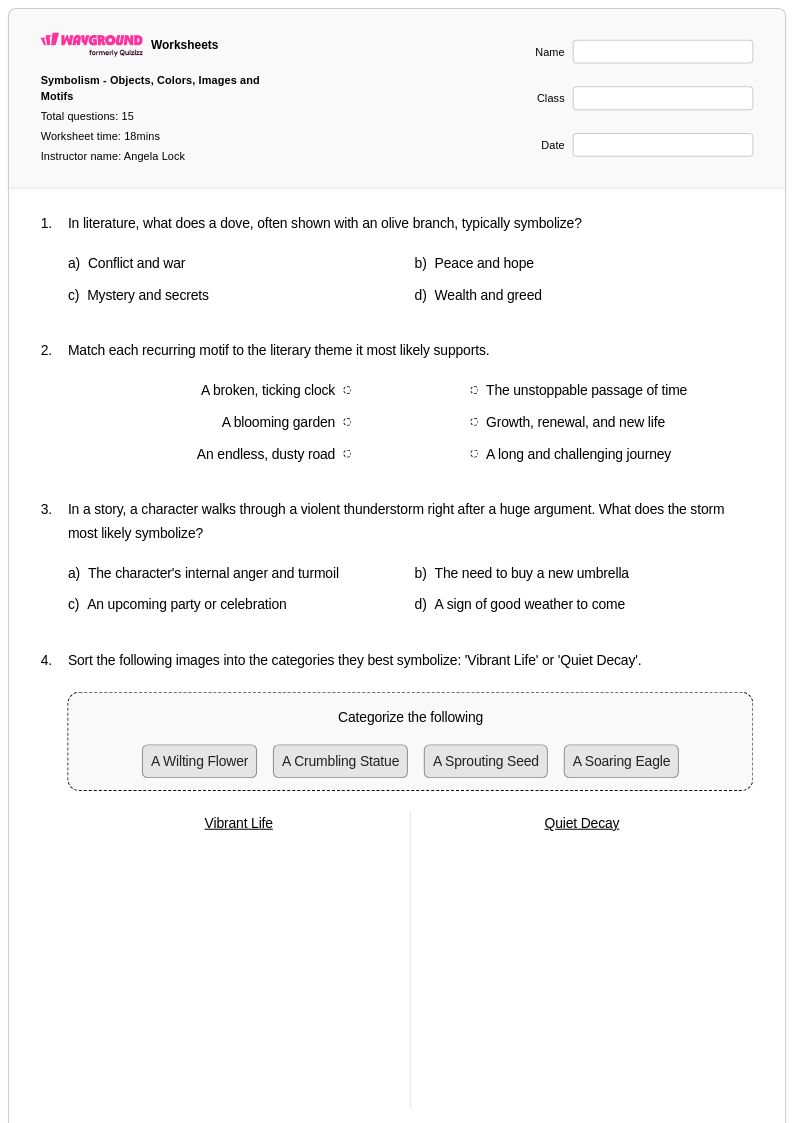
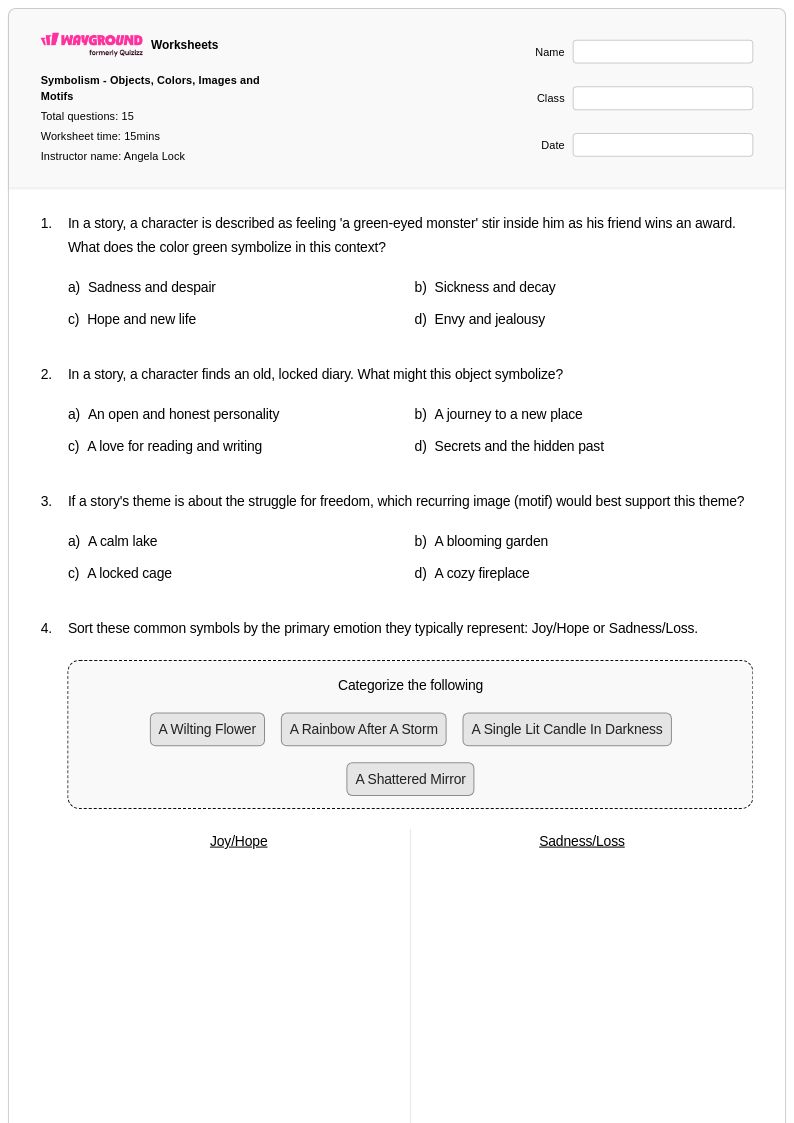
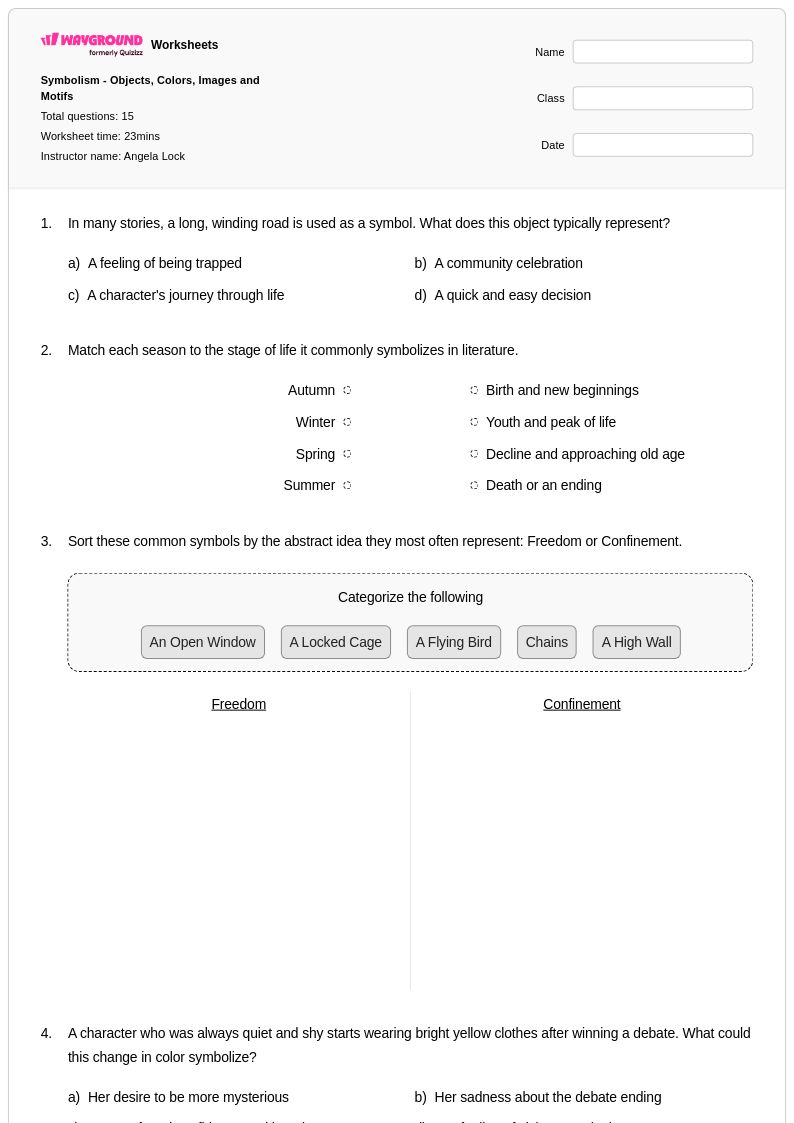
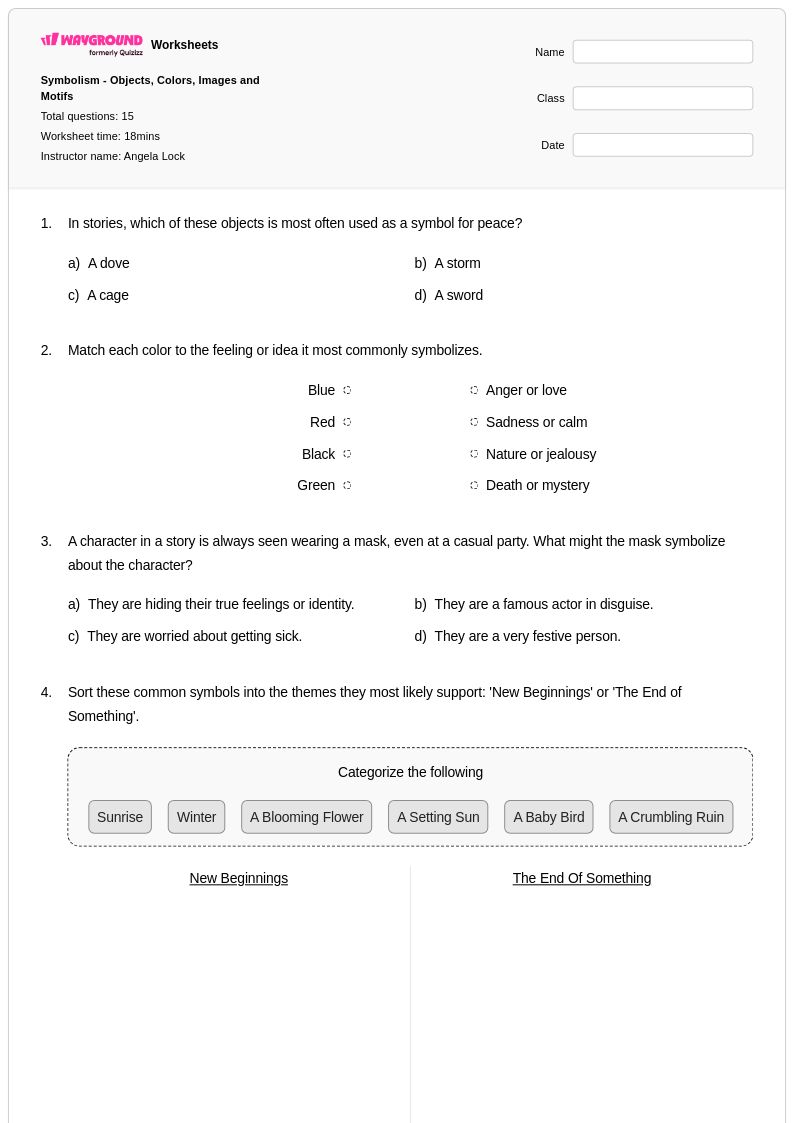
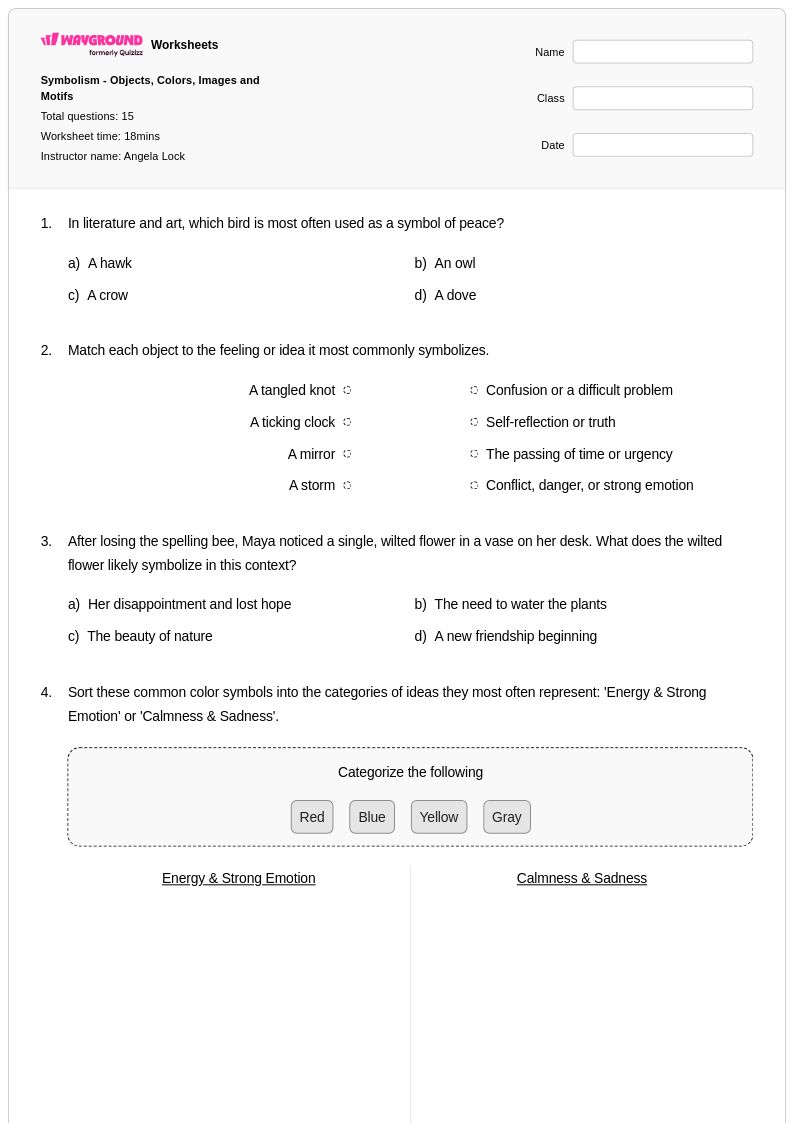
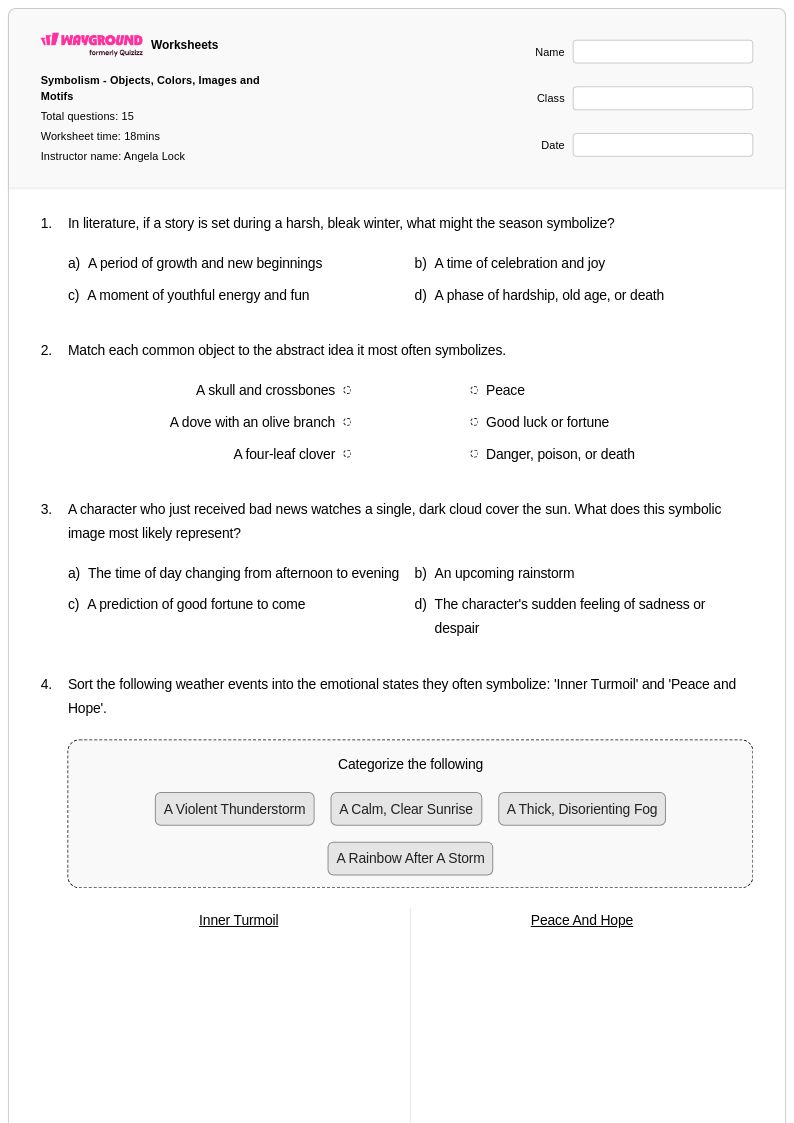
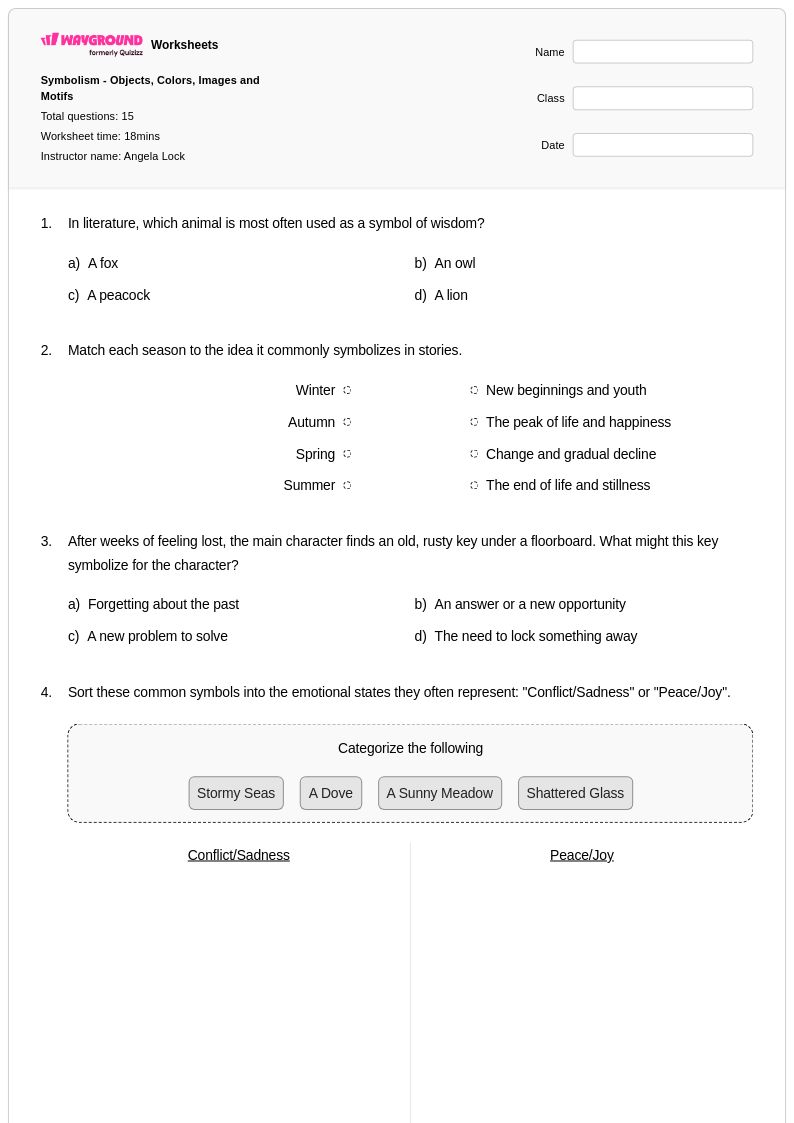
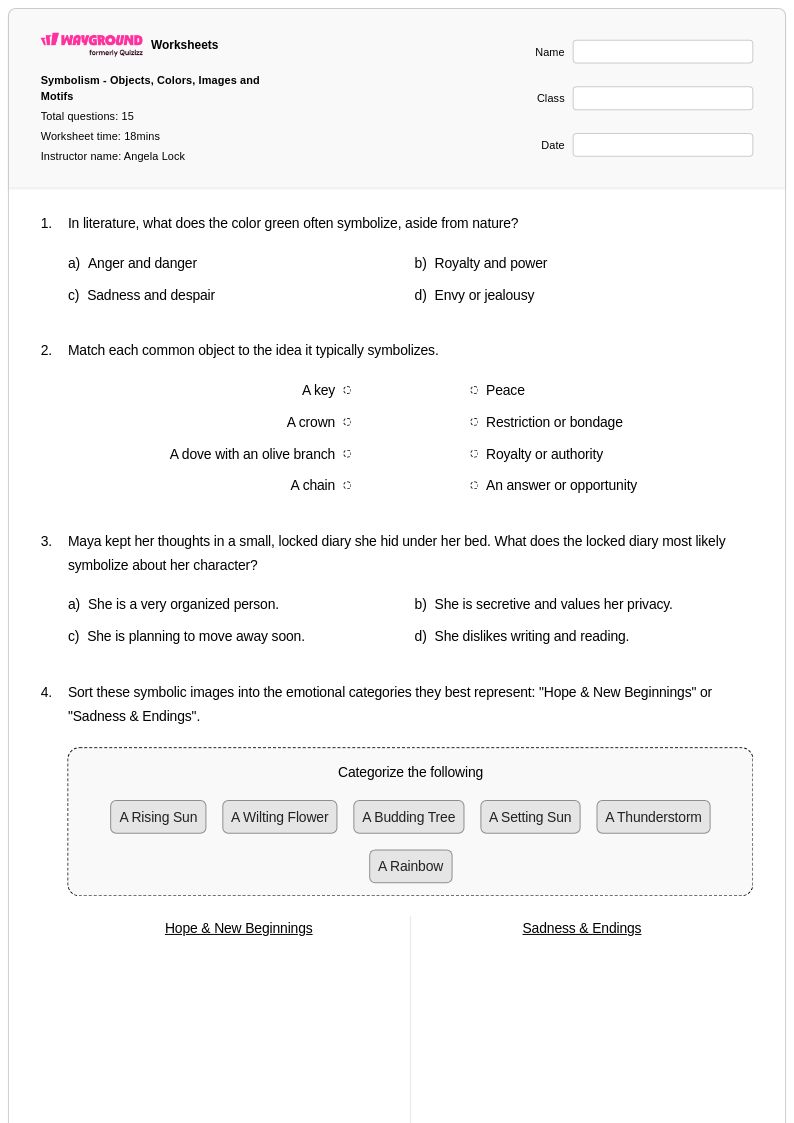
Enhance Class 11 students' understanding of literary symbolism with Wayground's comprehensive collection of free worksheets, printables, and practice problems that include detailed answer keys to strengthen reading comprehension skills.
Explore printable Symbolism worksheets for Class 11
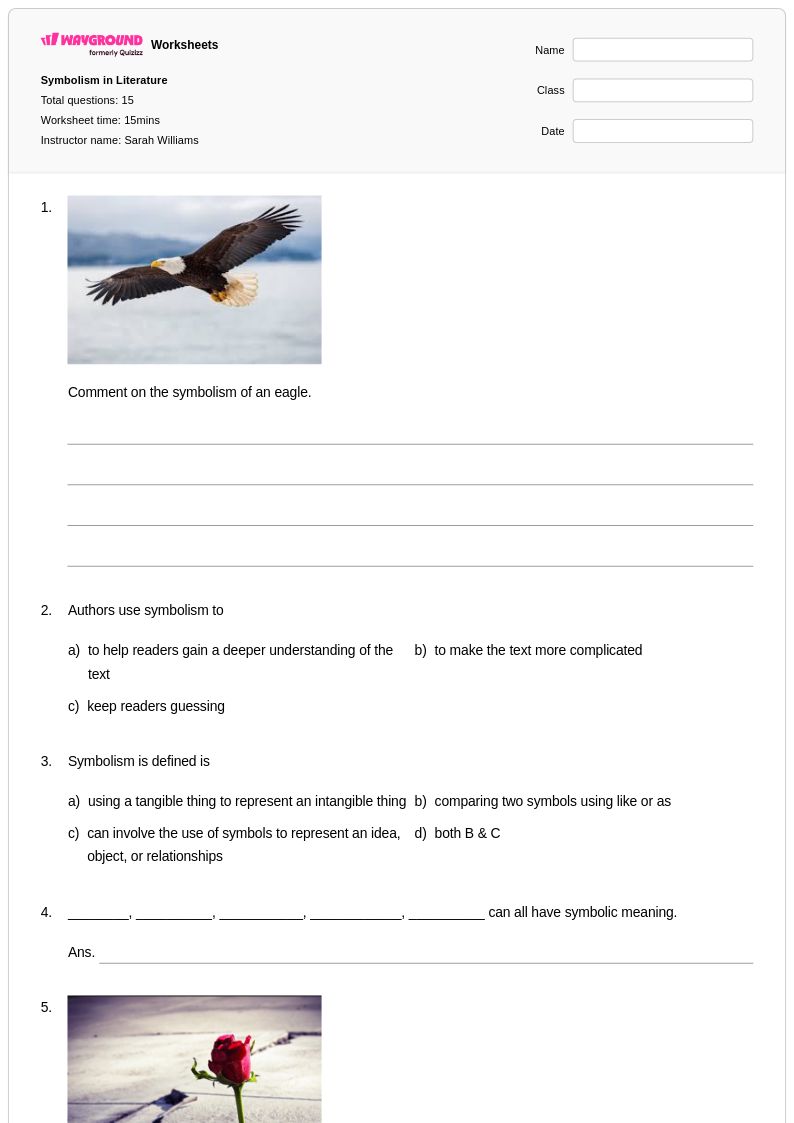
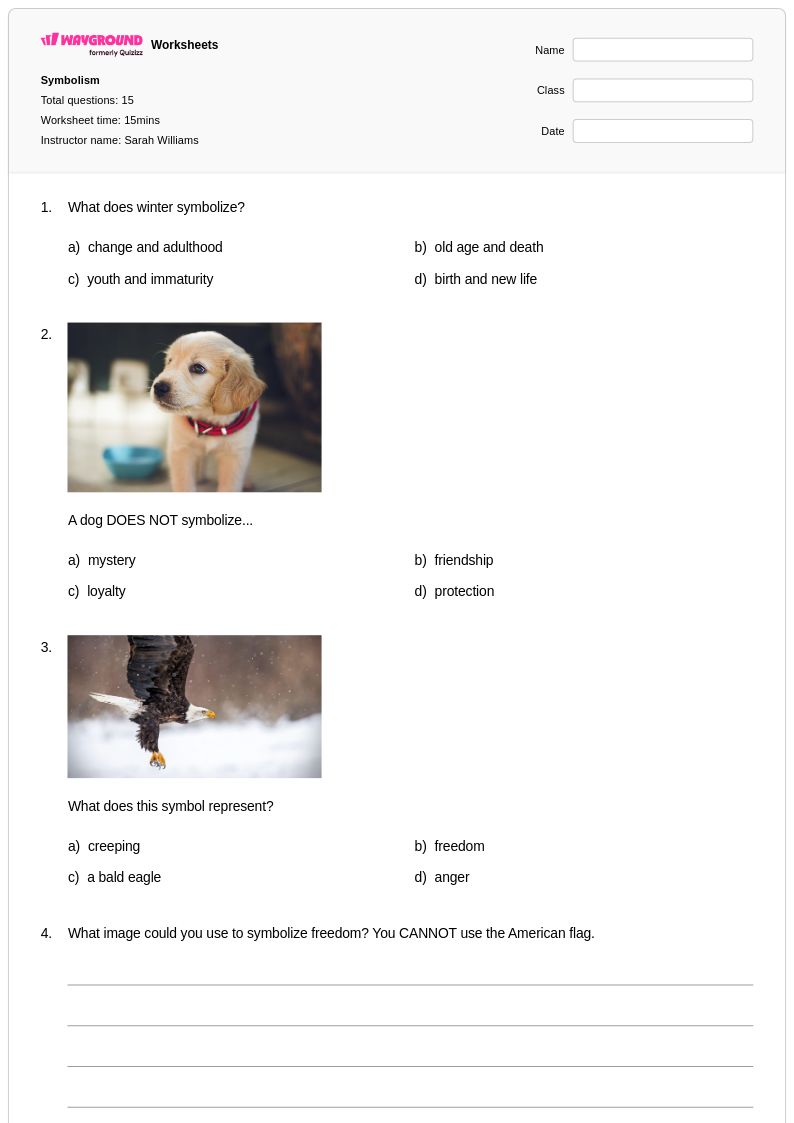
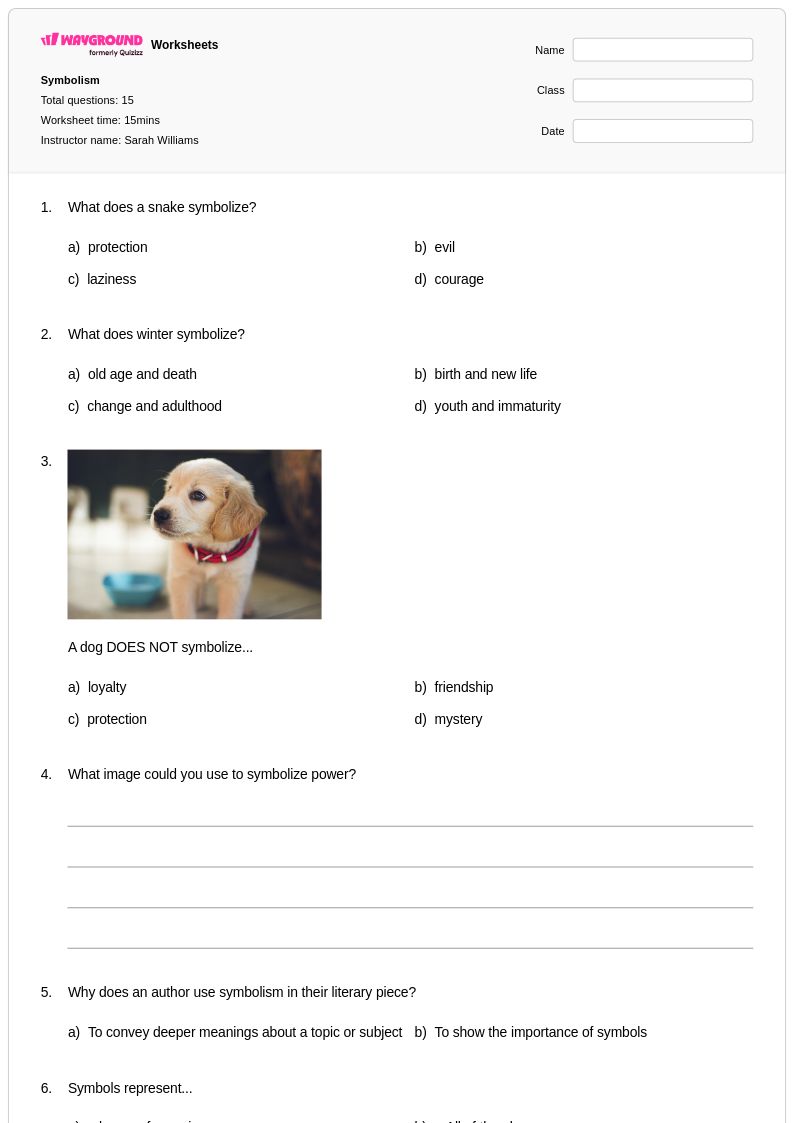
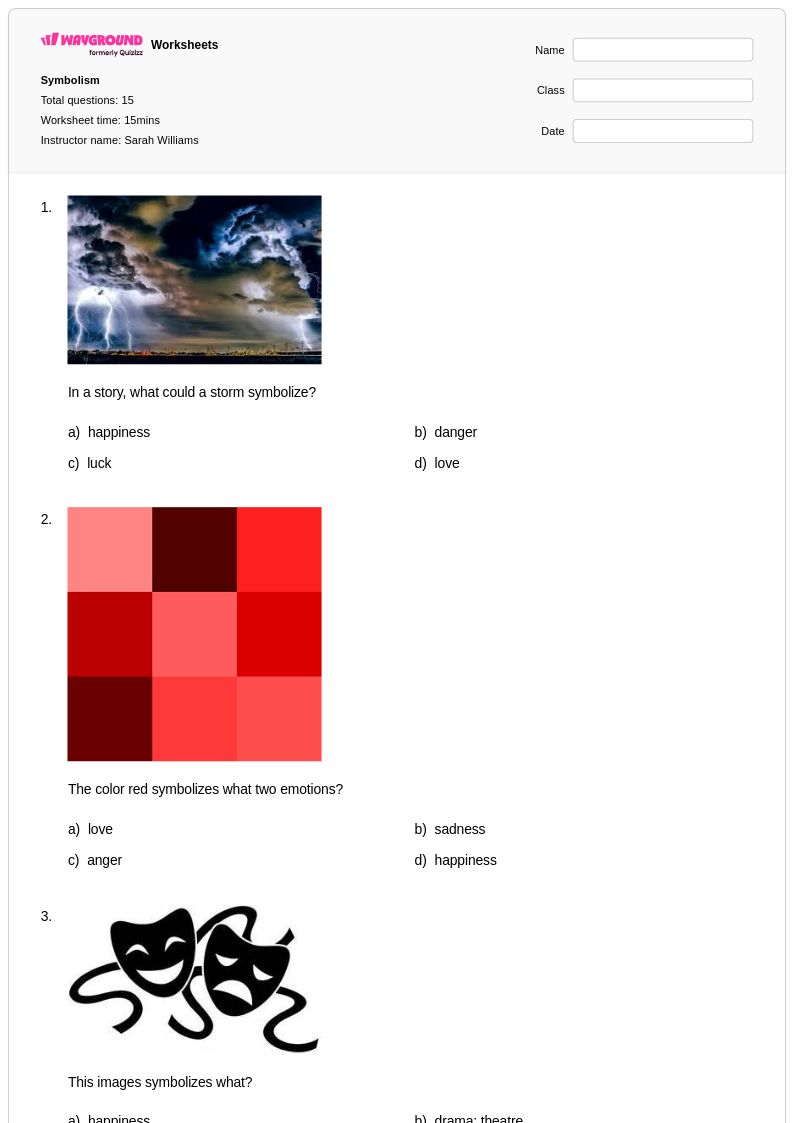
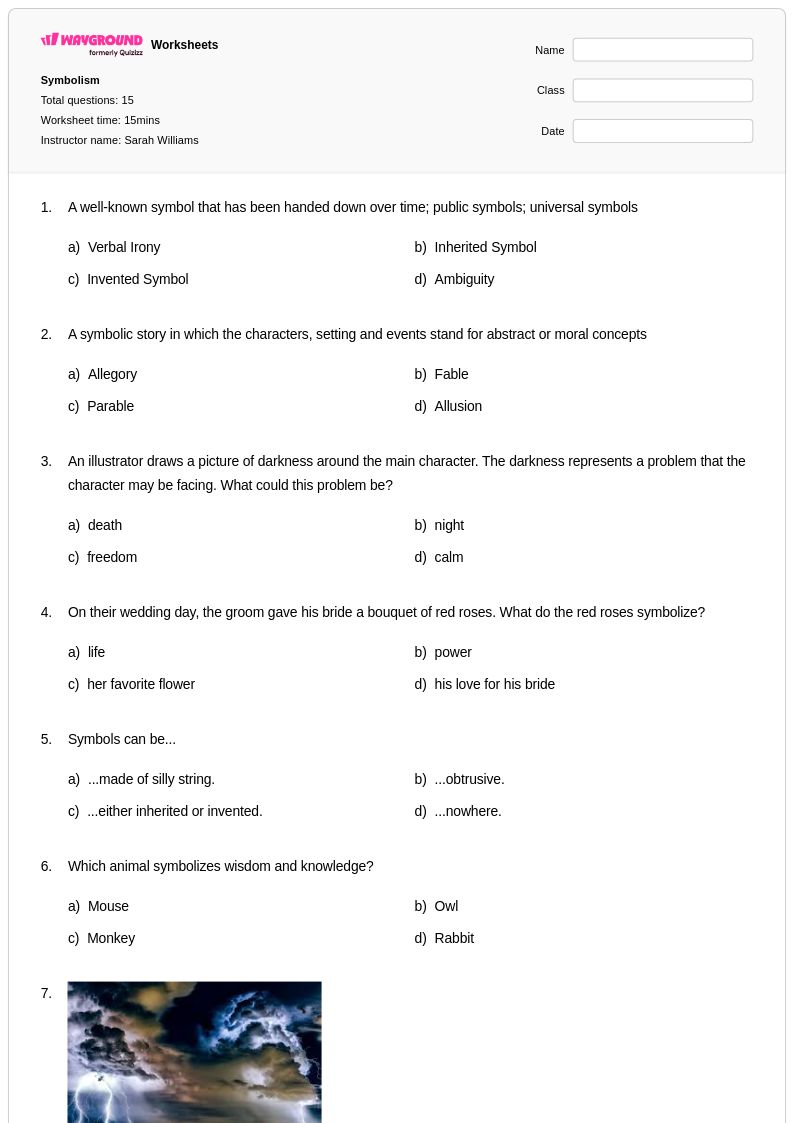
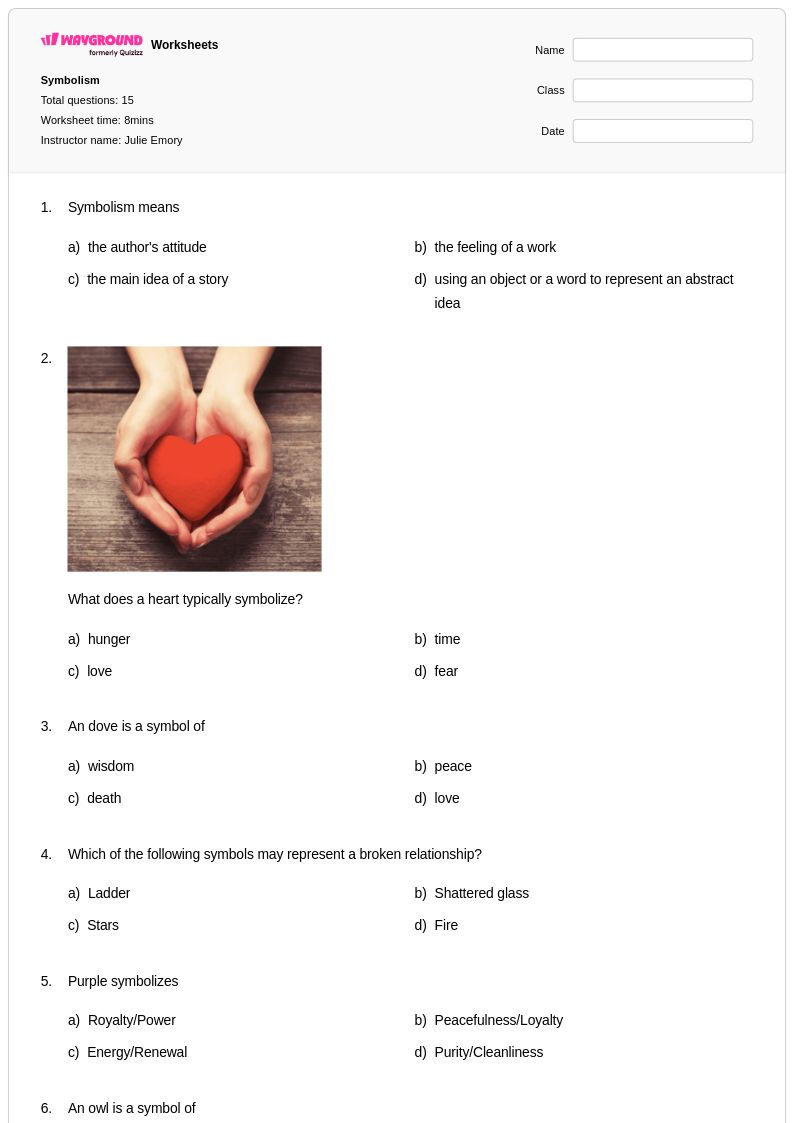
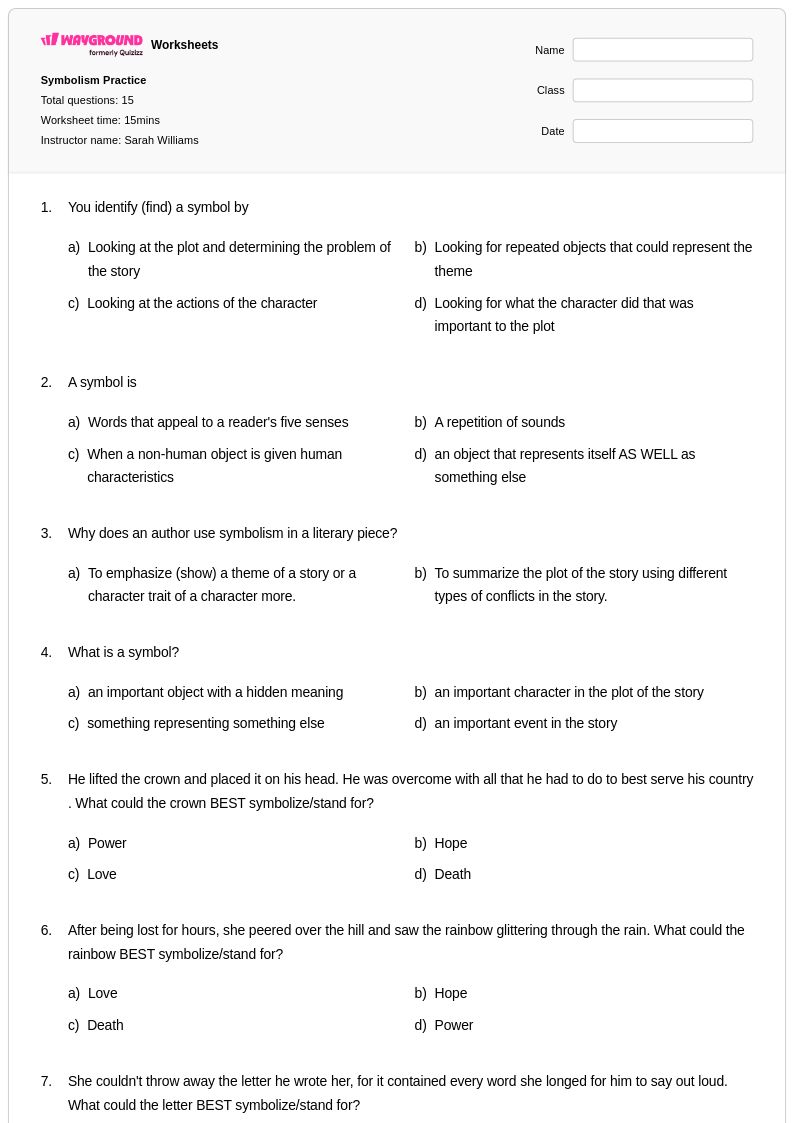
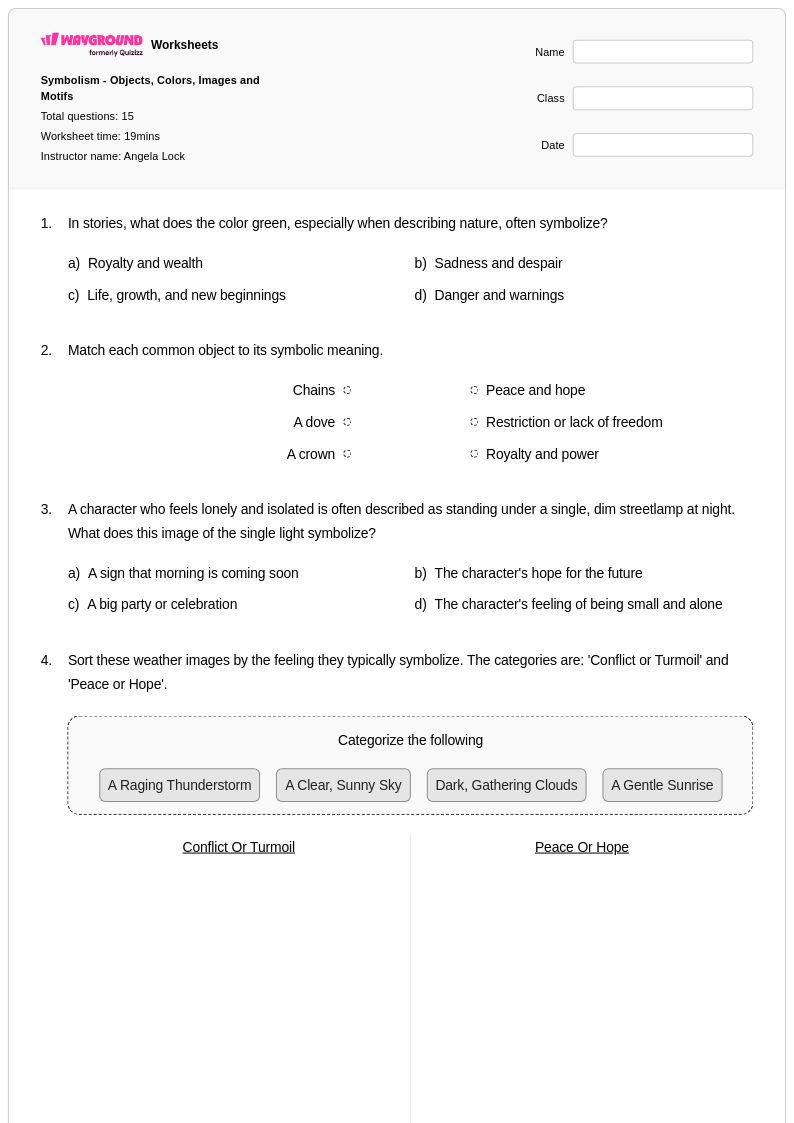
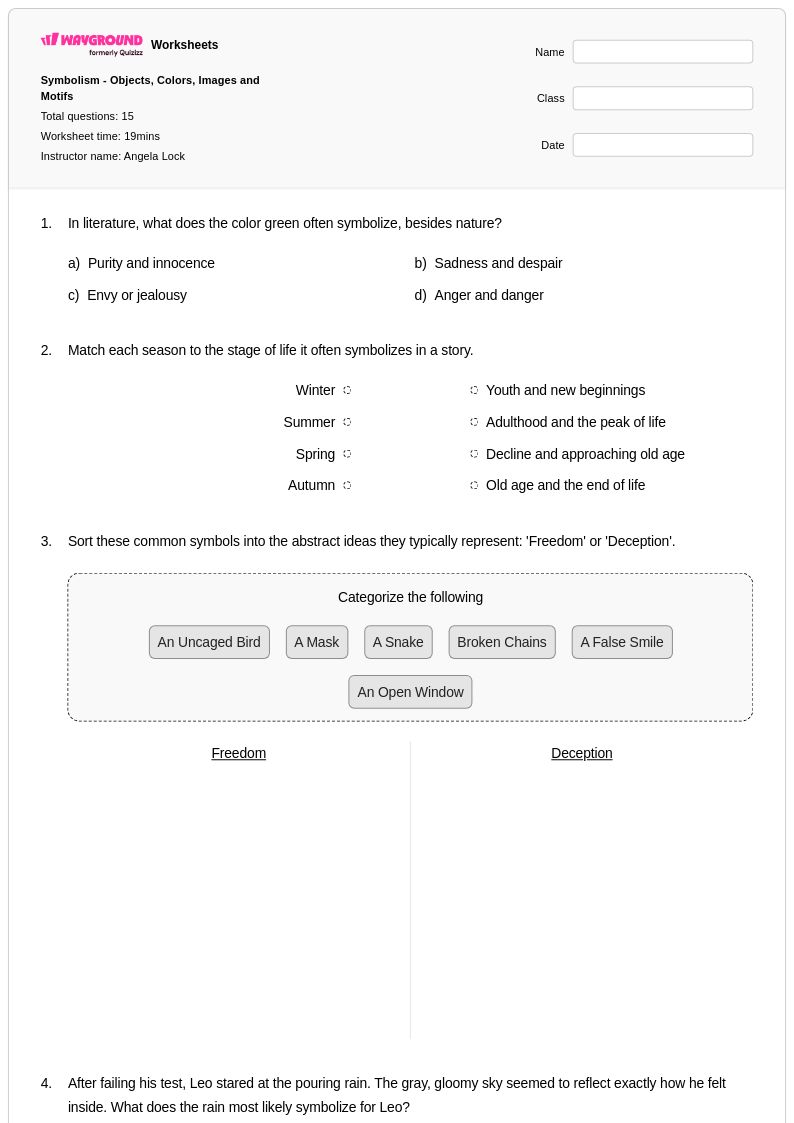
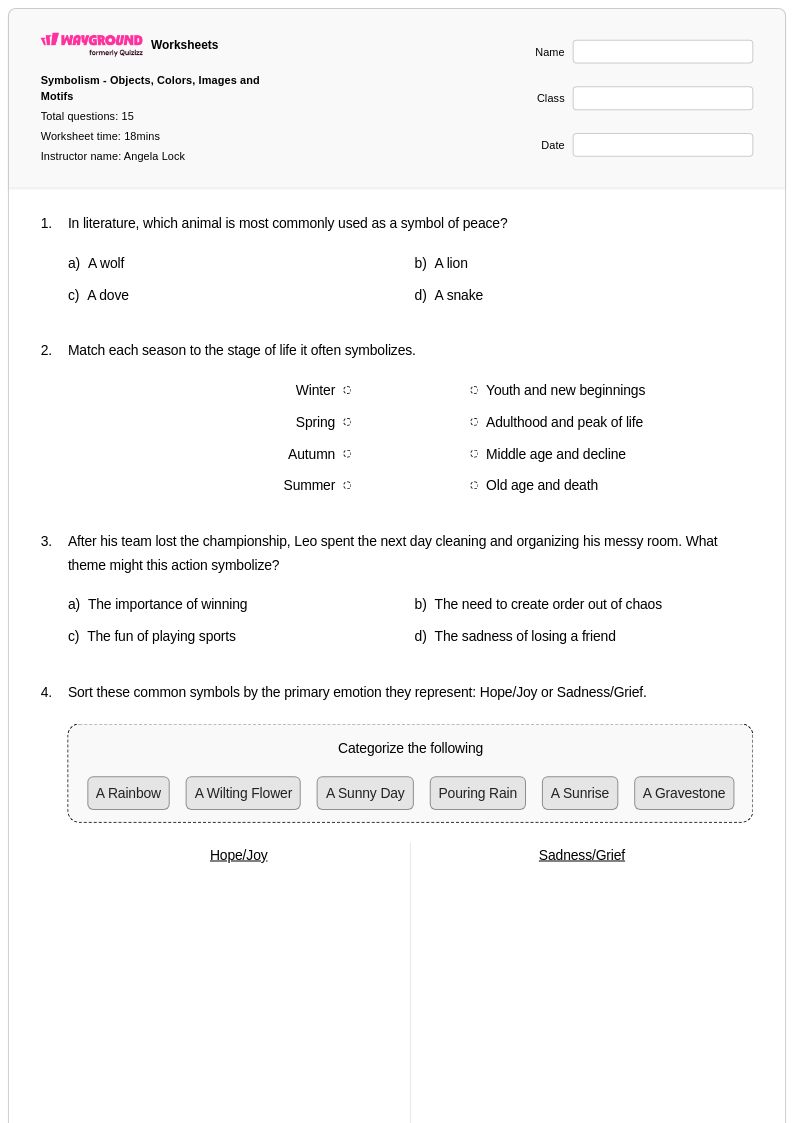
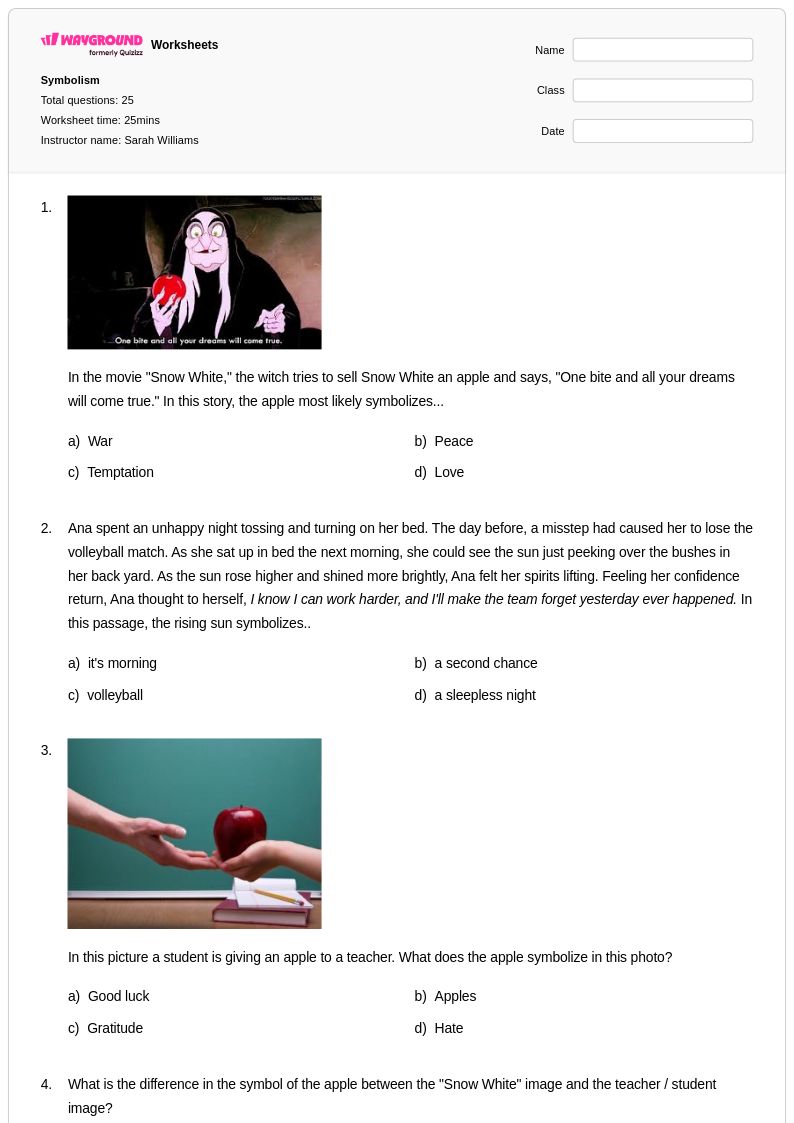
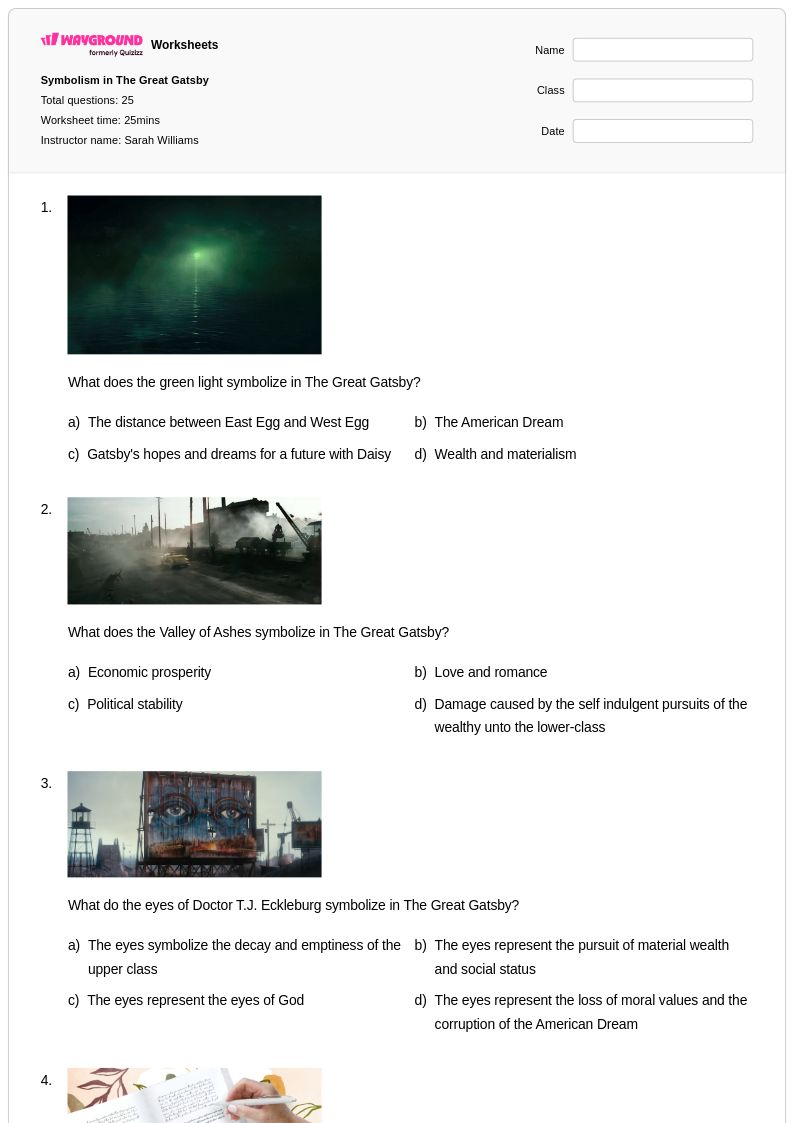
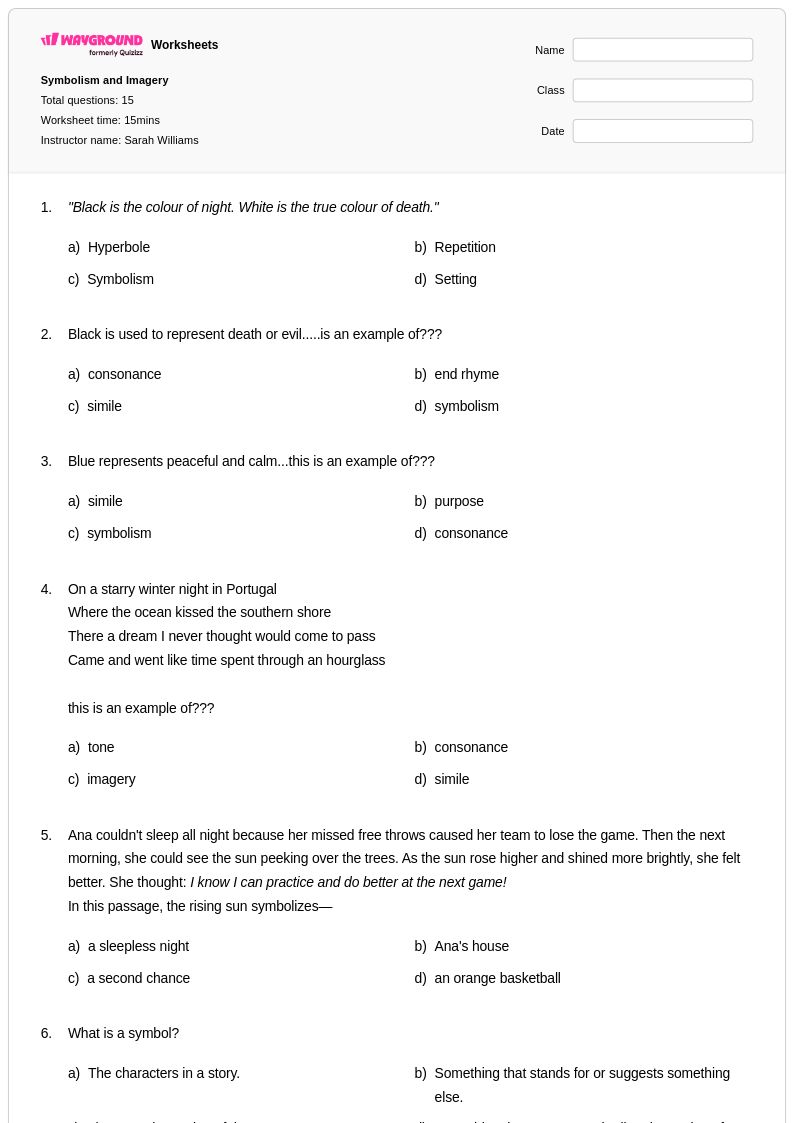
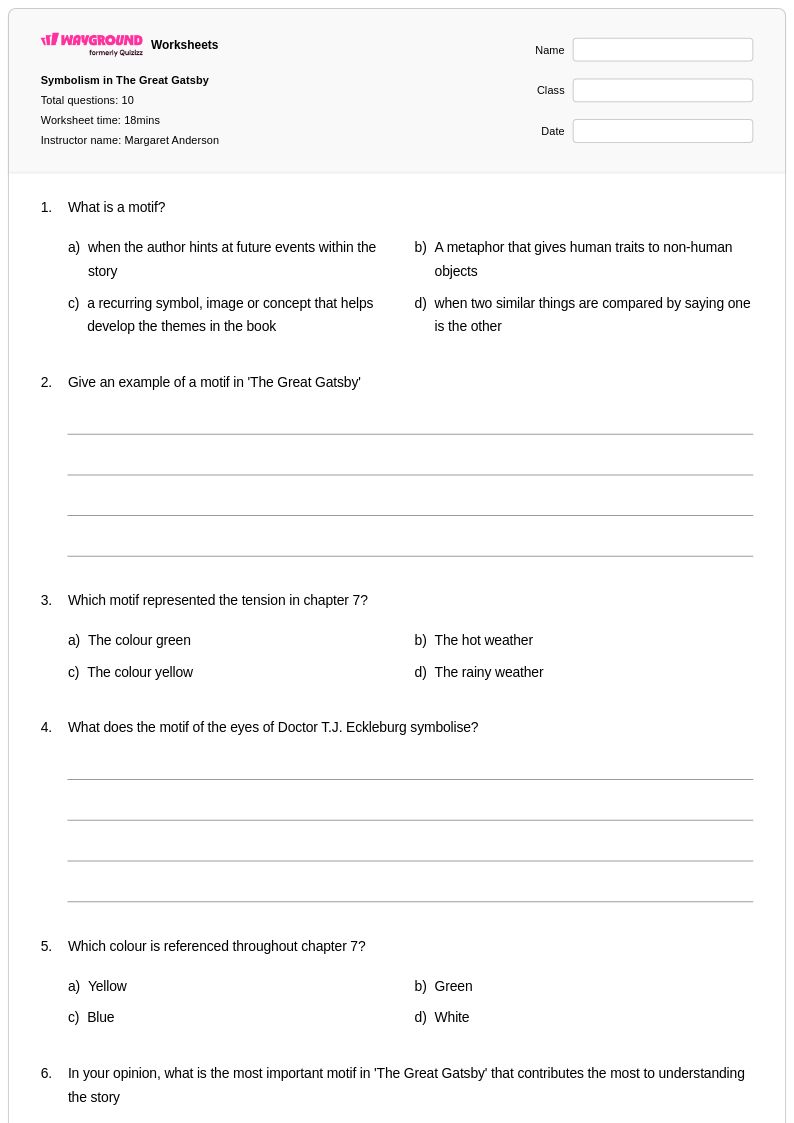
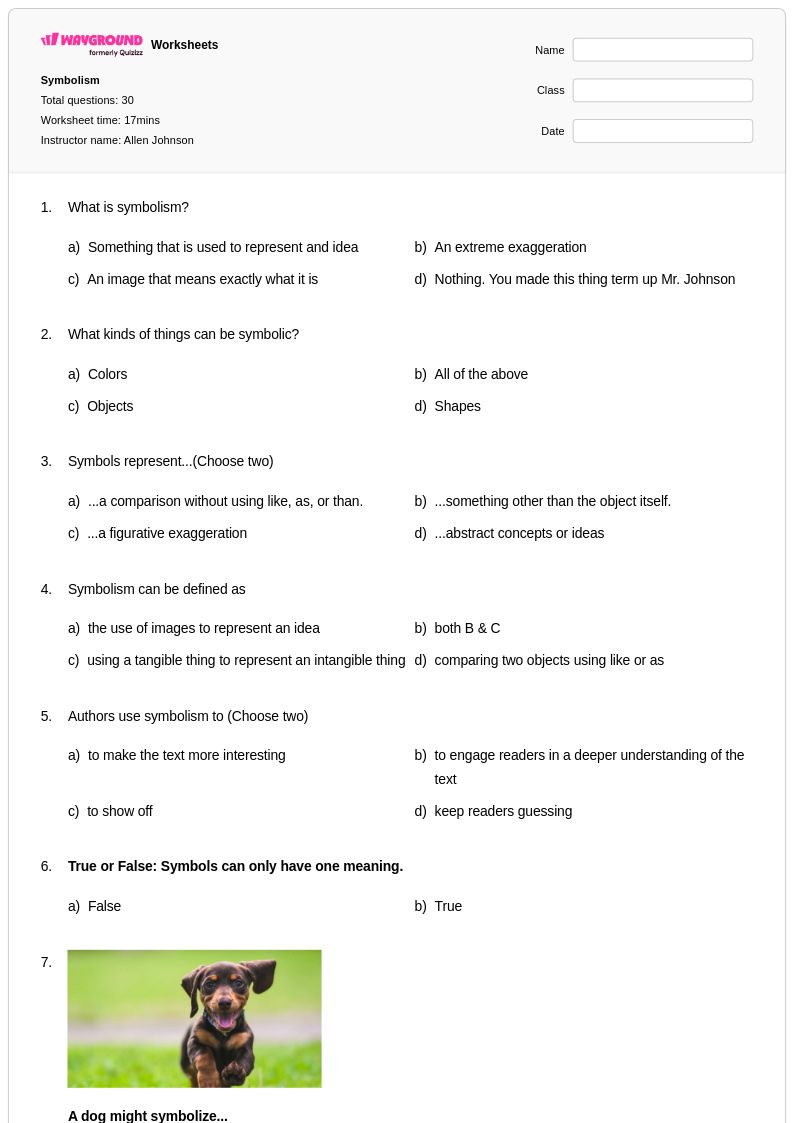
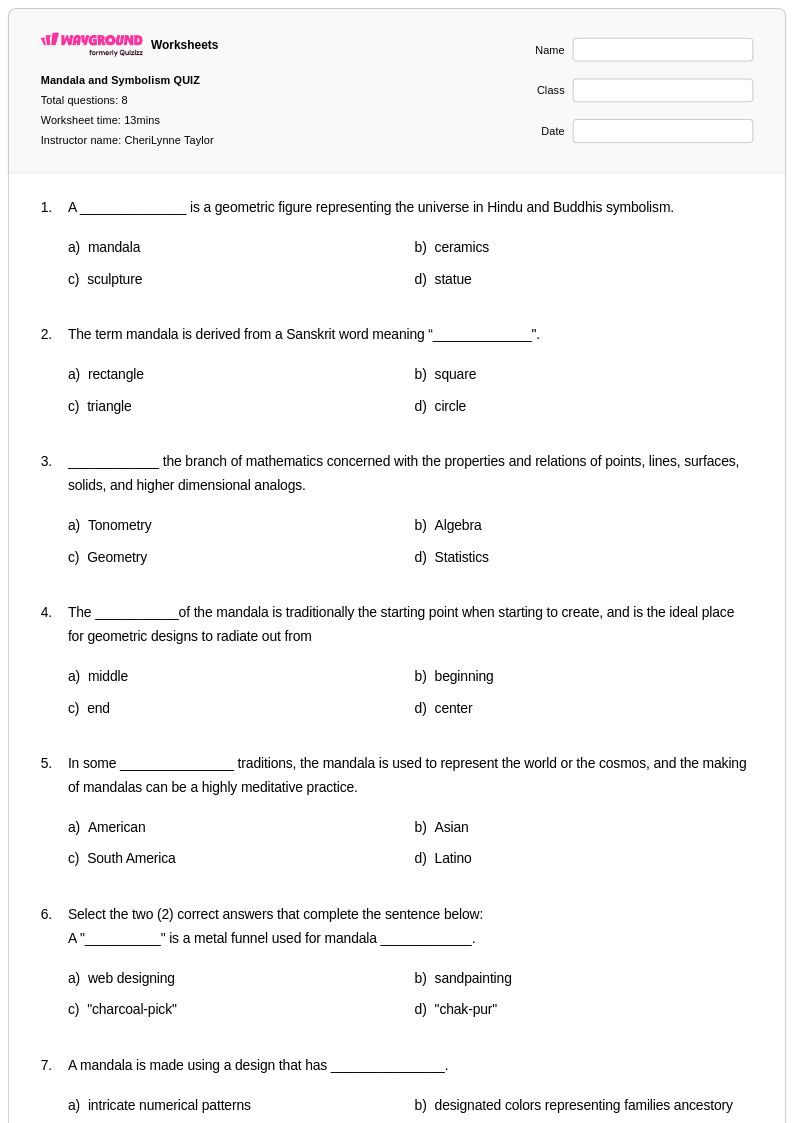
Symbolism worksheets for Class 11 students available through Wayground (formerly Quizizz) provide comprehensive practice in identifying, analyzing, and interpreting symbolic elements within literary texts. These expertly crafted resources strengthen students' ability to recognize how authors use objects, characters, colors, and settings to represent deeper meanings beyond their literal significance. The worksheets feature diverse practice problems that guide students through the process of uncovering symbolic layers in poetry, prose, and drama, helping them develop critical thinking skills essential for advanced literary analysis. Each worksheet includes detailed answer keys that explain the reasoning behind symbolic interpretations, and the free printable pdf format makes these resources easily accessible for classroom use or independent study.
Wayground (formerly Quizizz) supports English teachers with an extensive collection of symbolism worksheets drawn from millions of teacher-created resources, offering robust search and filtering capabilities that align with state and national literature standards. The platform's differentiation tools allow educators to customize worksheets based on individual student needs, providing options for both remediation and enrichment activities that target specific aspects of symbolic analysis. Teachers can access these materials in both printable and digital pdf formats, enabling flexible implementation across various learning environments while maintaining consistent quality and academic rigor. This comprehensive approach to worksheet distribution streamlines lesson planning and ensures that students receive targeted skill practice in recognizing and interpreting the complex symbolic elements that define sophisticated literary works.
FAQs
How do I teach symbolism to students who struggle with abstract thinking?
Start with concrete, familiar symbols students already recognize outside of literature, such as a red stop sign representing danger or a heart representing love, before moving into literary texts. Once students can articulate why a symbol works in real life, bridge that reasoning to how authors make deliberate choices to embed objects, colors, or settings with layered meaning. Scaffolding with graphic organizers that ask students to record the literal object, the author's context clues, and the inferred meaning helps anchor abstract analysis in textual evidence.
What exercises help students practice identifying symbolism in literature?
Close reading exercises that isolate a single passage and ask students to annotate recurring images or objects are among the most effective for building symbol recognition. Comparative activities, where students analyze the same symbol across two different texts such as the color white in poetry versus a novel, deepen interpretive flexibility. Structured practice that requires students to cite specific textual evidence alongside their symbolic interpretation prevents surface-level guessing and builds the analytical habits that transfer across genres.
What mistakes do students commonly make when analyzing symbolism?
The most common error is over-symbolizing, where students assign symbolic meaning to every detail in a text rather than identifying which elements the author deliberately emphasizes through repetition, placement, or contrast. A related mistake is stating what a symbol represents without explaining how the text supports that interpretation, which produces unsupported claims rather than literary analysis. Students also frequently confuse symbolism with theme, conflating the symbol itself with the broader idea it contributes to, so explicitly distinguishing the two during instruction is essential.
How do I differentiate symbolism instruction for students at different reading levels?
For struggling readers, begin with picture books or short poems where symbols are visually or contextually obvious, and provide sentence frames that scaffold the analytical language they need. On-level students benefit from guided annotation of short stories with teacher-selected focus passages, while advanced students can independently analyze how a single symbol evolves in meaning across a full novel. On Wayground, teachers can apply accommodations such as Read Aloud and reduced answer choices to individual students, so a single digital assignment can serve the whole class while still meeting each learner where they are.
How can I use Wayground's symbolism worksheets in my classroom?
Wayground's symbolism worksheets are available as printable PDFs for traditional classroom use and in digital formats for technology-integrated environments, making them flexible enough for independent work, small-group instruction, or homework. Teachers can also host the worksheets as a quiz directly on Wayground, enabling real-time progress tracking. The included answer keys support both teacher-led review and student self-assessment, reducing prep time while keeping feedback immediate.
How do I assess whether students truly understand symbolism versus just memorizing definitions?
Authentic assessment of symbolism requires students to encounter an unfamiliar text and independently identify and interpret a symbol without teacher prompting, which separates procedural recall from genuine literary thinking. Short written responses that demand textual evidence alongside interpretation are more revealing than multiple-choice identification alone. Asking students to explain why a particular symbol is effective for the author's purpose, rather than simply what it means, pushes toward the higher-order analysis that signals real comprehension.