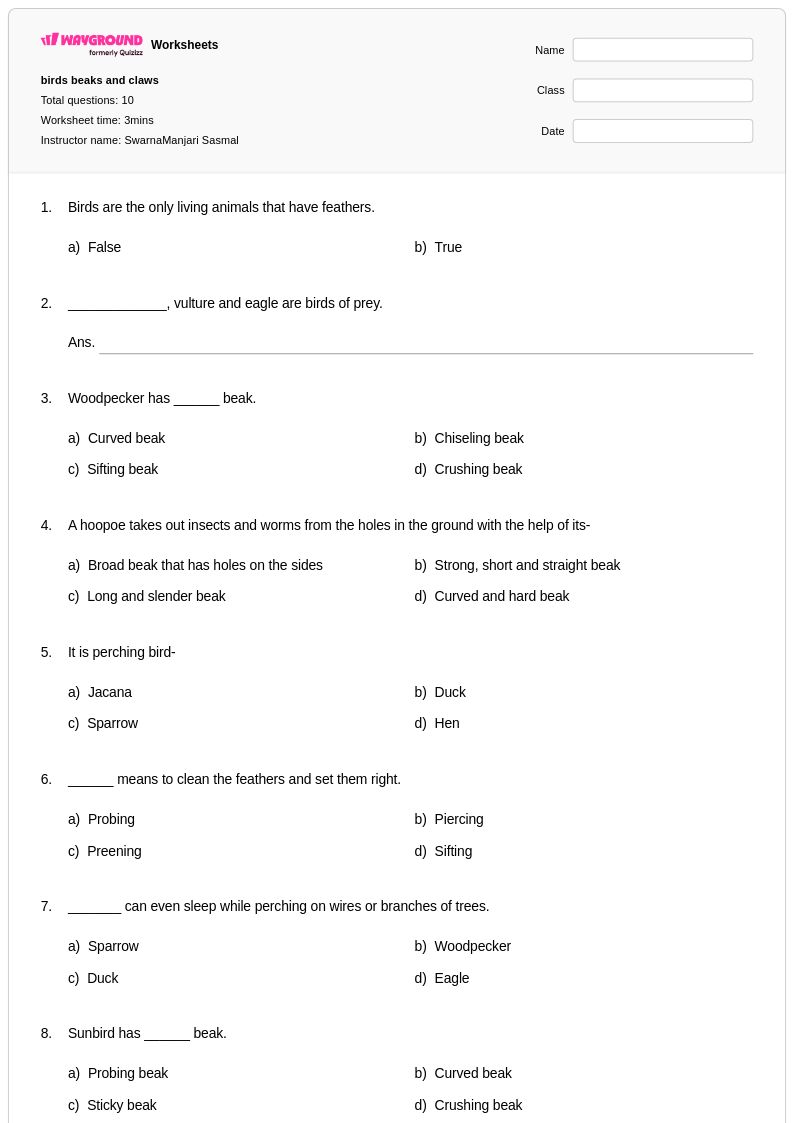
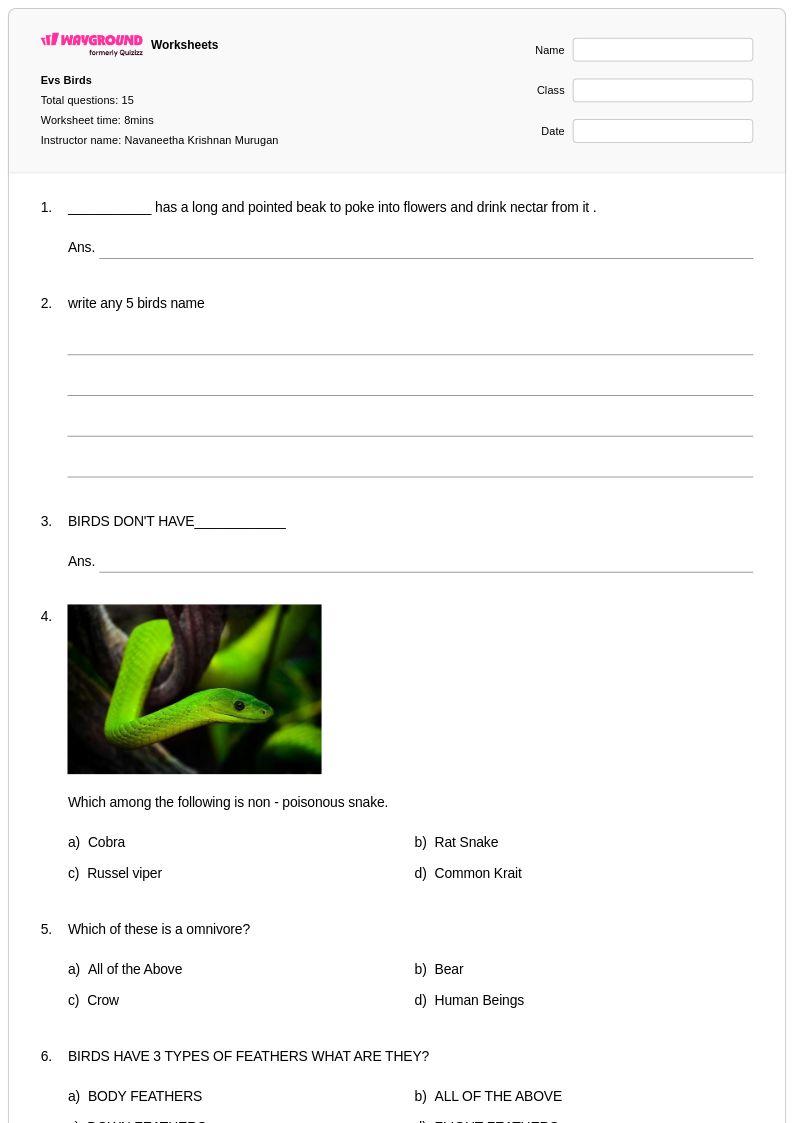
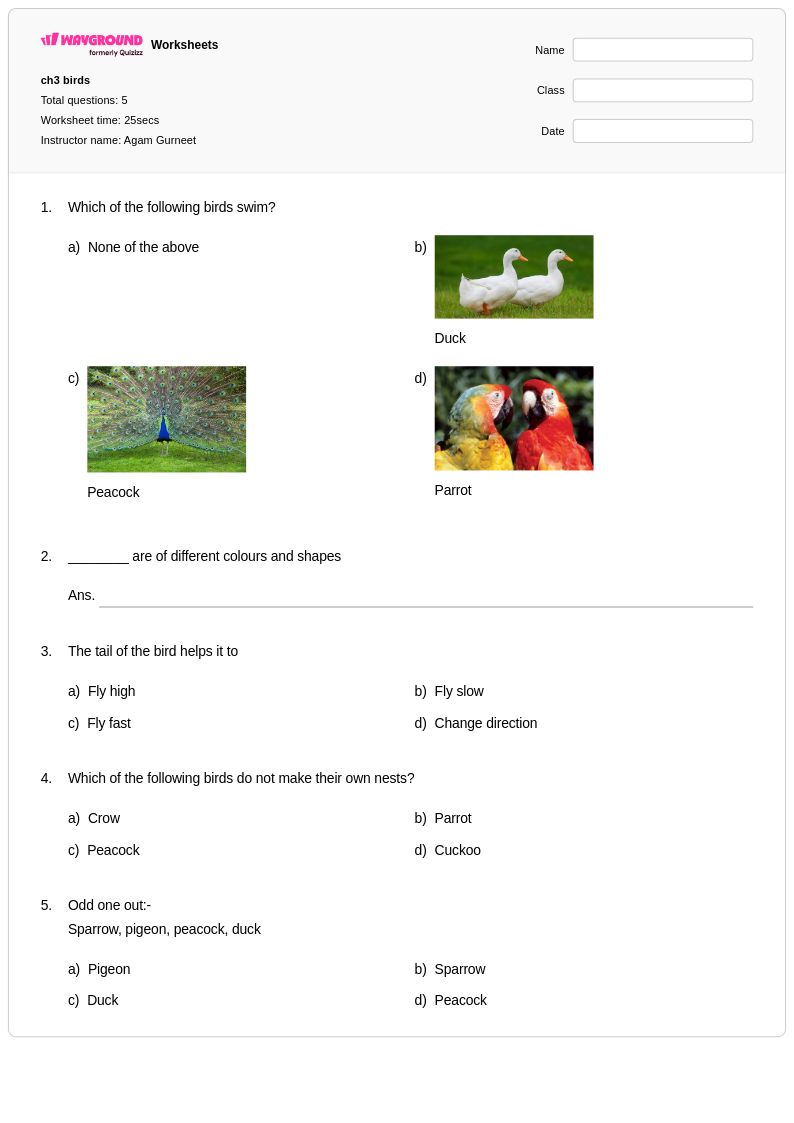
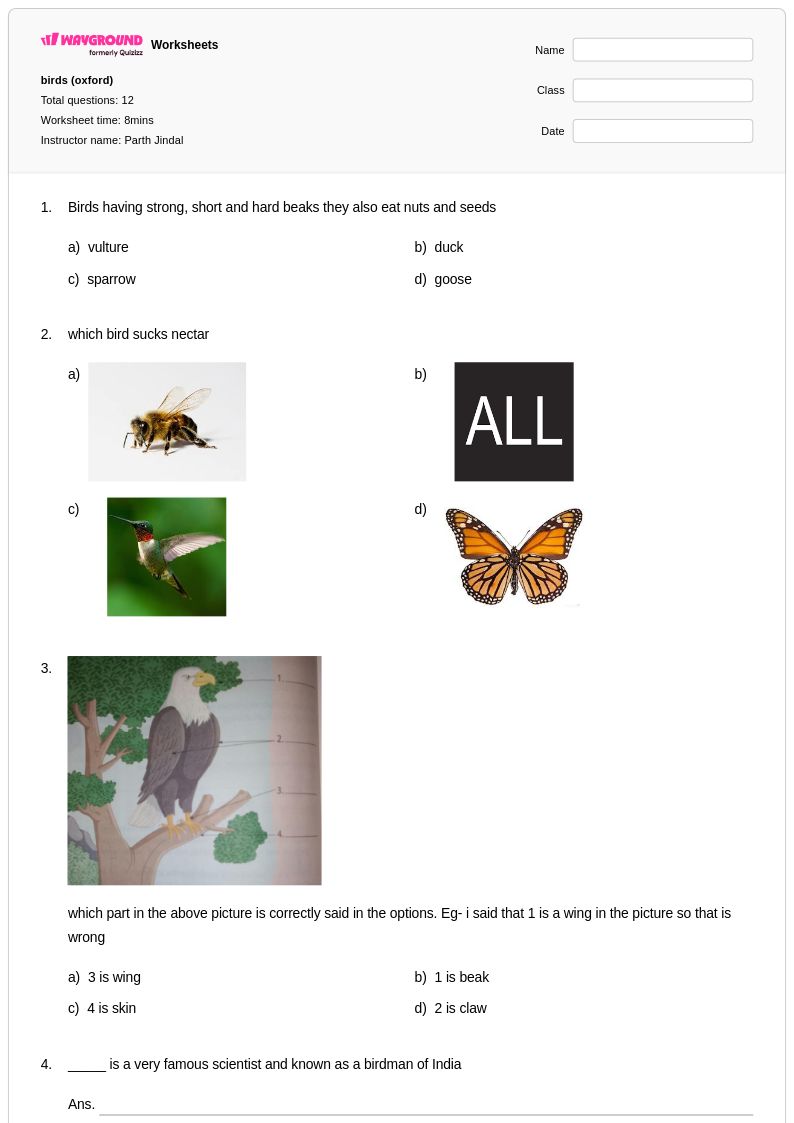
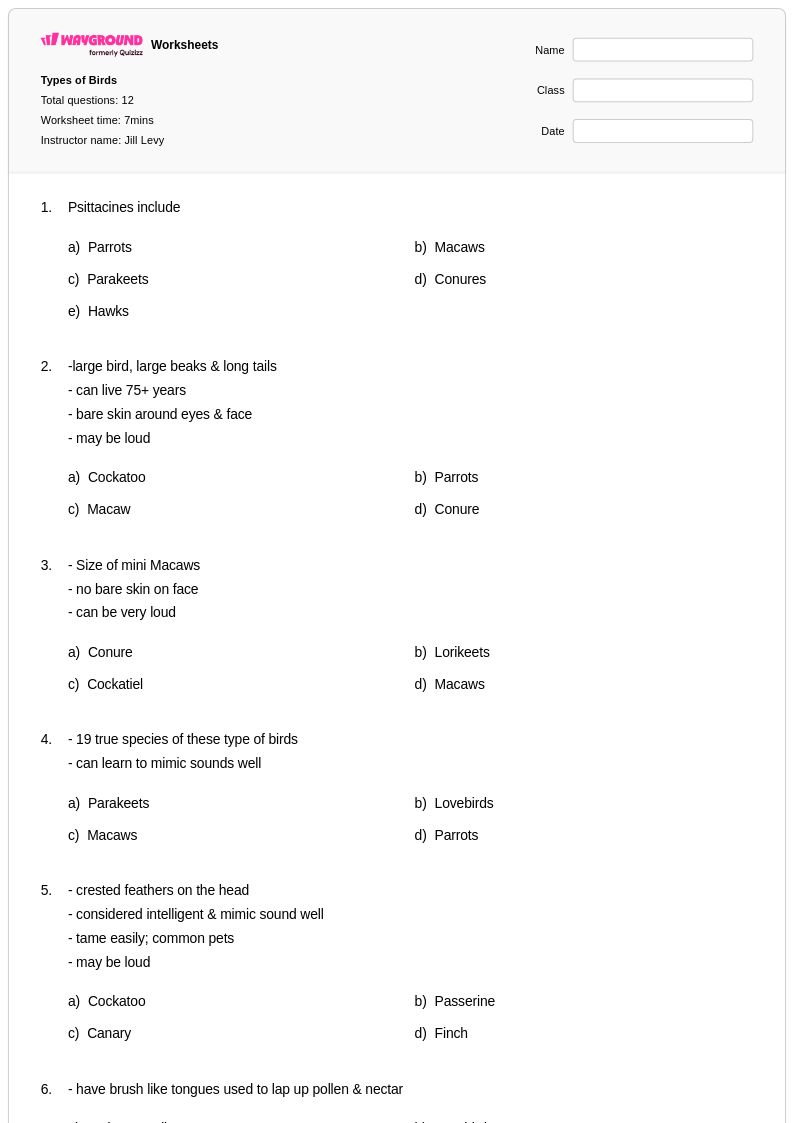
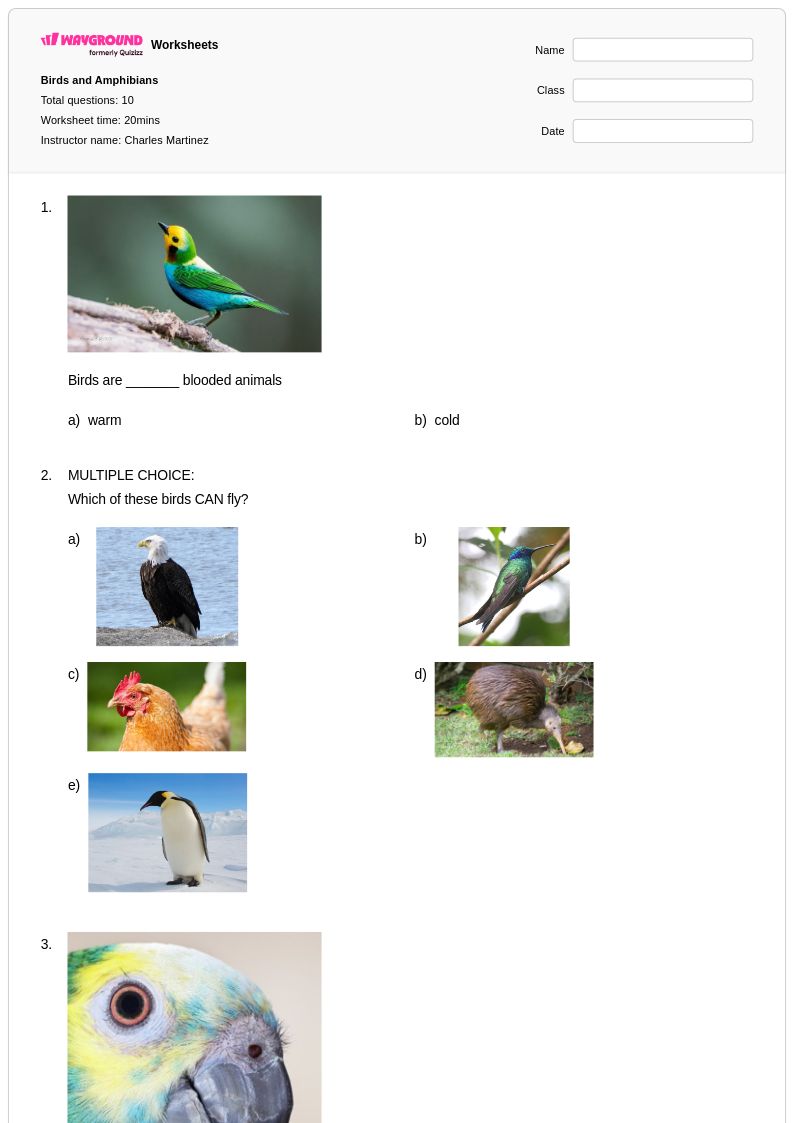
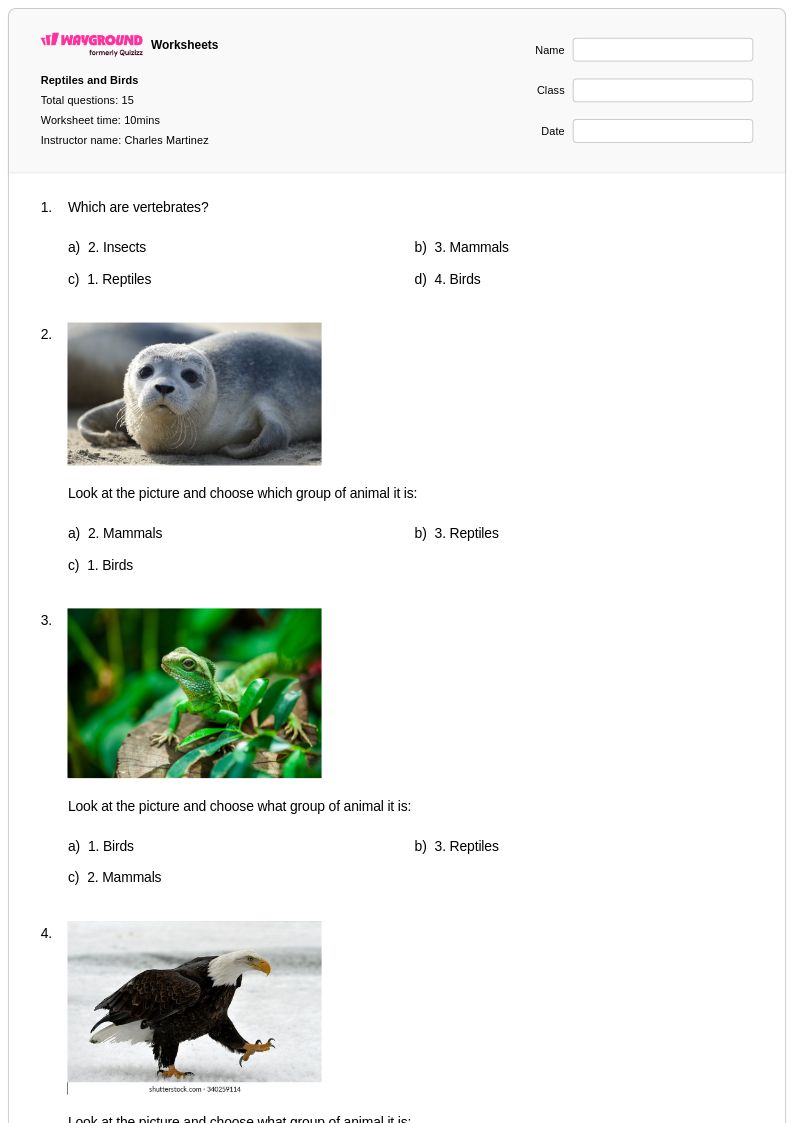
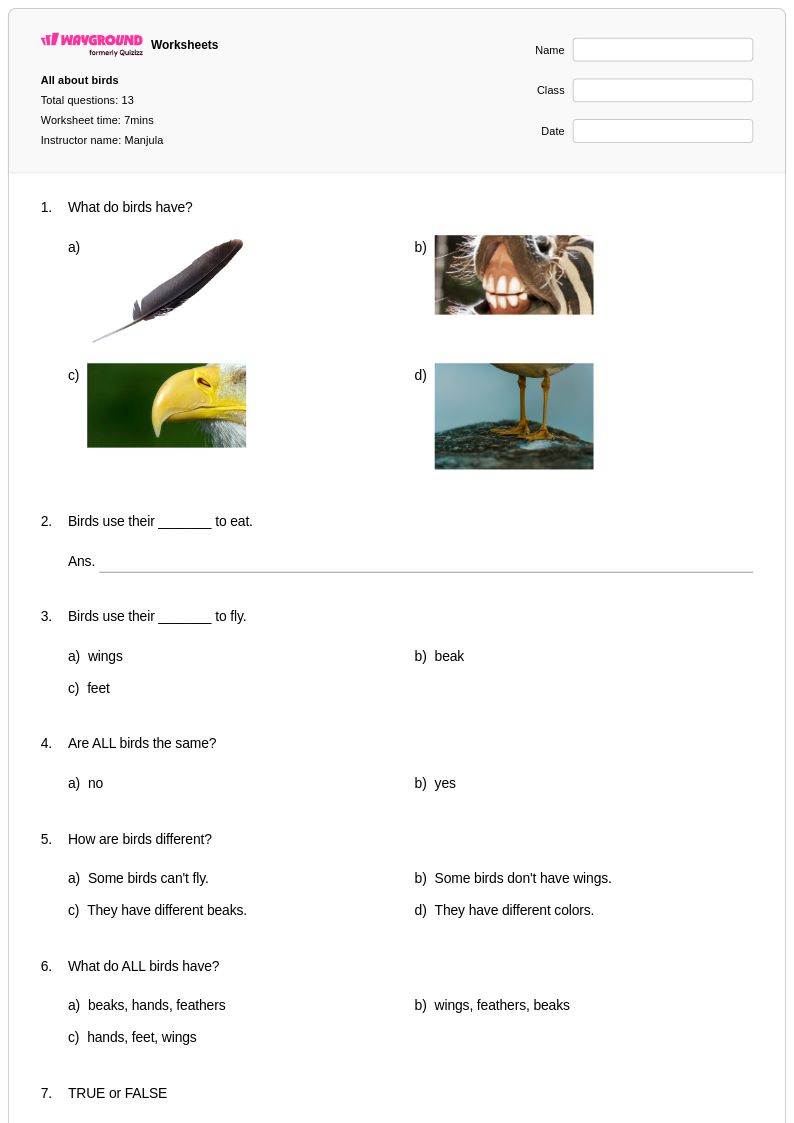
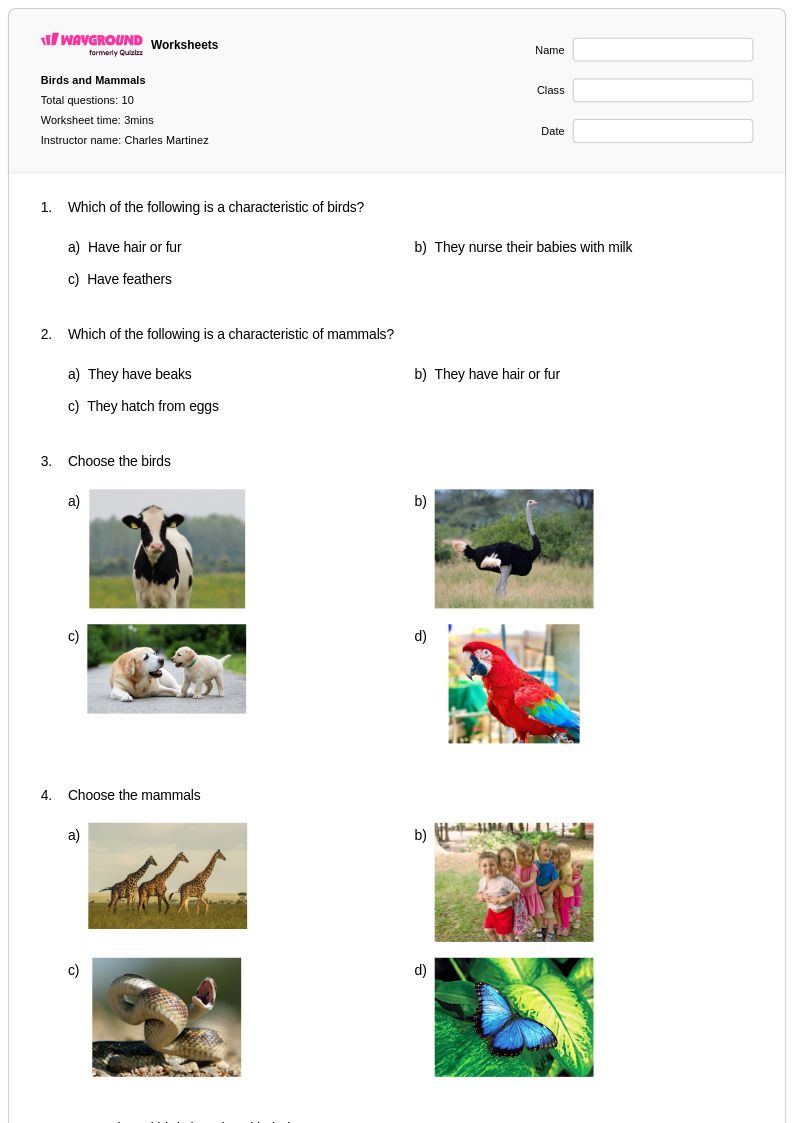
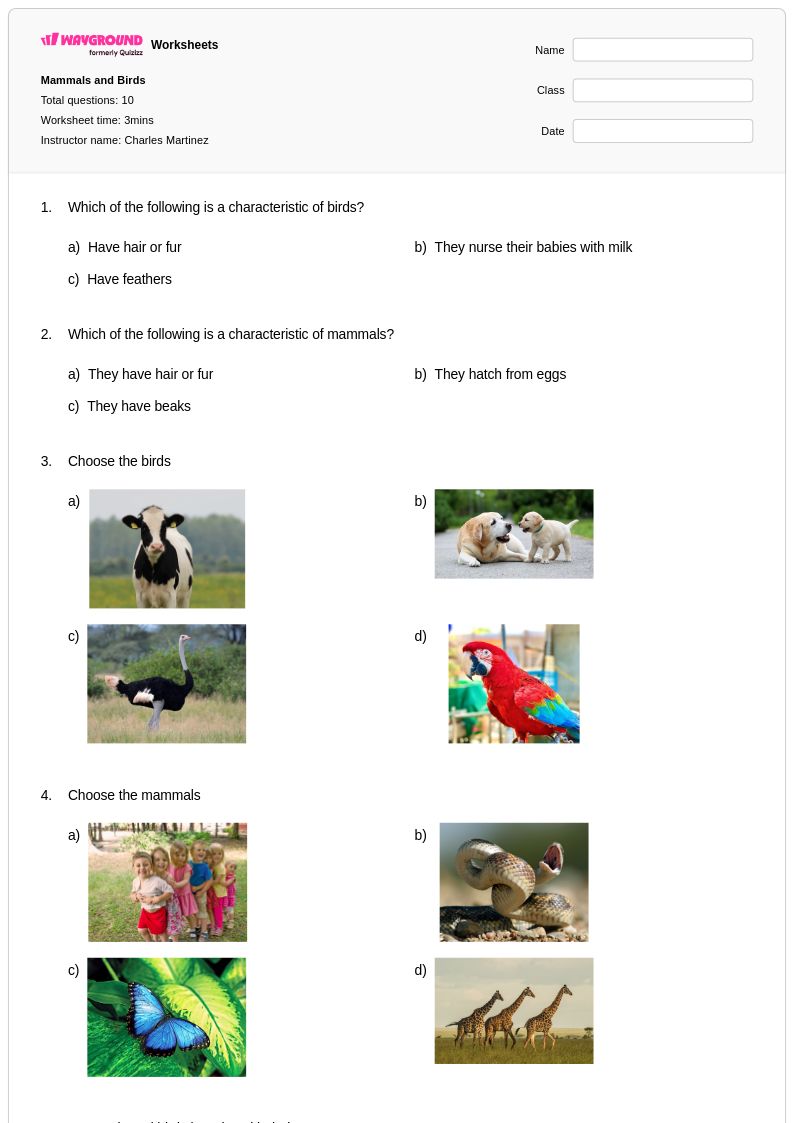
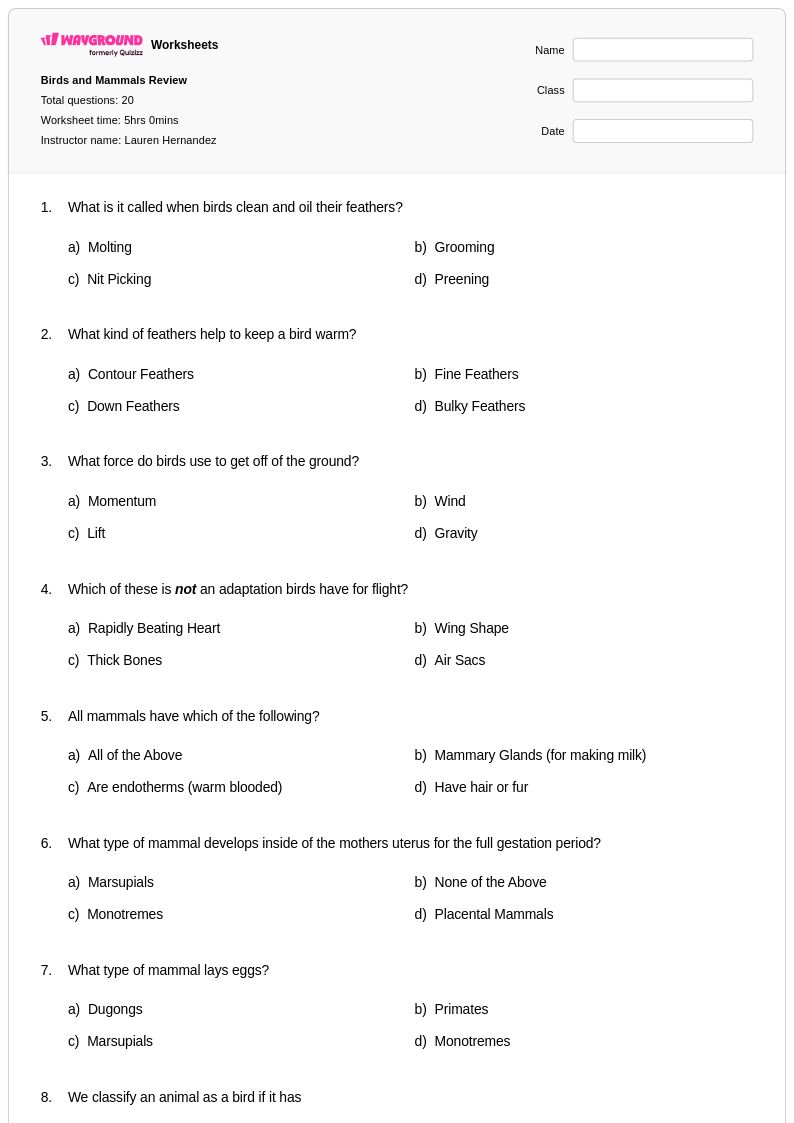
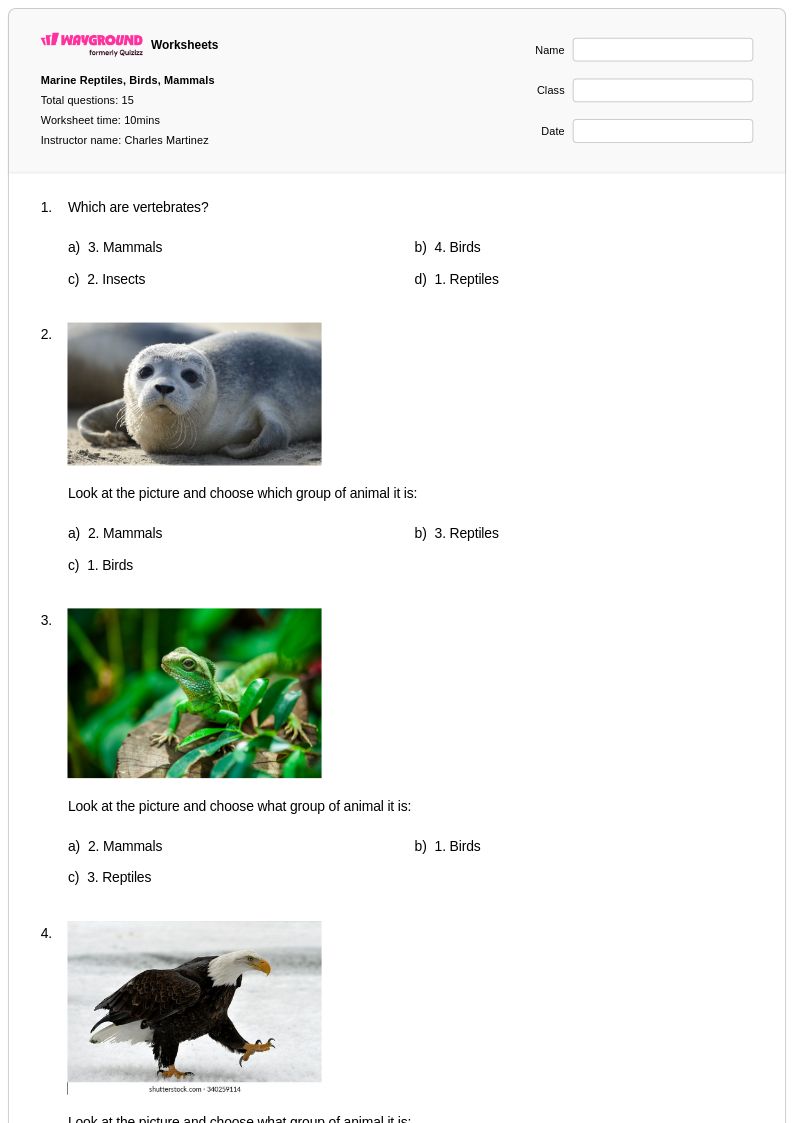
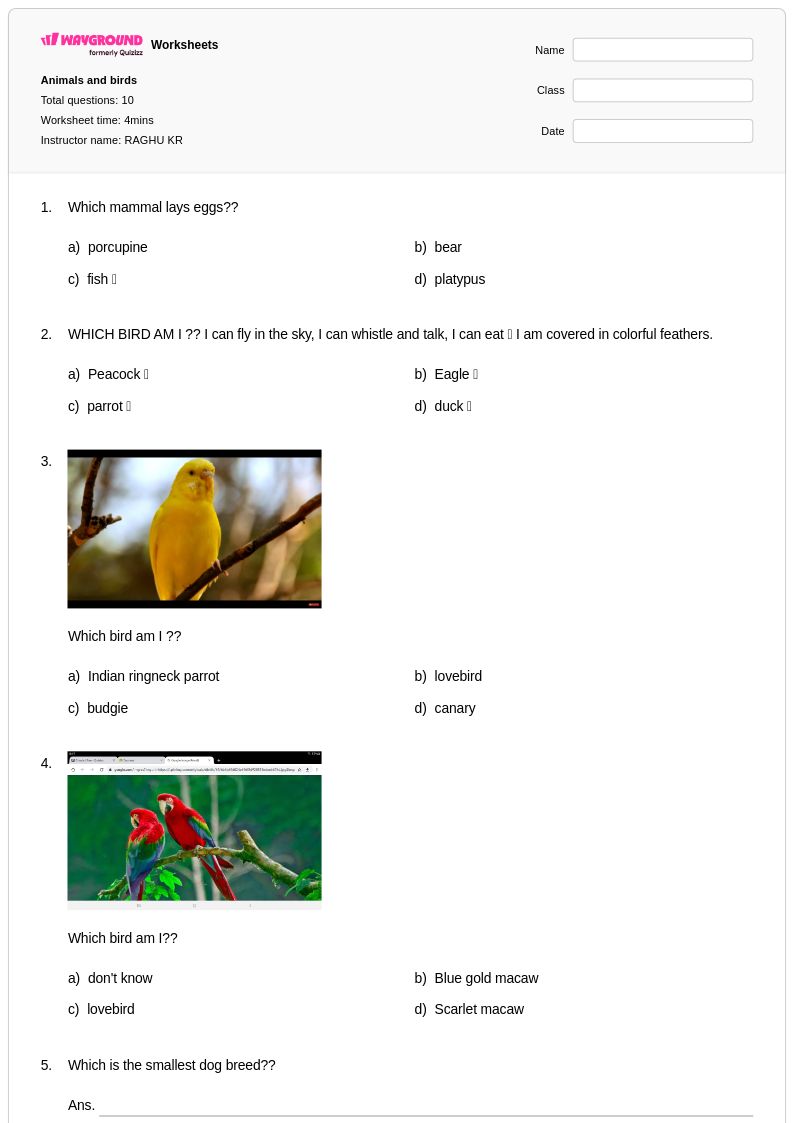
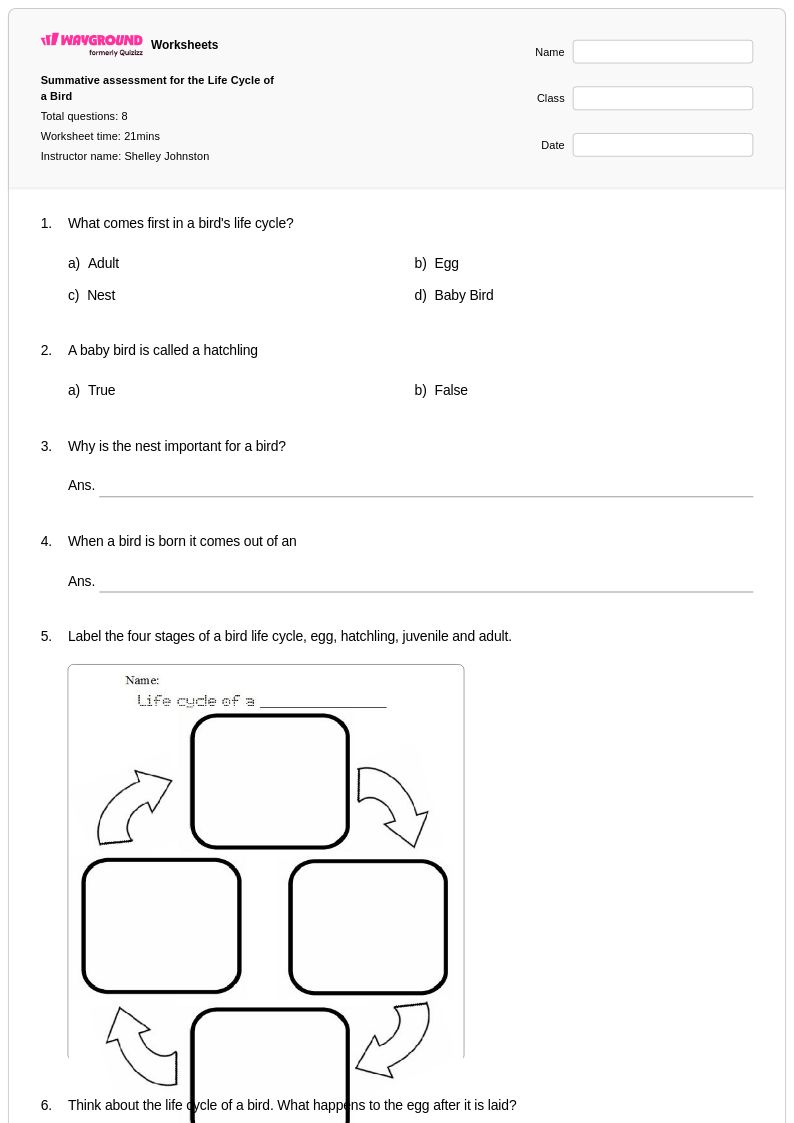
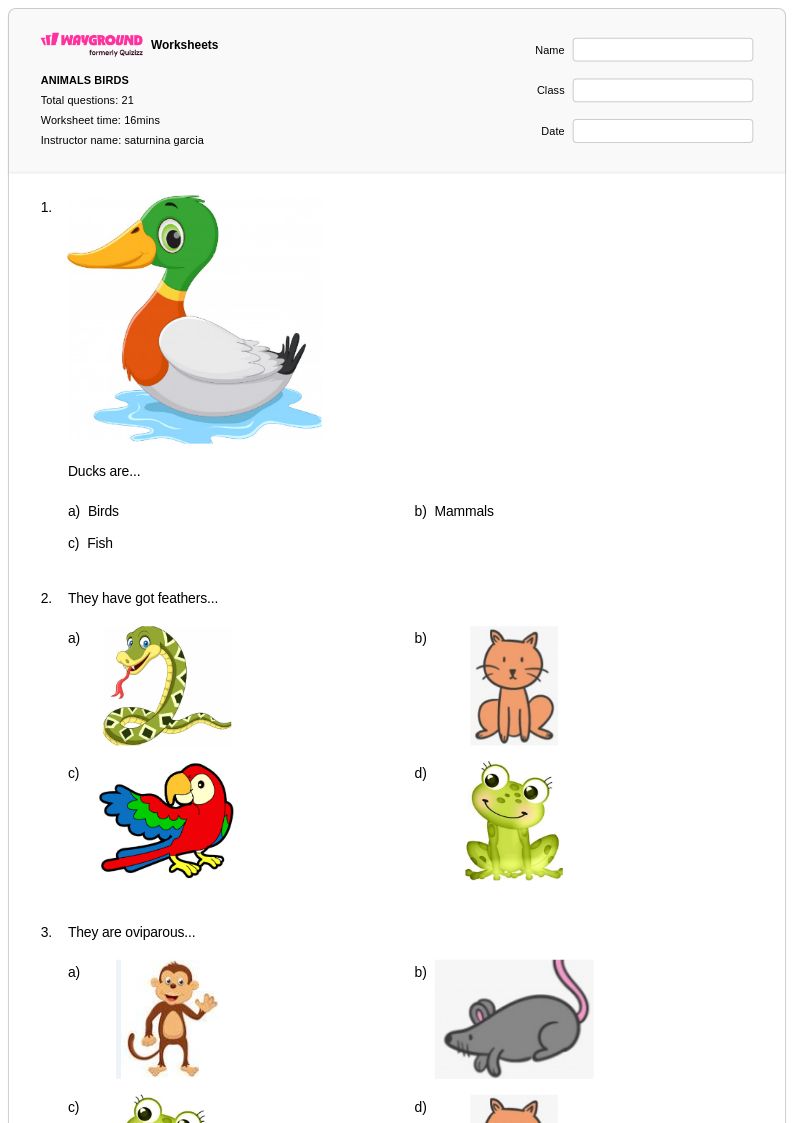
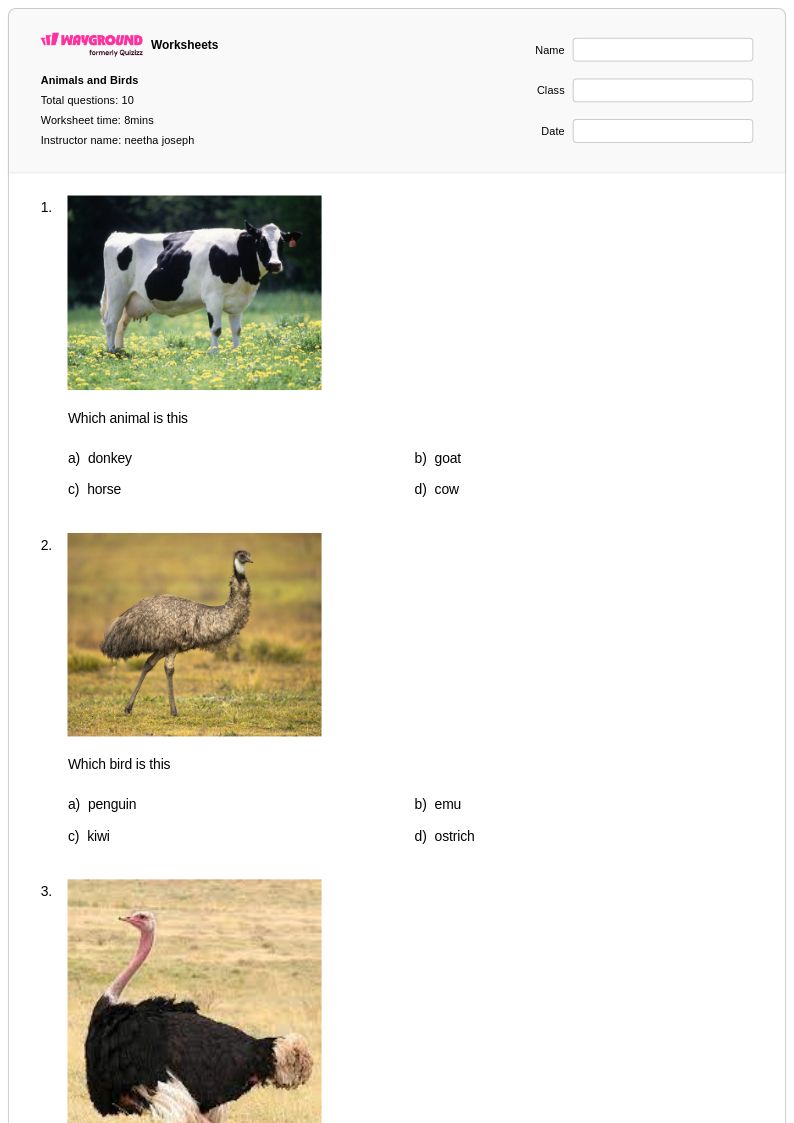
Explore Wayground's comprehensive collection of free bird worksheets and printables that help students discover avian anatomy, behavior, and habitats through engaging practice problems with complete answer keys.
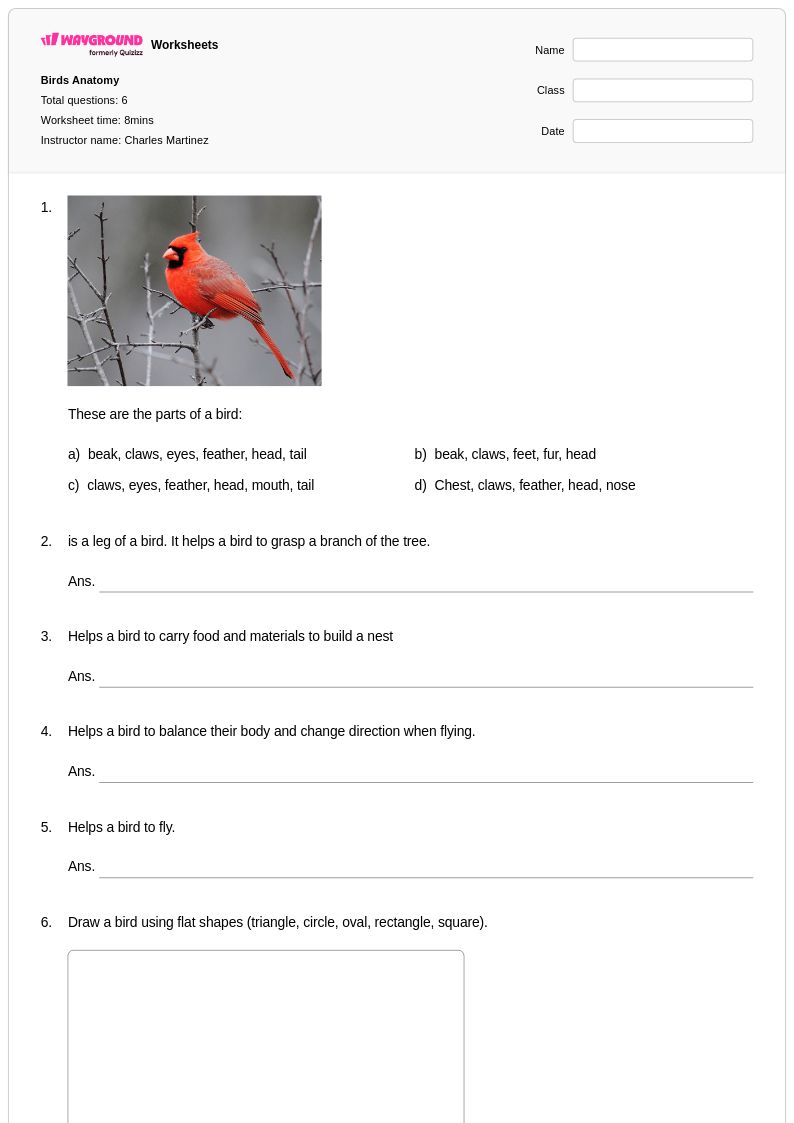
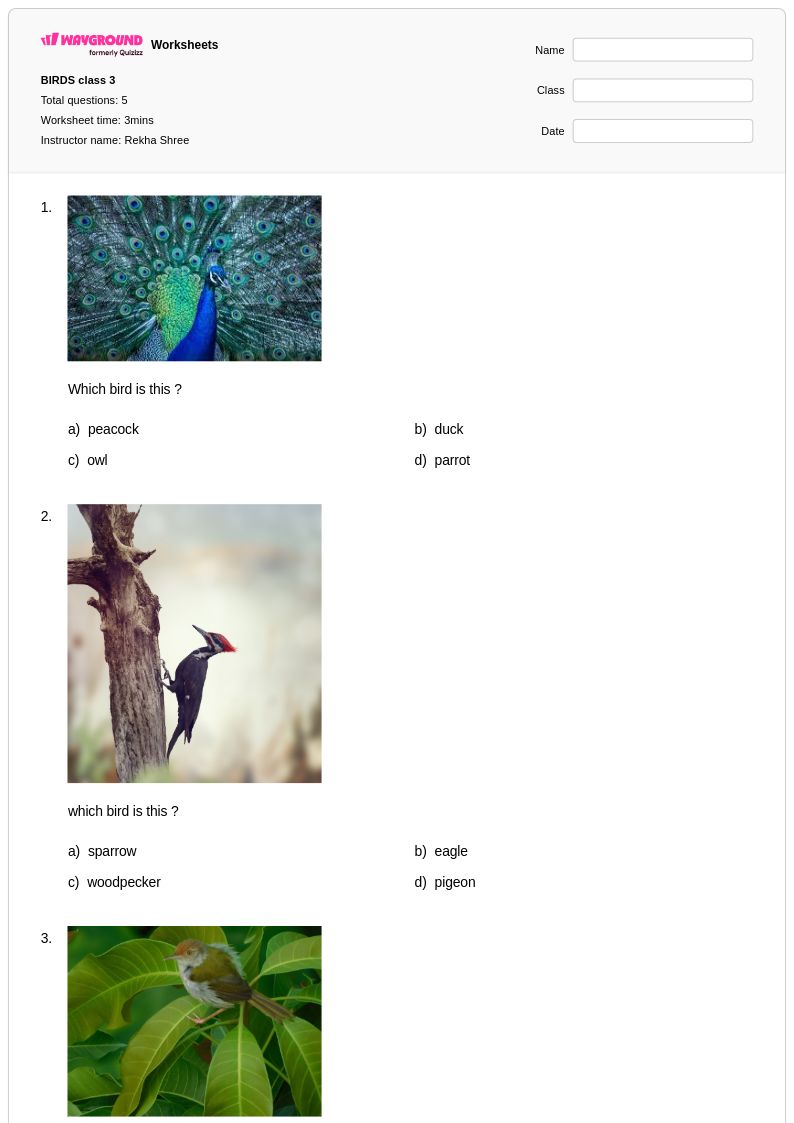
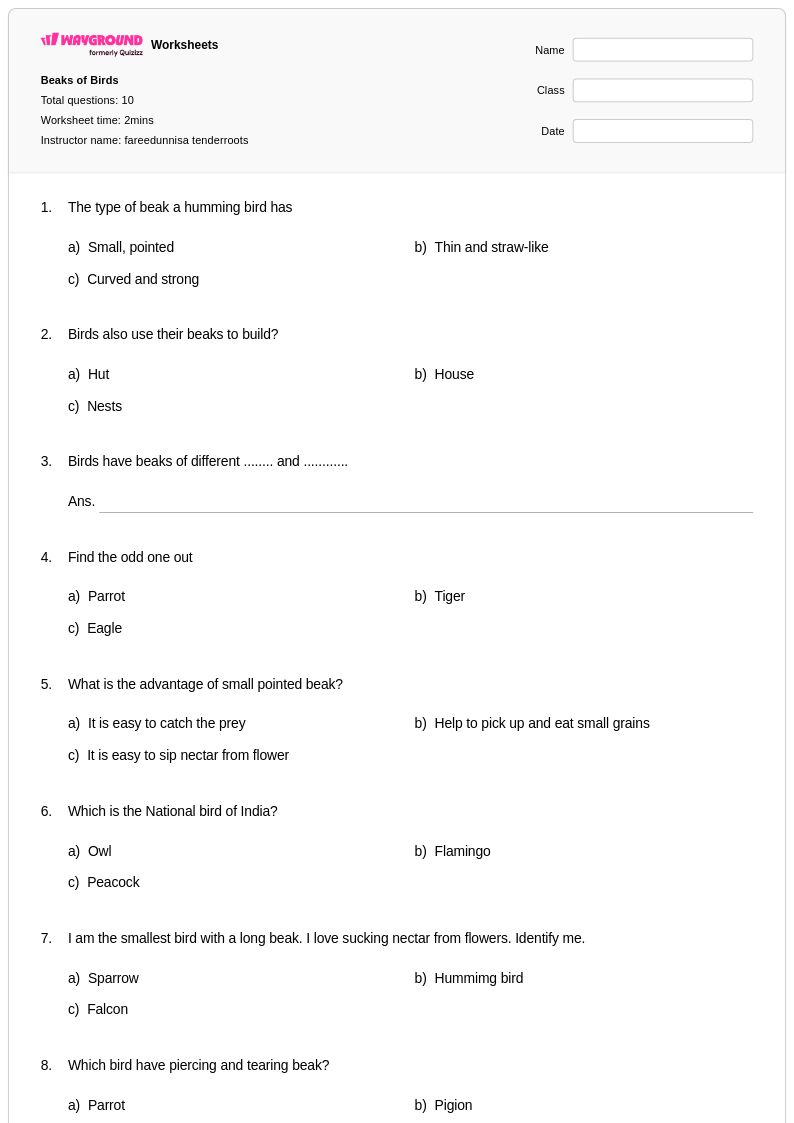
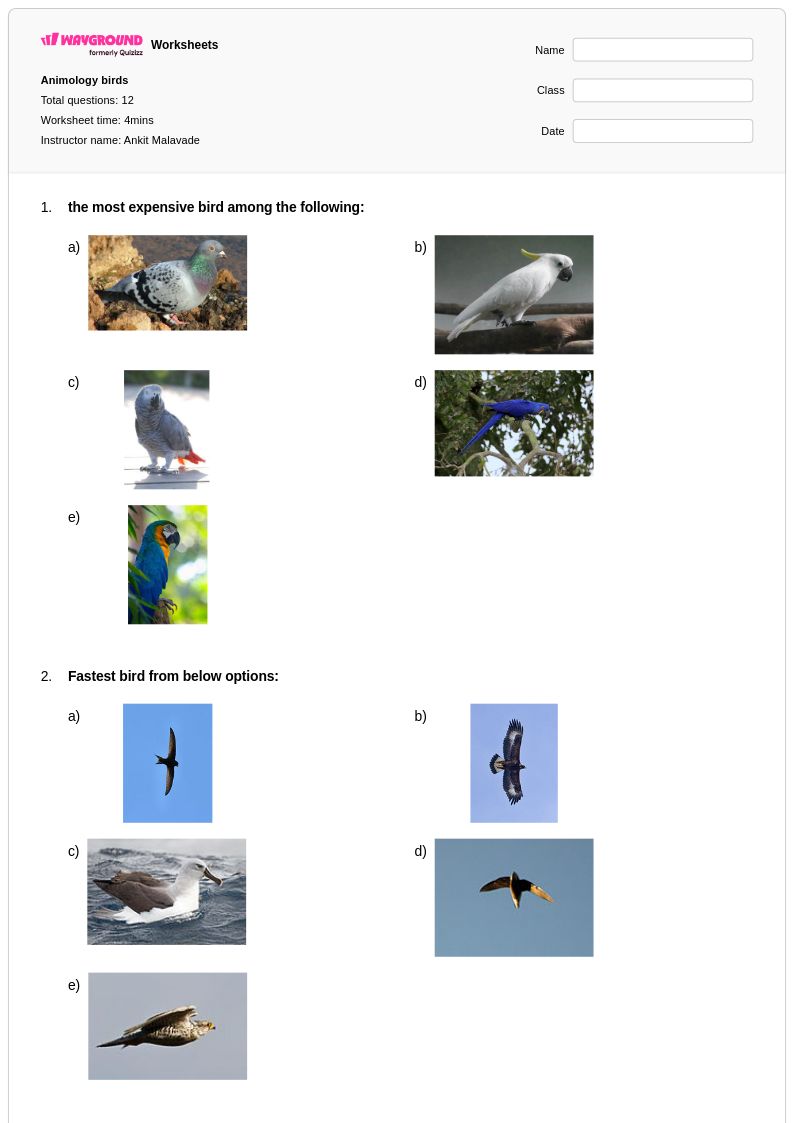
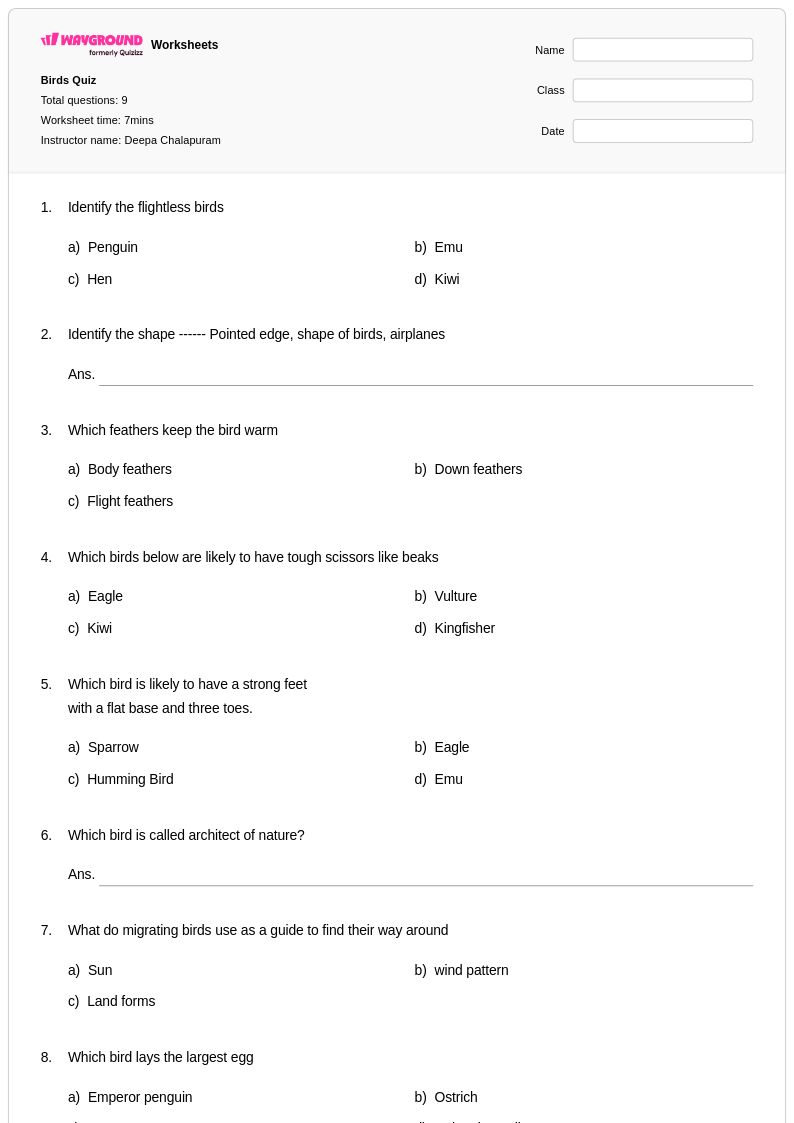
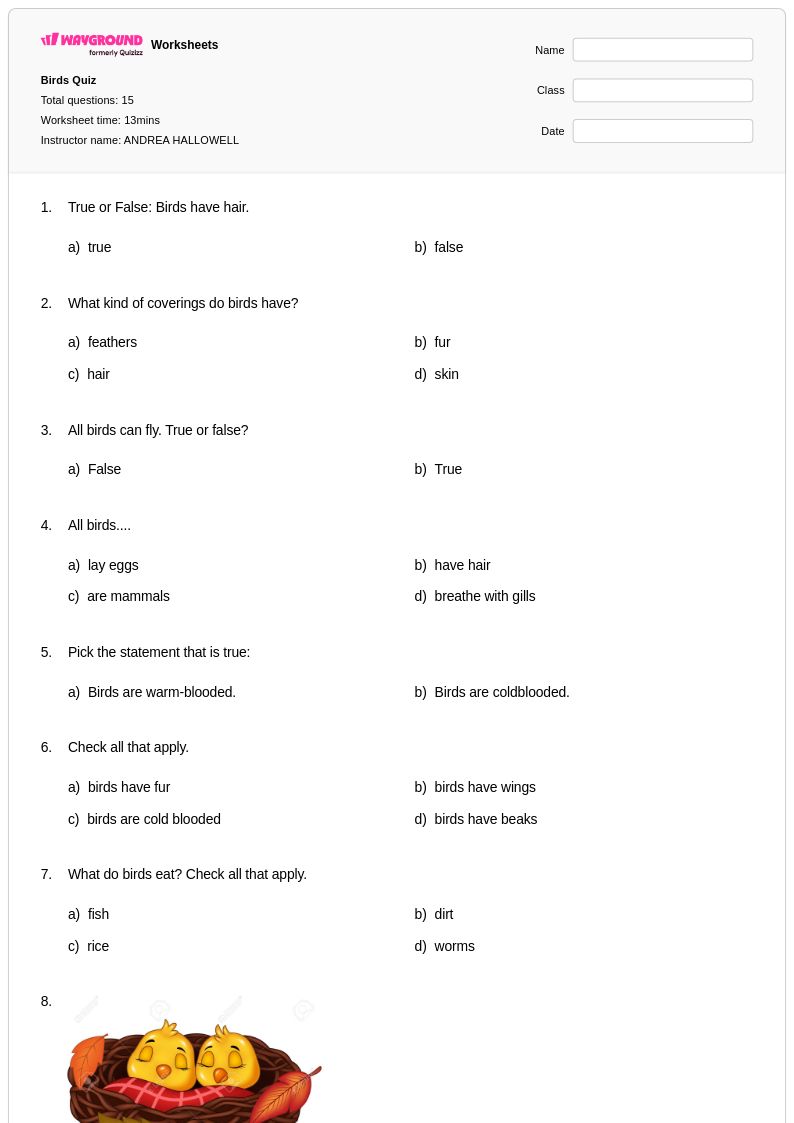
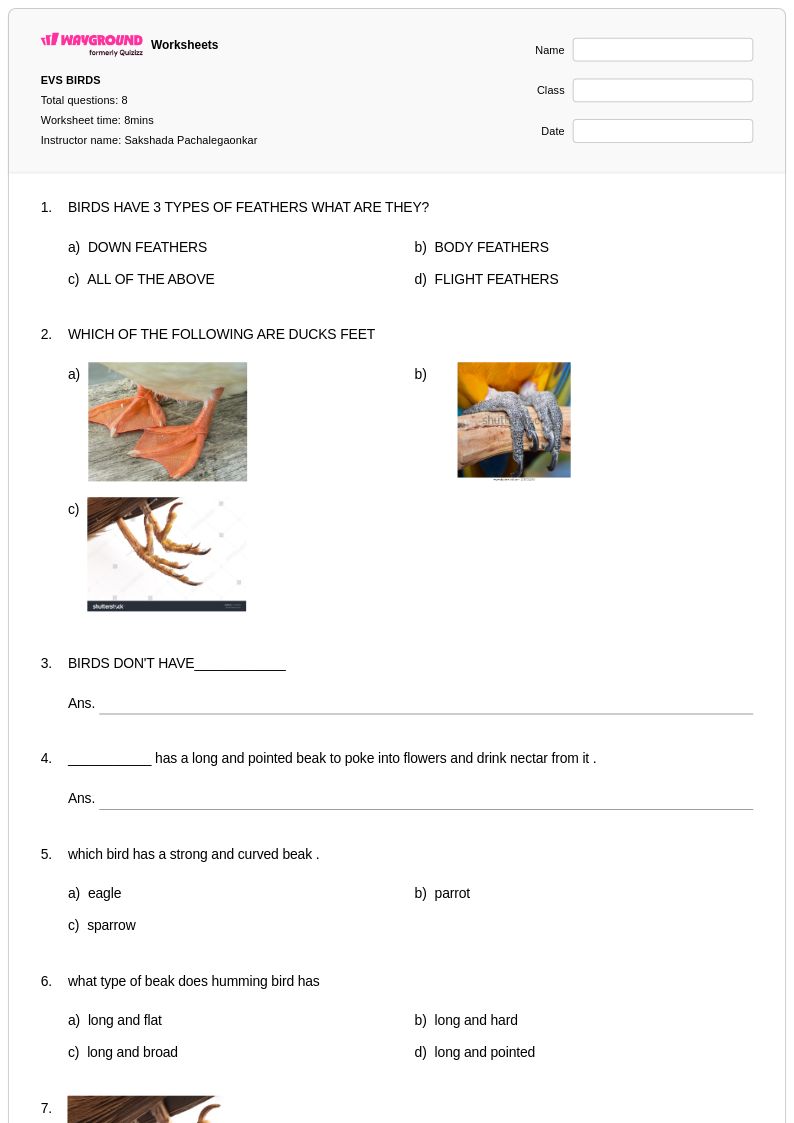
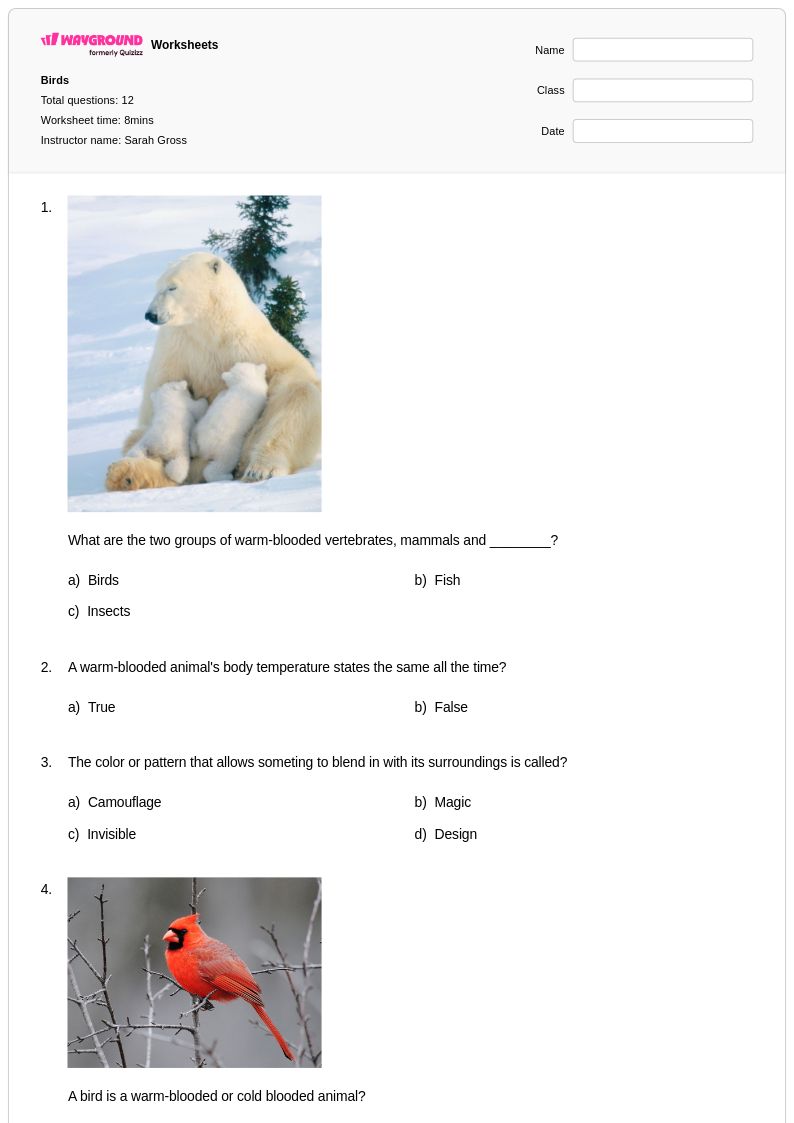
Birds worksheets available through Wayground (formerly Quizizz) provide comprehensive educational resources that explore avian biology, behavior, and ecological roles across diverse learning environments. These expertly crafted materials strengthen students' understanding of ornithology fundamentals, including bird anatomy, flight mechanics, migration patterns, feeding behaviors, and habitat requirements. The collection features detailed practice problems covering topics such as beak and foot adaptations, feather structure and function, reproductive strategies, and conservation challenges facing bird populations worldwide. Each worksheet comes with a complete answer key and is available as a free printable pdf, enabling educators to seamlessly integrate these resources into their life science curriculum while supporting both independent study and collaborative learning activities.
Wayground (formerly Quizizz) empowers educators with millions of teacher-created bird-focused worksheets that can be easily discovered through robust search and filtering capabilities, ensuring alignment with academic standards and specific learning objectives. The platform's differentiation tools allow teachers to customize content complexity and format, accommodating diverse learning needs while maintaining scientific accuracy and engagement. These versatile resources are available in both printable and digital formats, including downloadable pdfs, making them ideal for traditional classroom instruction, remote learning, or hybrid educational models. Teachers can efficiently plan comprehensive bird study units, provide targeted remediation for struggling learners, offer enrichment opportunities for advanced students, and create meaningful skill practice sessions that reinforce critical concepts in avian science and broader ecological understanding.
FAQs
How do I teach bird adaptations to elementary and middle school students?
Start by connecting beak and foot shapes to specific functions, such as how hooked beaks help raptors tear prey and webbed feet help waterfowl swim. Use labeled diagrams to let students match physical features to their ecological roles before introducing habitat and feeding behavior. Hands-on sorting activities, where students categorize birds by diet based on beak shape, are especially effective for building conceptual understanding.
What topics should a bird worksheet cover in a life science unit?
A strong bird worksheet should address avian anatomy, beak and foot adaptations, feather structure and function, flight mechanics, migration patterns, reproductive strategies, and habitat requirements. Including conservation challenges facing bird populations helps students connect ornithology to broader ecological concepts. Covering these topics in sequence builds a coherent understanding of how birds are structured, how they behave, and why they matter in ecosystems.
What mistakes do students commonly make when learning about bird adaptations?
A common misconception is that all birds with similar beaks eat the same food, when in fact beak shape reflects a range of specialized diets that vary significantly even within a single type. Students also frequently confuse migration with hibernation, assuming birds sleep through winter rather than traveling to warmer climates. Explicitly addressing these errors with labeled examples and comparison exercises helps correct faulty mental models before they solidify.
How can I use bird worksheets to support students with different learning needs?
Wayground's accommodation tools allow teachers to enable Read Aloud for students who need audio support, reduce answer choices for students who benefit from simplified options, and set extended time on a per-student basis without alerting the rest of the class. These settings can be configured from the Students tab or session settings page and carry over to future sessions automatically. This makes it straightforward to differentiate a single bird worksheet assignment across multiple learner profiles simultaneously.
How do I use Wayground's bird worksheets in my classroom?
Wayground's bird worksheets are available as printable PDFs for traditional classroom use and in digital formats for technology-integrated or remote learning environments, and teachers can also host them as a quiz directly on Wayground. Each worksheet includes a complete answer key, which simplifies grading and supports self-paced or independent study. The digital format works well for formative checks or homework, while the printable version suits stations, sub plans, or hands-on review sessions.
How do I incorporate bird migration into a science lesson?
Introduce migration as an adaptive behavior driven by seasonal changes in food availability and temperature, then have students map common migration routes to connect the concept to geography. Comparing migratory and non-migratory species helps students analyze why migration is advantageous for some birds but not others. Follow up with questions about how habitat loss and climate change are affecting traditional migration patterns to extend the lesson into conservation science.