
20 Q
1st
10 Q
1st
20 Q
1st
9 Q
KG - 1st
14 Q
1st - 5th
20 Q
KG - 1st
10 Q
1st
13 Q
1st - 2nd
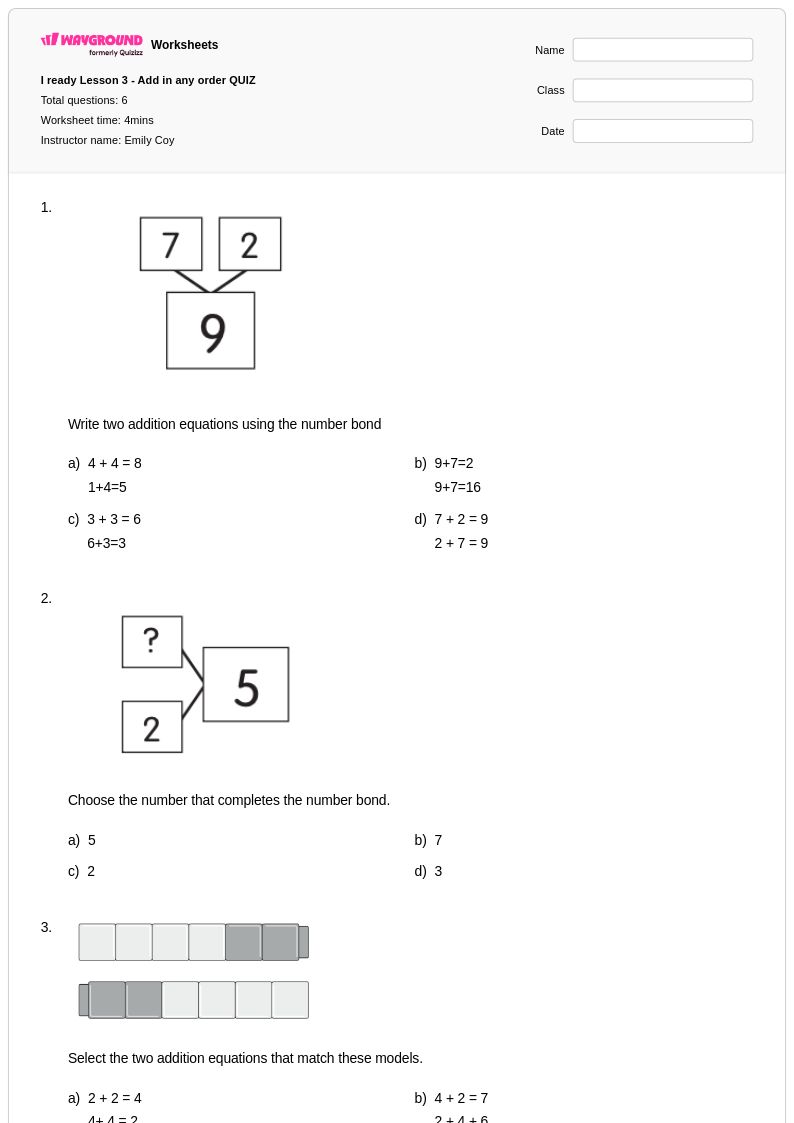
6 Q
1st
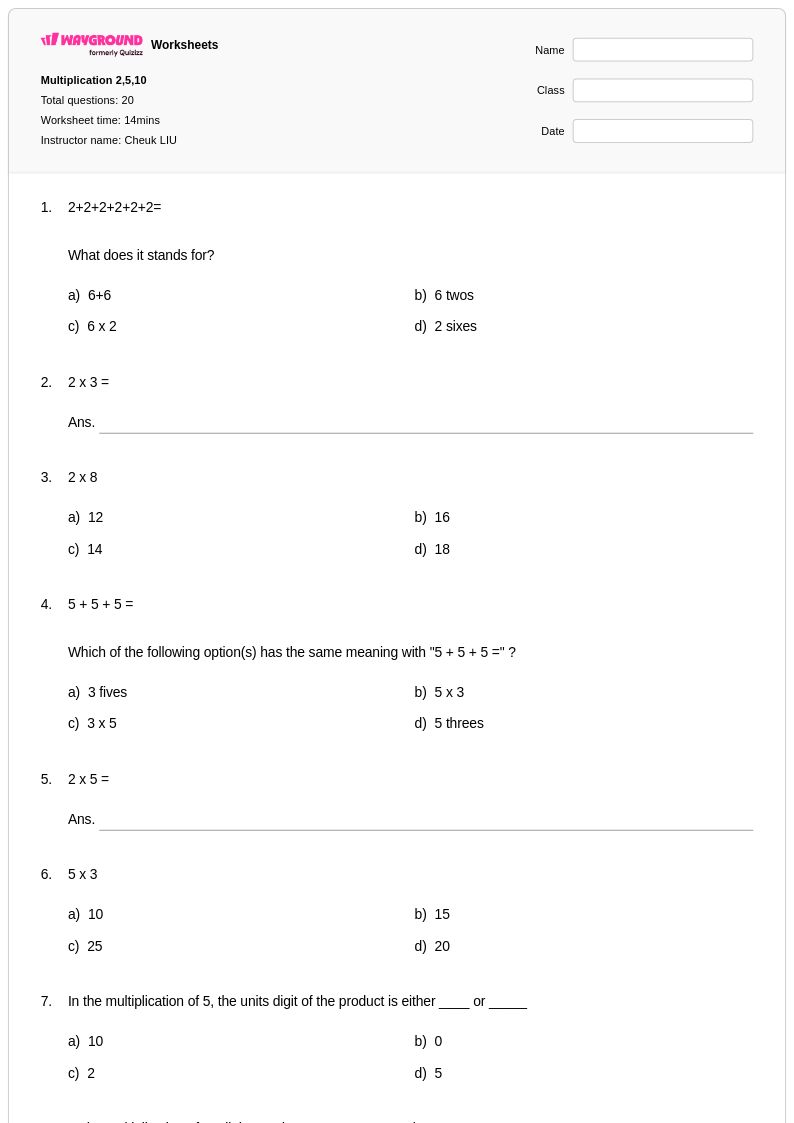
20 Q
KG - 2nd
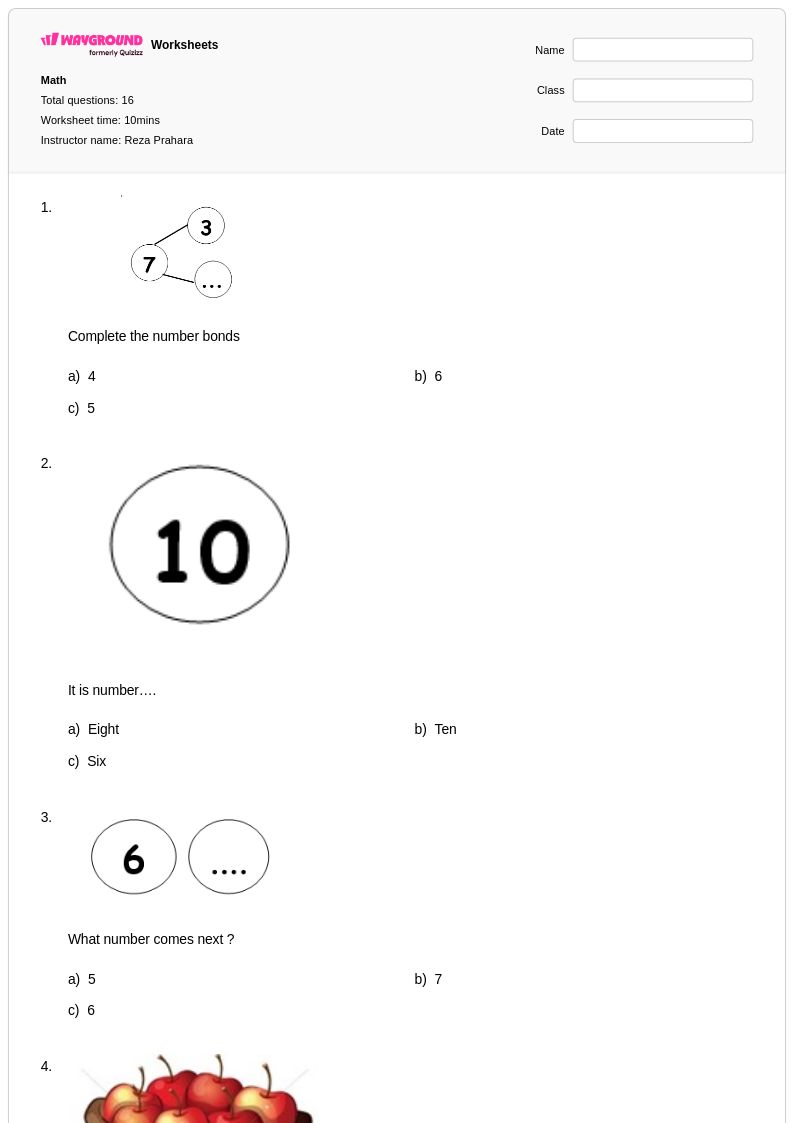
16 Q
1st
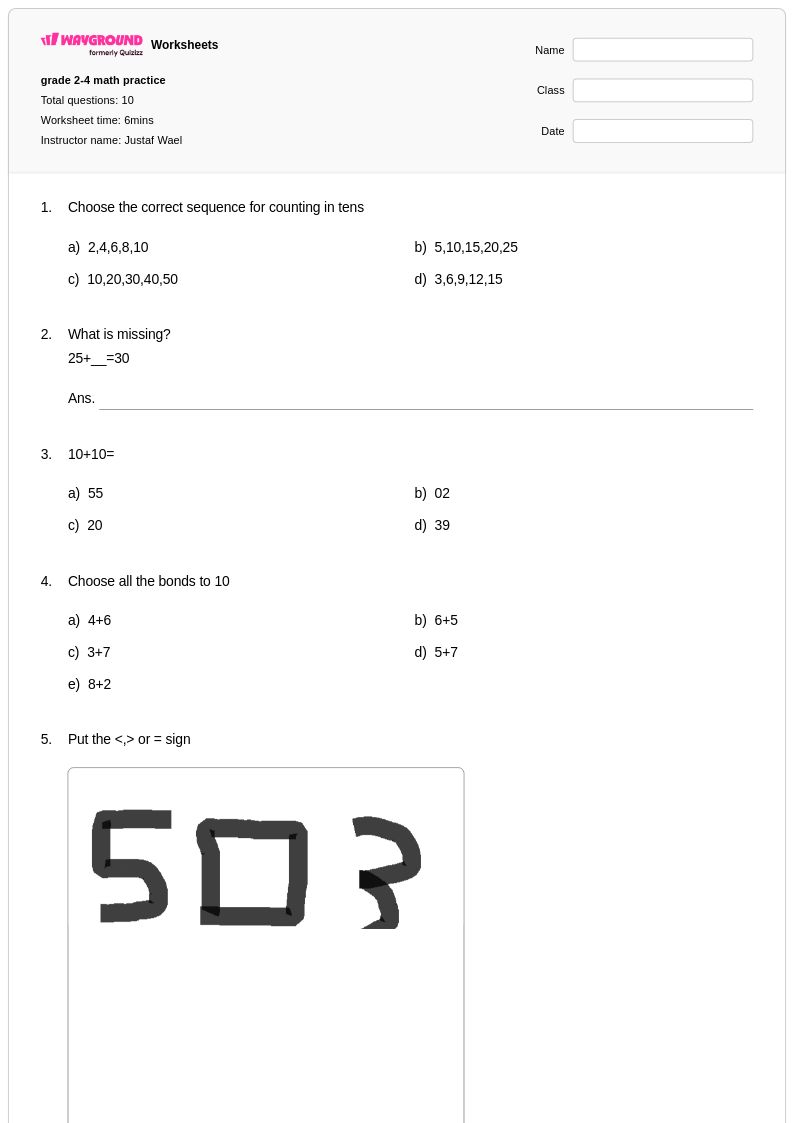
10 Q
1st - 5th
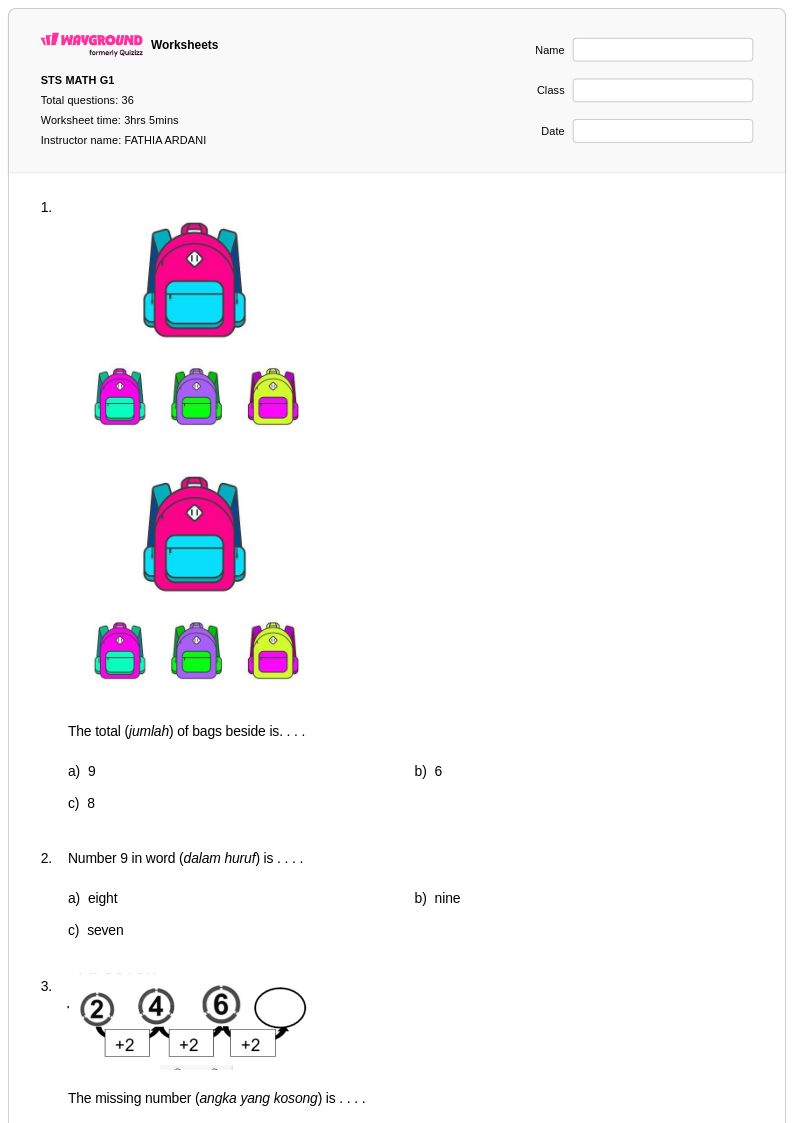
36 Q
1st - Uni
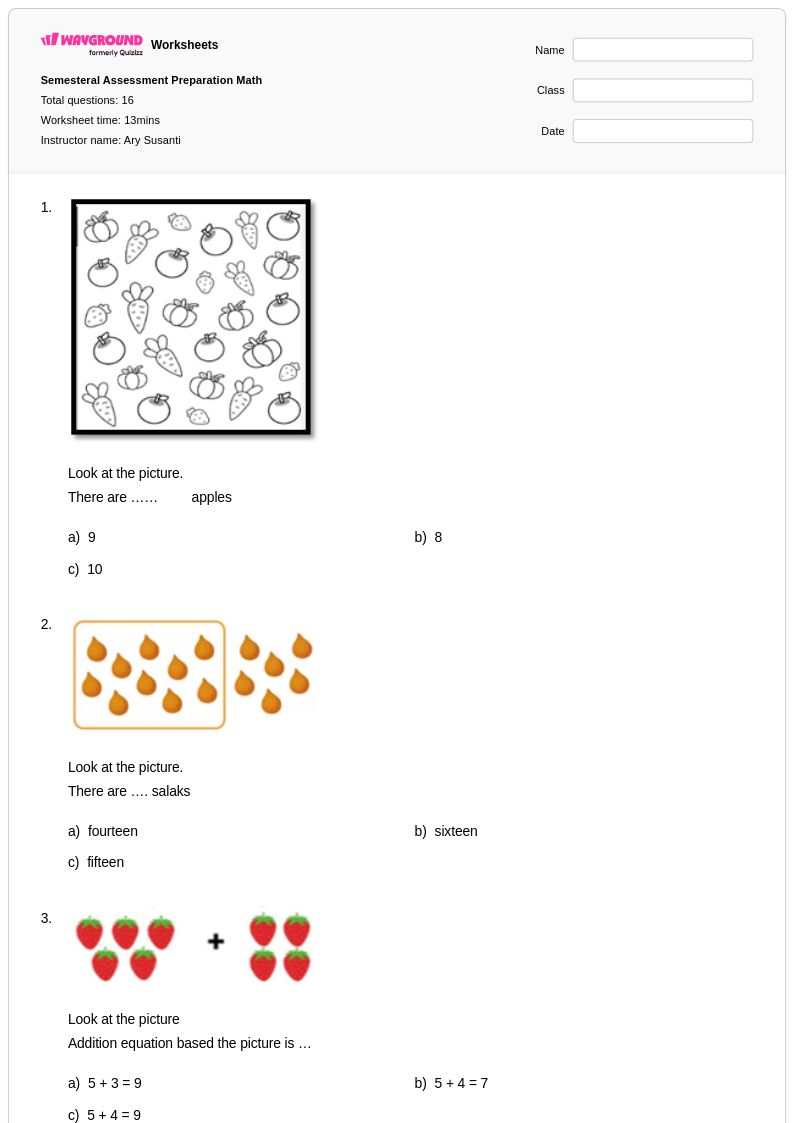
16 Q
1st - Uni
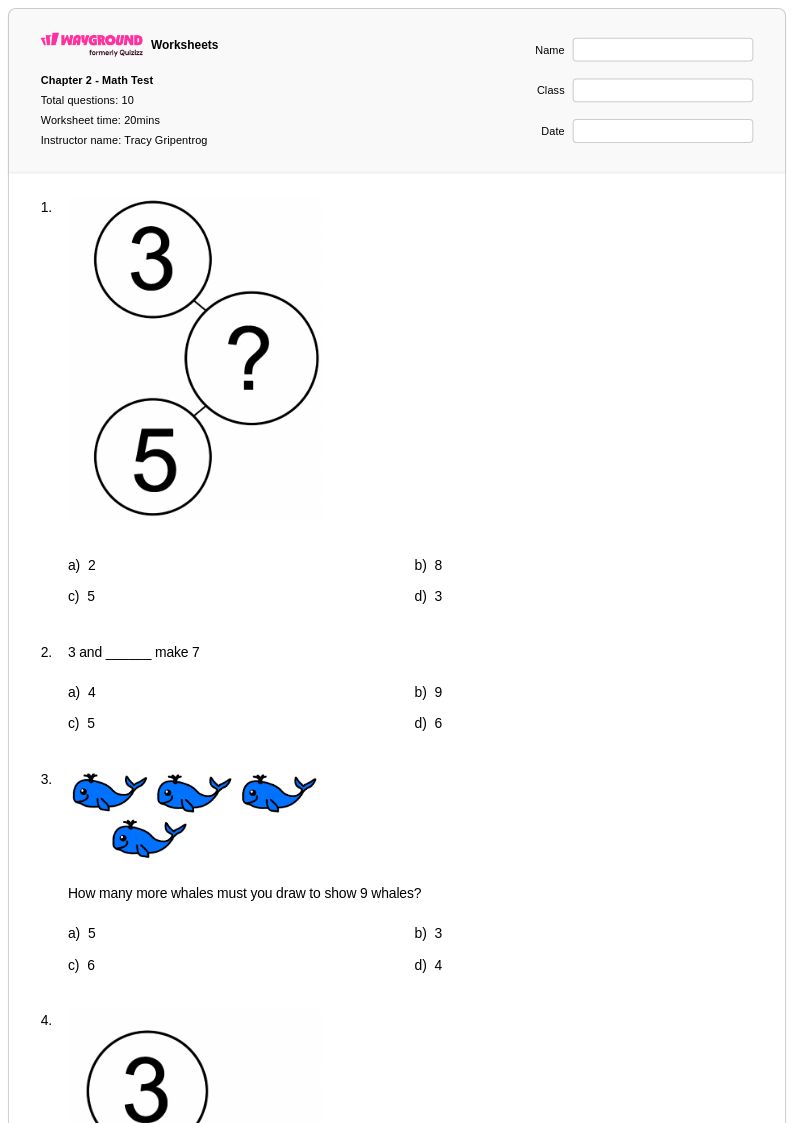
10 Q
1st
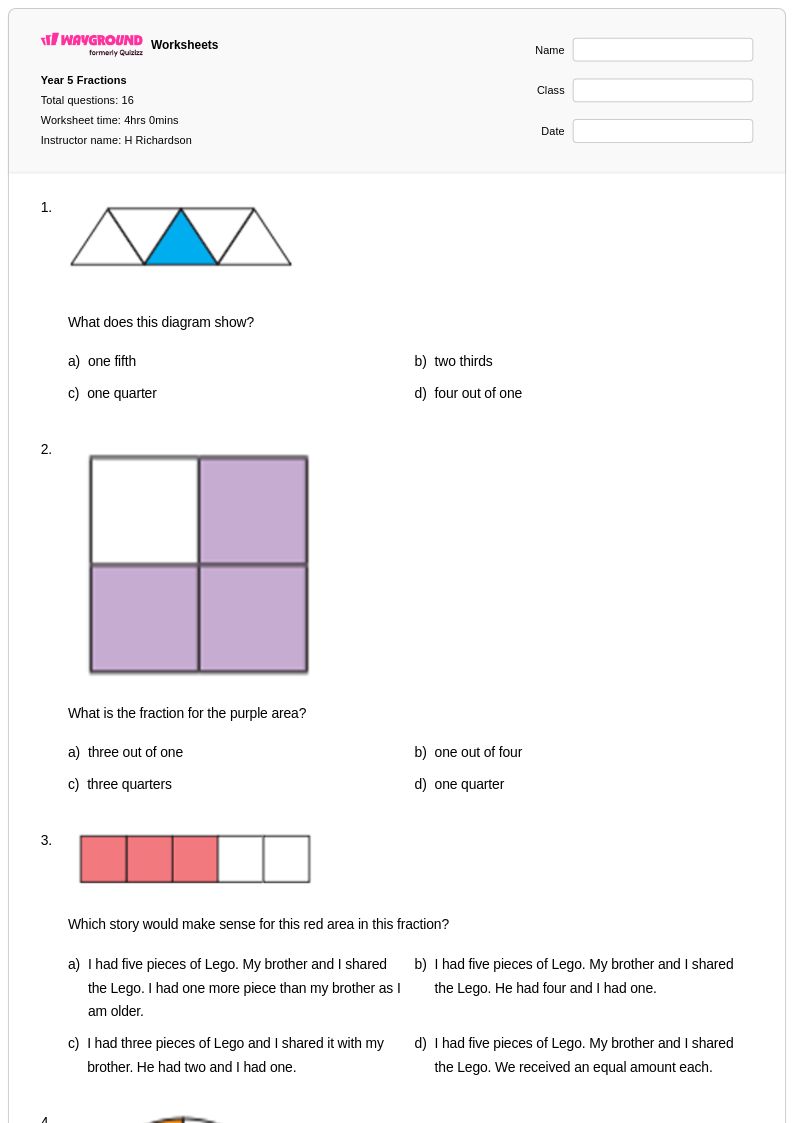
16 Q
KG - 5th
20 Q
1st
10 Q
1st
11 Q
1st - 2nd
10 Q
1st
10 Q
KG - 1st
20 Q
KG - 1st
11 Q
1st
10 Q
KG - 2nd
Explore Bonds to 5 Worksheets by Grades
Explore Other Subject Worksheets for class 1
Explore printable Bonds to 5 worksheets for Class 1
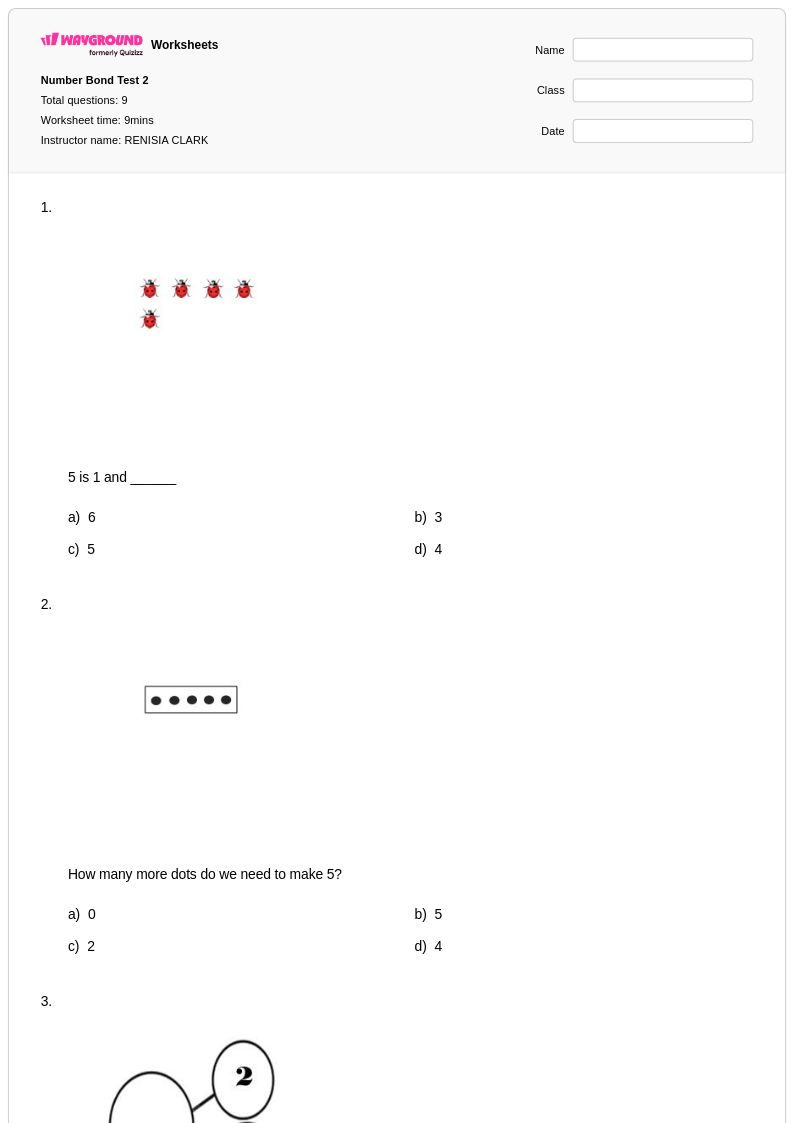
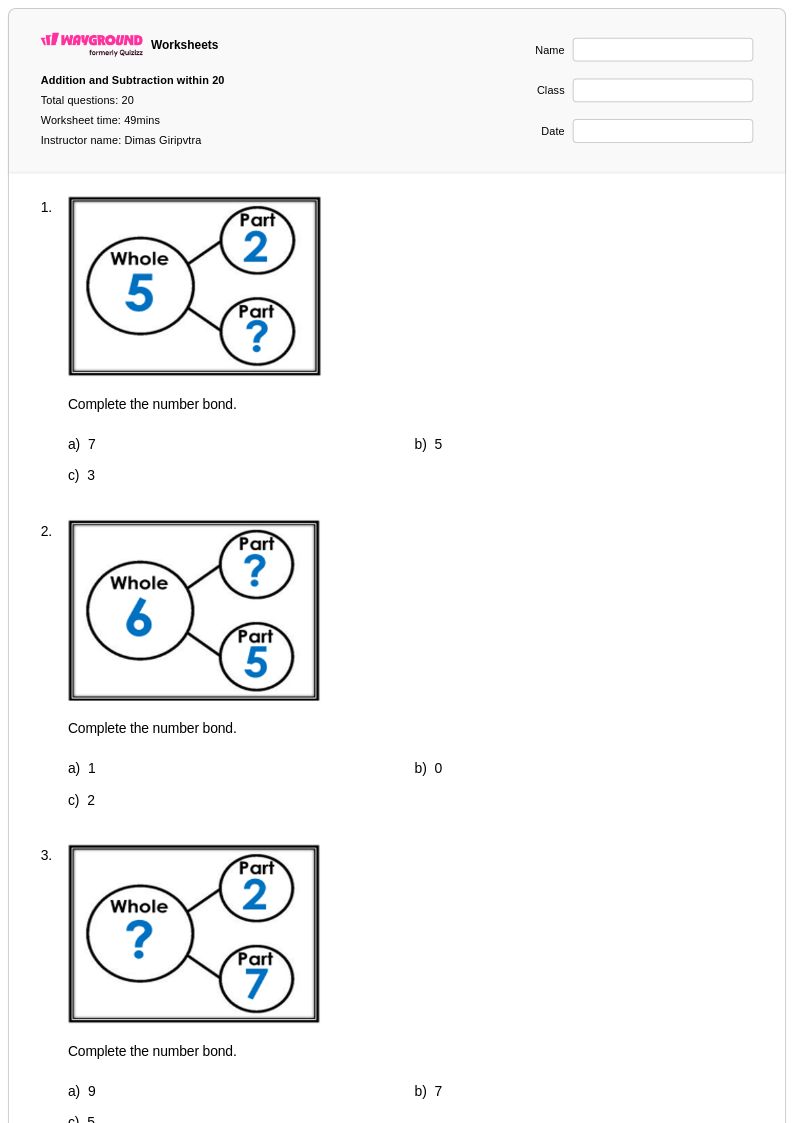
Bonds to 5 worksheets for Class 1 students provide essential foundational practice in understanding number relationships and developing crucial early mathematical reasoning skills. These comprehensive printables focus on helping young learners discover and memorize all the different ways to make the number 5, including combinations like 1+4, 2+3, 0+5, and their corresponding subtraction facts. Through engaging practice problems, students strengthen their ability to quickly recognize number pairs that sum to five, building the mental math fluency that serves as a cornerstone for more advanced arithmetic concepts. Each worksheet comes with a complete answer key, making it easy for educators and parents to assess student progress and provide immediate feedback on these fundamental number sense skills.
Wayground, formerly Quizizz, supports educators with an extensive collection of bonds to 5 resources drawn from millions of teacher-created materials that have been tested in real classroom environments. The platform's robust search and filtering capabilities allow teachers to quickly locate worksheets that align with specific learning standards and match their students' individual skill levels, whether for initial instruction, targeted remediation, or enrichment activities. These versatile resources are available in both printable pdf format and interactive digital versions, giving educators the flexibility to customize content based on their classroom needs and teaching preferences. The comprehensive collection enables teachers to efficiently plan differentiated instruction, provide varied practice opportunities, and ensure that every Class 1 student masters these critical number relationships that form the building blocks for future mathematical success.
FAQs
How do I teach bonds to 5 in first grade?
What exercises help first graders practice bonds to 5?
What mistakes do first graders make with bonds to 5?
How should I assign a bonds to 5 worksheet on Wayground?
How do bonds to 5 connect to the Common Core Grade 1 math progression?
How can I differentiate bonds to 5 worksheets in a mixed-ability first-grade class?
Should first graders still practice bonds to 5?