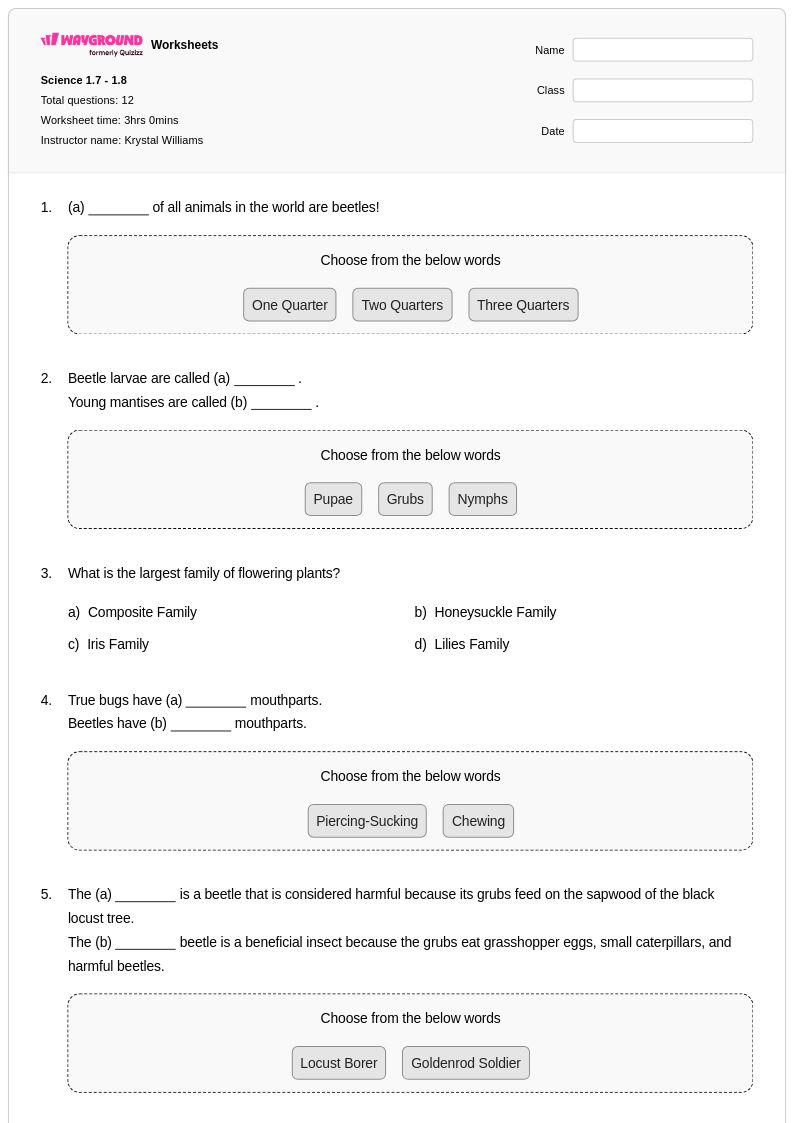
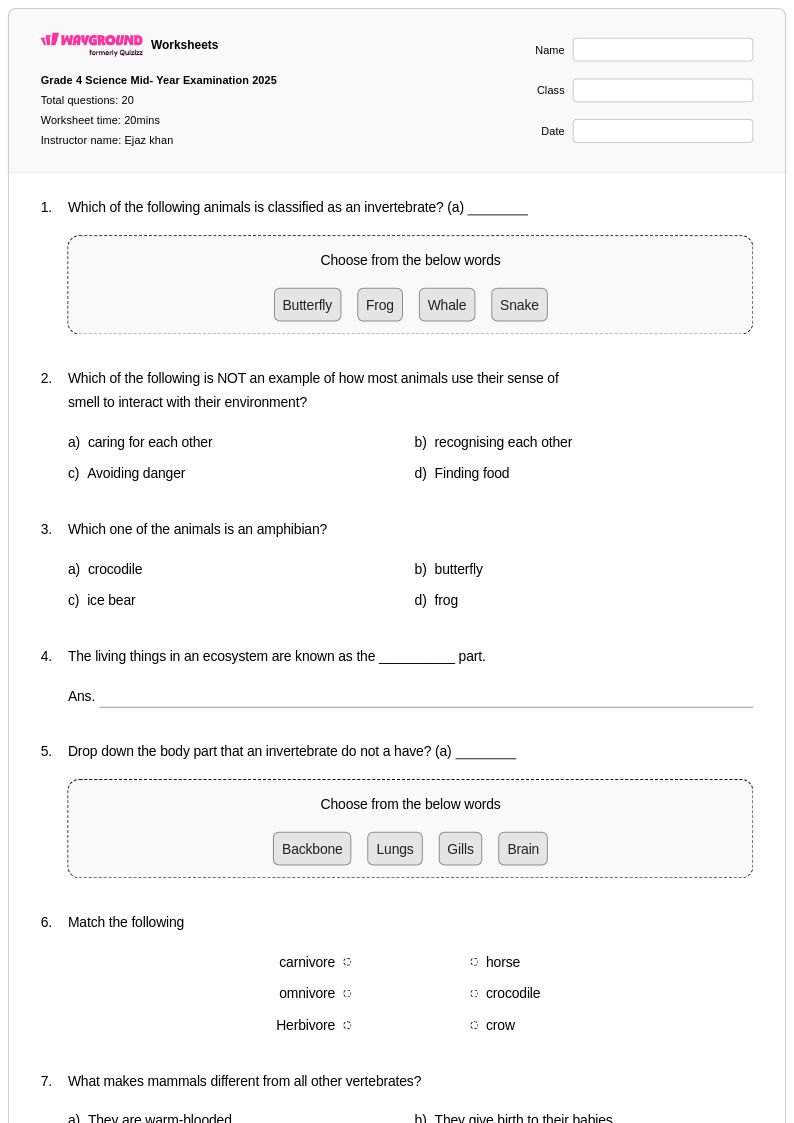
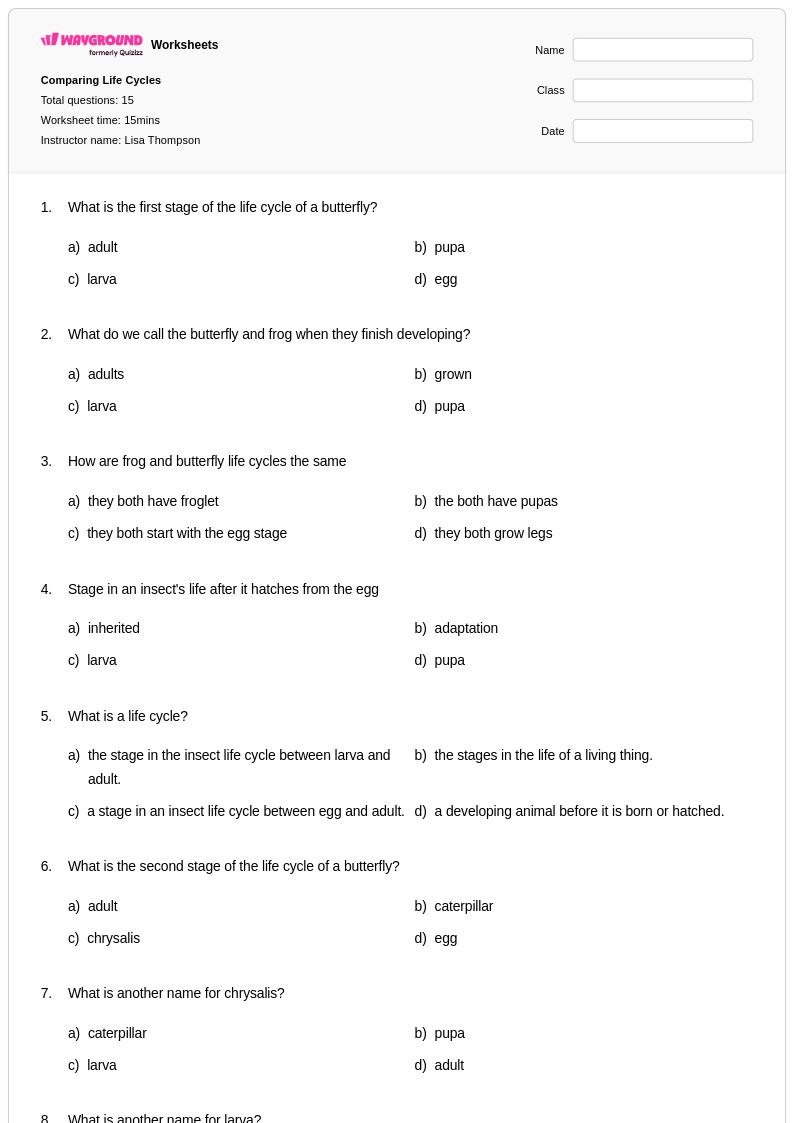
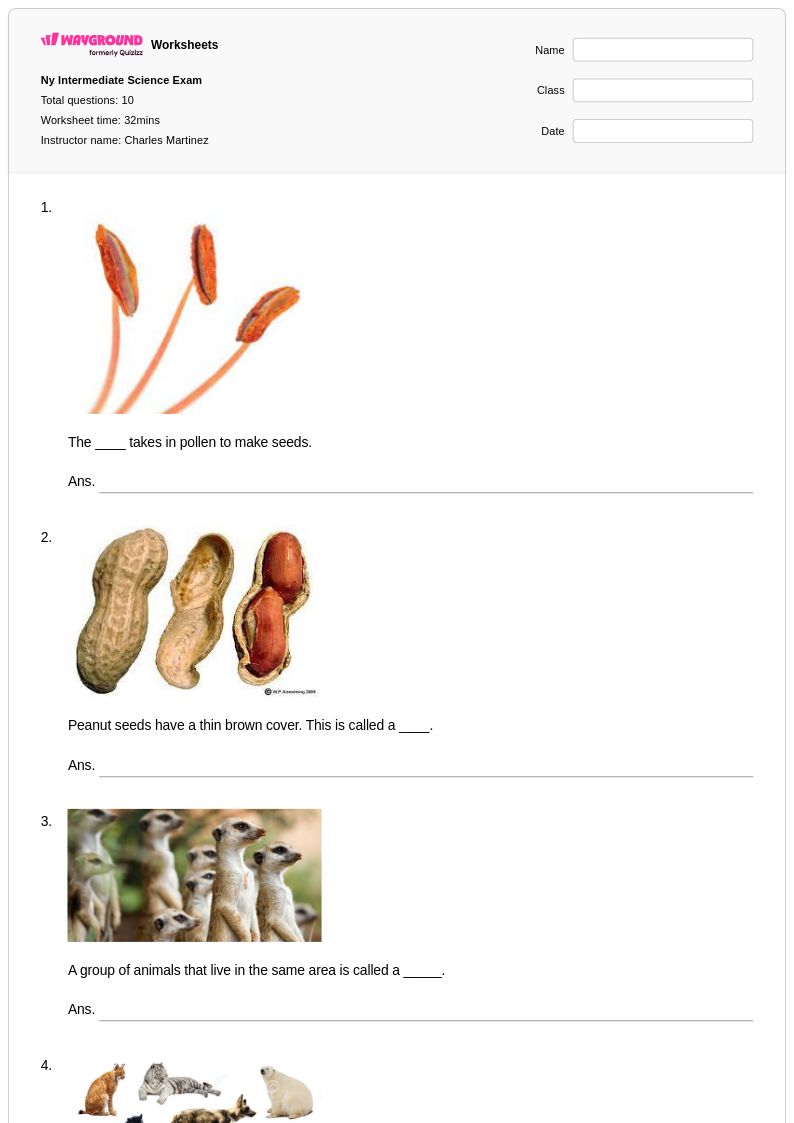
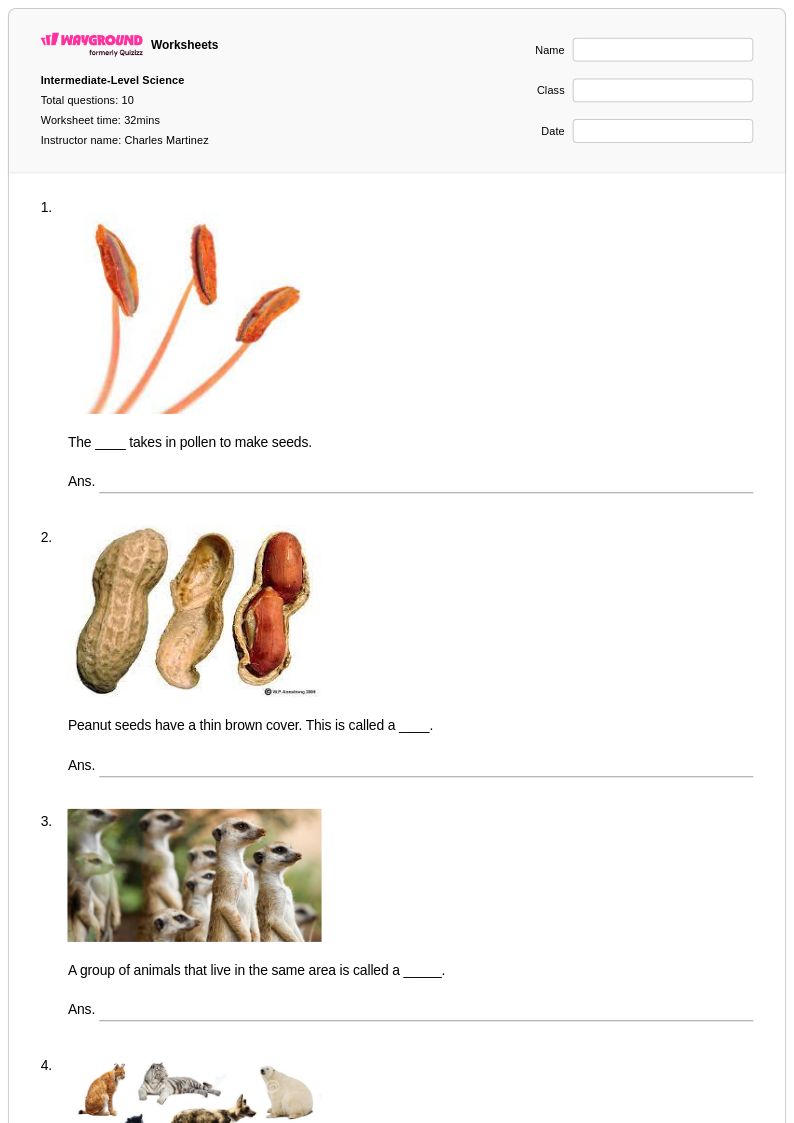
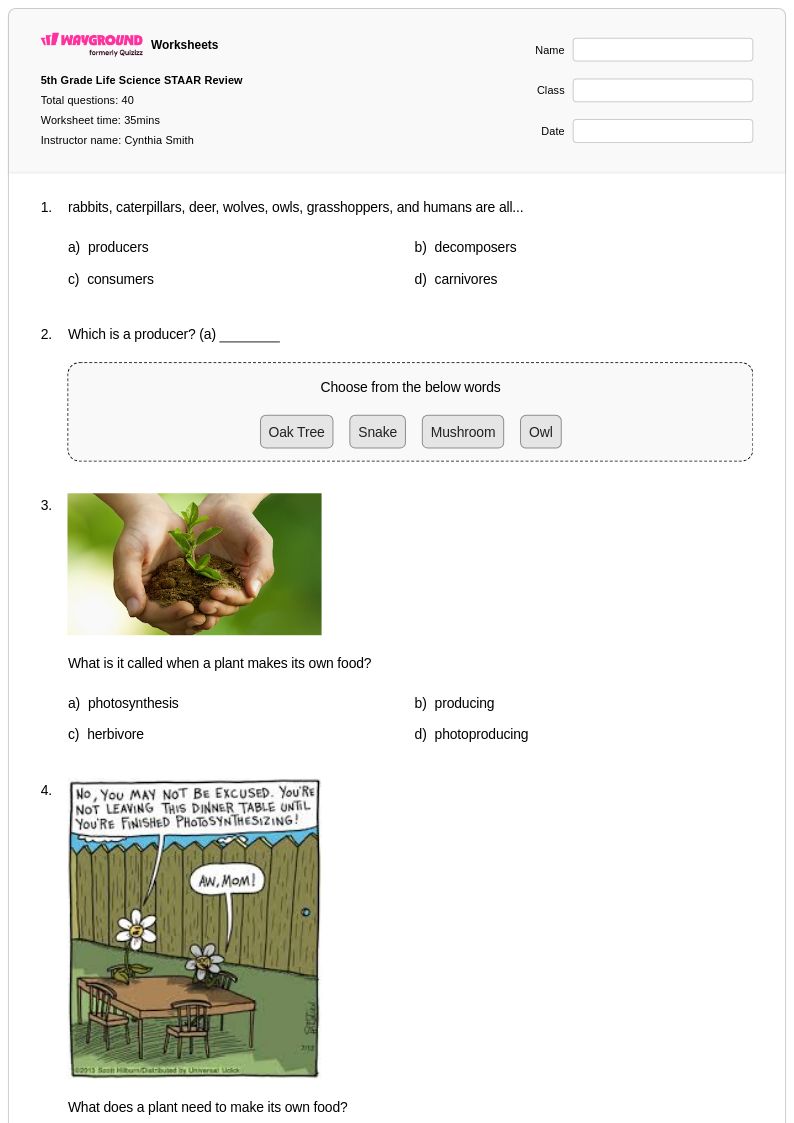
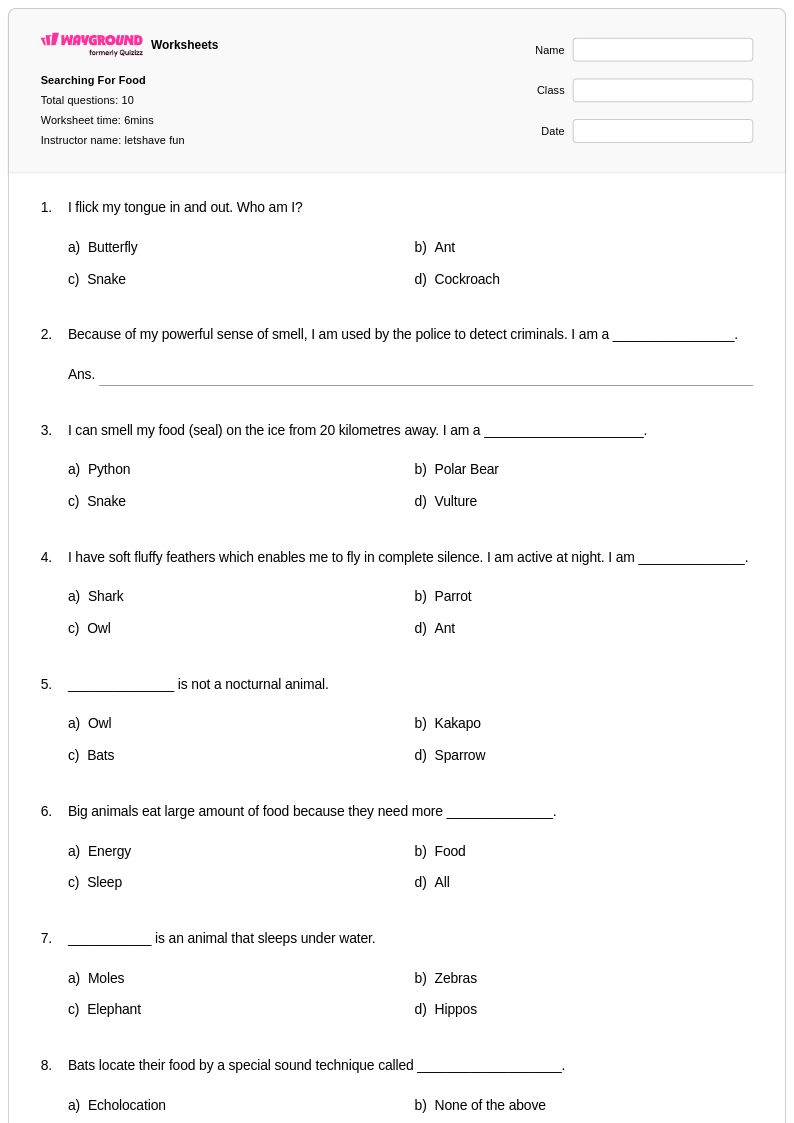
Class 5 butterfly worksheets from Wayground offer free printable PDFs with practice problems and answer keys to help students explore metamorphosis, life cycles, and insect anatomy through engaging activities.
Explore printable Butterfly worksheets for Class 5
Butterfly worksheets for Class 5 students available through Wayground (formerly Quizizz) provide comprehensive exploration of one of nature's most fascinating examples of complete metamorphosis and adaptation. These educational resources guide fifth-grade learners through the intricate life cycle of butterflies, from egg to caterpillar to chrysalis to adult, while developing critical observation skills and understanding of biological processes. Students engage with detailed diagrams, labeling activities, and comparative studies that strengthen their ability to identify stages of development, analyze structural adaptations, and connect butterfly characteristics to their ecological roles as pollinators. The collection includes free printable worksheets with accompanying answer keys, allowing students to practice vocabulary related to metamorphosis, wing patterns, feeding behaviors, and habitat requirements through structured activities and problem-solving exercises that reinforce key concepts in life science.
Wayground (formerly Quizizz) empowers educators with millions of teacher-created butterfly resources specifically designed for Class 5 life science instruction, offering robust search and filtering capabilities that align with state and national science standards. Teachers can easily locate differentiated materials ranging from basic life cycle sequencing activities to advanced comparative anatomy studies, with flexible customization tools that allow modification of content difficulty and format to meet diverse learning needs. The platform provides both printable pdf versions for traditional classroom use and digital formats for interactive learning experiences, supporting comprehensive lesson planning that addresses remediation for struggling learners and enrichment opportunities for advanced students. These versatile worksheet collections enable educators to seamlessly integrate butterfly studies into broader units on animal life cycles, ecosystems, and adaptation while providing targeted skill practice that builds scientific literacy and analytical thinking essential for elementary life science mastery.
FAQs
How do I teach butterfly life cycles to elementary students?
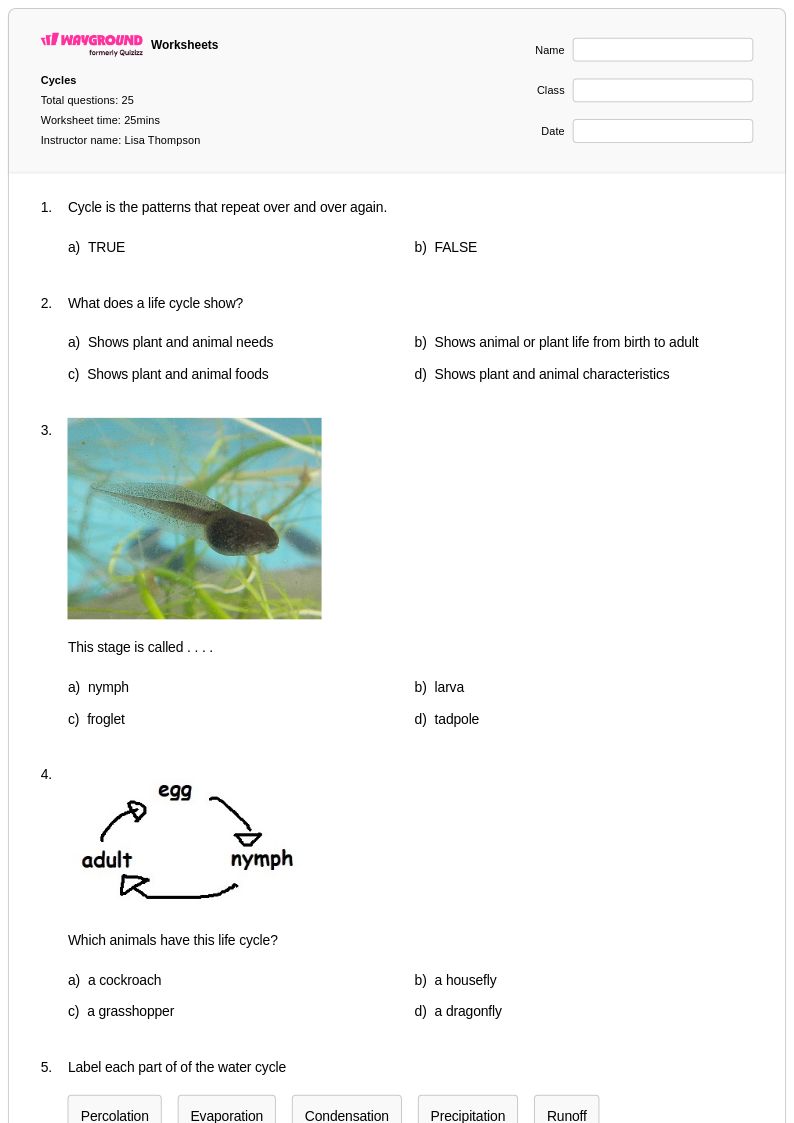
Teaching butterfly life cycles is most effective when students can sequence the four stages — egg, larva, pupa, and adult — using visual aids and hands-on activities. Start by introducing each stage with labeled diagrams, then have students order the stages independently to check comprehension. Connecting the concept of metamorphosis to observable examples, such as caterpillars in the classroom or time-lapse videos, helps students build concrete understanding before moving to abstract descriptions.
What are common misconceptions students have about butterfly metamorphosis?
A frequent misconception is that the caterpillar simply grows wings inside the chrysalis, when in fact the organism undergoes complete metamorphosis where its body is largely broken down and reorganized. Students also commonly confuse a chrysalis with a cocoon, not realizing that cocoons are spun by moths while chrysalises are formed by butterflies from the caterpillar's own skin. Addressing these distinctions explicitly — with labeled diagrams that contrast moth and butterfly development — helps correct these errors before they become entrenched.
What worksheet activities help students practice identifying butterfly anatomy?
Label-the-diagram exercises are highly effective for teaching butterfly anatomy, requiring students to identify structures such as the proboscis, antennae, compound eyes, thorax, abdomen, and wing venation. Sequencing activities that connect anatomical features to their functions — for example, linking the proboscis to nectar feeding — deepen comprehension beyond simple memorization. Pairing these with observation prompts where students describe how specific structures support survival adds a scientific reasoning layer to the practice.
How can I use butterfly worksheets to support students with different learning needs?
Butterfly worksheets on Wayground can be assigned digitally, which allows teachers to apply individual student accommodations directly within the platform. Specific supports include Read Aloud for students who need questions read to them, reduced answer choices to lower cognitive load, extended time per question, and reading mode with adjustable font sizes and themes. These accommodations can be set per student and reused across sessions, so differentiated instruction doesn't require creating separate worksheet versions.
How do I use Wayground's butterfly worksheets in my classroom?
Wayground's butterfly worksheets are available as printable PDFs for traditional classroom use and in digital formats for technology-integrated instruction, including the option to host them as a quiz directly on Wayground. Teachers can use the printable version for independent seat work or homework, while the digital format supports real-time feedback during class. Both formats include comprehensive answer keys, making it straightforward to review responses whether students complete work on paper or on a device.
How do butterfly worksheets connect to broader life science standards?
Butterfly worksheets address multiple life science concepts that appear across K-8 standards, including organism life cycles, adaptation, classification, and ecological relationships such as pollination and food webs. Because butterflies are a well-documented example of complete metamorphosis, they serve as an accessible anchor topic for teaching broader biological concepts like structural adaptation and interdependence within ecosystems. Teachers can use butterfly-focused materials as an entry point before extending instruction to other insects or animal life cycles.