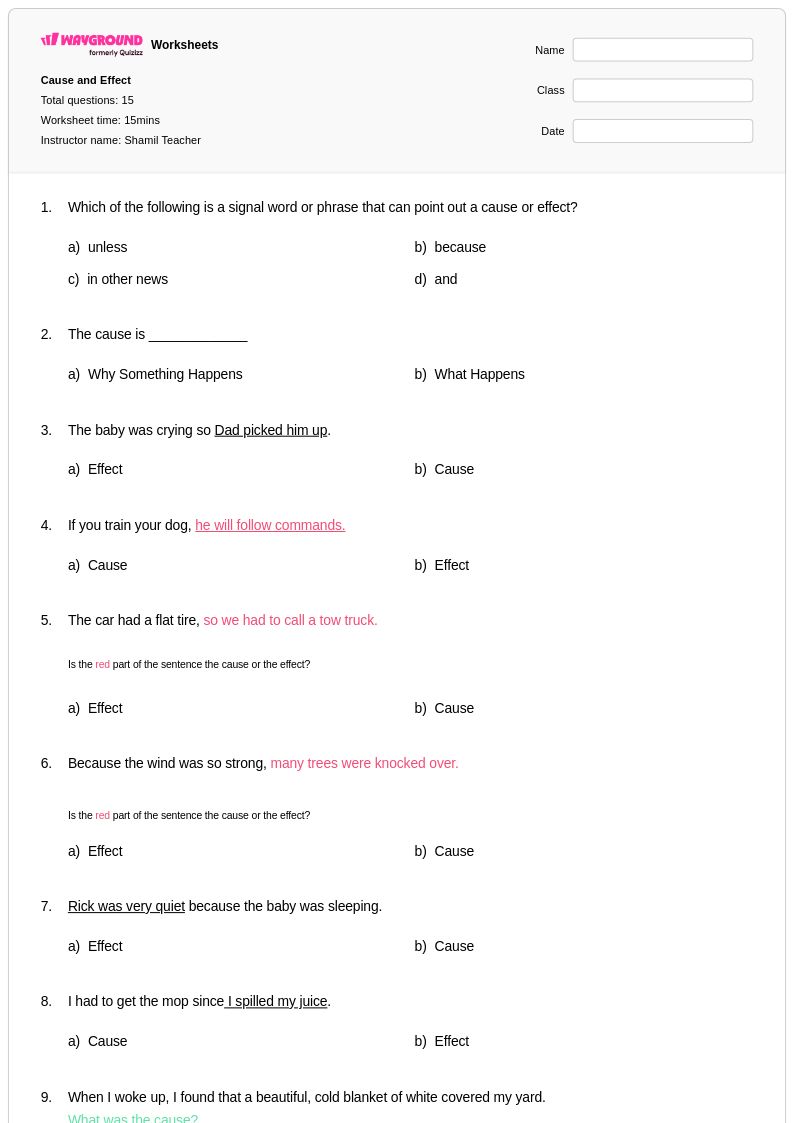
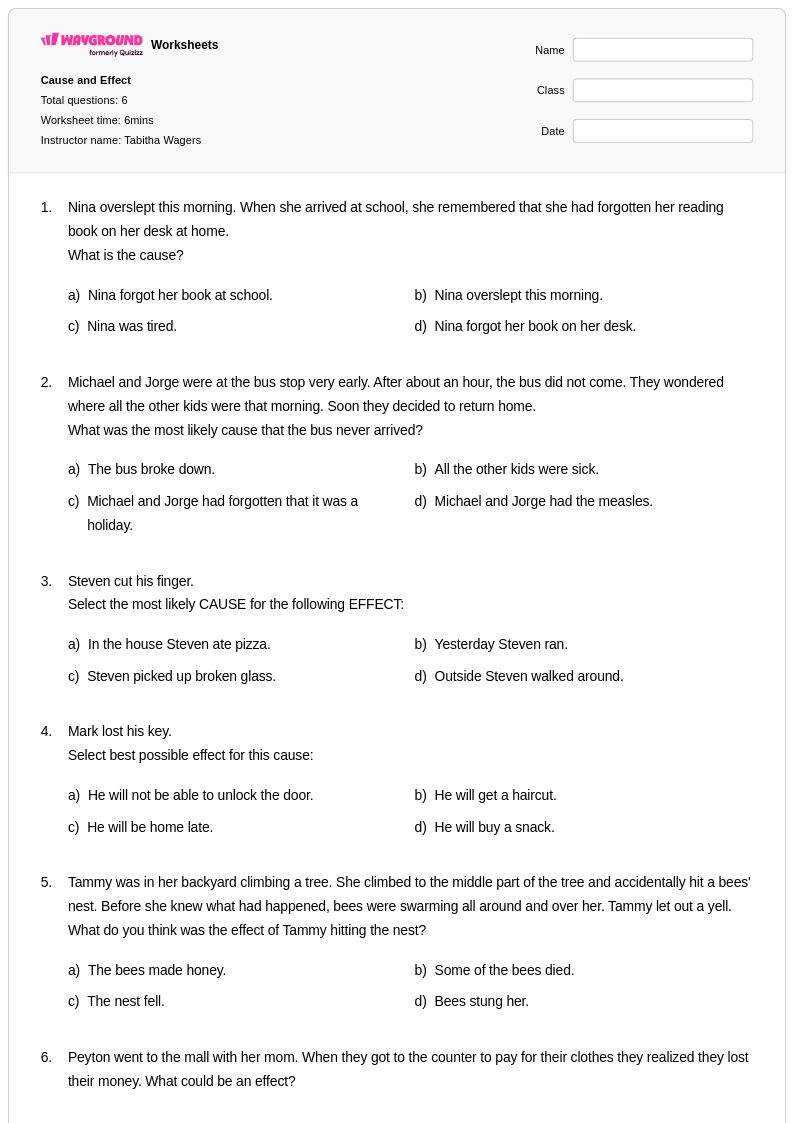
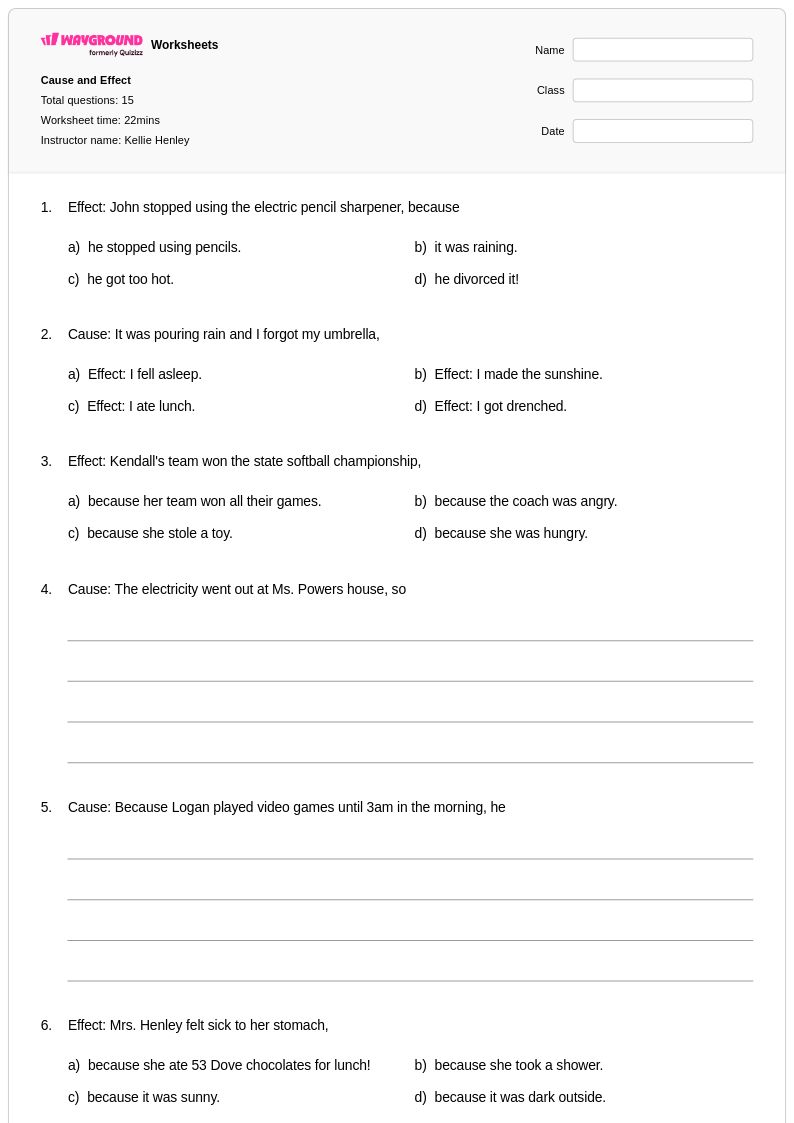
Free Printable Cause and Effect Worksheets for Class 4
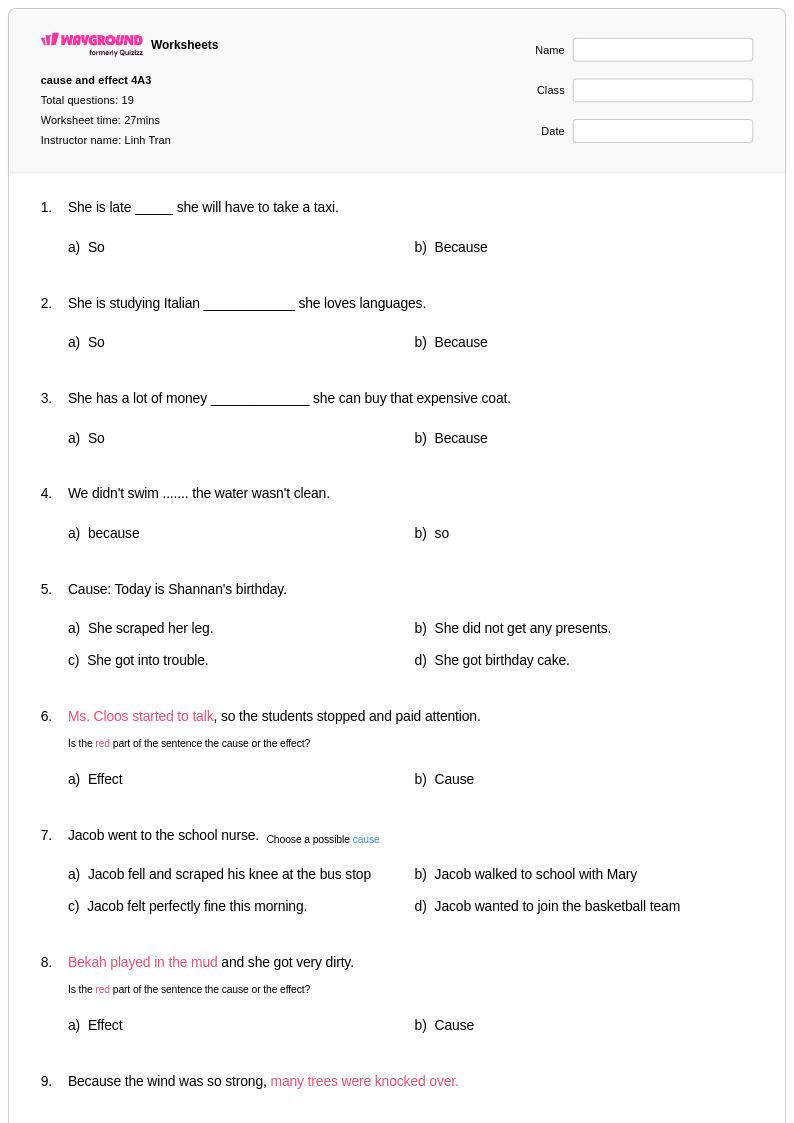
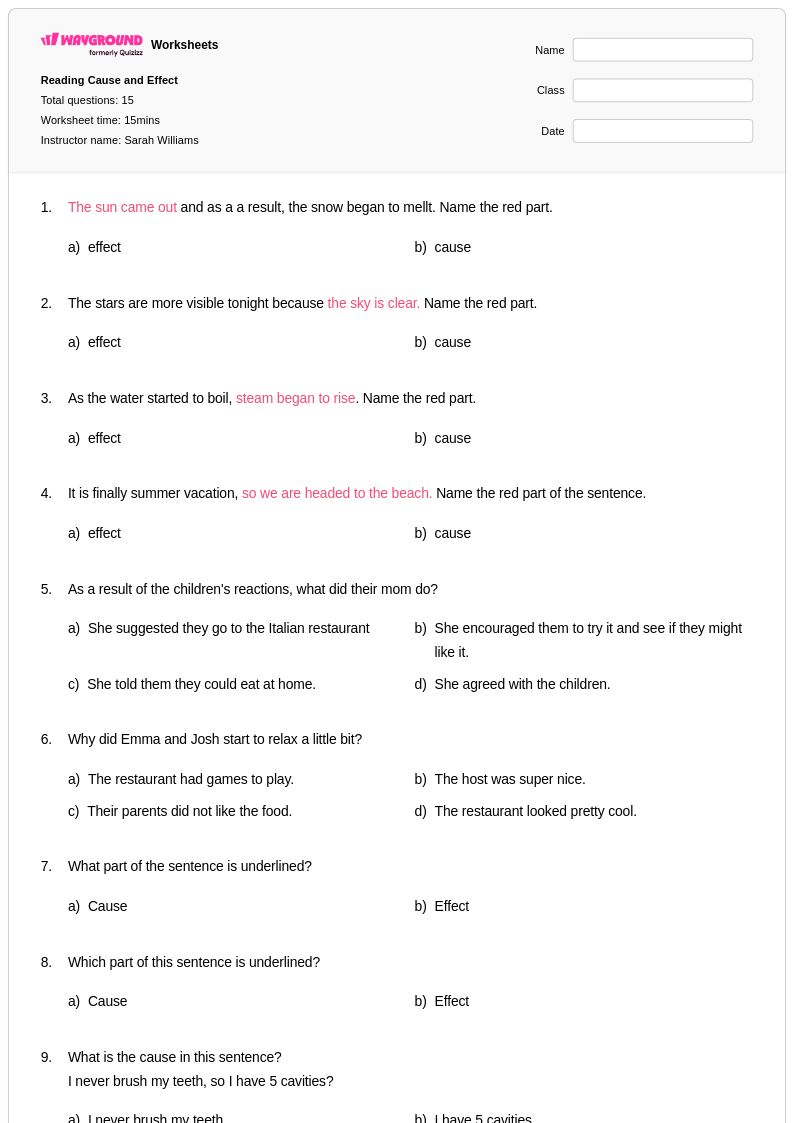
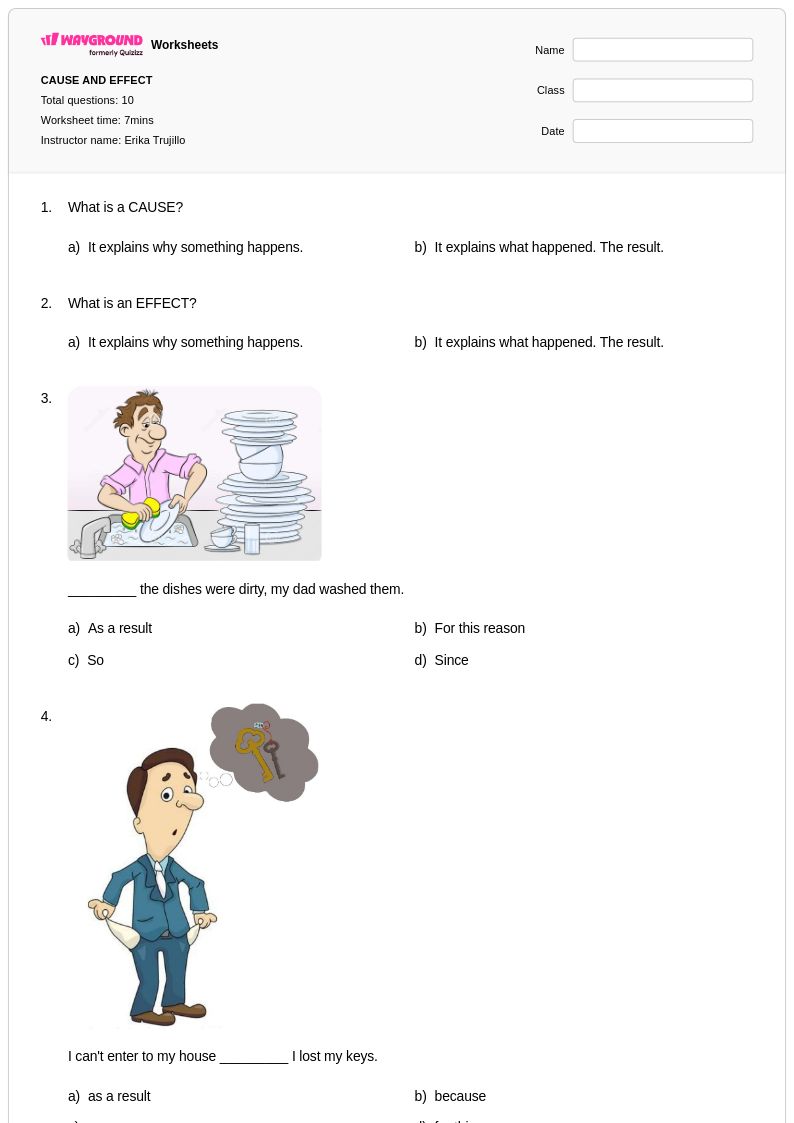
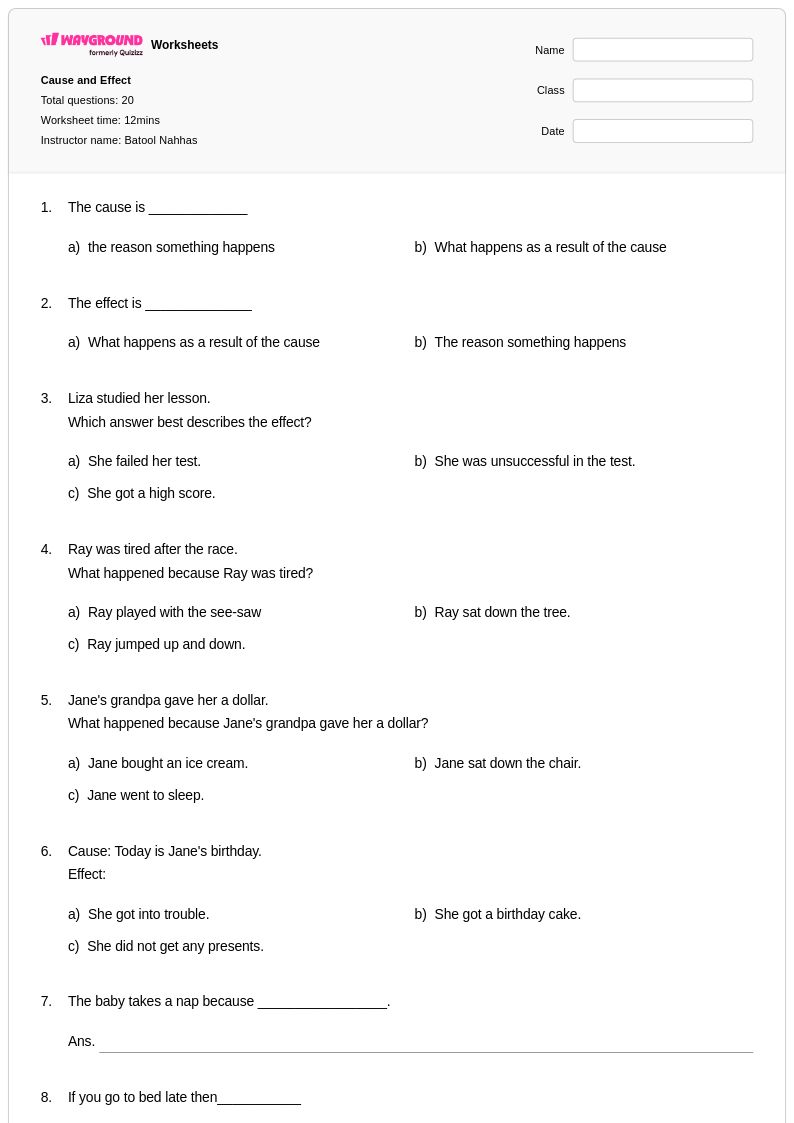
Class 4 cause and effect reading comprehension worksheets help students identify relationships between events through engaging printables, practice problems, and free PDF resources with complete answer keys.
Explore printable Cause and Effect worksheets for Class 4
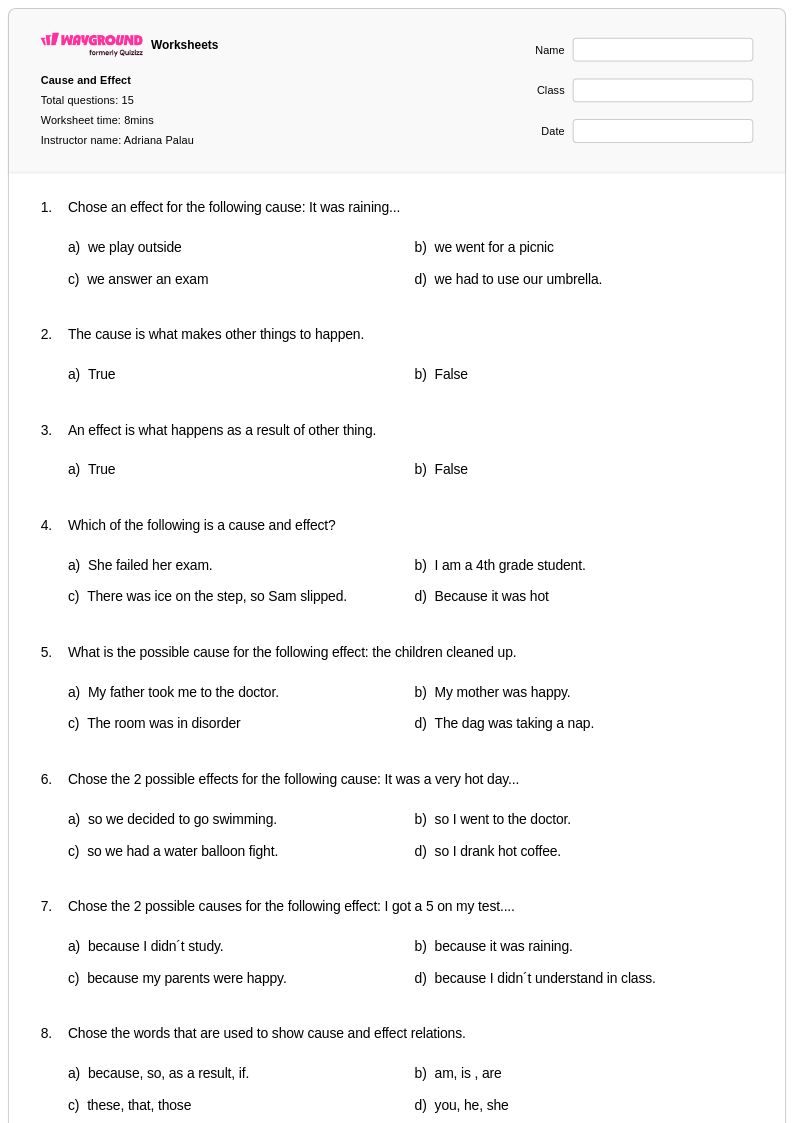
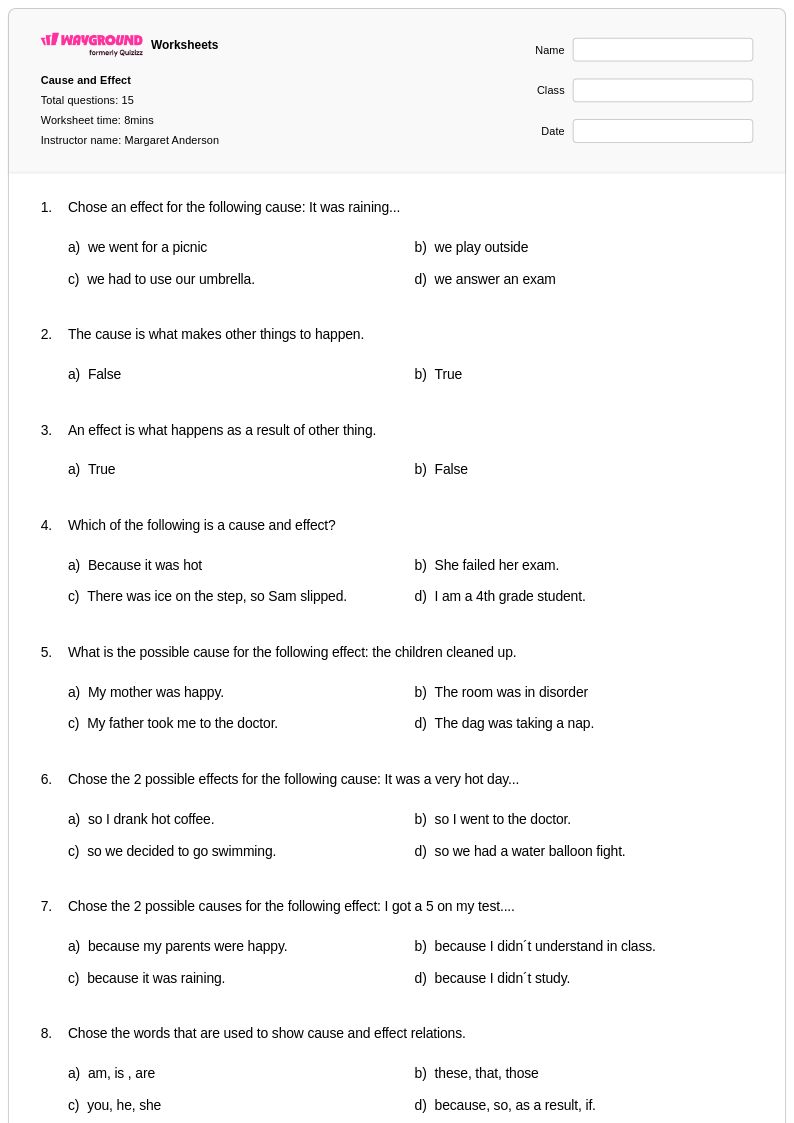
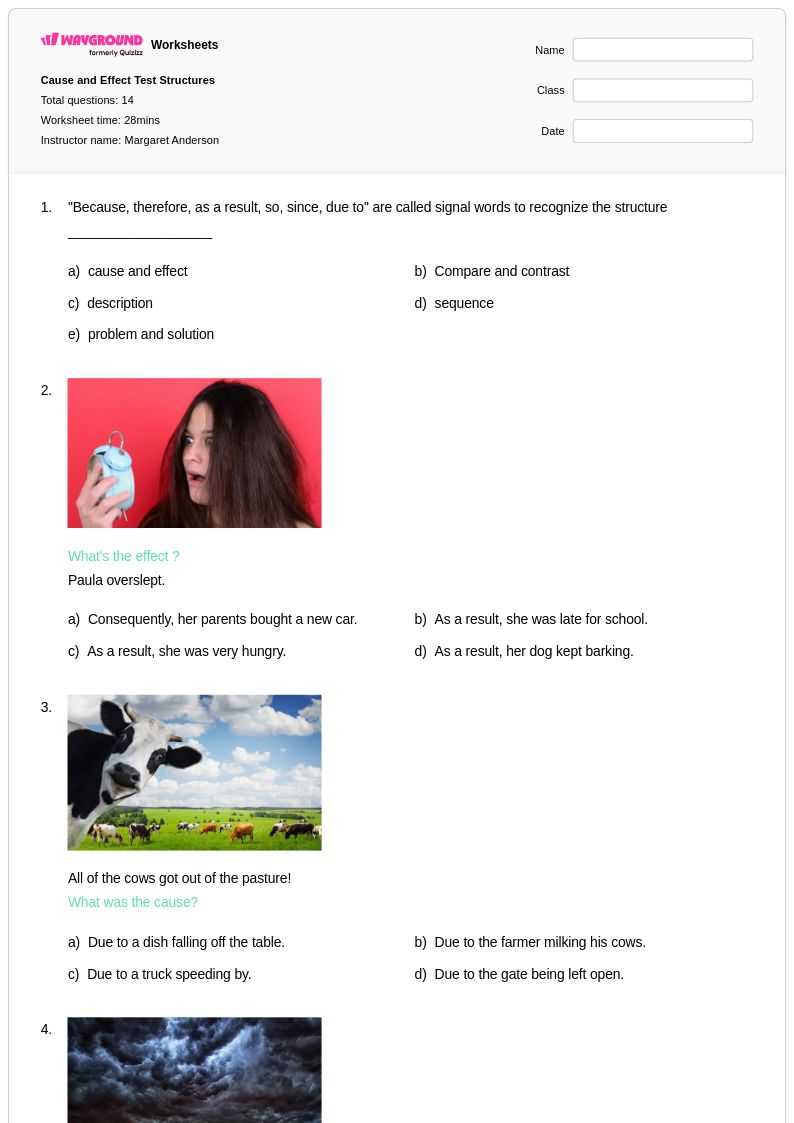
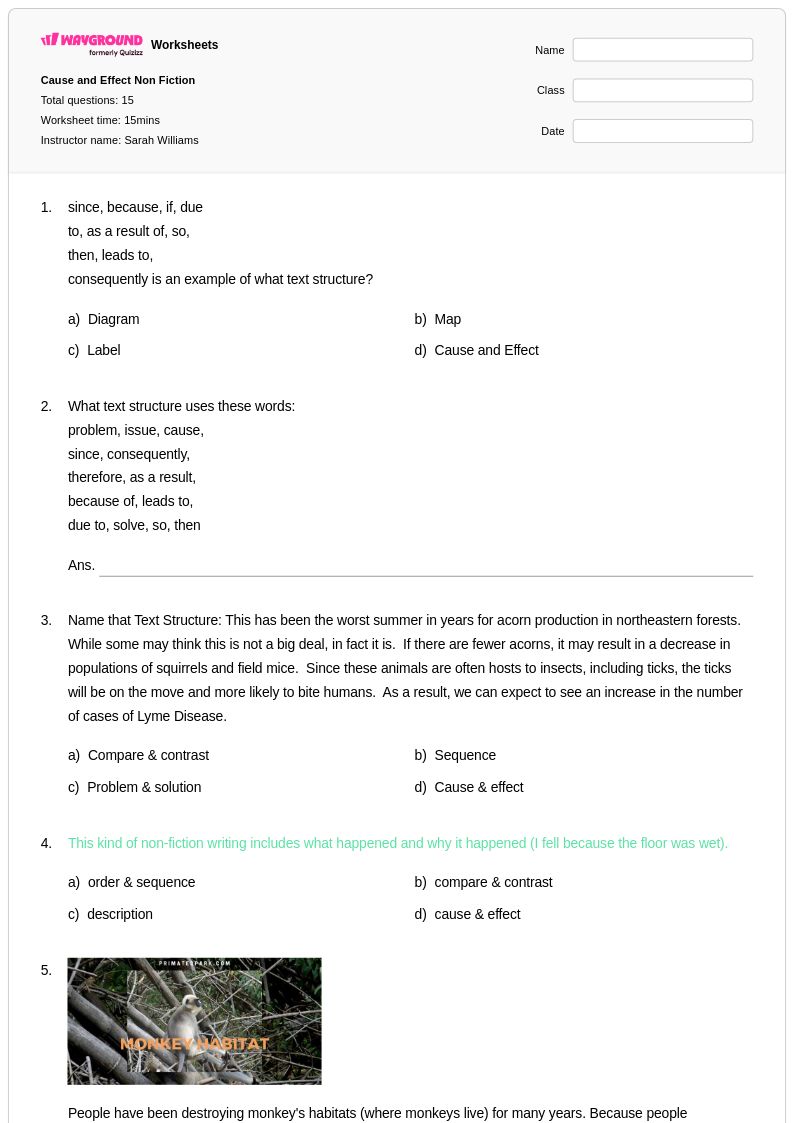
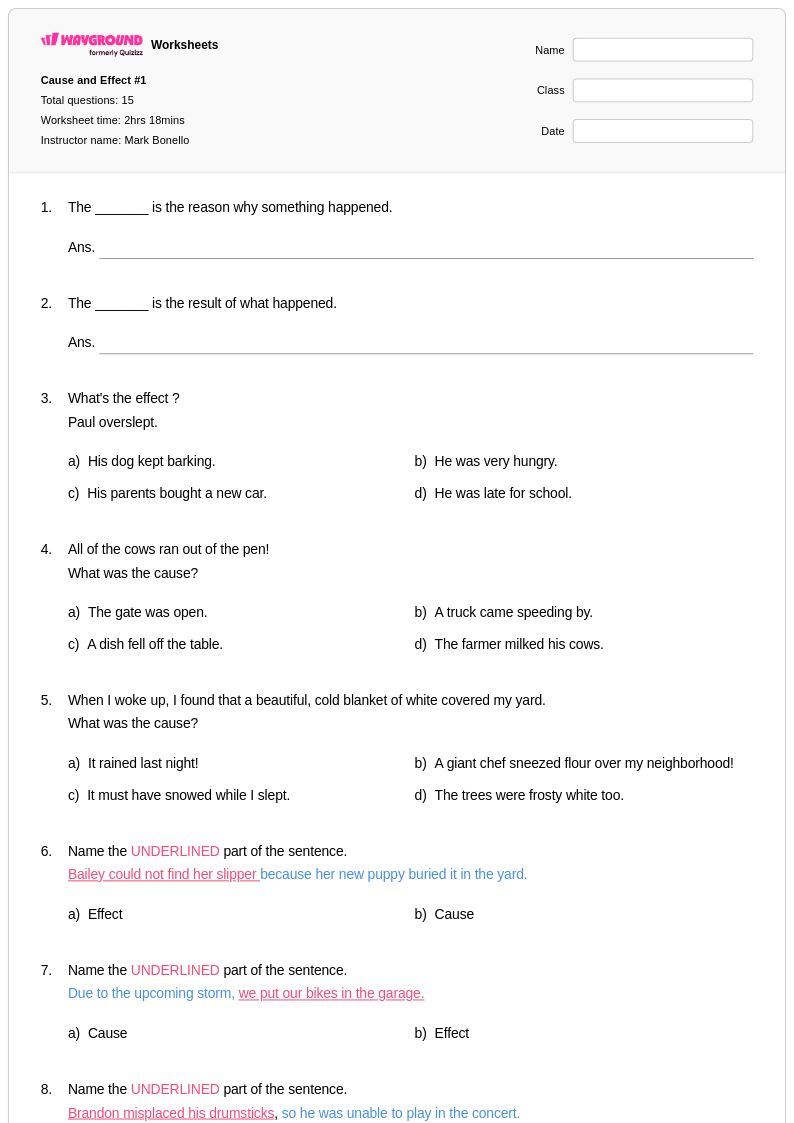
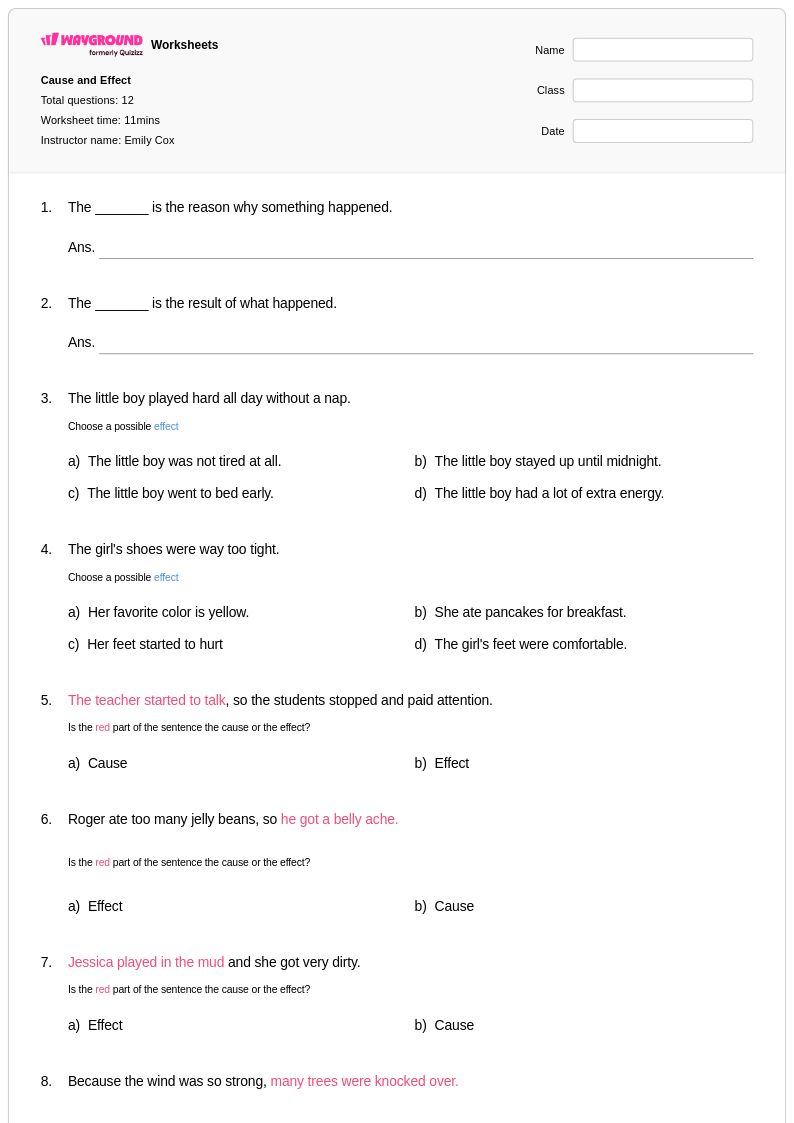
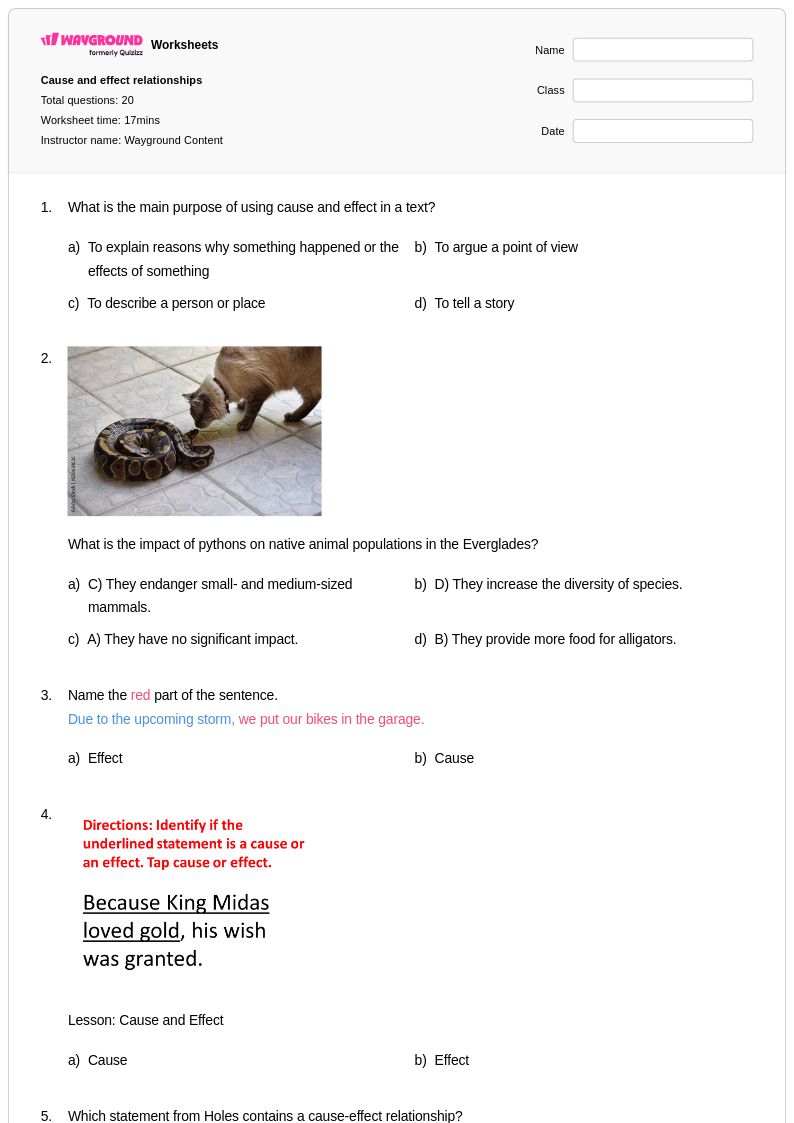
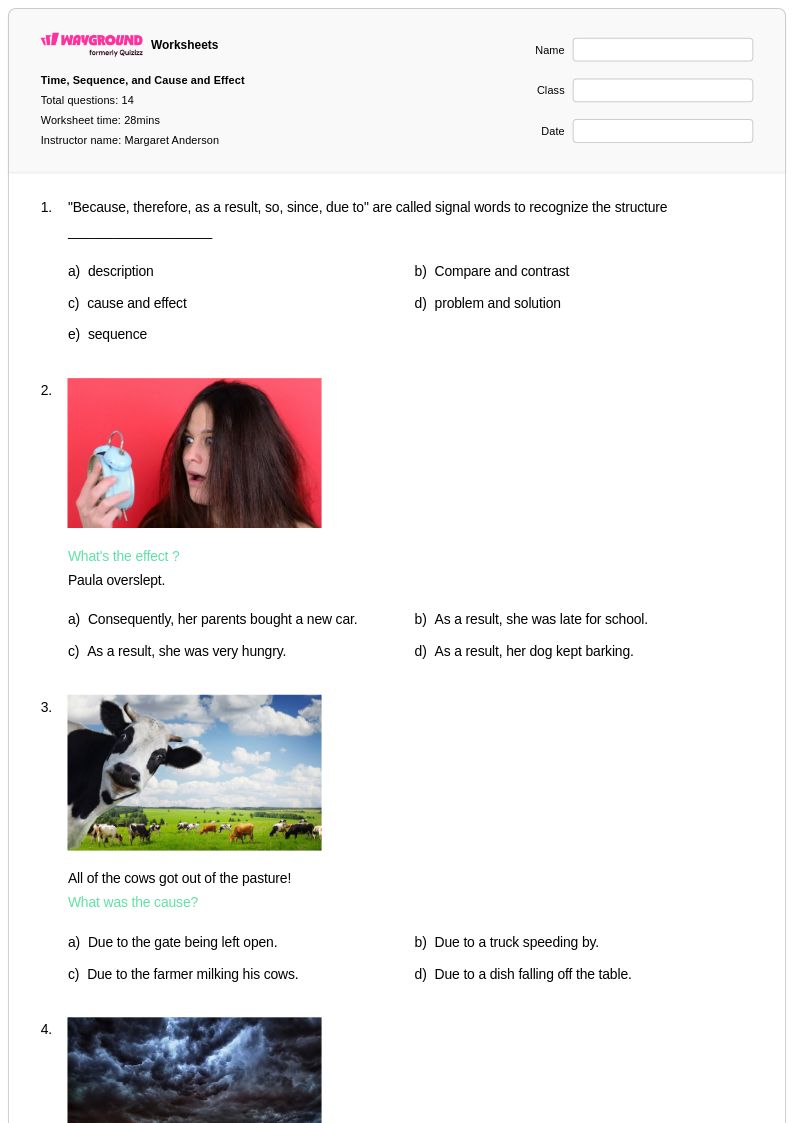
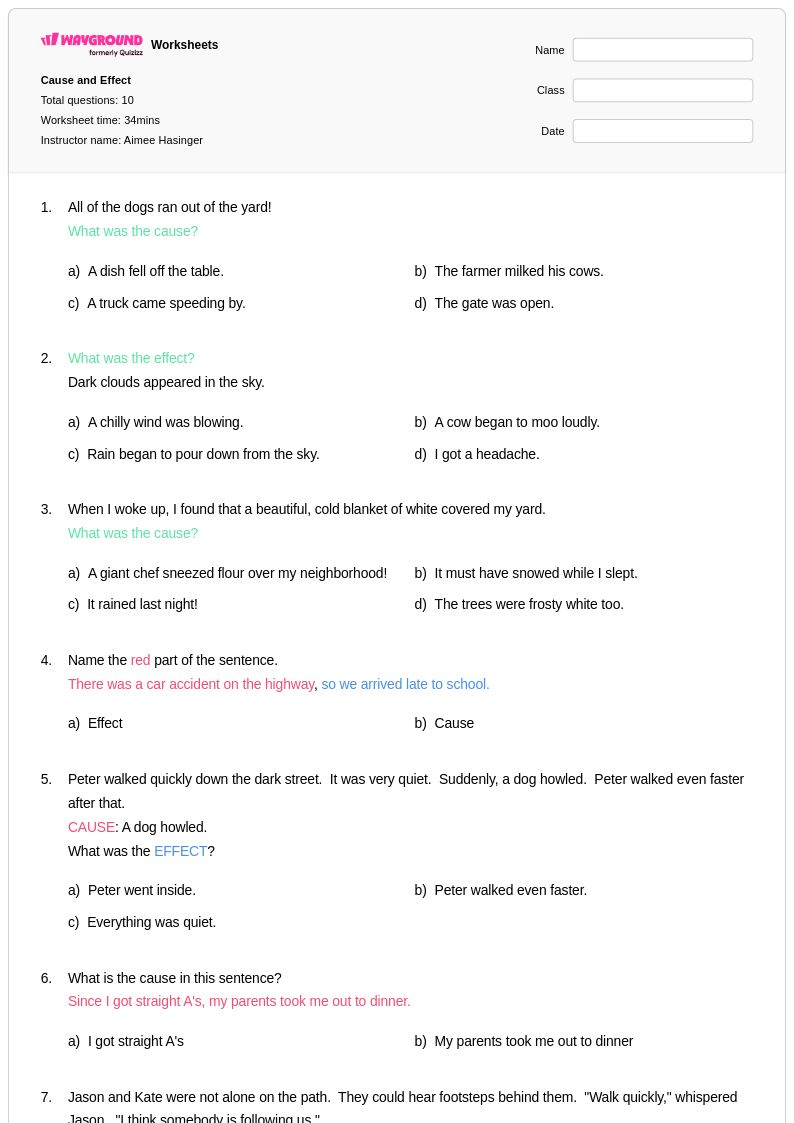
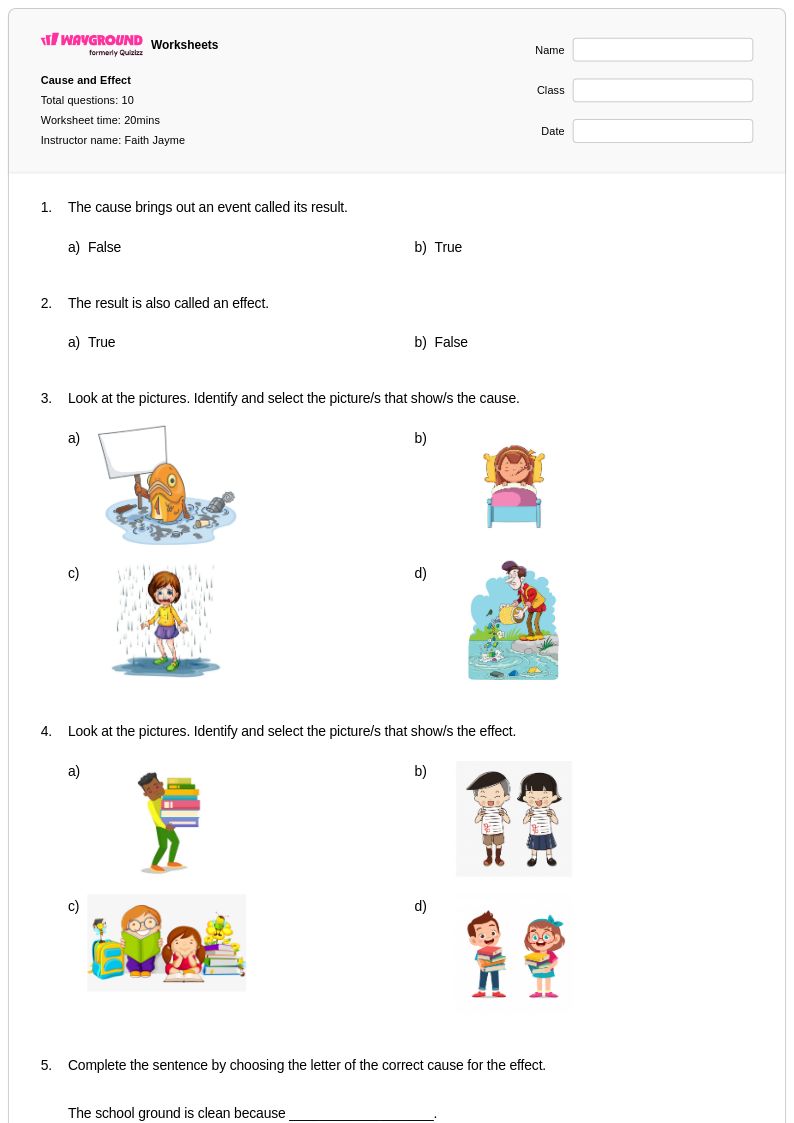
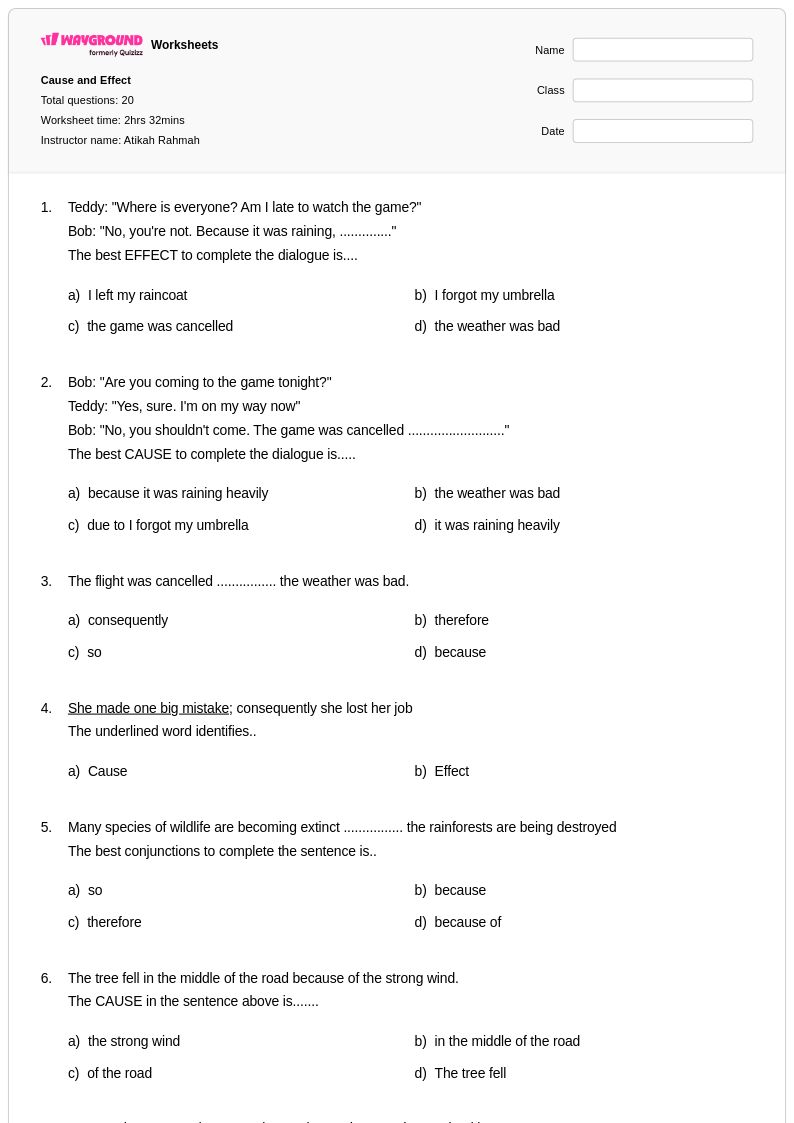
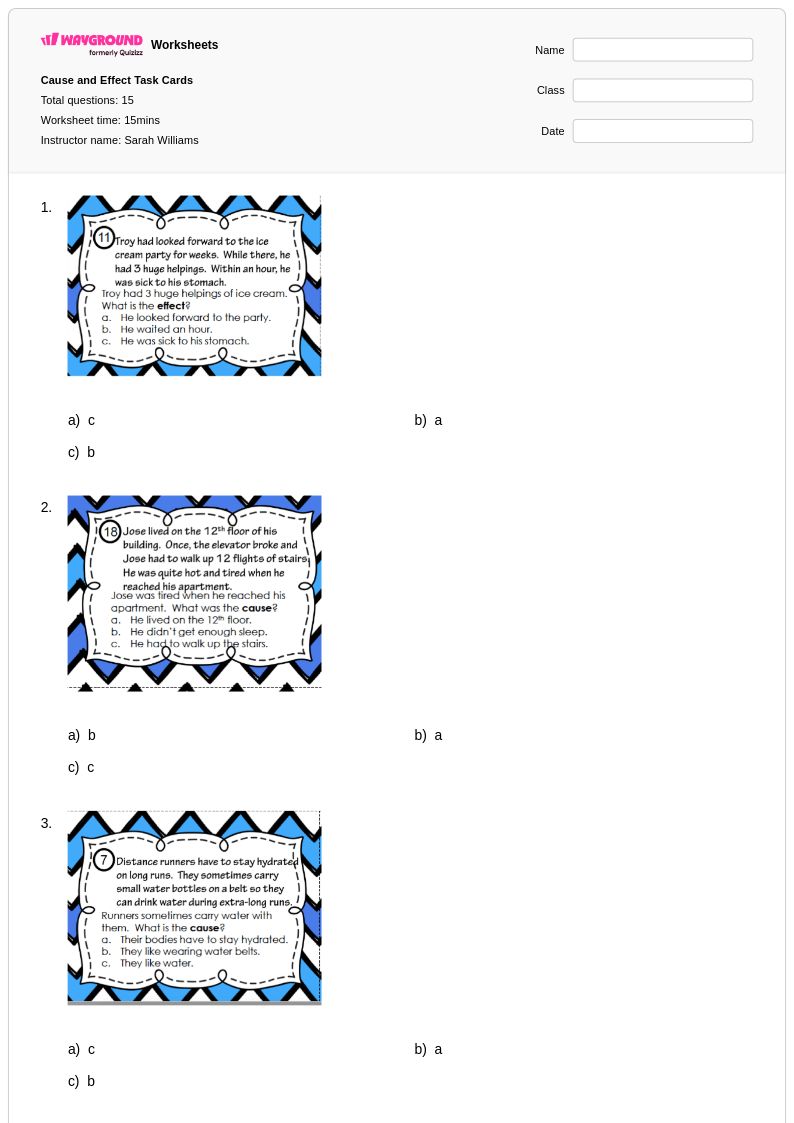
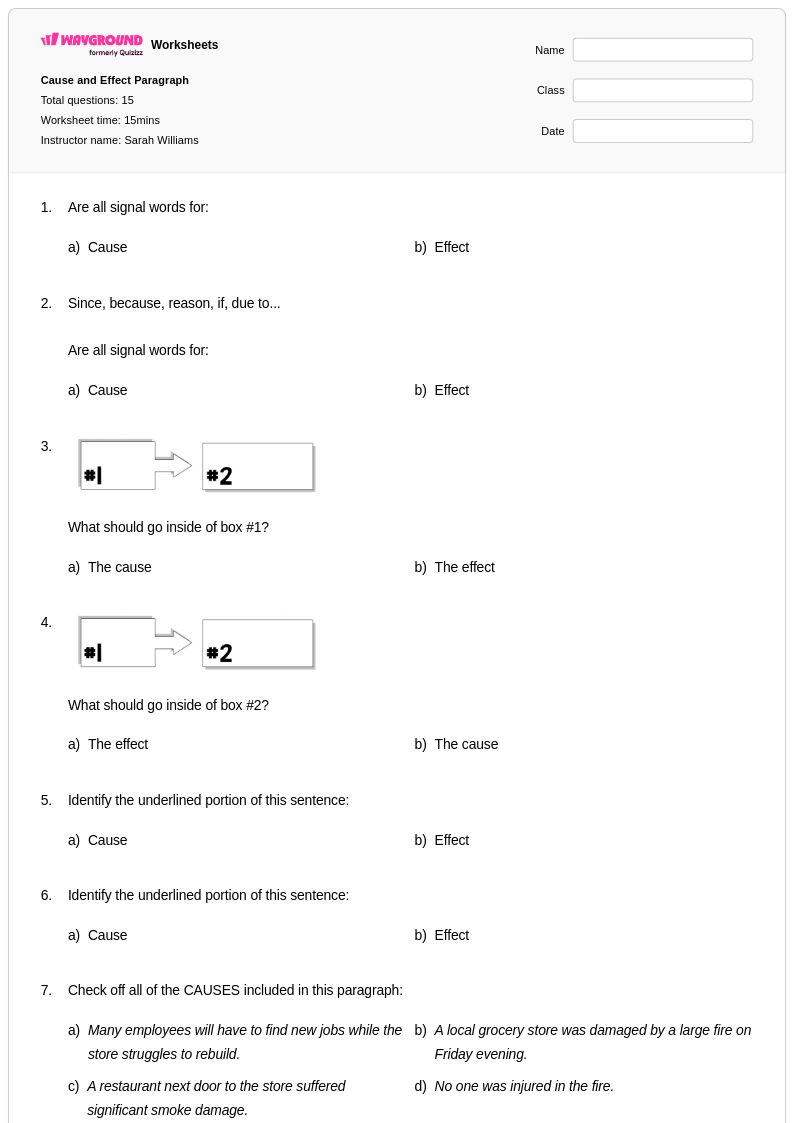
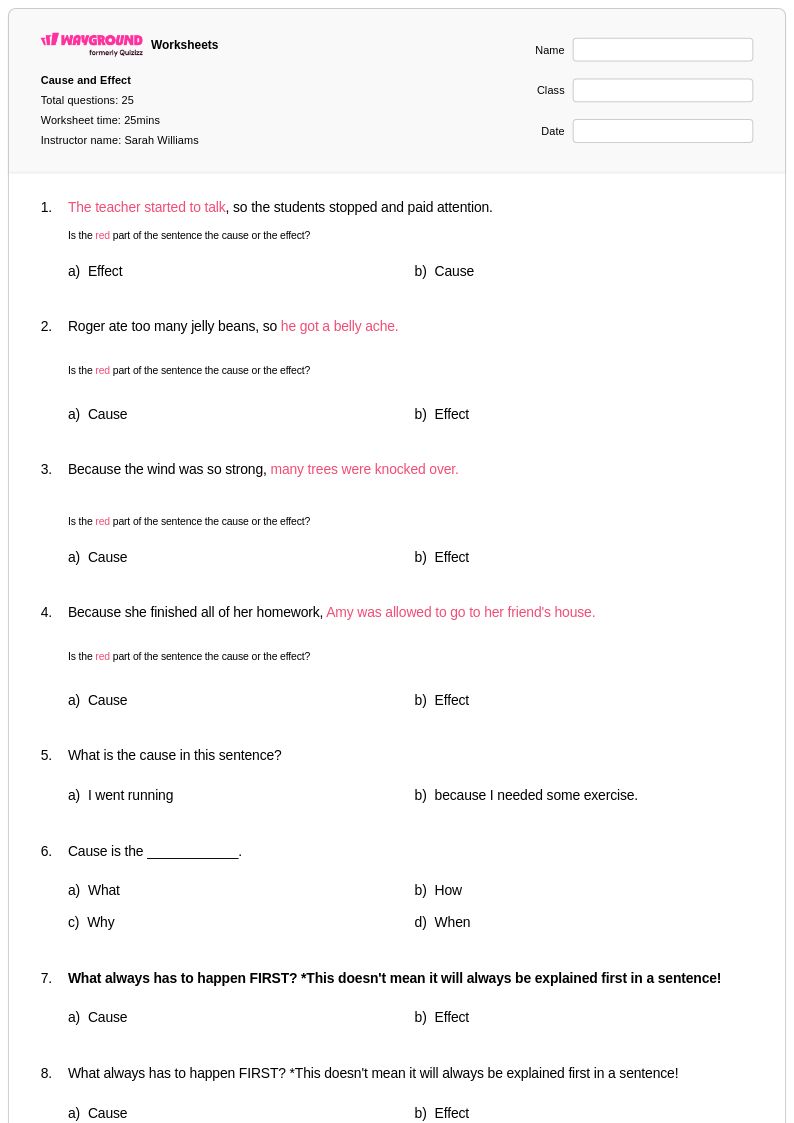
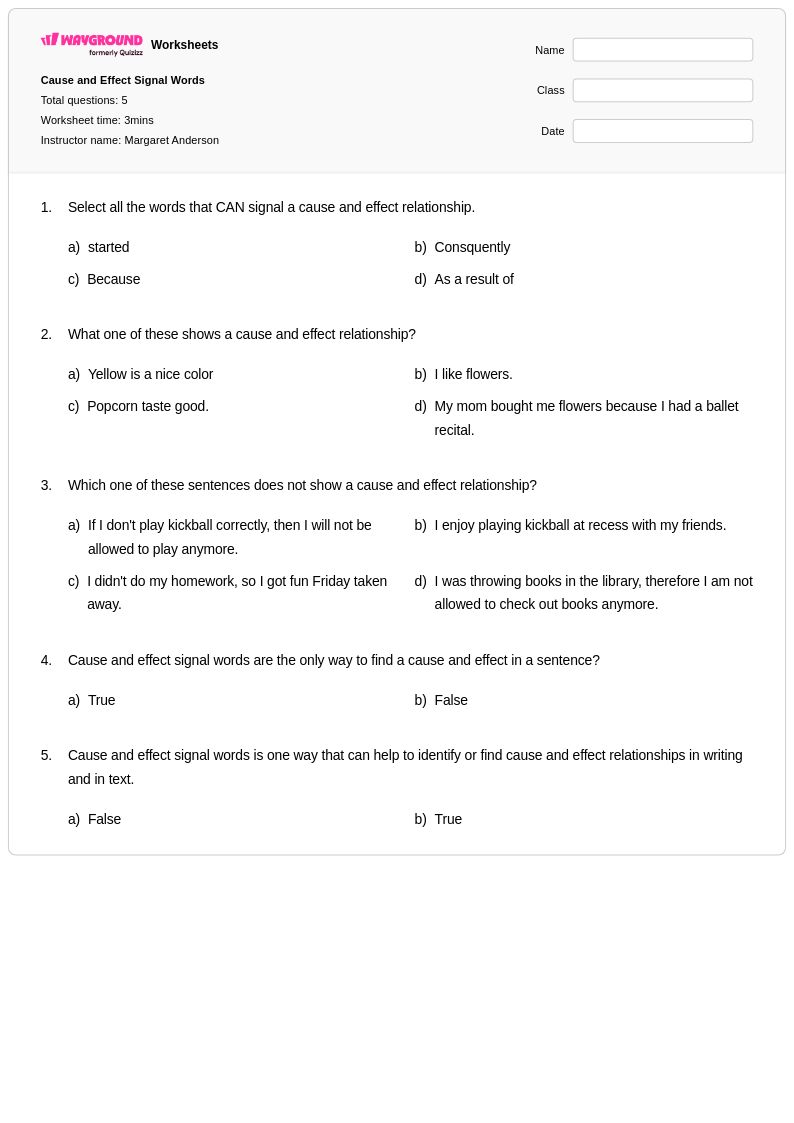
Cause and effect relationships form a critical foundation for Class 4 reading comprehension, and Wayground's extensive worksheet collection provides educators with comprehensive resources to develop these analytical skills. These carefully designed worksheets guide students through identifying signal words, recognizing explicit and implicit connections between events, and understanding how actions lead to specific outcomes in both fiction and nonfiction texts. Students engage with varied practice problems that range from simple cause-and-effect pairs to more complex chains of events, building their ability to think critically about textual relationships. Each worksheet includes a detailed answer key to support accurate assessment, and the materials are available as free printables in convenient pdf format, making them accessible for both classroom instruction and independent practice.
Wayground's robust platform, formerly known as Quizizz, empowers teachers with millions of educator-created resources specifically designed to strengthen cause and effect comprehension skills through targeted worksheet activities. The platform's advanced search and filtering capabilities allow teachers to quickly locate materials that align with specific learning standards and match their students' current skill levels. Built-in differentiation tools enable seamless customization of worksheets to accommodate diverse learning needs, while the flexibility of both printable and digital formats ensures seamless integration into any instructional environment. These features collectively support effective lesson planning by providing ready-to-use materials for initial skill introduction, targeted remediation for struggling learners, and enrichment opportunities for advanced students, creating a comprehensive framework for systematic reading comprehension development.
FAQs
How do I teach cause and effect to students who struggle with reading comprehension?
Start by anchoring instruction in familiar, real-world scenarios before moving to text-based examples — for instance, asking students why a plant dies if it isn't watered before asking them to identify causation in a story. Explicitly teach signal words such as 'because,' 'as a result,' 'therefore,' and 'since,' and model how to locate them in both fiction and nonfiction passages. Graphic organizers that map causes to effects help students visualize the relationship before they practice identifying it independently in written form.
What exercises help students practice identifying cause and effect in fiction and nonfiction?
Effective practice exercises include matching activities where students pair causes with their corresponding effects, cloze sentences where students complete either the cause or effect half, and short-passage analyses where students underline signal words and label each event. Practicing across both fiction and nonfiction is important because causal relationships in stories often involve character decisions, while nonfiction texts present factual chains of events — requiring students to apply the same skill in different reading contexts.
What common mistakes do students make when identifying cause and effect?
The most frequent error is confusing sequence with causation — students often assume that because one event happens before another, the first event caused the second. Another common mistake is identifying only the immediate cause and missing an underlying or contributing cause, particularly in complex nonfiction texts. Students also frequently reverse the cause and effect, labeling the outcome as the cause, which is why asking them to justify their answers using signal words or textual evidence is a critical check.
How do cause and effect worksheets support reading comprehension skills across subjects?
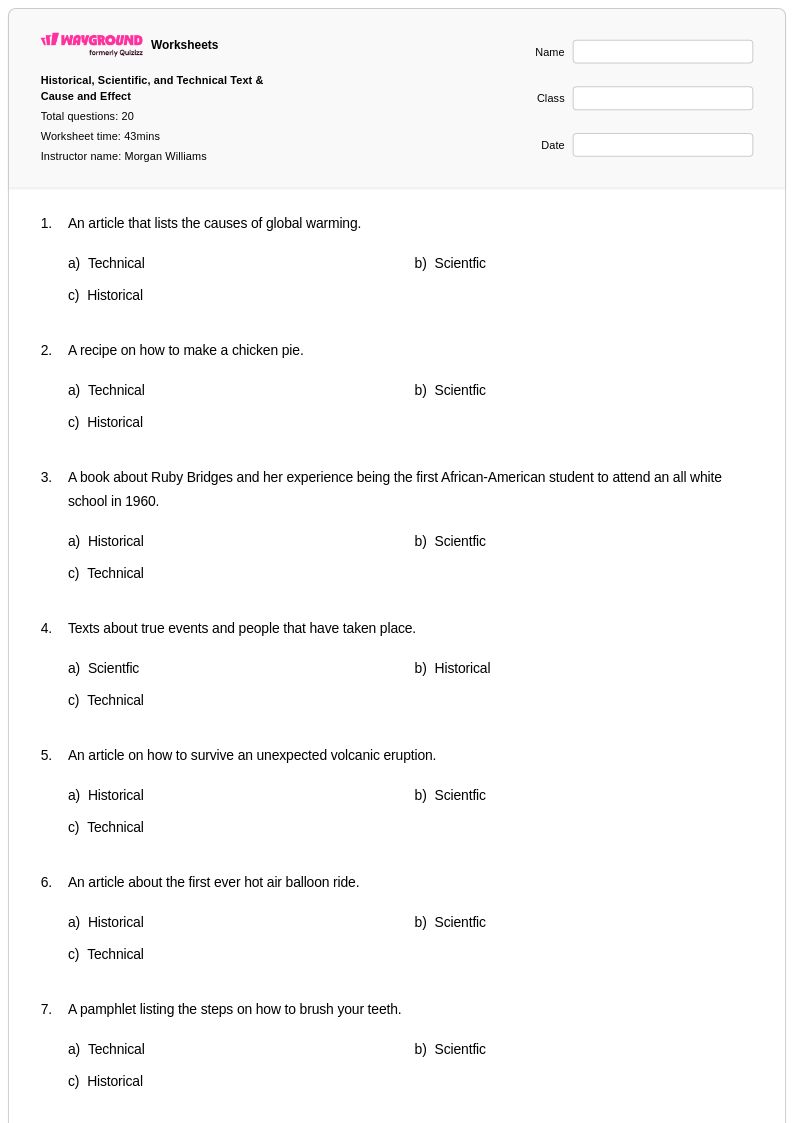
Cause and effect is a foundational comprehension strategy that applies across science, social studies, history, and ELA because virtually every discipline involves understanding why events happen and what results from them. Worksheets that use nonfiction passages from multiple subject areas train students to recognize causal relationships in context-specific language, not just narrative text. This cross-disciplinary practice strengthens analytical thinking and helps students transfer the skill to their reading in any class.
How do I use Wayground's cause and effect worksheets in my classroom?
Wayground's cause and effect worksheets are available as printable PDFs for traditional classroom use and in digital formats for technology-integrated or remote learning environments. Teachers can also host worksheets as a quiz directly on Wayground, allowing students to complete activities online with immediate feedback. The platform includes accommodations such as read aloud, extended time, and reduced answer choices, which can be assigned to individual students so that all learners engage with the same content at an appropriate level of support.
How can I differentiate cause and effect instruction for students at different skill levels?
For students who are still building foundational skills, begin with single-sentence cause-and-effect pairs and simple signal words before progressing to paragraph-length passages. Advanced students benefit from multi-layered texts where one effect becomes the cause of another event, pushing them to map chains of causation rather than isolated pairs. On Wayground, teachers can apply accommodations such as reduced answer choices or read aloud to individual students, allowing lower-level readers to access the same worksheet content without requiring a completely separate assignment.