Free Printable Identifying the Author's Purpose Worksheets for Class 4
Help Class 4 students master identifying the author's purpose with Wayground's comprehensive collection of free worksheets, printables, and practice problems featuring engaging passages and detailed answer keys.
Explore printable Identifying the Author's Purpose worksheets for Class 4
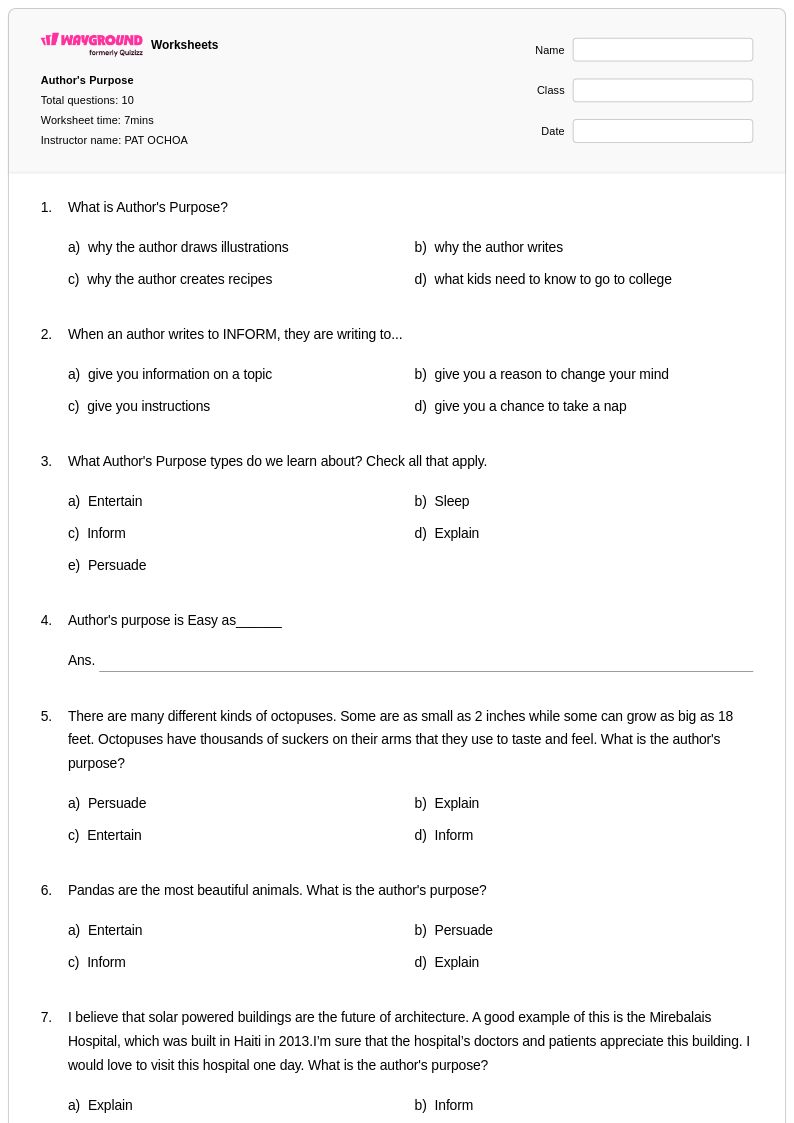
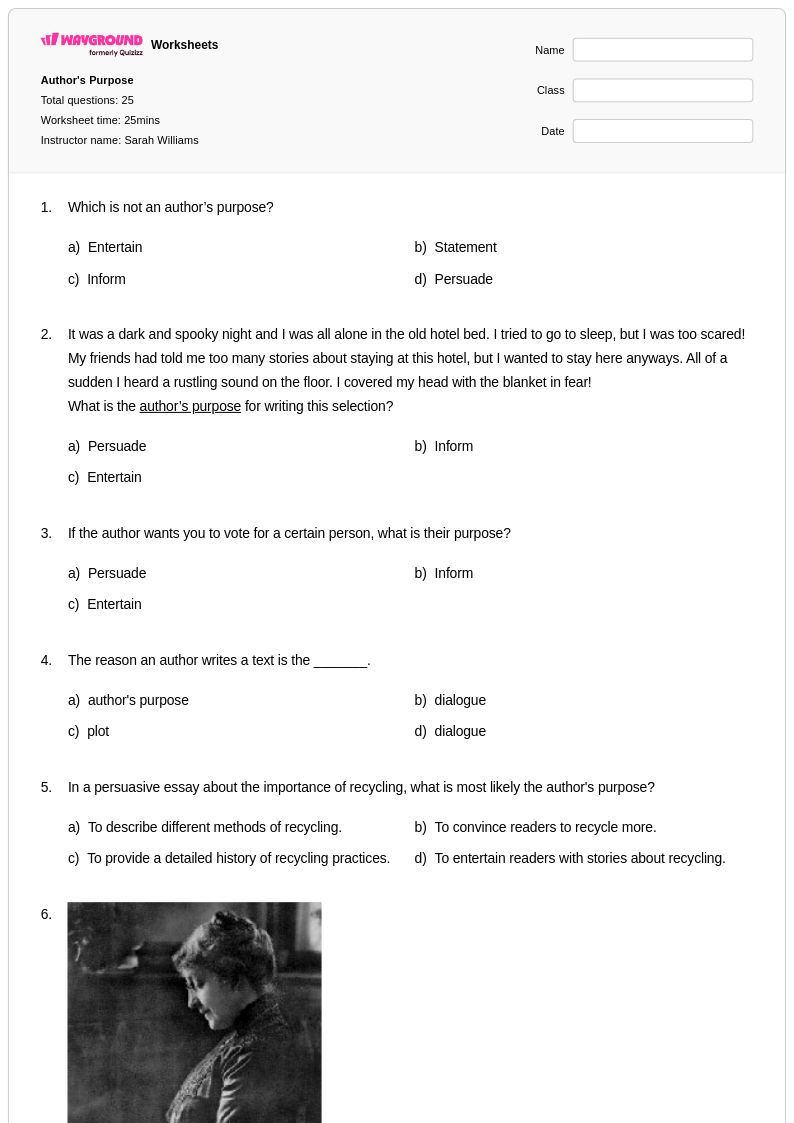
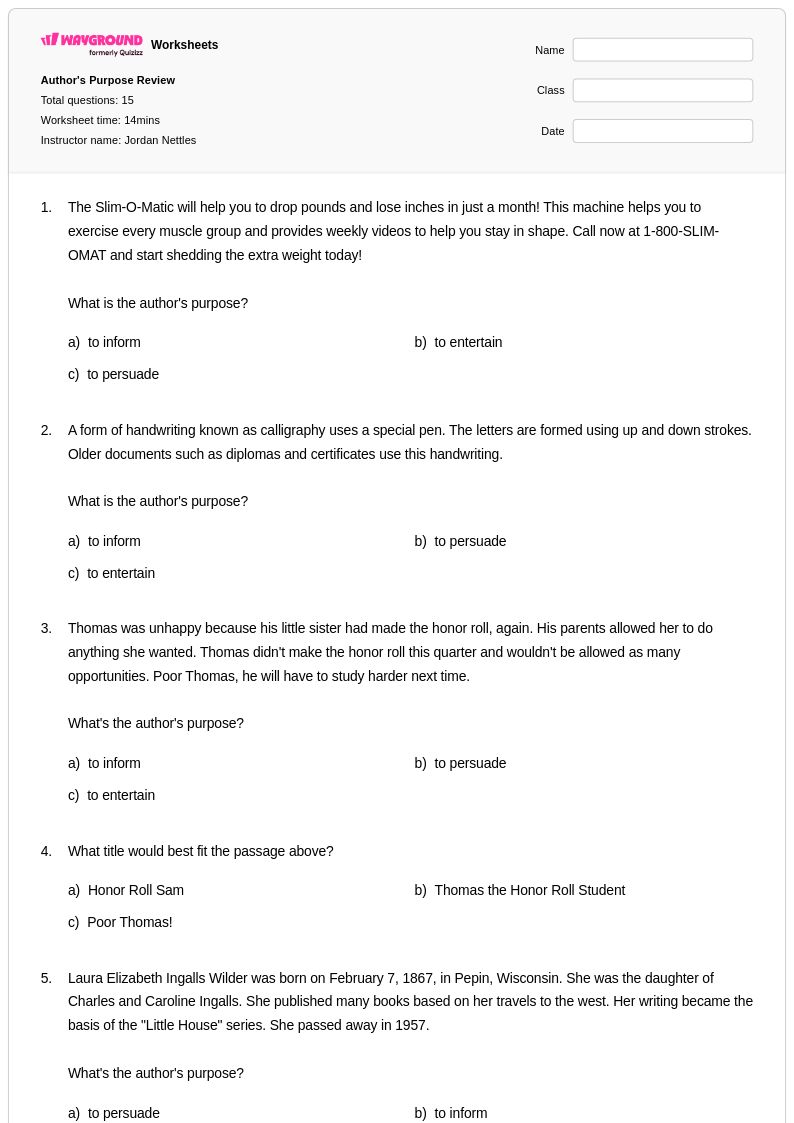
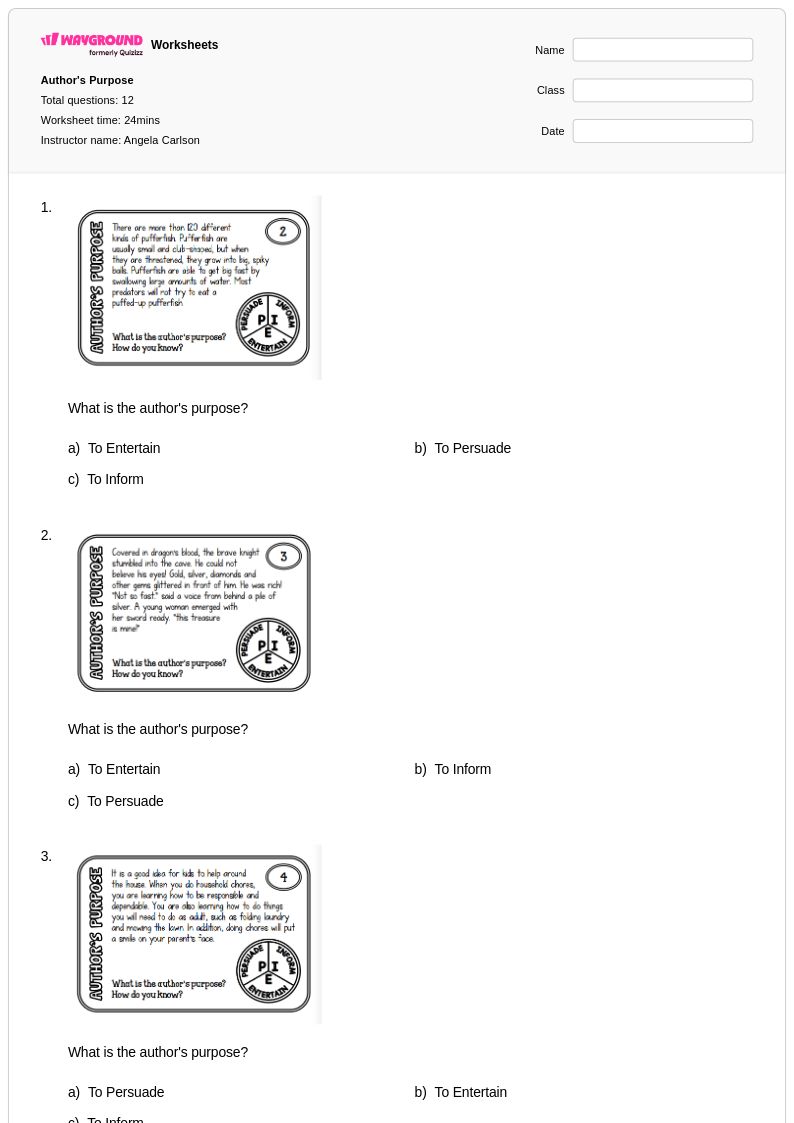
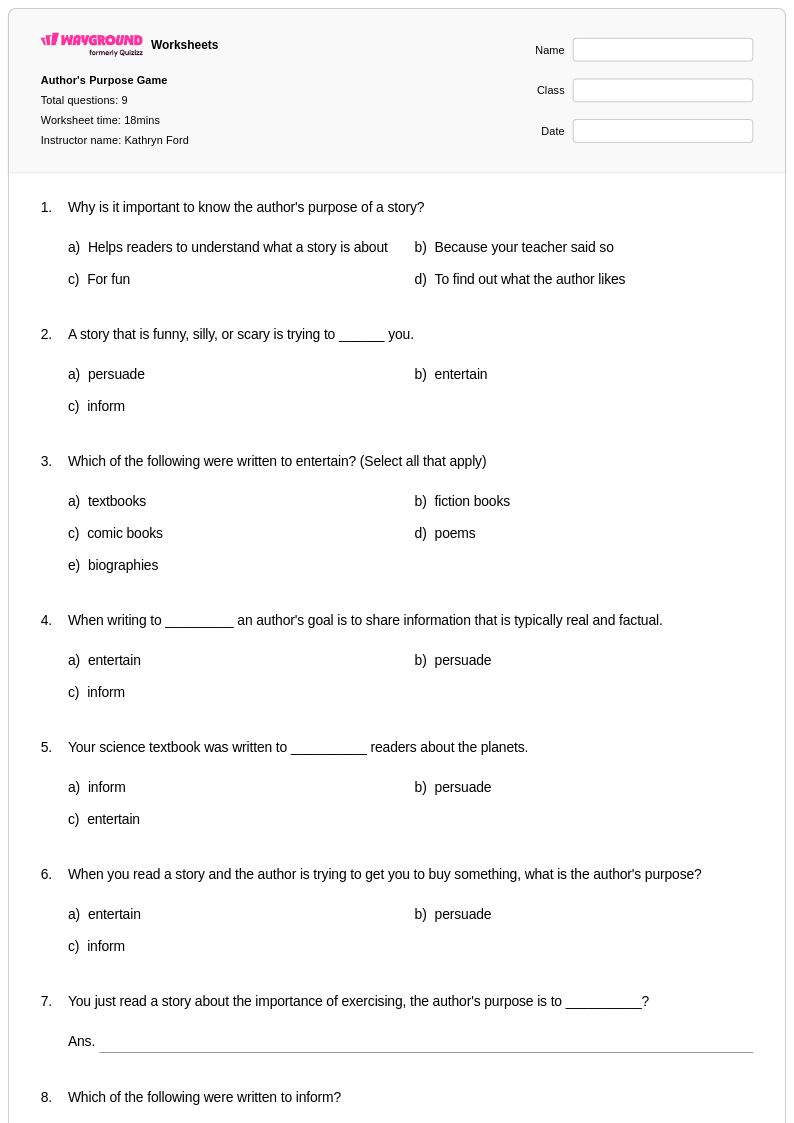
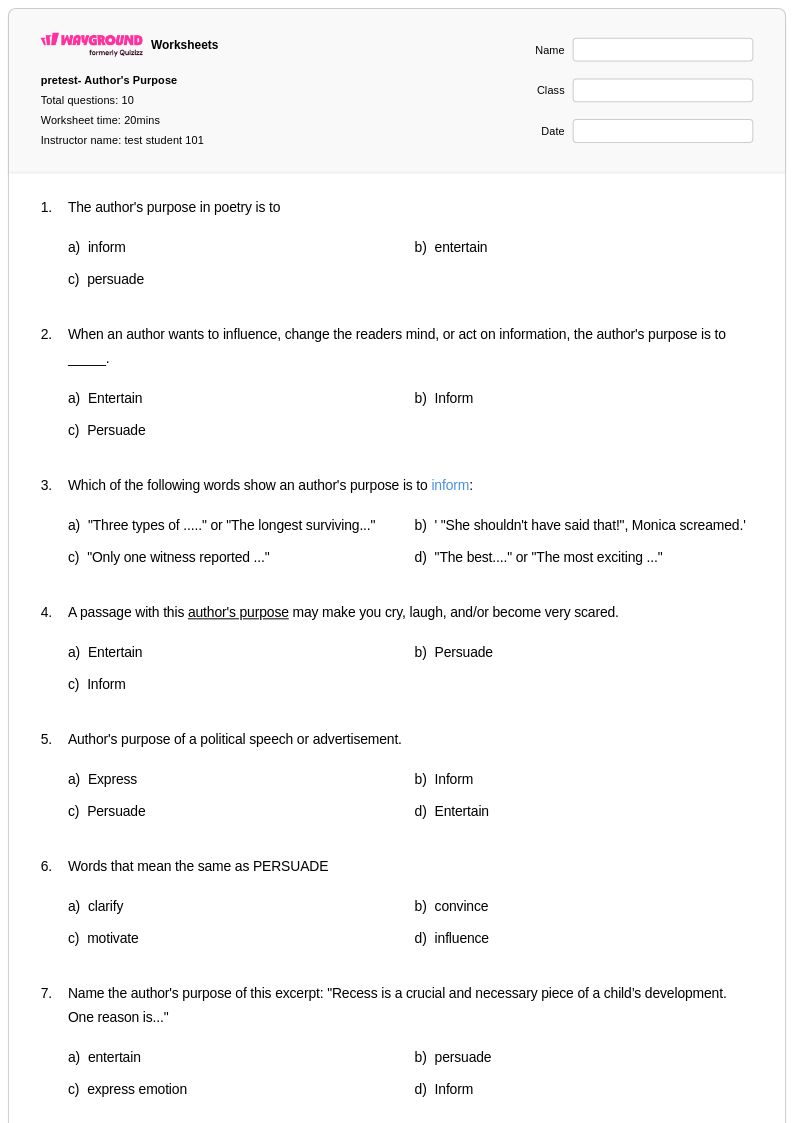
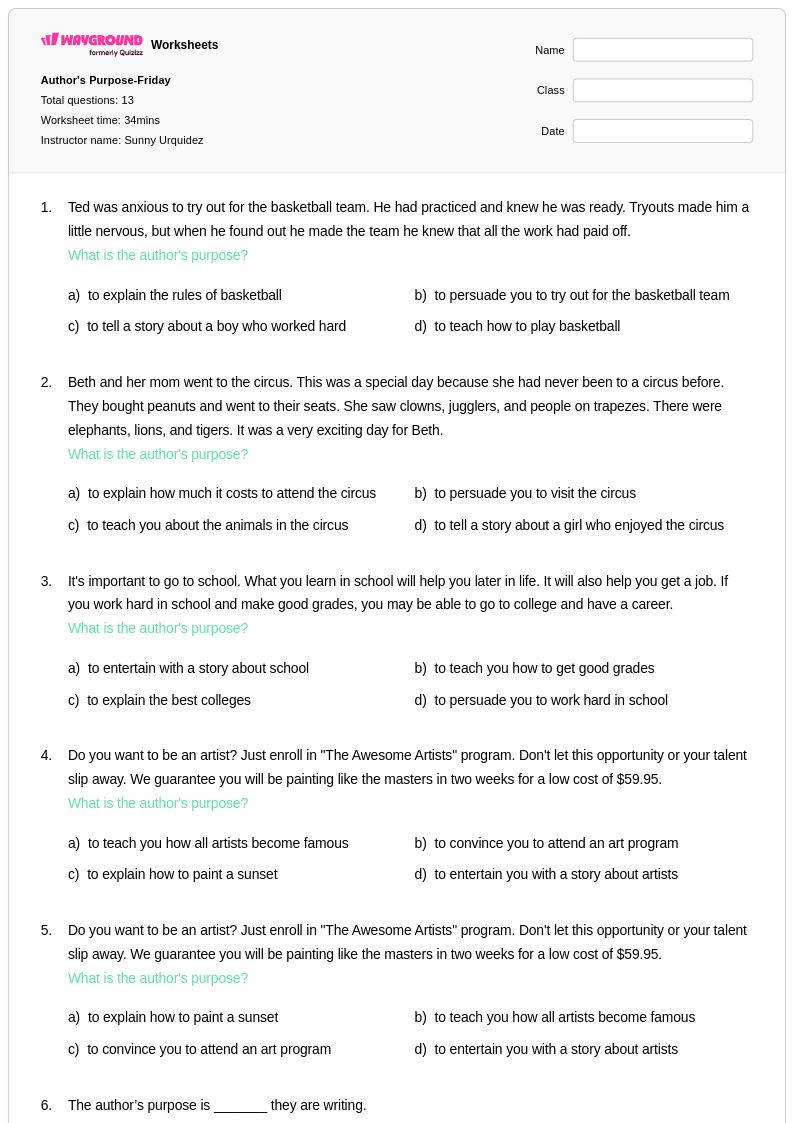
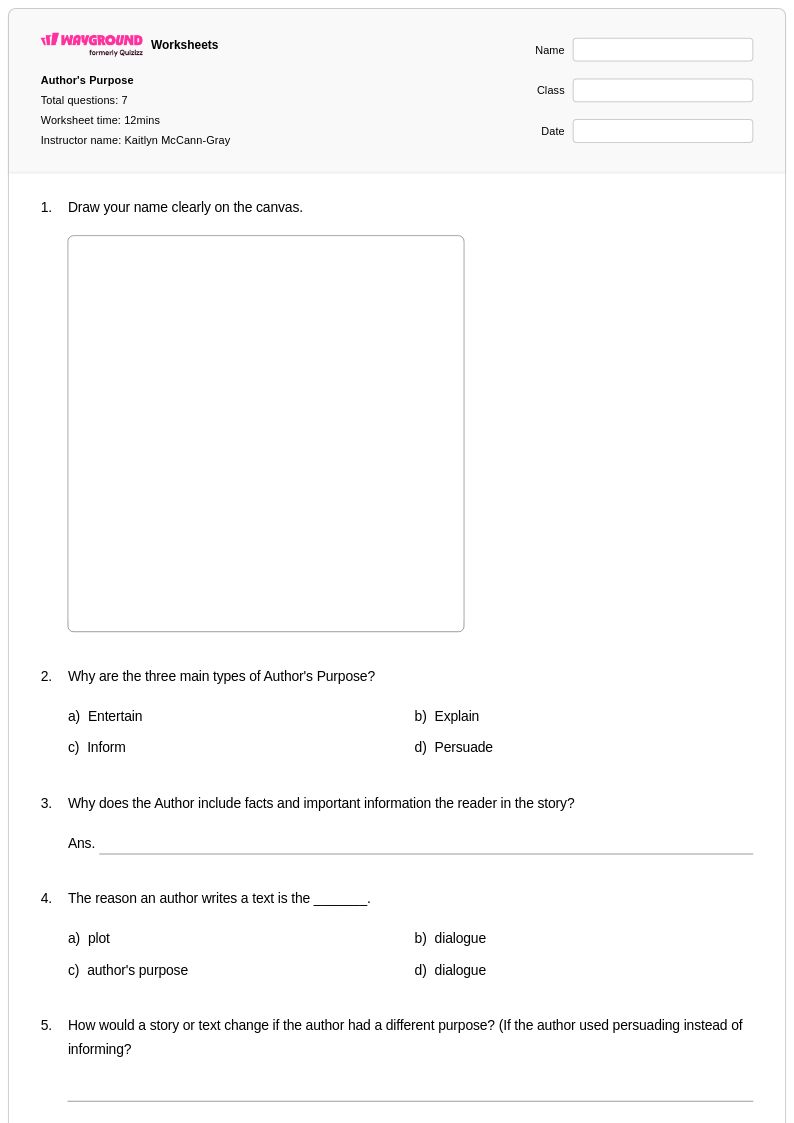
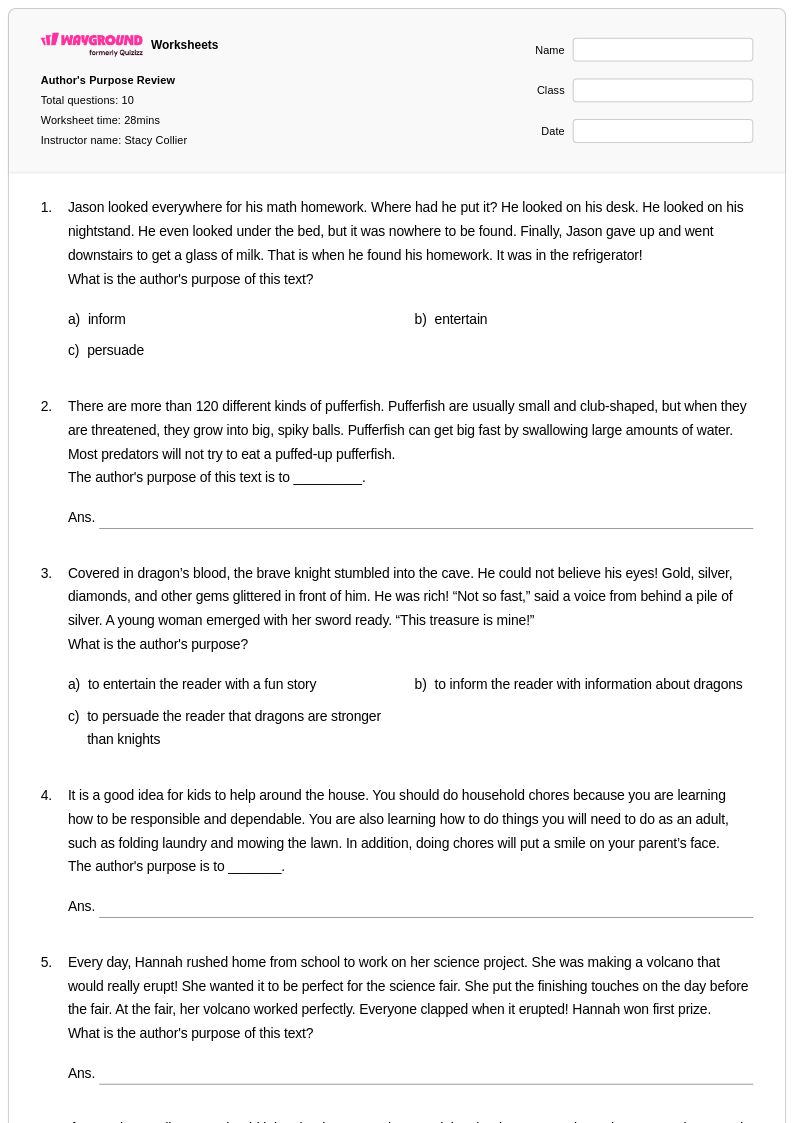
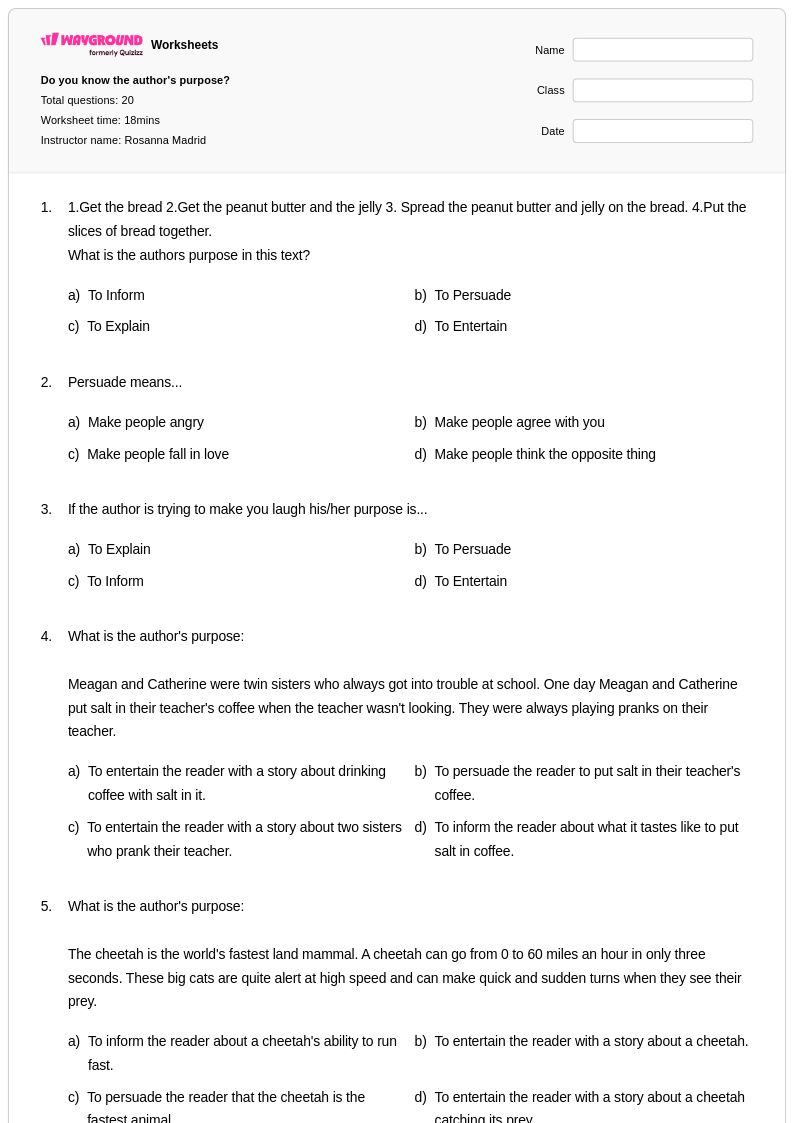
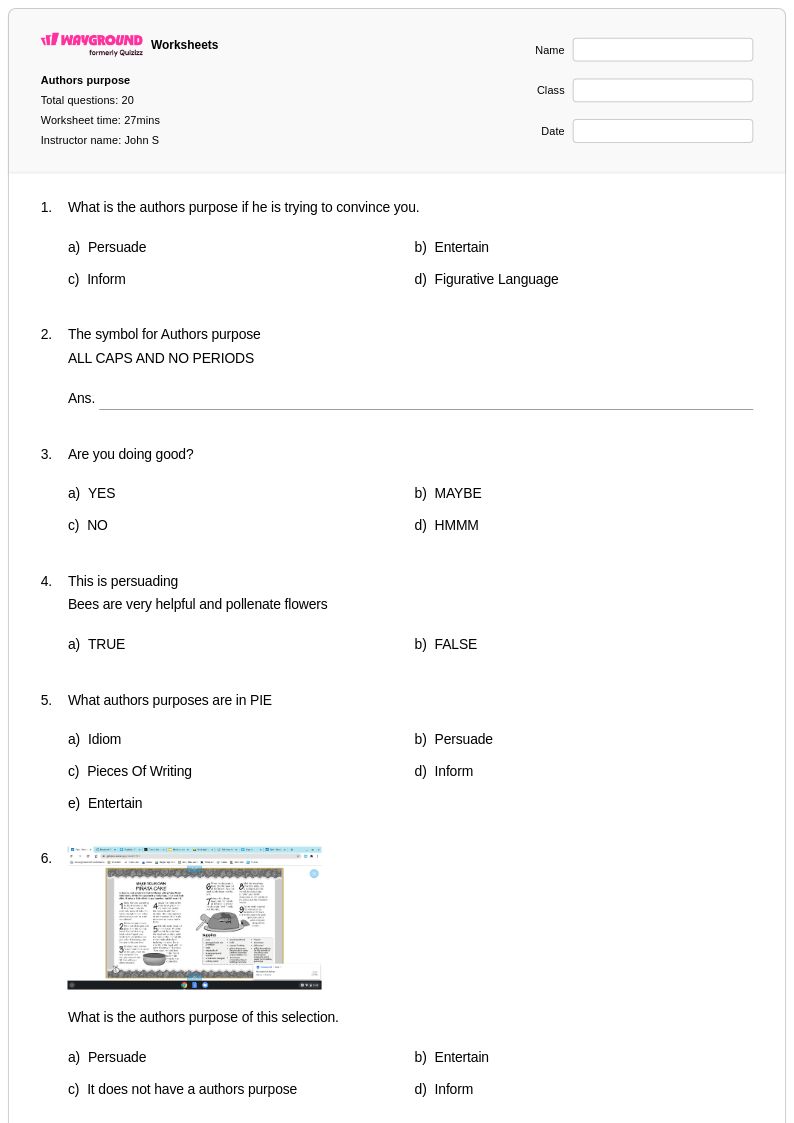
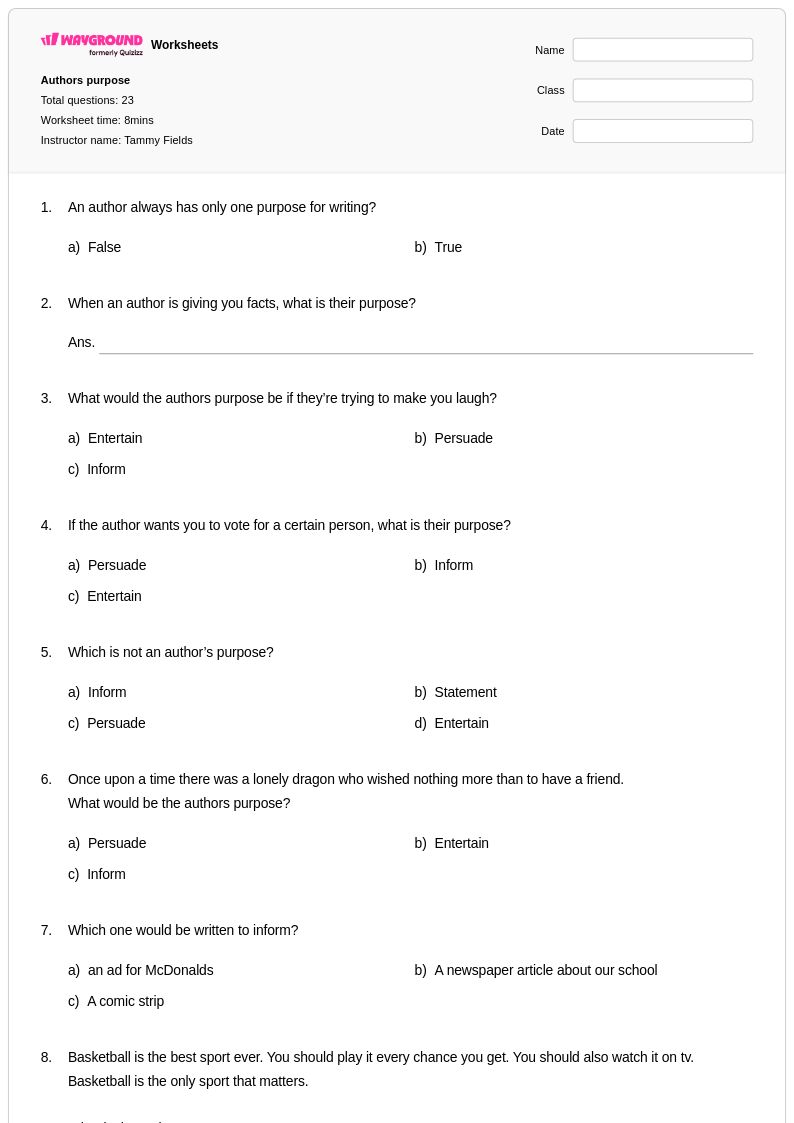
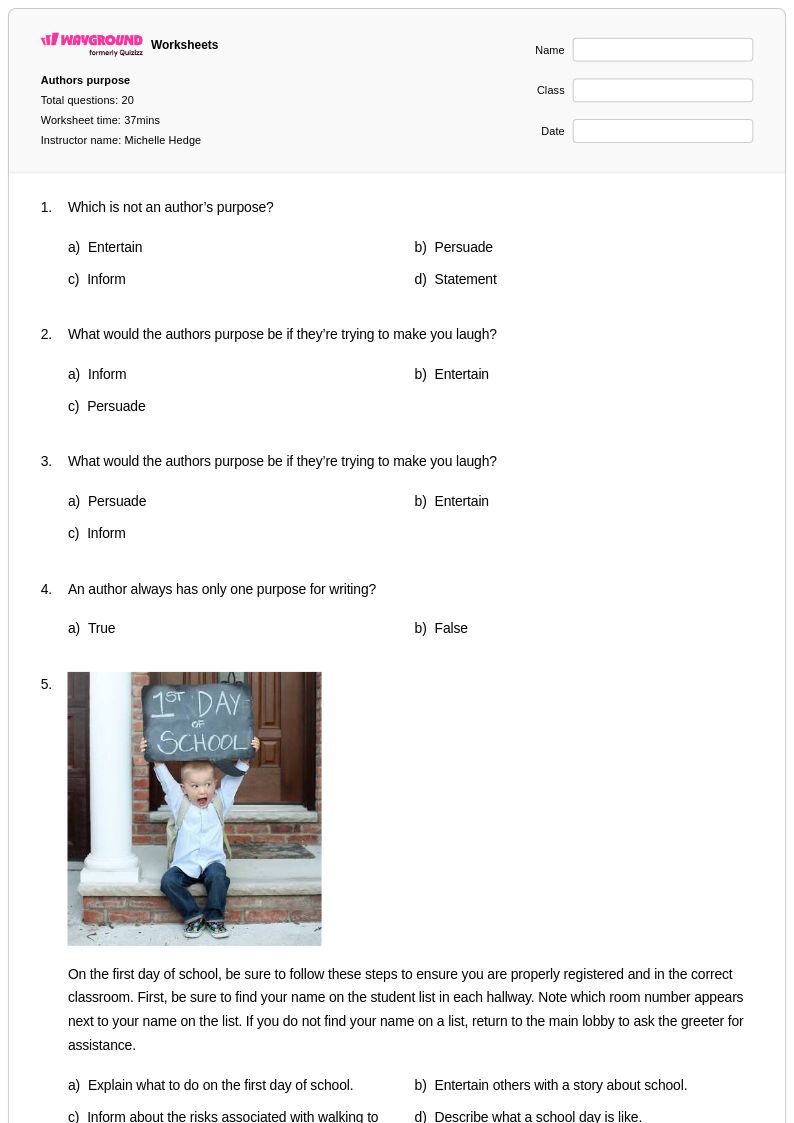
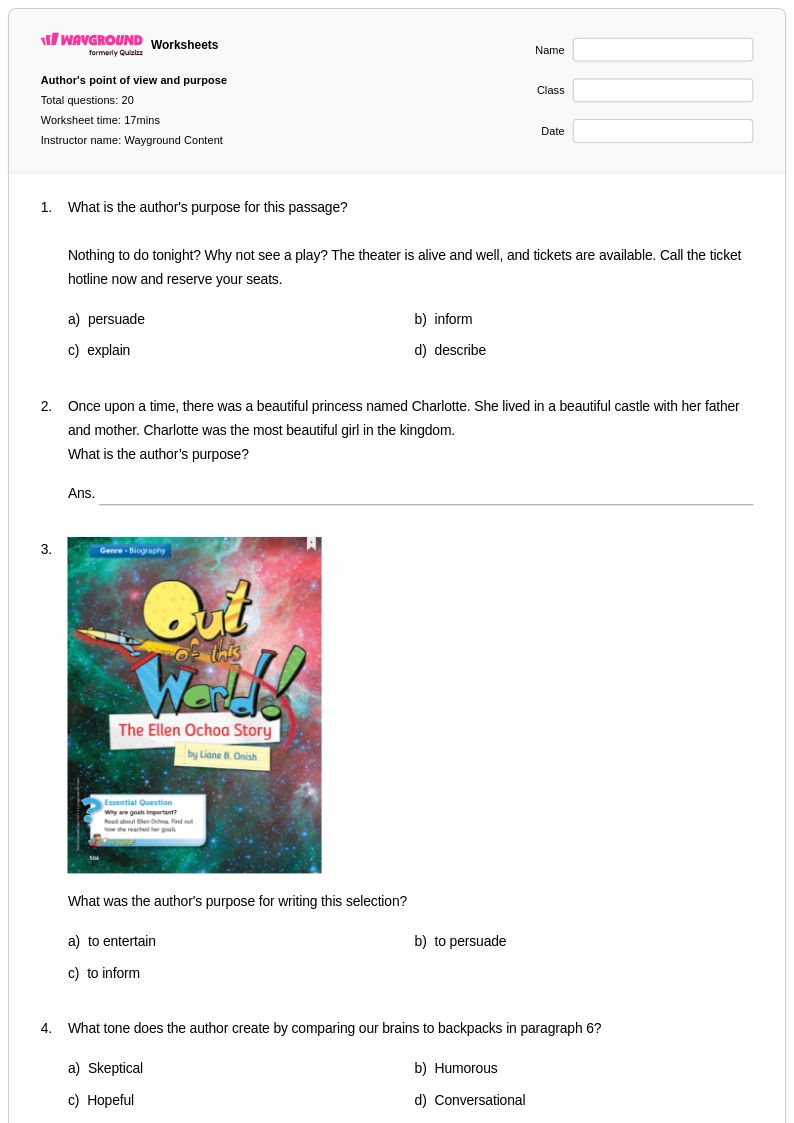
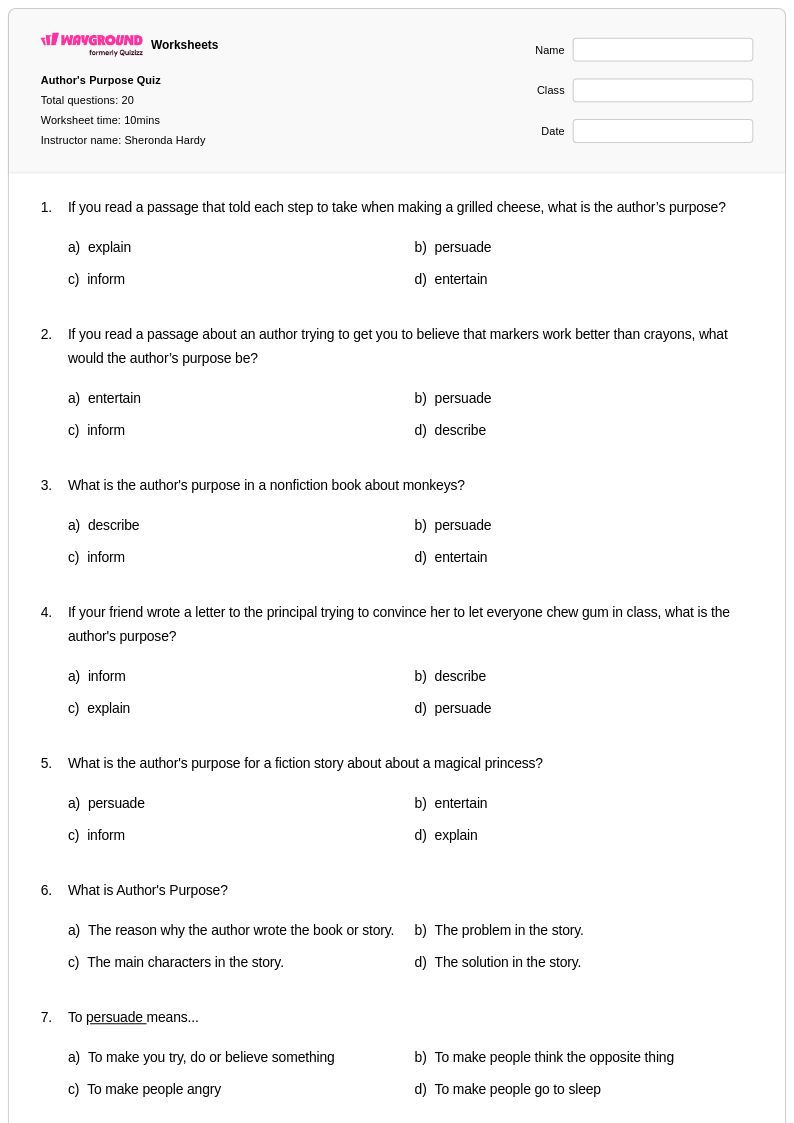
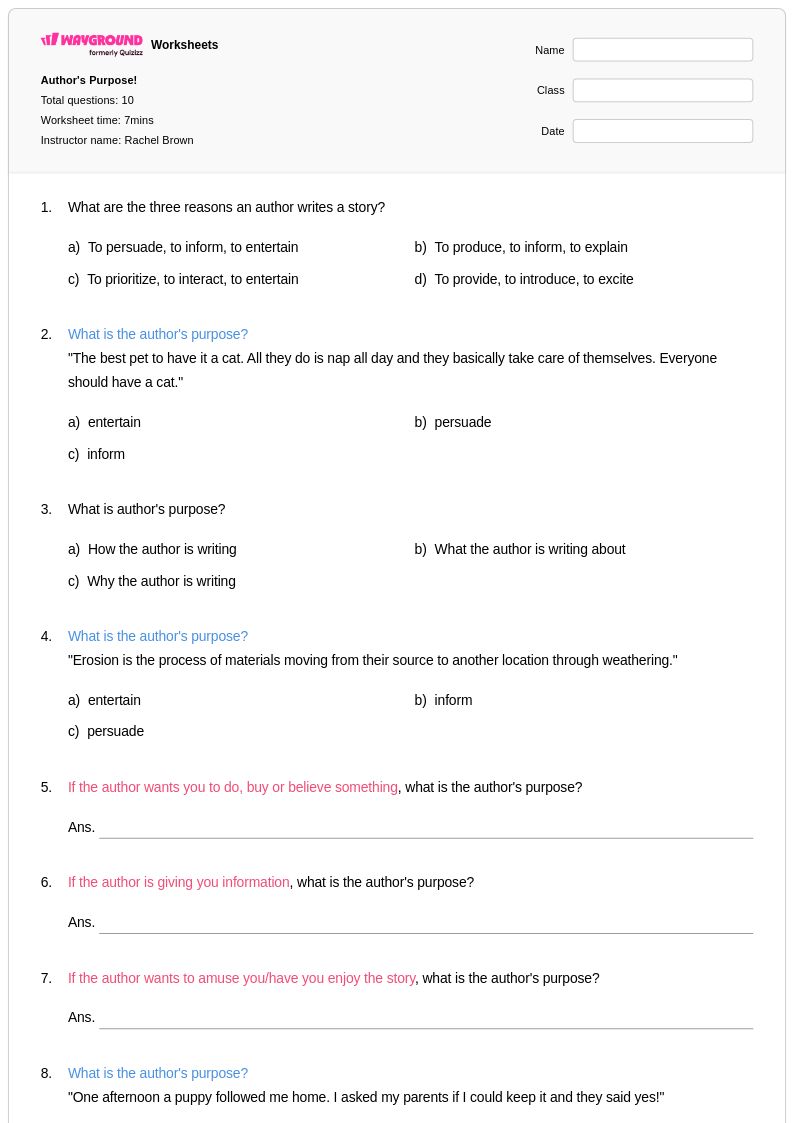
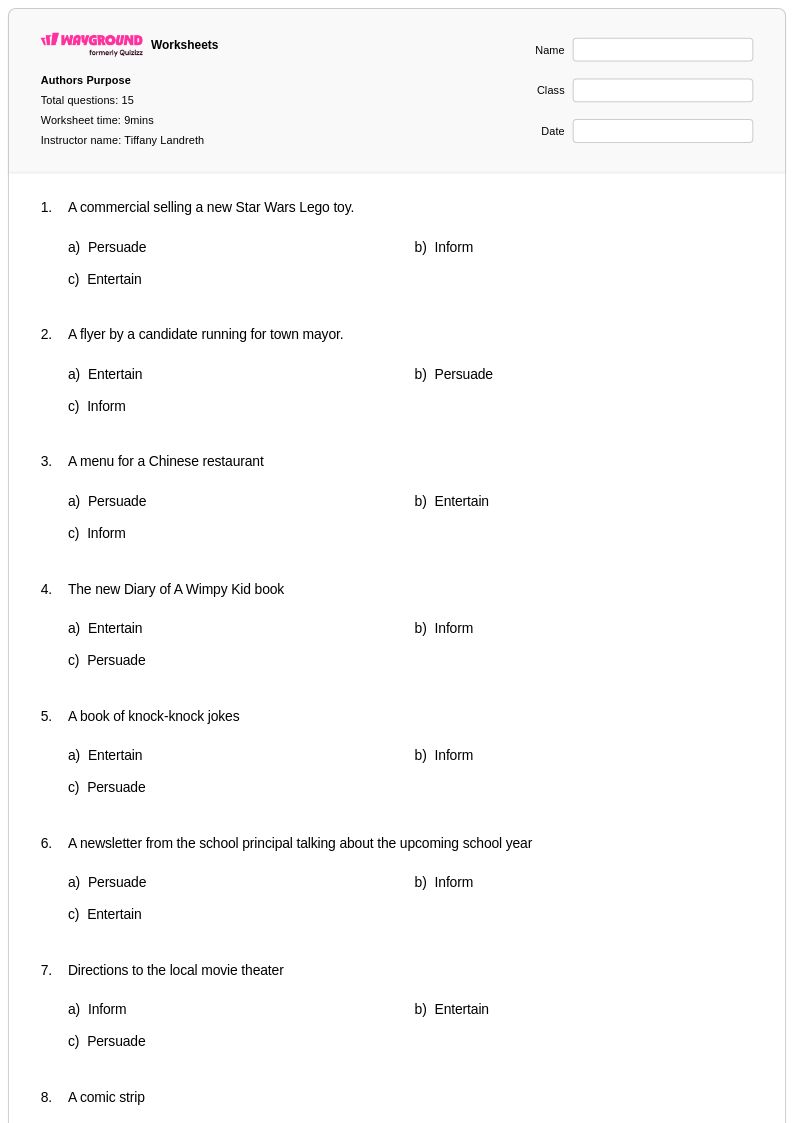
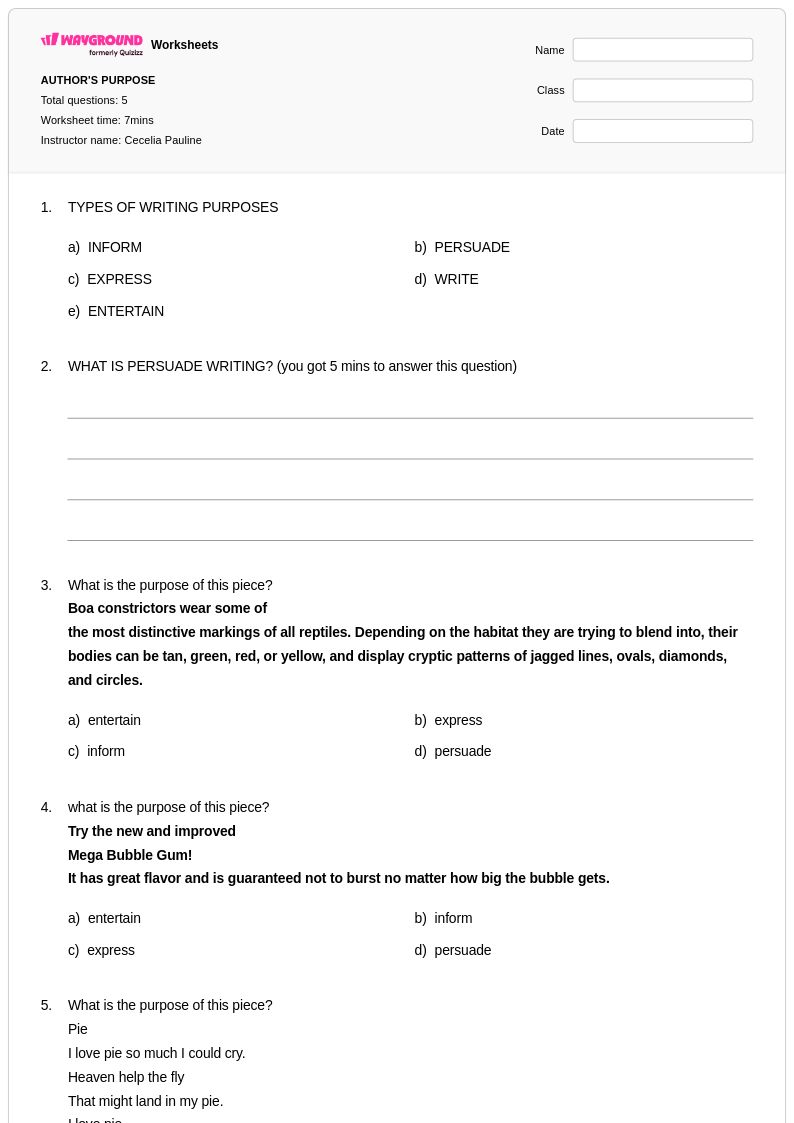
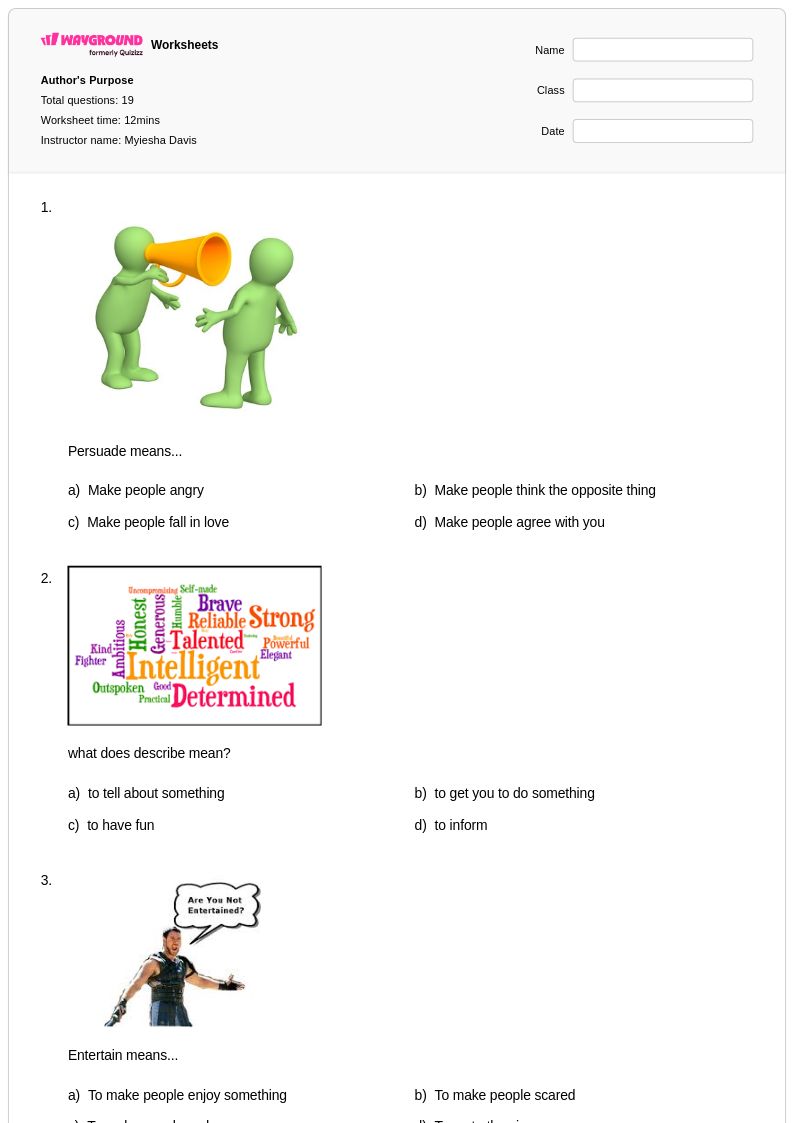
Identifying the author's purpose worksheets for Class 4 students available through Wayground (formerly Quizizz) provide essential practice in understanding why authors write specific texts. These comprehensive resources help fourth-grade students develop critical thinking skills by learning to distinguish between the three primary purposes: to inform, to persuade, and to entertain. Each worksheet contains carefully crafted passages followed by practice problems that guide students through the analytical process of determining authorial intent through textual evidence and context clues. The printables include detailed answer keys that enable both independent study and teacher-guided instruction, while the free pdf format ensures easy access and distribution for classroom or homework use.
Wayground (formerly Quizizz) empowers educators with an extensive collection of millions of teacher-created resources specifically designed for reading comprehension instruction, including robust materials for teaching author's purpose identification. The platform's advanced search and filtering capabilities allow teachers to quickly locate Class 4 appropriate worksheets that align with state reading standards and specific curriculum requirements. These differentiation tools enable instructors to customize content complexity and question formats to meet diverse student needs, supporting both remediation for struggling readers and enrichment for advanced learners. Available in both printable and digital formats including downloadable pdfs, these resources seamlessly integrate into lesson planning while providing flexible options for skill practice, formative assessment, and targeted intervention strategies.
FAQs
How do I teach students to identify an author's purpose?
The most effective approach is to anchor instruction around the PIE framework — Persuade, Inform, Entertain — and give students repeated exposure to short, varied passages before asking them to independently classify purpose. Start with mentor texts where the purpose is obvious, such as a clearly persuasive advertisement or a straightforward how-to article, then gradually introduce ambiguous texts where purpose must be inferred from text structure, word choice, and tone. Explicit modeling of the analytical process — thinking aloud about why specific word choices signal intent — builds the transferable reasoning skills students need.
What is the difference between author's purpose in fiction versus nonfiction?
In fiction, the primary purpose is most often to entertain, though authors may also embed persuasive or informative intentions within a narrative. In nonfiction, purpose shifts toward informing or persuading, depending on whether the text presents neutral facts or uses evidence and rhetoric to influence the reader's thinking. Teaching students to distinguish between these contexts is important because the same text features — such as emotional language — signal different purposes depending on genre.
What exercises help students practice identifying author's purpose?
Passage-based practice is the most direct method: students read short texts and must identify the purpose, then cite specific evidence from the text that supports their reasoning. Sorting activities where students categorize a set of passages by purpose, and comparative exercises where two texts on the same topic serve different purposes, are also highly effective. These structured exercises build the habit of reading purposefully rather than passively.
What mistakes do students commonly make when identifying an author's purpose?
The most common error is conflating topic with purpose — students often describe what a text is about rather than why the author wrote it. A related misconception is assuming that any text containing facts is automatically informational, when in reality facts are frequently used as persuasive evidence. Students also struggle with texts that blend purposes, such as a narrative essay that both entertains and persuades, and need explicit instruction to identify the dominant intent.
How can I differentiate author's purpose instruction for struggling readers?
For struggling readers, reduce cognitive load by using shorter, more explicit passages where purpose signals are clear and frequent. Providing sentence frames like 'The author wrote this to ___ because ___' gives students a structured entry point into analysis without removing the thinking requirement. On Wayground, teachers can enable Read Aloud so students hear passages read to them, and Reduced Answer Choices so they select from fewer options — both accommodations can be assigned to individual students without other students being notified.
How do I use Wayground's author's purpose worksheets in my classroom?
Wayground's author's purpose worksheets are available as printable PDFs for traditional classroom use and in digital formats for technology-integrated or remote learning environments. Each worksheet includes answer keys, allowing for immediate feedback whether used as guided practice, independent work, or formative assessment. Teachers can also host the worksheets as a live quiz on Wayground, giving students an interactive experience while automatically collecting response data.