Free Printable Character Development Worksheets for Class 4
Enhance Class 4 students' character development skills with Wayground's comprehensive collection of free worksheets, printables, and practice problems that include detailed answer keys to strengthen reading comprehension strategies.
Explore printable Character Development worksheets for Class 4
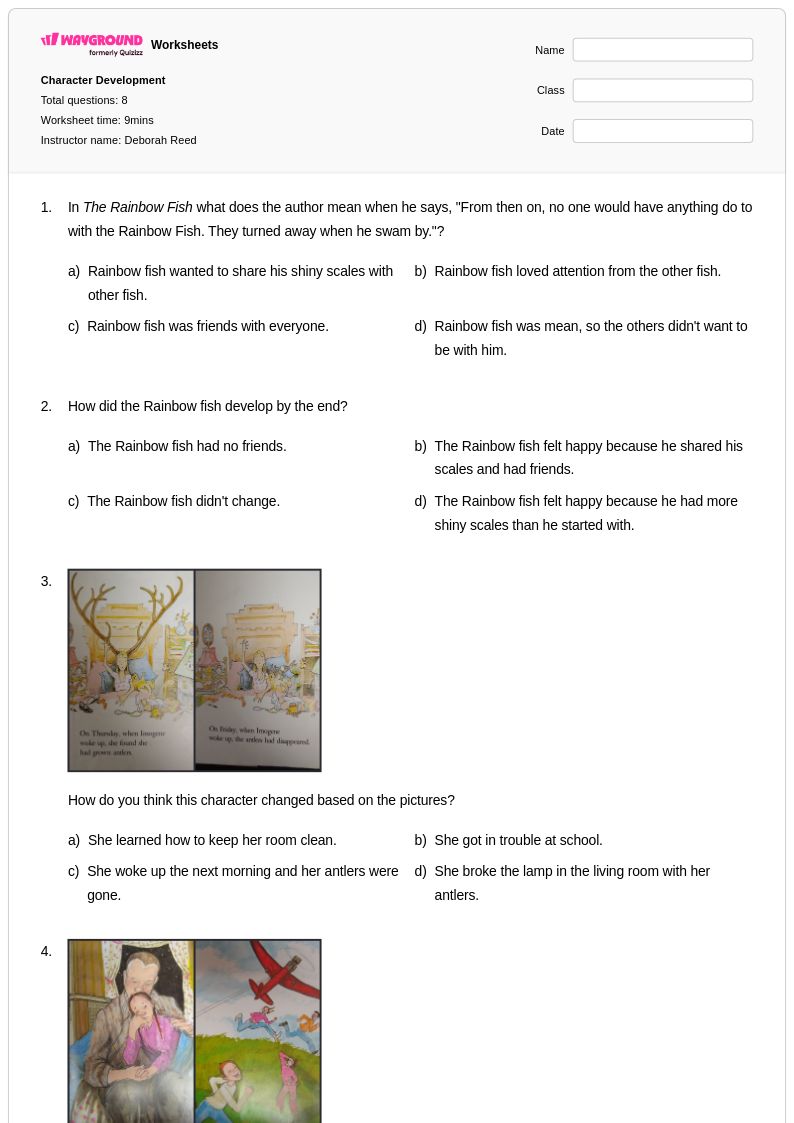
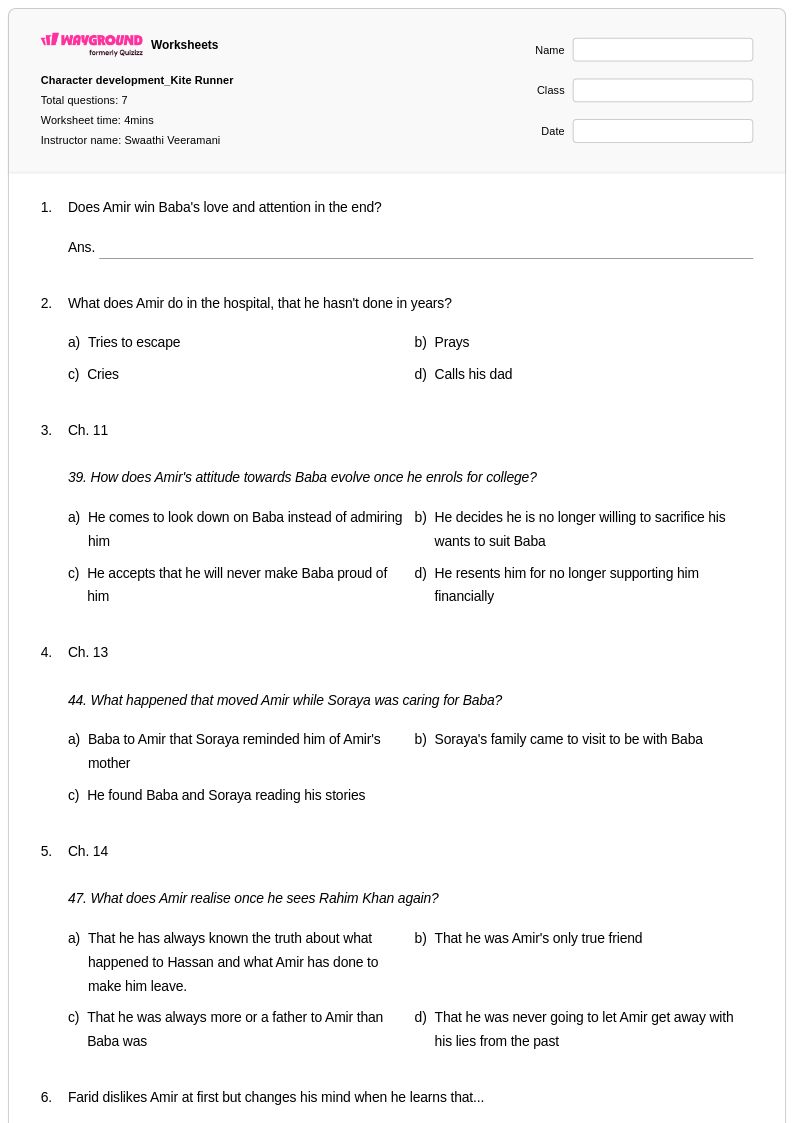
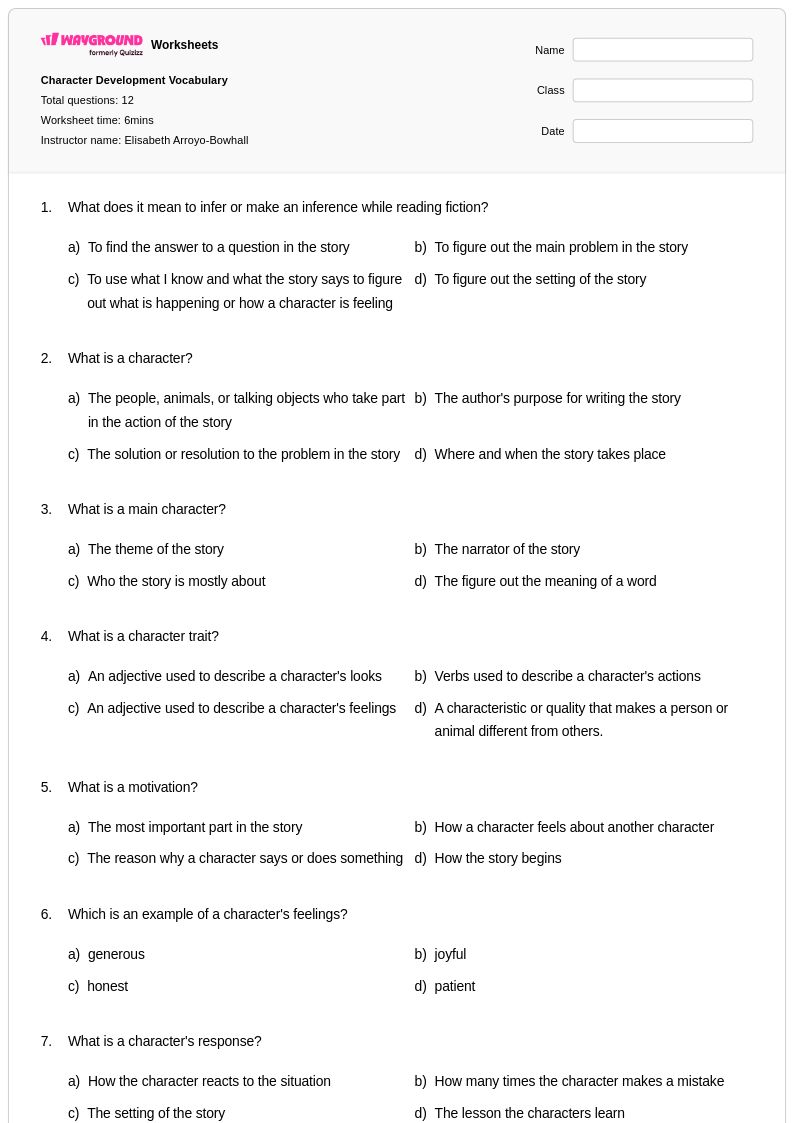
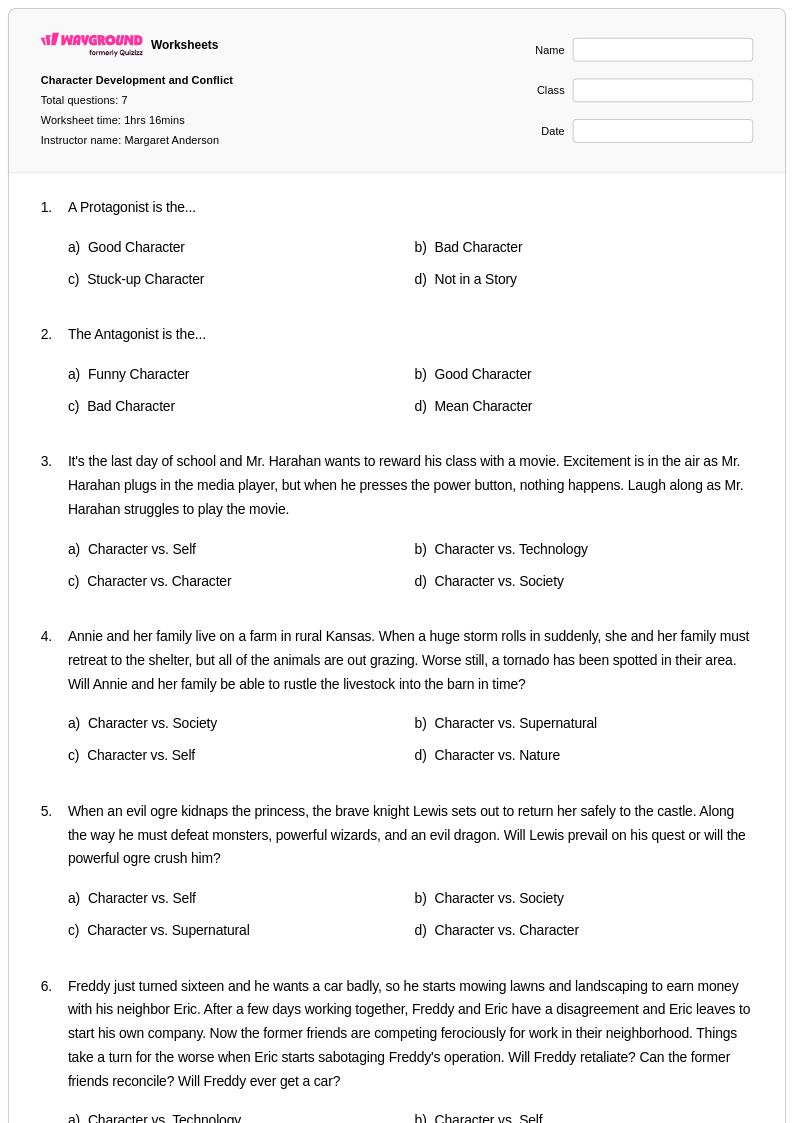
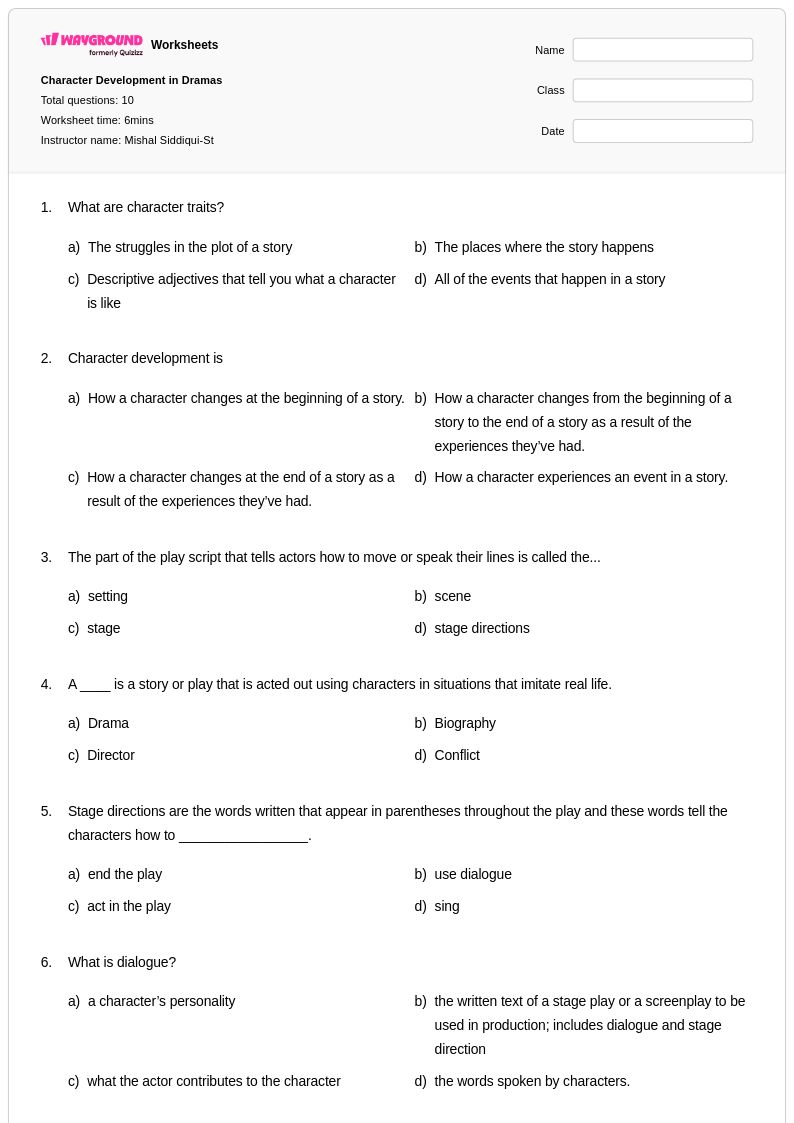
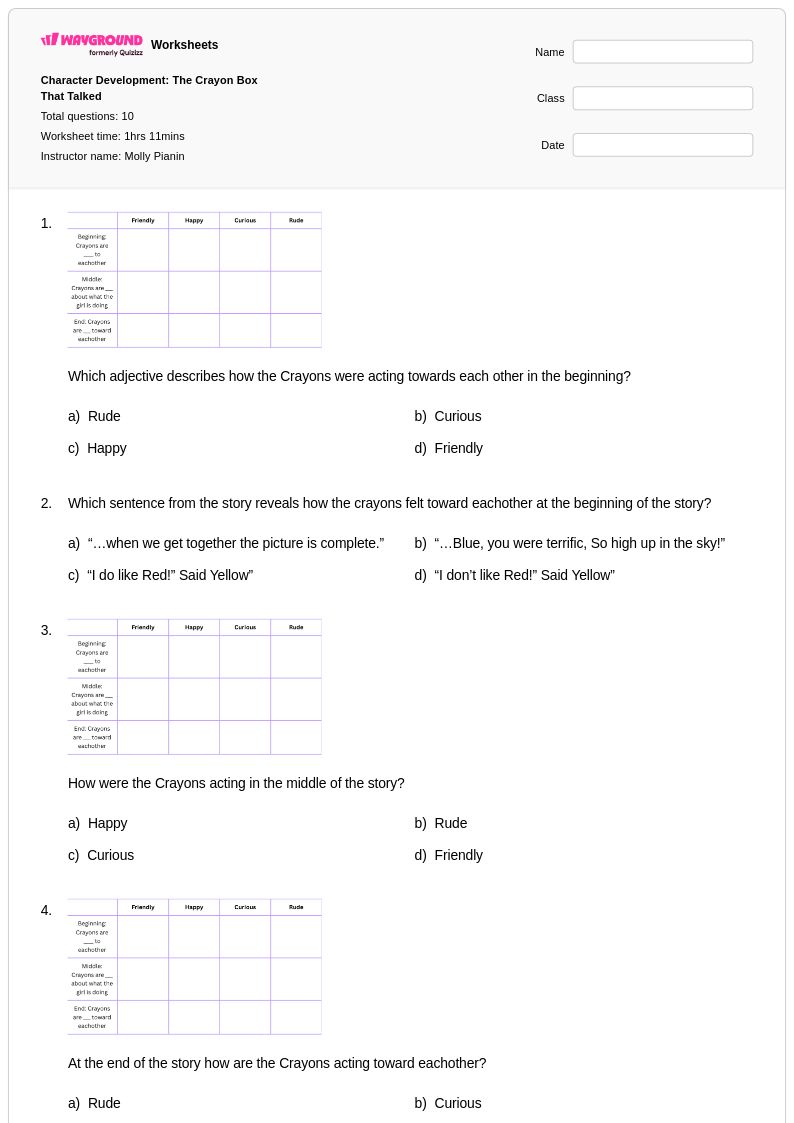
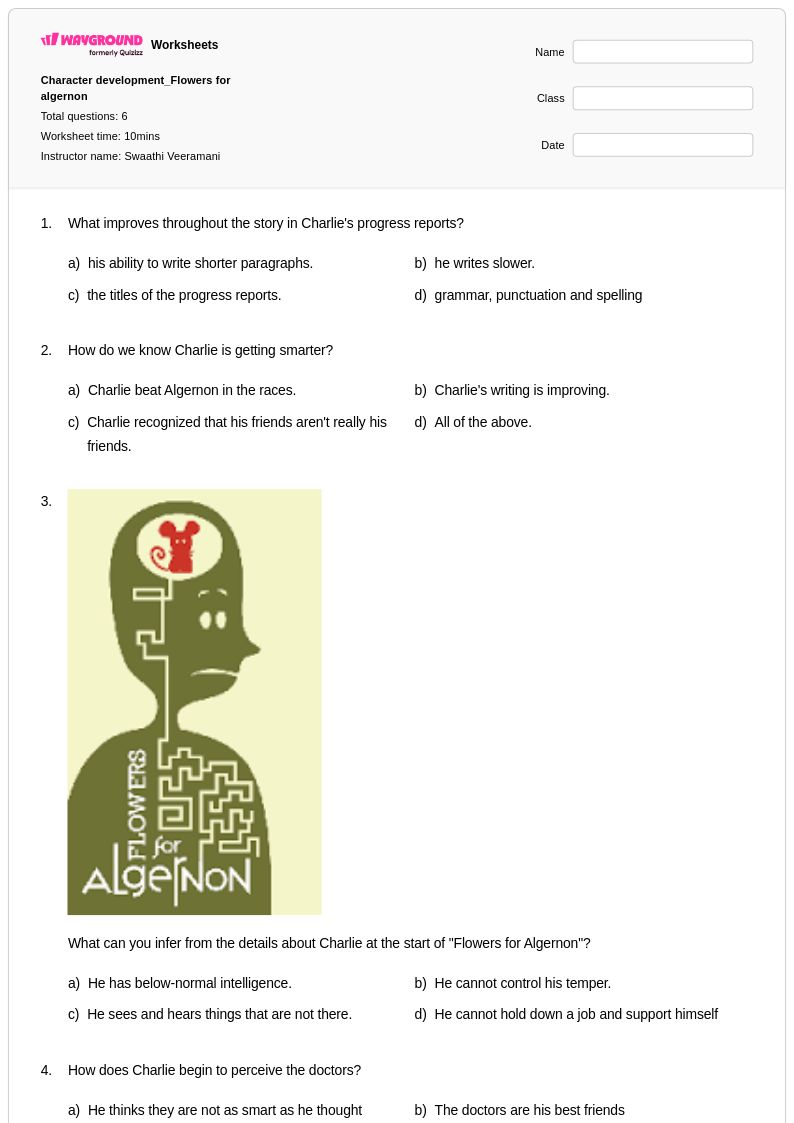
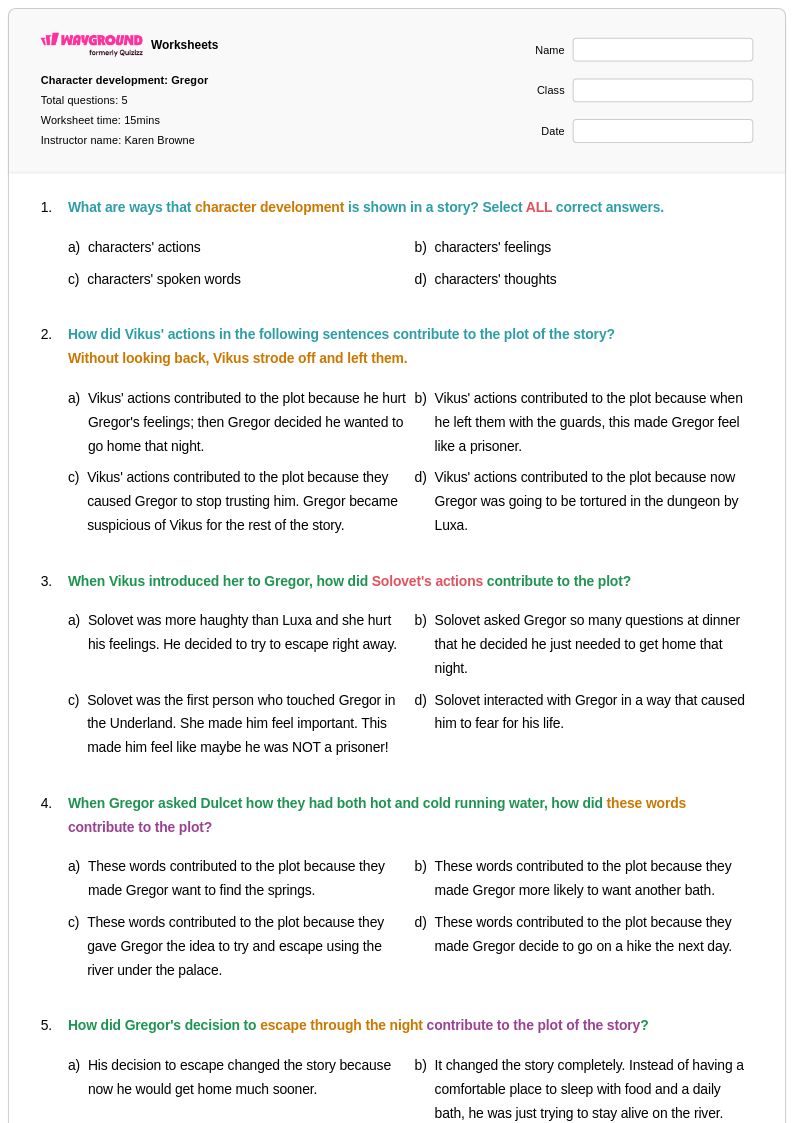
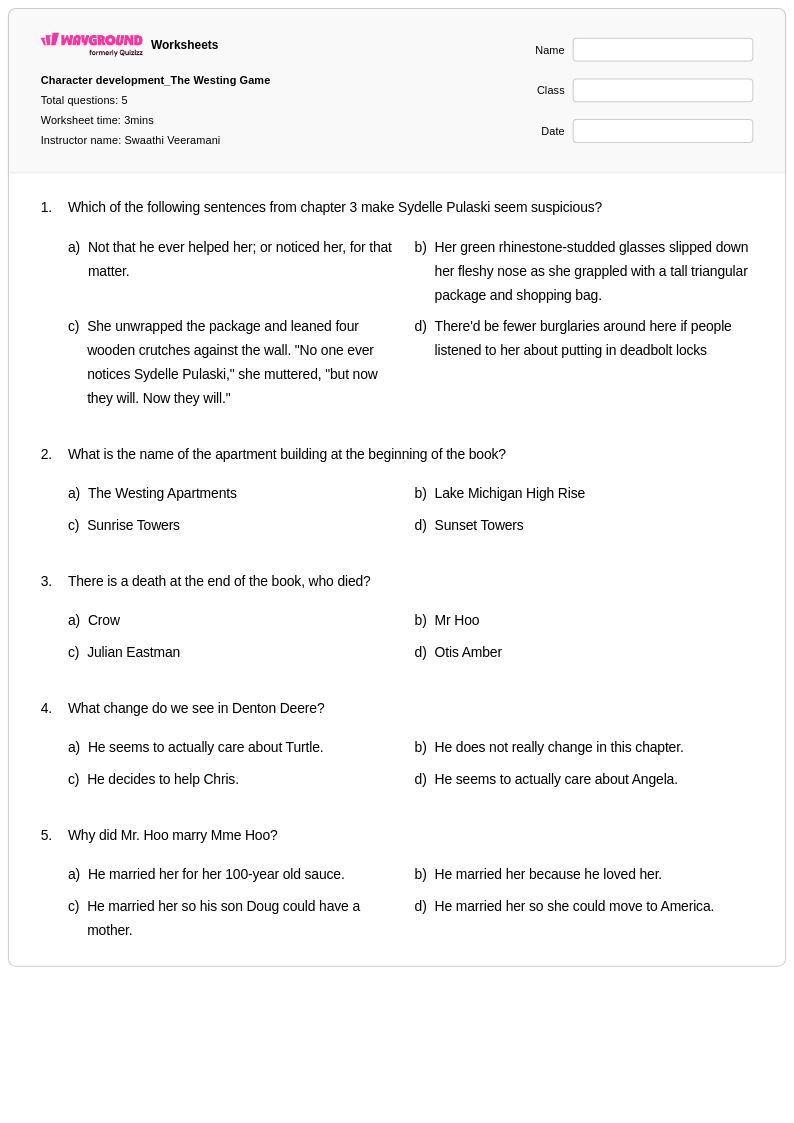
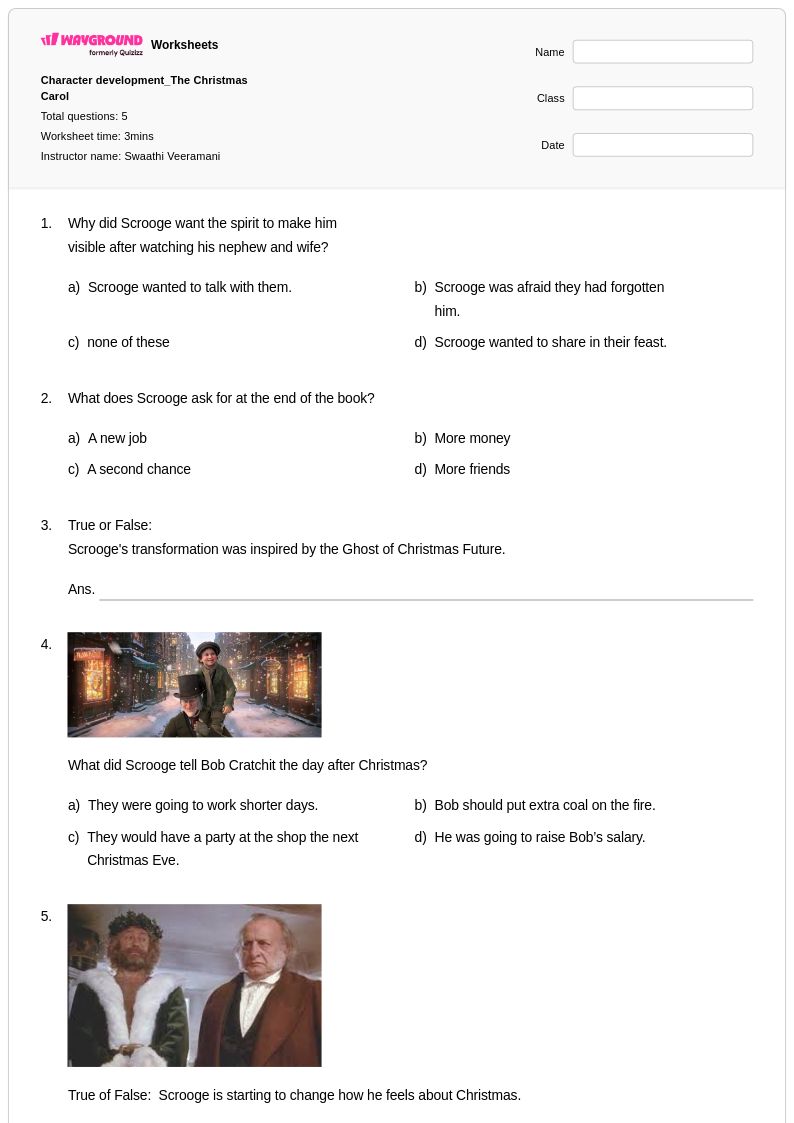
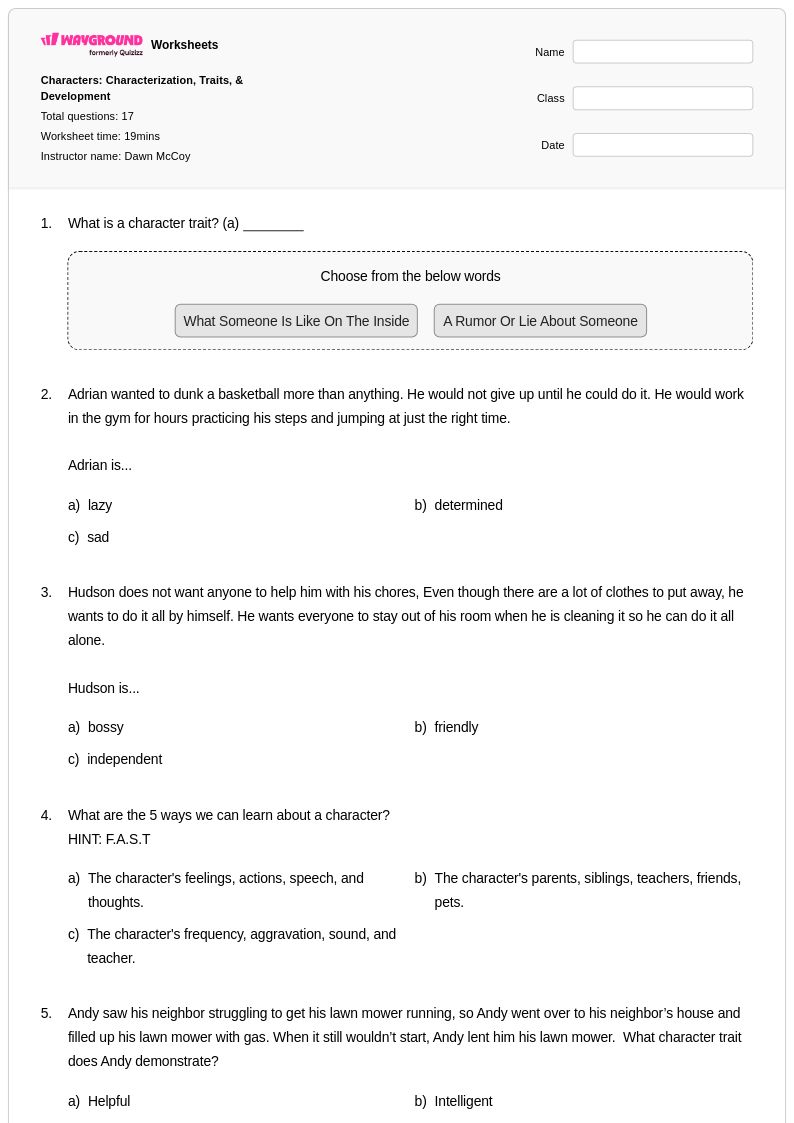
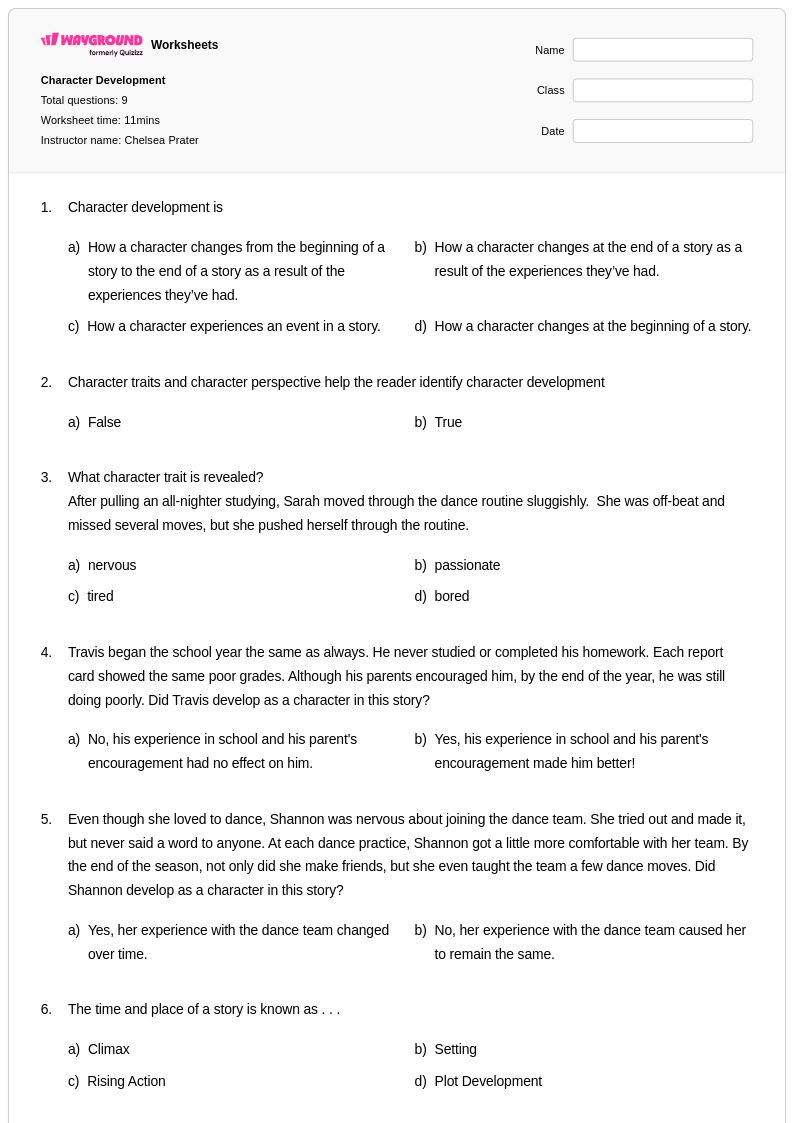
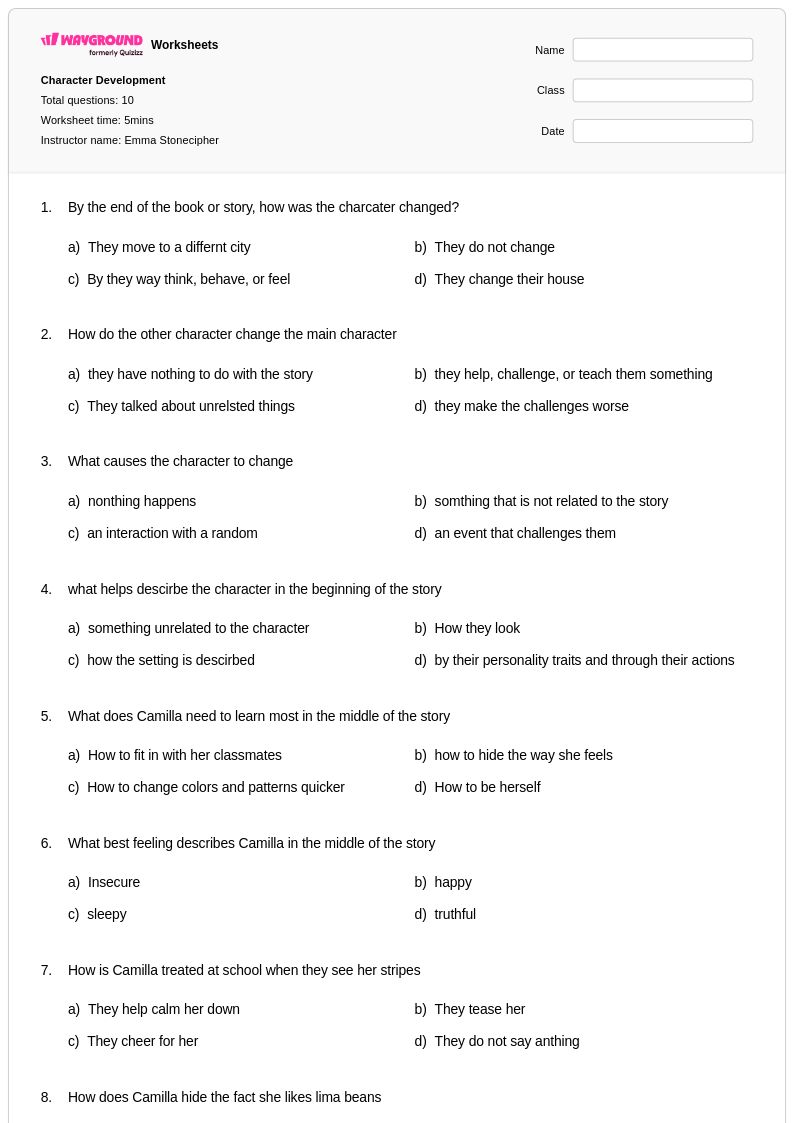
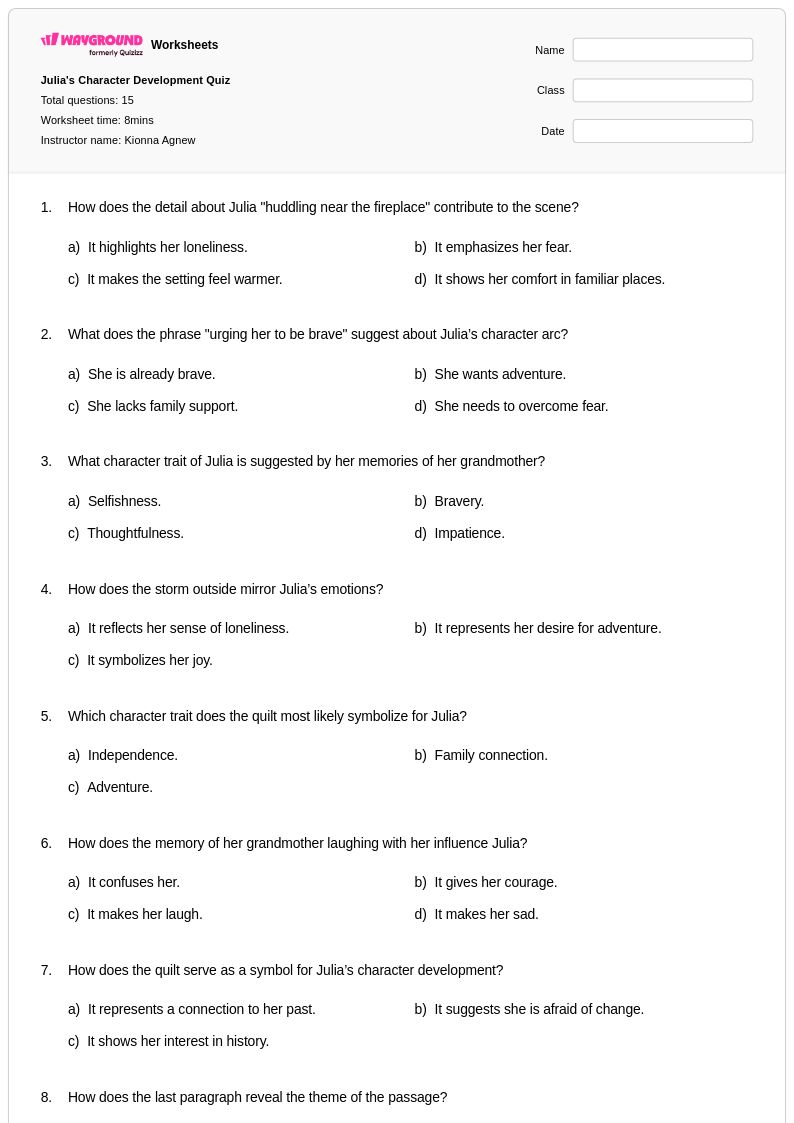
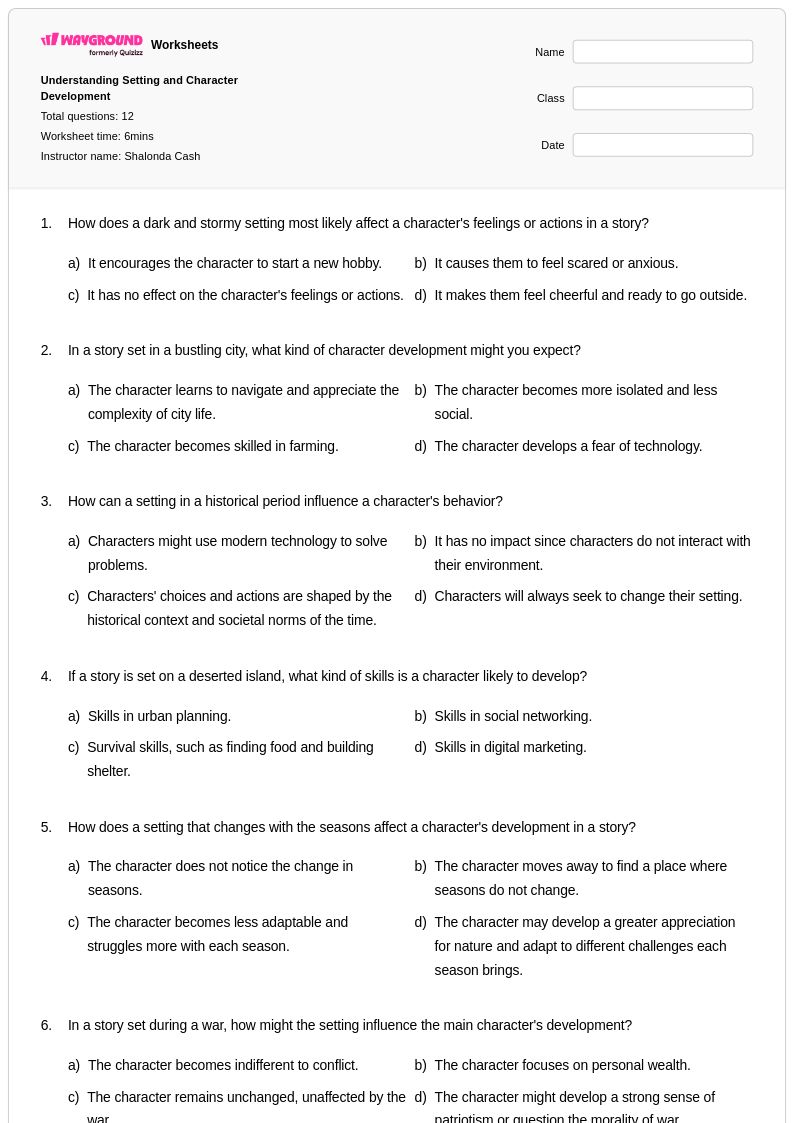
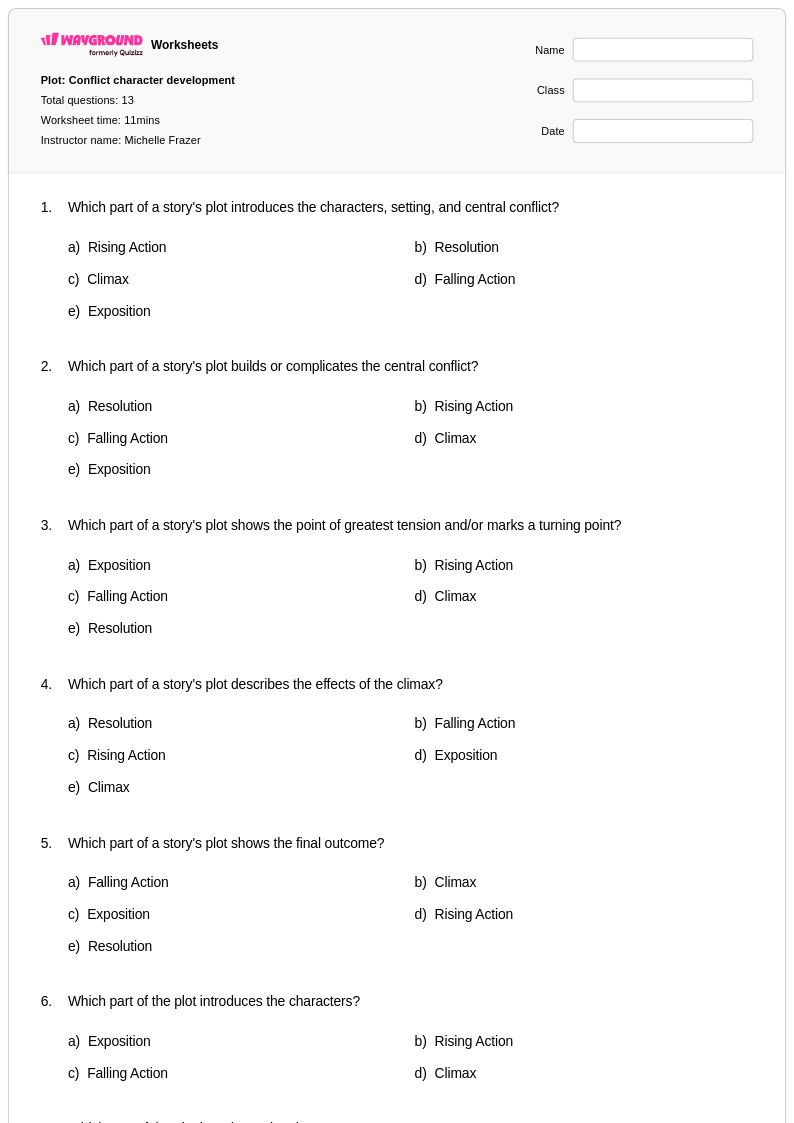
Character development worksheets for Class 4 students available through Wayground (formerly Quizizz) provide comprehensive practice in analyzing how fictional characters grow and change throughout stories. These carefully designed printables strengthen essential reading comprehension skills by guiding students to identify character traits, motivations, and transformations using evidence from the text. The worksheet collection includes practice problems that challenge fourth-grade readers to compare characters, analyze dialogue and actions for character insights, and track character development arcs across different story elements. Each free resource comes with a detailed answer key to support accurate assessment and immediate feedback, while pdf formats ensure easy classroom integration and home practice opportunities.
Wayground's extensive library supports teachers with millions of educator-created character development resources specifically tailored for Class 4 reading instruction. The platform's robust search and filtering capabilities allow teachers to locate worksheets aligned with specific reading standards and differentiate instruction based on individual student needs. Teachers can customize existing materials or combine multiple printable and digital resources to create comprehensive character analysis units that address varying skill levels within their classrooms. These flexible tools prove invaluable for lesson planning, targeted remediation for struggling readers, enrichment activities for advanced students, and consistent skill practice that builds deep comprehension abilities essential for literary analysis success.
FAQs
How do I teach character development in a literature class?
Teaching character development effectively means guiding students to distinguish between direct characterization (what the author explicitly states about a character) and indirect characterization (what is revealed through dialogue, actions, thoughts, and reactions from others). A strong instructional sequence moves from identifying surface-level traits to analyzing how and why characters change across a narrative arc. Structured graphic organizers and annotation activities help students track character motivations and relationships as they read, which builds the analytical habits needed for deeper literary interpretation.
What are good exercises for practicing character analysis?
Effective character analysis practice includes activities where students trace a character's arc from the beginning to the end of a text, identifying specific moments of change and the causes behind them. Exercises that ask students to analyze character dialogue and actions separately, then synthesize their observations into a judgment about motivation, build the layered thinking that literary analysis requires. Scaffolded worksheets that start with direct characterization and gradually introduce indirect characterization techniques are particularly useful for building student confidence before moving to more complex texts.
What mistakes do students commonly make when analyzing characters in literature?
One of the most common errors is confusing character description with character analysis — students list traits without explaining how those traits are revealed or why they matter to the story. Another frequent misconception is treating characters as static, failing to recognize or articulate meaningful change across the narrative. Students also tend to overlook indirect characterization, focusing only on what the narrator explicitly states rather than interpreting what dialogue, body language, and the reactions of other characters reveal.
How can I differentiate character development activities for struggling and advanced readers?
For struggling readers, scaffolded worksheets that provide sentence starters, word banks, and pre-selected text excerpts reduce cognitive load while still building analytical skill. Advanced students benefit from open-ended tasks that require them to compare character development across two texts or evaluate how an author's craft choices shape a character's arc. On Wayground, teachers can apply accommodations such as Read Aloud and reduced answer choices for individual students, allowing the same worksheet to serve different learners simultaneously without signaling differences to the class.
How do I use Wayground's character development worksheets in my classroom?
Wayground's character development worksheets are available as printable PDFs for traditional classroom use and in digital formats for technology-integrated or hybrid learning environments, and teachers can also host them as a quiz directly on Wayground. Each worksheet includes a complete answer key, so they can be used for guided practice, independent work, or formative assessment with minimal prep. The platform's search and filtering tools allow teachers to quickly locate materials aligned to specific standards or reading levels, making it straightforward to slot the right activity into an existing lesson plan.
How do I help students understand character motivation versus character action?
Students often conflate what a character does with why they do it, which limits the depth of their analysis. Teaching students to ask 'what does this character want, and what is standing in their way?' before analyzing any specific action helps them anchor observations in motivation. Worksheets that prompt students to cite textual evidence for both the action and the inferred motivation build the habit of grounding interpretation in the text rather than assumption.