Free Printable Author's Purpose in Nonfiction Worksheets for Class 4
Wayground's free Class 4 printable worksheets help students master author's purpose in nonfiction texts through engaging practice problems and comprehensive answer keys available as downloadable PDFs.
Explore printable Author's Purpose in Nonfiction worksheets for Class 4
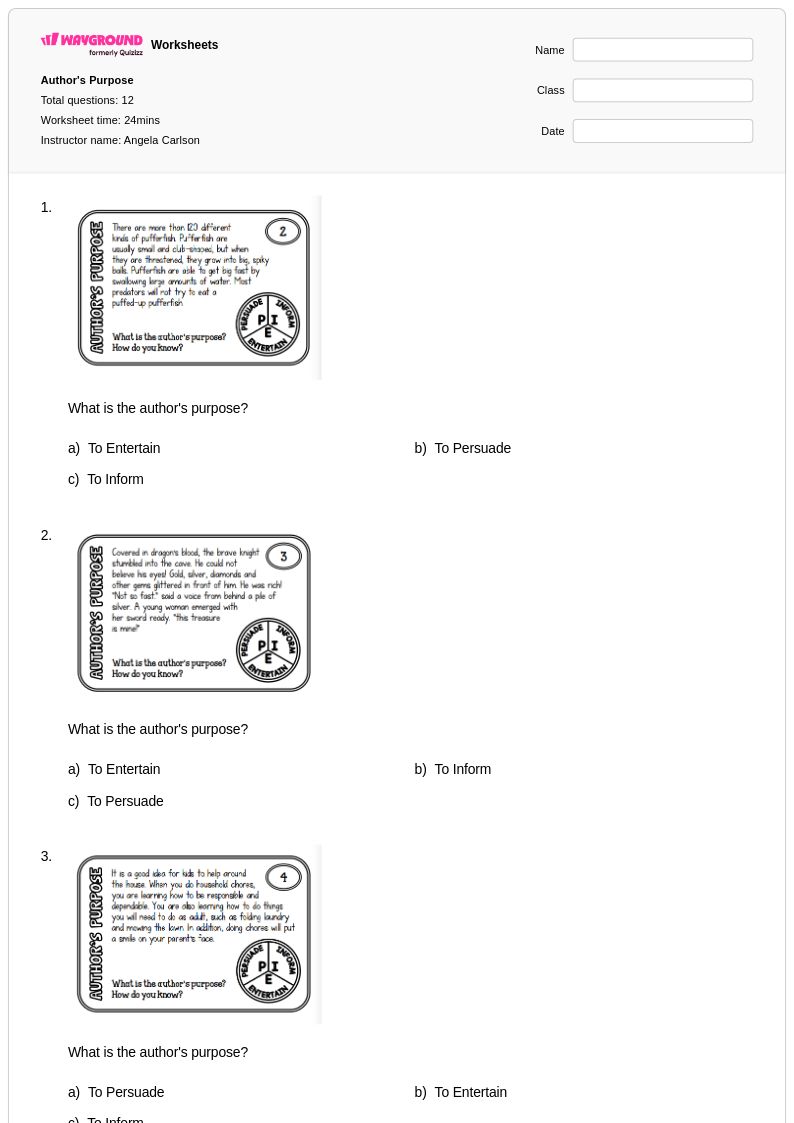
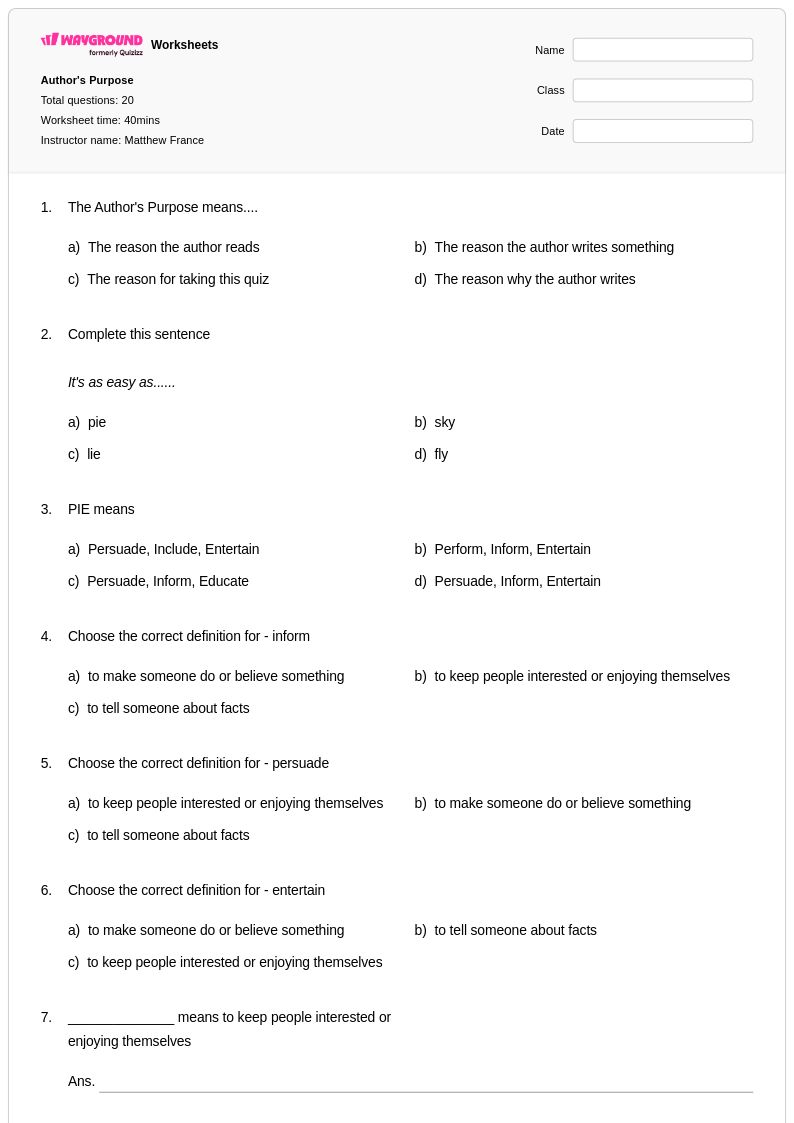
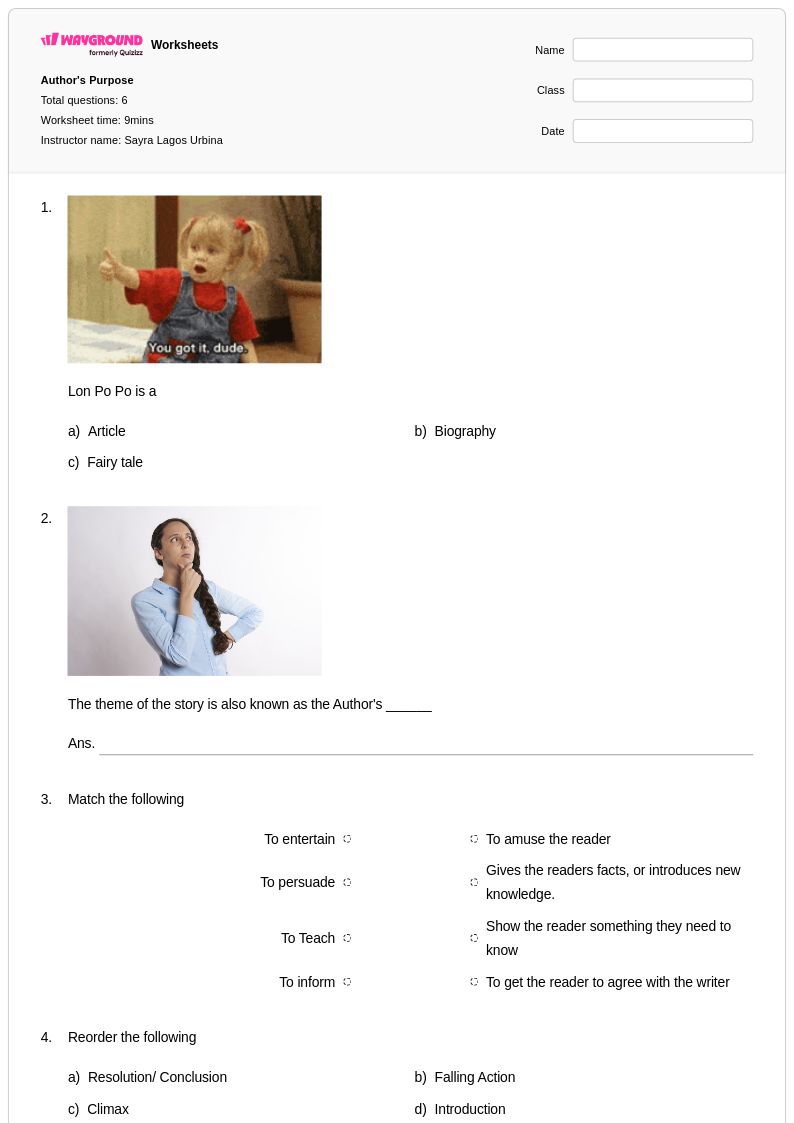
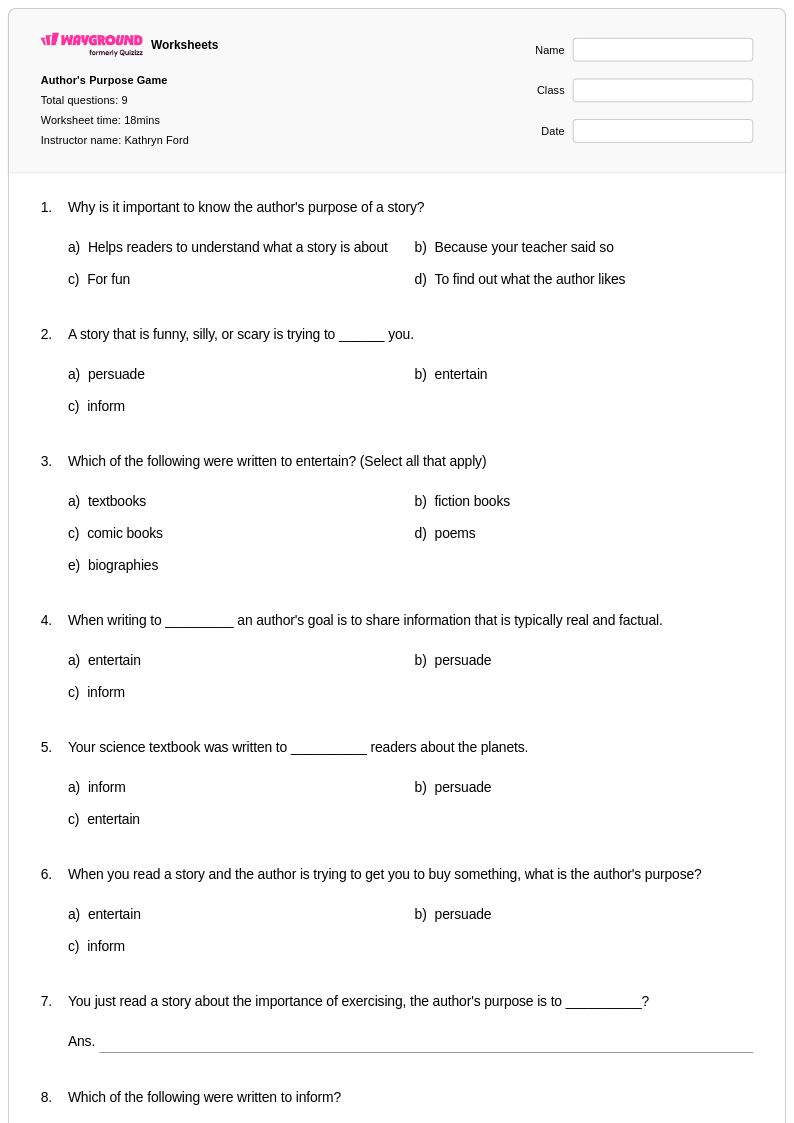
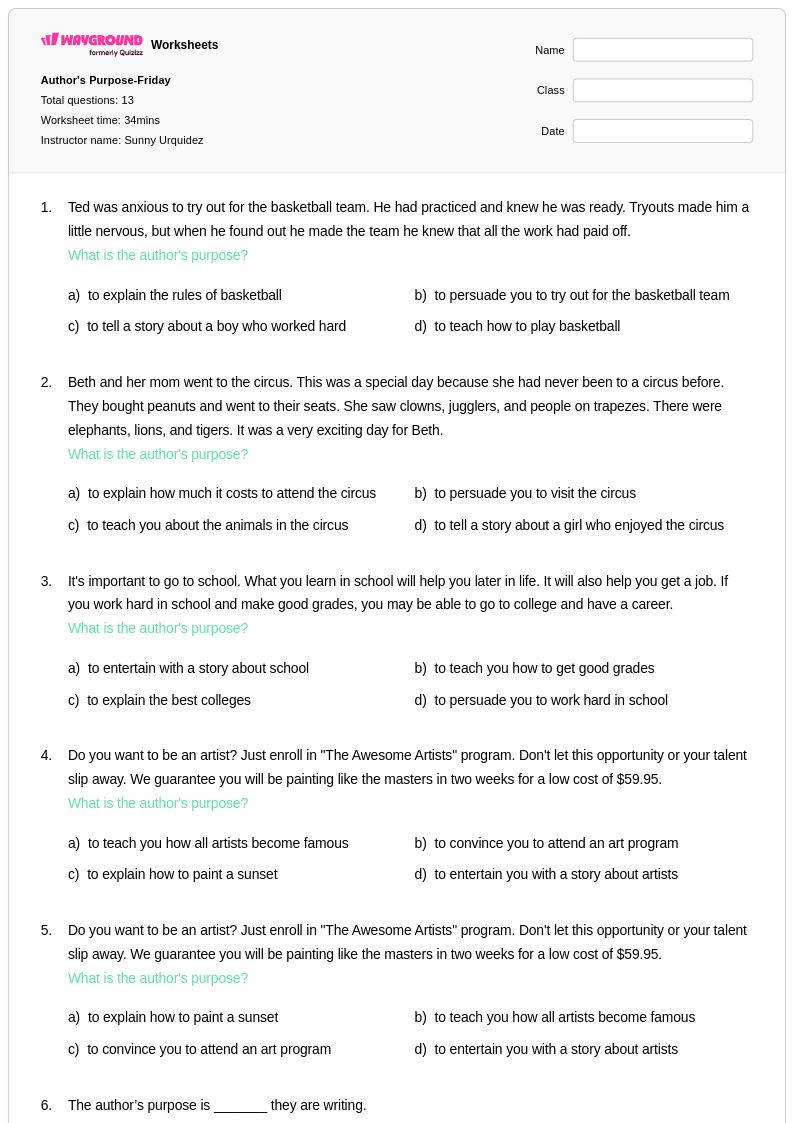
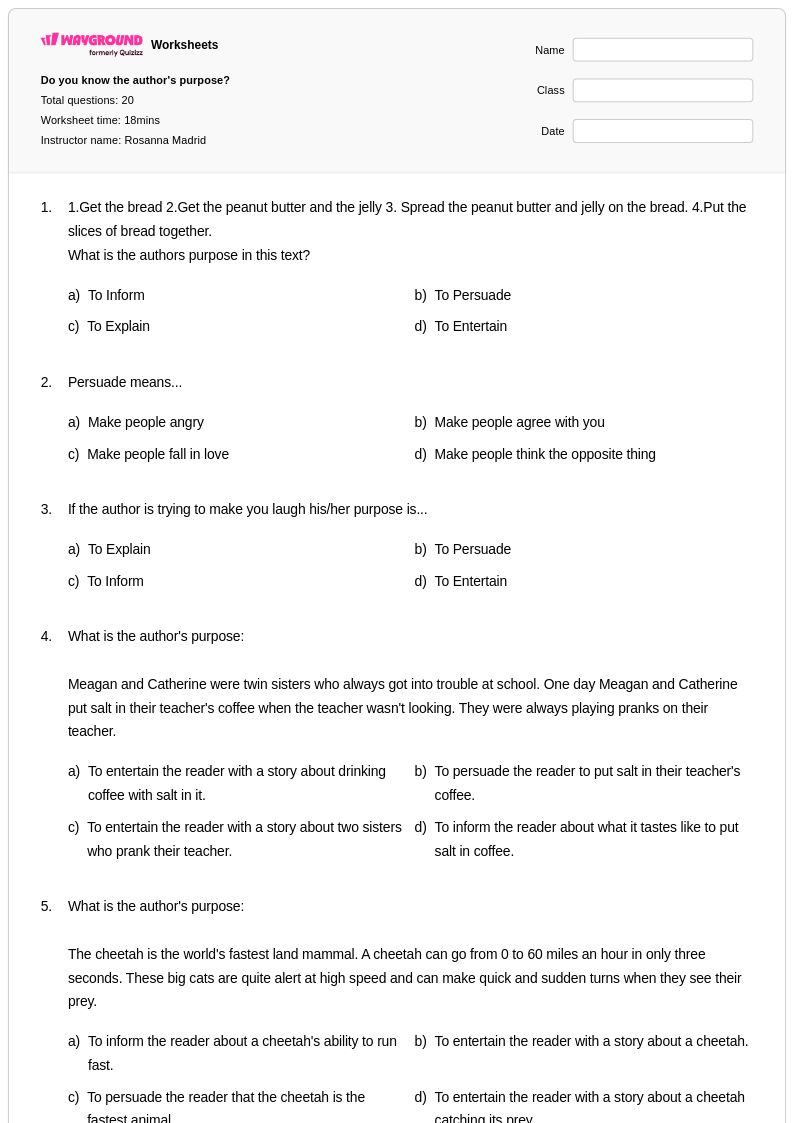
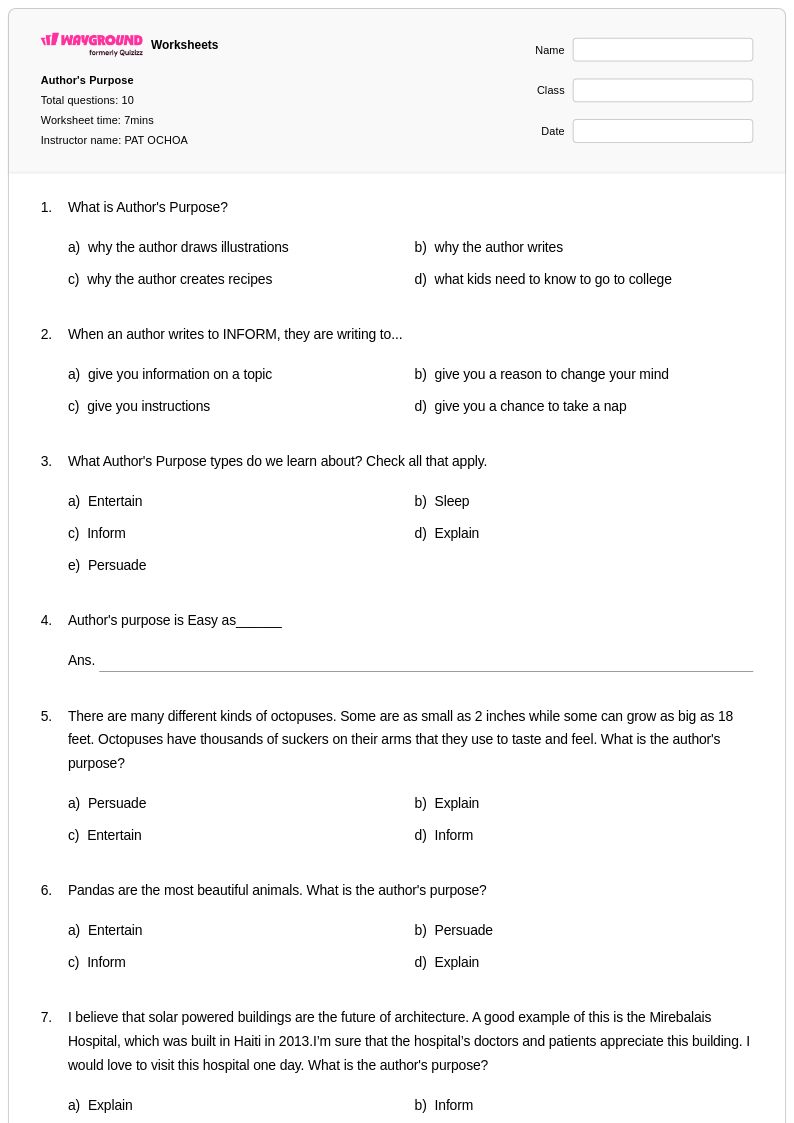
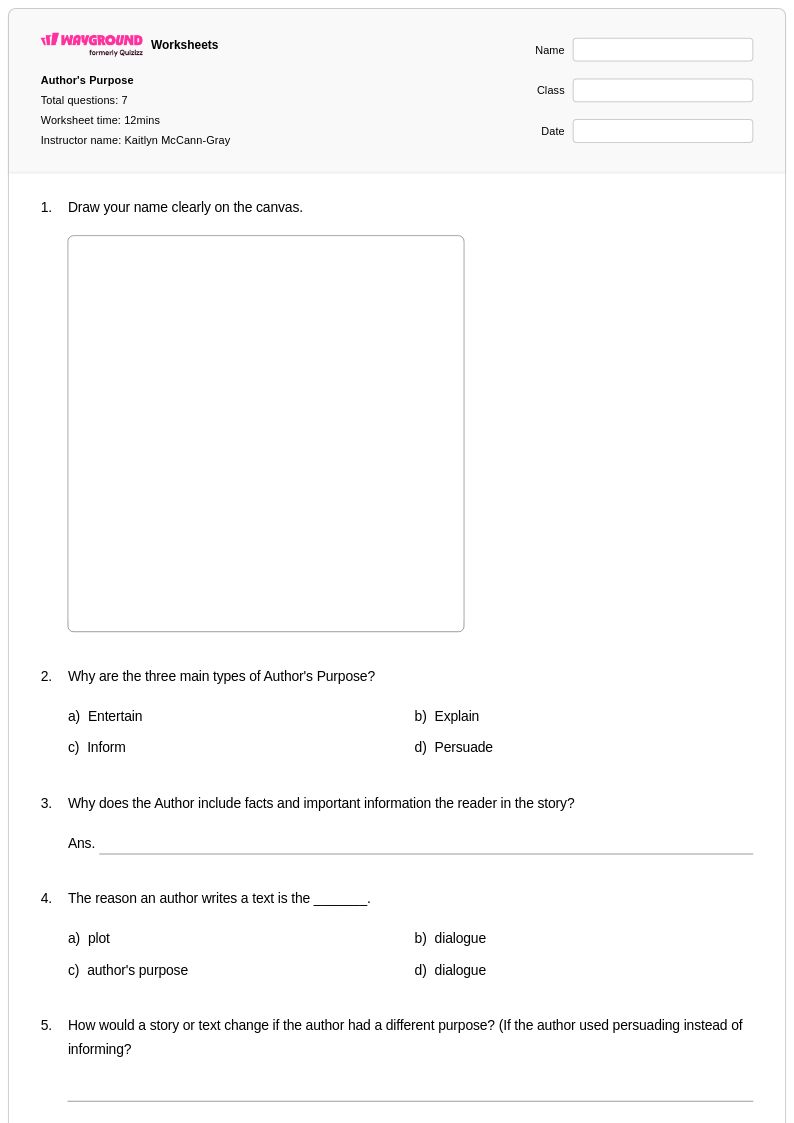
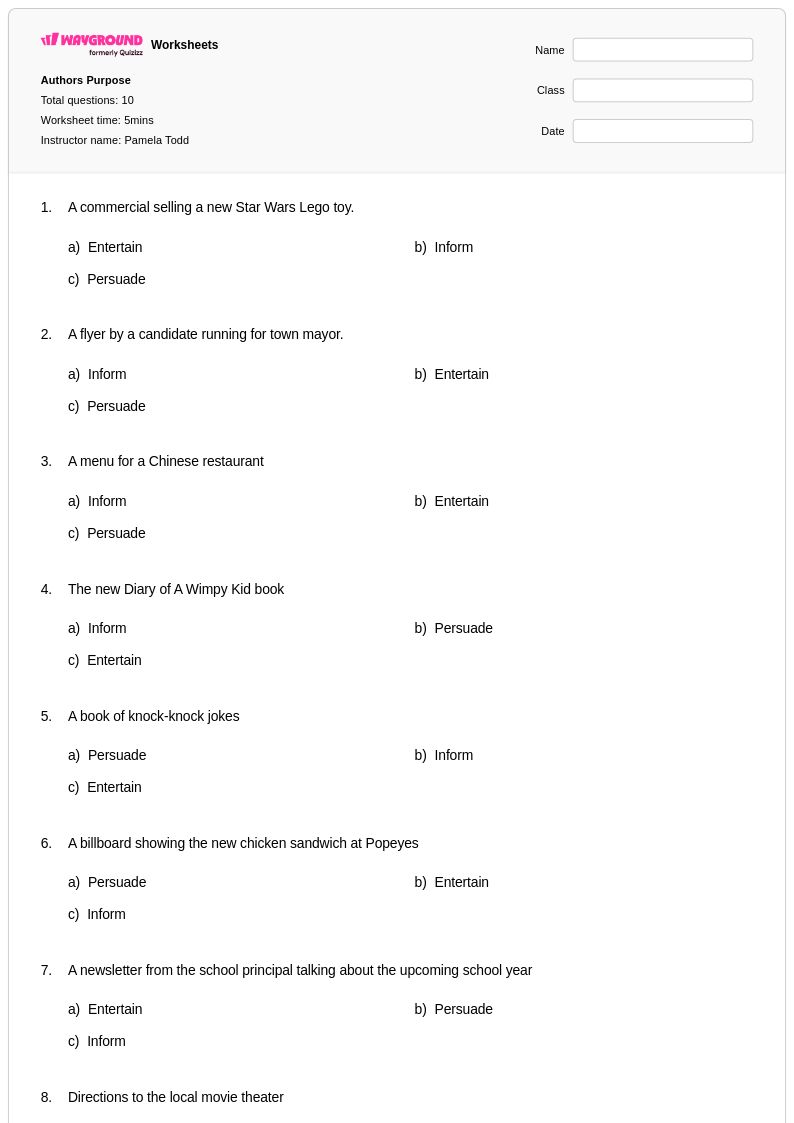
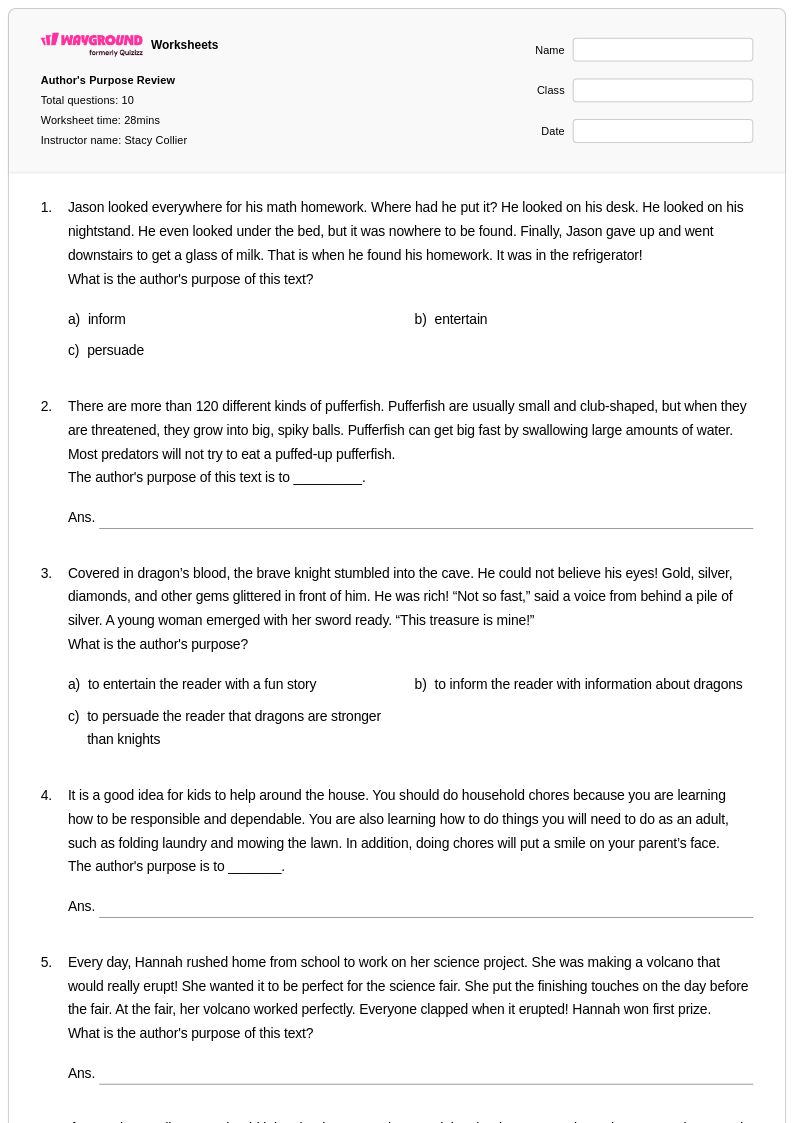
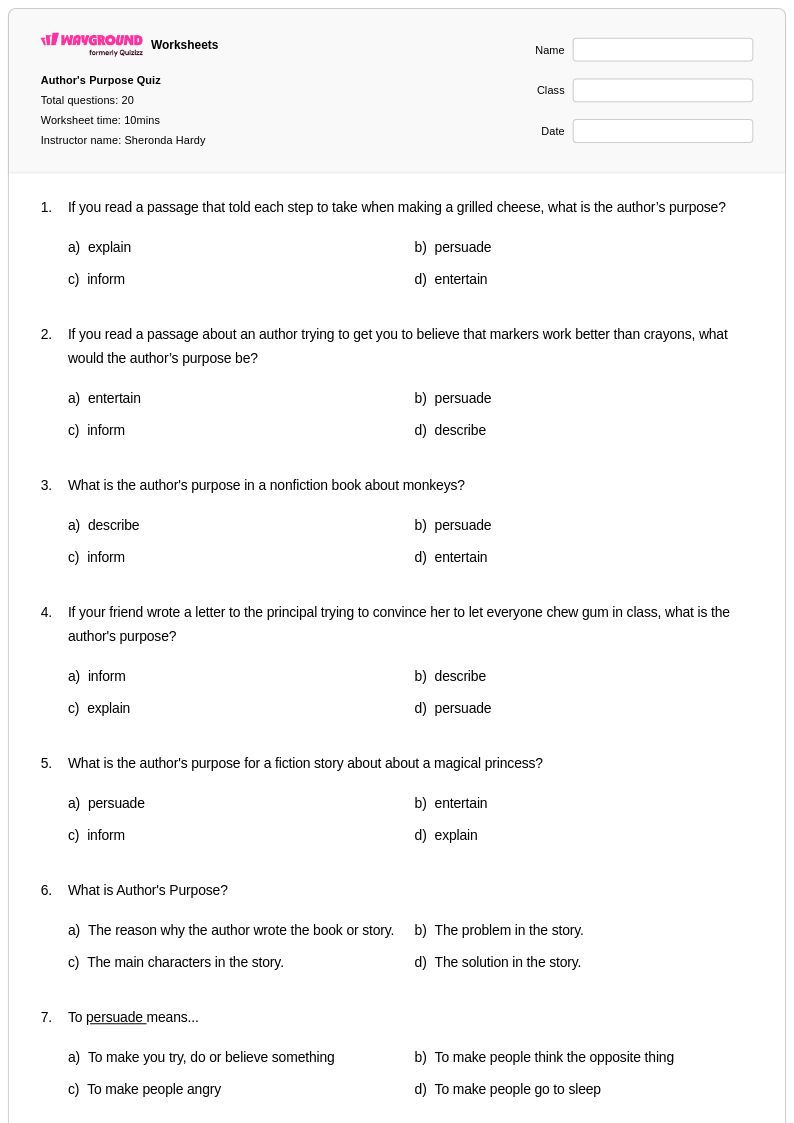
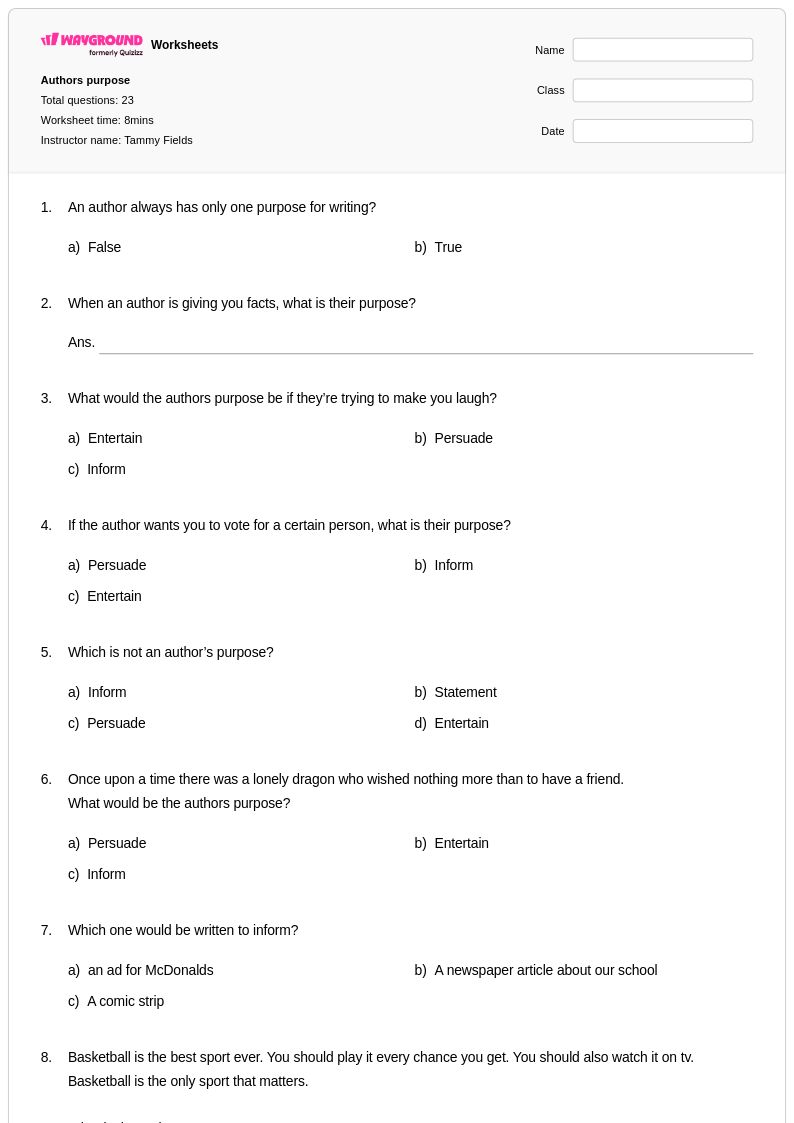
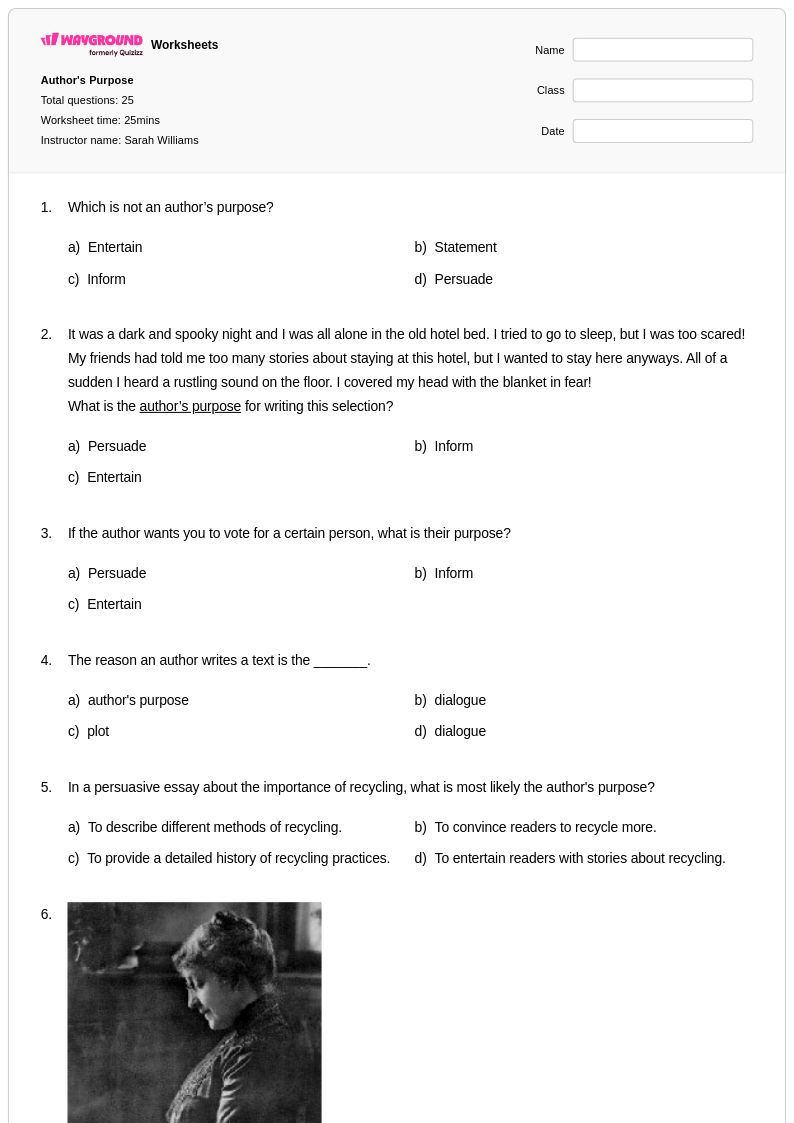
Author's purpose in nonfiction worksheets for Class 4 students through Wayground (formerly Quizizz) provide essential practice in recognizing why authors create informational texts. These comprehensive worksheets strengthen students' analytical reading skills by teaching them to identify whether nonfiction authors write to inform, persuade, or entertain their readers. Each worksheet includes carefully crafted practice problems that present authentic nonfiction passages followed by questions that guide students to examine text features, word choices, and organizational structures as clues to the author's intent. The collection offers free printable resources complete with answer keys, making it simple for educators to implement immediate feedback and assessment. Students work with diverse nonfiction formats including articles, advertisements, how-to guides, and biographical excerpts, building their ability to distinguish between factual reporting, opinion pieces, and instructional writing while developing critical thinking skills essential for academic success.
Wayground (formerly Quizizz) supports teachers with millions of educator-created resources specifically designed for author's purpose instruction in nonfiction texts. The platform's robust search and filtering capabilities allow teachers to quickly locate worksheets aligned with grade-level standards and differentiated for various learning needs. Teachers can customize existing worksheets or create new ones using the flexible tools, then distribute materials in both digital and printable PDF formats to accommodate different classroom environments and student preferences. These features streamline lesson planning while providing targeted options for remediation, enrichment, and regular skill practice. The extensive collection ensures that teachers have access to varied nonfiction examples and question types, enabling them to scaffold student learning effectively and provide multiple opportunities for students to master the complex skill of identifying author's purpose across different informational text types.
FAQs
How do I teach author's purpose in nonfiction texts?
Start by anchoring instruction around the three core purposes — to inform, to persuade, and to entertain — and show students how nonfiction texts often blend more than one. Use mentor texts like editorials, encyclopedia entries, and feature articles to model how word choice, tone, and organizational structure signal the author's intent. Having students annotate passages for persuasive language versus factual claims helps them internalize the distinction before moving to independent practice.
What exercises help students practice identifying author's purpose in nonfiction?
Worksheets that pair short nonfiction excerpts with targeted questions are especially effective because they give students repeated exposure to varied text types in a structured format. Practice problems that ask students to cite specific textual evidence — such as loaded language, hedging phrases, or objective data — build the habit of grounding their analysis in the text rather than guessing. Exercises that ask students to distinguish between persuasive language and factual information are particularly valuable for developing critical reading accuracy.
What mistakes do students commonly make when analyzing author's purpose in nonfiction?
The most common error is confusing topic with purpose — students identify what a text is about rather than why the author wrote it. Another frequent mistake is defaulting to 'to inform' for any nonfiction text without recognizing persuasive or rhetorical intent embedded in word choice and structure. Students also struggle to distinguish between a text that presents facts and one that uses facts strategically to support a persuasive argument, which is why practice with annotating tone and evaluating evidence selection is essential.
How do I use author's purpose worksheets to assess reading comprehension?
Author's purpose worksheets serve as strong formative assessment tools when they require students to justify their answers with textual evidence rather than simply selecting a label like 'inform' or 'persuade.' Reviewing student responses for the quality of their cited evidence reveals whether comprehension is surface-level or genuinely analytical. Patterns in errors — such as consistently missing persuasive intent in informational-seeming texts — point directly to the next instructional focus.
How do I use Wayground's author's purpose in nonfiction worksheets in my classroom?
Wayground's author's purpose in nonfiction worksheets are available as printable PDFs for traditional classroom use and in digital formats for technology-integrated or remote learning environments, giving teachers flexibility in how they deploy them. Teachers can also host worksheets as a quiz directly on Wayground, enabling real-time response tracking and immediate feedback. Complete answer keys are included with every worksheet, making them ready to use for independent practice, small-group instruction, or assessment with minimal preparation time.
How can I differentiate author's purpose instruction for students at different reading levels?
Differentiation for author's purpose begins with text selection — pairing struggling readers with shorter, more explicit nonfiction passages while challenging advanced students with texts that embed persuasive intent more subtly. On Wayground, teachers can apply accommodations such as read-aloud support for students who need audio assistance, reduced answer choices to lower cognitive load for selected students, and extended time settings — all configurable per student without notifying the rest of the class. These settings are saved and reusable across future sessions, making it efficient to maintain consistent accommodations for students who need them regularly.