
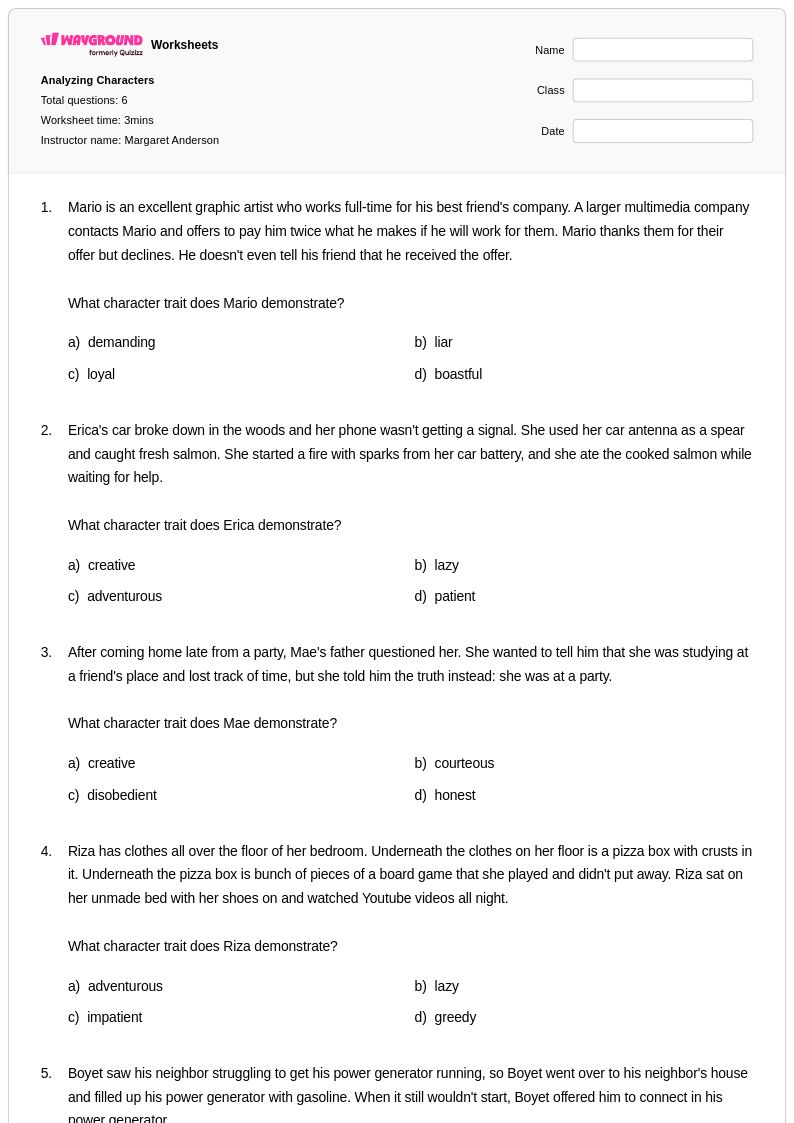
6 Q
4th
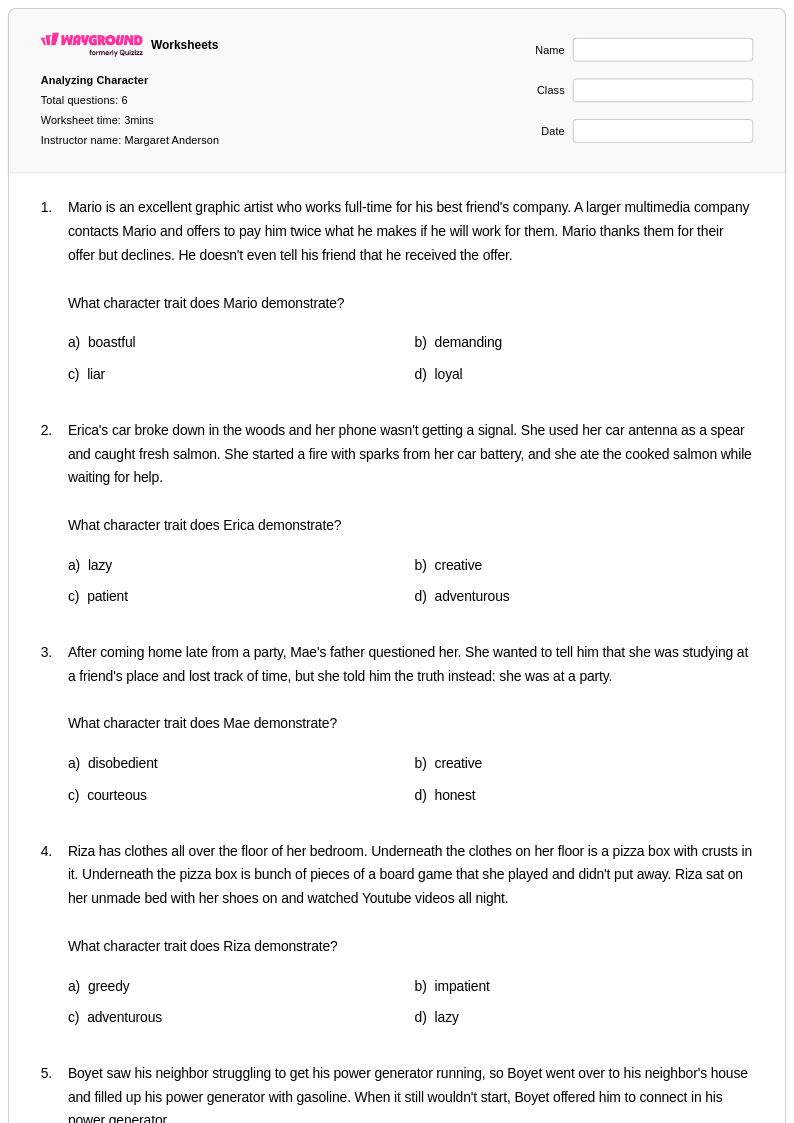
6 Q
4th
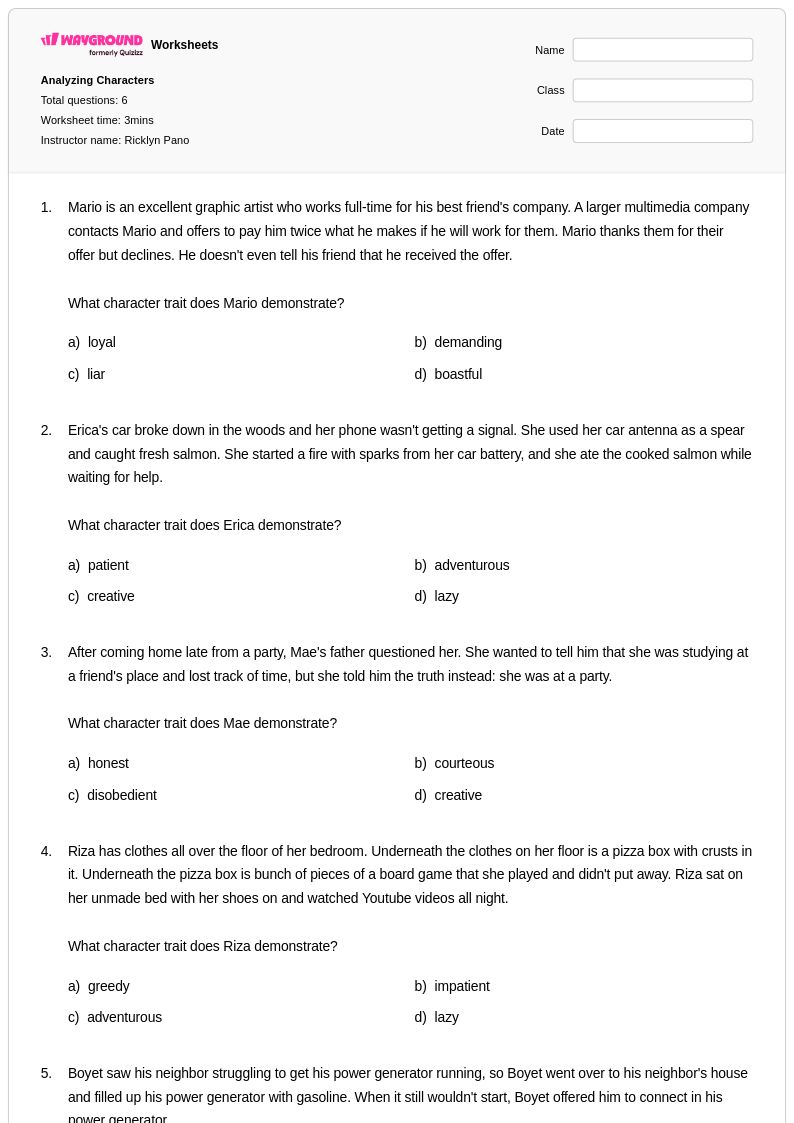
6 Q
4th
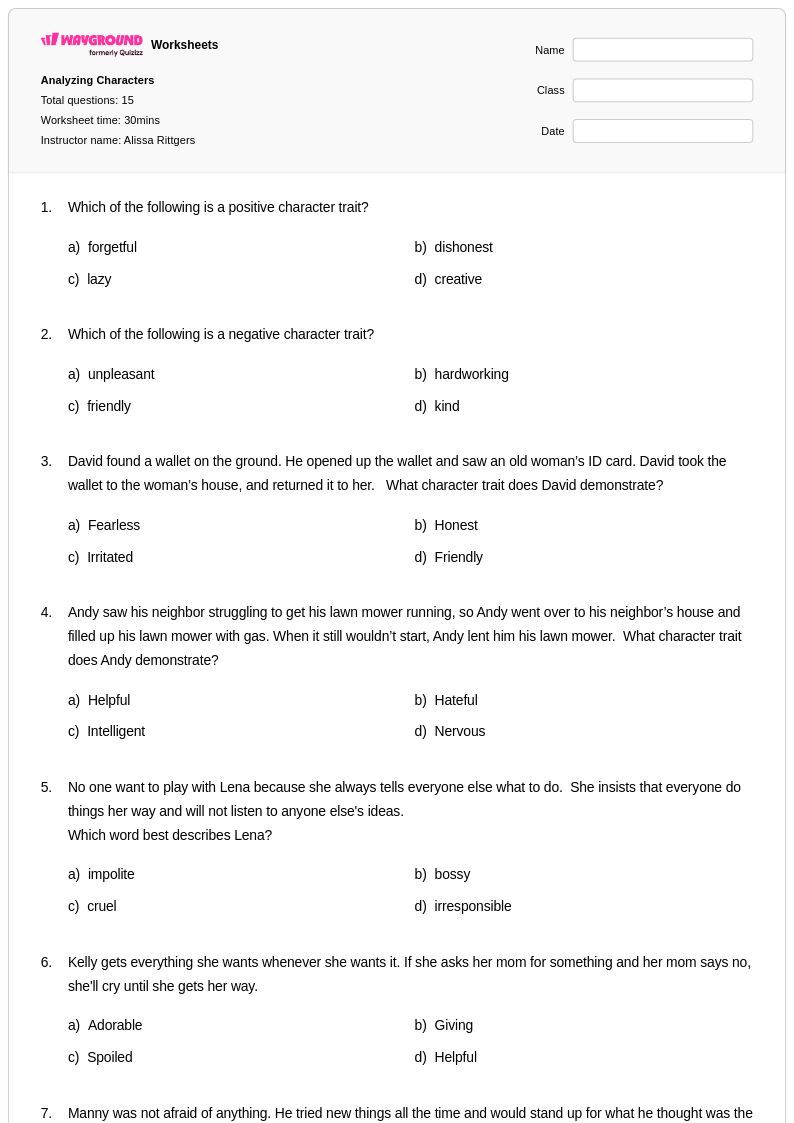
15 Q
4th - 5th
13 Q
4th
10 Q
2nd - 4th
5 Q
4th - 5th

25 Q
4th - Uni
15 Q
3rd - Uni
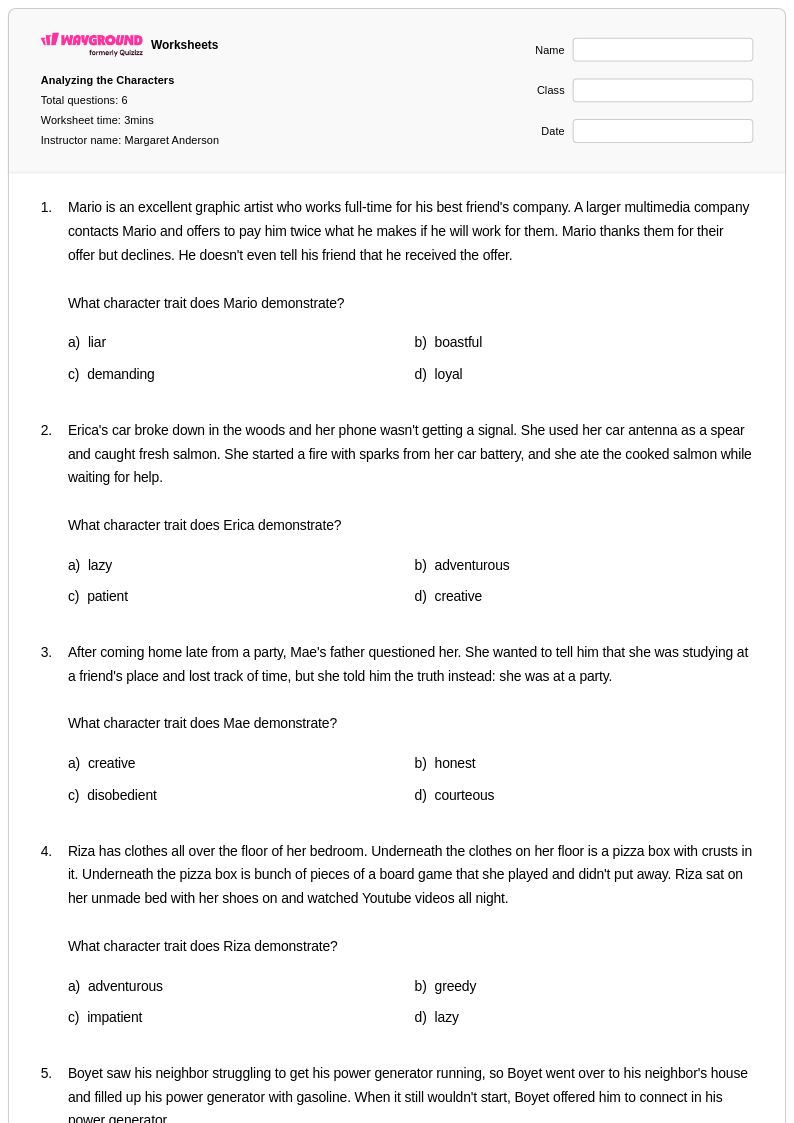
6 Q
4th
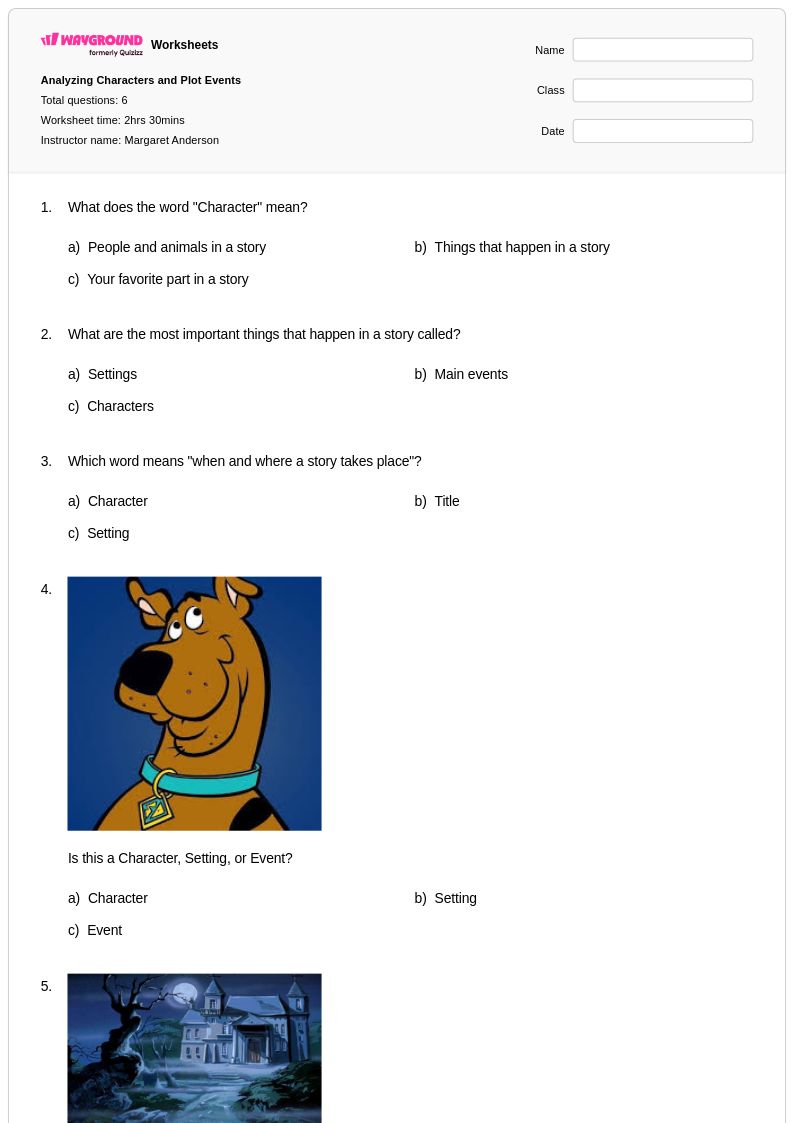
6 Q
4th
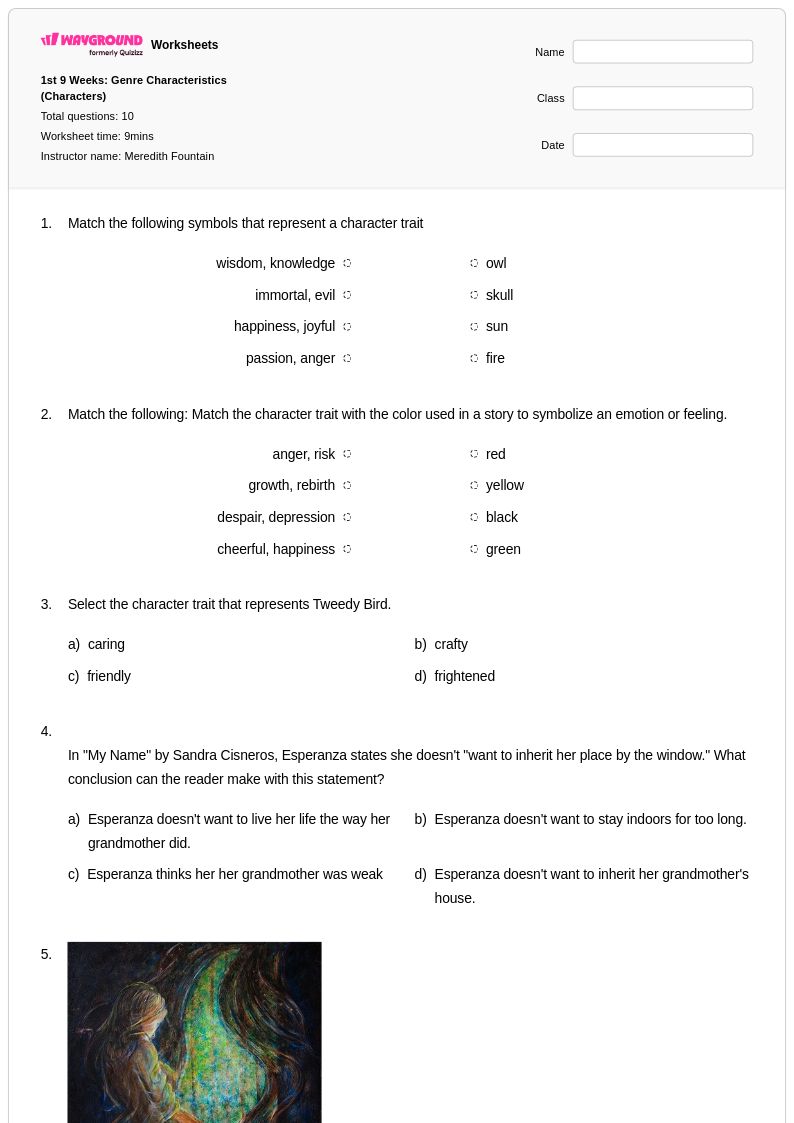
10 Q
4th - 9th
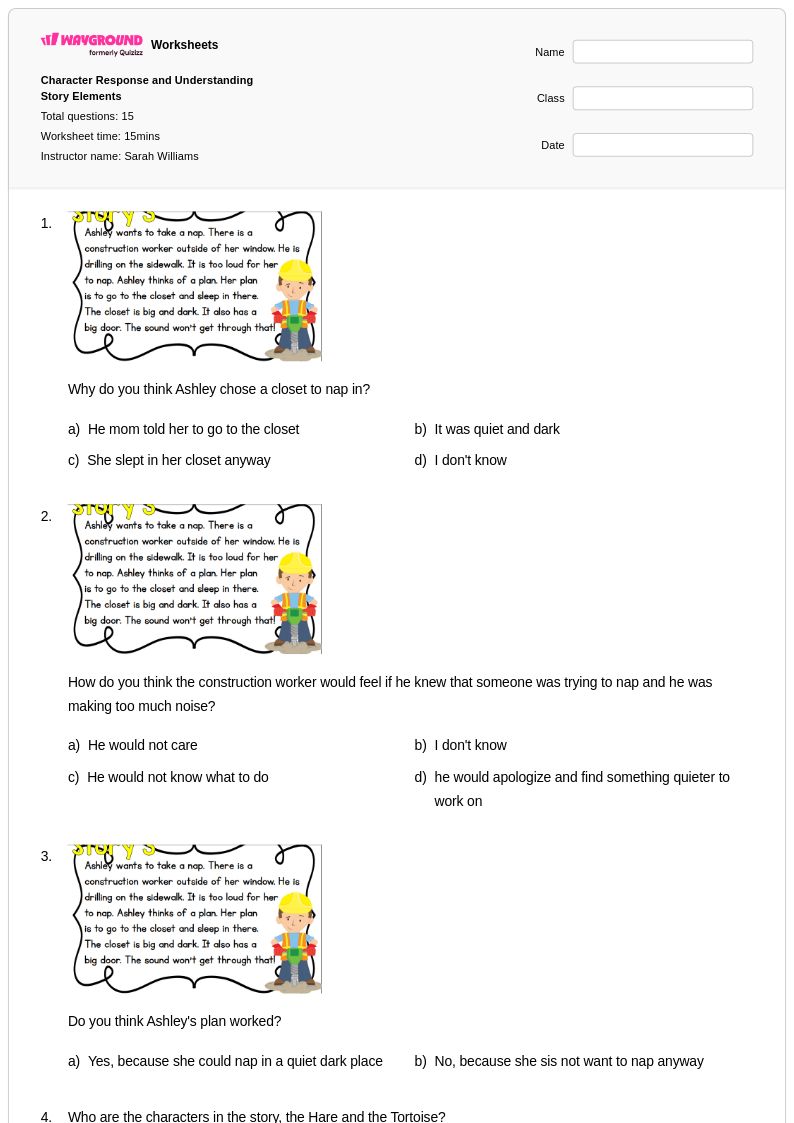
15 Q
2nd - Uni
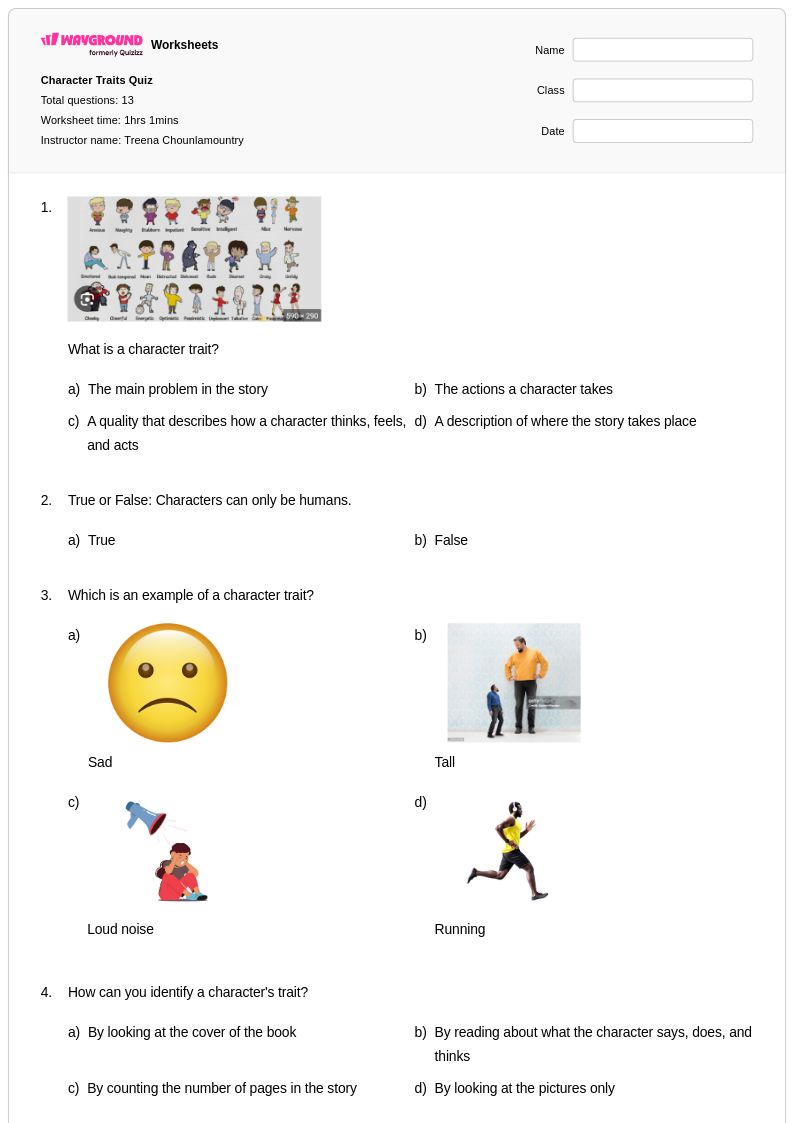
14 Q
4th
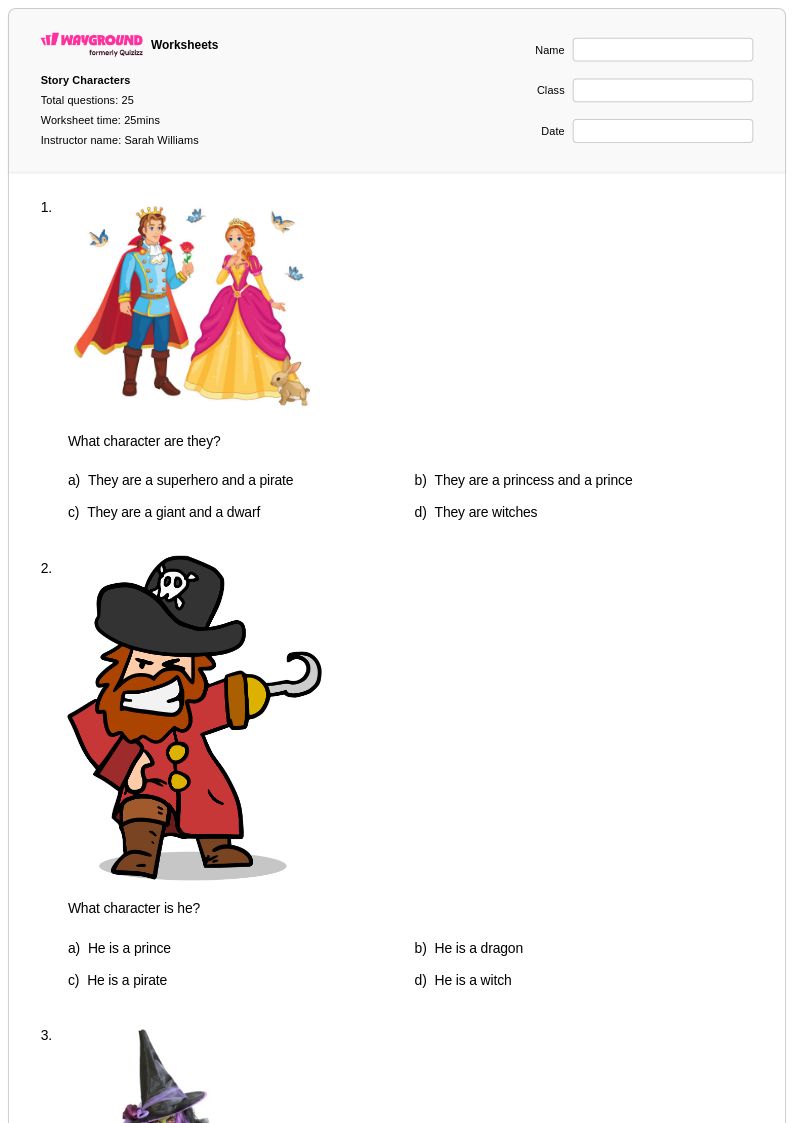
25 Q
3rd - Uni
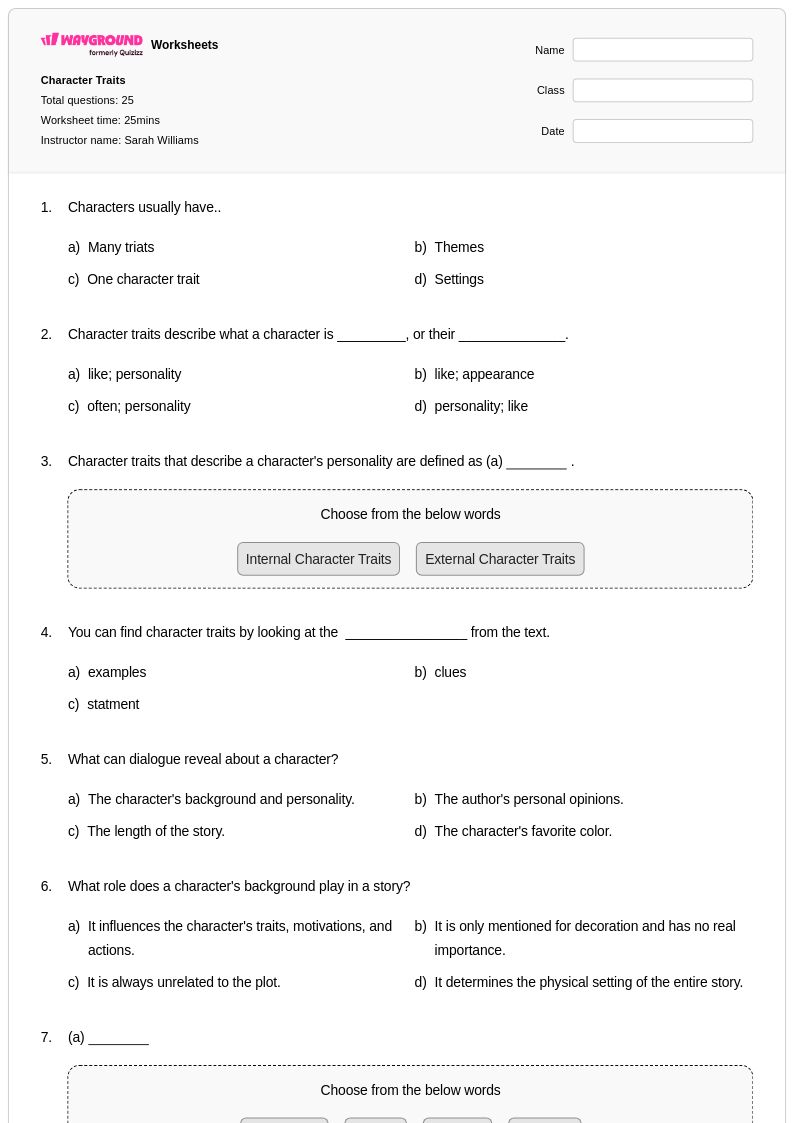
25 Q
3rd - Uni
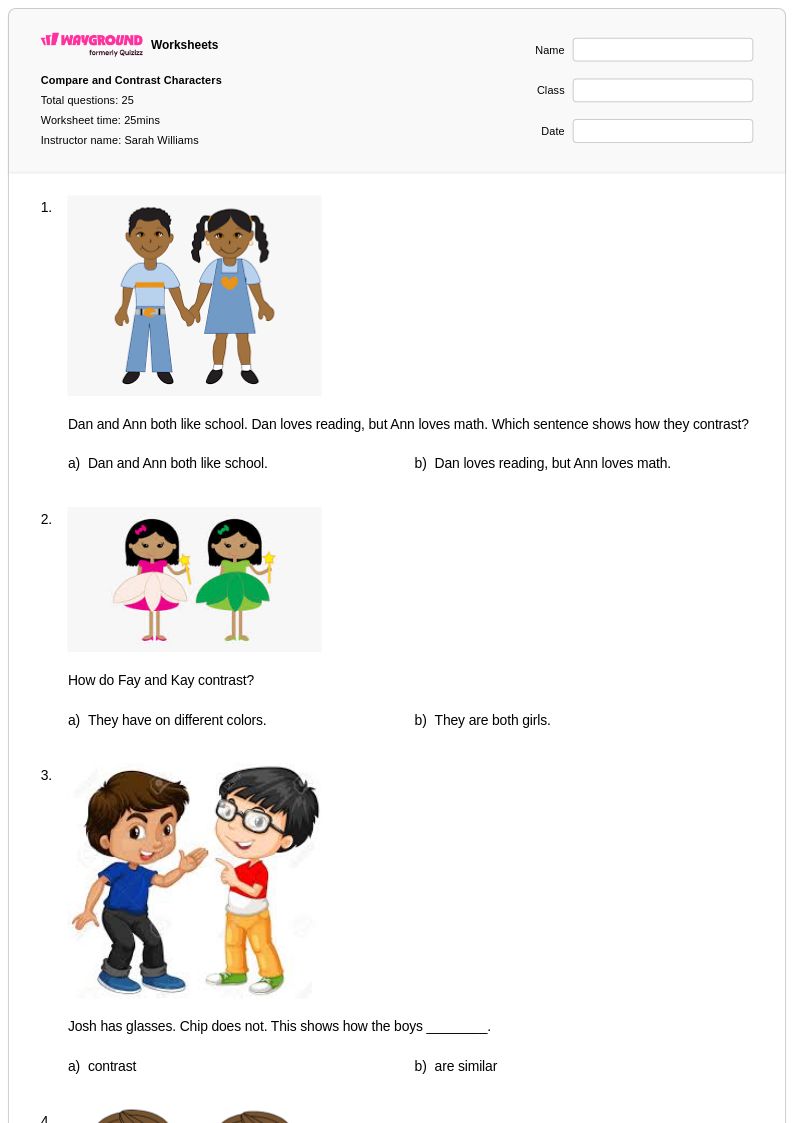
25 Q
3rd - Uni
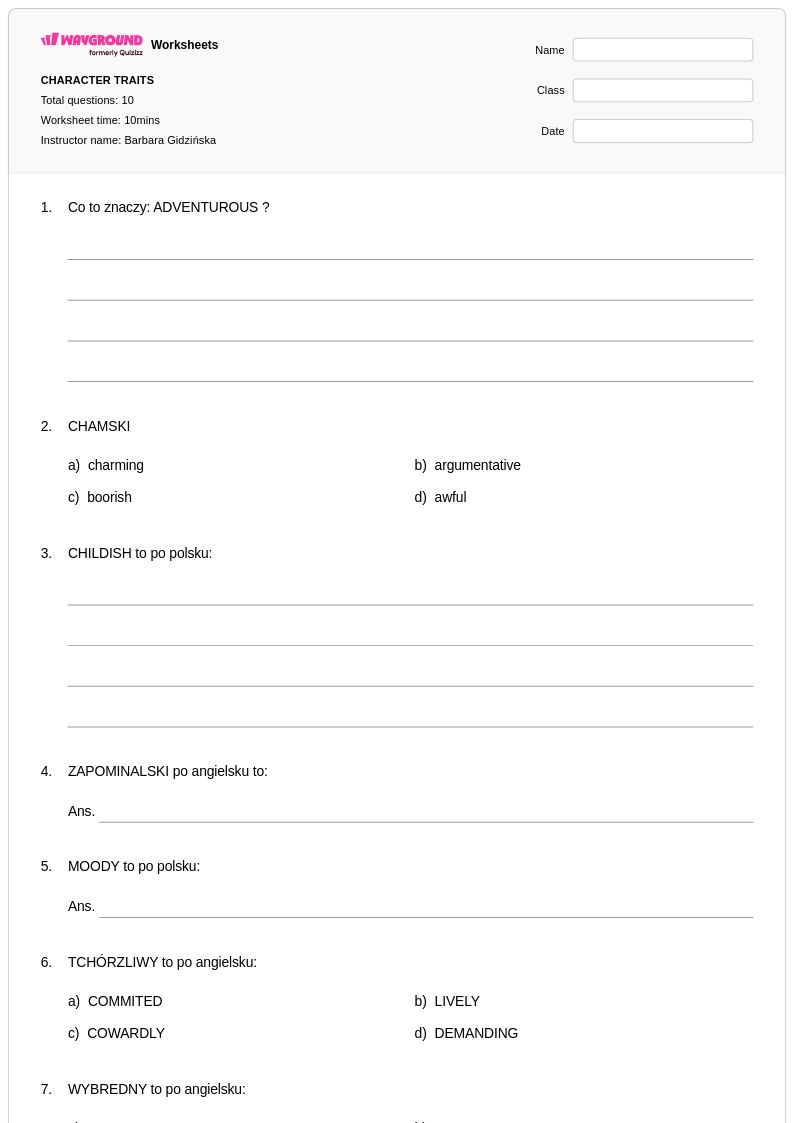
10 Q
1st - 6th
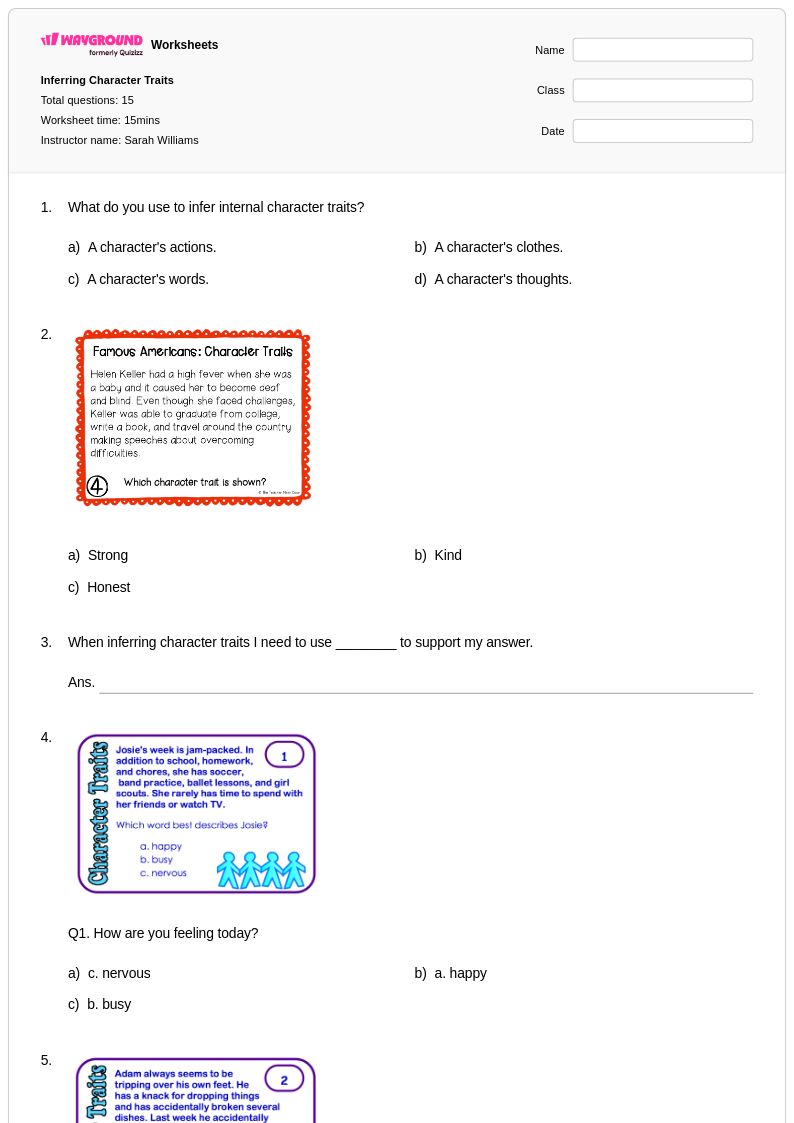
15 Q
3rd - Uni
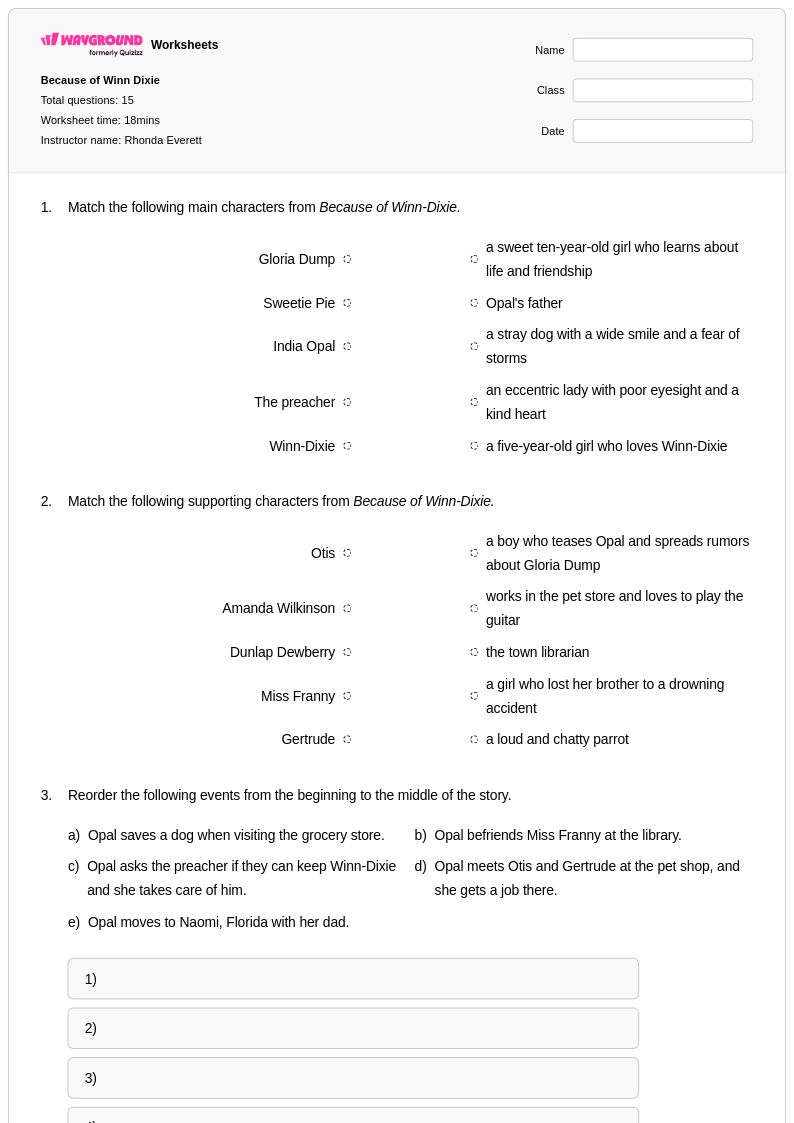
15 Q
4th
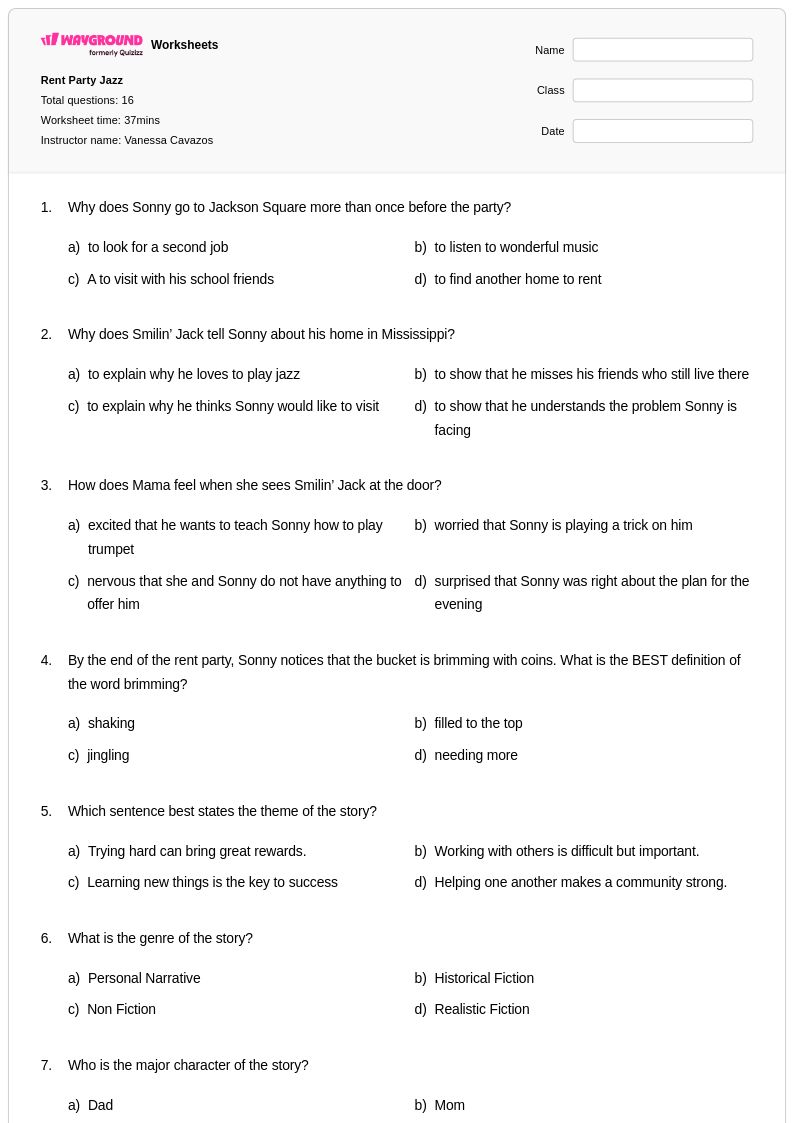
16 Q
4th
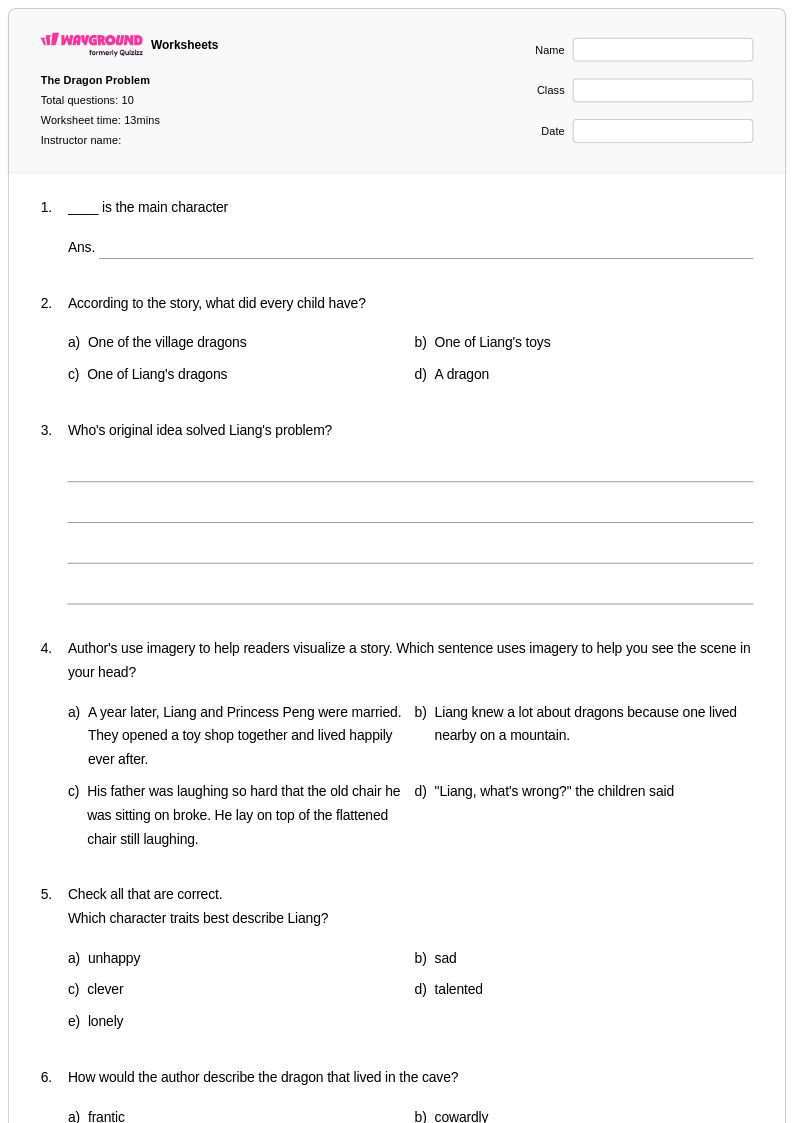
10 Q
4th
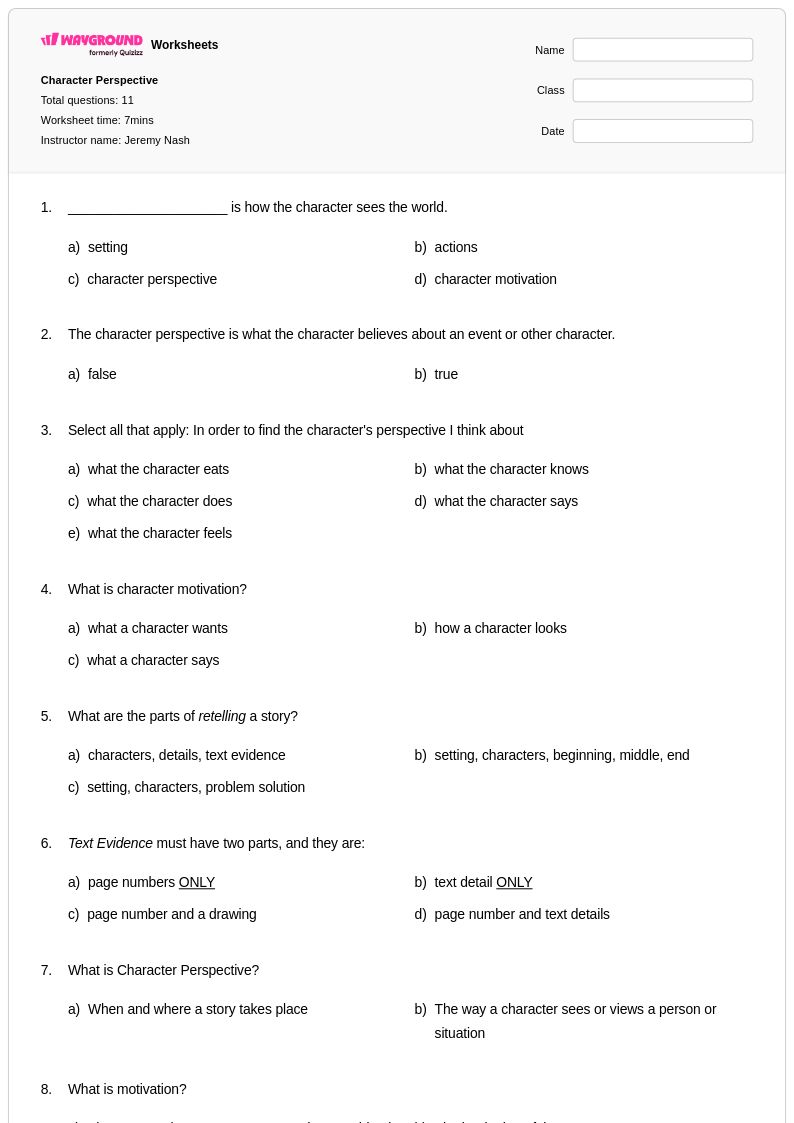
11 Q
4th
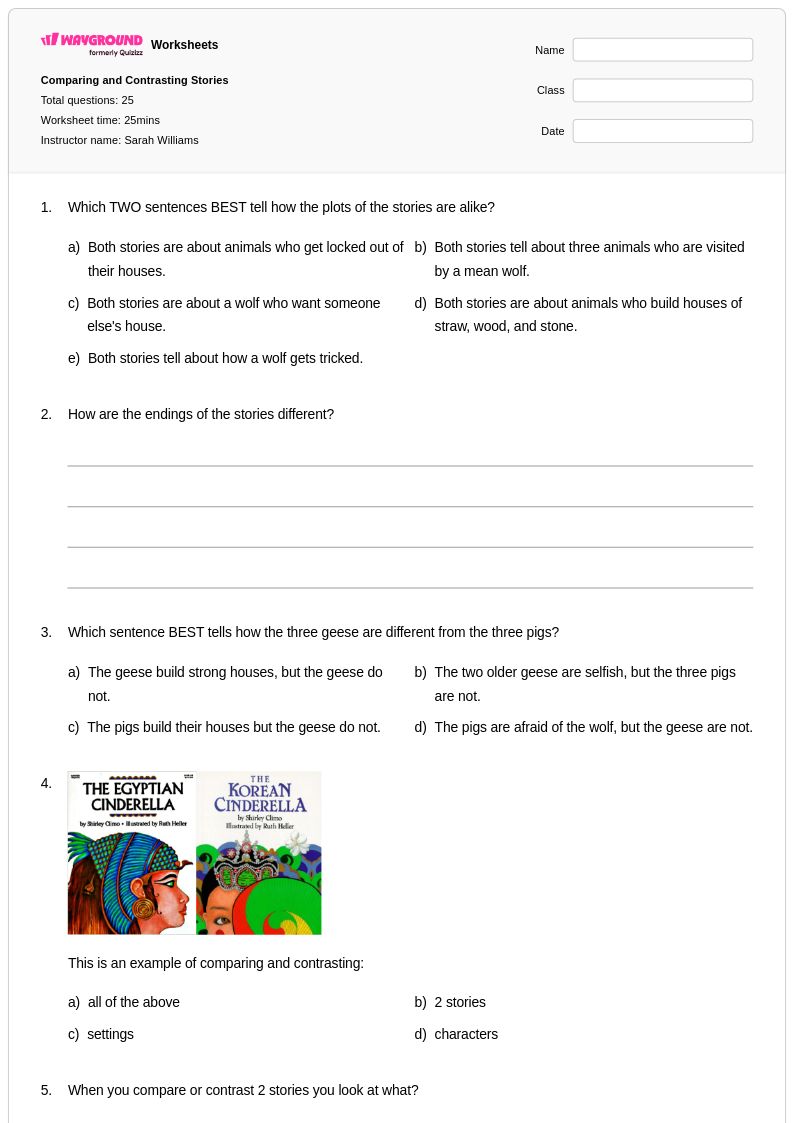
25 Q
3rd - Uni
Explore Analyzing Character Worksheets by Grades
Explore Other Subject Worksheets for class 4
Explore printable Analyzing Character worksheets for Class 4
Analyzing character worksheets for Class 4 students available through Wayground (formerly Quizizz) provide comprehensive tools for developing critical reading comprehension skills that form the foundation of literary analysis. These carefully designed resources guide fourth-grade learners through systematic examination of character traits, motivations, relationships, and development within various story structures, helping students move beyond surface-level reading to deeper textual understanding. The collection includes practice problems that challenge students to identify character feelings through dialogue and actions, compare and contrast different characters within the same story, and trace how characters change throughout a narrative. Each worksheet comes with a detailed answer key to support both independent learning and guided instruction, while the free printable format ensures accessible distribution in any classroom setting. These educational materials strengthen essential analytical thinking skills by teaching students to support their character interpretations with specific textual evidence, a crucial foundation for more advanced literary analysis in later grades.
Wayground (formerly Quizizz) empowers educators with millions of teacher-created resources specifically designed to support character analysis instruction at the Class 4 level, offering robust search and filtering capabilities that allow teachers to quickly locate worksheets aligned with specific learning standards and curriculum requirements. The platform's differentiation tools enable instructors to customize existing materials or create targeted interventions for students requiring additional practice with character identification and analysis, while advanced learners can access enrichment activities that challenge them to explore more complex character relationships and motivations. Teachers benefit from the flexibility of accessing these resources in both printable pdf format for traditional classroom use and digital formats that integrate seamlessly with online learning environments. This comprehensive approach to resource management streamlines lesson planning by providing immediate access to high-quality materials for skill practice, remediation sessions, and formative assessment, allowing educators to focus more time on direct instruction and student support rather than resource creation and preparation.
FAQs
How do I teach character analysis to students who struggle with literary evidence?
What exercises help students practice tracking character development across a story?
What mistakes do students commonly make when analyzing character motivations?
How can I differentiate character analysis instruction for struggling and advanced readers in the same class?
How do I use Wayground's analyzing character worksheets in my classroom?
How do authors reveal character traits indirectly, and how do I teach students to recognize this?