Free Printable Analyzing Character Worksheets for Class 5
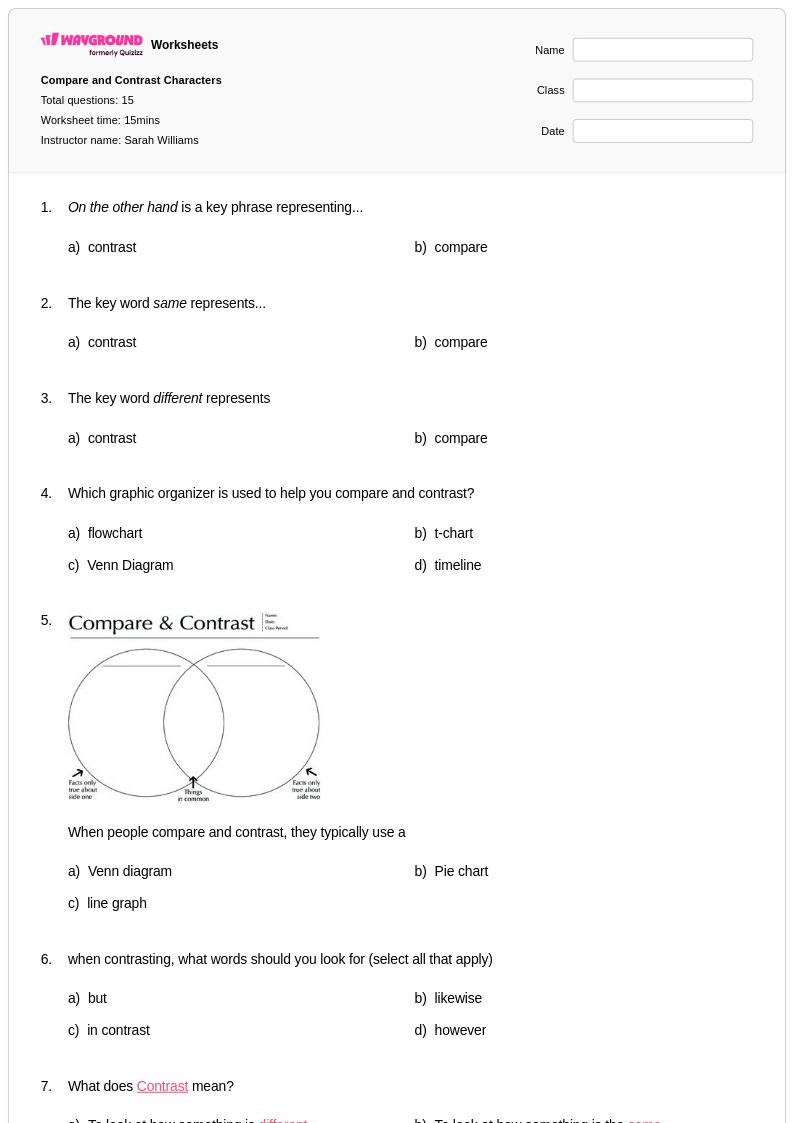
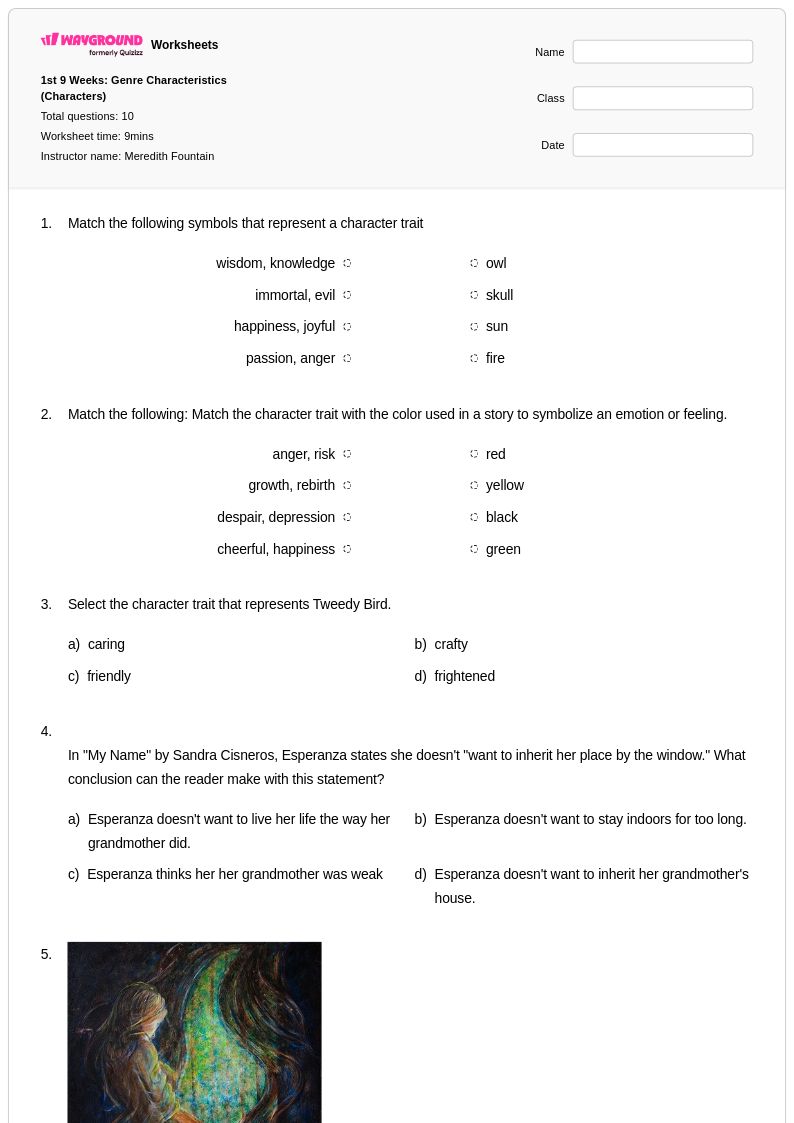
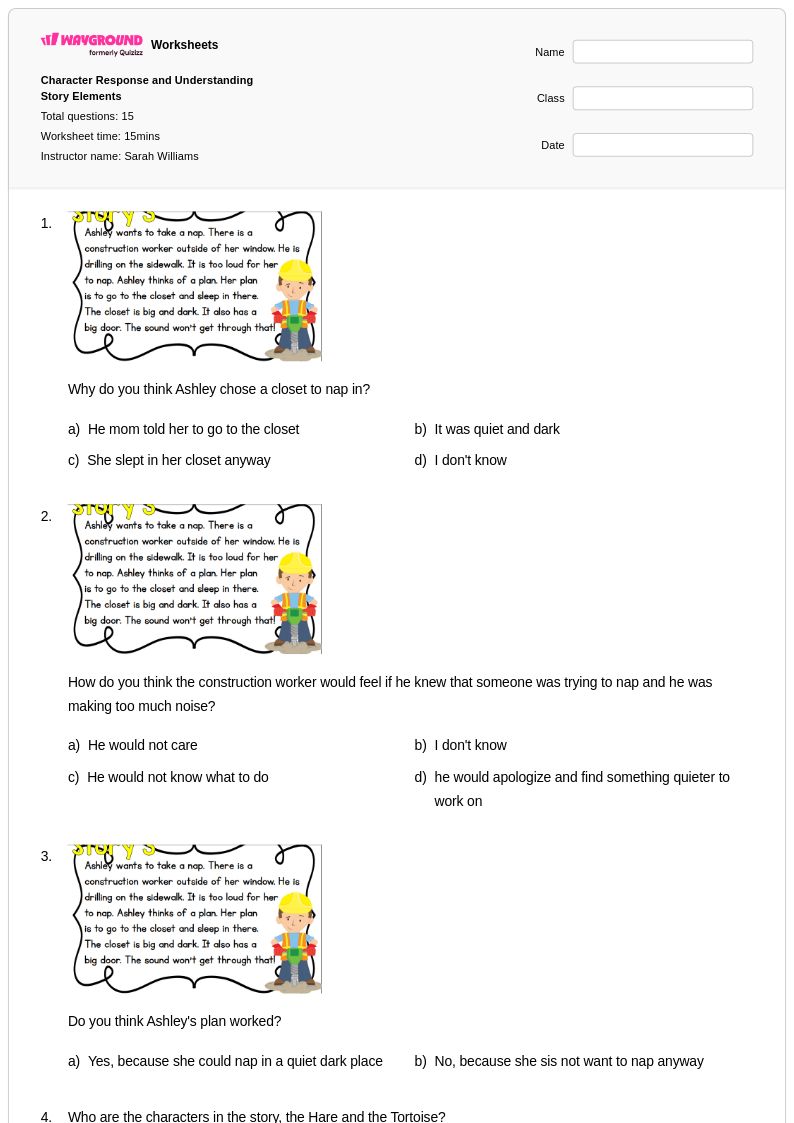
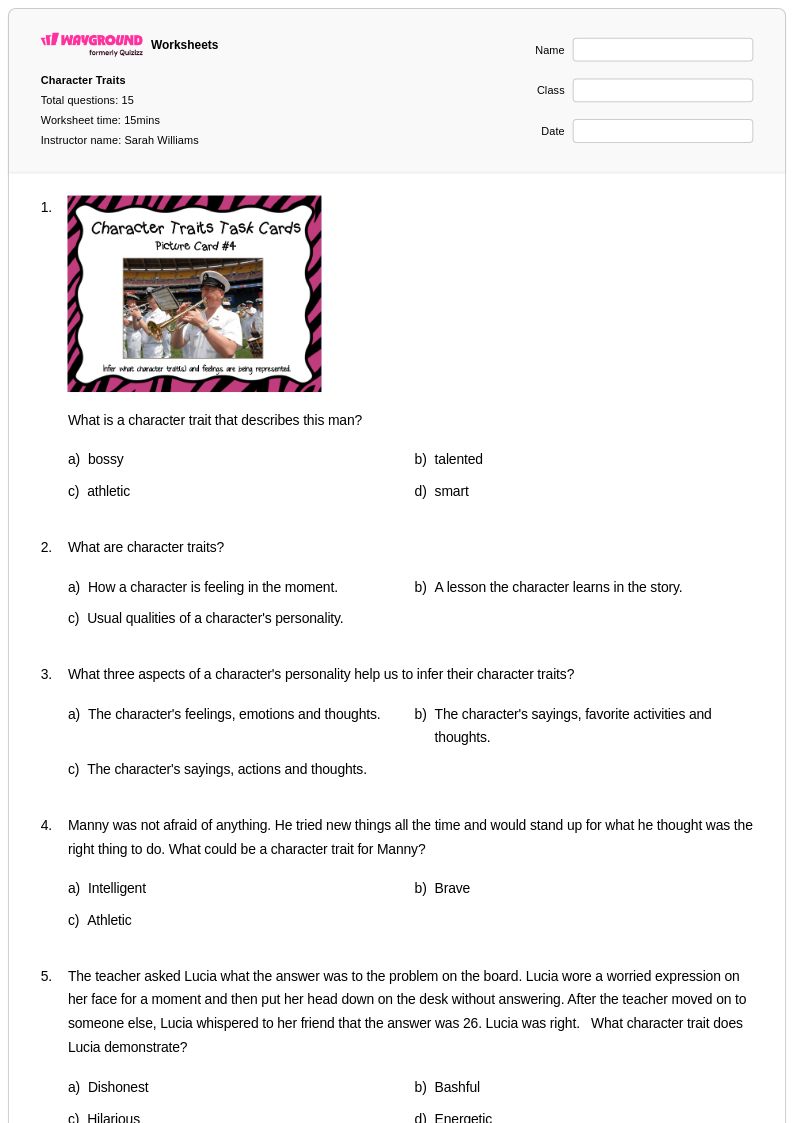
Class 5 analyzing character free worksheets and printables help students examine character traits, motivations, and development through engaging practice problems with comprehensive answer keys available as downloadable PDFs.
Explore printable Analyzing Character worksheets for Class 5
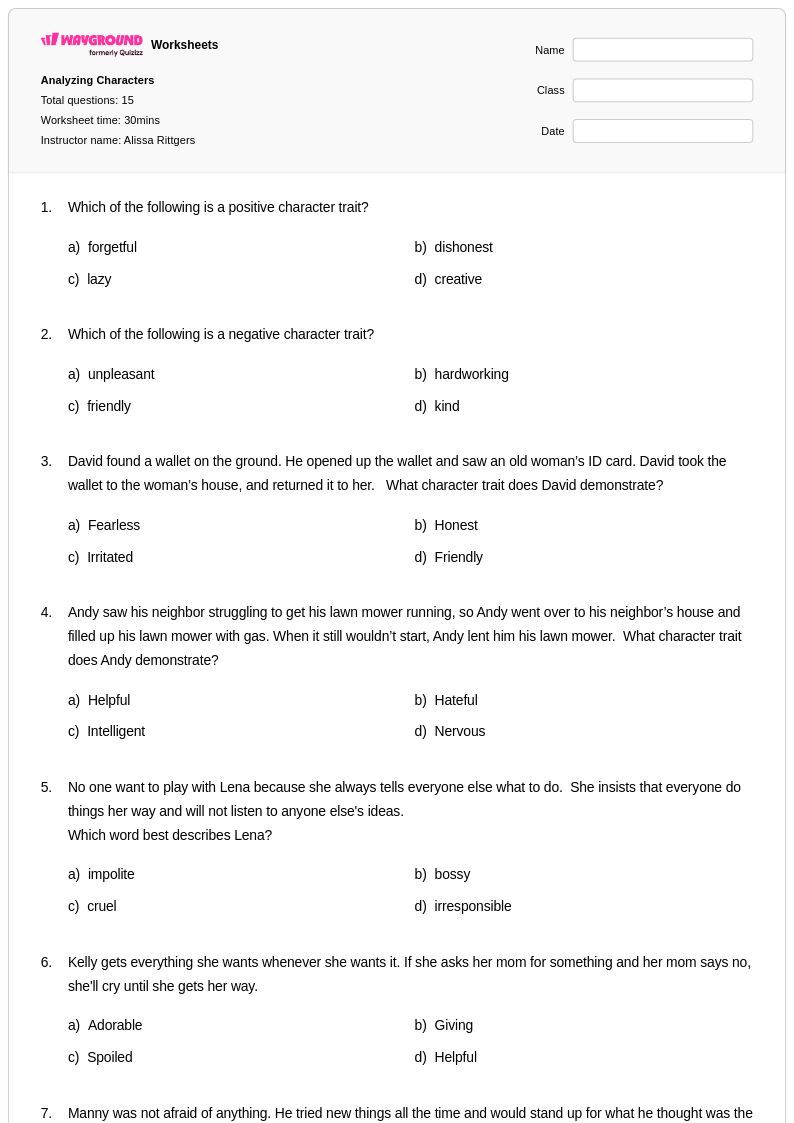
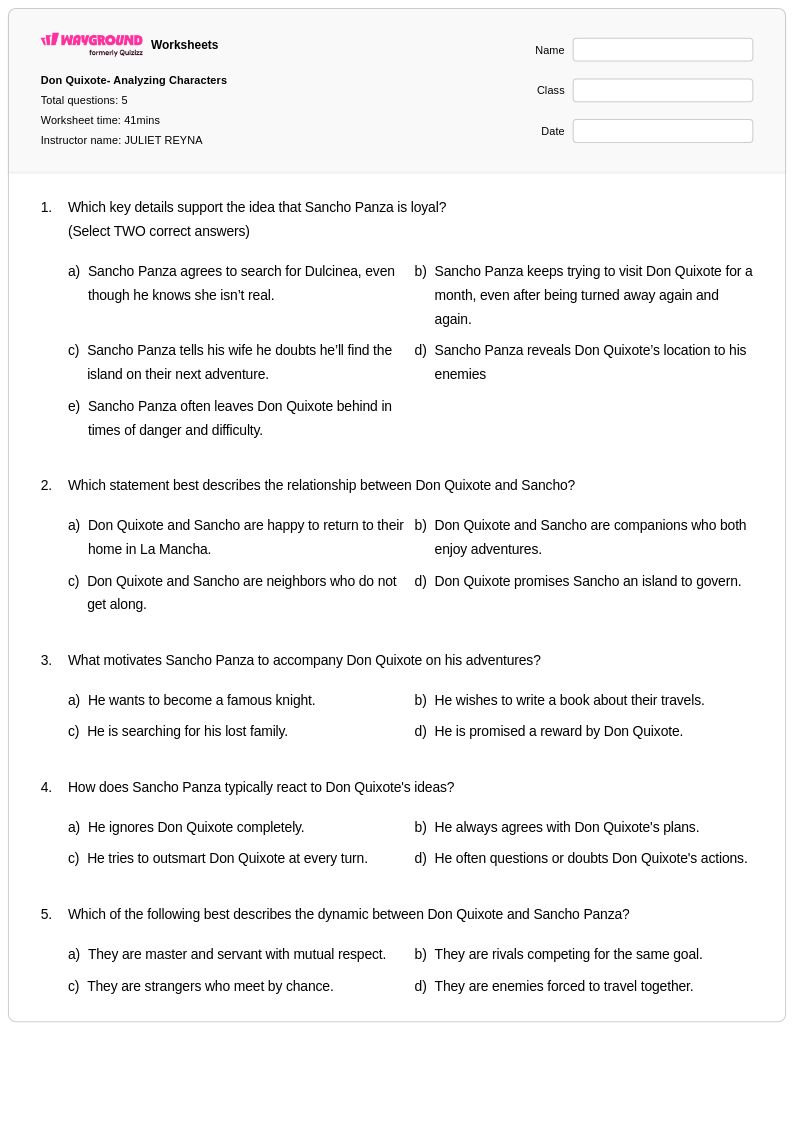
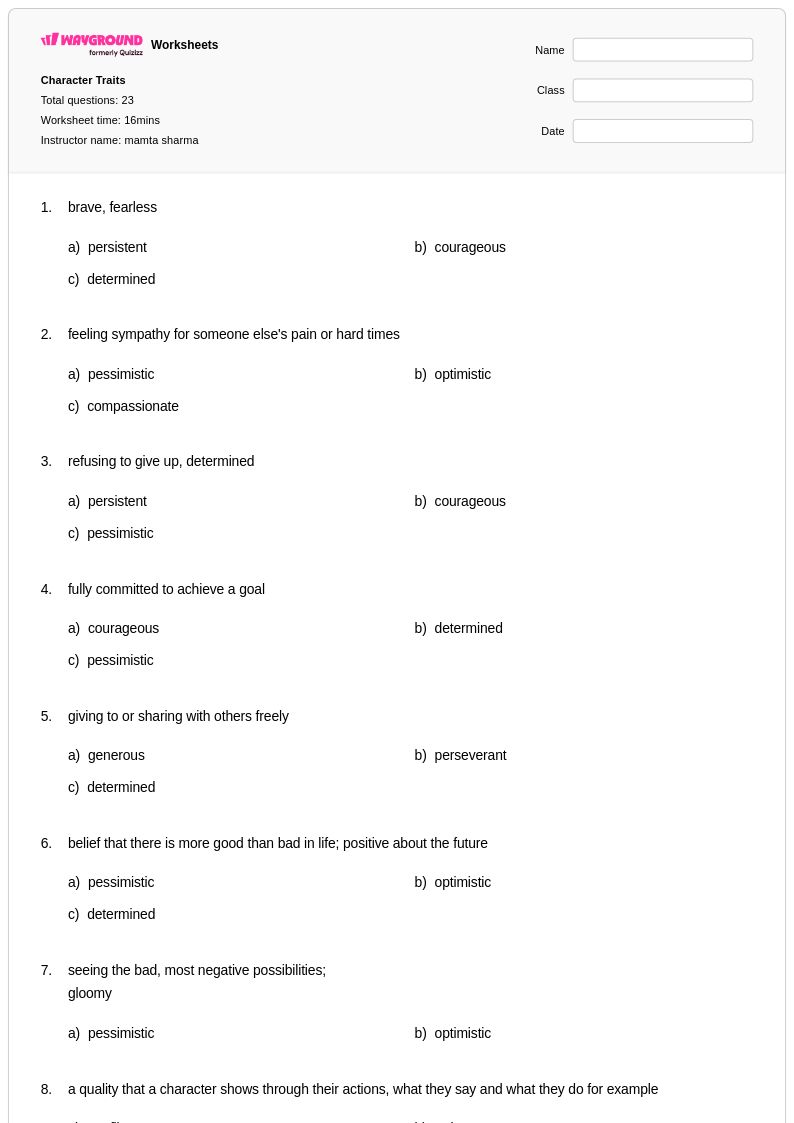
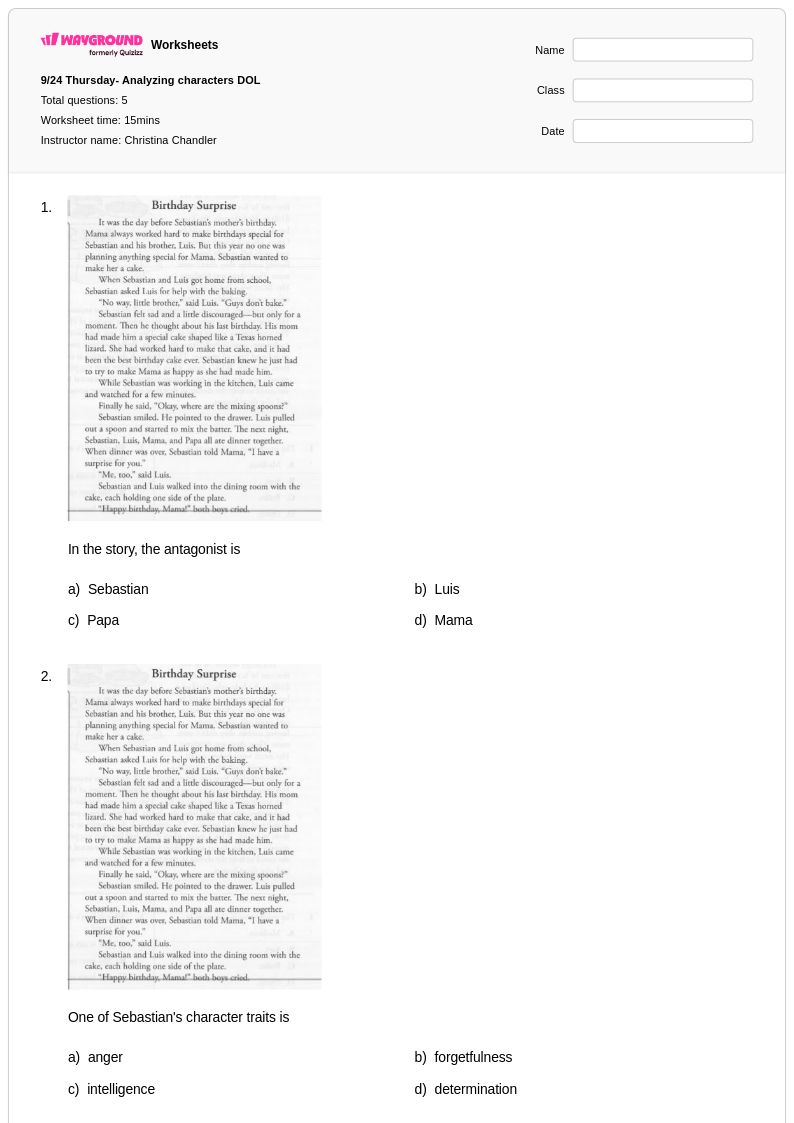
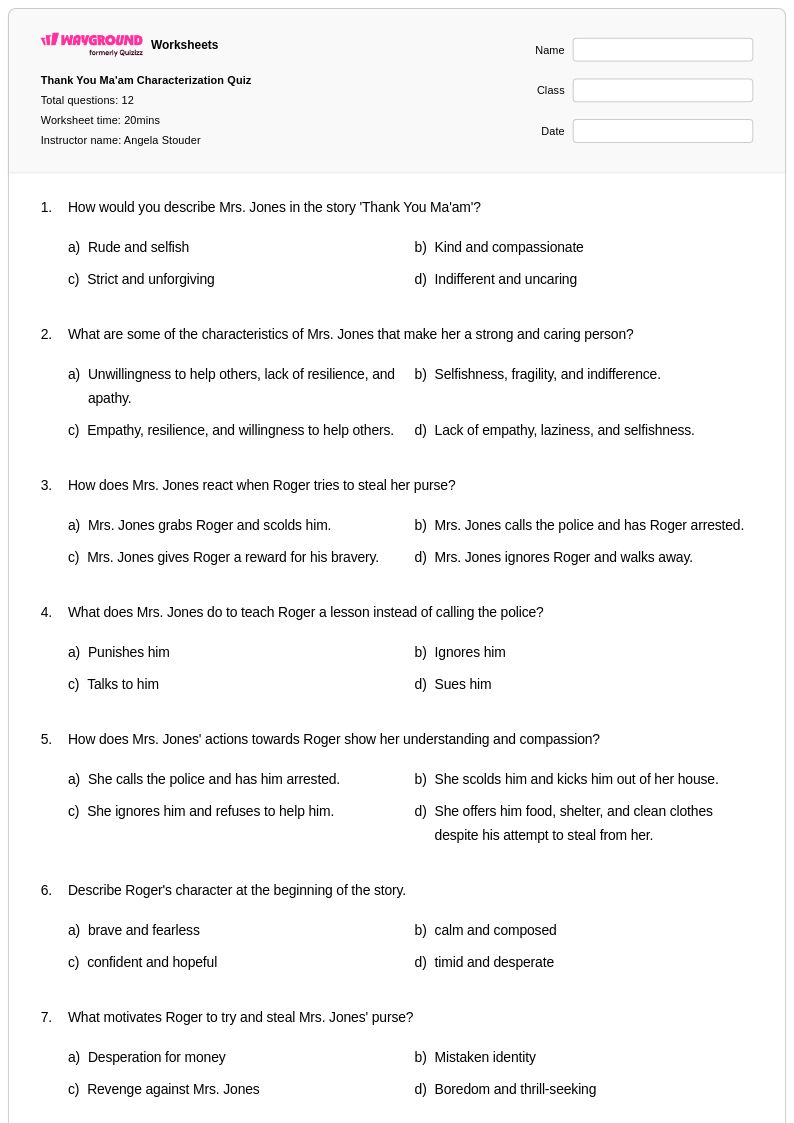
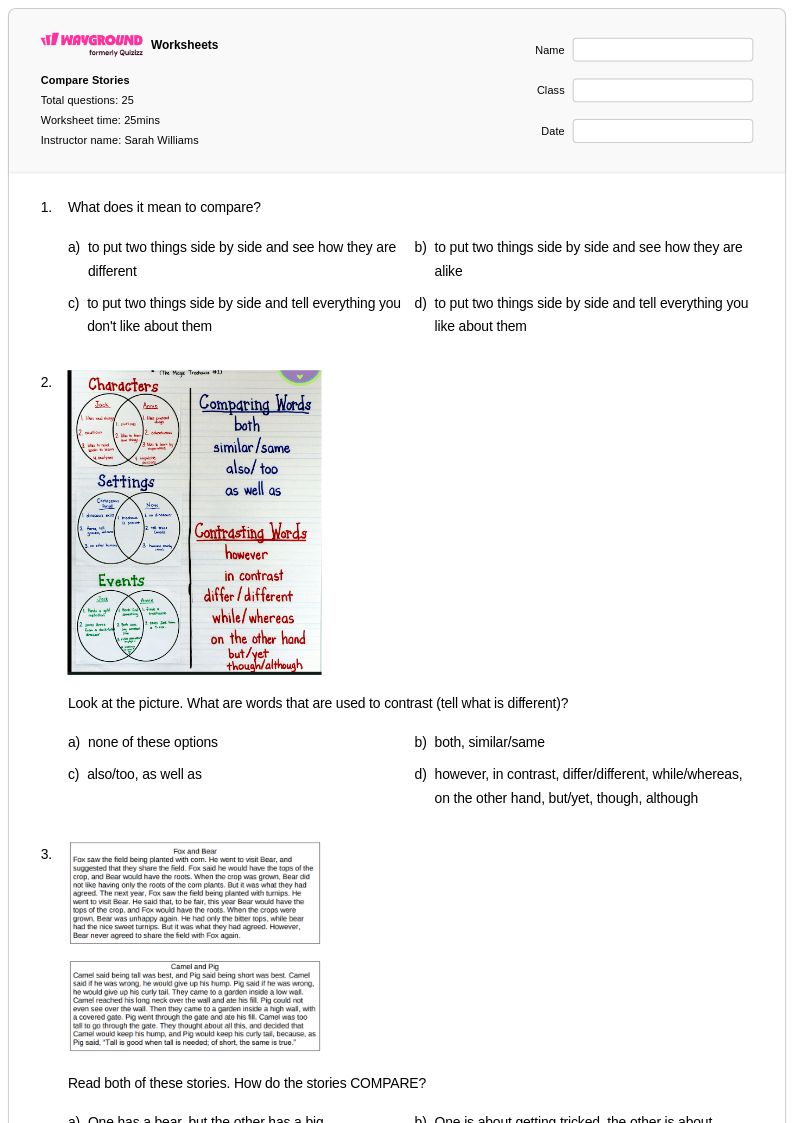
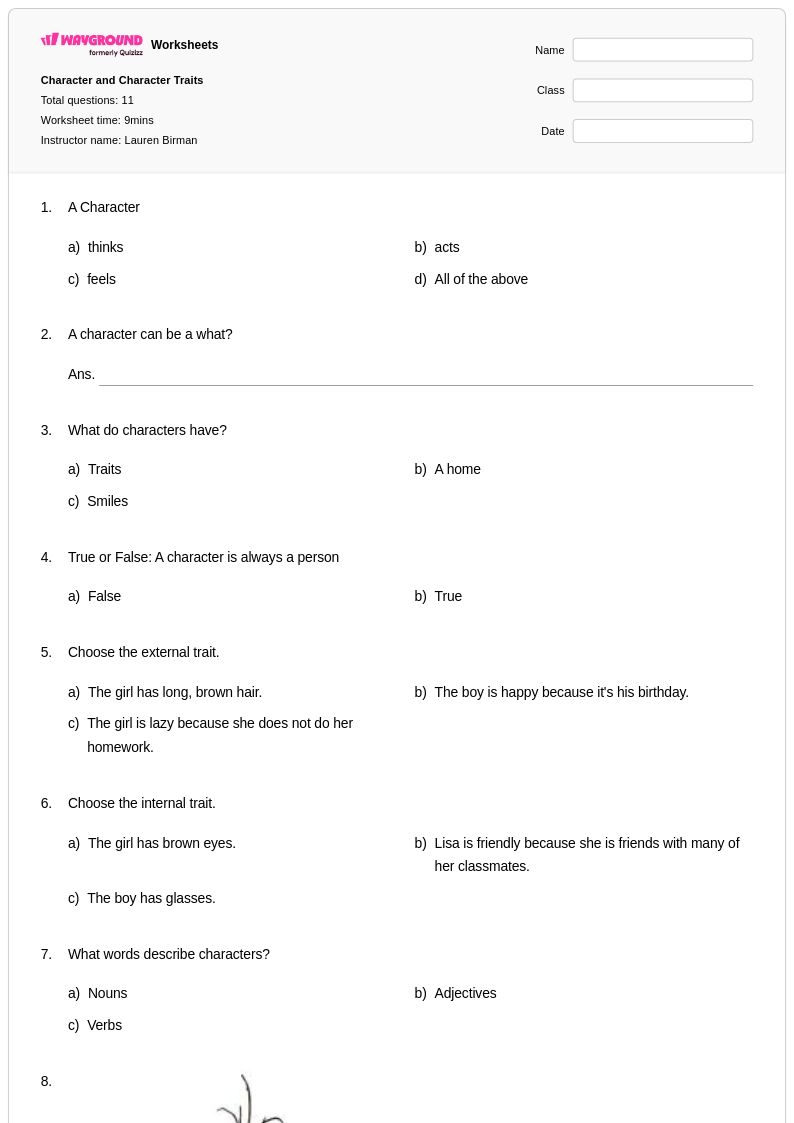
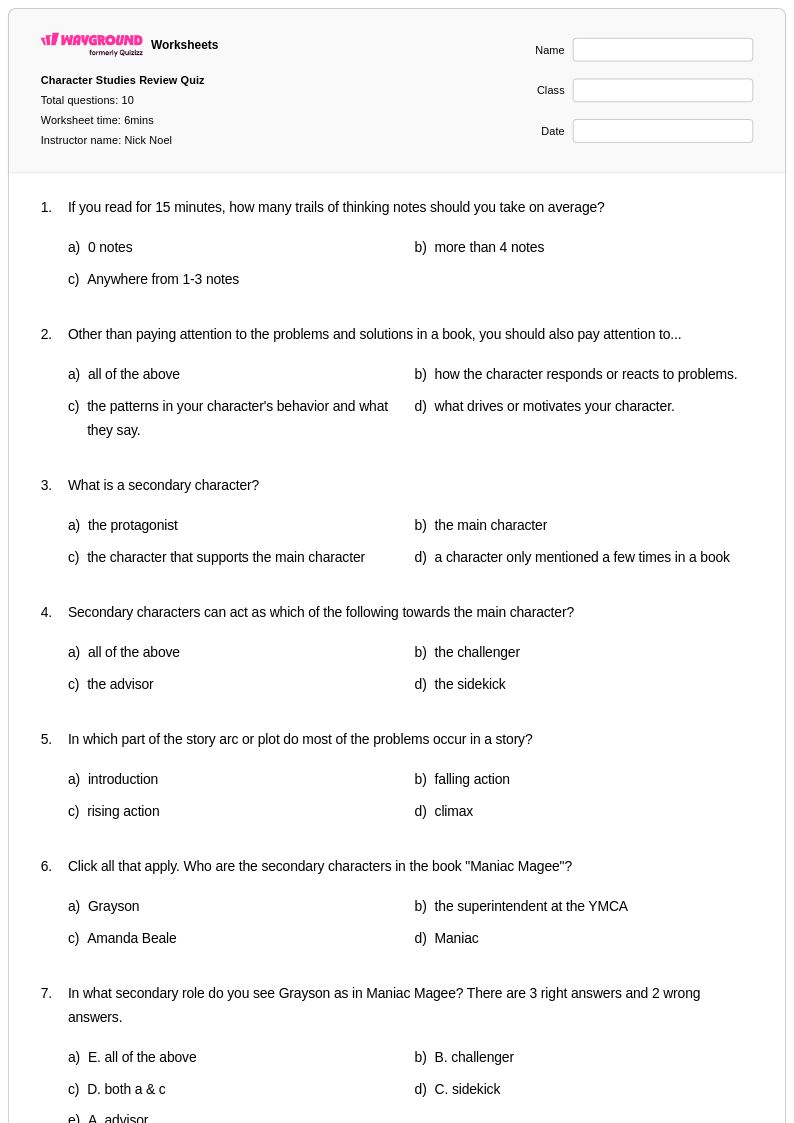
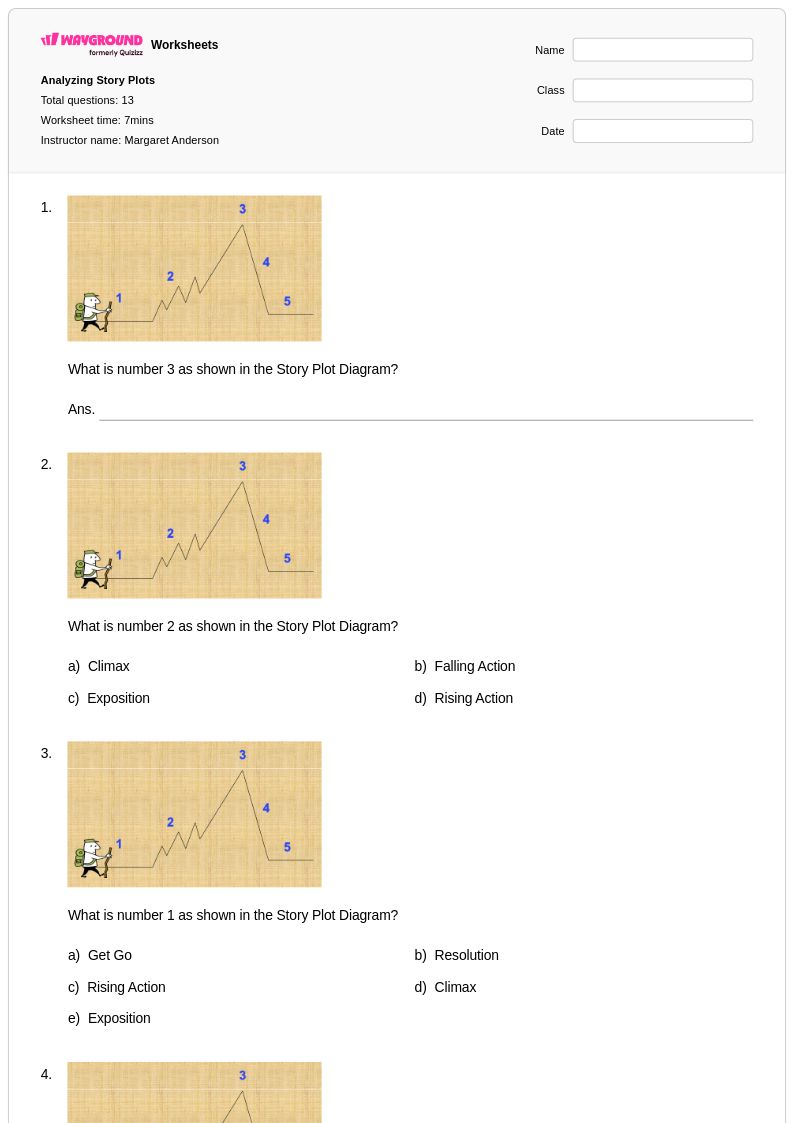
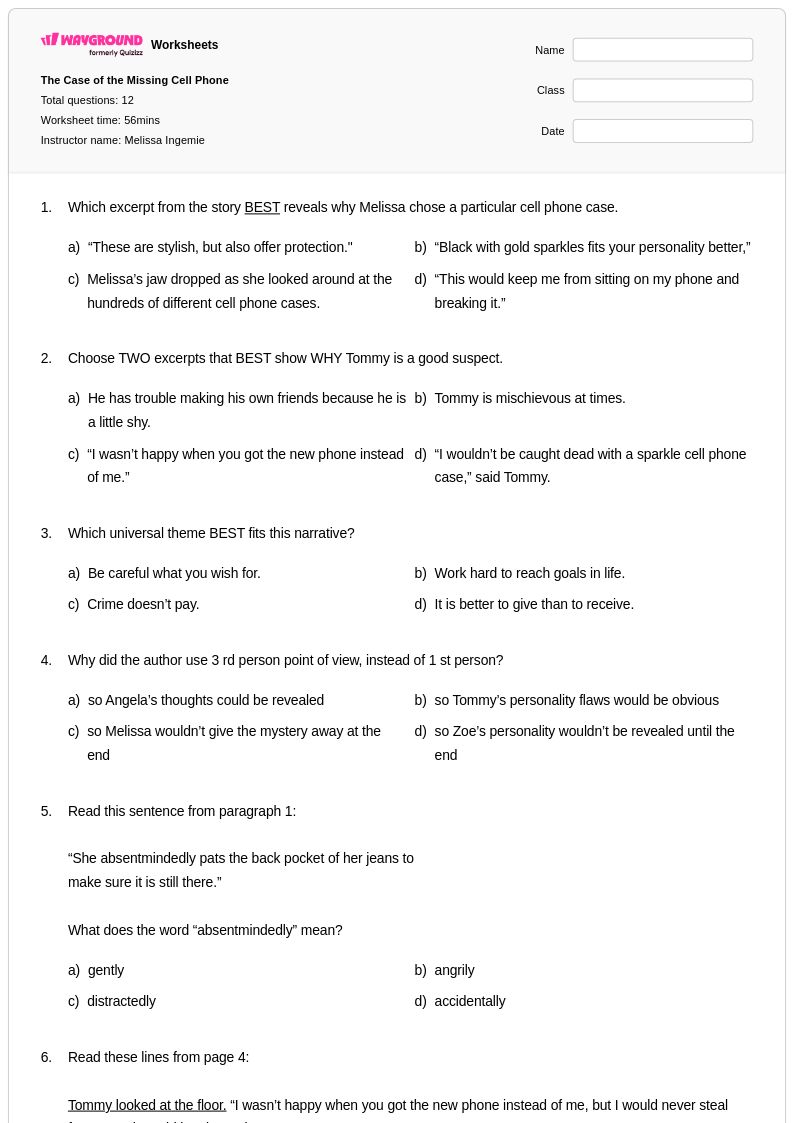
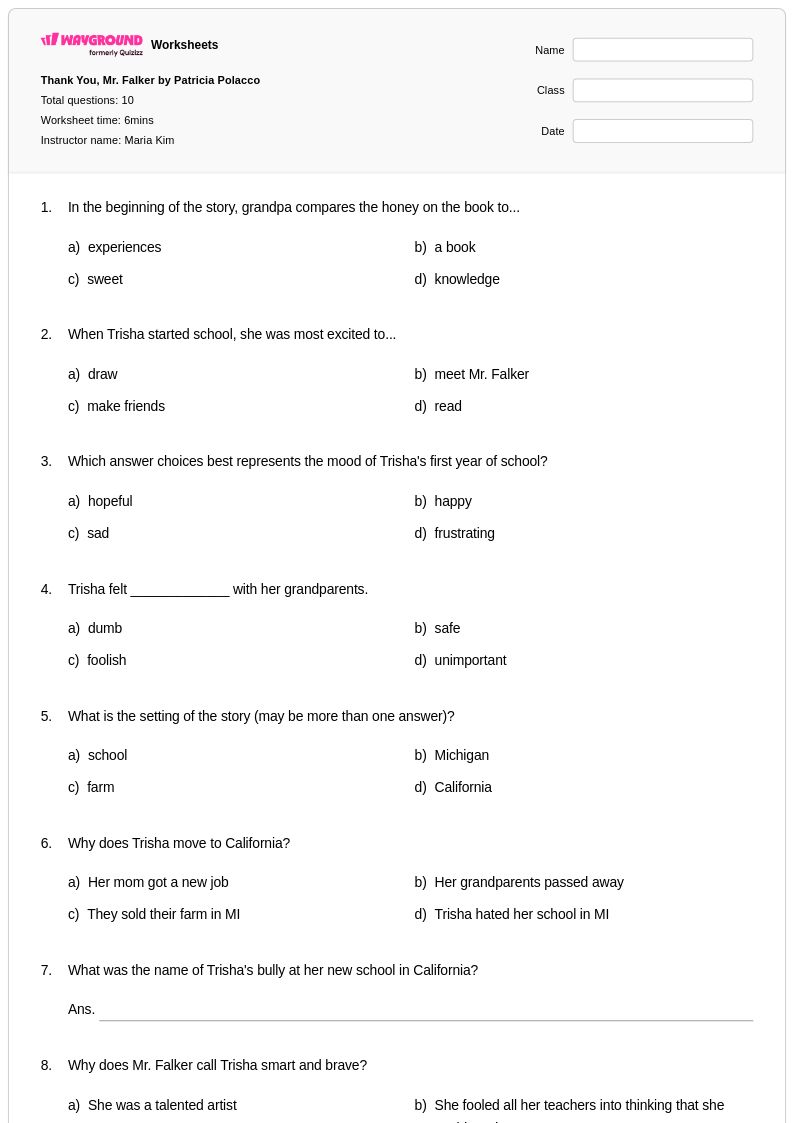
Analyzing character worksheets for Class 5 students available through Wayground (formerly Quizizz) provide comprehensive resources designed to strengthen students' ability to examine and understand character development in literary texts. These carefully crafted materials guide fifth-grade learners through the essential skills of identifying character traits, motivations, and changes throughout a story's progression. The worksheets feature engaging practice problems that challenge students to support their character analyses with textual evidence, while accompanying answer keys ensure educators can provide immediate feedback and assessment. Available as free printables in convenient pdf format, these resources help students master the critical reading skill of character analysis that forms the foundation for deeper literary comprehension and interpretation.
Wayground (formerly Quizizz) empowers educators with an extensive collection of millions of teacher-created character analysis worksheets specifically tailored for Class 5 instruction. The platform's robust search and filtering capabilities allow teachers to quickly locate materials aligned with specific learning standards and differentiate instruction based on individual student needs. These versatile resources are available in both printable and digital formats, including downloadable pdfs, enabling seamless integration into various classroom environments and teaching styles. The flexible customization tools support teachers in adapting worksheets for targeted skill practice, remediation for struggling readers, and enrichment opportunities for advanced students, making lesson planning more efficient while ensuring all learners can develop strong character analysis capabilities essential for academic success.
FAQs
How do I teach character analysis to students who struggle with literary evidence?
Teach character analysis by grounding every claim in textual evidence from the start. Show students the difference between direct characterization, where the author states traits explicitly, and indirect characterization, where traits are revealed through dialogue, actions, and interactions with other characters. Scaffolded practice that asks students to locate a specific quote and then explain what it reveals about the character helps bridge the gap between surface reading and analytical thinking.
What exercises help students practice tracking character development across a story?
Character arc mapping exercises are particularly effective, asking students to chart a character's traits, motivations, and emotional state at key points in the narrative and then explain what caused each shift. Comparative analysis tasks, where students contrast a character at the beginning and end of a story and cite specific evidence for each claim, push students toward more sophisticated synthesis. These practice structures mirror the analytical writing students will be expected to produce in assessments.
What mistakes do students commonly make when analyzing character motivations?
The most common error is confusing what a character does with why they do it, treating actions as motivations rather than evidence of motivation. Students also frequently rely on personal opinion or inference without anchoring their reasoning in textual support. A related misconception is treating motivation as static, when authors often deliberately shift or complicate a character's goals across a narrative to drive plot and theme.
How can I differentiate character analysis instruction for struggling and advanced readers in the same class?
For struggling readers, start with exercises focused on basic character identification and direct characterization before introducing indirect evidence. Advanced learners benefit from comparative analyses that ask them to examine how two characters' contrasting motivations reflect broader thematic tensions in the text. On Wayground, teachers can apply accommodations such as read aloud support and reduced answer choices for individual students, while the rest of the class works through standard settings, allowing differentiation without drawing attention to specific learners.
How do I use Wayground's analyzing character worksheets in my classroom?
Wayground's analyzing character worksheets are available as printable PDFs for traditional classroom use and in digital formats for technology-integrated learning environments, including the option to host them as a quiz directly on Wayground. Each worksheet includes a comprehensive answer key, supporting both teacher-led instruction and independent student practice. The digital format is especially useful for assigning character analysis tasks as homework or for use in blended or remote learning settings.
How do authors reveal character traits indirectly, and how do I teach students to recognize this?
Authors use indirect characterization through a character's dialogue, choices, reactions, relationships, and physical descriptions to imply traits without stating them outright. Teaching students to ask 'What does this action or line of dialogue tell us about who this character is?' builds the interpretive habit needed for literary analysis. Practice problems that isolate a single passage and ask students to identify what it reveals, and how they know, are among the most effective tools for building this skill.