
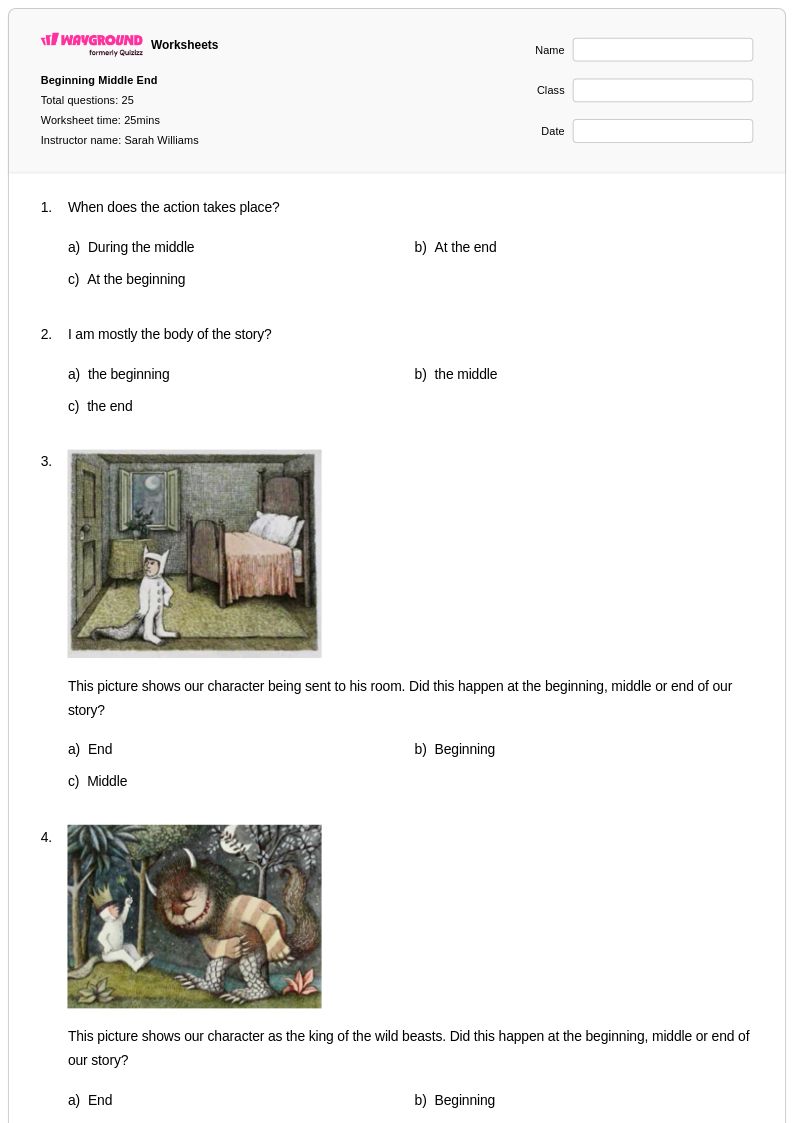
25 Q
3rd - Uni
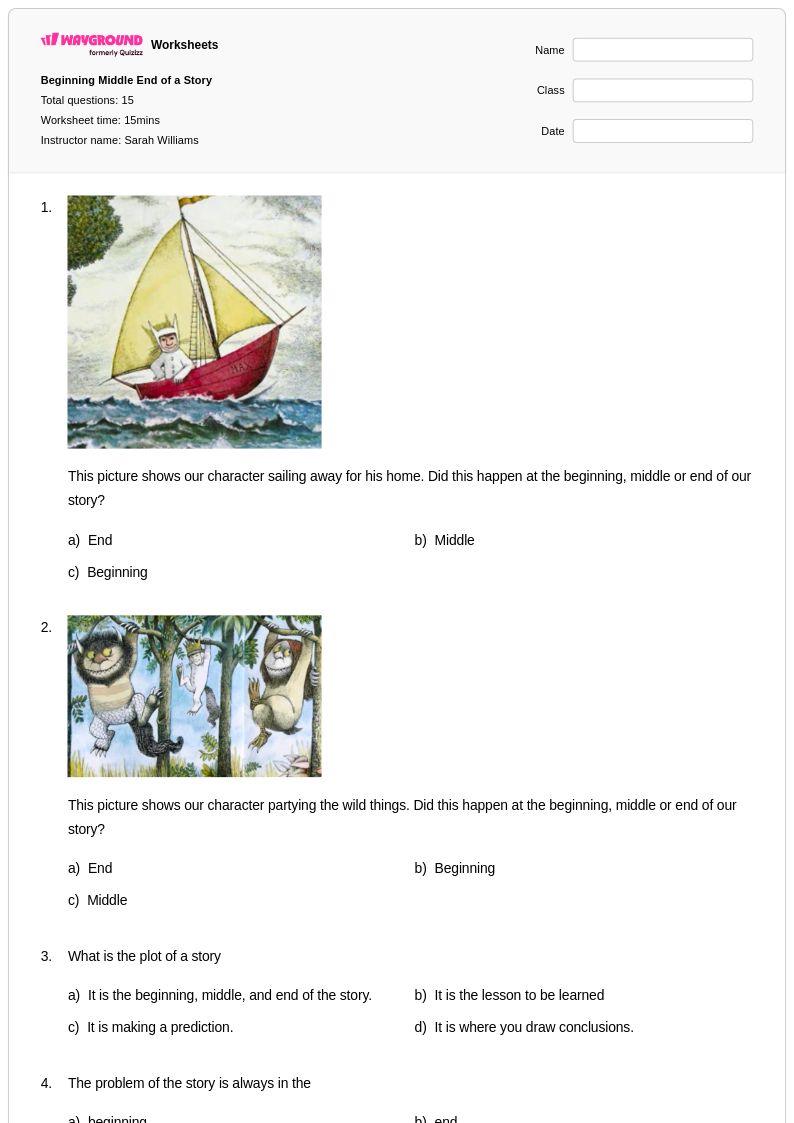
15 Q
2nd - Uni
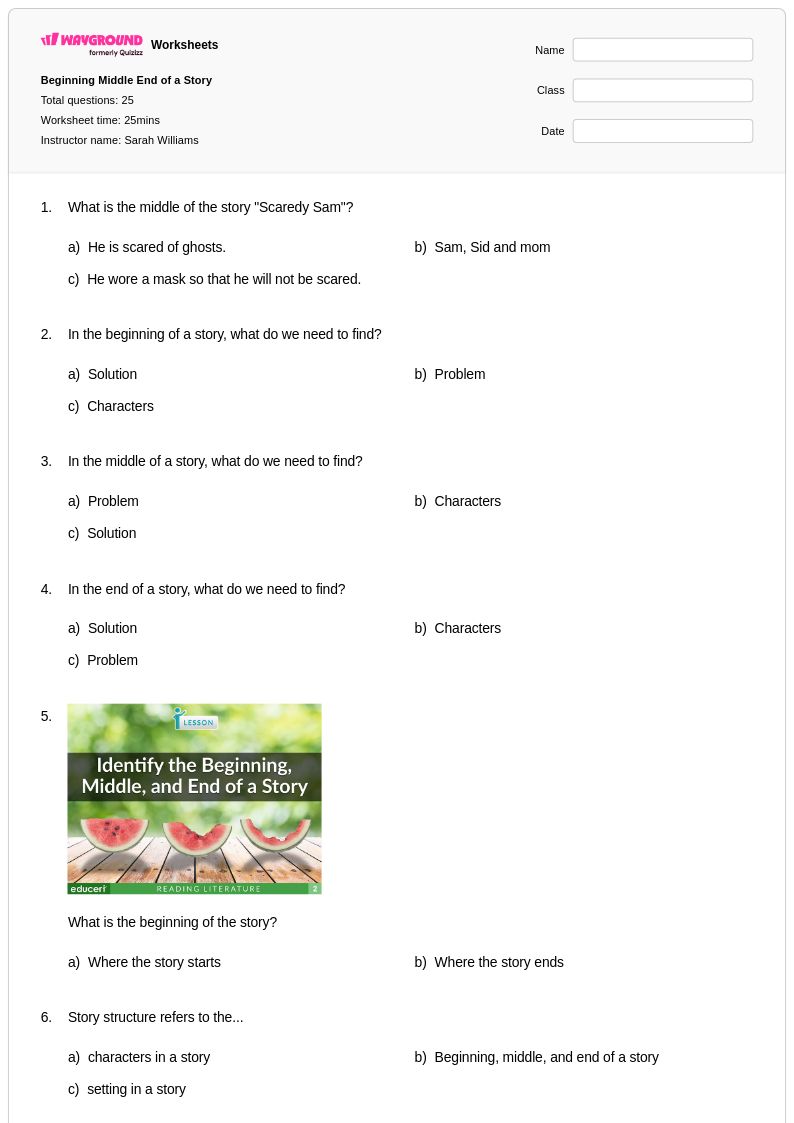
25 Q
2nd - Uni
10 Q
1st - 5th
15 Q
5th - Uni
15 Q
2nd - Uni
15 Q
3rd - Uni
15 Q
3rd - Uni

25 Q
3rd - Uni
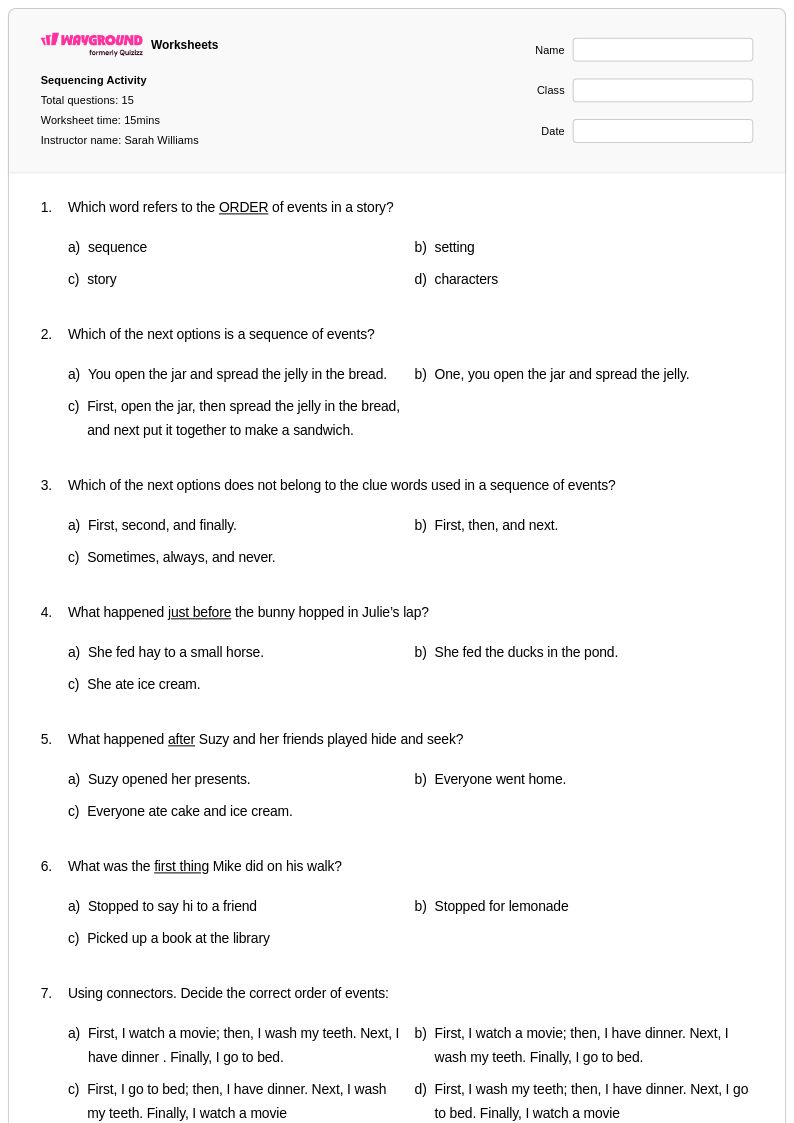
15 Q
5th - Uni
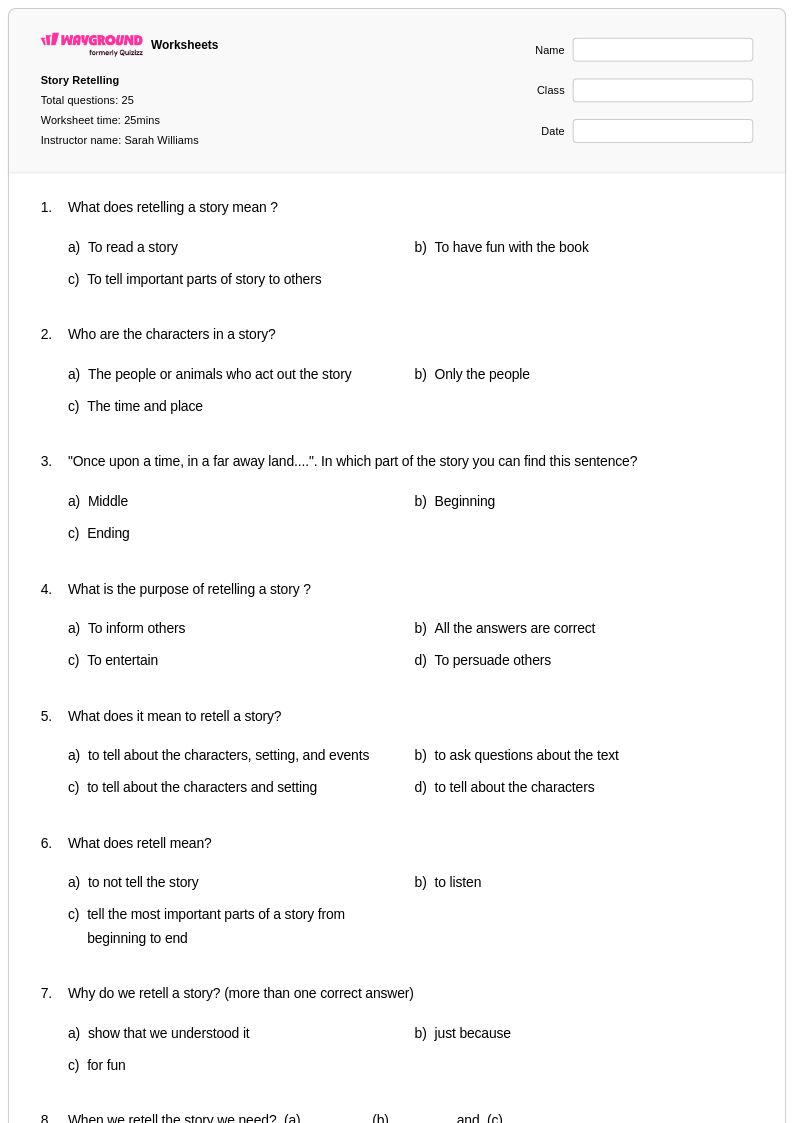
25 Q
3rd - Uni
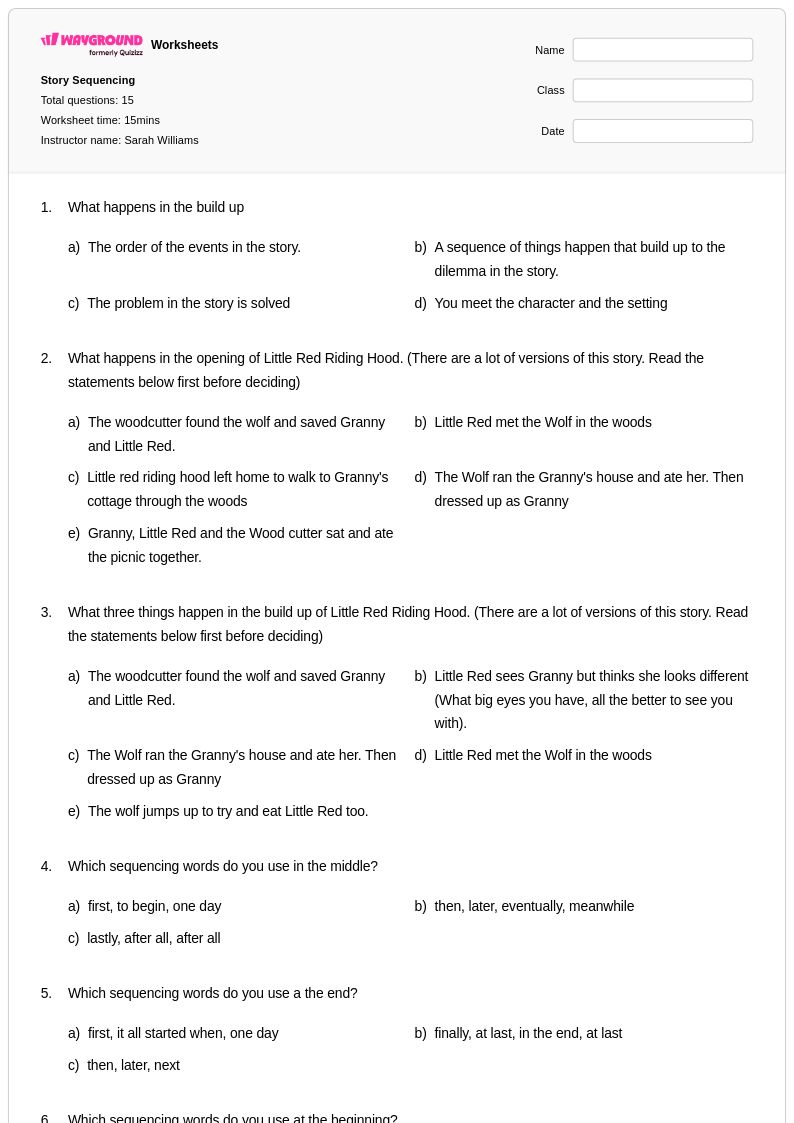
15 Q
4th - Uni
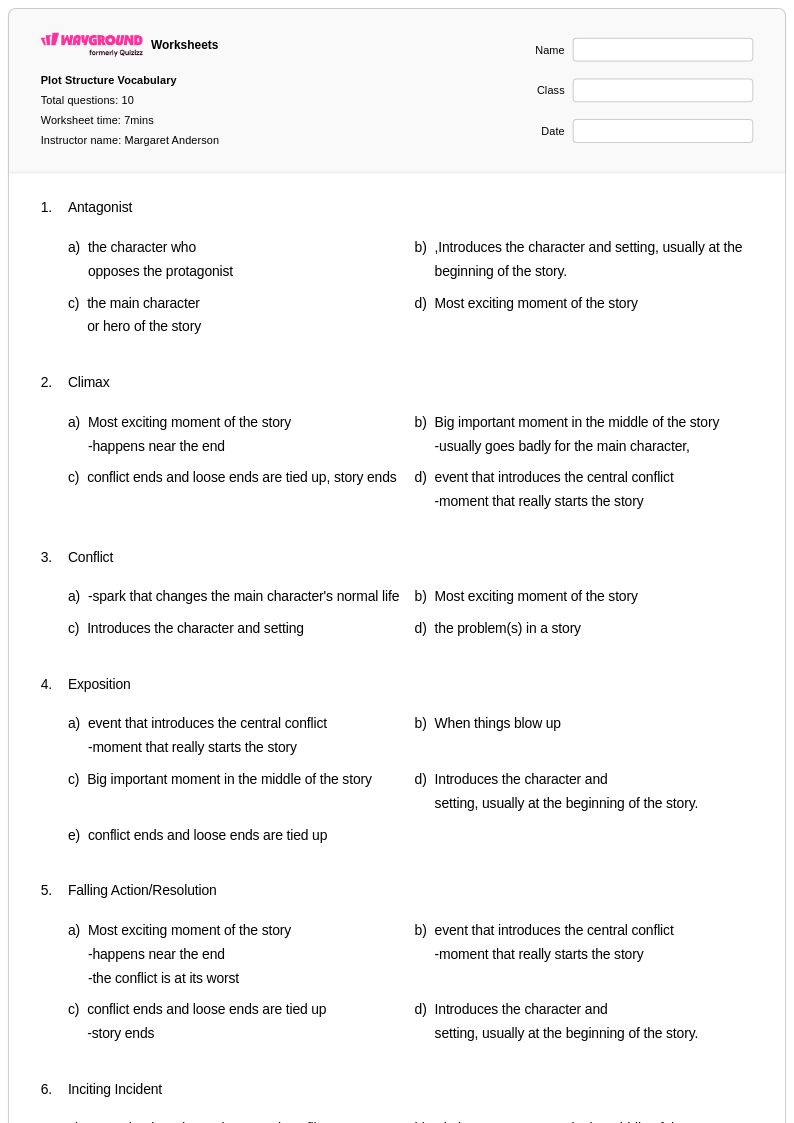
10 Q
5th - 7th
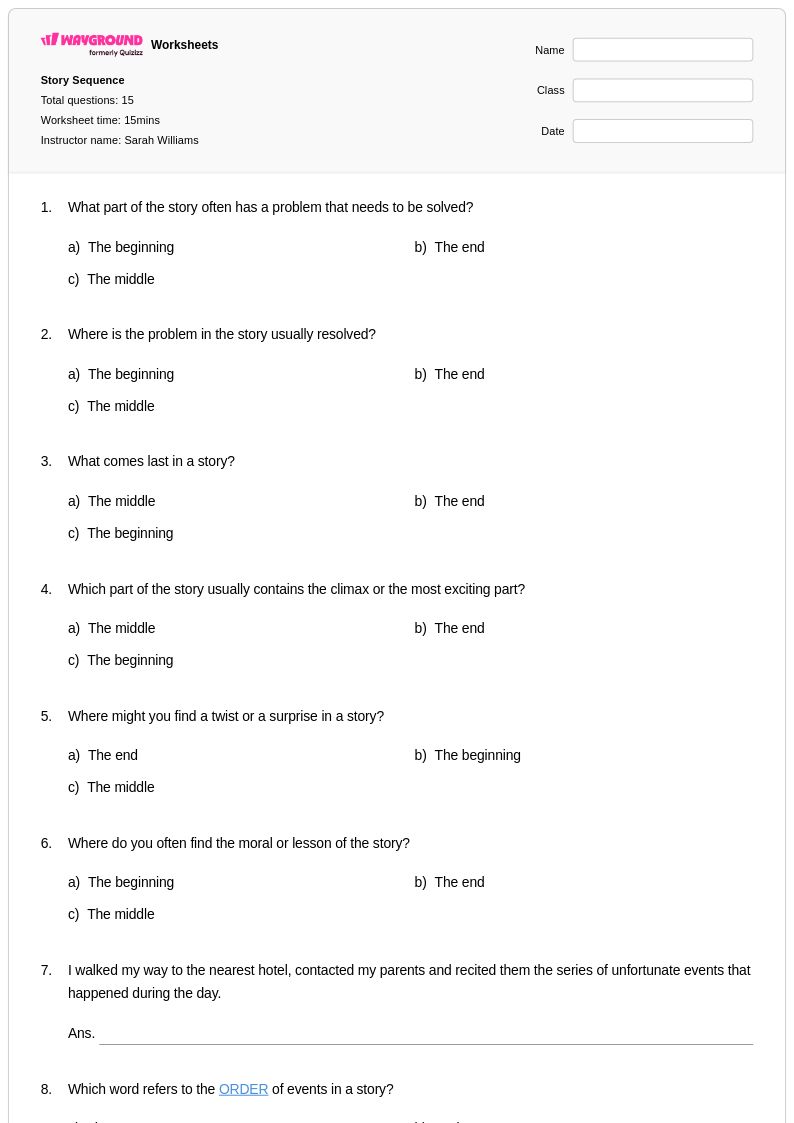
15 Q
3rd - Uni
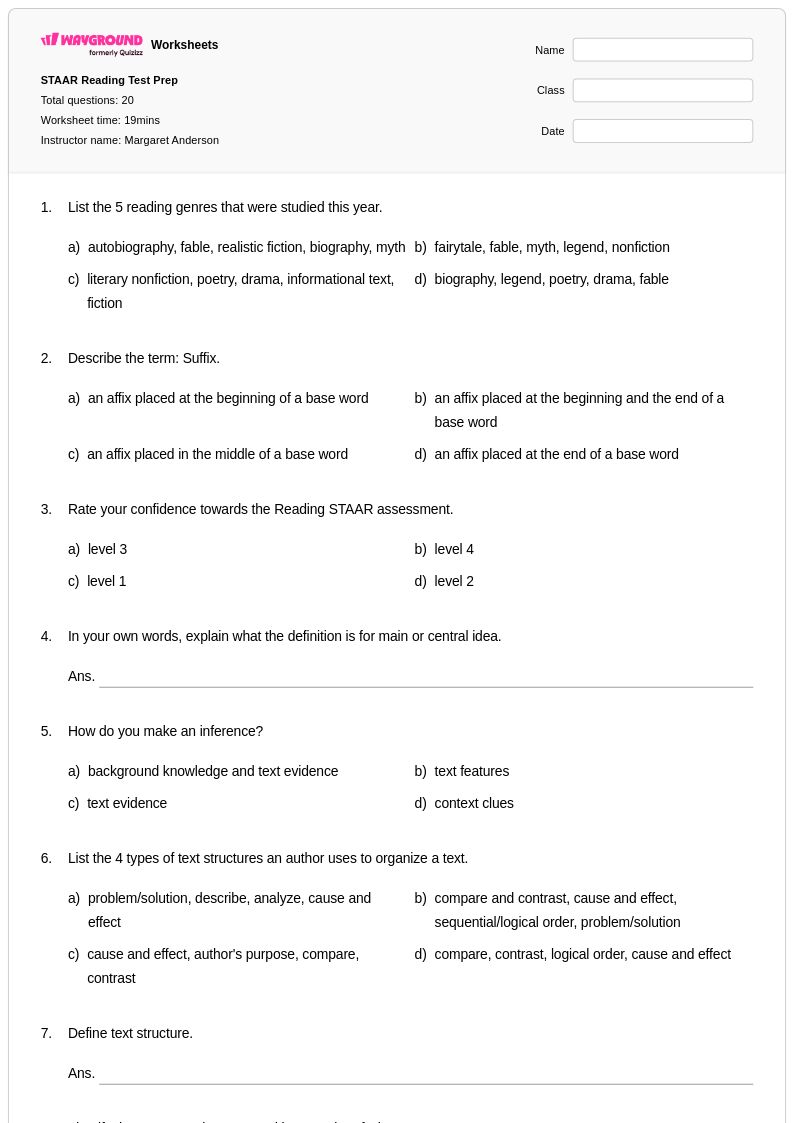
20 Q
5th
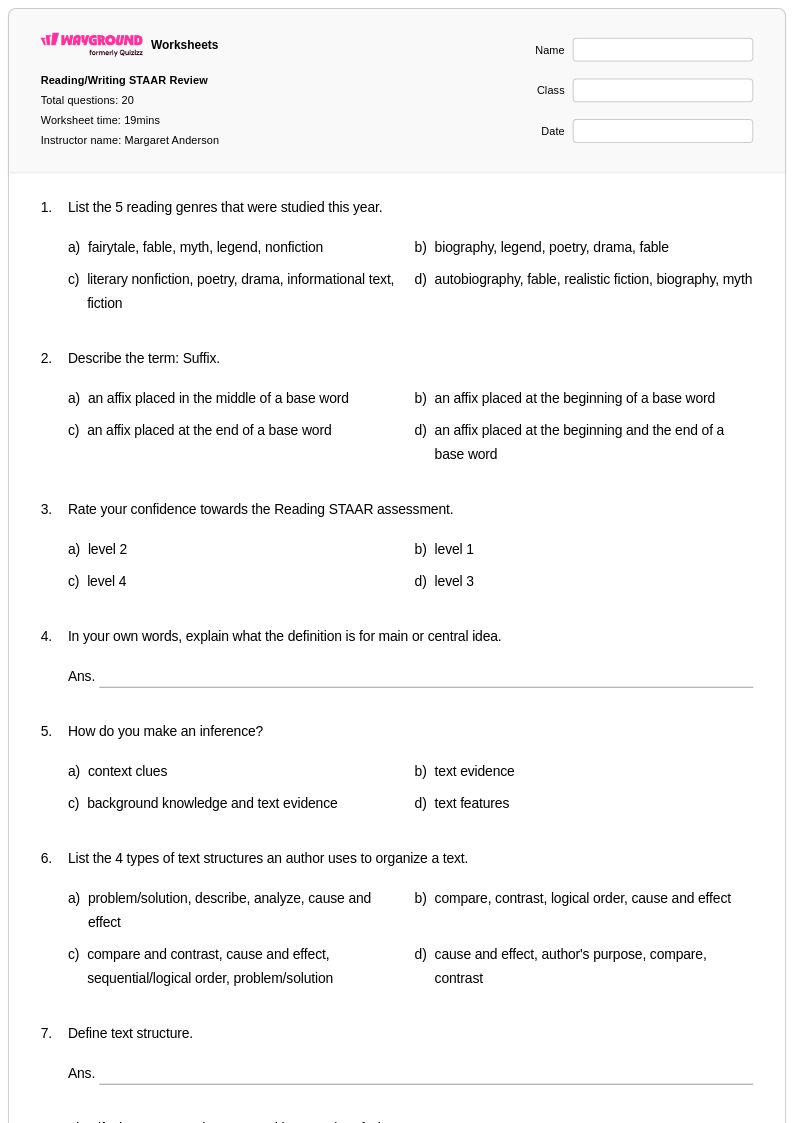
20 Q
5th
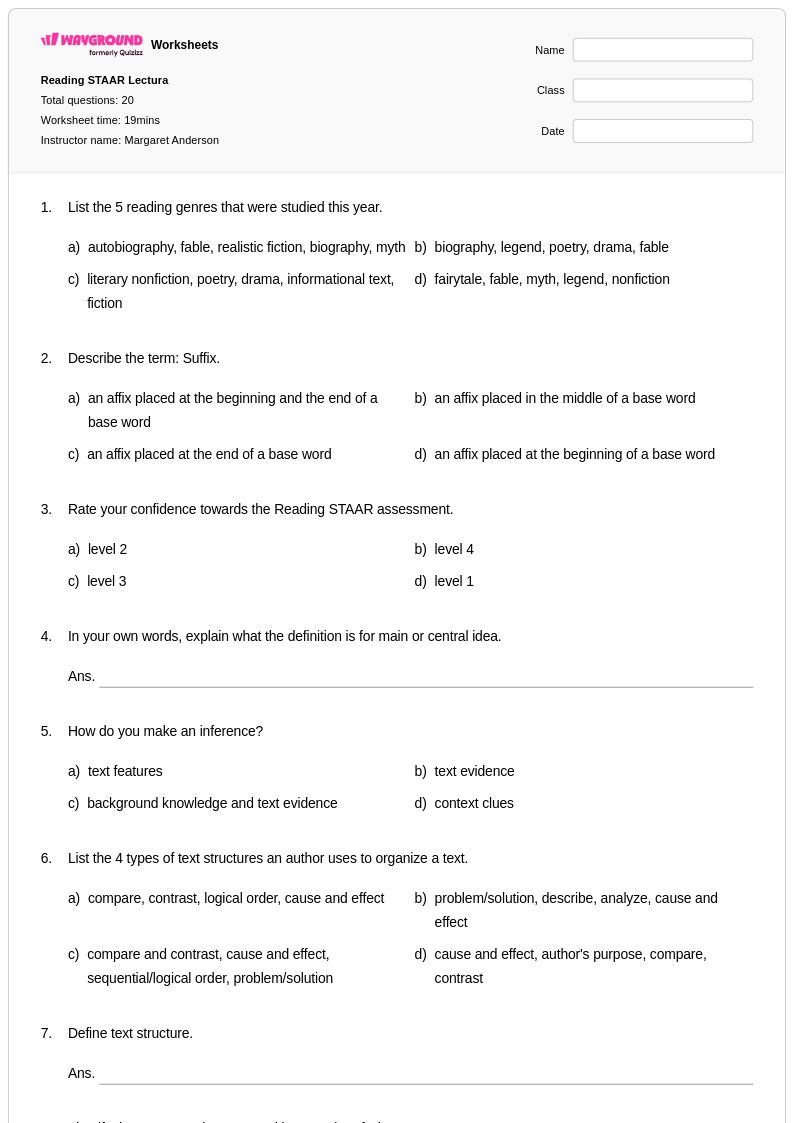
20 Q
5th
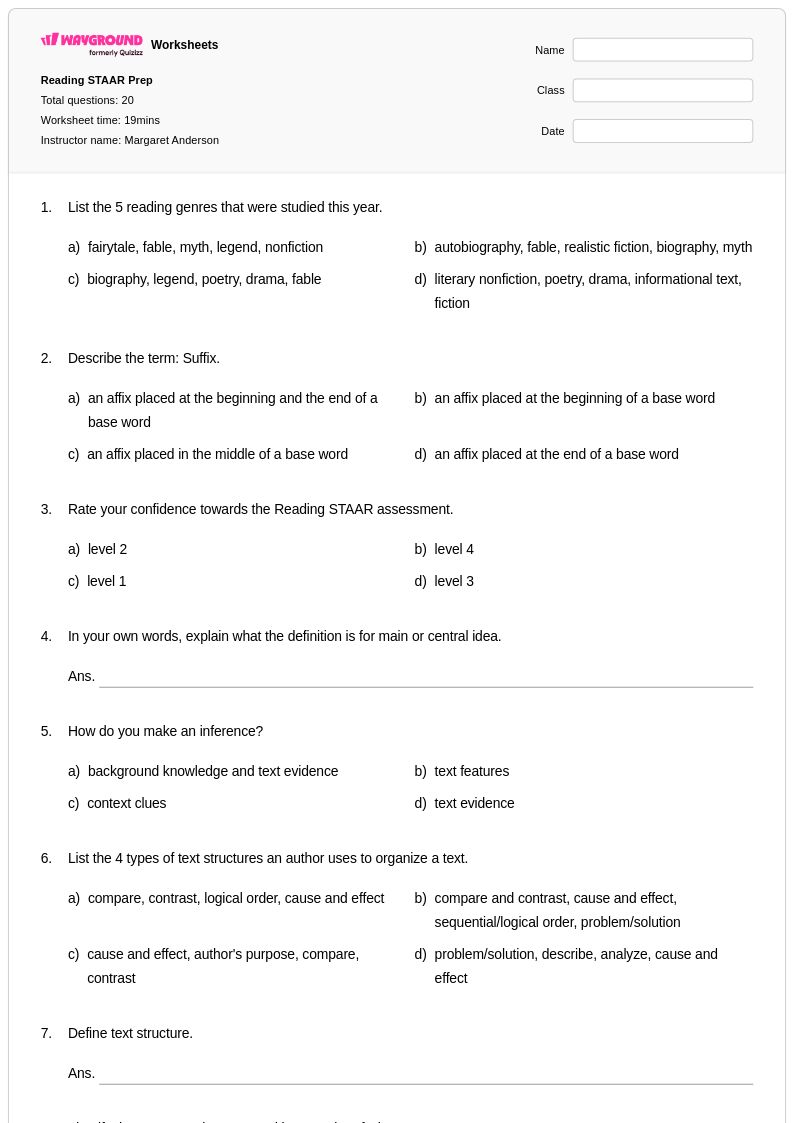
20 Q
5th
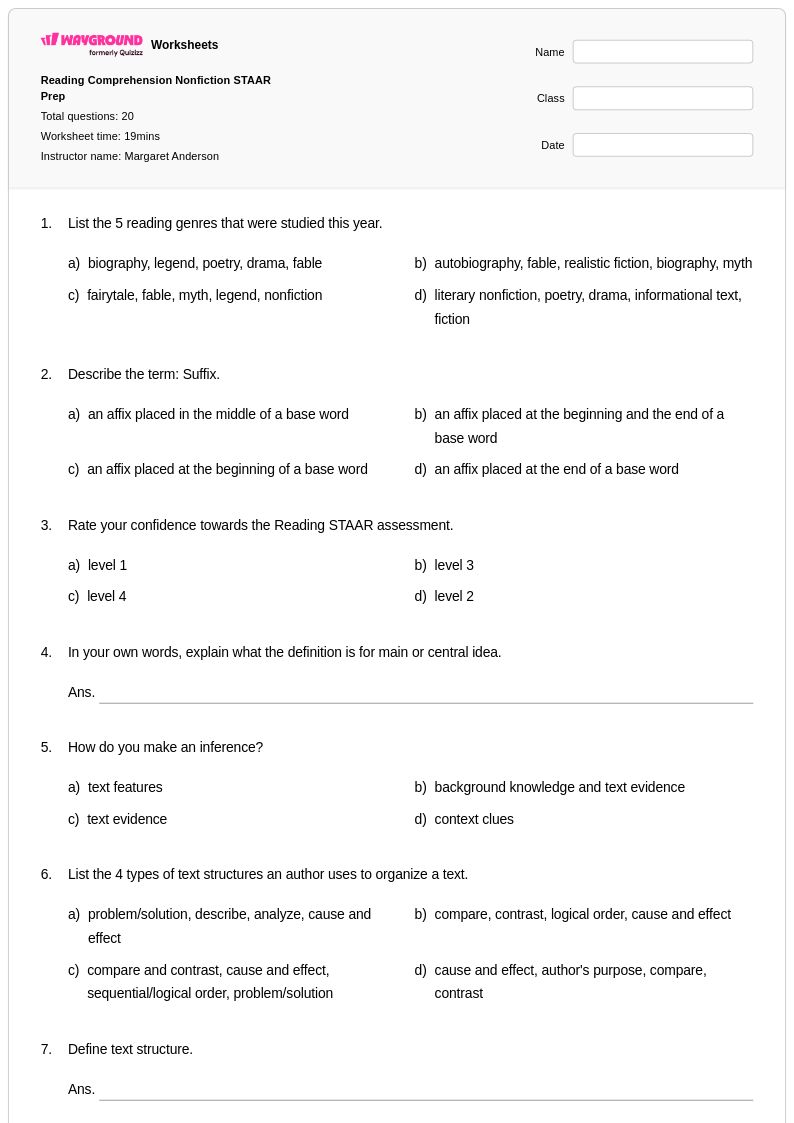
20 Q
5th
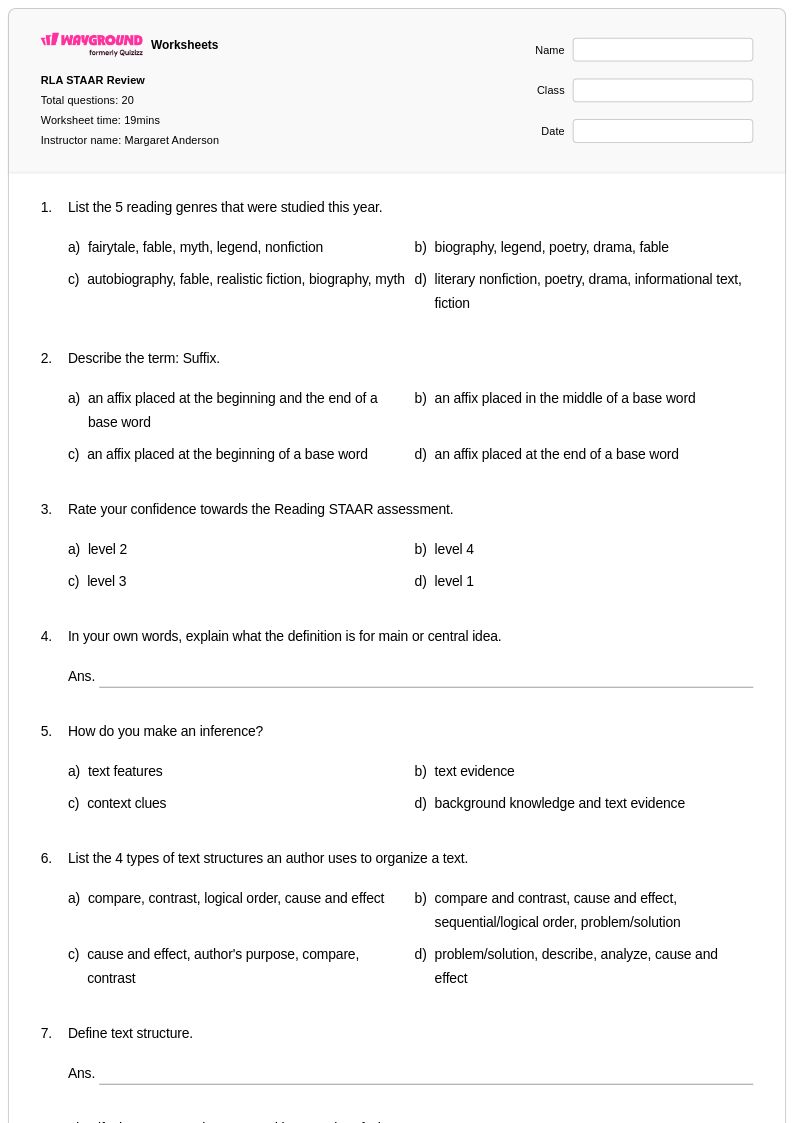
20 Q
5th
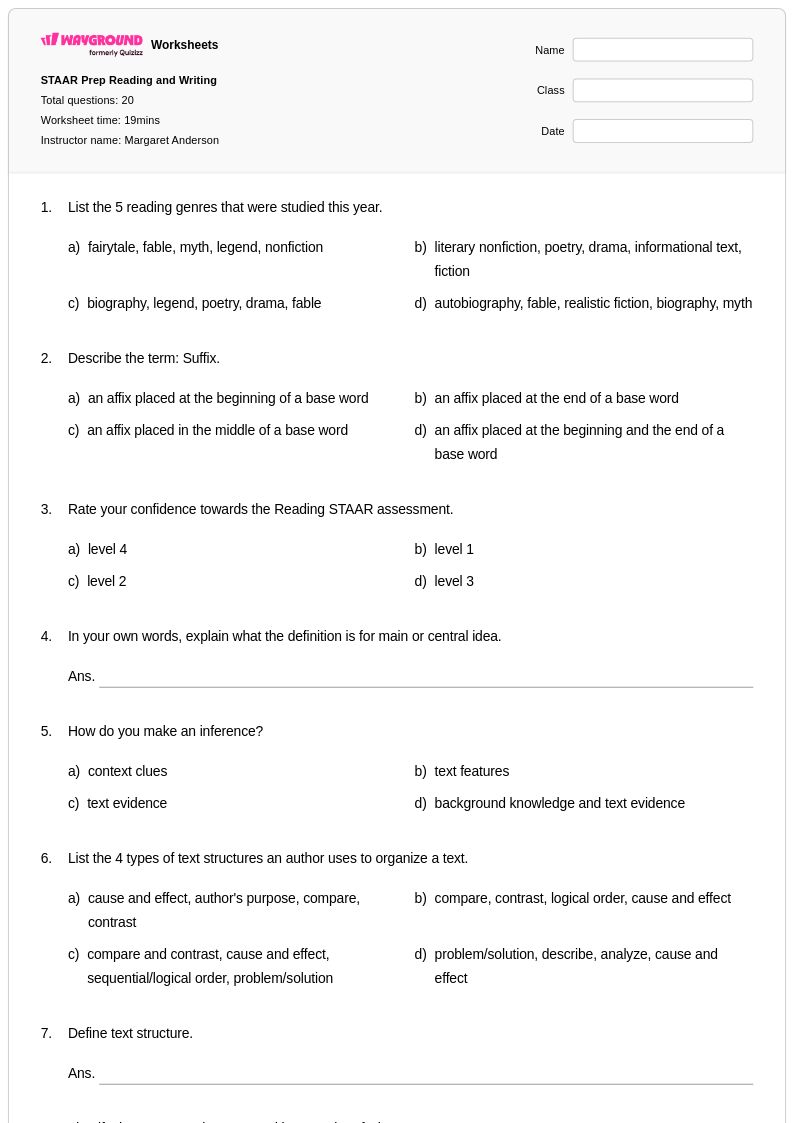
20 Q
5th
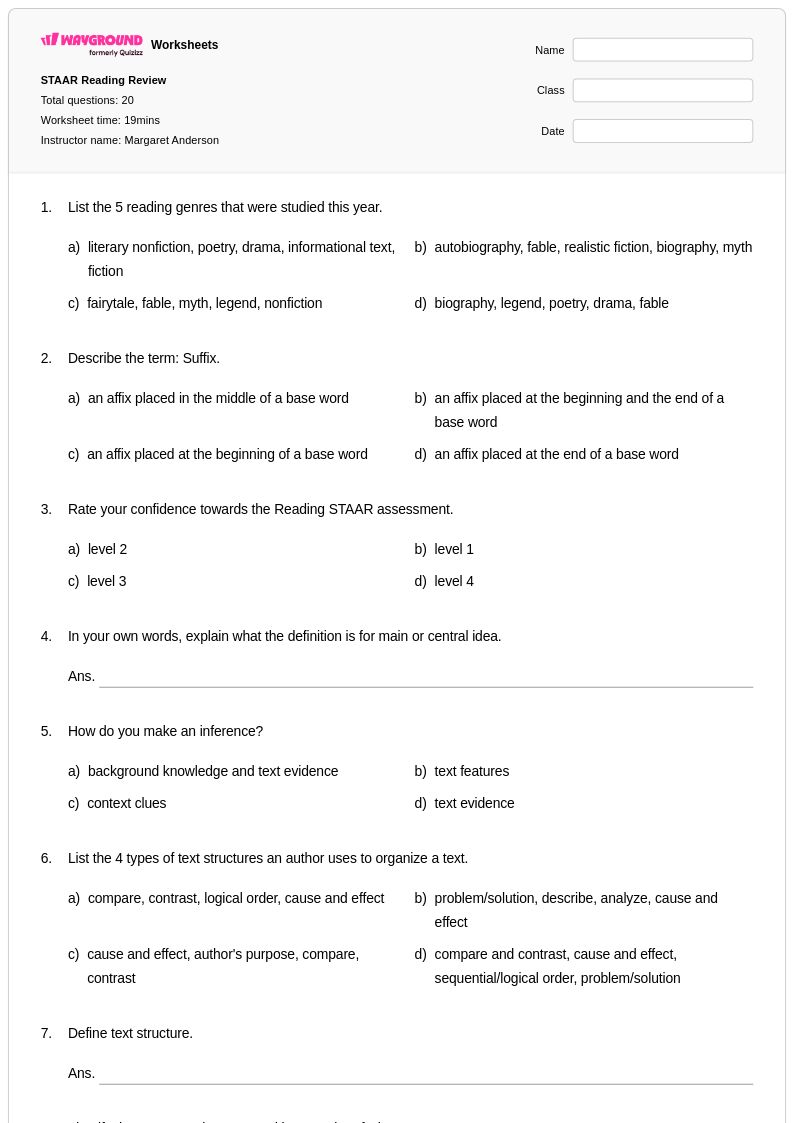
20 Q
5th
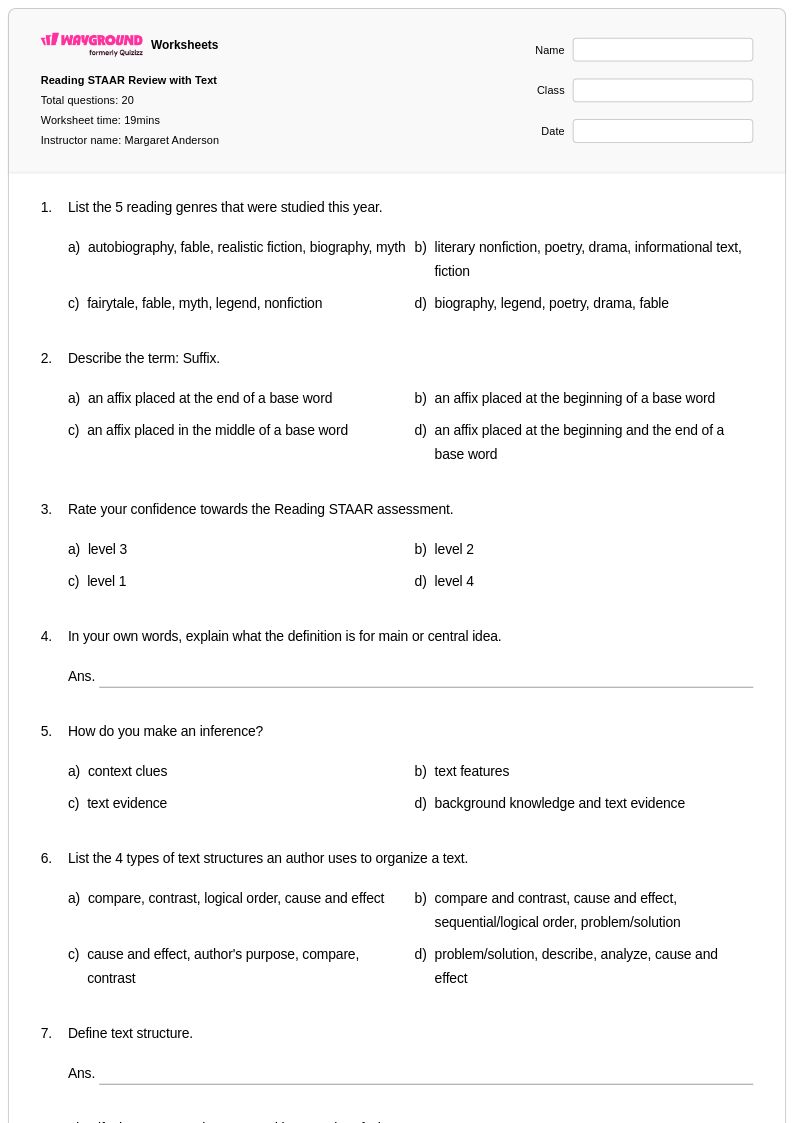
20 Q
5th
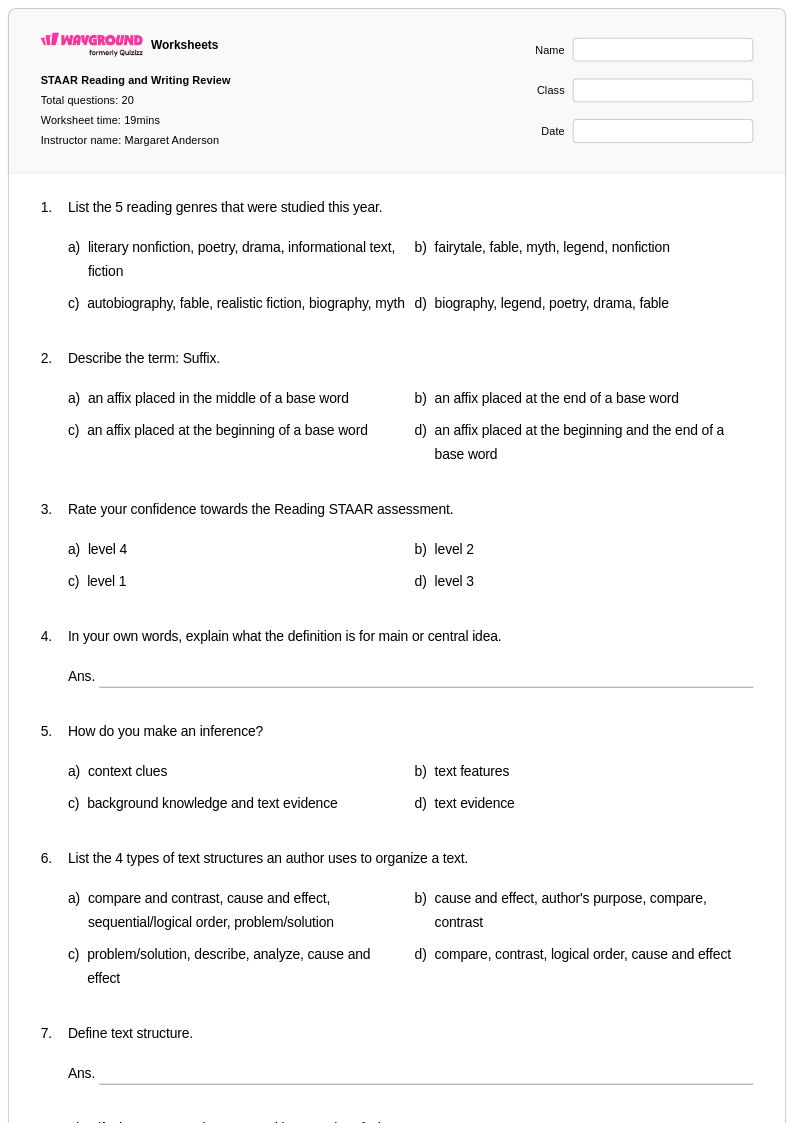
20 Q
5th
Explore Beginning, Middle, and End Worksheets by Grades
Explore Other Subject Worksheets for class 5
Explore printable Beginning, Middle, and End worksheets for Class 5
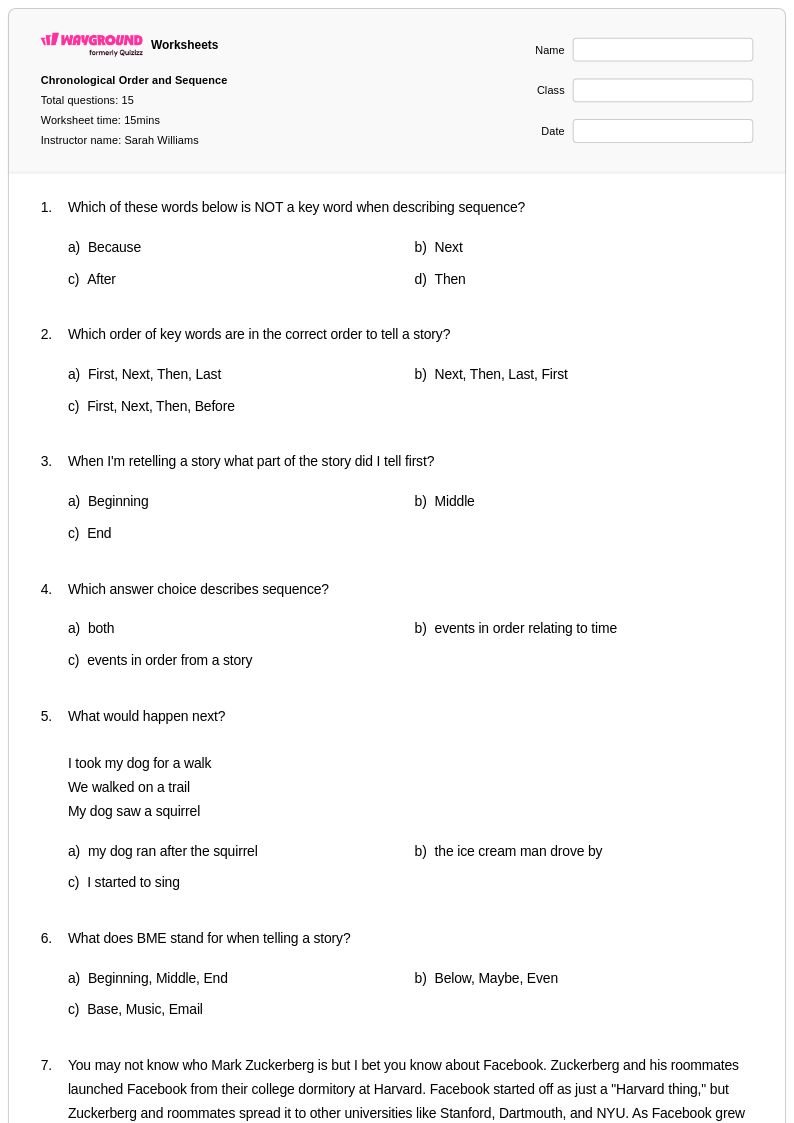
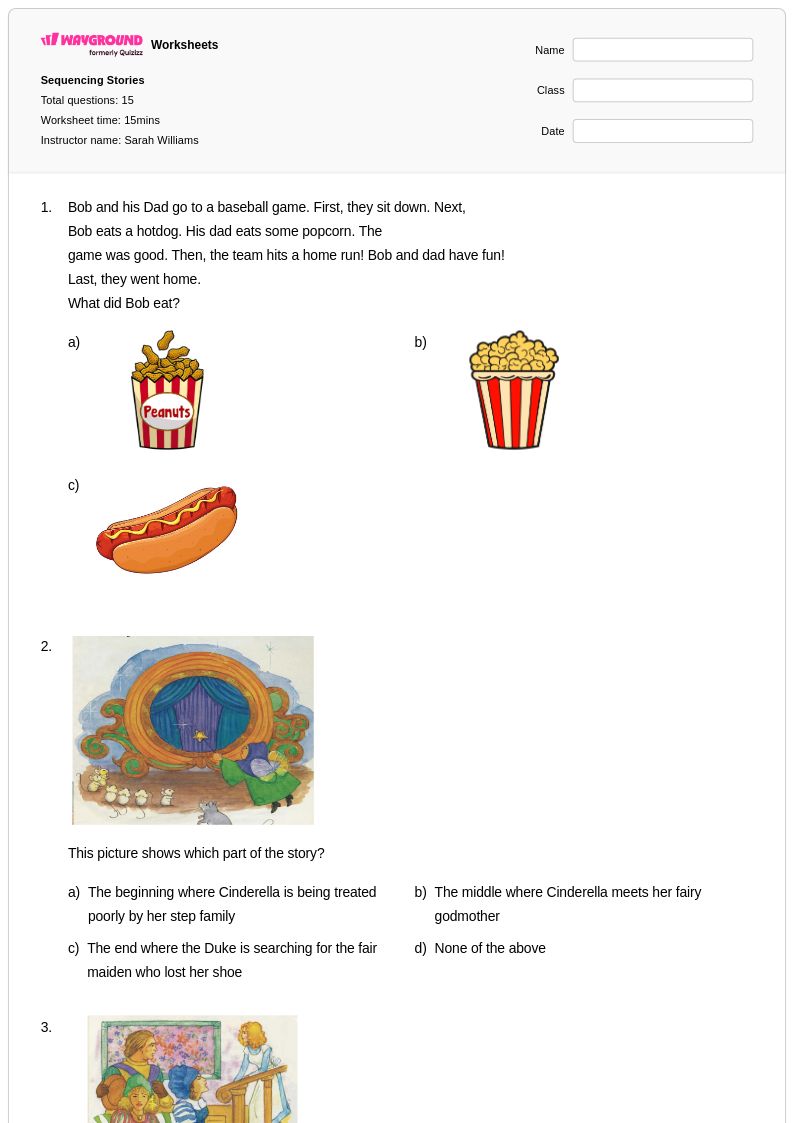
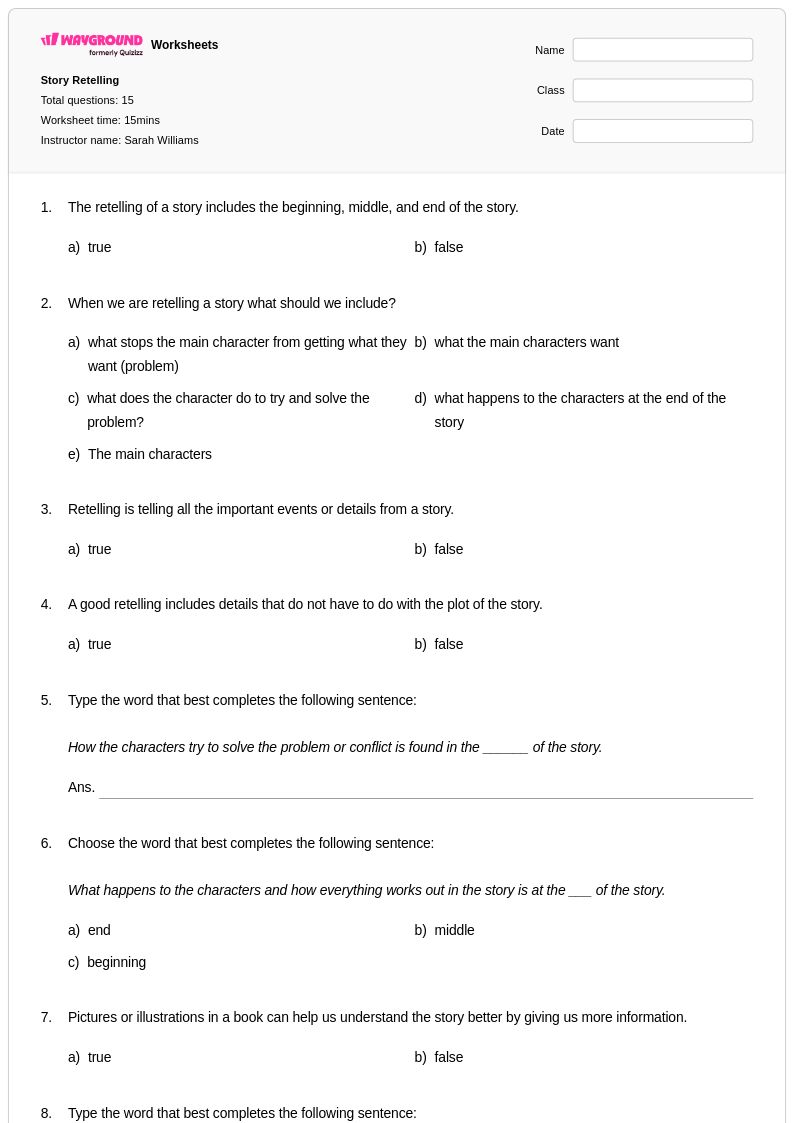
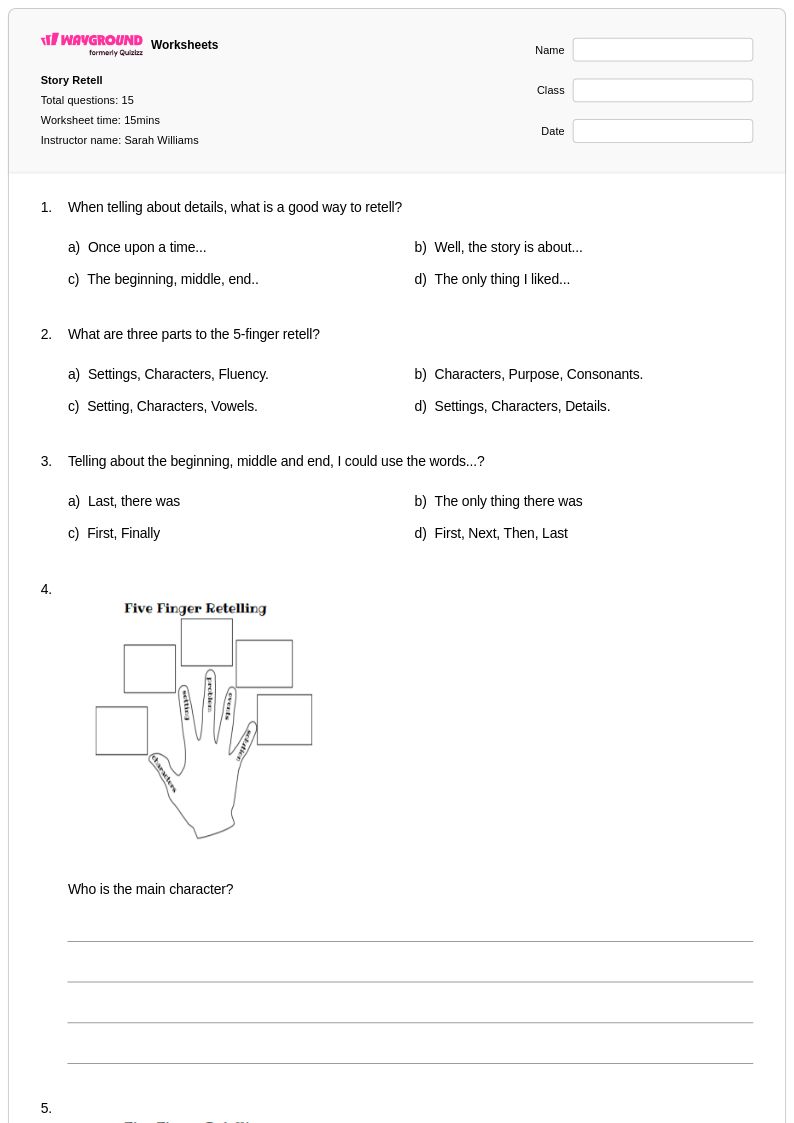
Beginning, middle, and end worksheets for Class 5 students provide essential practice in identifying and analyzing the fundamental three-part structure that forms the backbone of narrative storytelling. These comprehensive worksheets guide fifth-grade learners through recognizing exposition and character introduction in story beginnings, understanding conflict development and rising action in the middle sections, and identifying resolution and conclusion elements that bring stories to satisfying endings. Students engage with diverse texts through practice problems that strengthen their ability to map story events, sequence plot points, and understand how authors craft cohesive narratives. Each worksheet includes detailed answer keys that support both independent study and guided instruction, with free printables available in convenient PDF format for classroom and home use.
Wayground, formerly Quizizz, empowers educators with millions of teacher-created resources specifically designed to support story structure analysis instruction at the fifth-grade level. The platform's robust search and filtering capabilities allow teachers to quickly locate worksheets that align with specific standards and learning objectives, while differentiation tools enable customization for diverse student needs and reading levels. These flexible resources are available in both printable and digital PDF formats, making them ideal for traditional classroom instruction, distance learning, or hybrid educational environments. Teachers can seamlessly integrate these materials into lesson planning for initial skill introduction, targeted remediation for struggling readers, or enrichment activities for advanced students, ensuring that every fifth-grader develops strong foundational skills in recognizing and analyzing the beginning, middle, and end structure essential for reading comprehension success.
FAQs
How do I teach beginning, middle, and end to early readers?
What exercises help students practice identifying beginning, middle, and end?
What mistakes do students commonly make when identifying beginning, middle, and end?
How can I use beginning, middle, and end worksheets to support struggling readers?
How do I use Wayground's beginning, middle, and end worksheets in my classroom?