Free Printable Chemical Property Worksheets for Class 3
Explore Wayground's free Class 3 chemical property worksheets and printables that help young scientists learn to identify and understand how materials change through engaging practice problems with complete answer keys.
Explore printable Chemical Property worksheets for Class 3
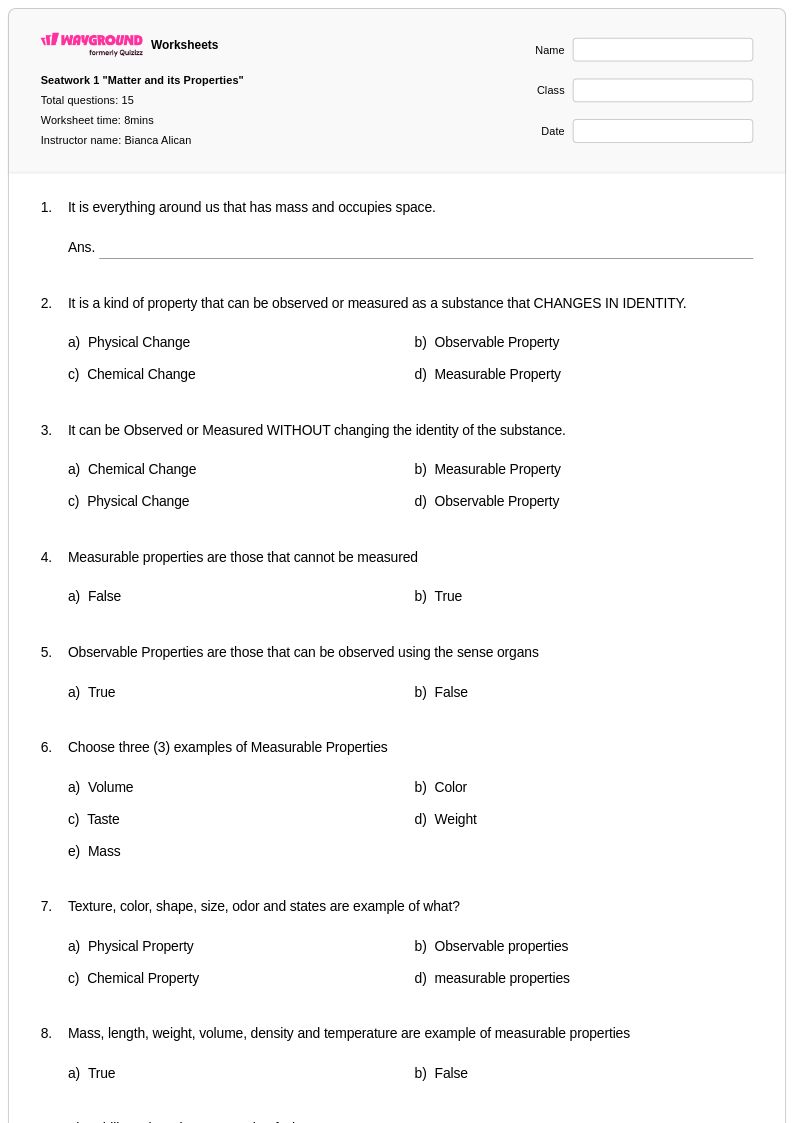
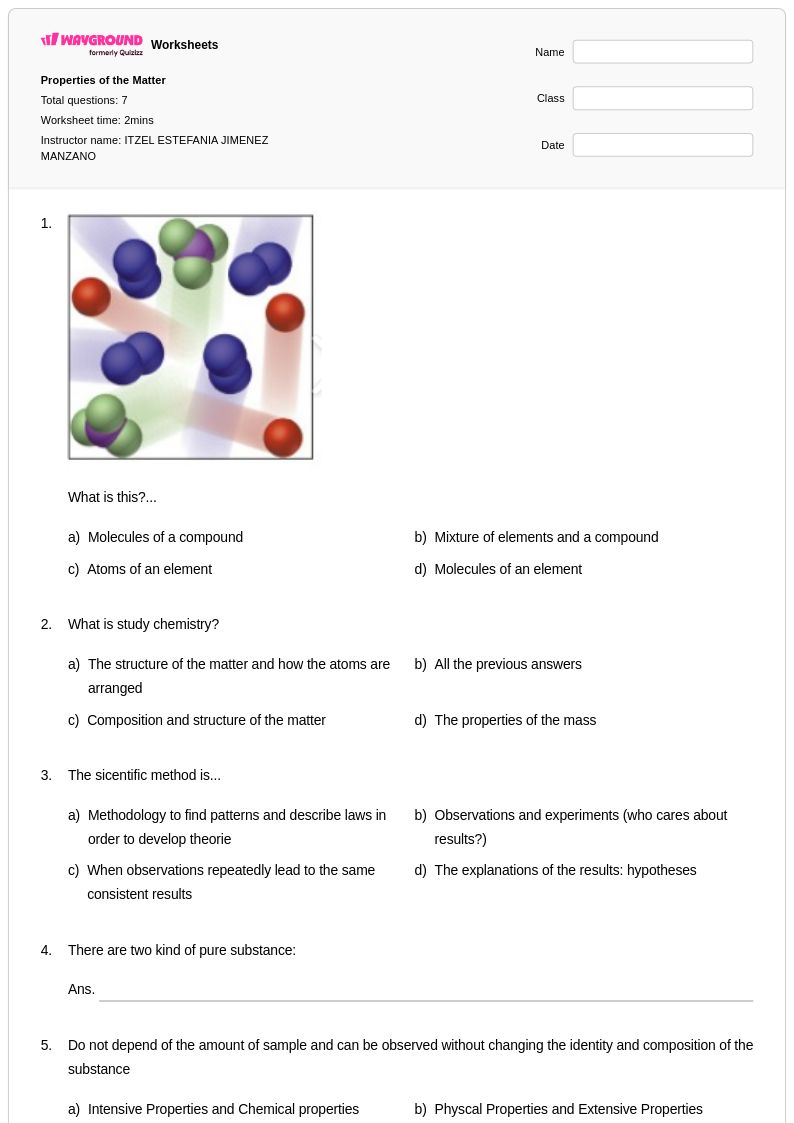
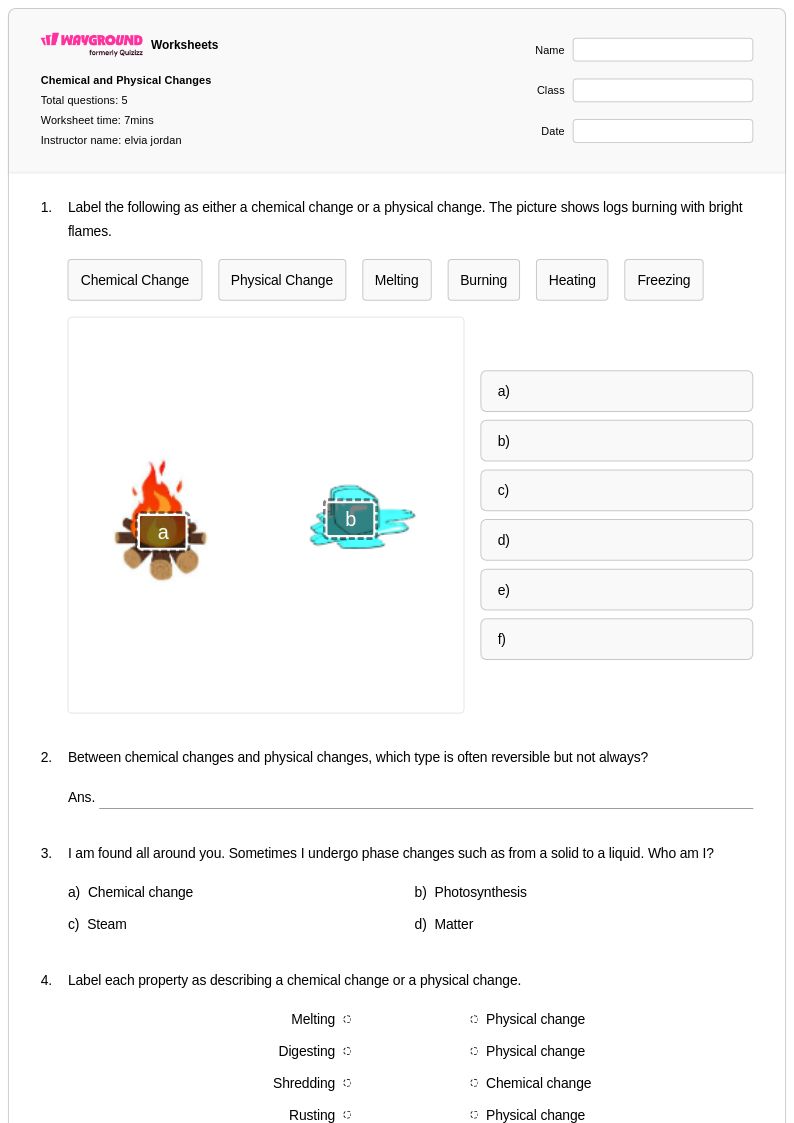
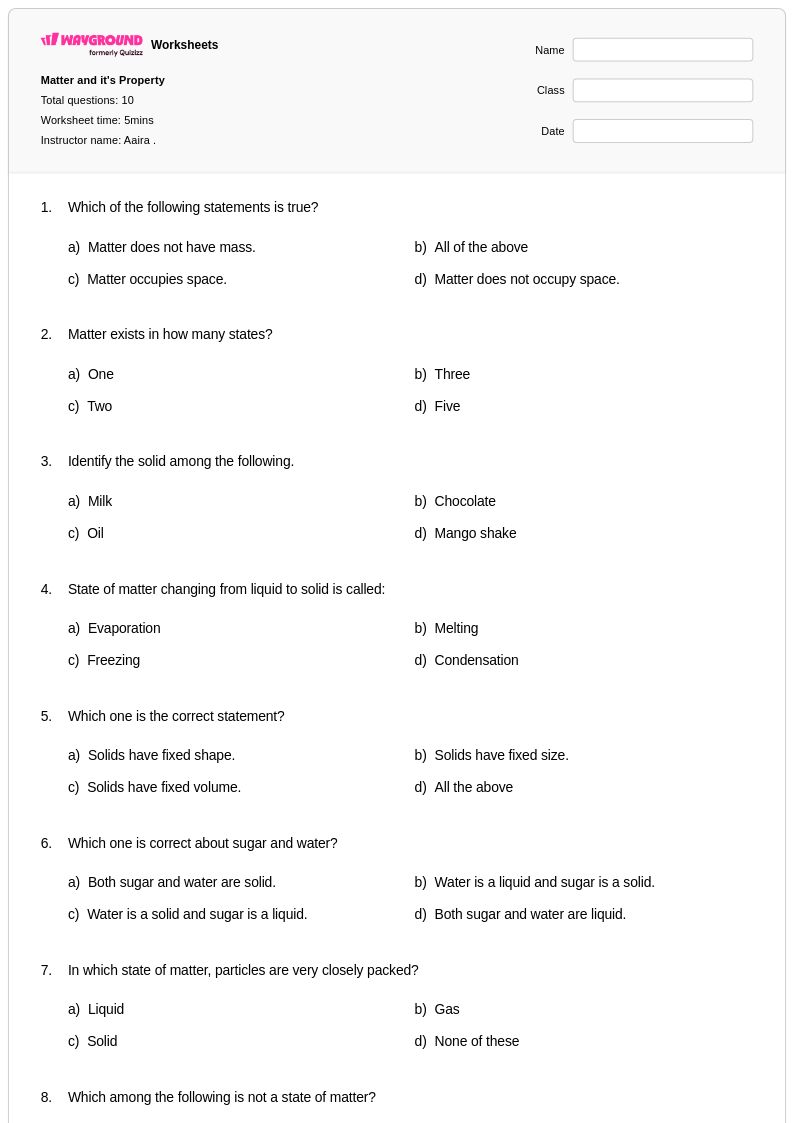
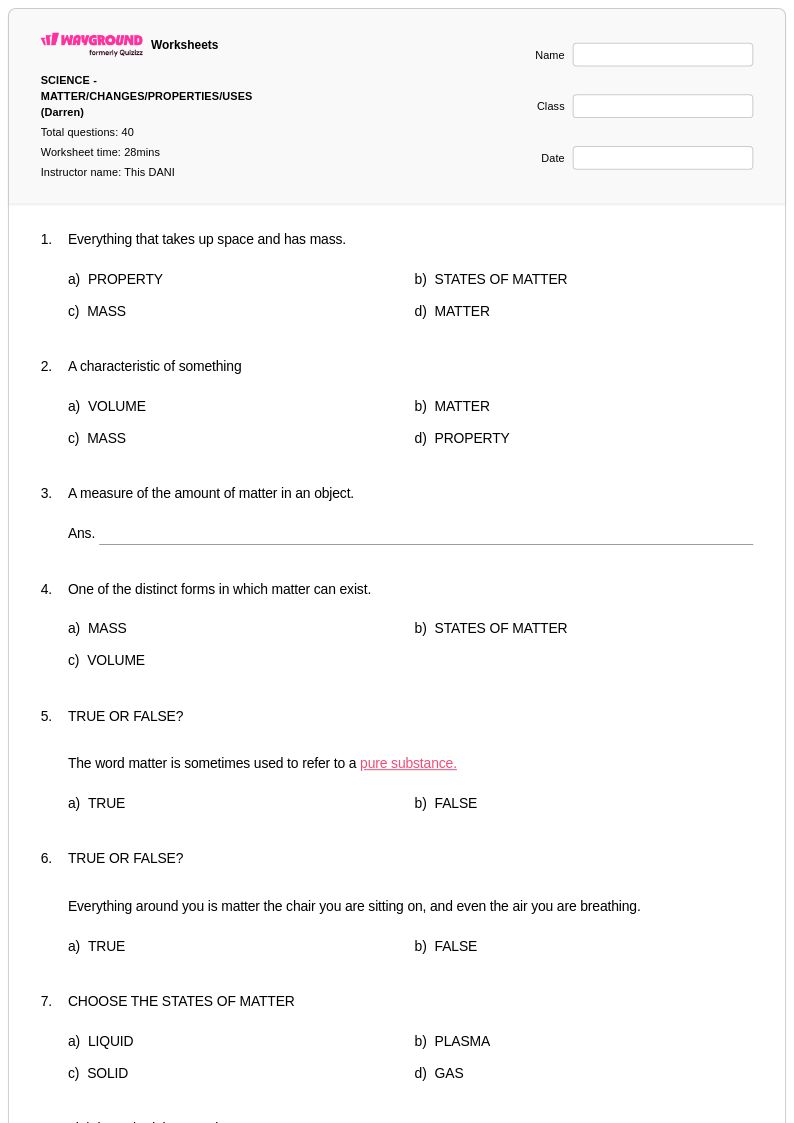
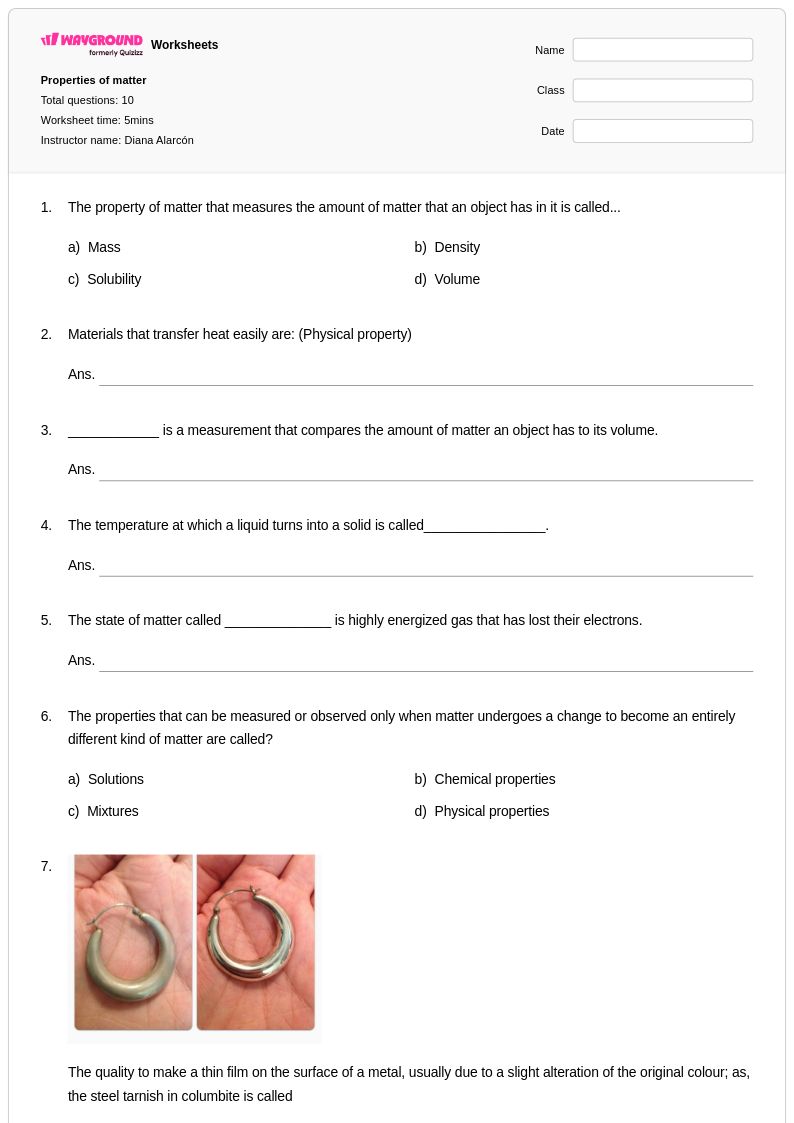
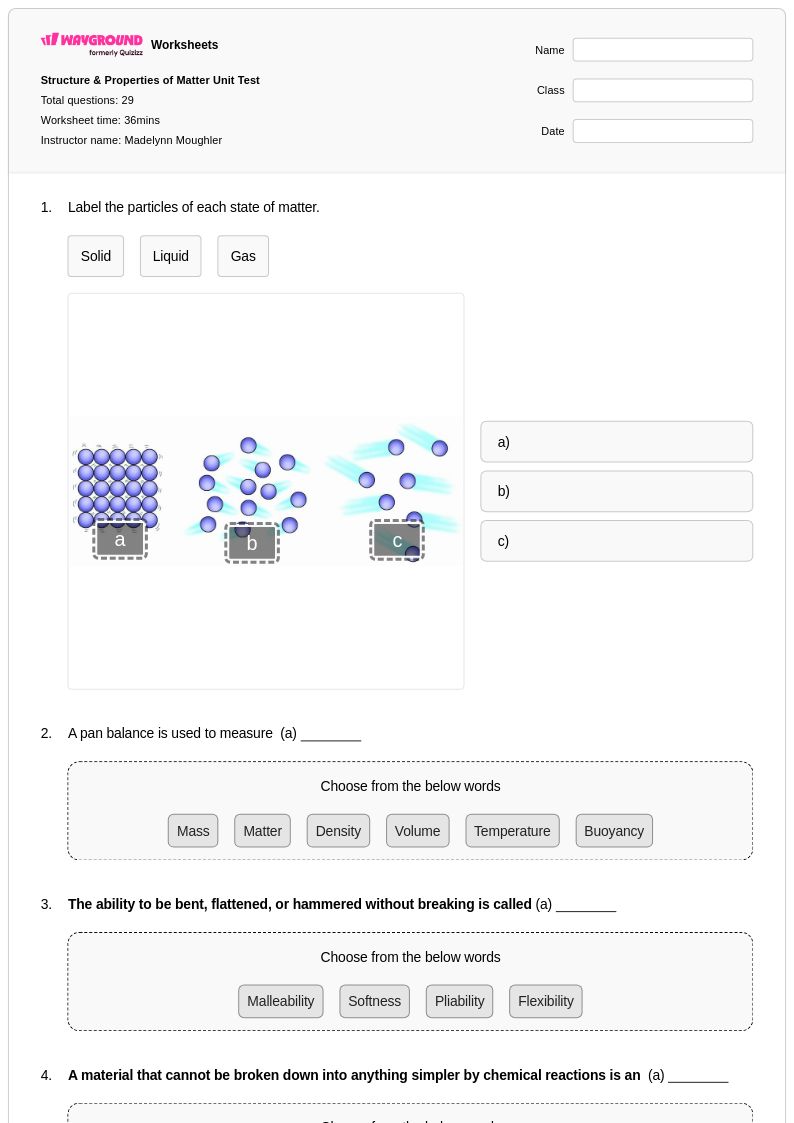
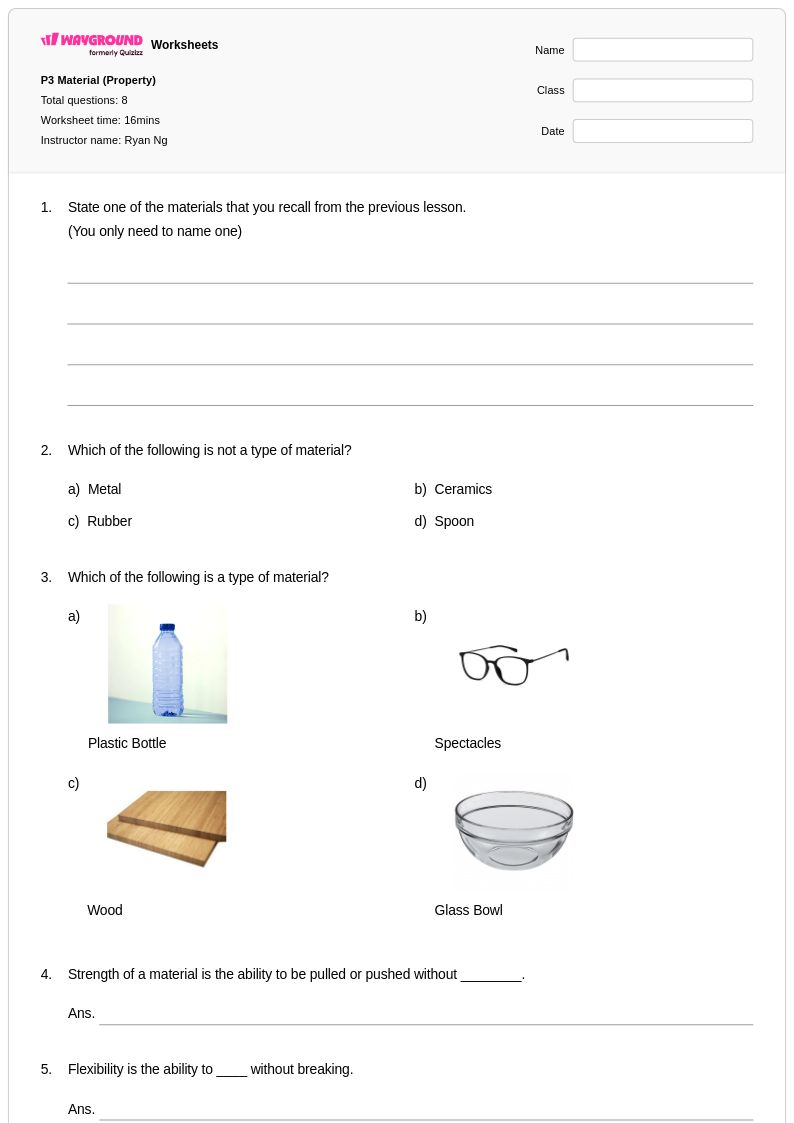
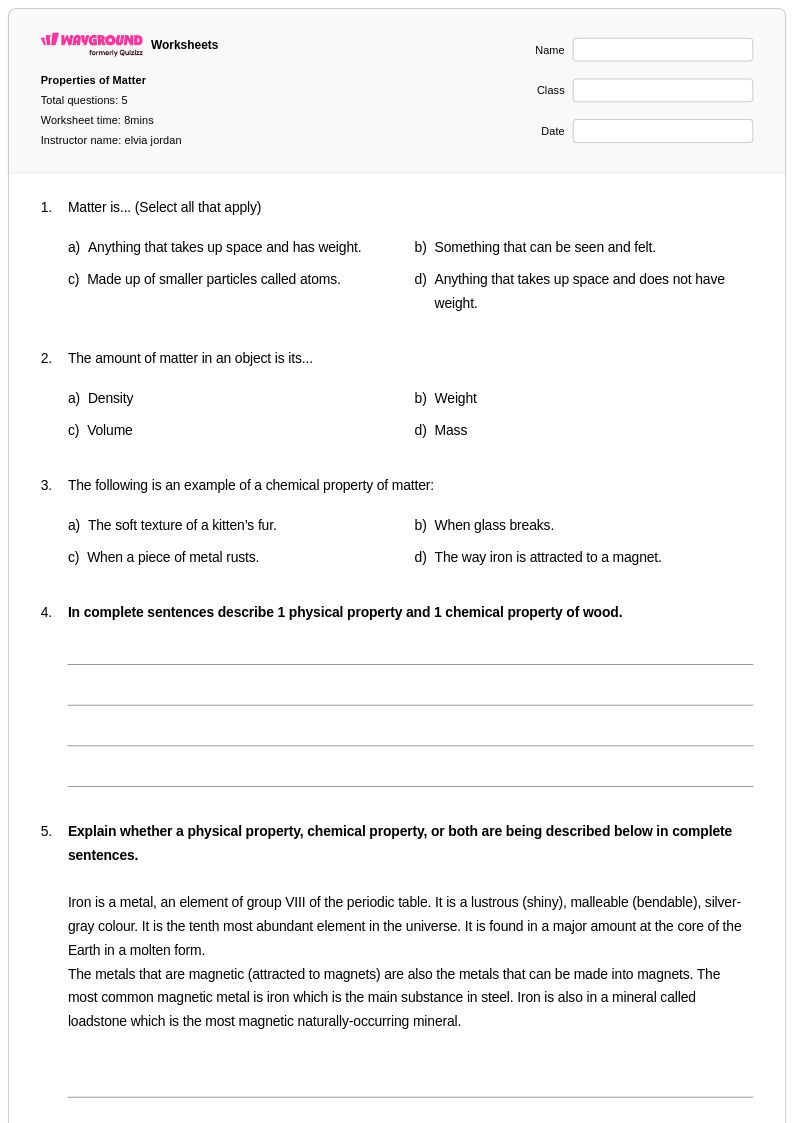
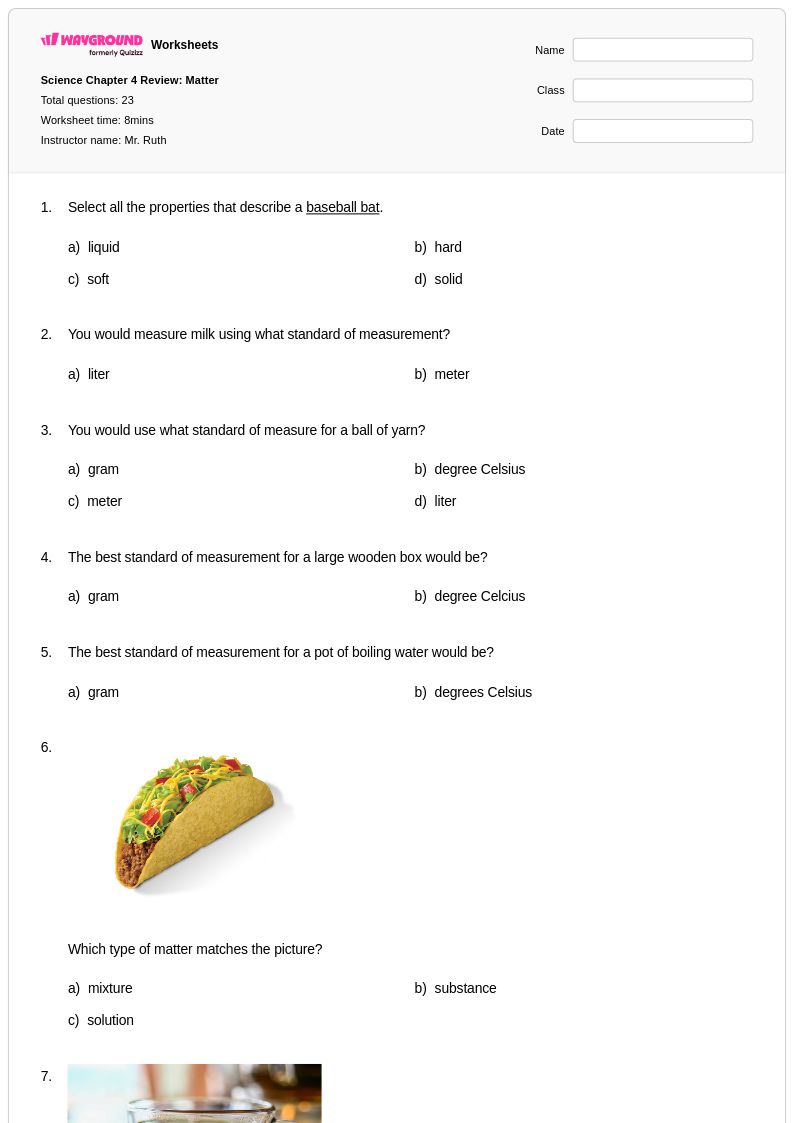
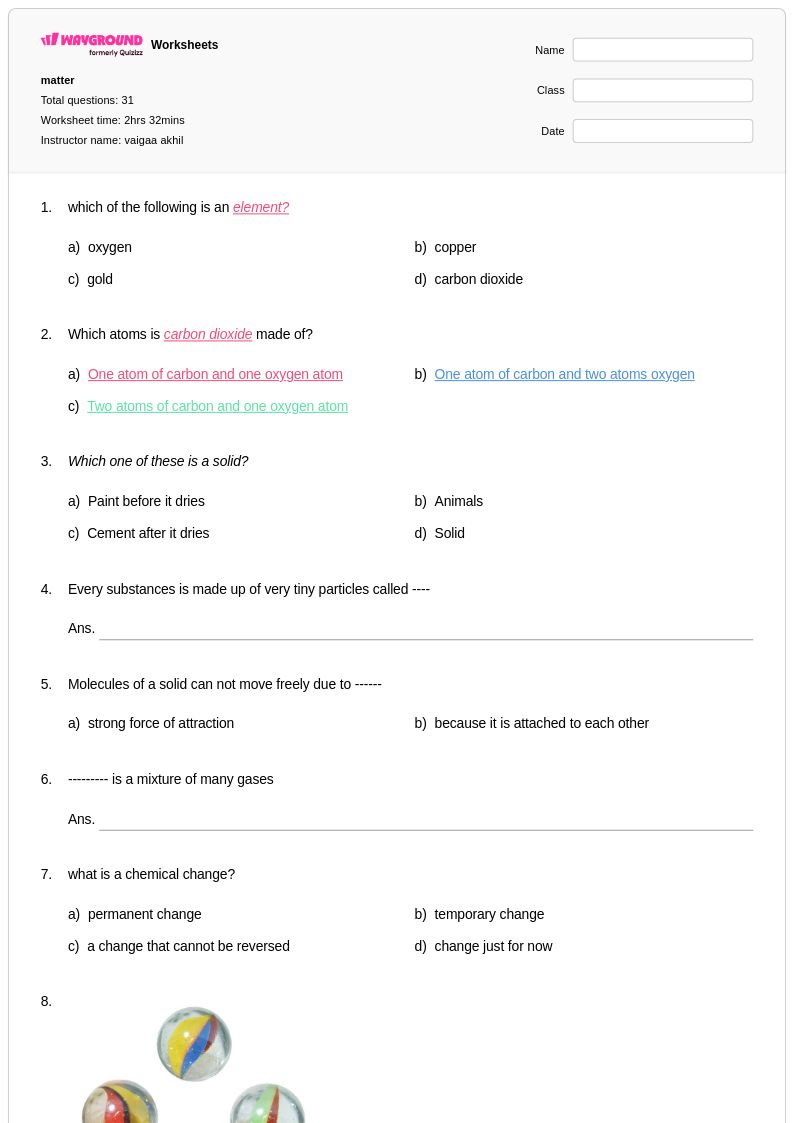
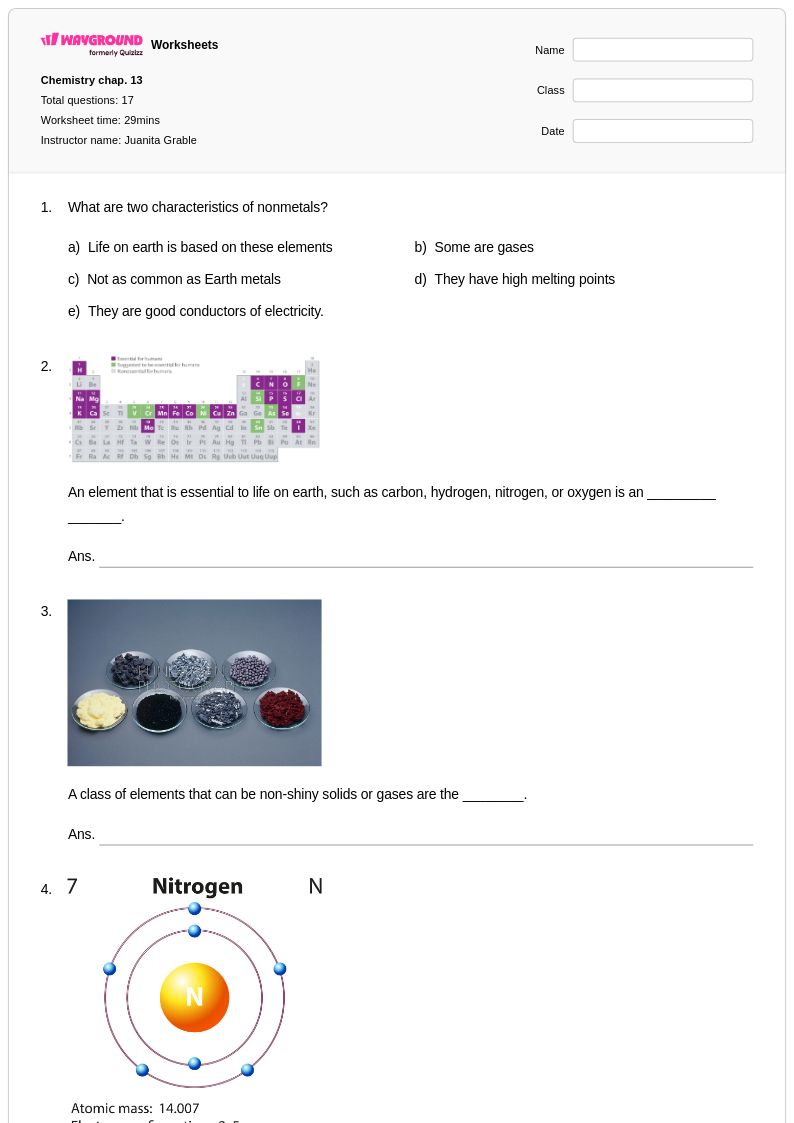
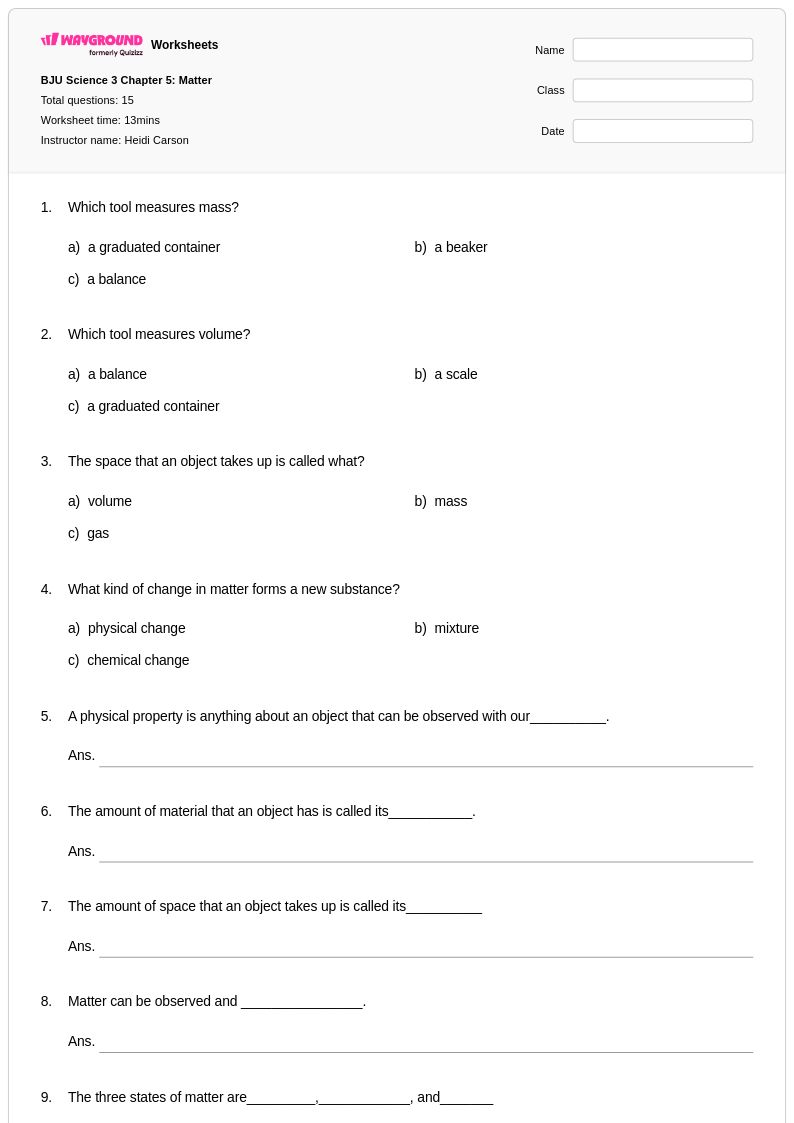
Chemical property worksheets for Class 3 students available through Wayground (formerly Quizizz) introduce young learners to the fundamental concept that matter has characteristics which can only be observed during chemical changes. These carefully designed educational resources help third-grade students distinguish between physical and chemical properties through age-appropriate examples and engaging practice problems. The worksheets strengthen critical thinking skills by guiding students to identify signs of chemical changes such as color transformation, gas production, or the formation of new substances, while building their scientific vocabulary and observation abilities. Each printable resource includes comprehensive answer keys to support both independent learning and teacher-guided instruction, with free pdf formats that make classroom implementation seamless and accessible.
Wayground's extensive collection draws from millions of teacher-created resources specifically focused on chemical property concepts appropriate for elementary science education. The platform's robust search and filtering capabilities enable educators to quickly locate worksheets that align with state science standards while supporting diverse learning needs through built-in differentiation tools. Teachers can easily customize these digital and printable materials to match their specific classroom requirements, whether for initial concept introduction, skill reinforcement, or remediation support. The flexible pdf format ensures that chemical property worksheets can be seamlessly integrated into both traditional classroom settings and remote learning environments, empowering educators to provide consistent, high-quality science instruction that builds students' foundational understanding of matter and its transformations.
FAQs
How do I teach chemical properties to students who keep confusing them with physical properties?
The most effective approach is anchoring the distinction in a single clarifying rule: a chemical property can only be observed when a substance undergoes a chemical change, meaning the substance is transformed into something new. Use concrete contrasts — flammability is a chemical property because burning wood produces ash and gases, not just a shape change. Reinforce this with sorting activities where students categorize a mixed list of properties and justify each placement in writing.
What exercises help students practice identifying chemical properties?
Practice exercises that ask students to categorize properties, predict chemical behavior from molecular structure, and evaluate real-world scenarios — such as why iron rusts or why acids corrode metal — are most effective for building lasting understanding. Worksheets that require written justification alongside categorization answers force students to articulate their reasoning rather than guess. Repeated exposure to properties like flammability, reactivity, acidity, and oxidation potential across varied contexts builds recognition and transfer.
What mistakes do students commonly make when identifying chemical properties?
The most persistent error is classifying color, density, or melting point as chemical properties because students associate 'property' with any observable characteristic. Students also frequently misidentify odor as a chemical property when in fact it is physical. A second common misconception is treating reactivity as a single category, without recognizing that different substances react differently with water, acid, or oxygen — drilling specific examples of each corrects this overgeneralization.
How can I differentiate chemical property worksheets for students at different skill levels?
For foundational learners, focus on binary categorization tasks — is this property chemical or physical? — using familiar substances before introducing abstract compounds. Advanced students benefit from exercises that connect molecular structure to predicted chemical behavior, requiring them to reason from evidence rather than recall. On Wayground, teachers can apply accommodations such as reduced answer choices for students who need additional support, and extended time for those who need more processing time, ensuring the same content is accessible across ability levels.
How do I use chemical property worksheets on Wayground in my classroom?
Chemical property worksheets on Wayground are available as printable PDFs for traditional classroom use and in digital formats for technology-integrated instruction, including the option to host them as a live quiz on the platform. Each worksheet includes detailed answer keys and explanations so teachers can use them for direct instruction, independent practice, or formative assessment without additional prep. The platform's search and filtering tools allow teachers to quickly locate materials aligned to specific learning standards, making lesson planning more efficient.
How do I help students understand how molecular structure relates to chemical properties?
Start with accessible examples: explain why hydrogen peroxide decomposes readily while water does not, connecting the extra oxygen atom to differences in reactivity. Visual molecular models paired with property prediction tasks help students see that atomic arrangement determines chemical behavior, not just composition. Once students can predict a property from a structural clue, have them work backwards — given a property, what structural features might explain it — to deepen analytical reasoning.