Free Printable Solutions and Mixtures Worksheets for Class 3
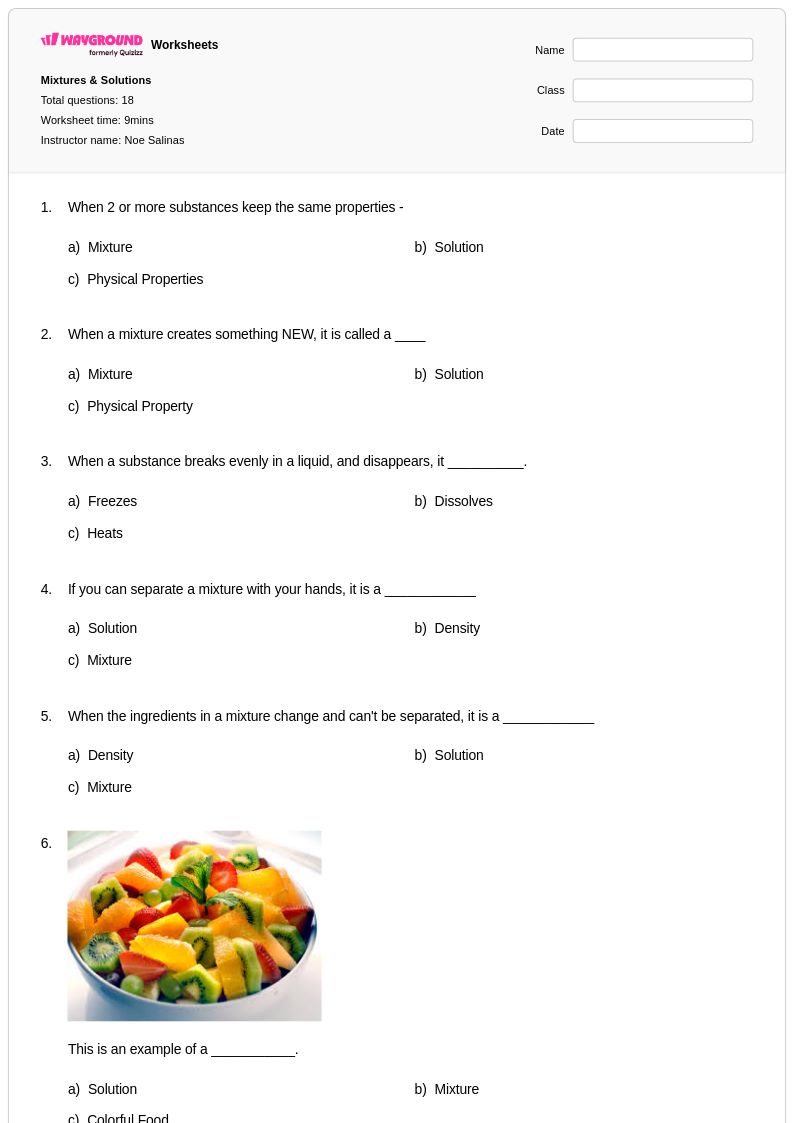
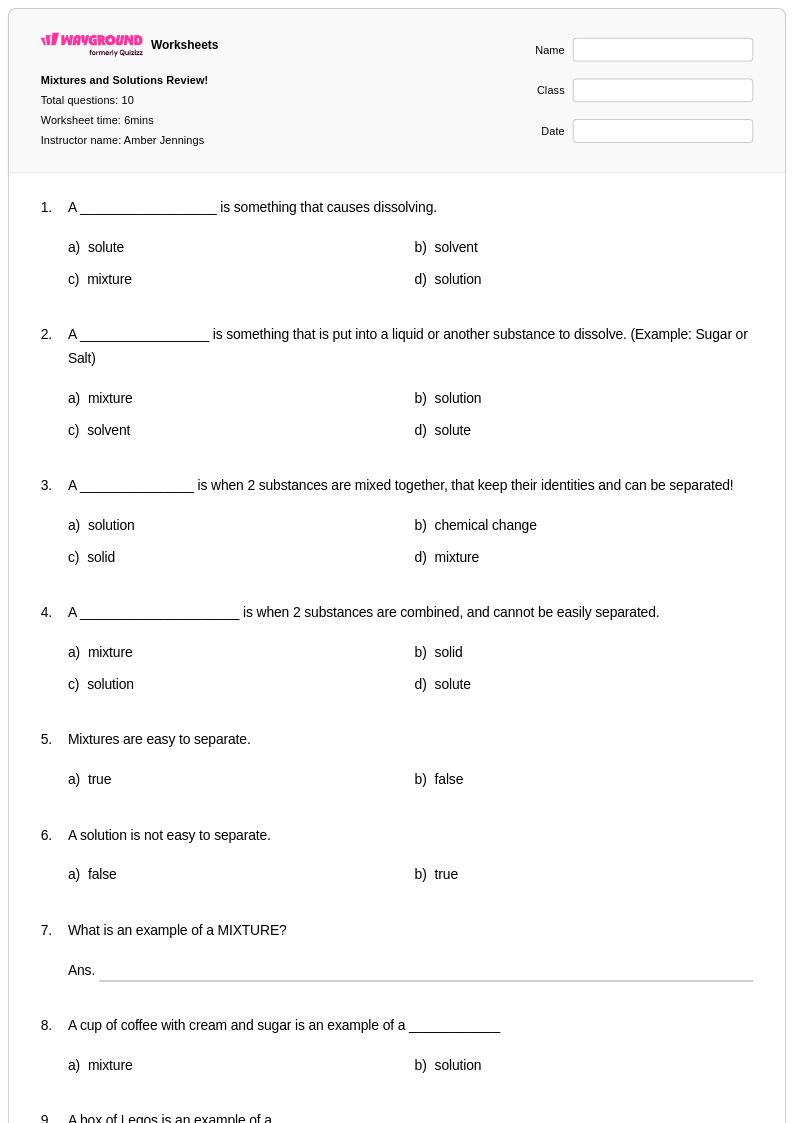
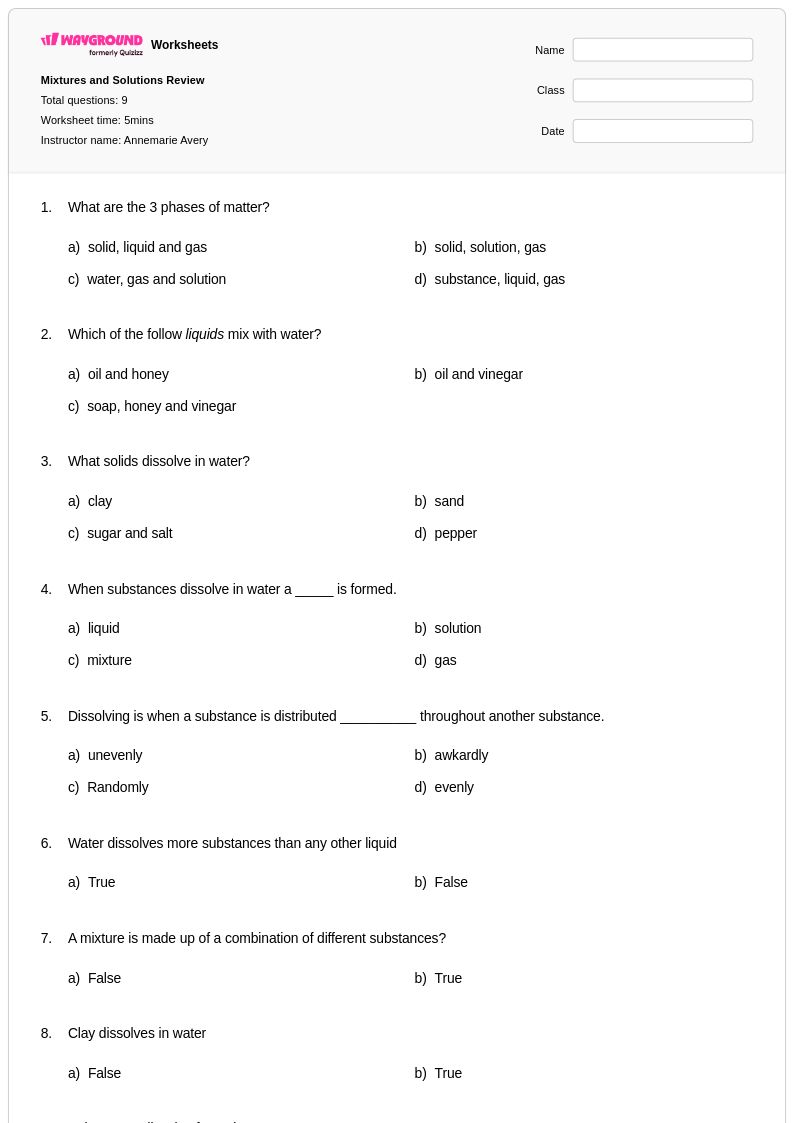
Explore free Class 3 chemistry worksheets and printables focused on solutions and mixtures, featuring engaging practice problems and answer keys to help young scientists understand how different substances combine and separate.
Explore printable Solutions and Mixtures worksheets for Class 3
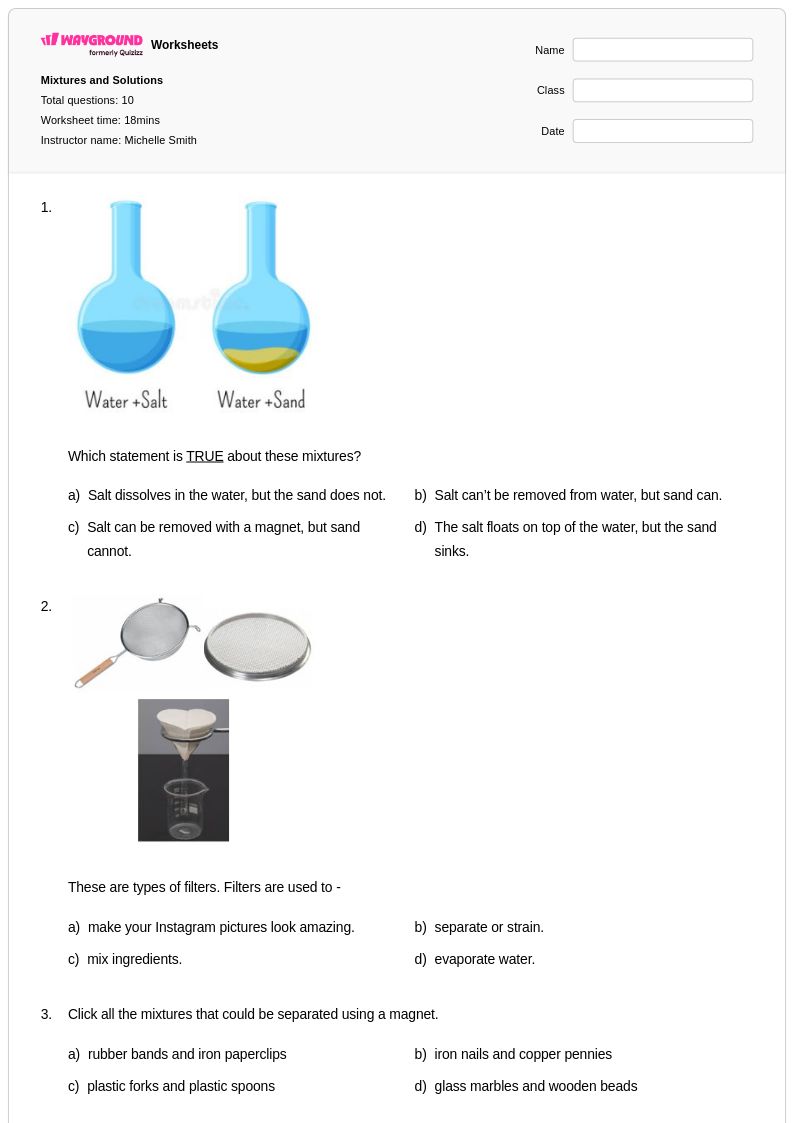
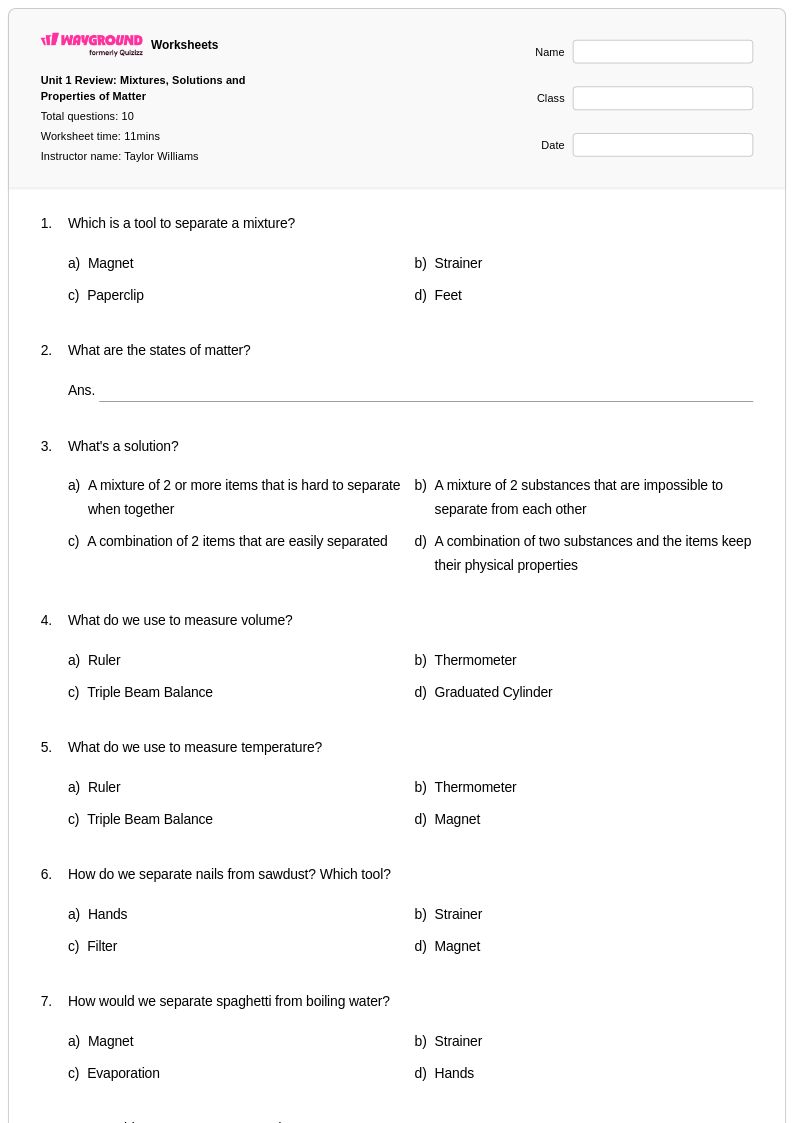
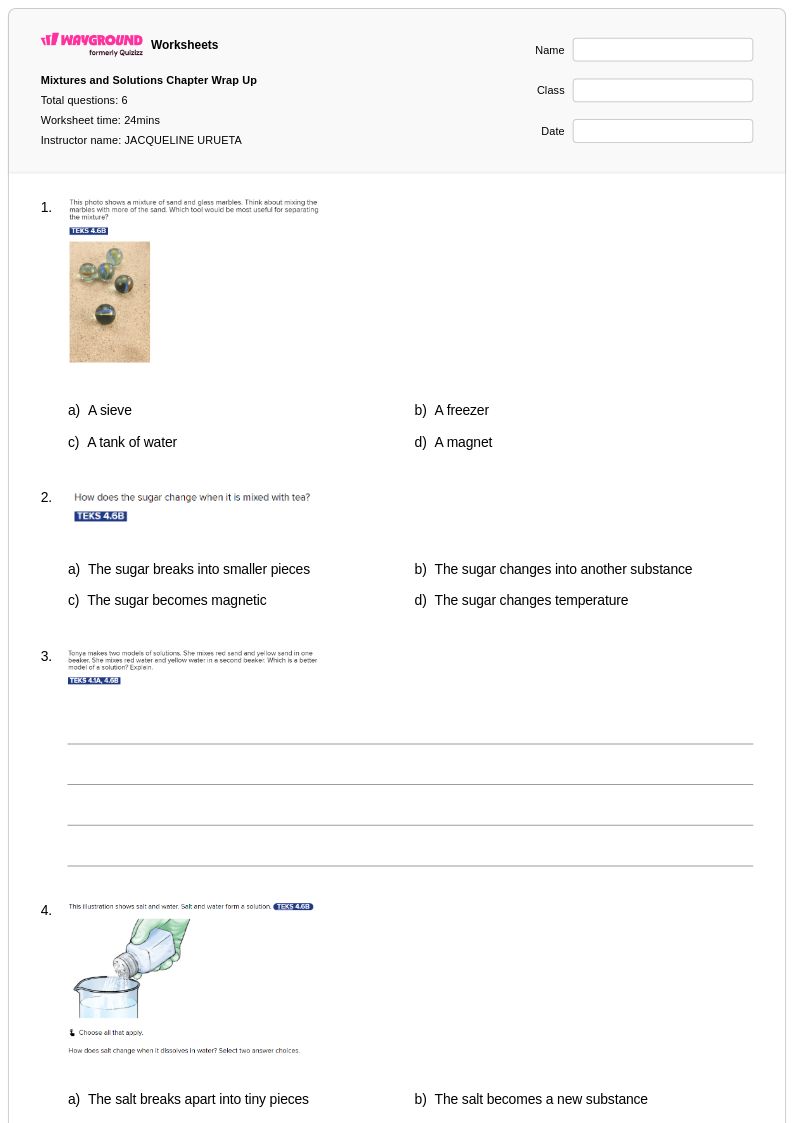
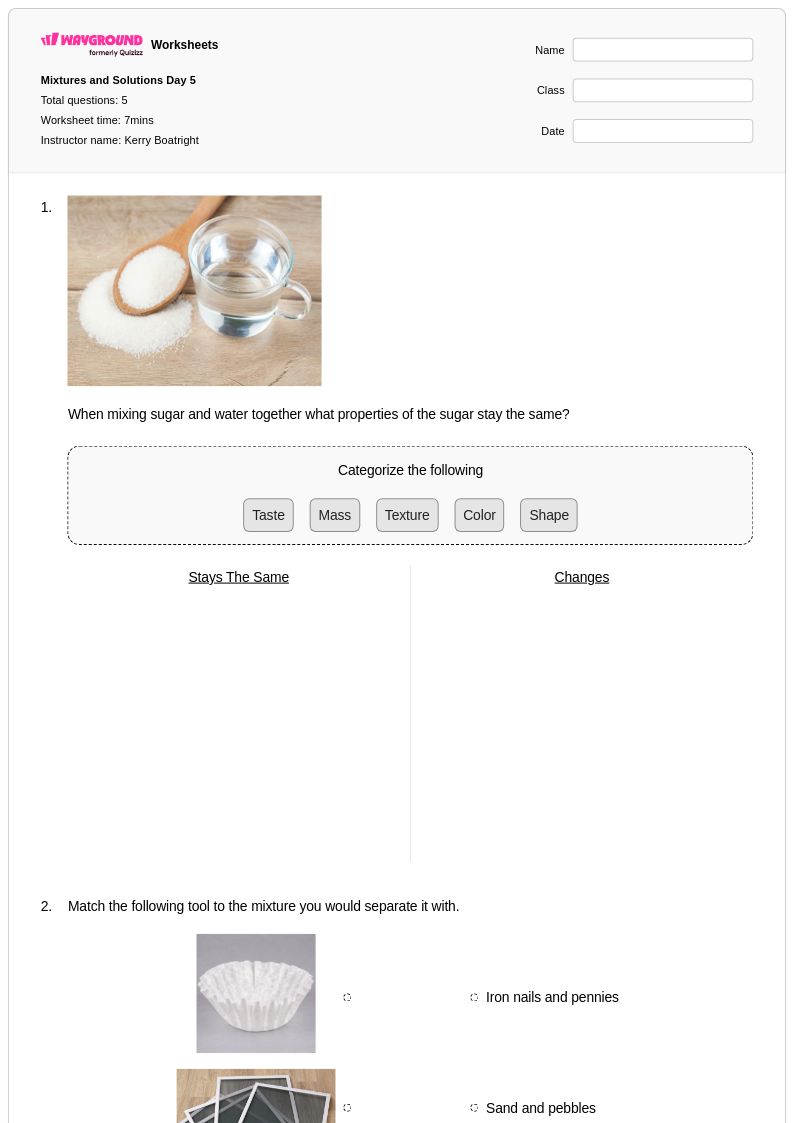
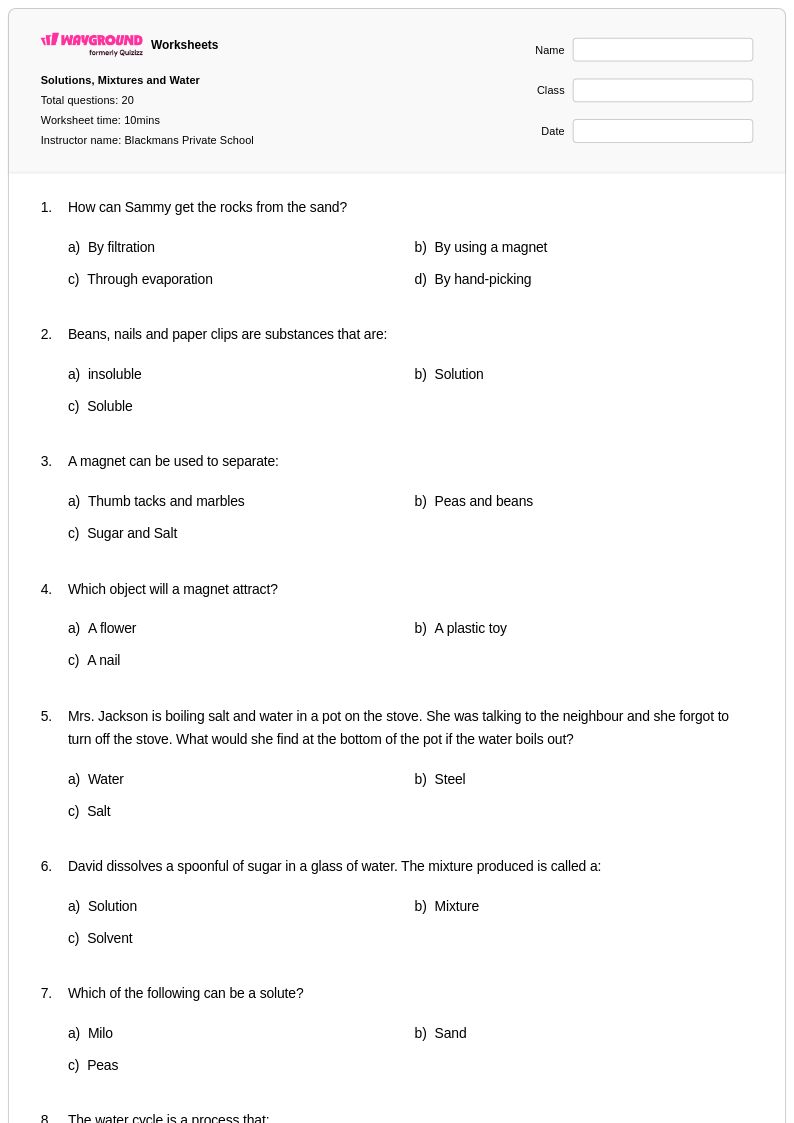
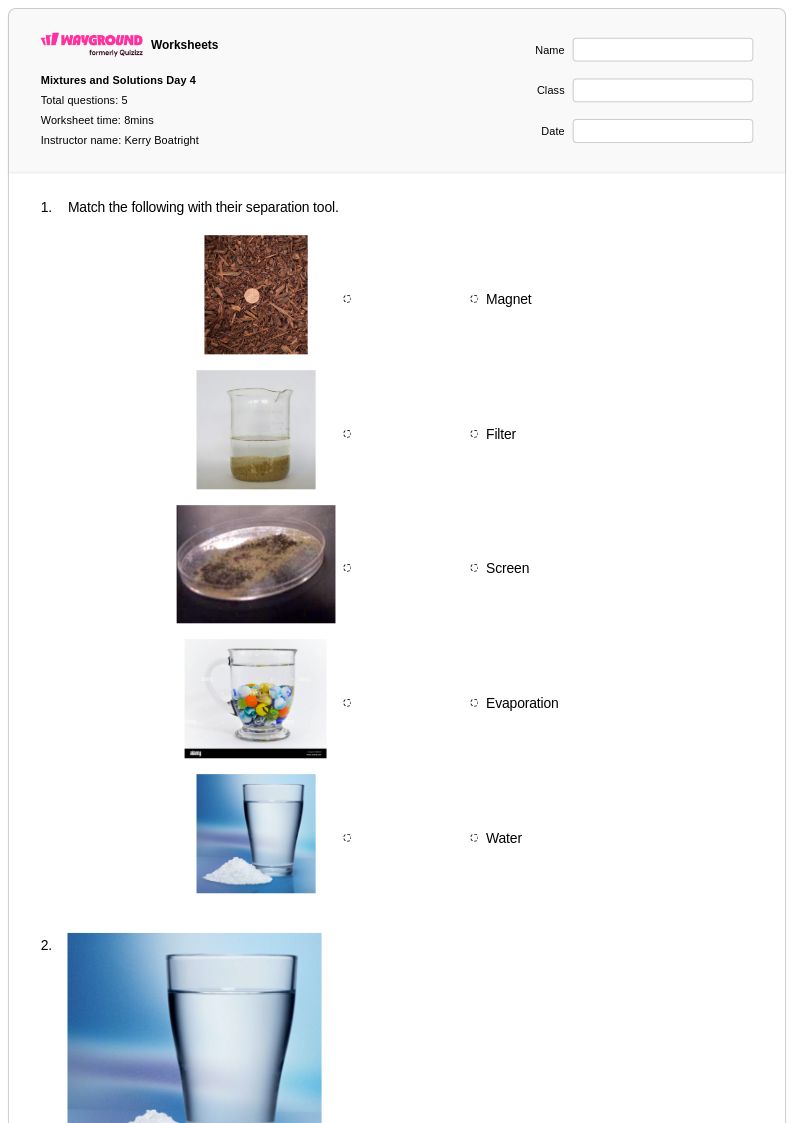
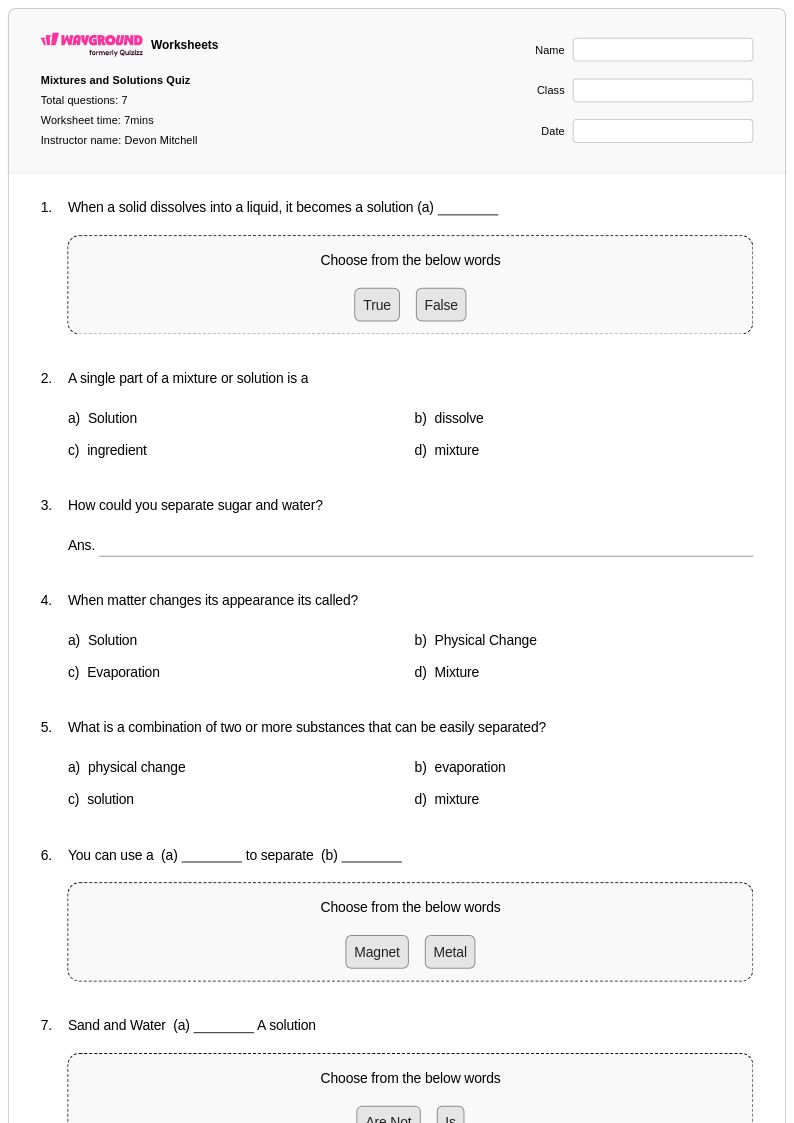
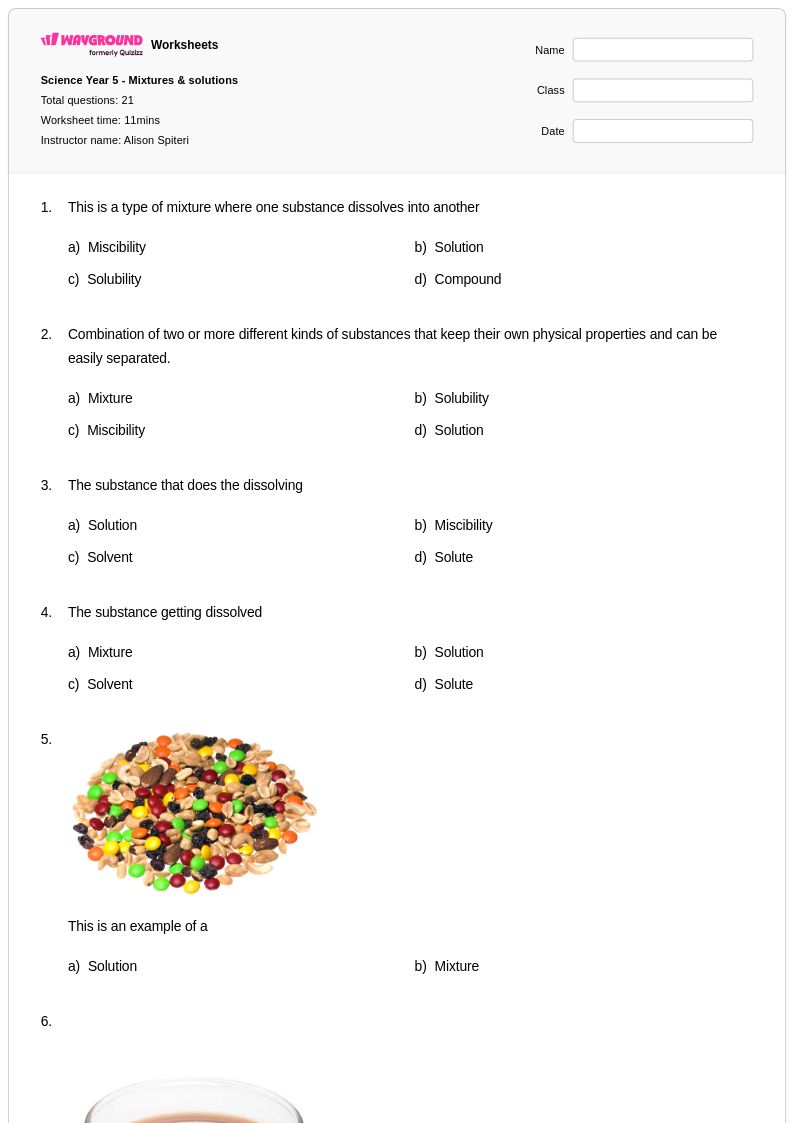
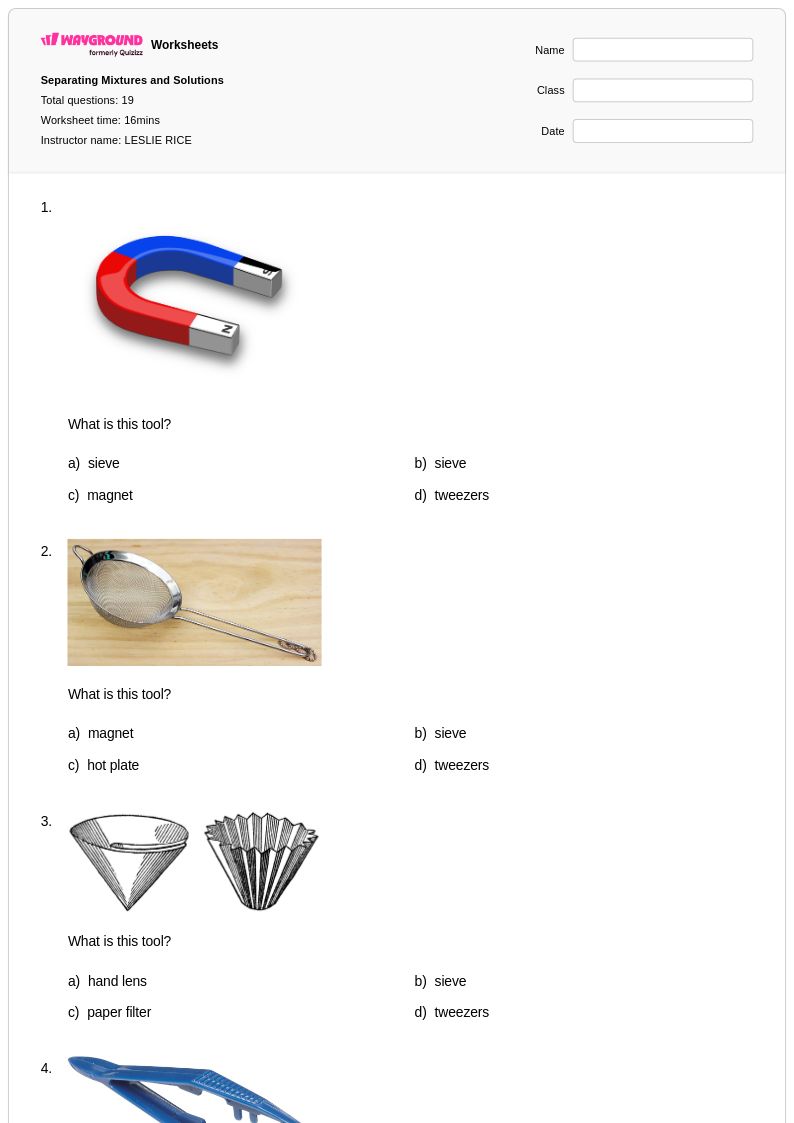
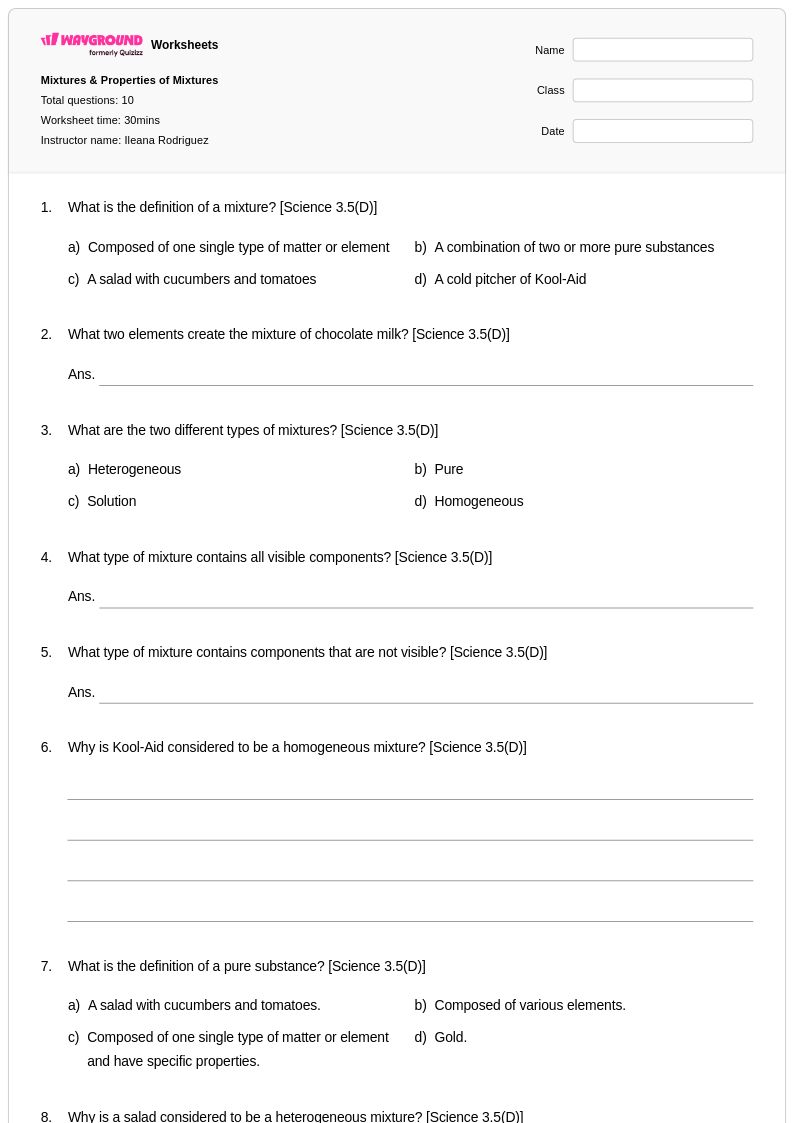
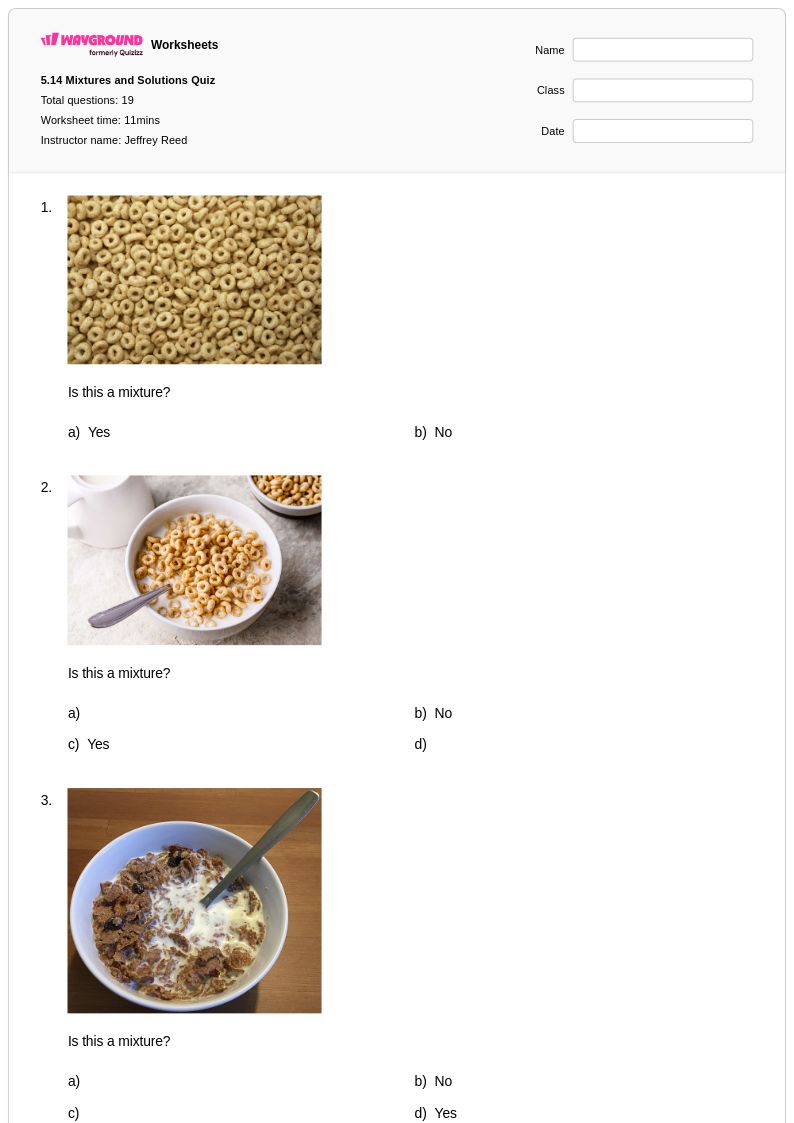
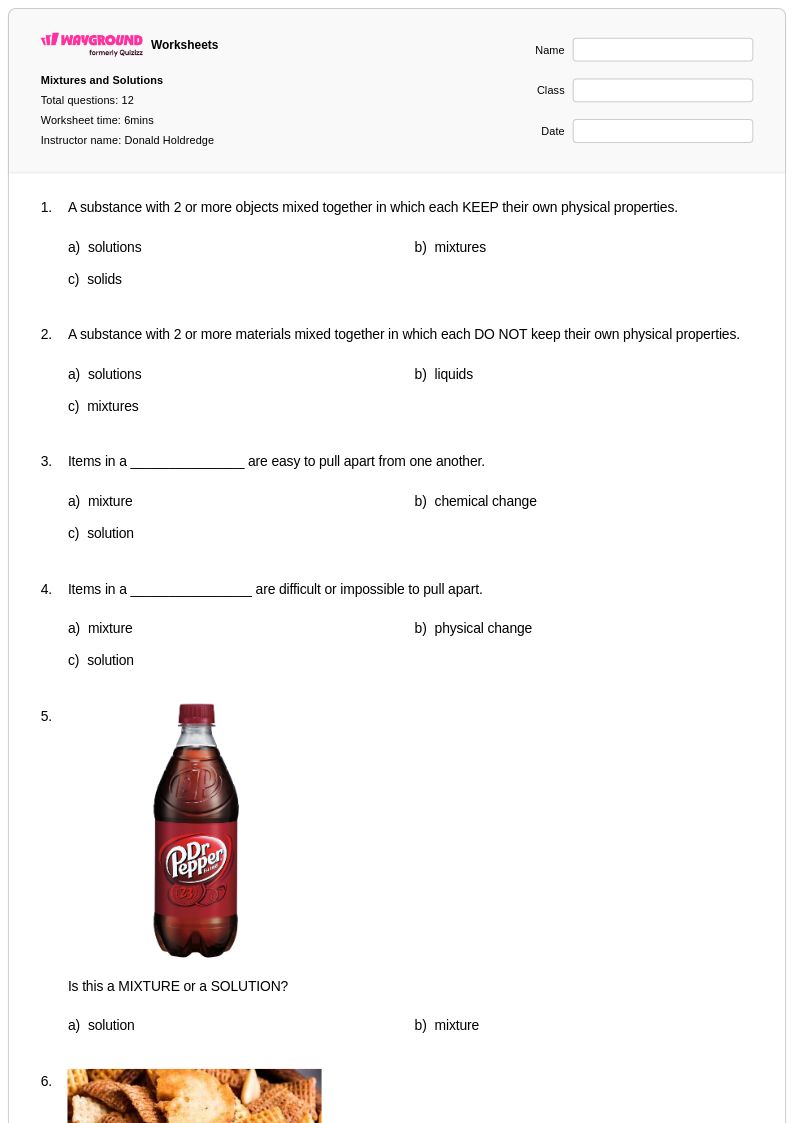
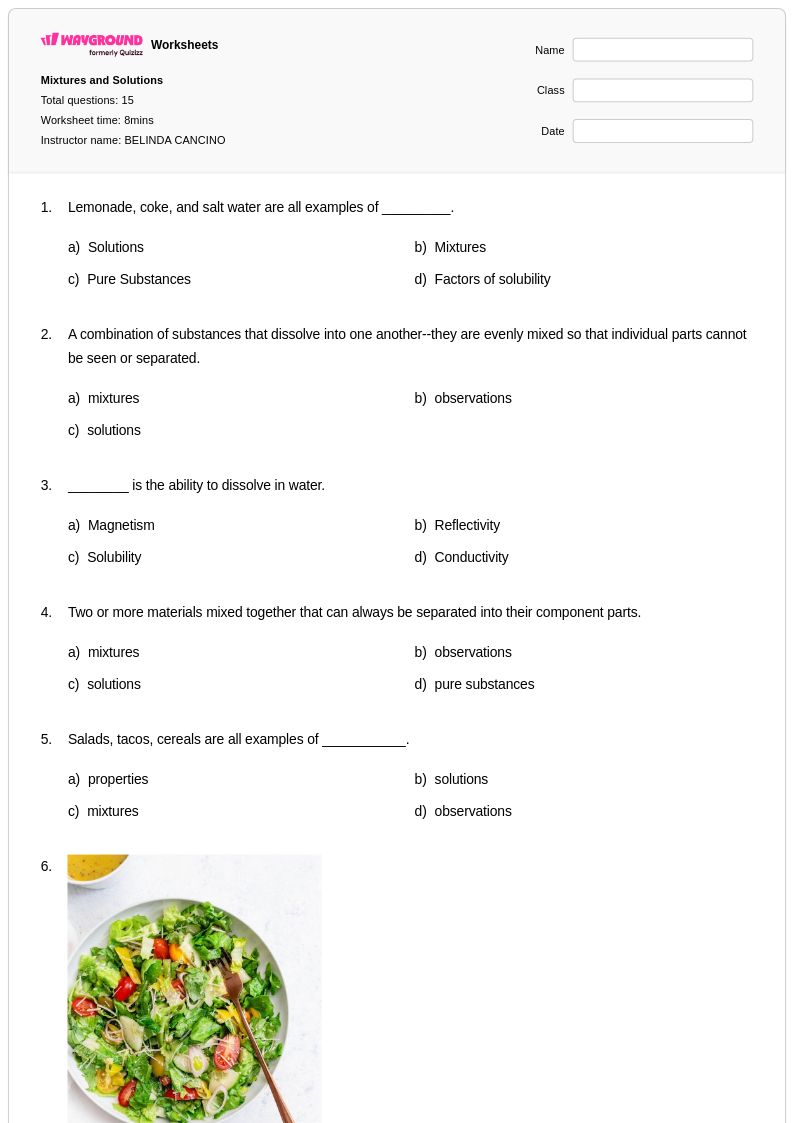
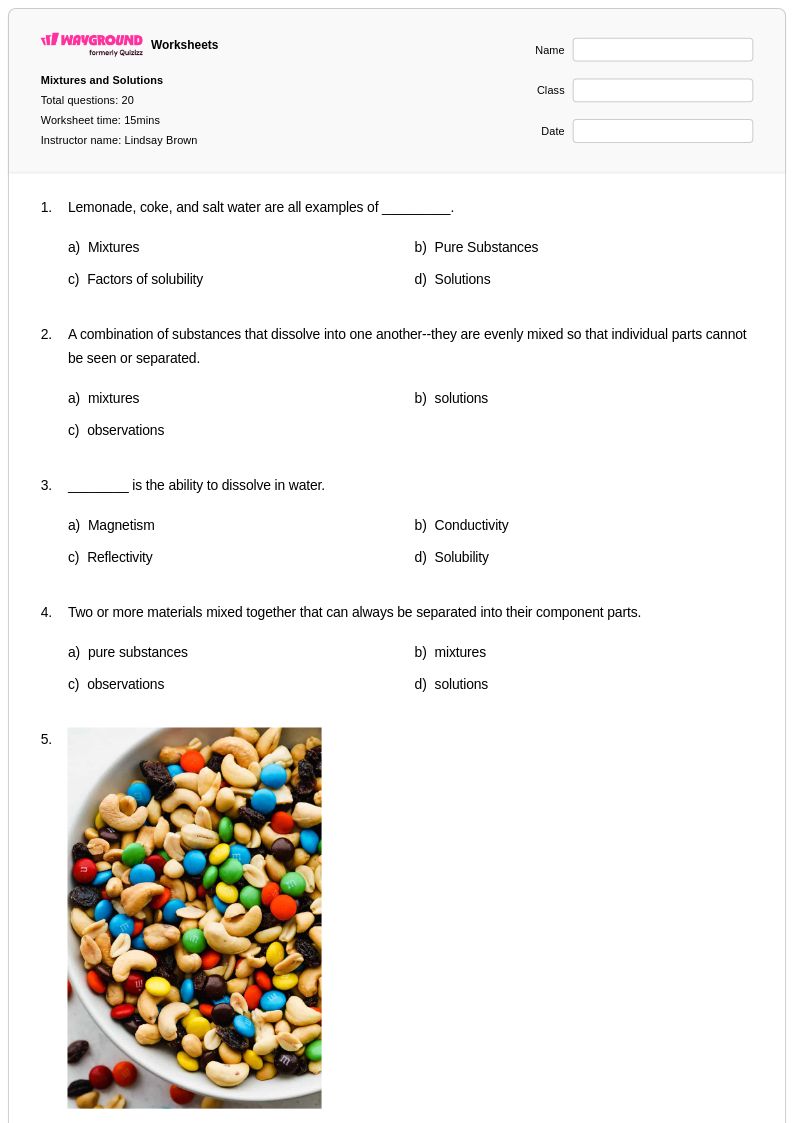
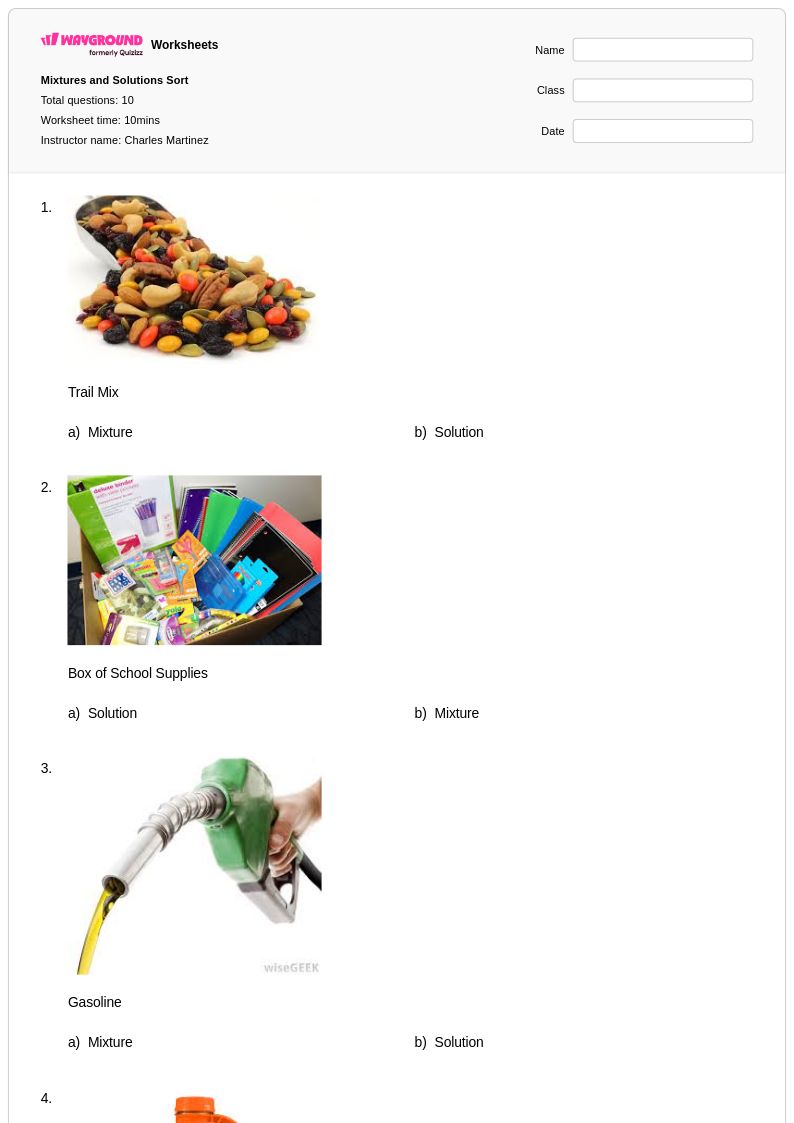
Solutions and mixtures worksheets for Class 3 provide young scientists with foundational practice in understanding how different substances combine and interact. These educational resources from Wayground (formerly Quizizz) help students develop critical observation and classification skills as they explore the differences between solutions, where substances dissolve completely, and mixtures, where components remain distinct and separable. Through carefully designed practice problems, students learn to identify everyday examples like saltwater solutions and trail mix combinations while building vocabulary essential for chemistry concepts. Each worksheet includes comprehensive answer keys and is available as free printable PDFs, making it simple for educators to assess student understanding and provide immediate feedback on this fundamental scientific concept.
Wayground (formerly Quizizz) supports elementary science educators with an extensive collection of millions of teacher-created resources focused on solutions and mixtures concepts appropriate for third-grade learners. The platform's robust search and filtering capabilities allow teachers to quickly locate worksheets that align with specific curriculum standards and learning objectives, while built-in differentiation tools enable customization for diverse student needs and ability levels. These versatile materials are available in both printable PDF format for traditional classroom use and digital formats for interactive learning environments, providing flexibility for lesson planning, targeted remediation, and enrichment activities. Teachers can seamlessly integrate these resources into their instruction to reinforce key chemistry vocabulary, strengthen scientific reasoning skills, and help students build confidence in distinguishing between different types of matter combinations.
FAQs
How do I teach the difference between solutions and mixtures to chemistry students?
Start by establishing the distinction between pure substances and mixtures, then narrow into homogeneous mixtures (solutions) versus heterogeneous mixtures using concrete, visible examples like saltwater versus a sand-and-gravel mix. Use physical property analysis to guide students in classifying substances before introducing solute-solvent relationships and solubility principles. Connecting classification to separation techniques — such as filtration for heterogeneous mixtures and evaporation for solutions — reinforces why the distinction matters in practice.
What exercises help students practice concentration calculations for solutions?
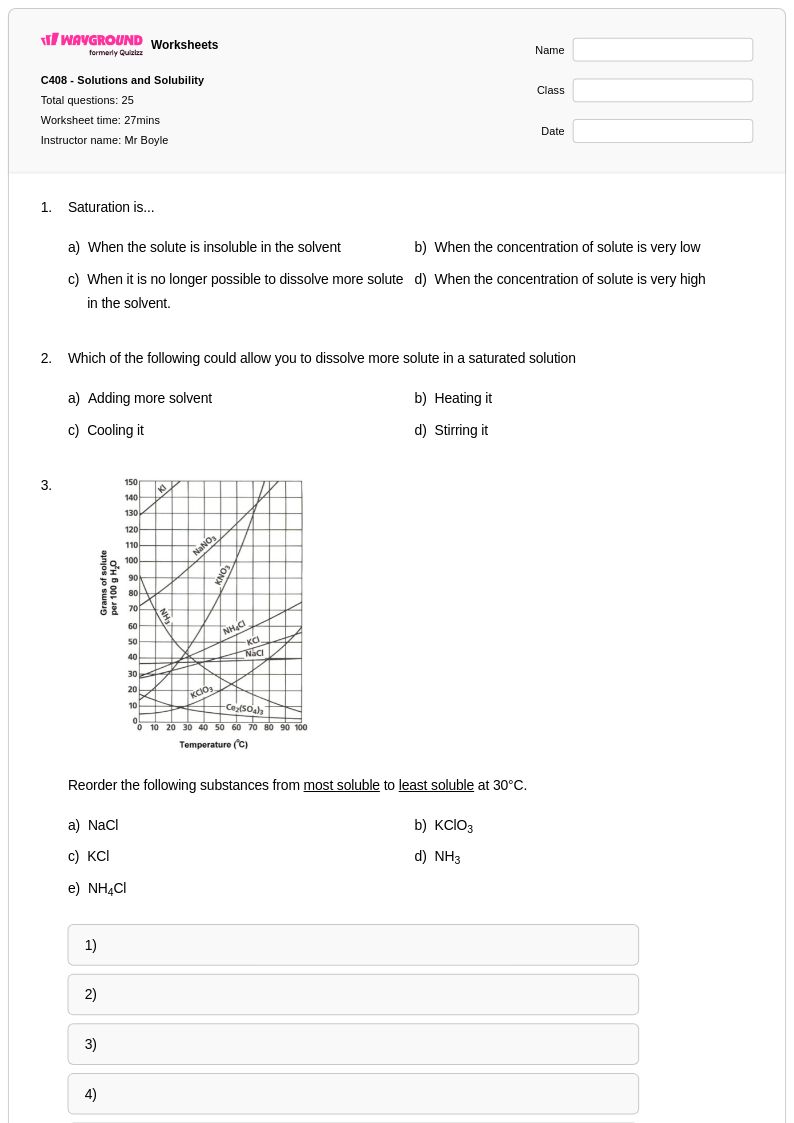
Targeted practice problems that require students to calculate molarity, mass percent, or parts per million using real solute-solvent scenarios are the most effective. Worksheets that scaffold from unit conversion through full concentration calculations help students build procedural fluency before tackling multi-step problems. Including data from simulated lab contexts bridges theoretical understanding with real-world applications and reduces errors that stem from misreading the problem setup.
What common mistakes do students make when classifying mixtures?
The most frequent error is conflating homogeneous and heterogeneous mixtures when a mixture appears uniform at a glance — for example, mistaking a colloid or fine suspension for a true solution. Students also struggle to distinguish between physical and chemical properties when determining whether a substance is a mixture or a pure compound. Targeted practice that requires written justification for each classification decision helps surface and correct these misconceptions.
How can I use solutions and mixtures worksheets to support students at different skill levels?
Differentiated worksheets allow teachers to assign foundational classification tasks to students who need remediation while giving advanced learners problems involving concentration calculations and separation technique analysis. On Wayground, teachers can apply individual accommodations such as reduced answer choices or read-aloud support for students who need them, without disrupting the experience for the rest of the class. This makes it practical to run a single assignment across a mixed-ability class while still meeting each student where they are.
How do I use solutions and mixtures worksheets on Wayground in my classroom?
Wayground's solutions and mixtures worksheets are available as printable PDFs for traditional classroom use and in digital formats for technology-integrated or remote learning environments. Teachers can also host worksheets directly as a quiz on Wayground, enabling real-time student responses and instant data on performance. All worksheets include comprehensive answer keys, so grading and follow-up instruction can happen without additional preparation time.
How do separation techniques connect to teaching solutions and mixtures?
Separation techniques such as filtration, distillation, chromatography, and evaporation directly reinforce why the classification of a mixture matters — each method works because of specific physical properties of the components involved. Teaching these techniques alongside mixture classification gives students a functional, applied reason to distinguish between homogeneous and heterogeneous mixtures. Practice problems that ask students to select and justify the appropriate separation method for a given mixture are particularly effective at deepening conceptual understanding.