Free Printable States of Matter Worksheets for Class 3
Class 3 states of matter worksheets from Wayground help young learners explore solids, liquids, and gases through engaging printables, practice problems, and comprehensive answer keys for effective science education.
Explore printable States of Matter worksheets for Class 3
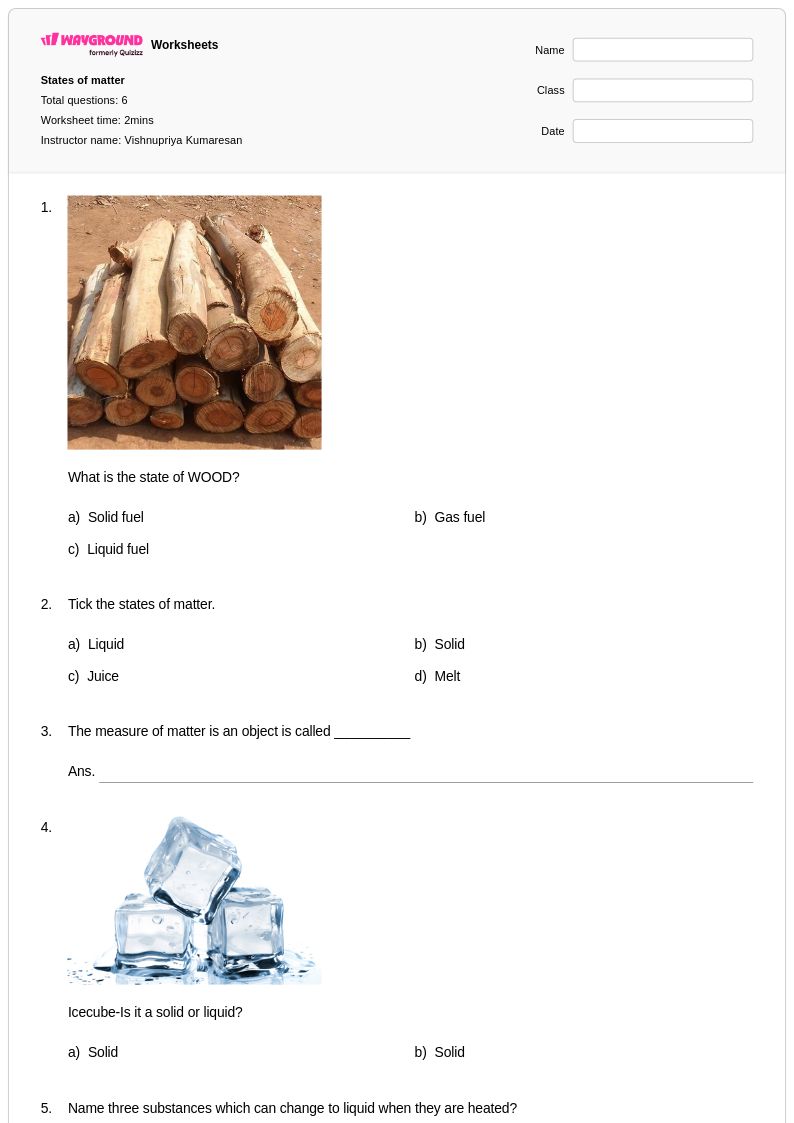
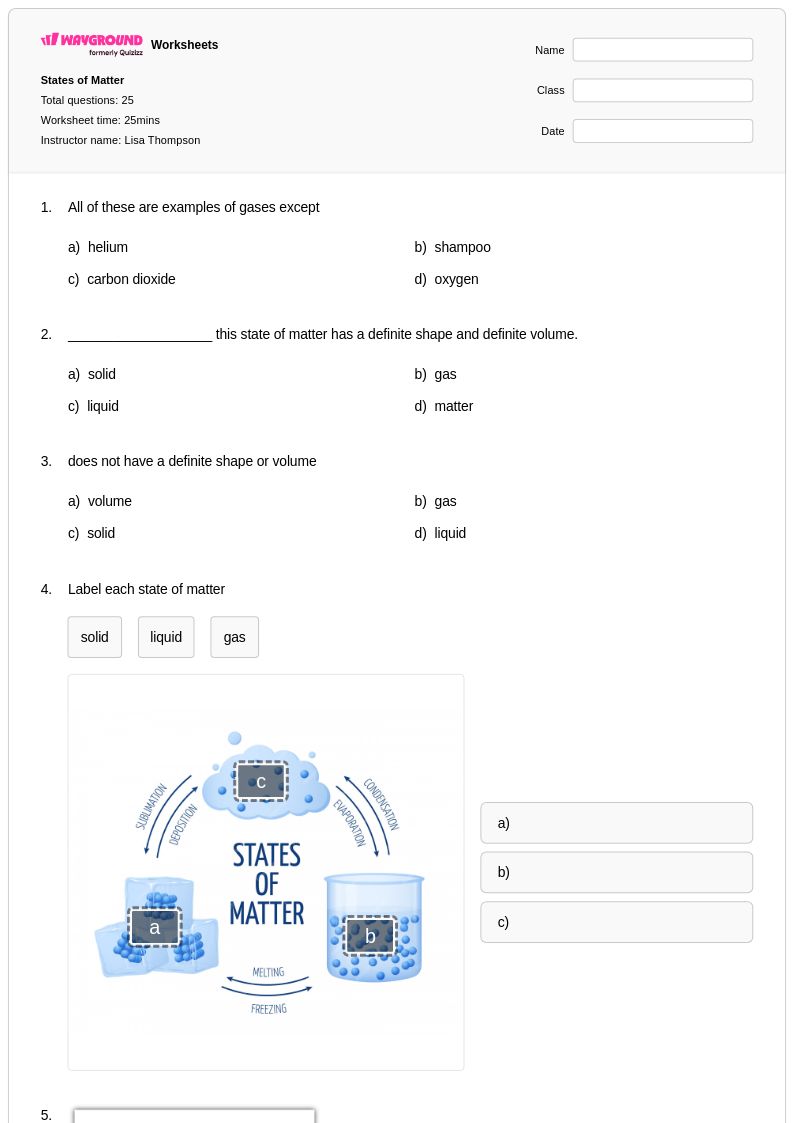
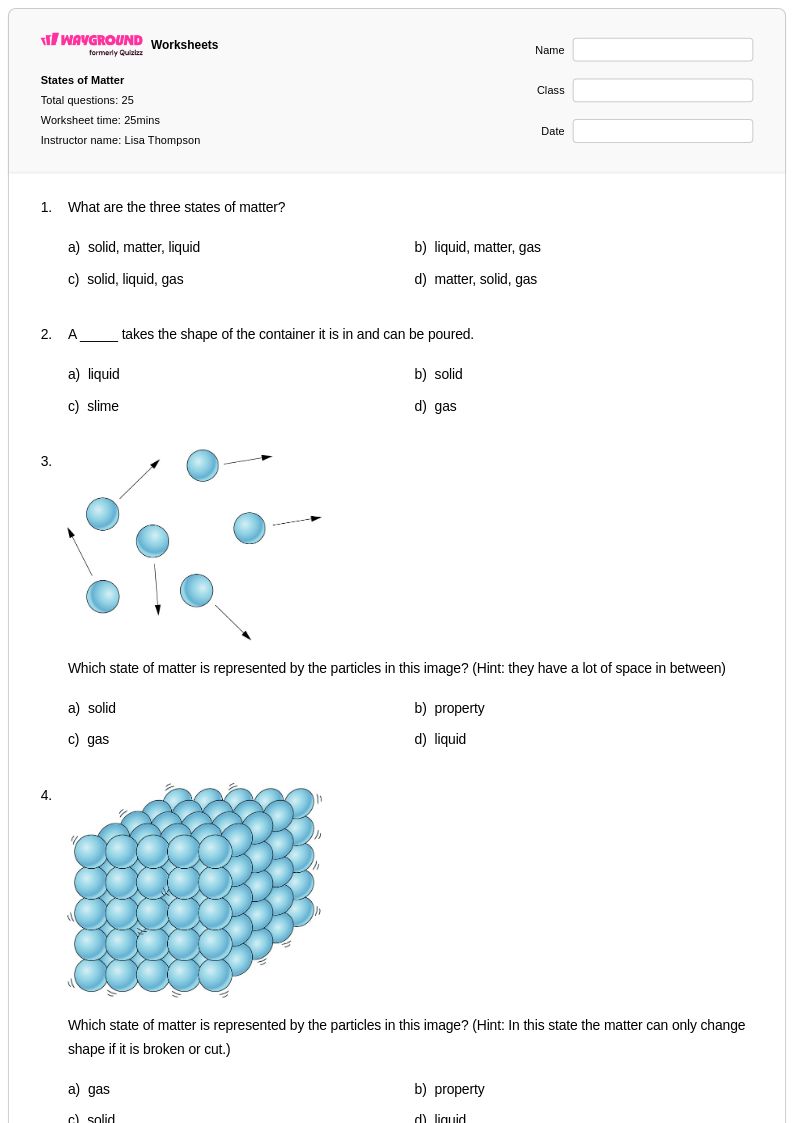
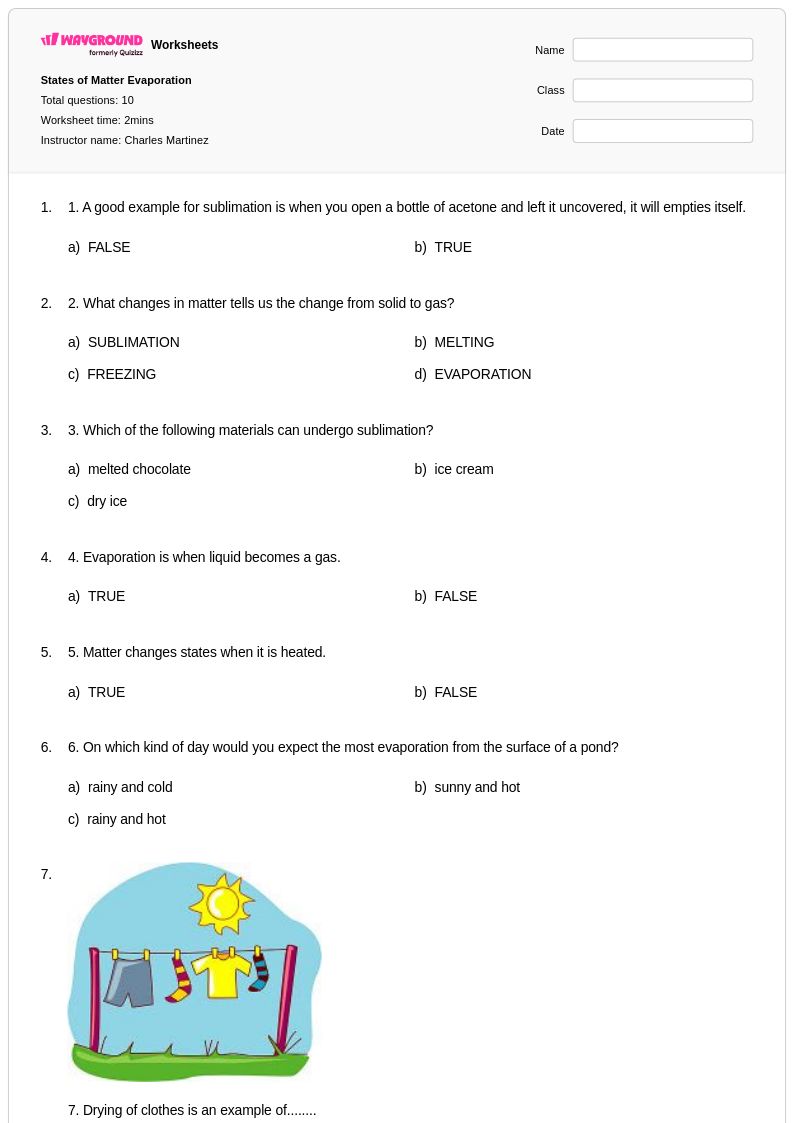
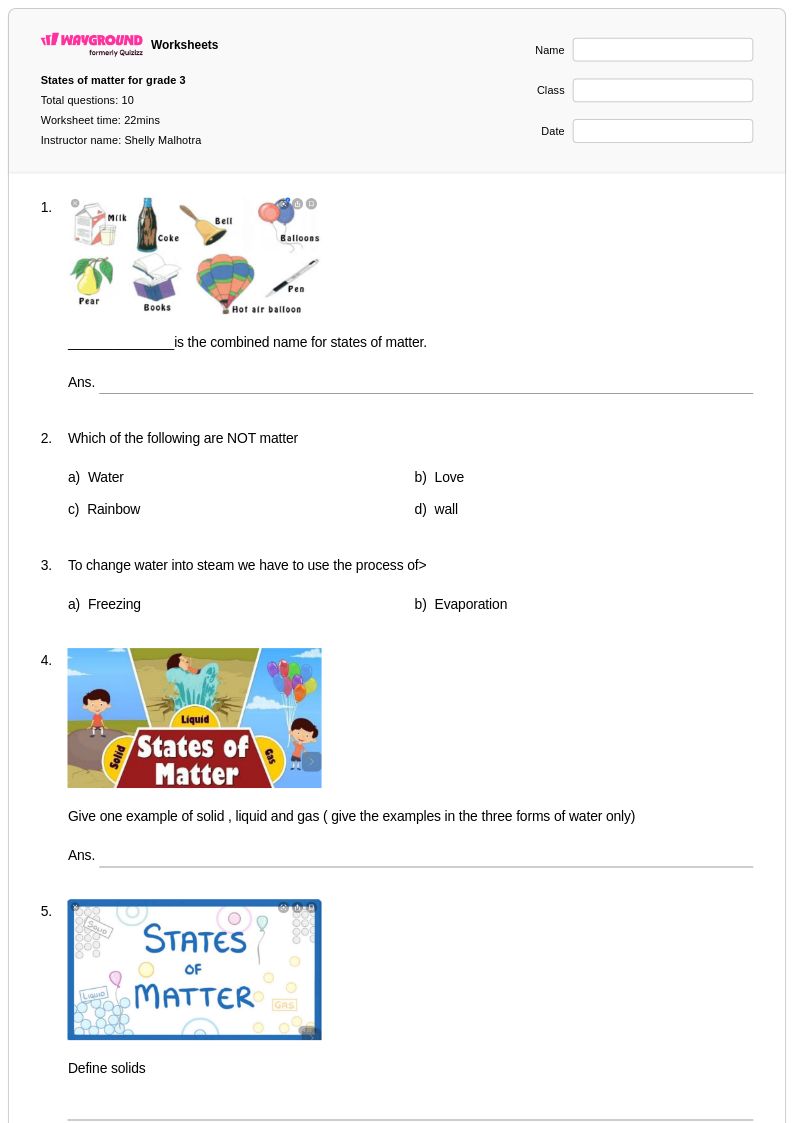
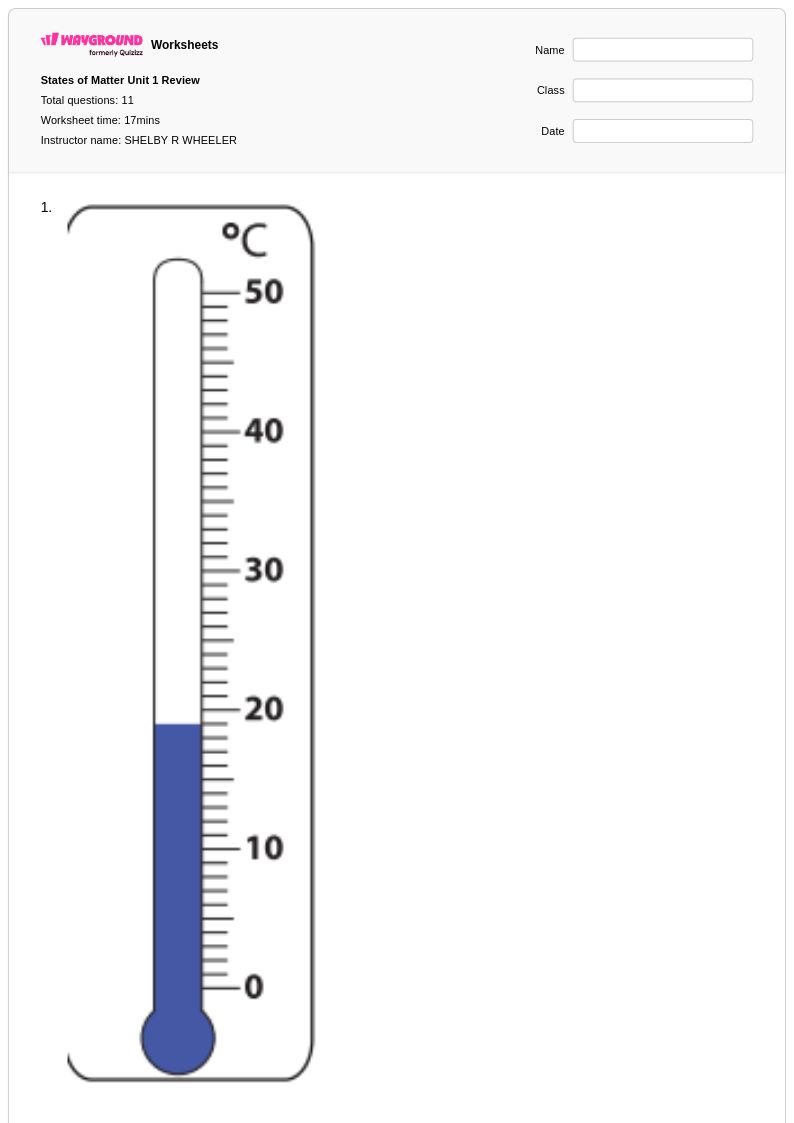
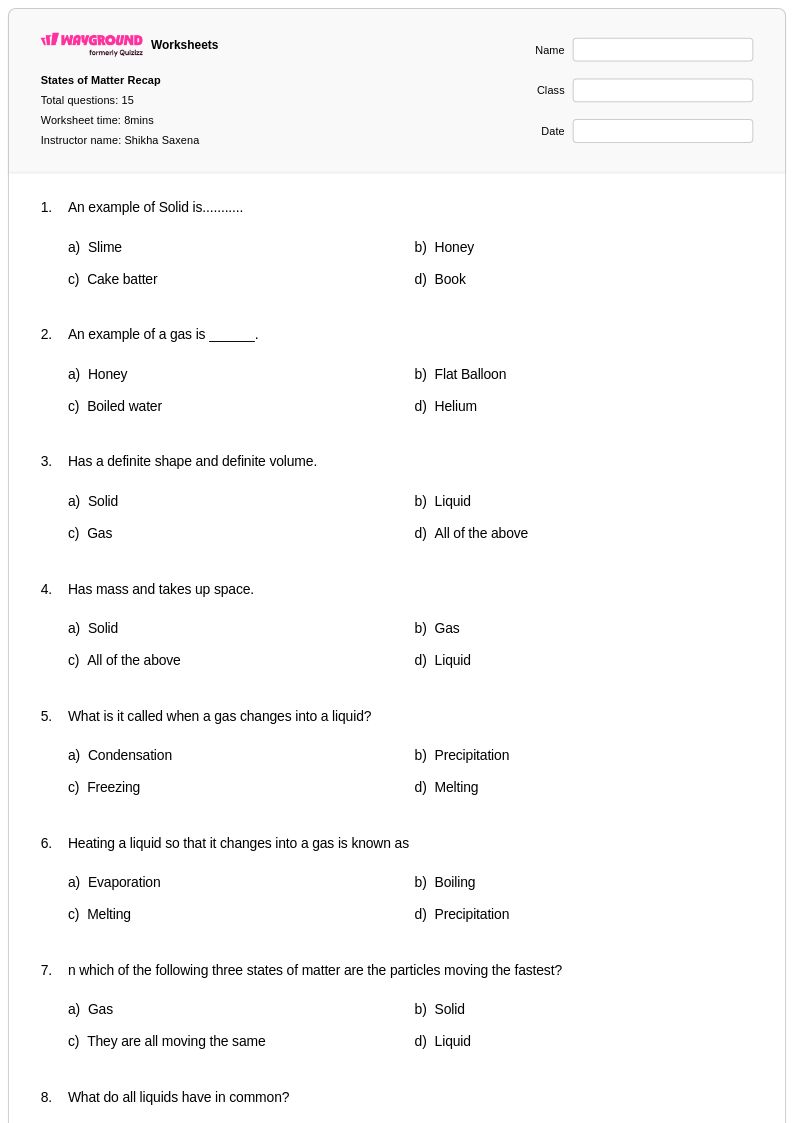
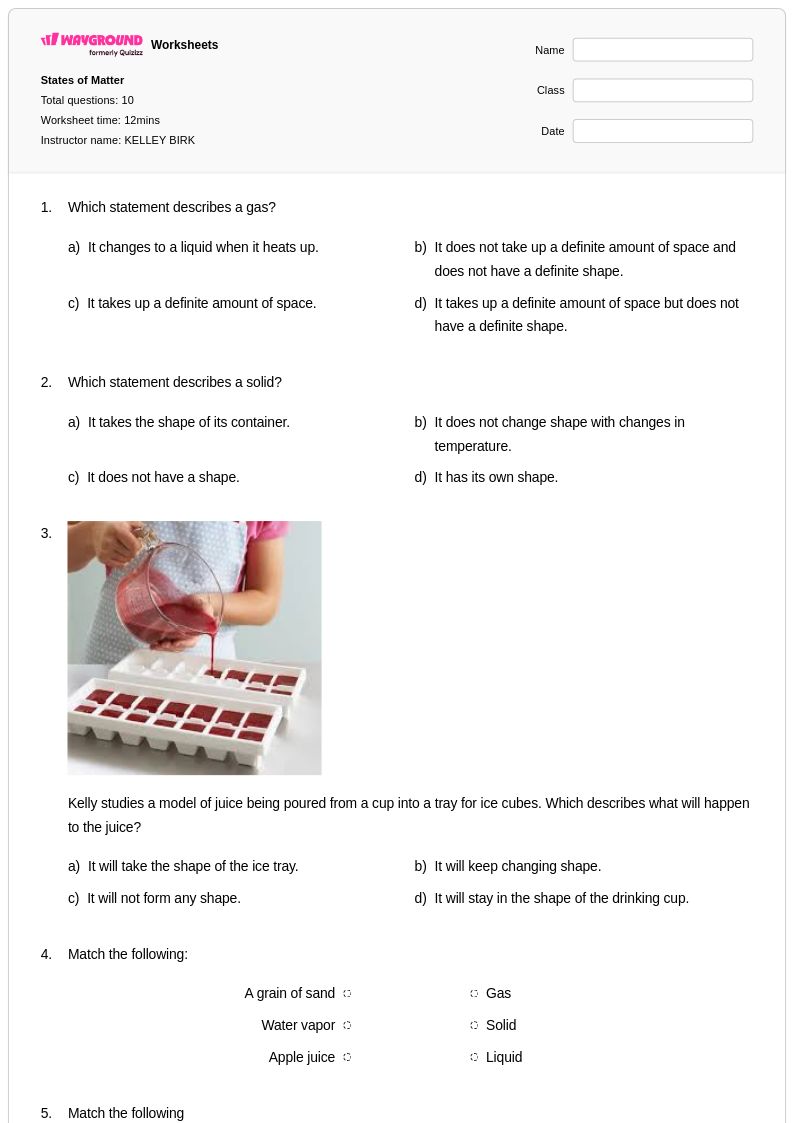
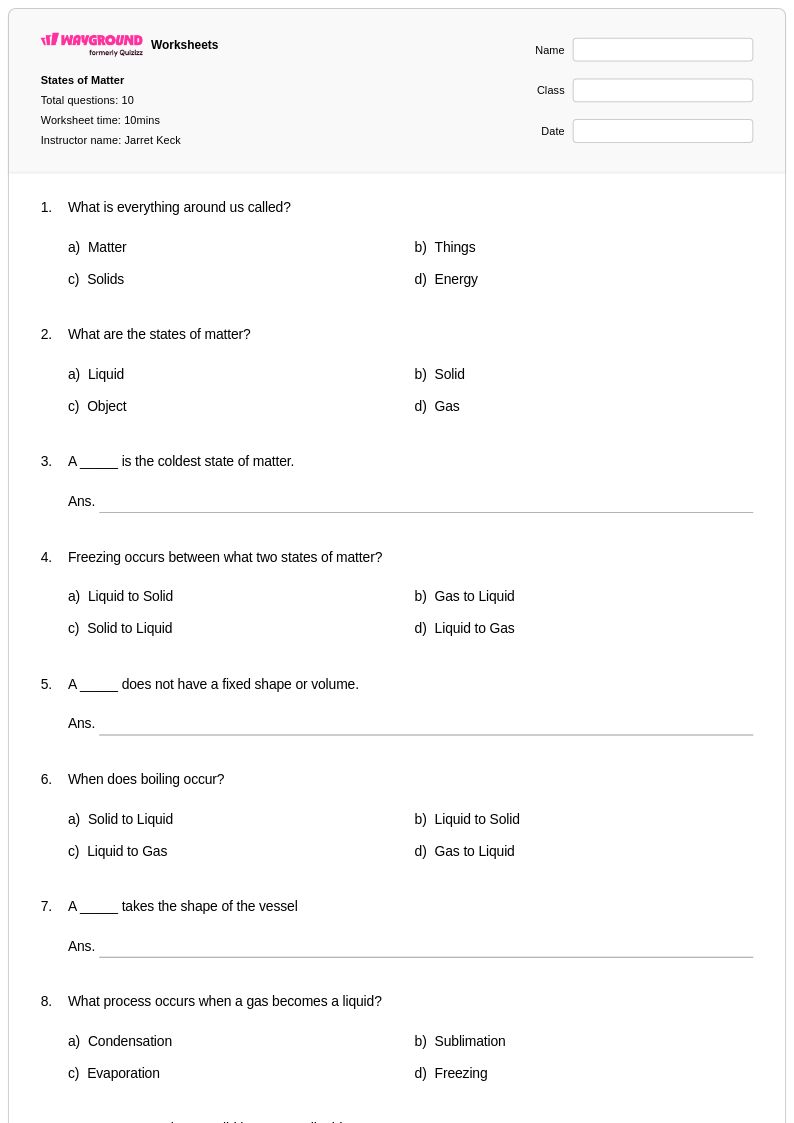
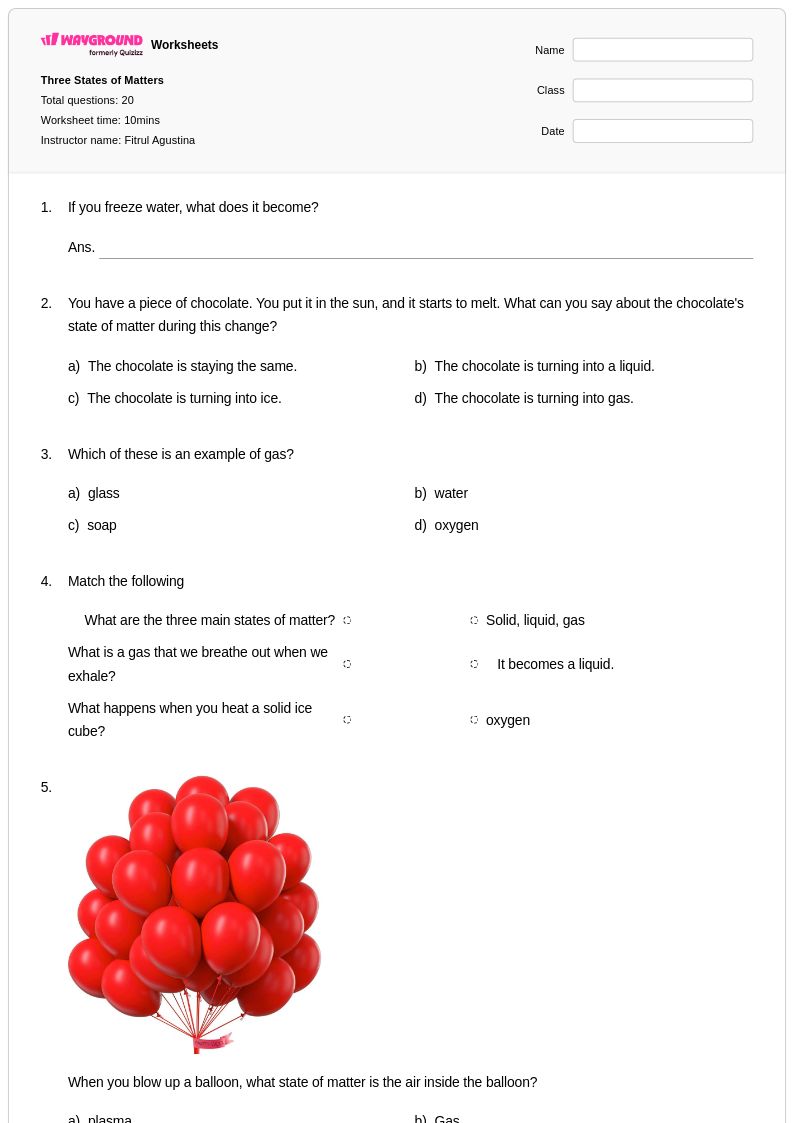
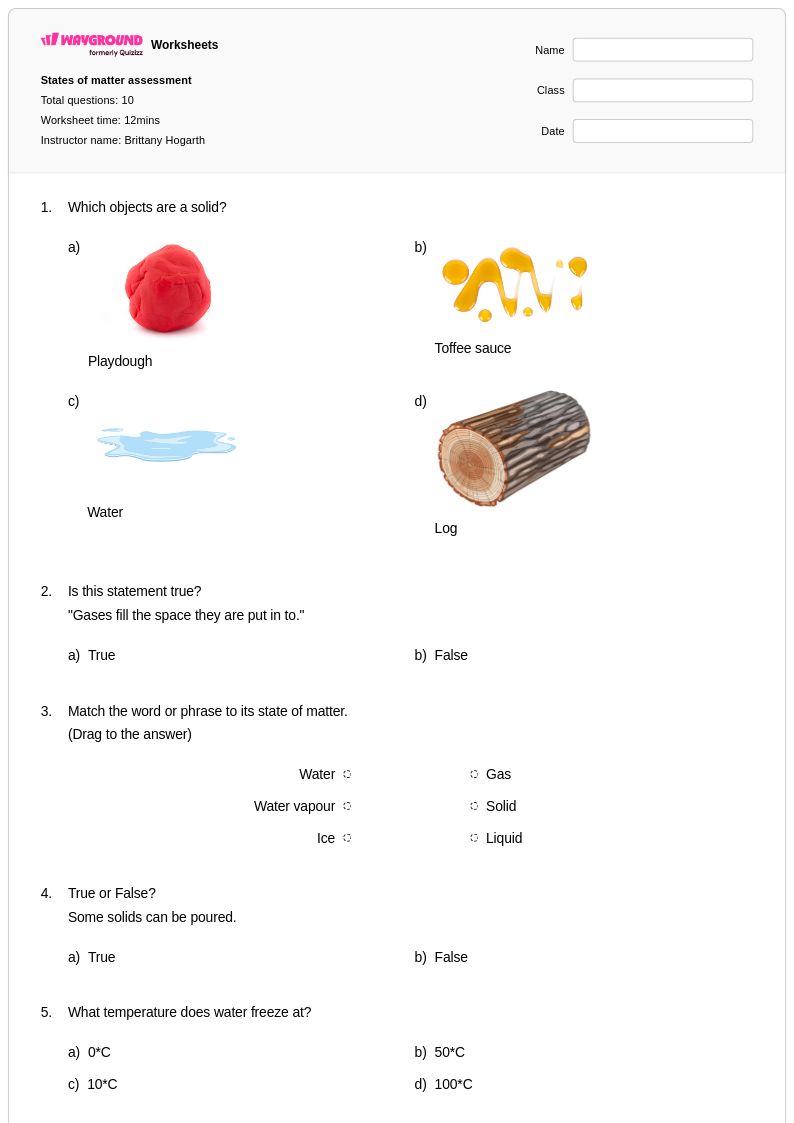
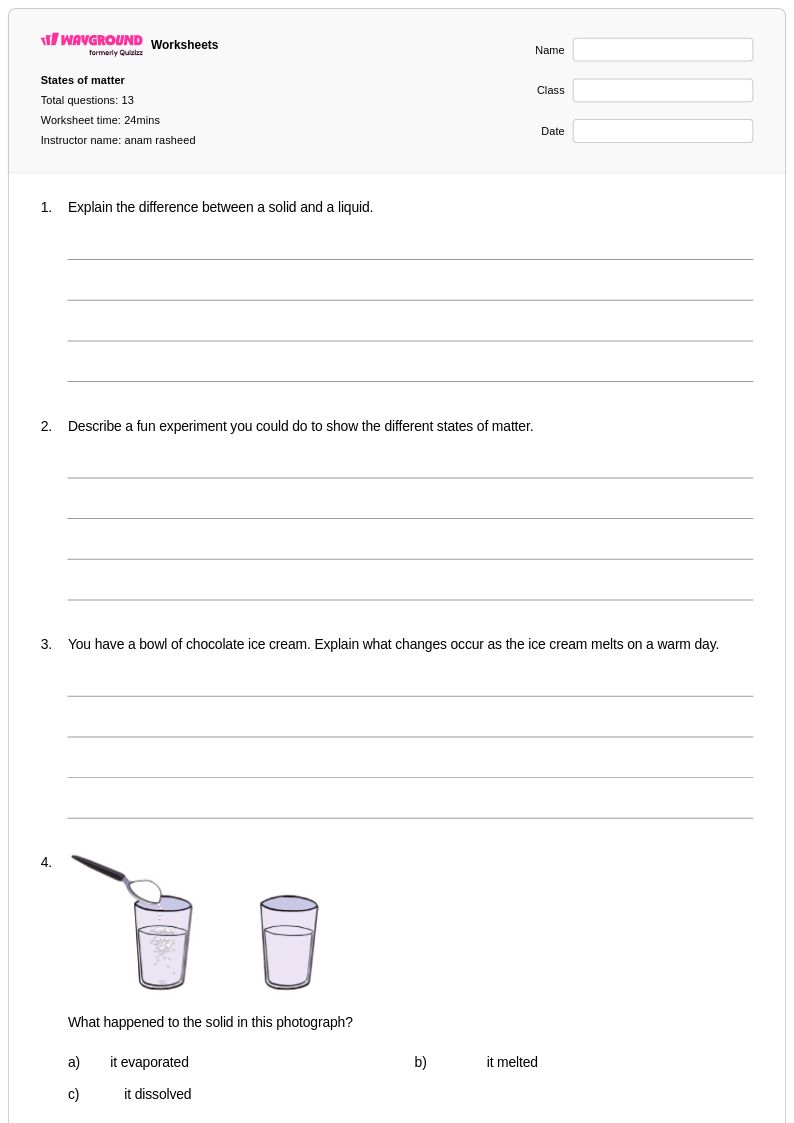
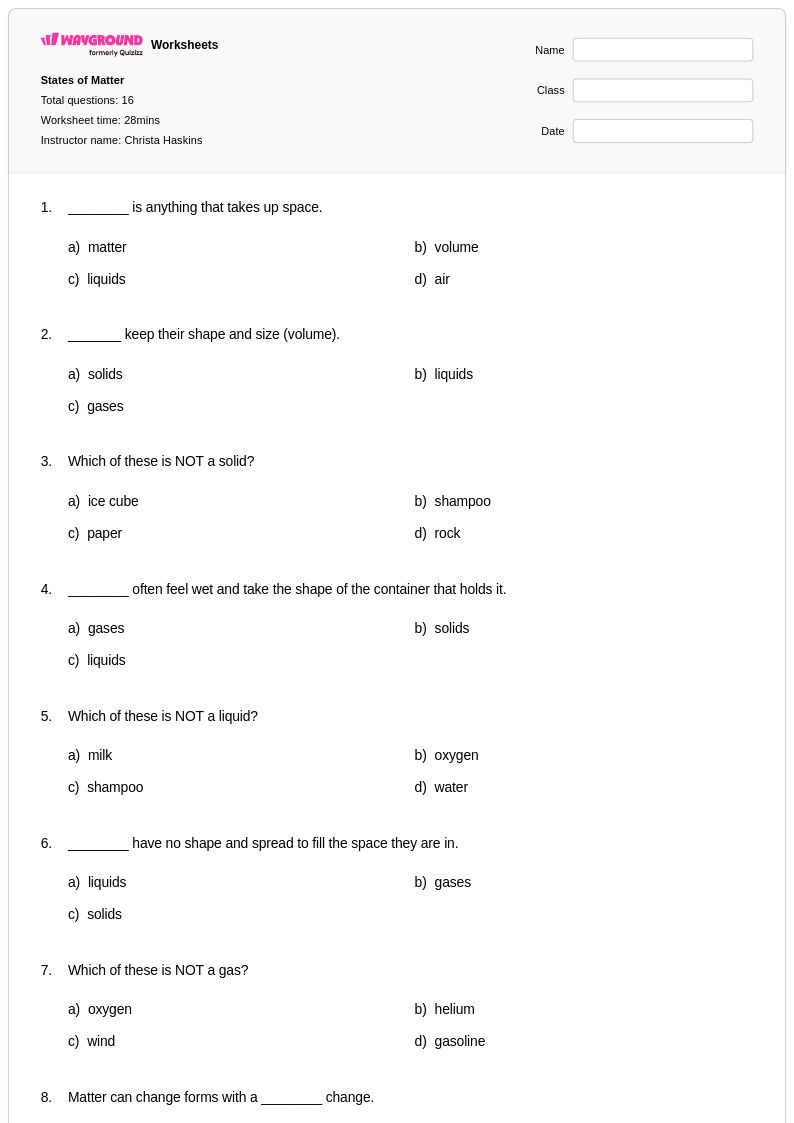
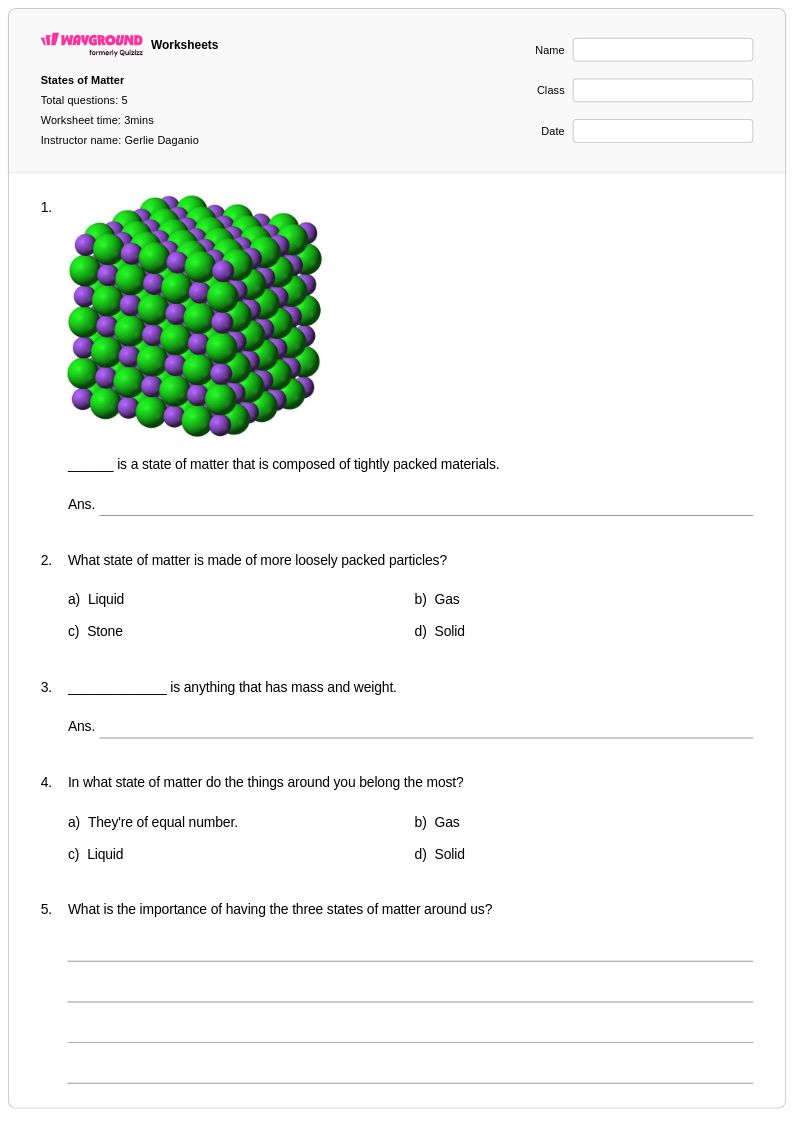
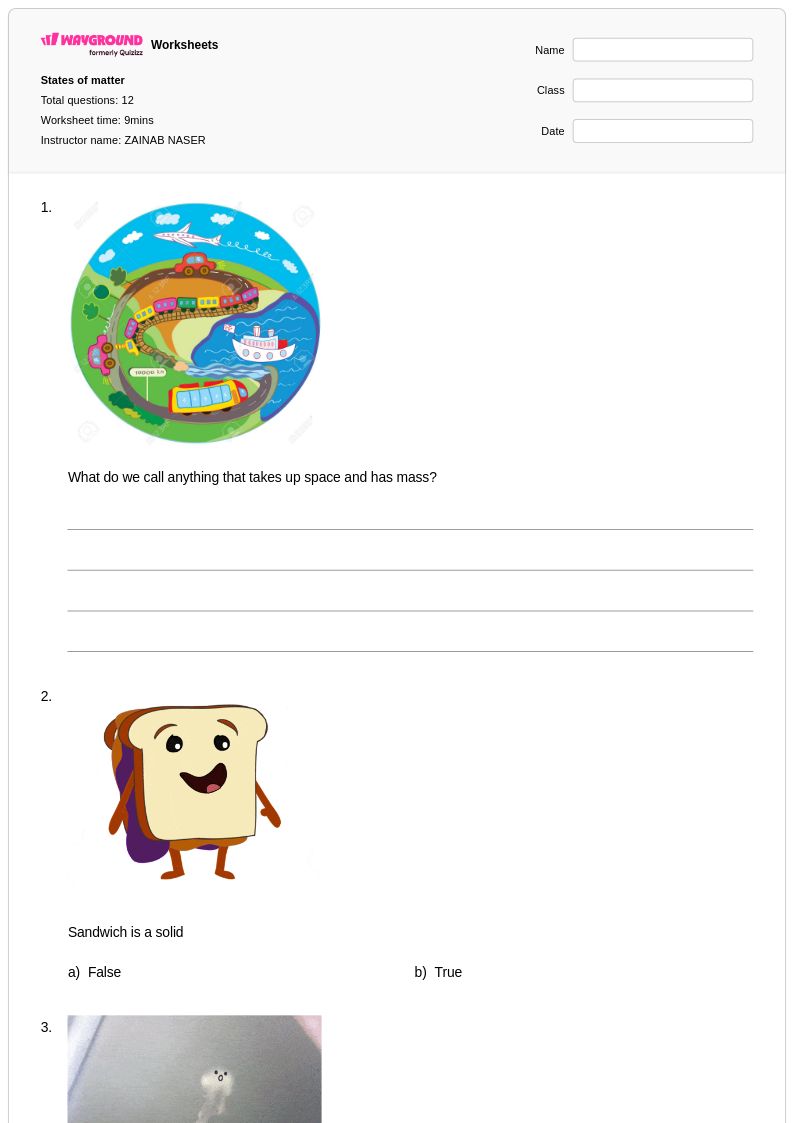
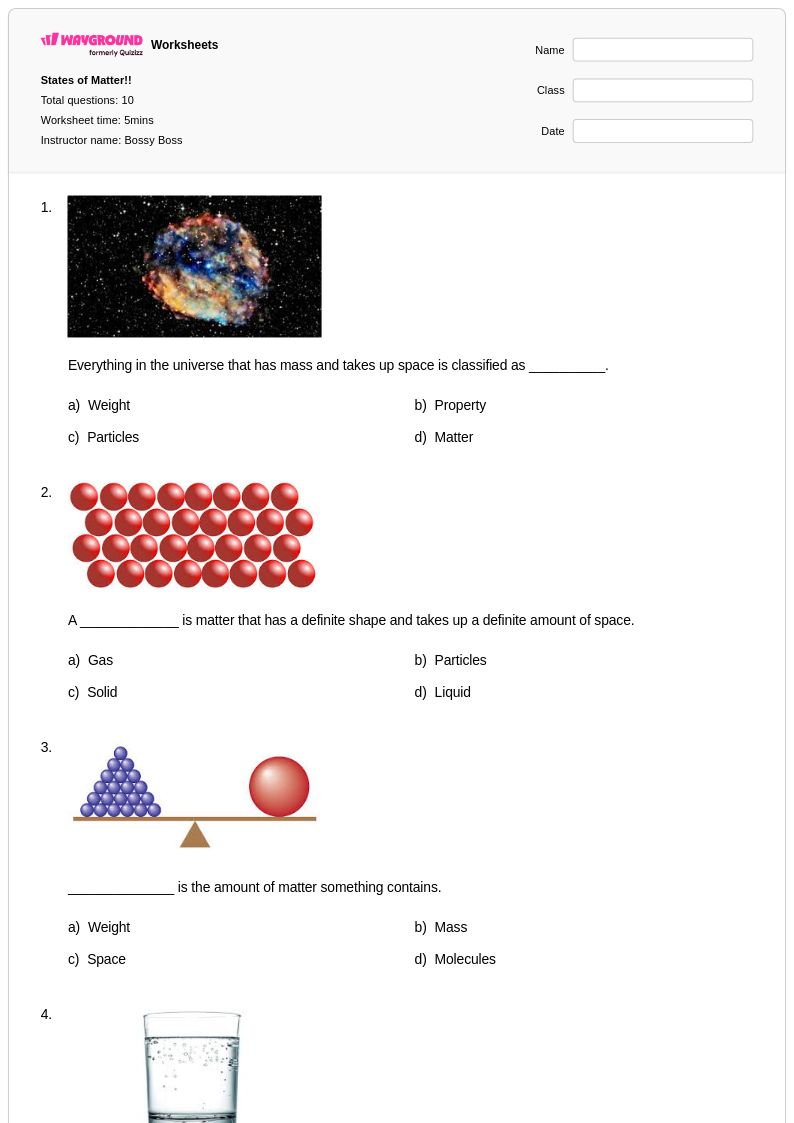
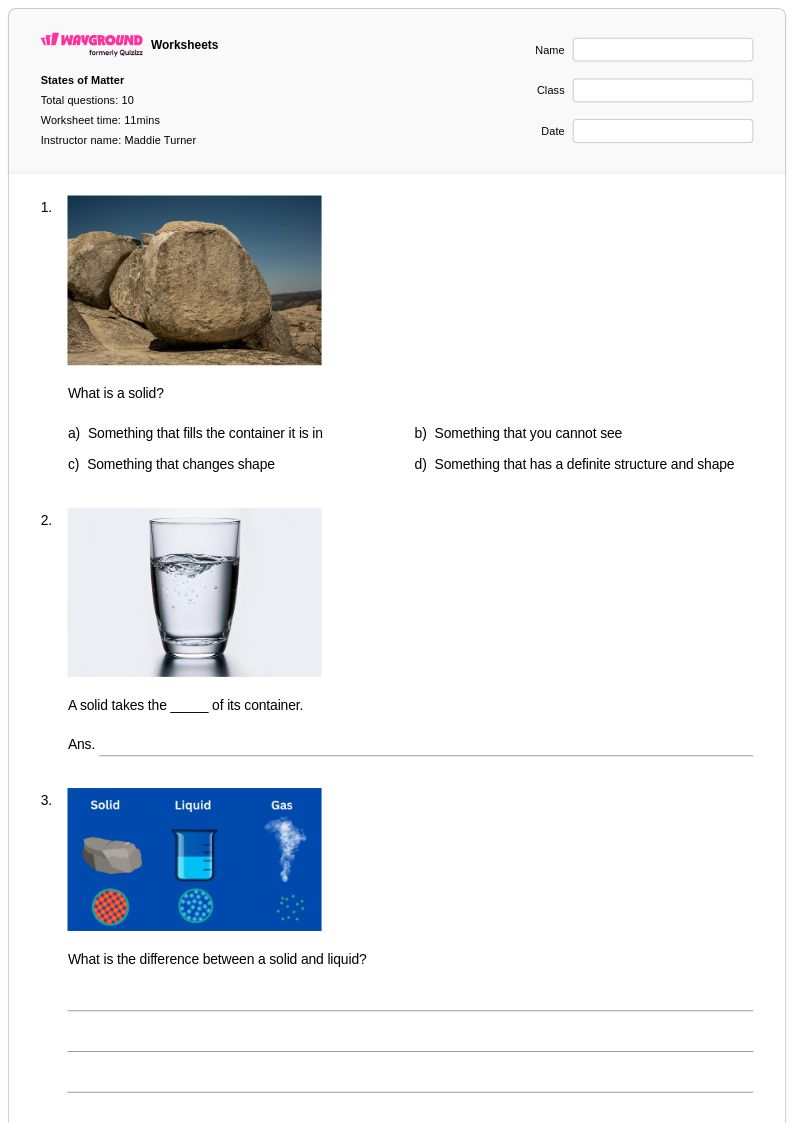
States of matter worksheets for Class 3 students available through Wayground (formerly Quizizz) provide comprehensive coverage of the fundamental physical science concepts that introduce young learners to solids, liquids, and gases. These carefully designed educational materials strengthen essential scientific observation skills while helping students identify the characteristics that distinguish each state of matter in their everyday environment. The practice problems guide students through hands-on exploration of how matter behaves differently in each state, from recognizing the fixed shape of solids to understanding how liquids take the shape of their containers and how gases expand to fill available space. Each worksheet includes detailed answer keys that support both independent learning and teacher-guided instruction, with free printable pdf formats ensuring accessibility for diverse classroom needs.
Wayground (formerly Quizizz) empowers educators with millions of teacher-created resources specifically designed to support Class 3 states of matter instruction through robust search and filtering capabilities that align with state science standards. The platform's differentiation tools enable teachers to customize worksheets based on individual student readiness levels, ensuring that both struggling learners and advanced students receive appropriate challenge and support. These flexible resources are available in both printable and digital formats, including downloadable pdfs, making them ideal for traditional classroom instruction, remote learning environments, and hybrid teaching models. Teachers can efficiently plan comprehensive lessons while using these materials for targeted remediation of misconceptions about matter properties, enrichment activities that extend learning beyond basic identification, and ongoing skill practice that reinforces scientific vocabulary and observational techniques essential for elementary physical science understanding.
FAQs
How do I teach states of matter to elementary or middle school students?
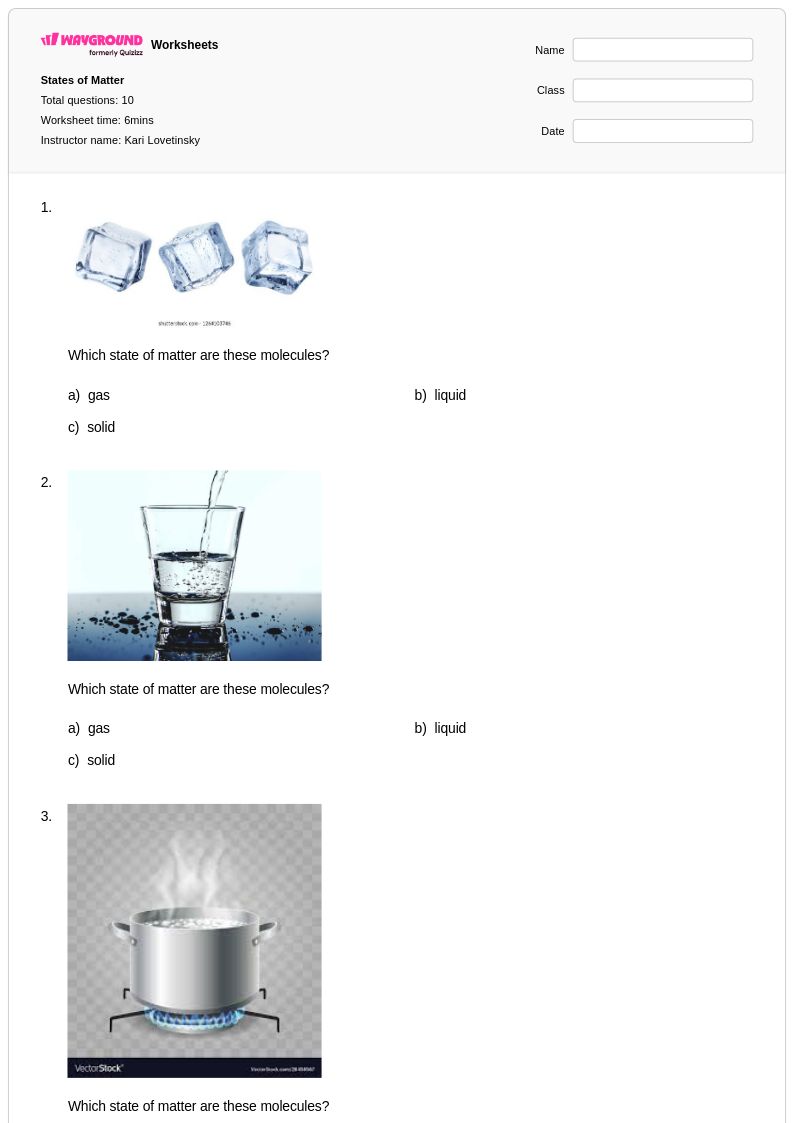
Start by grounding the concept in physical examples students already know — ice, water, and steam are the clearest entry point for demonstrating how the same substance behaves differently across states. From there, build toward particle-level explanations by having students compare molecular spacing and movement in solids, liquids, and gases. Using diagrams, sorting activities, and phase change scenarios helps students develop a conceptual model before introducing formal vocabulary like sublimation or condensation.
What kinds of practice problems help students understand states of matter?
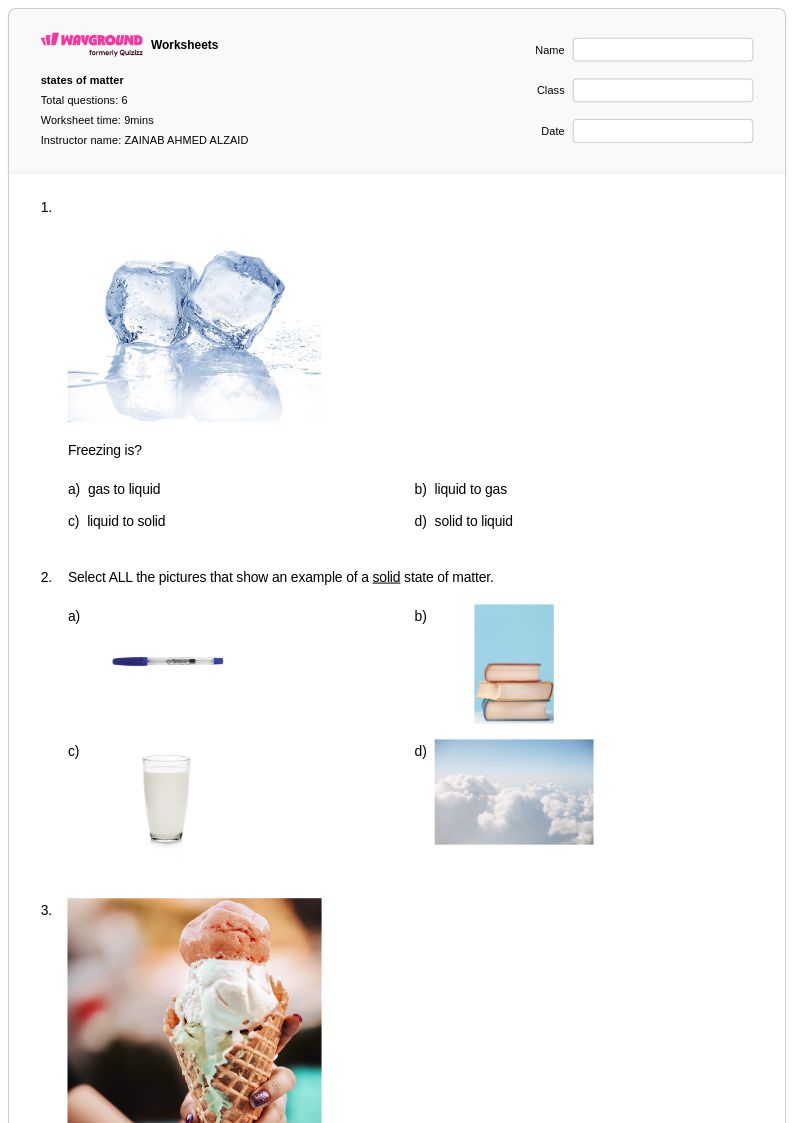
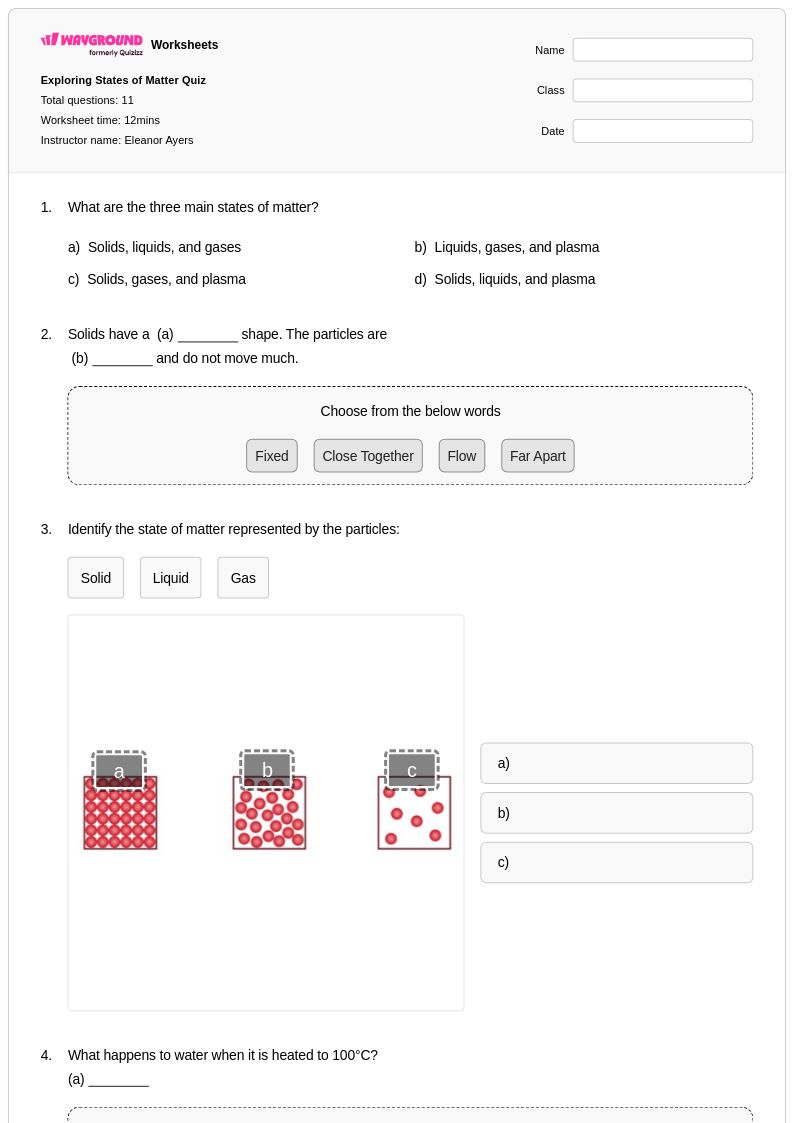
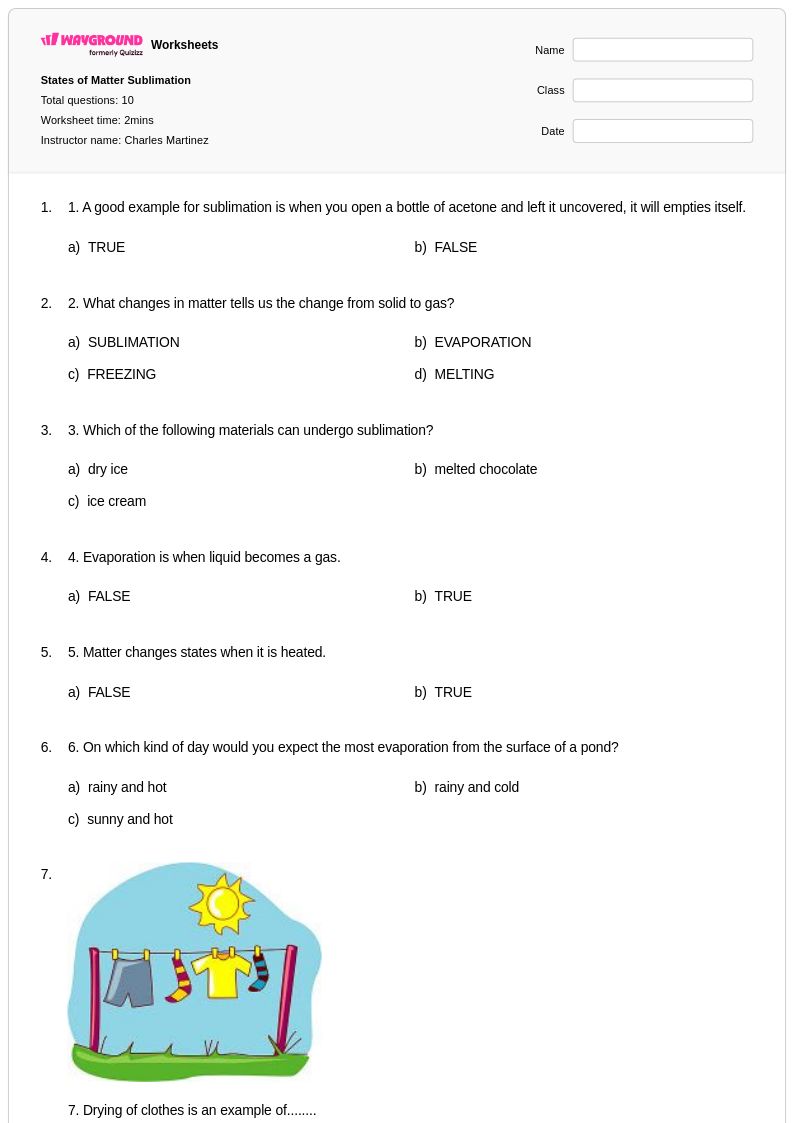
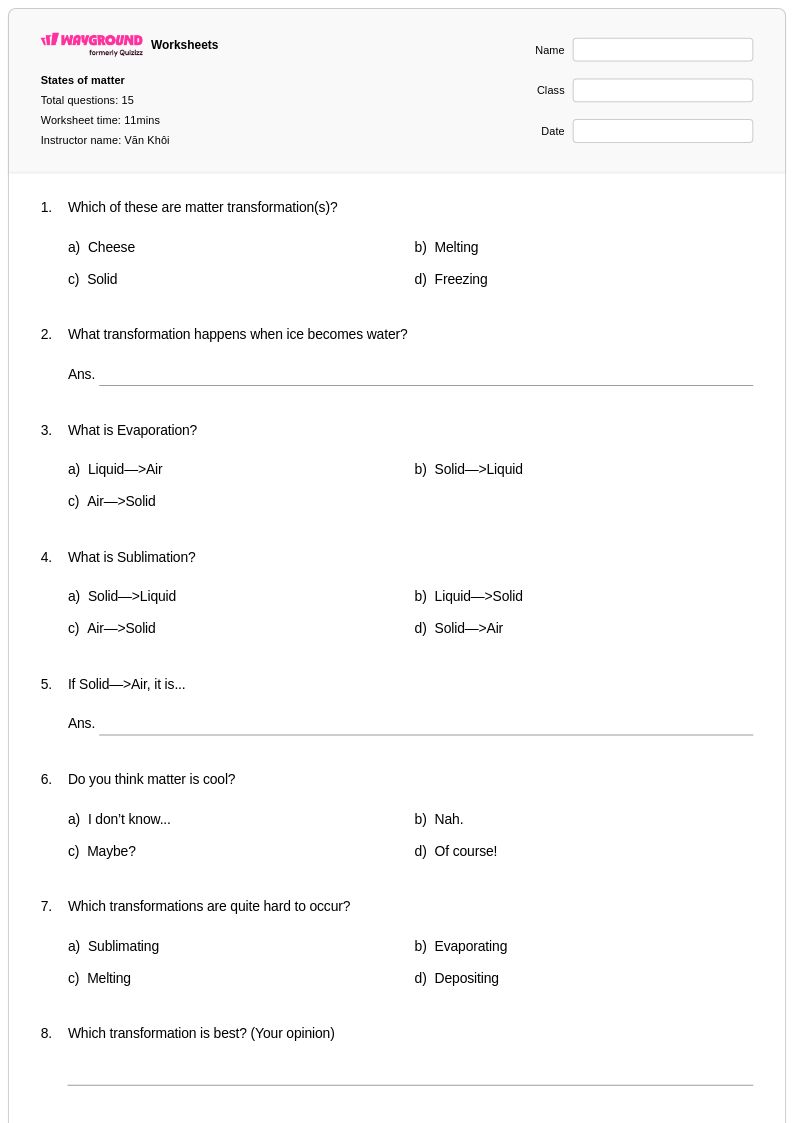
Effective practice includes identifying and classifying examples of solids, liquids, and gases; analyzing particle diagrams to describe molecular arrangement and movement; and predicting what happens to a substance when it is heated or cooled. Problems that walk students through phase transitions — melting, freezing, evaporation, condensation, and sublimation — are especially useful for building the reasoning skills required in more advanced chemistry courses.
What misconceptions do students commonly have about states of matter?
A common misconception is that temperature alone determines what state a substance is in, without accounting for pressure or the specific properties of the substance. Students also frequently confuse evaporation with boiling, not realizing evaporation can occur at the surface at any temperature. Another recurring error is treating plasma as exotic or irrelevant when it is actually the most abundant state of matter in the universe — addressing this early prevents conceptual gaps in later chemistry and physics study.
How can I use states of matter worksheets to support different learners in the same class?
States of matter lends itself well to tiered practice — simpler worksheets can focus on identification and basic vocabulary, while more challenging versions require students to analyze particle behavior and predict phase change outcomes. On Wayground, teachers can apply individual student accommodations such as read aloud, extended time, reduced answer choices, and adjustable reading modes, so every student accesses the same core content at an appropriate level. These settings are saved per student and apply automatically across future sessions without drawing attention to any individual.
How do I use Wayground's states of matter worksheets in my classroom?
Wayground's states of matter worksheets are available as printable PDFs, making them easy to distribute for in-class work or homework, and in digital formats for technology-integrated environments. Teachers can also host worksheets as live quizzes on Wayground, which allows for real-time student response tracking and immediate feedback. Both formats support the same content and answer keys, so the experience is consistent regardless of how your classroom is set up.
How do states of matter connect to real-world science applications?
States of matter underpin a wide range of real-world phenomena — from weather cycles driven by water's phase transitions to industrial processes like distillation, refrigeration, and metalworking. Connecting worksheet practice to these applications helps students see why understanding molecular behavior matters beyond the textbook. Asking students to explain everyday events like frost forming on a window or why a puddle evaporates reinforces both conceptual understanding and scientific reasoning.