Free Printable Comparative Advantage Worksheets for Class 9
Class 9 comparative advantage worksheets and printables help students master economic specialization concepts through free practice problems, interactive exercises, and comprehensive answer keys available as downloadable PDFs.
Explore printable Comparative Advantage worksheets for Class 9
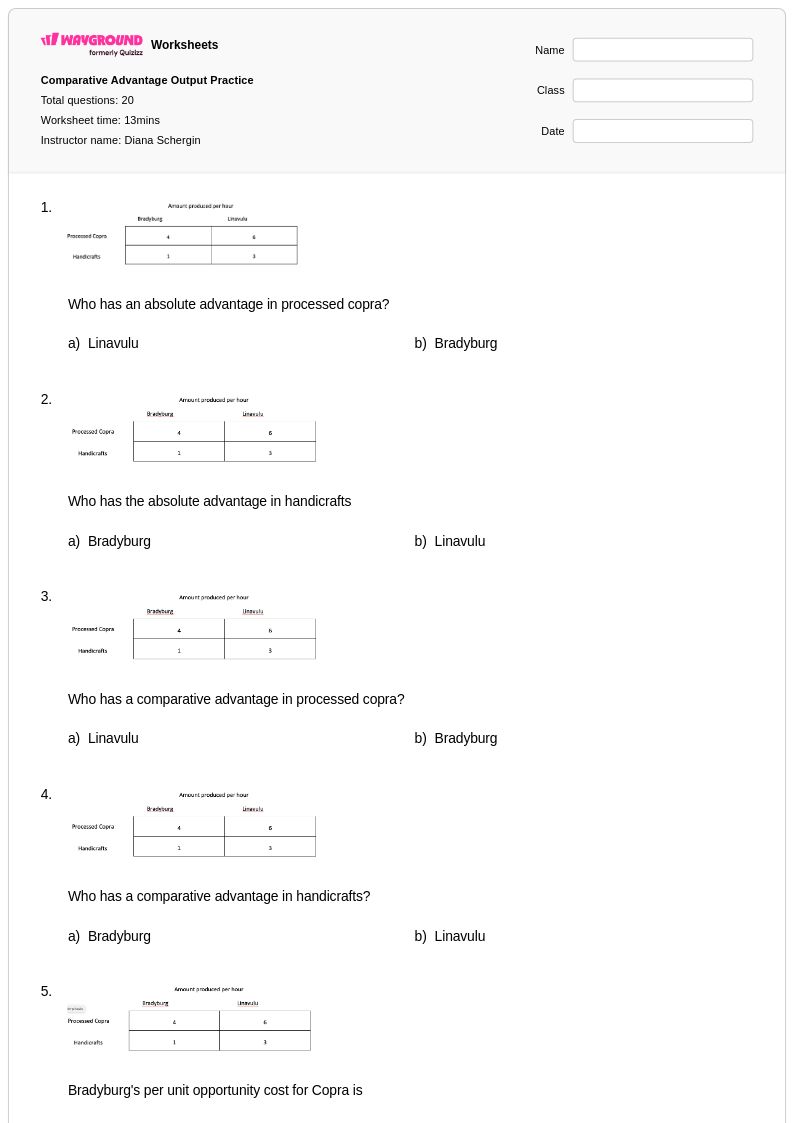
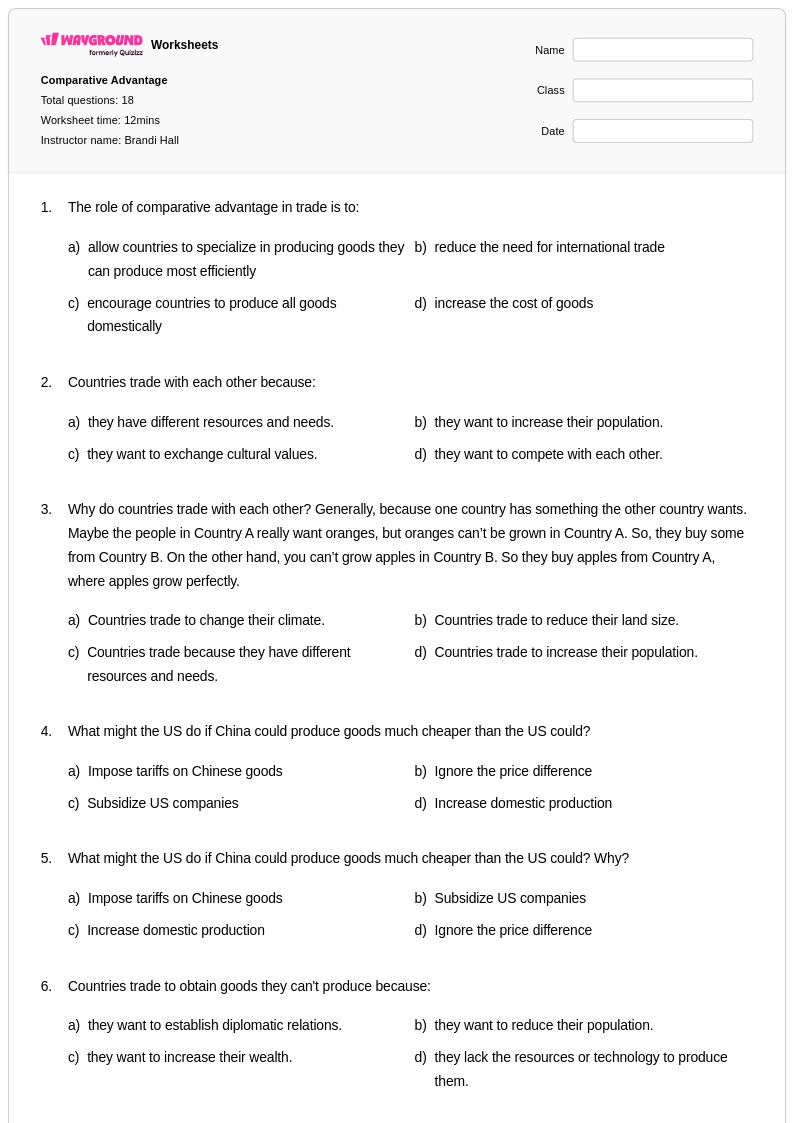
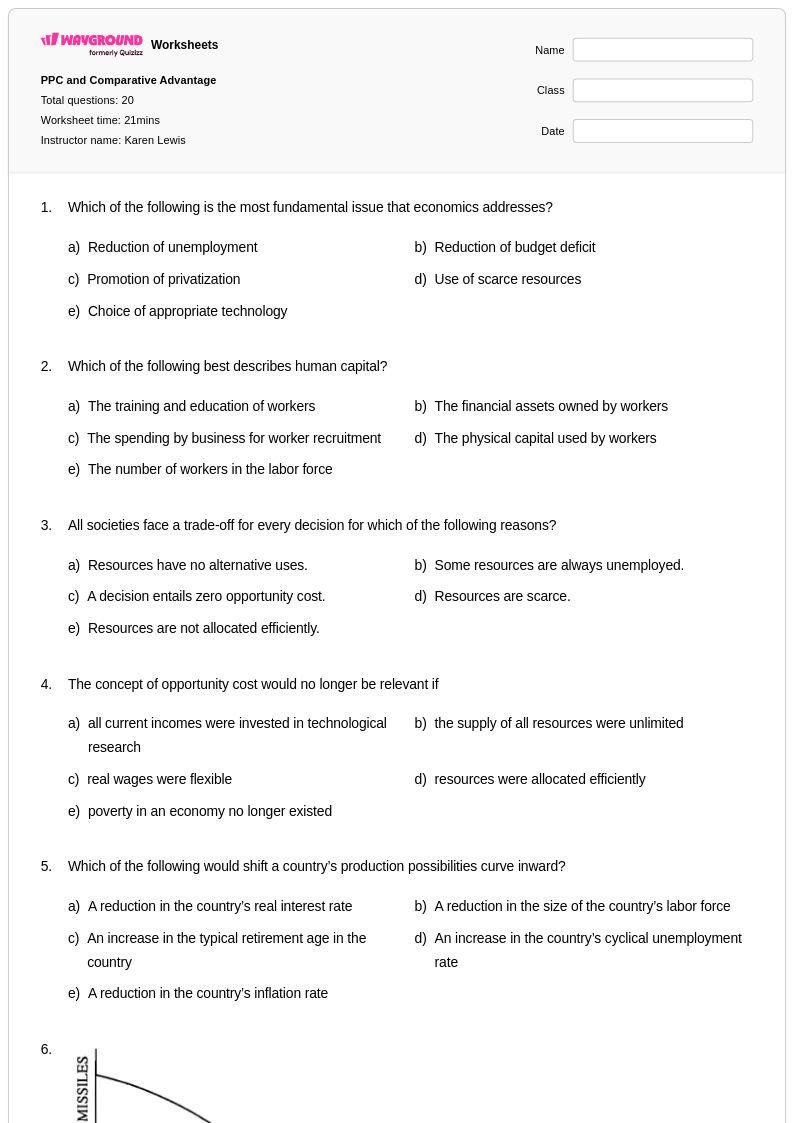
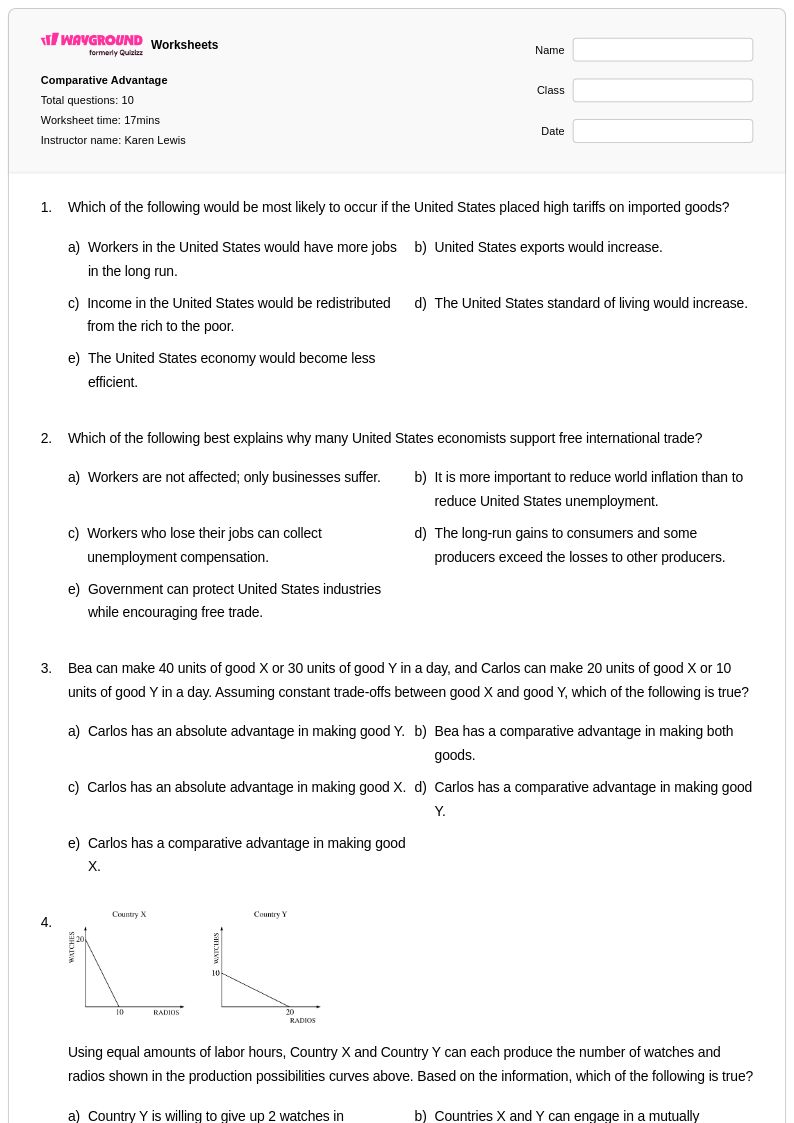
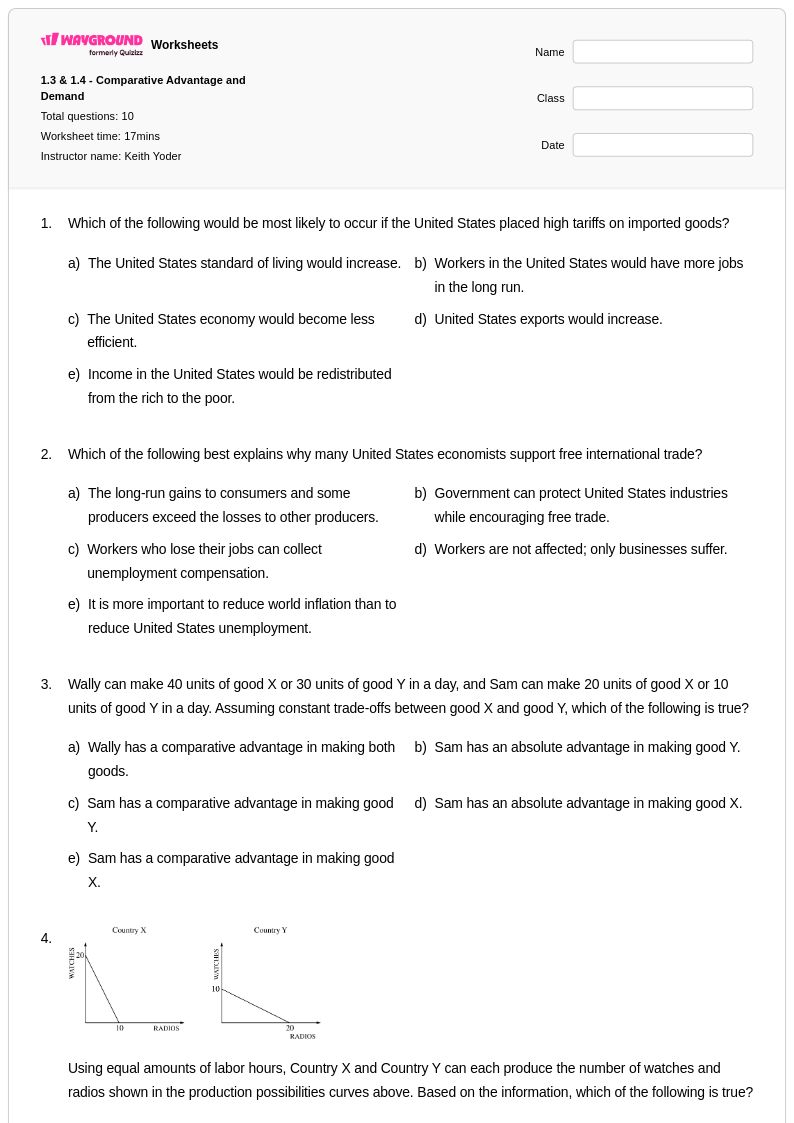
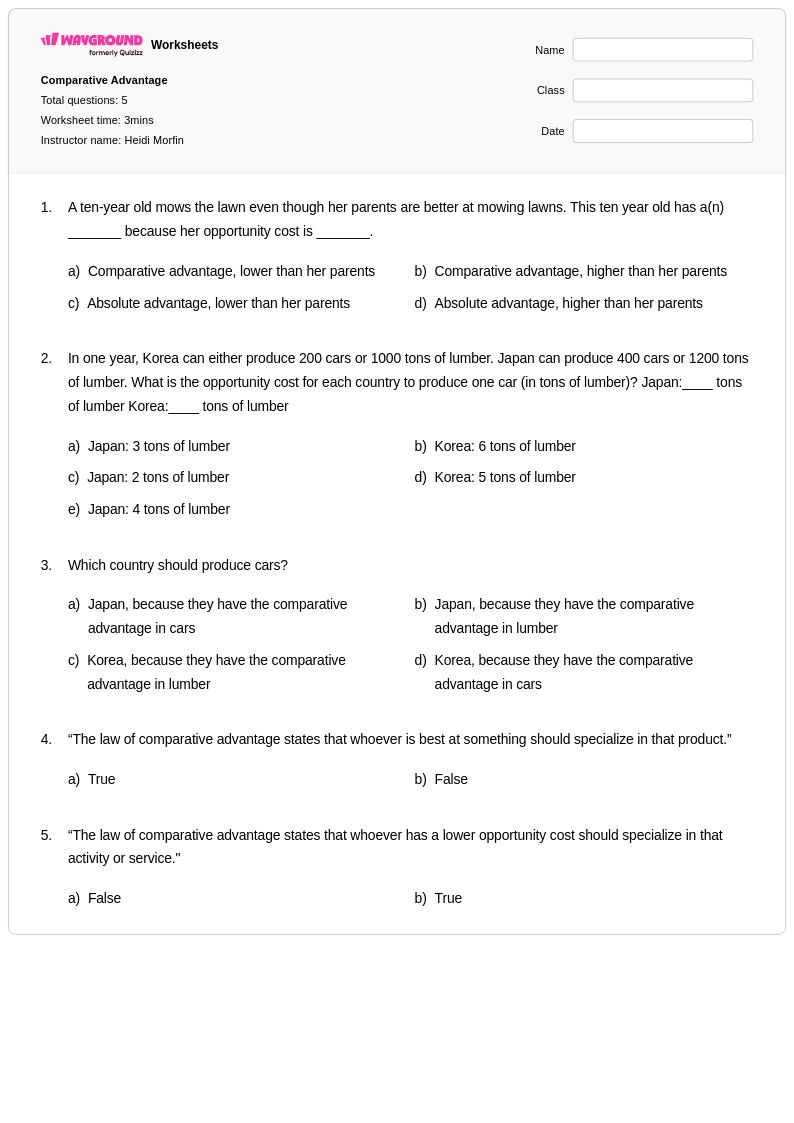
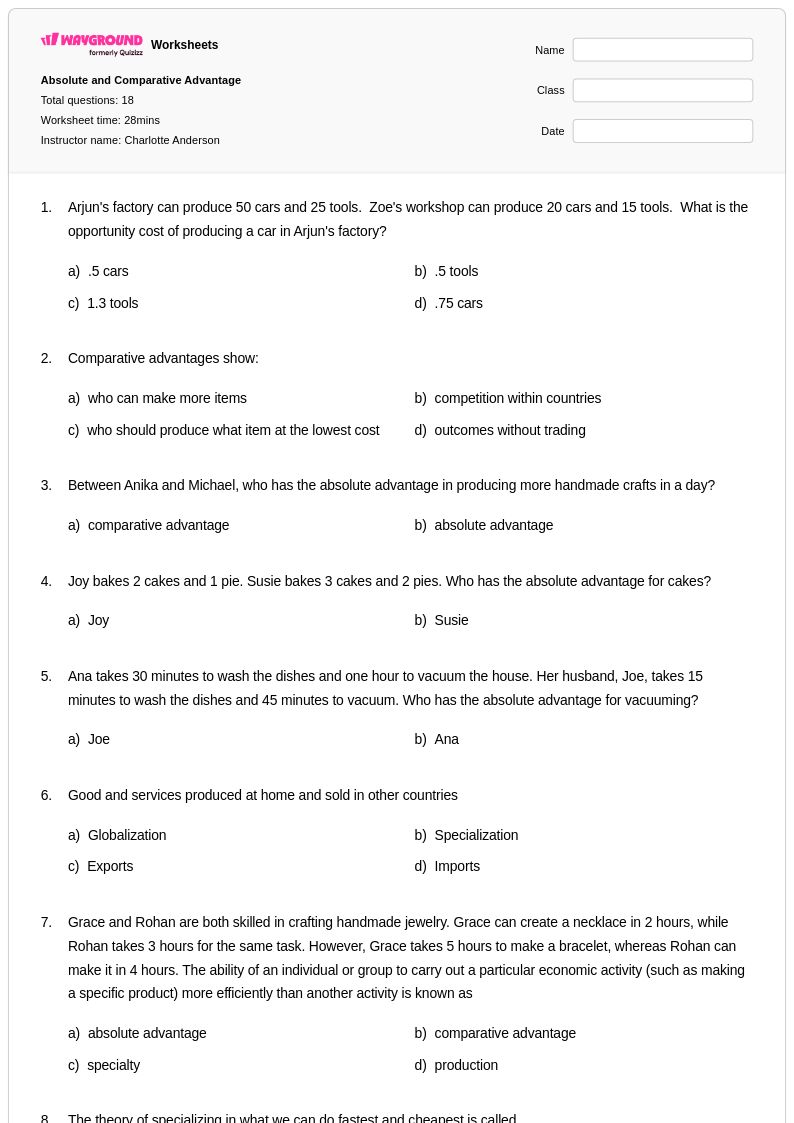
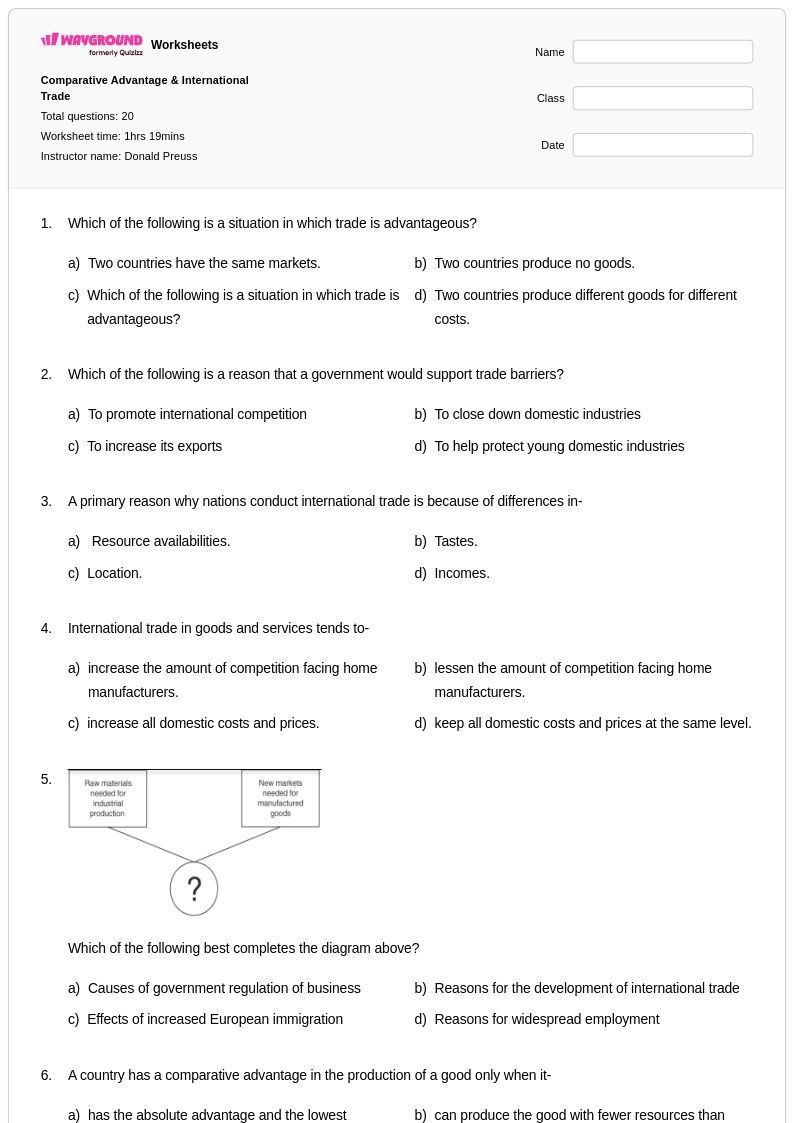
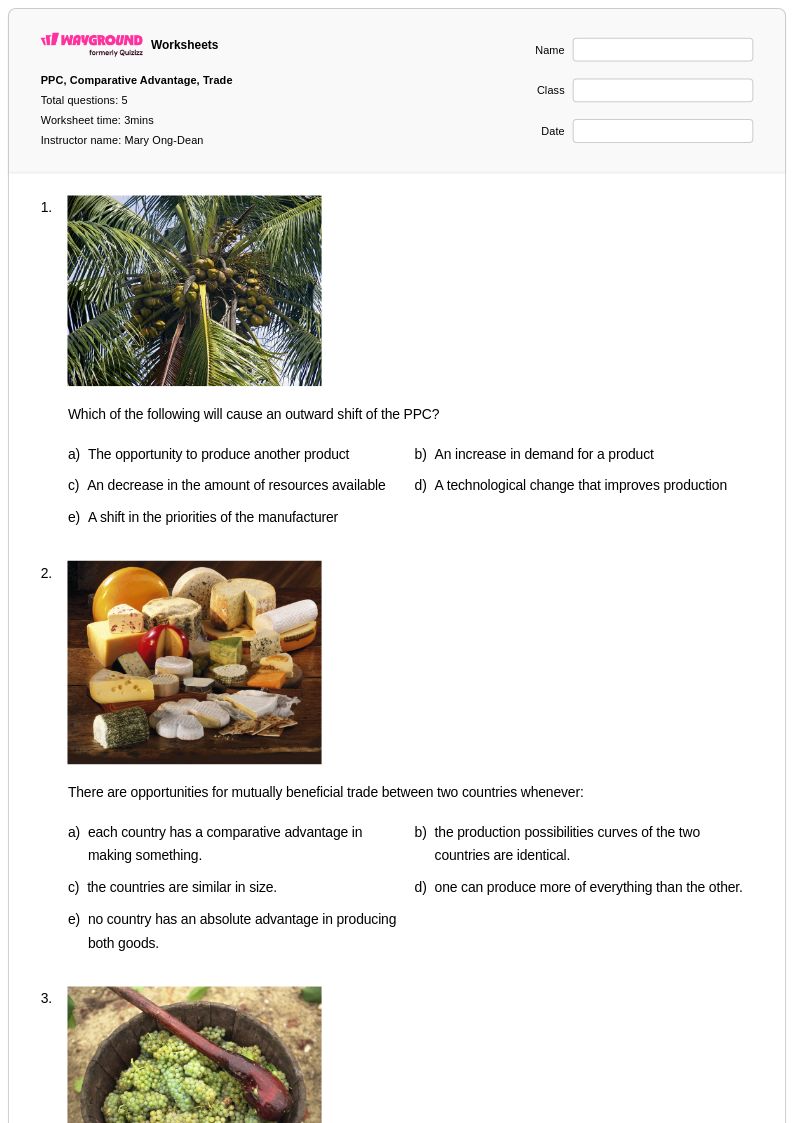
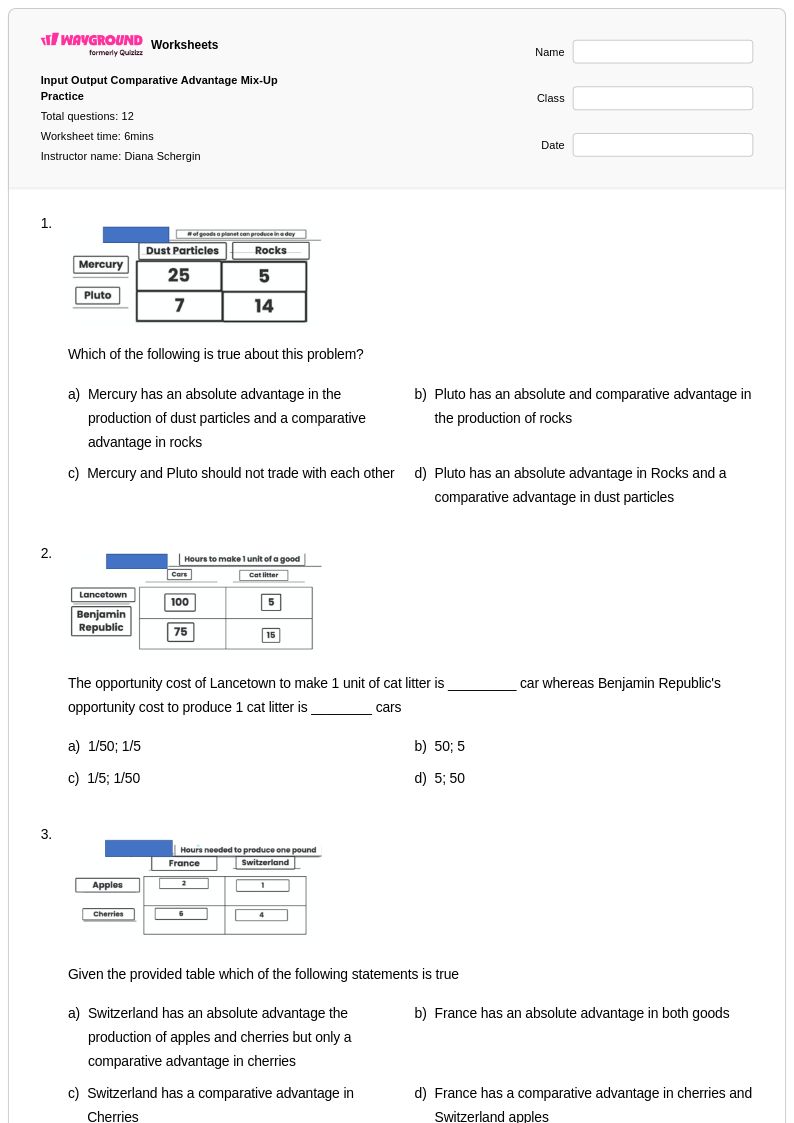
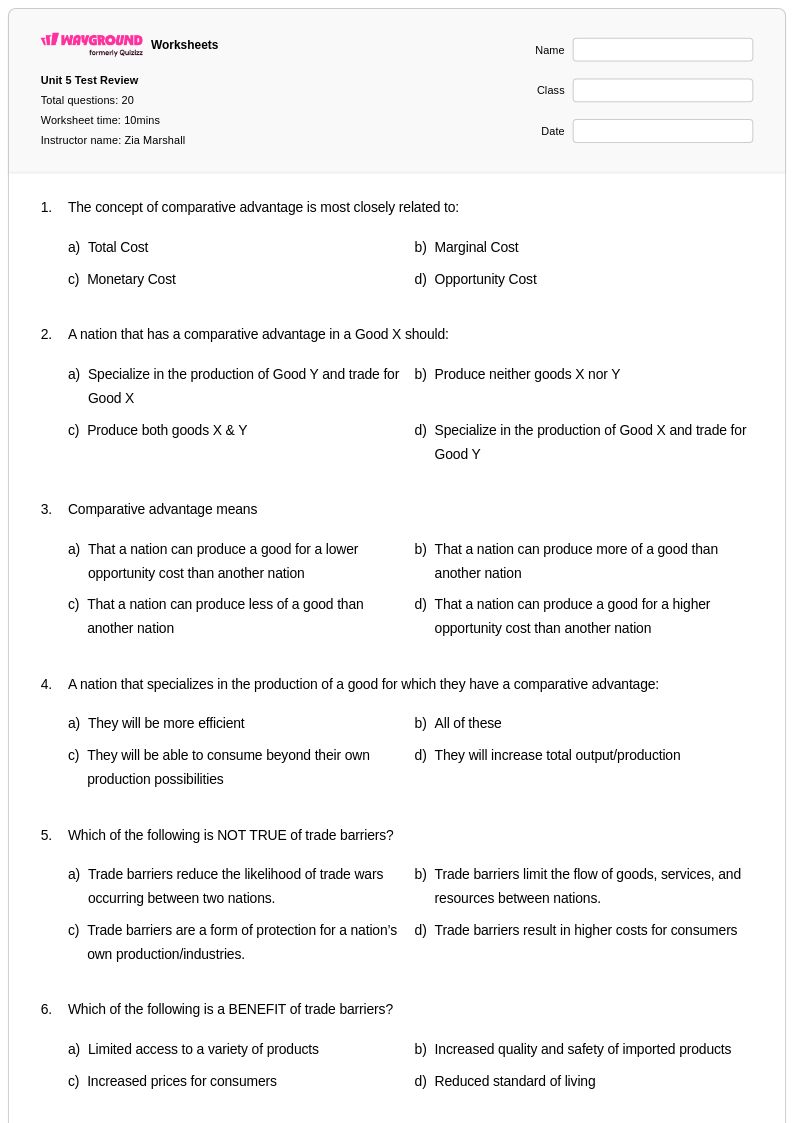
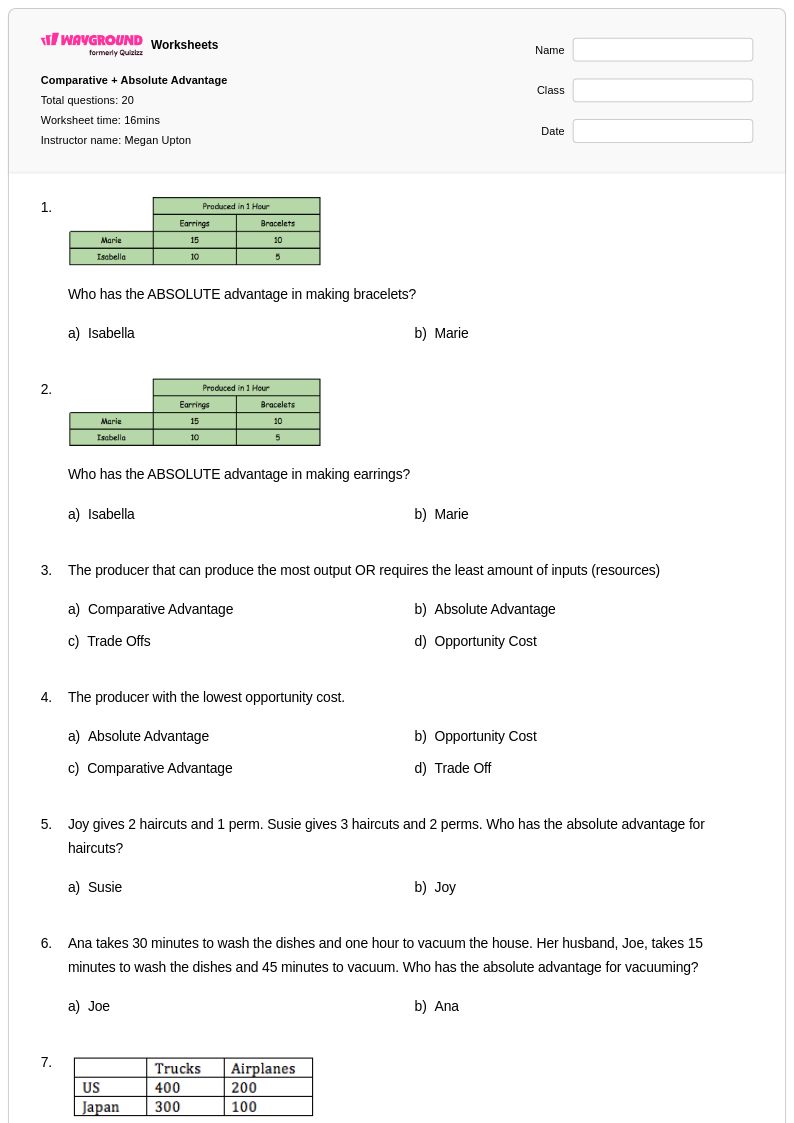
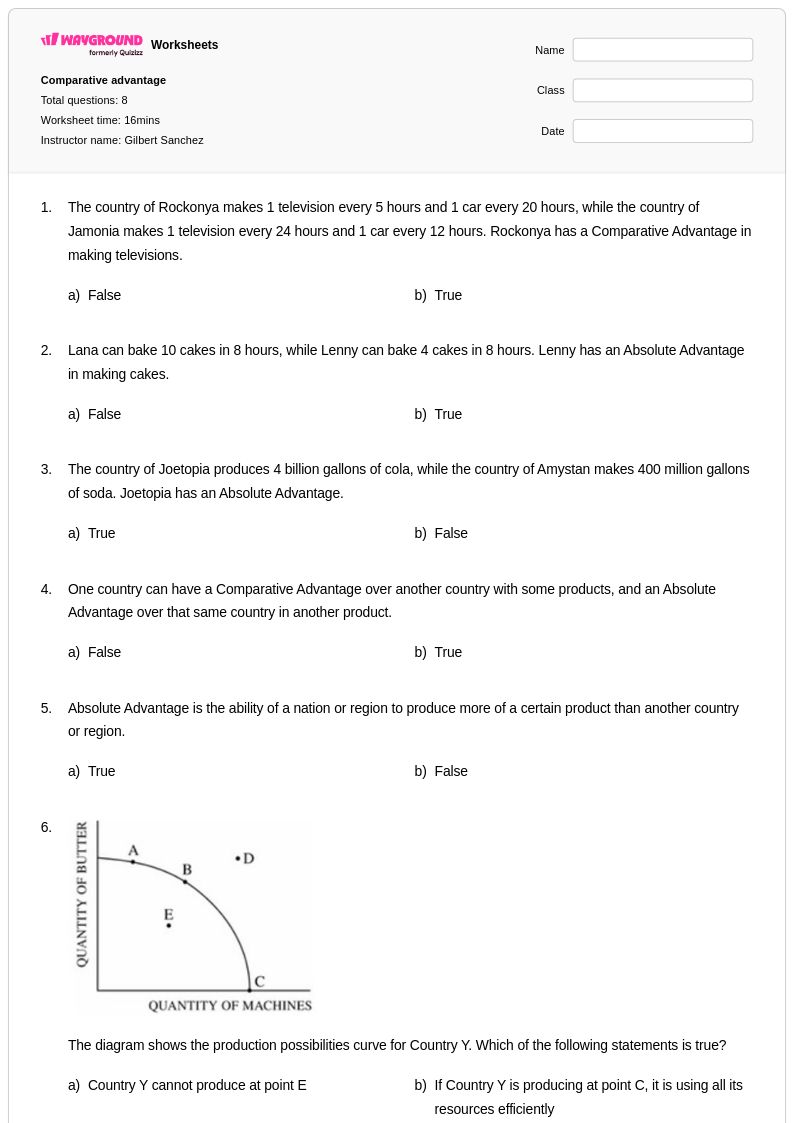
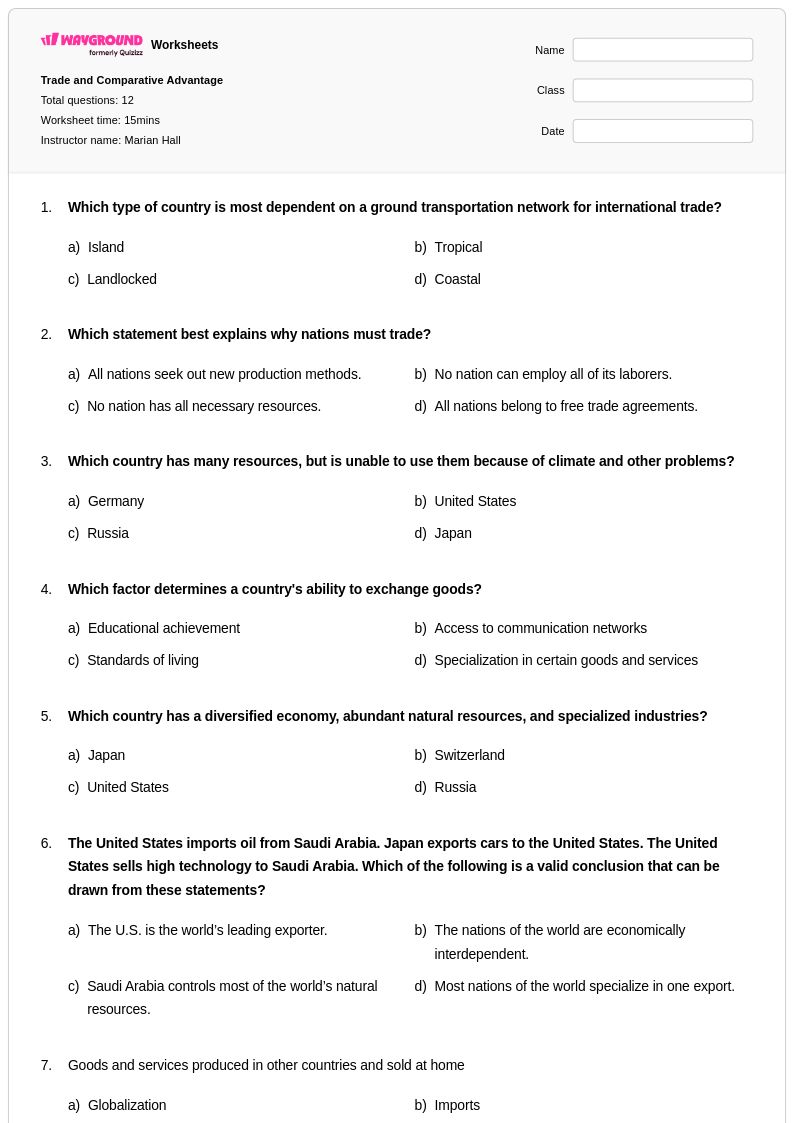
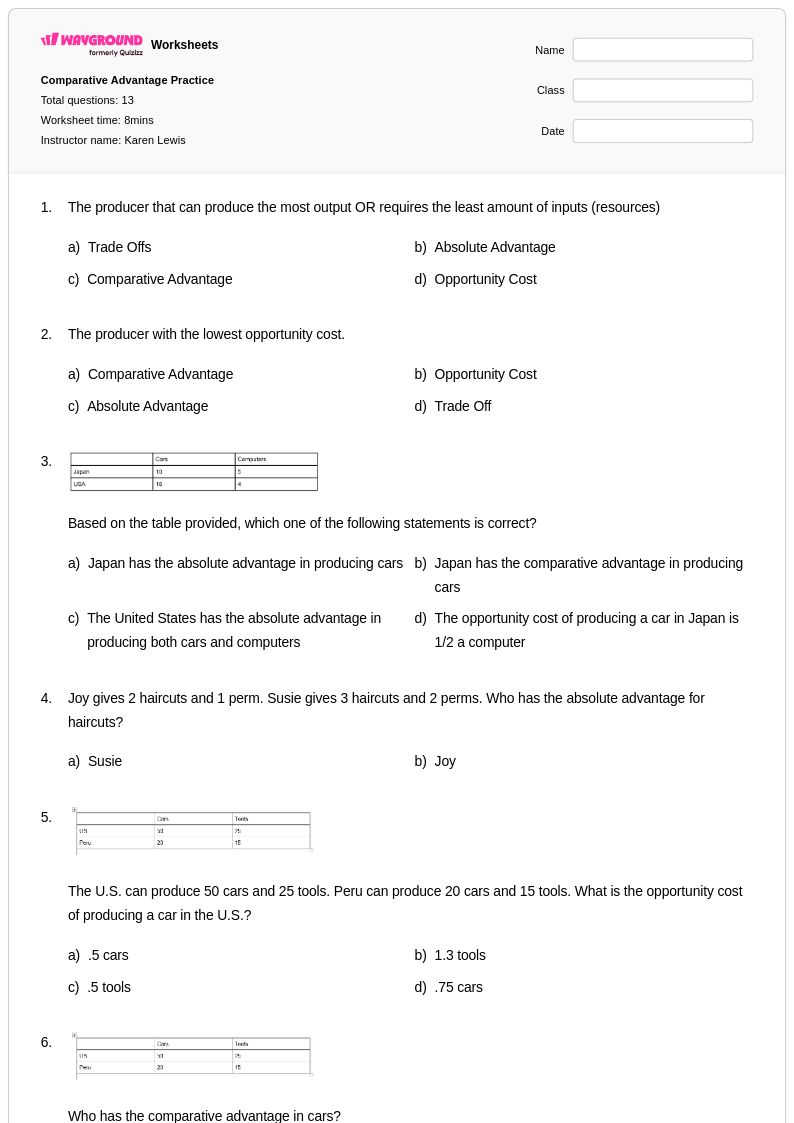
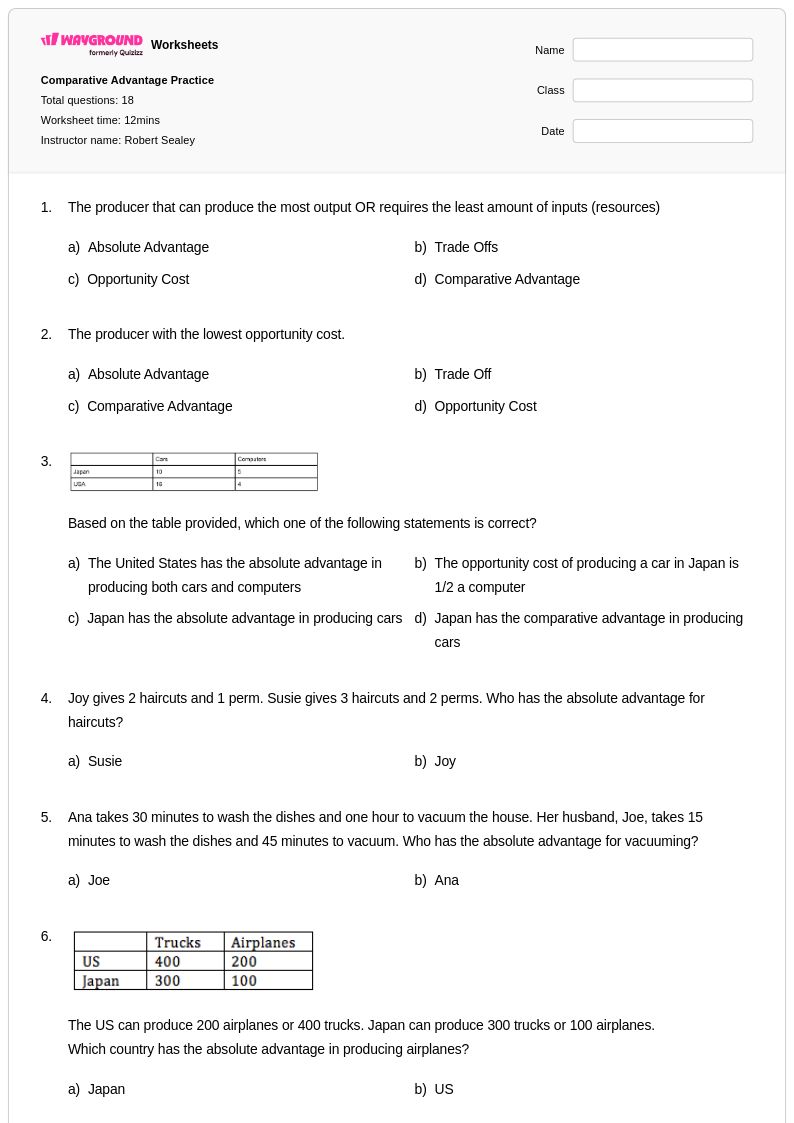
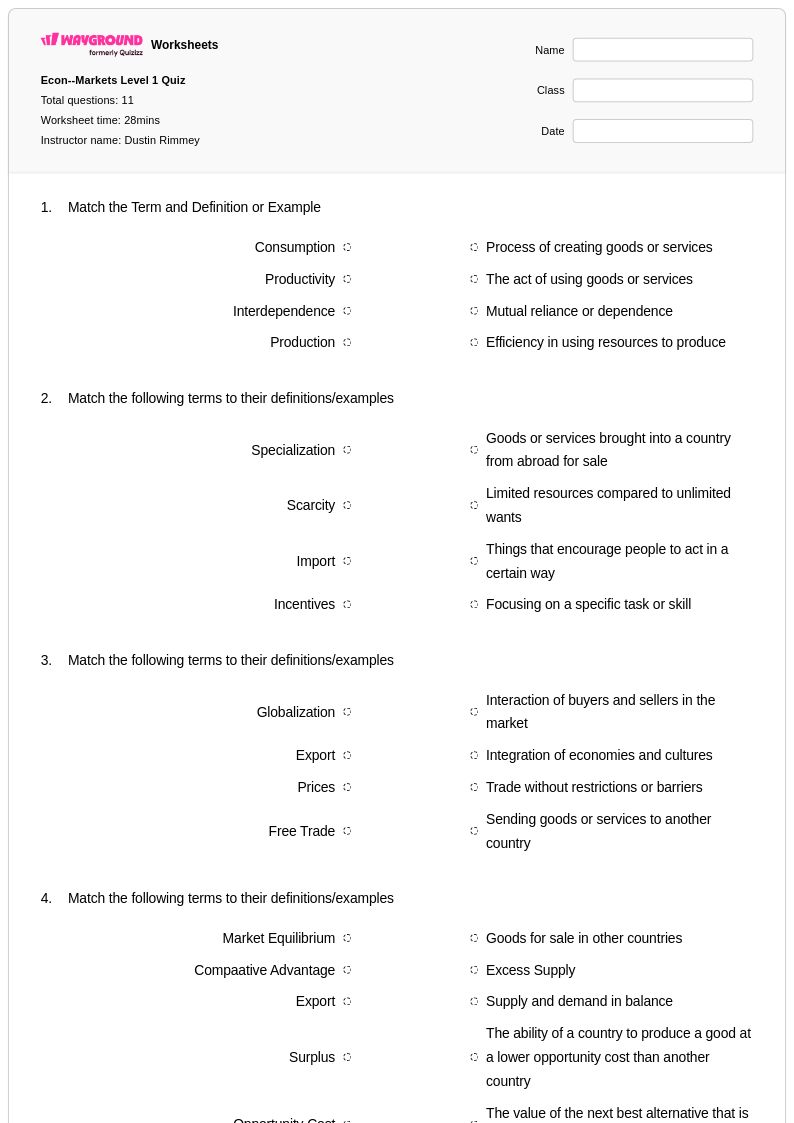
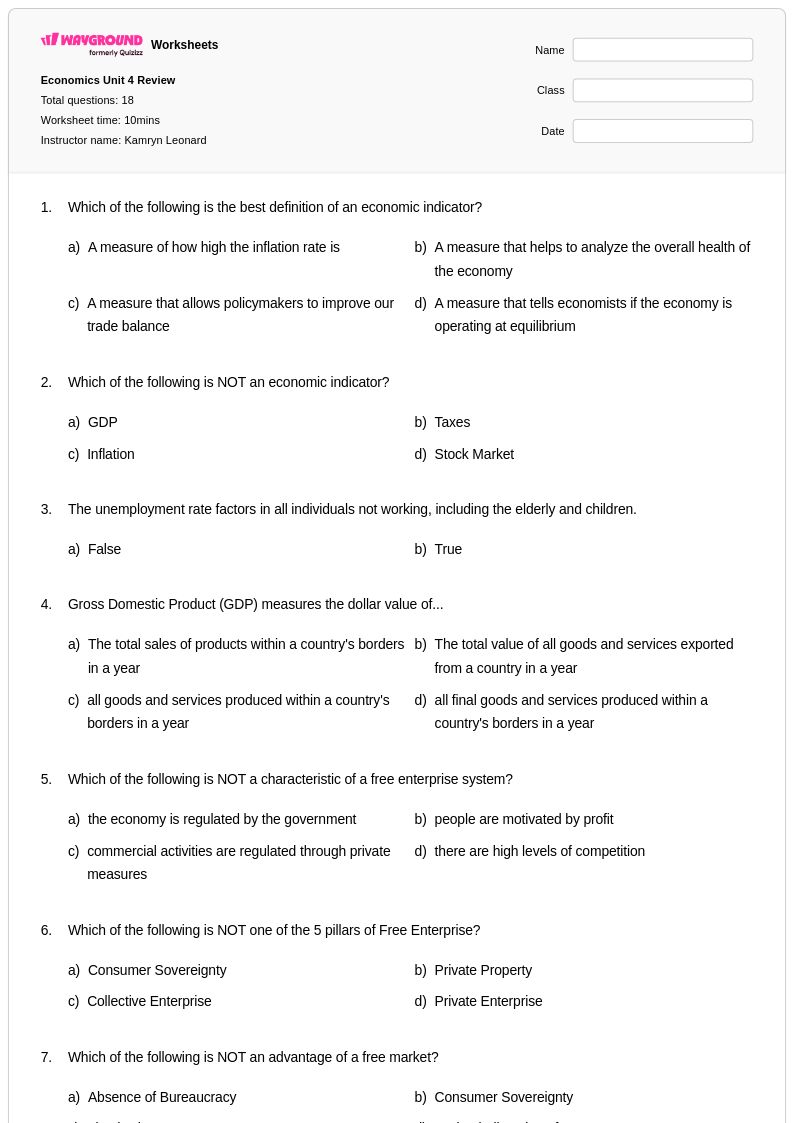
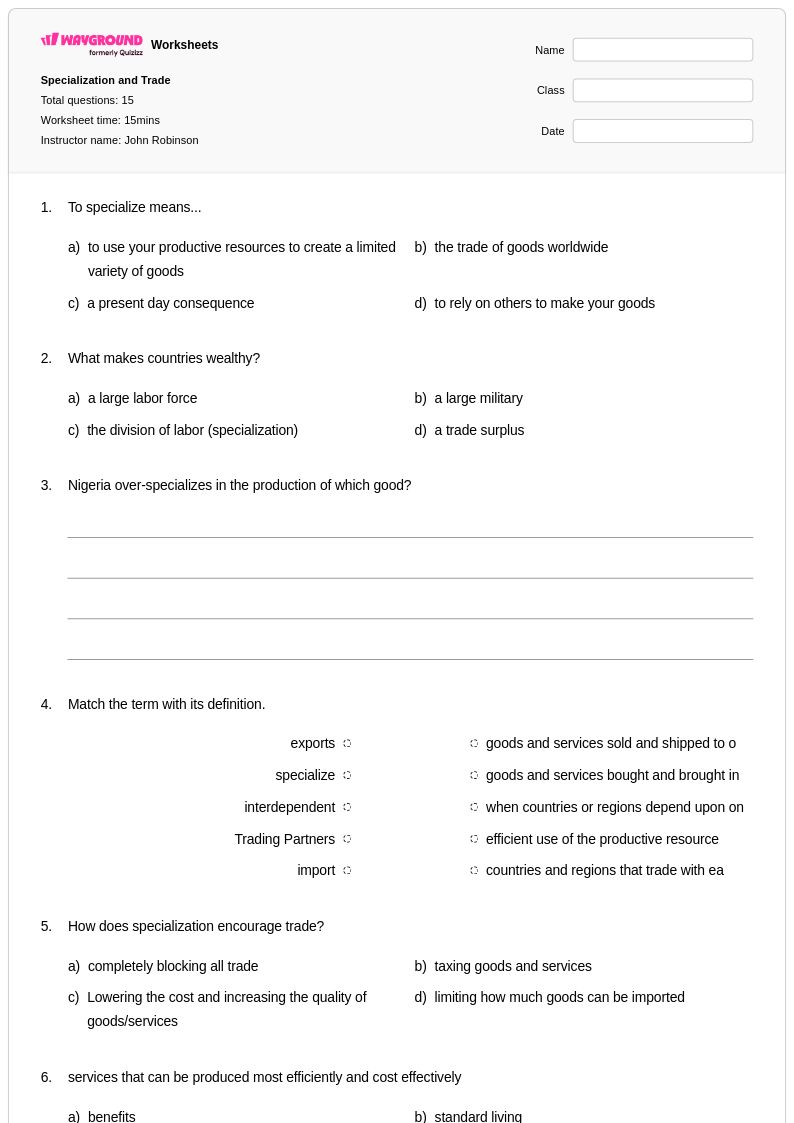
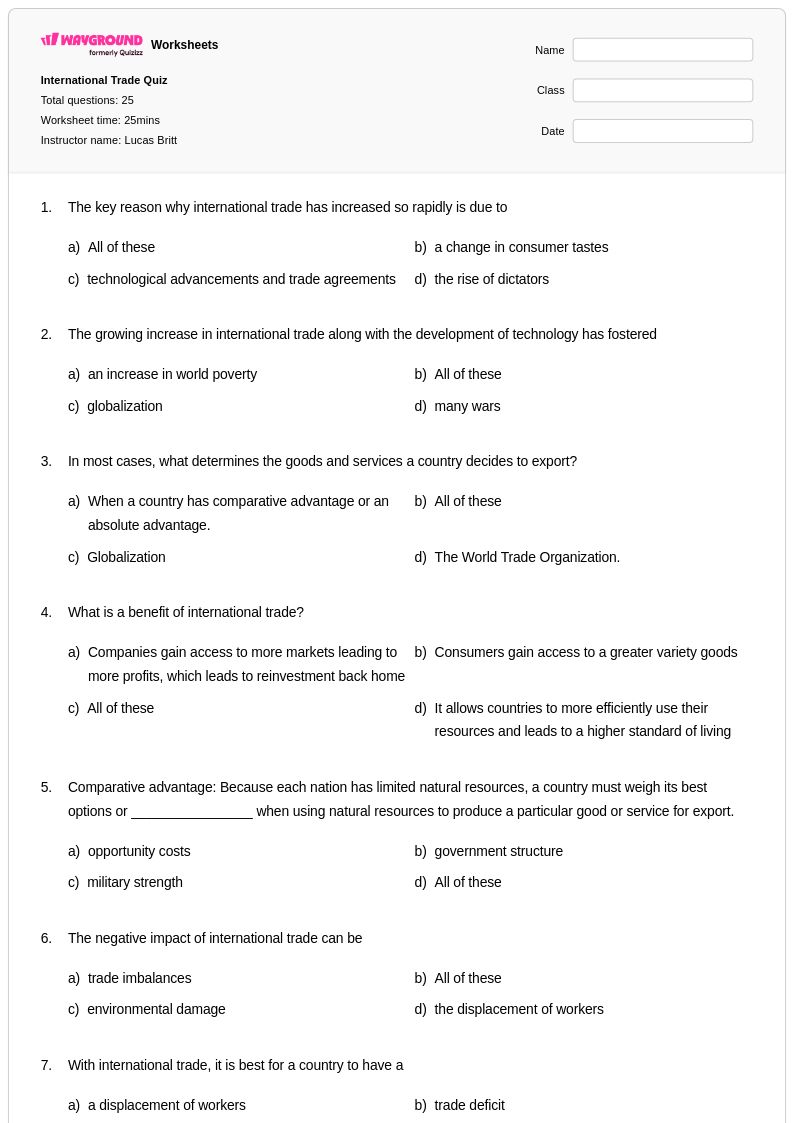
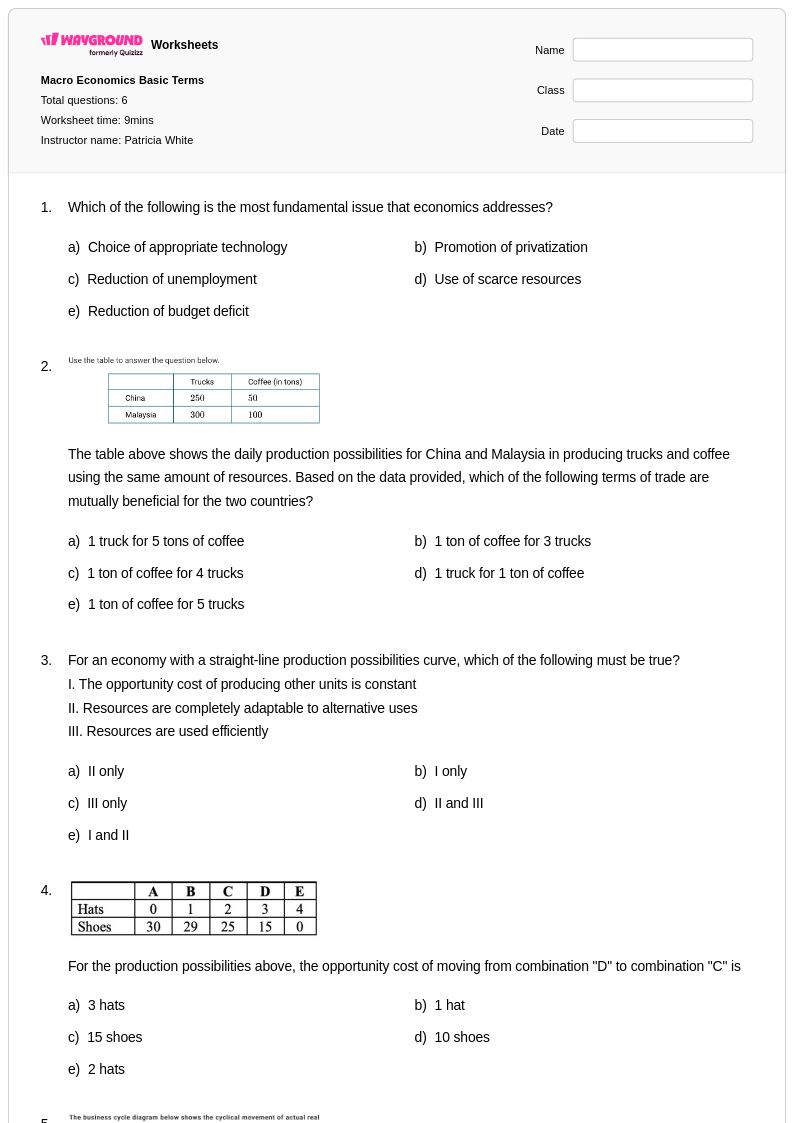
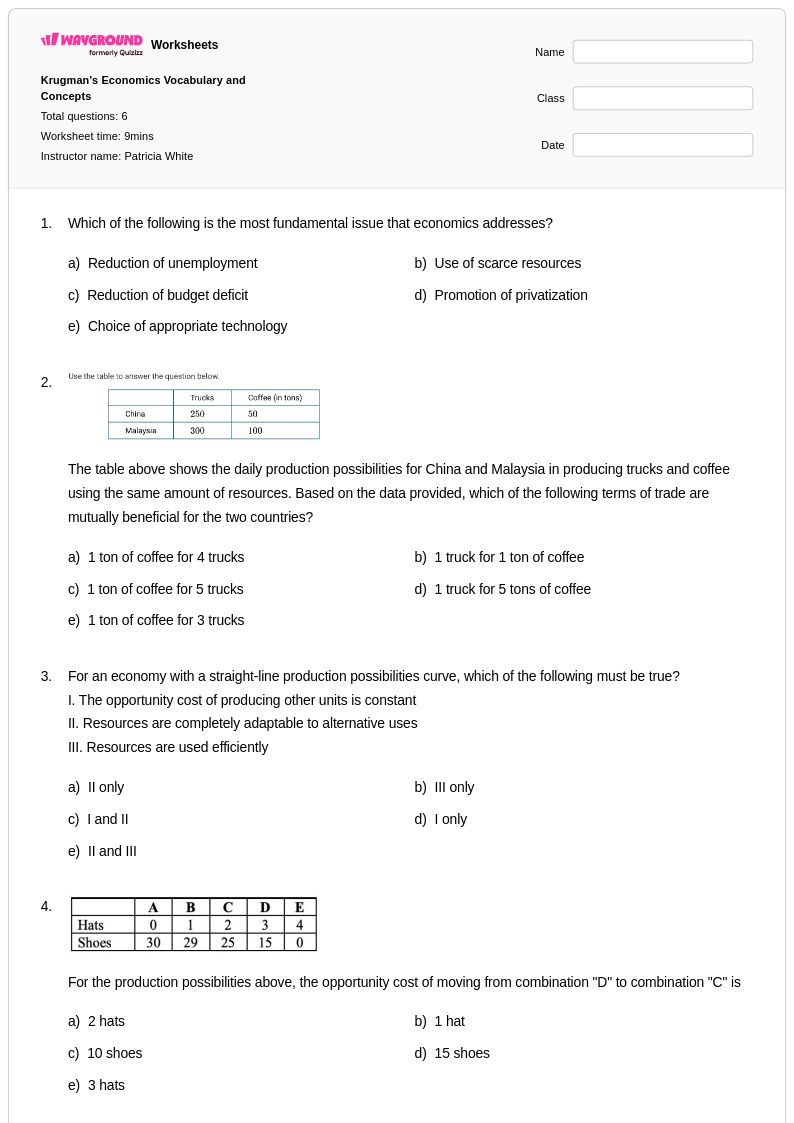
Comparative advantage worksheets for Class 9 students available through Wayground (formerly Quizizz) provide comprehensive practice in understanding one of economics' most fundamental concepts. These educational resources help students grasp how countries, regions, and individuals can benefit from specialization and trade even when one party has an absolute advantage in producing all goods. The worksheets strengthen critical thinking skills by presenting real-world scenarios where students must calculate opportunity costs, identify comparative advantages, and analyze the mutual benefits of trade relationships. Each printable resource includes detailed practice problems that guide students through the mathematical calculations required to determine comparative advantage, while comprehensive answer keys enable both independent study and classroom instruction. These free educational materials transform abstract economic theory into concrete understanding through step-by-step problem-solving exercises delivered in accessible pdf format.
Wayground (formerly Quizizz) empowers educators with an extensive collection of millions of teacher-created comparative advantage worksheets specifically designed for Class 9 social studies instruction. The platform's robust search and filtering capabilities allow teachers to quickly locate resources that align with specific curriculum standards and match their students' skill levels. Advanced differentiation tools enable educators to customize worksheets for varied learning needs, whether providing additional scaffolding for struggling students or offering enrichment opportunities for advanced learners. Available in both printable and digital formats, these comprehensive worksheet collections support flexible lesson planning while providing targeted practice for skill development, remediation activities for students who need additional support, and enrichment exercises that deepen understanding of international trade theory and economic decision-making processes.
FAQs
How do I teach comparative advantage to high school economics students?
Start by grounding students in opportunity cost before introducing comparative advantage, since the concept depends entirely on students being able to calculate what is given up to produce one unit of a good. Use two-country, two-good production tables and walk students through calculating opportunity costs for each good in each country before asking who should specialize in what. Once students are comfortable with the mechanics, layer in real-world trade examples to reinforce why a country might import a good it can produce more efficiently than its trading partner.
What practice problems help students understand comparative advantage?
The most effective practice problems give students a production possibilities table and require them to calculate per-unit opportunity costs, identify which country holds comparative advantage in each good, and then determine the terms of trade that would make exchange mutually beneficial. Problems should progress from basic two-country, two-good scenarios to multi-country comparisons that require students to rank specialization patterns. Including word-problem formats that describe real industries, such as wheat production and textile manufacturing, helps students connect abstract calculations to actual trade decisions.
What mistakes do students commonly make when calculating comparative advantage?
The most frequent error is confusing absolute advantage with comparative advantage, leading students to conclude that the more productive country should produce everything. Students also commonly invert the opportunity cost ratio, calculating how many units of Good B are sacrificed per unit of Good A when the problem requires the reverse. A third common mistake is assuming that equal opportunity costs mean both countries benefit equally from trade, rather than recognizing that identical ratios eliminate any basis for specialization.
How is comparative advantage different from absolute advantage, and how do I explain the difference?
Absolute advantage means a producer can make more of a good with the same resources, while comparative advantage means a producer can make a good at a lower opportunity cost relative to other goods they could produce. The critical teaching point is that trade is still beneficial even when one party has an absolute advantage in everything, because comparative advantage is determined by relative costs, not total output. A useful classroom analogy is a lawyer who types faster than their assistant: it still makes sense for the lawyer to focus on legal work and delegate typing because their comparative advantage lies in law, not typing speed.
How can I use comparative advantage worksheets in my classroom?
Comparative advantage worksheets on Wayground are available as printable PDFs for traditional classroom distribution and in digital formats for technology-integrated instruction, including the option to host them as a quiz directly on Wayground. Printable versions work well for guided notes, in-class problem sets, or homework assignments, while digital versions allow for immediate feedback and progress tracking. Each worksheet includes a complete answer key, so teachers can use them for independent practice, small-group work, or formative assessment without additional preparation.
How do I differentiate comparative advantage instruction for students who are struggling?
For struggling students, simplify the production table to a single two-country, two-good scenario with whole numbers before introducing fractions or multi-country comparisons. Breaking the calculation into labeled steps, such as explicitly writing out 'opportunity cost of 1 unit of Good A = X units of Good B,' reduces working memory demands and helps students self-monitor their process. On Wayground, teachers can apply accommodations such as reduced answer choices and read-aloud support to individual students, which is particularly useful for students who struggle with multi-step quantitative problems or reading dense economic scenarios.