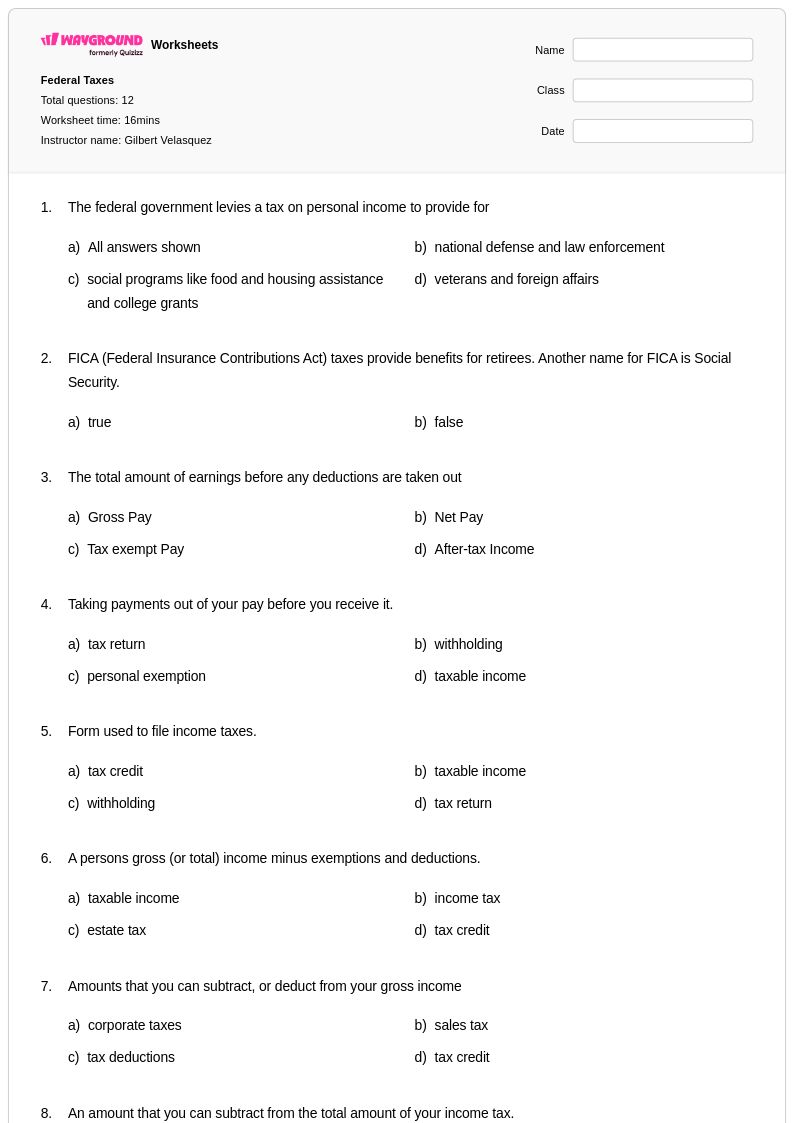
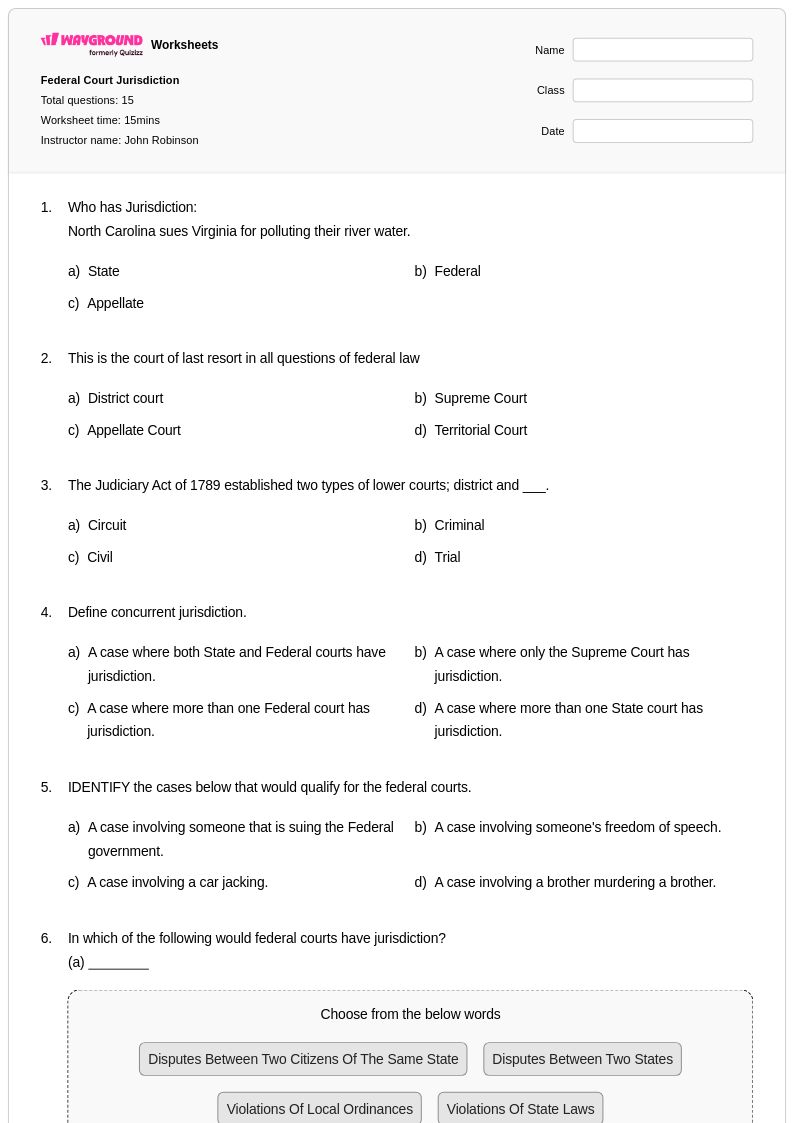
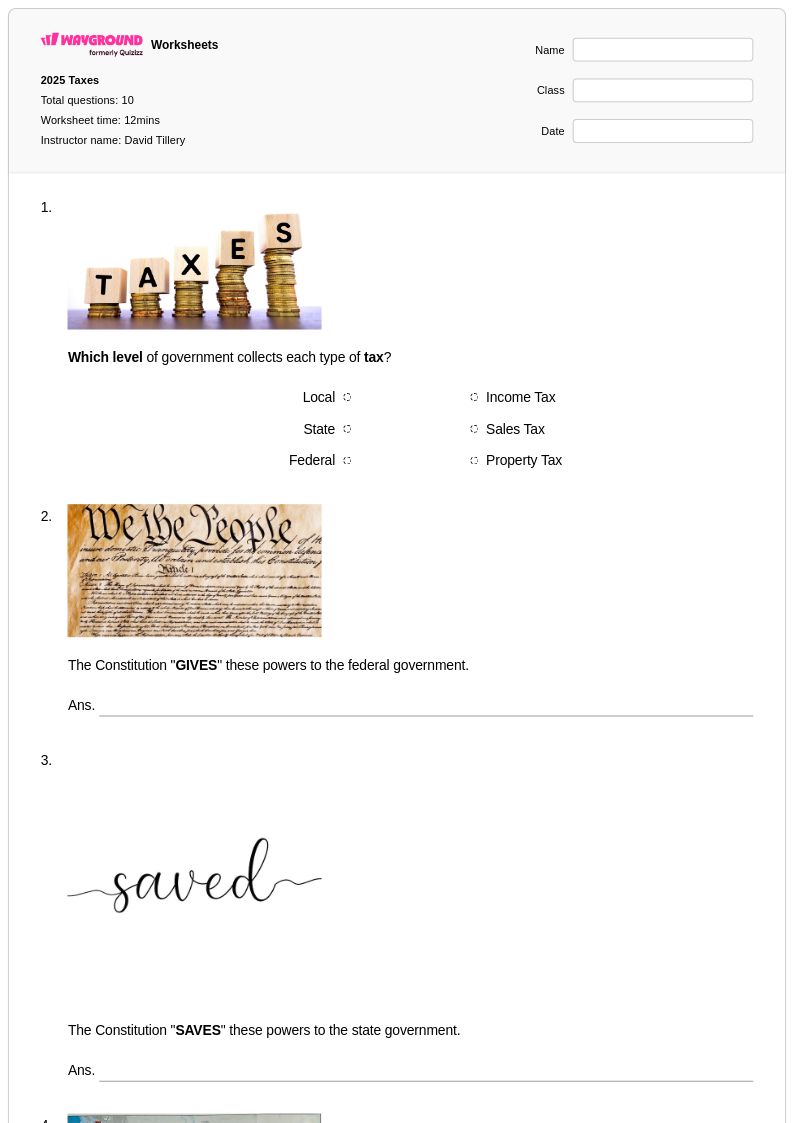
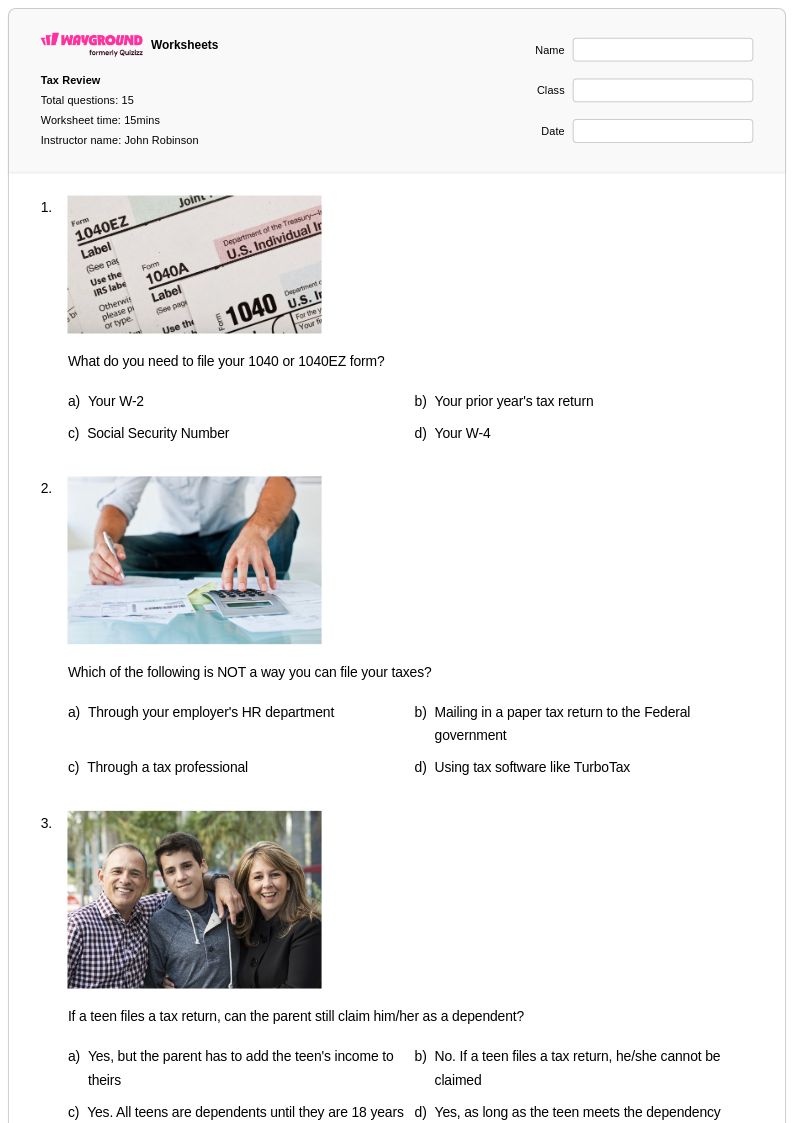
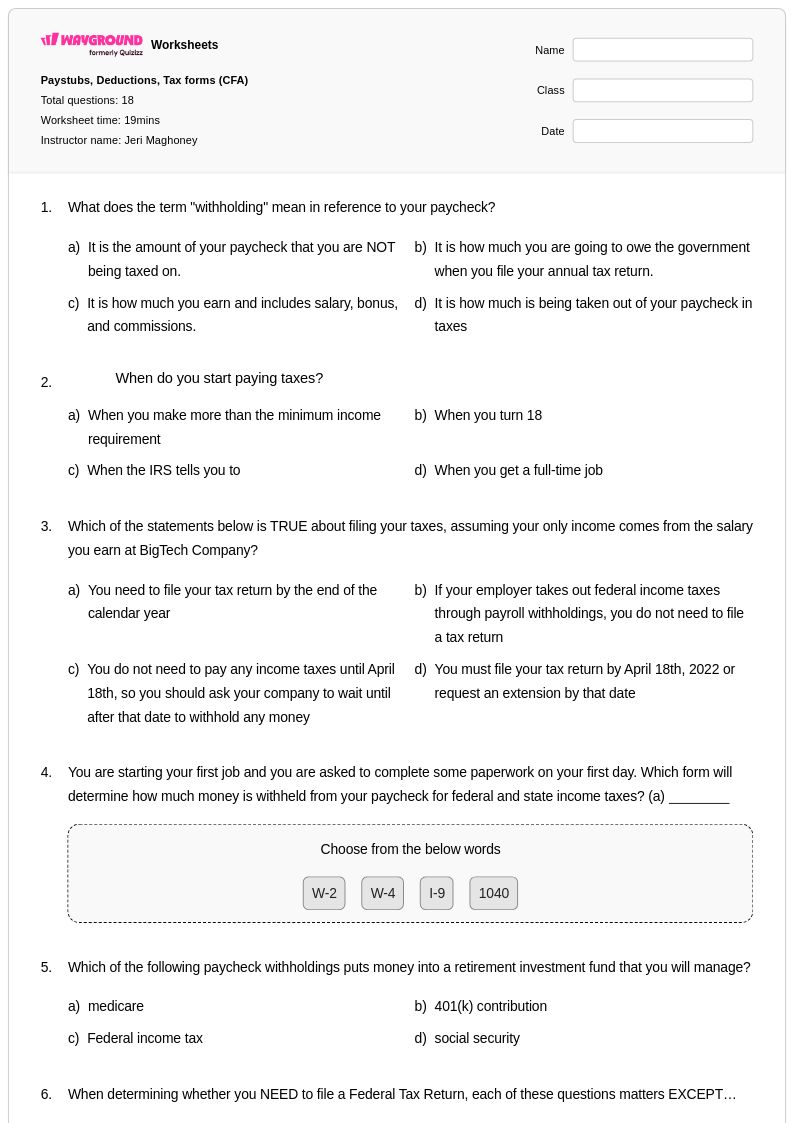
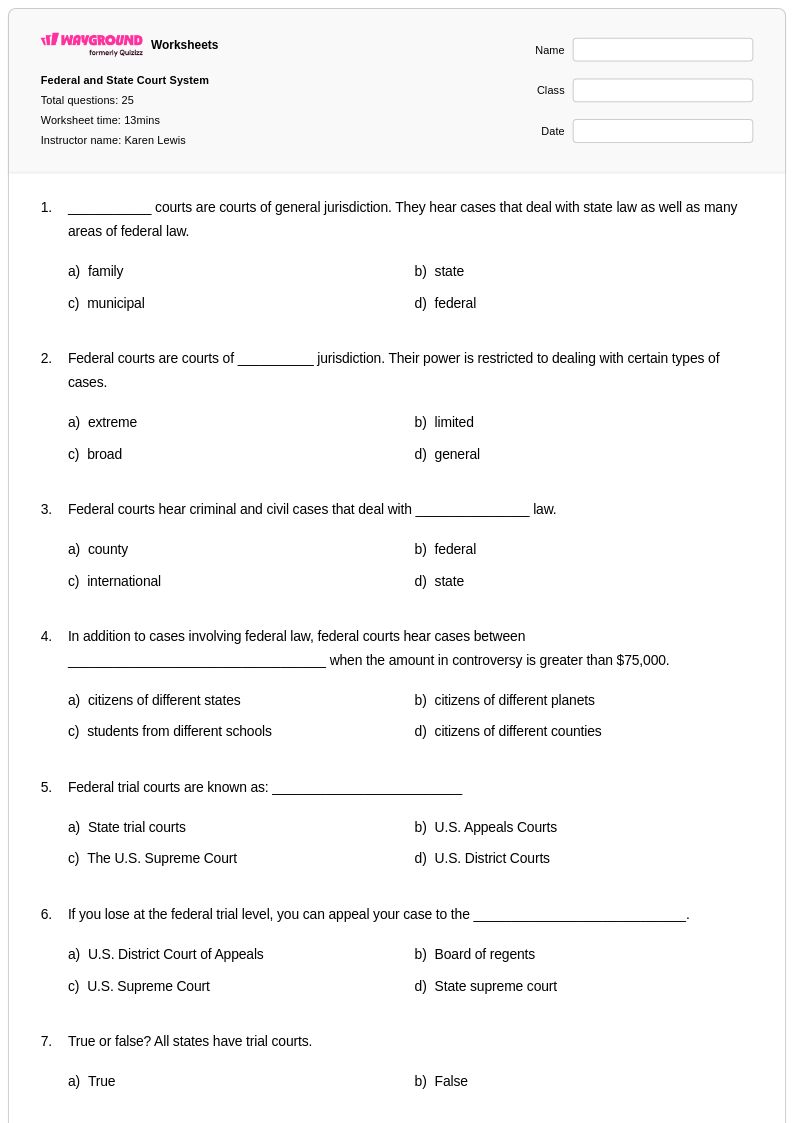
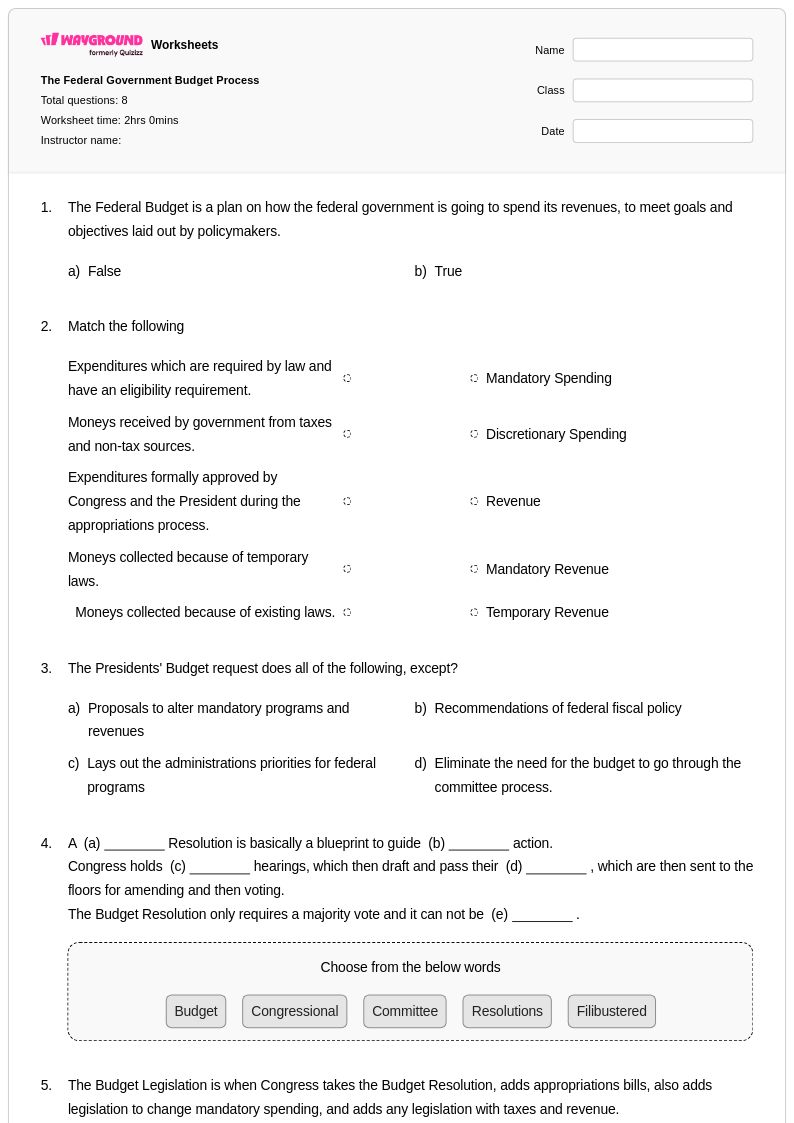
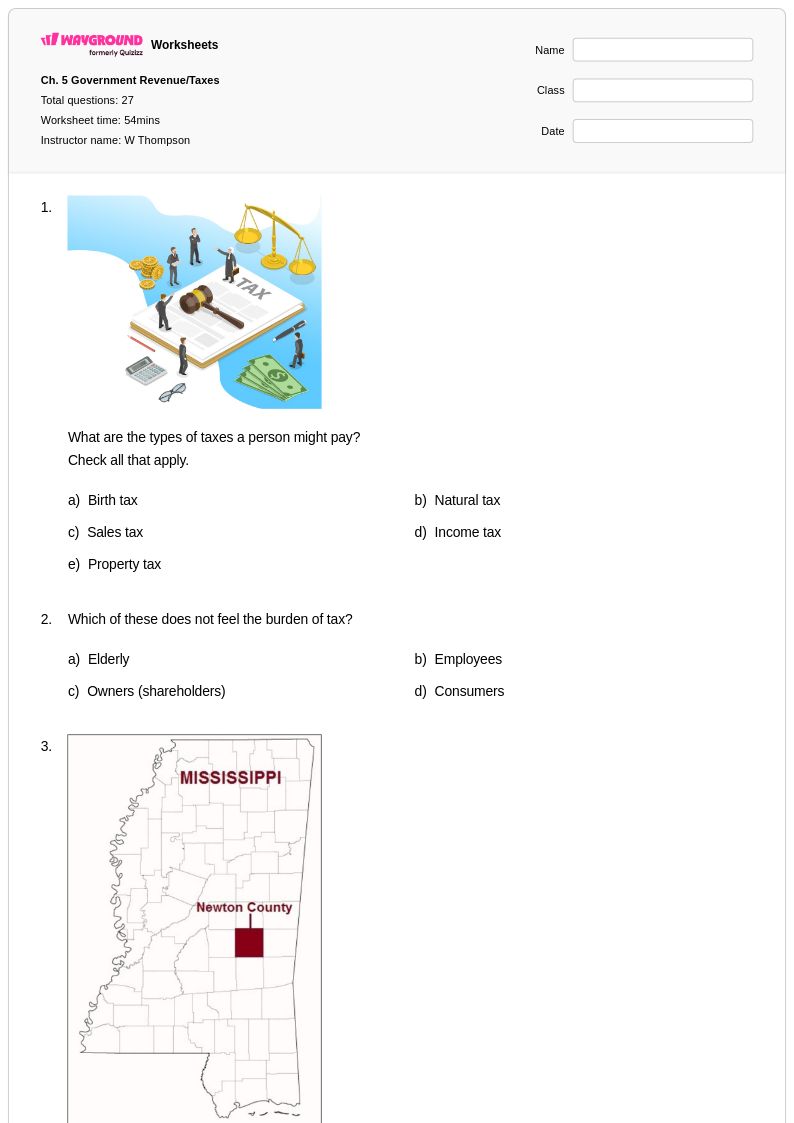
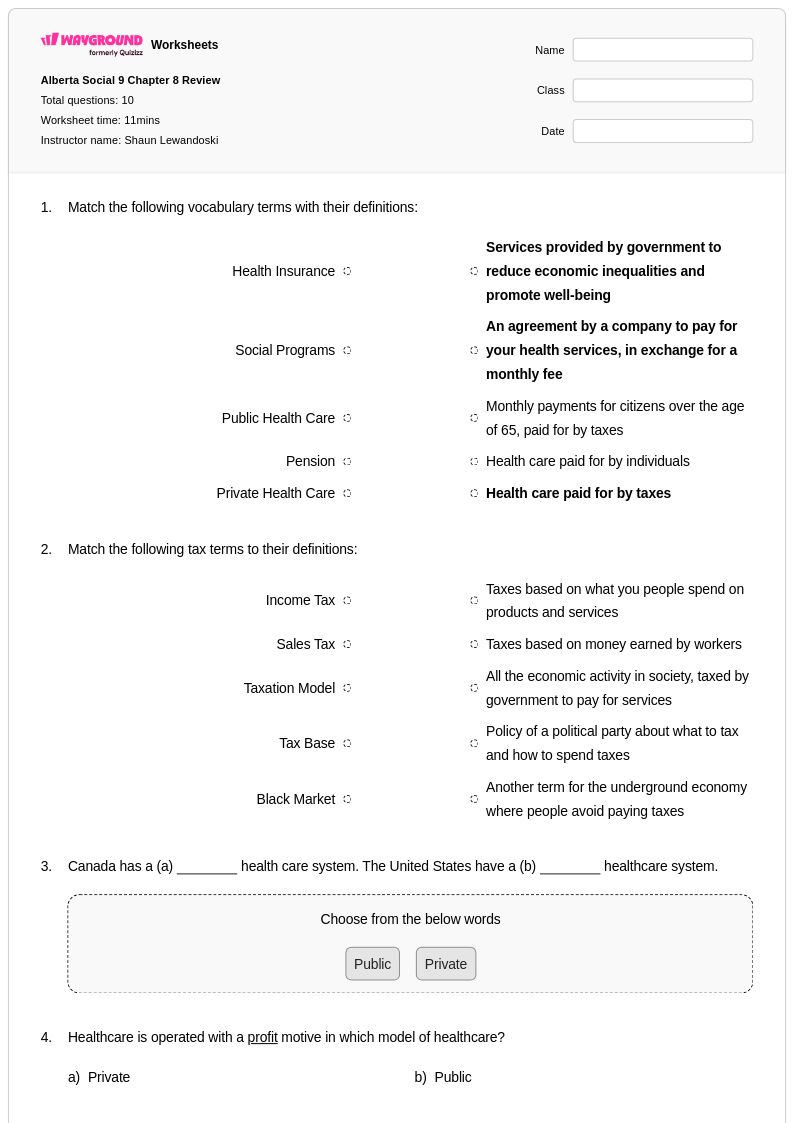
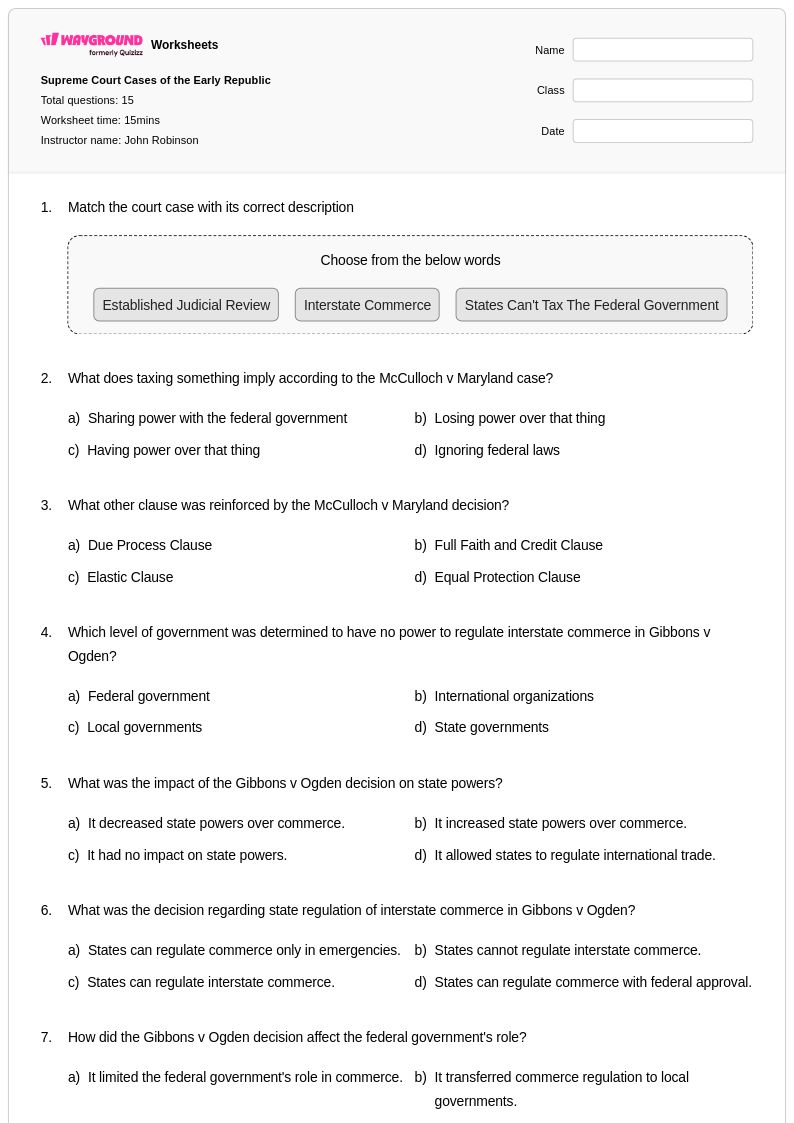
Class 9 federal tax worksheets and printables help students understand taxation systems through engaging practice problems, with free PDF downloads and comprehensive answer keys available.
Explore printable Federal Tax worksheets for Class 9
Federal tax worksheets for Class 9 students through Wayground (formerly Quizizz) provide comprehensive educational resources that build essential civic and economic literacy skills. These carefully designed practice problems guide students through the complexities of the federal tax system, covering fundamental concepts such as progressive tax brackets, standard deductions, tax credits, and the relationship between federal taxation and government revenue. Students develop critical analytical abilities as they work through realistic scenarios involving tax calculations, explore the differences between various types of federal taxes including income tax and payroll taxes, and examine how federal tax policy impacts both individual citizens and the broader economy. Each worksheet includes detailed answer keys and is available as free printables in convenient pdf format, enabling students to strengthen their understanding of how federal taxation functions as a cornerstone of American fiscal policy.
Wayground (formerly Quizizz) empowers educators with millions of teacher-created federal tax resources specifically aligned with Class 9 social studies standards and learning objectives. The platform's advanced search and filtering capabilities allow teachers to quickly locate worksheets that match their specific curriculum needs, whether focusing on basic tax calculation skills or more complex analysis of federal tax policy implications. Robust differentiation tools enable instructors to customize content difficulty levels, supporting both remediation for struggling learners and enrichment opportunities for advanced students. Available in both printable and digital formats including downloadable pdf files, these federal tax worksheets seamlessly integrate into diverse classroom environments and teaching approaches. Teachers can efficiently plan comprehensive units on government finance, provide targeted skill practice for students preparing for civic engagement, and offer flexible assessment options that accommodate various learning styles while ensuring students develop the economic reasoning abilities essential for informed citizenship.
FAQs
How do I teach federal taxes to students who have no prior knowledge of taxation?
Start by grounding students in the purpose of federal taxes — funding public services like roads, schools, and defense — before introducing mechanics like income brackets and withholding. Use real pay stub examples or simplified W-2 forms to make abstract concepts tangible. From there, introduce progressive tax brackets using tiered income scenarios so students can calculate tax owed step by step, building confidence before moving to deductions and credits.
What exercises help students practice calculating federal income tax?
The most effective practice exercises give students a fictional taxpayer profile — income amount, filing status, and eligible deductions — and ask them to calculate adjusted gross income, taxable income, and final tax liability using a simplified bracket table. Layering in tax credits after deductions reinforces the distinction between the two and prevents a common mix-up. Federal tax worksheets that simulate real-world scenarios like these help students move from rote memorization to applied reasoning.
What are the most common mistakes students make when learning about federal taxes?
The most persistent misconception is that moving into a higher tax bracket means all income is taxed at the higher rate — students frequently miscalculate total tax owed because of this marginal vs. effective rate confusion. A second common error is conflating tax deductions with tax credits, not recognizing that deductions reduce taxable income while credits reduce tax owed dollar-for-dollar. Targeted practice problems that isolate each concept help students self-correct these errors before they become entrenched.
How can I connect federal tax lessons to real-world civic responsibility?
Frame federal taxes as the financial mechanism that connects individual citizens to shared public goods — defense, infrastructure, social programs — rather than treating taxation as an isolated math skill. Asking students to trace a hypothetical tax dollar through the federal budget builds the link between filing a return and civic participation. This approach also satisfies financial literacy standards that emphasize informed citizenship alongside calculation skills.
How do I use Wayground's federal tax worksheets in my classroom?
Wayground's federal tax worksheets are available as printable PDFs for traditional classroom use and in digital formats for technology-integrated or remote learning environments, giving teachers flexibility in how they assign and collect student work. Teachers can also host the worksheets as a quiz directly on Wayground, enabling real-time progress monitoring. Each worksheet includes a complete answer key, supporting both teacher-led instruction and independent student practice.
How do I differentiate federal tax instruction for students at different skill levels?
For students who need support, reduce the complexity of tax scenarios by providing pre-filled income figures and a simplified two-bracket table so they can focus on the calculation process without cognitive overload. Advanced students benefit from multi-source income scenarios that require calculating self-employment tax, applying itemized deductions, and comparing filing statuses. On Wayground, teachers can apply accommodations such as reduced answer choices or read-aloud settings to individual students, allowing the same worksheet to serve a full range of learners without singling anyone out.