Free Printable Tragedy of the Commons Worksheets for Class 9
Free Class 9 Tragedy of the Commons worksheets and printables from Wayground help students explore economic concepts through engaging practice problems, with downloadable PDFs and comprehensive answer keys included.
Explore printable Tragedy of the Commons worksheets for Class 9
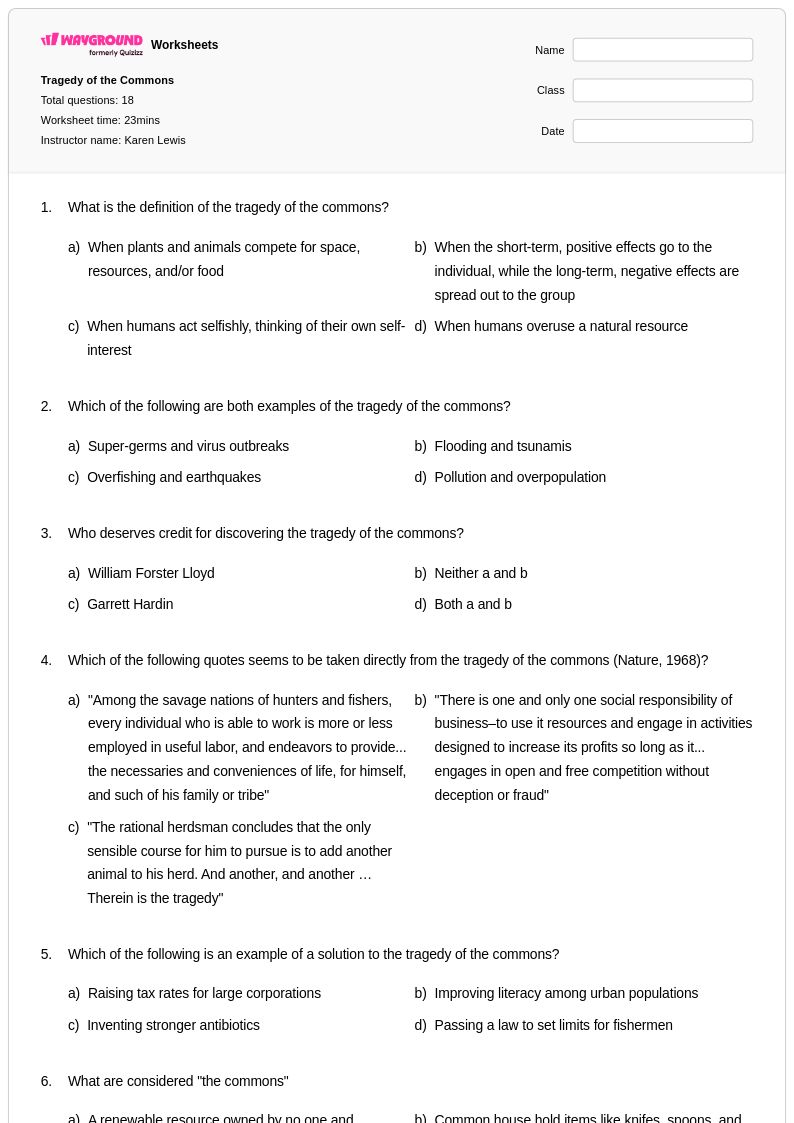
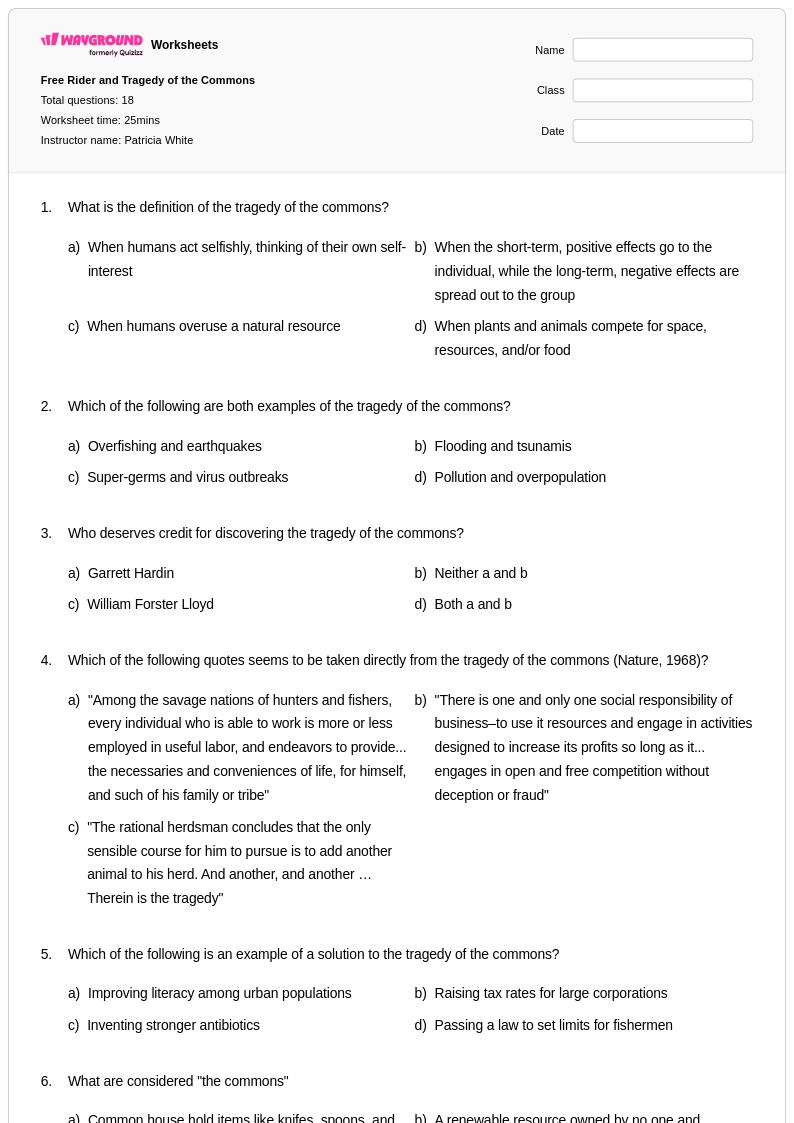
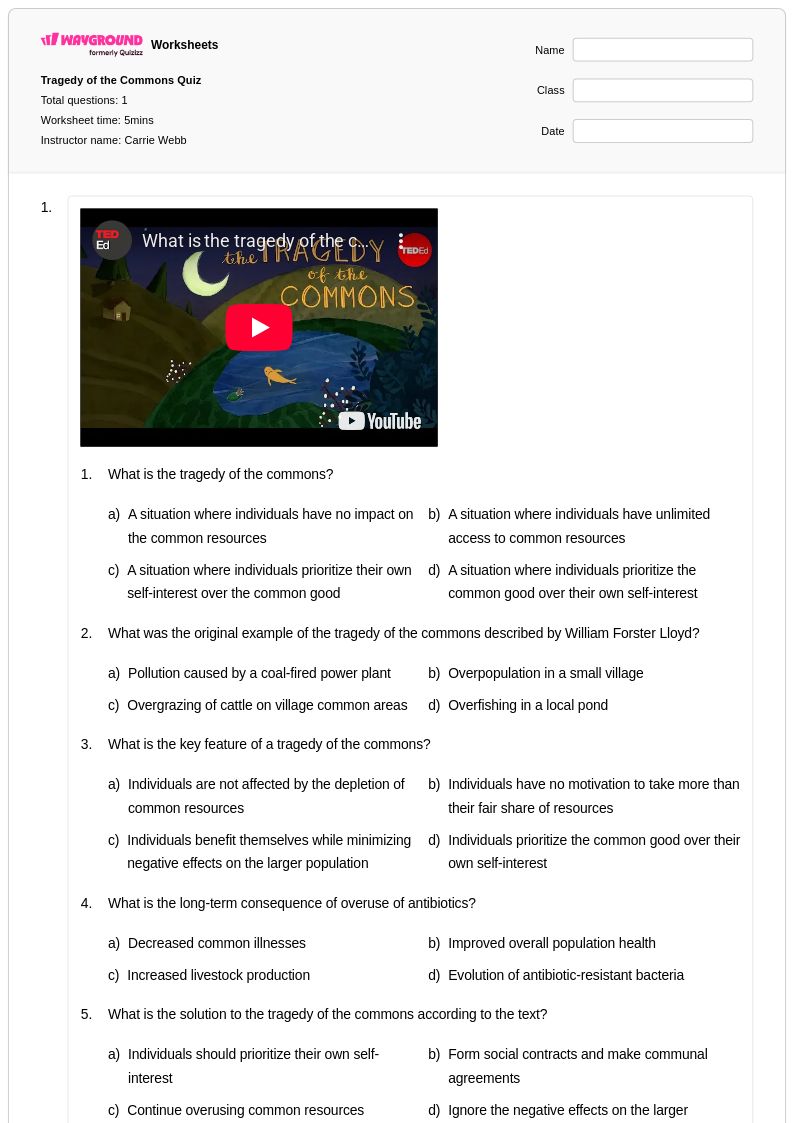
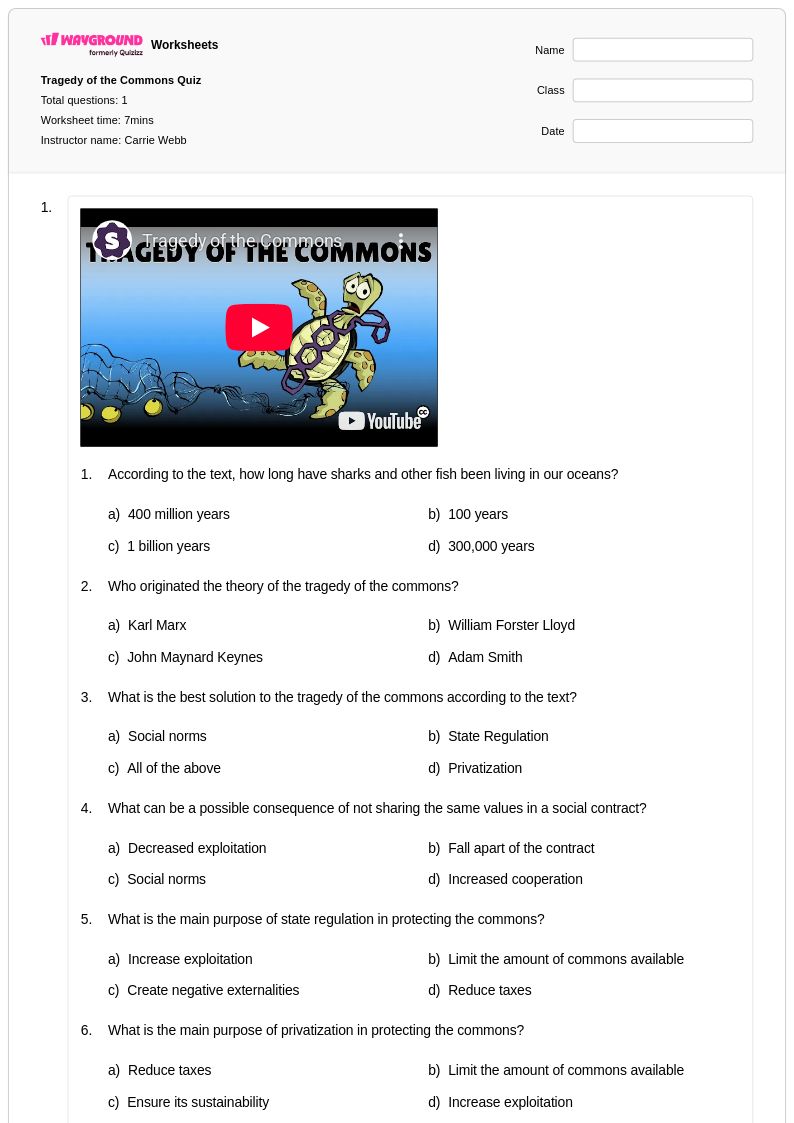
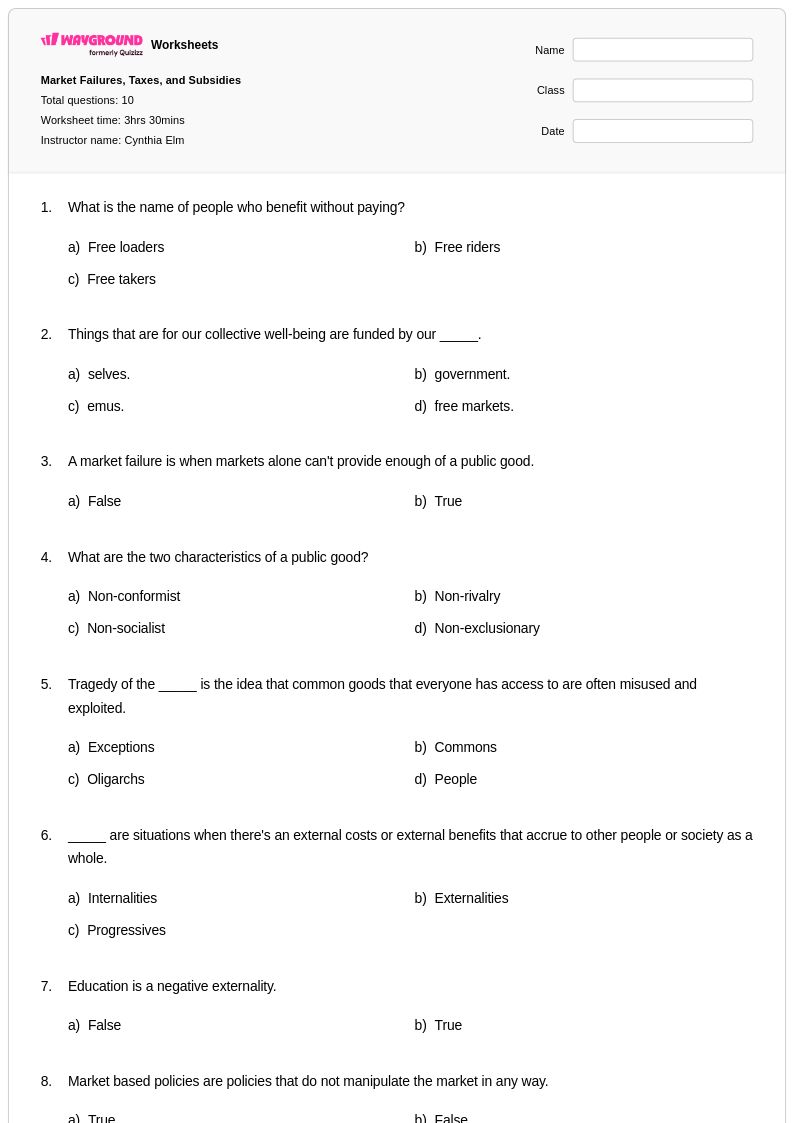
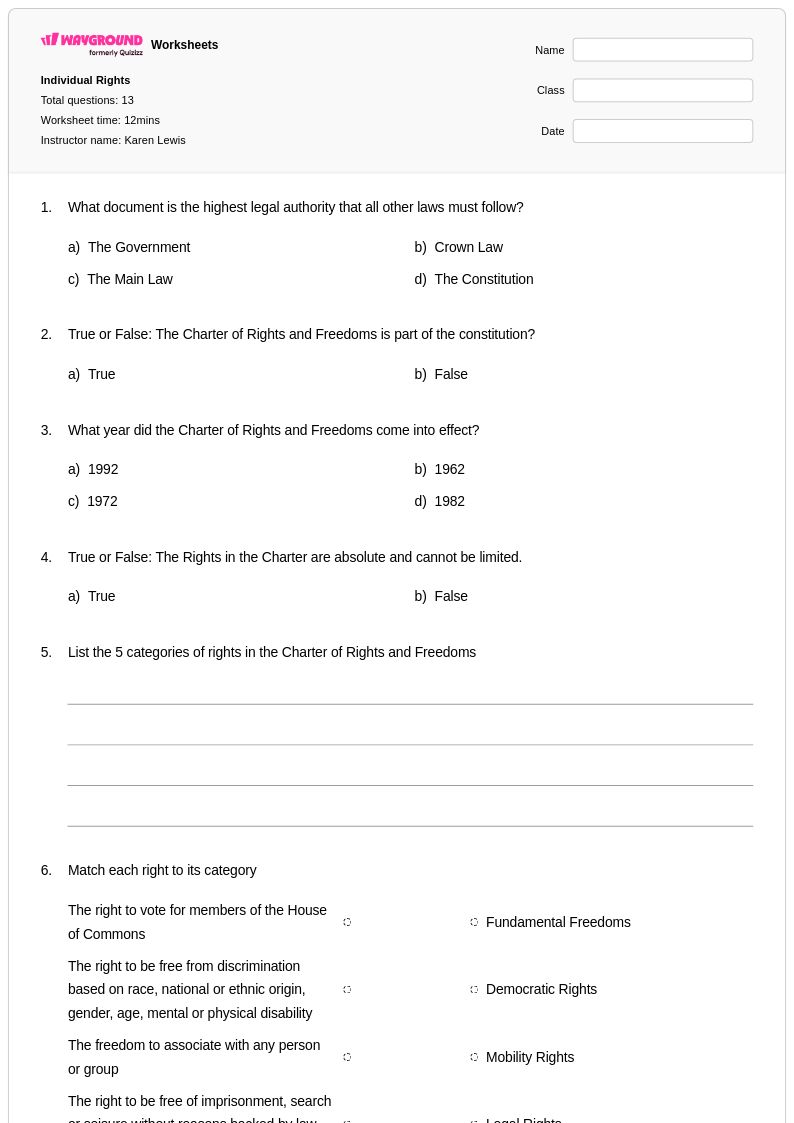
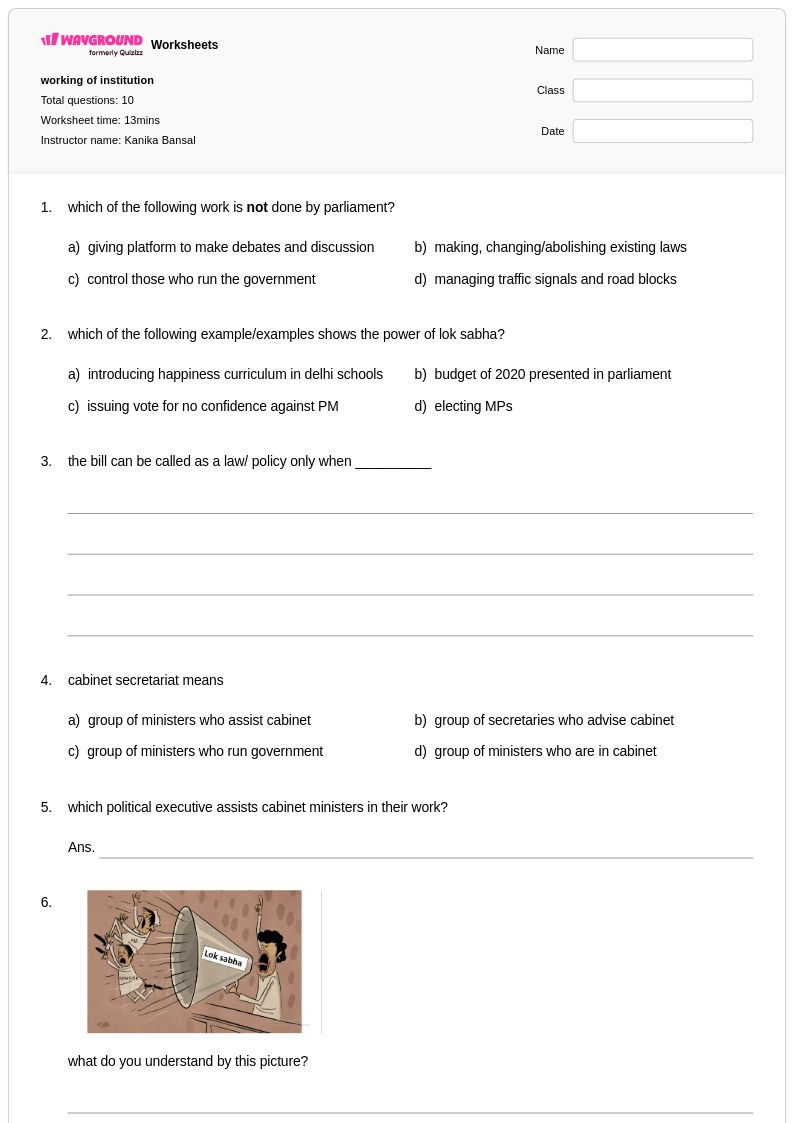
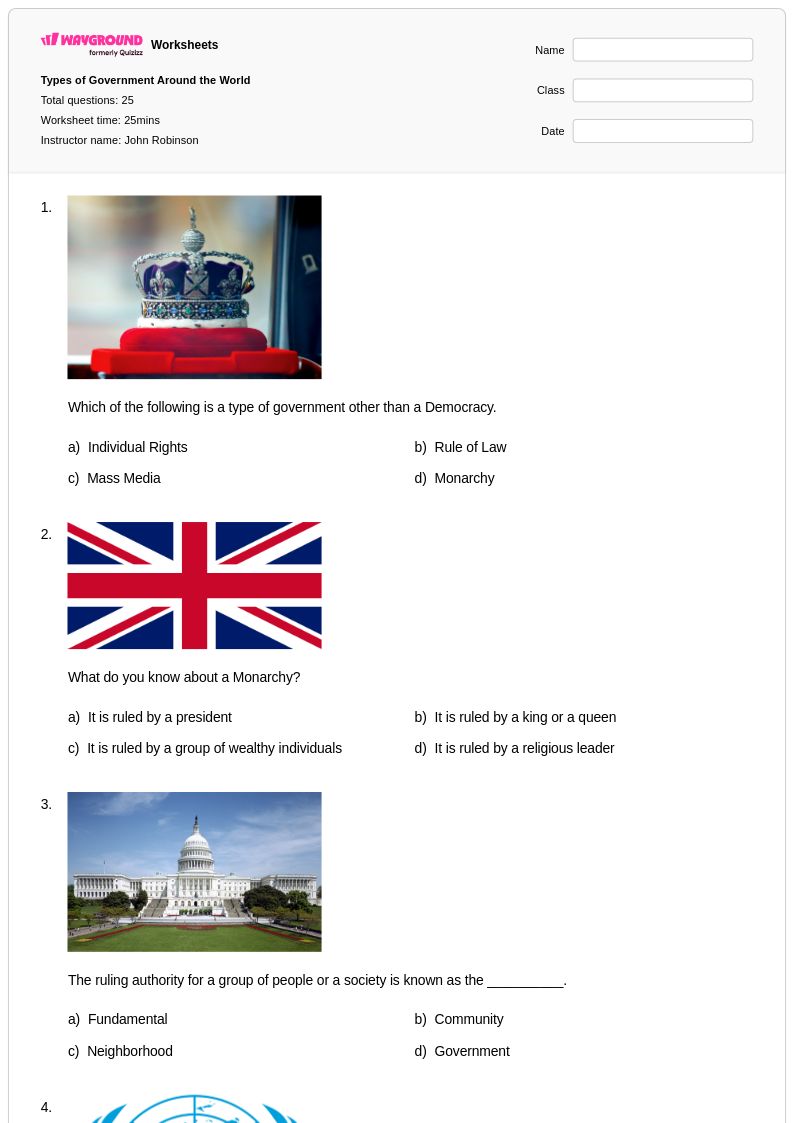
Tragedy of the Commons worksheets for Class 9 students available through Wayground (formerly Quizizz) provide comprehensive practice materials that explore this fundamental economic concept where shared resources become overexploited when individuals act in their own self-interest. These educational resources strengthen critical thinking skills by challenging students to analyze real-world scenarios such as overfishing, deforestation, and climate change through the lens of collective action problems. The worksheets feature practice problems that require students to identify common pool resources, evaluate the consequences of unrestricted access, and propose solutions like government regulation, privatization, or community management. Each printable resource includes detailed answer keys that guide educators through complex economic reasoning, while free pdf formats ensure accessibility for diverse classroom environments where students examine case studies ranging from medieval commons to modern environmental challenges.
Wayground (formerly Quizizz) supports social studies educators with an extensive collection of teacher-created resources covering Tragedy of the Commons concepts, drawing from millions of worksheets that align with economics curriculum standards. The platform's advanced search and filtering capabilities enable teachers to locate materials specifically tailored to Class 9 comprehension levels, while differentiation tools allow for seamless customization based on individual student needs and learning objectives. Available in both printable and digital pdf formats, these worksheet collections facilitate flexible lesson planning whether educators need remediation materials for students struggling with collective action theory or enrichment activities for advanced learners ready to tackle complex policy solutions. The comprehensive nature of these resources supports skill practice across multiple dimensions of economic literacy, from basic vocabulary acquisition to sophisticated analysis of market failures and institutional responses.
FAQs
How do I teach the Tragedy of the Commons in an economics or social studies class?
The most effective approach is to anchor instruction in concrete, relatable scenarios before introducing formal economic theory. Start with a simulation or case study — overfishing, shared grazing land, or urban parking — so students can observe how individually rational decisions lead to collective resource depletion. Once students have experienced the dynamic firsthand, introduce the theoretical framework: externalities, public goods, and the failure of self-regulation. Then move into potential solutions such as government regulation, property rights, and community-based management (Ostrom's framework).
What exercises help students practice the Tragedy of the Commons?
Practice exercises that work best require students to apply the concept to new scenarios rather than simply recall a definition. Effective formats include case study analysis (e.g., evaluating overfishing policies), cost-benefit breakdowns comparing individual vs. collective outcomes, and short-answer problems that ask students to identify externalities and propose solutions. Analytical worksheets that walk through real-world resource depletion examples — with structured prompts and answer keys — help students build the reasoning skills needed to evaluate collective action problems independently.
What common mistakes do students make when learning about the Tragedy of the Commons?
The most persistent misconception is that individual actors in the commons are irrational or selfish — students often moralize the problem rather than analyzing the structural incentives at play. A related error is conflating the Tragedy of the Commons with any environmental problem, when the concept specifically requires open-access resources and the absence of enforceable property rights. Students also frequently struggle to distinguish between public goods and common-pool resources, which leads to errors when evaluating proposed solutions like privatization or regulation.
How does the Tragedy of the Commons connect to broader economics topics like market failure and externalities?
The Tragedy of the Commons is a specific instance of market failure caused by negative externalities and the absence of well-defined property rights over shared resources. Because individual users do not bear the full social cost of their consumption, they overuse the resource beyond the socially optimal level — a classic negative externality. Teaching this concept reinforces students' understanding of why markets sometimes fail to allocate resources efficiently and sets up discussions of corrective mechanisms such as Pigouvian taxes, cap-and-trade systems, and Coase theorem applications.
How can I use Tragedy of the Commons worksheets in my classroom?
Tragedy of the Commons worksheets on Wayground are available as printable PDFs for traditional classroom use and in digital formats for technology-integrated or remote learning environments, and can also be hosted as a quiz directly on Wayground. Printable versions work well for guided practice, homework, or structured group discussions, while digital formats allow for faster formative assessment and real-time feedback. Each worksheet includes a complete answer key, so teachers can use them for independent practice, targeted remediation, or as a self-checking review tool ahead of assessments.
How can I differentiate Tragedy of the Commons instruction for students at different skill levels?
For struggling students, reduce complexity by focusing on a single concrete scenario (e.g., a shared fishing lake) before introducing abstract concepts like externalities or Pareto efficiency. For advanced learners, extend the analysis by requiring students to evaluate Elinor Ostrom's conditions for successful commons governance or compare regulatory vs. market-based solutions using real policy examples. On Wayground, teachers can apply accommodations such as reduced answer choices or read-aloud support to individual students, ensuring that all learners can engage with the material at an appropriate level of challenge without disrupting the rest of the class.