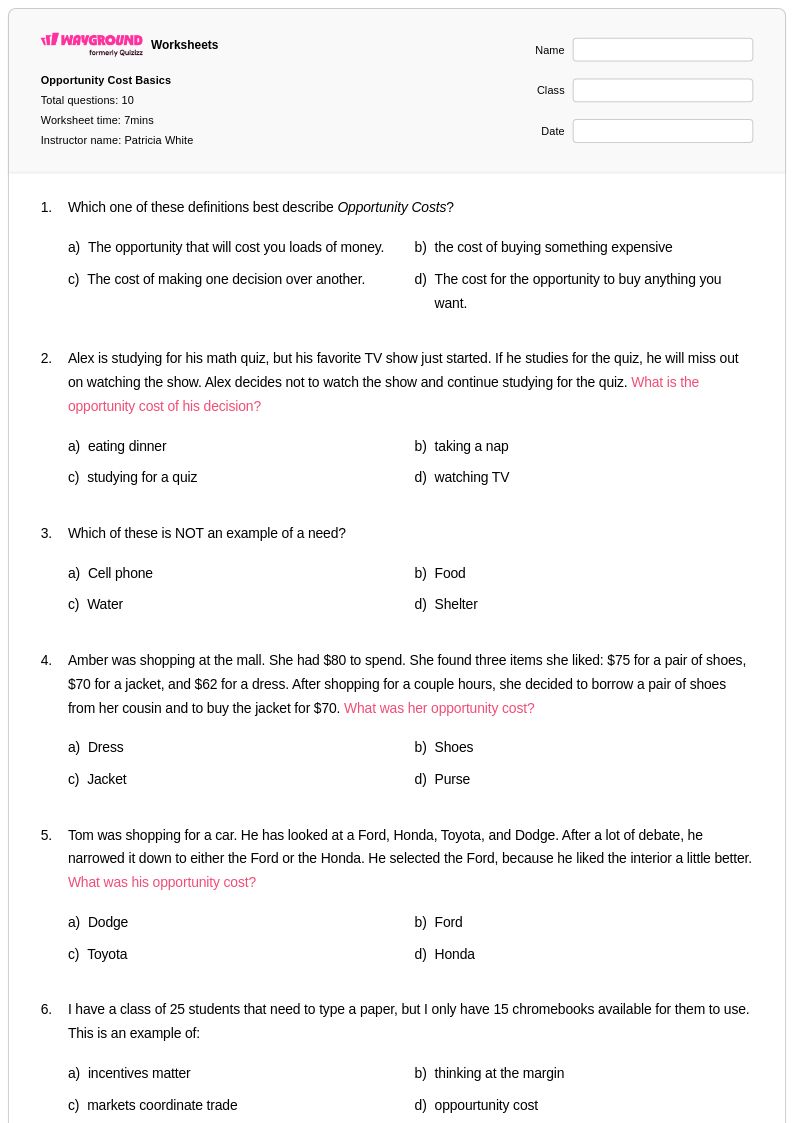
Free Printable Opportunity Cost Worksheets for Class 9
Class 9 opportunity cost worksheets and printables help students master economic decision-making concepts through engaging practice problems, free PDF resources, and comprehensive answer keys for effective learning.
Explore printable Opportunity Cost worksheets for Class 9
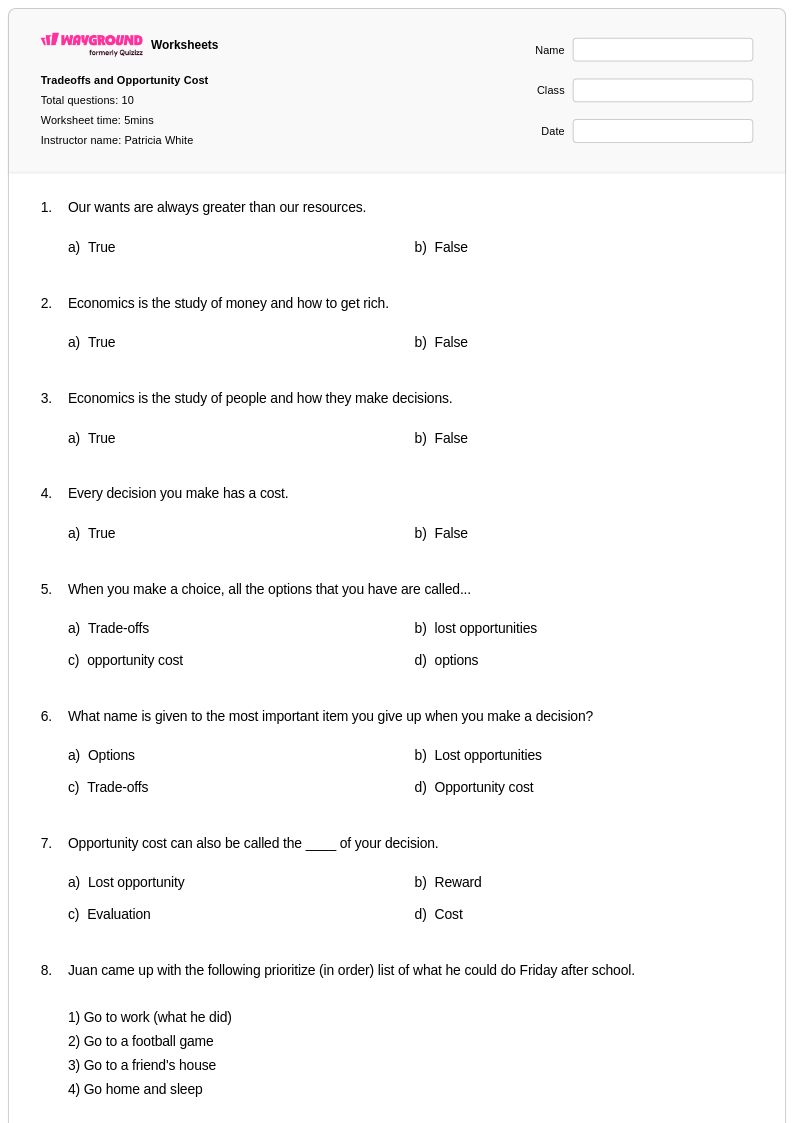
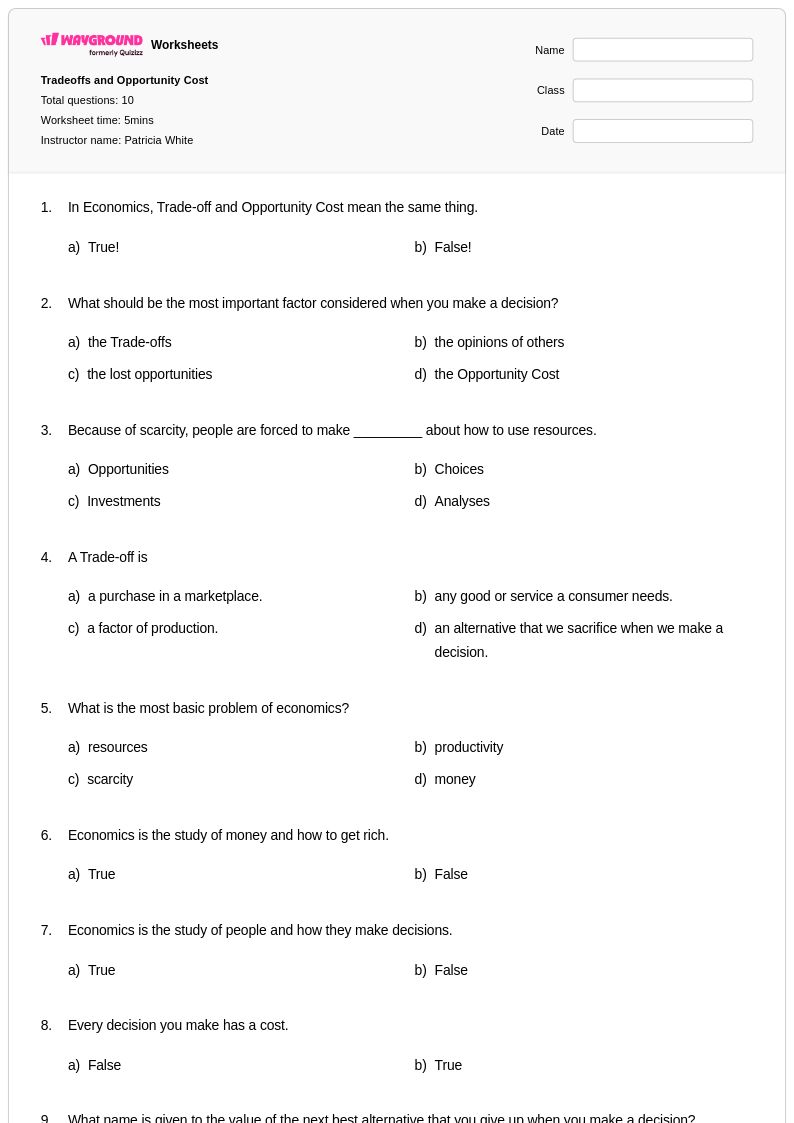
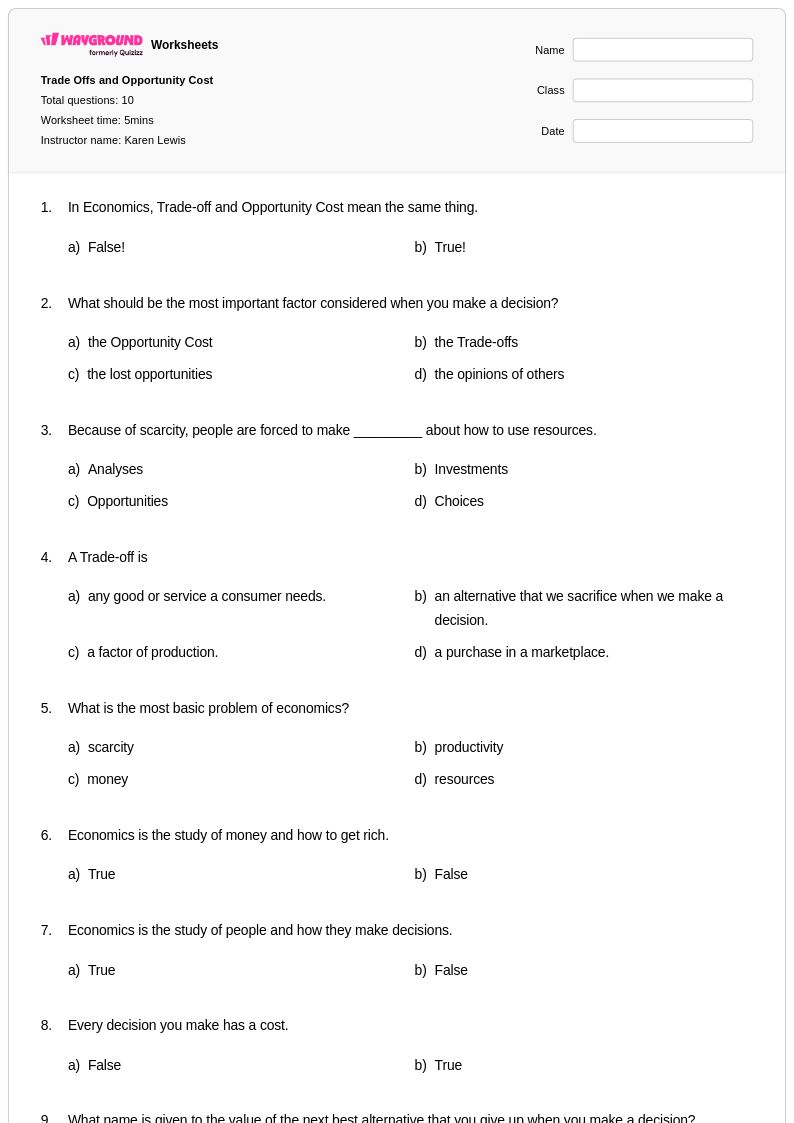
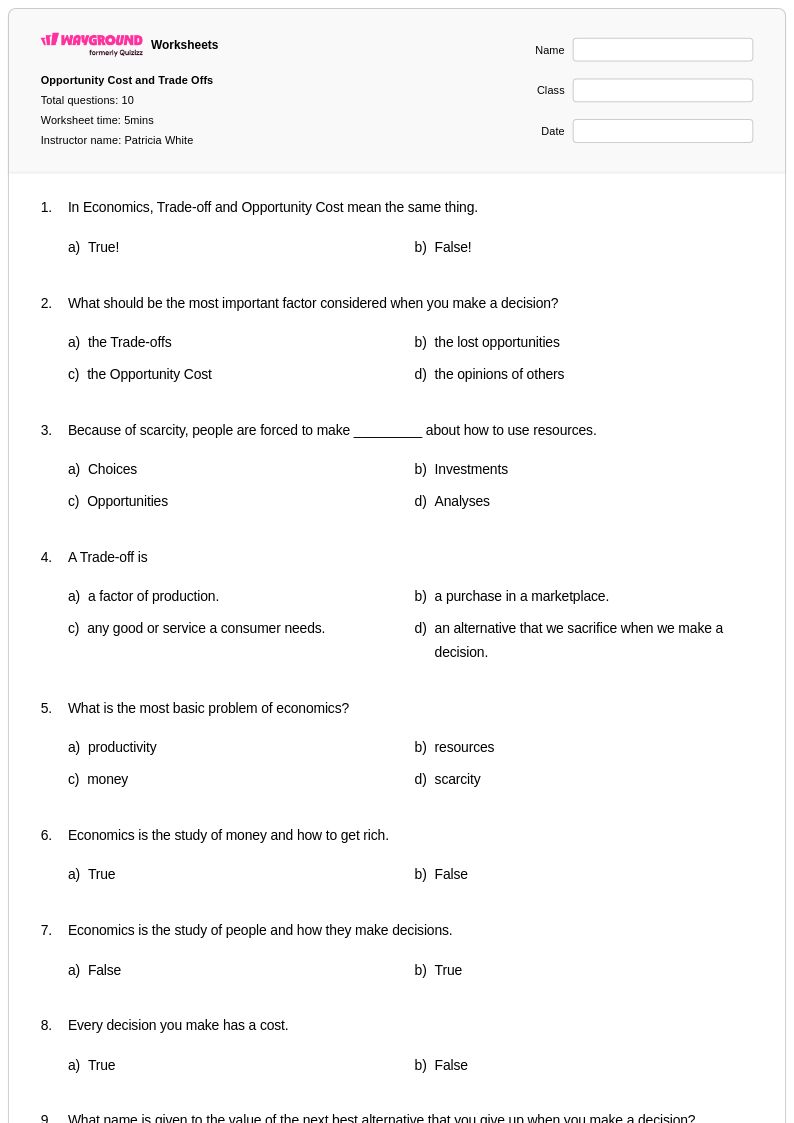
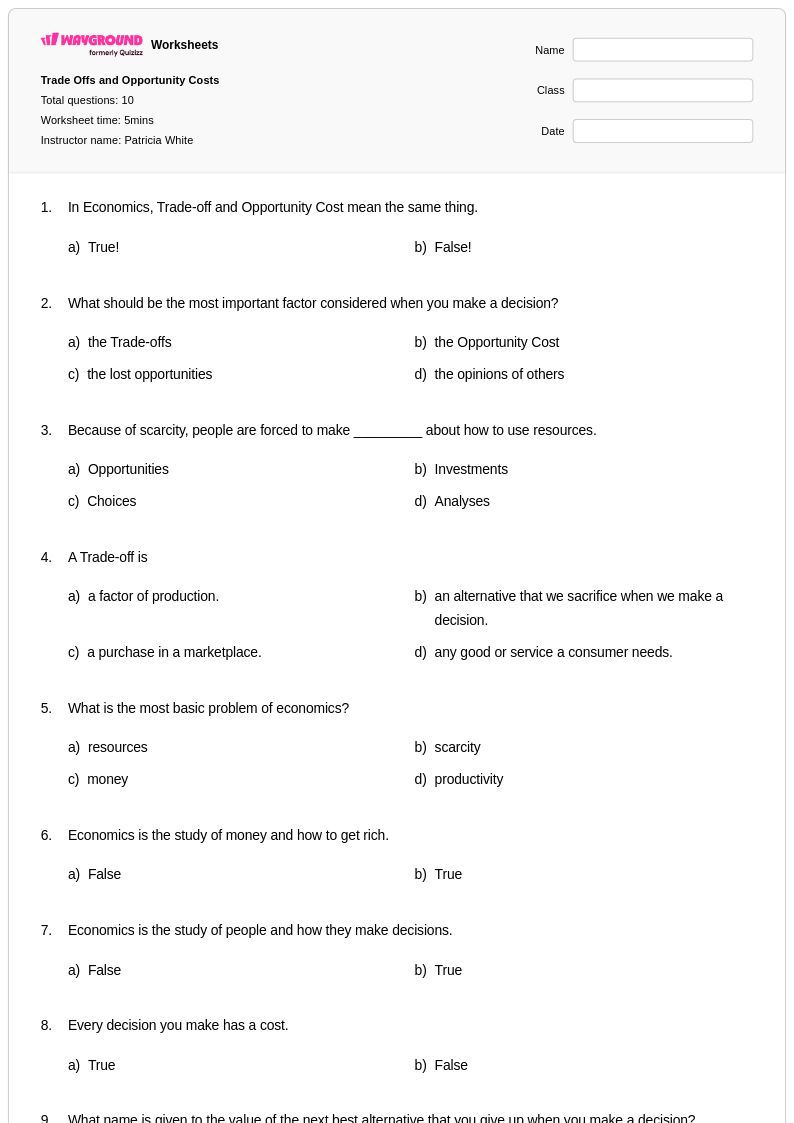
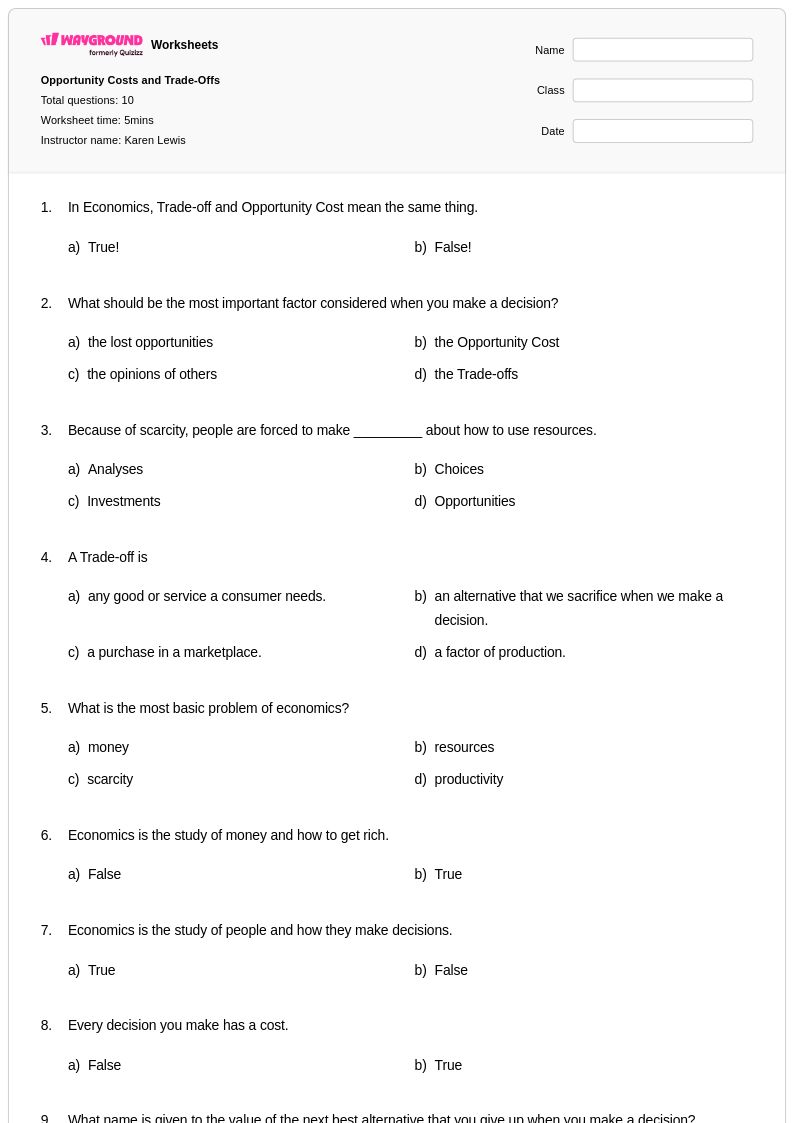
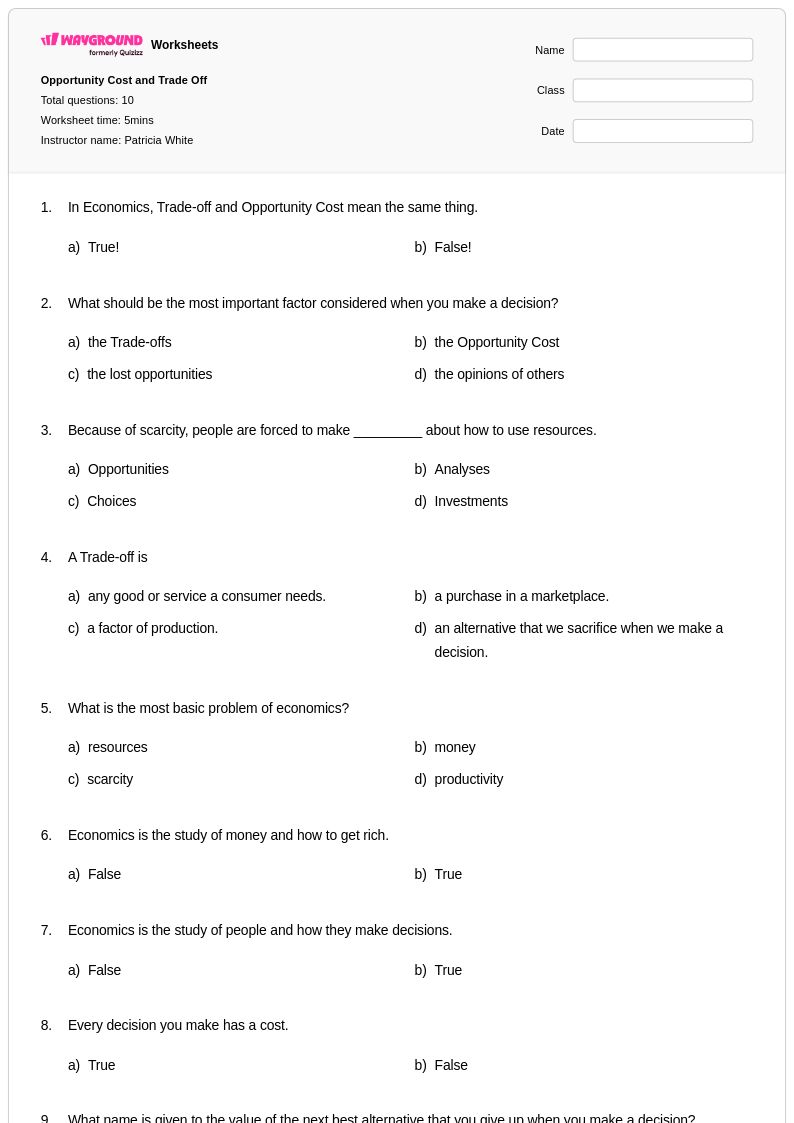
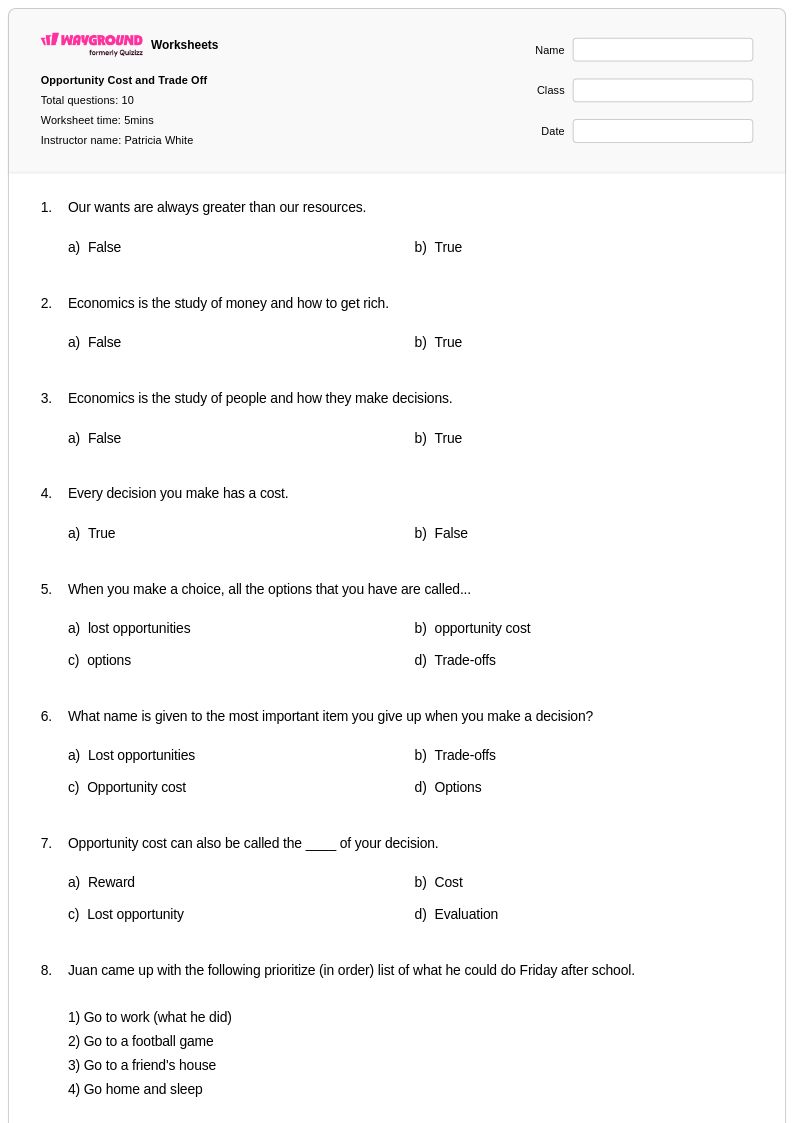
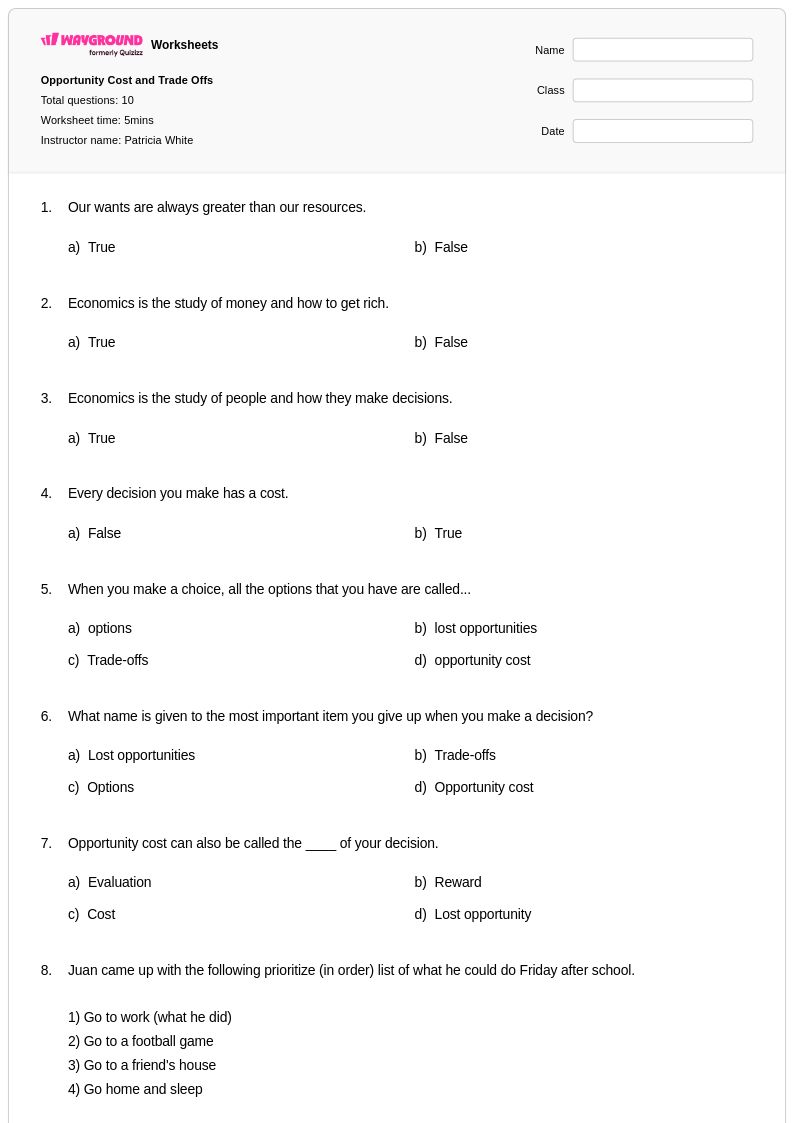
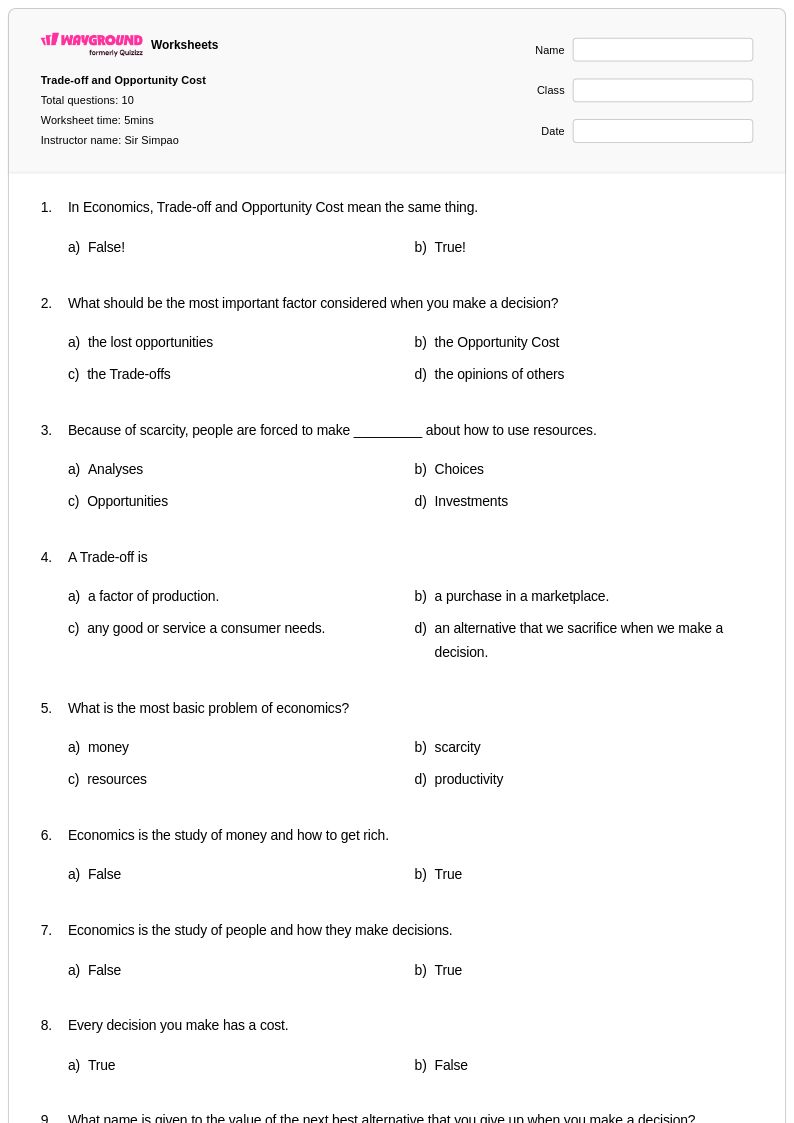
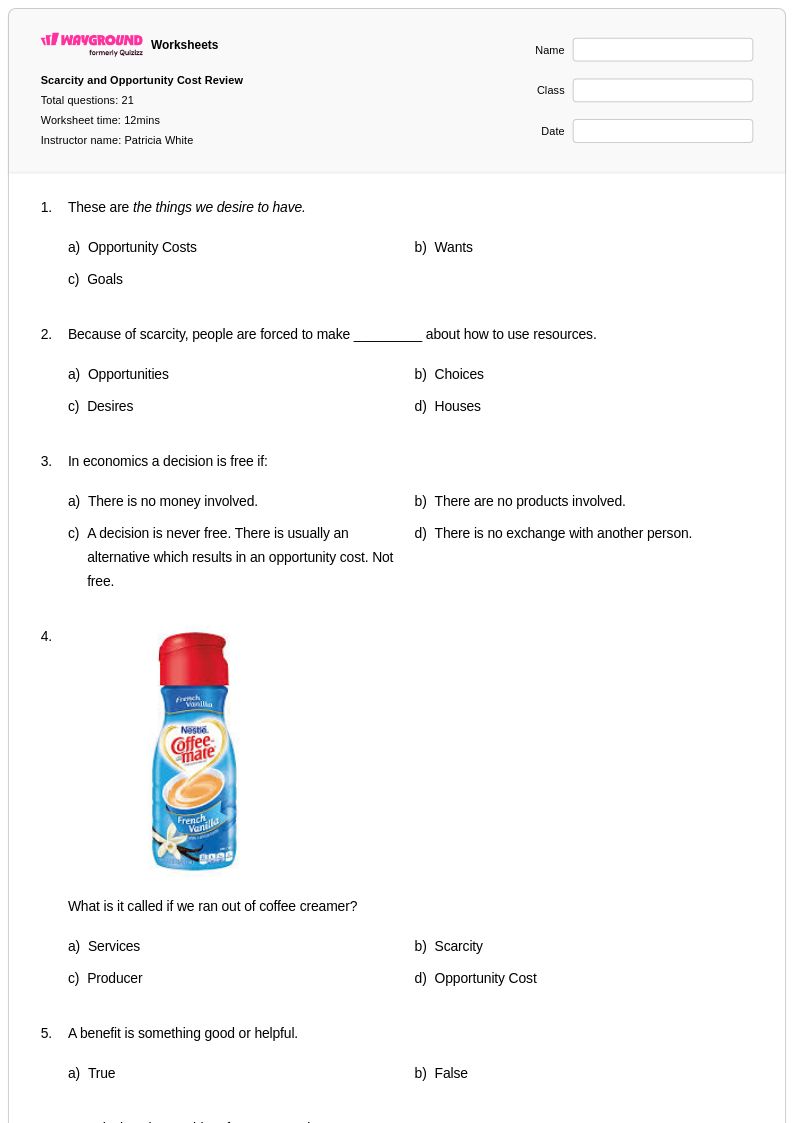
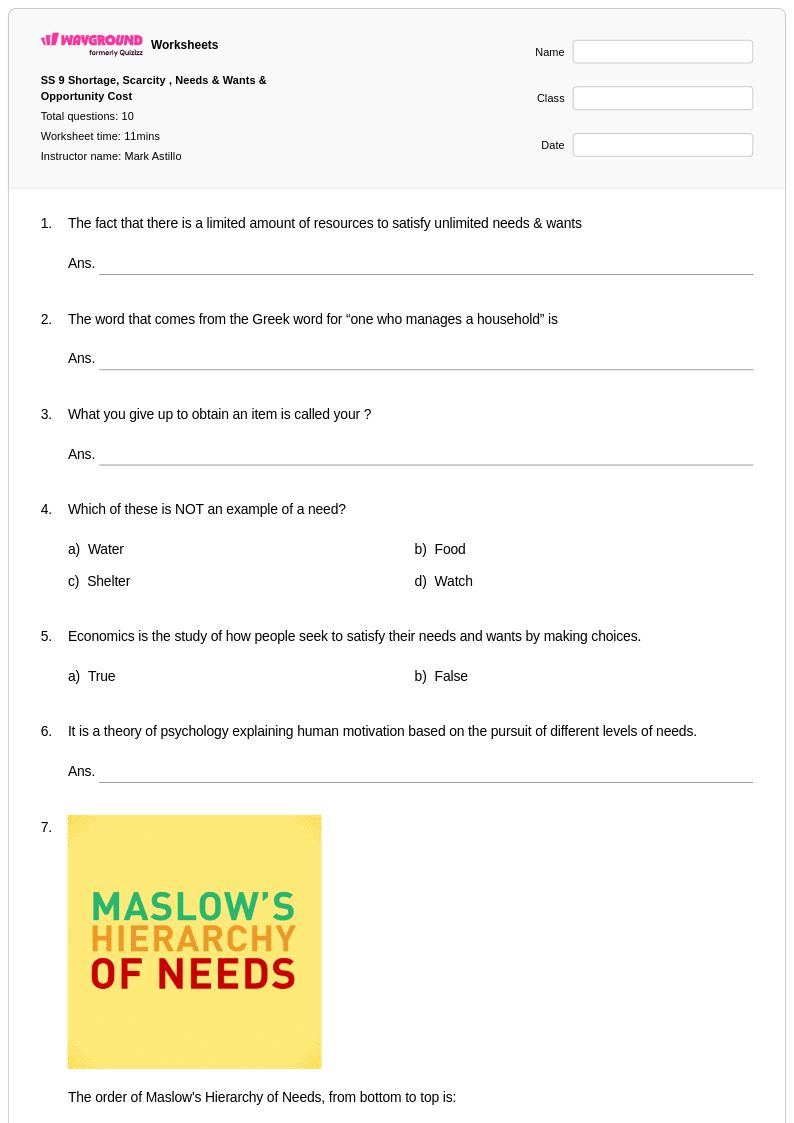
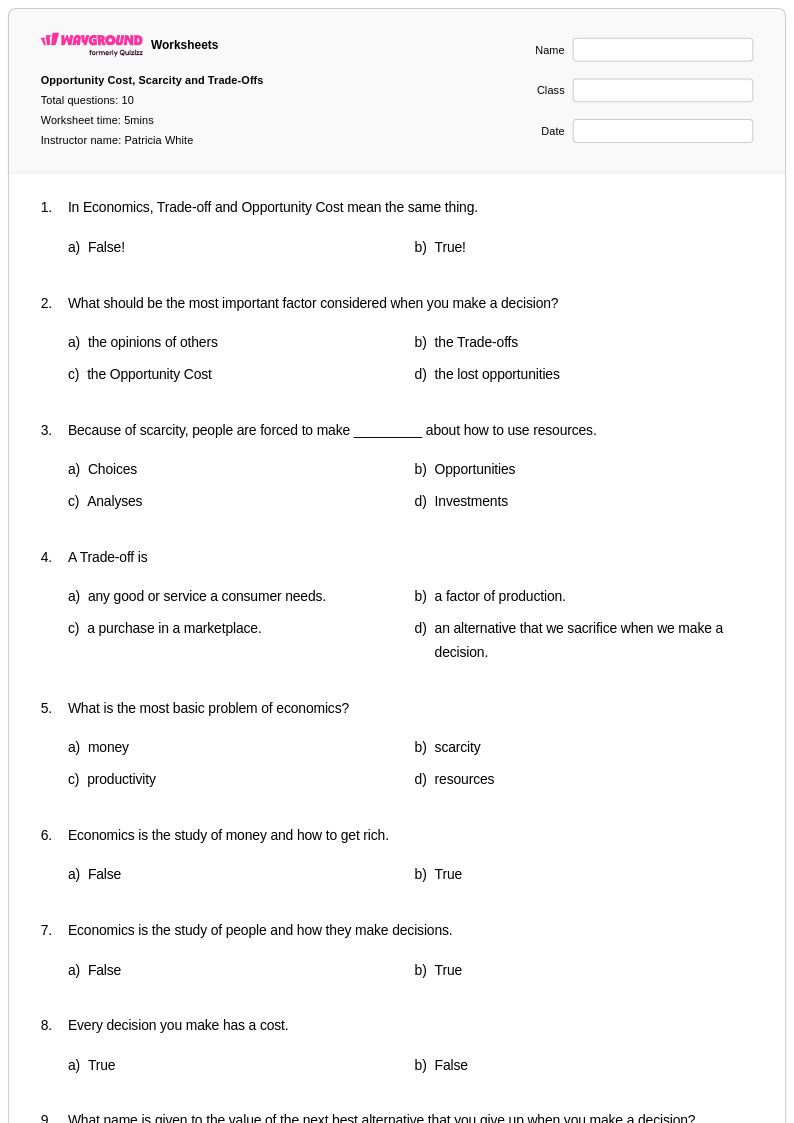
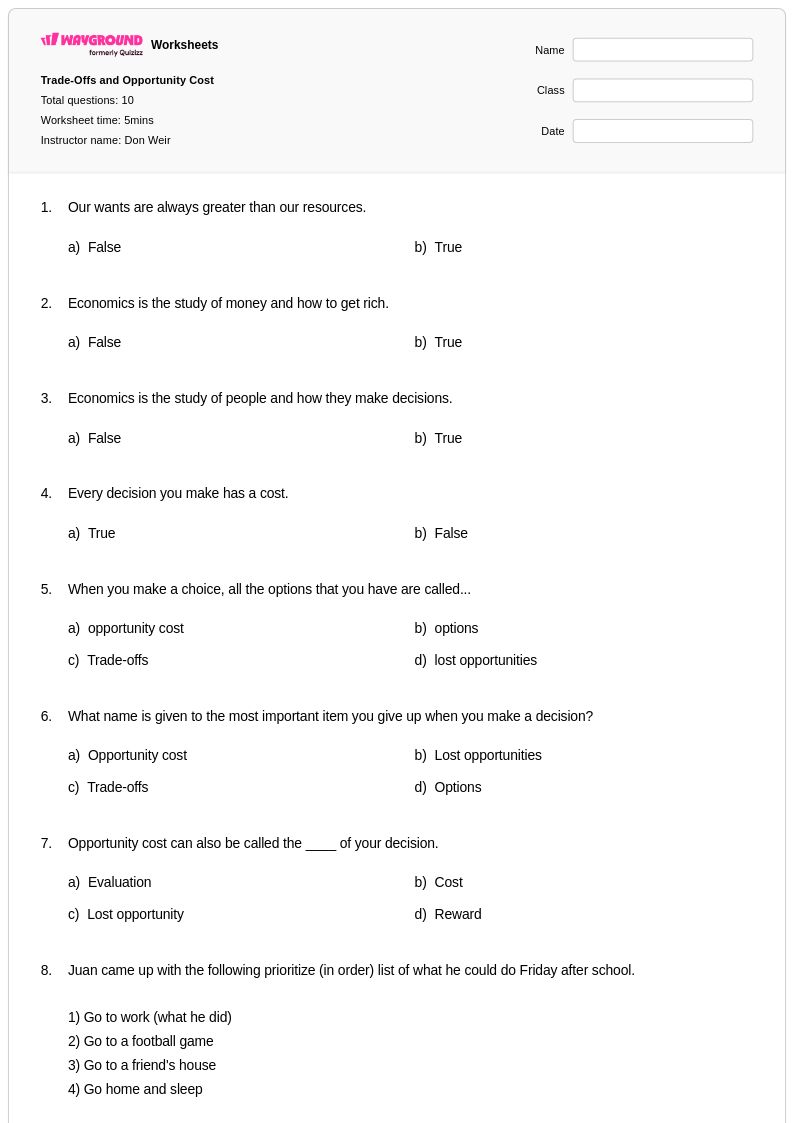
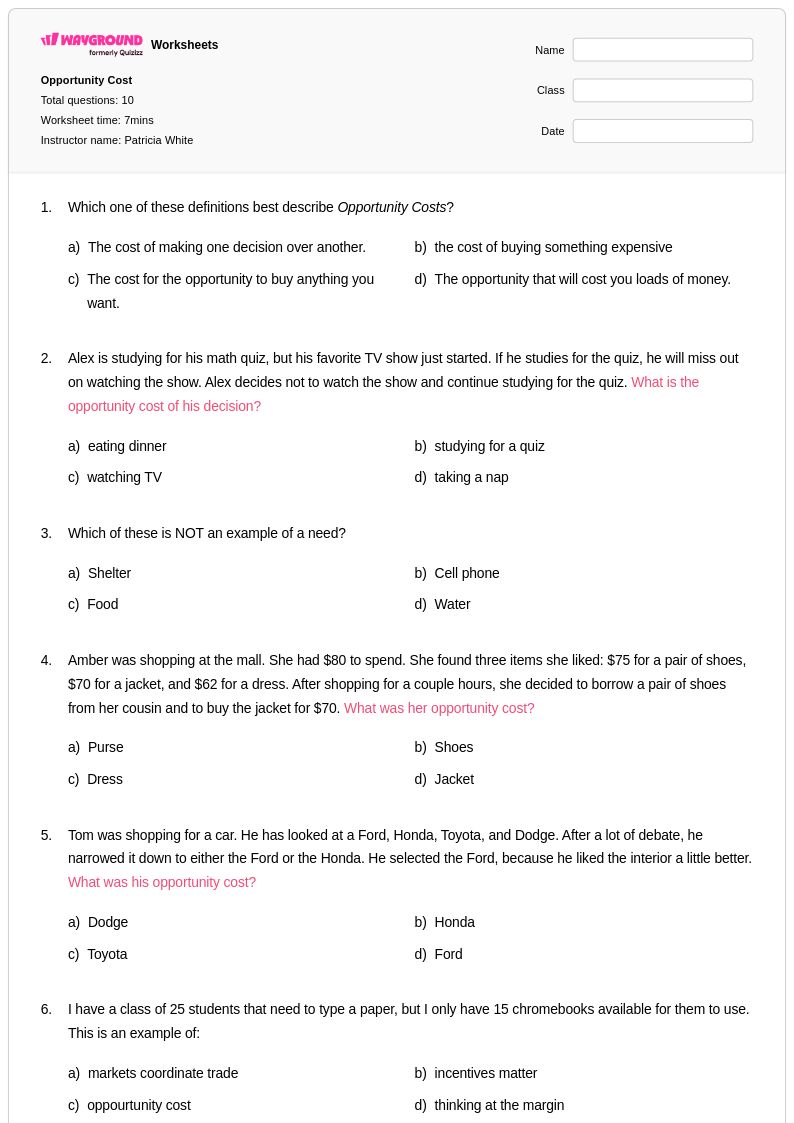
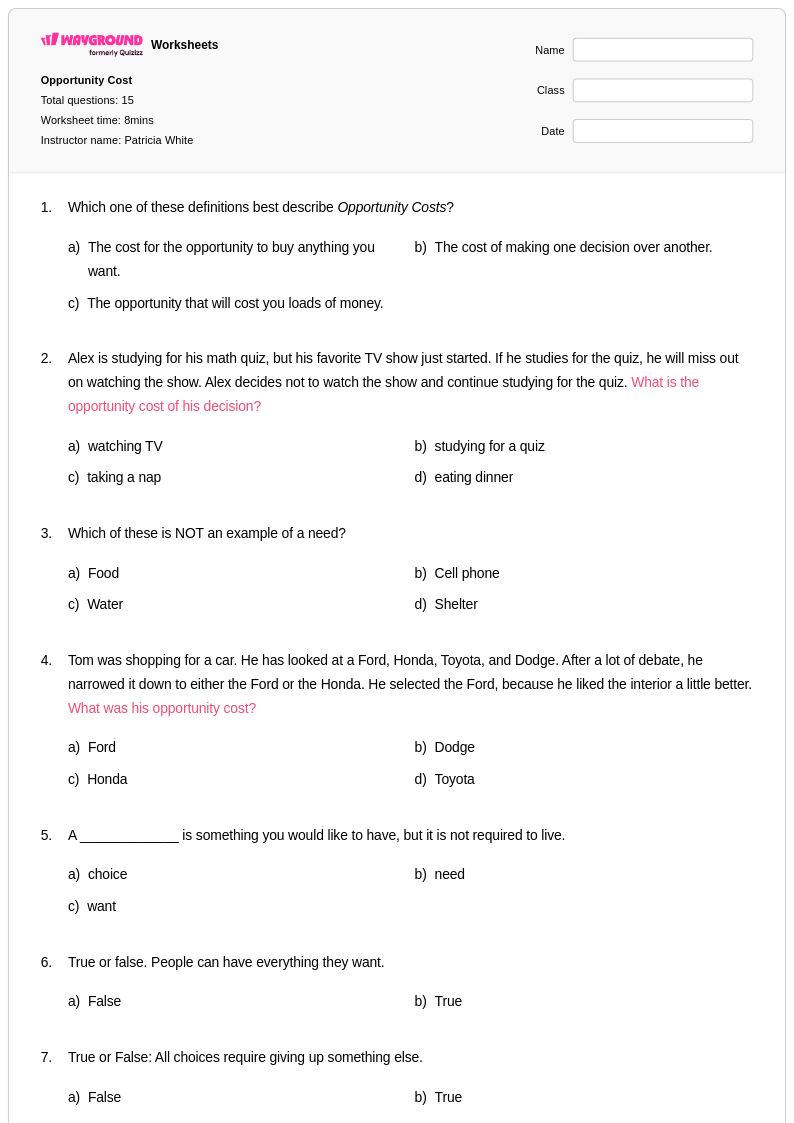
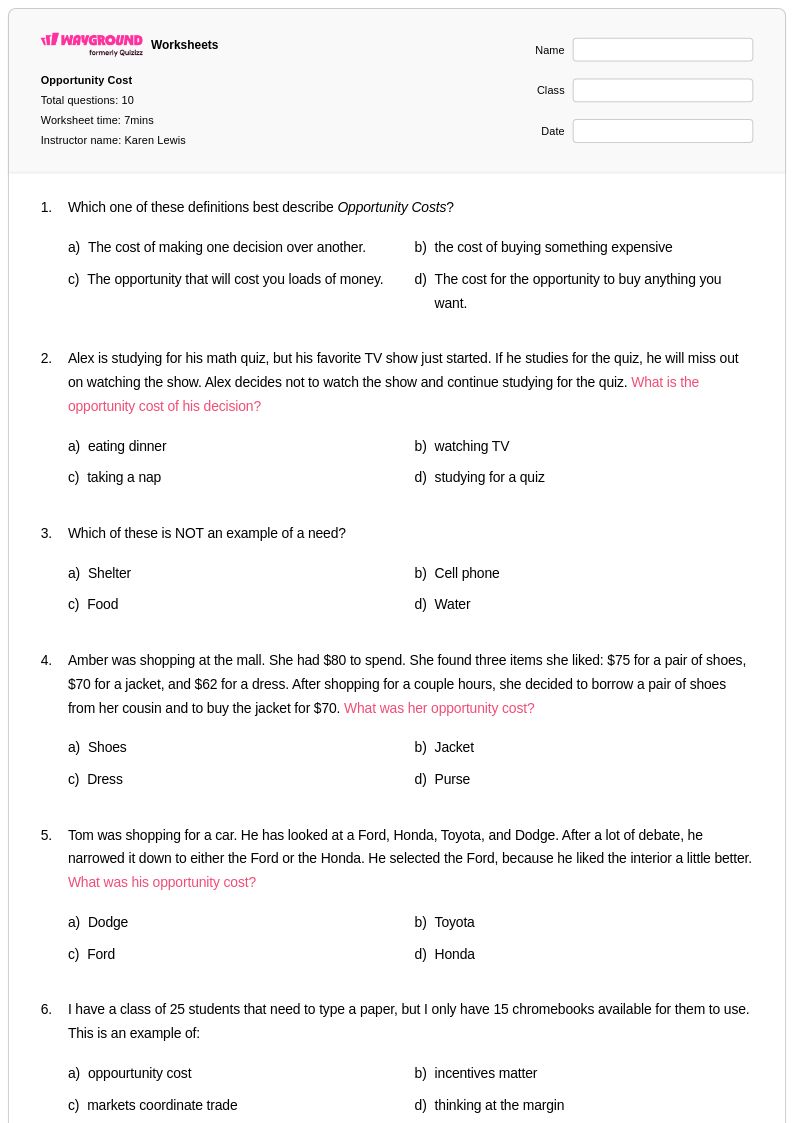
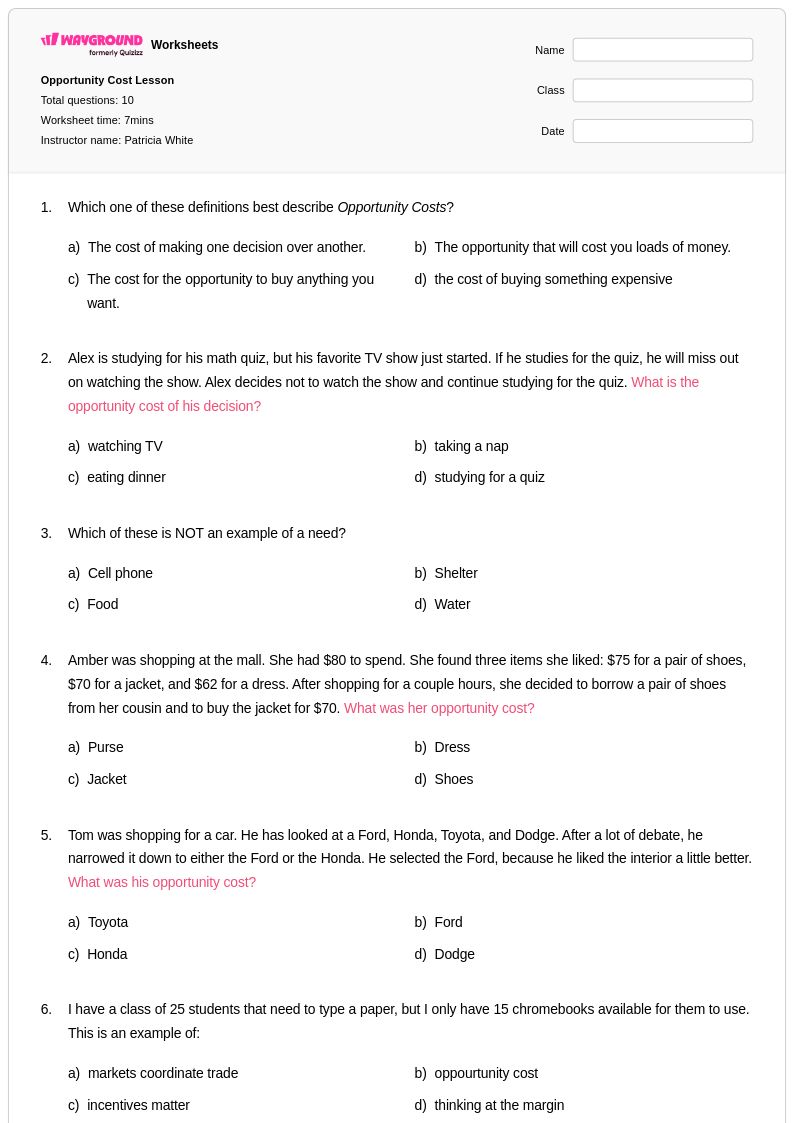
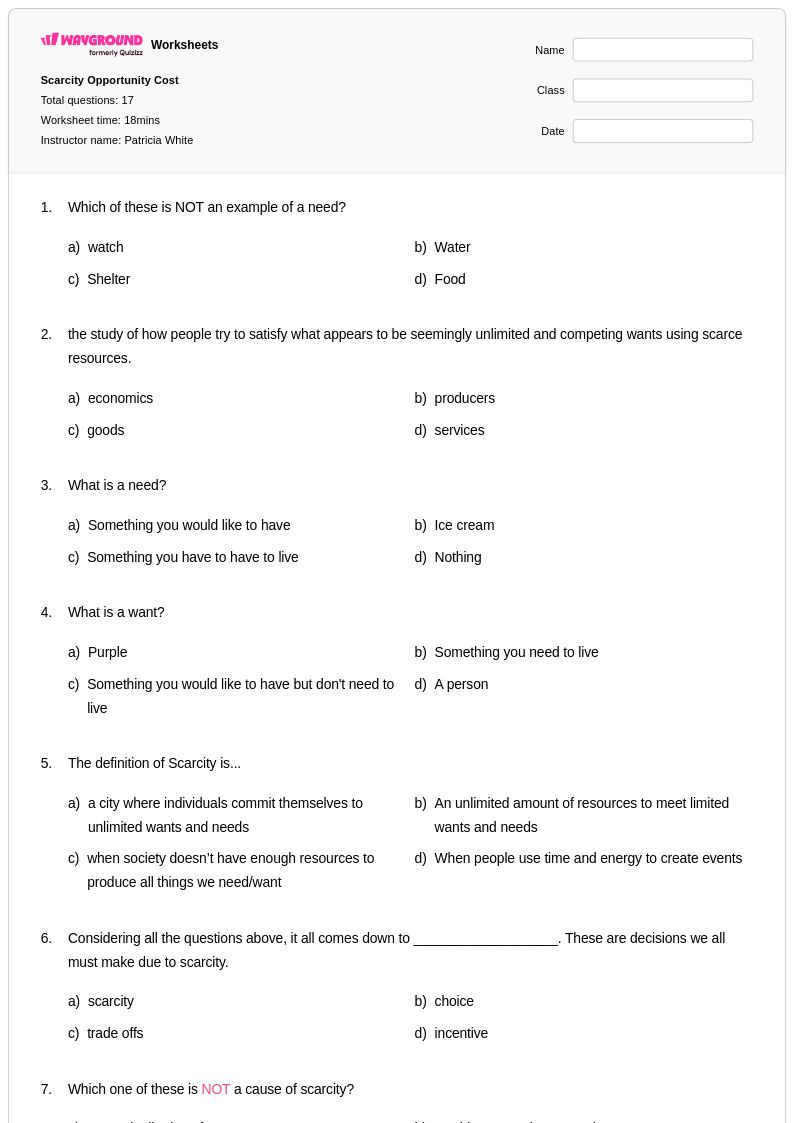
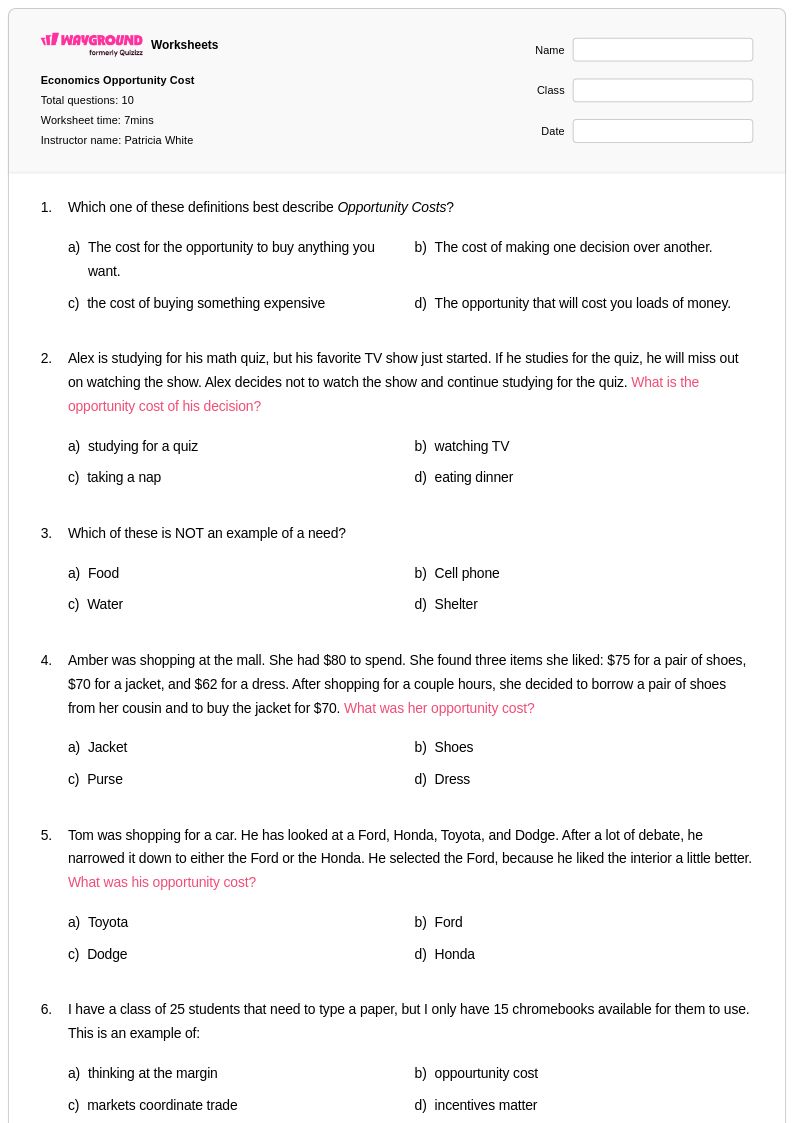
Opportunity cost worksheets for Class 9 students provide essential practice in understanding one of economics' most fundamental concepts through carefully designed exercises and real-world scenarios. These comprehensive resources help students master the critical skill of evaluating trade-offs and understanding that every economic decision involves giving up the next best alternative. The worksheets feature diverse practice problems ranging from personal budget decisions to complex business scenarios, allowing students to apply opportunity cost principles across various contexts. Each worksheet collection includes detailed answer keys and explanations that help students understand the reasoning behind economic choices, while the free printable format makes these resources accessible for both classroom instruction and independent study.
Wayground, formerly Quizizz, supports educators with an extensive collection of opportunity cost worksheets created by millions of teachers worldwide, offering unparalleled variety and quality for Class 9 economics instruction. The platform's robust search and filtering capabilities allow teachers to quickly locate resources that align with specific curriculum standards and match their students' learning needs. Teachers can easily differentiate instruction by selecting from worksheets of varying complexity levels, while the flexible customization tools enable educators to modify content for remediation or enrichment purposes. Available in both printable pdf format and interactive digital versions, these worksheet collections streamline lesson planning and provide valuable resources for skill practice, formative assessment, and reinforcing key economic concepts throughout the academic year.
FAQs
How do I teach opportunity cost to economics students?
Teach opportunity cost by grounding it in decisions students already face, such as choosing between spending money on a concert ticket versus saving it, or picking one extracurricular over another. The key is helping students identify not just what they chose, but what they gave up — specifically the next best alternative, not every foregone option. Move from personal examples to business and government scenarios to show that opportunity cost operates at every level of economic decision-making. Using structured practice problems that require students to identify and compare alternatives reinforces the concept more durably than lecture alone.
What kinds of practice problems help students understand opportunity cost?
Effective practice problems for opportunity cost ask students to analyze real-world scenarios and explicitly name the next best alternative being sacrificed. Strong problem types include comparing college vs. workforce entry decisions, evaluating business investment trade-offs, and assessing government budget priorities where one program is funded at the expense of another. Problems that require students to calculate implicit costs — such as the income foregone by attending college full-time — push beyond surface understanding and develop genuine economic reasoning. Opportunity cost worksheets that layer personal, business, and societal contexts help students see the concept as universally applicable rather than isolated to textbook examples.
What misconceptions do students commonly have about opportunity cost?
The most common misconception is that opportunity cost equals the total of everything a student gives up, when in fact it refers only to the single next best alternative. Students also frequently confuse opportunity cost with monetary cost, overlooking implicit costs like time, foregone wages, or unrealized gains. Another frequent error is failing to recognize that even 'free' choices carry opportunity costs because time and attention are scarce resources. Targeted worksheet problems that ask students to identify and justify which alternative is truly the next best — rather than list all possible trade-offs — help correct these patterns directly.
How can I use opportunity cost worksheets in my economics class?
Opportunity cost worksheets on Wayground are available as printable PDFs for traditional classroom use and in digital formats for technology-integrated environments, making them adaptable to in-person, hybrid, or remote instruction. Teachers can also host worksheets as a quiz on Wayground, enabling real-time student responses and immediate feedback. The included answer keys allow for efficient self-checking, peer review, or teacher-led correction sessions. Using these worksheets as guided practice after initial instruction, or as formative assessment checkpoints, helps teachers identify which students need remediation before moving to more complex economic analysis.
How do I differentiate opportunity cost instruction for students at different ability levels?
For introductory learners, start with straightforward personal-choice scenarios where the two alternatives are clearly defined and the trade-off is obvious. Advanced students benefit from problems that involve implicit costs, multiple competing alternatives, or macroeconomic contexts like government spending priorities where the next best use of public funds must be reasoned through carefully. On Wayground, teachers can apply accommodations such as reduced answer choices or read-aloud support for individual students who need additional scaffolding, while the rest of the class works through standard versions — without disrupting the flow of instruction or signaling differences to peers.