
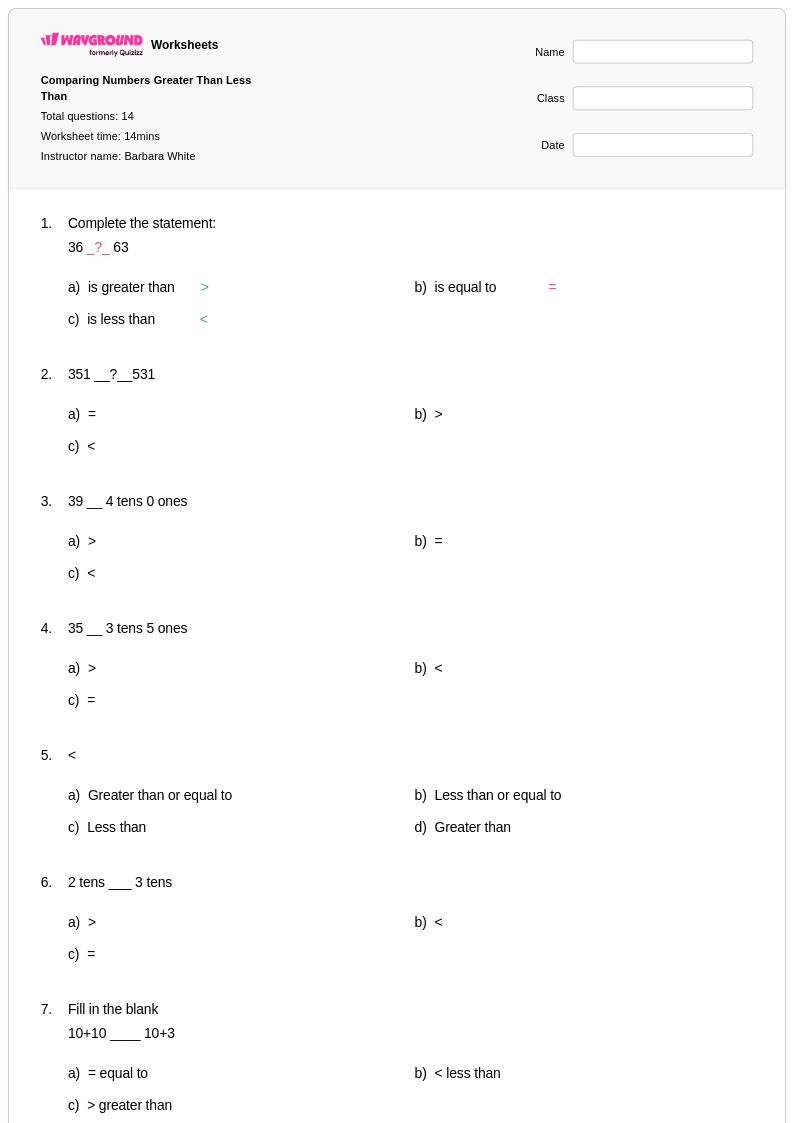
14 Q
2nd
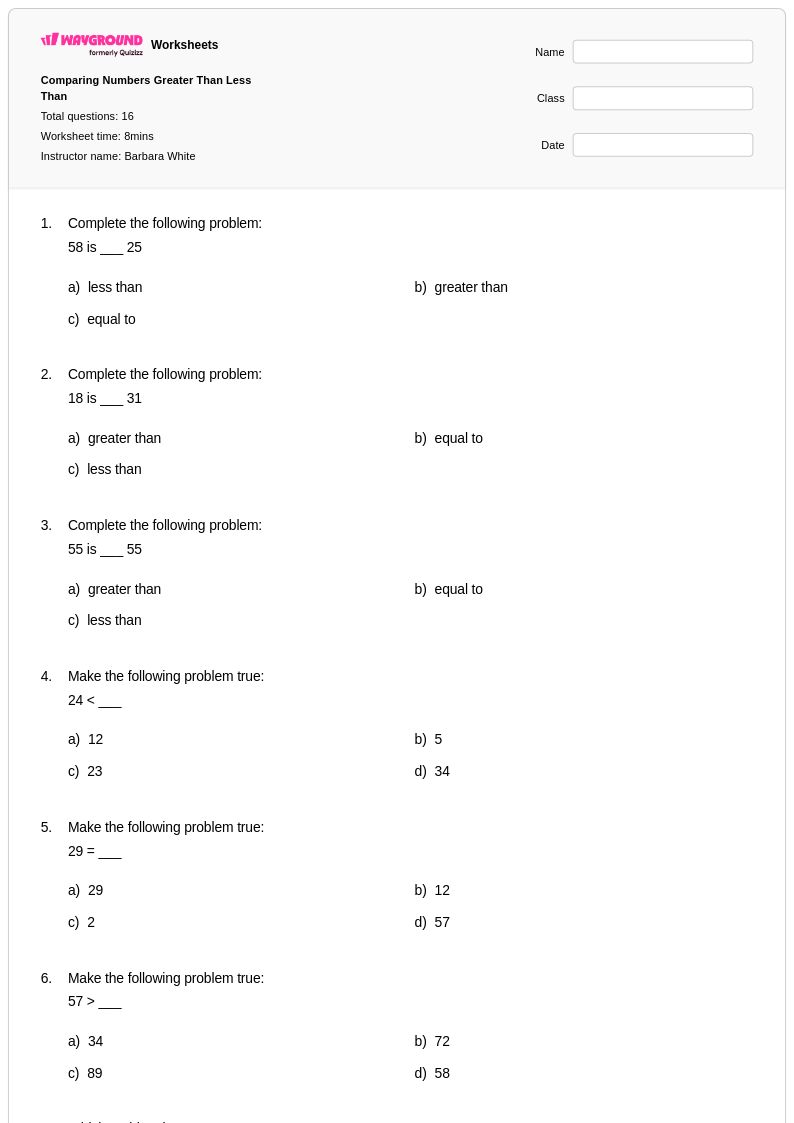
16 Q
1st - 2nd
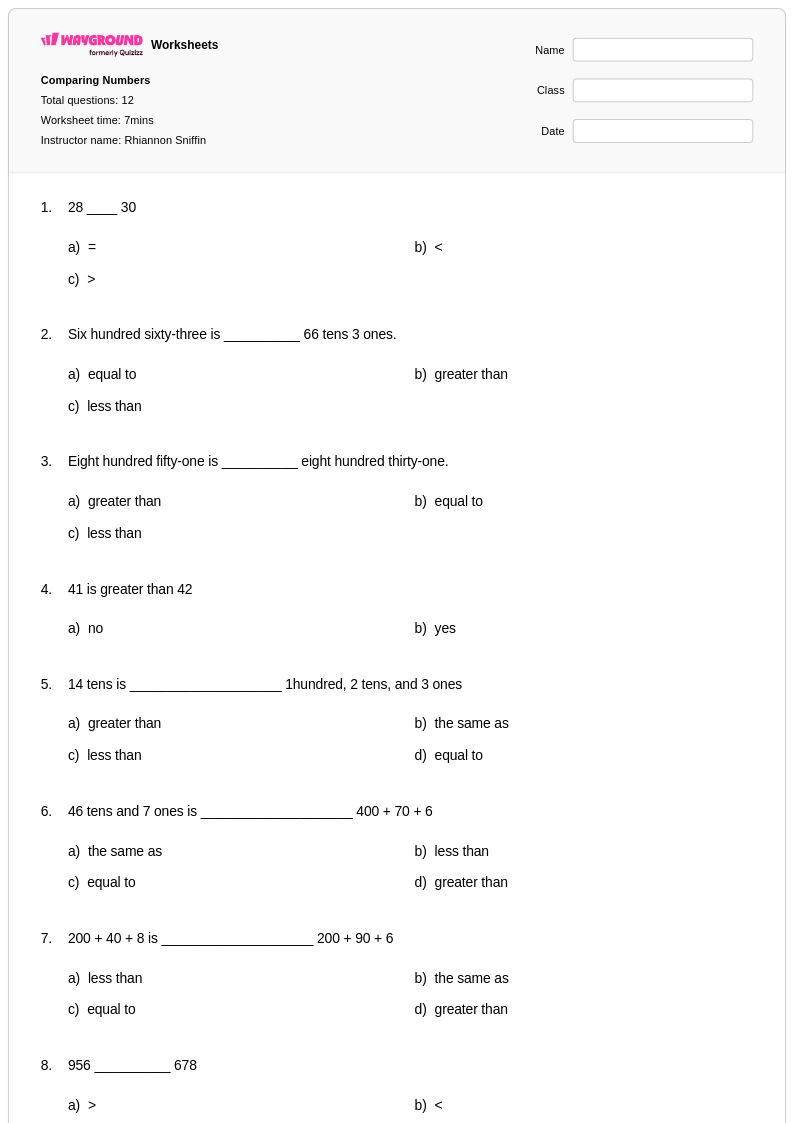
12 Q
2nd
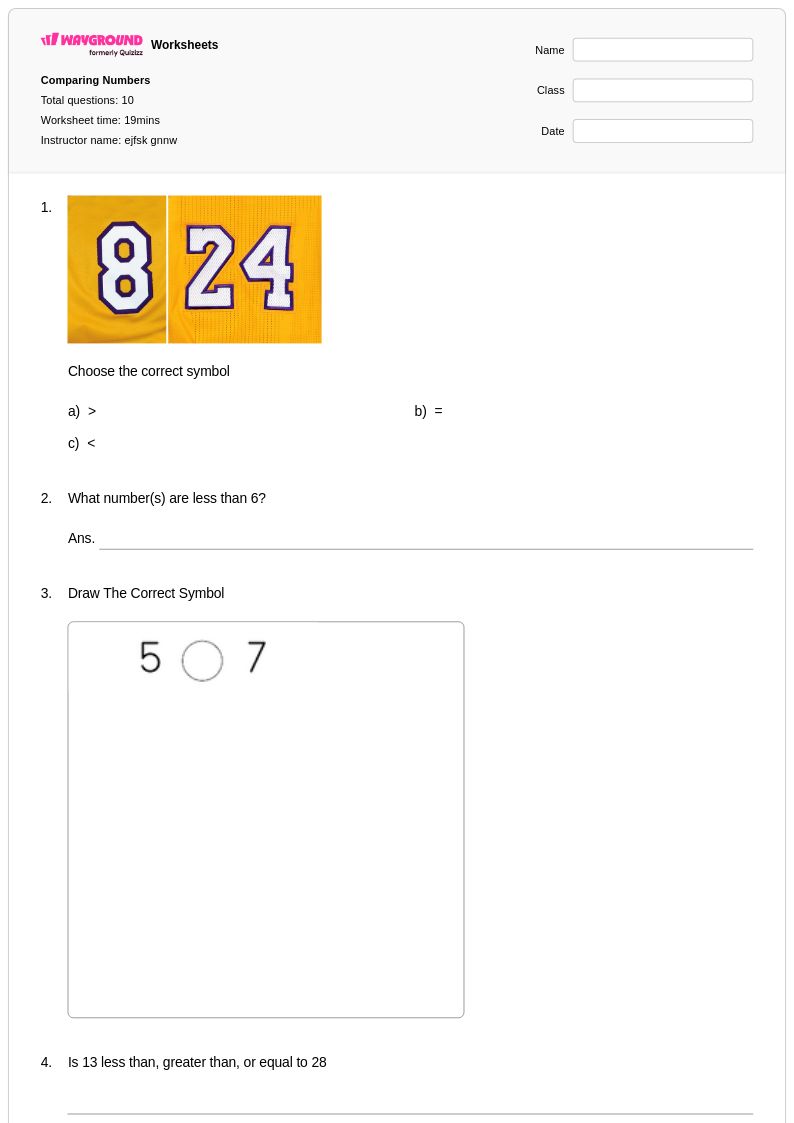
10 Q
1st - 2nd
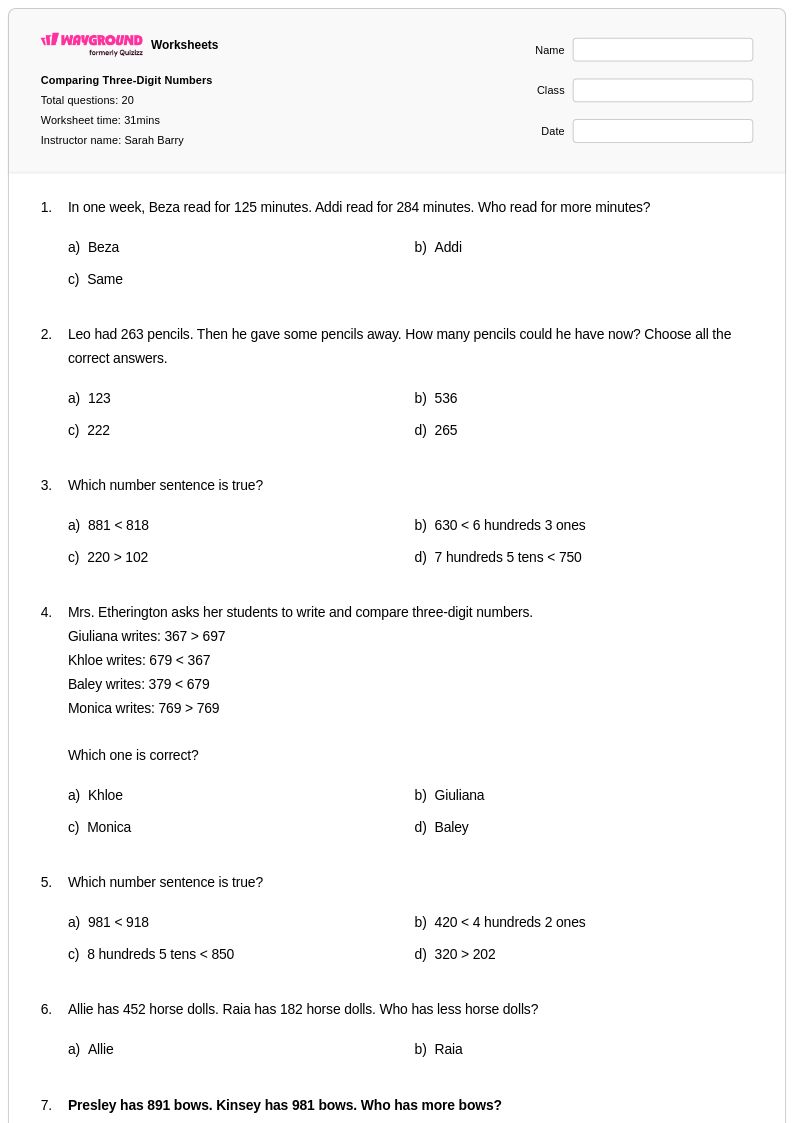
20 Q
1st - 3rd
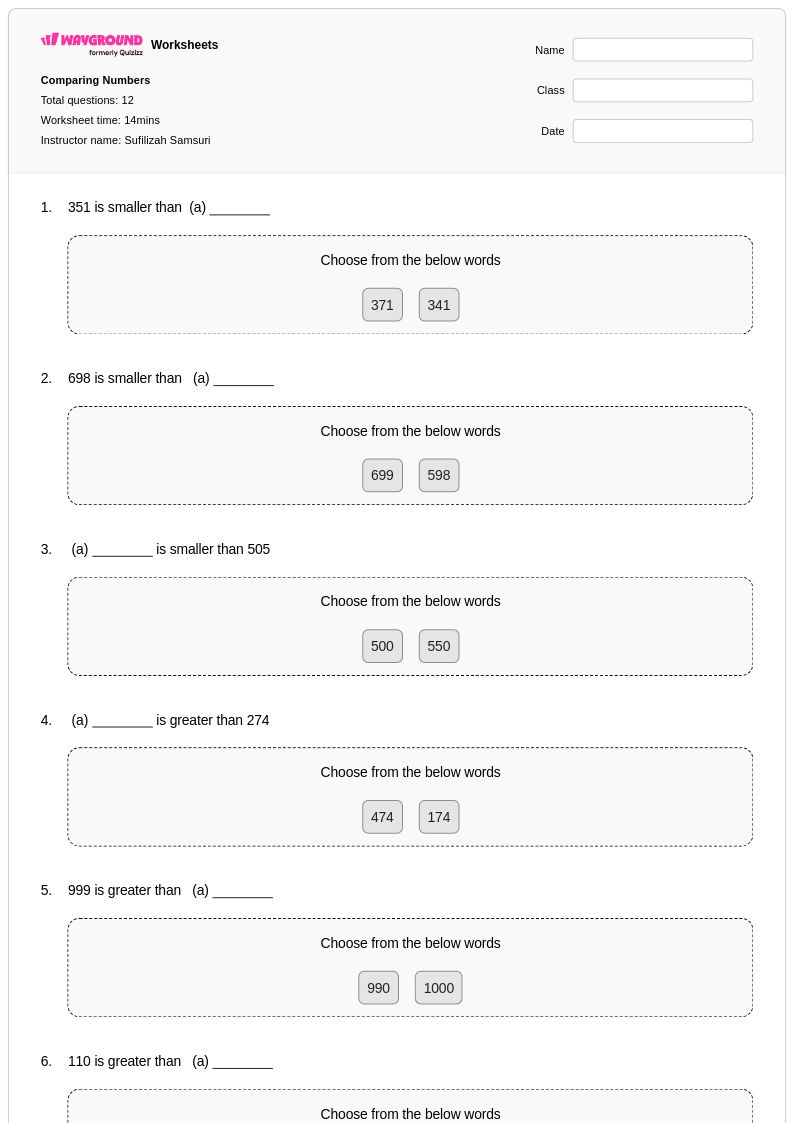
12 Q
2nd
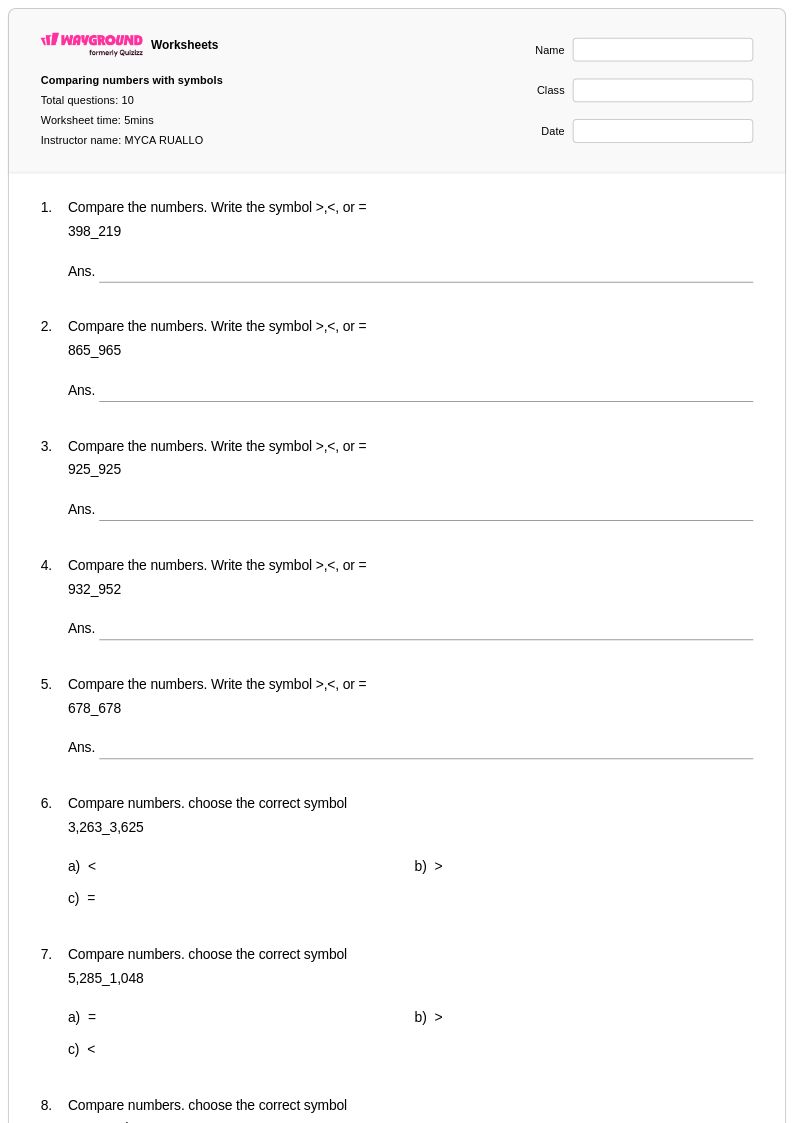
10 Q
2nd
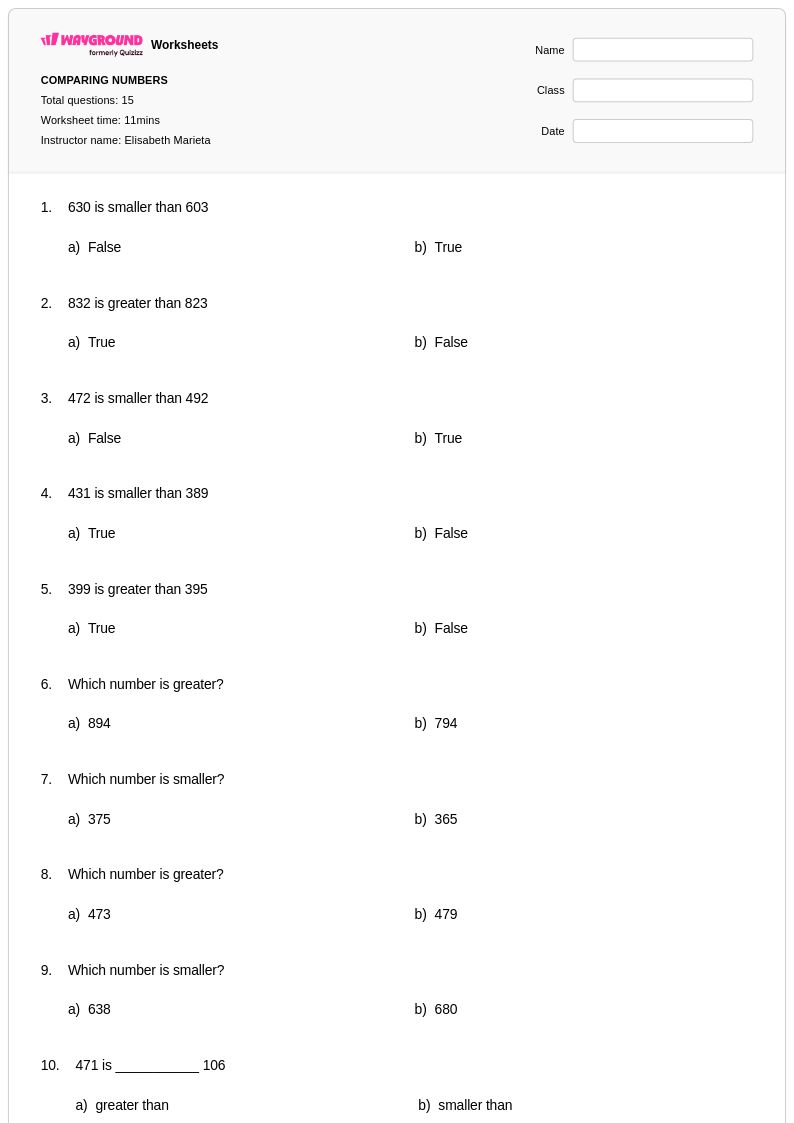
15 Q
2nd
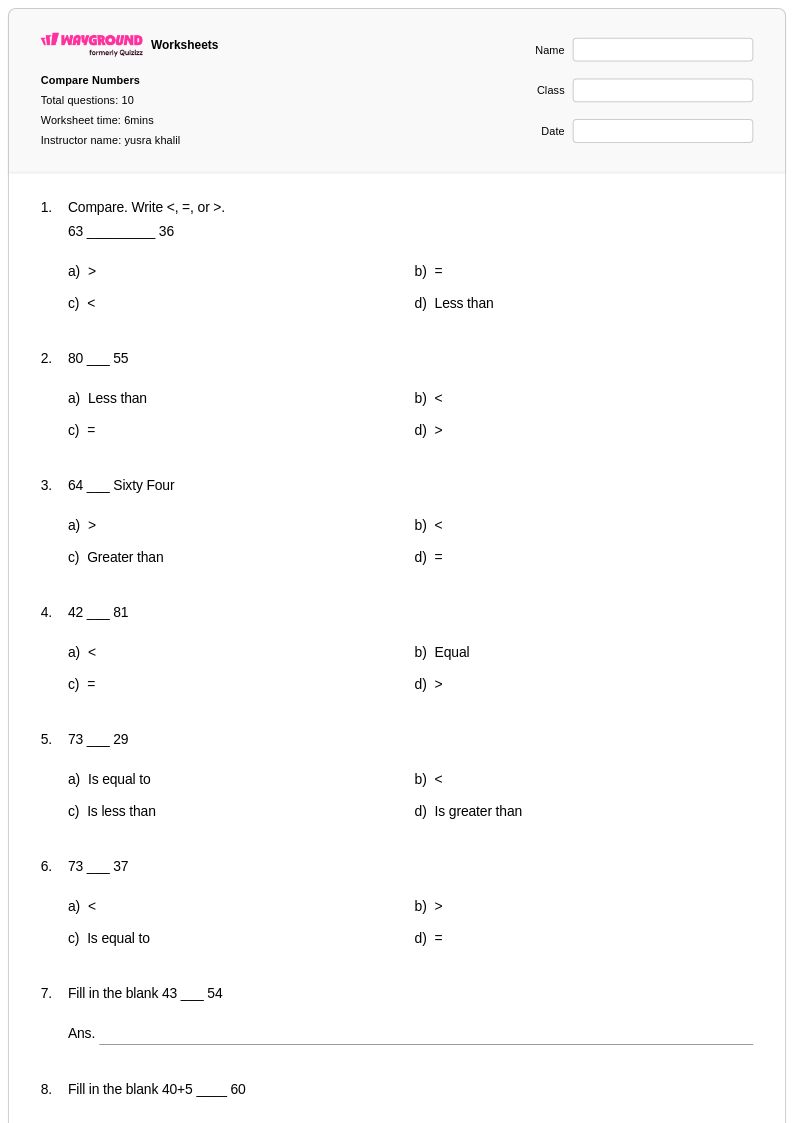
10 Q
2nd
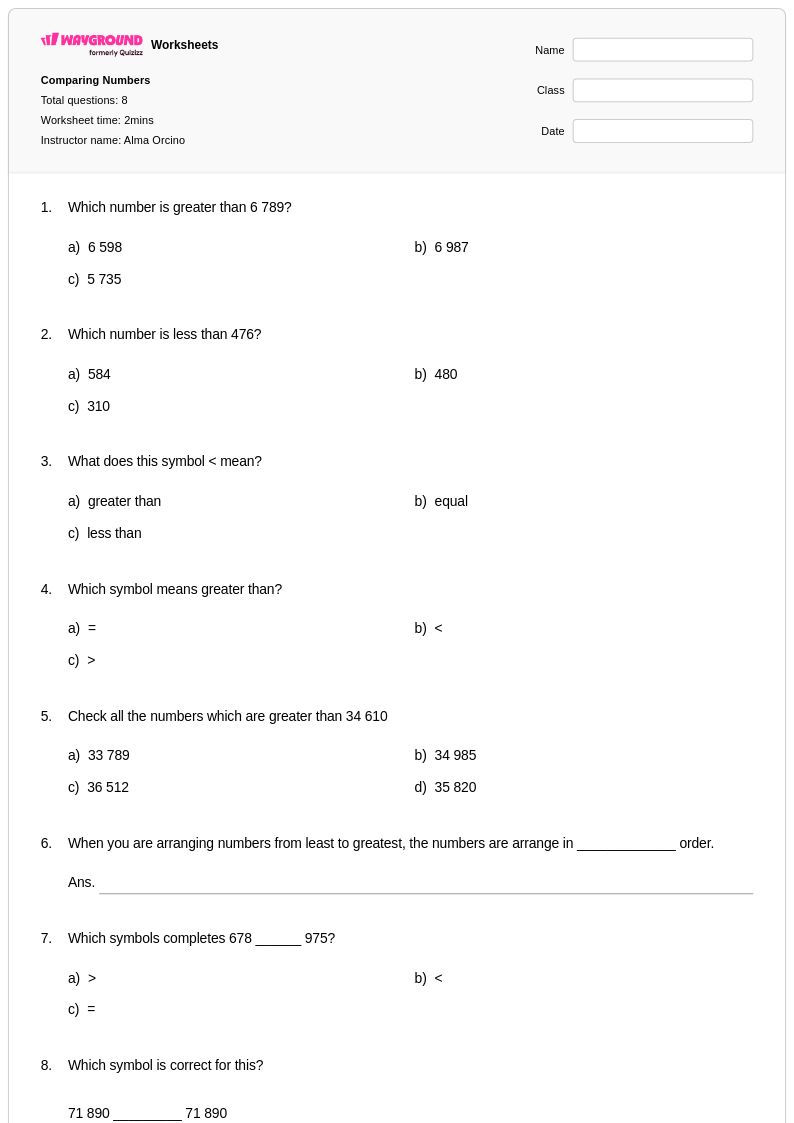
8 Q
2nd - 3rd
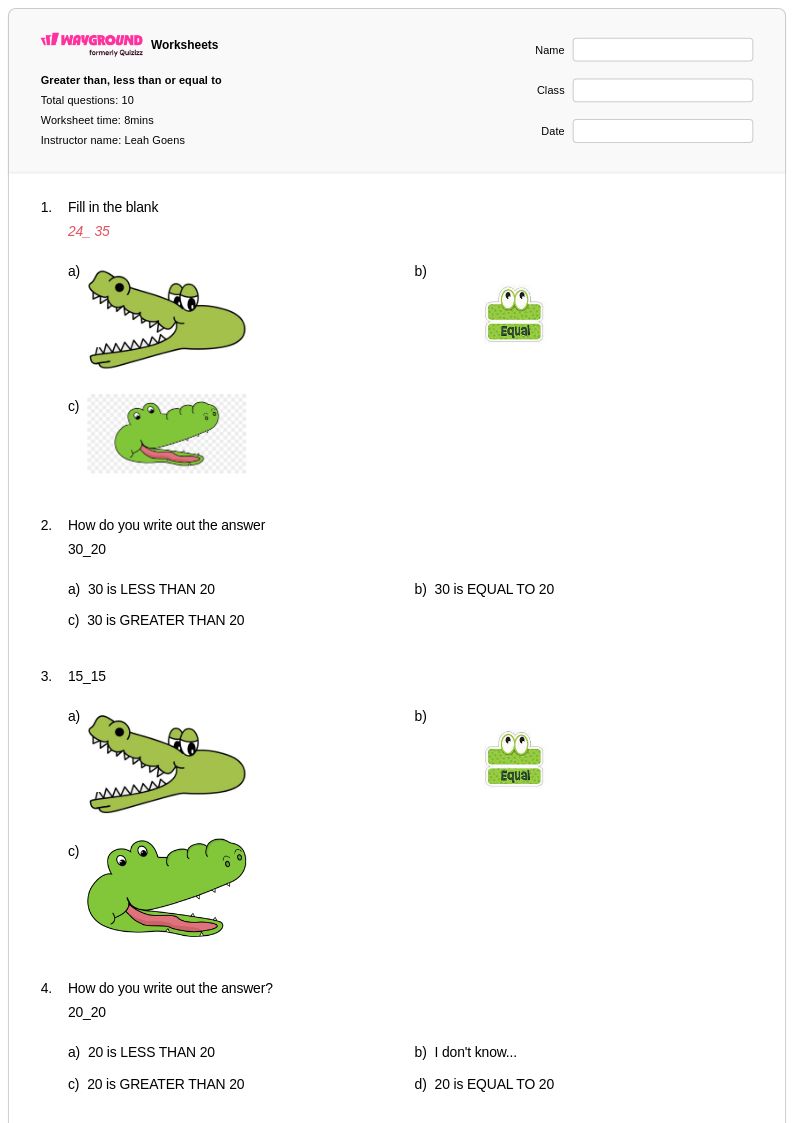
10 Q
1st - 2nd
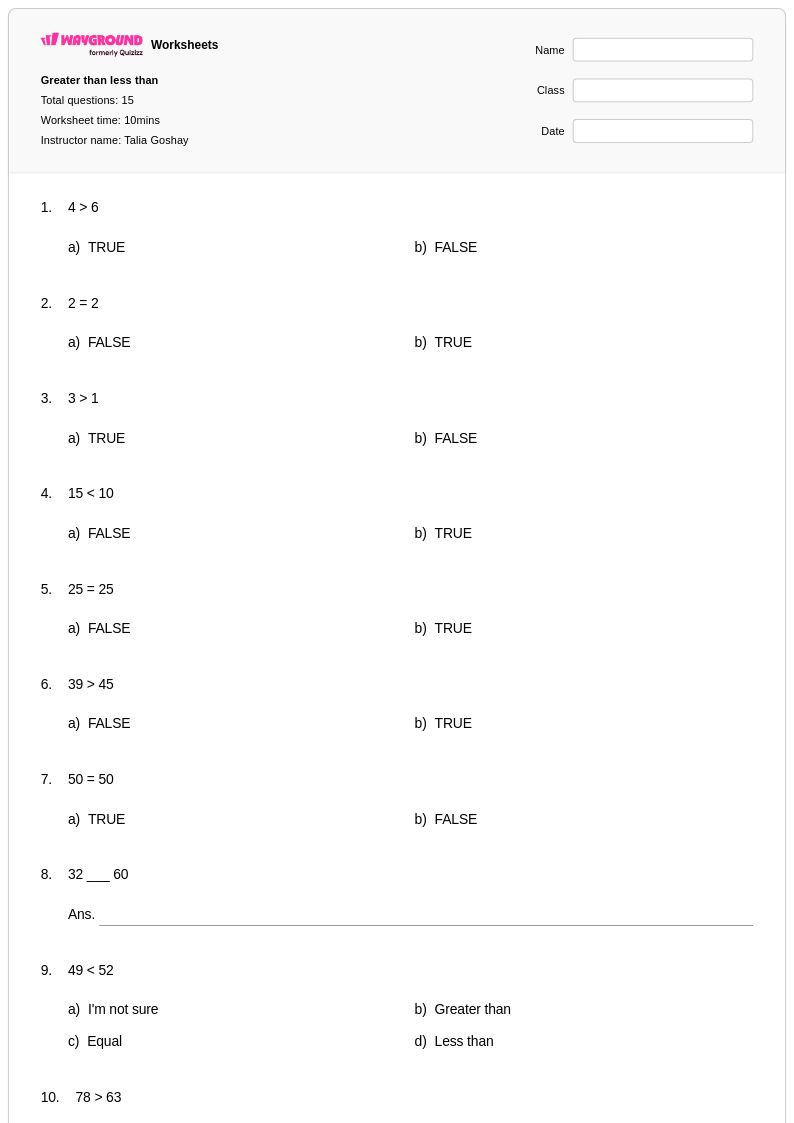
15 Q
1st - 3rd
9 Q
1st - 2nd
14 Q
2nd - Uni
10 Q
2nd
10 Q
2nd
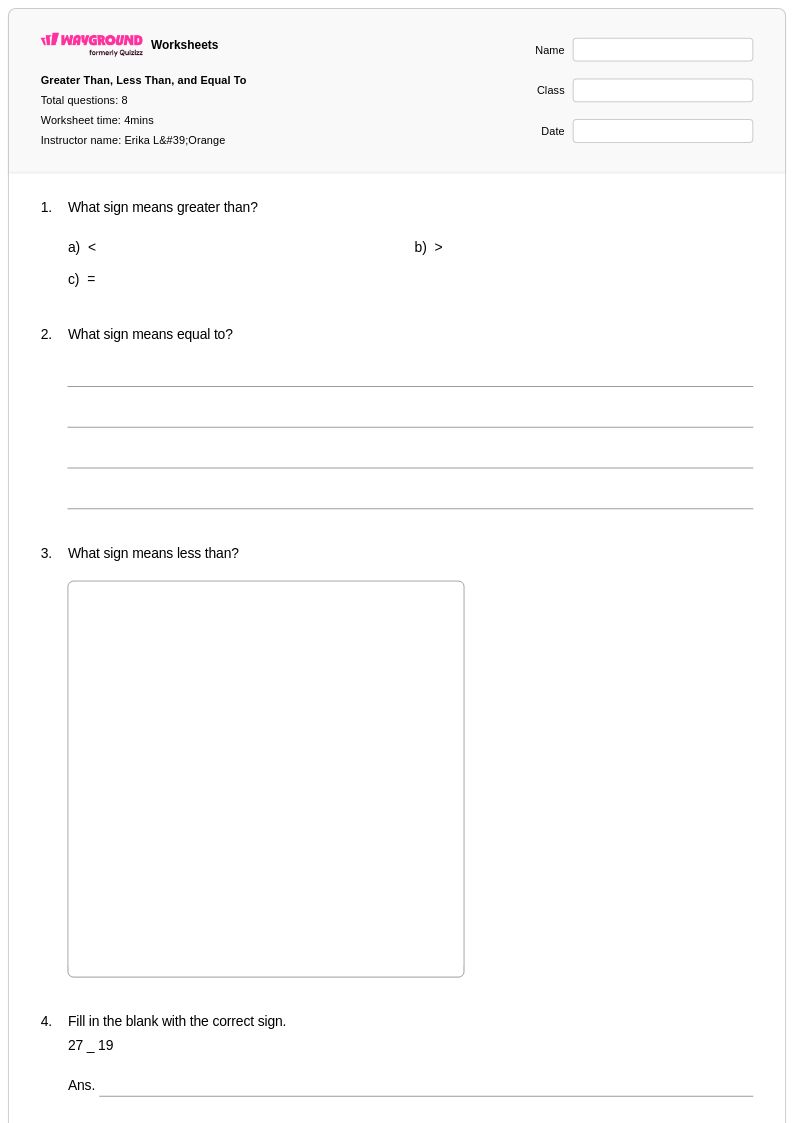
8 Q
1st - 3rd
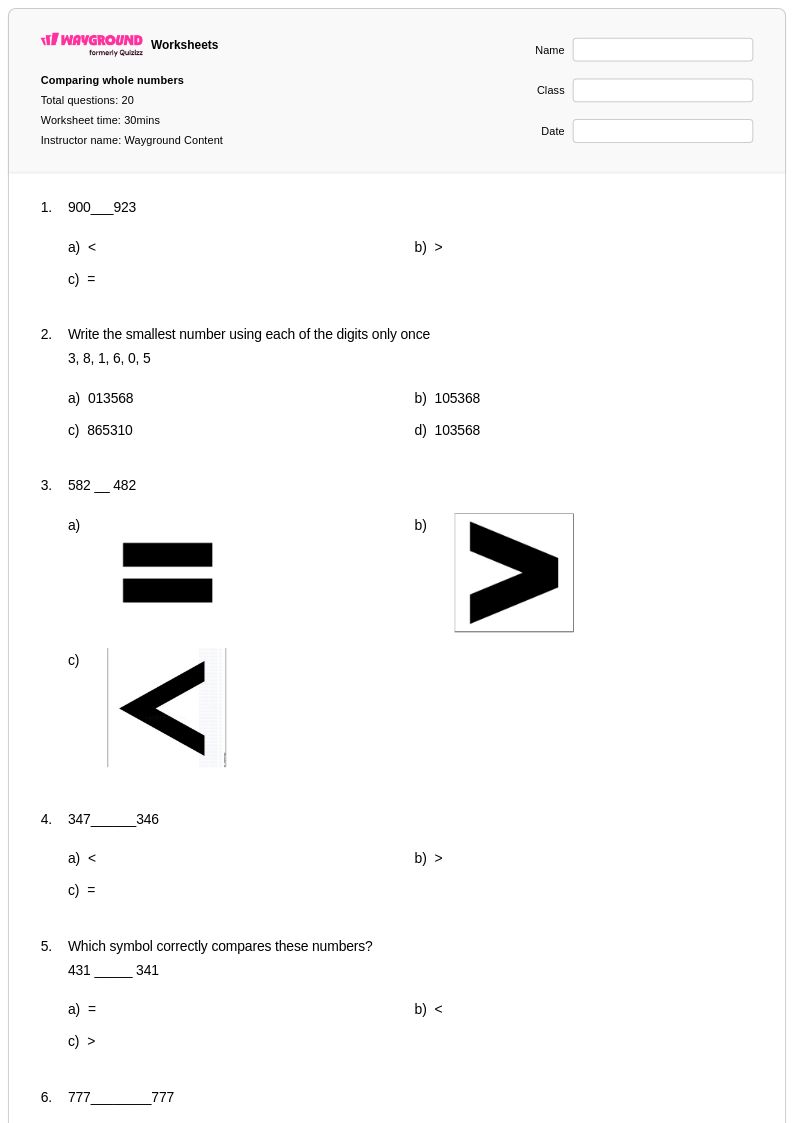
20 Q
2nd
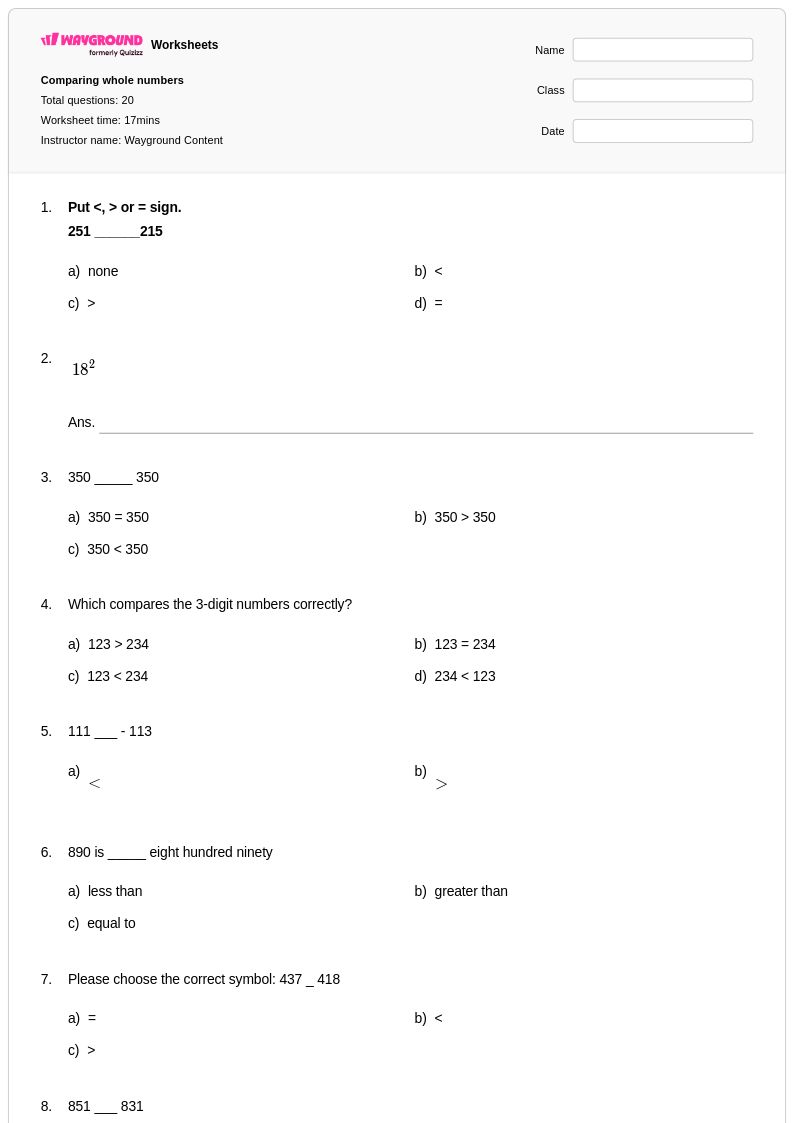
20 Q
2nd
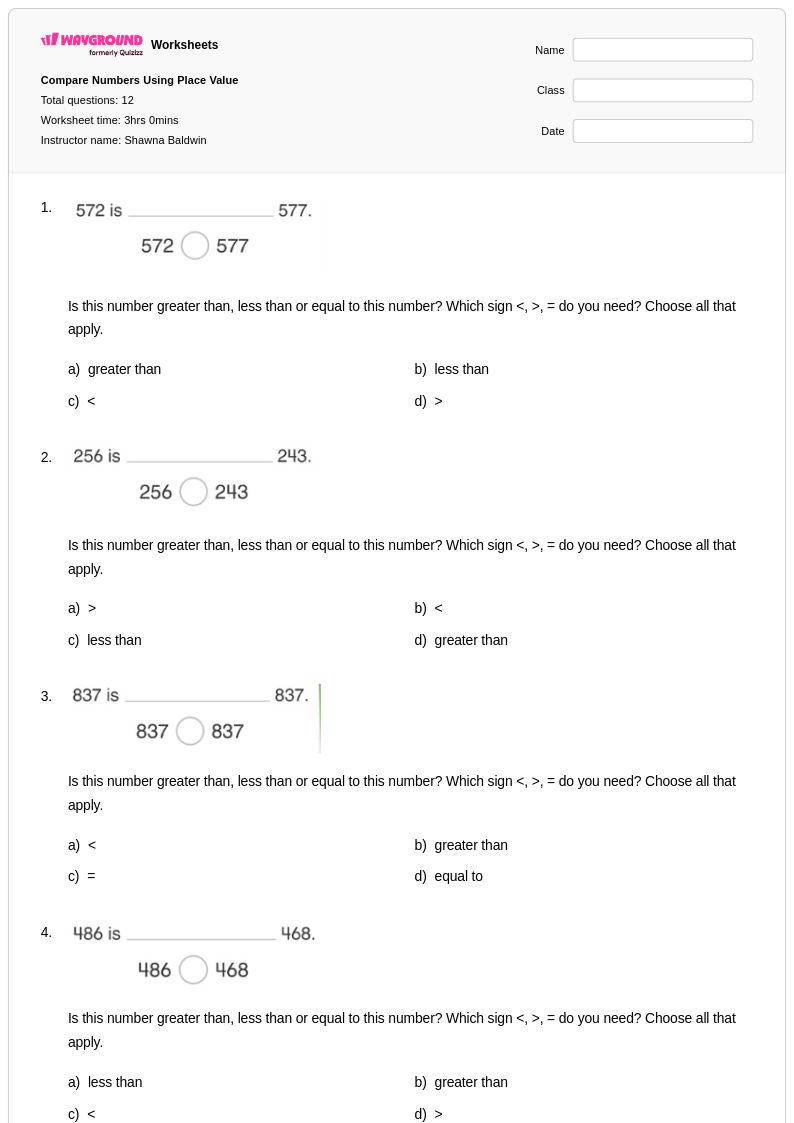
12 Q
2nd
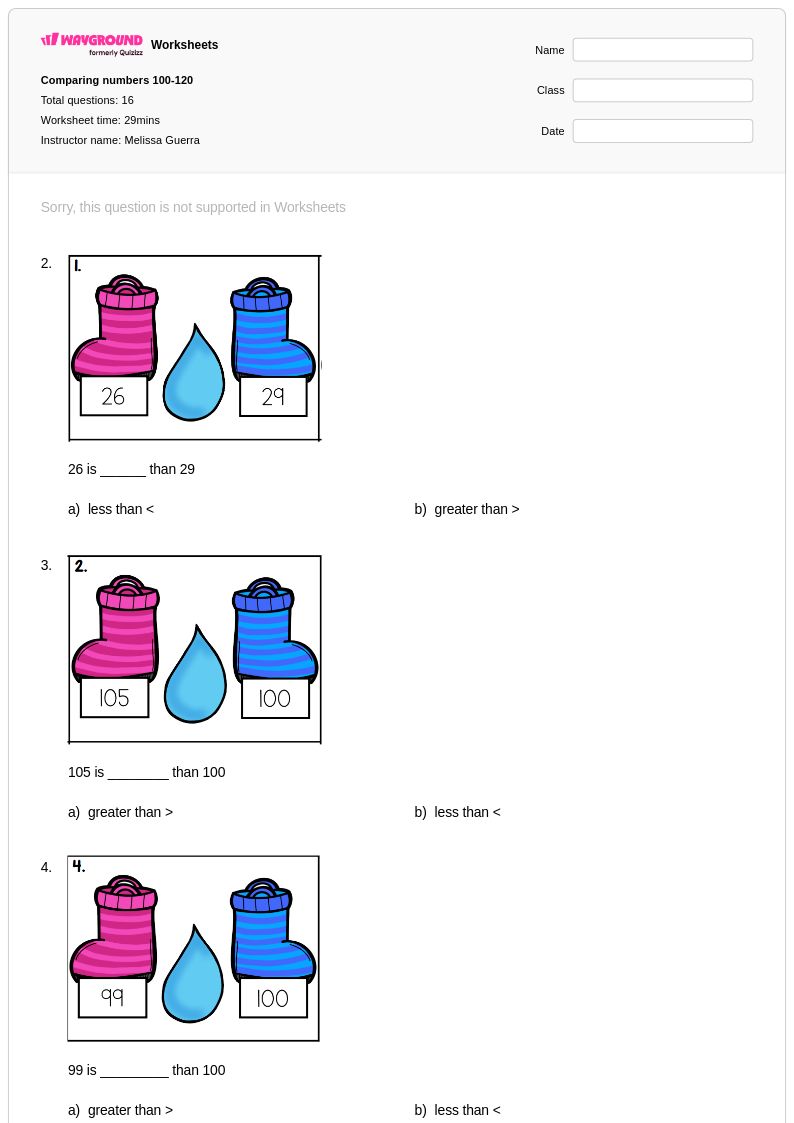
17 Q
1st - Uni
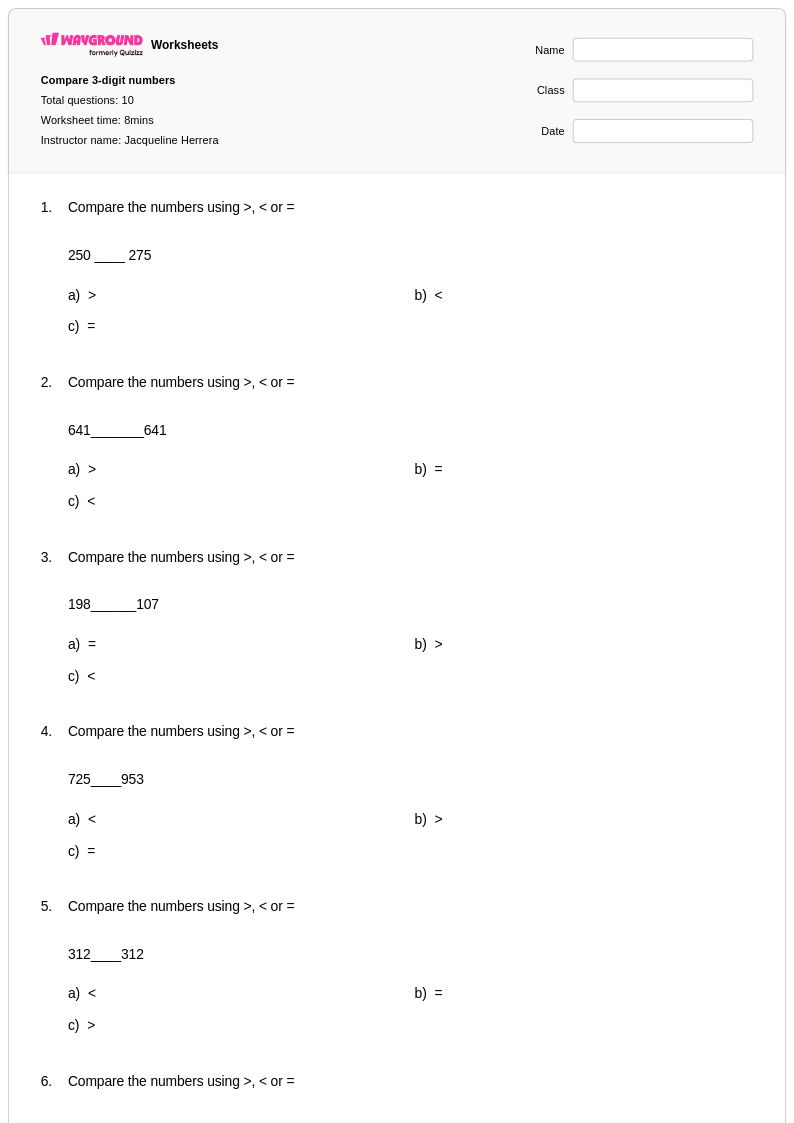
10 Q
2nd
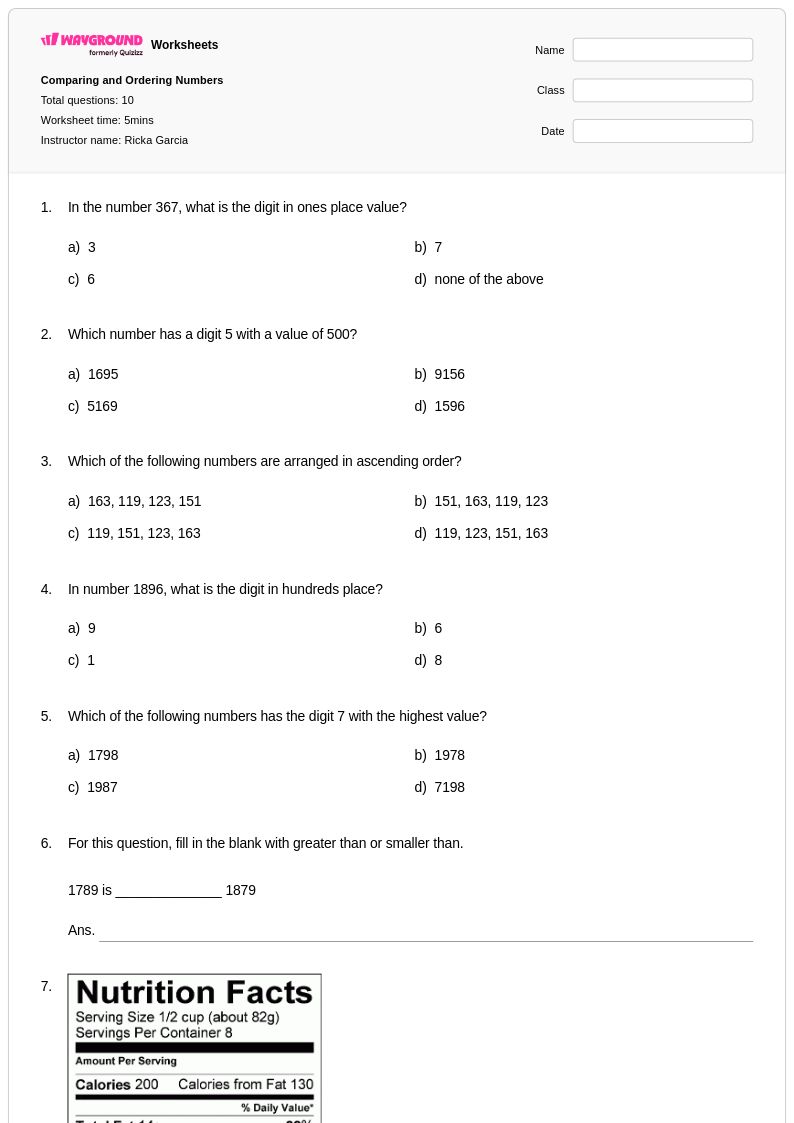
10 Q
2nd
Explore Comparing Numbers: Greater Than Worksheets by Grades
Explore Other Subject Worksheets for class 2
Explore printable Comparing Numbers: Greater Than worksheets for Class 2
Comparing numbers using greater than concepts forms a crucial foundation in Class 2 mathematics, helping young learners develop essential number sense skills that will support their mathematical journey. Wayground's comprehensive collection of greater than worksheets provides second-grade students with structured practice opportunities to master this fundamental skill through engaging activities and systematic exercises. These carefully designed printables focus on building students' ability to analyze numerical relationships, compare quantities, and apply the greater than symbol accurately across various number ranges. Each worksheet includes practice problems that progress from concrete visual representations to abstract numerical comparisons, while accompanying answer keys allow teachers to efficiently assess student understanding and provide targeted feedback during skill-building sessions.
Wayground's extensive library, featuring millions of teacher-created resources, empowers educators with robust search and filtering capabilities to locate precisely the right greater than comparison materials for their Class 2 classrooms. The platform's standards-aligned worksheets support differentiated instruction through customizable features that allow teachers to modify difficulty levels, adjust number ranges, and select specific comparison formats to meet diverse learning needs. Available in both printable PDF formats and interactive digital versions, these resources seamlessly integrate into lesson planning workflows while providing flexible options for in-class instruction, homework assignments, remediation support, and enrichment activities. Teachers can efficiently organize skill practice sessions, monitor student progress, and adapt their instruction based on real-time assessment data gathered from these comprehensive comparison exercises.
FAQs
How do I teach greater than comparisons in Grade 2?
What exercises help second graders practice comparing numbers?
What mistakes do Grade 2 students make with greater than comparisons?
How can I use these Grade 2 greater than worksheets?
How does comparing numbers fit into the Common Core Grade 2 math progression?
How can I differentiate comparing numbers practice in Grade 2?
What grade level is this greater than worksheet designed for?