
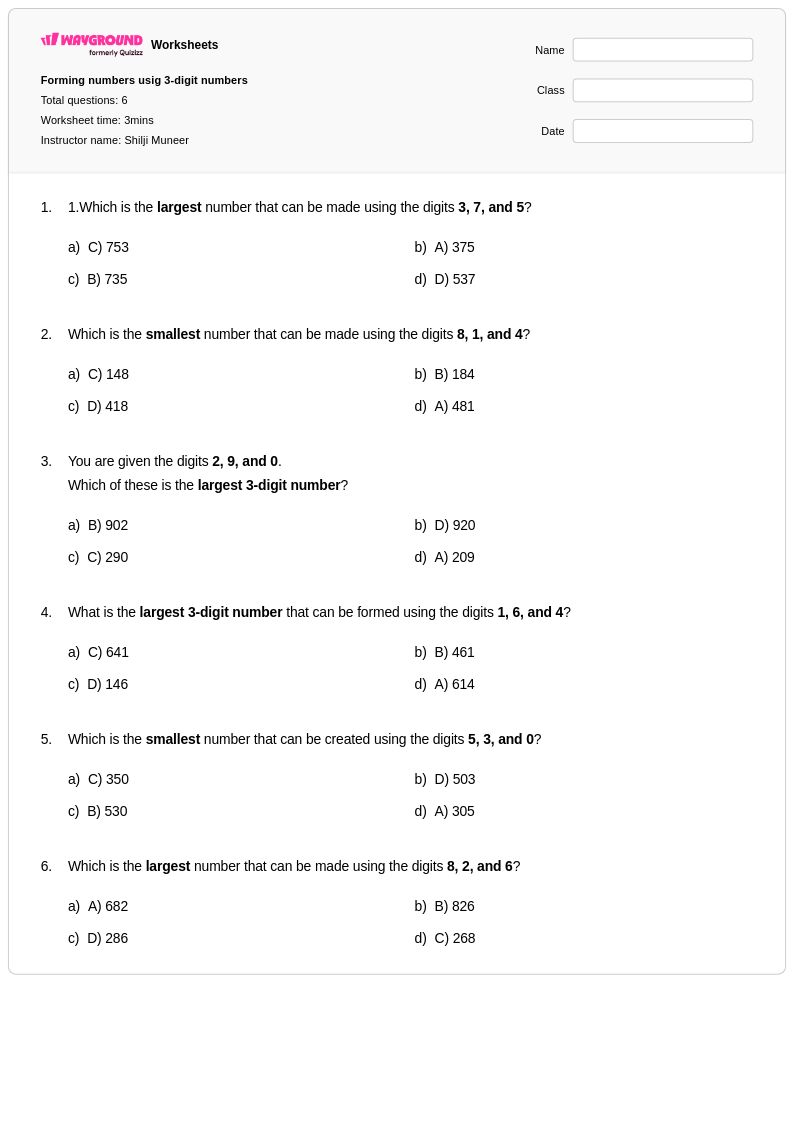
6 Q
2nd
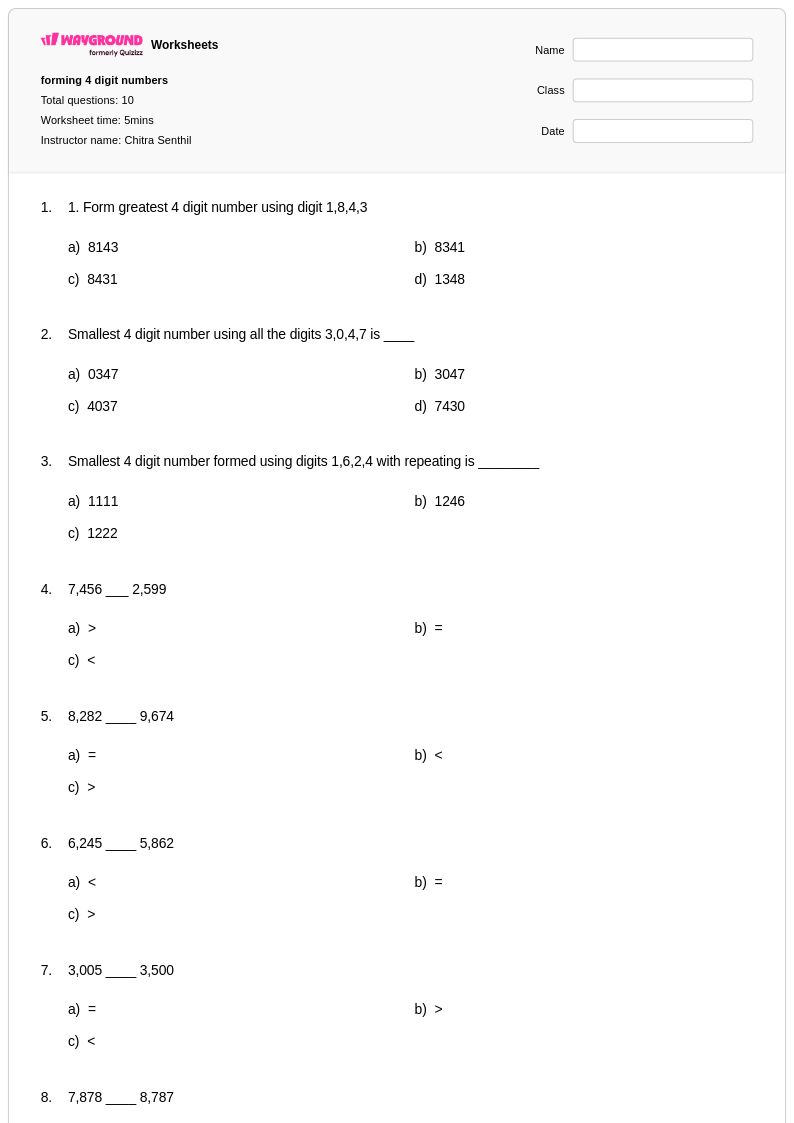
10 Q
KG - 3rd
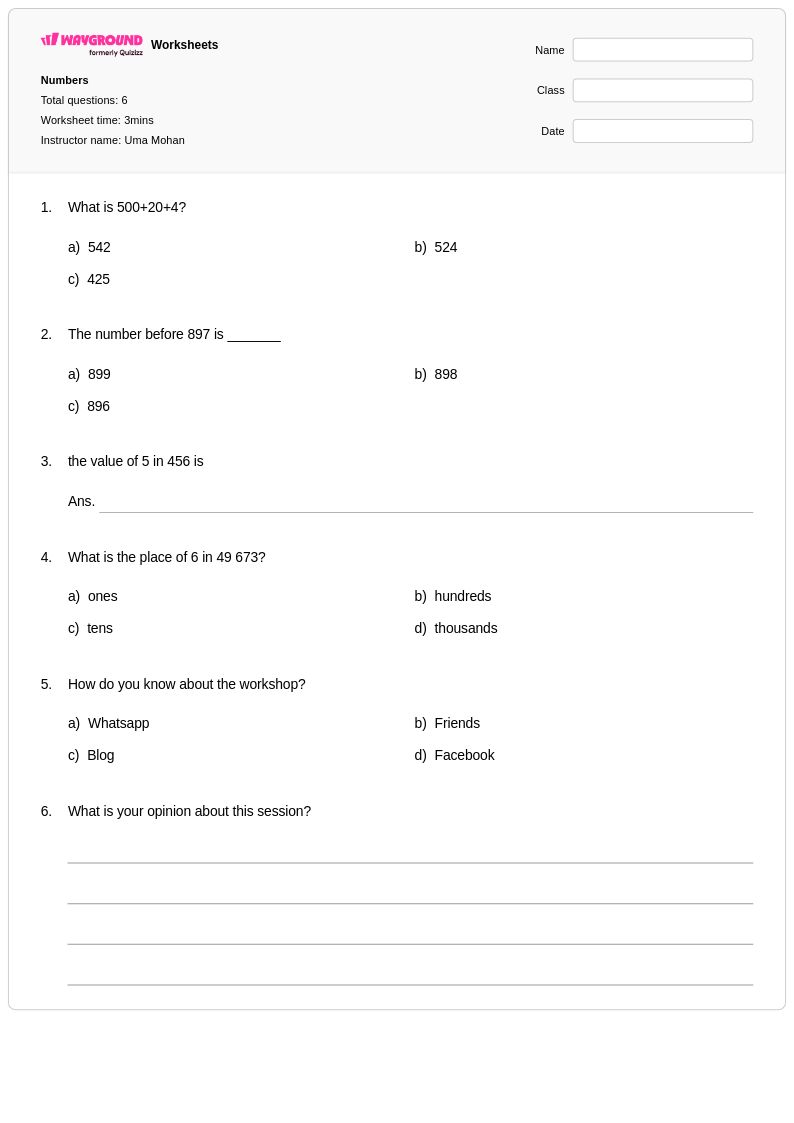
6 Q
2nd
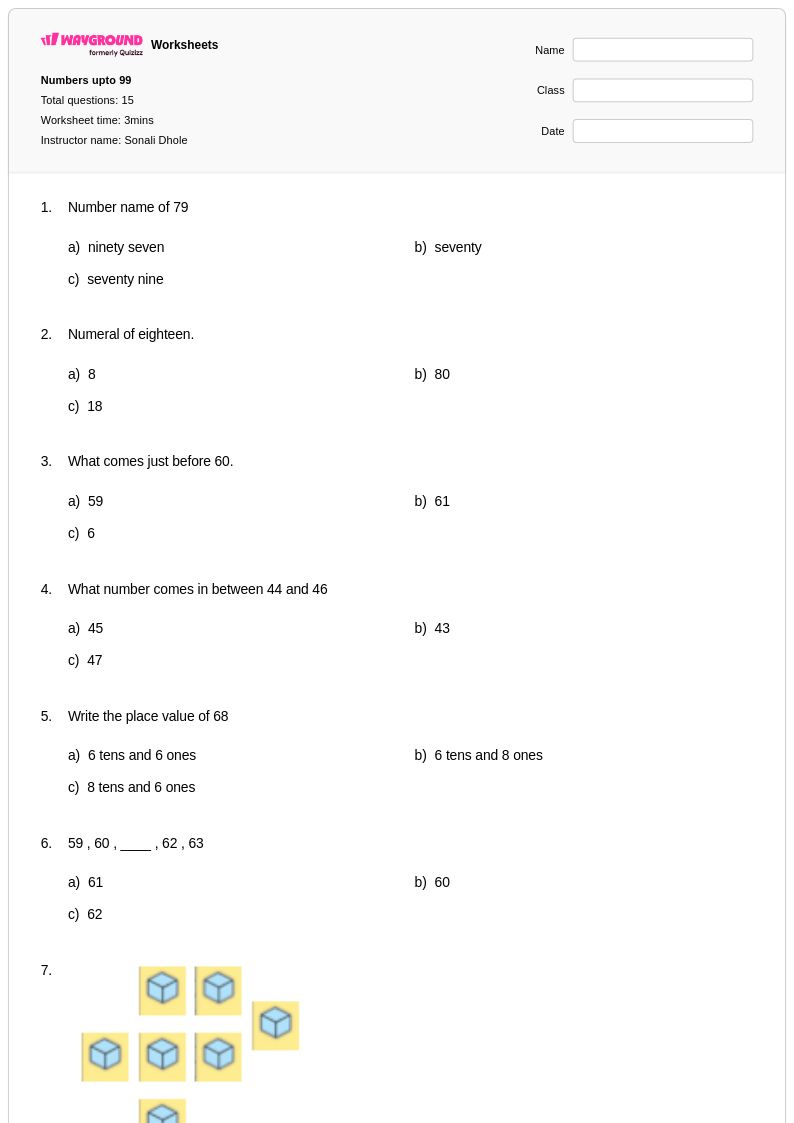
15 Q
2nd
10 Q
1st - 3rd
10 Q
2nd
10 Q
KG - 2nd
11 Q
2nd
10 Q
2nd
16 Q
1st - 3rd
17 Q
1st - Uni
10 Q
1st - 2nd
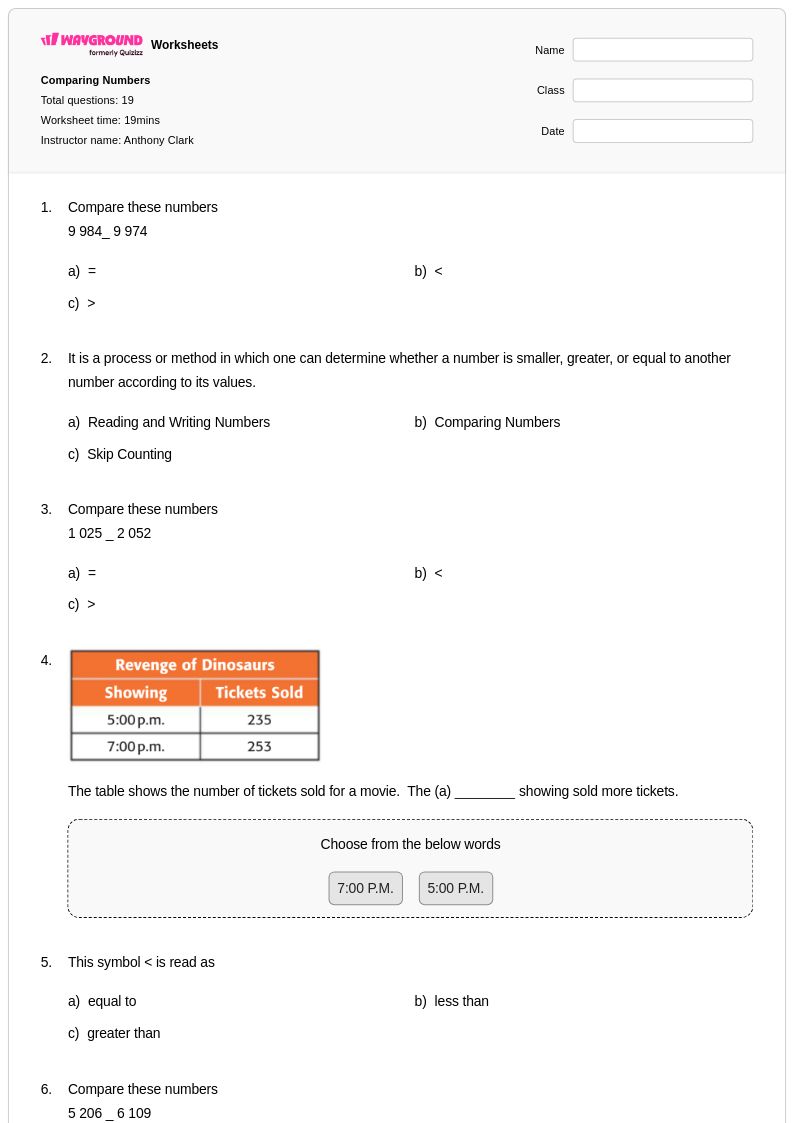
19 Q
2nd - Uni
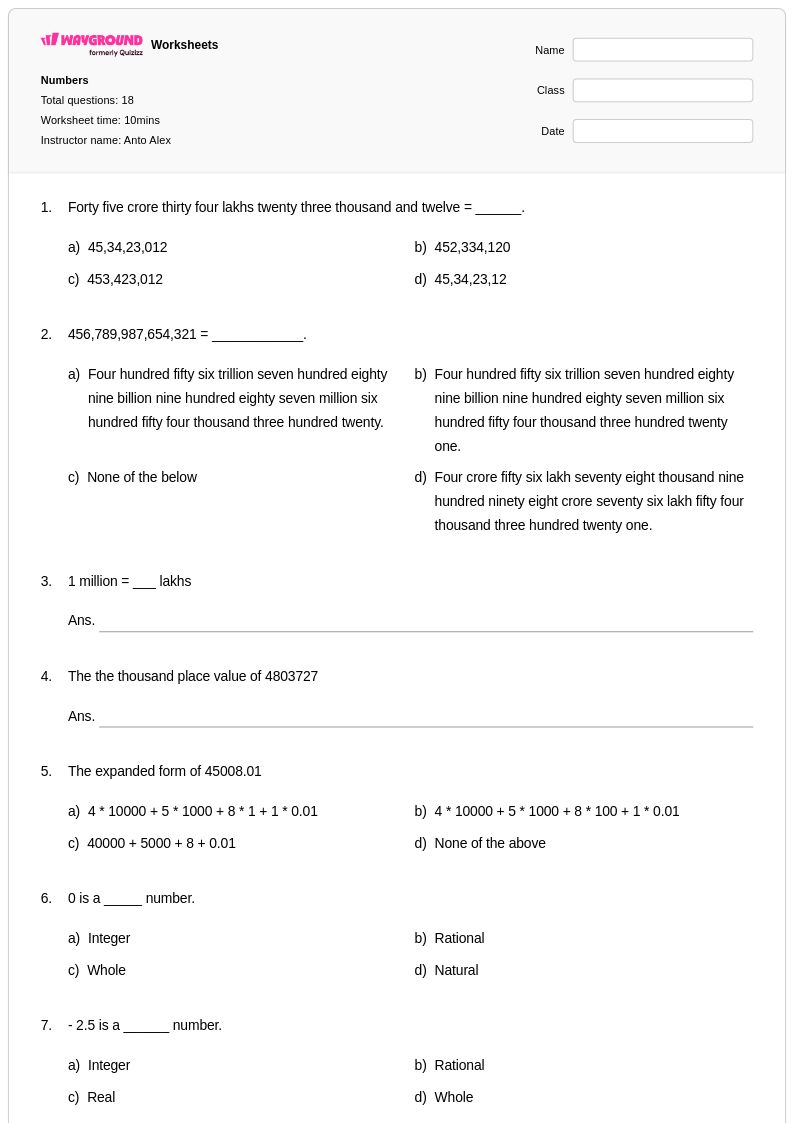
18 Q
1st - PD
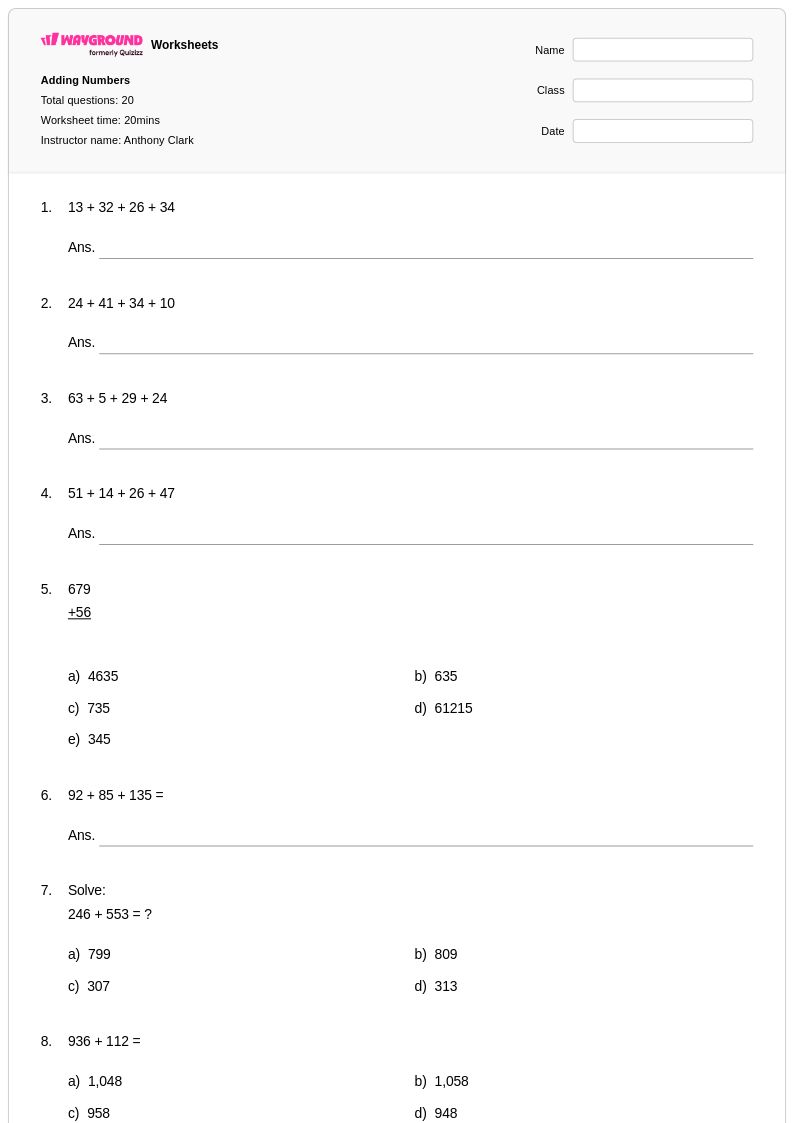
20 Q
2nd - Uni
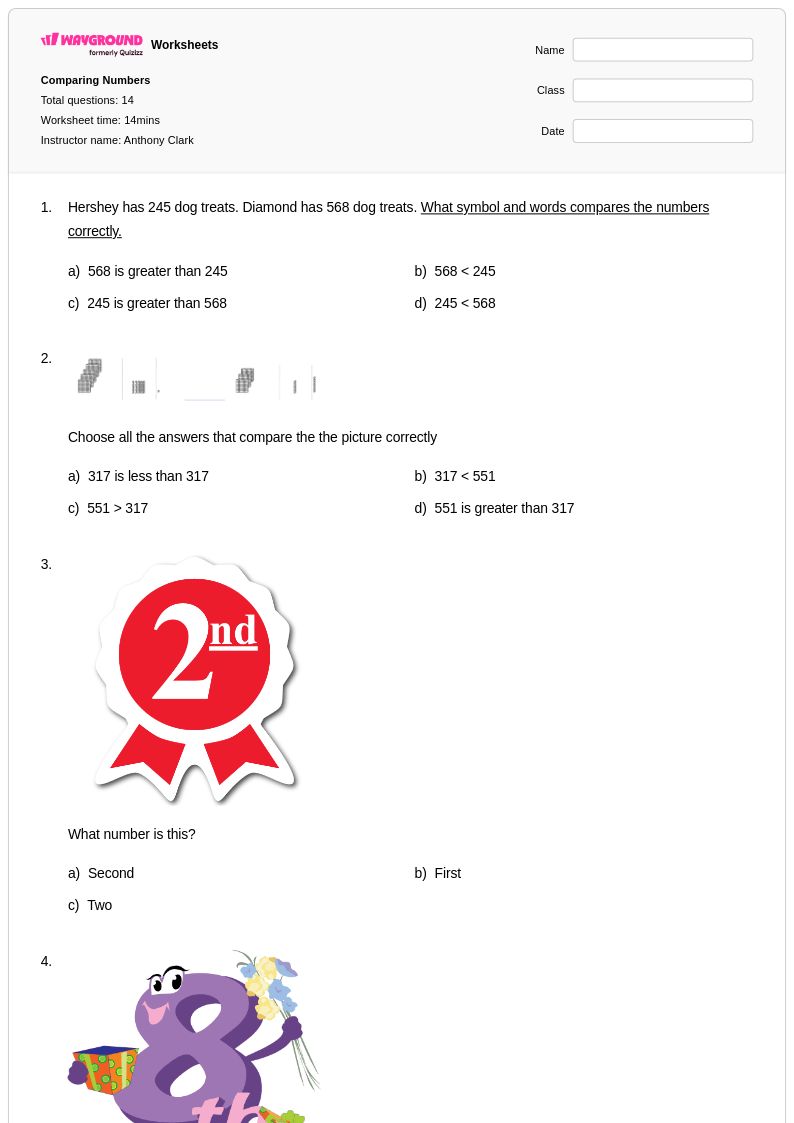
14 Q
2nd - Uni
13 Q
1st - Uni
10 Q
2nd
10 Q
2nd
11 Q
2nd
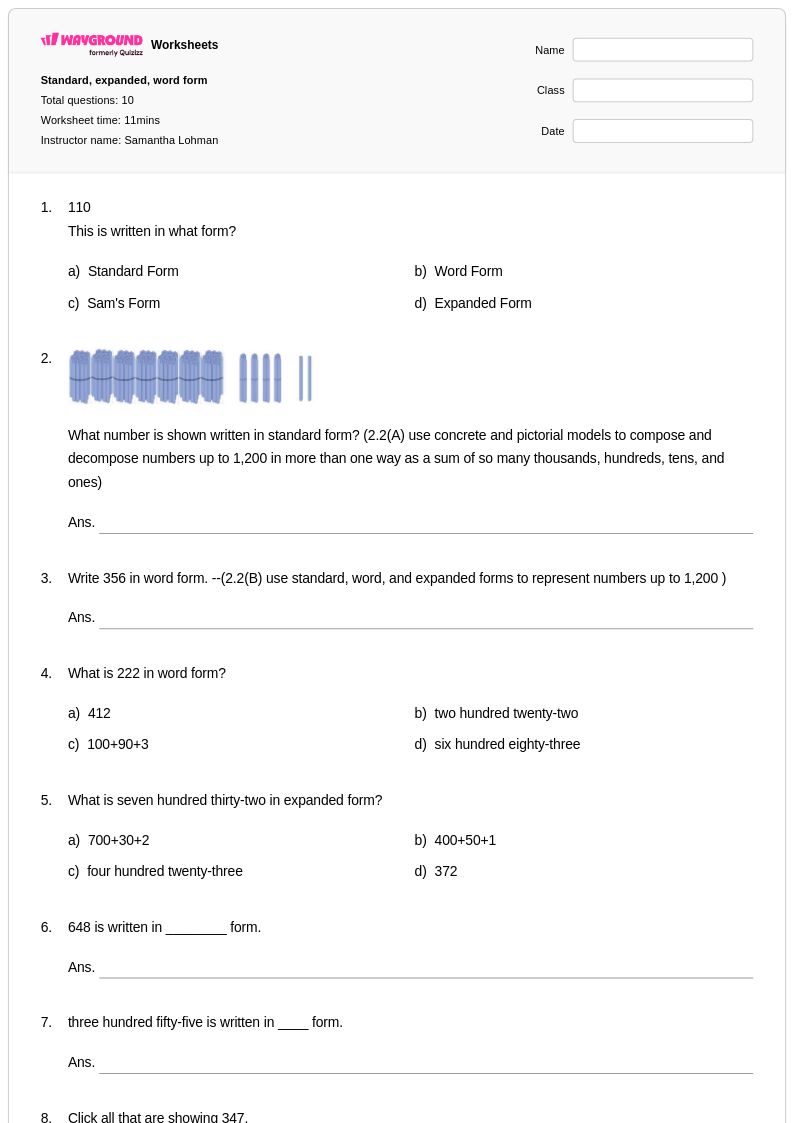
10 Q
2nd
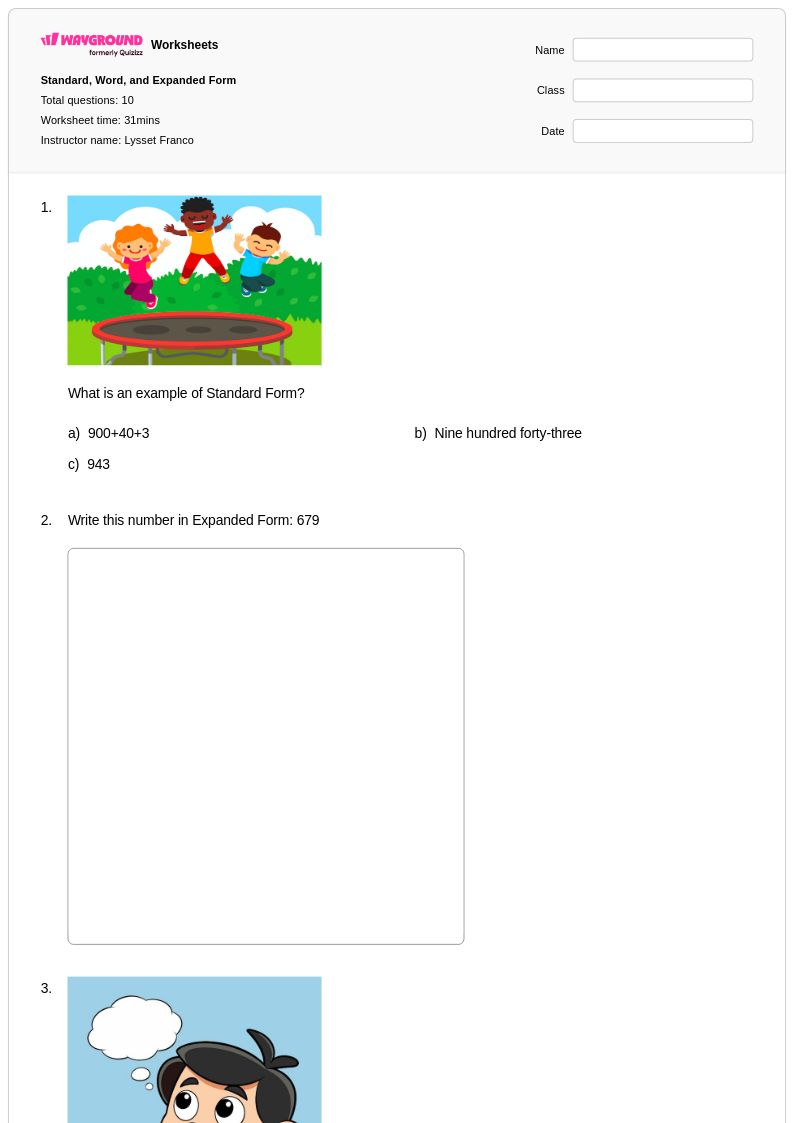
10 Q
2nd
Explore Other Subject Worksheets for class 2
Explore printable Forming Numbers worksheets for Class 2
Forming numbers worksheets for Class 2 students available through Wayground (formerly Quizizz) provide essential foundation building exercises that help young learners understand how digits combine to create multi-digit numbers. These comprehensive resources focus on developing critical number sense skills including place value recognition, digit arrangement, and the relationship between ones and tens places. Students engage with practice problems that guide them through forming two-digit numbers using various representations such as base-ten blocks, number lines, and written numerals. Each worksheet collection includes detailed answer keys and is designed as free printables in convenient pdf format, allowing educators to seamlessly integrate these materials into their mathematics instruction while supporting students' conceptual understanding of number formation.
Wayground (formerly Quizizz) empowers teachers with access to millions of educator-created forming numbers resources specifically designed for Class 2 mathematics instruction. The platform's robust search and filtering capabilities enable teachers to quickly locate worksheets that align with curriculum standards and match their students' specific learning needs. These differentiation tools support flexible customization options, allowing educators to modify difficulty levels and problem types to accommodate diverse learners through targeted remediation and enrichment activities. Available in both printable and digital formats including downloadable pdfs, these forming numbers worksheet collections streamline lesson planning while providing teachers with reliable resources for skill practice, formative assessment, and reinforcing fundamental number sense concepts that serve as building blocks for more advanced mathematical learning.
FAQs
What new concepts in forming numbers are taught in second grade?
How can I help students visualize three-digit numbers?
What types of problems help second graders master three-digit numbers?
What is a common mistake second graders make with three-digit numbers?
How can I use this second-grade worksheet for practice or assessment?
How does the second-grade curriculum for forming numbers align with Common Core?