
Recommended Topics for you
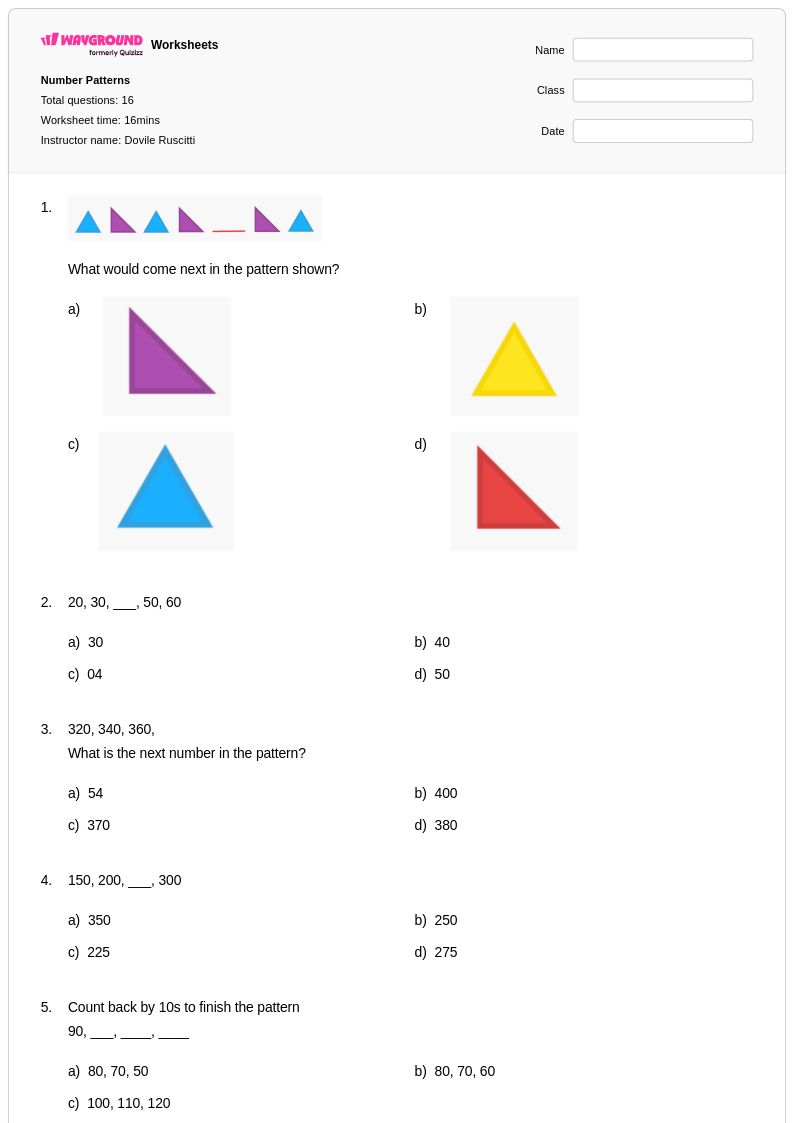
16 Q
1st - 4th
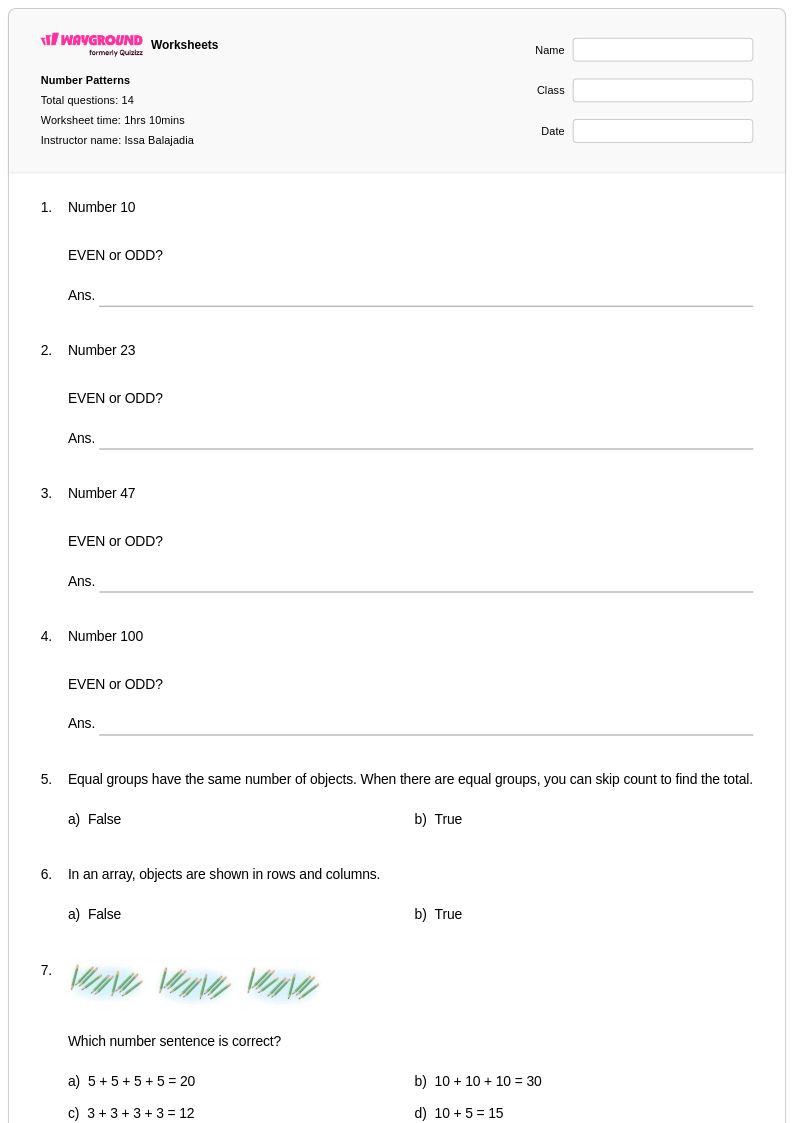
14 Q
2nd
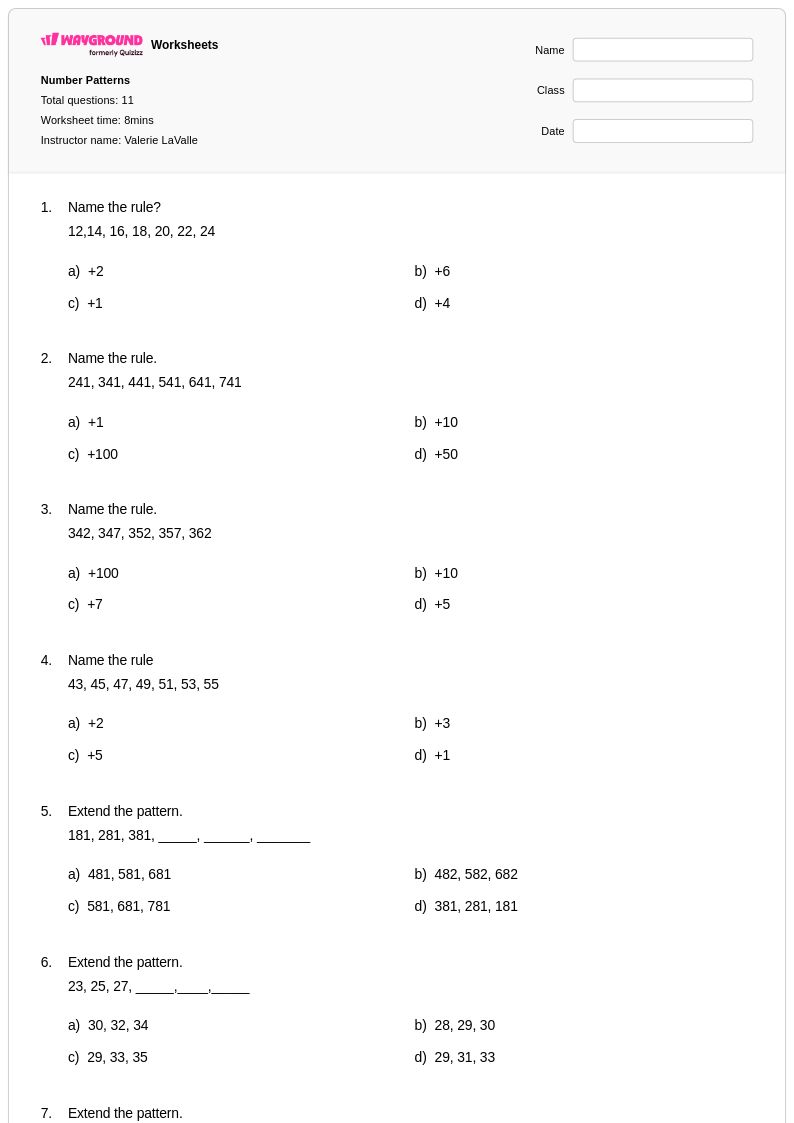
11 Q
2nd
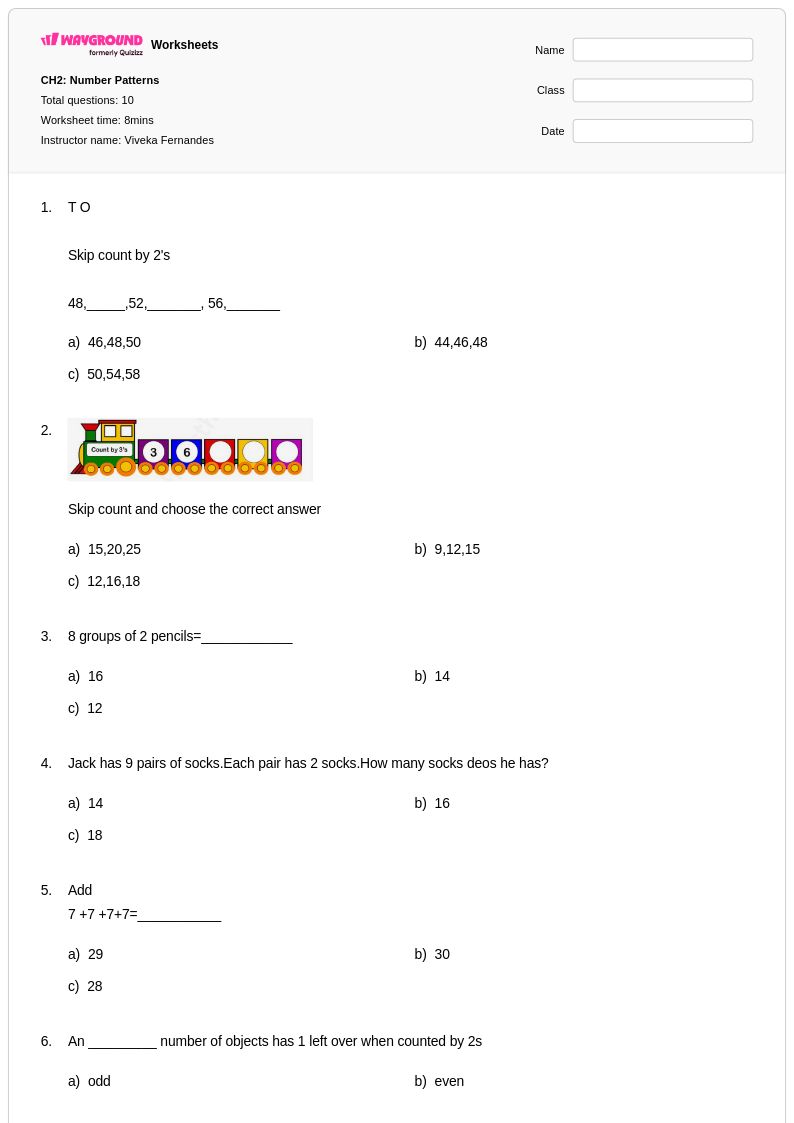
10 Q
2nd
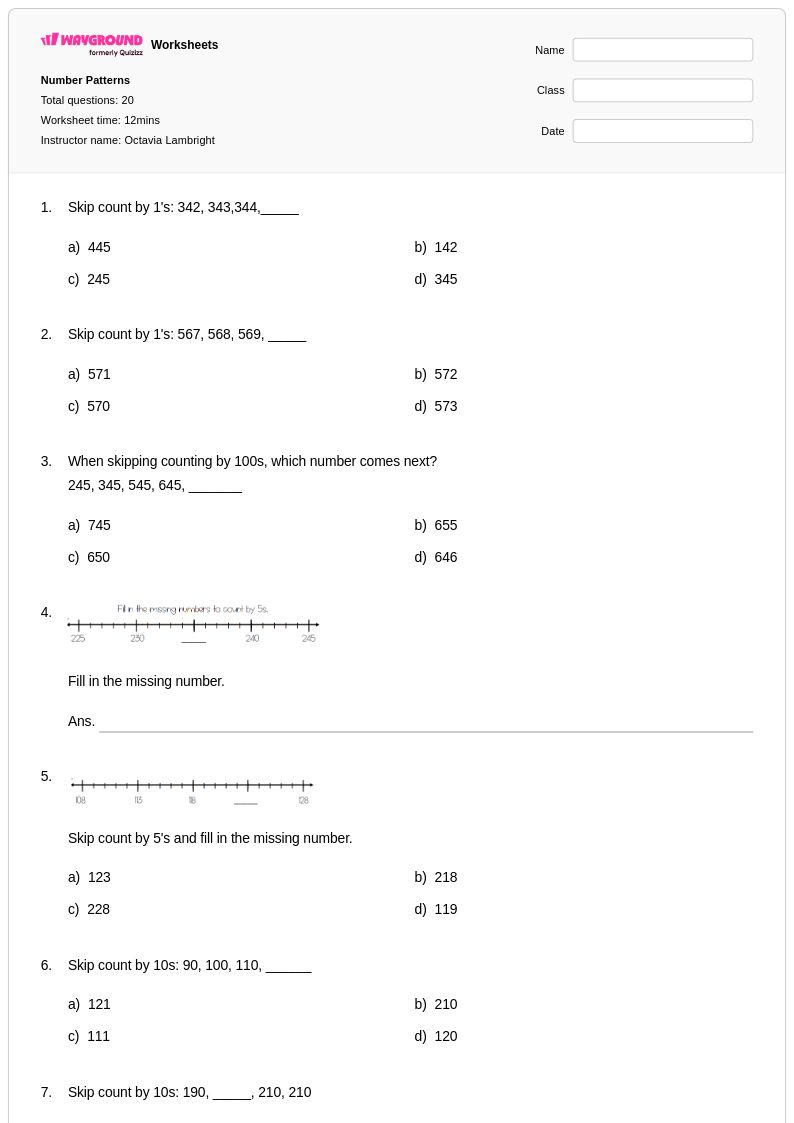
20 Q
2nd
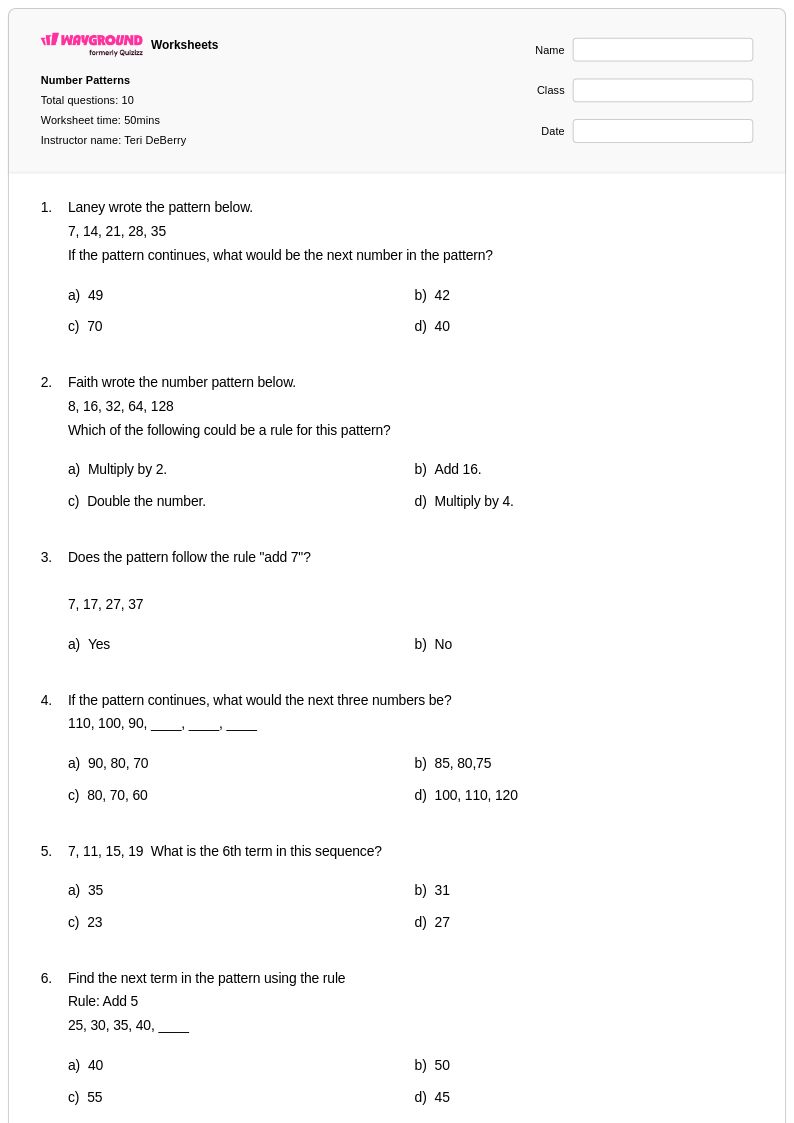
10 Q
2nd - 3rd
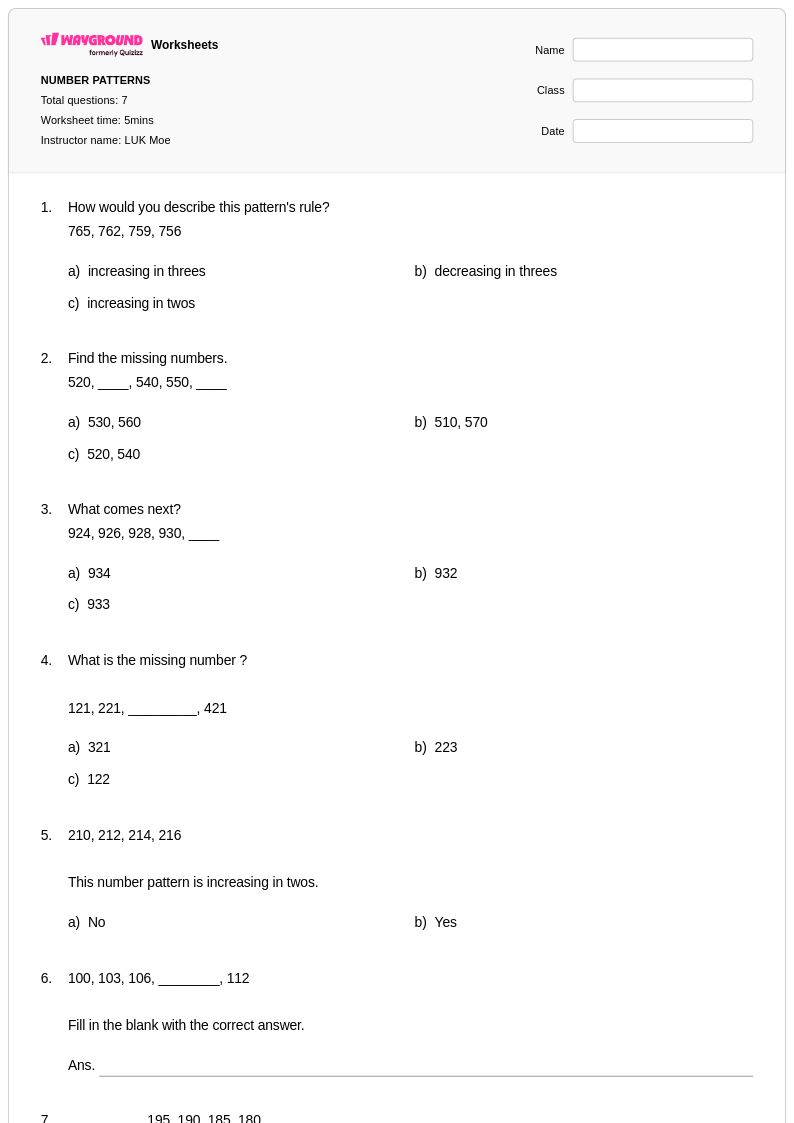
7 Q
2nd
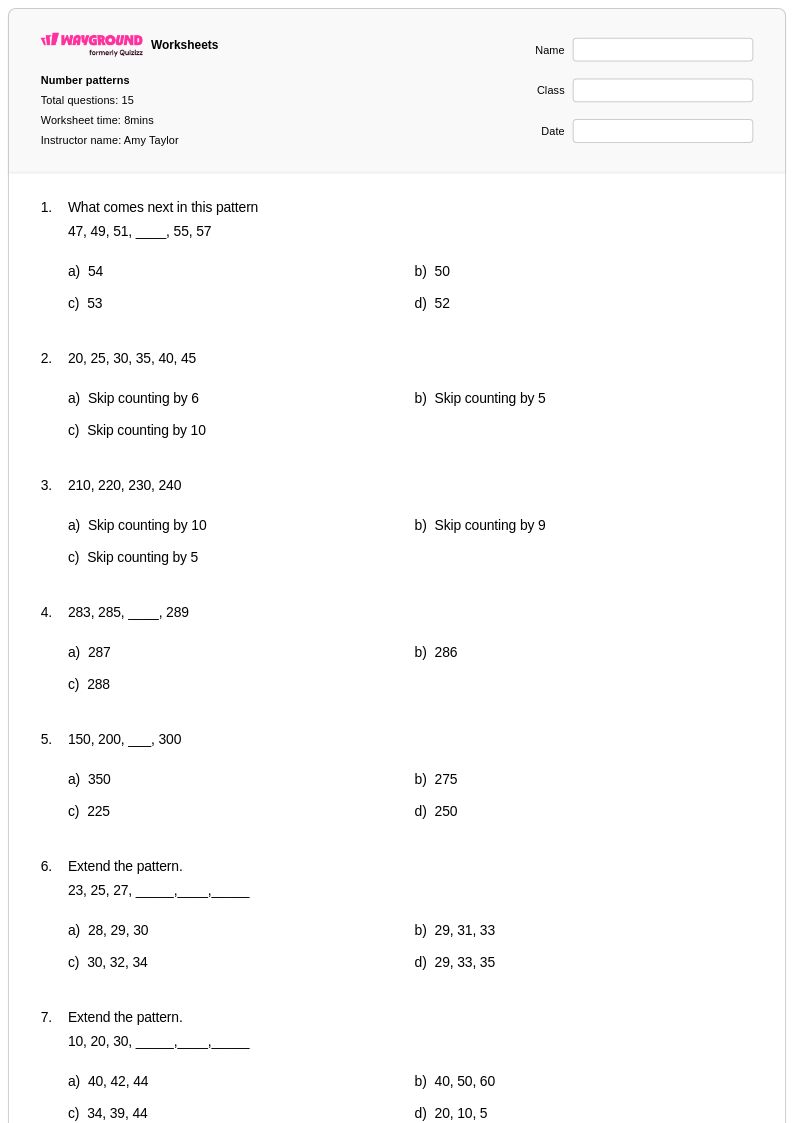
15 Q
2nd
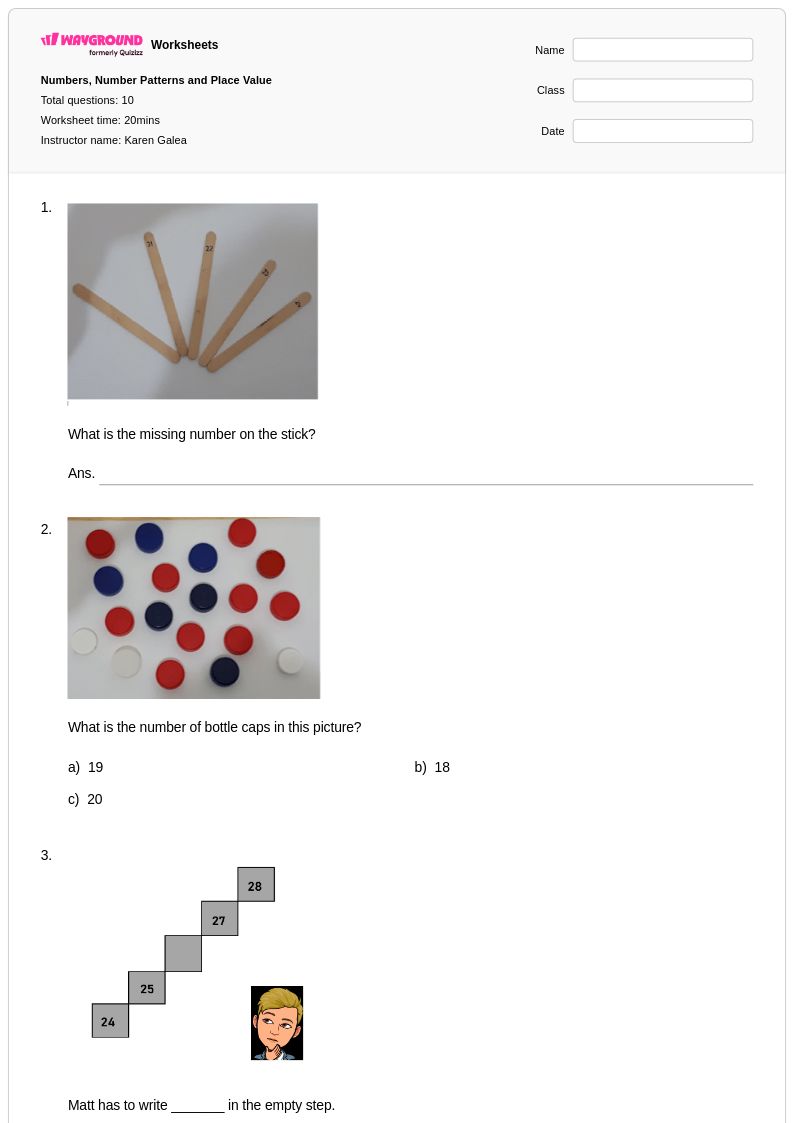
10 Q
2nd
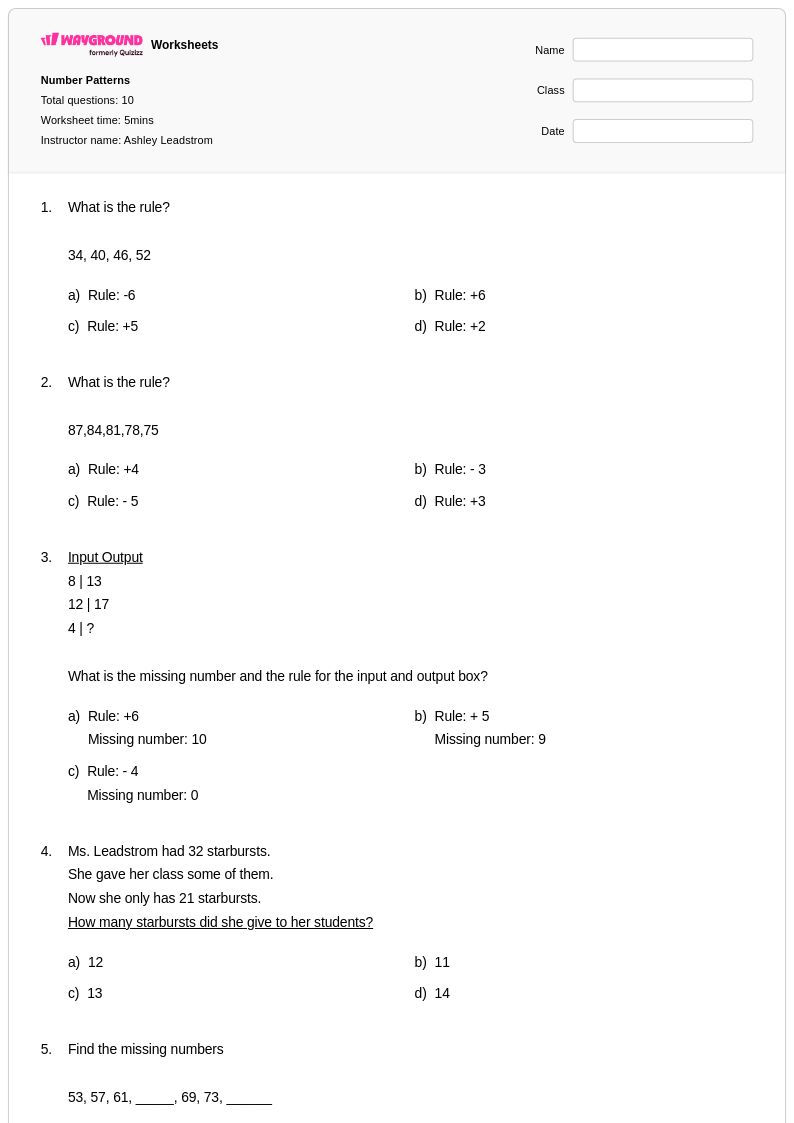
10 Q
2nd
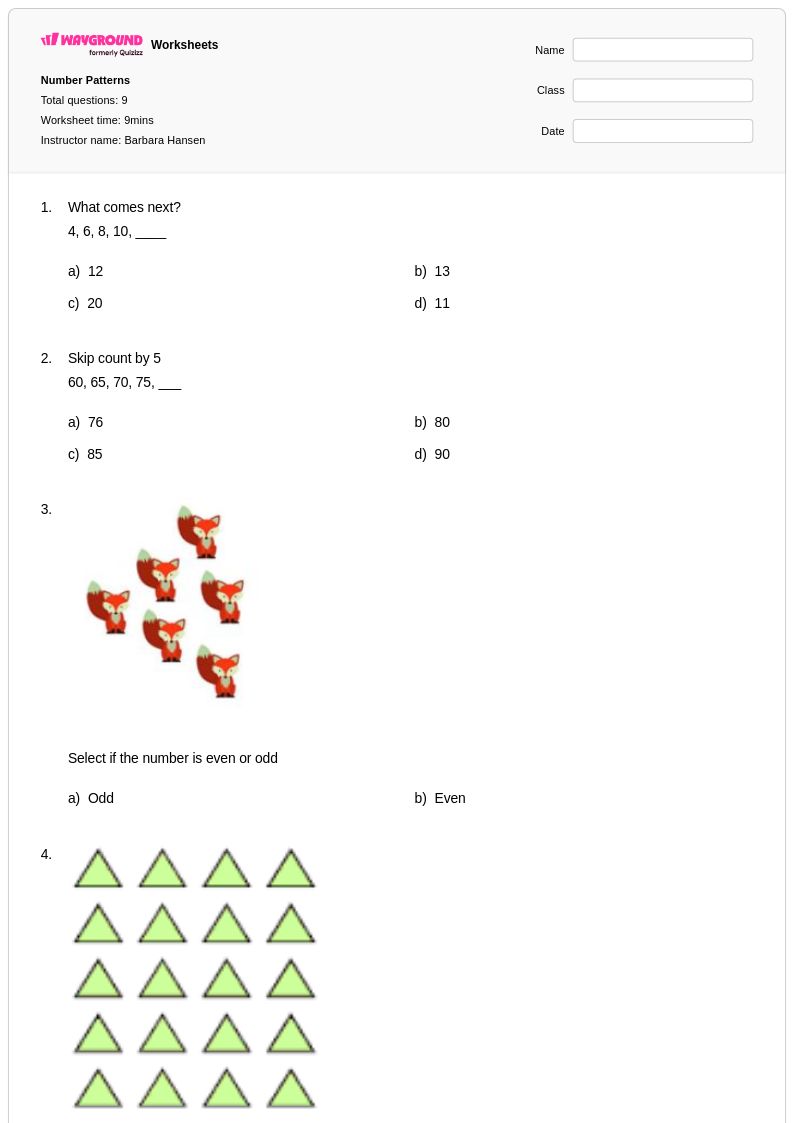
9 Q
2nd
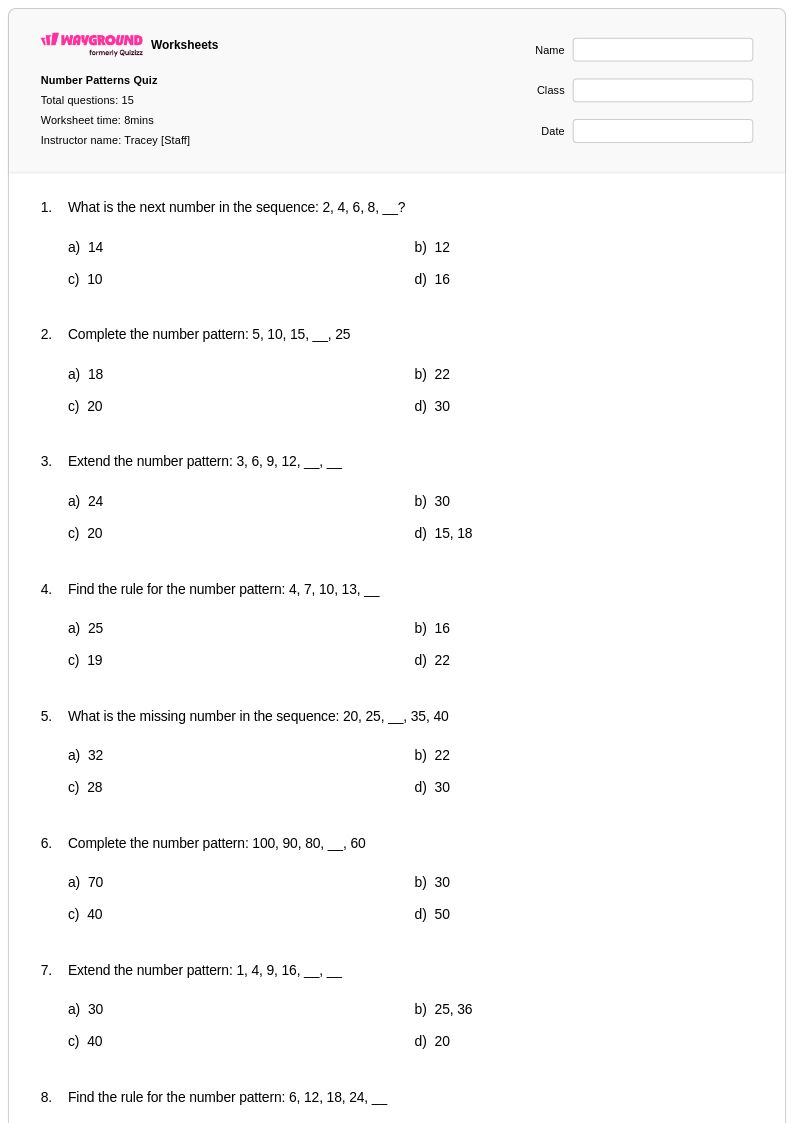
15 Q
1st - 5th
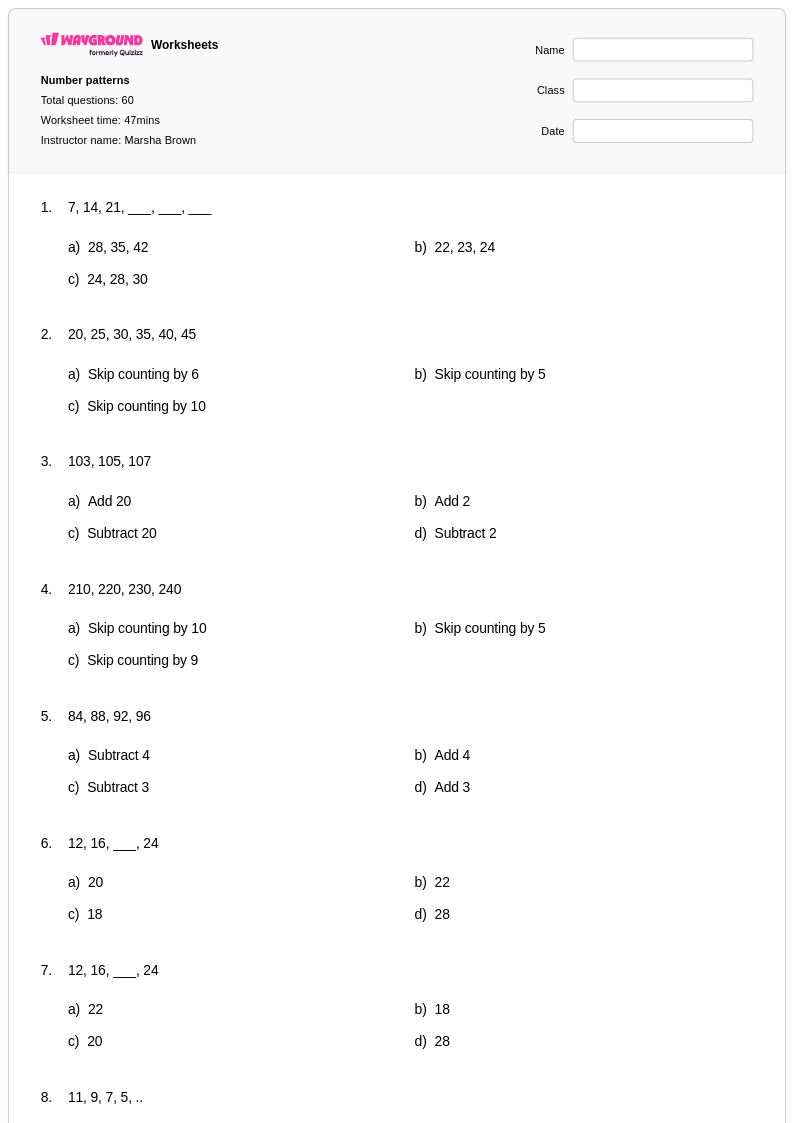
60 Q
1st - 3rd
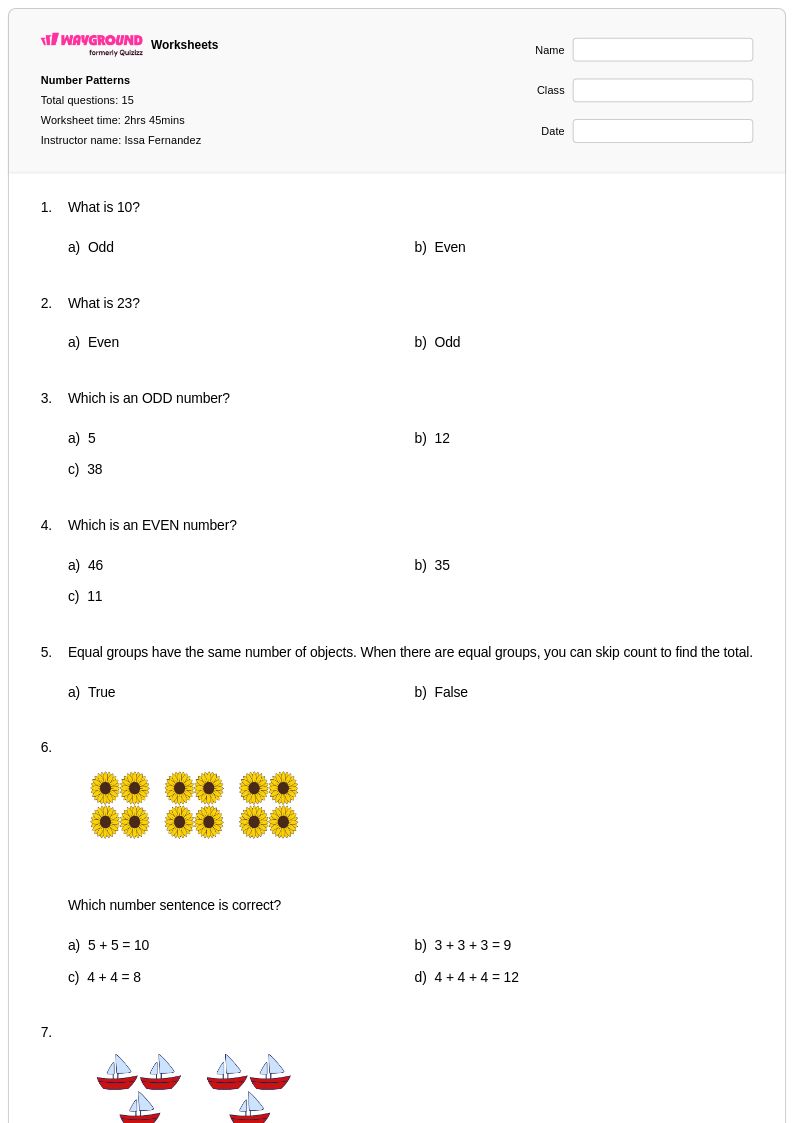
15 Q
2nd
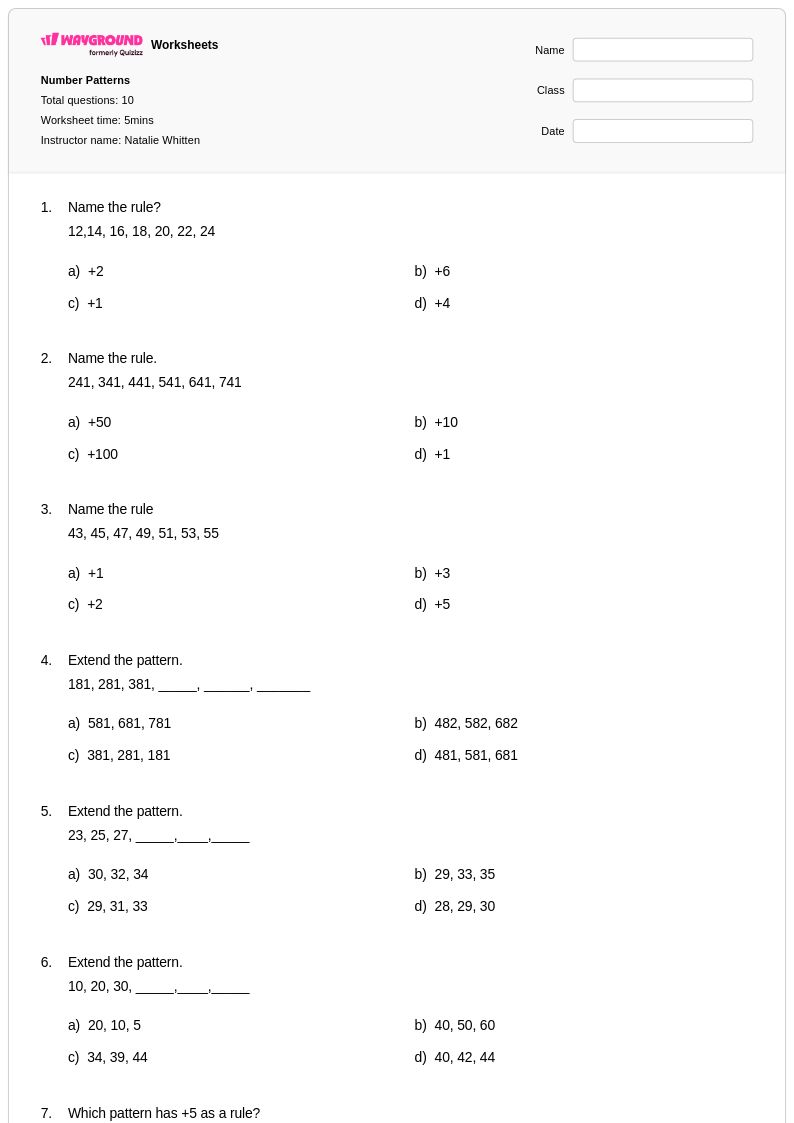
10 Q
2nd
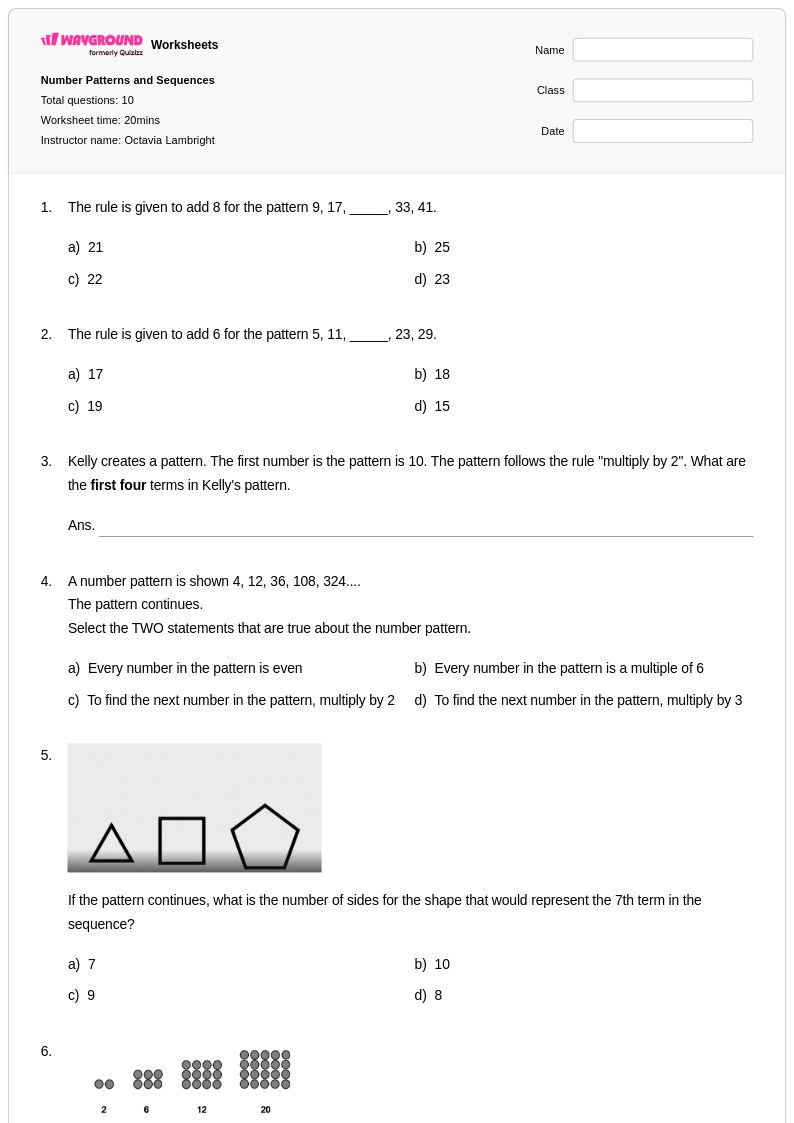
10 Q
1st - 5th
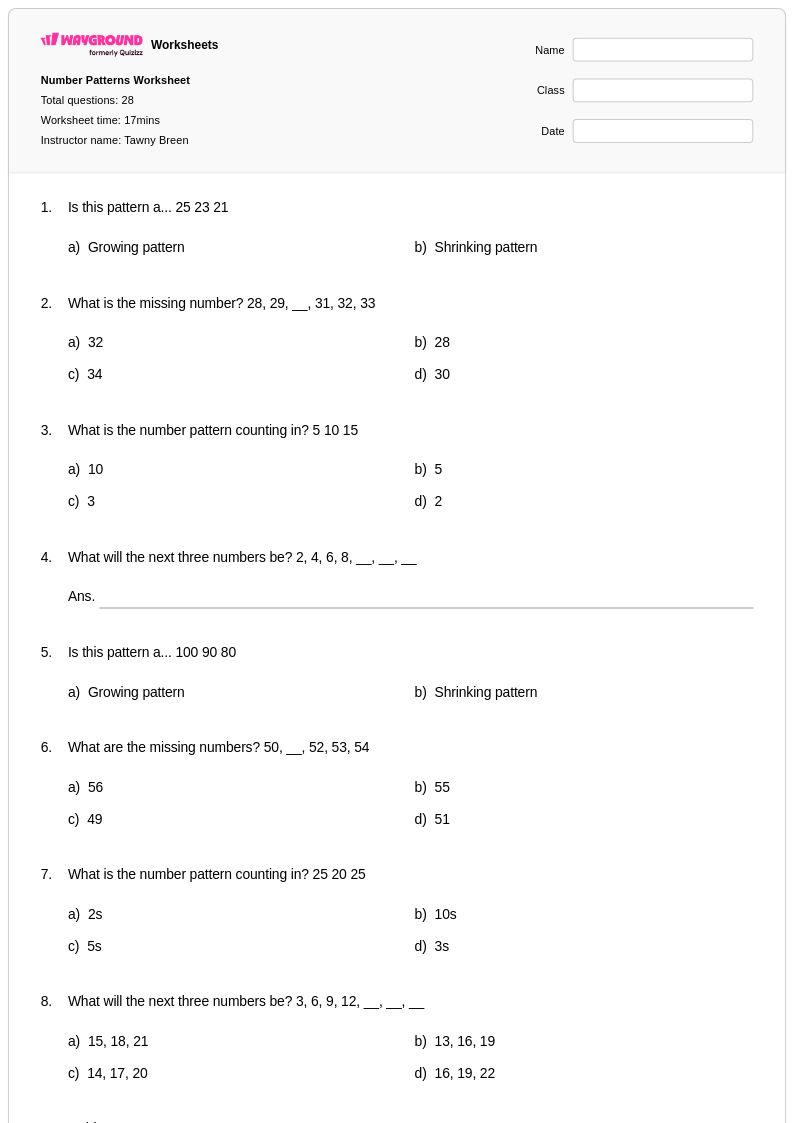
28 Q
2nd
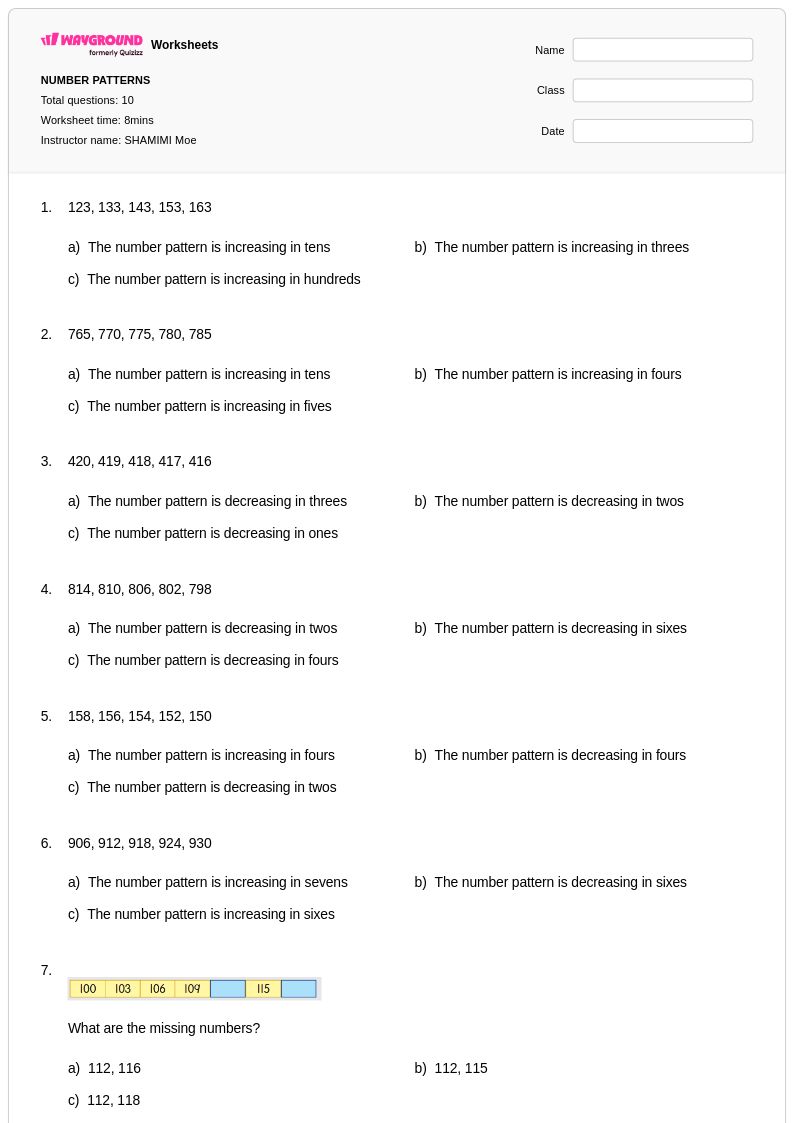
10 Q
2nd
7 Q
2nd
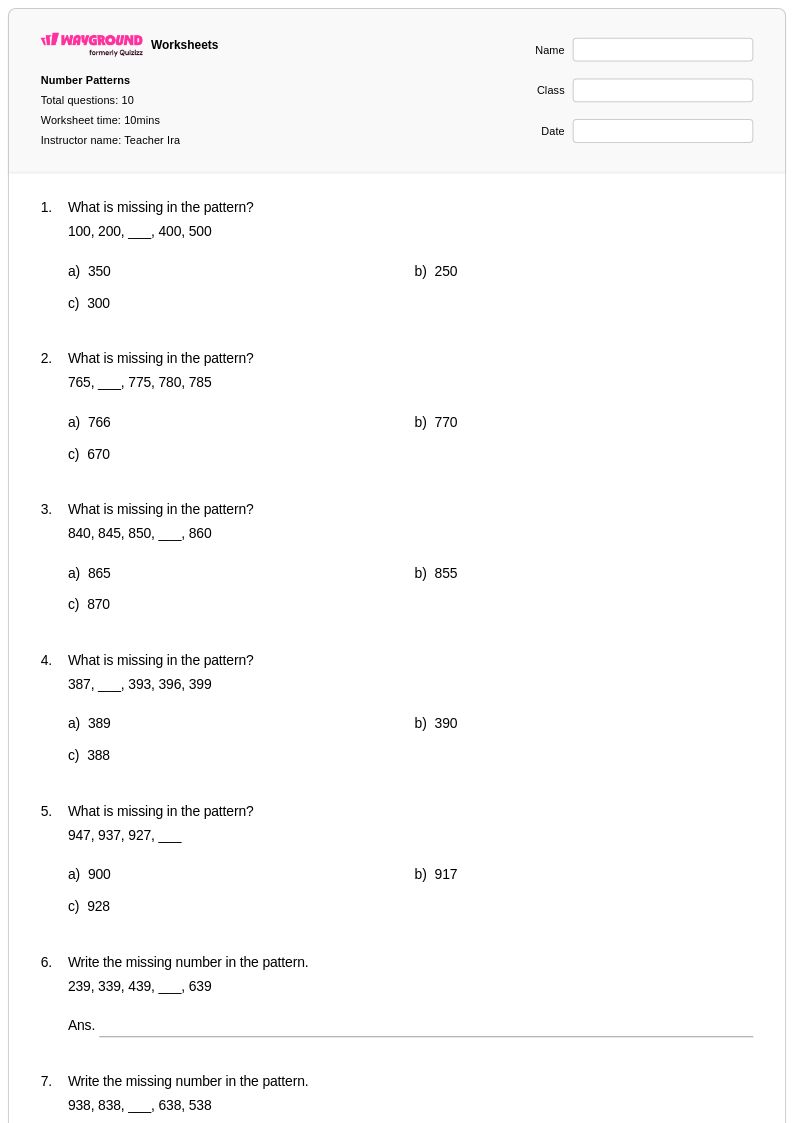
10 Q
2nd
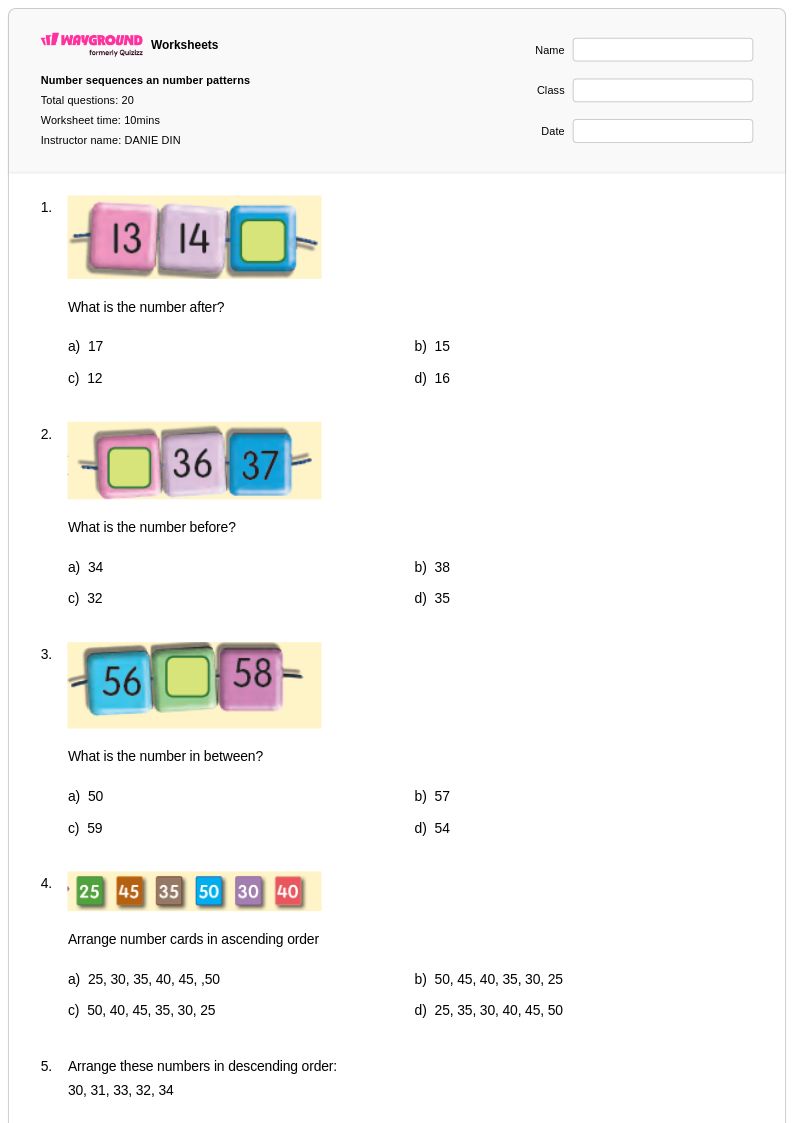
20 Q
KG - 3rd
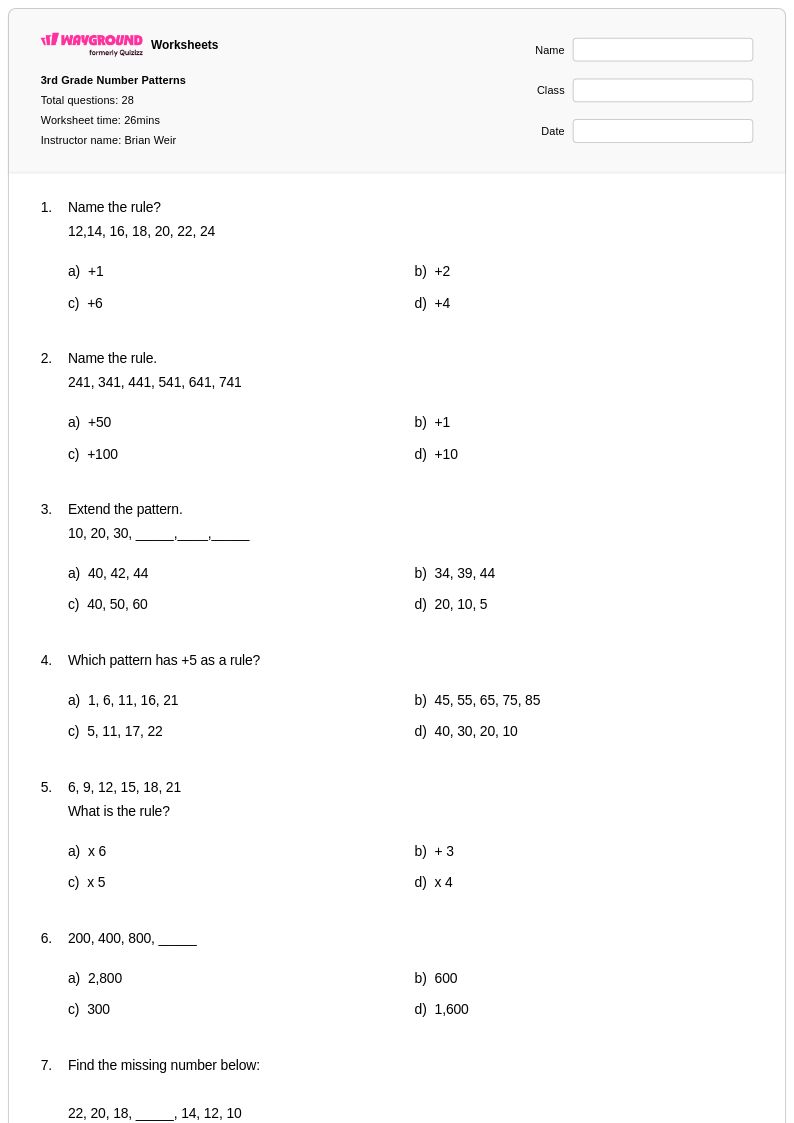
28 Q
2nd - 5th
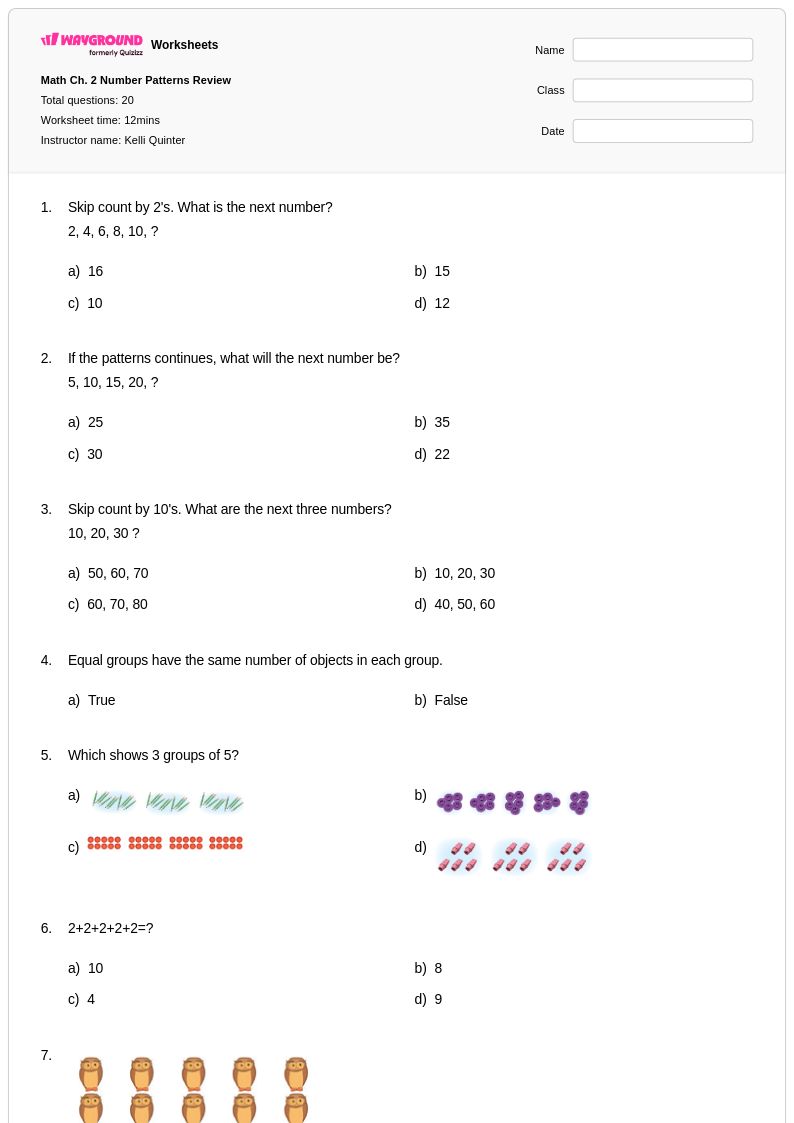
20 Q
2nd
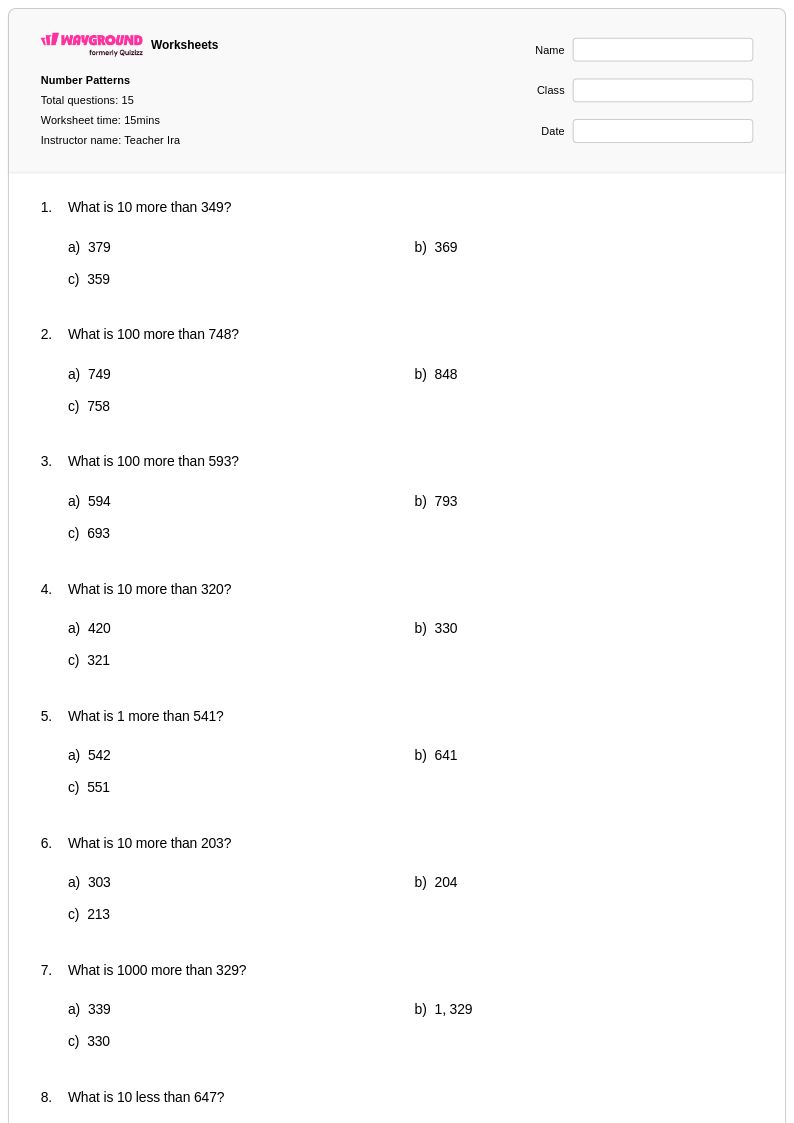
15 Q
2nd
Explore Number Patterns Worksheets for class 2 by Topic
Explore Other Subject Worksheets for class 2
Explore printable Number Patterns worksheets for Class 2
Number patterns form a foundational element of mathematical understanding for Class 2 students, and Wayground's extensive collection of worksheets provides comprehensive practice opportunities that strengthen pattern recognition and analytical thinking skills. These carefully designed resources help young learners identify, extend, and create various types of sequences including growing patterns, repeating patterns, and number sequences that follow specific rules. Each worksheet includes a complete answer key and is available as a free printable pdf, making it simple for educators to incorporate systematic pattern practice into their mathematics instruction. The practice problems progress from basic pattern identification to more complex pattern creation, ensuring students develop both recognition skills and deeper mathematical reasoning abilities.
Wayground, formerly Quizizz, empowers teachers with access to millions of educator-created resources specifically designed to support Class 2 number pattern instruction through robust search and filtering capabilities that make finding appropriate materials effortless. The platform's standards alignment ensures that worksheet collections meet curriculum requirements while differentiation tools allow teachers to customize content for varying skill levels within their classrooms. These flexible resources are available in both printable and digital pdf formats, supporting diverse teaching environments and learning preferences. Teachers can seamlessly integrate these materials into lesson planning, use them for targeted remediation with struggling students, provide enrichment opportunities for advanced learners, and establish consistent skill practice routines that reinforce pattern recognition concepts throughout the school year.
FAQs
How can I teach growing number patterns to second graders?
What kinds of problems build second graders' pattern skills?
Where do second graders struggle with number patterns?
How can I use these Grade 2 pattern worksheets for practice or assessment?
How do number patterns support Grade 2 Common Core math?
Can I use these worksheets for both remediation and enrichment in Grade 2?