
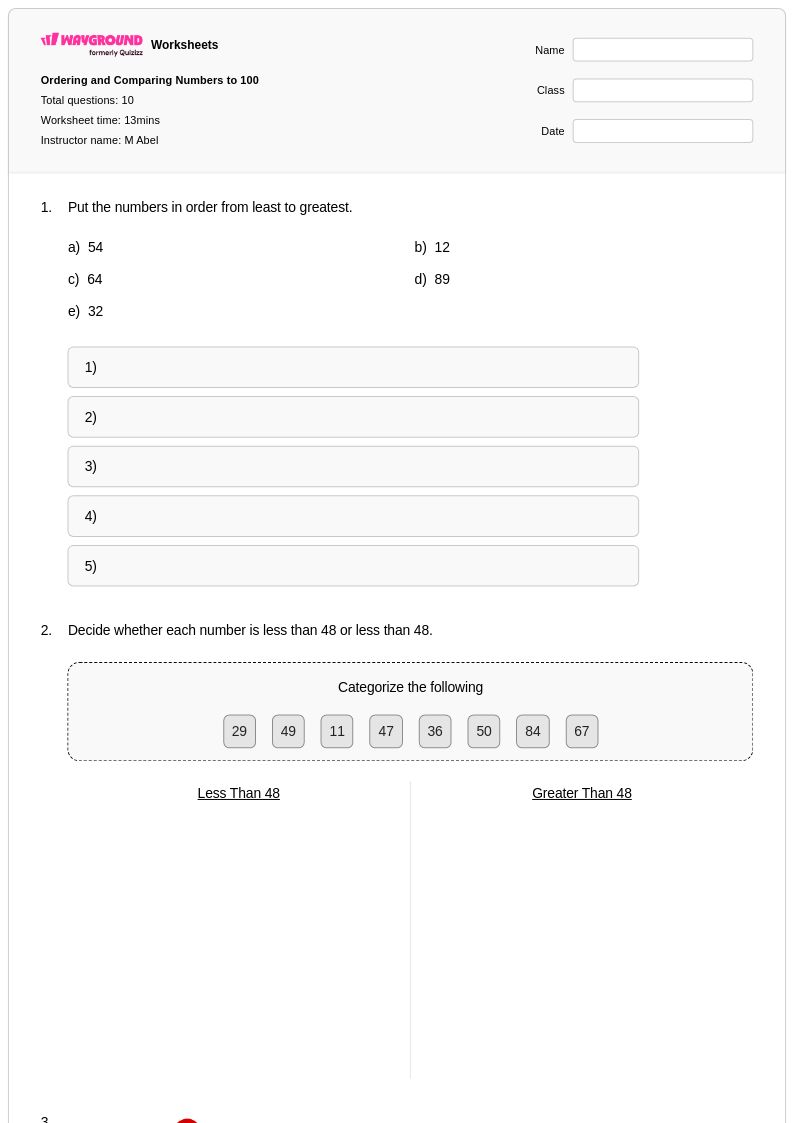
10 Q
1st - 5th
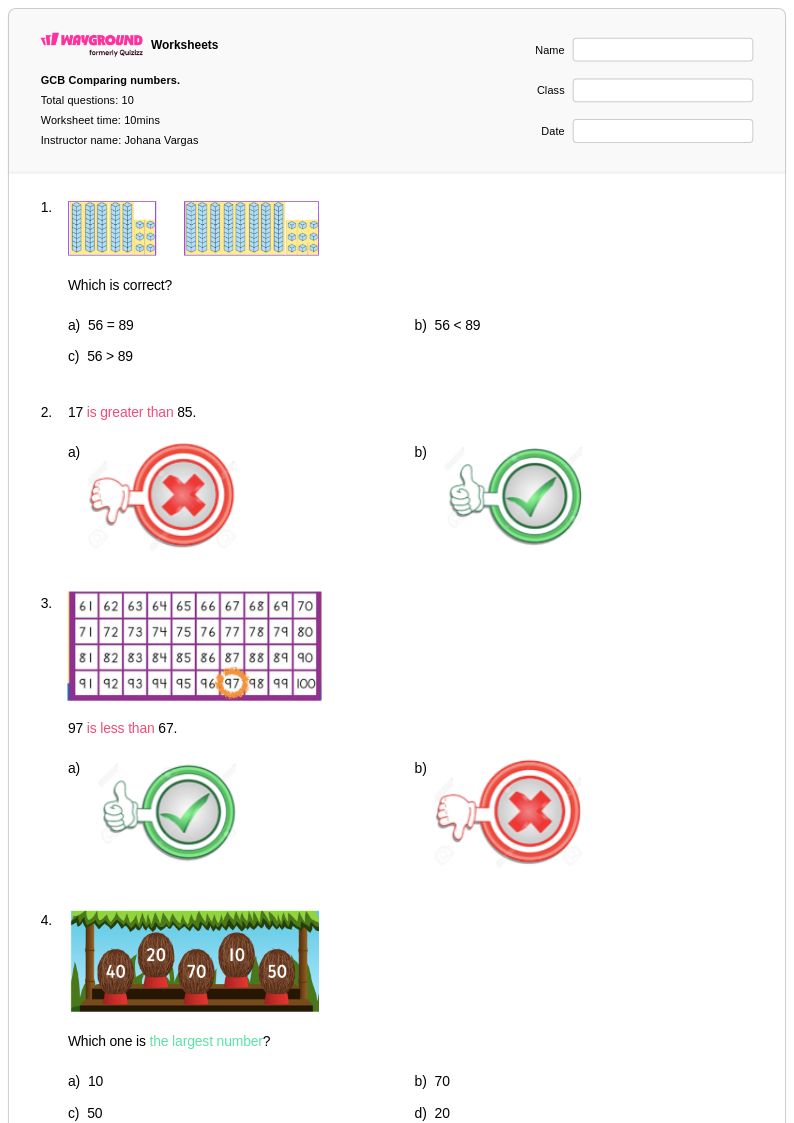
10 Q
1st
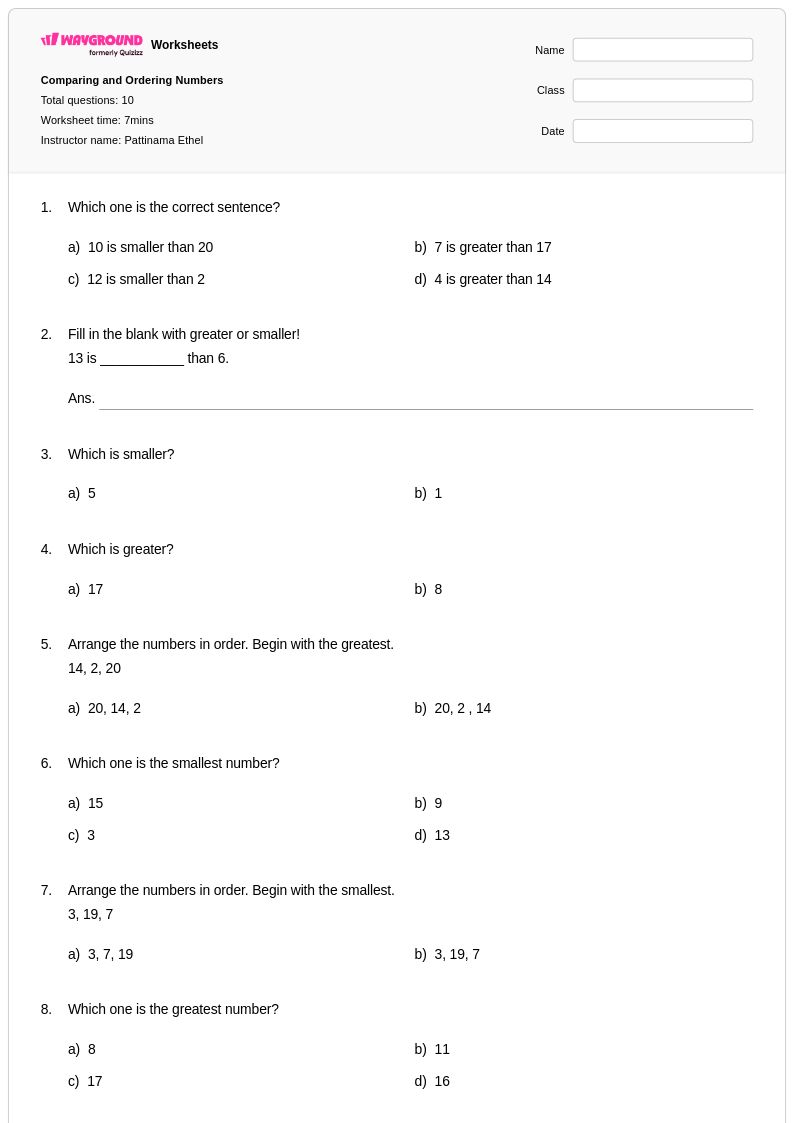
10 Q
1st
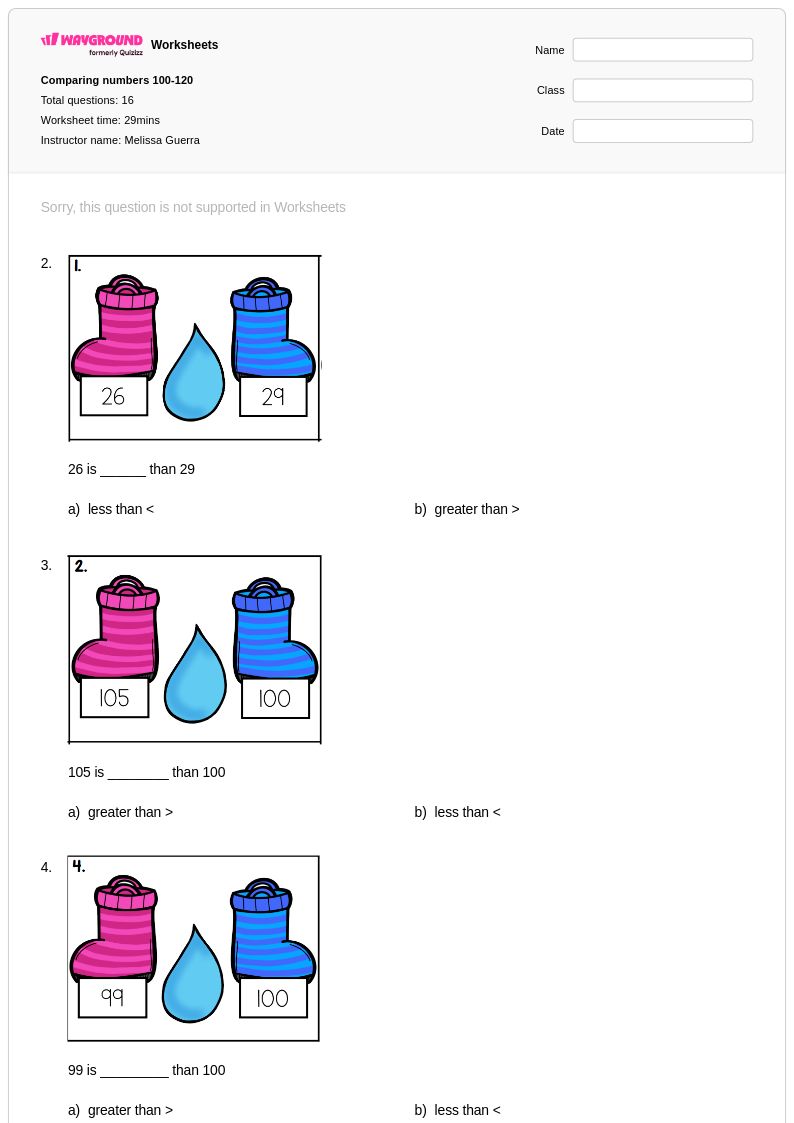
17 Q
1st - Uni
12 Q
1st
10 Q
1st
20 Q
1st - Uni
20 Q
1st
15 Q
1st
15 Q
1st - Uni
20 Q
1st - Uni
17 Q
1st
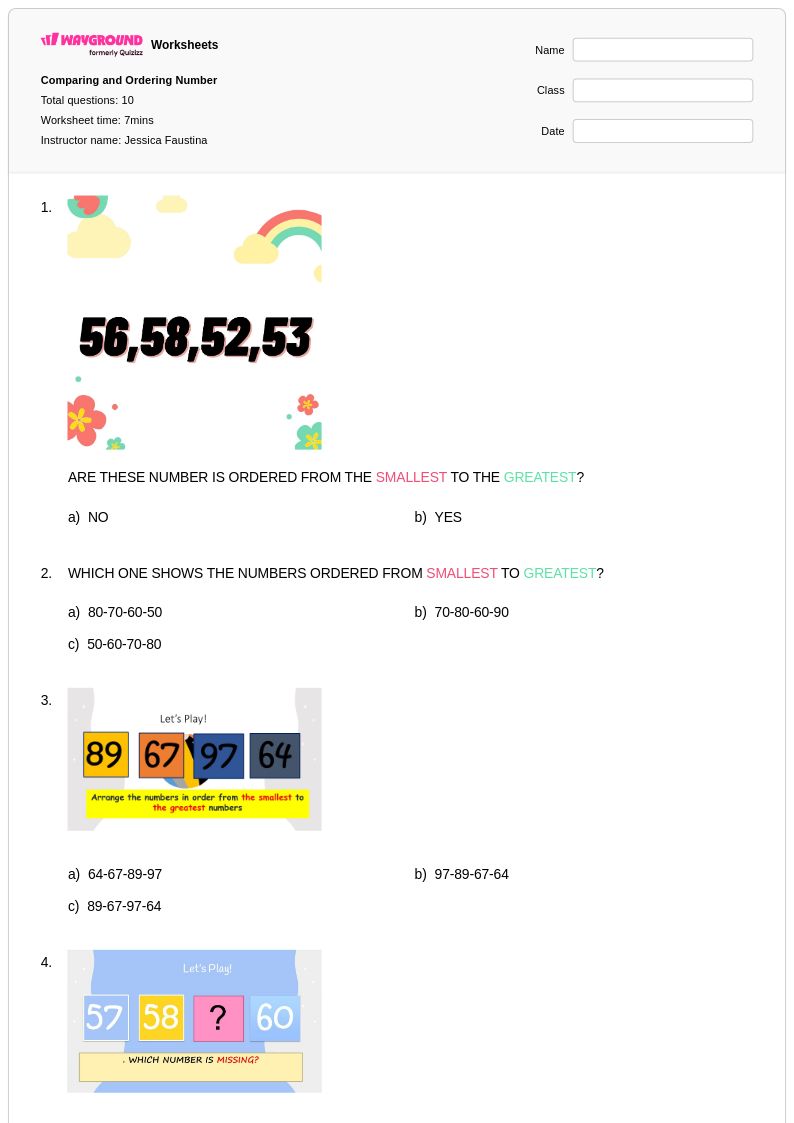
10 Q
1st
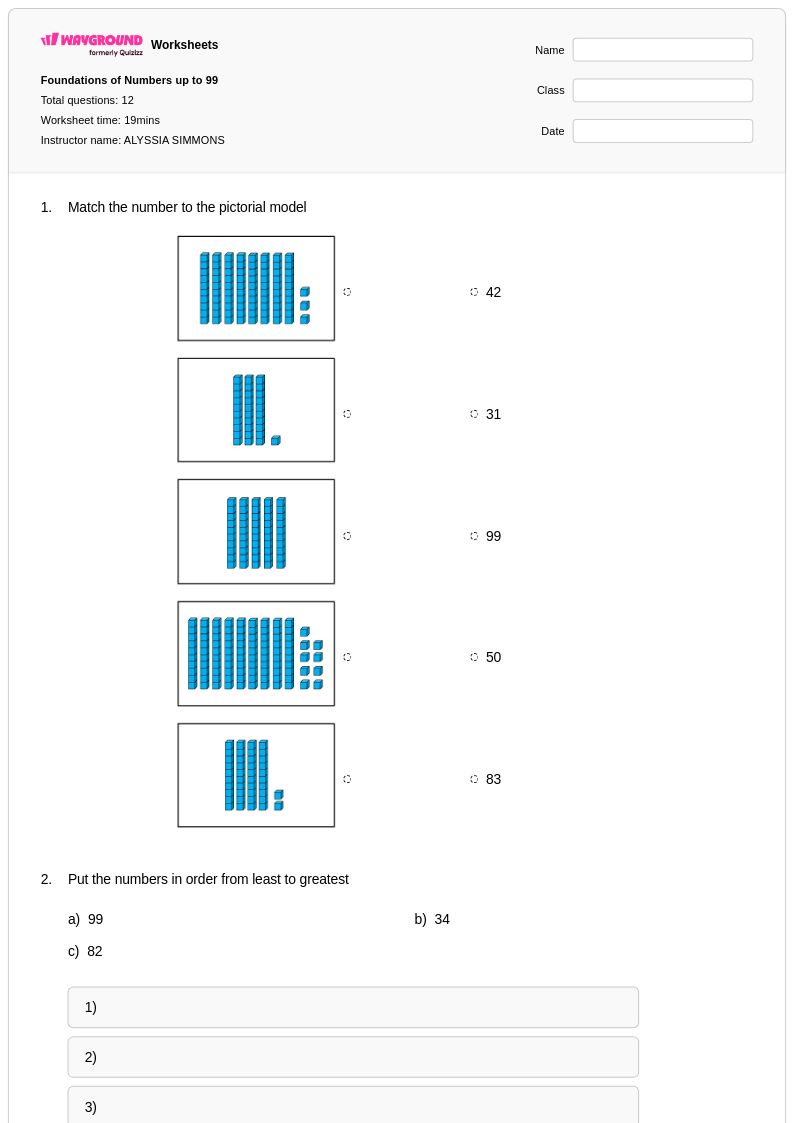
12 Q
1st
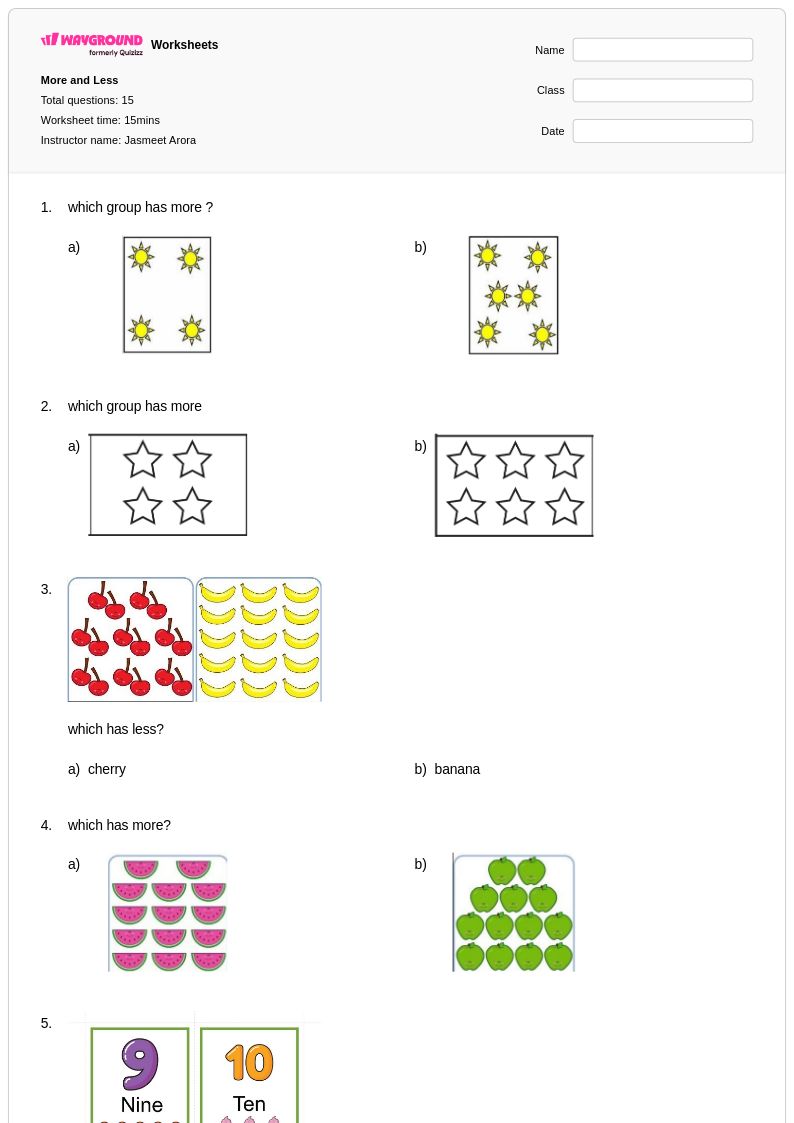
15 Q
1st
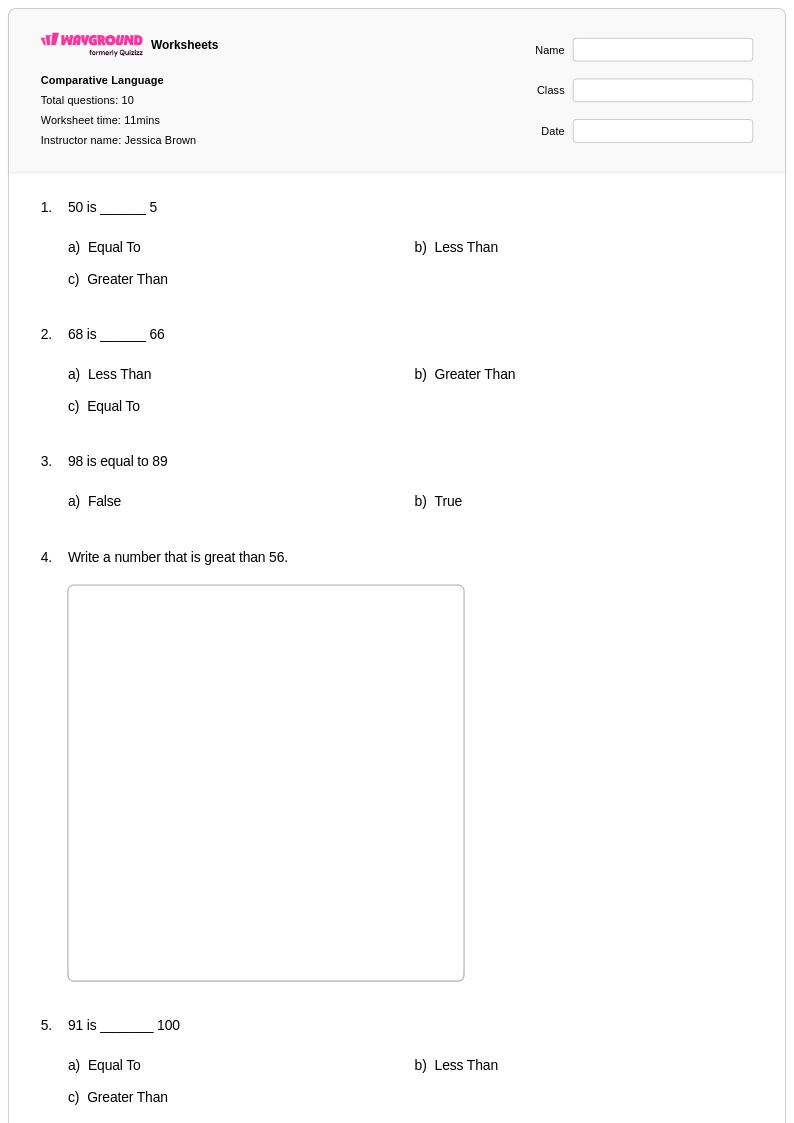
10 Q
1st
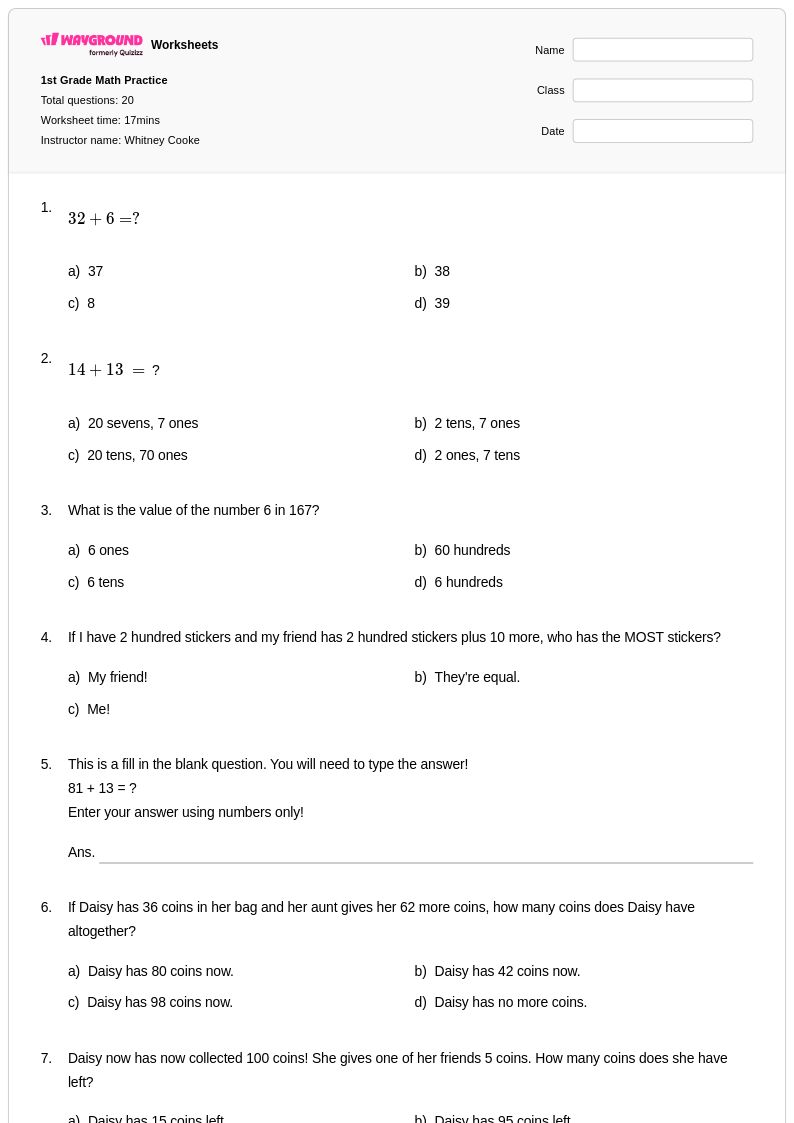
20 Q
1st
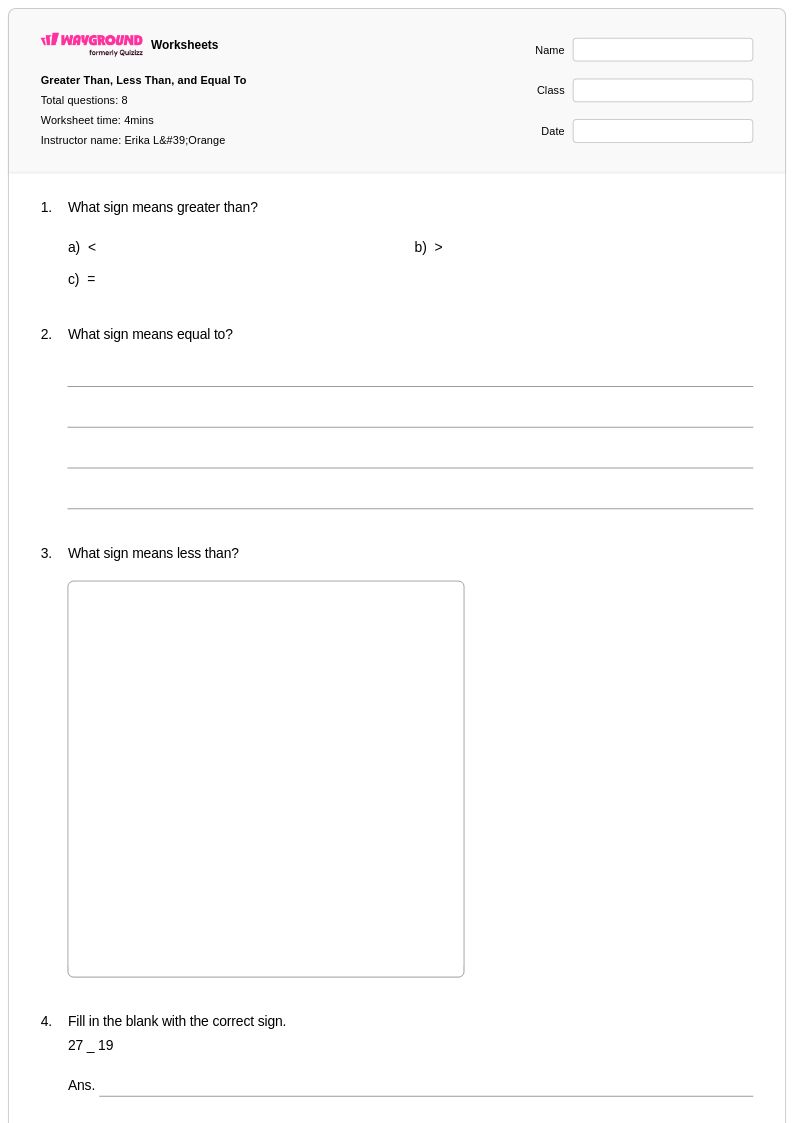
8 Q
1st - 3rd
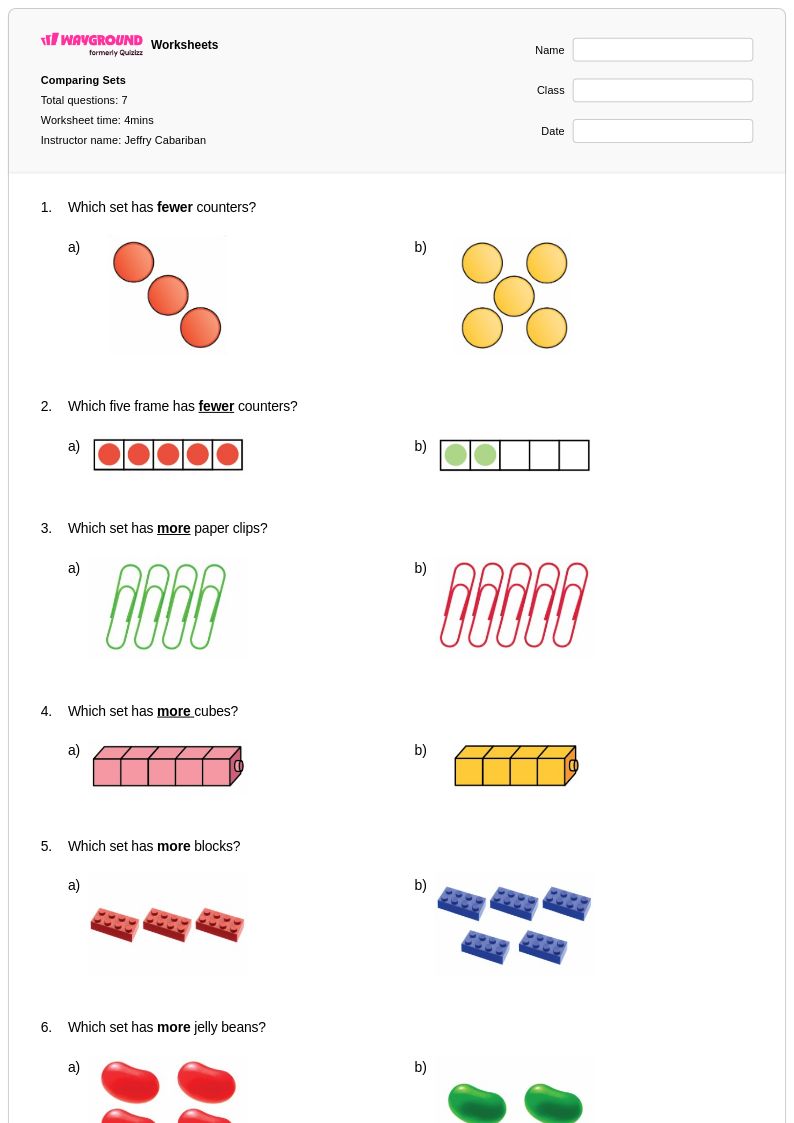
7 Q
1st
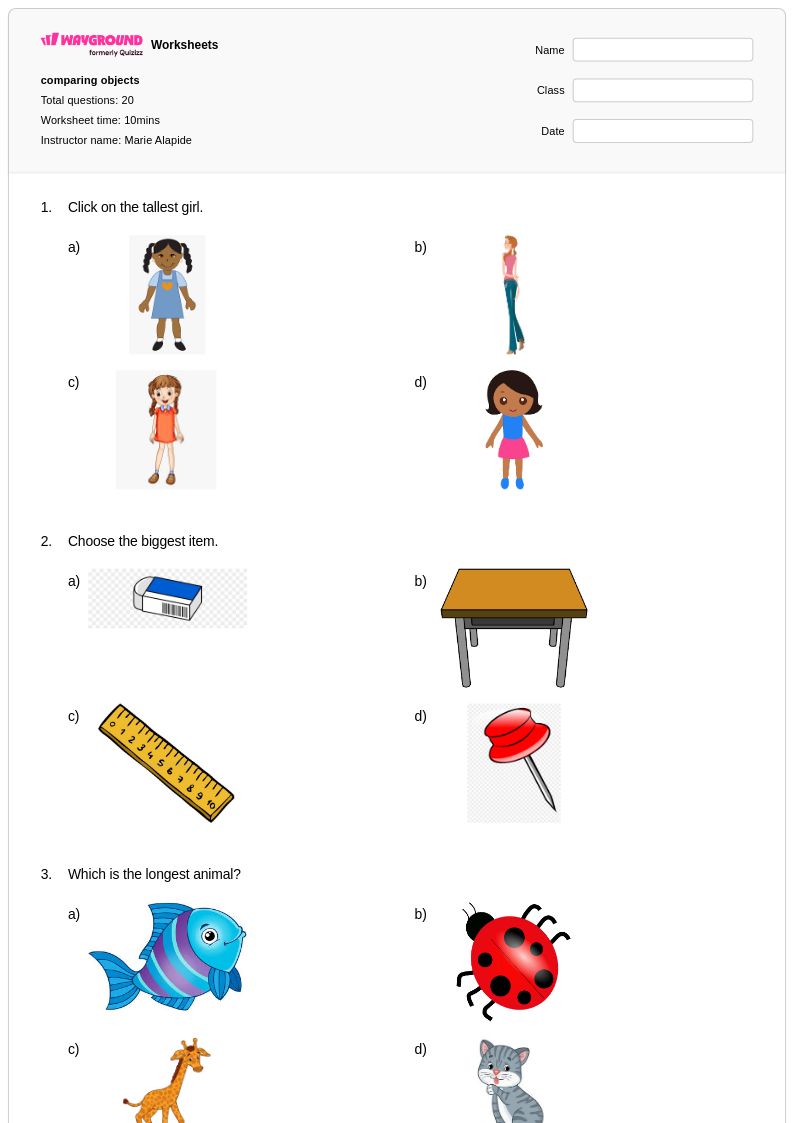
20 Q
1st
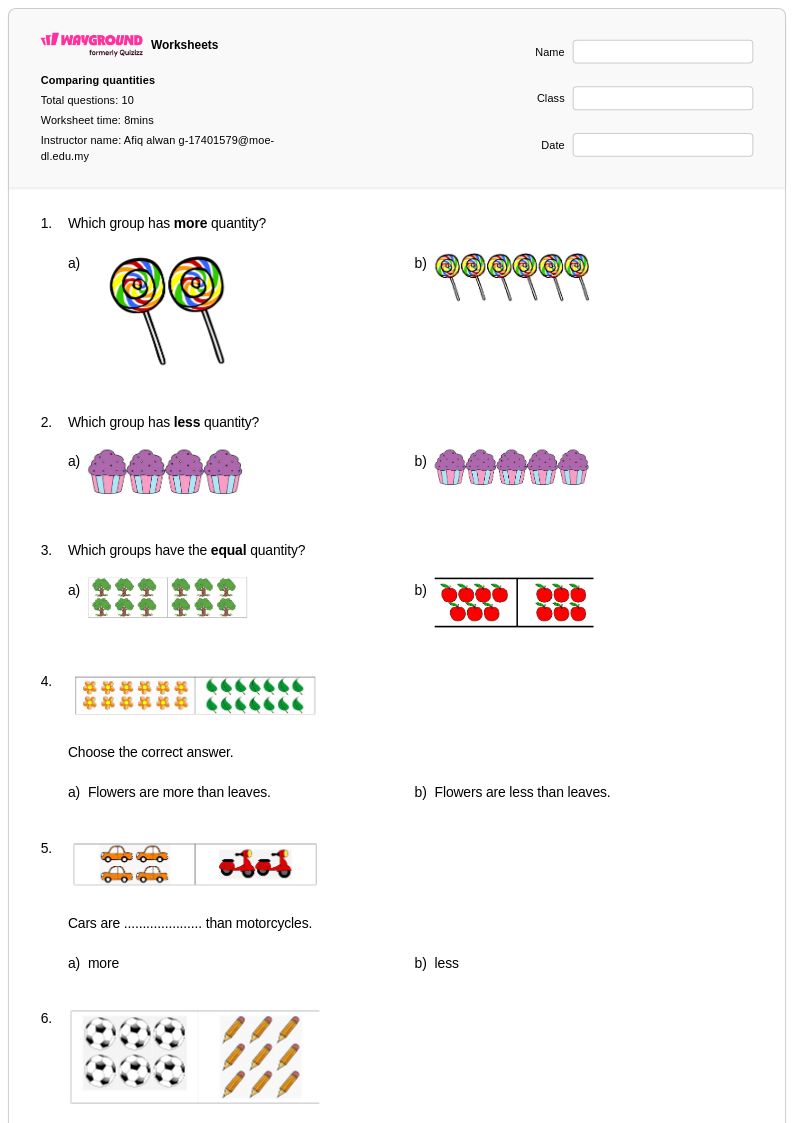
10 Q
1st
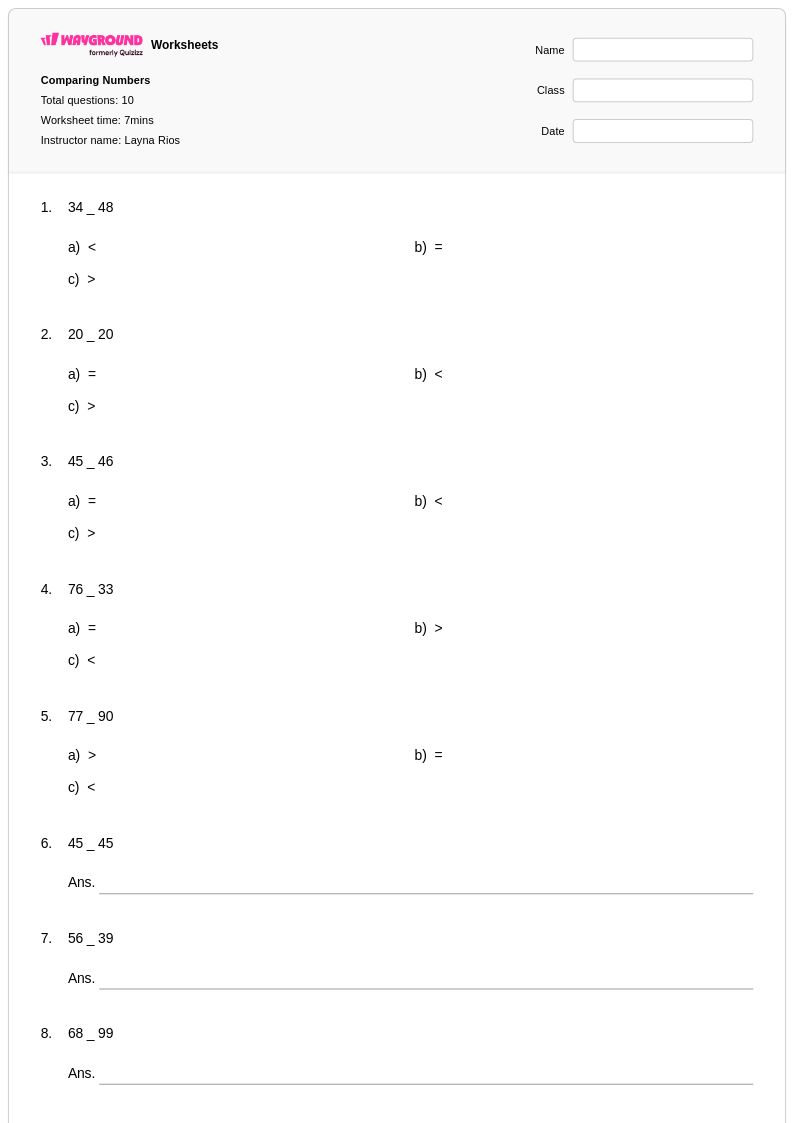
10 Q
1st
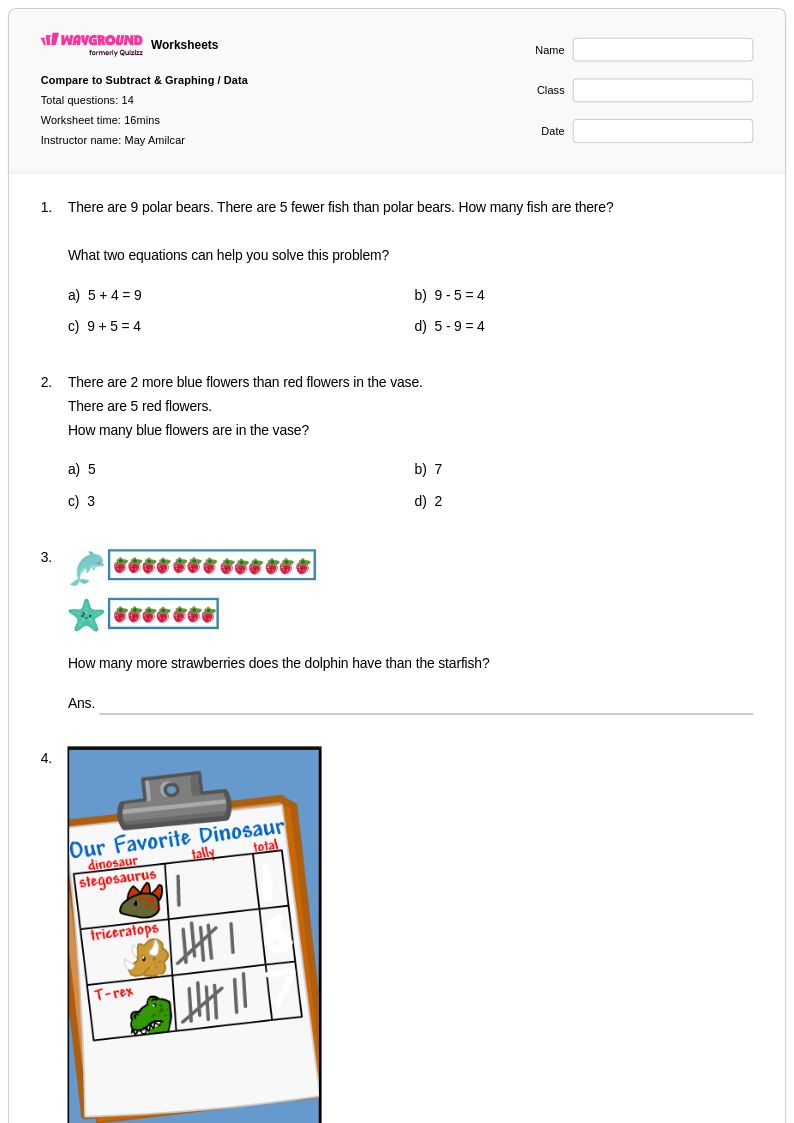
14 Q
KG - 2nd
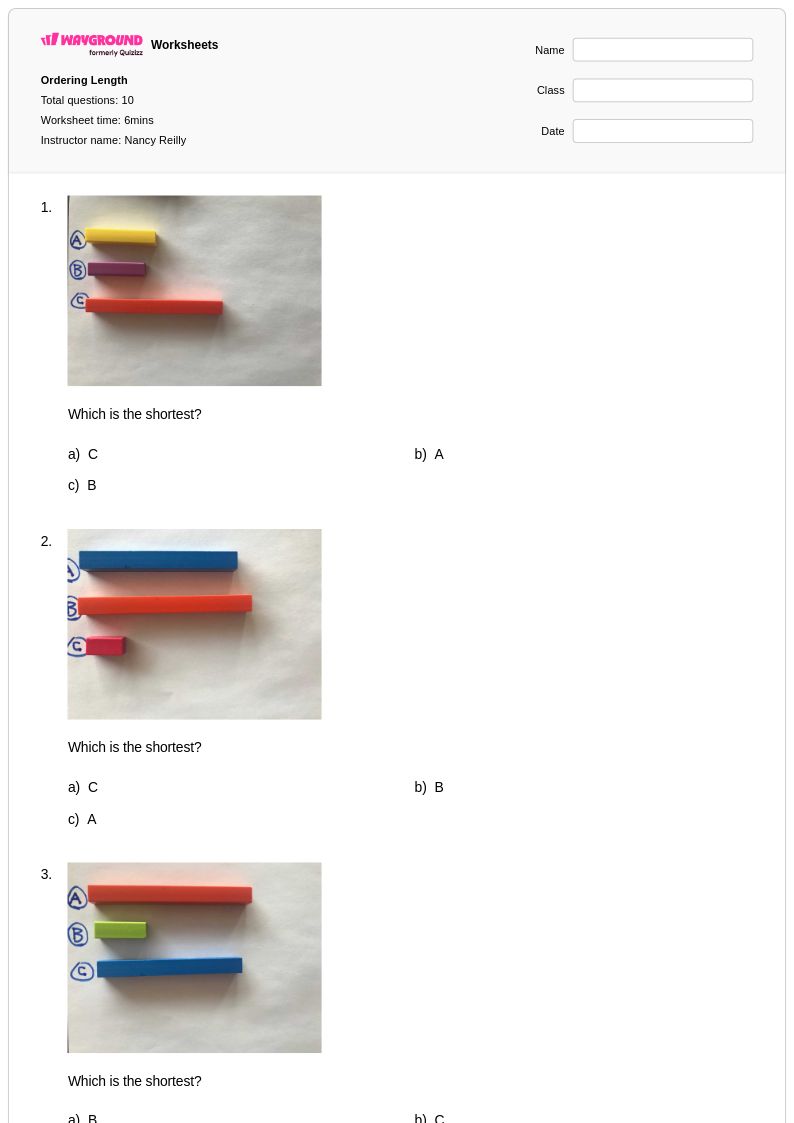
10 Q
1st
Explore Other Subject Worksheets for class 1
Explore printable Comparing Volume worksheets for Class 1
Class 1 comparing volume worksheets available through Wayground (formerly Quizizz) provide young learners with essential foundational experiences in measurement concepts through hands-on visual comparisons. These carefully designed resources help first-grade students develop critical thinking skills as they analyze containers, cups, and other objects to determine which holds more or less liquid. The worksheets strengthen spatial reasoning abilities and introduce mathematical vocabulary related to capacity, while offering structured practice problems that guide students through systematic comparison techniques. Teachers can access comprehensive collections that include detailed answer keys and are available as free printable pdf resources, making it simple to incorporate volume comparison activities into daily math instruction and assessment routines.
Wayground (formerly Quizizz) supports educators with an extensive library of millions of teacher-created comparing volume resources specifically tailored for Class 1 mathematics instruction. The platform's robust search and filtering capabilities allow teachers to quickly locate worksheets that align with specific learning standards and match their students' developmental needs. Advanced differentiation tools enable instructors to customize difficulty levels and modify problems for remediation or enrichment purposes, while the flexible format options include both printable pdf versions and interactive digital activities. These comprehensive features streamline lesson planning and provide teachers with diverse options for skill practice, formative assessment, and targeted intervention, ensuring that every first-grade student receives appropriate support in mastering fundamental volume comparison concepts.
FAQs
How do I teach comparing volume in first grade?
What exercises help first graders practice comparing volume?
What mistakes do first graders make when comparing volume?
How can I use a Wayground Grade 1 comparing volume worksheet?
How does comparing volume fit into the Common Core Grade 1 math progression?
What grade level is comparing volume taught at?
How can I differentiate comparing volume worksheets for first graders?