Free Printable Estimating Length Worksheets for Class 1
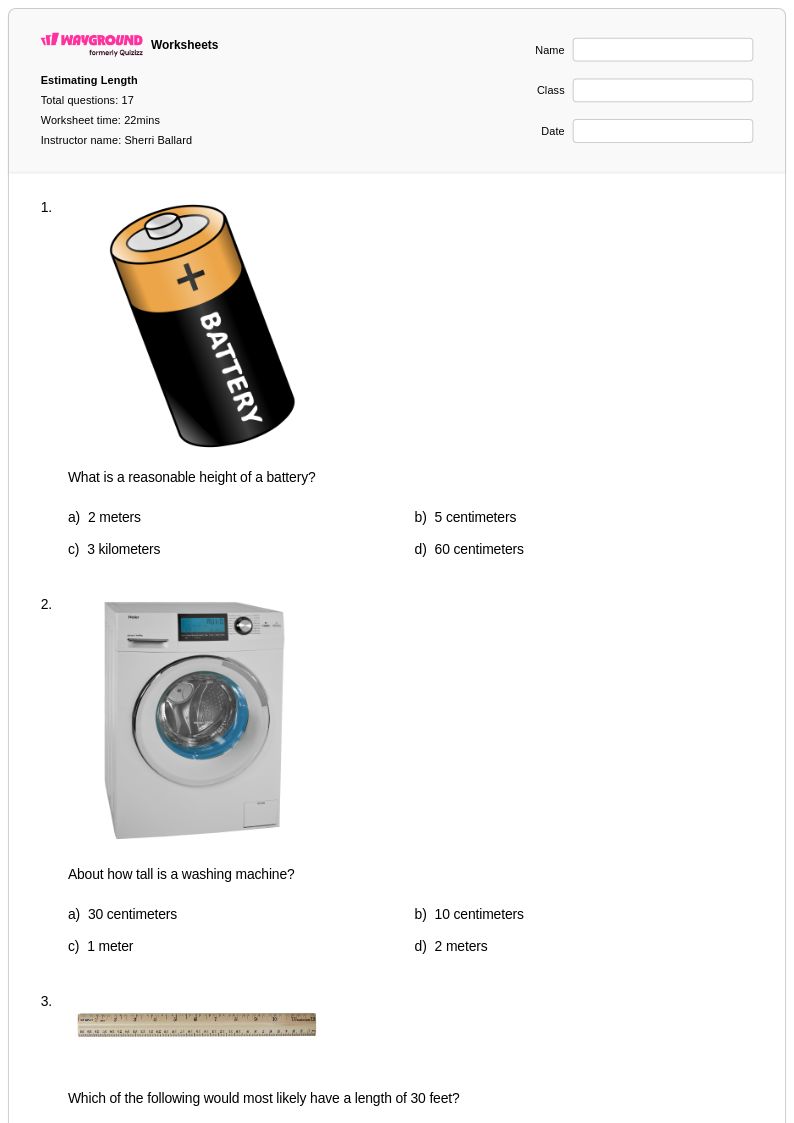
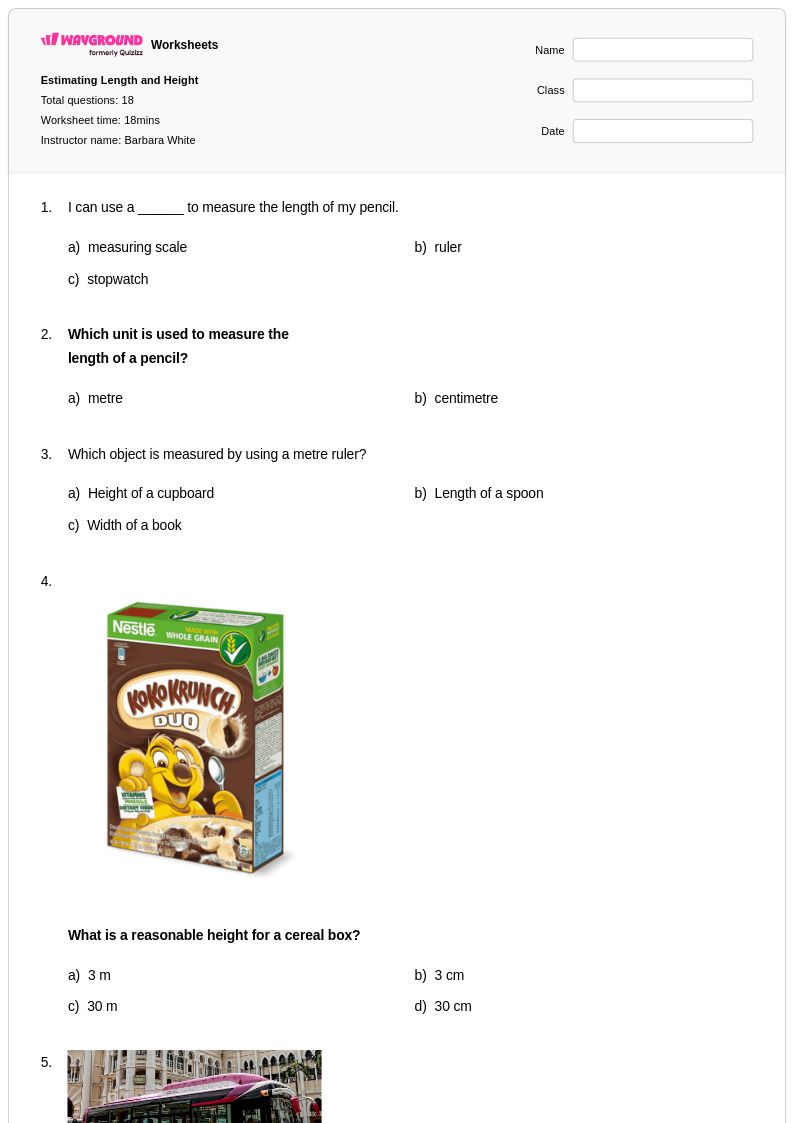
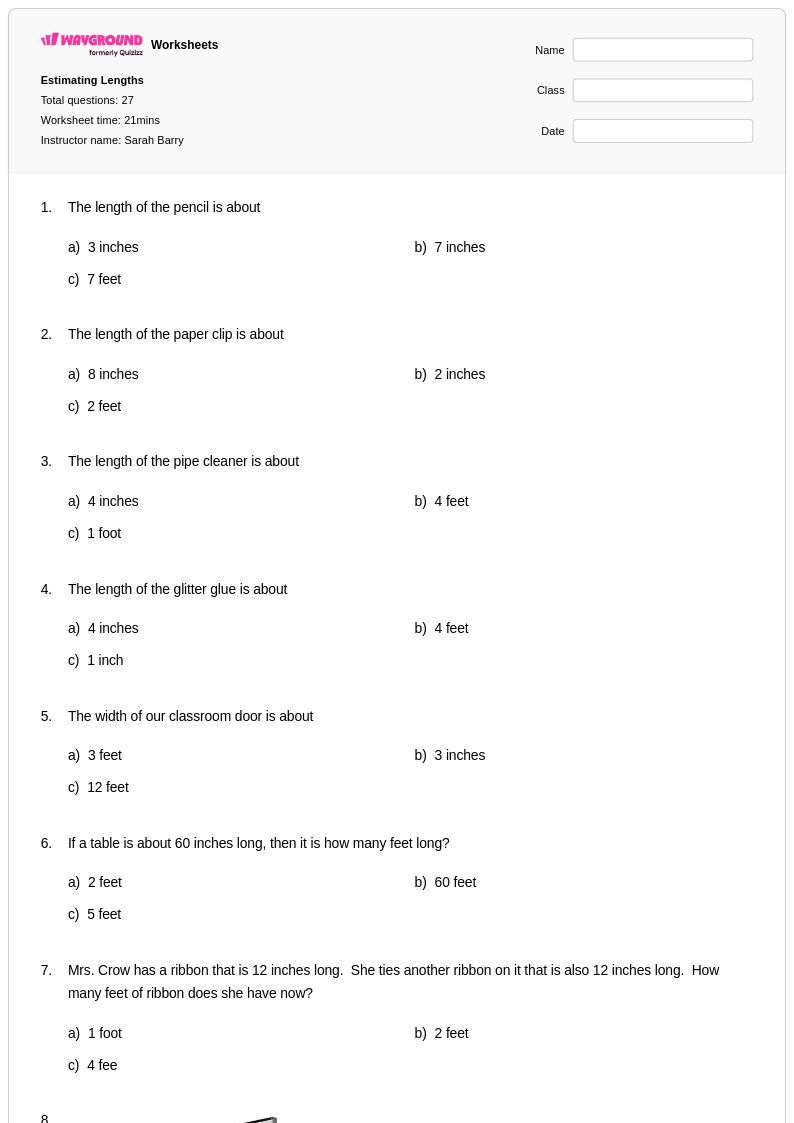
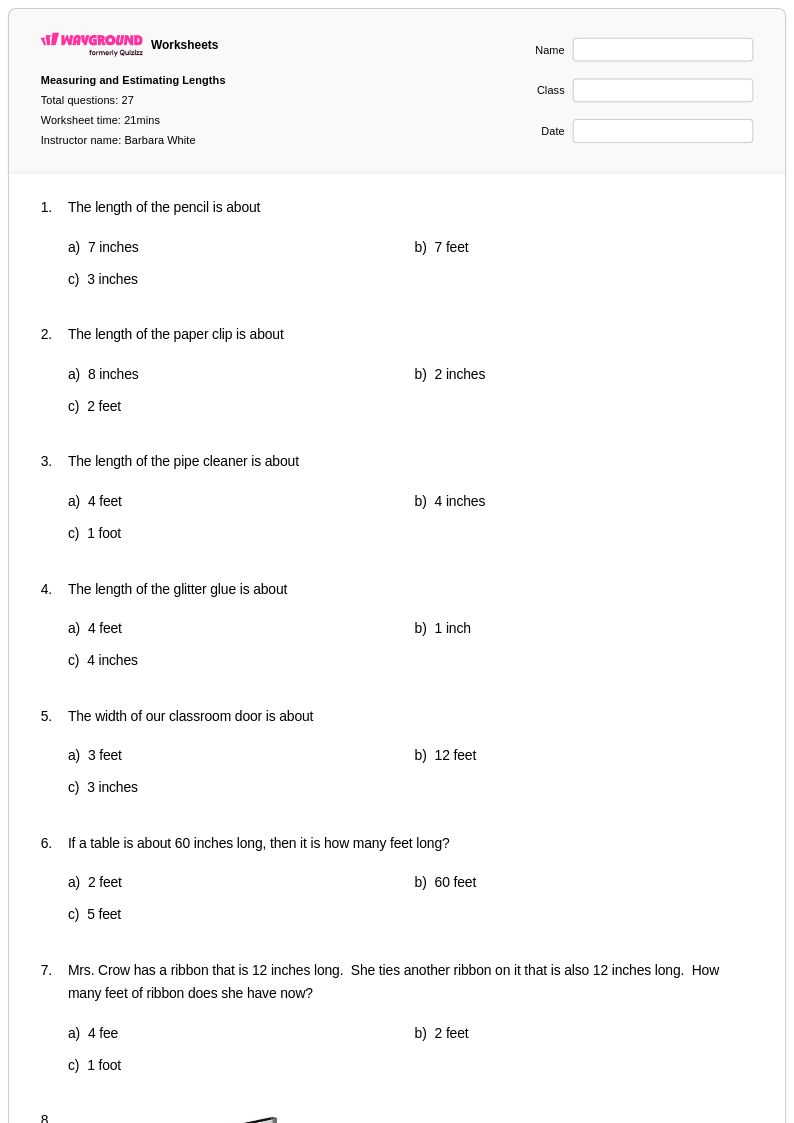
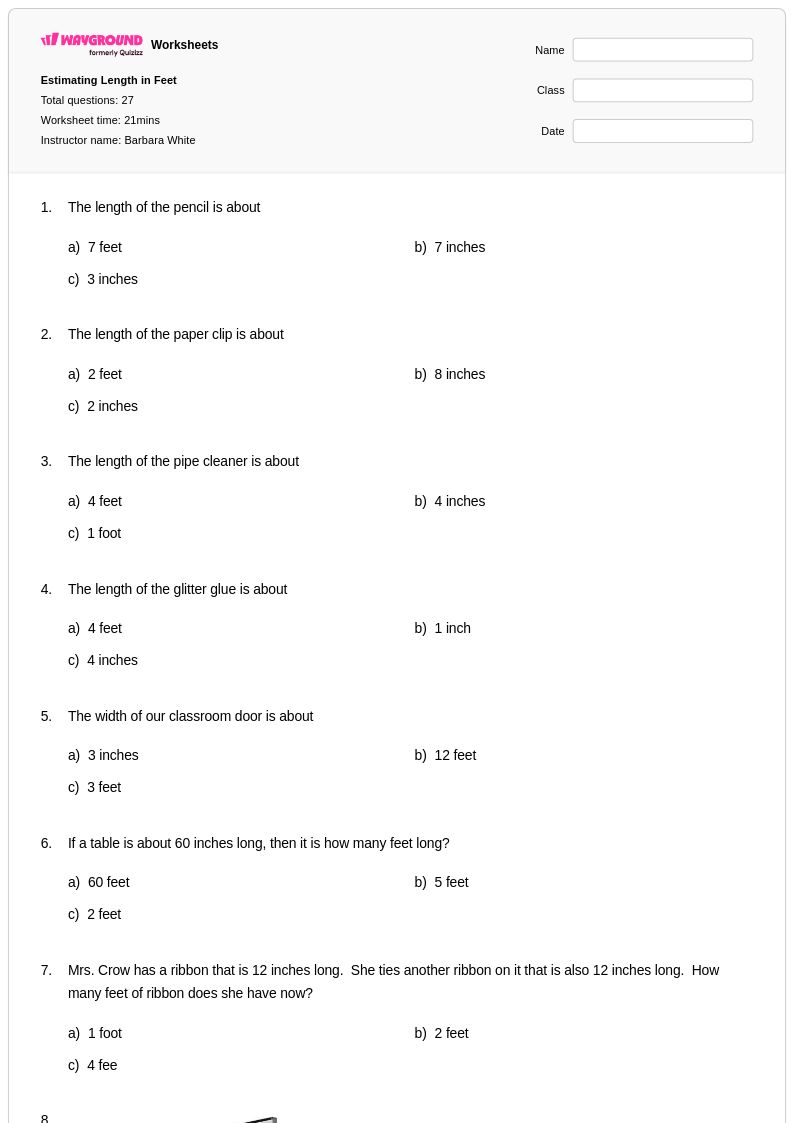
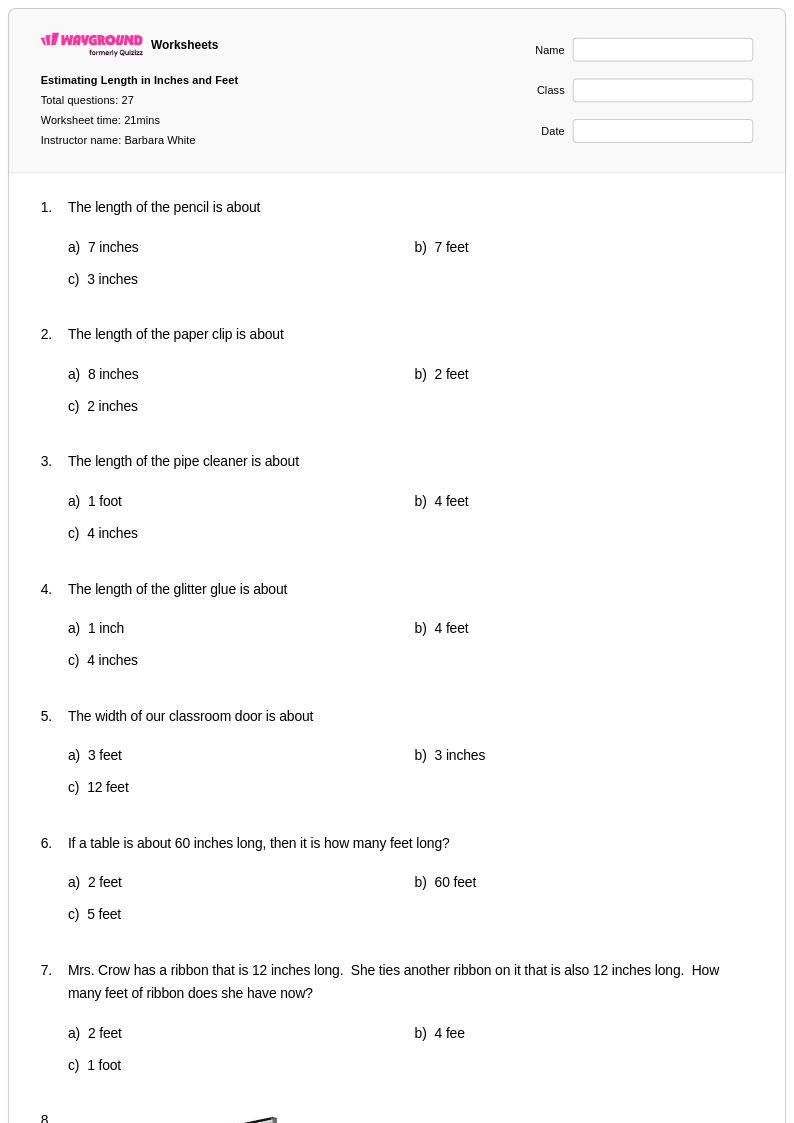
Class 1 estimating length worksheets from Wayground help young learners develop measurement skills through engaging printables, practice problems, and free PDF resources with answer keys for classroom success.
Explore printable Estimating Length worksheets for Class 1
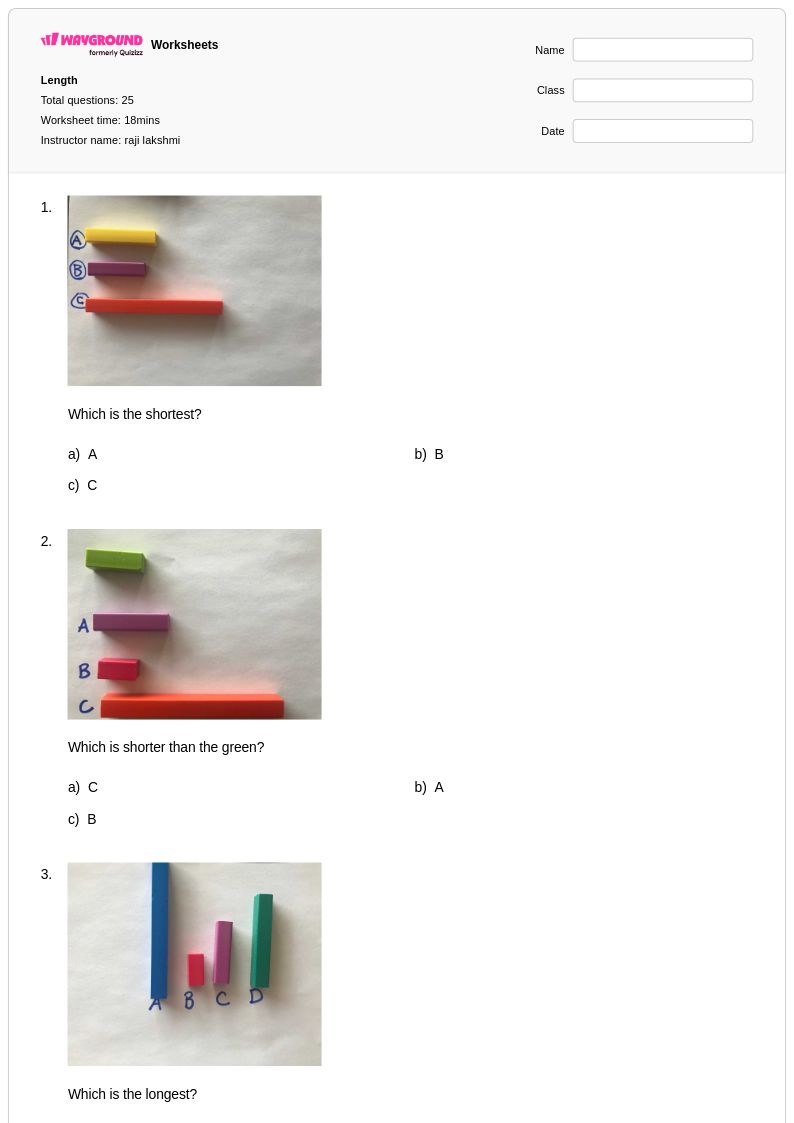
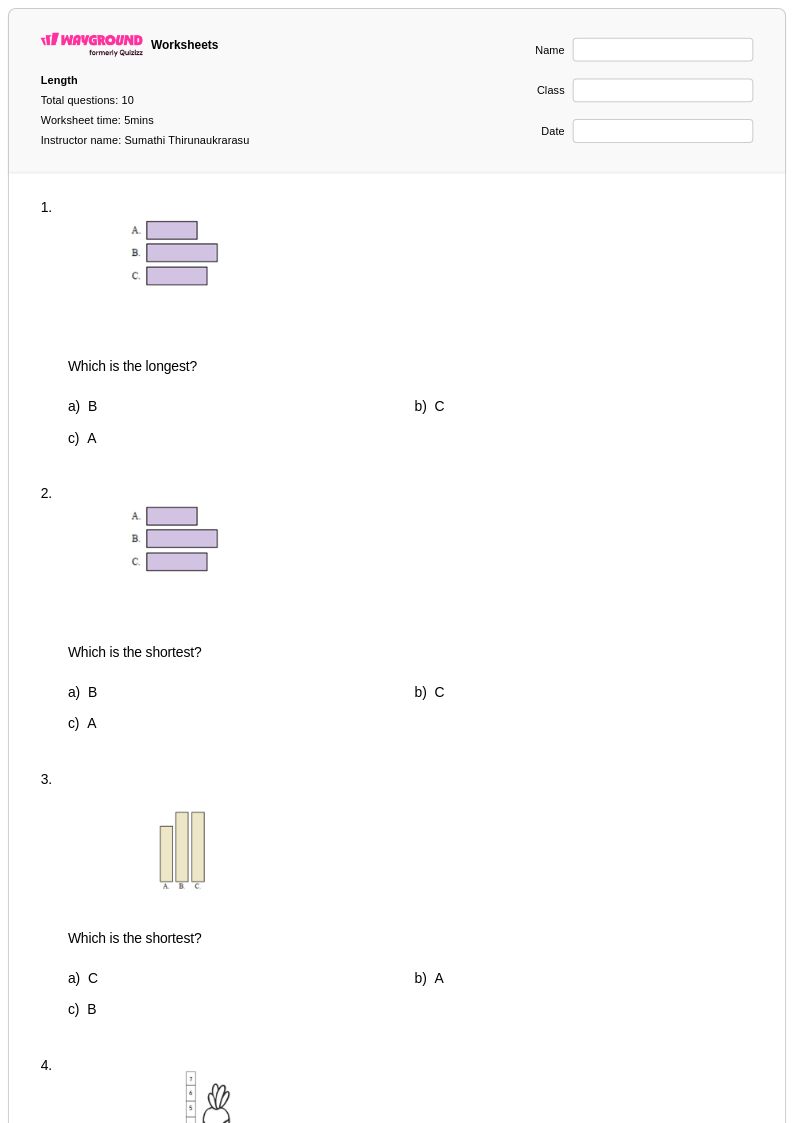
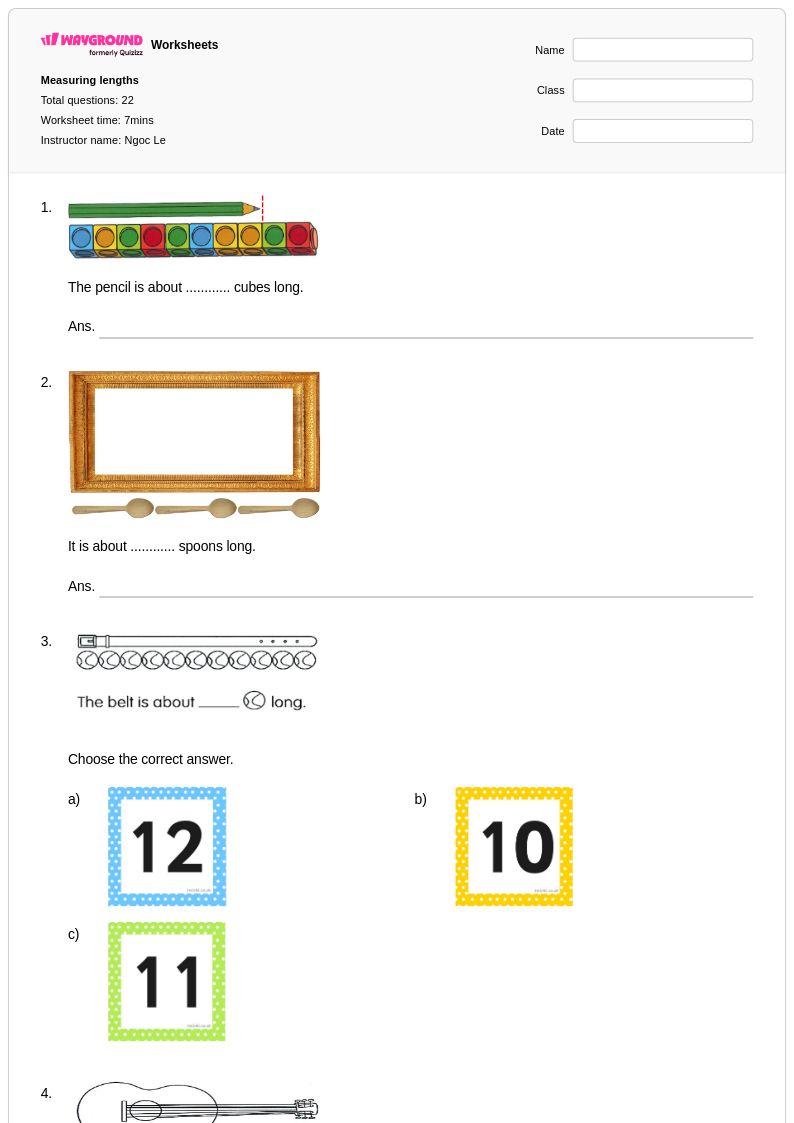
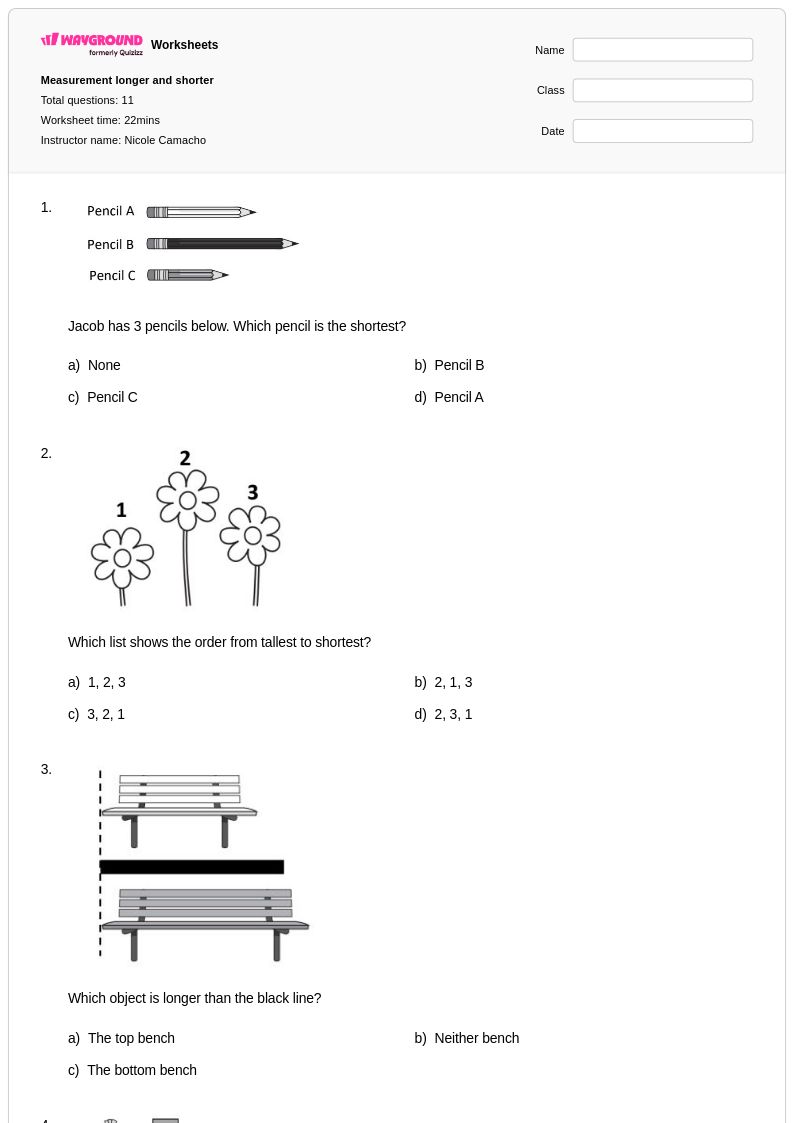
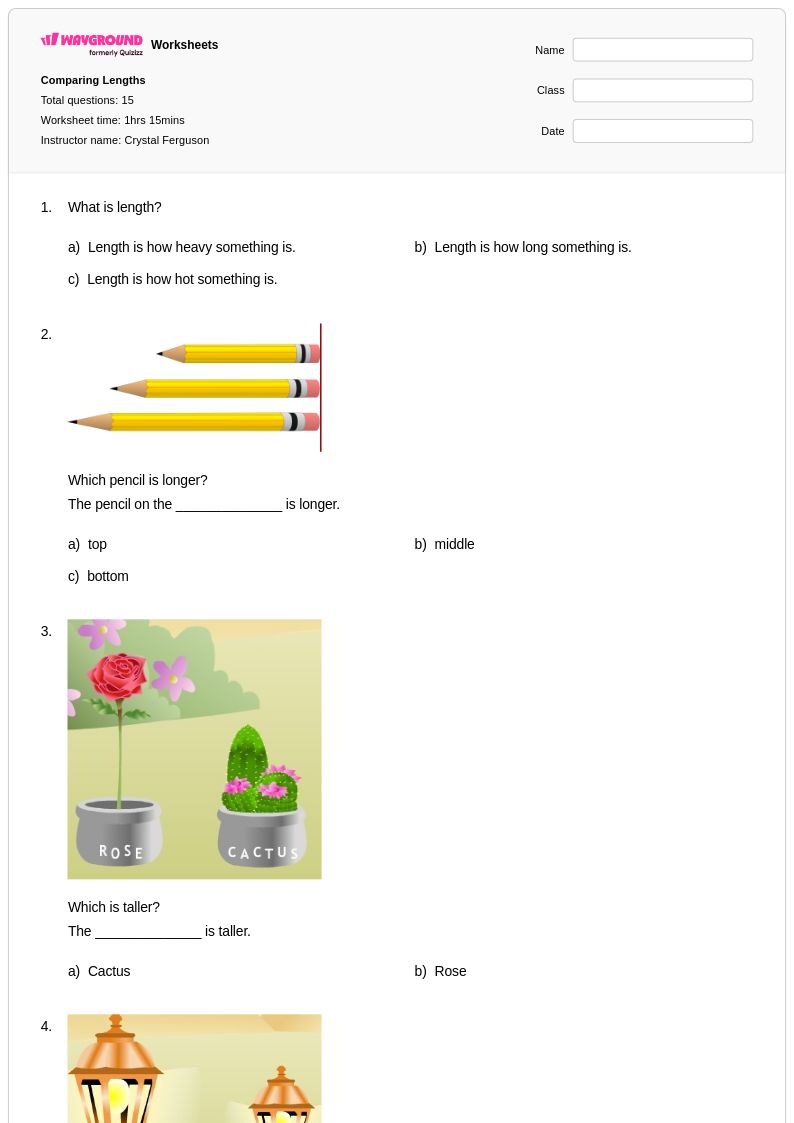
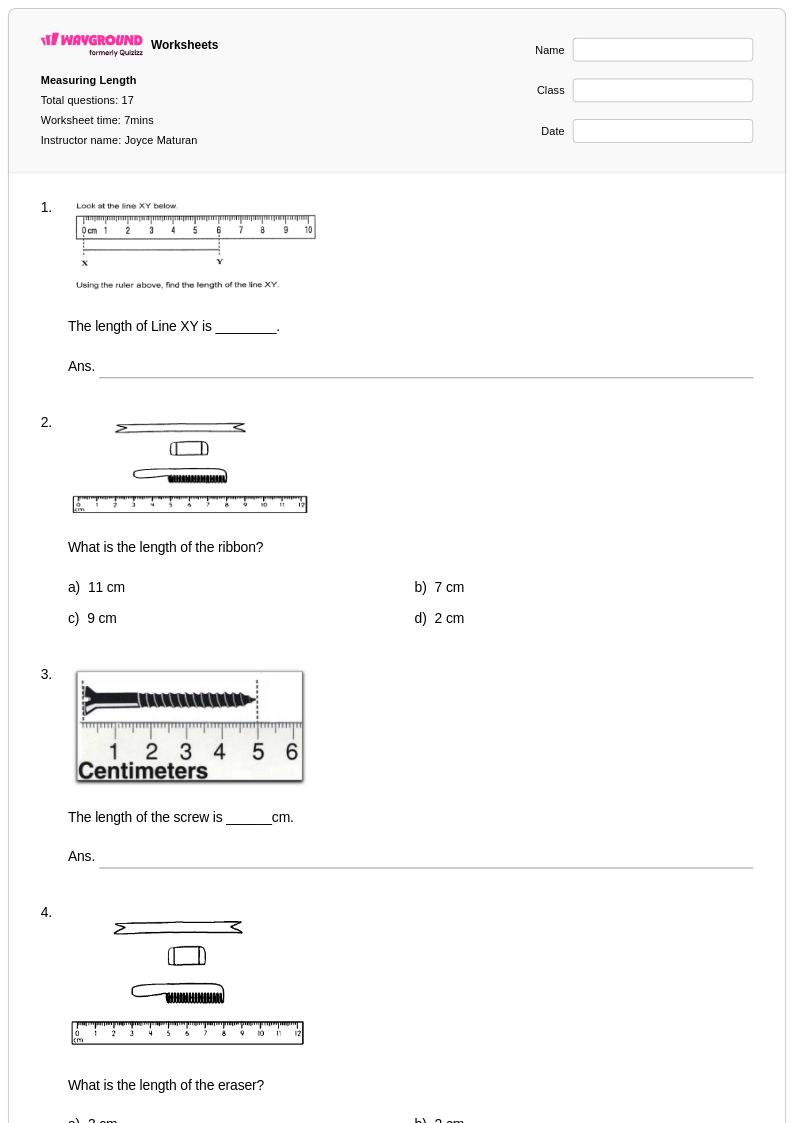
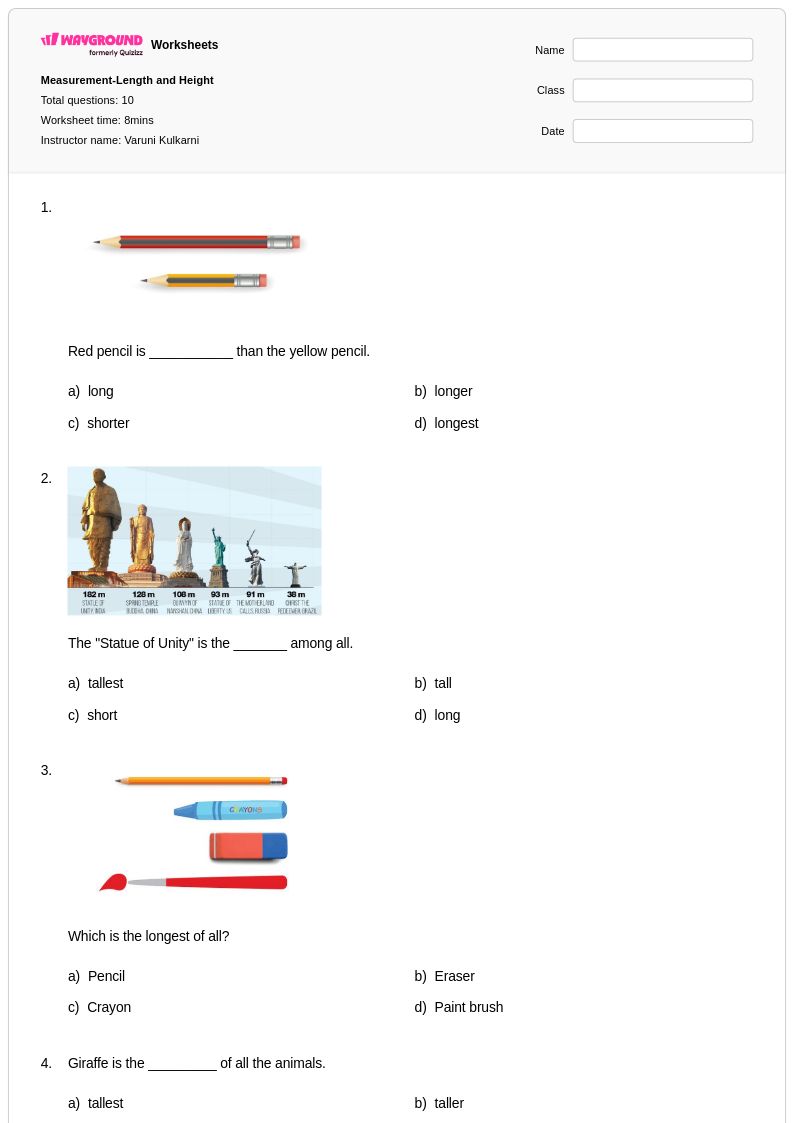
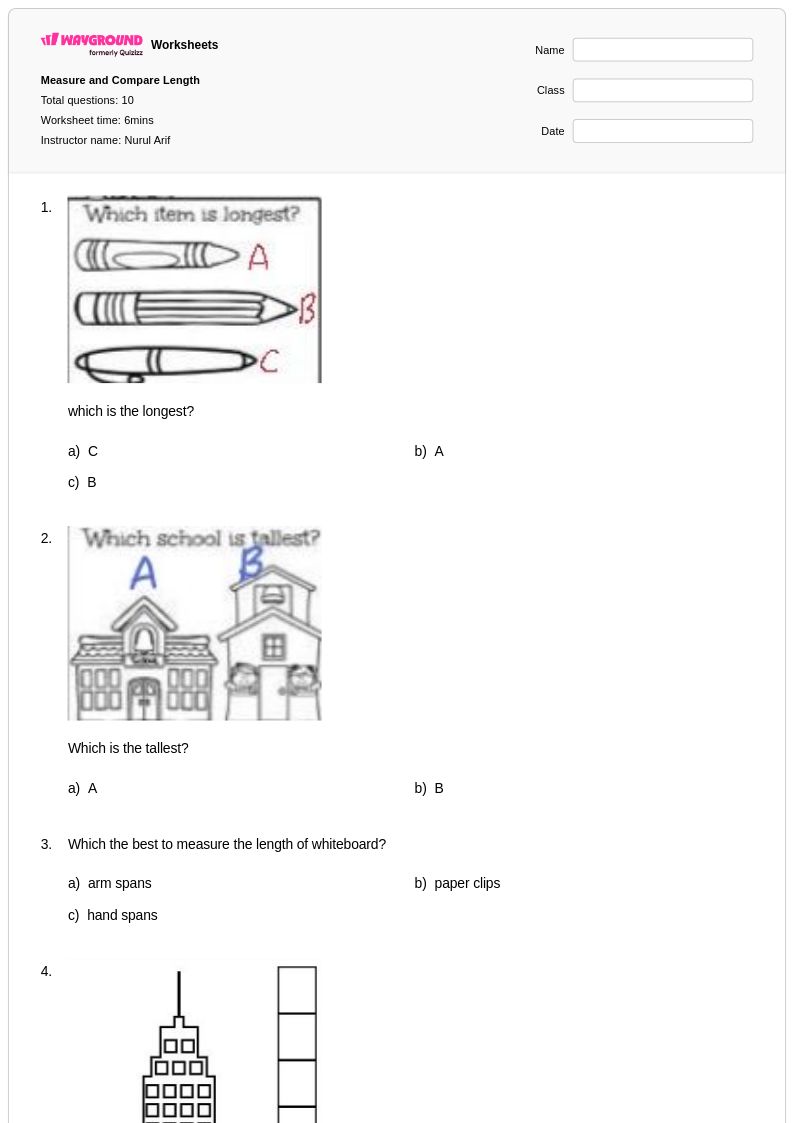
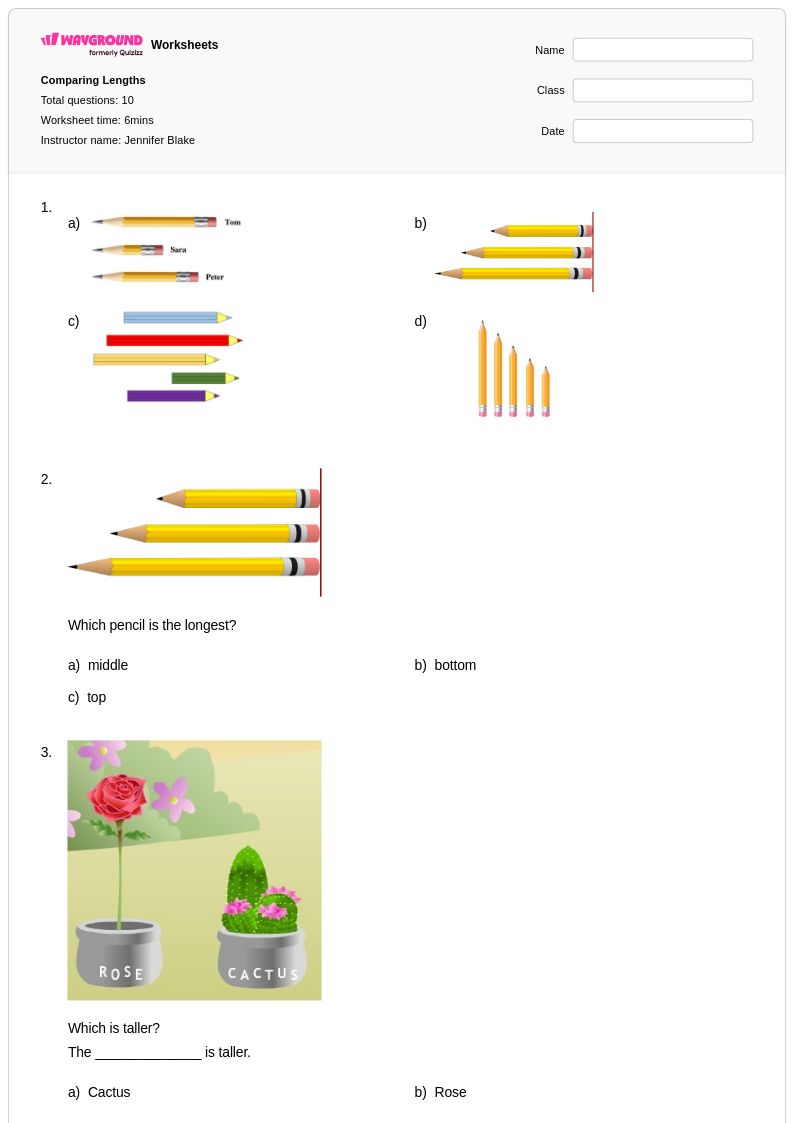
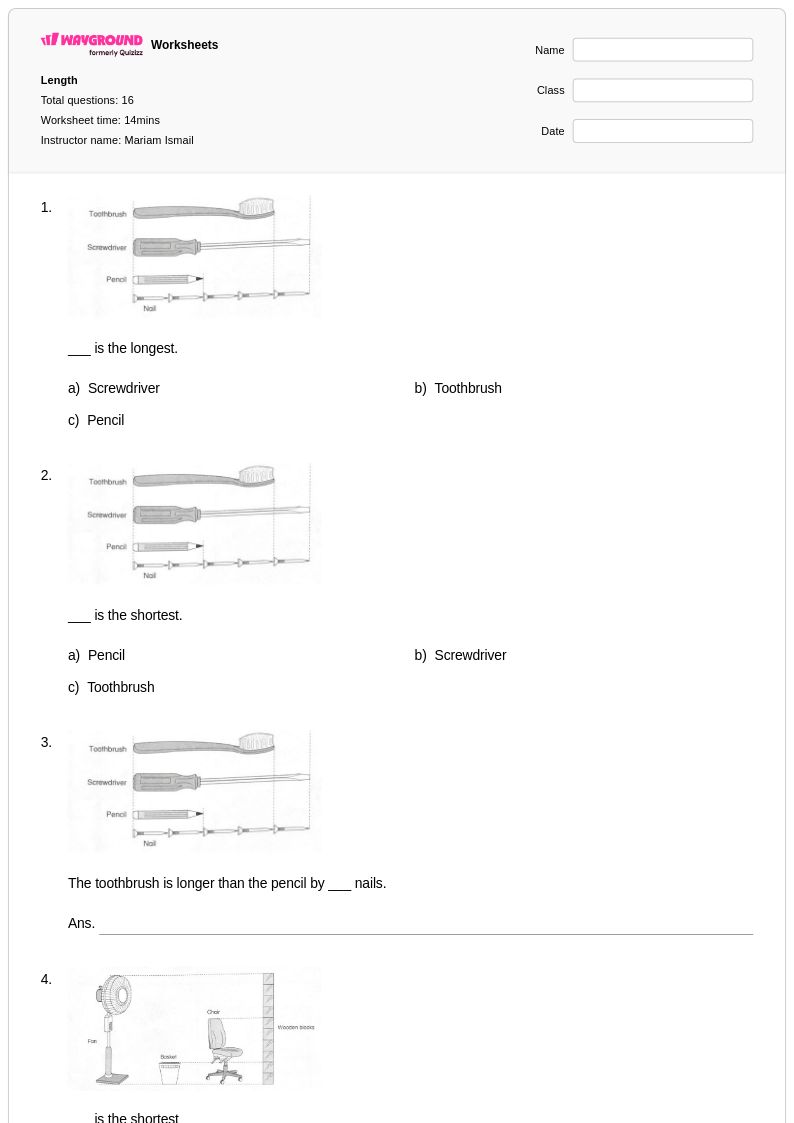
Class 1 estimating length worksheets available through Wayground (formerly Quizizz) provide young learners with essential foundational skills in measurement concepts. These carefully designed practice problems help first-grade students develop spatial reasoning and measurement sense by comparing objects, making predictions about size, and understanding relative length relationships. The worksheets strengthen critical mathematical thinking as students learn to use visual cues and prior knowledge to make reasonable estimates about how long, short, tall, or wide various objects might be. Teachers can access comprehensive answer keys and printable pdf formats that support both independent practice and guided instruction, making these free educational resources invaluable for building measurement vocabulary and conceptual understanding.
Wayground (formerly Quizizz) empowers educators with an extensive collection of teacher-created estimating length resources, drawing from millions of high-quality worksheets that align with mathematics standards for early elementary instruction. The platform's robust search and filtering capabilities allow teachers to quickly locate materials that match their specific classroom needs, whether for whole-group lessons, small-group remediation, or individual enrichment activities. These differentiation tools enable seamless customization of content difficulty and format, with flexible options available in both digital and printable pdf versions to accommodate diverse learning environments. The comprehensive worksheet collections support strategic lesson planning while providing teachers with reliable resources for skill practice, assessment preparation, and targeted intervention in measurement concepts.
FAQs
How do I teach estimating length in first grade?
First grade is where students move from pure comparison ('this one is longer') to making a prediction with a unit: 'I think this pencil is about 6 cubes long.' Build that habit by always asking students to estimate before they measure. Introduce a small set of personal benchmarks — a finger width, a hand span — so students have something to reason from rather than guessing blindly.
What exercises help first graders practice estimating length?
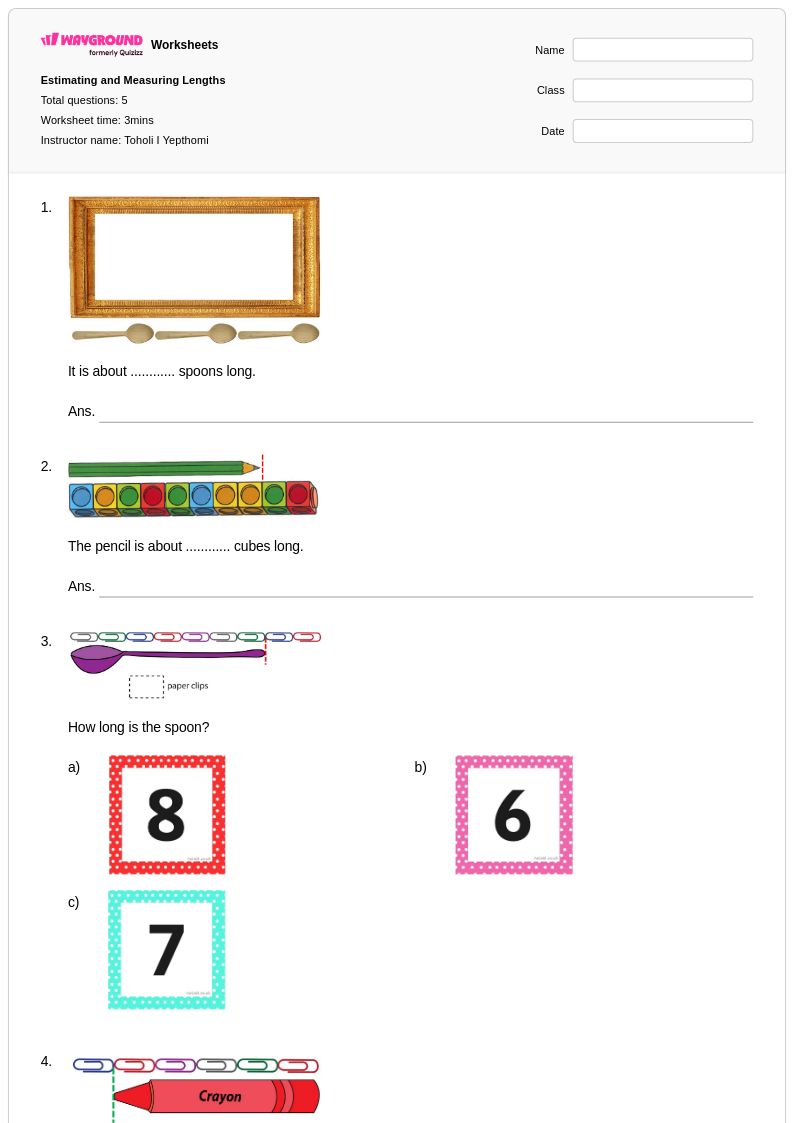
Estimate-then-measure tasks are the workhorse at this level: students write their guess, measure with cubes or paper clips, and record the actual length. Ordering tasks (rank these four objects from shortest to longest by eye) and 'about how many' questions with pictures also build estimation habits without requiring physical manipulatives every time.
What mistakes do first graders commonly make when estimating length?
Two errors come up constantly. First, students don't account for unit size — they'll say '5' whether they're counting large blocks or small cubes, without adjusting their estimate. Second, they often skip the reasoning step and just write a number, so their estimates don't improve with practice. Asking 'what did you use to help you guess?' after each estimate builds the habit of thinking before writing.
How do I use these Grade 1 estimating length worksheets?
These work well as a guided warm-up before a hands-on measuring activity — students estimate on the worksheet, then grab manipulatives to check. You can assign the digital version on Wayground for immediate feedback, or print the PDF for paper practice. Every worksheet includes an answer key, so independent or center-based use is straightforward.
How does estimating length fit into the first-grade Common Core math progression?
Common Core expects first graders to order three objects by length and express the difference in whole-number units using non-standard measurement. Estimation isn't explicitly named at this grade, but it's the reasoning layer underneath: students who estimate first and then measure are building the number sense that second grade formalizes when standard units (inches, centimeters) are introduced. First grade estimation work is essentially preparation for that transition.
How can I differentiate length estimation practice for my first-grade class?
For students who are overwhelmed by open-ended estimation, Wayground's reduced answer choices accommodation gives them a narrower range to reason within — helpful when the concept is new. The Read Aloud feature supports students who are still developing reading fluency so the math thinking stays front and center. Both accommodations are set per student and don't affect how the worksheet appears for the rest of the class.