

20 Q
2nd - Uni

20 Q
4th - Uni

12 Q
4th - Uni

20 Q
2nd - Uni

15 Q
2nd - Uni

20 Q
2nd - Uni

12 Q
4th

24 Q
4th
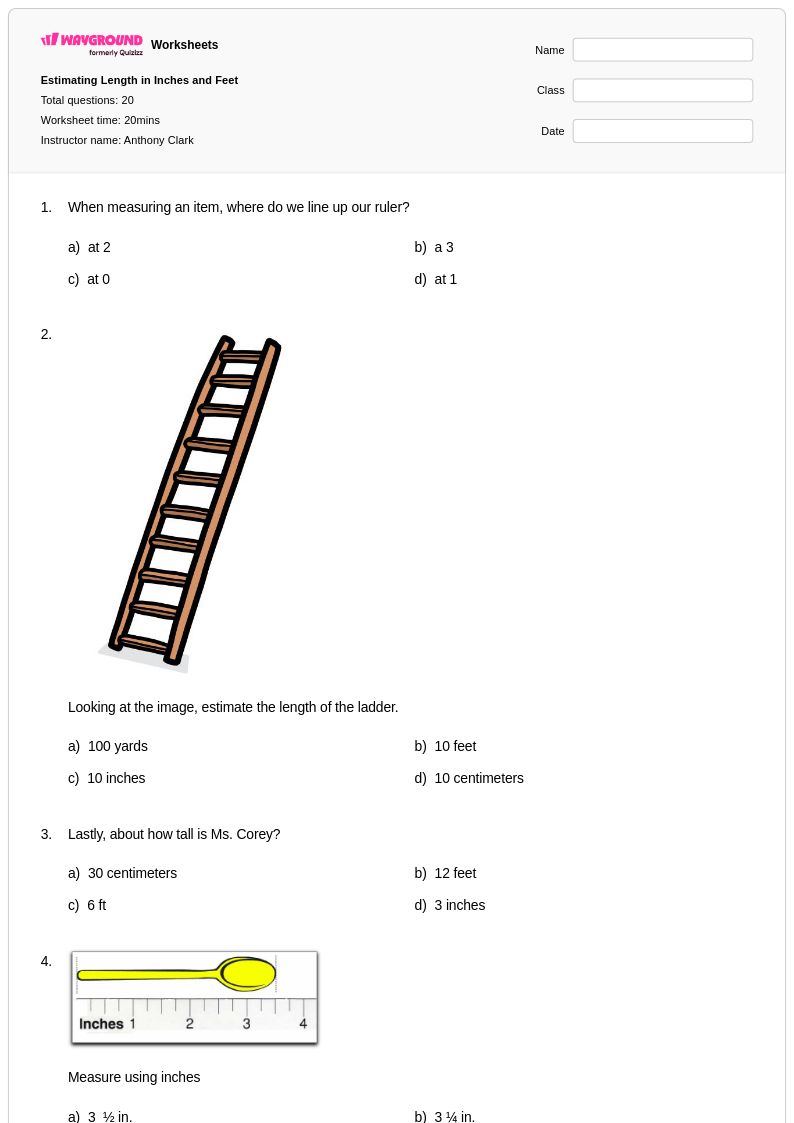
20 Q
2nd - Uni
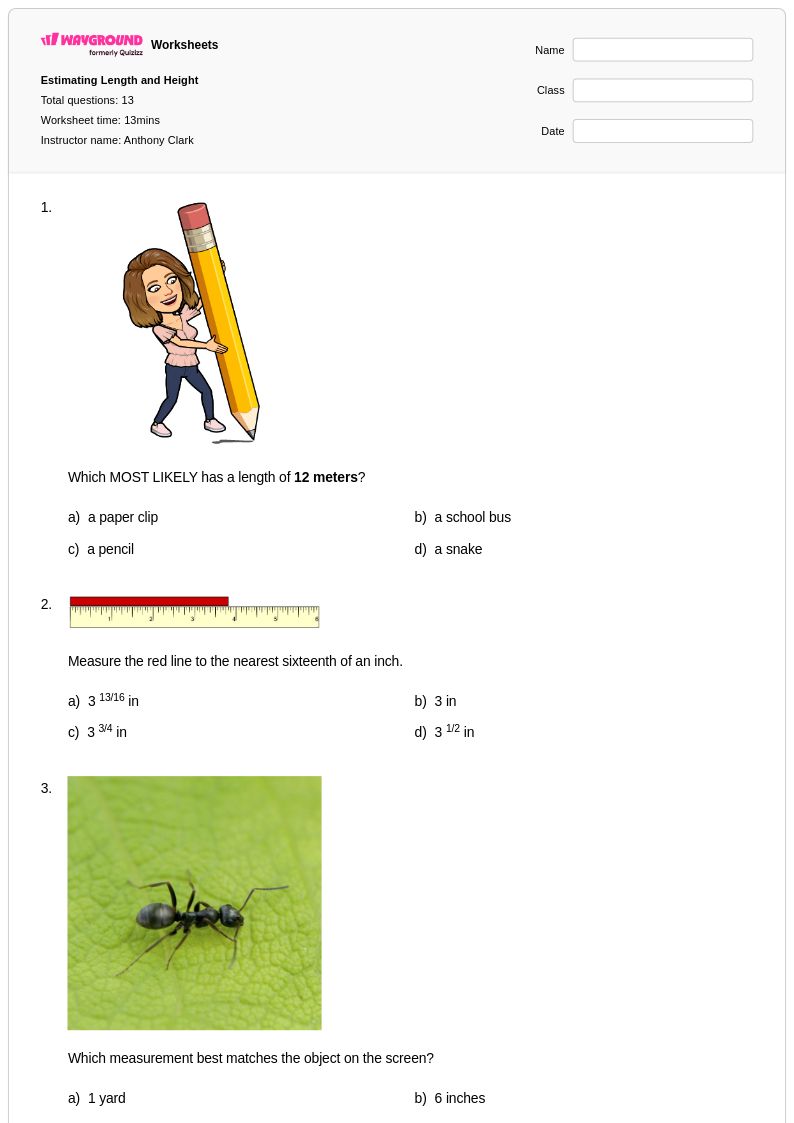
13 Q
2nd - Uni
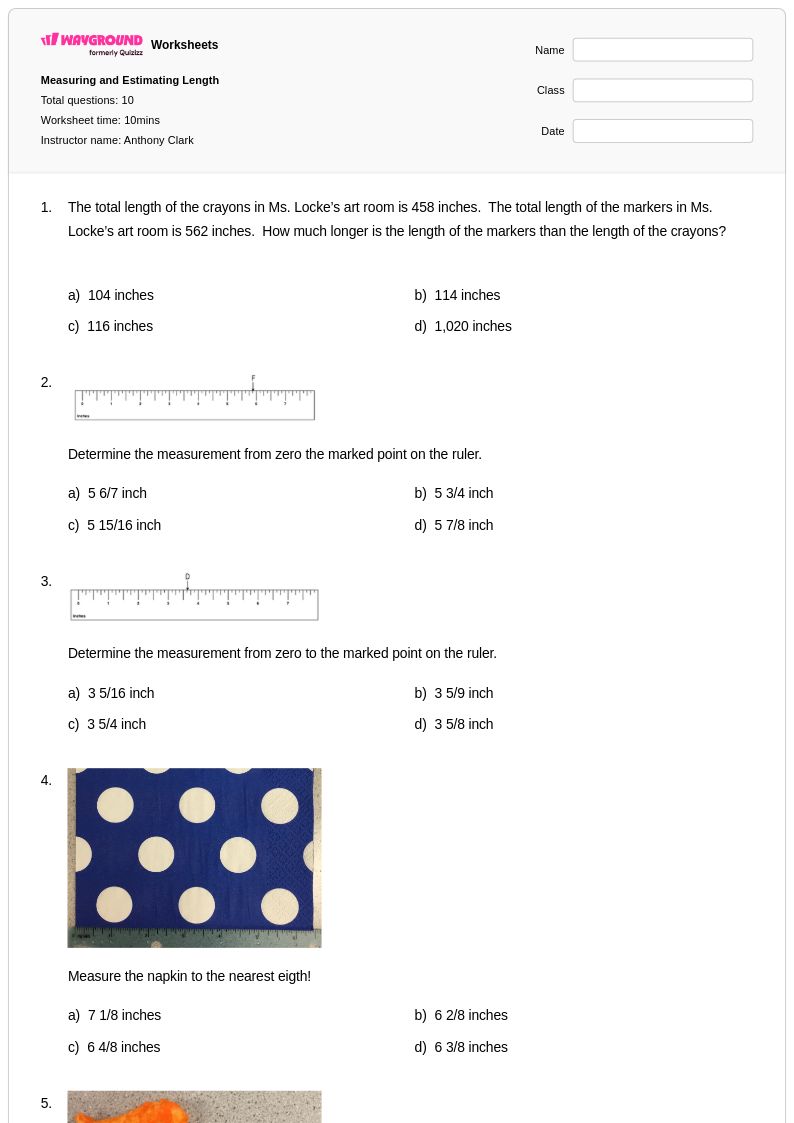
10 Q
2nd - Uni
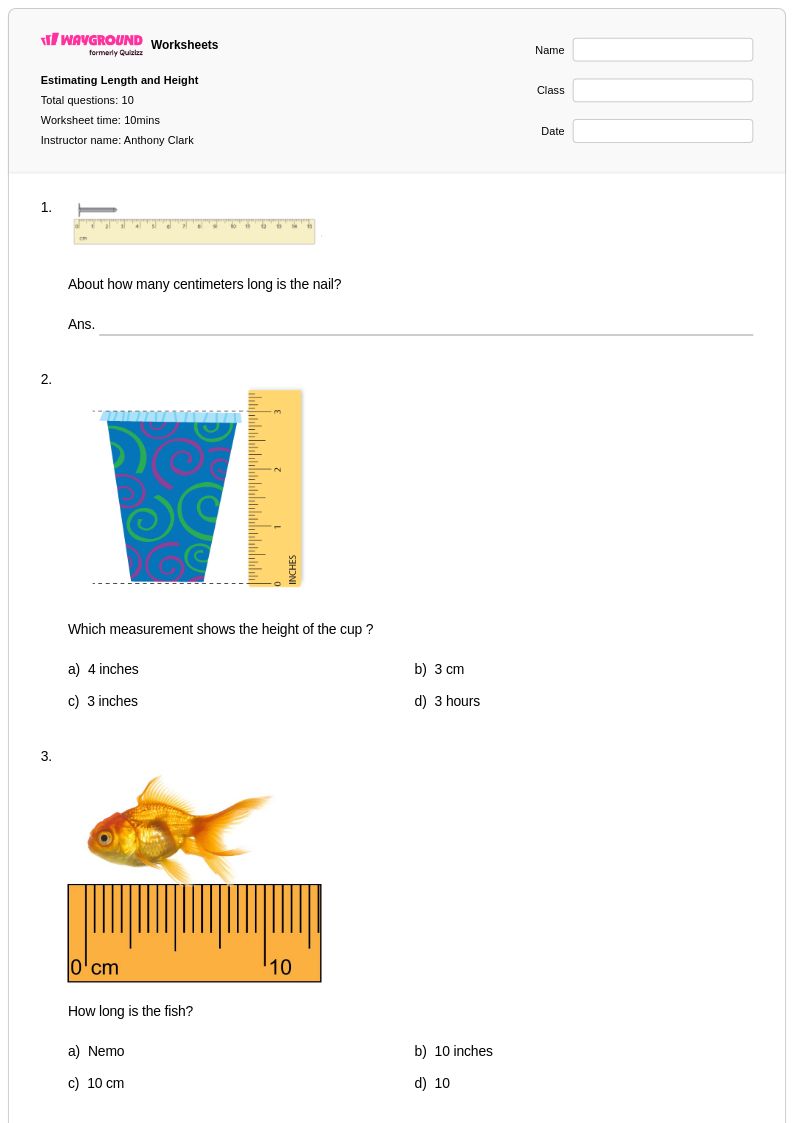
10 Q
2nd - Uni
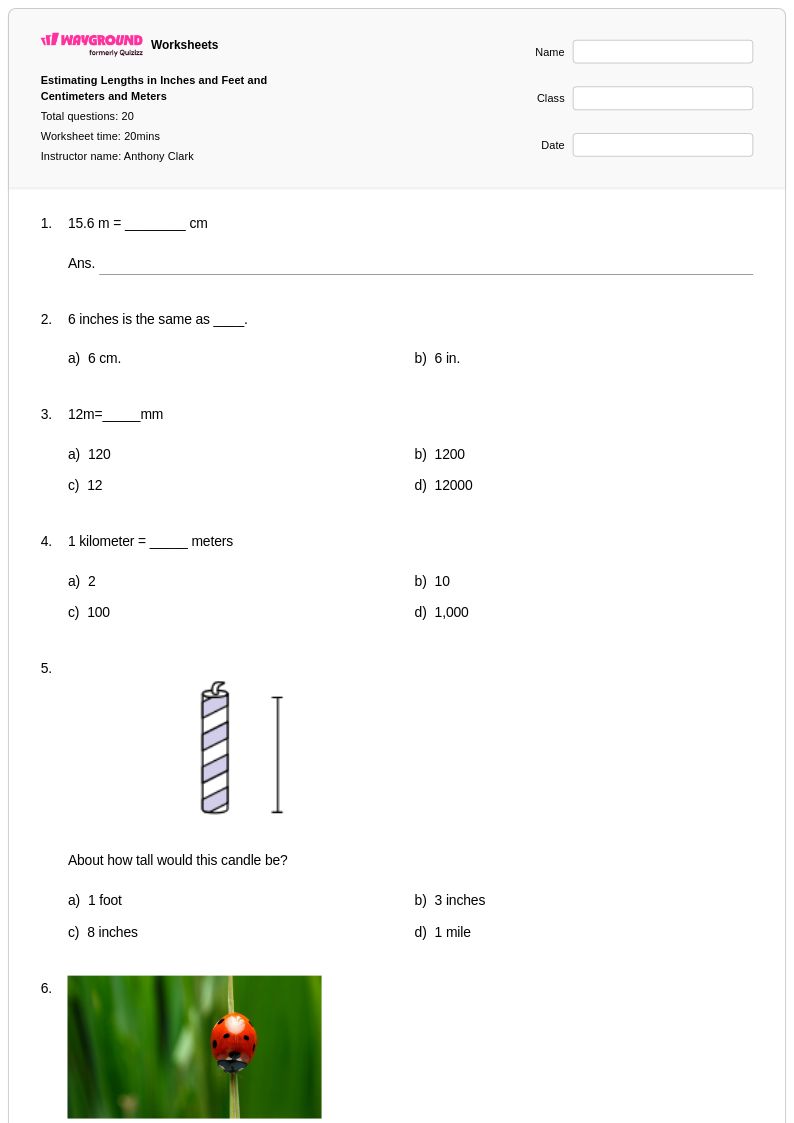
20 Q
2nd - Uni
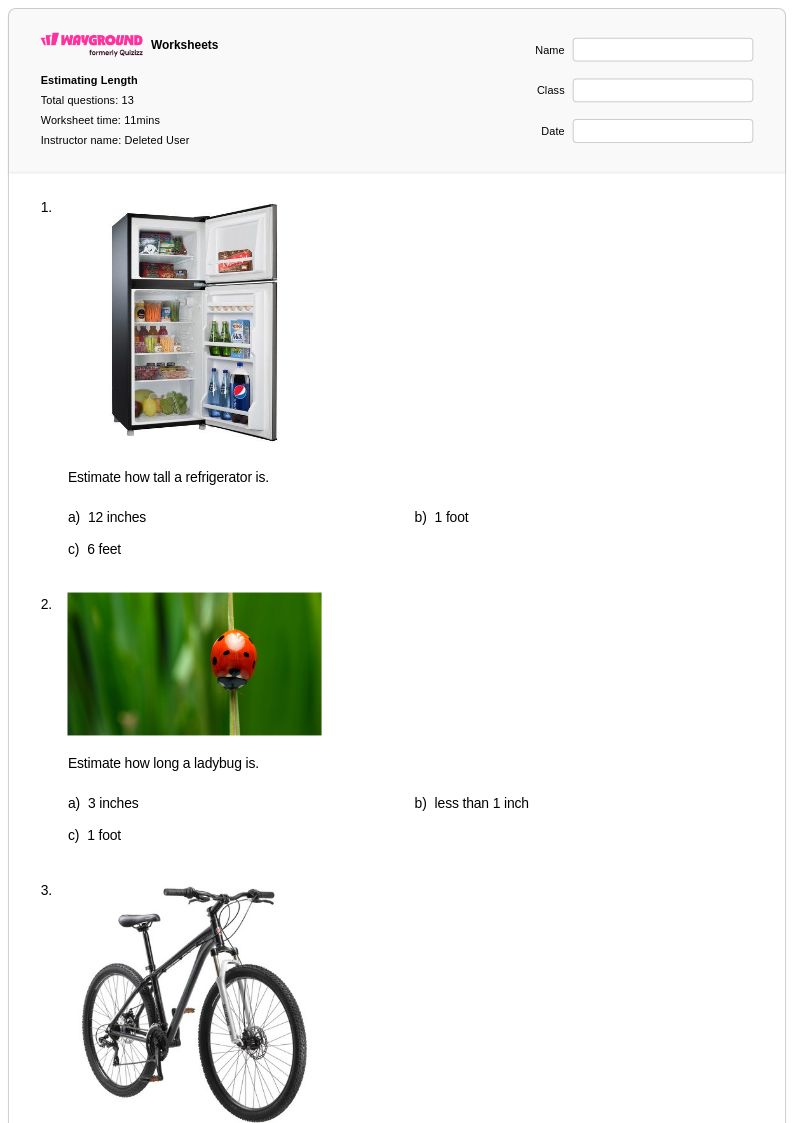
13 Q
3rd - 10th
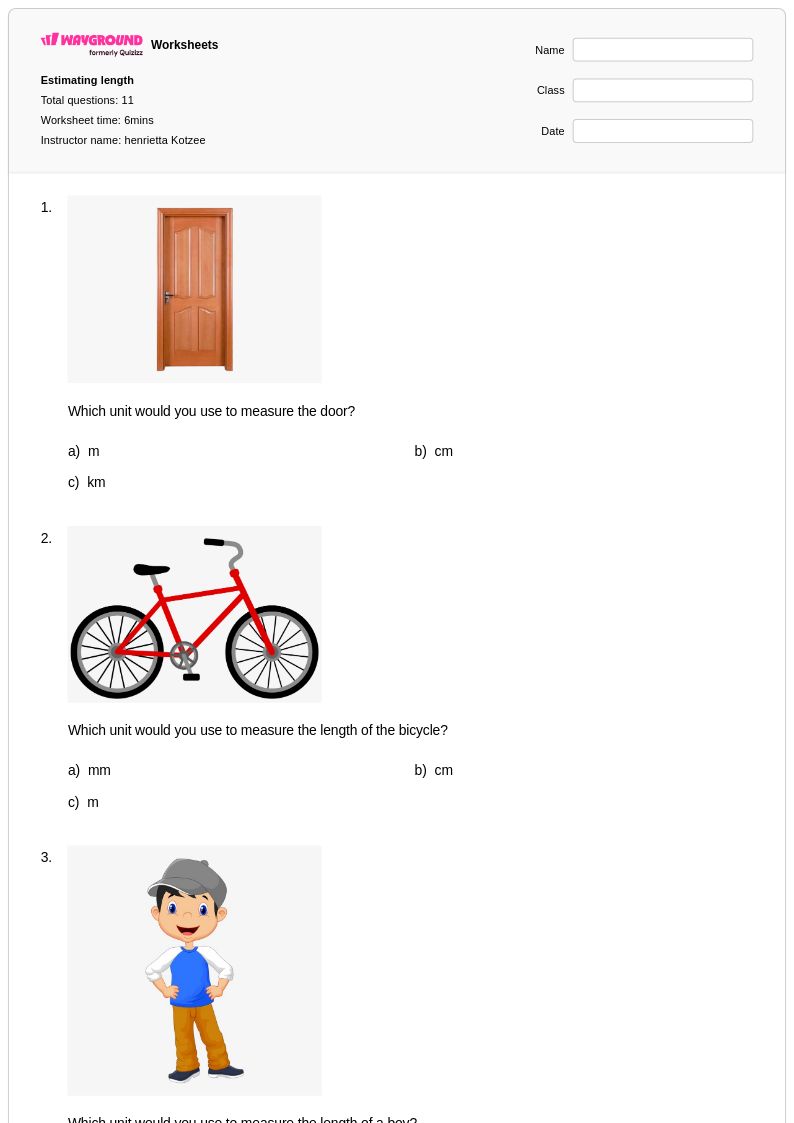
11 Q
4th
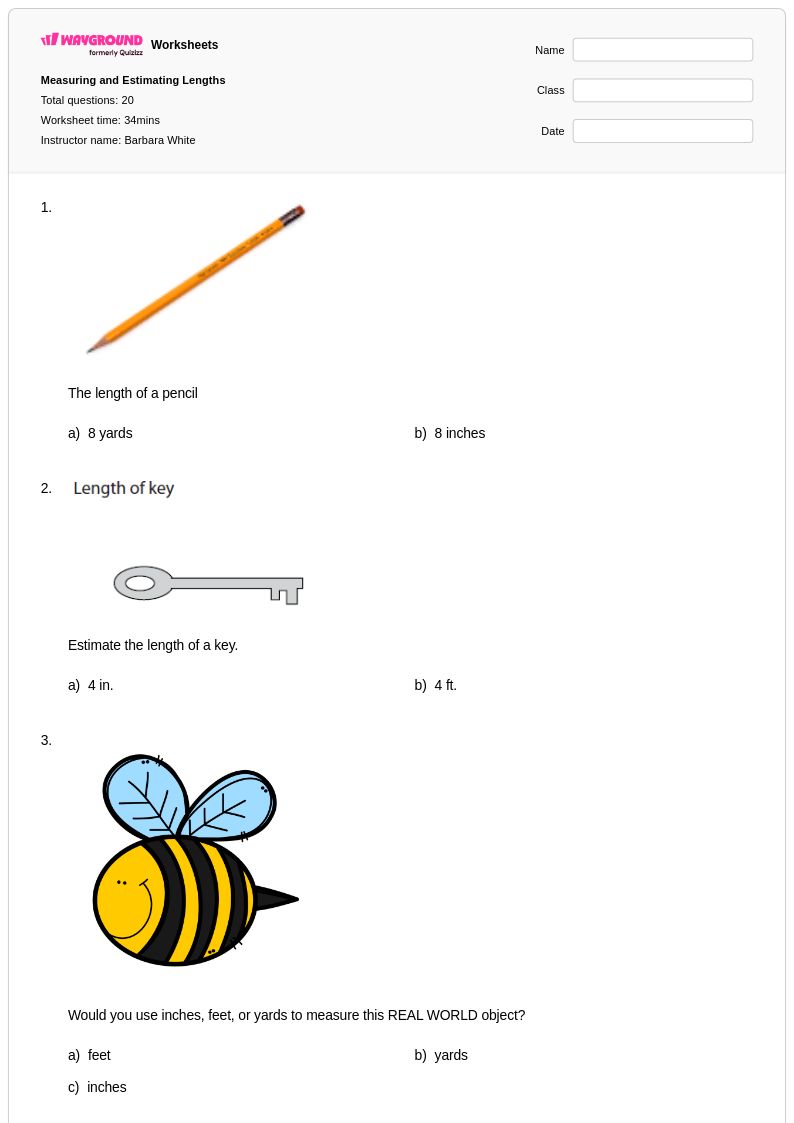
20 Q
4th
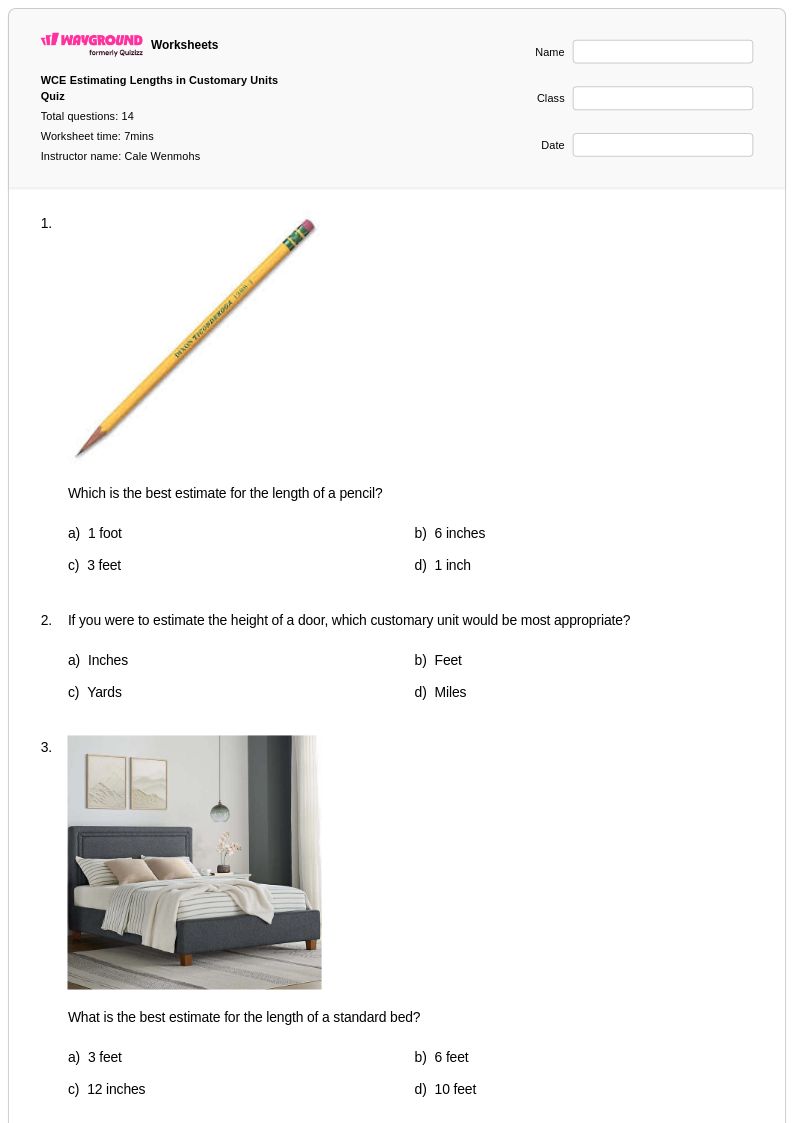
14 Q
4th
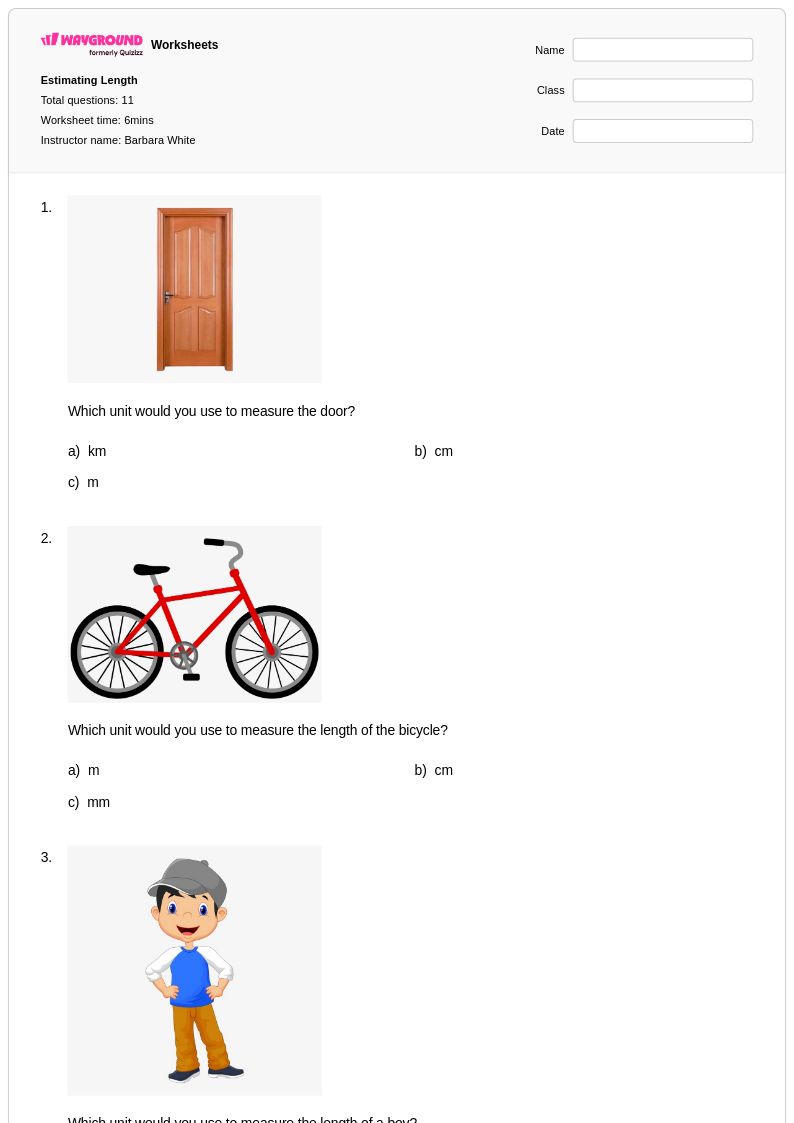
11 Q
4th
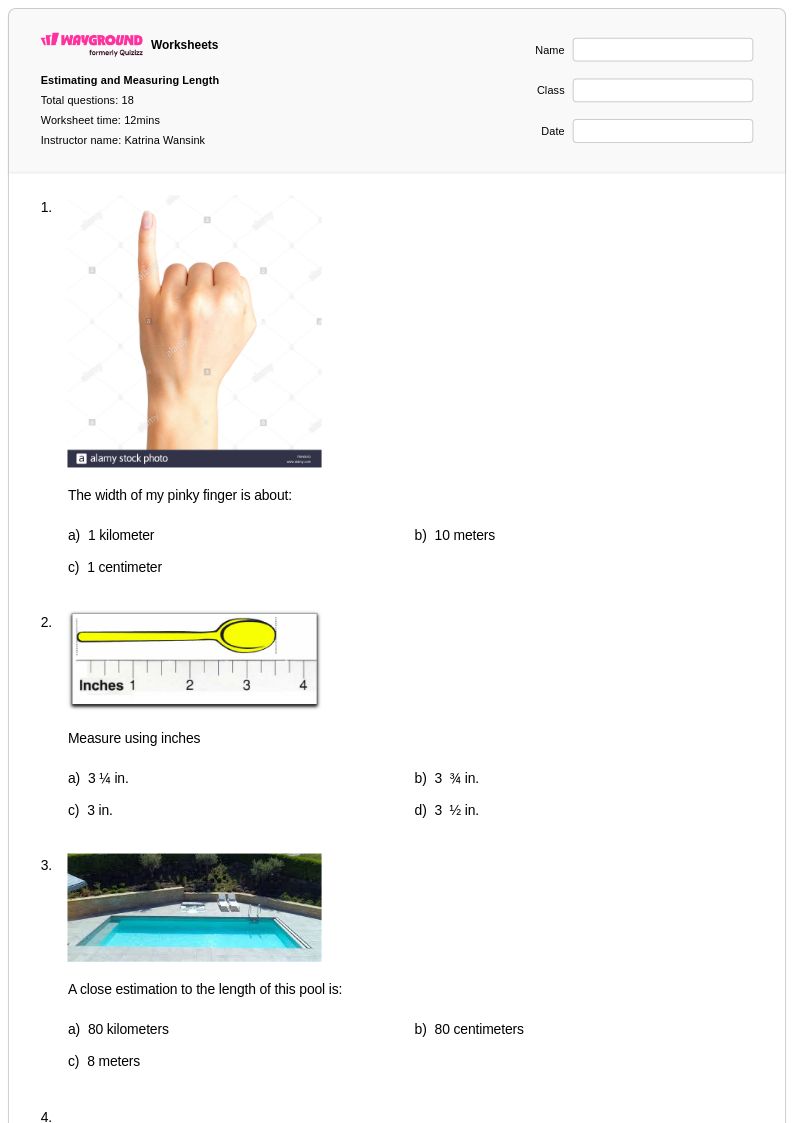
18 Q
4th
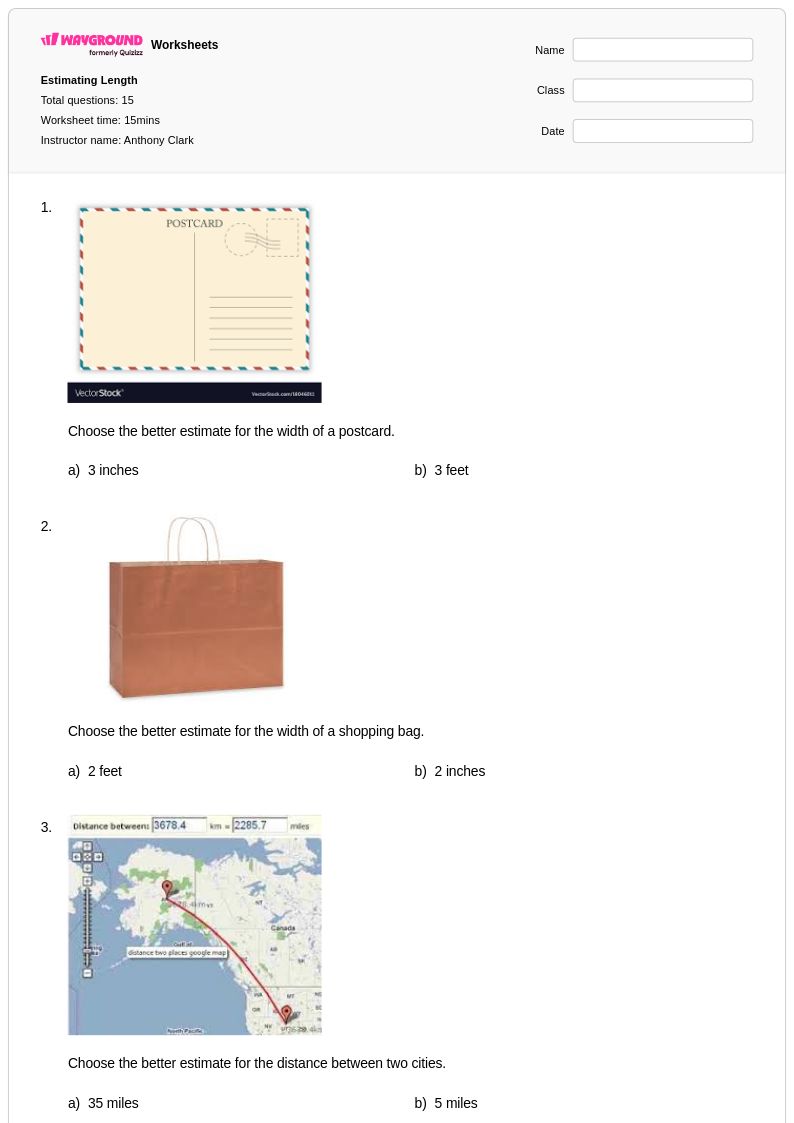
15 Q
4th - Uni
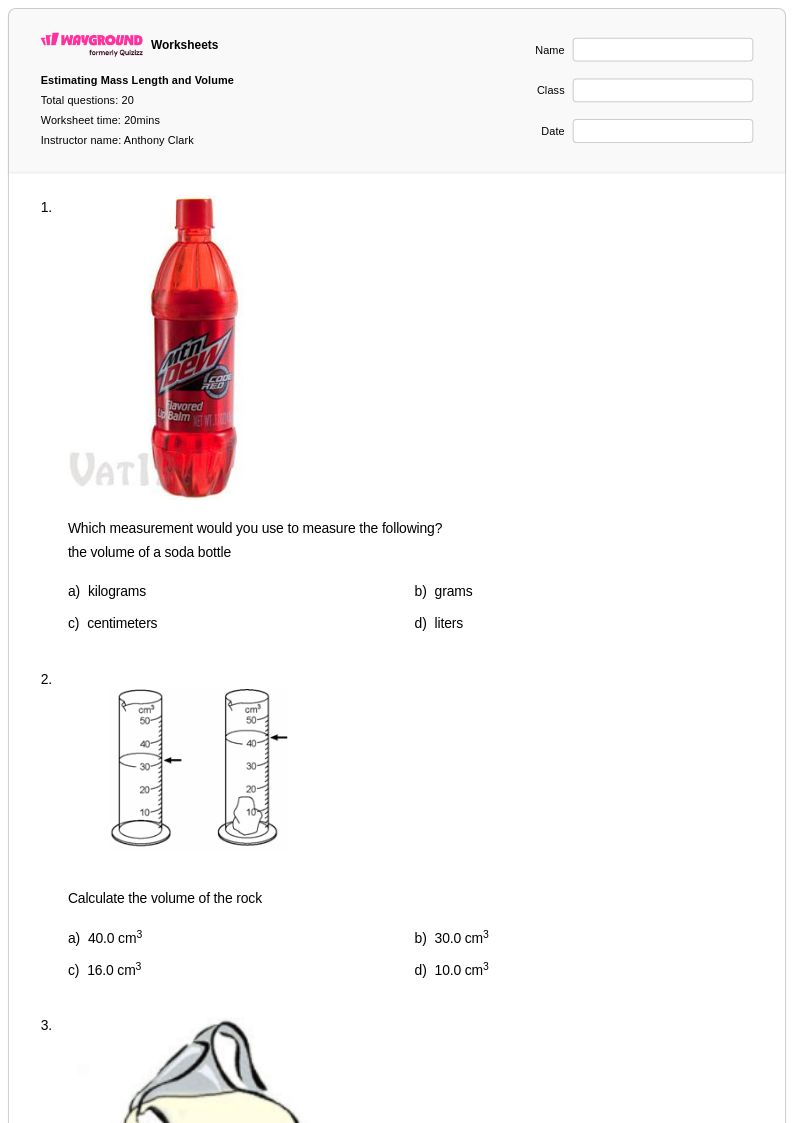
20 Q
3rd - Uni
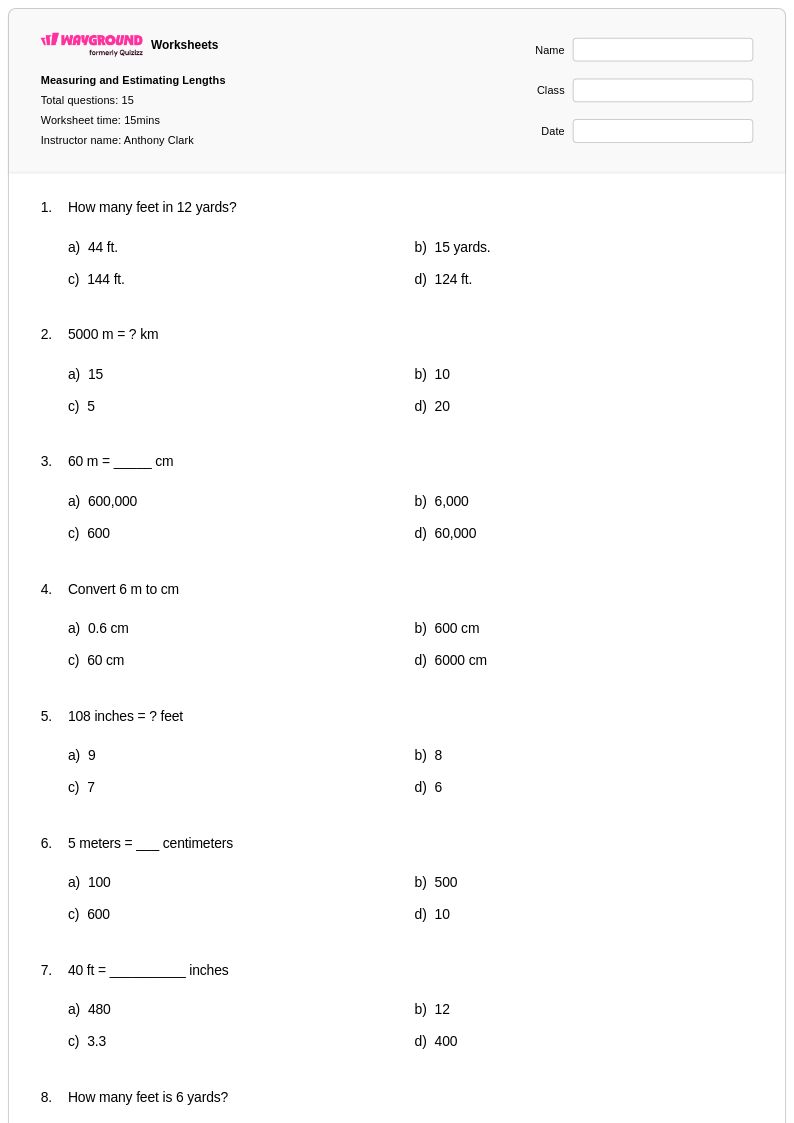
15 Q
2nd - Uni
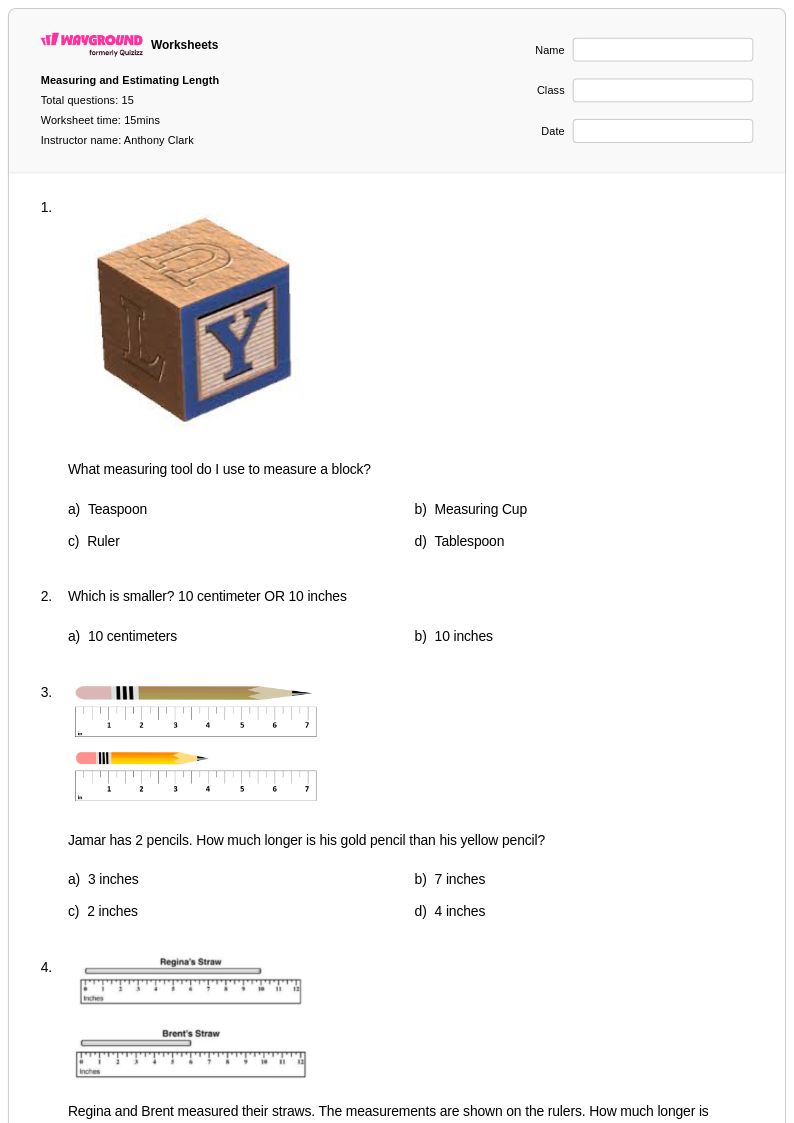
15 Q
2nd - Uni
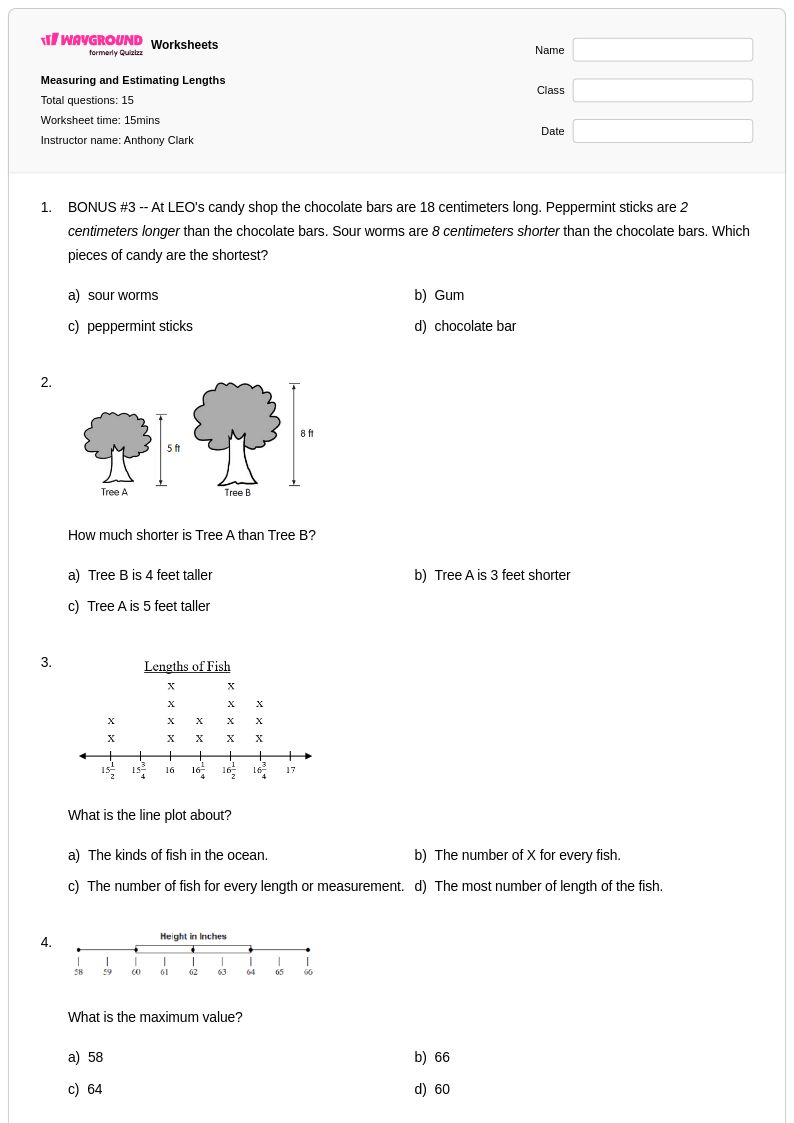
15 Q
2nd - Uni
Explore Other Subject Worksheets for class 4
Explore printable Estimating Length worksheets for Class 4
Estimating length worksheets for Class 4 students available through Wayground (formerly Quizizz) provide essential practice in developing spatial reasoning and measurement sense. These comprehensive resources help fourth-grade learners build critical skills in visual estimation, unit comparison, and benchmark understanding as they learn to approximate distances, heights, and dimensions without direct measurement tools. The worksheets feature varied practice problems that challenge students to estimate lengths using familiar objects as reference points, compare relative sizes, and make reasonable predictions about measurements in both metric and customary units. Each printable resource includes detailed answer keys that support independent learning and self-assessment, while the free pdf format ensures accessibility for classroom instruction, homework assignments, and skill reinforcement activities.
Wayground (formerly Quizizz) empowers educators with an extensive collection of teacher-created estimation and measurement resources, drawing from millions of professionally developed worksheets that align with Class 4 mathematics standards. The platform's robust search and filtering capabilities allow teachers to quickly locate materials that match specific curriculum requirements, student ability levels, and instructional objectives for length estimation concepts. Advanced differentiation tools enable customization of worksheet difficulty and content focus, supporting both remediation for struggling learners and enrichment opportunities for advanced students. Available in both printable pdf and interactive digital formats, these resources facilitate flexible lesson planning and provide teachers with versatile options for skill practice, formative assessment, and targeted intervention in measurement estimation competencies.
FAQs
How do I teach estimating length to fourth graders?
What exercises help Grade 4 students practice estimating length?
What mistakes do students make when estimating length?
How can I use these Grade 4 estimating length worksheets?
How does estimating length fit into the Grade 4 Common Core math progression?
How can I differentiate estimating length practice for a mixed-ability class?
What grade do students learn to estimate length?