Explore Wayground's free chemistry composition worksheets and printables that help students master chemical formulas, molecular structures, and compound analysis through engaging practice problems with complete answer keys.
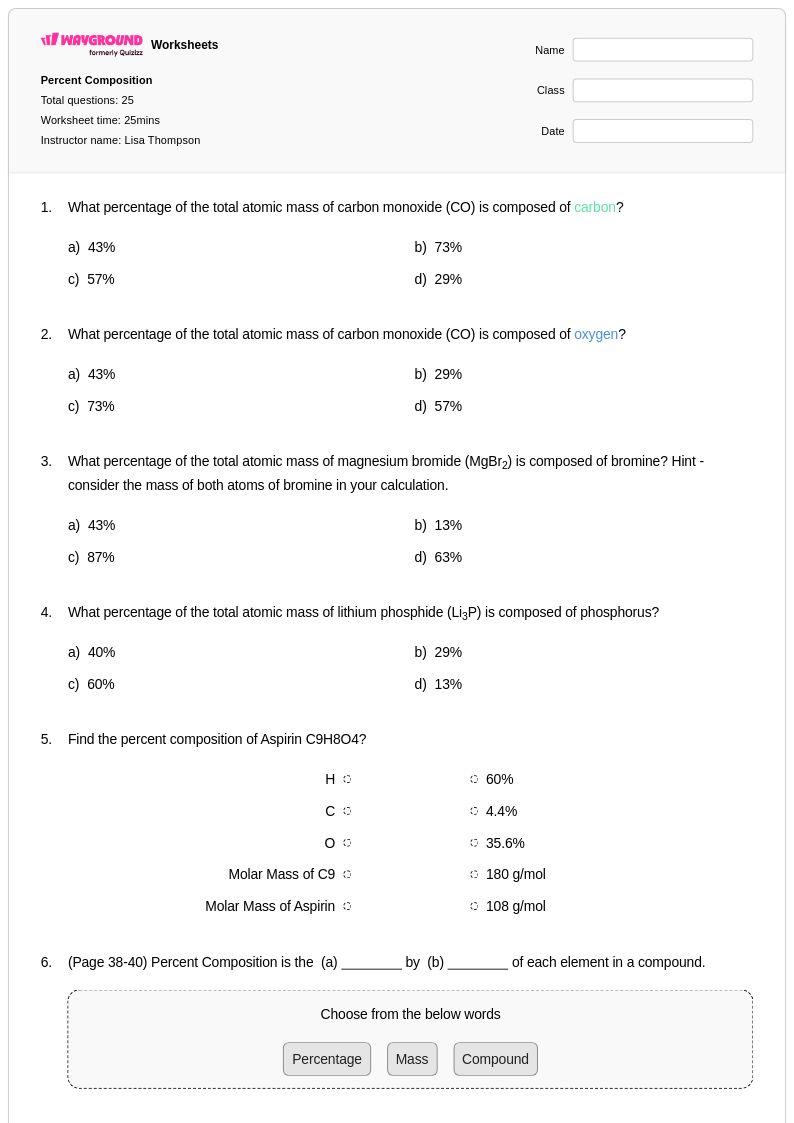
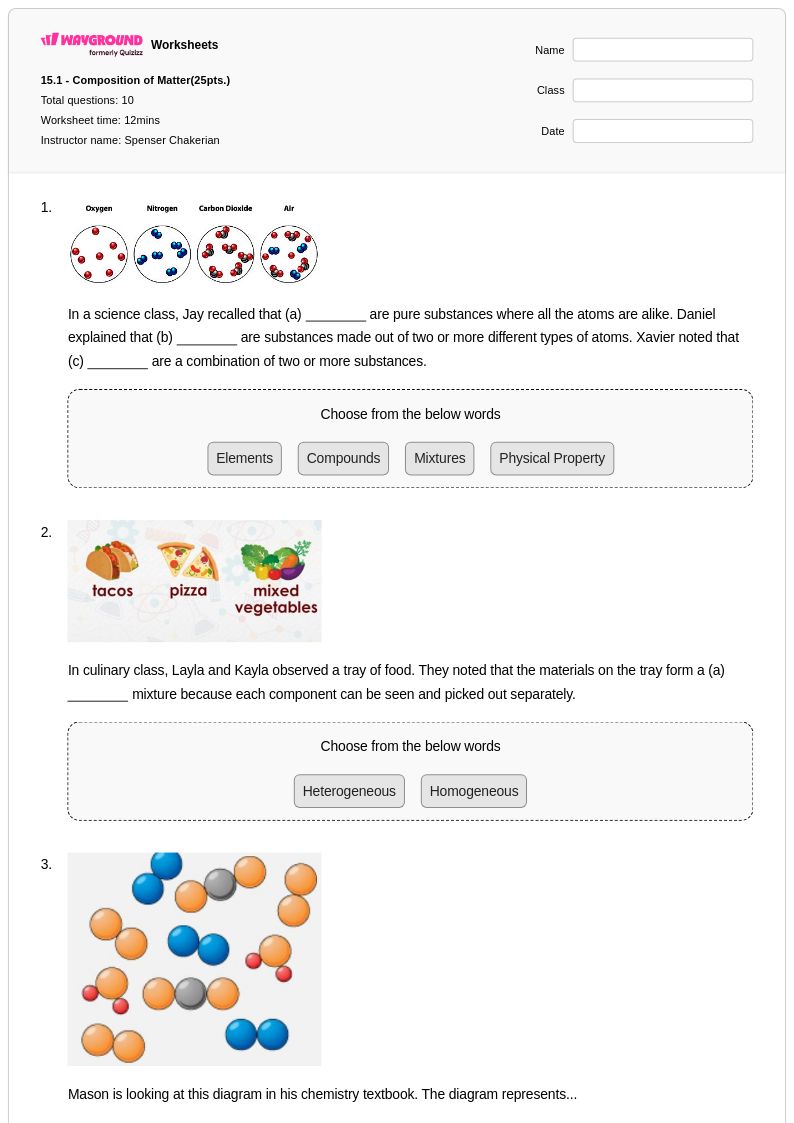
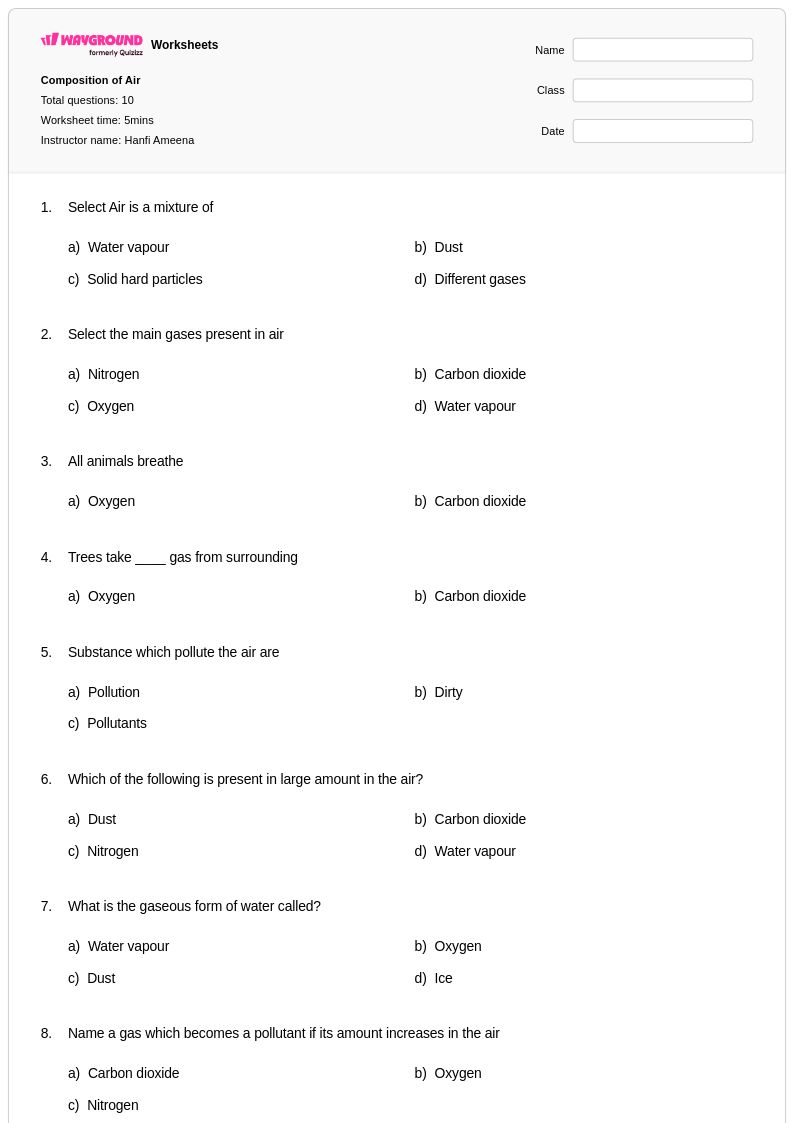
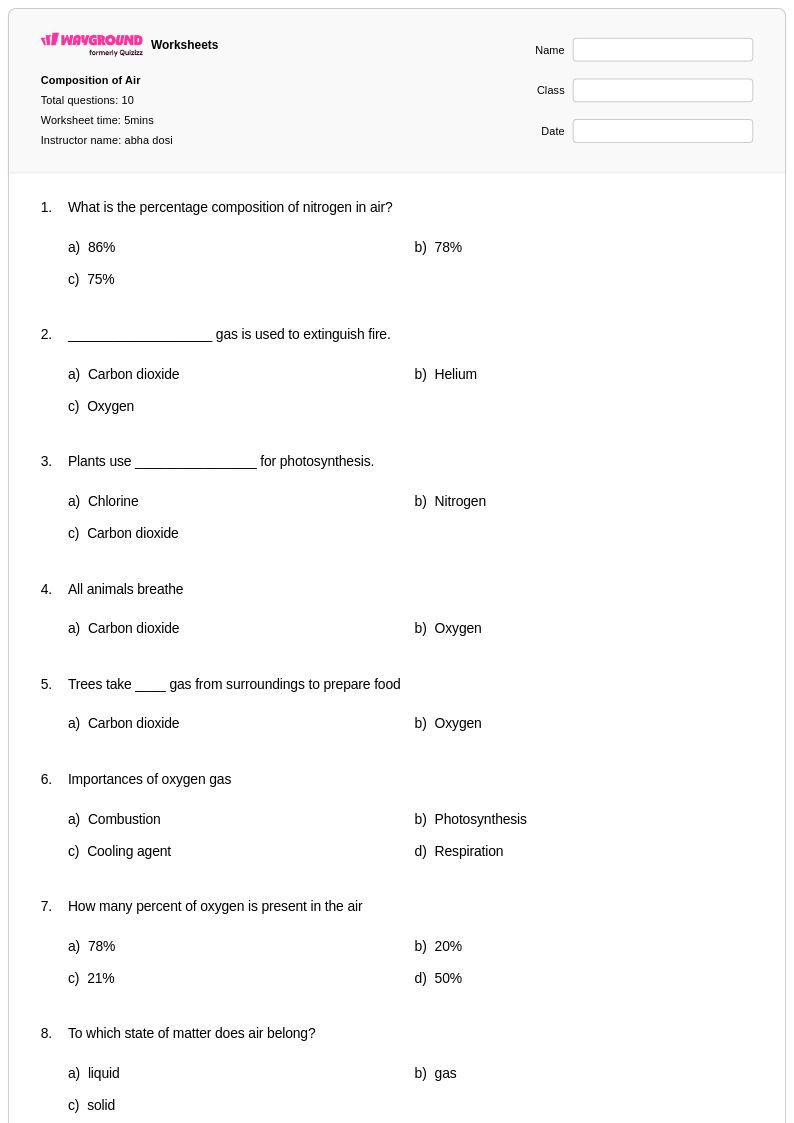
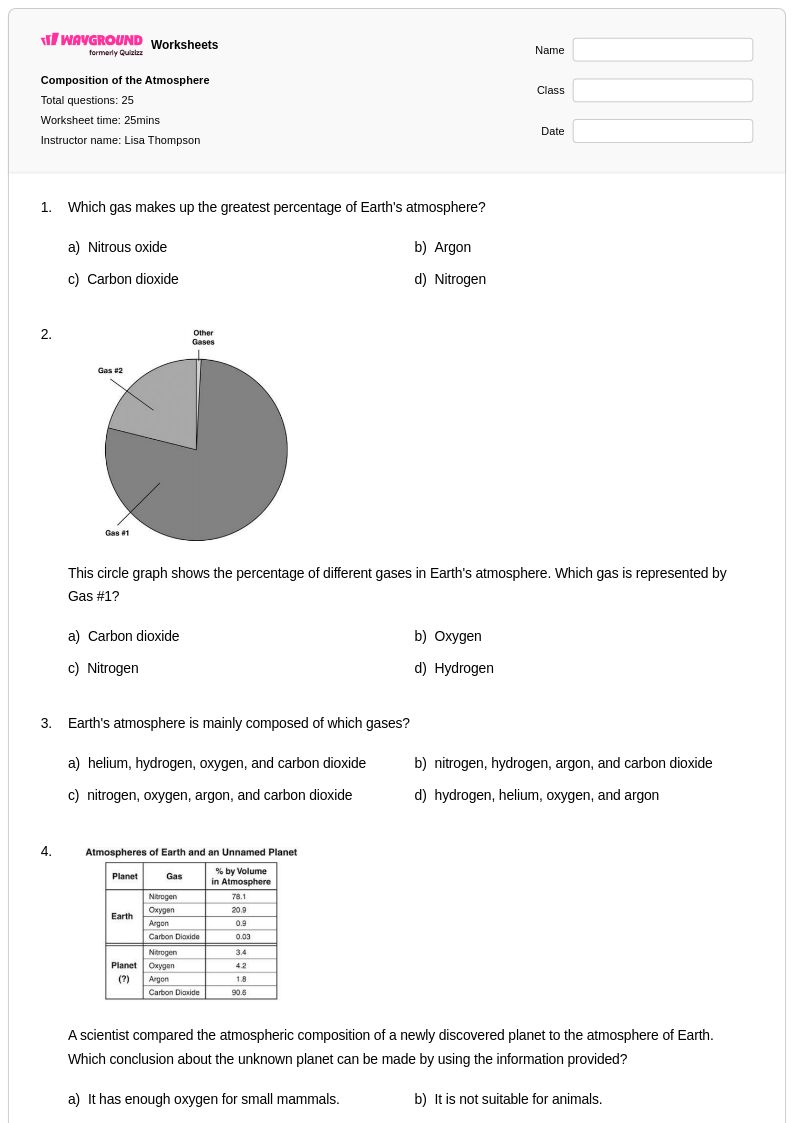
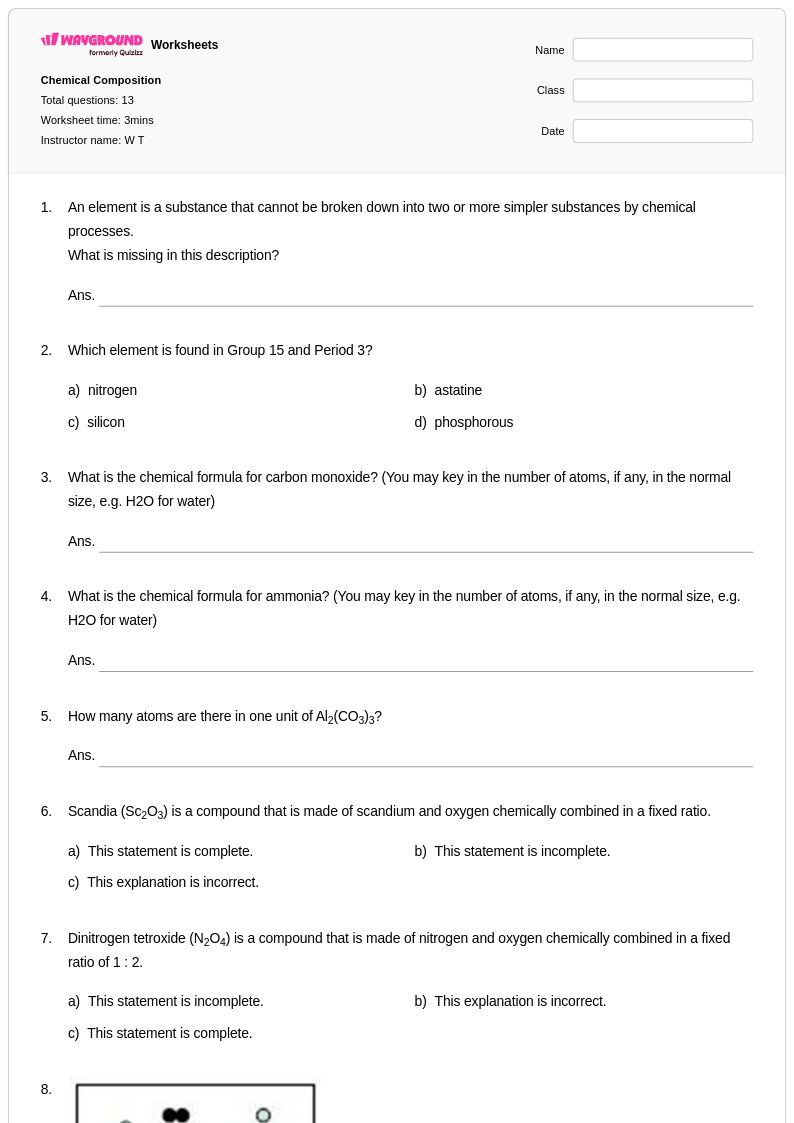
Composition worksheets available through Wayground (formerly Quizizz) provide comprehensive coverage of how matter is structured and organized at the molecular and atomic levels in chemistry. These educational resources strengthen students' understanding of chemical formulas, molecular structures, percent composition calculations, and empirical versus molecular formula determinations. The worksheets feature carefully designed practice problems that guide learners through complex composition analysis, including mass percent calculations, determining chemical formulas from experimental data, and understanding stoichiometric relationships. Each worksheet collection includes detailed answer keys and step-by-step solution guides, available as free printables in convenient pdf formats that support both classroom instruction and independent study.
Wayground (formerly Quizizz) supports chemistry educators with millions of teacher-created composition worksheets that can be easily searched and filtered by specific learning objectives and difficulty levels. The platform's robust standards alignment ensures that worksheet collections match curriculum requirements, while advanced differentiation tools allow teachers to customize content for diverse learning needs and skill levels. These resources are available in both printable pdf formats and interactive digital versions, providing flexibility for various teaching environments and student preferences. Teachers can efficiently plan targeted instruction, create remediation materials for struggling learners, develop enrichment activities for advanced students, and provide extensive skill practice opportunities that build mastery in chemical composition analysis and related mathematical applications.
FAQs
How do I teach percent composition in chemistry?
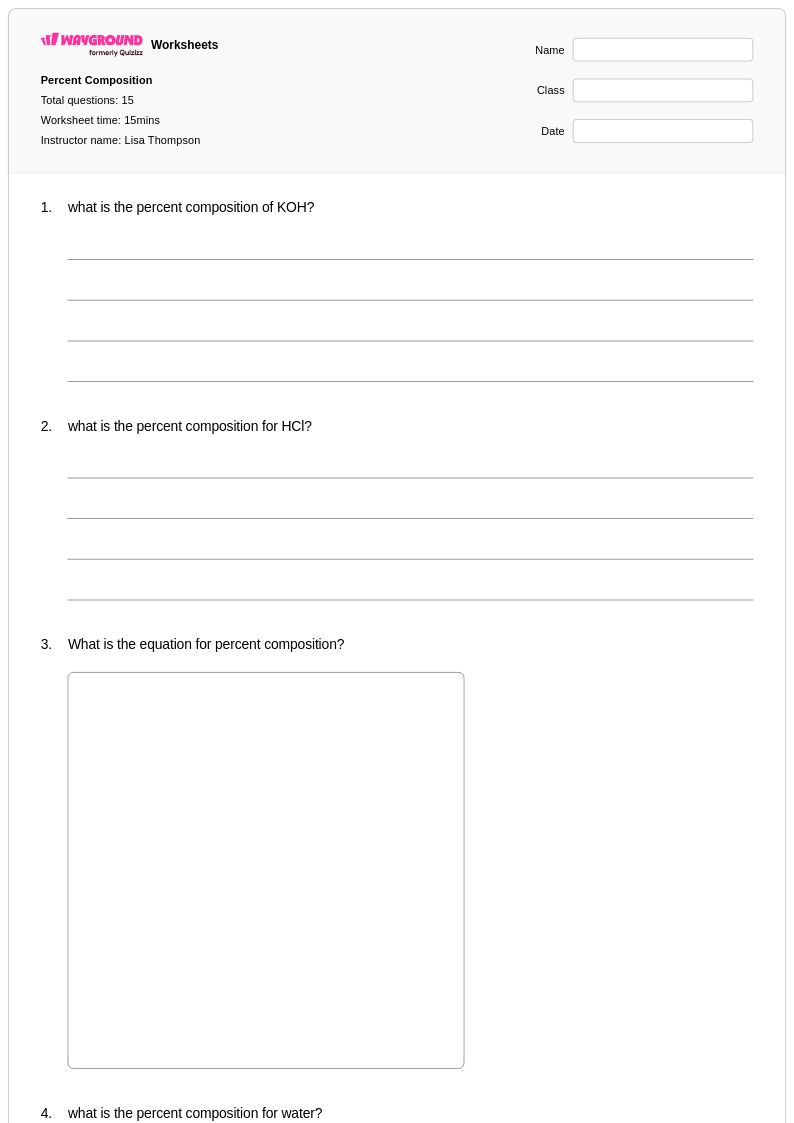
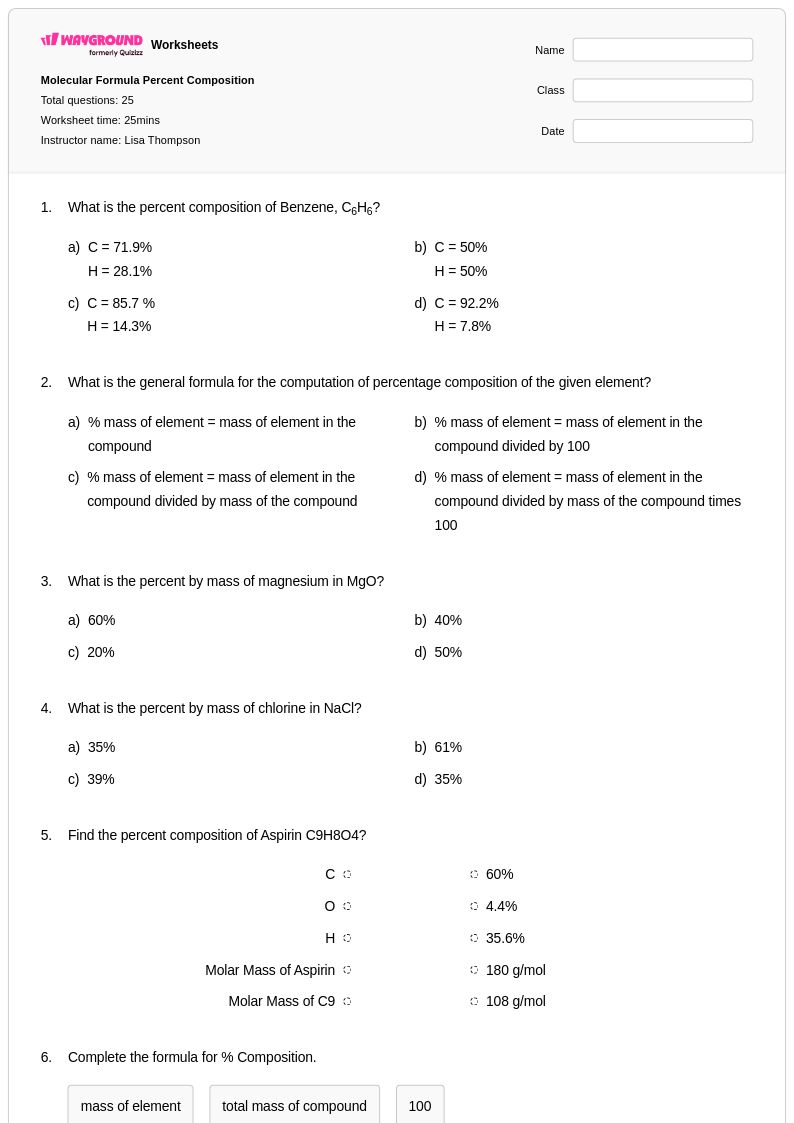
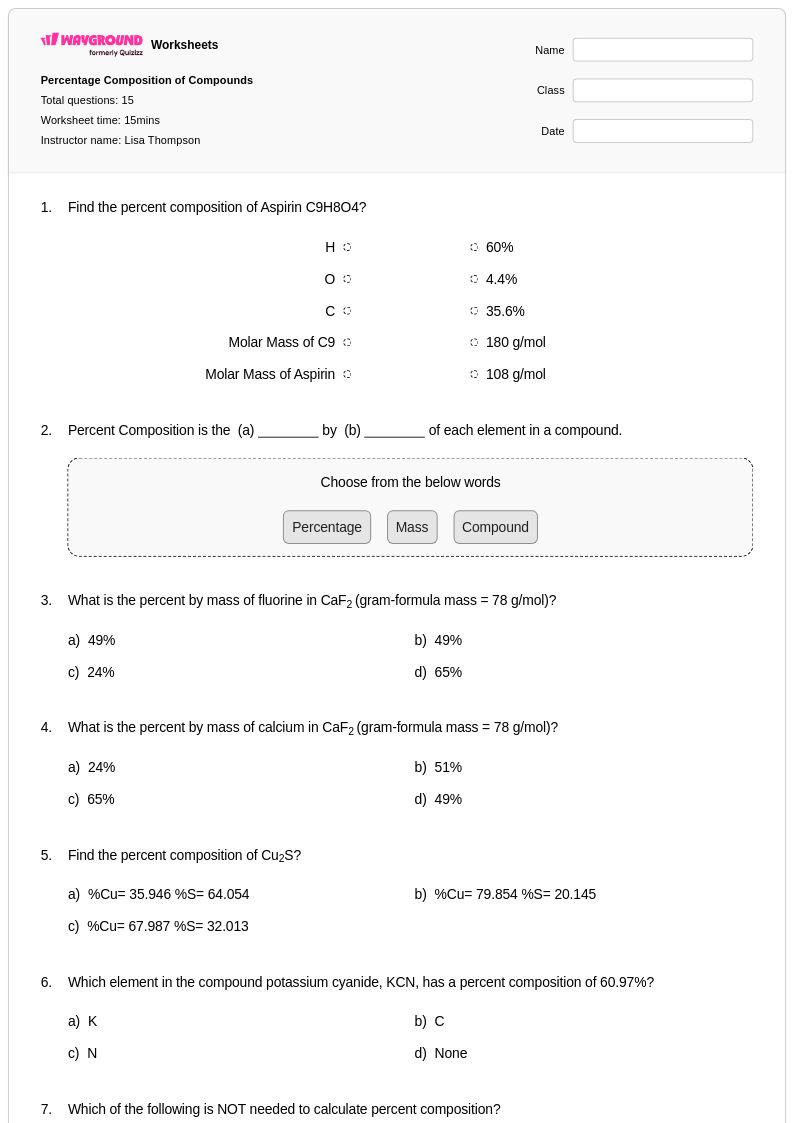
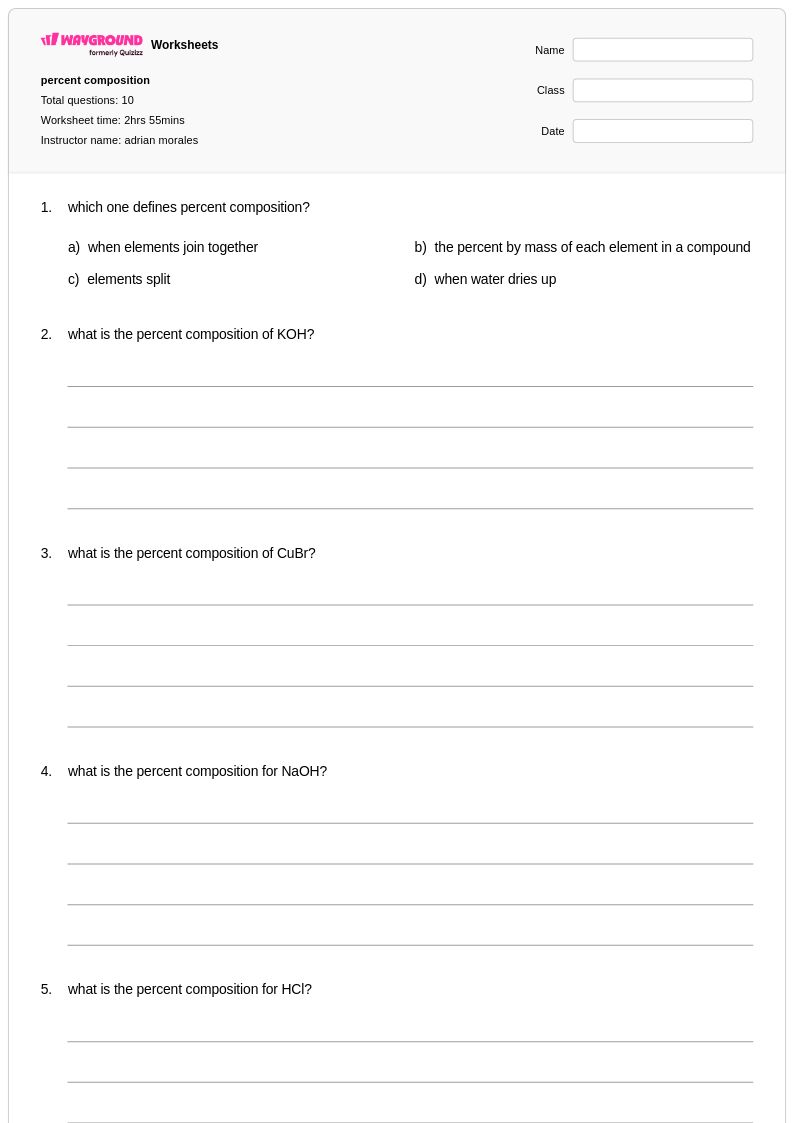
Start by grounding students in the relationship between molar mass and the mass contribution of each element in a compound. Walk through the percent composition formula (mass of element divided by molar mass of compound, multiplied by 100) using familiar compounds like water or sodium chloride before moving to more complex molecules. Reinforce the concept by having students verify that all percentages in a compound sum to 100%, which builds both procedural fluency and conceptual understanding.
What exercises help students practice empirical and molecular formula determination?
Effective practice involves multi-step problems where students are given percent composition data or experimental mass data and must work backward to determine the empirical formula, then use a given molar mass to find the molecular formula. Worksheets that scaffold this process, starting with simpler whole-number ratios before introducing decimal ratios that require rounding to the nearest whole number, help students build confidence before tackling more complex problems. Including varied problem types, such as combustion analysis data and compound identification tasks, ensures students develop flexible problem-solving skills.
What mistakes do students commonly make when calculating percent composition?
The most frequent error is using the atomic mass of a single atom instead of the total mass contribution of all atoms of that element in the formula unit. For example, in Fe2O3, students often use 55.85 g/mol for iron rather than 111.7 g/mol for two iron atoms. Students also commonly round intermediate values too early, which compounds into significant errors in the final percentage. Requiring students to show each step of their work, including the full molar mass calculation before dividing, helps surface and correct these errors early.
How do I help students connect percent composition to stoichiometry?
Percent composition is most meaningfully taught as a bridge concept between chemical formulas and stoichiometric calculations. Help students see that the mass percentages in a compound directly reflect the fixed ratio in which elements combine, which is the same ratio that governs how much of each element is consumed or produced in a reaction. Linking percent composition problems to real-world applications, such as determining the iron content in an ore sample or the nitrogen content in a fertilizer, makes the stoichiometric relevance concrete and memorable.
How can I use composition worksheets to support students with different skill levels?
Composition worksheets on Wayground can be assigned digitally, which allows teachers to apply student-level accommodations such as read aloud for students who need auditory support, reduced answer choices to lower cognitive load, and extended time settings for students who need additional processing time. These accommodations can be applied to individual students without other students being notified, so the class experience remains consistent. For advanced students, teachers can filter for higher-difficulty problems involving combustion analysis or multi-compound systems to provide appropriate challenge.
How do I use Wayground's composition worksheets in my classroom?
Wayground's composition worksheets are available as free printable PDFs for traditional classroom use and as interactive digital versions for technology-integrated environments, including the option to host them as a quiz directly on Wayground. Each worksheet includes complete answer keys and step-by-step solution guides, making them practical for both direct instruction and independent student practice. Teachers can search and filter worksheets by specific learning objectives and difficulty levels to match the right resource to each lesson or remediation need.