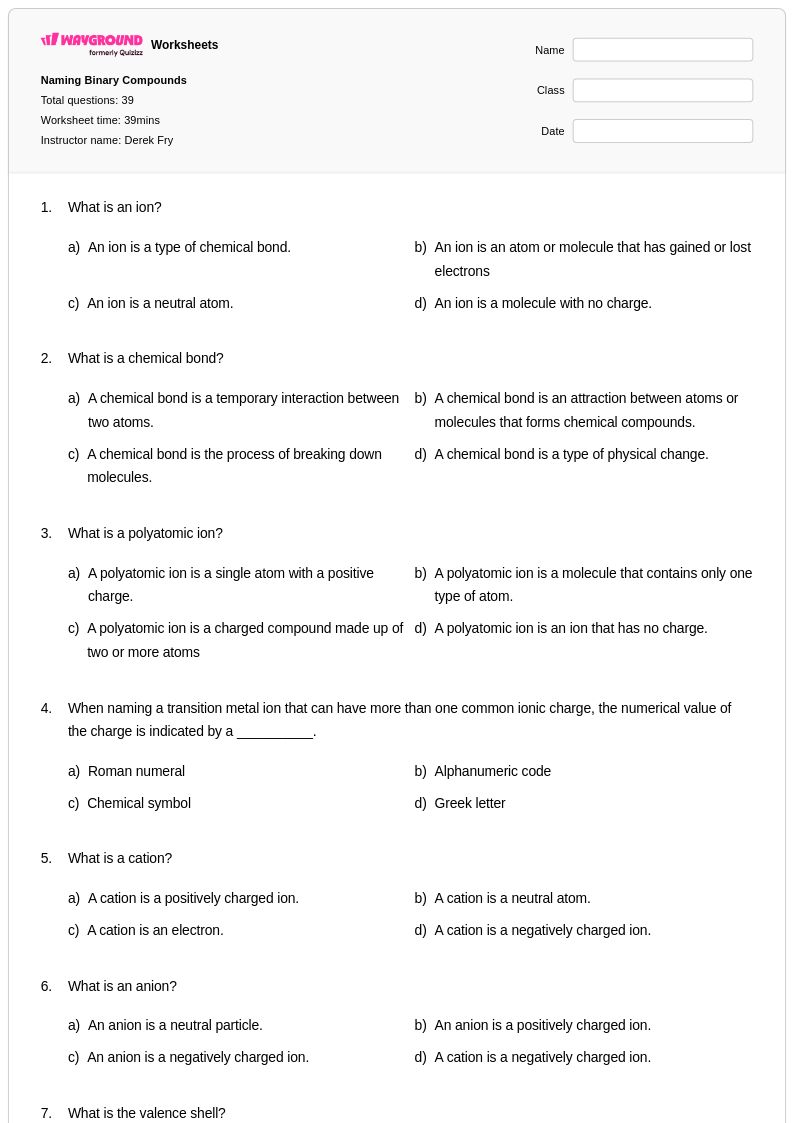
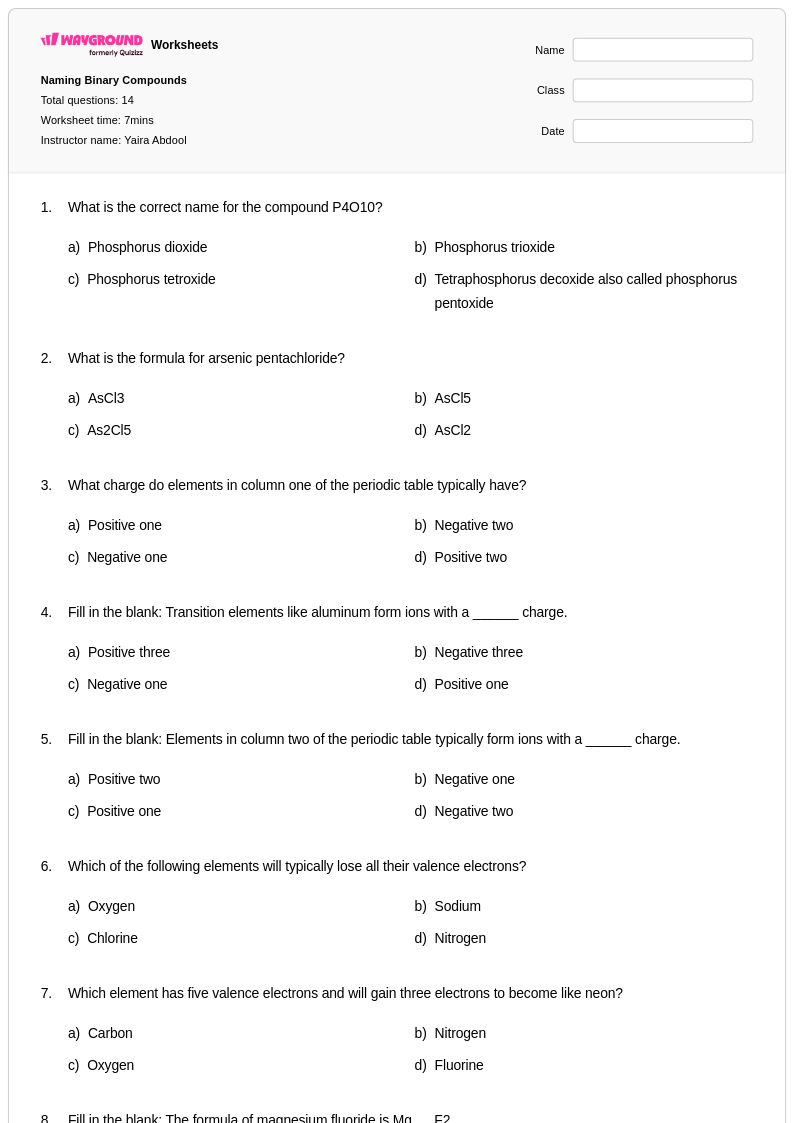
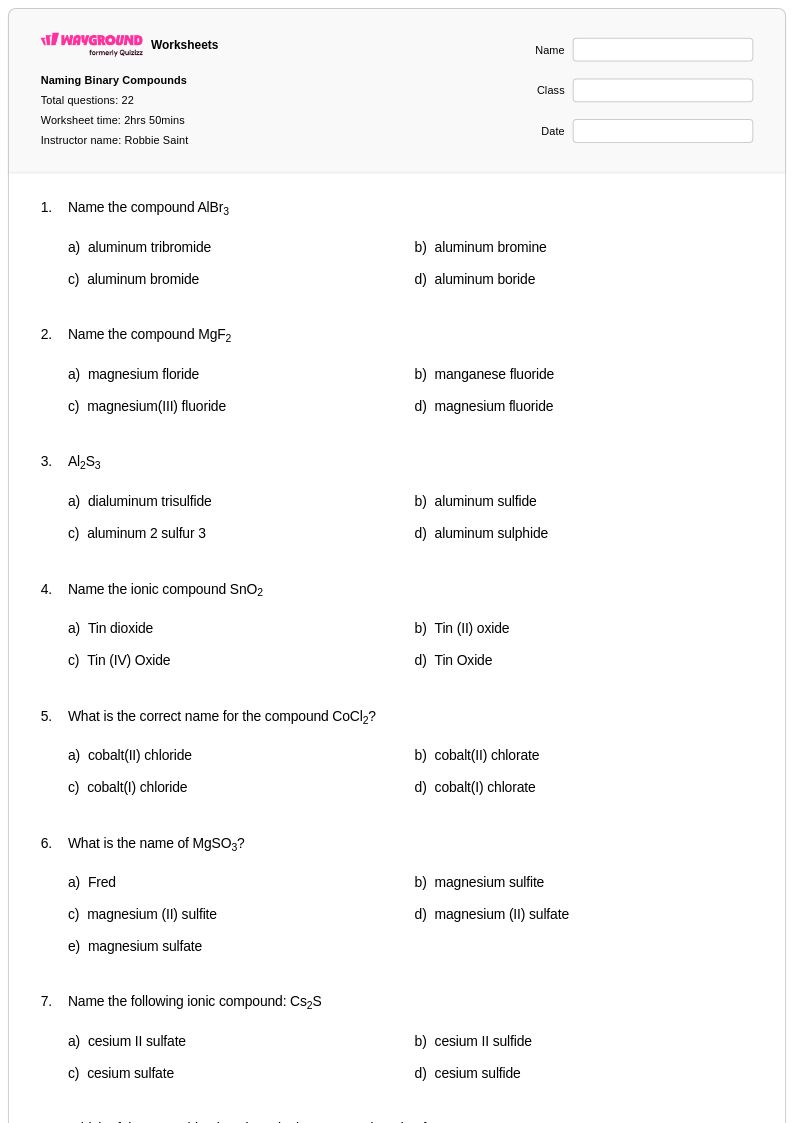
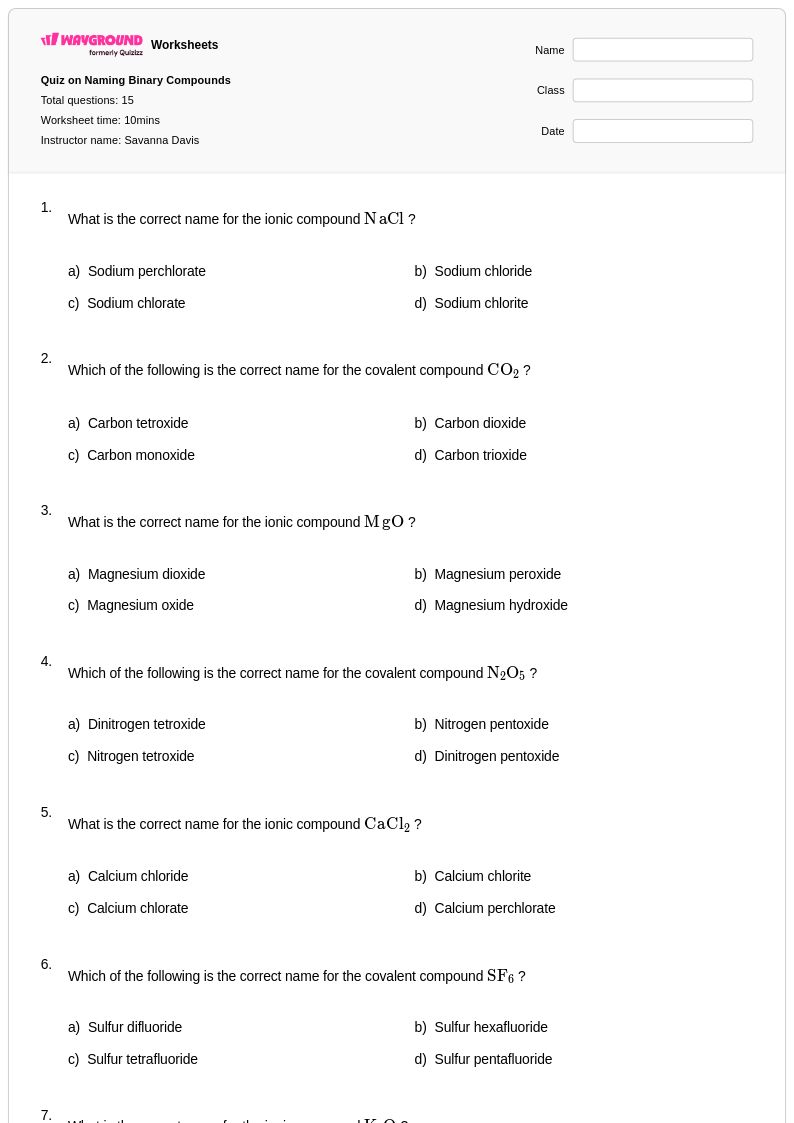
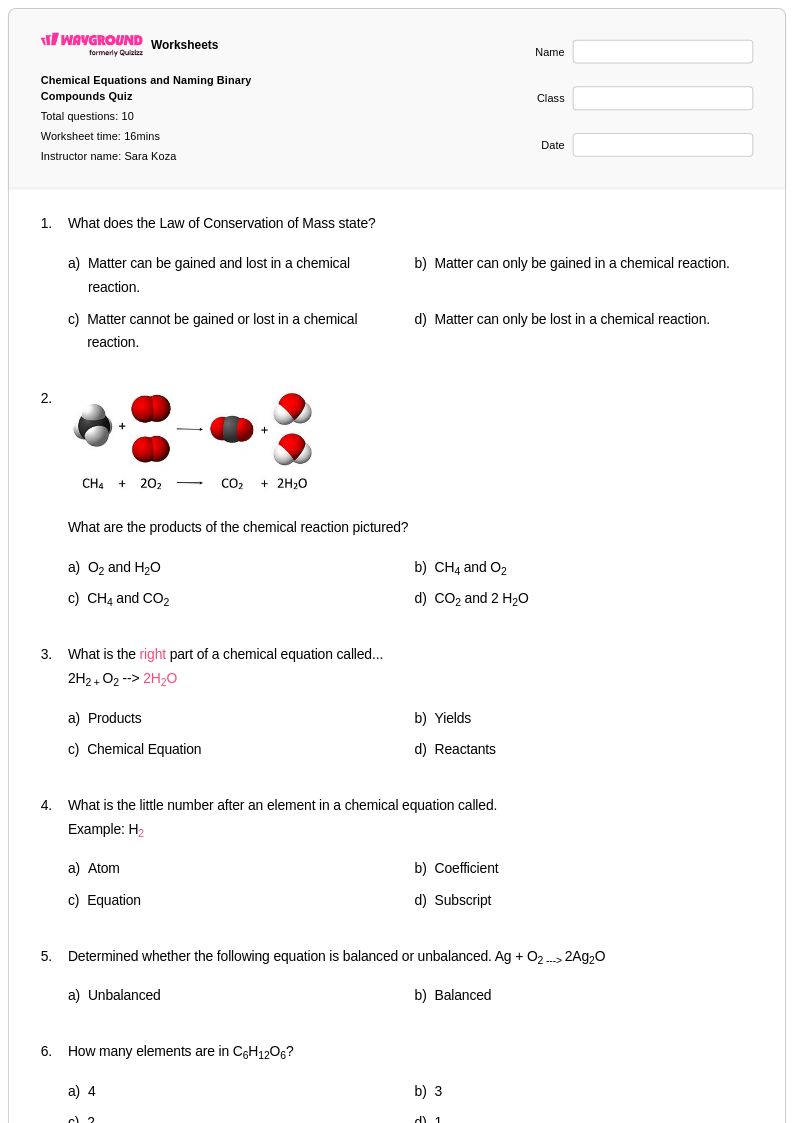
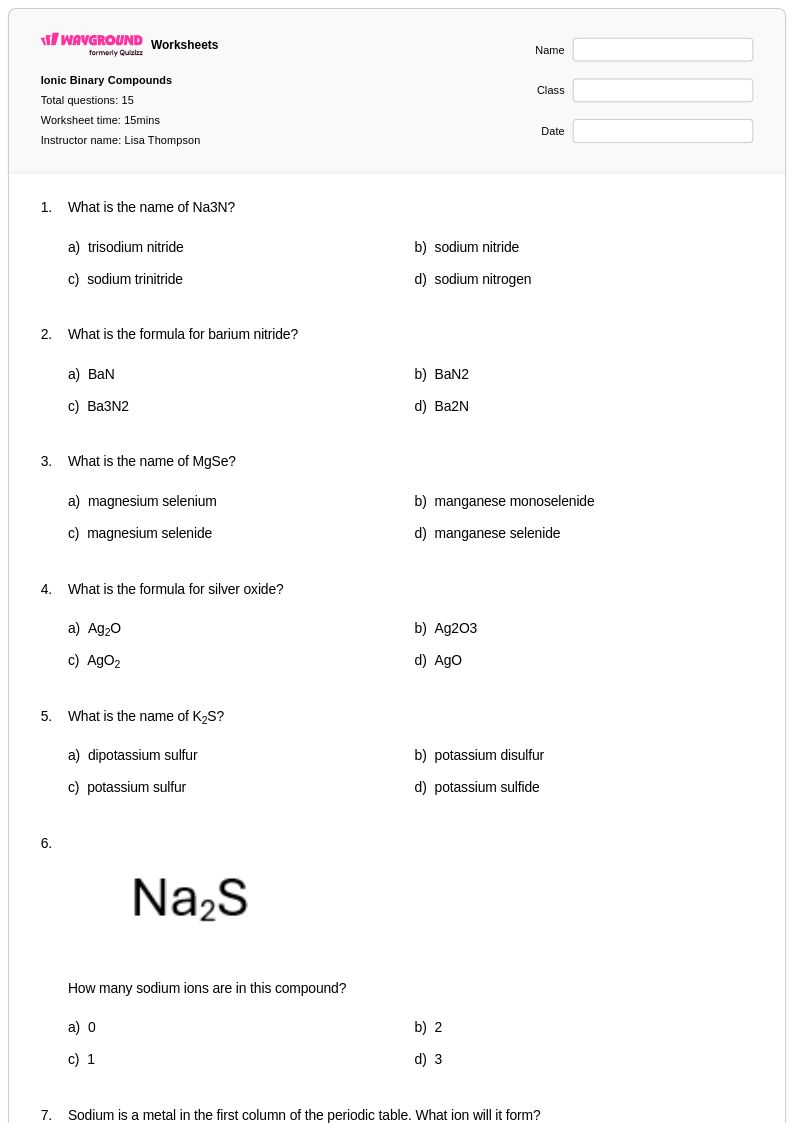
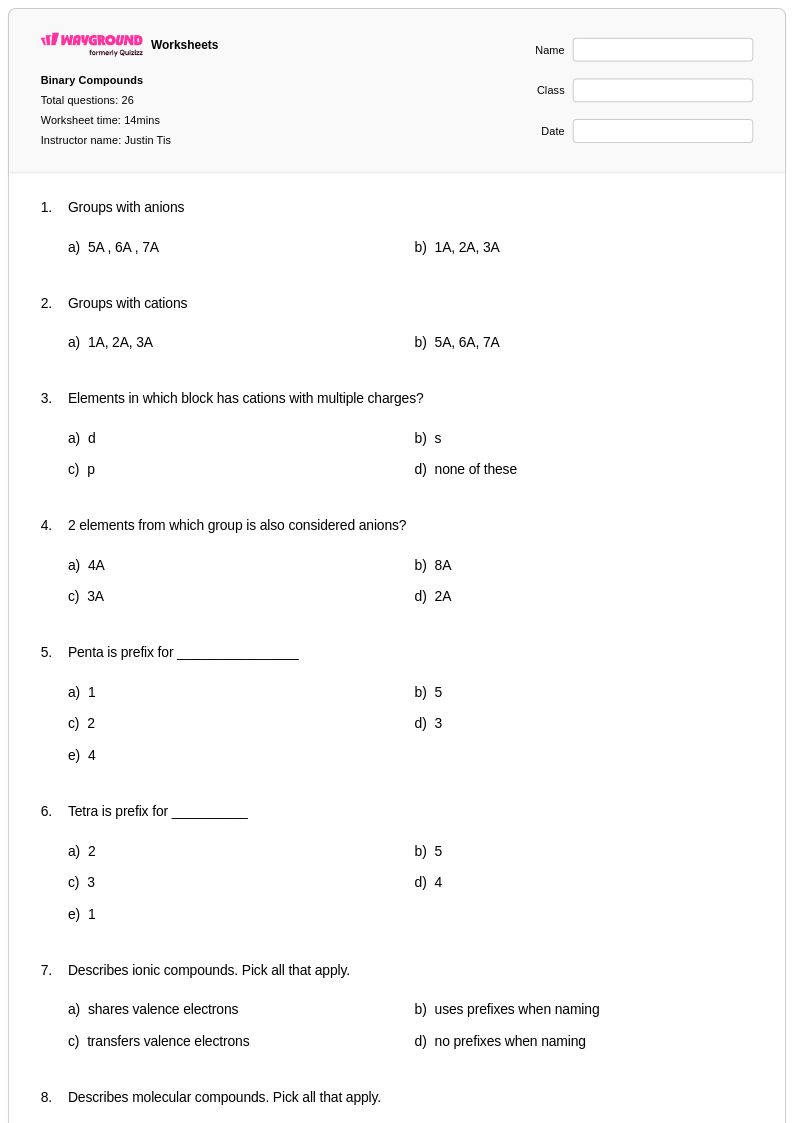
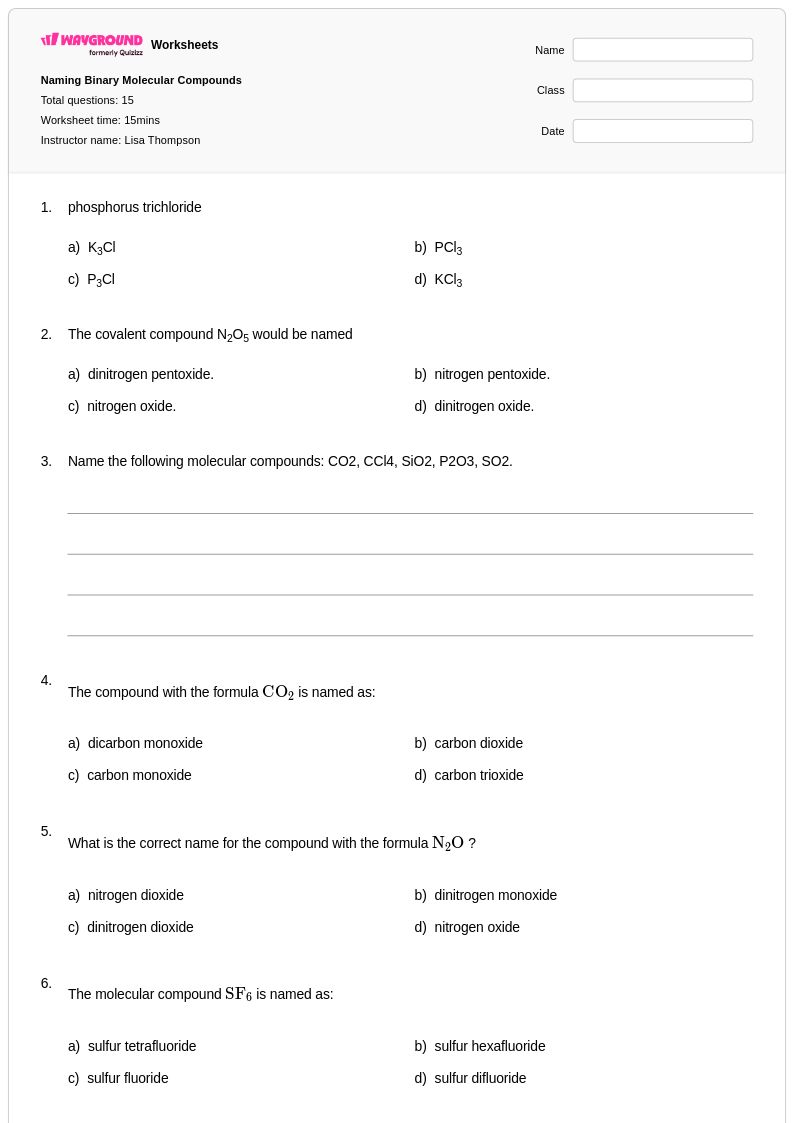
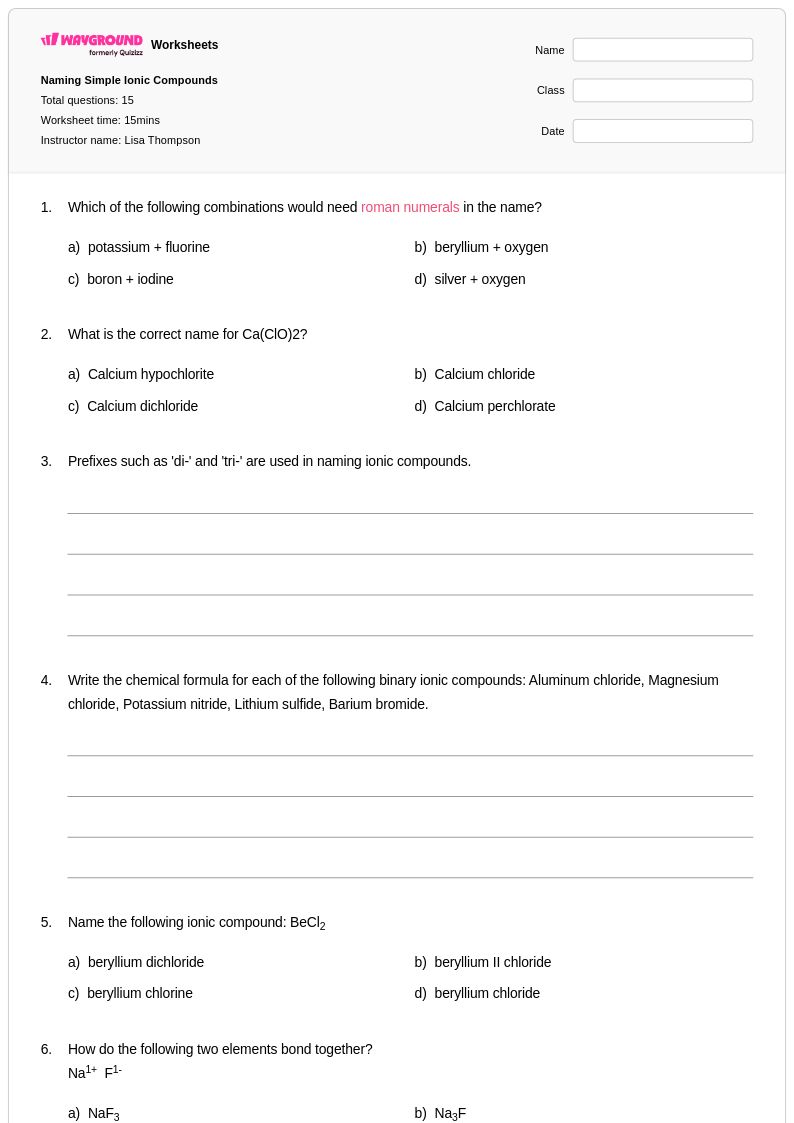
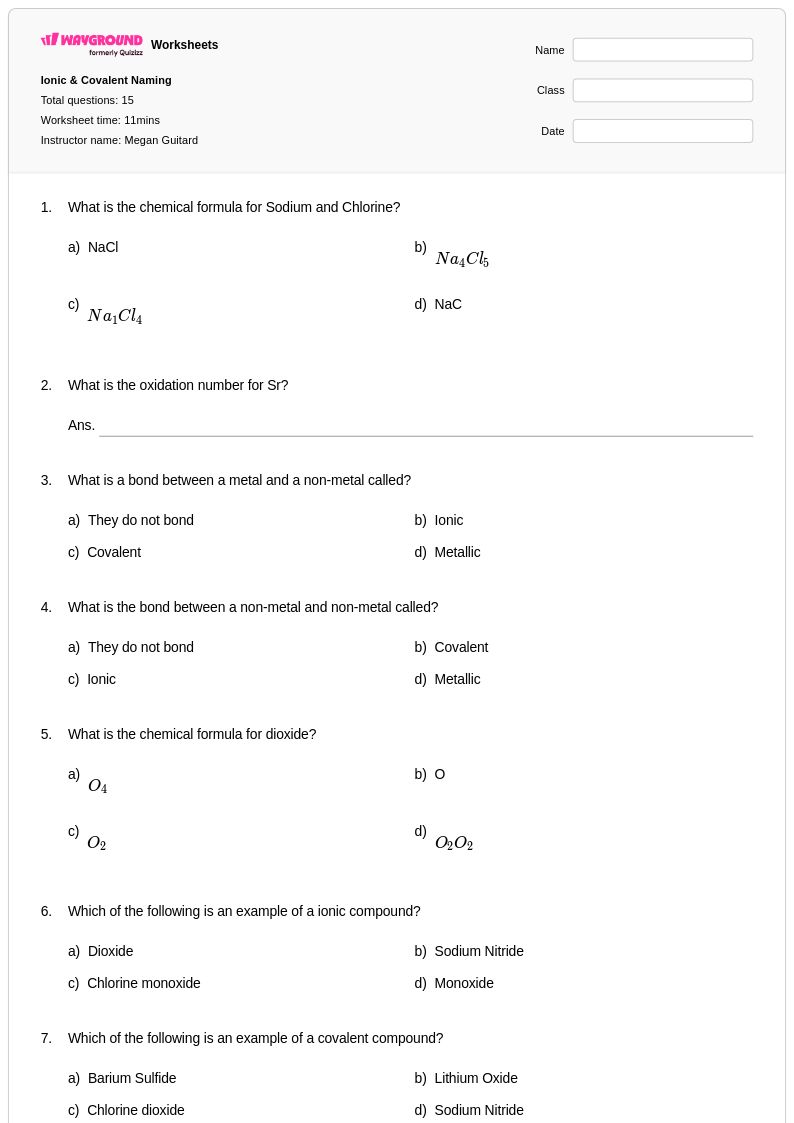
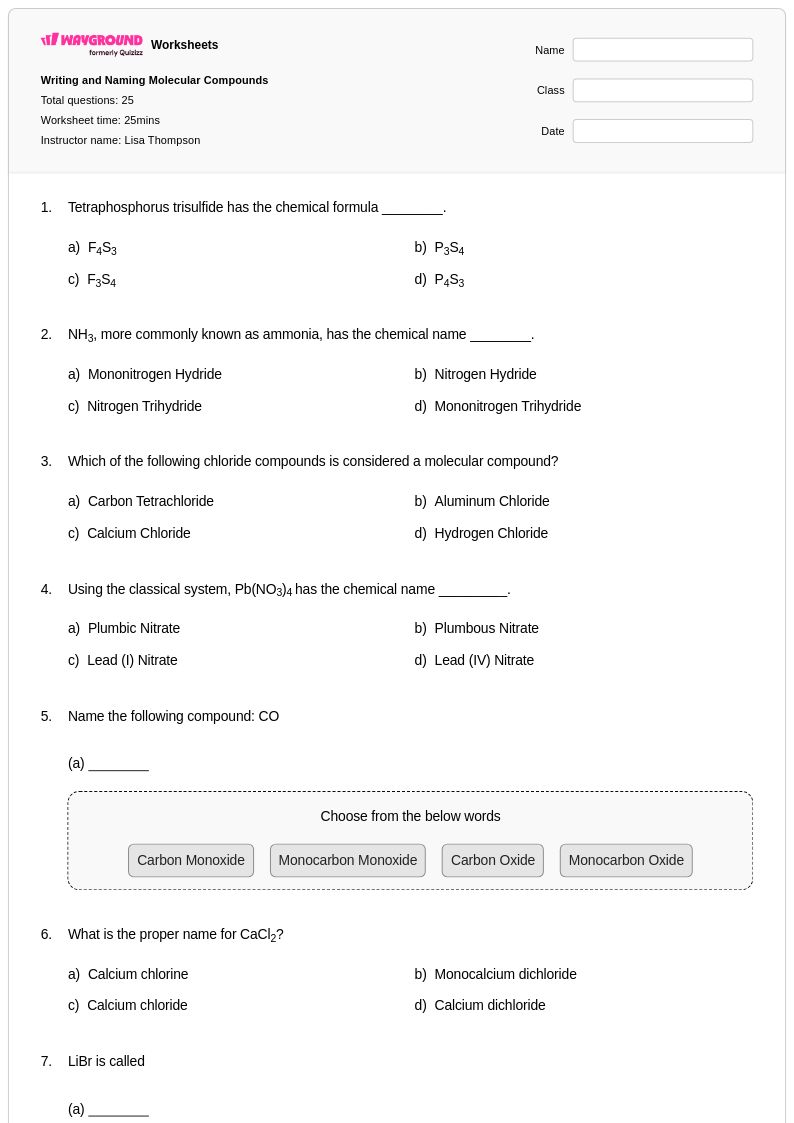
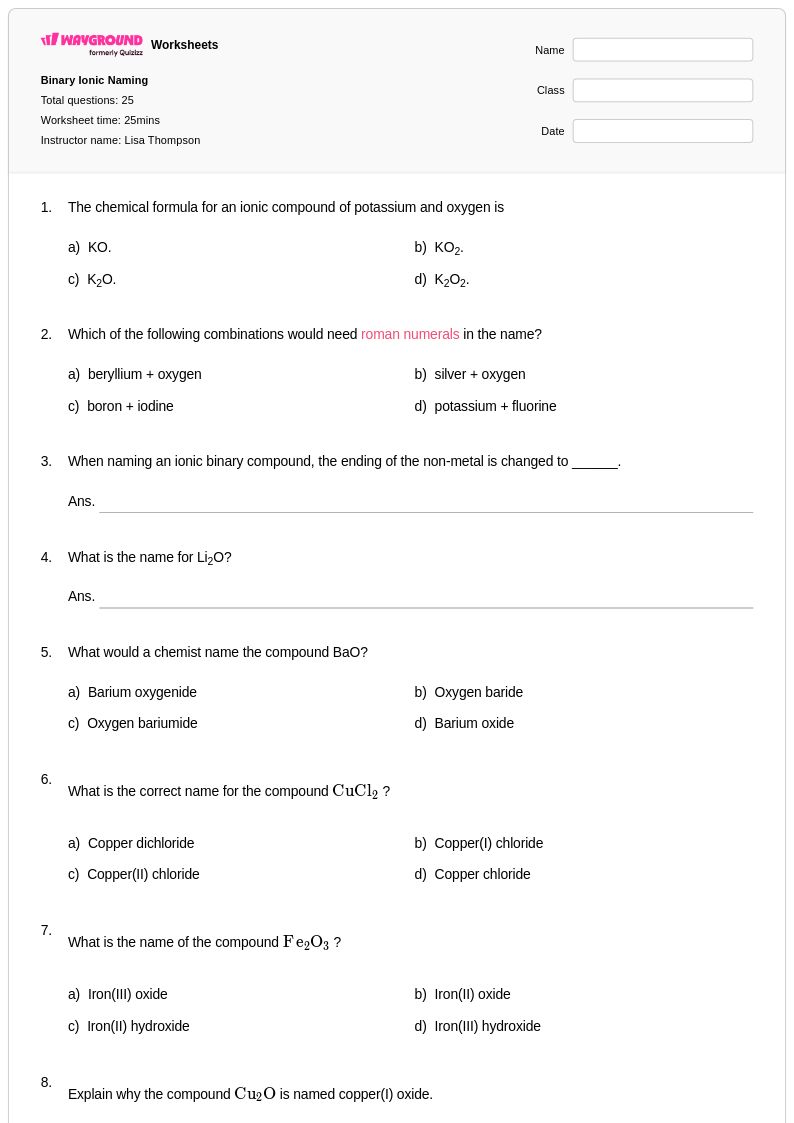
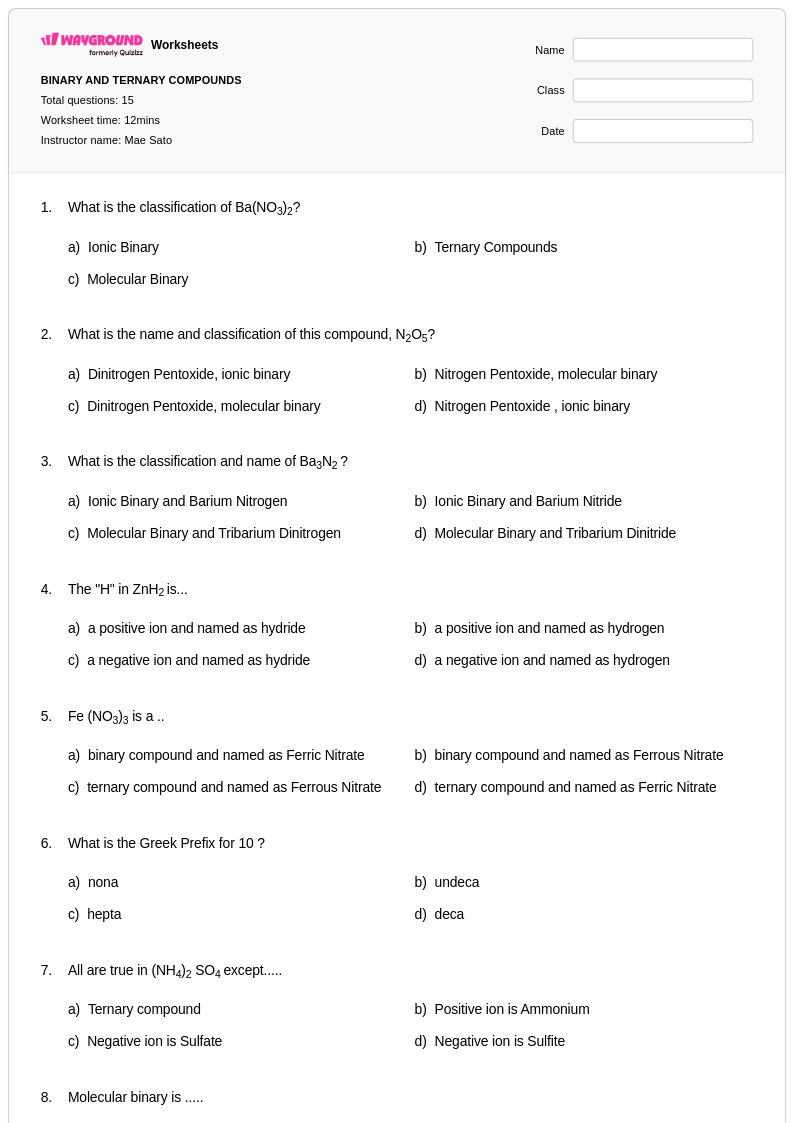
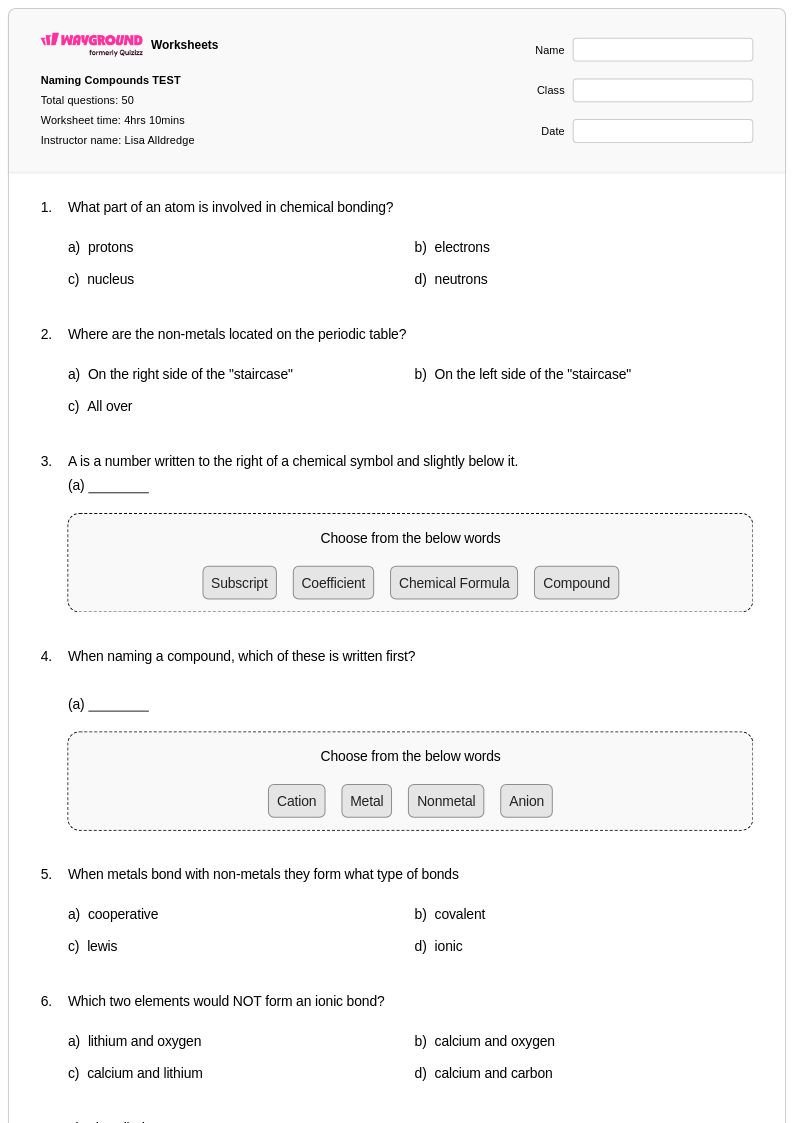
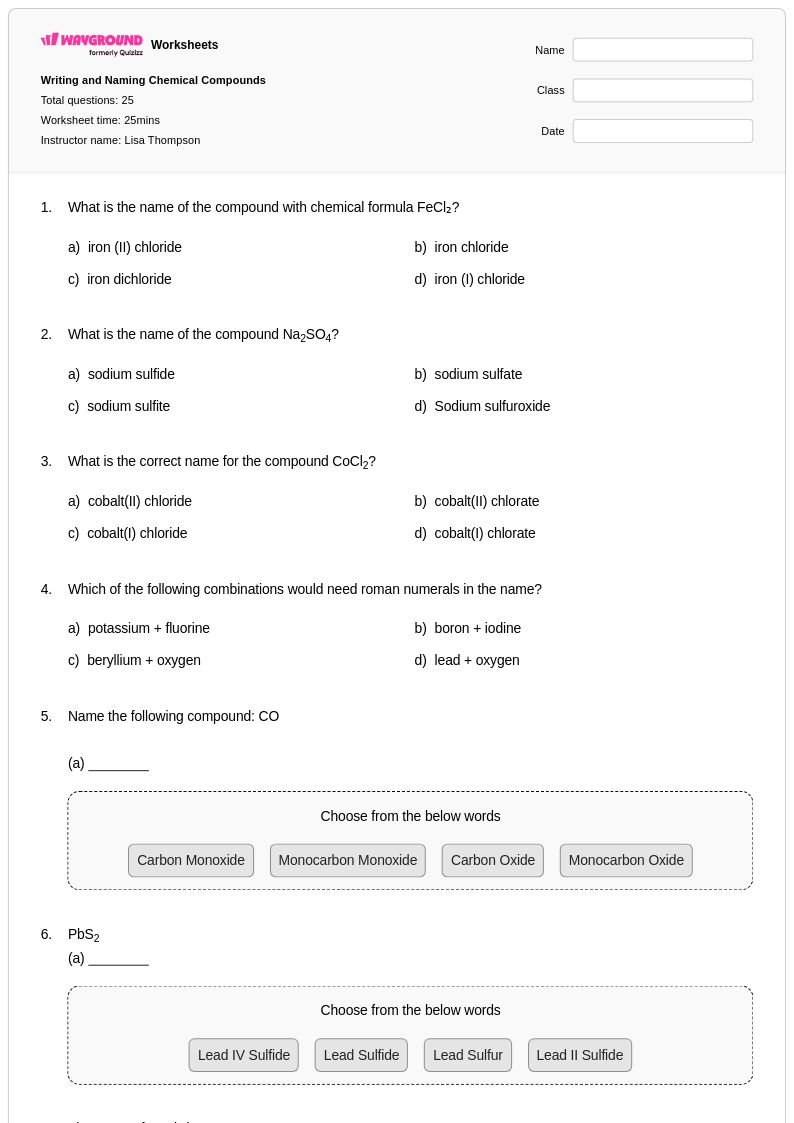
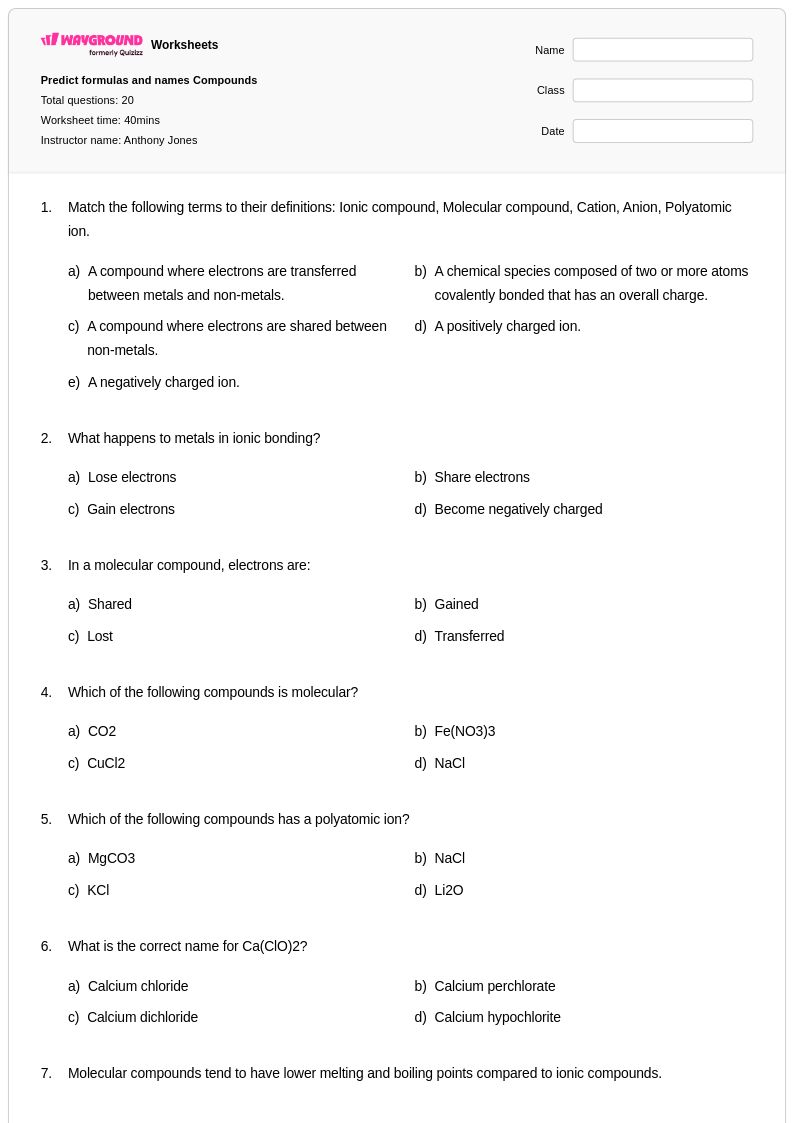
Wayground's free naming binary compounds worksheets provide chemistry students with comprehensive printables and practice problems, complete with answer keys to master chemical nomenclature and compound identification skills.
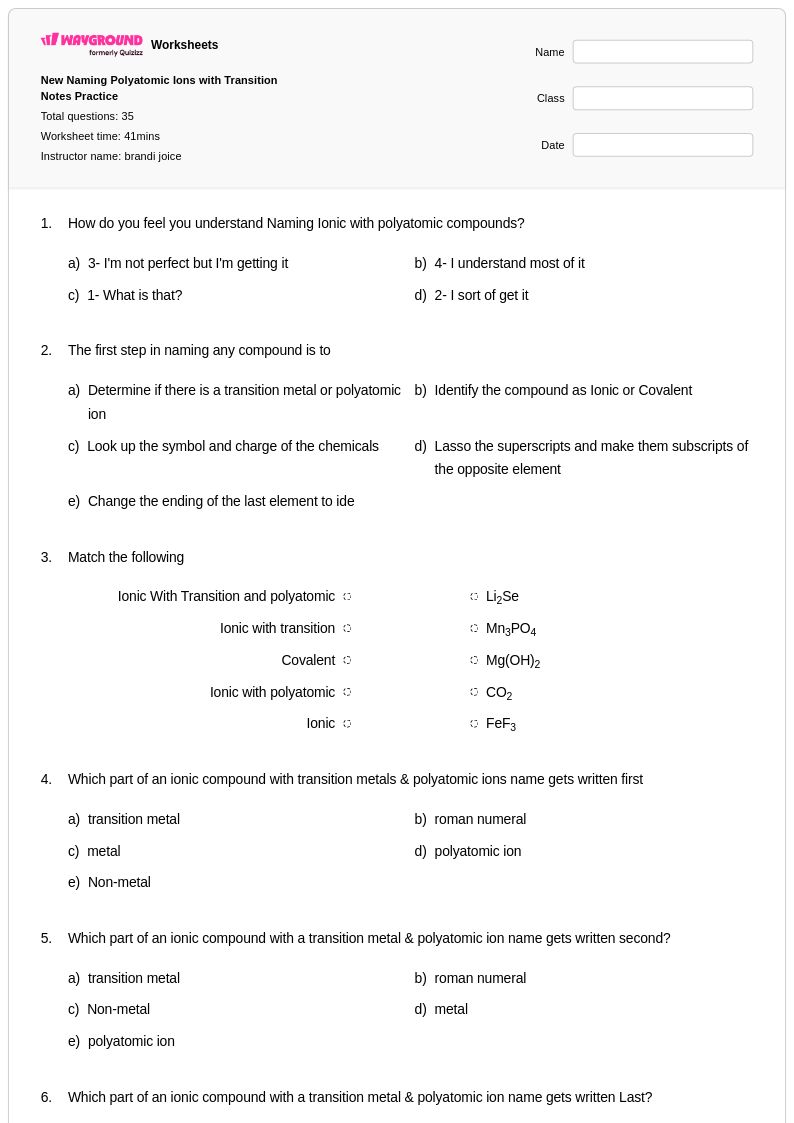
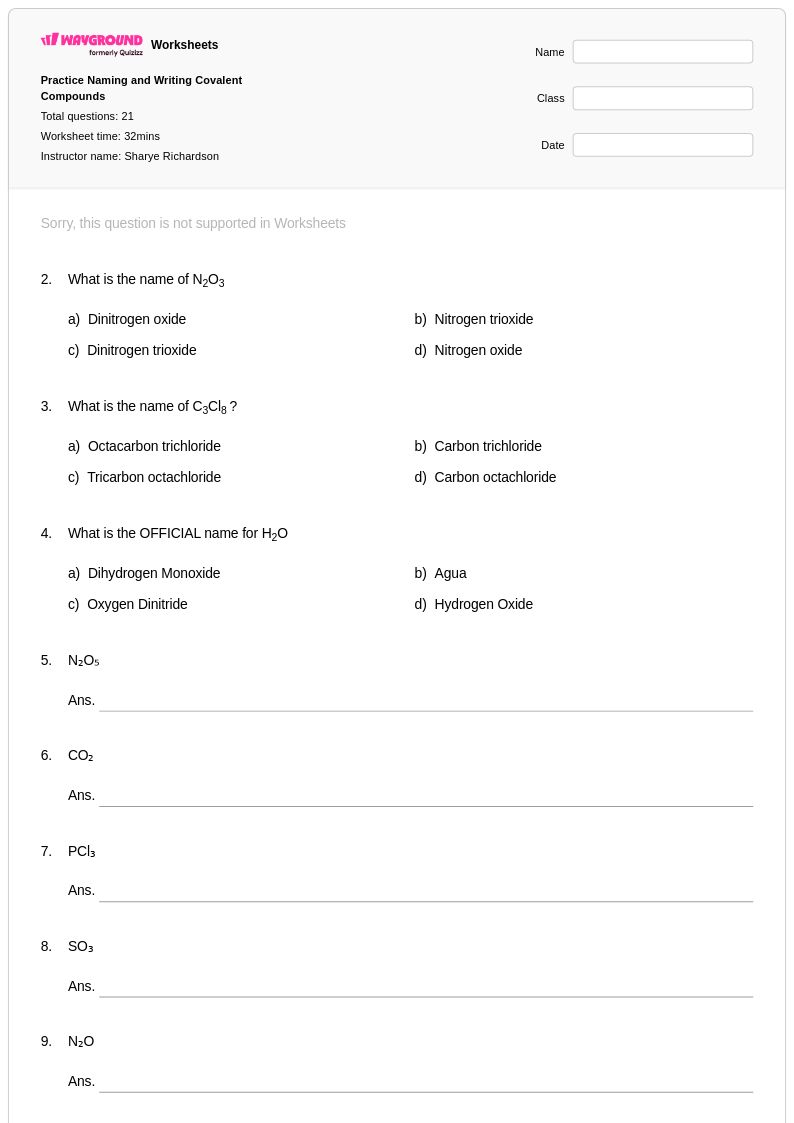
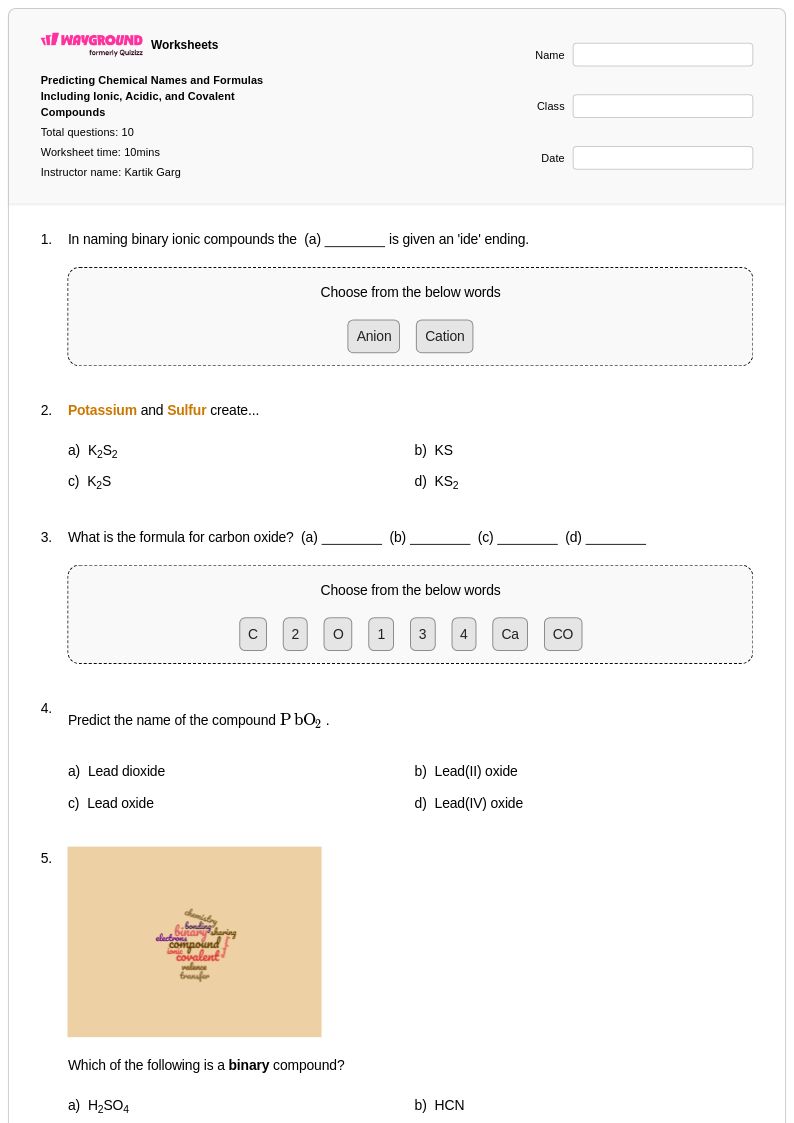
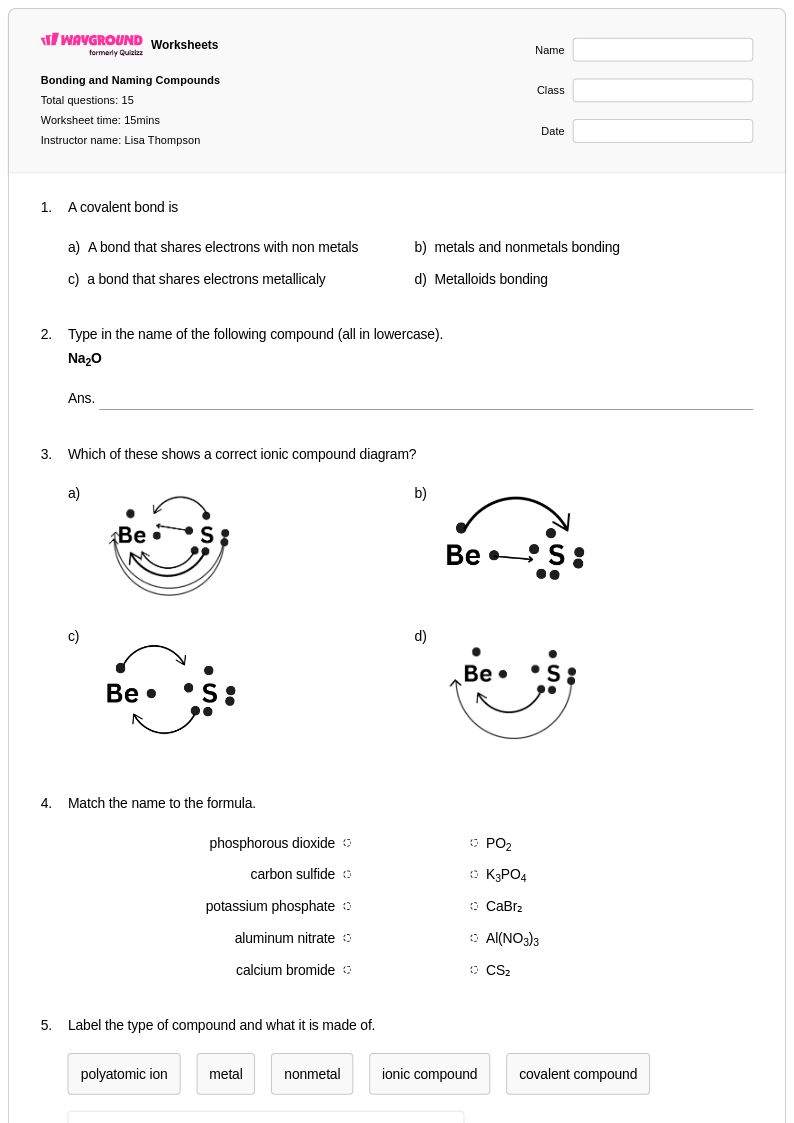
Naming binary compounds represents a fundamental skill in chemistry education that requires students to master systematic nomenclature rules for two-element chemical compounds. Wayground's comprehensive collection of naming binary compounds worksheets provides structured practice with ionic and covalent compound identification, helping students develop proficiency in applying IUPAC naming conventions and recognizing common chemical formulas. These expertly designed worksheets strengthen critical thinking skills through diverse practice problems that cover metal-nonmetal combinations, polyatomic ions, and transition metal compounds with variable oxidation states. Each worksheet includes a complete answer key and is available as a free printable pdf, making it easy for educators to provide immediate feedback and support independent learning through targeted practice sessions.
Wayground's extensive library of teacher-created naming binary compounds resources empowers chemistry educators with millions of high-quality materials designed to meet diverse classroom needs. The platform's advanced search and filtering capabilities allow teachers to quickly locate worksheets aligned with specific chemistry standards and customize content difficulty levels to support differentiation across varying student abilities. These versatile resources are available in both printable pdf format and interactive digital versions, enabling seamless integration into traditional classroom instruction, homework assignments, and remote learning environments. Teachers can efficiently plan comprehensive nomenclature units while using these materials for targeted remediation with struggling students or enrichment activities for advanced learners, ensuring all students master this essential chemistry foundation before progressing to more complex chemical concepts.
FAQs
How do I teach students to name binary compounds?
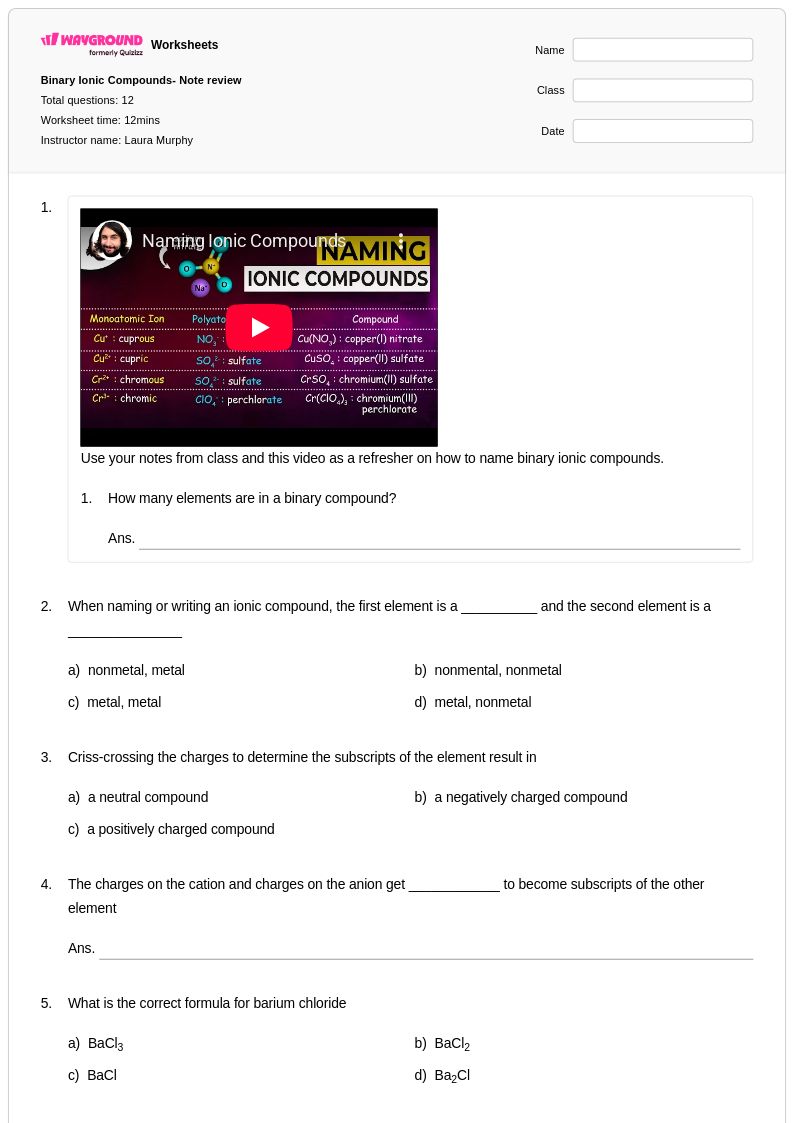
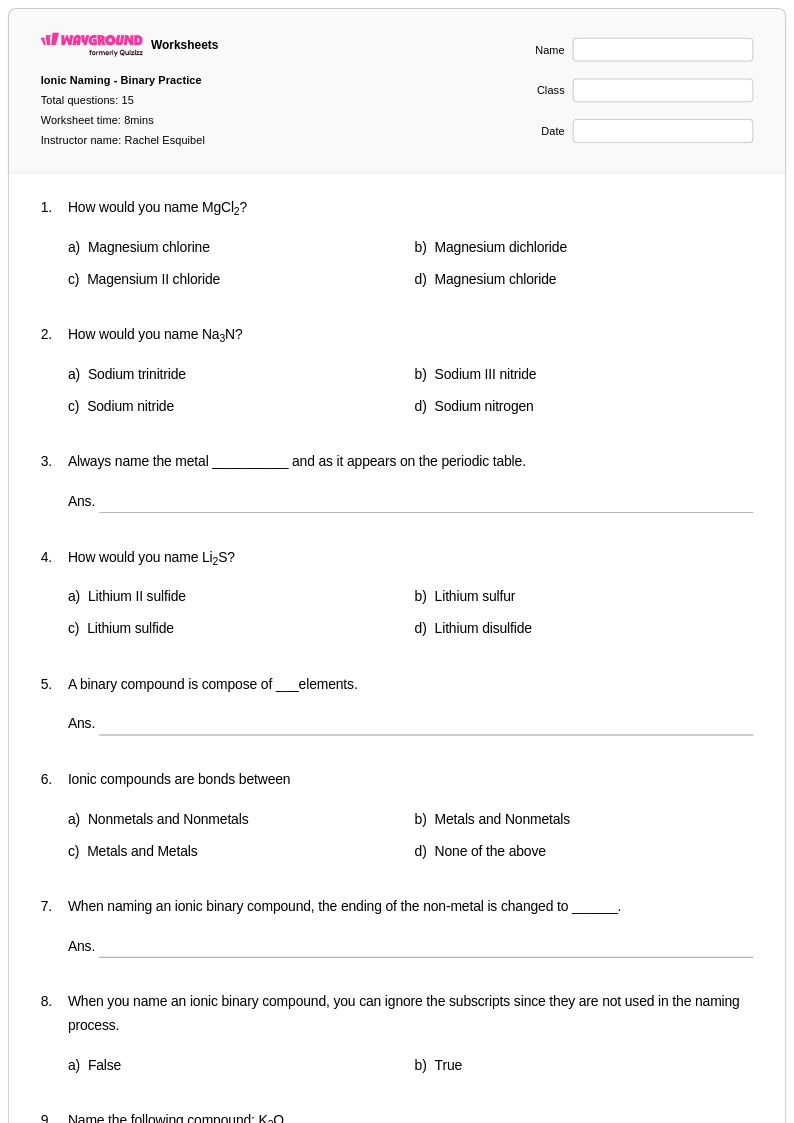
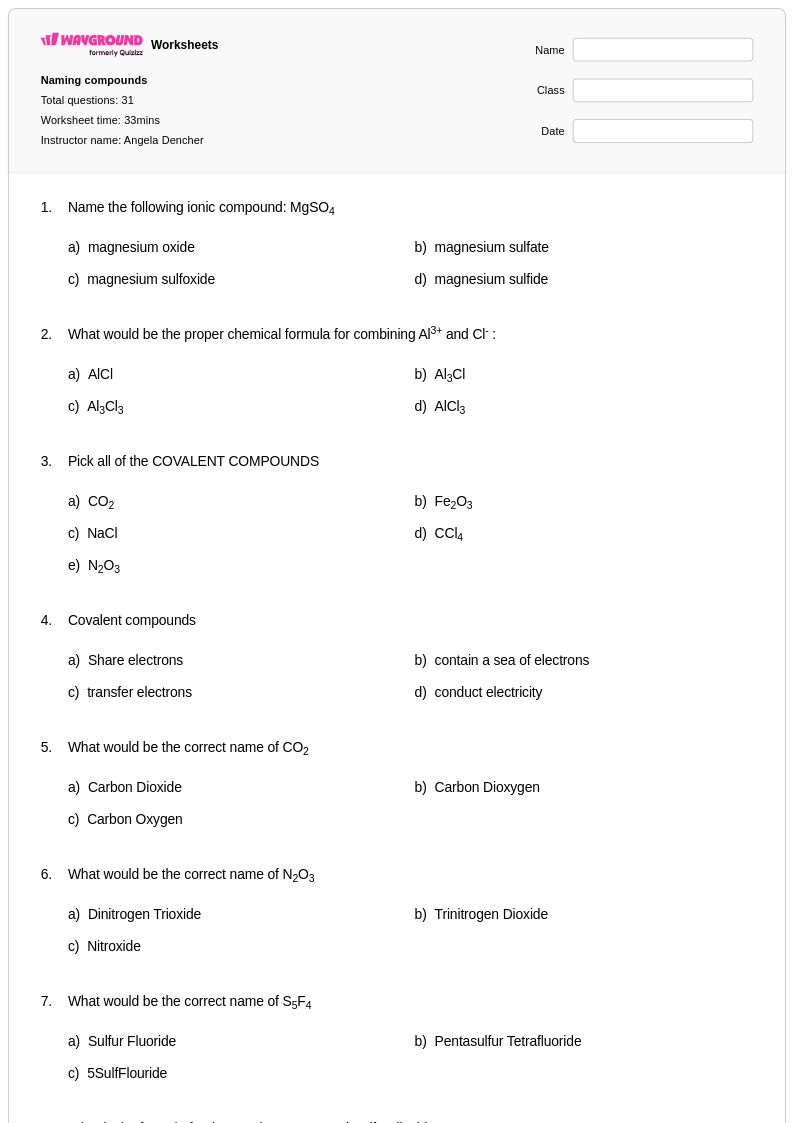
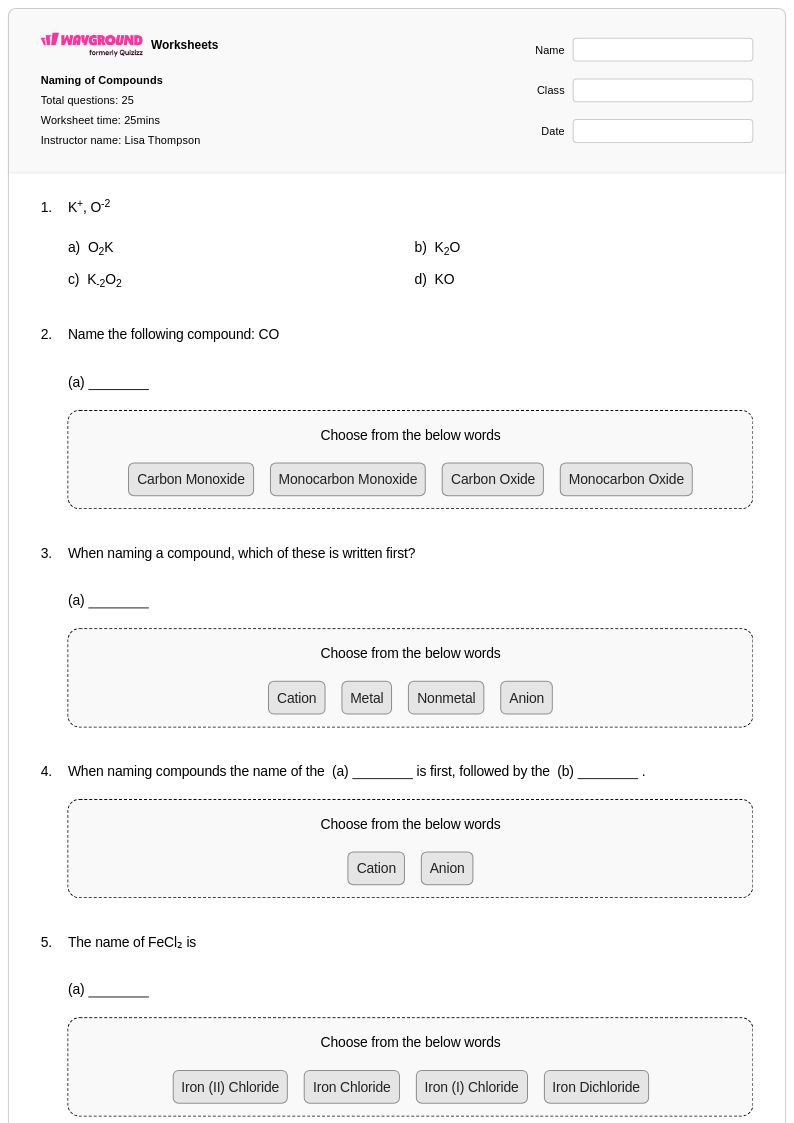
Start by establishing the two major categories: ionic binary compounds (metal + nonmetal) and covalent binary compounds (nonmetal + nonmetal). For ionic compounds, teach students to identify the cation and anion, apply the metal name first, and modify the nonmetal ending to -ide. For covalent compounds, introduce Greek prefixes (mono-, di-, tri-, etc.) to indicate the number of each atom. Building these as separate rule sets before combining them reduces confusion and helps students internalize when each system applies.
What are the most common mistakes students make when naming binary compounds?
One of the most frequent errors is applying covalent prefixes to ionic compounds — students often write 'monosodium chloride' instead of simply 'sodium chloride.' A second common mistake is failing to account for transition metals with variable oxidation states, such as iron, copper, or lead, which require Roman numerals in their names. Students also regularly forget to drop the final vowel before adding -oxide (e.g., 'monoxide' not 'monooxide'). Explicitly addressing these three error patterns with targeted practice prevents them from becoming ingrained habits.
What exercises help students practice naming binary ionic and covalent compounds?
Effective practice includes converting between chemical formulas and compound names in both directions, since reading and writing nomenclature require different skills. Sorting exercises — where students classify a list of compounds as ionic or covalent before naming them — reinforce decision-making before application. Including transition metal compounds with variable oxidation states in practice sets ensures students don't avoid the harder cases. Worksheets that mix formula-to-name and name-to-formula problems within the same set most closely mirror the demands of chemistry assessments.
How can I support struggling students when teaching binary compound nomenclature?
Students who struggle with nomenclature often do so because they haven't internalized the periodic table relationships that underlie the rules. Providing a reference card with metal vs. nonmetal classifications, common polyatomic ions, and the Greek prefix list reduces working memory load so students can focus on applying the naming logic. On Wayground, teachers can enable the Read Aloud accommodation so questions and compound names are read to students who benefit from auditory support, and Reduced Answer Choices can lower cognitive load for students who need it during digital practice.
How do I use Wayground's naming binary compounds worksheets in my chemistry class?
Wayground's naming binary compounds worksheets are available as printable PDFs for use in traditional classroom settings and in digital formats for technology-integrated or remote learning environments. Teachers can also host the worksheets as a quiz directly on Wayground, allowing for streamlined assignment and review. Each worksheet includes a complete answer key, making them practical for independent practice, homework, or in-class review sessions. The availability of both formats means the same resource can serve as a printed bell-ringer and a digital homework assignment without any additional preparation.
How do I differentiate naming binary compounds instruction for students at different skill levels?
Begin by separating practice by compound type: students who are still building foundational skills should work exclusively with simple binary ionic compounds before encountering transition metals or covalent naming rules. For advanced learners, introduce mixed sets that require students to first classify a compound and then apply the correct naming system. On Wayground's digital platform, teachers can assign accommodations such as extended time or reduced answer choices to individual students without notifying the rest of the class, allowing differentiation to happen quietly and efficiently within a single shared assignment.