Free Printable Polar and Nonpolar Molecules worksheets
Explore Wayground's free printable worksheets and practice problems on polar and nonpolar molecules, featuring comprehensive PDF resources with answer keys to help students master molecular polarity concepts in chemistry.
Explore printable Polar and Nonpolar Molecules worksheets
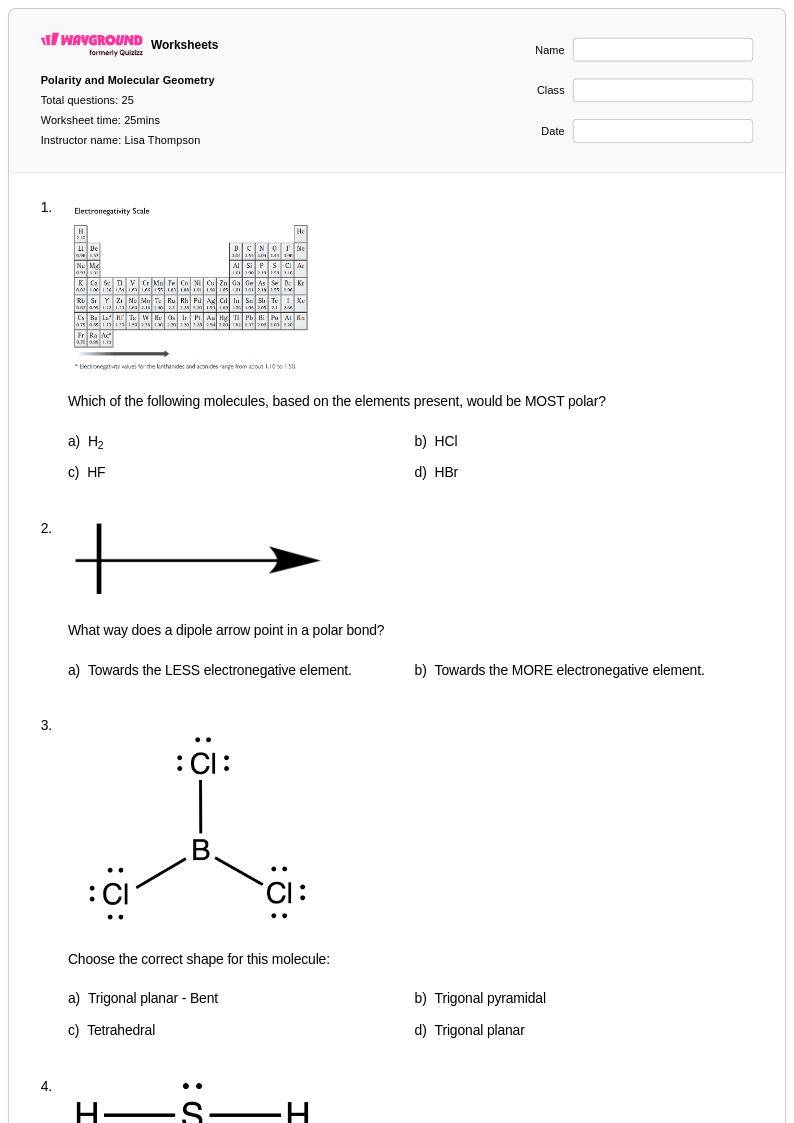
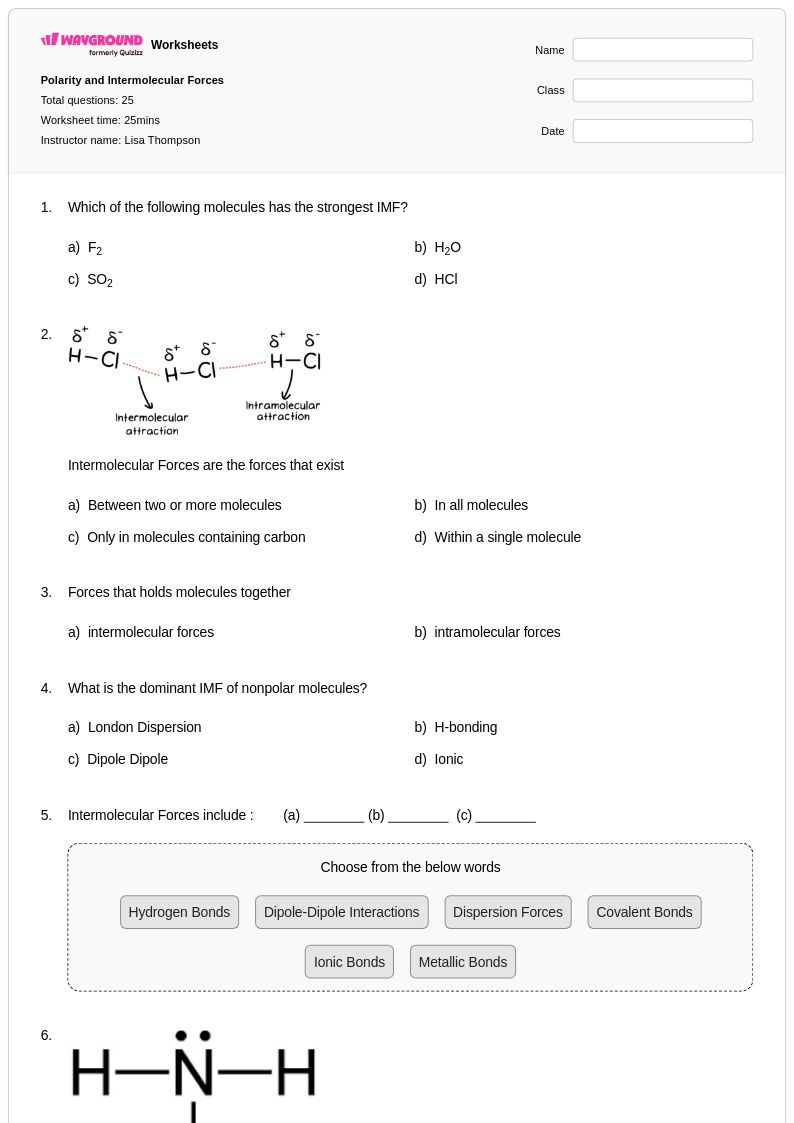
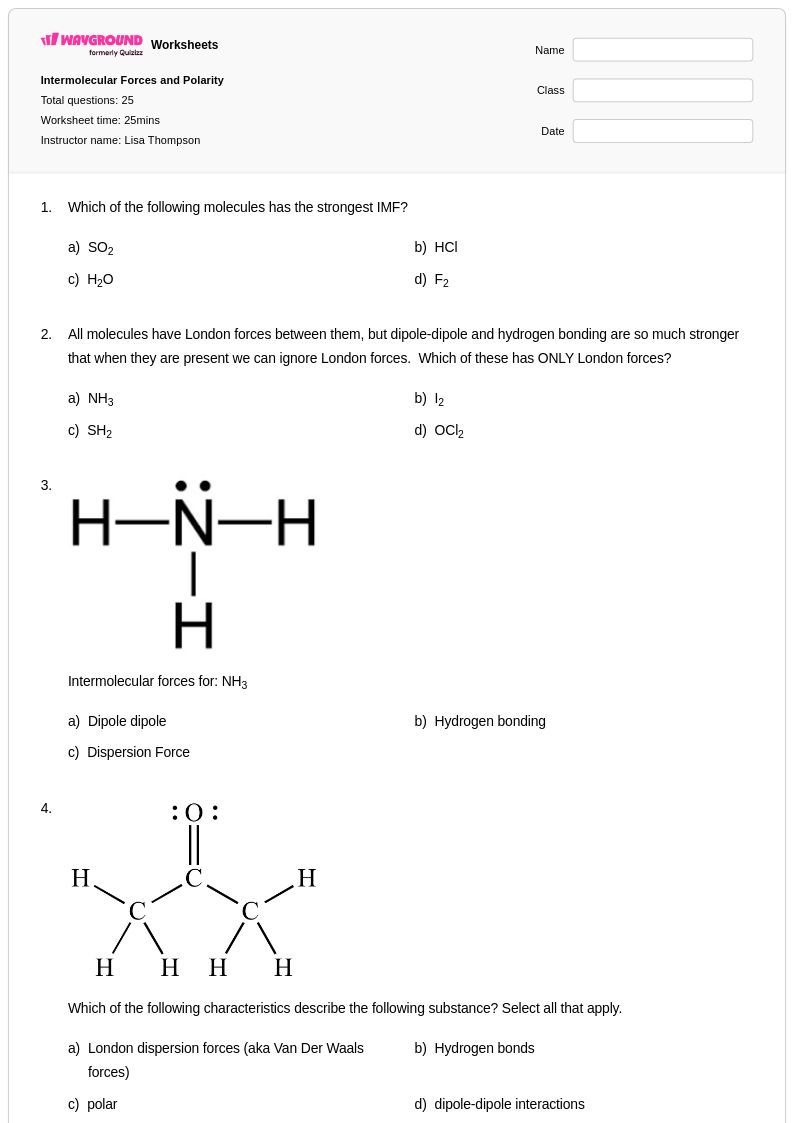
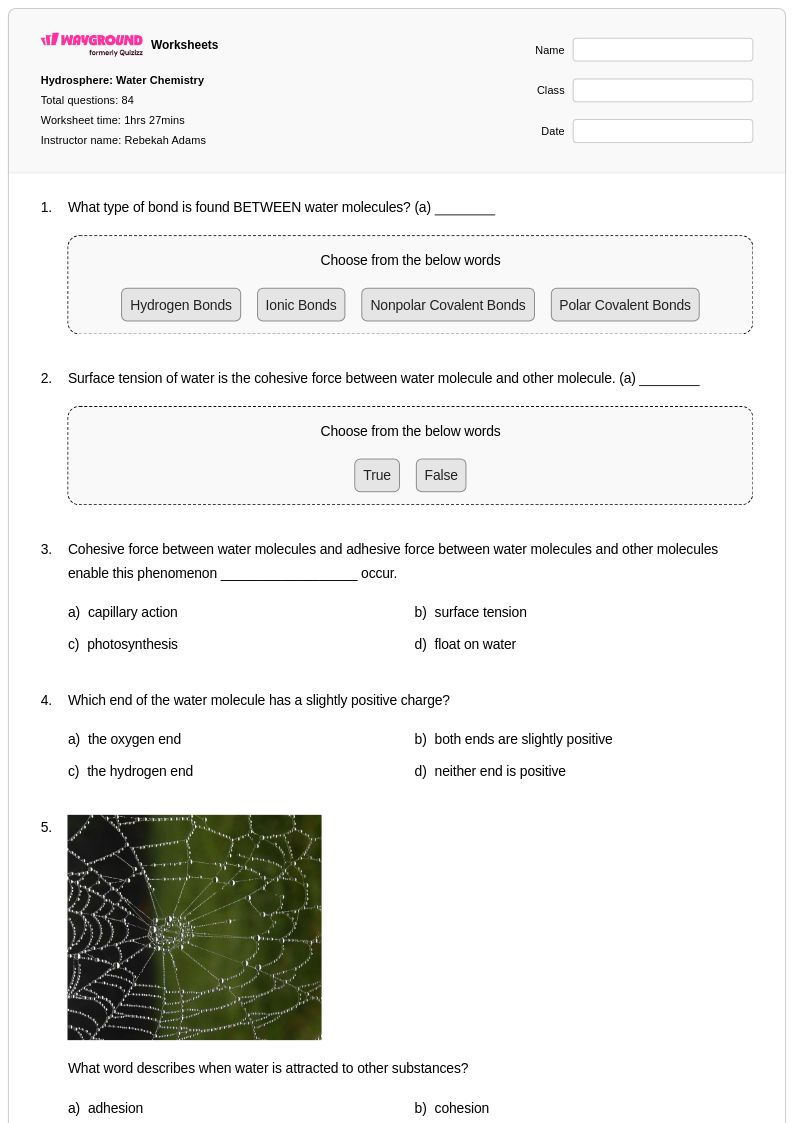
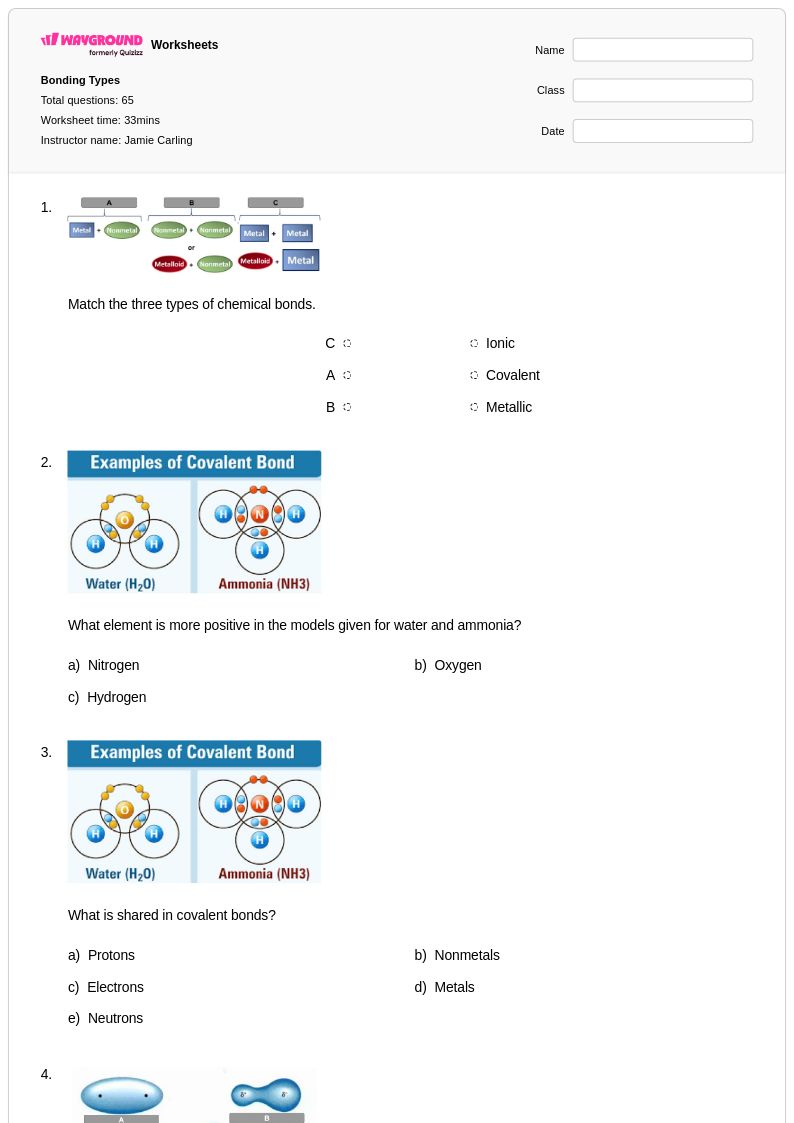
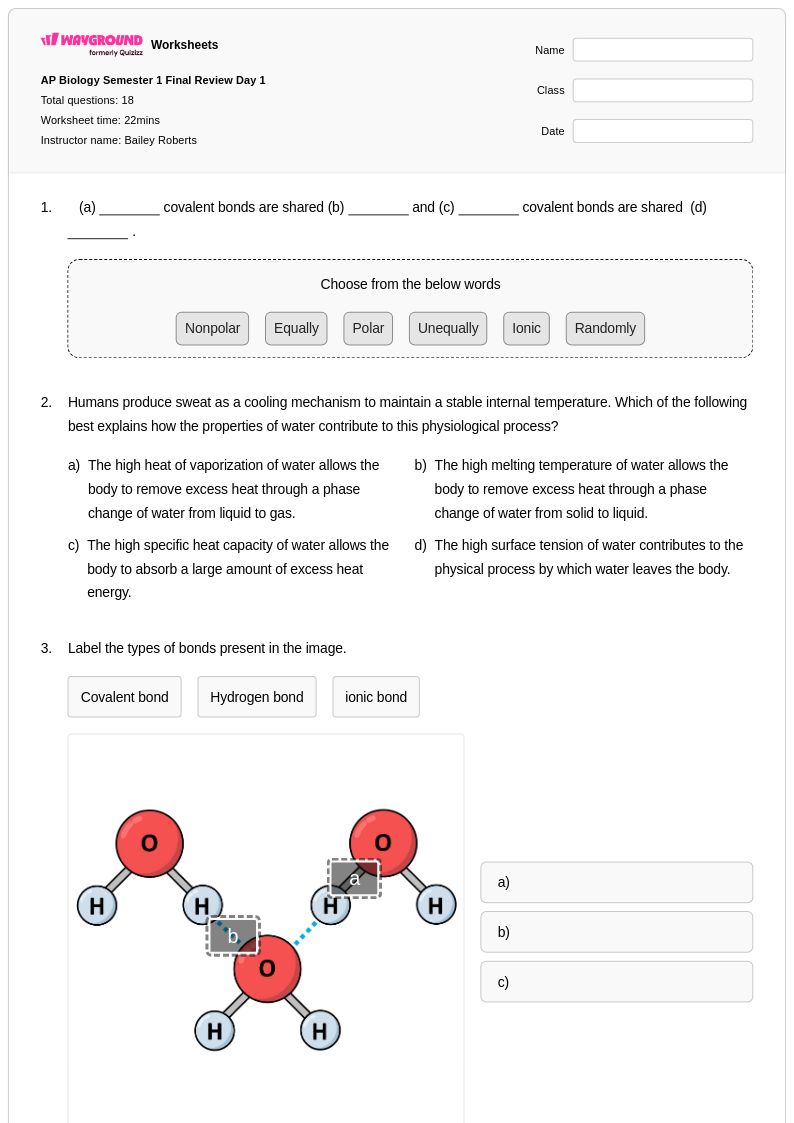
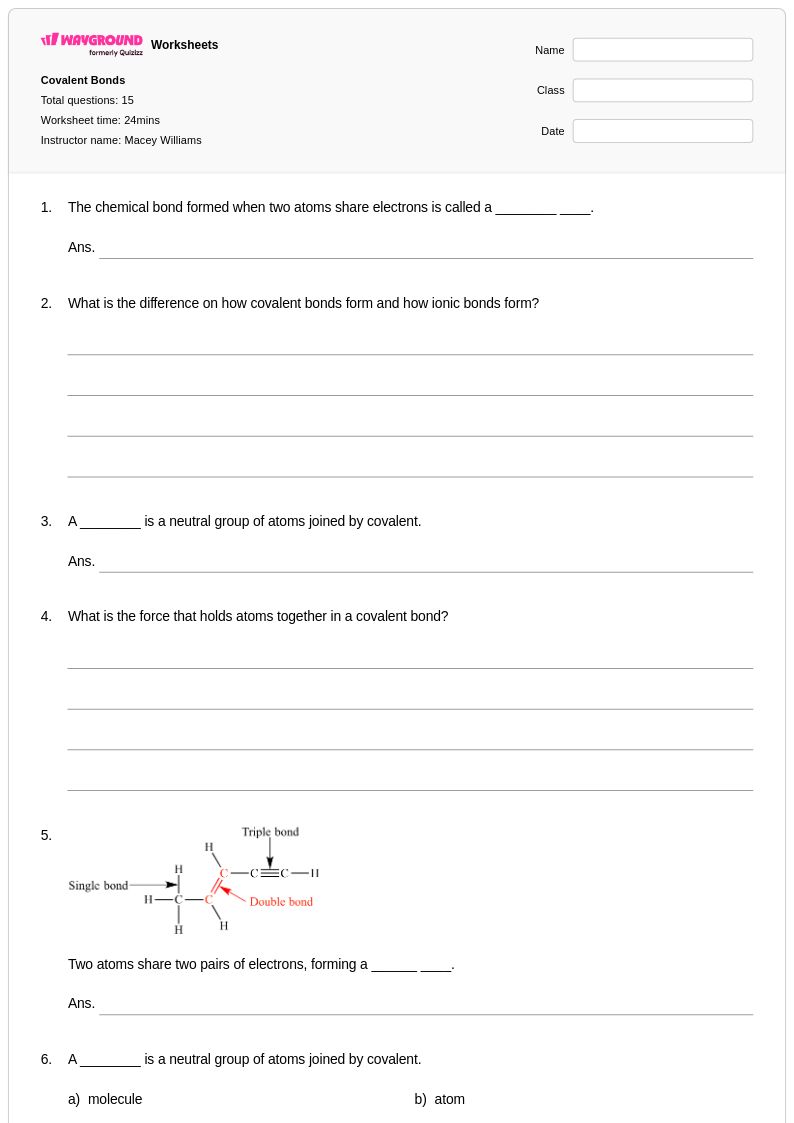
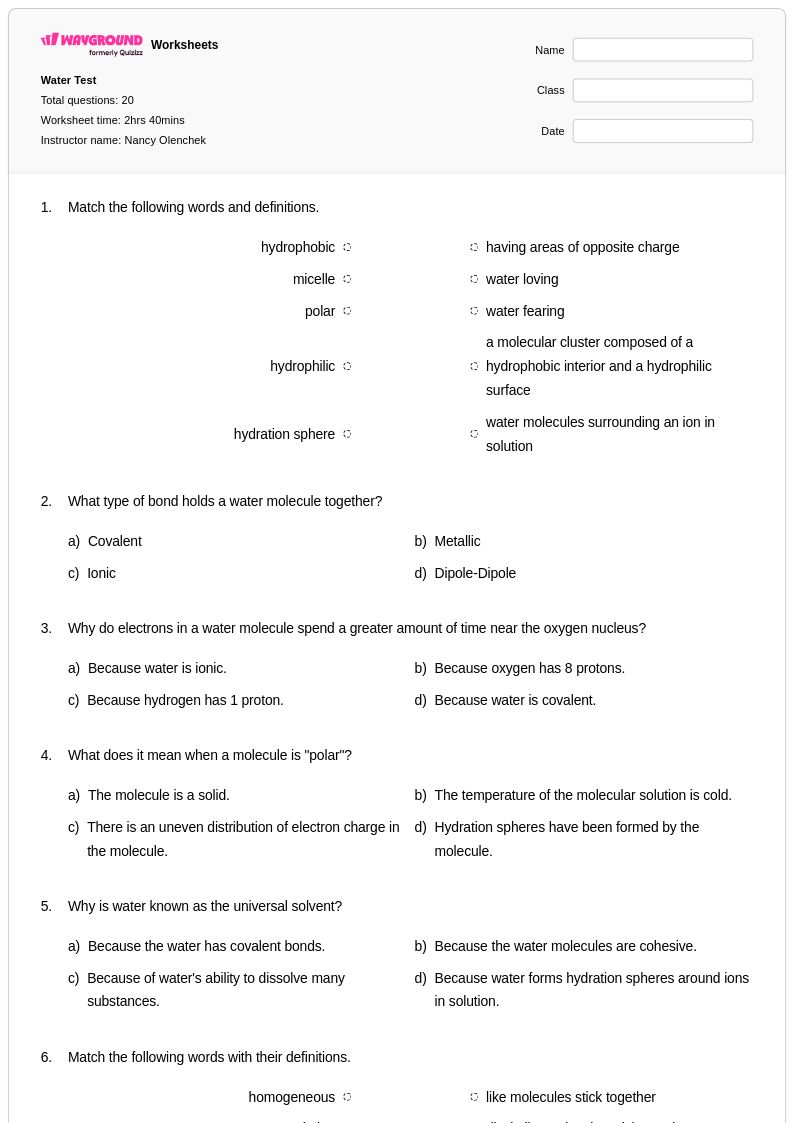
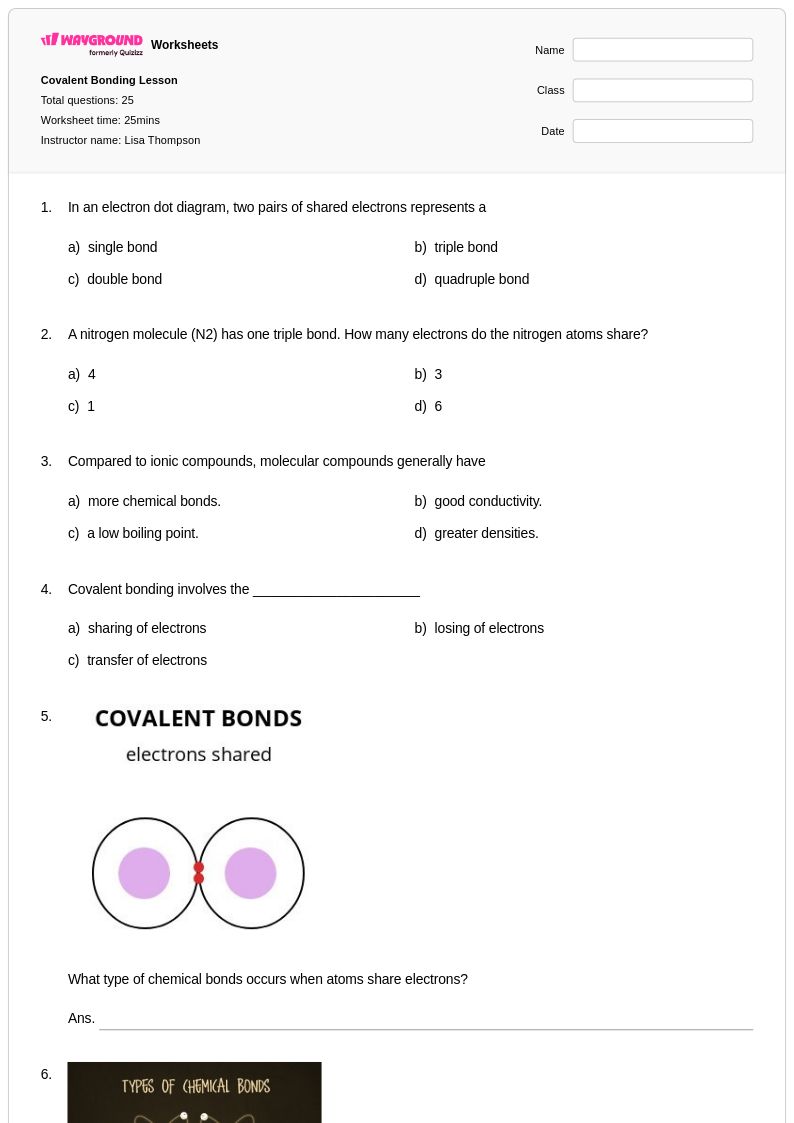
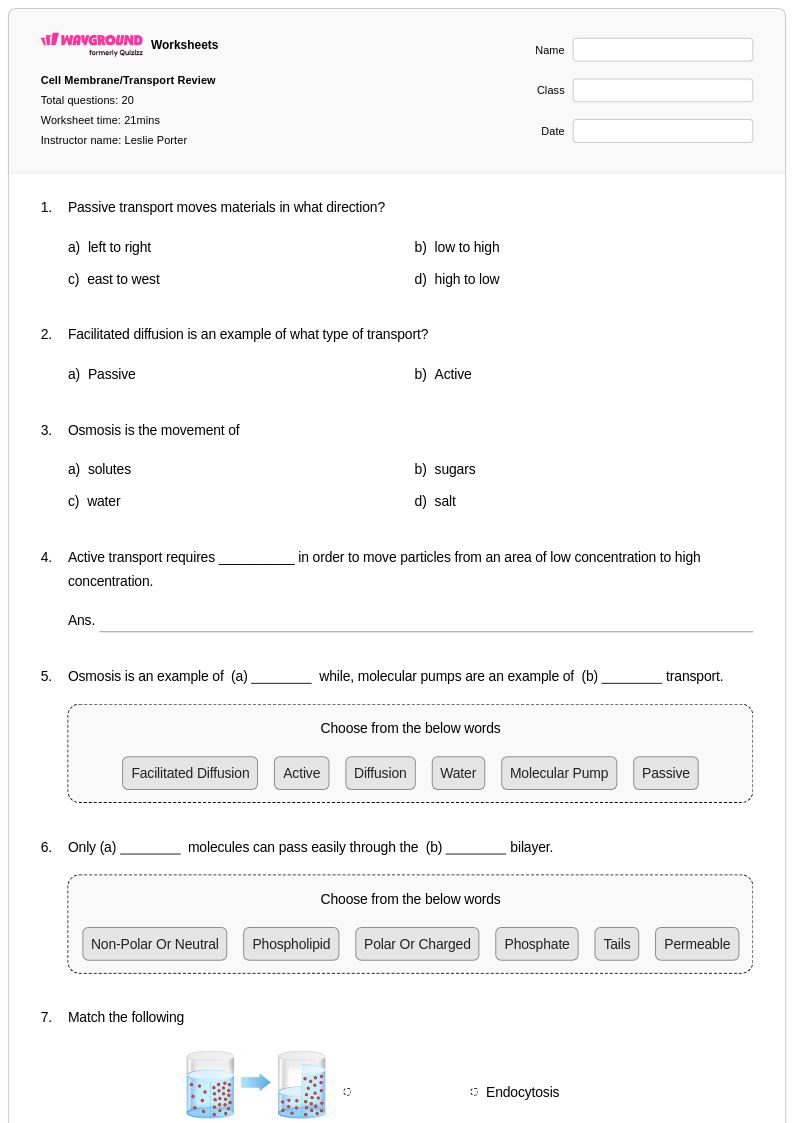
Polar and nonpolar molecules worksheets available through Wayground (formerly Quizizz) provide comprehensive practice materials that help students master fundamental concepts in molecular chemistry and chemical bonding. These expertly designed resources strengthen critical skills including electronegativity analysis, molecular geometry determination, and polarity prediction based on bond dipoles and molecular symmetry. Students work through practice problems that cover everything from simple diatomic molecules to complex organic compounds, developing proficiency in identifying polar covalent bonds, understanding dipole moments, and predicting molecular behavior in various chemical contexts. Each worksheet collection includes detailed answer keys and is available in convenient pdf format, offering free printables that educators can seamlessly integrate into their chemistry curriculum to reinforce theoretical concepts through hands-on application.
Wayground (formerly Quizizz) empowers teachers with an extensive library of millions of teacher-created polar and nonpolar molecule worksheets, featuring robust search and filtering capabilities that allow educators to quickly locate materials aligned with specific chemistry standards and learning objectives. The platform's differentiation tools enable instructors to customize worksheet difficulty levels and content focus areas, supporting both remediation for struggling students and enrichment opportunities for advanced learners. These flexible resources are available in both printable and digital formats, including downloadable pdf versions, making them ideal for diverse classroom environments and teaching modalities. Teachers can efficiently plan targeted skill practice sessions, assess student understanding of molecular polarity concepts, and provide immediate feedback through integrated answer keys, ultimately enhancing student mastery of this foundational chemistry topic through systematic and engaging practice opportunities.
FAQs
How do I teach students to determine if a molecule is polar or nonpolar?
Start by teaching students to identify individual bond polarities using electronegativity differences, then move to molecular geometry using VSEPR theory. The key insight students need is that a molecule can have polar bonds yet still be nonpolar overall if the bond dipoles cancel due to symmetry — CO2 is a classic example. Once students can draw Lewis structures and apply VSEPR, they can systematically evaluate dipole vectors and determine net polarity. Connecting geometry to polarity outcome is the conceptual bridge that tends to make this topic click.
What exercises help students practice identifying polar and nonpolar molecules?
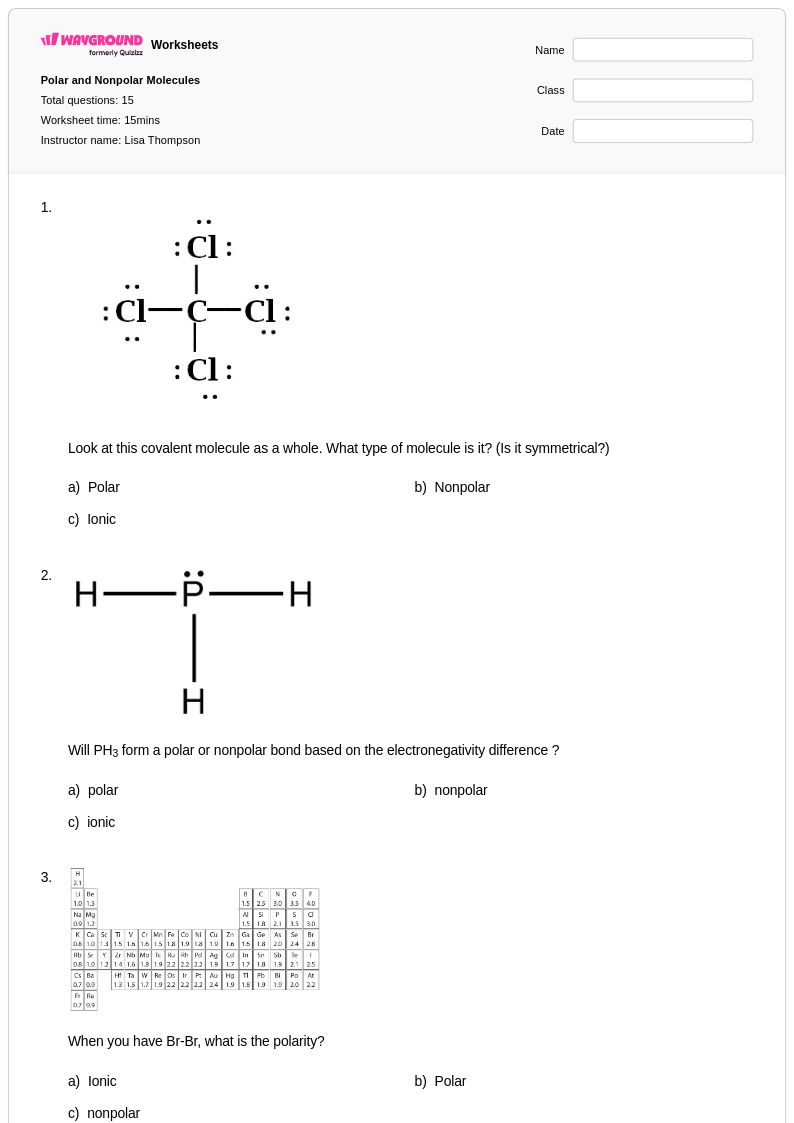
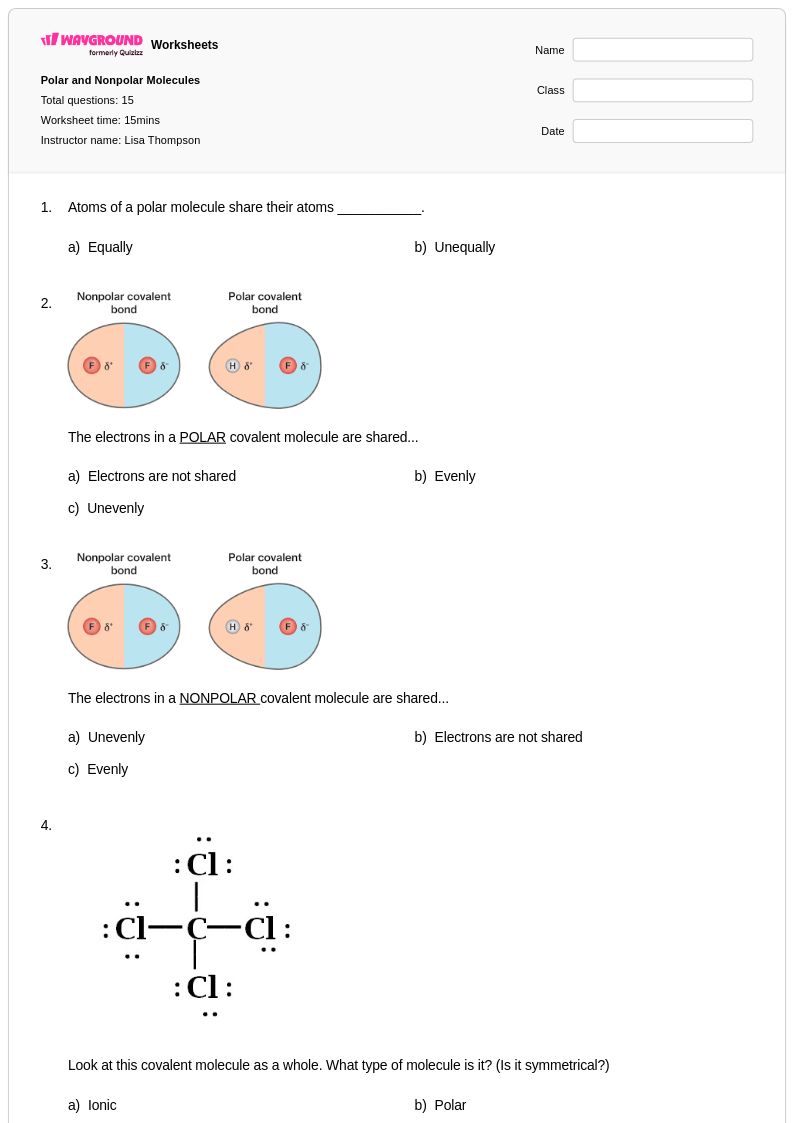
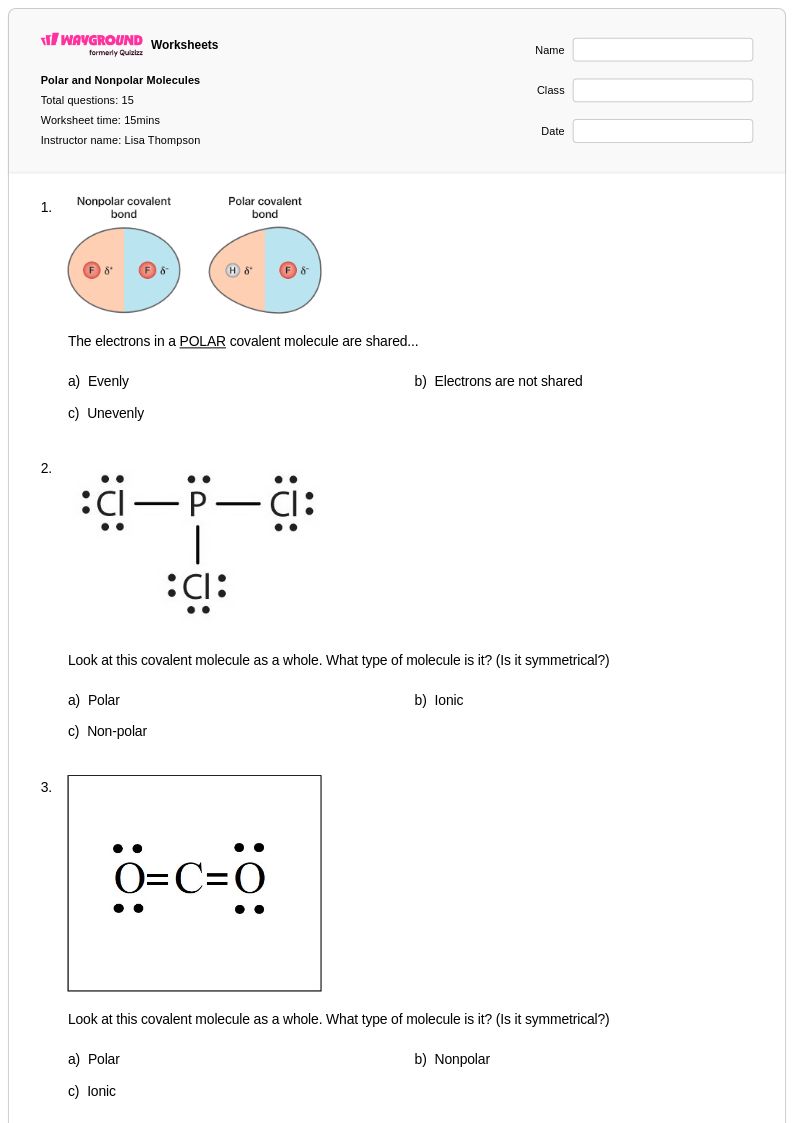
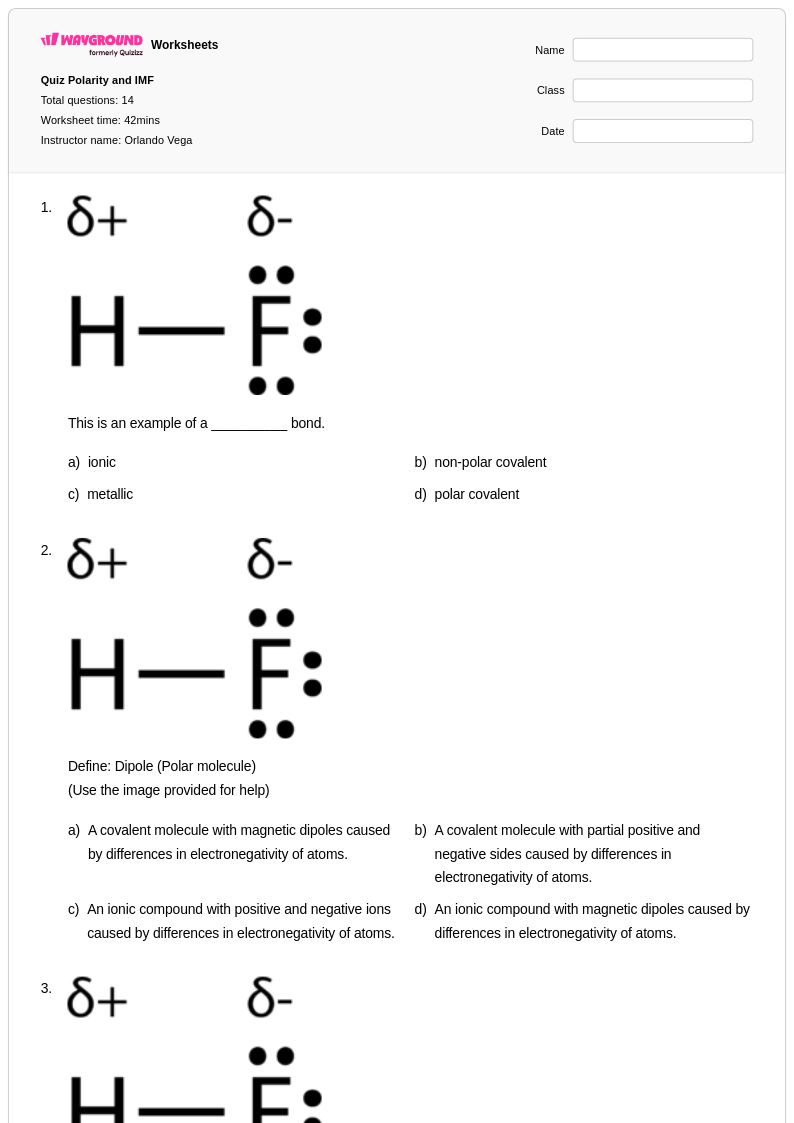
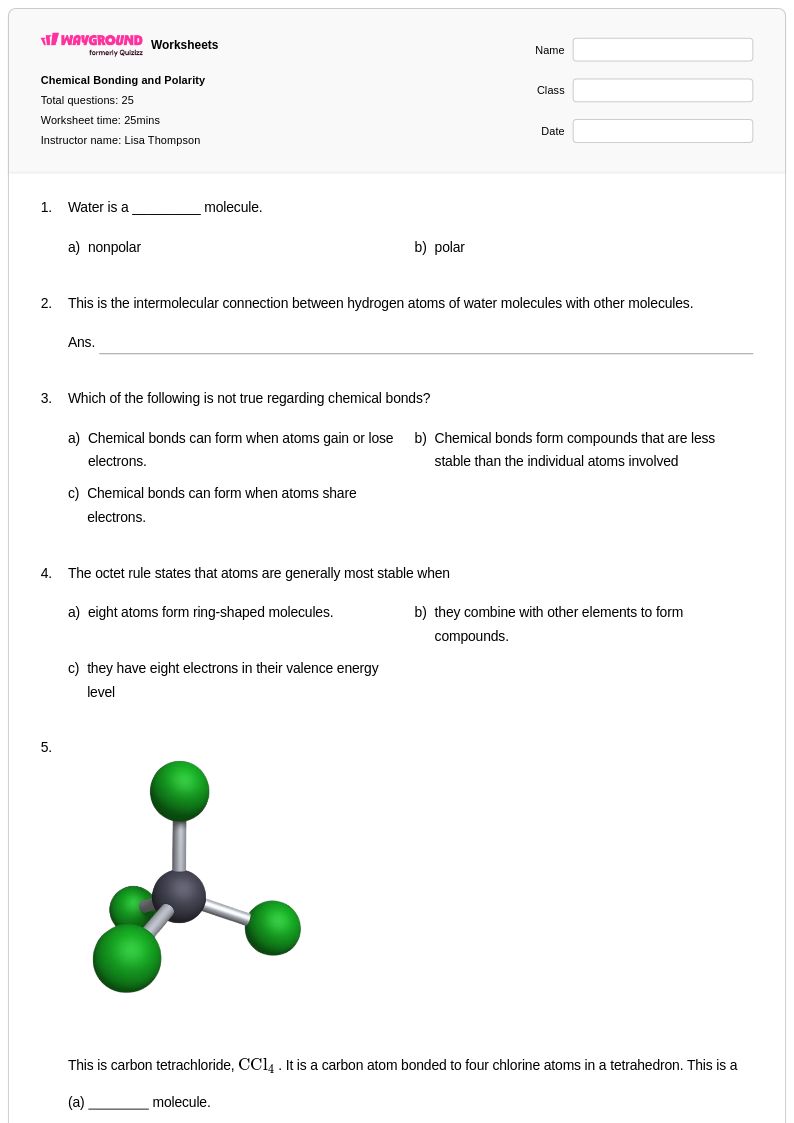
Effective practice exercises include electronegativity difference calculations to classify bonds as nonpolar covalent, polar covalent, or ionic, followed by molecular geometry problems where students draw Lewis structures and determine shape. Dipole moment prediction tasks — where students draw bond dipole arrows and determine whether they cancel — are especially useful for reinforcing the geometry-polarity connection. Practice problems that progress from simple diatomic molecules like HCl and N2 to more complex structures like NH3 and CCl4 help build proficiency systematically.
What mistakes do students commonly make when classifying molecules as polar or nonpolar?
The most common error is assuming that any molecule with polar bonds must be a polar molecule, without accounting for molecular symmetry. Students often neglect to determine molecular geometry before assigning polarity, which leads to incorrect conclusions for symmetric molecules like BF3 or CO2. Another frequent mistake is confusing bond polarity with molecular polarity, or misidentifying lone pairs when applying VSEPR, which distorts the geometry they use to evaluate dipole cancellation. Targeted practice on symmetric versus asymmetric molecules helps address these misconceptions directly.
How can I use polar and nonpolar molecules worksheets to differentiate instruction in my chemistry class?
For students who are struggling, start with problems focused solely on electronegativity differences and bond classification before introducing geometry. Advanced learners can be challenged with complex organic compounds and problems that require predicting solubility or intermolecular forces based on polarity. On Wayground, teachers can apply accommodations at the individual student level — such as reduced answer choices to lower cognitive load or read aloud support for students who need it — without disrupting the experience of other students in the class.
How do I use Wayground's polar and nonpolar molecules worksheets in my classroom?
Wayground's polar and nonpolar molecules worksheets are available as printable PDFs for traditional classroom use and in digital formats for technology-integrated or hybrid environments. Teachers can also host the worksheets as an interactive quiz directly on Wayground, making them suitable for in-class formative assessment or independent practice. Each worksheet includes a complete answer key, so they can be used for guided practice, homework, or self-paced review with minimal additional preparation.
How does molecular geometry affect whether a molecule is polar or nonpolar?
Molecular geometry determines whether bond dipoles reinforce or cancel each other, which is the deciding factor in overall molecular polarity. A tetrahedral molecule like CH4 has four identical polar bonds, but because they point symmetrically in all directions, the dipole vectors cancel and the molecule is nonpolar. In contrast, a bent molecule like H2O has two O-H bond dipoles that do not cancel due to its asymmetric geometry, resulting in a net dipole moment and a polar molecule. This is why teaching geometry alongside polarity — rather than as a separate unit — leads to stronger student understanding.