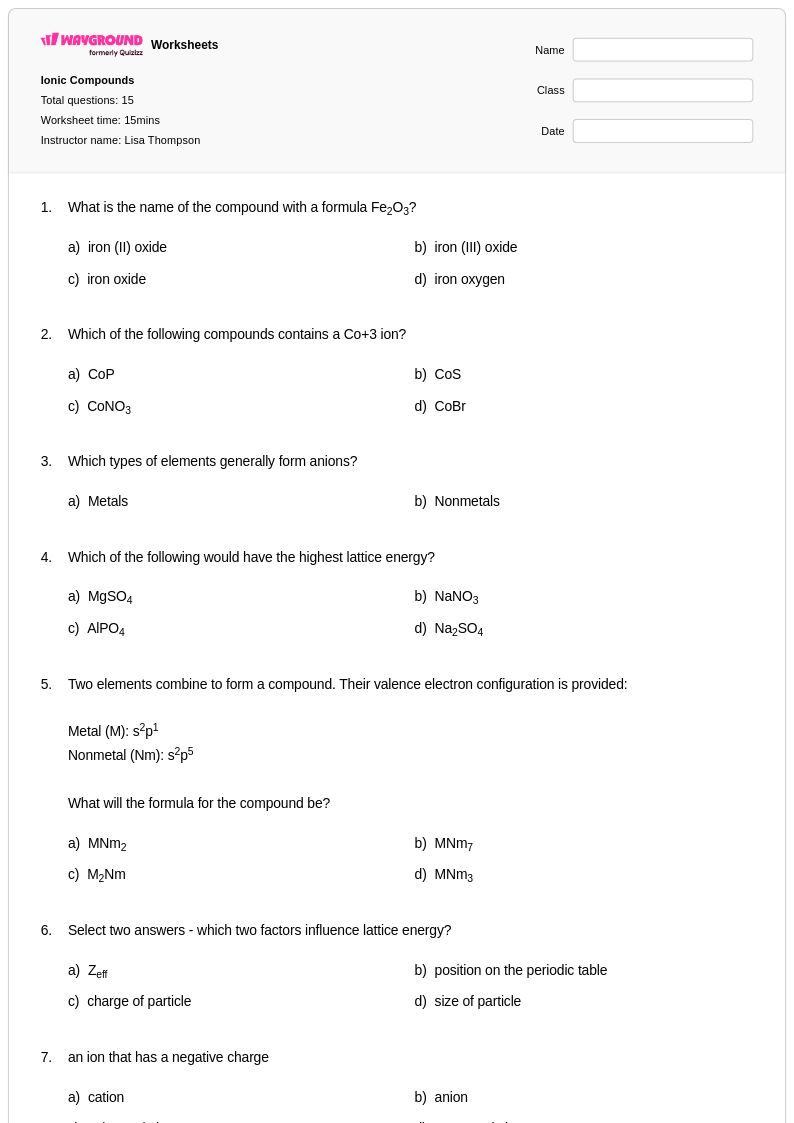
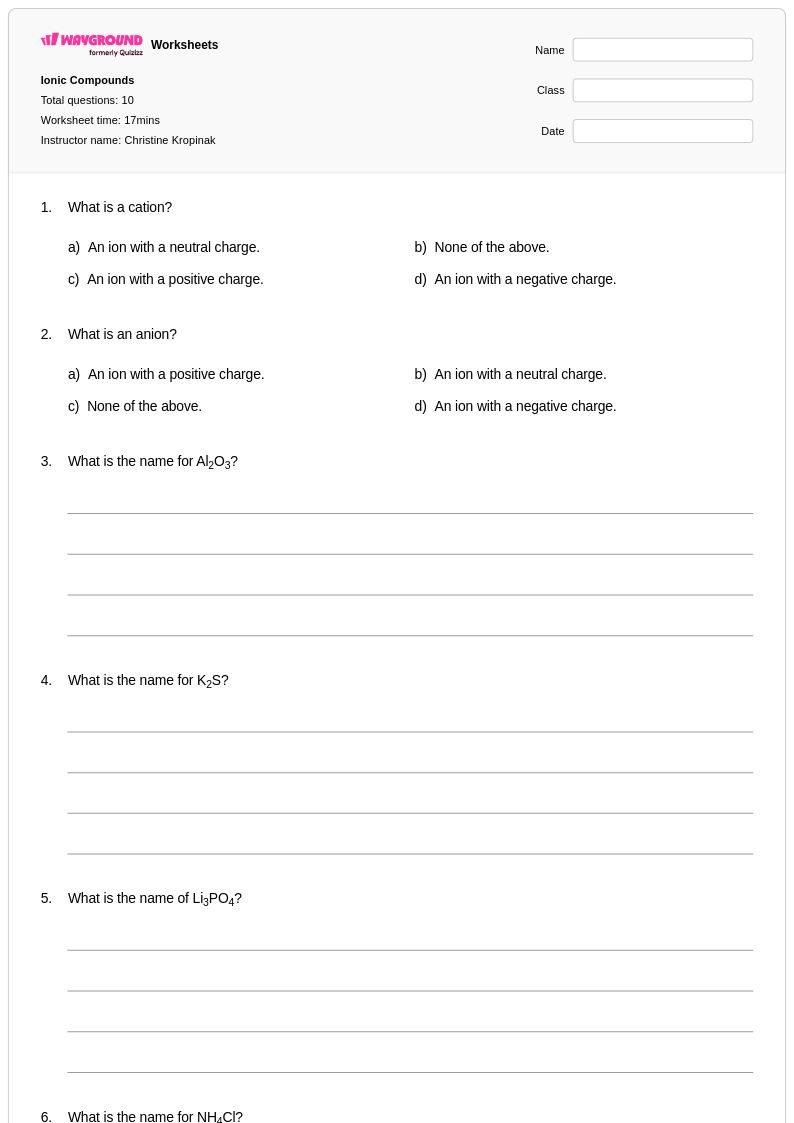
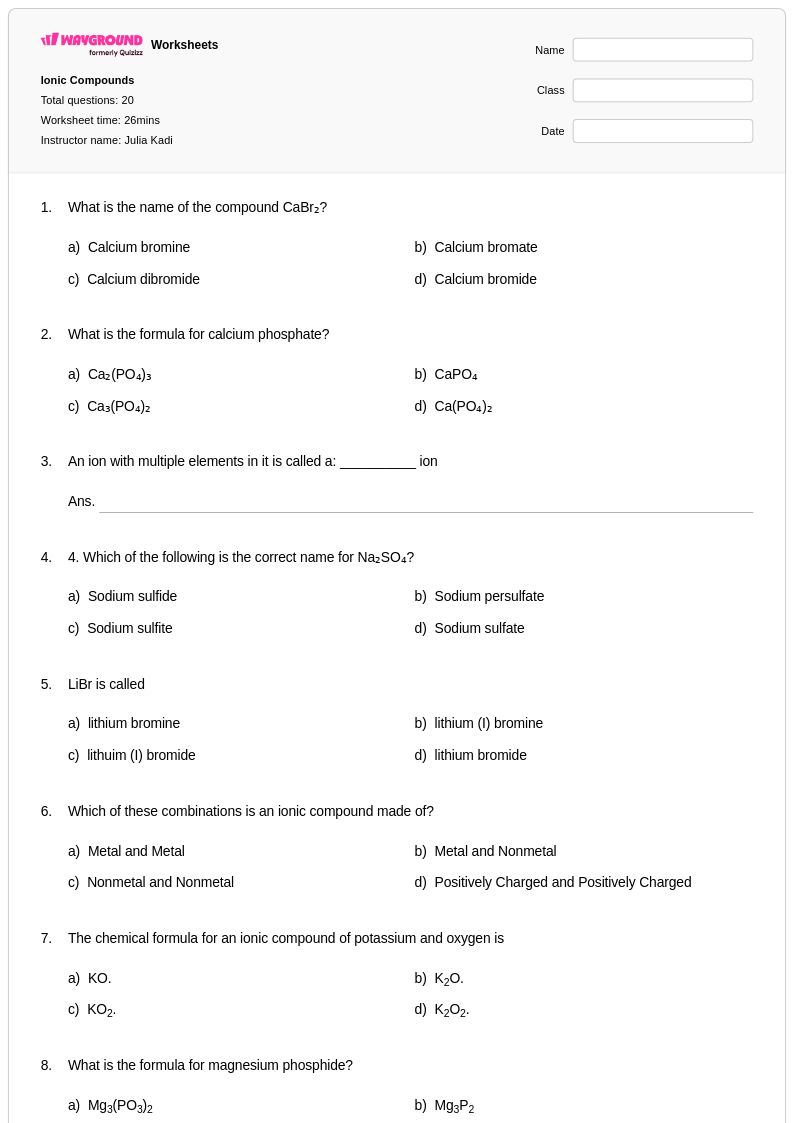
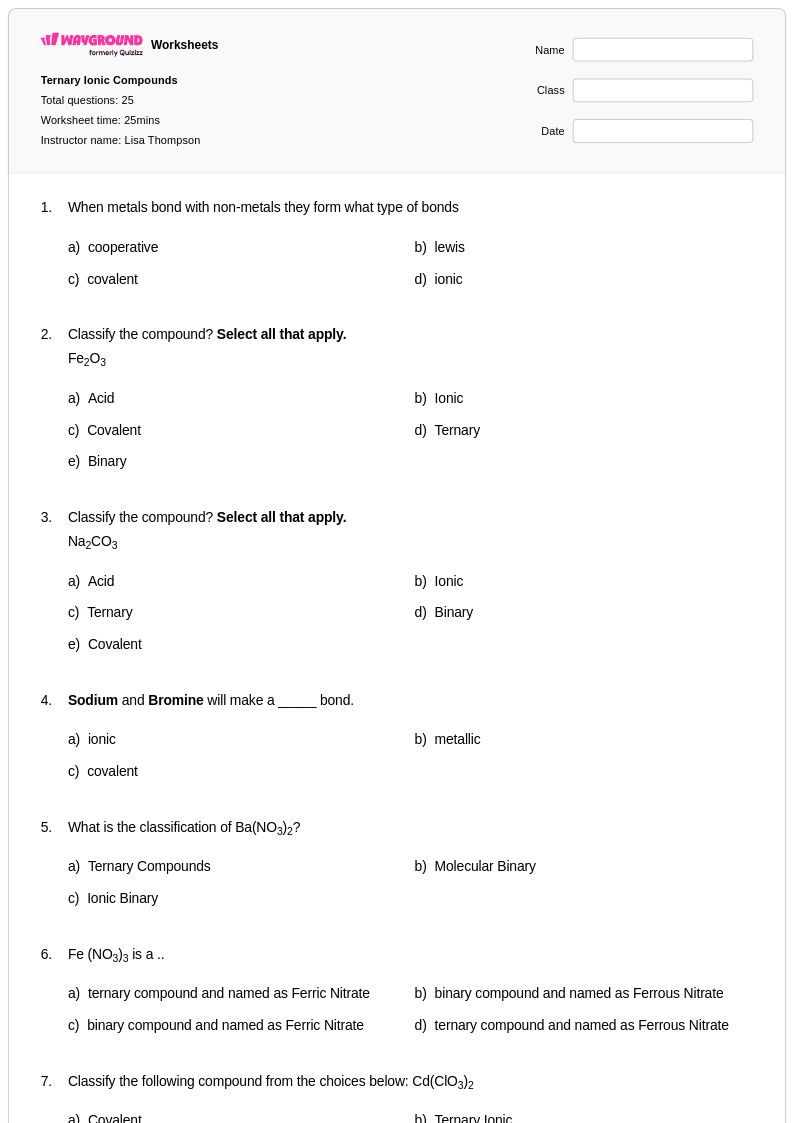
Explore Wayground's comprehensive collection of free ionic compounds worksheets and printables that help students master chemical bonding, formula writing, and naming conventions through engaging practice problems with complete answer keys.
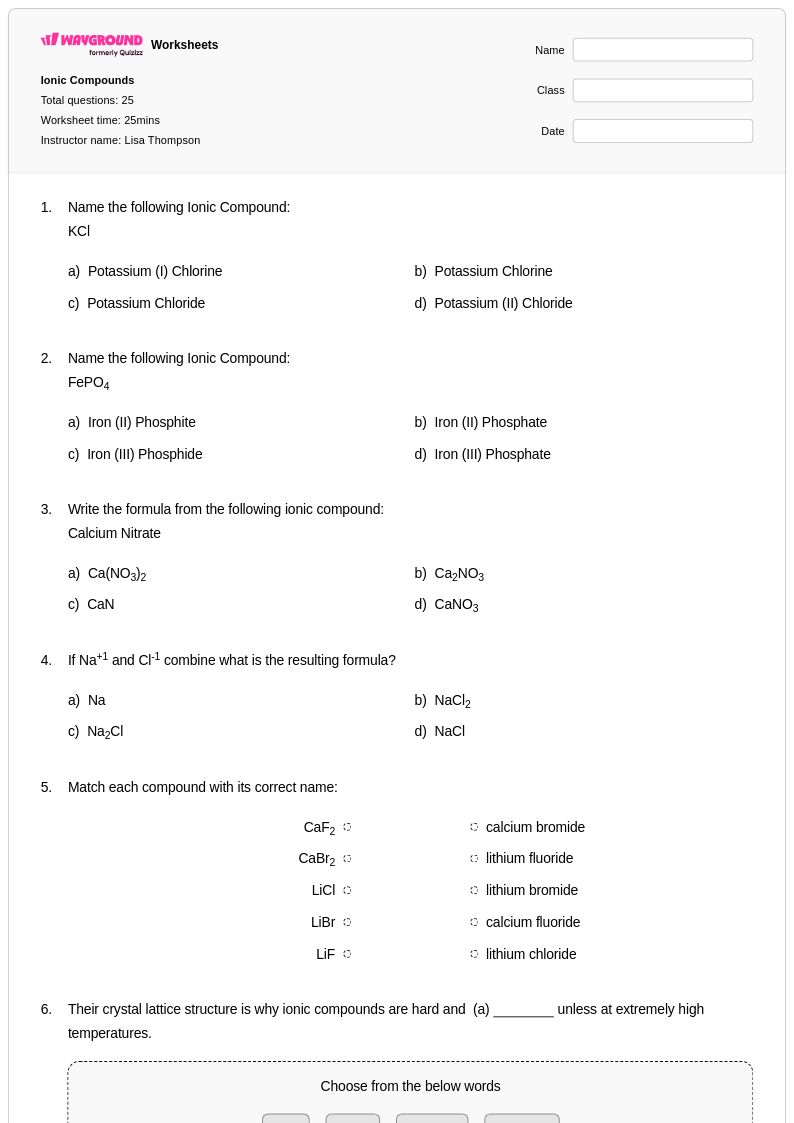
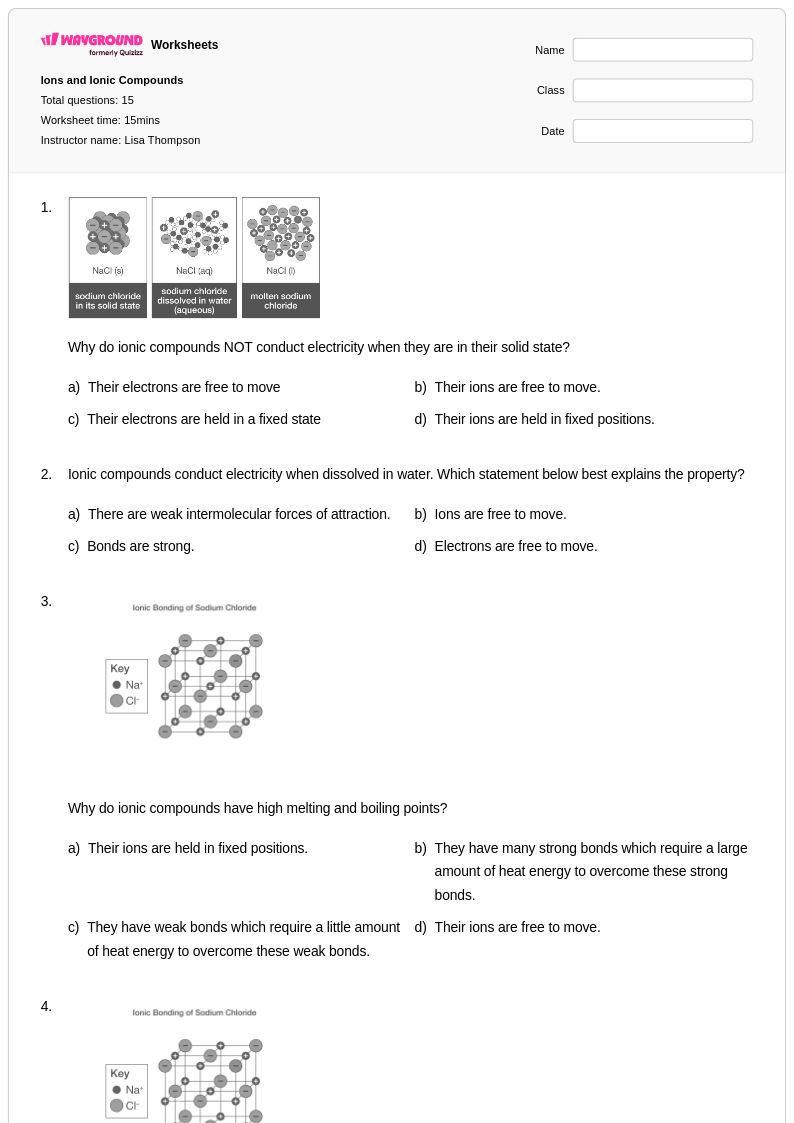
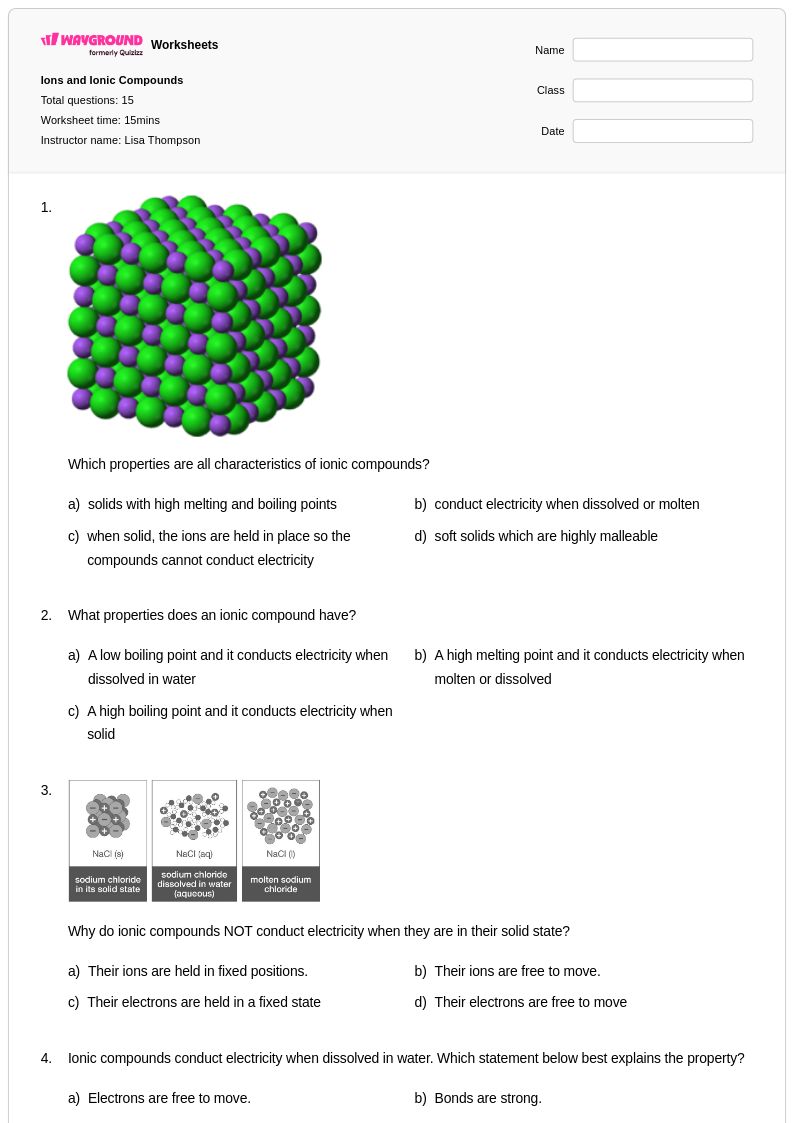
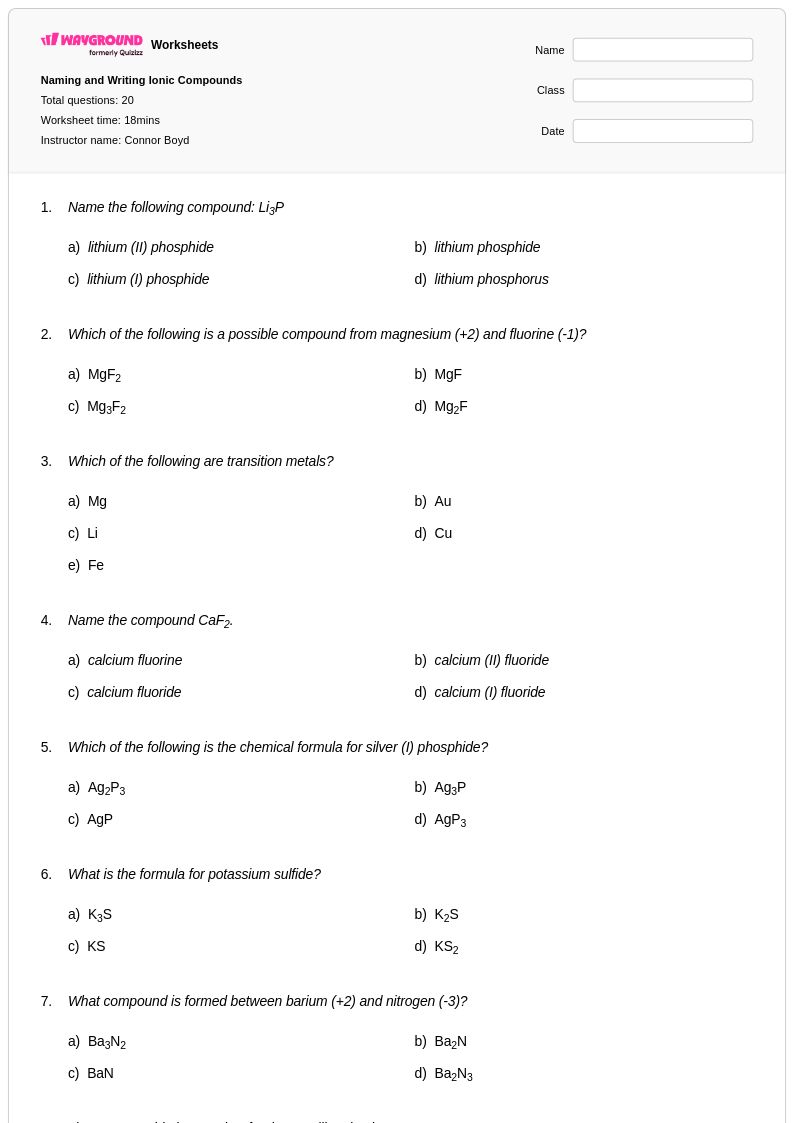
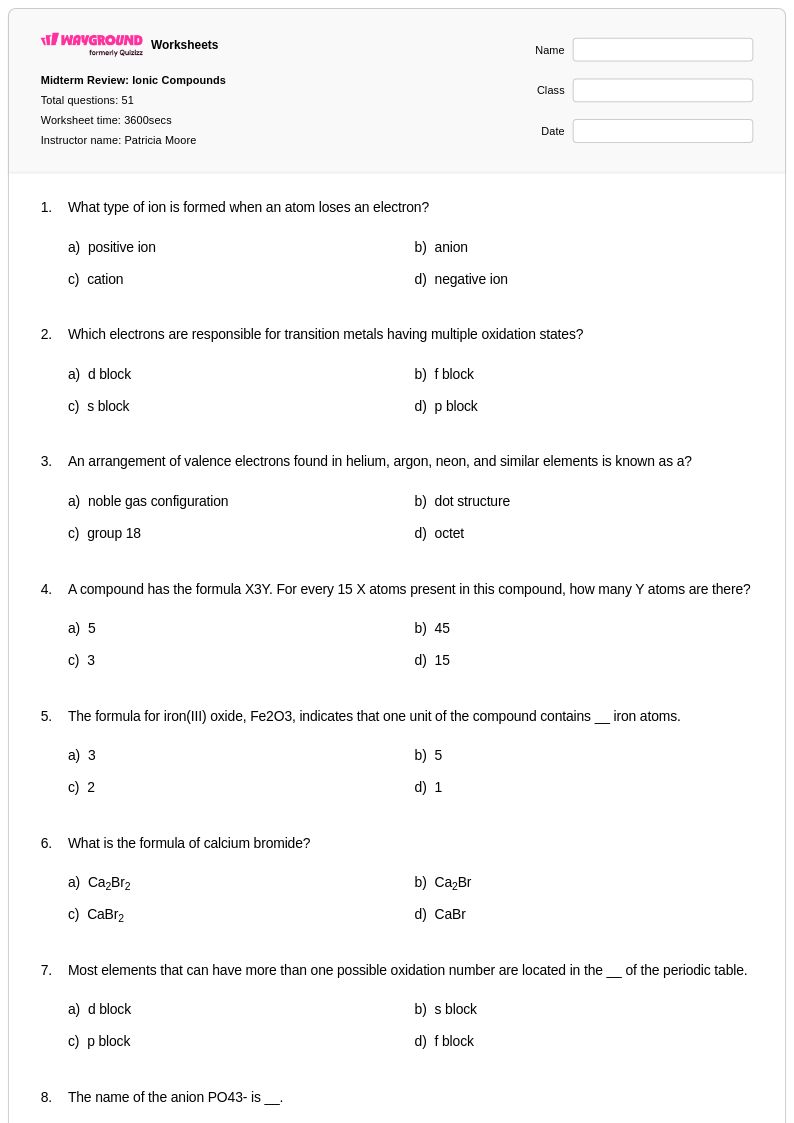
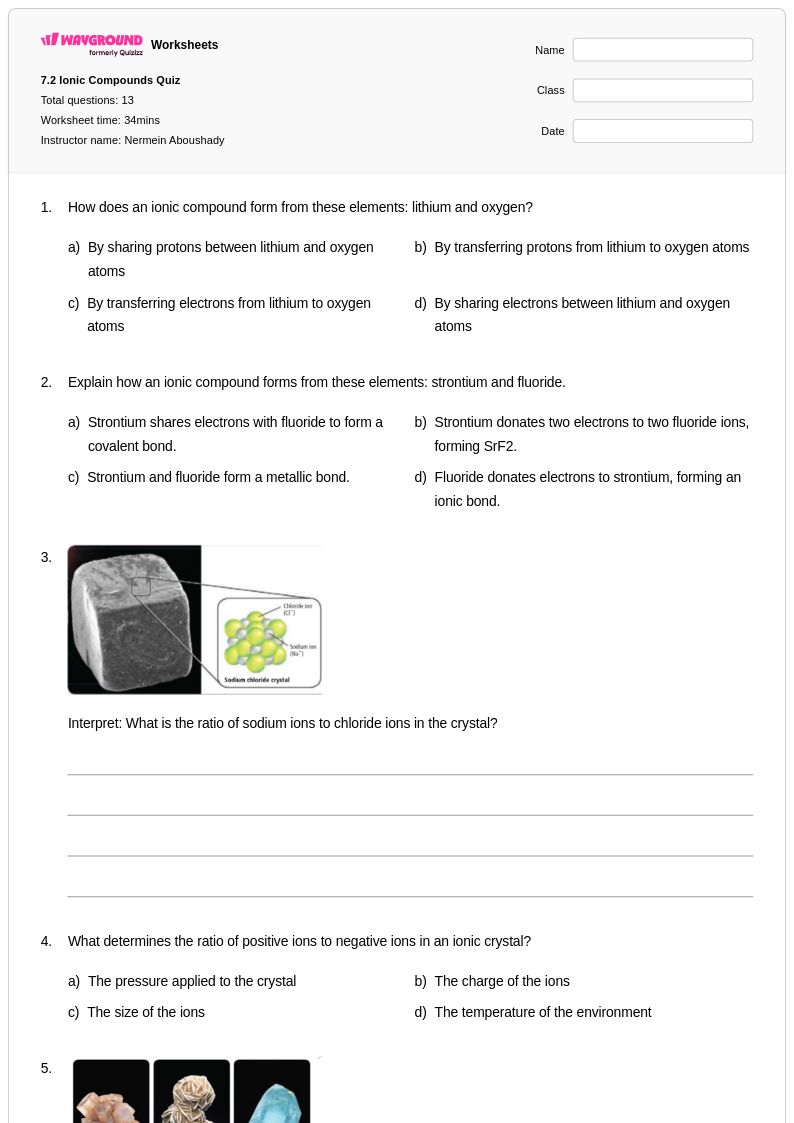
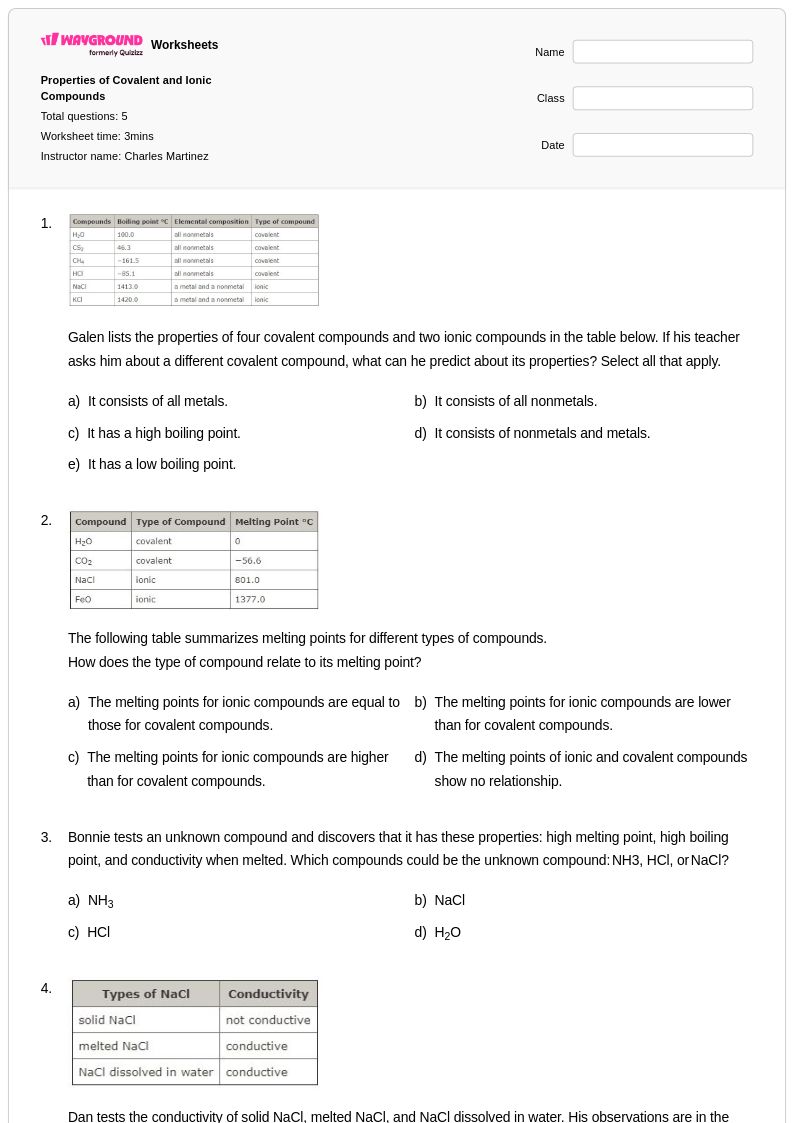
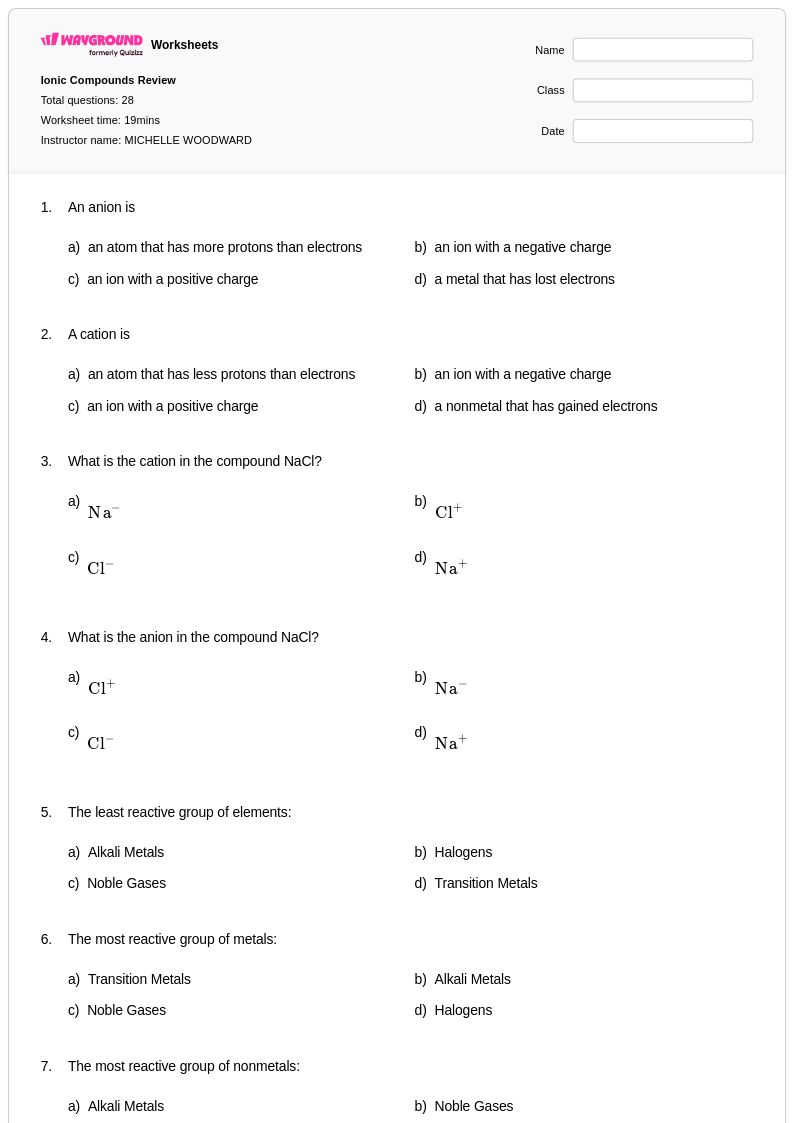
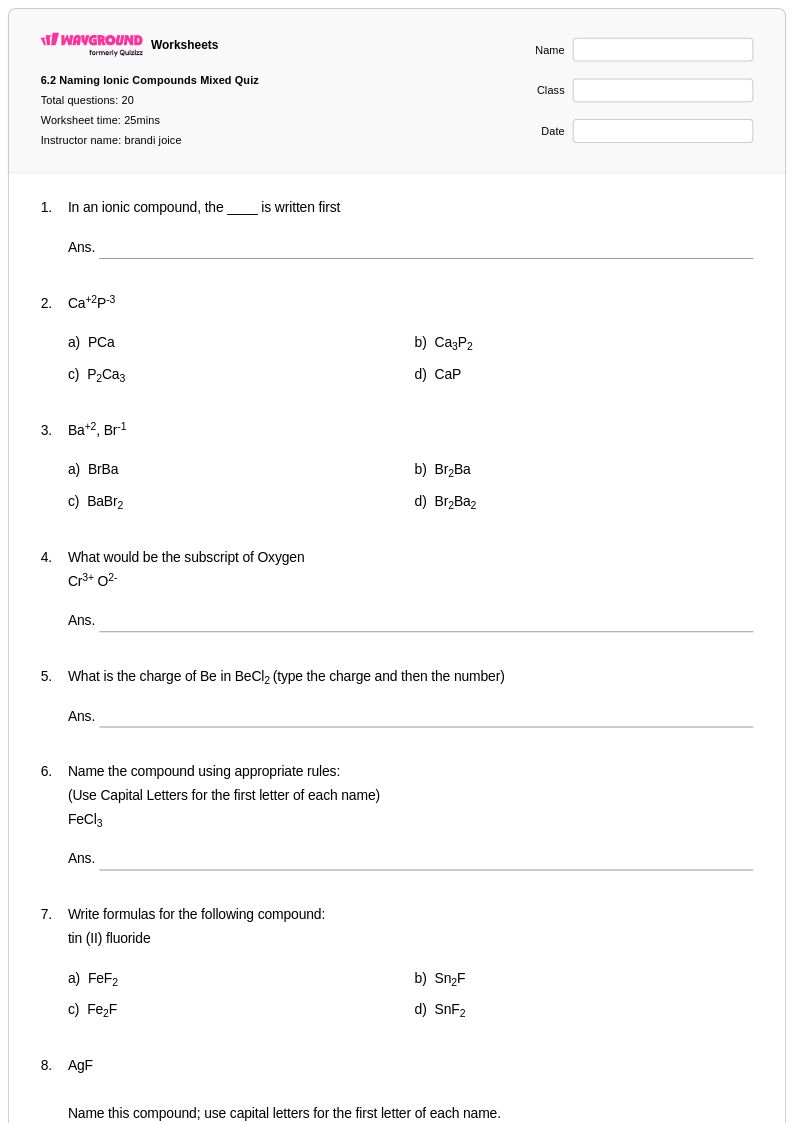
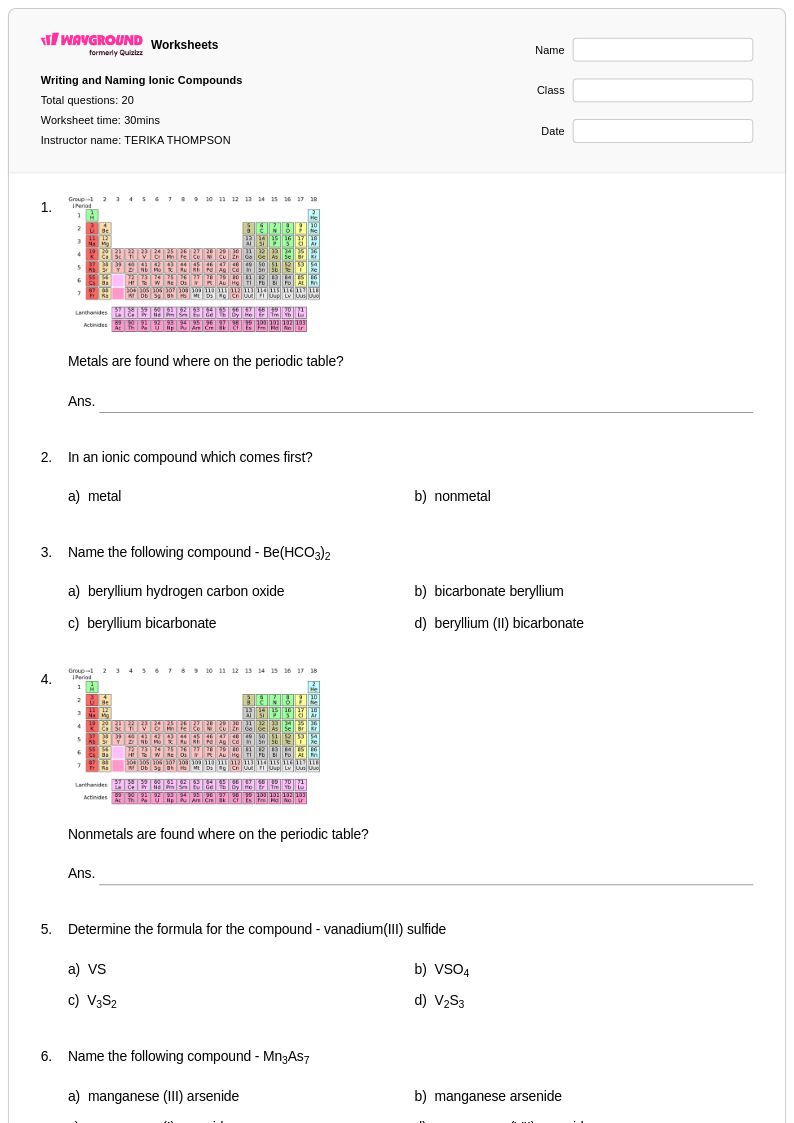
Ionic compounds worksheets available through Wayground (formerly Quizizz) provide comprehensive practice materials that help students master the fundamental concepts of chemical bonding between metals and nonmetals. These expertly designed worksheets focus on essential skills including writing chemical formulas for ionic compounds, naming compounds using systematic nomenclature rules, predicting ionic charges based on periodic table positions, and understanding the properties that result from ionic bonding such as conductivity and solubility patterns. Each worksheet collection includes detailed answer keys and is available as free printables in convenient PDF format, allowing students to work through practice problems that reinforce their understanding of how electrons transfer between atoms to form stable ionic structures and crystalline lattices.
Wayground (formerly Quizizz) empowers educators with an extensive library of millions of teacher-created ionic compounds resources that can be easily discovered through advanced search and filtering capabilities aligned with chemistry standards. Teachers can customize these materials to match their specific curriculum needs and differentiate instruction for diverse learners, whether providing additional practice for struggling students or enrichment activities for advanced learners. The platform's flexible format options include both printable worksheets and digital versions in PDF format, making it simple for educators to incorporate these resources into lesson planning, assign targeted remediation exercises, or create skill-building homework assignments that strengthen students' grasp of ionic bonding concepts and chemical formula writing techniques.
FAQs
How do I teach ionic compounds to high school chemistry students?
Teaching ionic compounds effectively starts with helping students understand electron transfer between metals and nonmetals before moving to formula writing and naming. Begin with the periodic table to establish how an element's group position predicts its ionic charge, then practice writing formulas using charge-balance rules. From there, introduce systematic nomenclature conventions, including how to name binary ionic compounds and those containing polyatomic ions. Connecting these concepts to observable properties like conductivity and solubility gives students a concrete reason why ionic bonding matters beyond the formula.
What exercises help students practice writing ionic compound formulas?
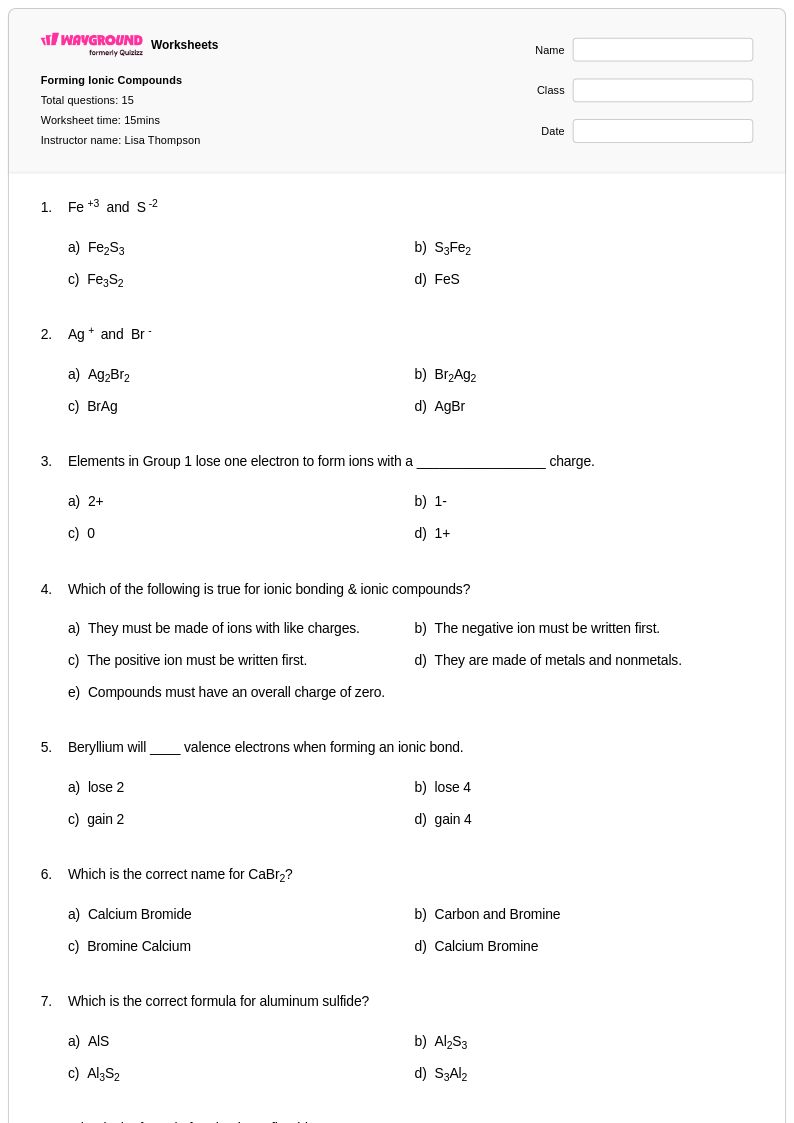
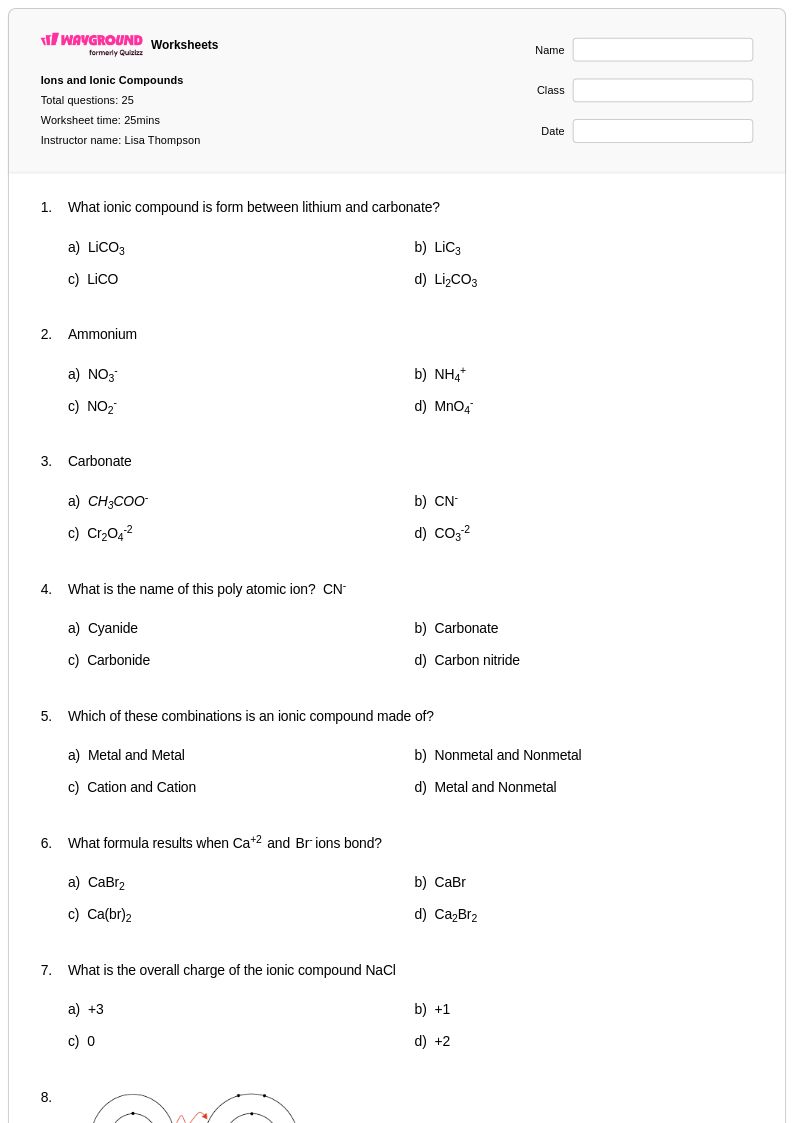
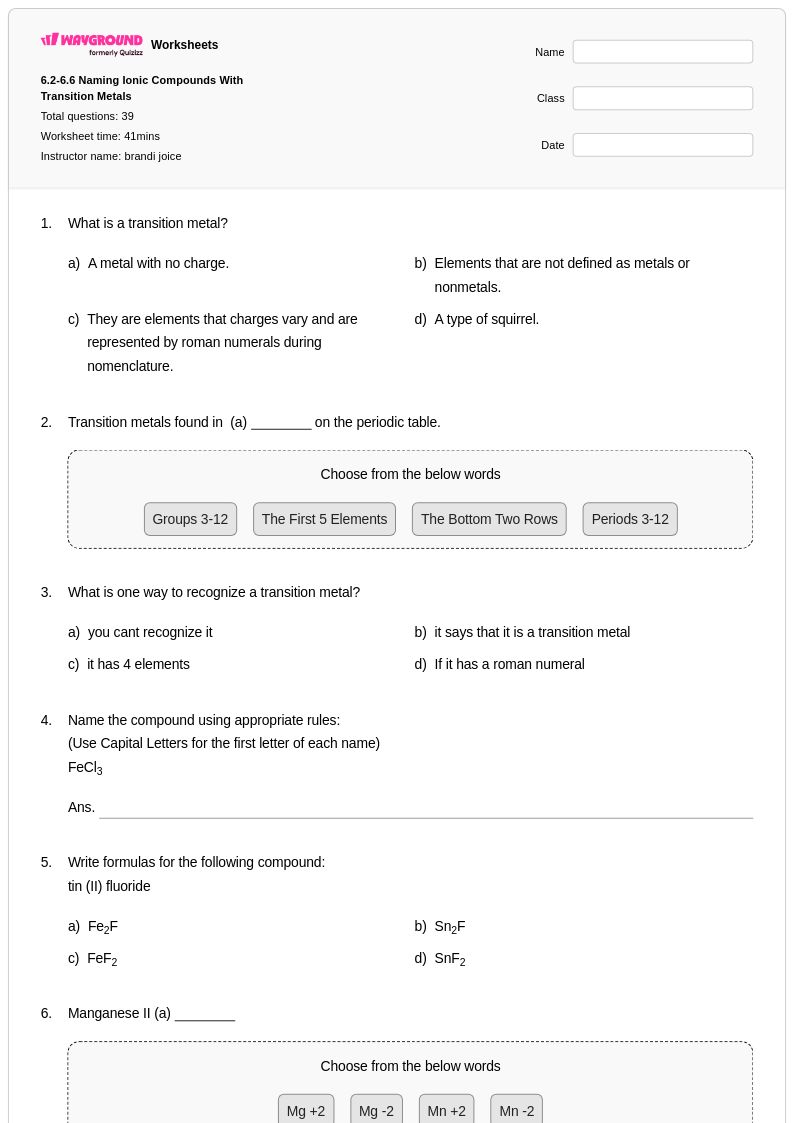
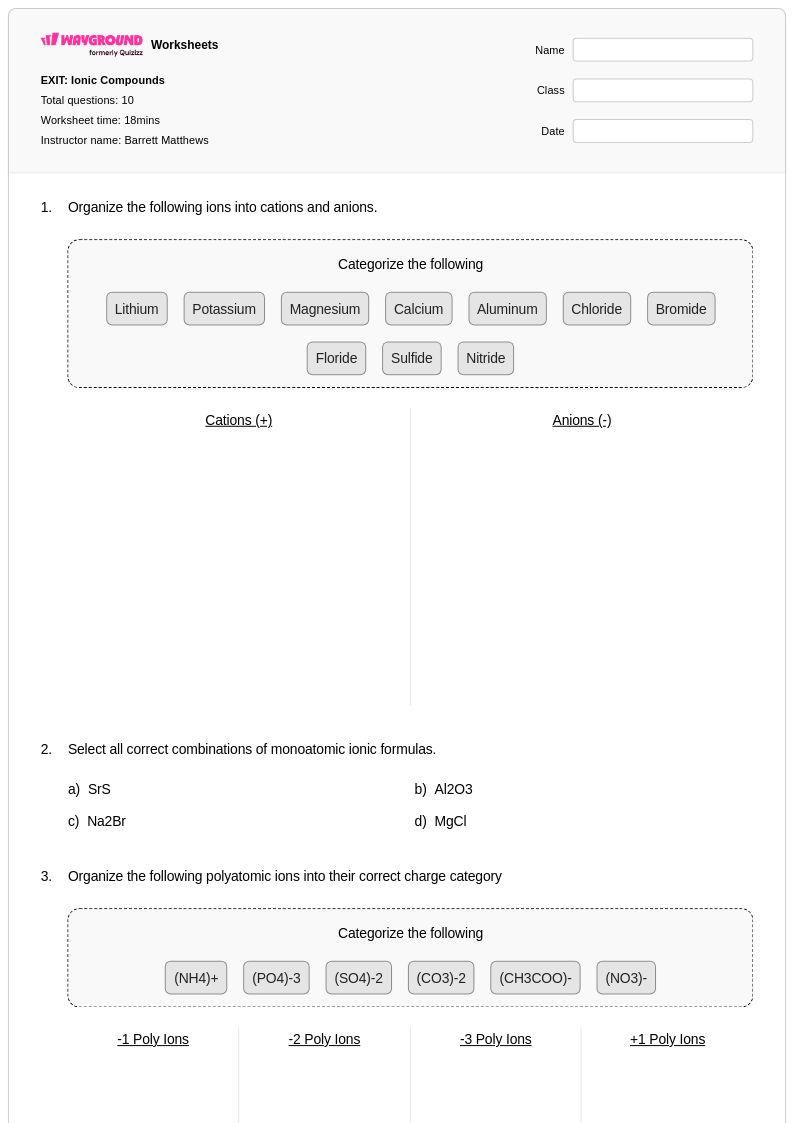
The most effective practice exercises for ionic formula writing require students to determine ionic charges from the periodic table, then apply charge-balance rules to produce a neutral compound. Drills that pair a range of metal cations with nonmetal or polyatomic anions build fluency and expose students to edge cases like transition metals with variable charges. Practice problems that move back and forth between naming a compound and writing its formula reinforce both skills simultaneously, which is essential because students are typically assessed on both in chemistry courses.
What mistakes do students commonly make when naming ionic compounds?
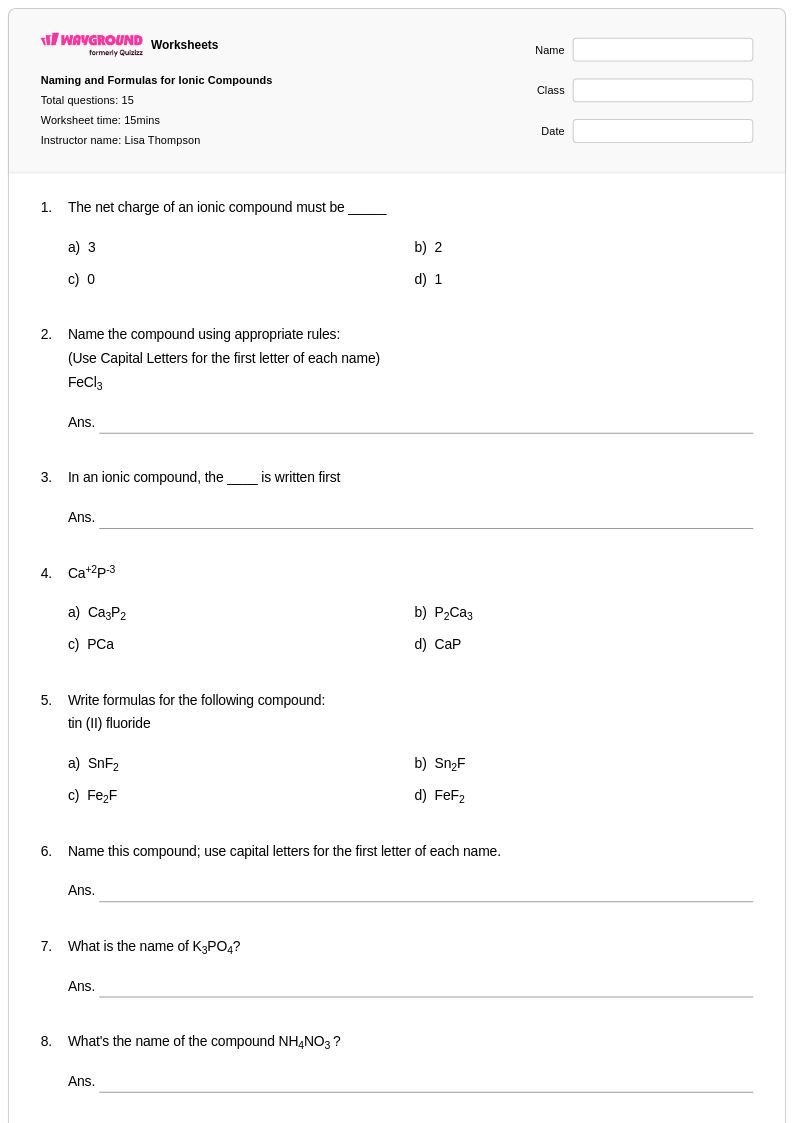
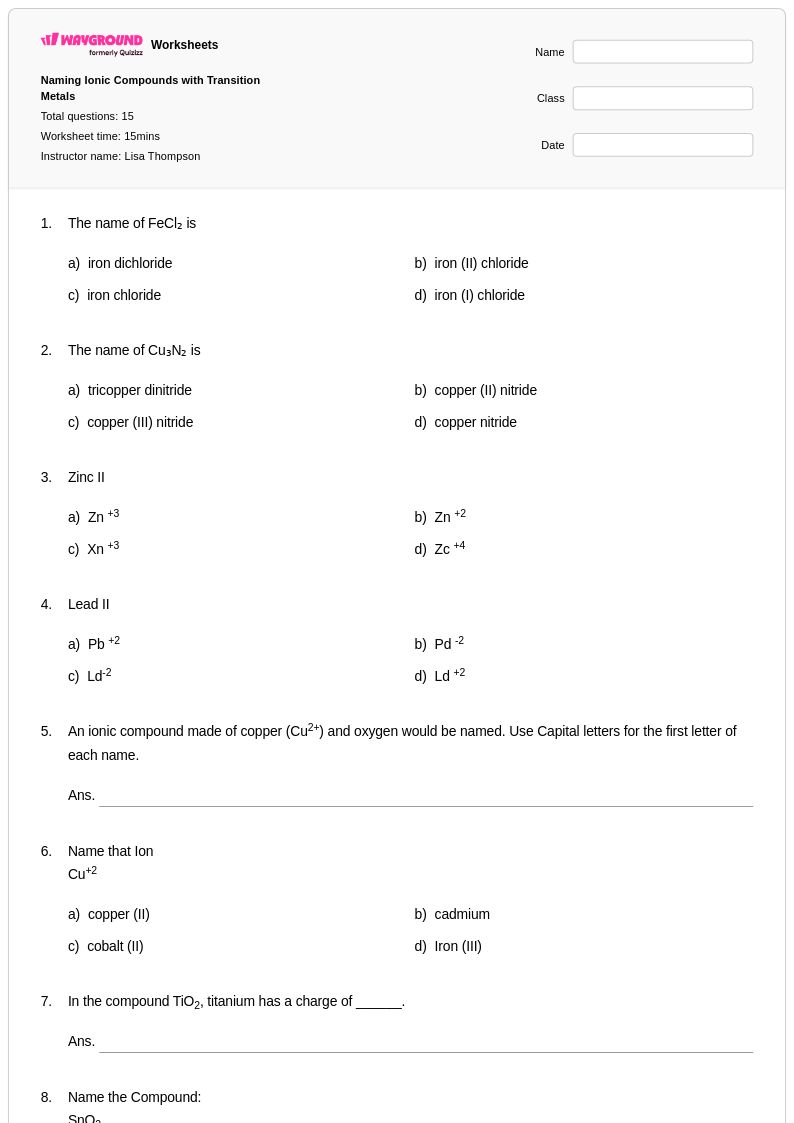
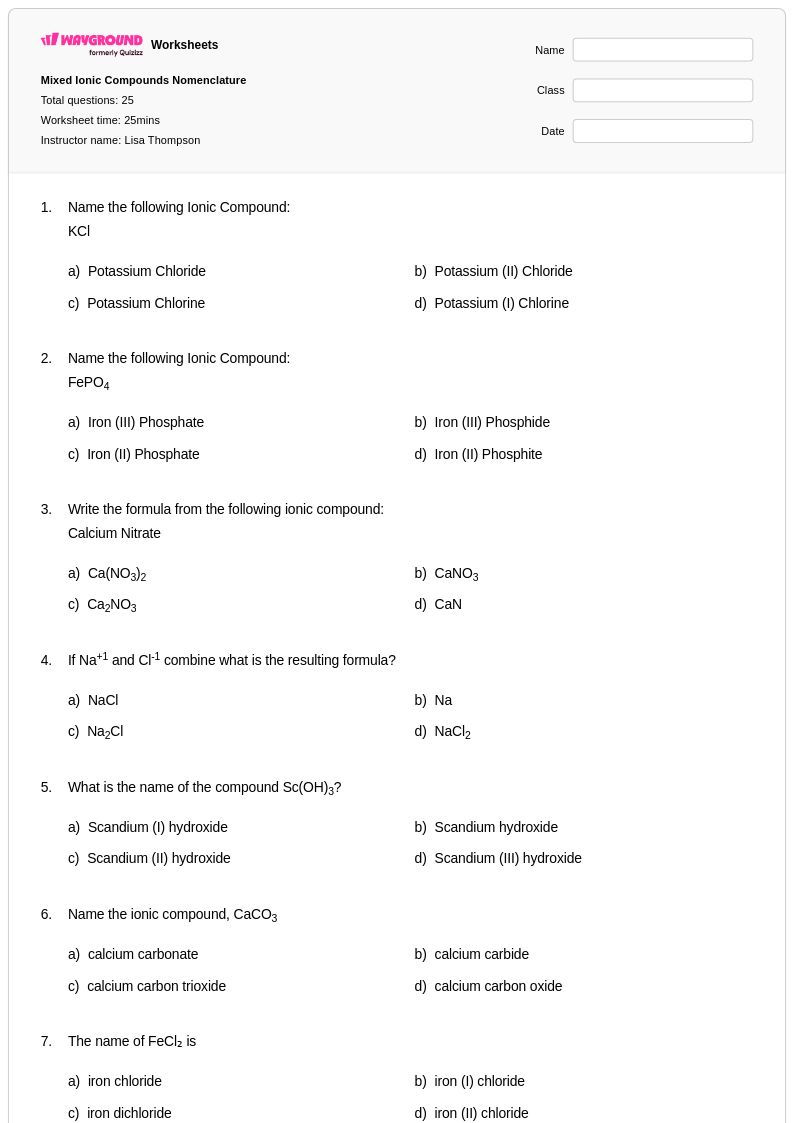
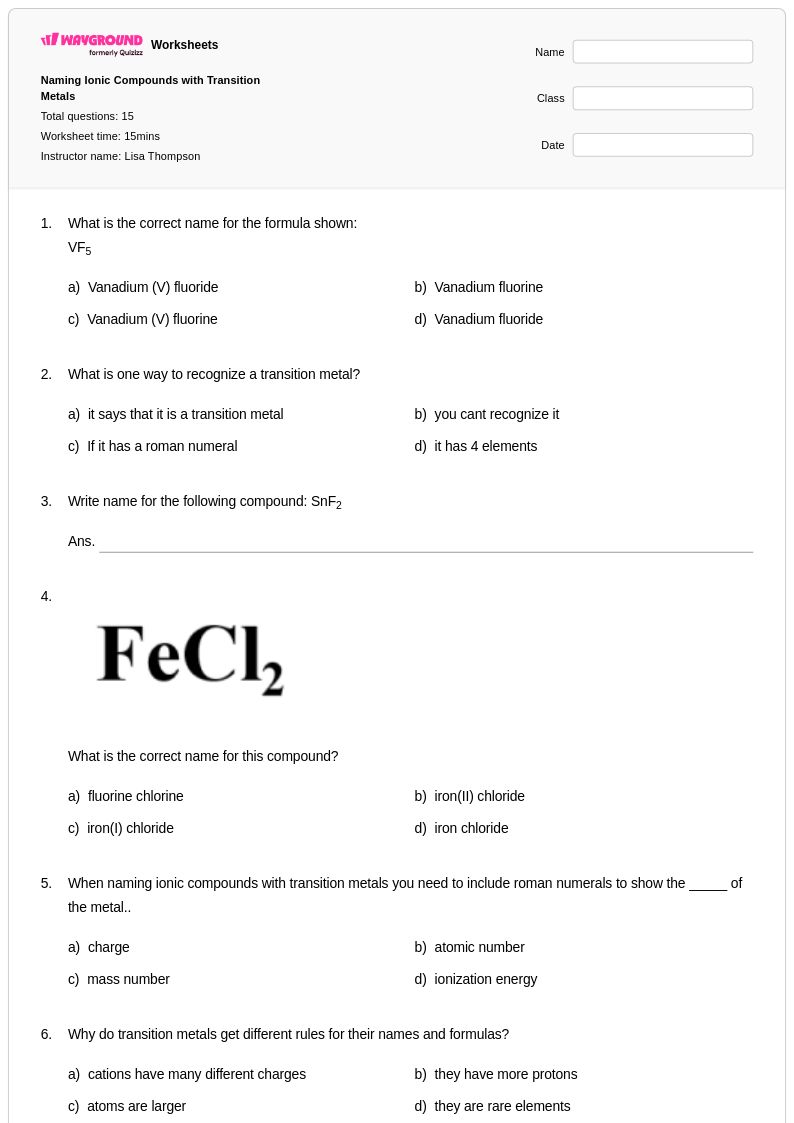
The most frequent error is treating ionic compound naming like covalent compound naming, which leads students to incorrectly add prefixes such as 'di-' or 'tri-' to ionic compound names. Students also struggle with transition metals that have variable oxidation states, often omitting the Roman numeral needed to specify the charge. Confusing the names and formulas of common polyatomic ions, particularly nitrate versus nitrite or sulfate versus sulfite, is another persistent problem. Targeted practice that isolates each naming rule before combining them tends to reduce these errors effectively.
How can I help students predict the ionic charges of elements without memorizing them?
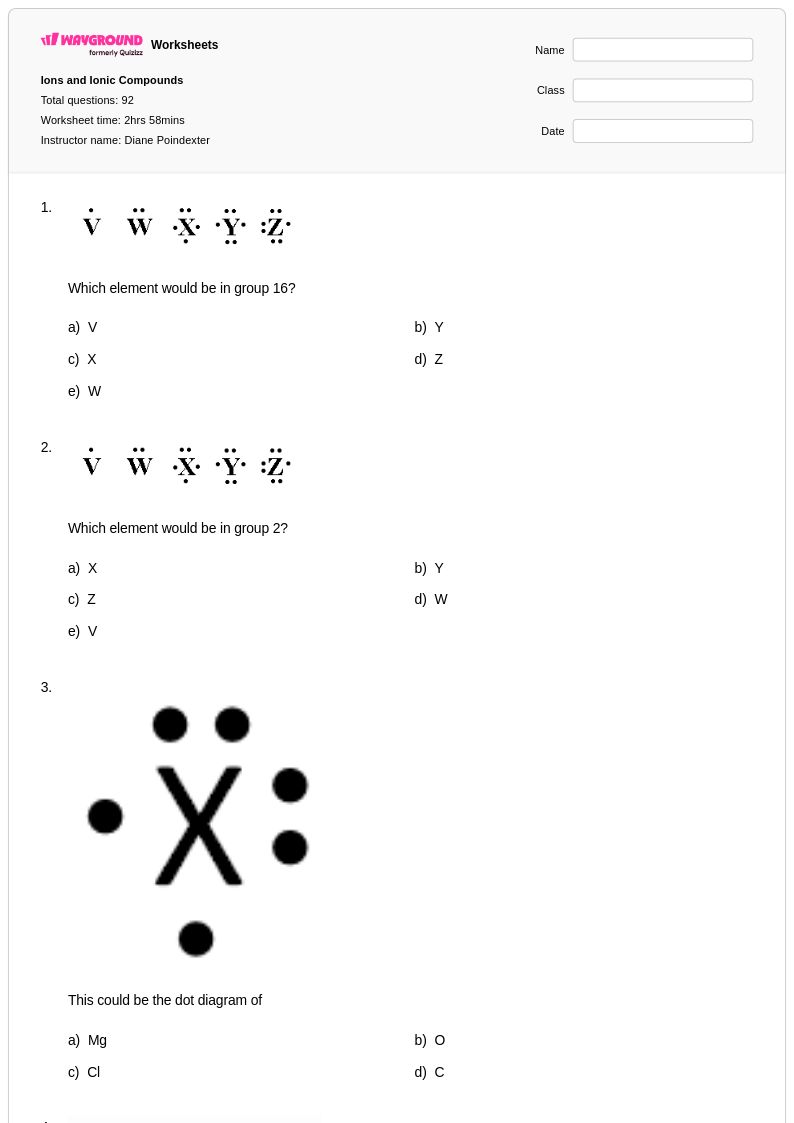
Rather than requiring rote memorization, teach students to read ionic charges directly from the periodic table by connecting group number to valence electrons. Main-group metals in Groups 1, 2, and 13 form predictable +1, +2, and +3 ions respectively, while nonmetals in Groups 16 and 17 gain electrons to reach -2 and -1 charges. The key exception to address explicitly is the transition metals, where variable charges cannot be predicted from group position alone and must be indicated using Roman numerals. Practice worksheets that require students to identify the charge before writing the formula build this reasoning habit rather than dependence on a memorized list.
How do I use Wayground's ionic compounds worksheets in my classroom?
Wayground's ionic compounds worksheets are available as printable PDFs for traditional classroom use and in digital formats for technology-integrated learning environments, giving teachers flexibility in how they assign and collect student work. Printable versions work well for in-class practice, lab warm-ups, or homework assignments, while digital versions can be hosted as a quiz directly on Wayground, enabling auto-graded assessment. Each worksheet includes a complete answer key, so teachers can use them for self-paced review stations, peer-checking activities, or quick formative checks without additional prep. Wayground also supports per-student accommodations such as read aloud, extended time, and reduced answer choices, which can be applied individually so all students engage with the same content at an appropriate level.
How do I differentiate ionic compounds instruction for students at different levels?
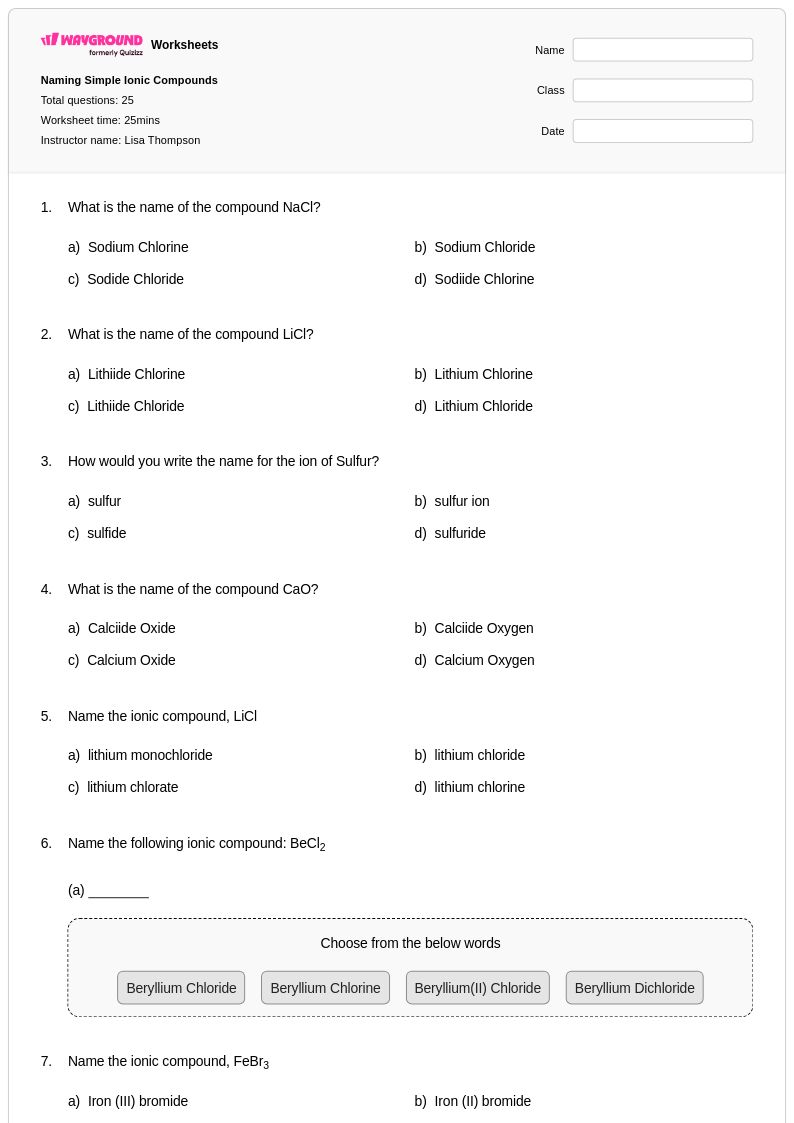
For students who are still building confidence, start with binary ionic compounds involving main-group elements only, where charge prediction is straightforward, before introducing transition metals or polyatomic ions. Advanced learners can be challenged with compounds that require cross-multiplying larger charges or with naming exercises that include hydrates and complex polyatomic ions. On Wayground, teachers can apply accommodations at the individual student level, including reduced answer choices to lower cognitive load for struggling learners and read aloud support for students with reading challenges, without other students being notified of those adjustments.