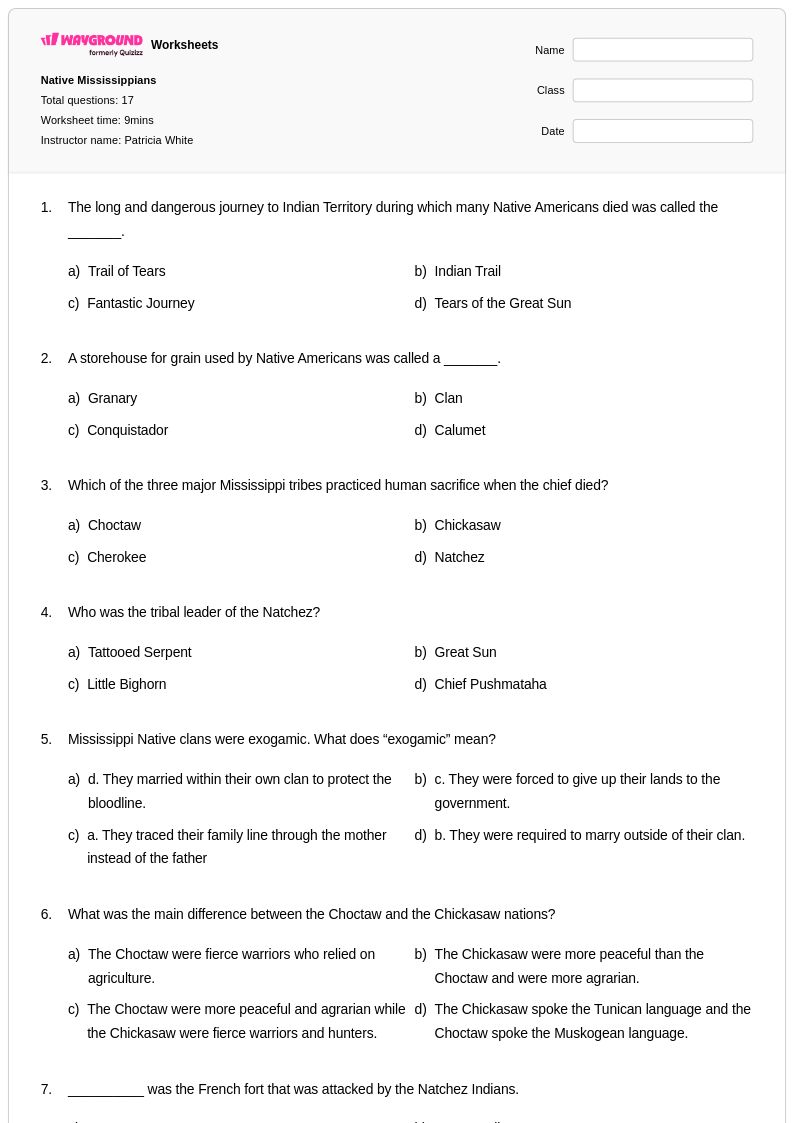
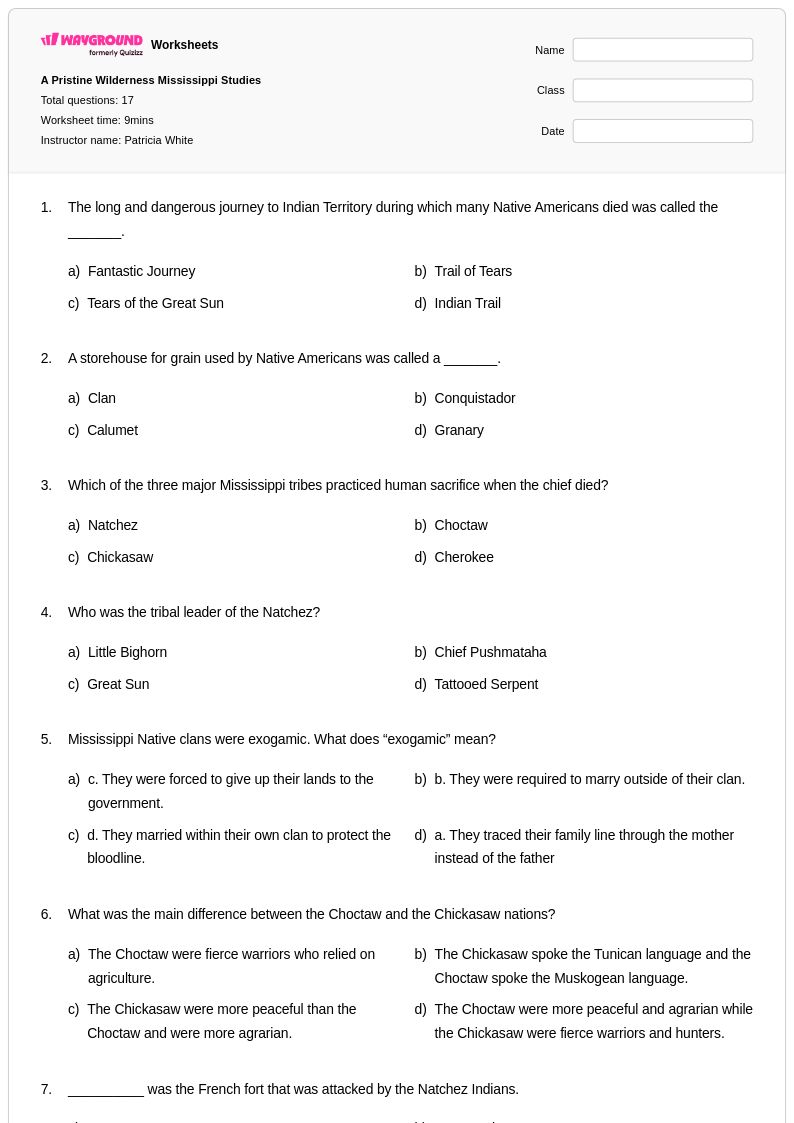
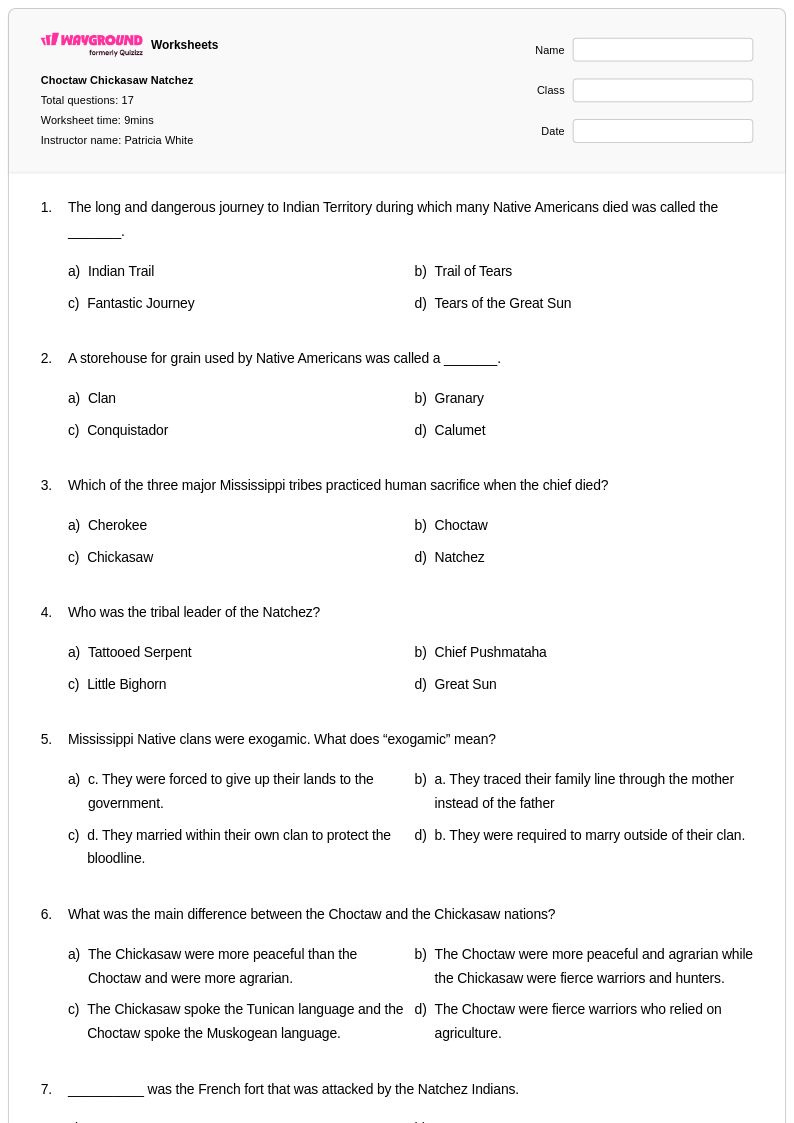
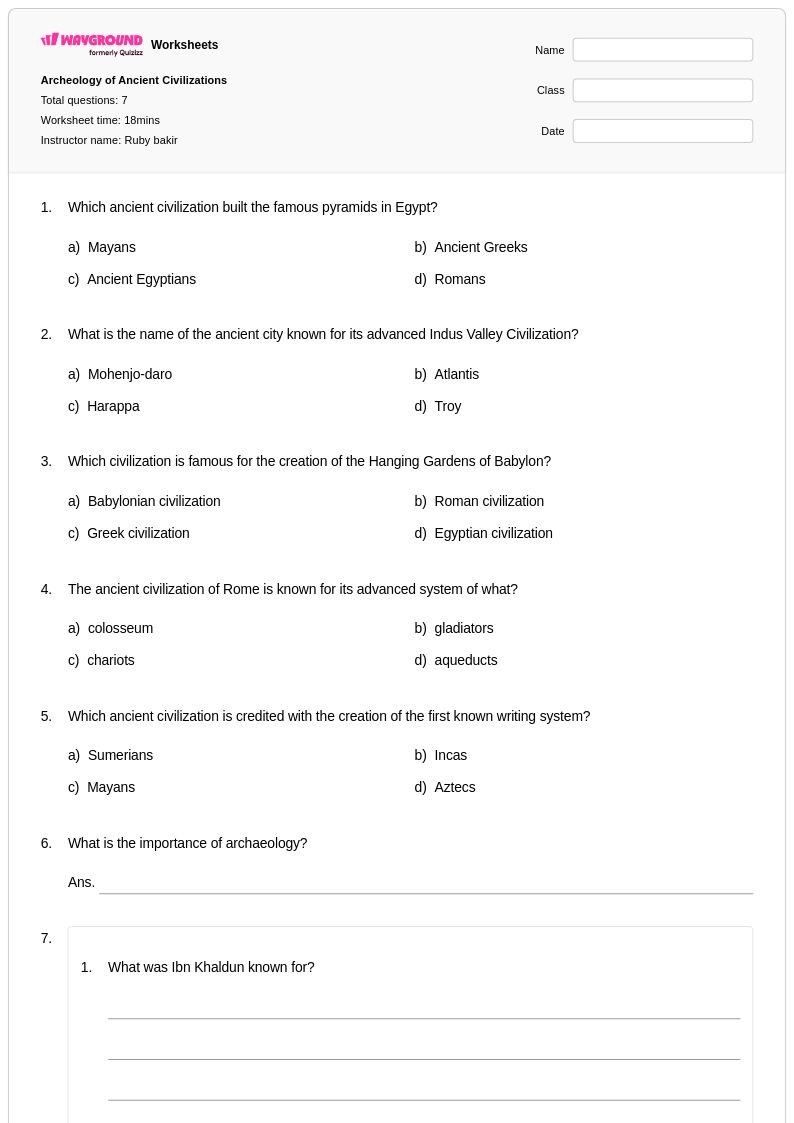
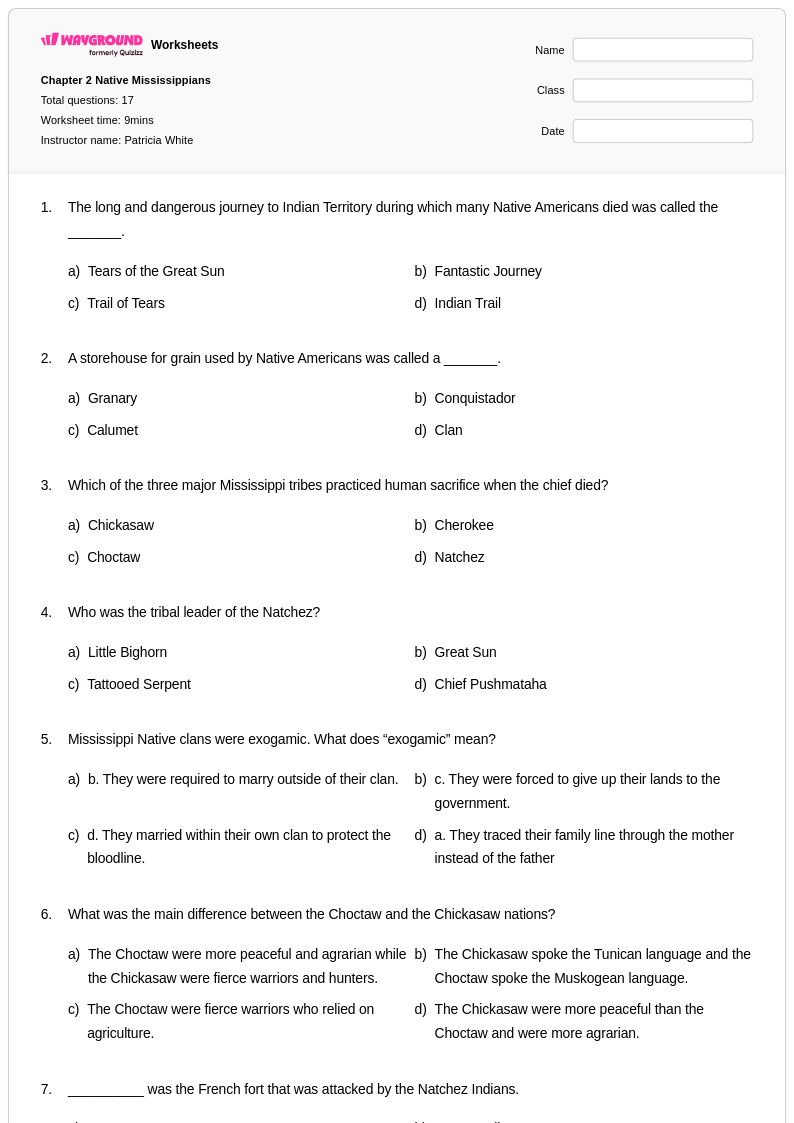
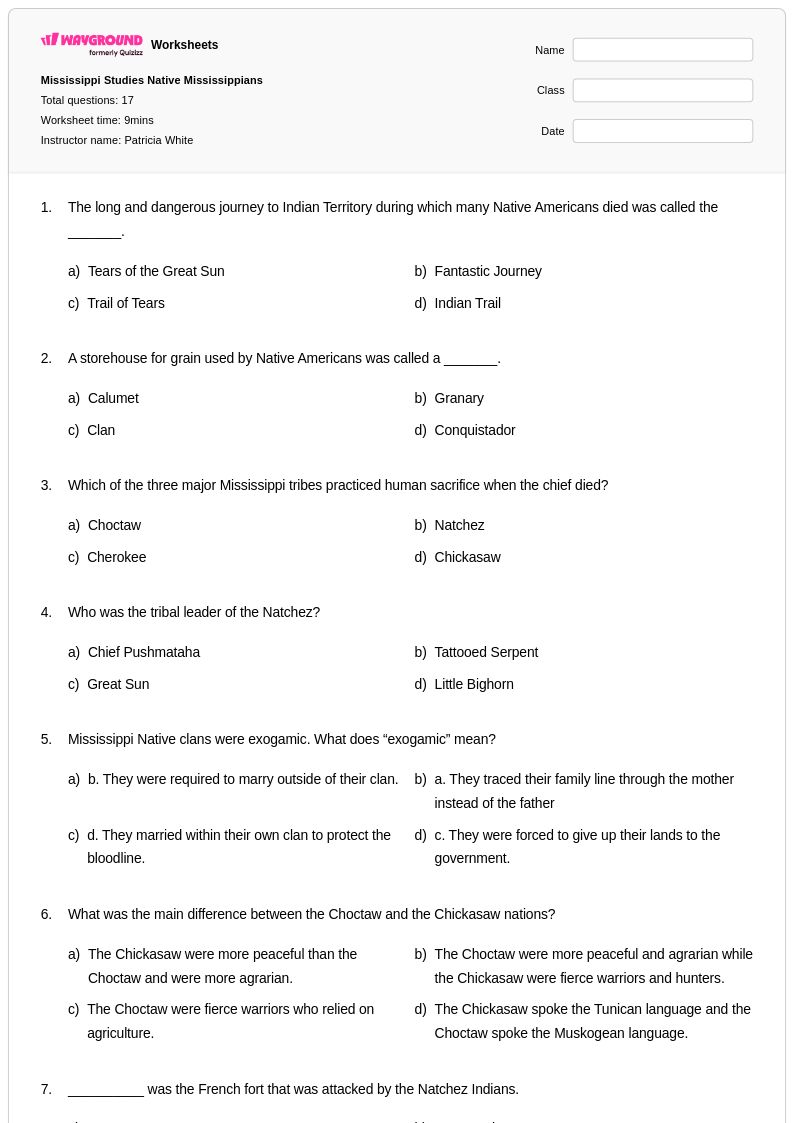
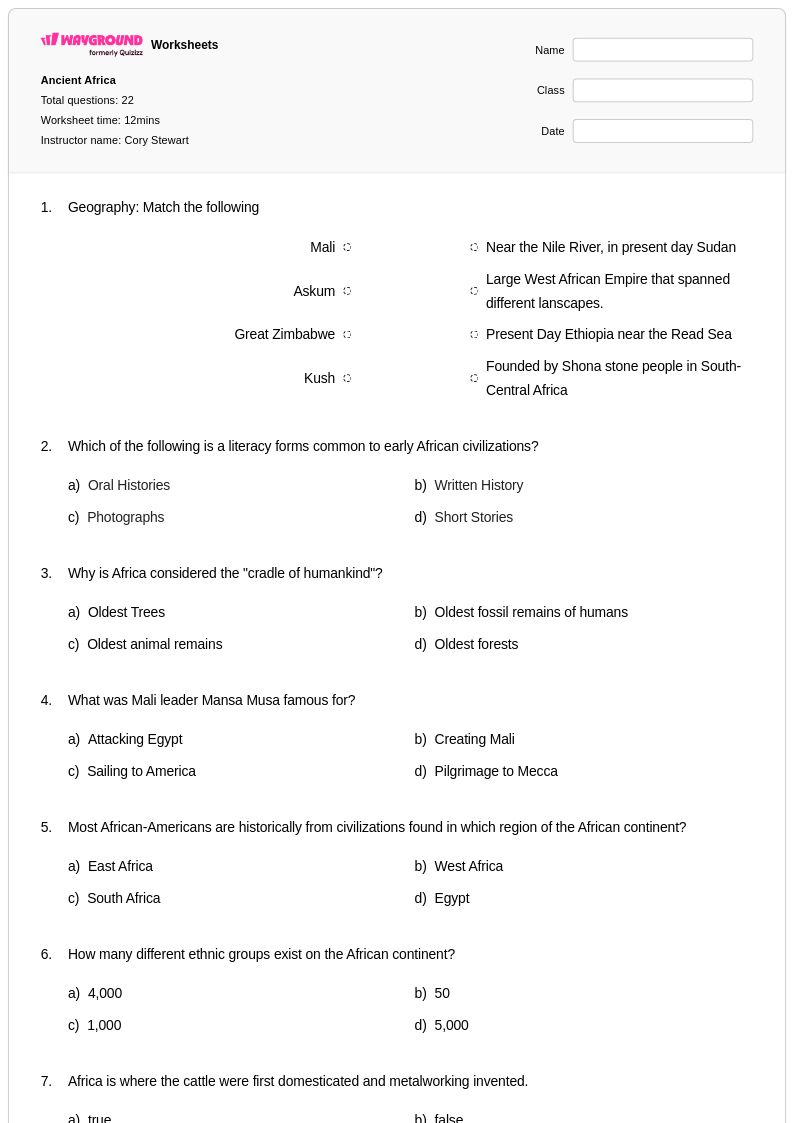
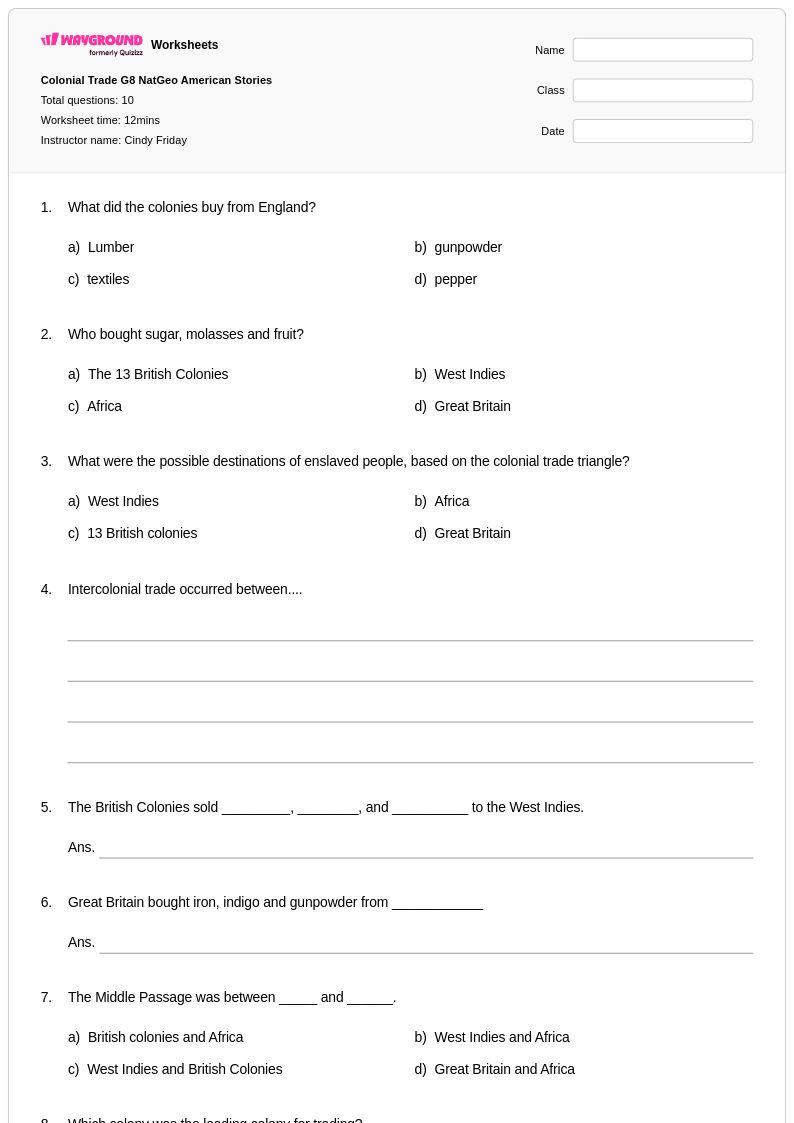
Explore free Creation Stories worksheets and printables that help students discover diverse cultural narratives and origin myths from communities worldwide, complete with practice problems and answer keys.
Creation stories worksheets available through Wayground (formerly Quizizz) provide students with comprehensive exploration of the diverse narratives that cultures worldwide use to explain the origins of the universe, humanity, and natural phenomena. These expertly designed educational resources strengthen critical thinking skills by guiding students through comparative analysis of creation myths from various civilizations, including ancient Mesopotamian, Greek, Norse, Indigenous American, African, and Asian traditions. Students develop cultural awareness and analytical abilities as they examine common themes, symbols, and archetypal characters found across different origin narratives. Each worksheet collection includes detailed answer keys to support independent learning, while free printable pdf formats ensure accessible distribution for classroom and homework assignments, making these practice problems valuable tools for reinforcing understanding of how societies use storytelling to convey fundamental beliefs about existence and meaning.
Wayground (formerly Quizizz) empowers educators with millions of teacher-created resources specifically designed to support instruction on creation stories and cultural mythology within social studies curricula. The platform's robust search and filtering capabilities allow teachers to quickly locate worksheets aligned with relevant educational standards, while differentiation tools enable customization for diverse learning needs and ability levels. Teachers can seamlessly modify existing materials or create entirely new assessments, with flexible options for both printable pdf distribution and interactive digital formats that accommodate various classroom technologies. These comprehensive features streamline lesson planning while providing targeted resources for remediation, enrichment activities, and systematic skill practice, ensuring that students develop deep appreciation for the rich tapestry of human cultural expression through foundational narratives that have shaped civilizations throughout history.
FAQs
How do I teach creation stories from multiple cultures in the same unit?
The most effective approach is to teach creation stories through a comparative framework, grouping narratives by theme rather than by culture. Start with a shared anchor text, then introduce myths from two or three distinct traditions, such as Mesopotamian, Norse, and Indigenous American, asking students to identify recurring elements like a creator figure, a void or chaos before creation, and the emergence of humanity. This structure builds cultural awareness while developing analytical reading skills simultaneously.
What exercises help students practice analyzing creation myths?
Comparative analysis charts are among the most effective exercises for this topic, prompting students to record the creator figure, the origin of the world, the role of humans, and key symbols across multiple myths side by side. Close-reading questions that ask students to identify archetypal characters or recurring motifs reinforce critical thinking, while short written responses asking students to explain what a myth reveals about a culture's values push toward deeper interpretation. These types of structured practice problems help students move beyond surface-level plot summary into genuine textual analysis.
What misconceptions do students commonly have when studying creation stories?
A common misconception is that creation stories are simply 'old stories' with no analytical value, leading students to summarize rather than interpret them. Another frequent error is treating one tradition's narrative as the default and reading all others as variations of it, which undermines genuine comparative analysis. Students also often conflate the word 'myth' with 'false,' so it is worth explicitly establishing that in this academic context, myth refers to a culturally significant narrative rather than a factual inaccuracy.
How do I use creation stories worksheets in my classroom?
Creation stories worksheets on Wayground are available as printable PDFs for traditional classroom and homework distribution, as well as in digital formats suited for technology-integrated environments, including the option to host them as an interactive quiz directly on Wayground. Printable versions work well for close-reading activities or independent practice, while digital formats allow for immediate feedback and easy assignment tracking. Both formats include complete answer keys, so teachers can use them for guided instruction, independent work, or formative assessment without additional preparation.
How can I differentiate creation stories instruction for students at different reading levels?
Differentiation for this topic works best when the core task, comparing narratives, remains consistent but the complexity of the texts and the scaffolding changes. For students who need support, shorter adapted excerpts with guiding questions reduce cognitive load while preserving the analytical objective. On Wayground, teachers can apply individual student accommodations such as read aloud, reduced answer choices, and extended time, which are especially useful when students are engaging with unfamiliar cultural content that carries significant vocabulary demands.
Which subject areas and grade levels are creation stories worksheets appropriate for?
Creation stories are taught across multiple disciplines, including social studies, world history, English language arts, and comparative religion or philosophy courses. The content is appropriate across a wide grade range, from upper elementary through high school, with the depth of analysis and the complexity of texts scaled accordingly. At the middle school level, the focus is typically on cultural awareness and theme identification, while high school instruction often extends into literary theory, symbolism, and the role of myth in shaping societal values.