
20 Q
1st - Uni
20 Q
1st - Uni
20 Q
1st - Uni
20 Q
1st - Uni
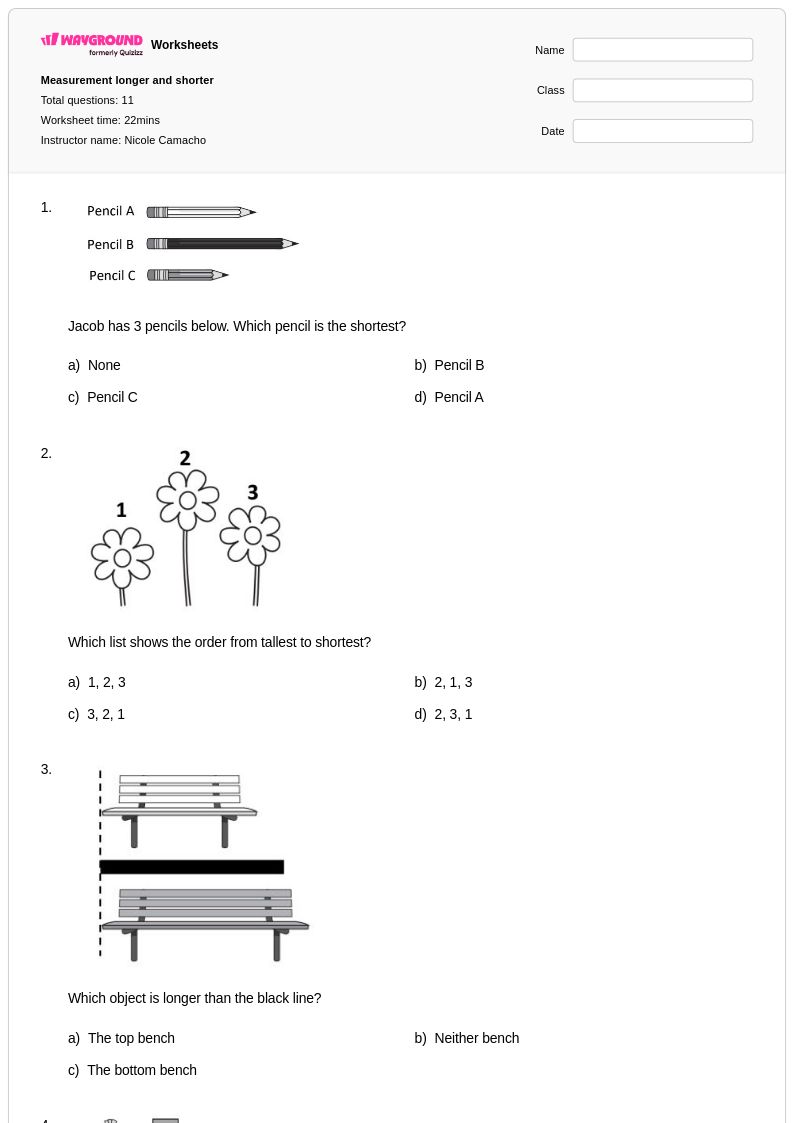
11 Q
1st
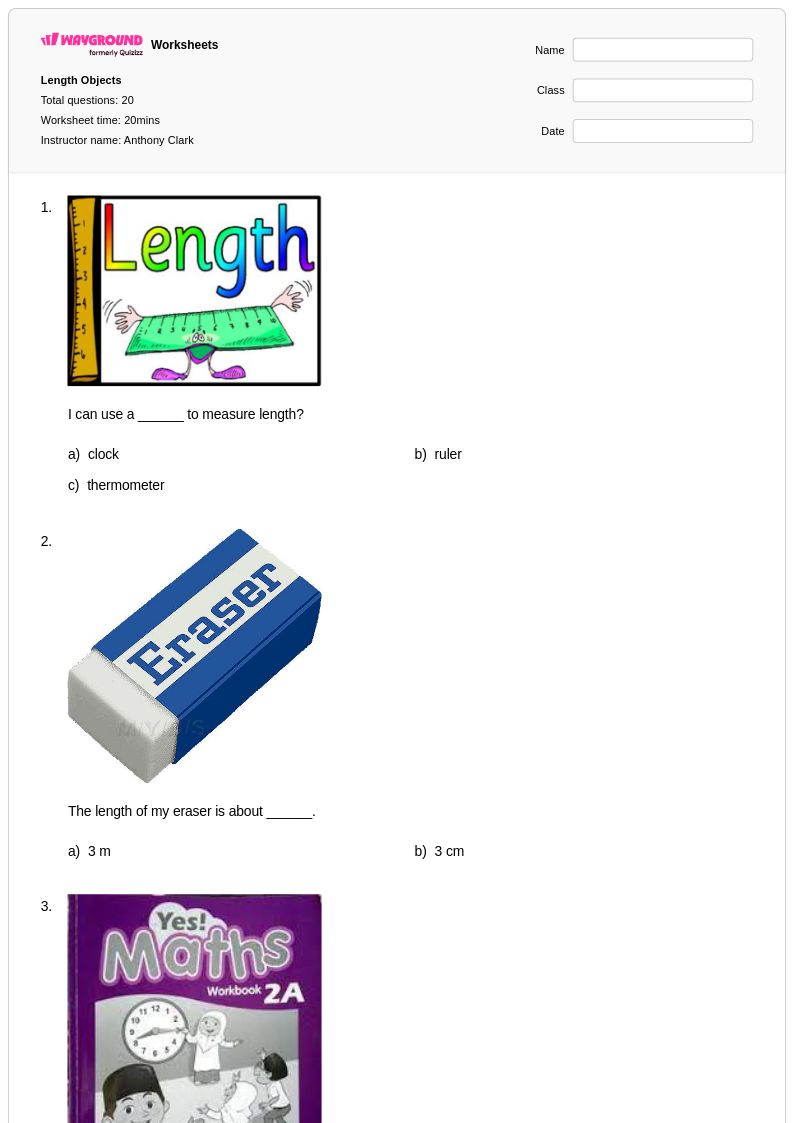
20 Q
1st - Uni
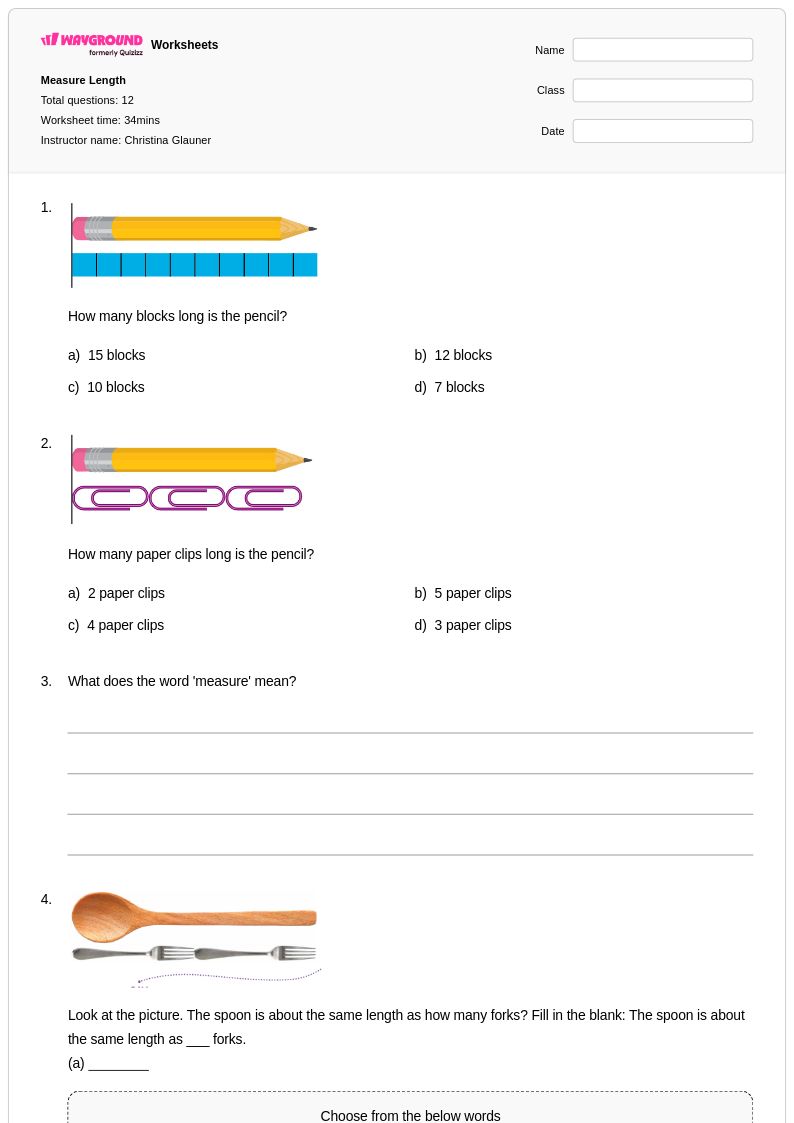
12 Q
1st
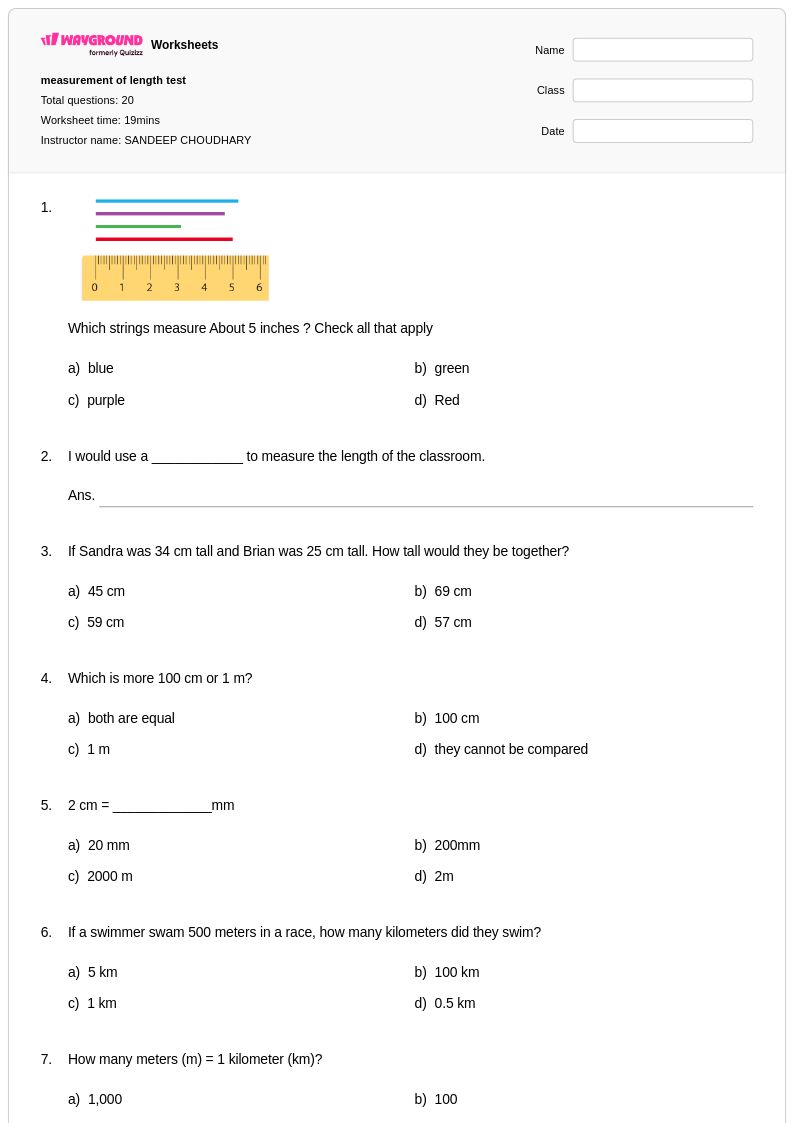
20 Q
1st - 5th
20 Q
1st - Uni
10 Q
1st
10 Q
1st
5 Q
1st
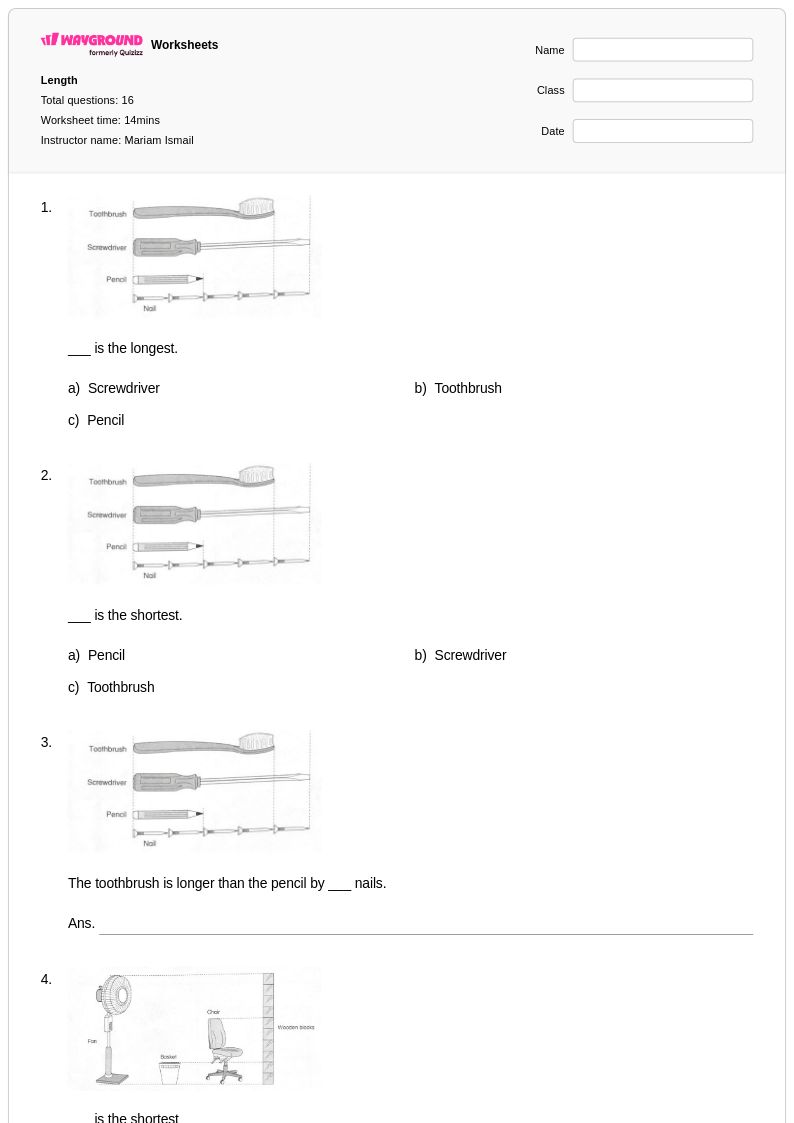
16 Q
1st
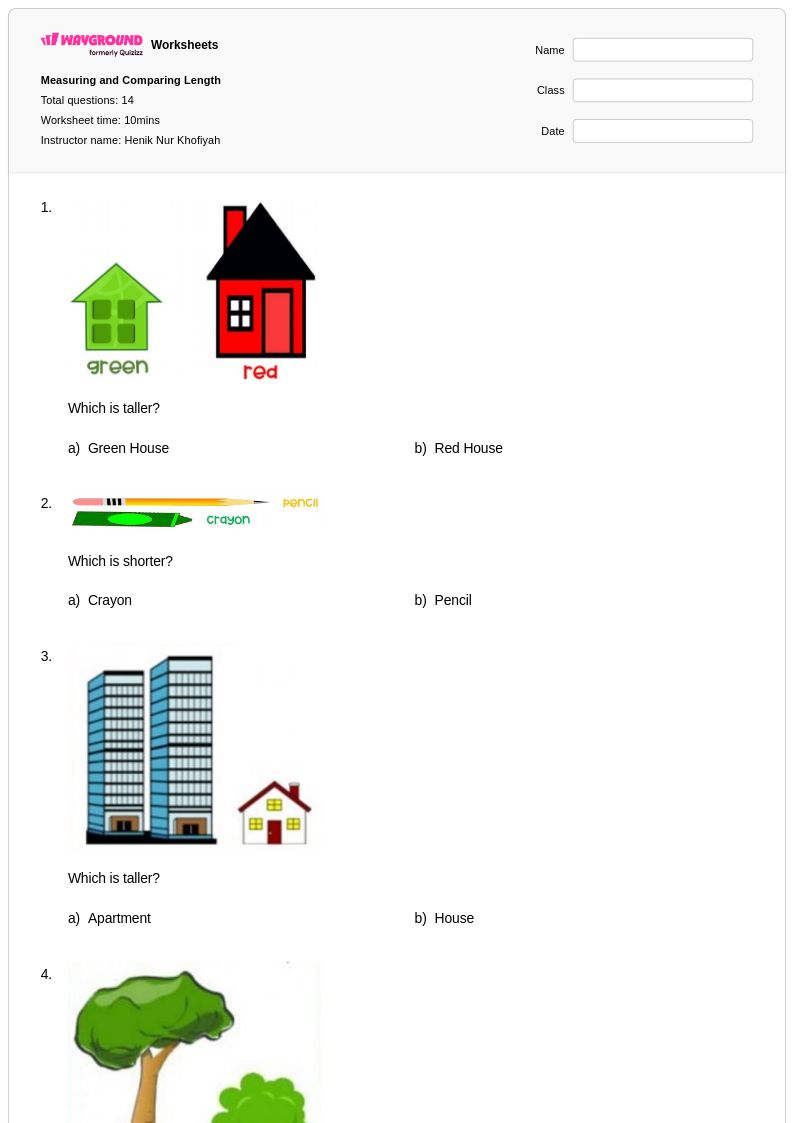
14 Q
1st
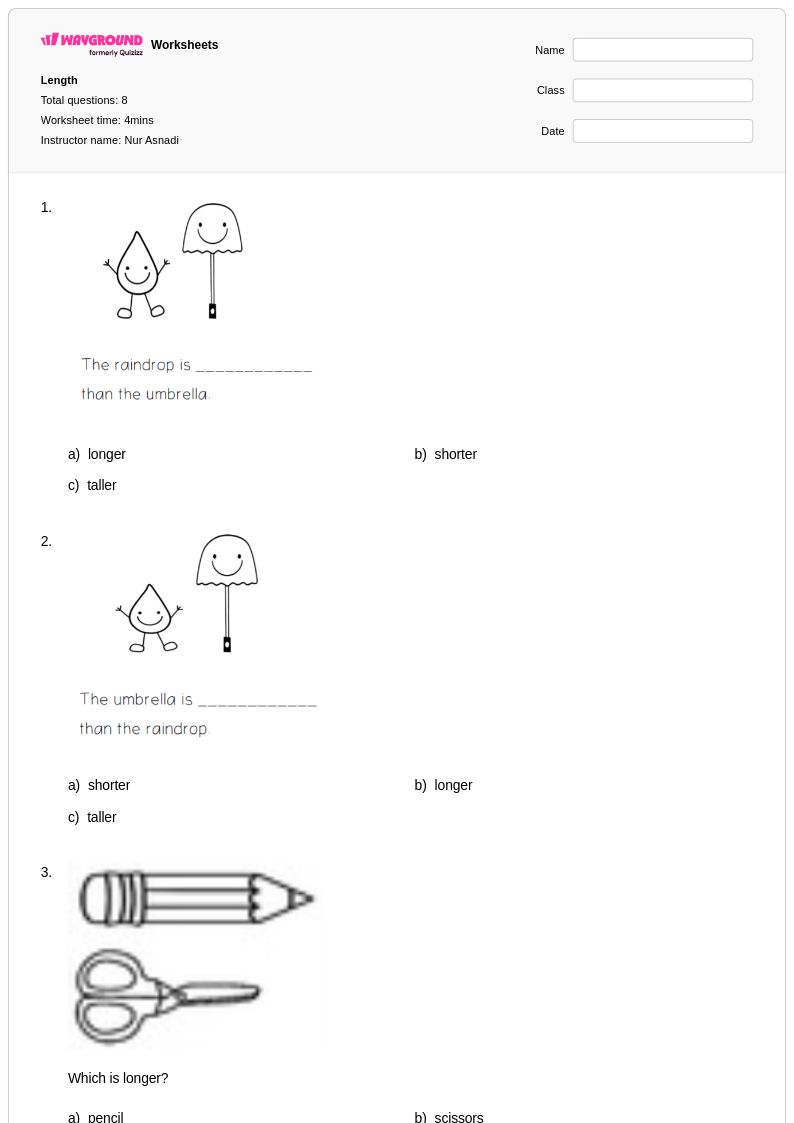
8 Q
1st
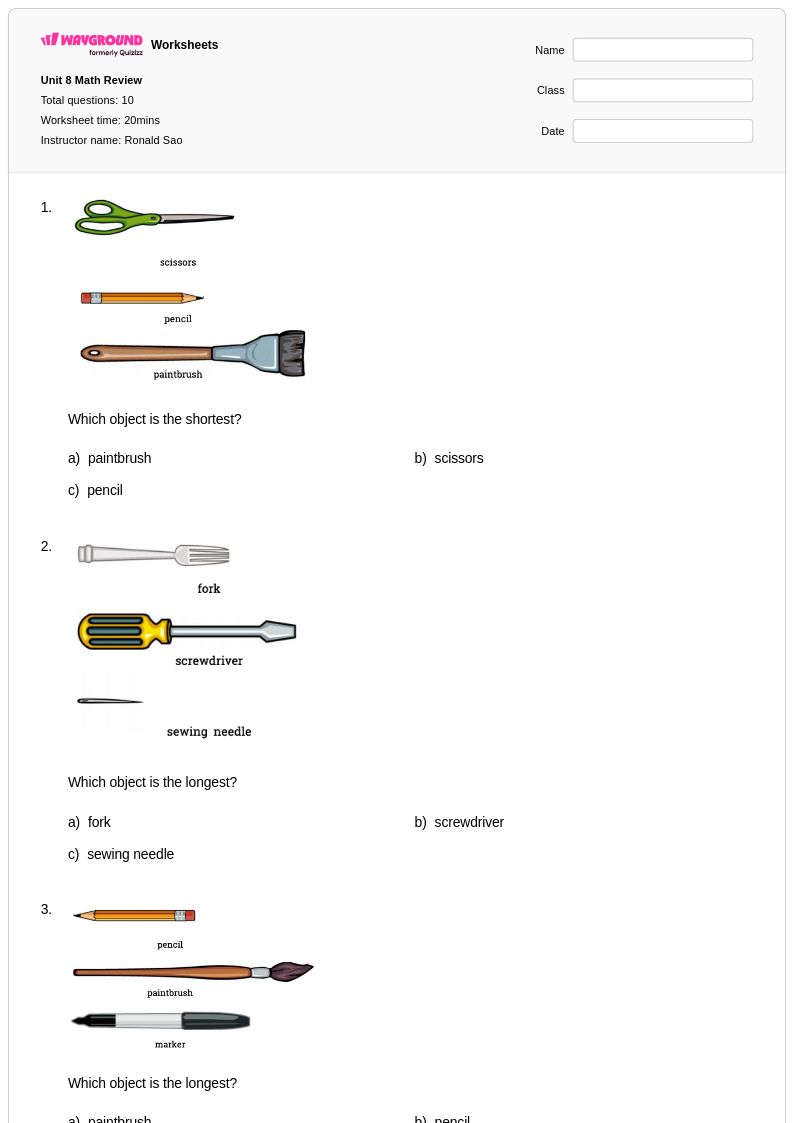
10 Q
1st
60 Q
1st - 5th
15 Q
1st
8 Q
KG - 2nd
20 Q
1st
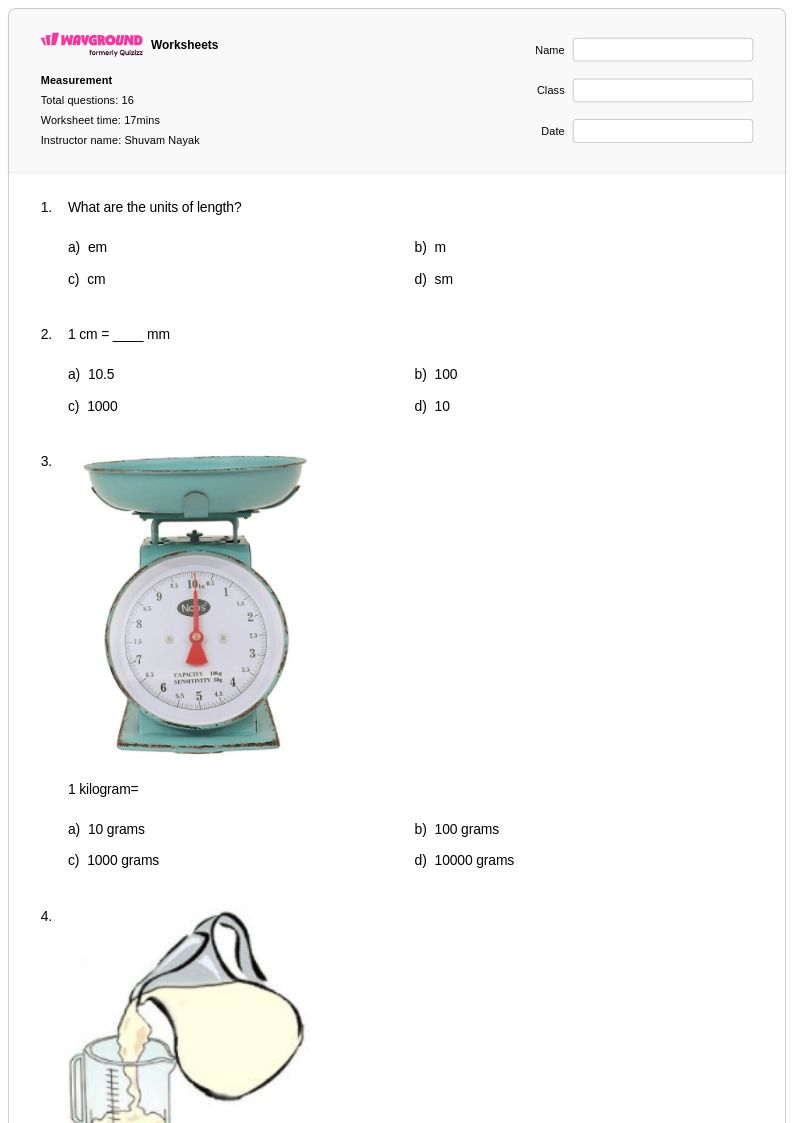
16 Q
1st - 4th
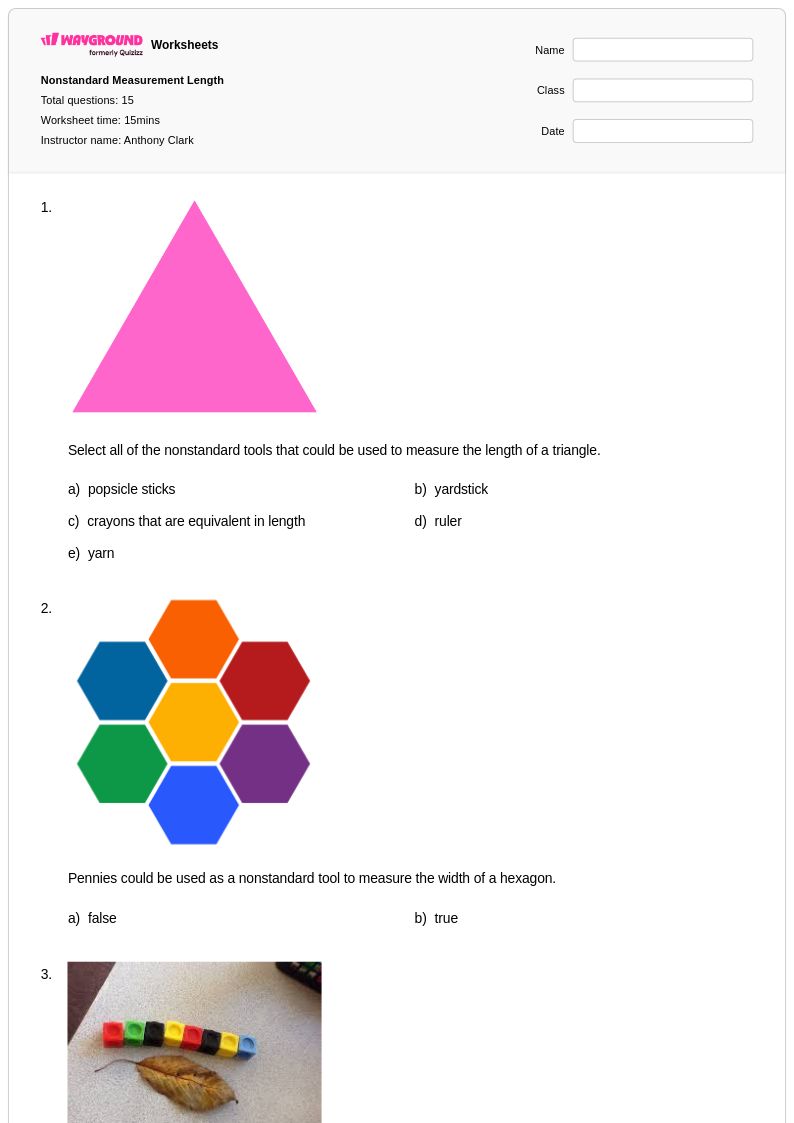
15 Q
1st - Uni
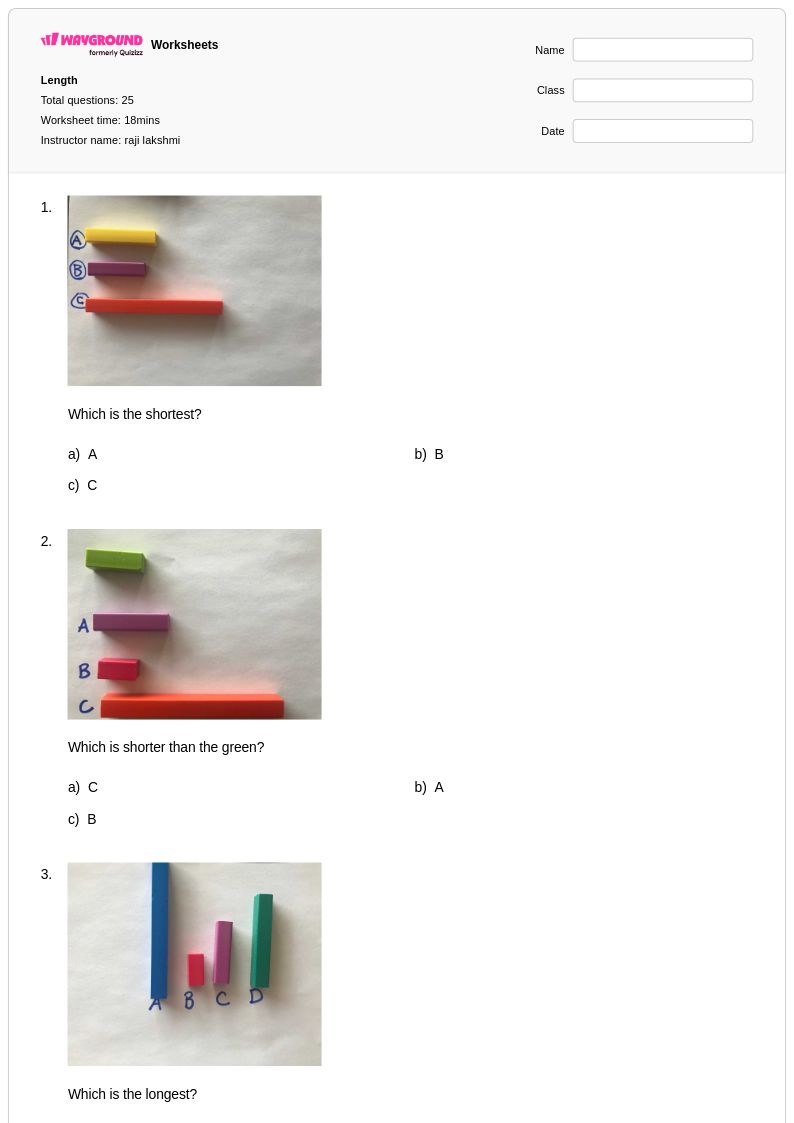
25 Q
1st
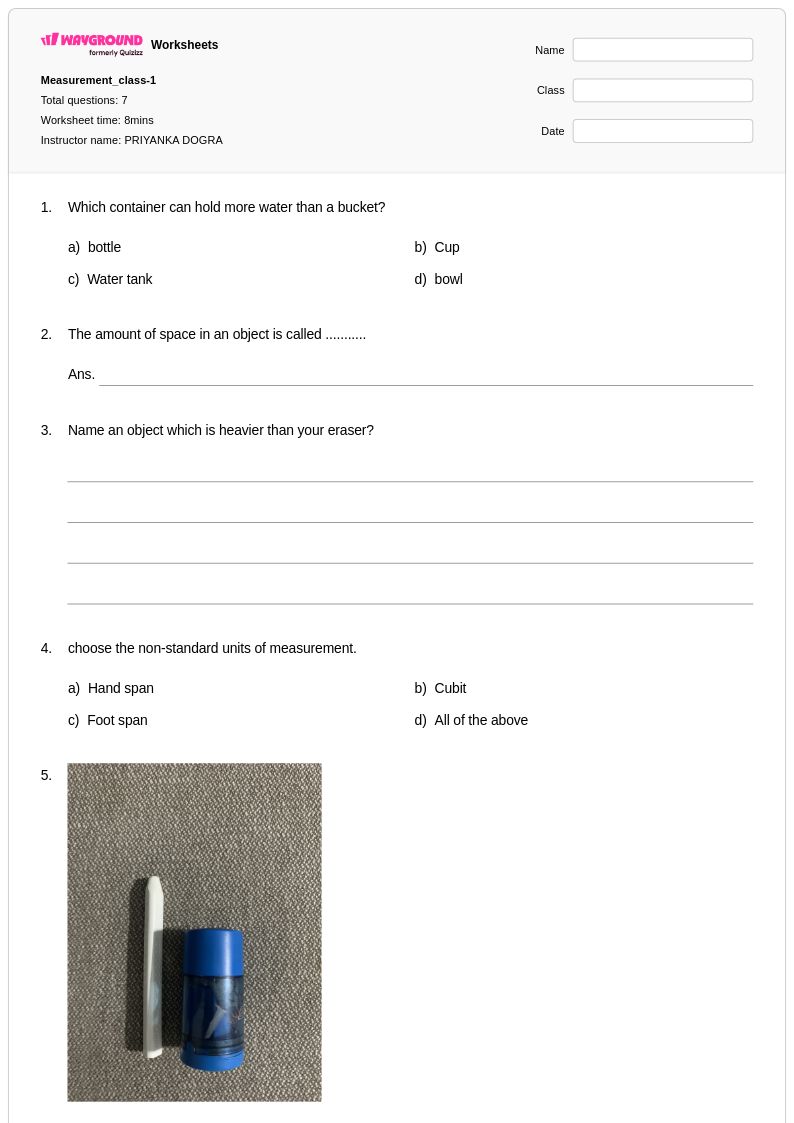
7 Q
1st
Explore Customary Units of Length Worksheets by Grades
Explore Other Subject Worksheets for class 1
Explore printable Customary Units of Length worksheets for Class 1
Class 1 customary units of length worksheets from Wayground (formerly Quizizz) provide young learners with essential foundational practice in measuring objects using inches, feet, and yards. These carefully designed printables help first-grade students develop critical measurement skills through hands-on activities that require them to compare lengths, estimate distances, and use standard measuring tools like rulers and measuring tapes. Each worksheet focuses on building conceptual understanding of how customary units relate to real-world objects, with practice problems that guide students through measuring classroom items, toys, and familiar objects. Teachers can access comprehensive answer keys and free pdf downloads that support both independent practice and guided instruction, ensuring students master the fundamental skills needed for more advanced measurement concepts.
Wayground (formerly Quizizz) empowers educators with millions of teacher-created resources specifically designed for Class 1 customary units of length instruction, featuring robust search and filtering capabilities that allow teachers to quickly locate materials aligned with state standards and curriculum requirements. The platform's differentiation tools enable instructors to customize worksheets for varying skill levels within their classrooms, providing both remediation support for struggling learners and enrichment opportunities for advanced students. Available in both printable and digital formats including downloadable pdfs, these resources streamline lesson planning while offering flexible implementation options for whole-group instruction, math centers, homework assignments, and assessment preparation. Teachers can efficiently track student progress and identify areas requiring additional skill practice, making data-driven decisions that enhance measurement learning outcomes for all first-grade students.
FAQs
How do I teach customary units of length in first grade?
What exercises help first graders practice customary length measurement?
What mistakes do first graders make when measuring length?
How can I use a Wayground Grade 1 customary length worksheet?
How does Grade 1 length measurement fit the Common Core progression?
How can I differentiate customary length practice for first graders?
What customary length skills should first-grade students learn?