Free Printable Dimensional Analysis Worksheets for Class 11
Master Class 11 dimensional analysis with Wayground's comprehensive collection of free worksheets, printables, and practice problems featuring step-by-step solutions and answer keys to strengthen unit conversion skills.
Explore printable Dimensional Analysis worksheets for Class 11
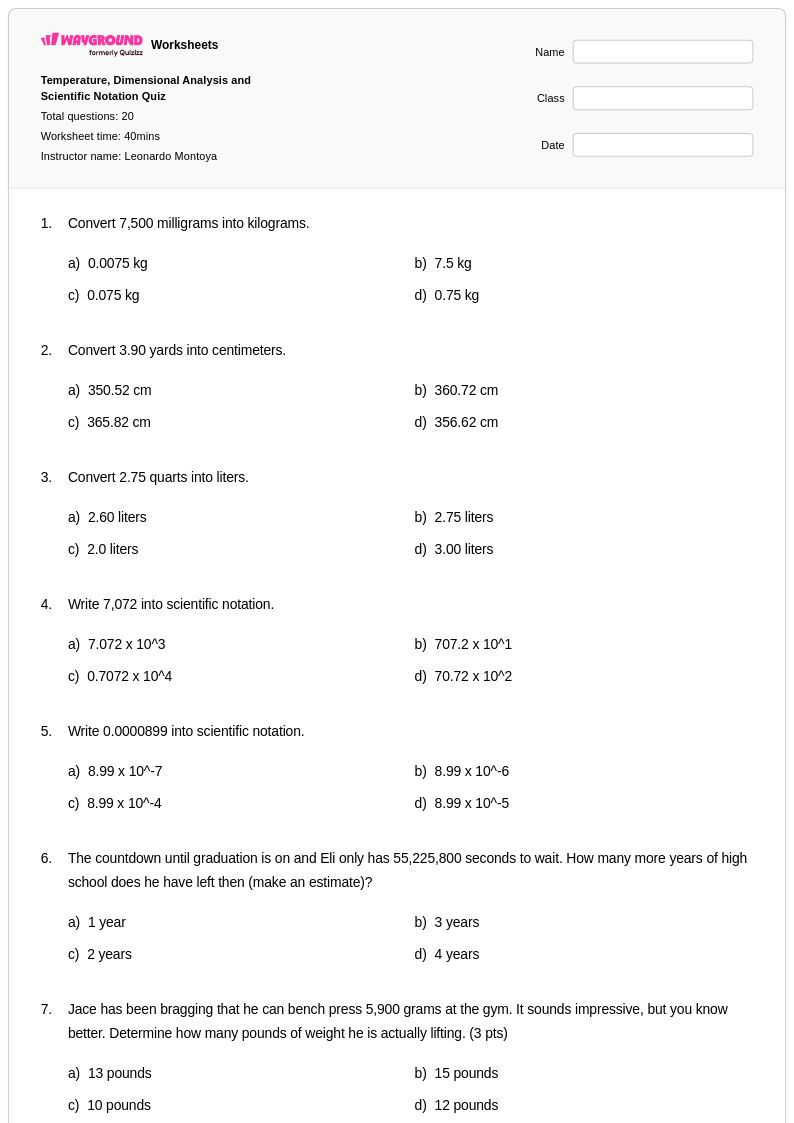
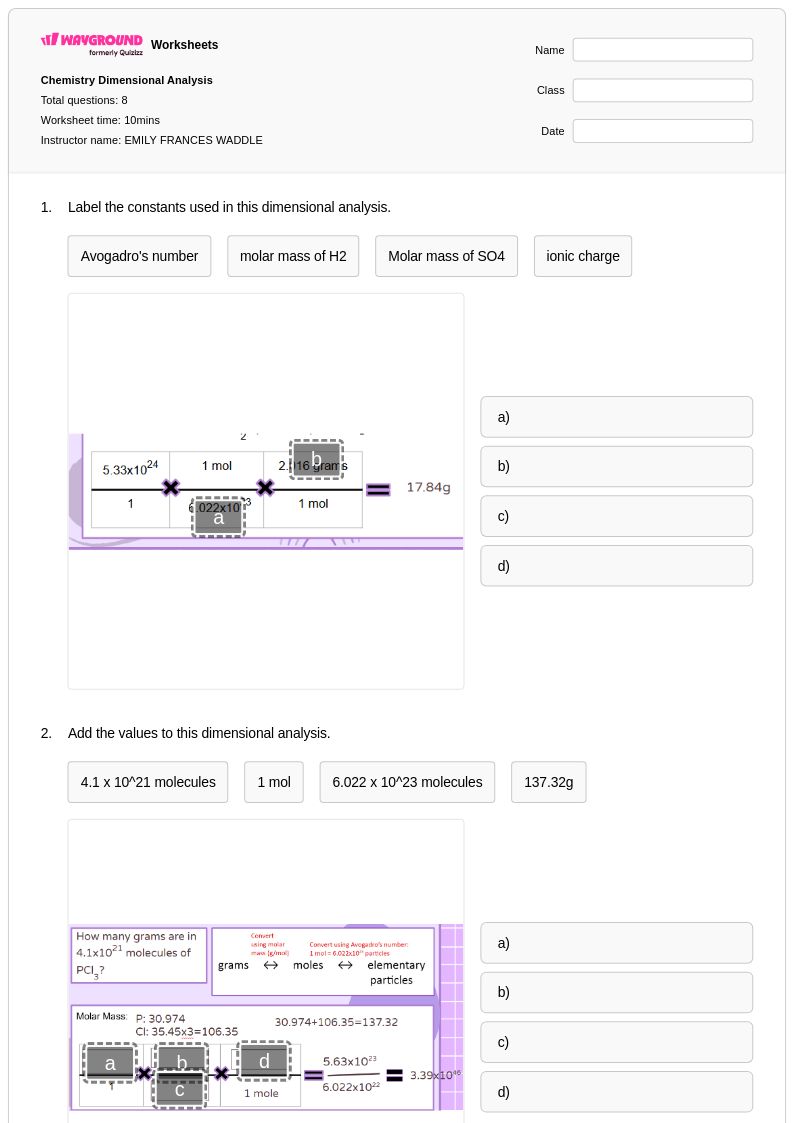
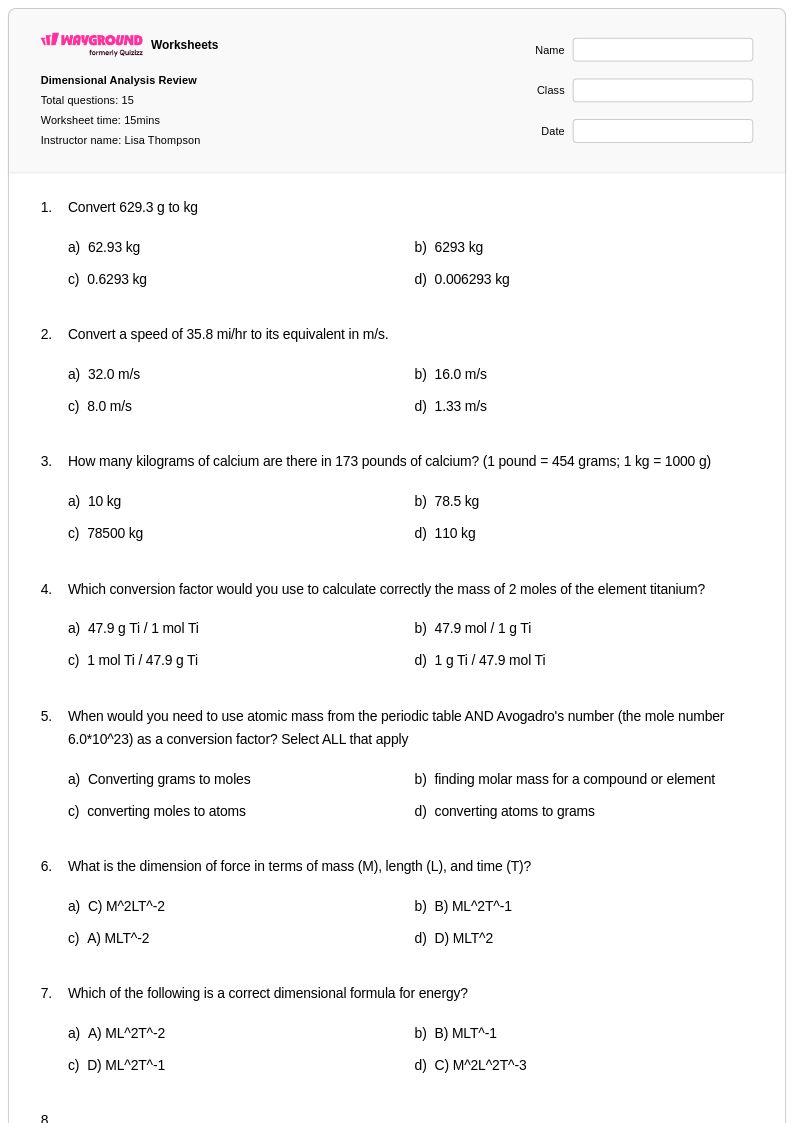
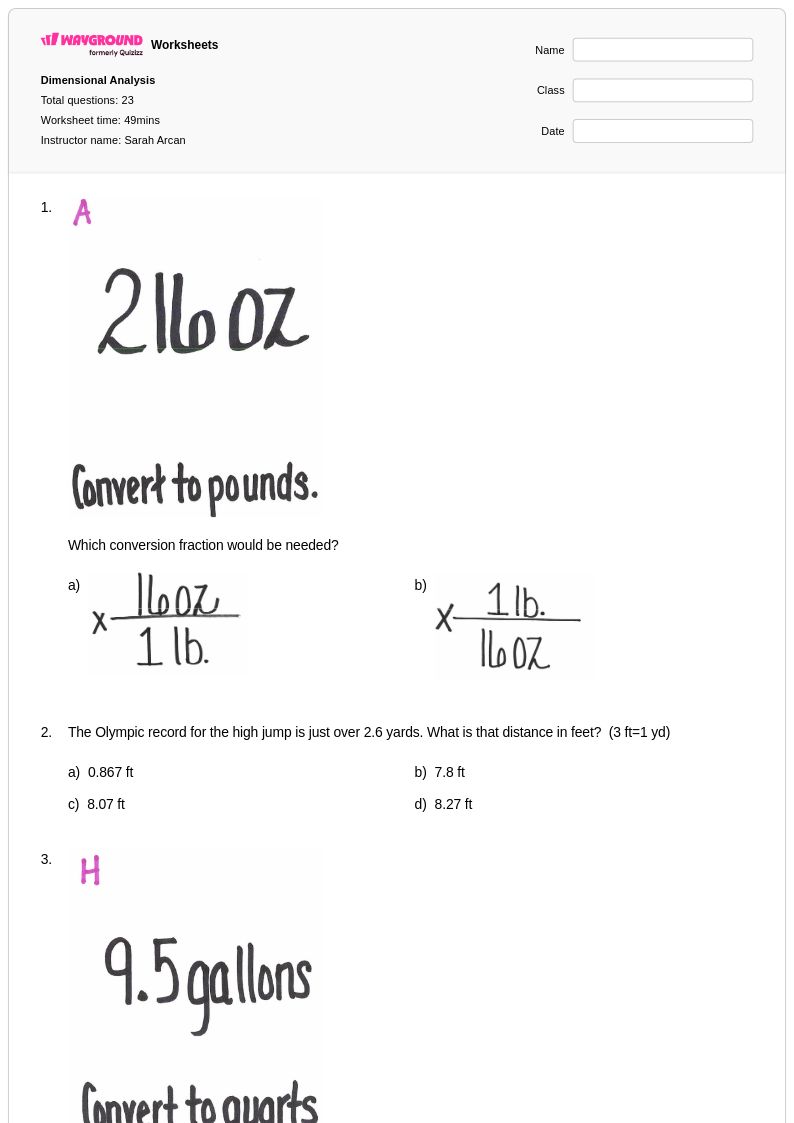
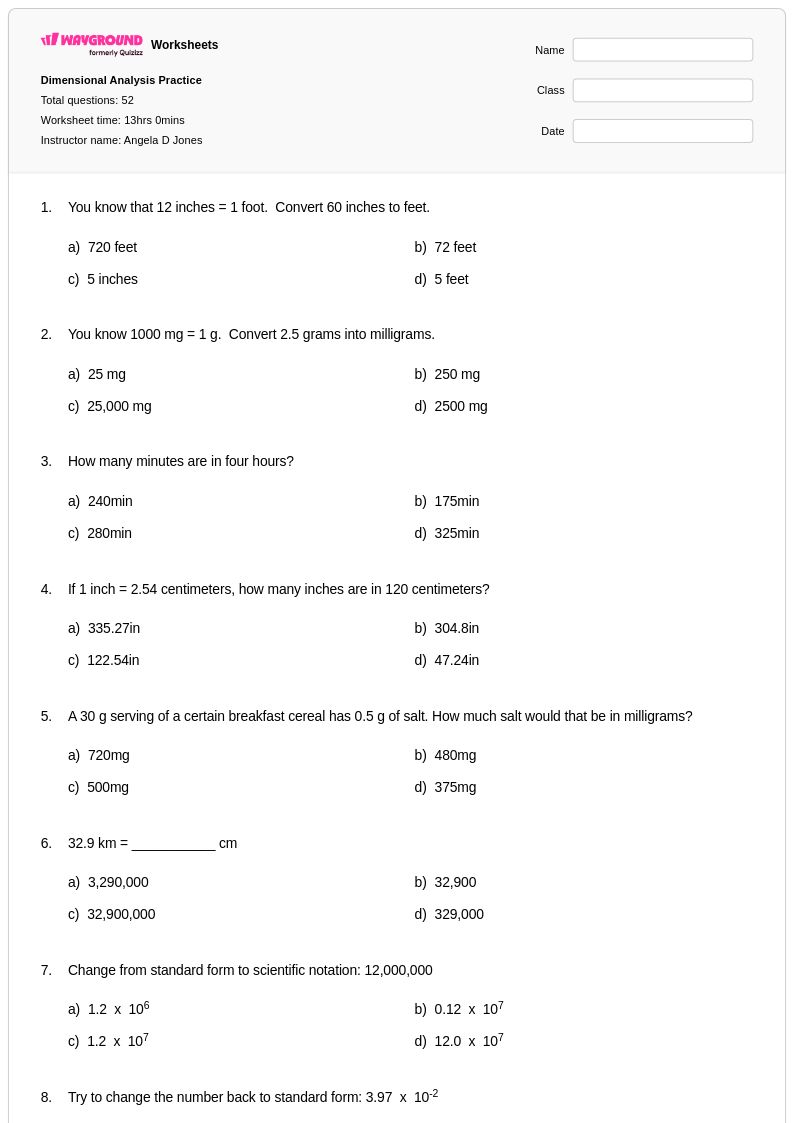
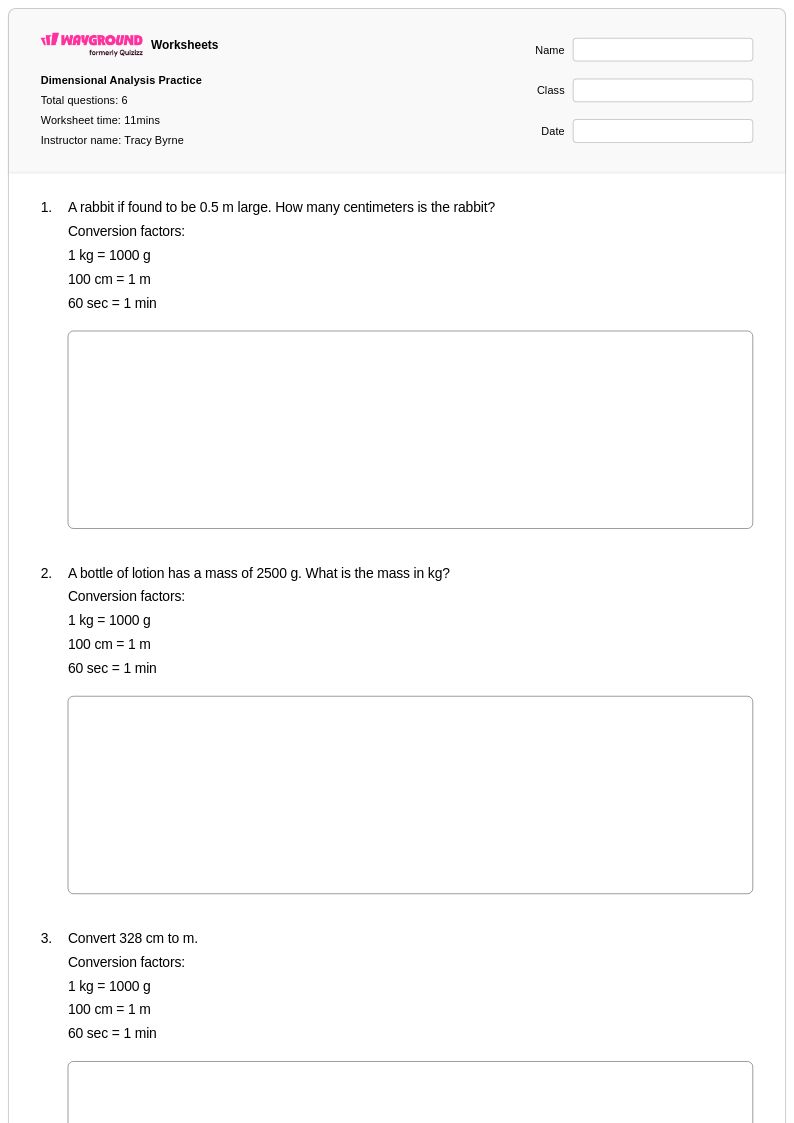
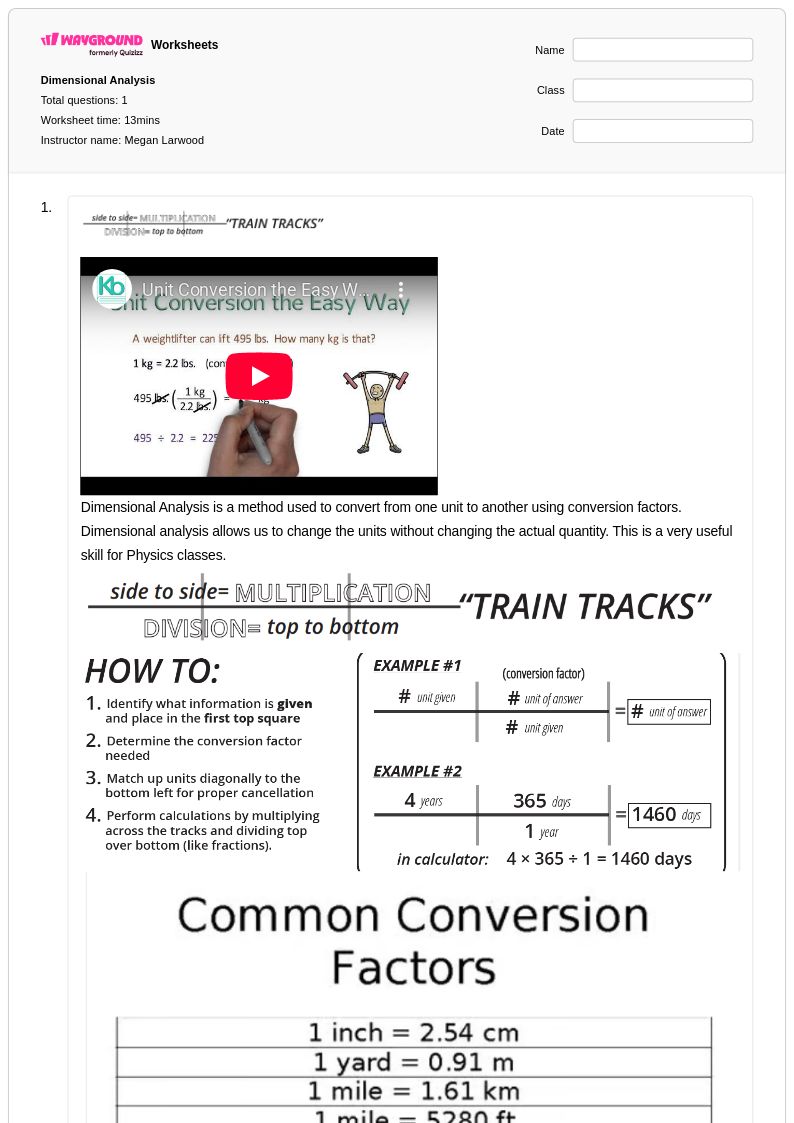
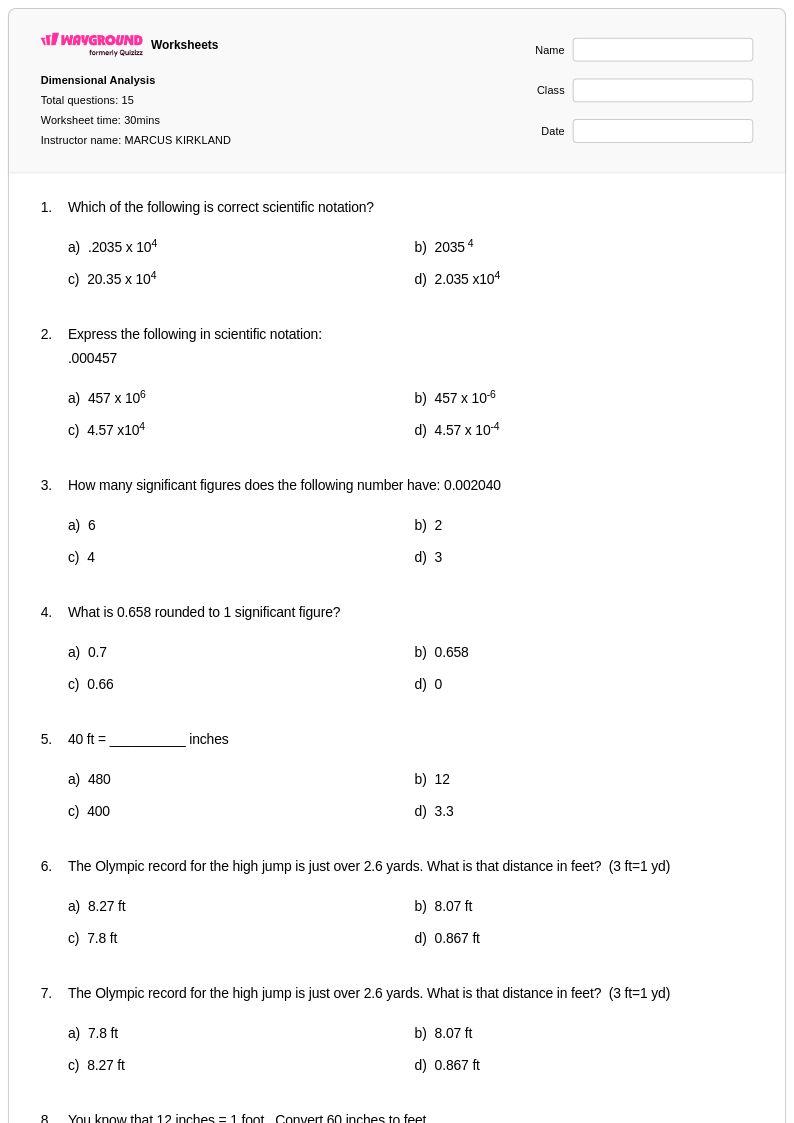
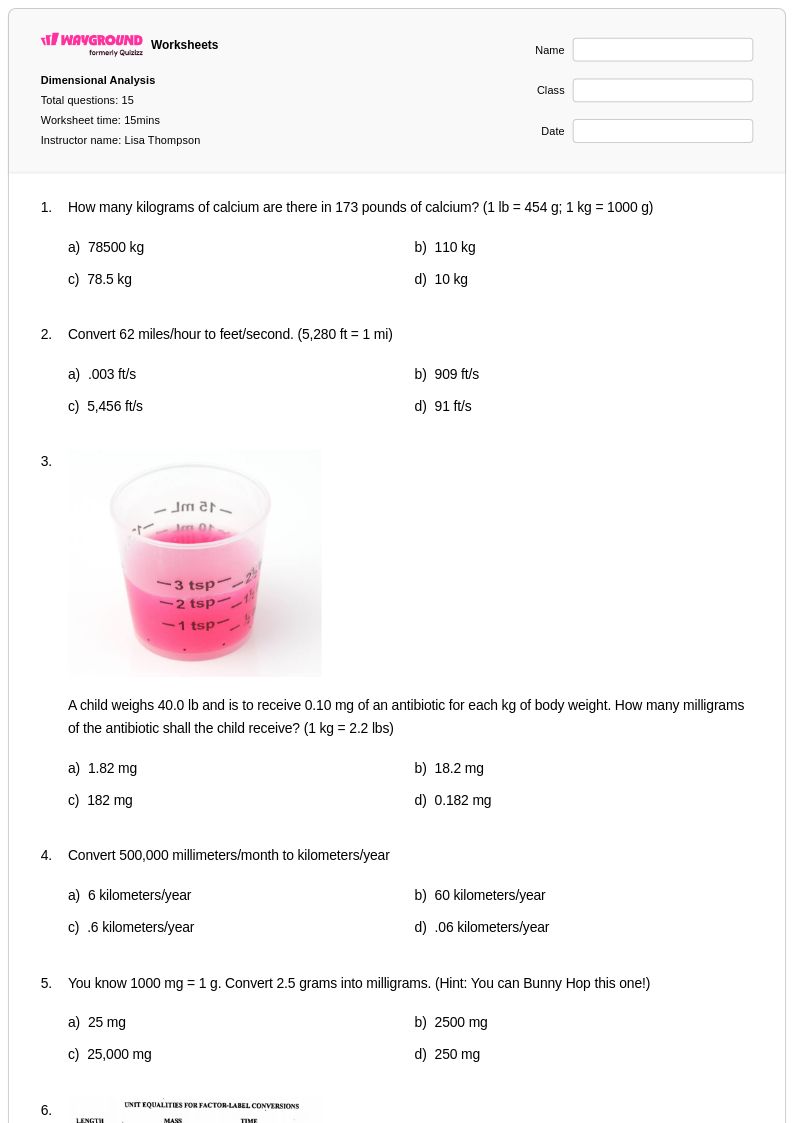
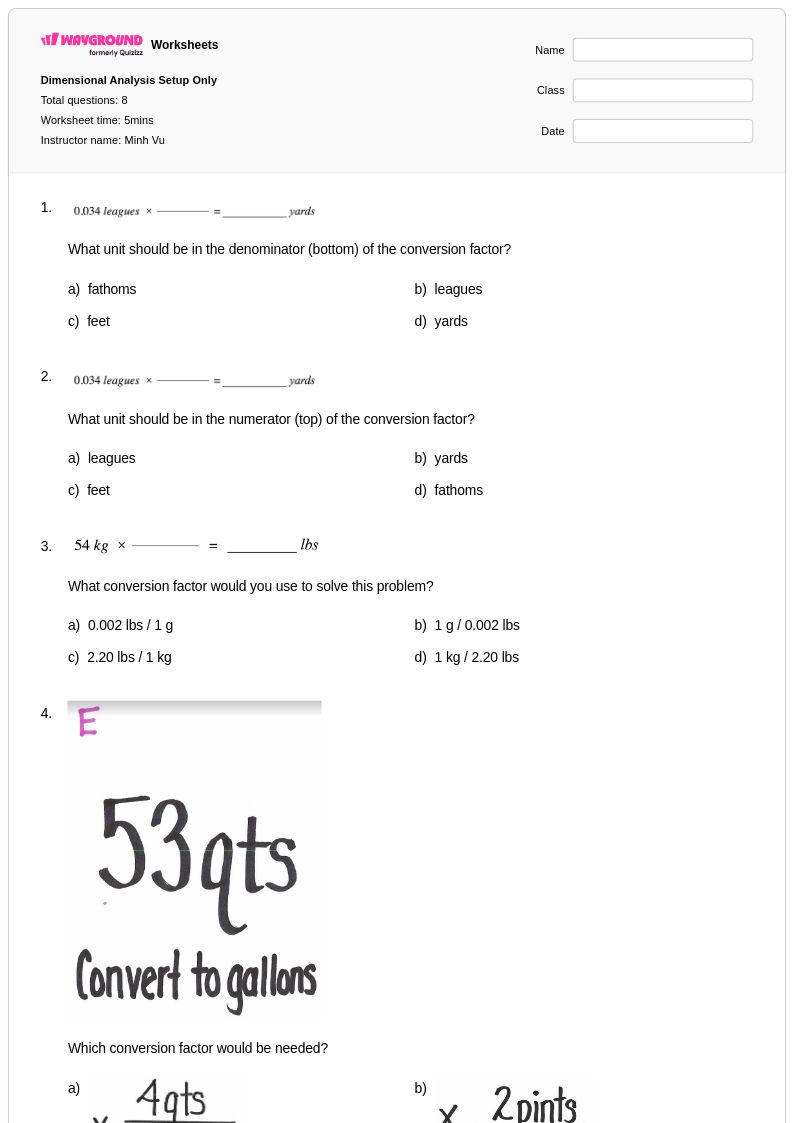
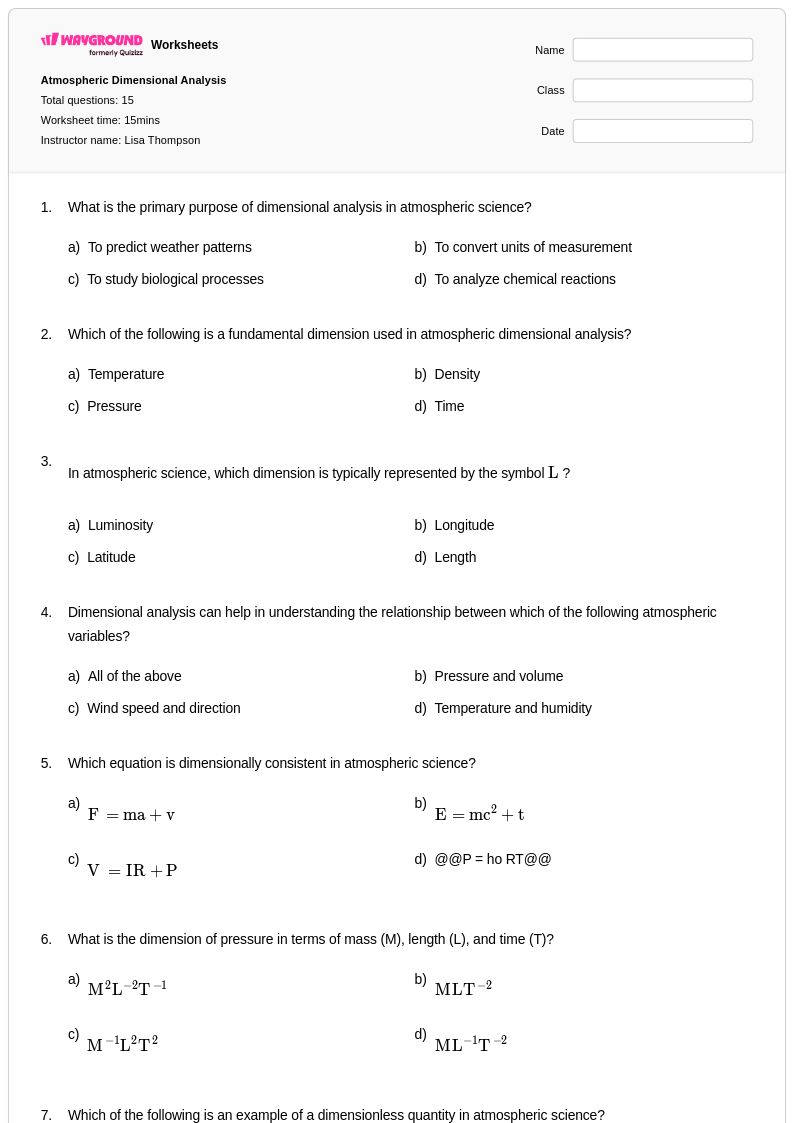
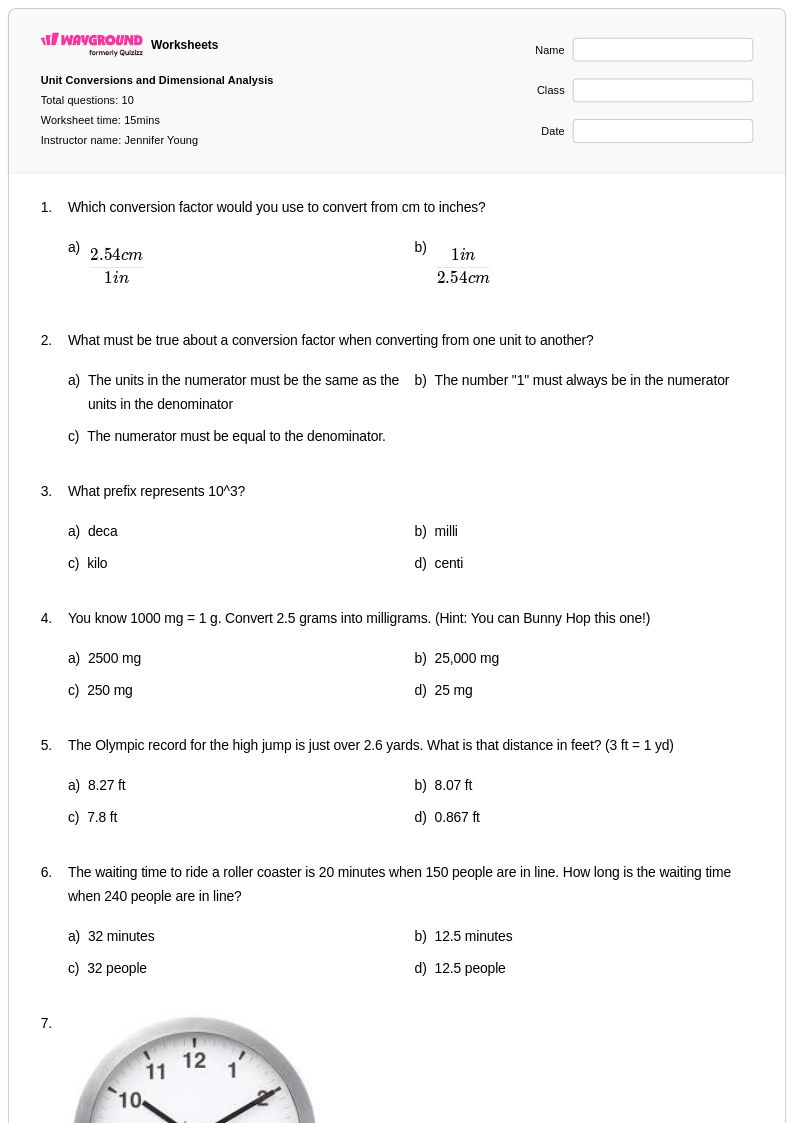
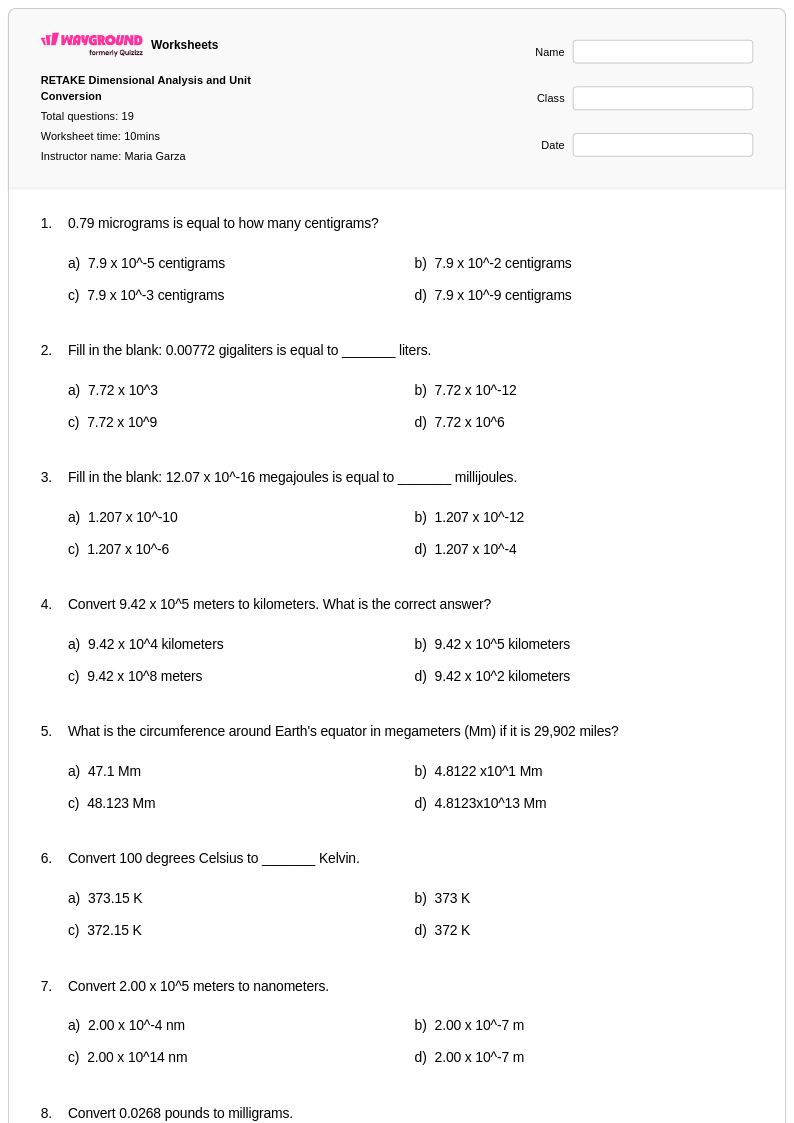
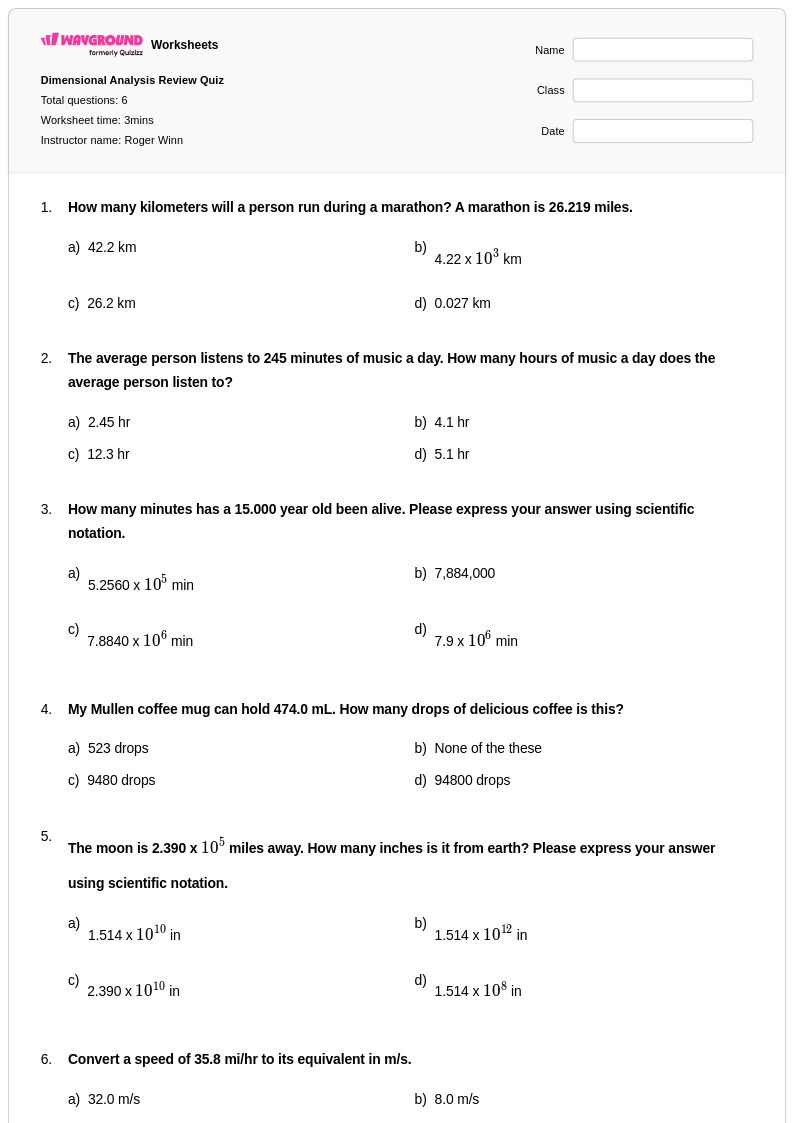
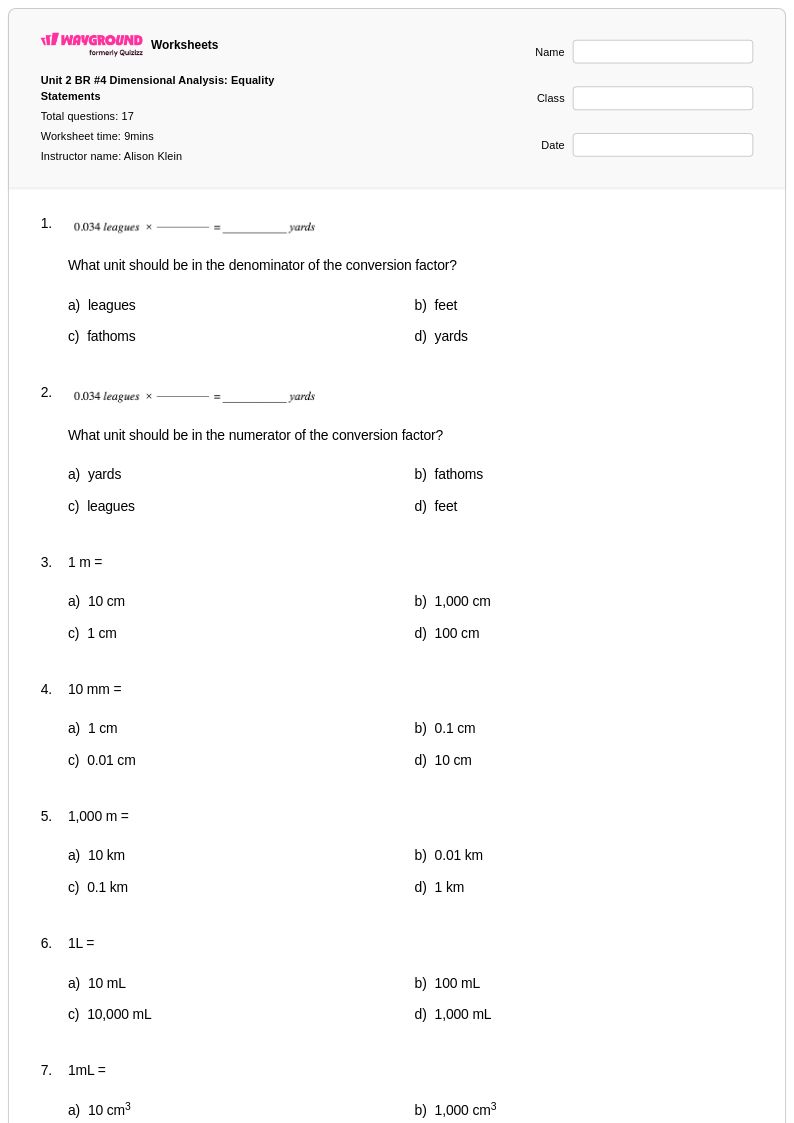
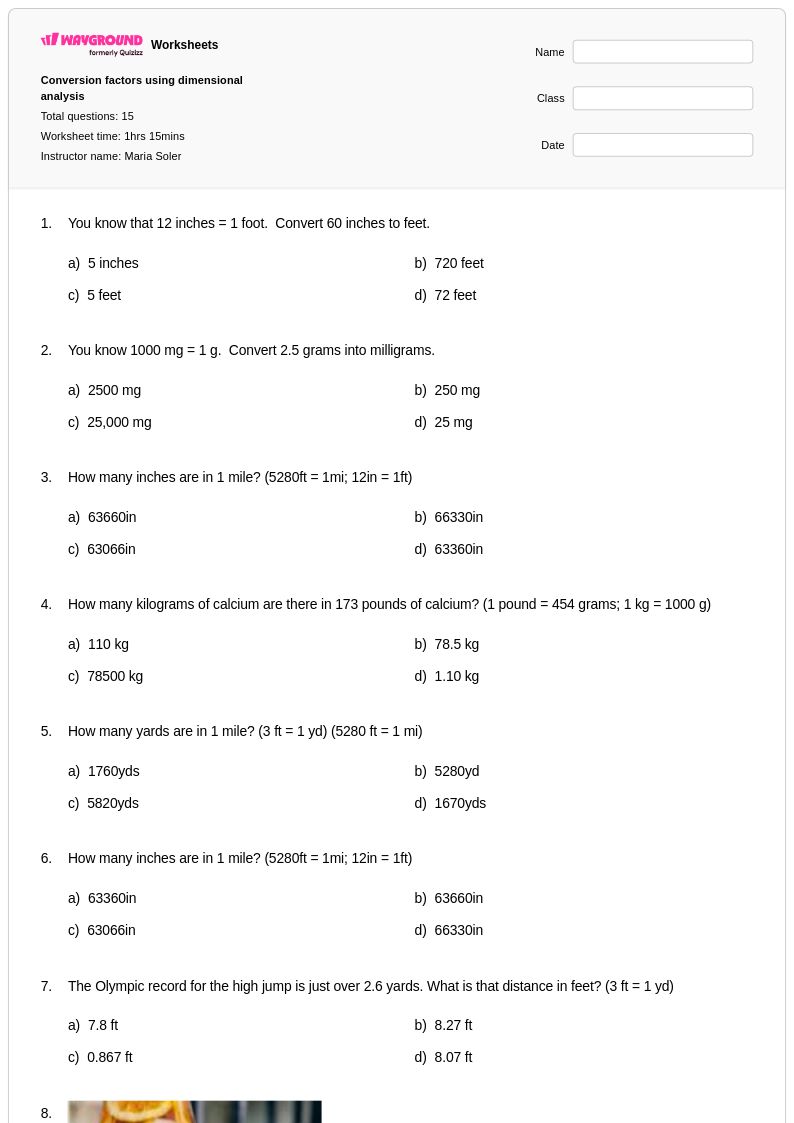
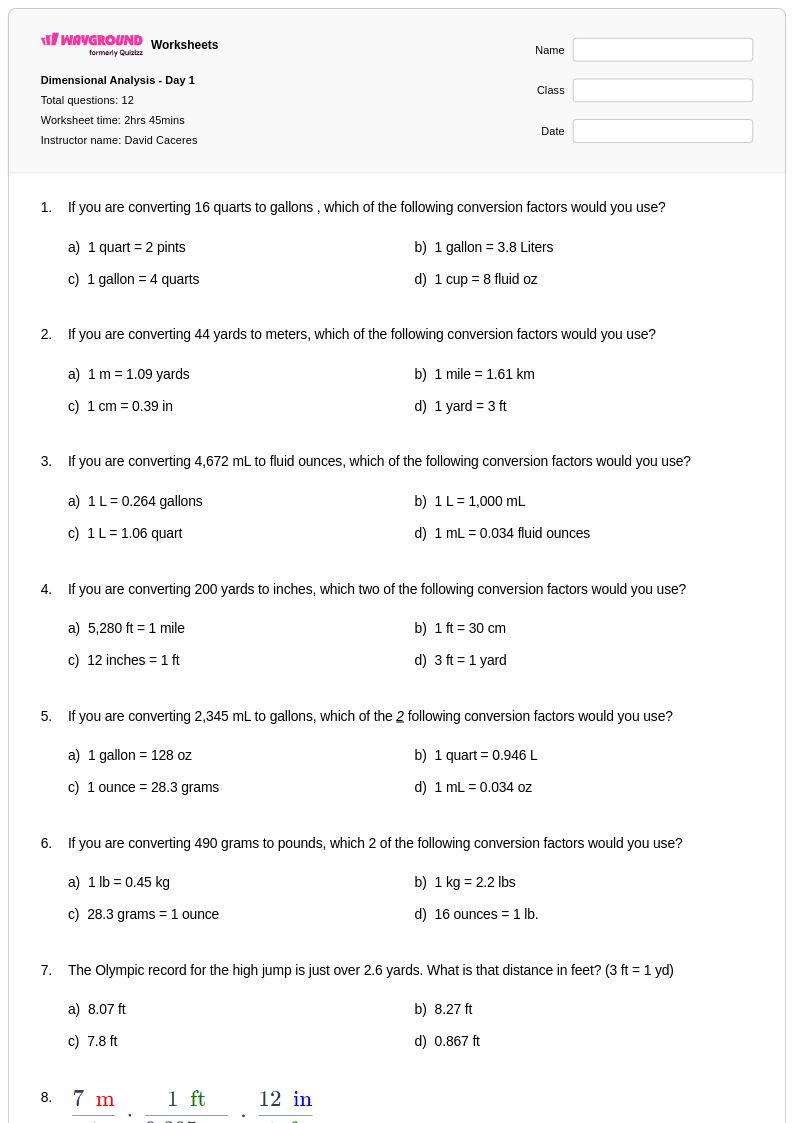
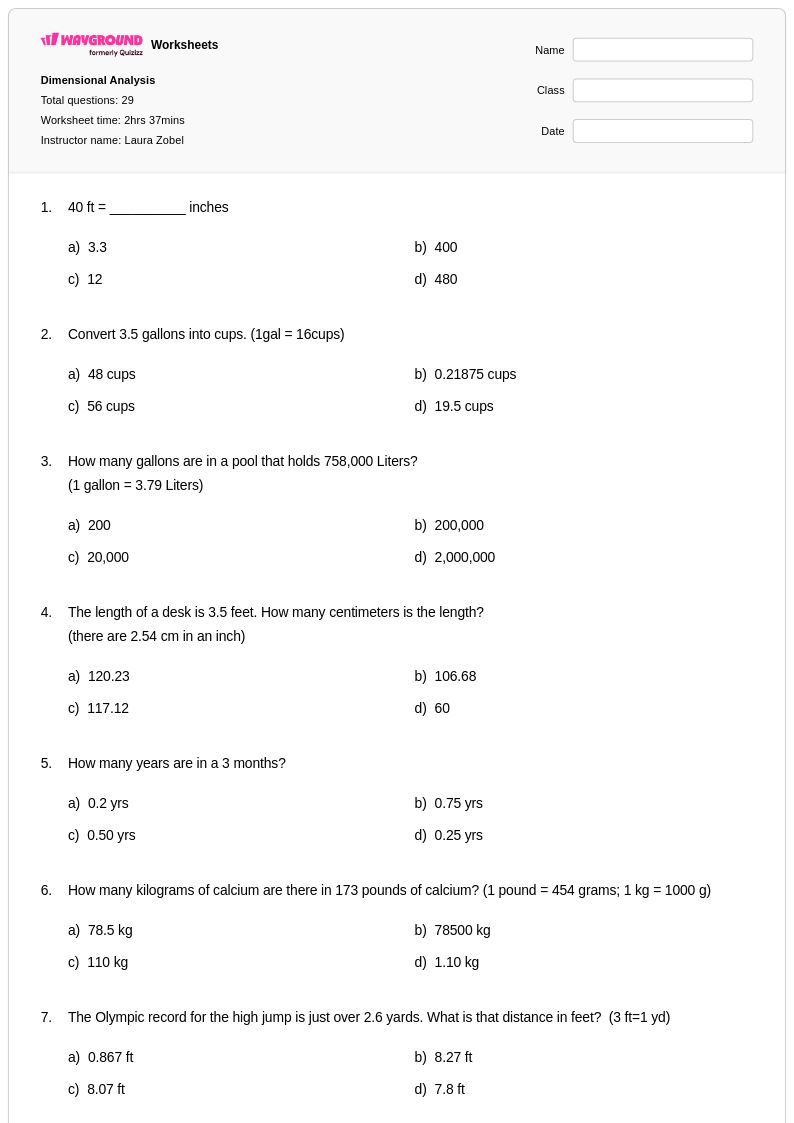
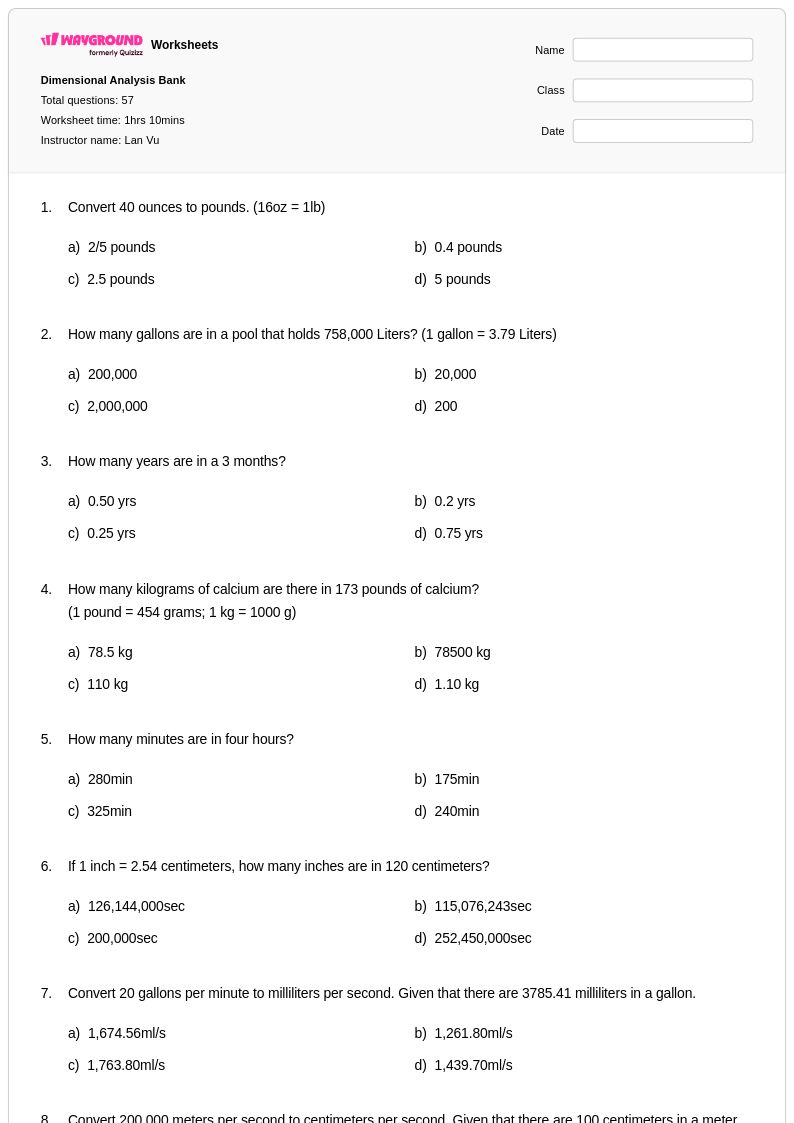
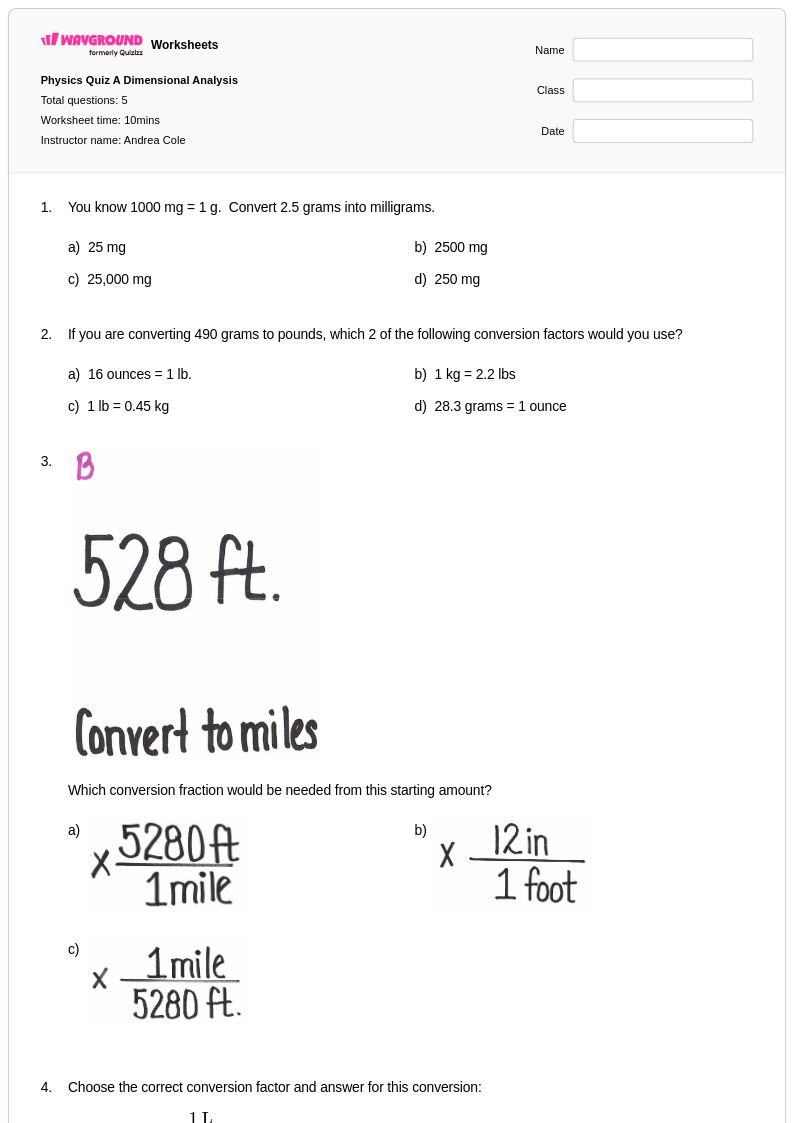
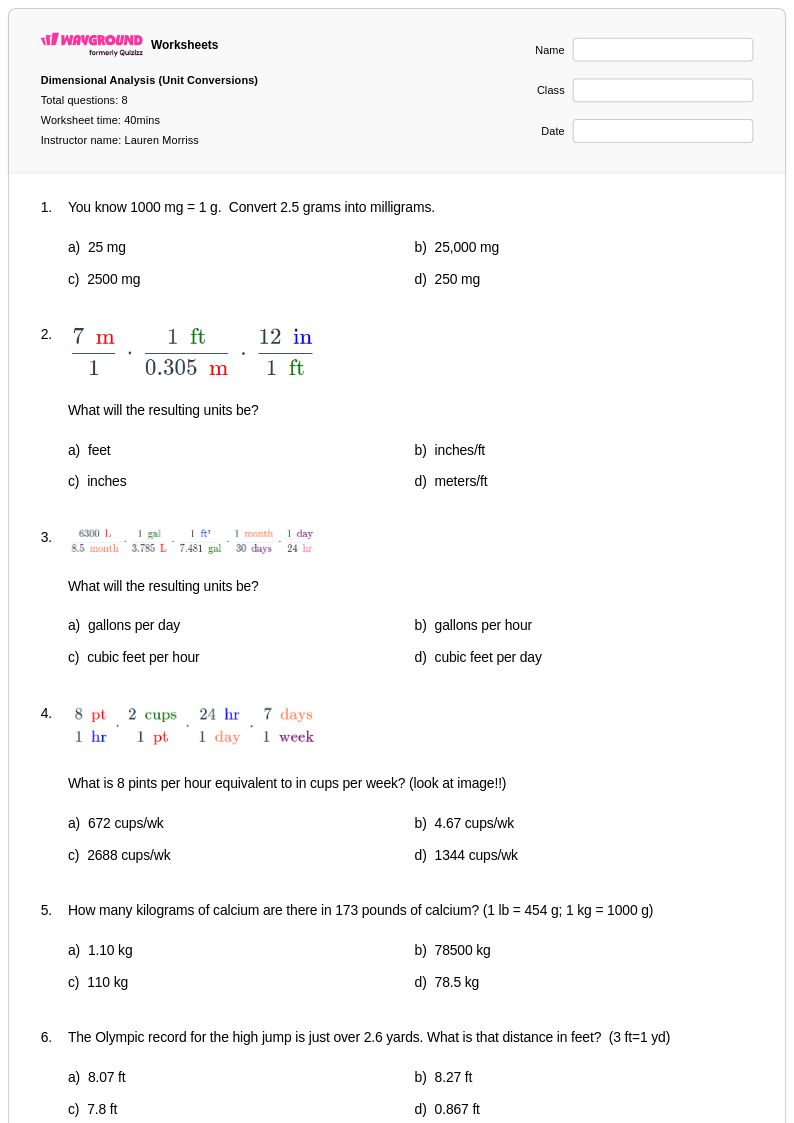
Dimensional analysis worksheets for Class 11 students available through Wayground (formerly Quizizz) provide comprehensive practice in this fundamental scientific skill that bridges mathematical concepts with physical quantities. These expertly crafted resources help students master the systematic approach to converting units, checking equation validity, and solving complex problems across physics, chemistry, and engineering contexts. Students develop proficiency in identifying base units, applying conversion factors, and manipulating dimensional equations through carefully structured practice problems that progress from basic unit conversions to multi-step analytical challenges. The worksheets include detailed answer keys that guide students through proper dimensional analysis techniques, while the free printable format ensures accessibility for both classroom instruction and independent study sessions.
Wayground (formerly Quizizz) empowers educators with millions of teacher-created dimensional analysis resources specifically designed for Class 11 science curricula, featuring robust search and filtering capabilities that allow instructors to locate materials aligned with specific learning standards and skill levels. The platform's differentiation tools enable teachers to customize worksheets for varying student abilities, while flexible formatting options provide both printable pdf versions for traditional classroom use and digital formats for technology-integrated learning environments. These comprehensive collections support effective lesson planning by offering ready-to-use materials for initial instruction, targeted remediation for students struggling with unit conversion concepts, and enrichment activities for advanced learners ready to tackle complex dimensional analysis applications in real-world scientific scenarios.
FAQs
How do I teach dimensional analysis to students who have never seen it before?
Start by establishing why unit tracking matters — use a concrete example like converting miles to kilometers before introducing formal notation. Teach students to write units in every step of their work, treating units as algebraic quantities that cancel when the same unit appears in both the numerator and denominator. Once students understand the cancellation principle, introduce conversion factor chains for multi-step problems. Building this habit early prevents the most common errors students make when they skip unit labeling.
What kinds of practice problems help students get better at dimensional analysis?
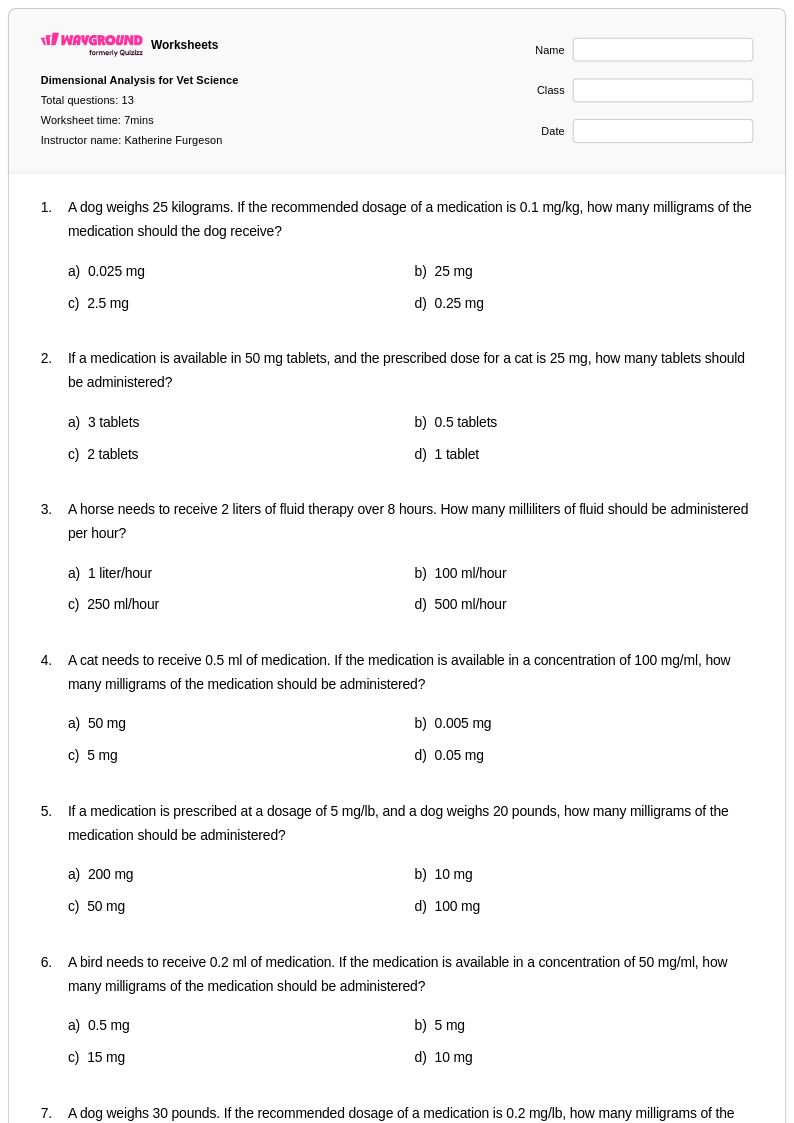
Students benefit most from problems that gradually increase in complexity — beginning with single-step metric conversions, then progressing to two- and three-step problems that require chaining multiple conversion factors. Problems drawn from real science contexts, such as density calculations, dosage problems, or speed conversions, help students see why dimensional analysis is a transferable skill rather than an isolated math exercise. Worksheets that show worked examples alongside practice sets are especially effective because students can self-check their setup before committing to the arithmetic.
What mistakes do students most commonly make when doing dimensional analysis?
The most frequent error is inverting a conversion factor — for example, writing miles per kilometer instead of kilometers per mile — which produces an answer in the wrong units or an obviously unreasonable magnitude. Students also commonly skip writing units in intermediate steps, which makes it impossible for them to verify that units cancel correctly. A third common mistake is stopping after a partial conversion rather than checking that the final answer is in the exact units requested. Teaching students to always confirm unit cancellation at every step catches the majority of these errors before they become habits.
How do I use dimensional analysis worksheets effectively in my classroom?
Dimensional analysis worksheets on Wayground are available as printable PDFs for traditional classroom use and in digital formats for technology-integrated environments, including the option to host them as a quiz on Wayground. For initial instruction, printed worksheets work well because students can physically cross out canceling units as they write each step. Digital formats are especially useful for independent practice or homework, where built-in answer key access supports self-assessment between class sessions. Pairing a structured worksheet with a brief class debrief on common errors reinforces correct setup habits across the whole group.
How does dimensional analysis connect to other science topics students are learning?
Dimensional analysis is the foundational problem-solving framework behind unit conversions in chemistry, physics, and engineering, which means students who master it early encounter it continuously throughout their science education. It underpins stoichiometry, gas law calculations, density problems, and speed or force calculations — any formula-based problem where unit consistency must be verified. Teaching it as a universal method, rather than a one-unit skill, helps students transfer it automatically when they encounter new formula types in later courses.
How can I differentiate dimensional analysis practice for students at different skill levels?
For struggling students, reduce cognitive load by starting with familiar units and single conversion factors, and consider using Wayground's reduced answer choices accommodation to make multiple-choice versions more accessible. Advanced students benefit from multi-step, cross-disciplinary problems that require them to research conversion factors rather than having them provided. Wayground also supports extended time and read-aloud accommodations for students who need them, which can be configured individually so the rest of the class works under standard conditions without any disruption.