Free Printable Volume and Density Worksheets for Class 11
Class 11 volume and density free worksheets and printables help students master measurement calculations through comprehensive practice problems, detailed explanations, and complete answer keys in convenient PDF format.
Explore printable Volume and Density worksheets for Class 11
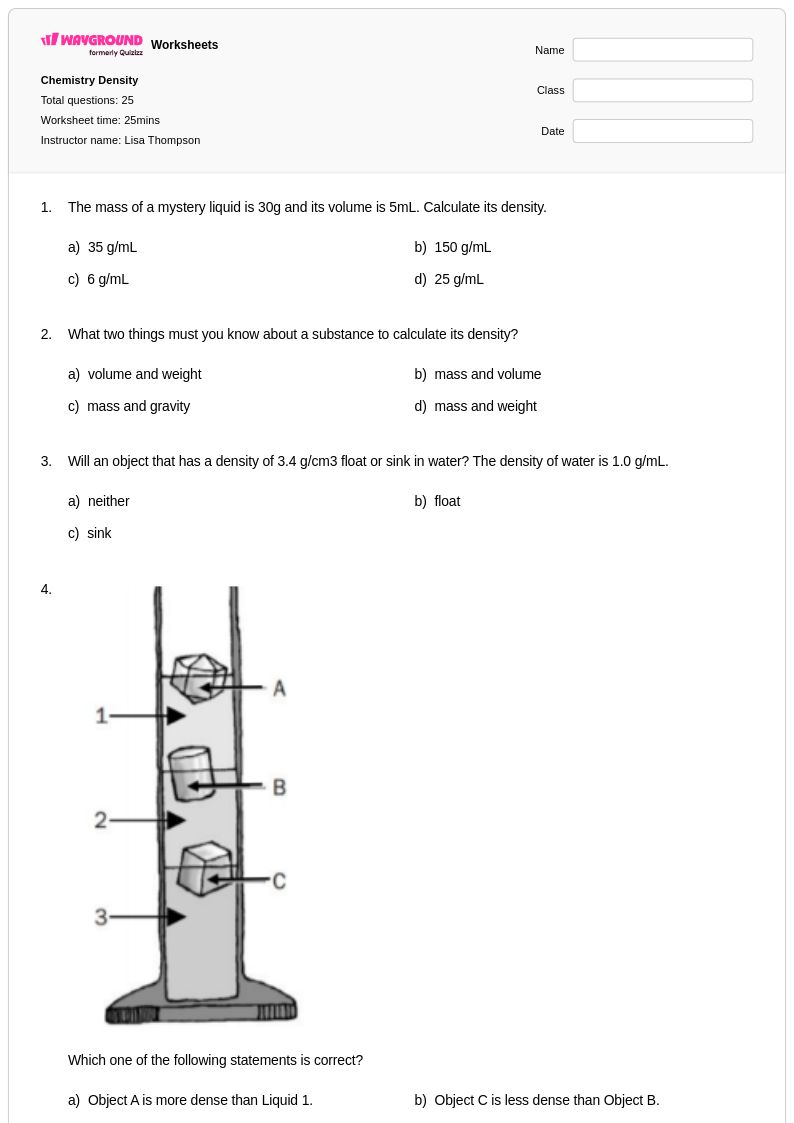
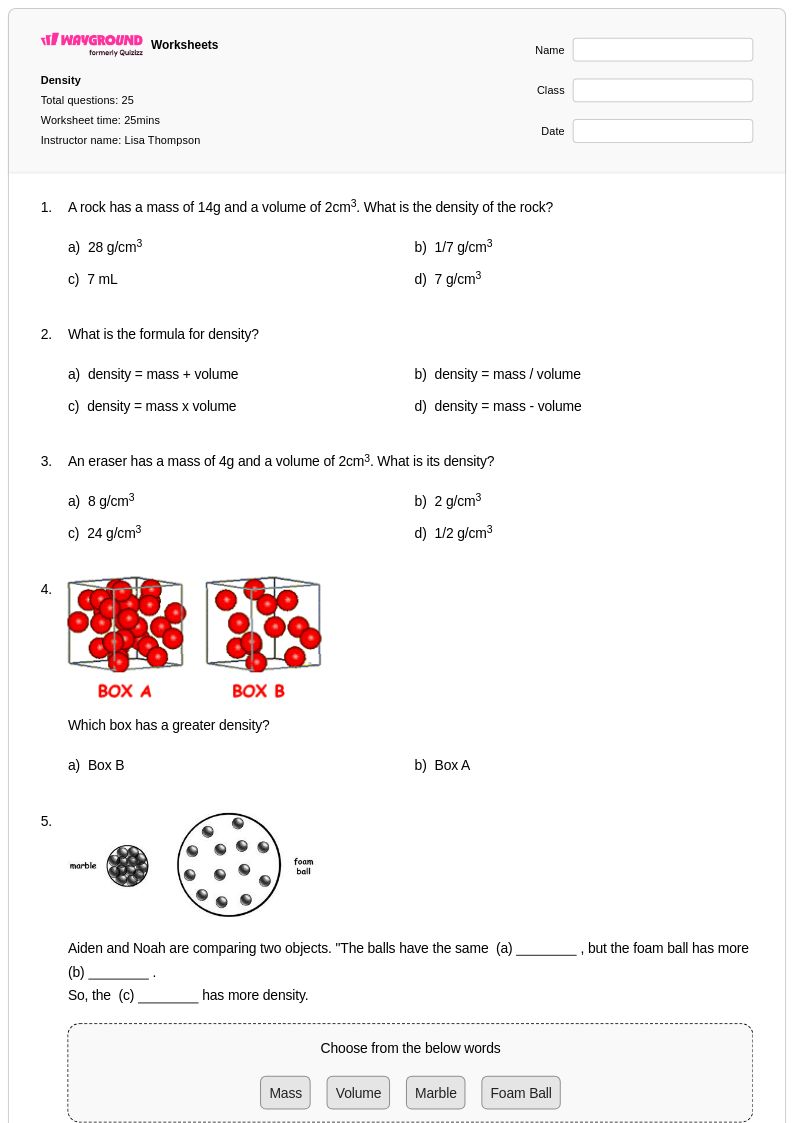
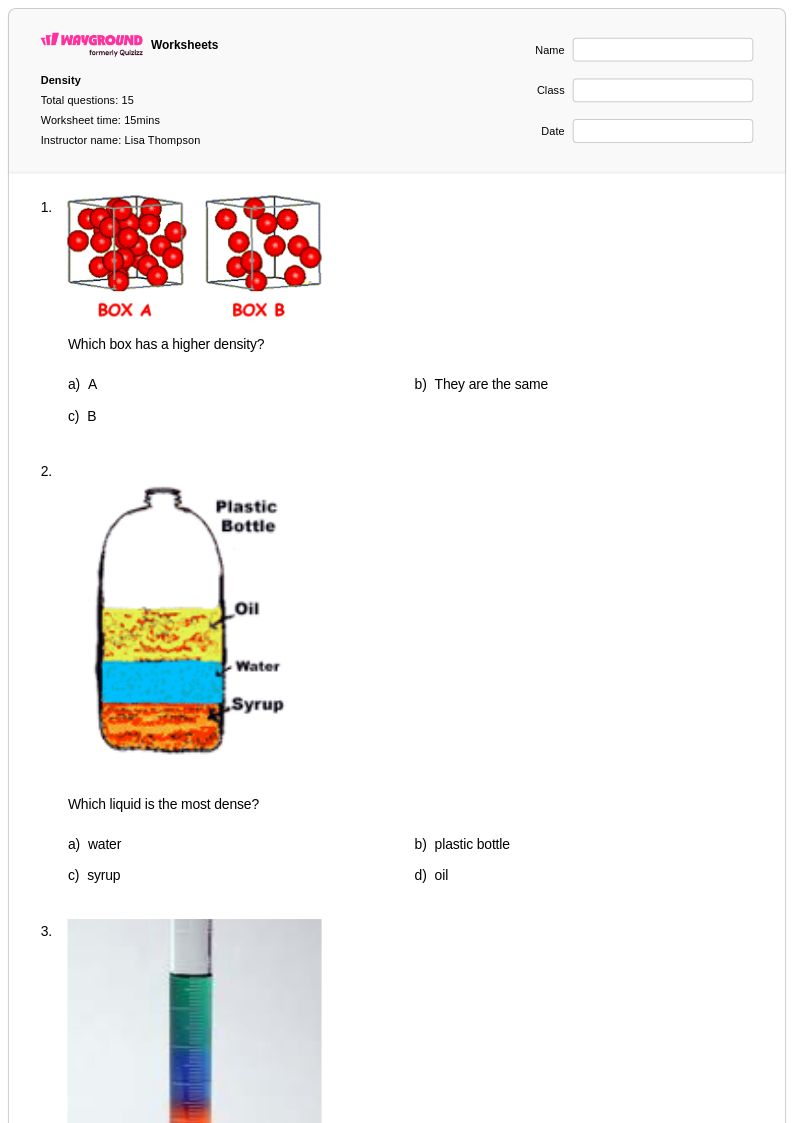
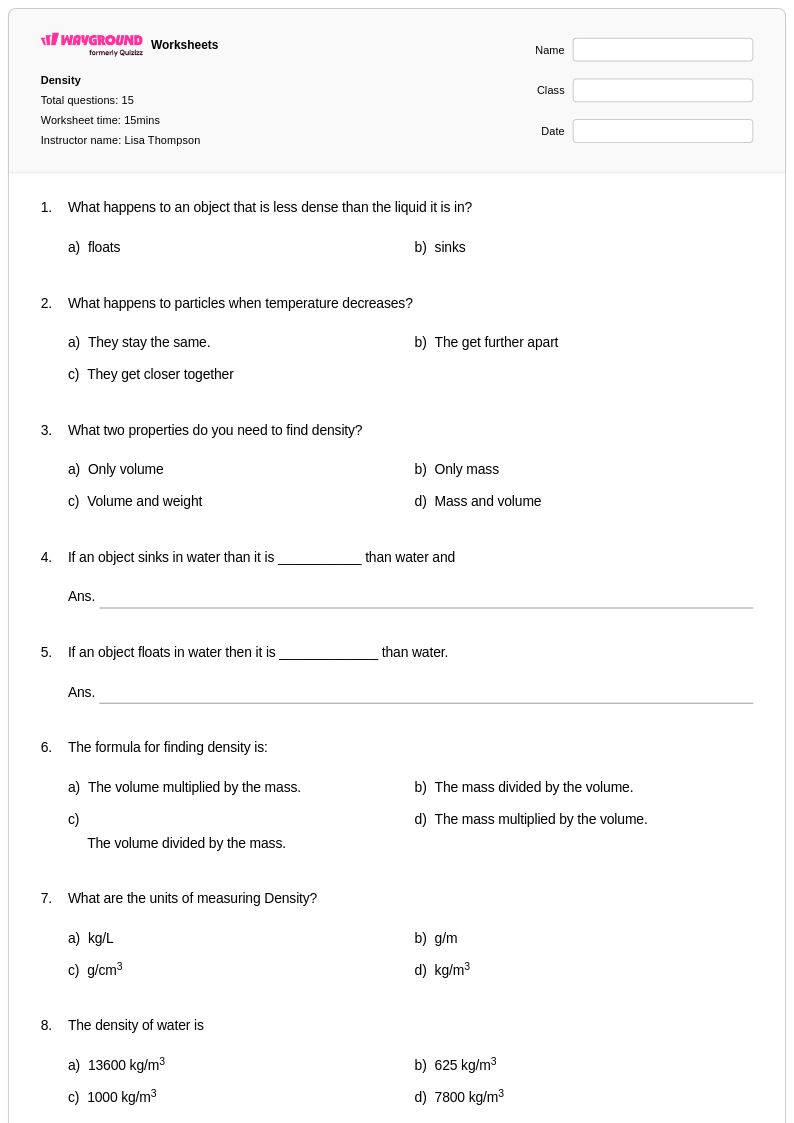
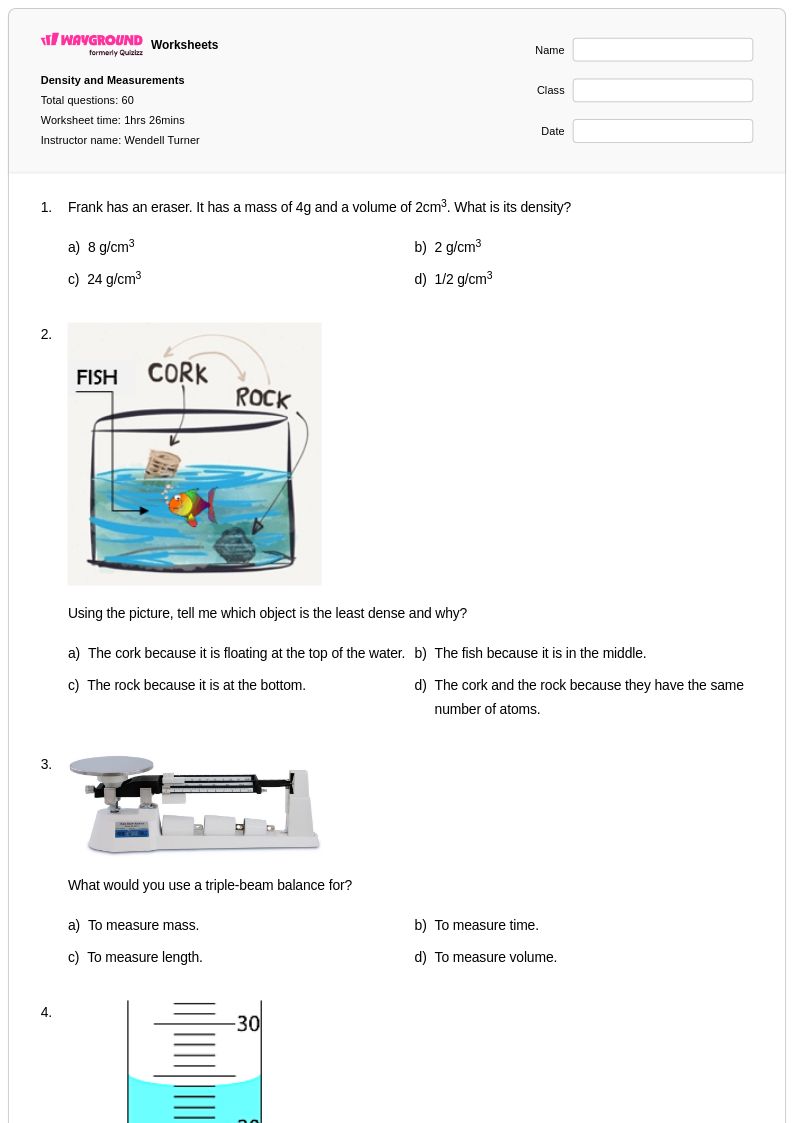
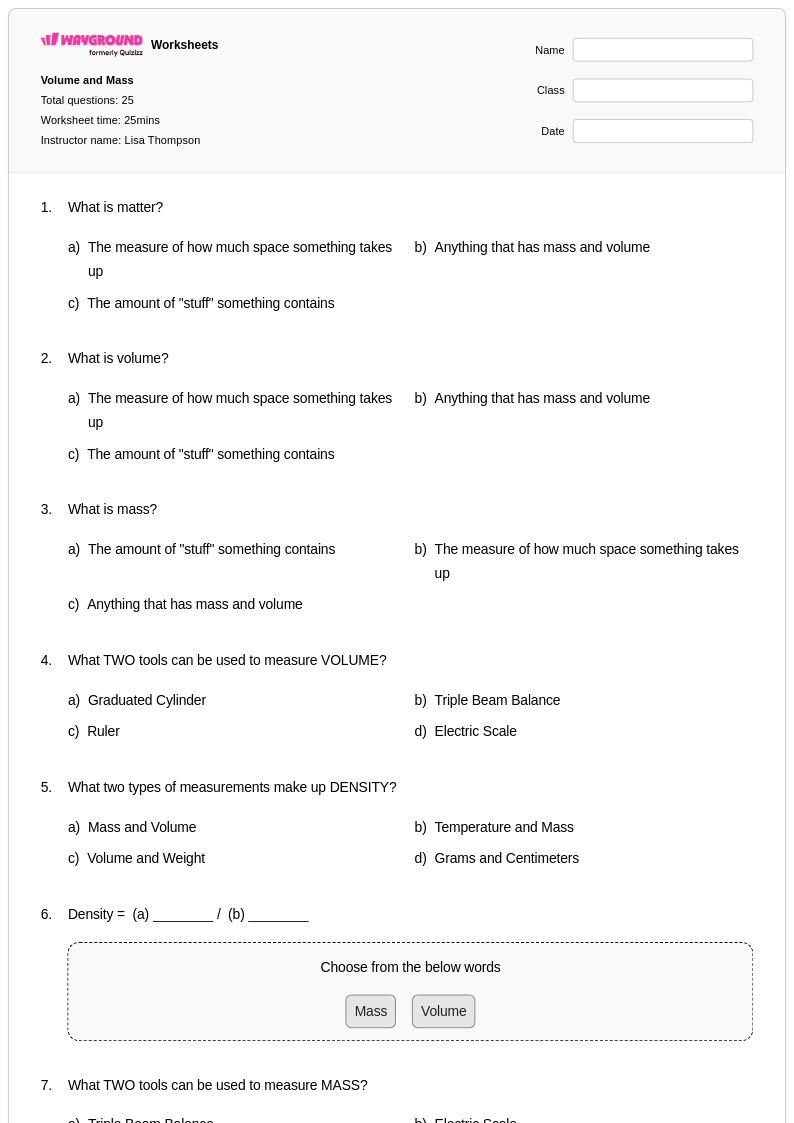
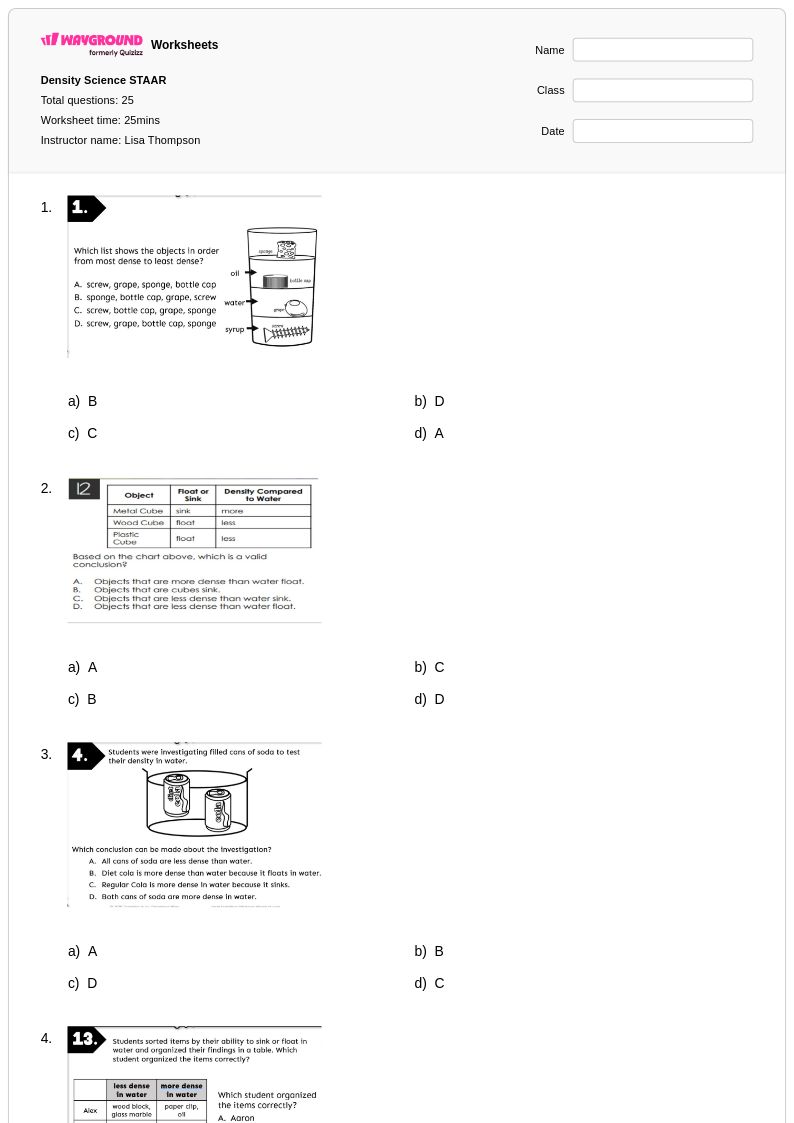
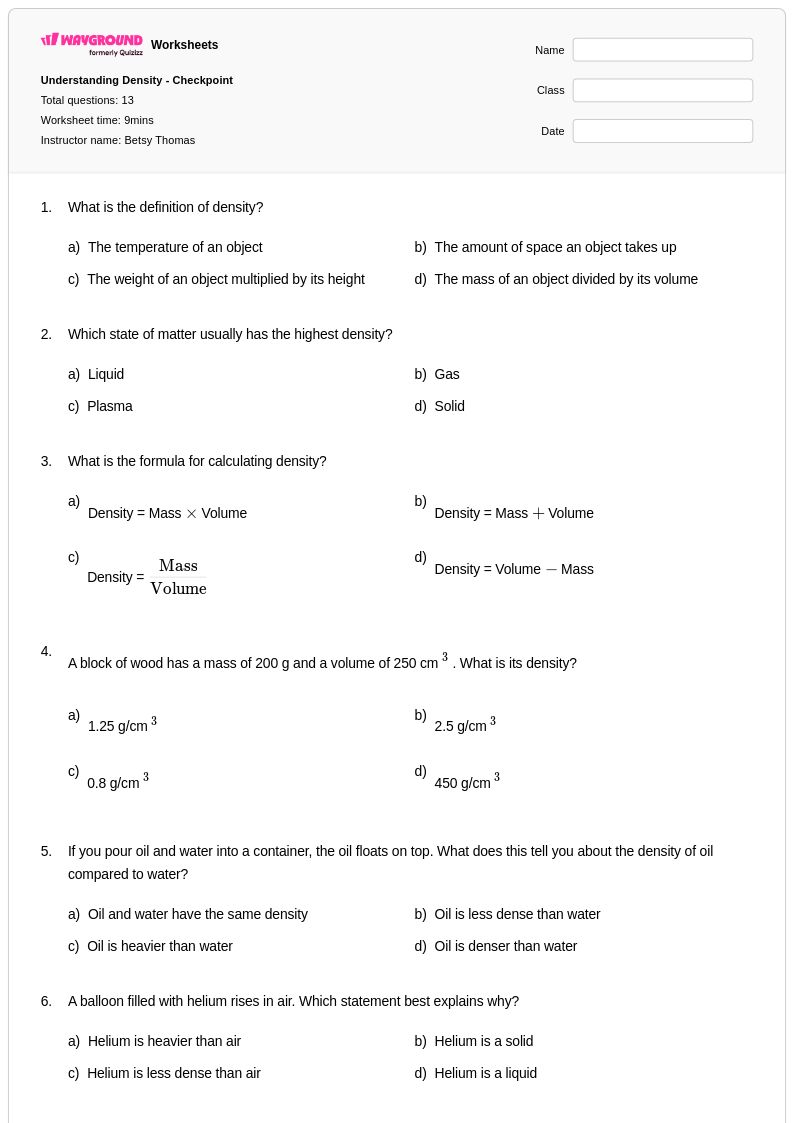
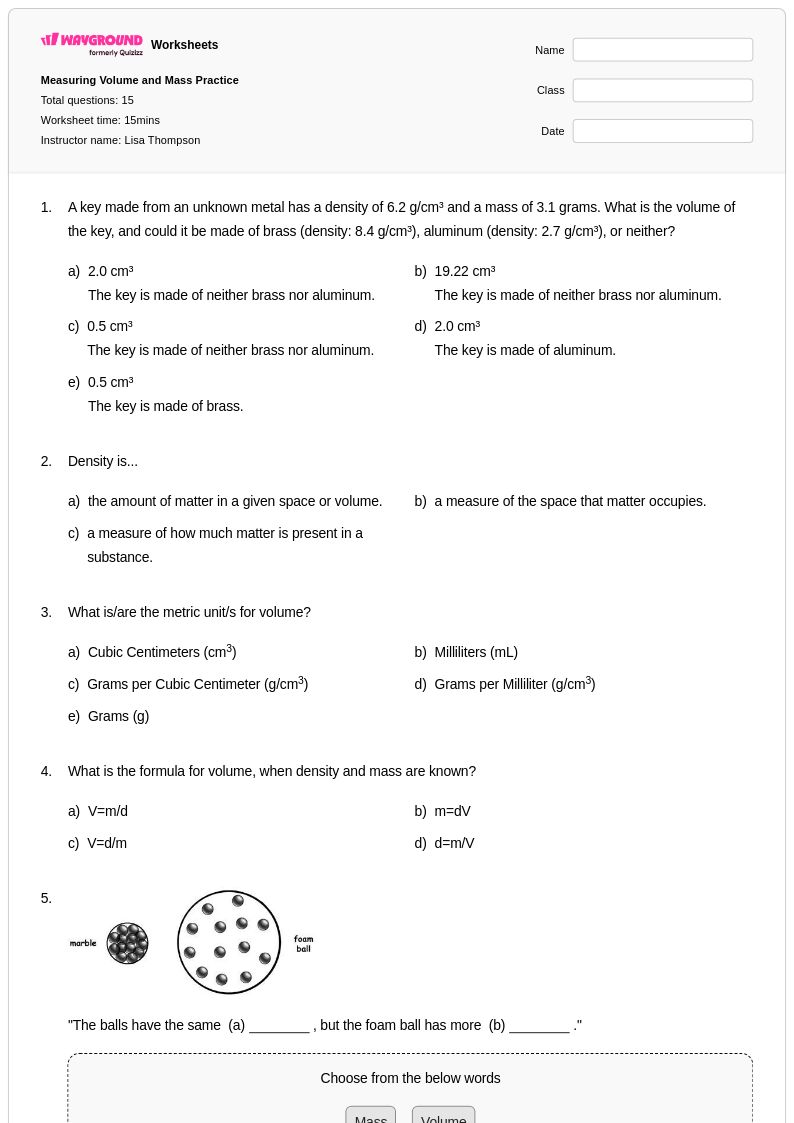
Volume and density worksheets for Class 11 students available through Wayground (formerly Quizizz) provide comprehensive practice with these fundamental physical properties and their mathematical relationships. These expertly designed worksheets strengthen students' abilities to calculate volume using various geometric formulas, apply density equations to solve for mass and volume, and analyze the relationship between these quantities across different materials and states of matter. Students work through practice problems that include unit conversions, density comparisons of substances, and real-world applications such as determining whether objects will float or sink. Each worksheet comes with a detailed answer key and is available as a free printable pdf, making them accessible resources for both classroom instruction and independent study.
Wayground (formerly Quizizz) supports educators with an extensive collection of teacher-created volume and density worksheets, drawing from millions of high-quality resources that can be easily located through robust search and filtering capabilities. Teachers benefit from standards-aligned materials that can be customized to match their specific curriculum needs and differentiated to accommodate varying student skill levels within Class 11 science courses. The platform's flexible format options include both printable pdf versions for traditional paper-based learning and digital formats for interactive online practice, enabling seamless integration into lesson planning for initial instruction, targeted remediation, and enrichment activities. These comprehensive tools allow educators to efficiently address individual learning gaps while providing structured skill practice that builds student confidence in applying volume and density concepts across diverse scientific contexts.
FAQs
How do I teach volume and density to middle school students?
Start by grounding students in the idea that density describes how much mass is packed into a given space, expressed as mass divided by volume. Hands-on activities like displacement experiments using water and irregular objects help make the concept concrete before moving to formulas. Once students can calculate volume using geometric formulas and the water displacement method, introduce density problem sets that require them to compare materials and predict whether objects will sink or float.
What kinds of practice problems help students get better at calculating density?
Effective density practice includes problems that require students to solve for all three variables: mass, volume, and density, rather than always solving for the same unknown. Incorporating unit conversion problems and scenarios involving different materials, such as comparing metals, liquids, and gases, builds flexibility. Progressive problem sets that begin with straightforward calculations and advance to multi-step real-world scenarios, like identifying an unknown substance by its density, develop durable problem-solving skills.
What mistakes do students commonly make when calculating volume and density?
One of the most frequent errors is confusing which variable to solve for, particularly when the formula is rearranged to find mass or volume instead of density. Students also struggle with unit consistency, mixing up grams and kilograms or milliliters and liters within the same calculation. When using water displacement, many students record the total volume of water rather than the difference, leading to incorrect volume values for irregular objects.
How can I differentiate volume and density instruction for students at different skill levels?
For students who need support, begin with structured problem templates that scaffold the formula and label each step, and use Wayground's reduced answer choices accommodation to lower cognitive load on digital assignments. Advanced students benefit from open-ended problems that ask them to design an experiment, interpret density data across materials, or explain why two objects with the same mass can have different volumes. Wayground also supports extended time and read-aloud settings for individual students, so accommodations can be applied without disrupting the rest of the class.
How do I use Wayground's volume and density worksheets in my classroom?
Wayground's volume and density worksheets are available as printable PDFs for traditional classroom use and in digital formats for technology-integrated environments, including the option to host them as a quiz directly on Wayground. Teachers can use the printable versions for in-class labs or homework and assign the digital versions for formative checks or independent practice. Each worksheet includes a complete answer key, making them practical for both teacher-led instruction and independent student work.
How does understanding density connect to broader science concepts students will encounter?
Density is a foundational concept that reappears across earth science, chemistry, and physics, underpinning topics like buoyancy, atmospheric layers, ocean currents, and material science. Students who understand density as a ratio of mass to volume are better equipped to interpret data, make predictions about material behavior, and connect mathematical reasoning to scientific observations. Building fluency with density calculations early creates a conceptual scaffold that supports more complex scientific inquiry throughout secondary education.