Free Printable Distributive Property of Multiplication worksheets
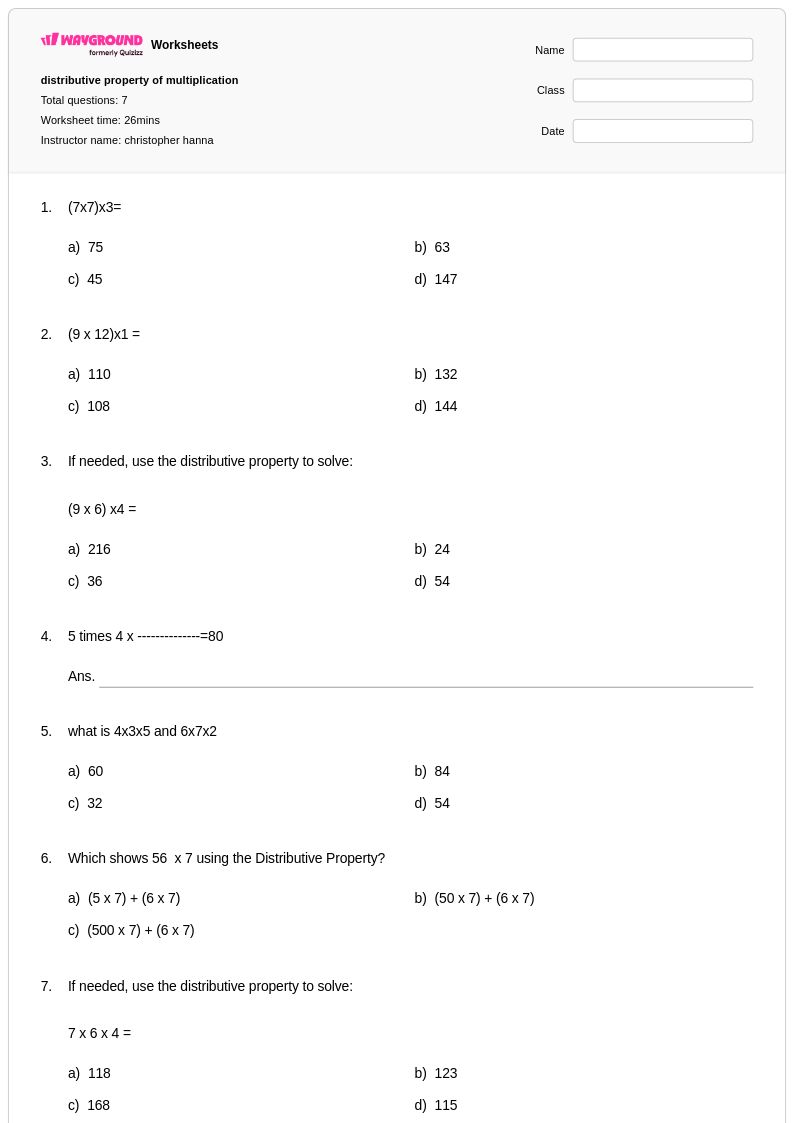
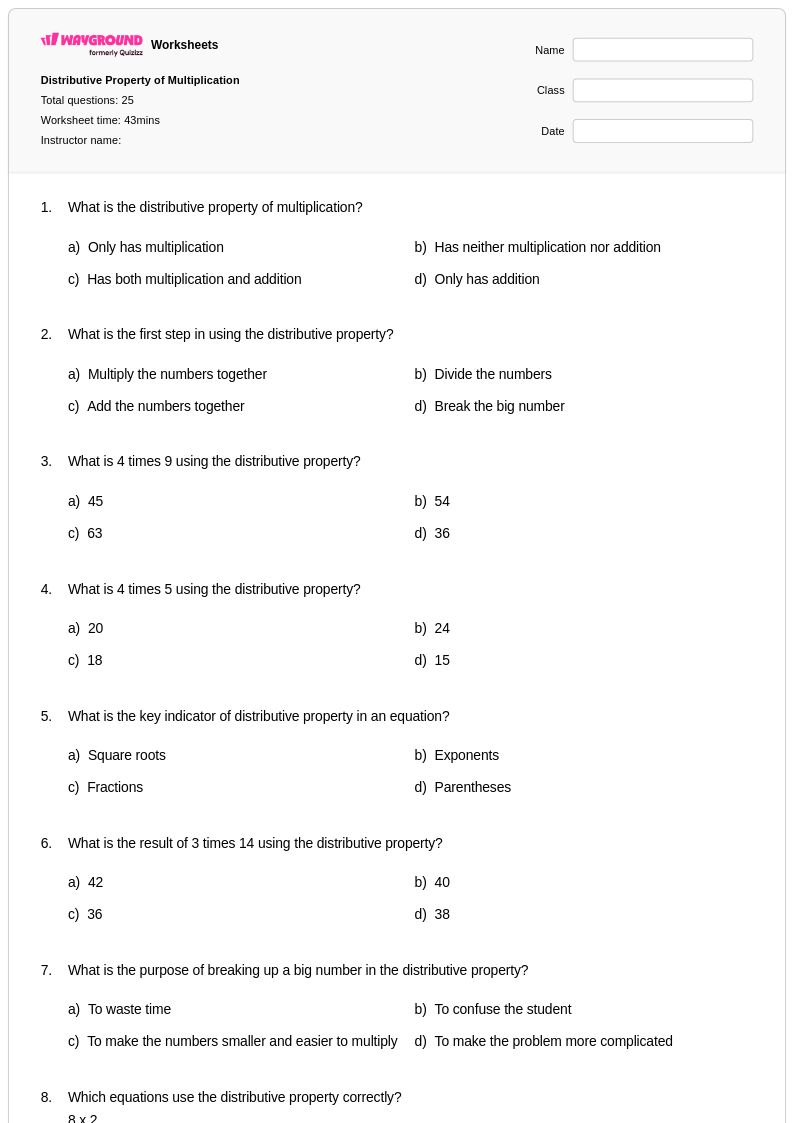
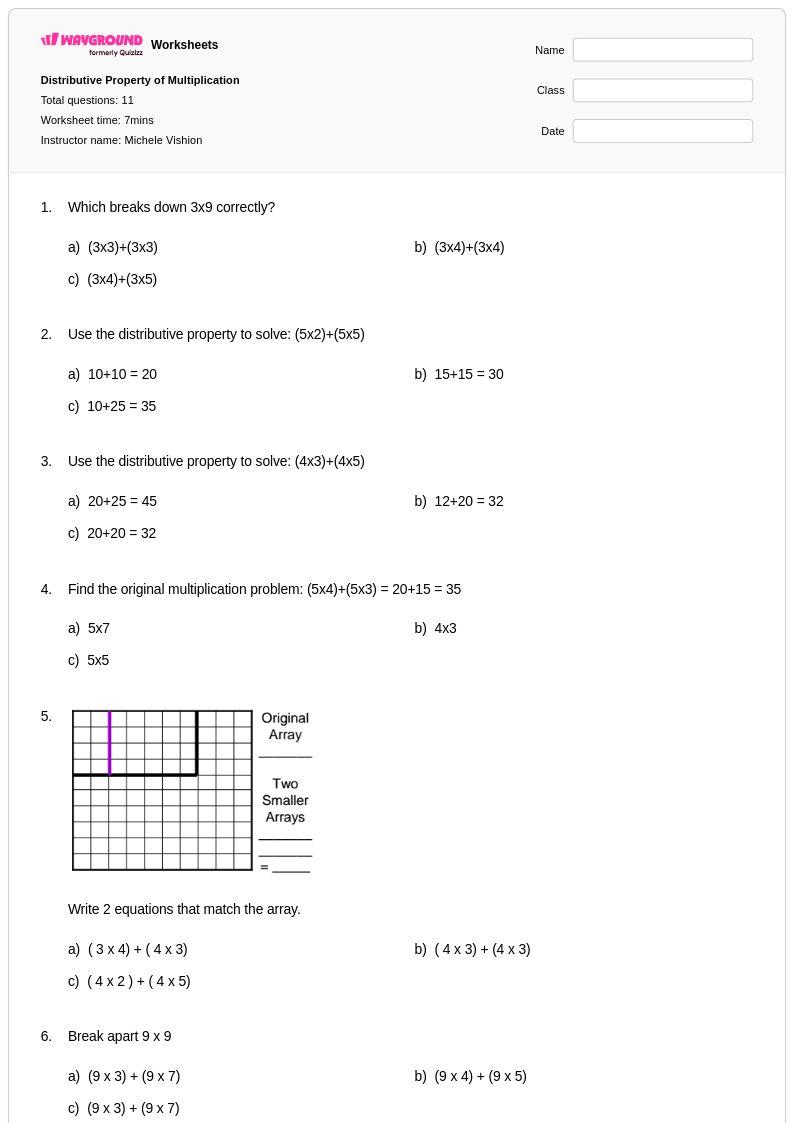
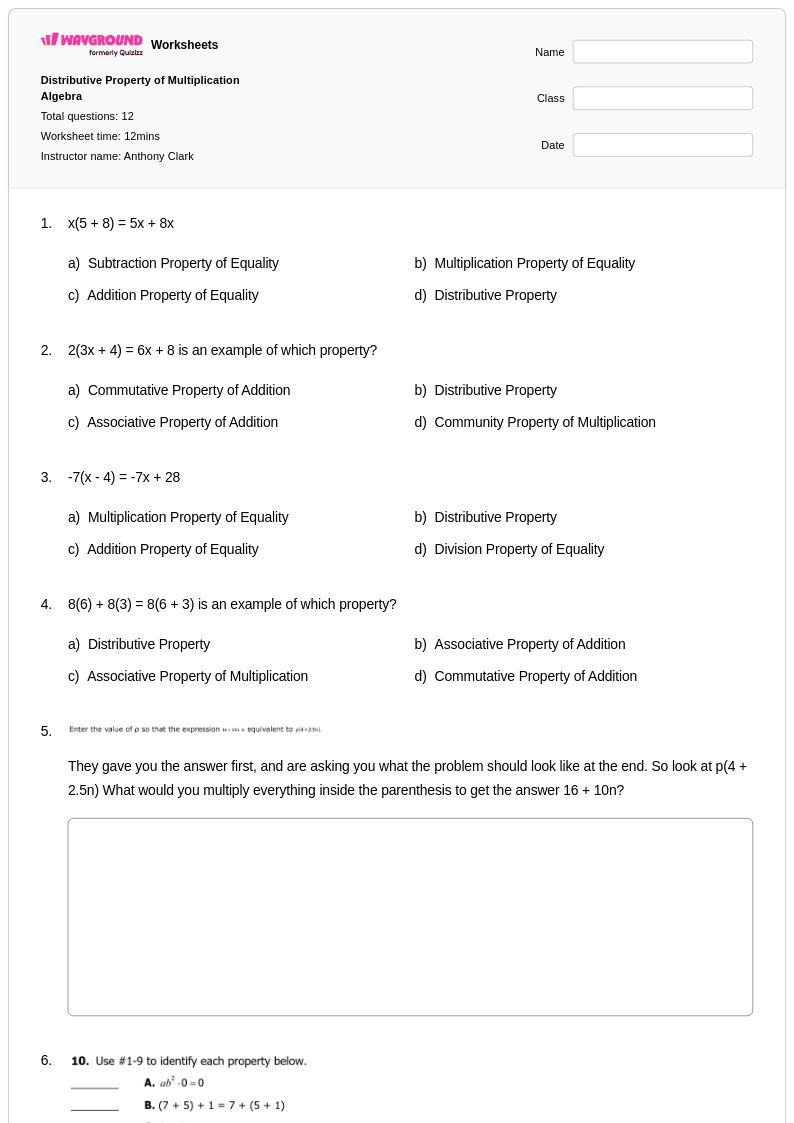
Wayground's free distributive property of multiplication worksheets provide comprehensive practice problems and answer keys to help students master breaking down complex multiplication expressions into simpler, equivalent forms through engaging printable PDFs.
Explore printable Distributive Property of Multiplication worksheets
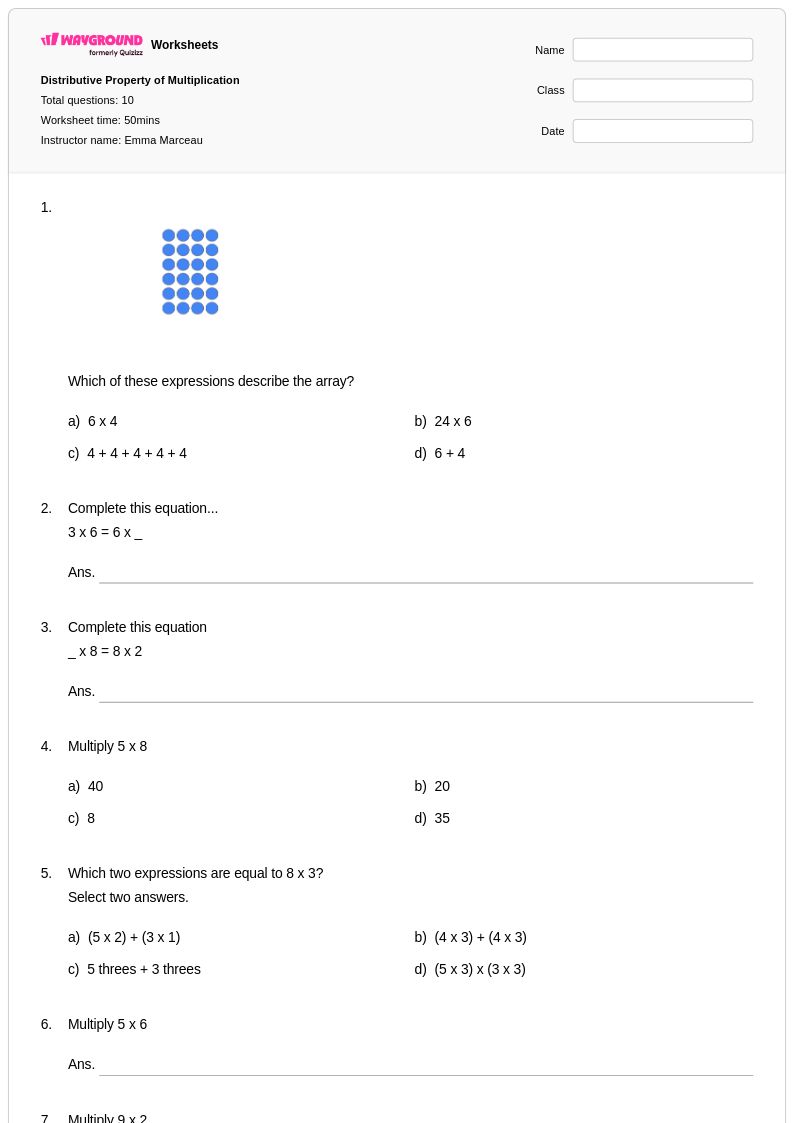
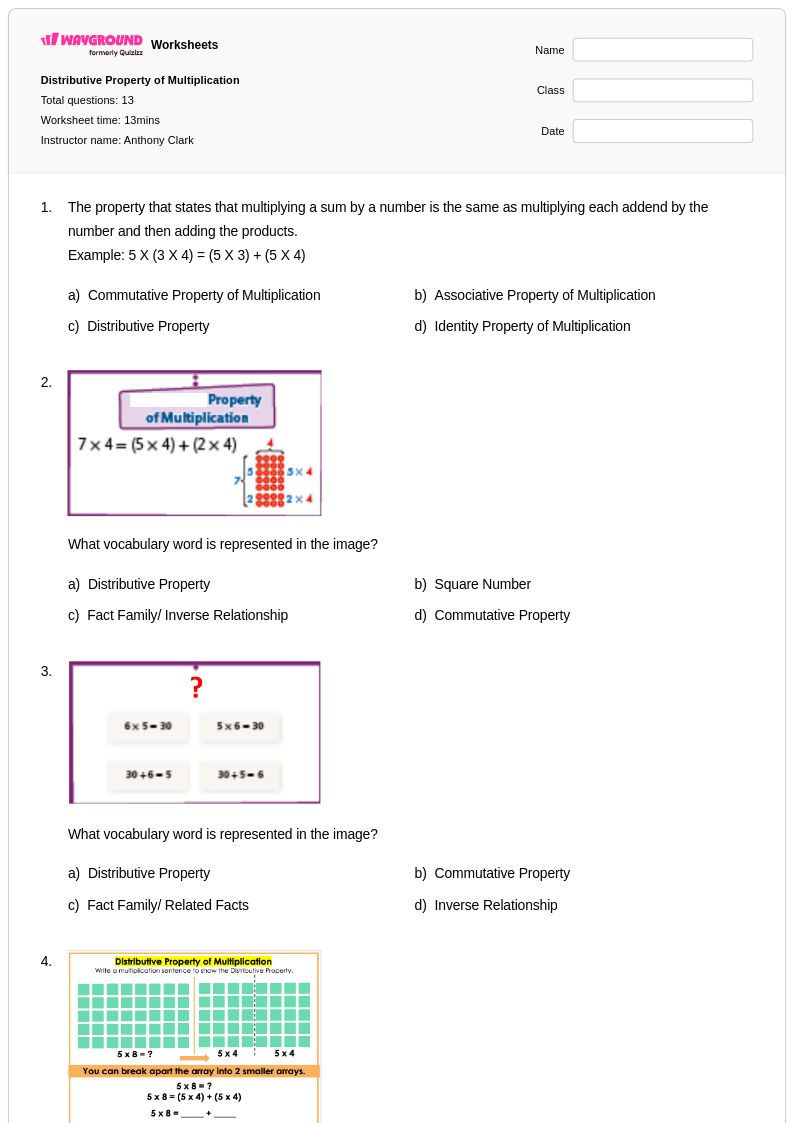
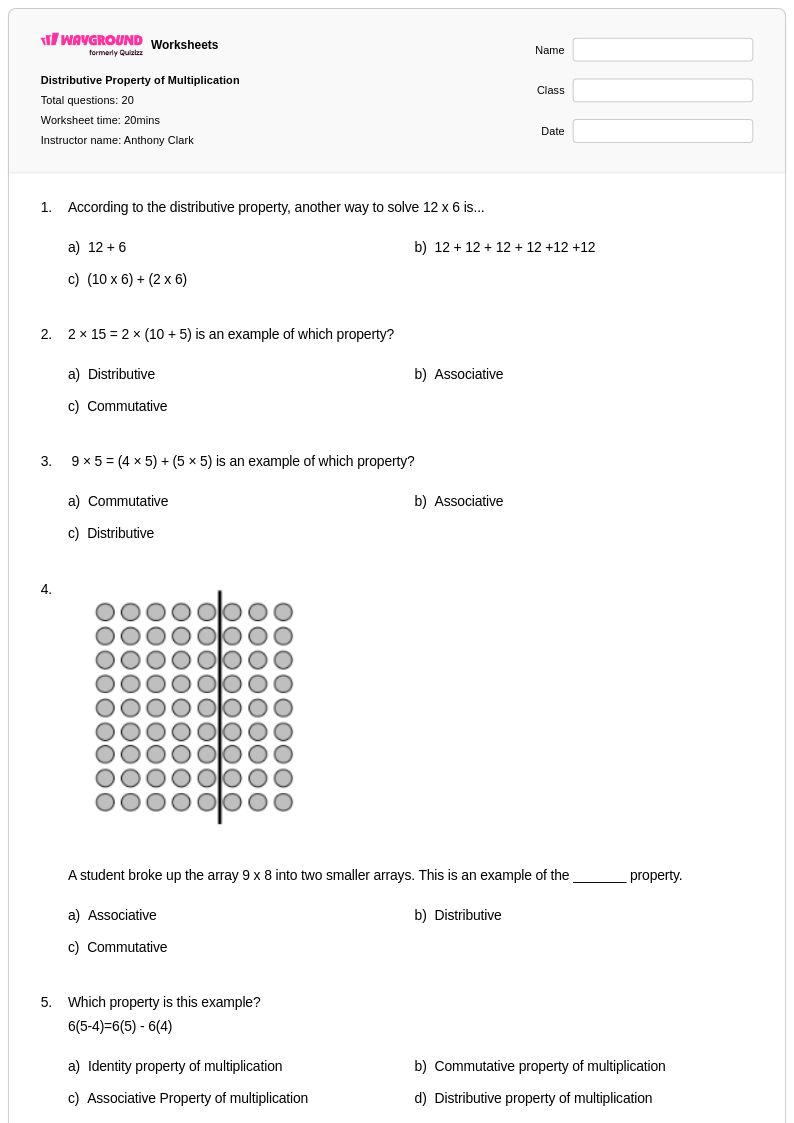
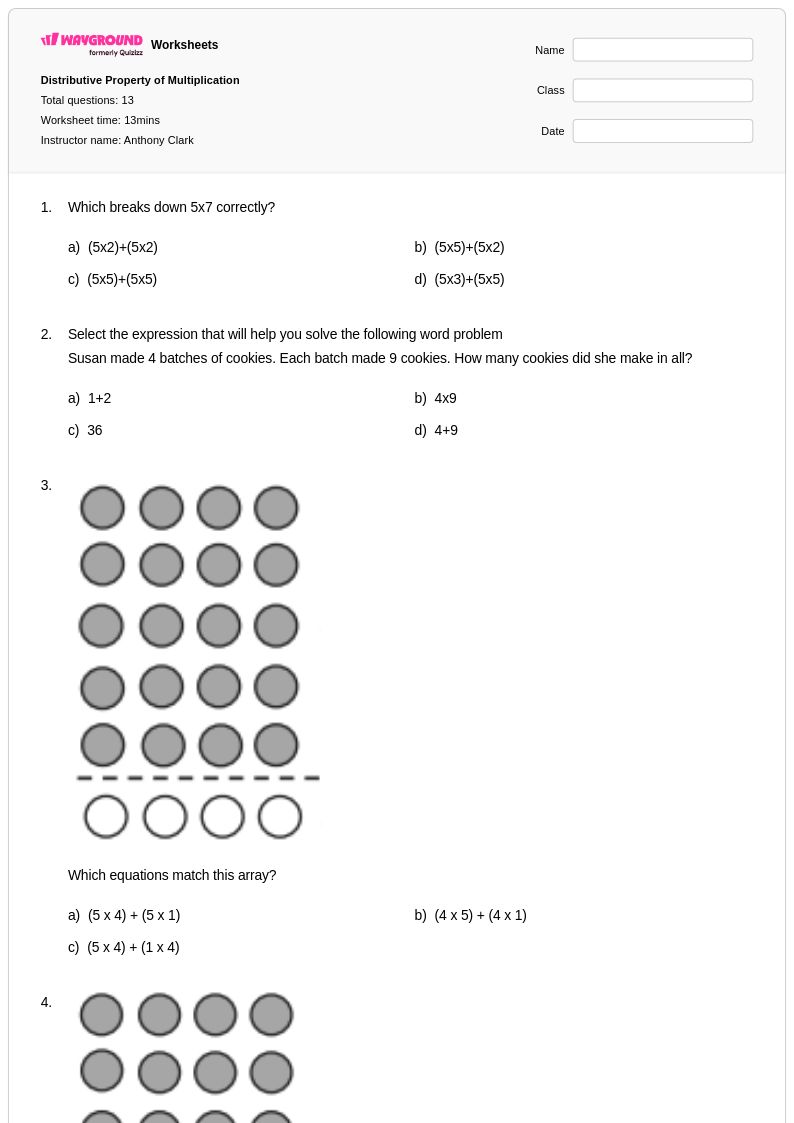
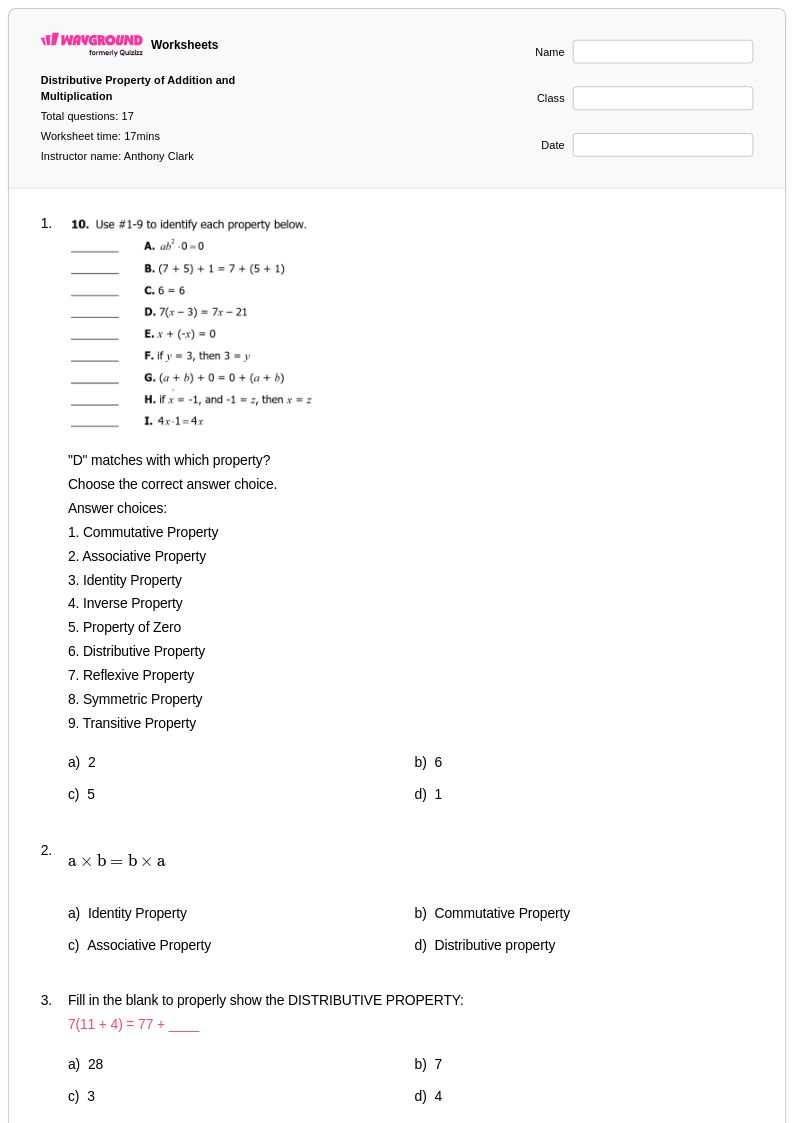
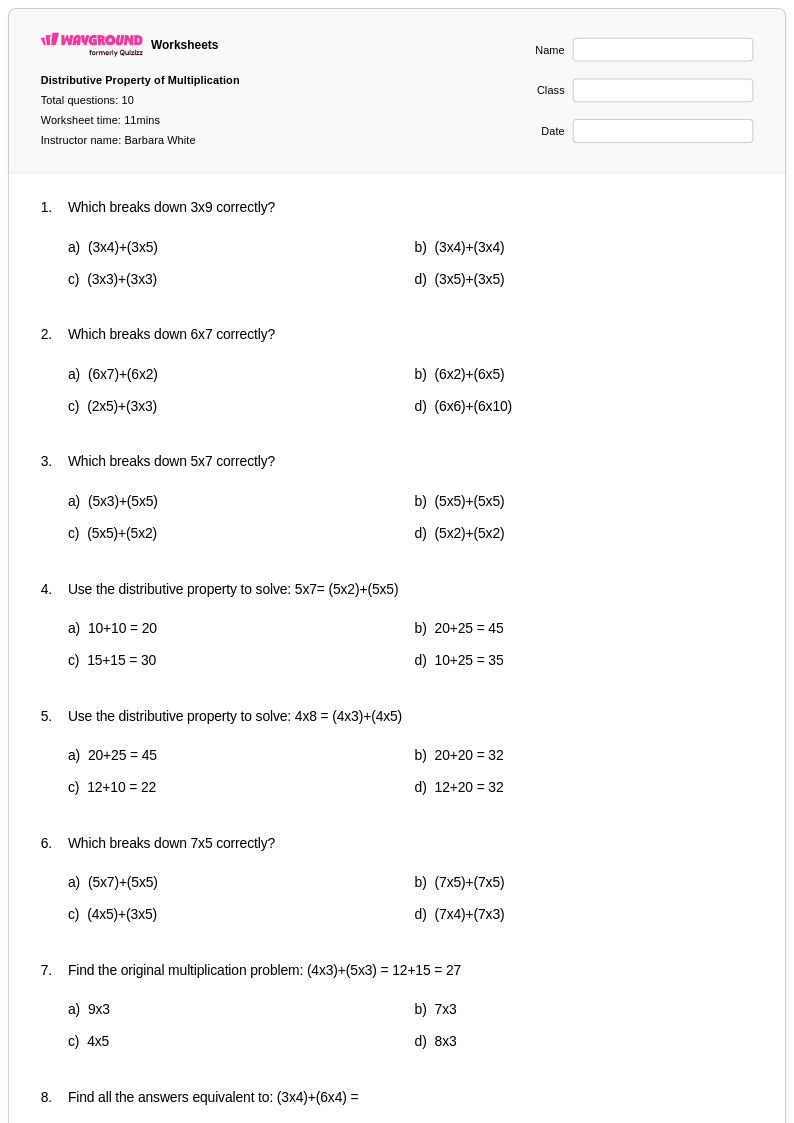
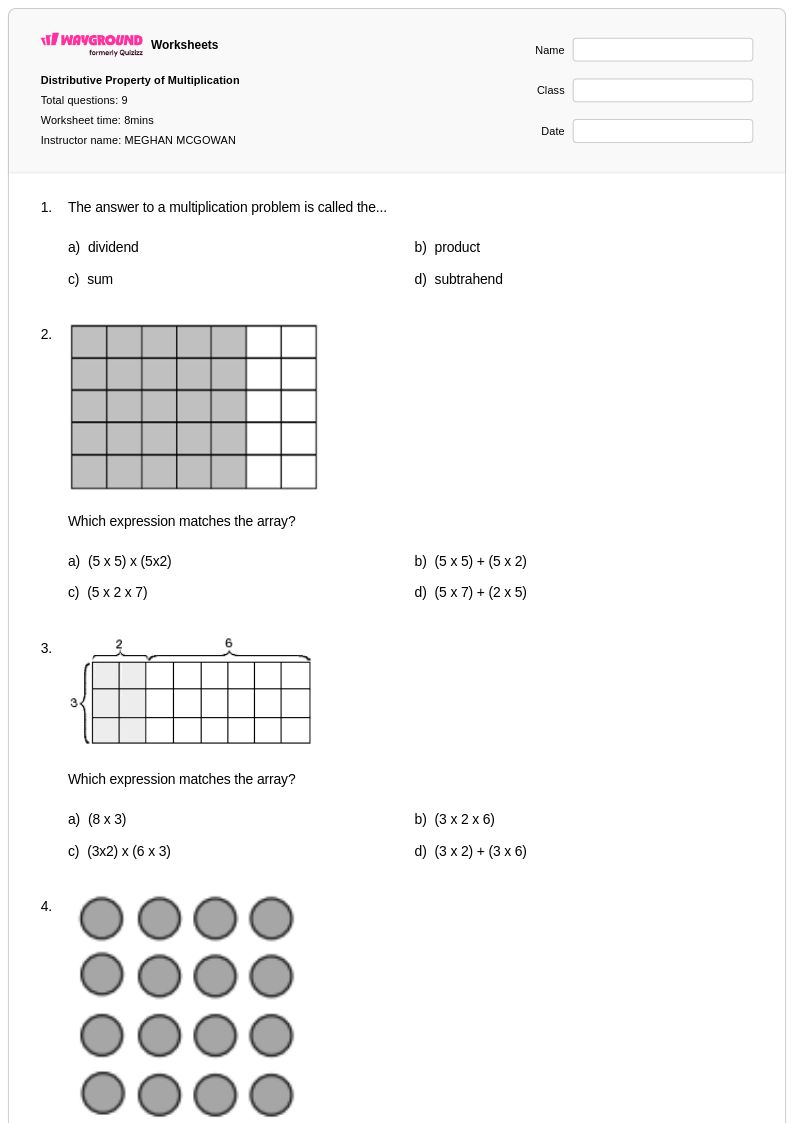
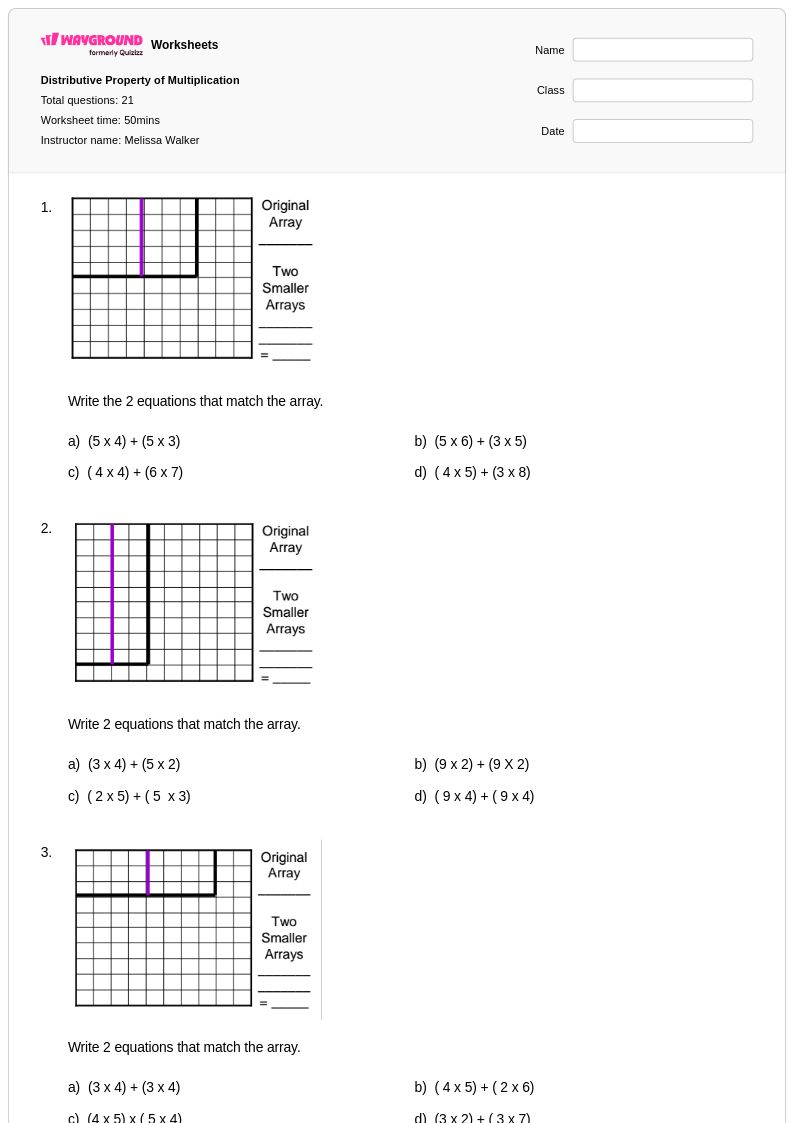
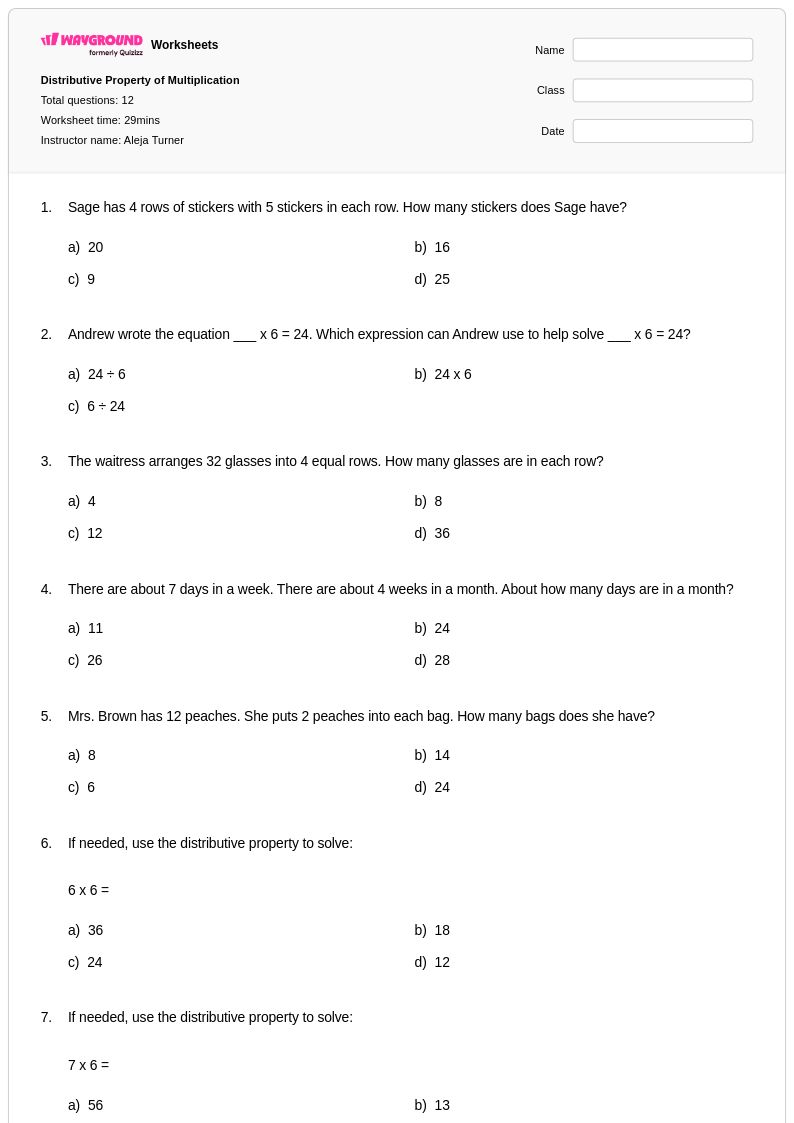
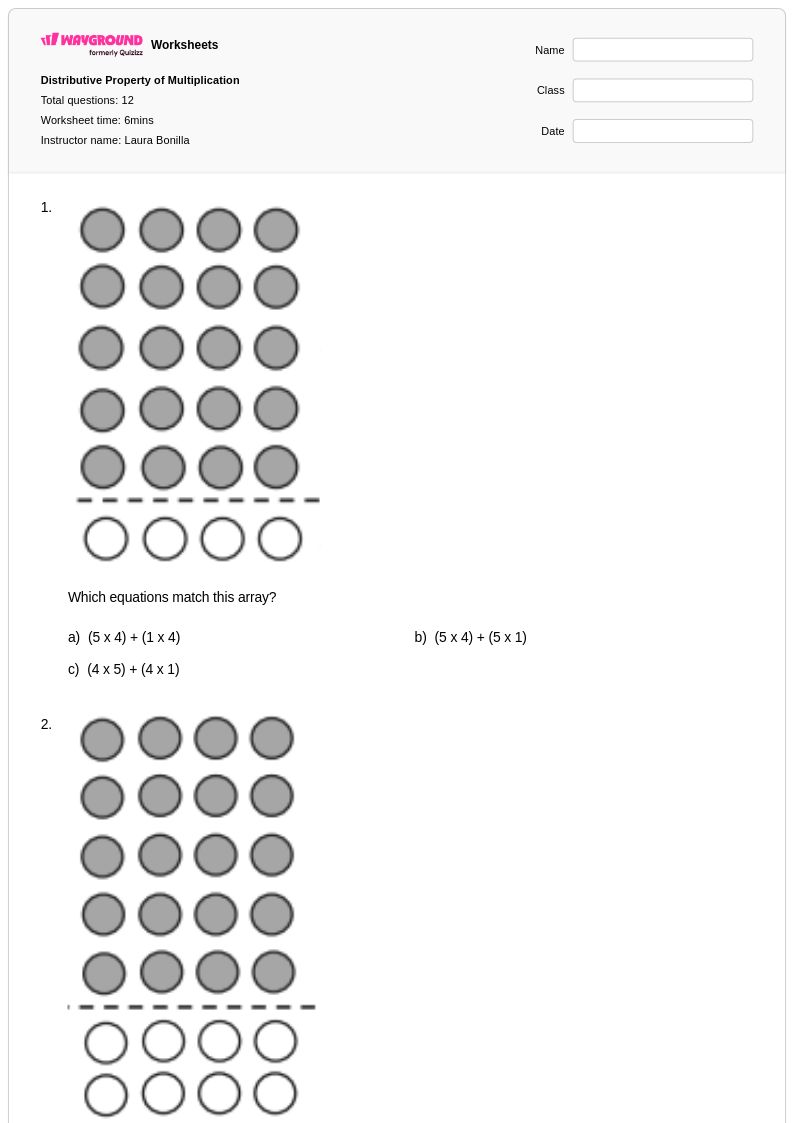
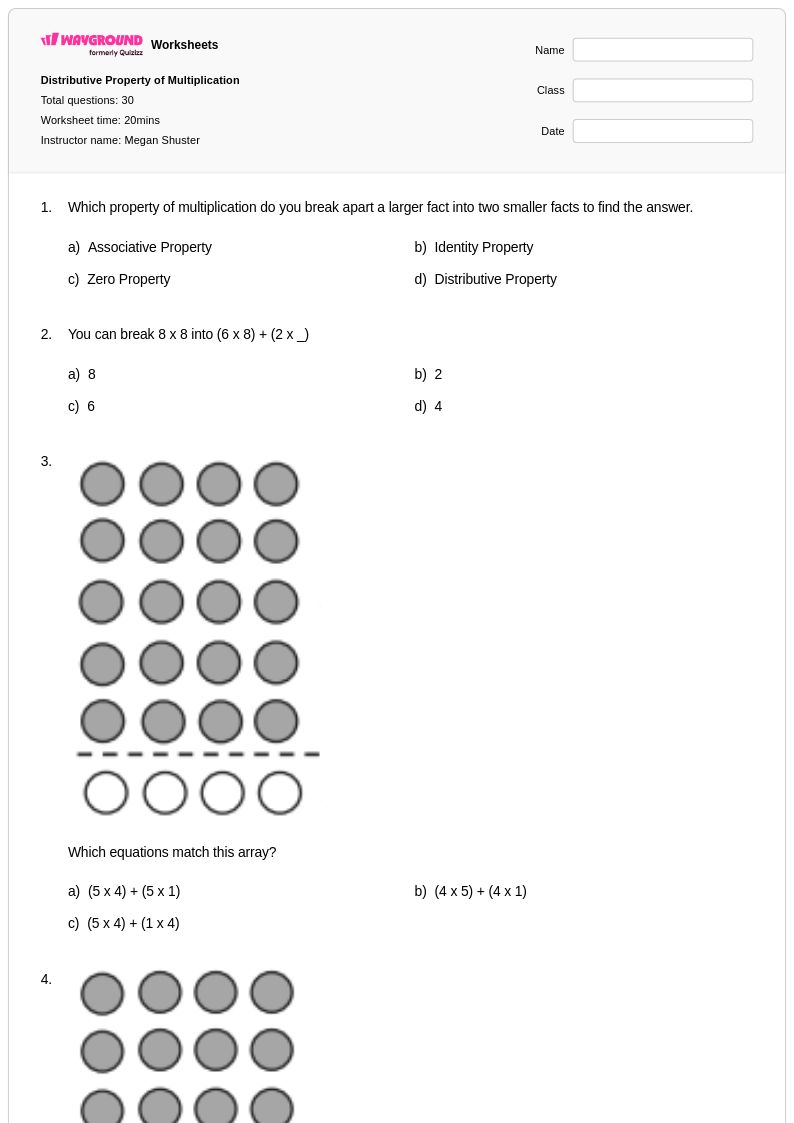
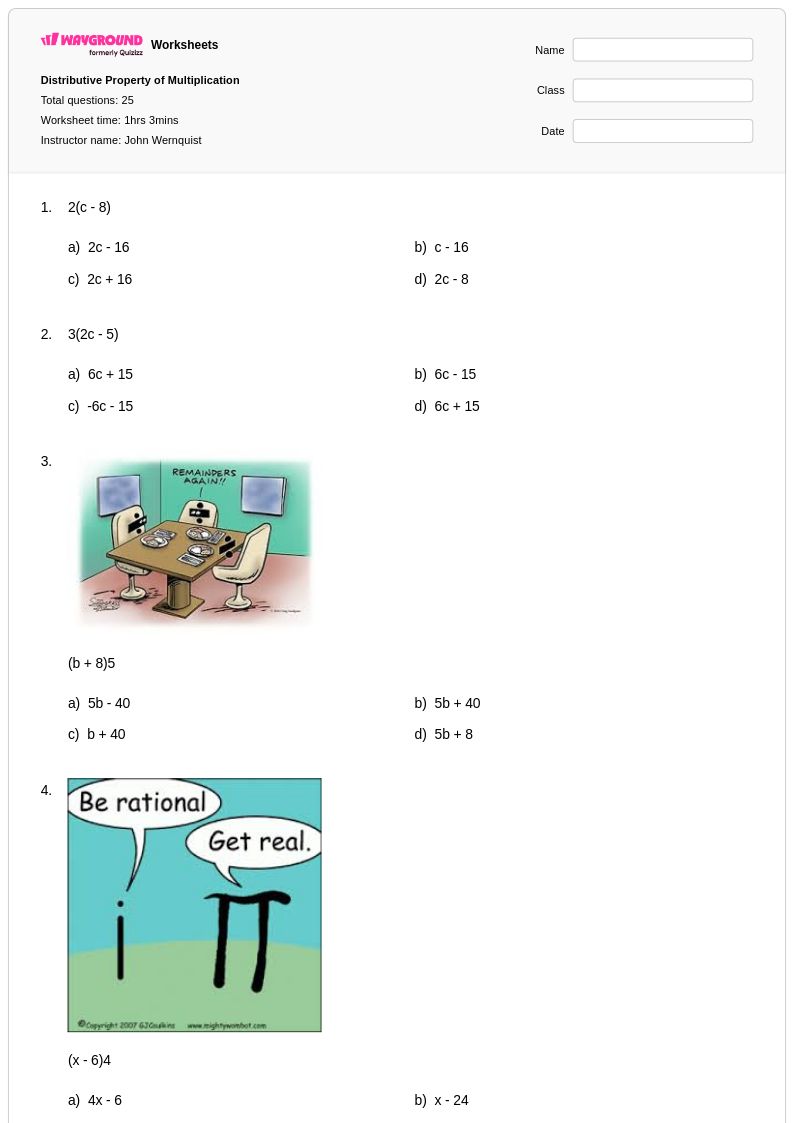
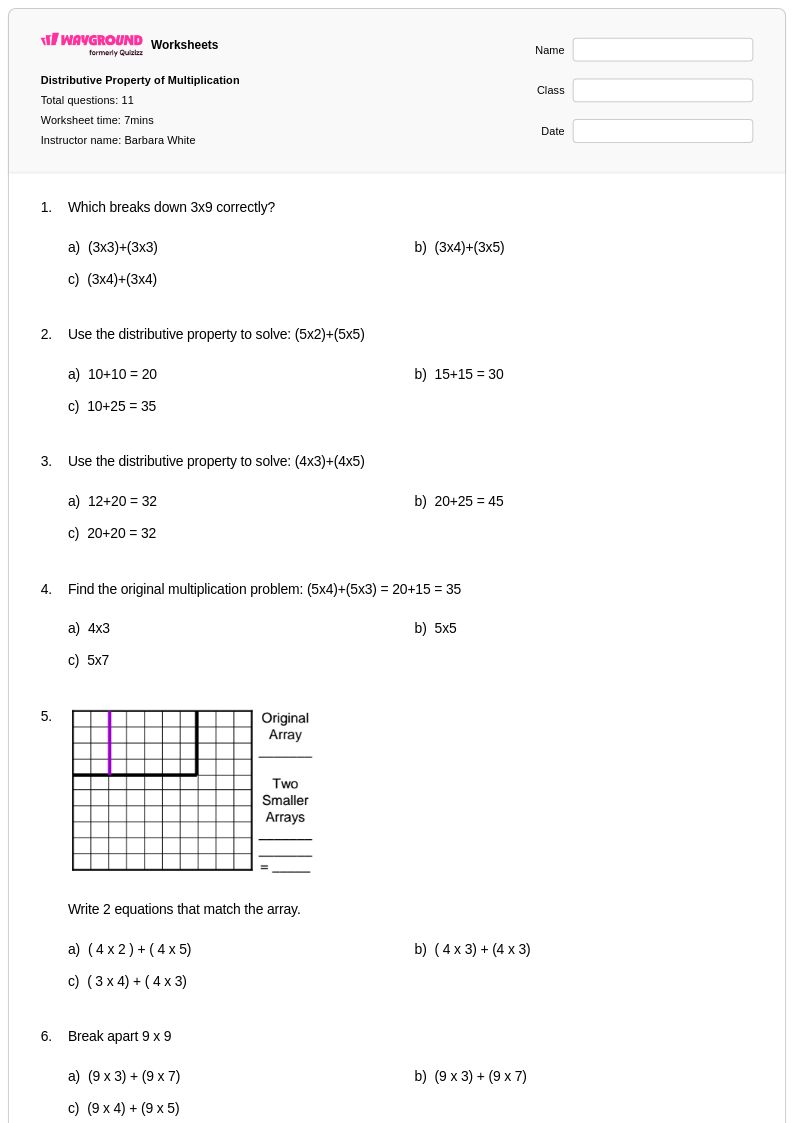
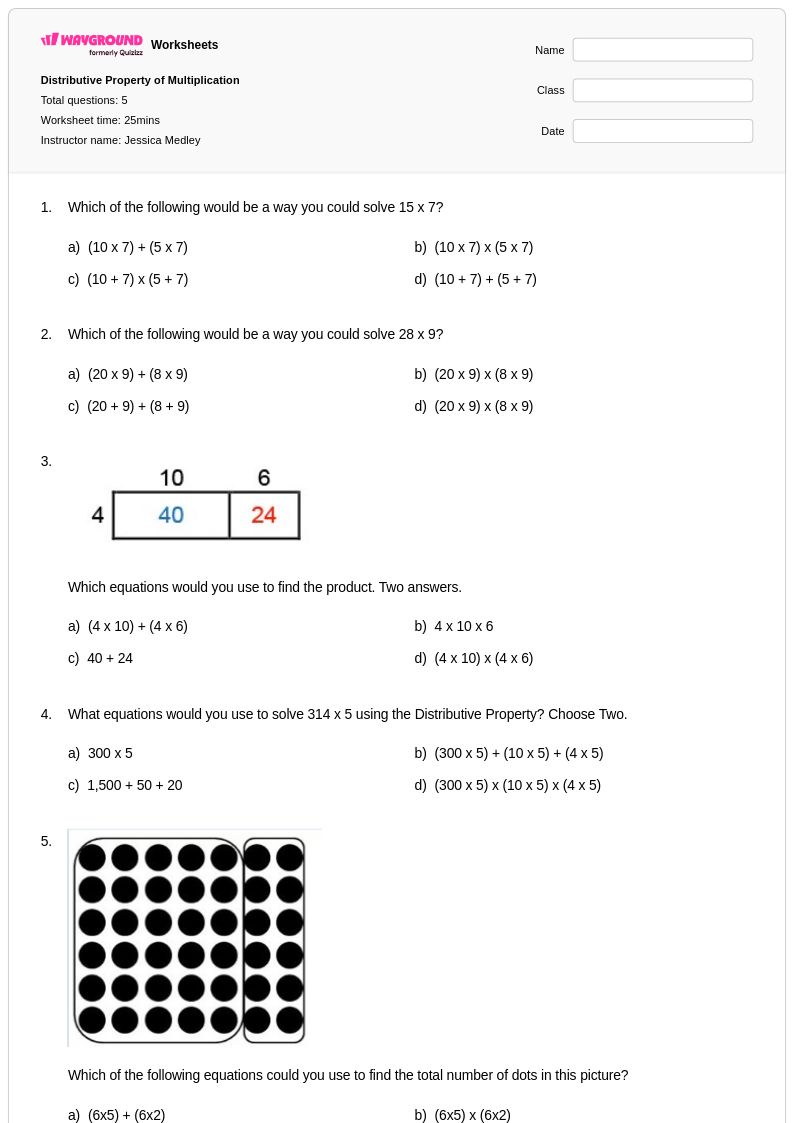
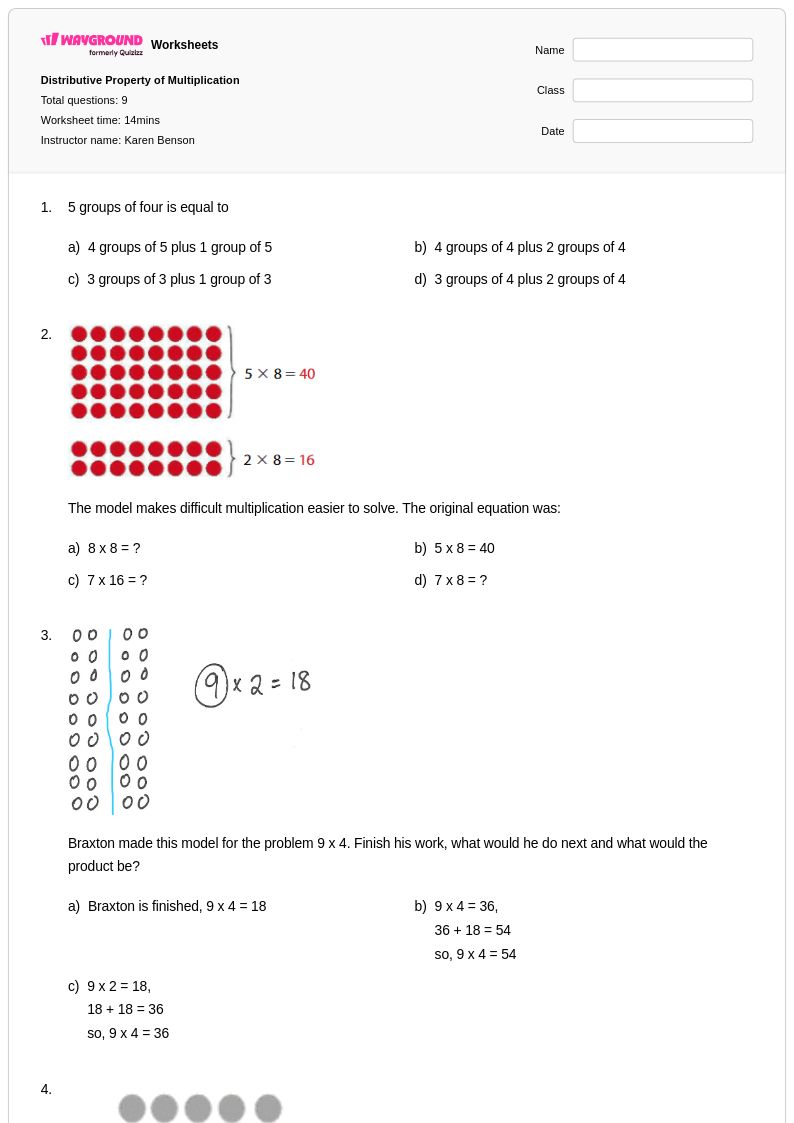
Distributive Property of Multiplication worksheets available through Wayground (formerly Quizizz) provide comprehensive practice opportunities for students to master this fundamental algebraic concept. These educational resources focus on helping students understand how to multiply a number by a sum or difference by distributing the multiplication across each term within parentheses, such as transforming 3(4 + 5) into 3×4 + 3×5. The worksheets strengthen critical mathematical reasoning skills by presenting varied practice problems that require students to apply the distributive property in both directions, including factoring expressions and expanding products. Teachers can access these free printables in convenient pdf format, complete with detailed answer keys that facilitate efficient grading and enable students to check their work independently during skill-building sessions.
Wayground (formerly Quizizz) supports educators with an extensive collection of teacher-created Distributive Property of Multiplication resources, drawing from millions of high-quality materials developed by experienced mathematics instructors. The platform's robust search and filtering capabilities allow teachers to quickly locate worksheets that align with specific curriculum standards and match their students' varied skill levels. Advanced differentiation tools enable educators to customize practice problems for remediation with struggling learners or enrichment for advanced students, while the flexible format options support both traditional printable worksheets and interactive digital activities. These comprehensive resources streamline lesson planning by providing ready-to-use materials that can be seamlessly integrated into classroom instruction, homework assignments, or assessment preparation, ensuring students receive targeted practice with this essential mathematical property across multiple learning contexts.
FAQs
How do I teach the distributive property of multiplication?
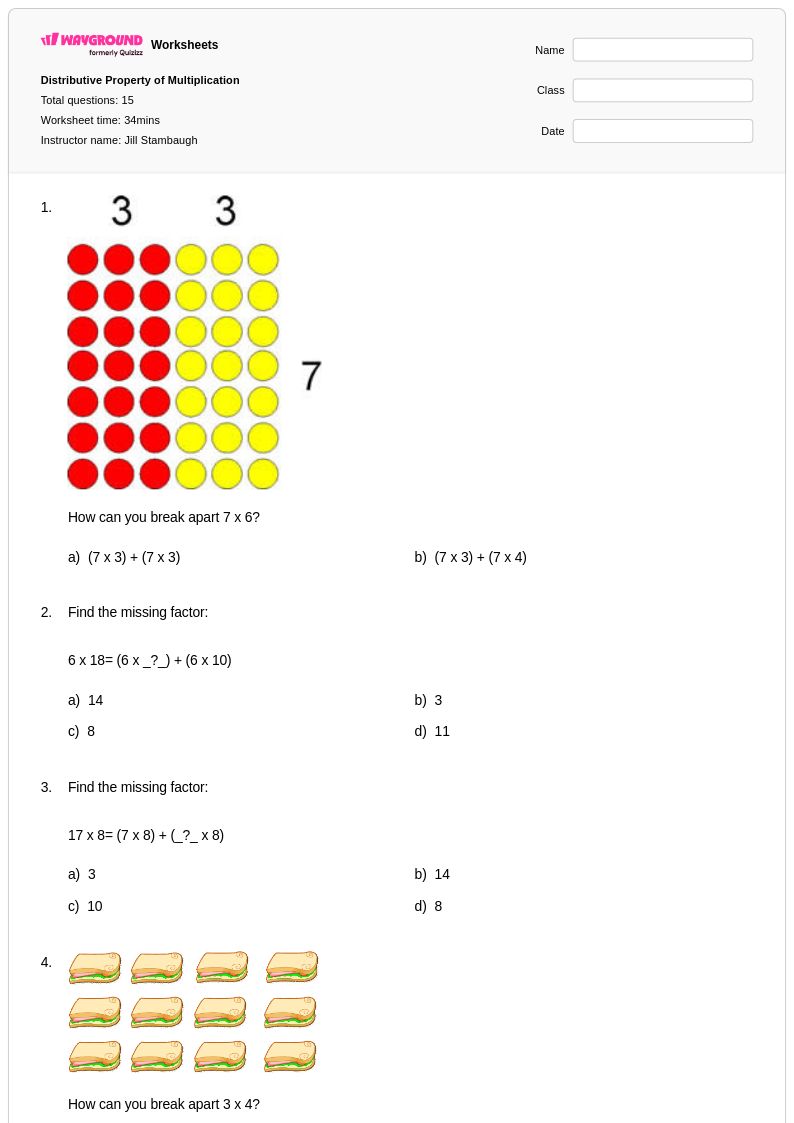
Start with a concrete example students can visualize: if you have 3 groups of (4 + 5) objects, you can count 3 groups of 4 and 3 groups of 5 separately, then add. Once students see why the property works, move to numerical expressions like 3(4 + 5) = 3×4 + 3×5, and then practice running it in reverse — factoring a sum like 12 + 15 back into 3(4 + 5). That two-direction fluency is what makes the property genuinely useful later in algebra.
What kinds of practice problems help students master the distributive property?
The most effective practice mixes three problem types: expanding expressions (3(4 + 5) → 3×4 + 3×5), applying the property to simplify mental math (6 × 18 broken into 6×10 + 6×8), and factoring in reverse. Students who only practice expansion often freeze when they encounter a factoring problem, so including all three builds real flexibility with the concept.
What mistakes do students commonly make with the distributive property?
The most common error is partial distribution — students multiply the number outside the parentheses by only the first term and ignore the second, writing 3(4 + 5) = 12 + 5 instead of 12 + 15. A second frequent mistake is sign errors when subtraction is involved: 3(4 − 5) becomes 12 − 5 instead of 12 − 15. Catching these early, before students hit algebraic expressions with variables, saves a lot of reteaching later.
How do I use these distributive property worksheets in my classroom?
Each worksheet is available as a printable PDF or as a digital quiz hosted on Wayground — same problems, your choice of format. For digital sessions, students submit answers directly on the platform. For paper practice, print the PDF and use the included answer key to grade submissions; you can also capture student work through the Wayground for Teachers app to grade on your device. Both routes work well depending on whether you're in a 1:1 classroom or prefer pencil-and-paper practice.
Is the distributive property of multiplication aligned to Common Core standards?
Yes. Common Core introduces the distributive property in third grade as a multiplication strategy — breaking apart an unknown fact into two known ones (e.g., 7 × 8 as (5 + 2) × 8). By fourth and fifth grade, students apply it to multi-digit multiplication and begin connecting it to area models. In sixth grade, the same property becomes the foundation for expanding and factoring algebraic expressions, so the concept threads continuously from arithmetic into pre-algebra.
How can I differentiate distributive property practice for mixed-ability classes?
On Wayground, you can generate alternate versions of the same worksheet with adjusted font size, wider spacing, or a dyslexia-friendly font for students who need it. For students who struggle with the concept itself, the reduced answer choices accommodation narrows the options displayed, which lowers cognitive load while they're still building confidence. Advanced students can be pushed toward problems that require factoring or involve larger numbers, while the rest of the class works through standard expansion problems — all from the same base worksheet.