
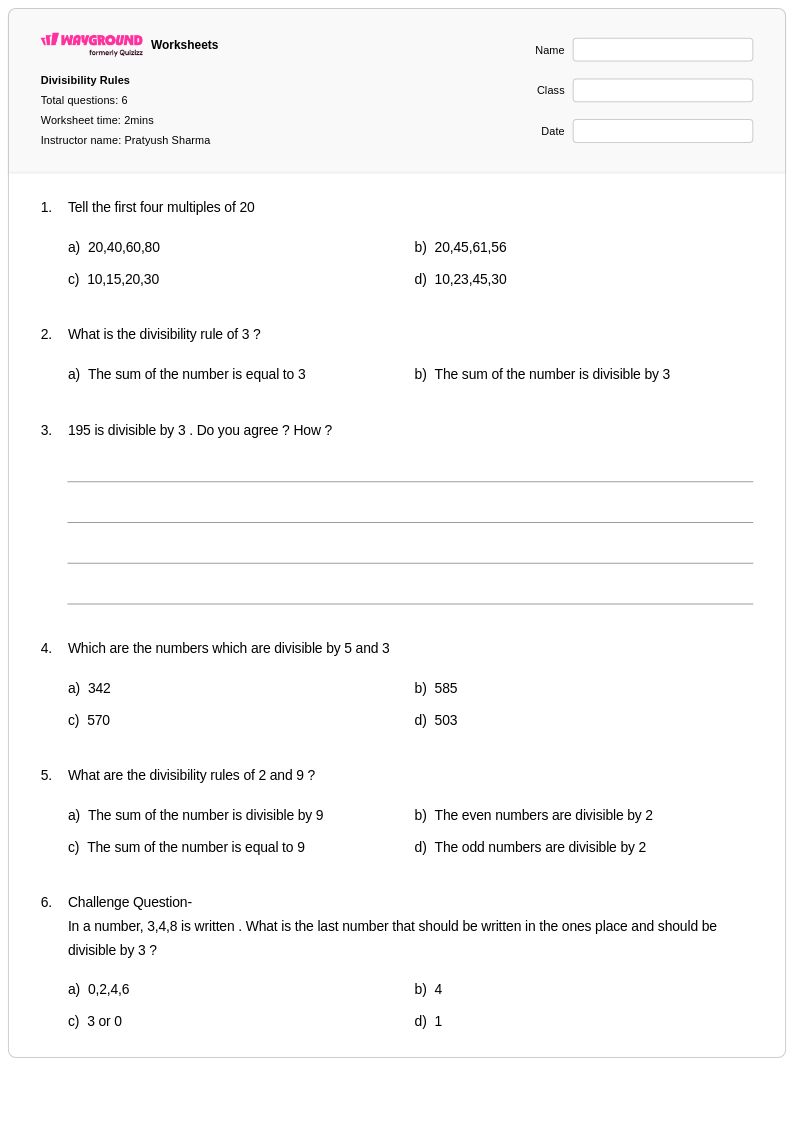
6 Q
5th
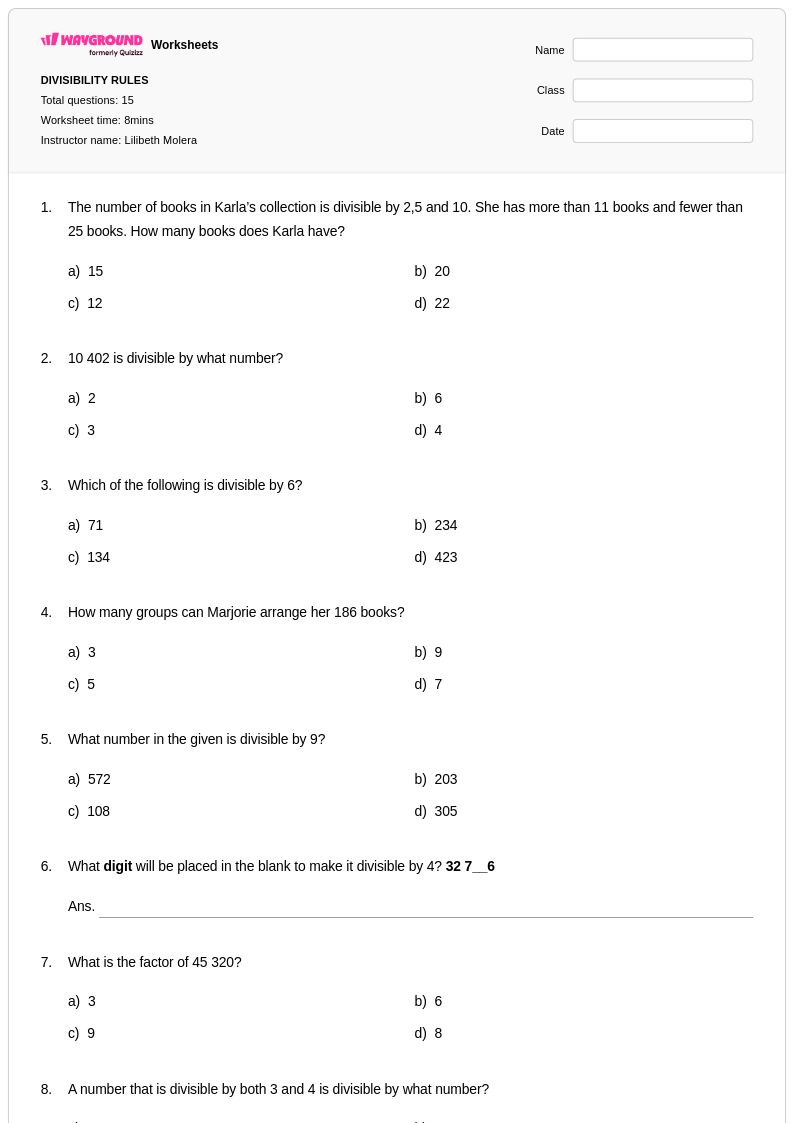
15 Q
5th
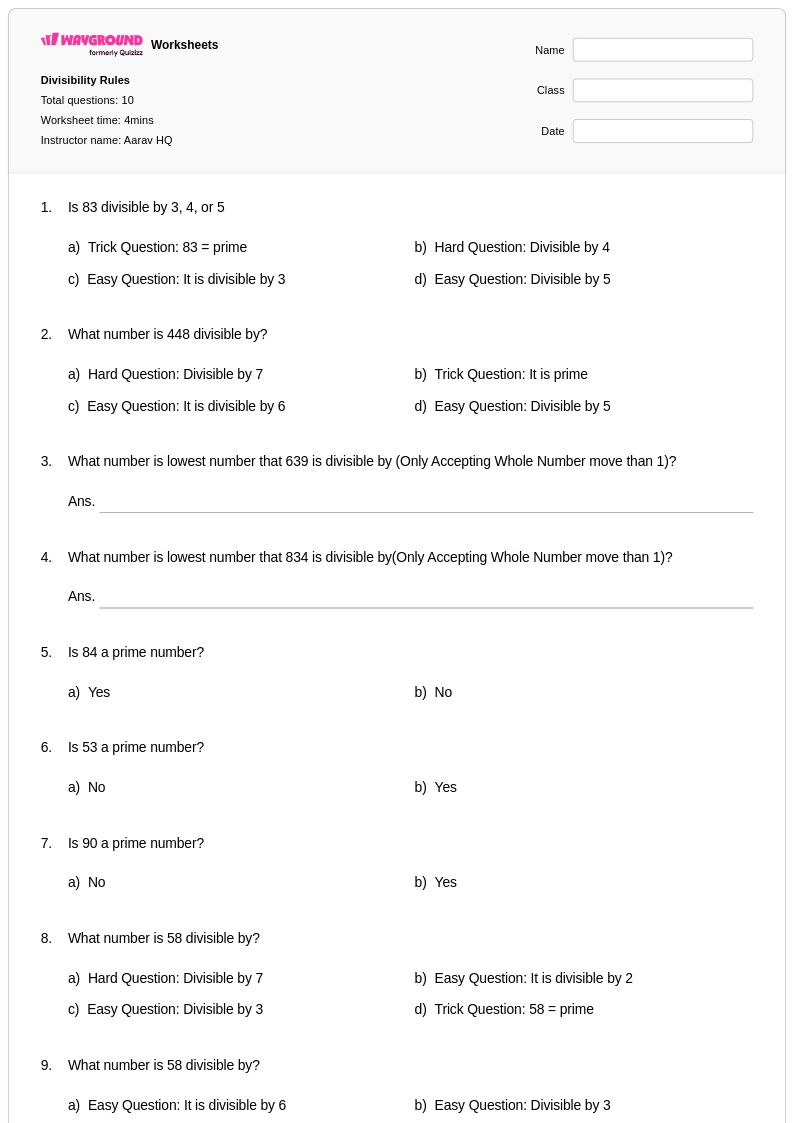
10 Q
4th - 6th
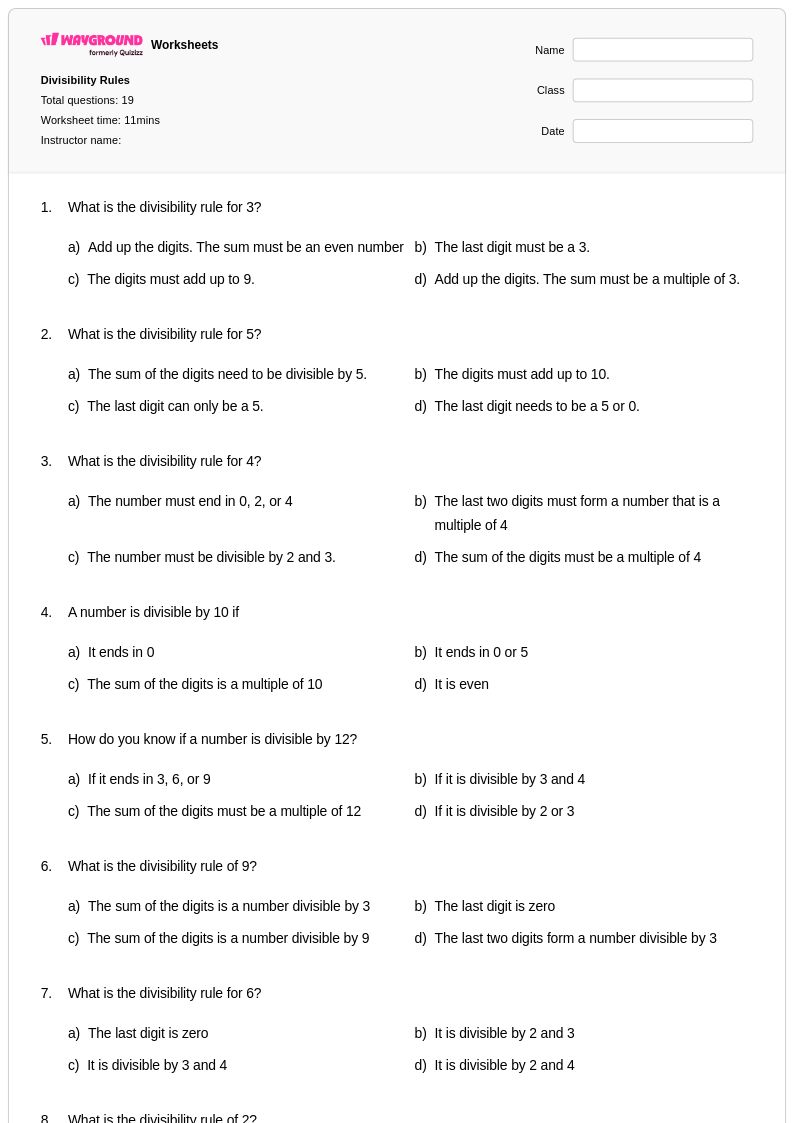
19 Q
6th - 7th
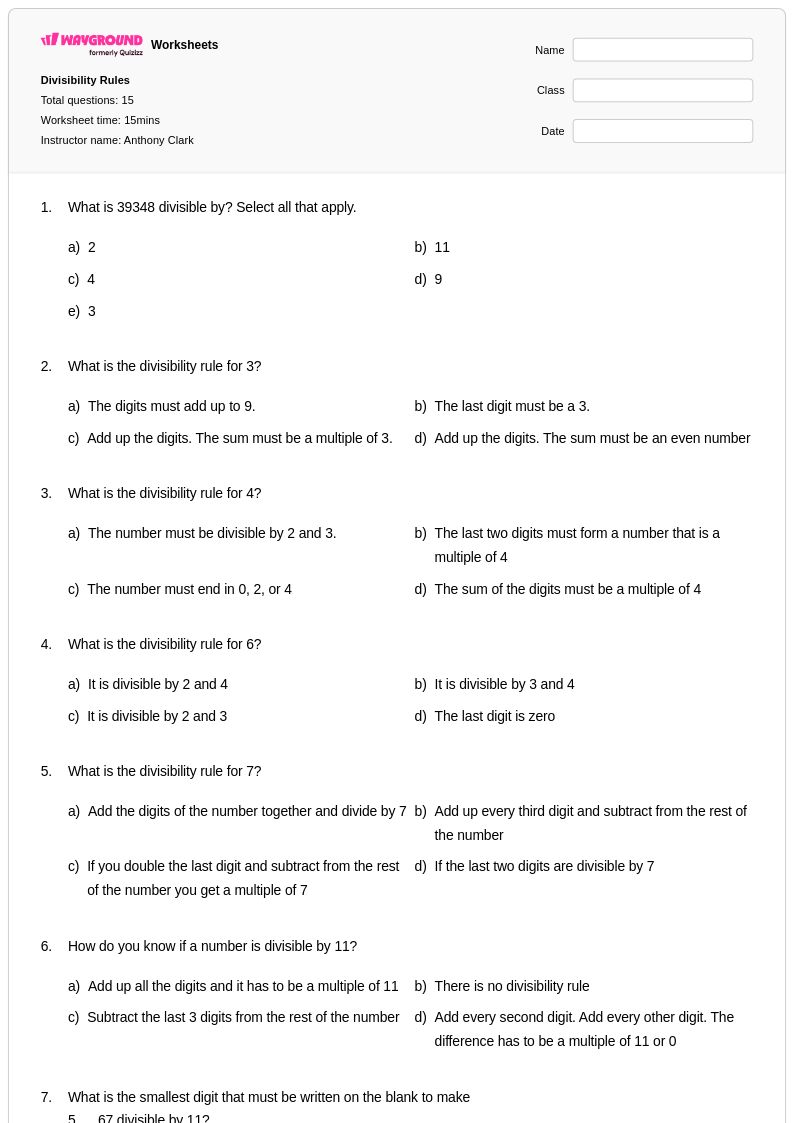
15 Q
5th - Uni
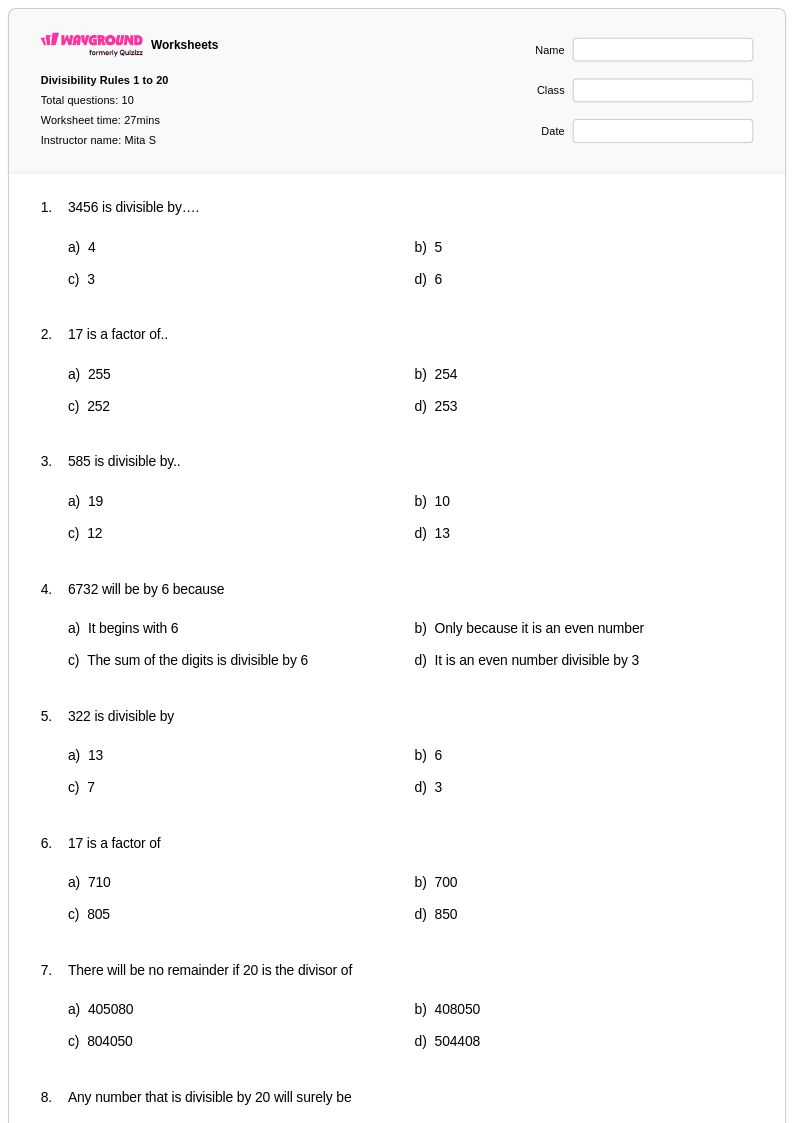
10 Q
5th - 7th
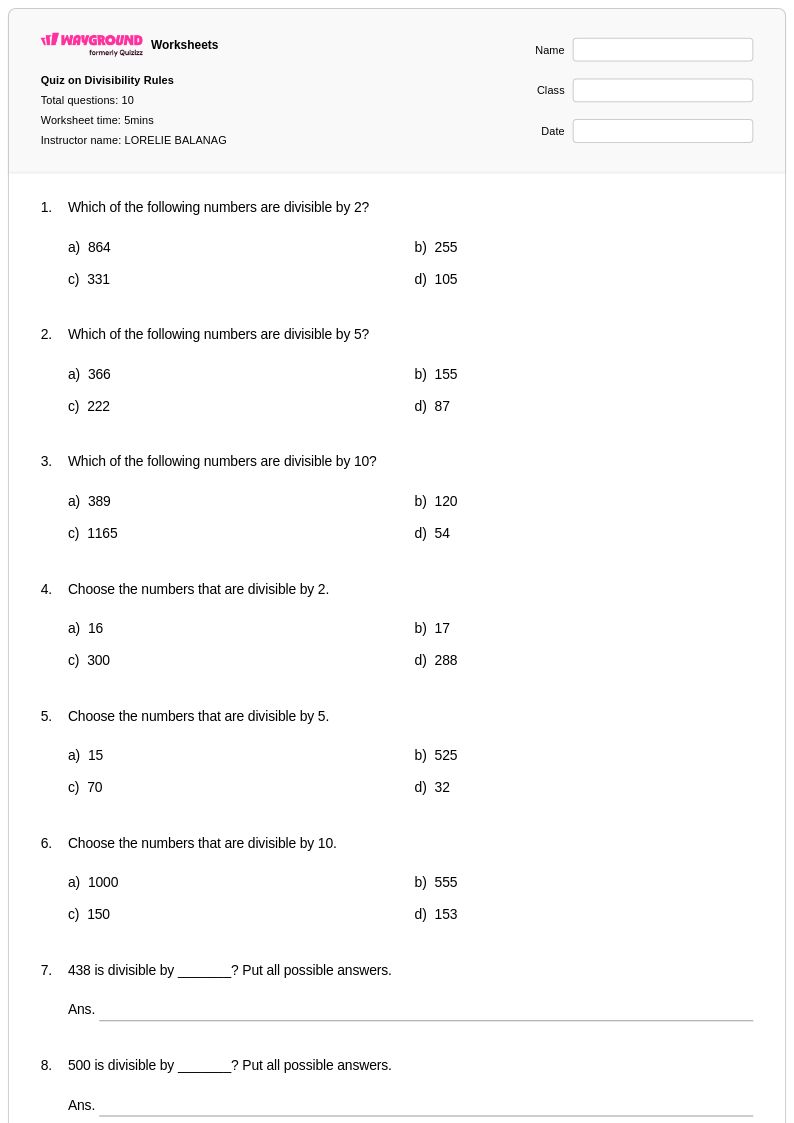
10 Q
5th
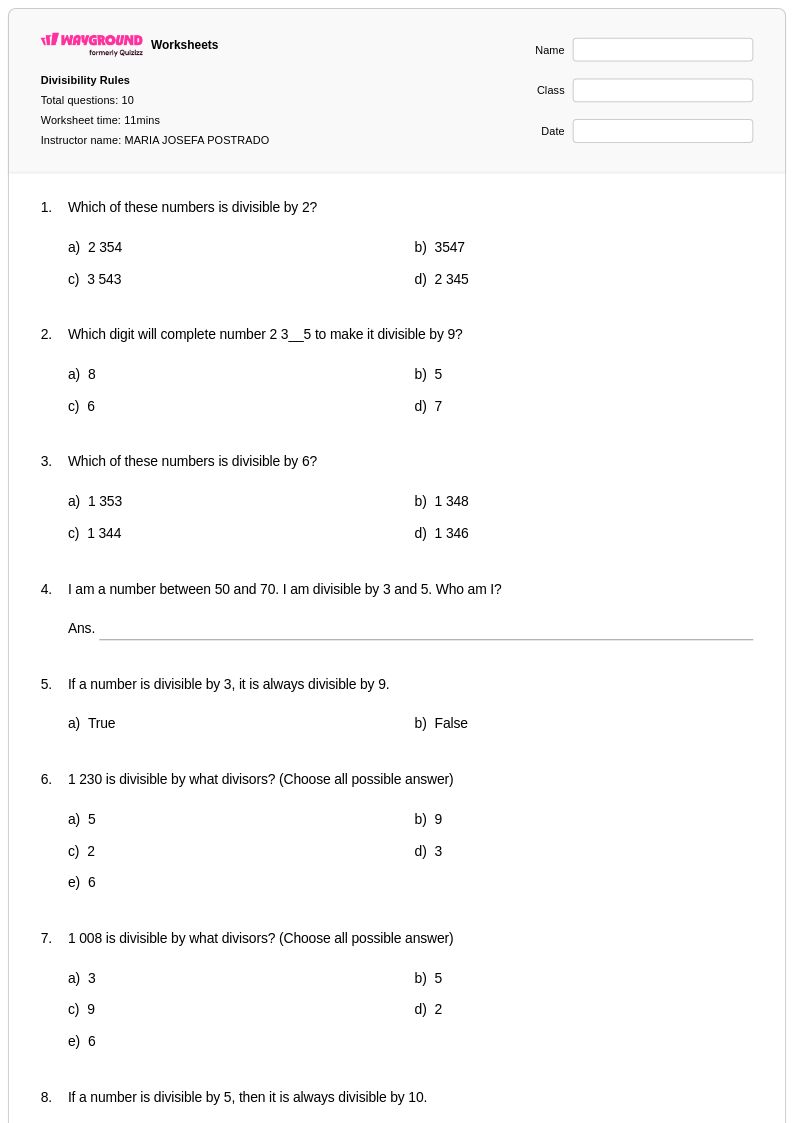
10 Q
4th - 6th
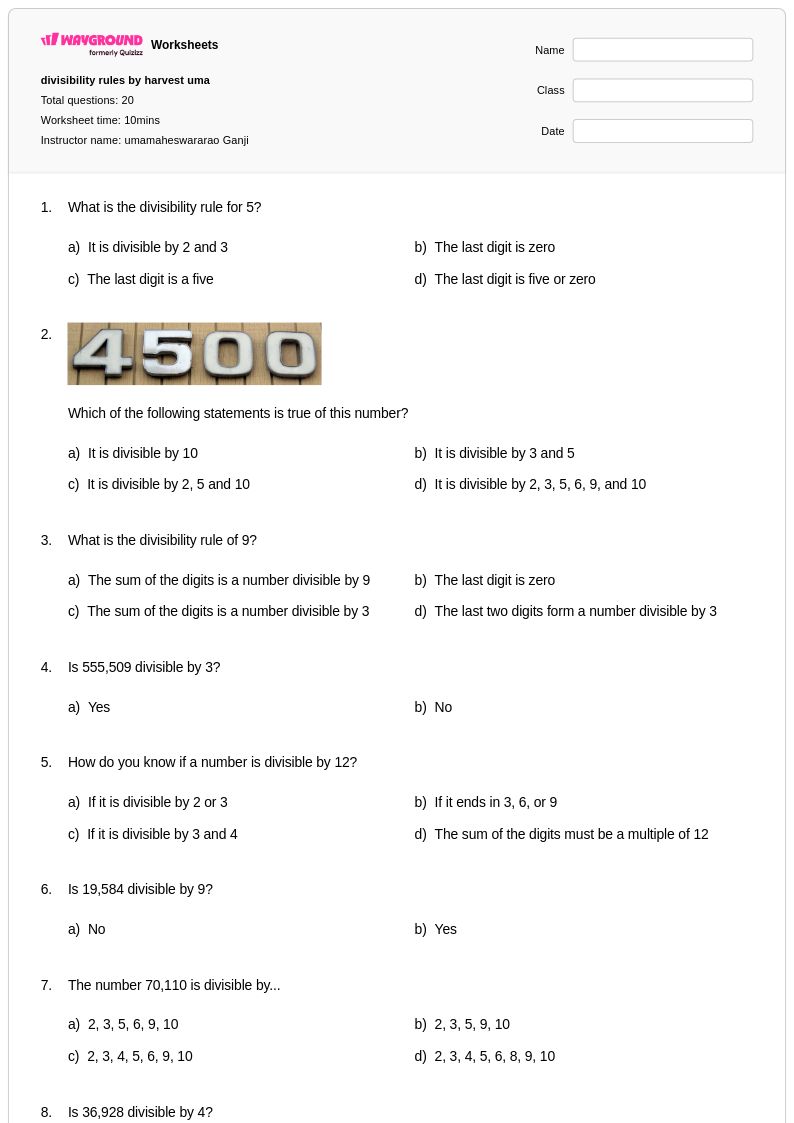
20 Q
6th - 8th
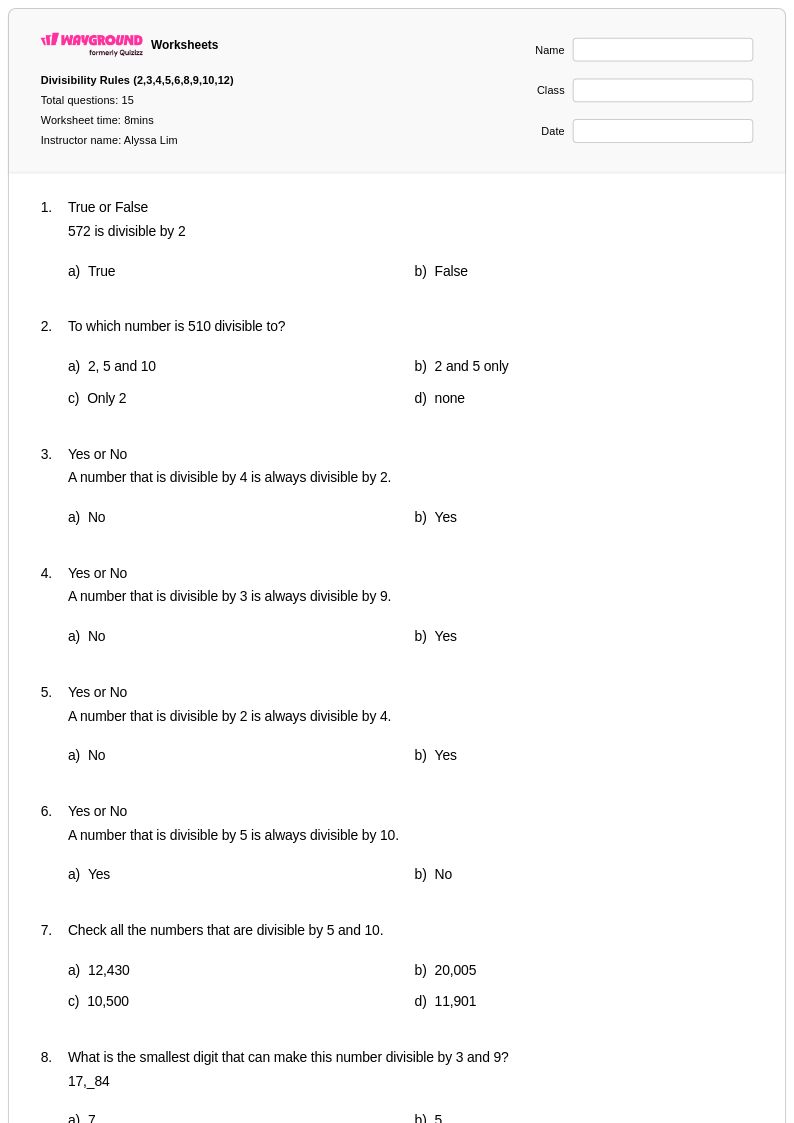
15 Q
5th
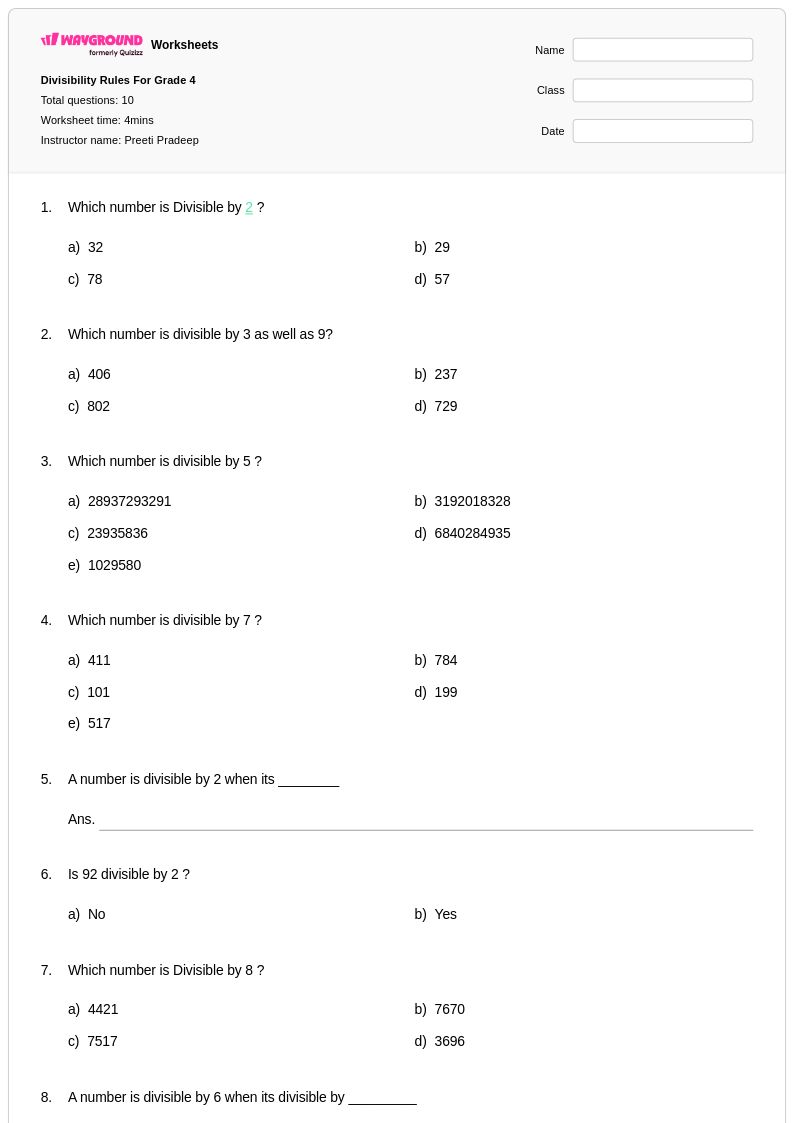
10 Q
3rd - 5th
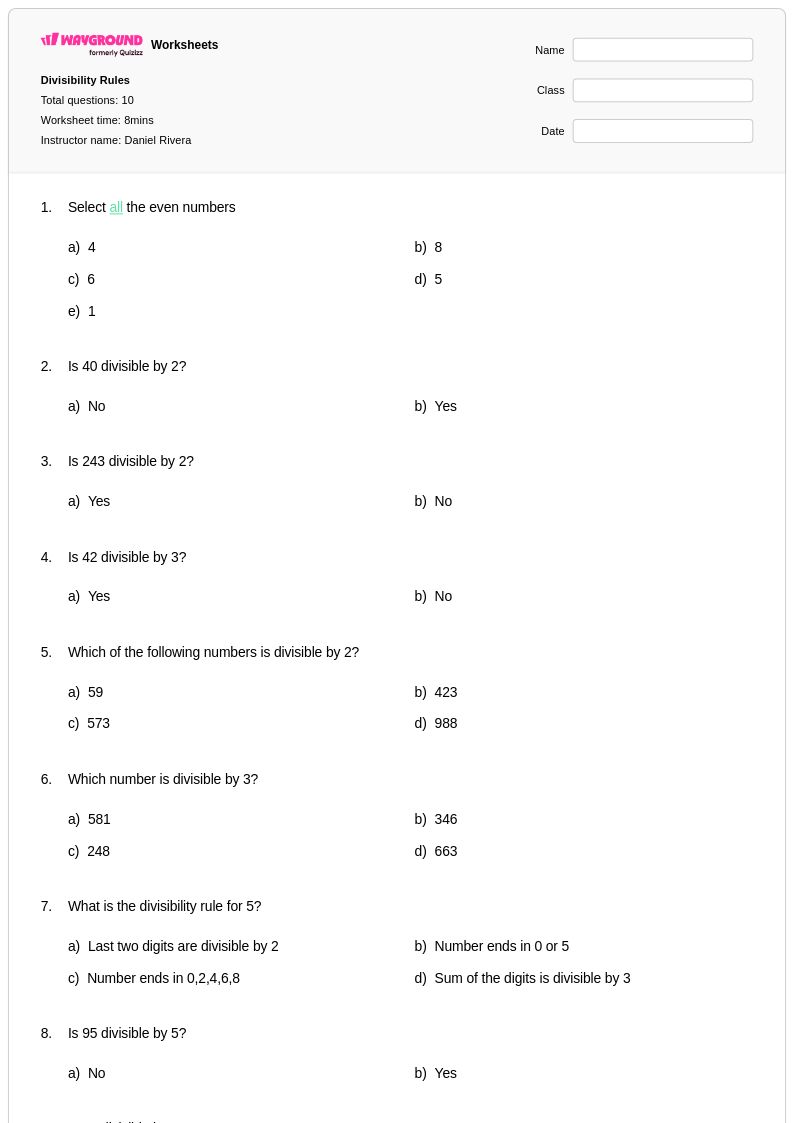
10 Q
4th
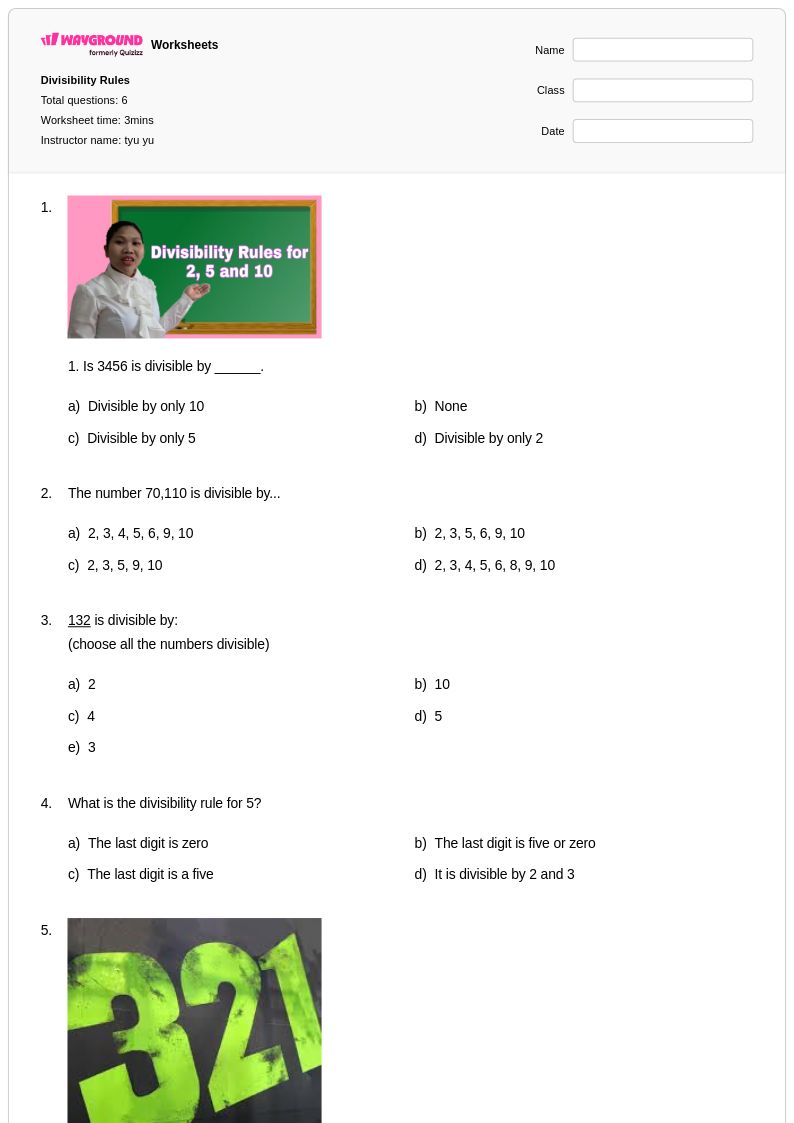
6 Q
6th
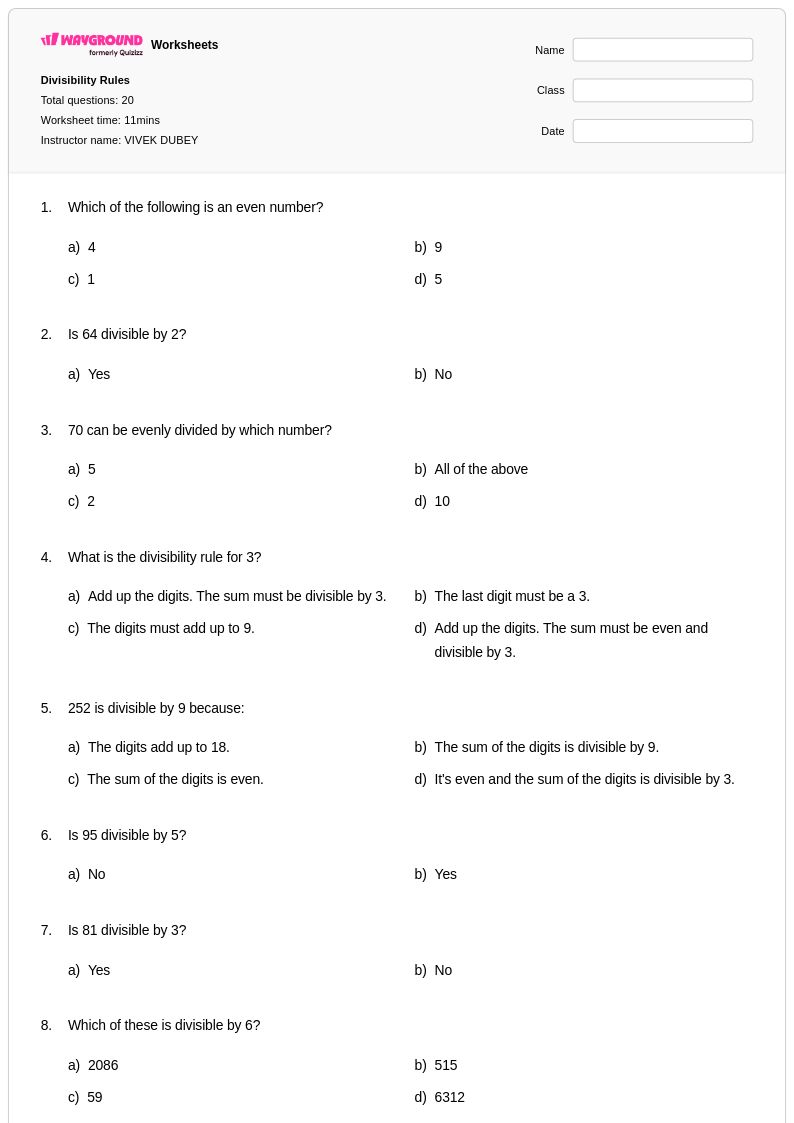
20 Q
6th
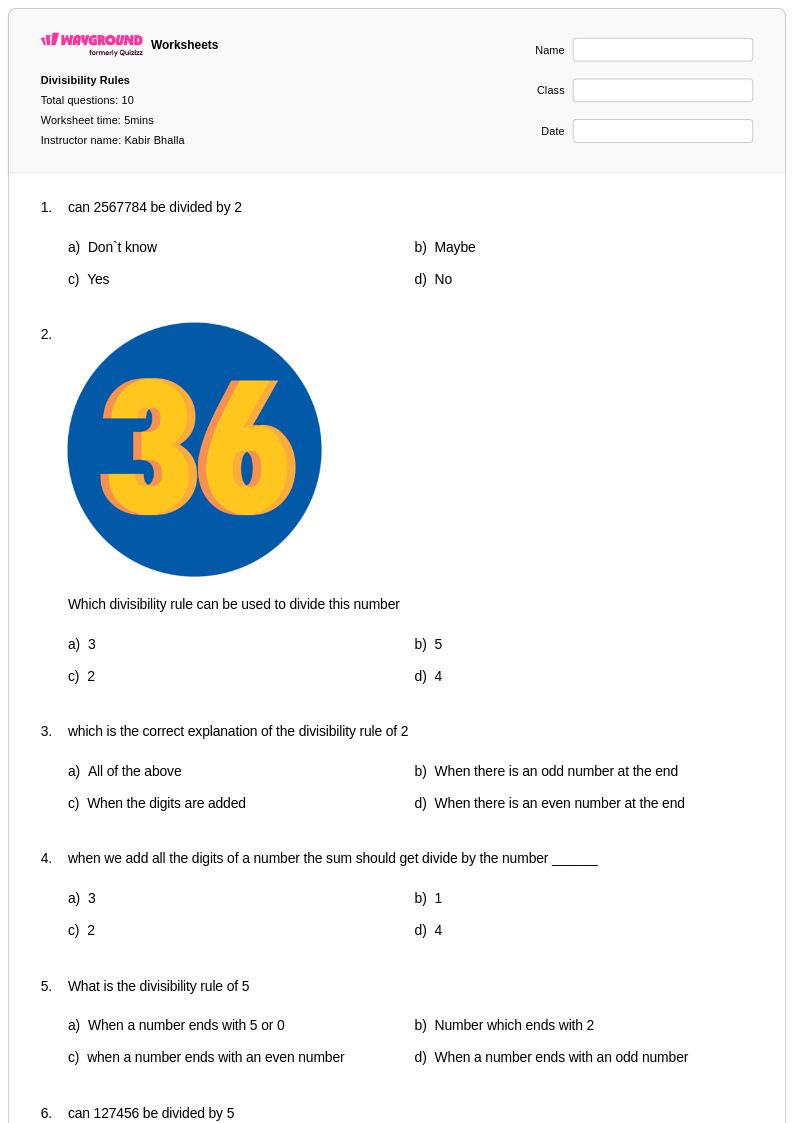
10 Q
6th
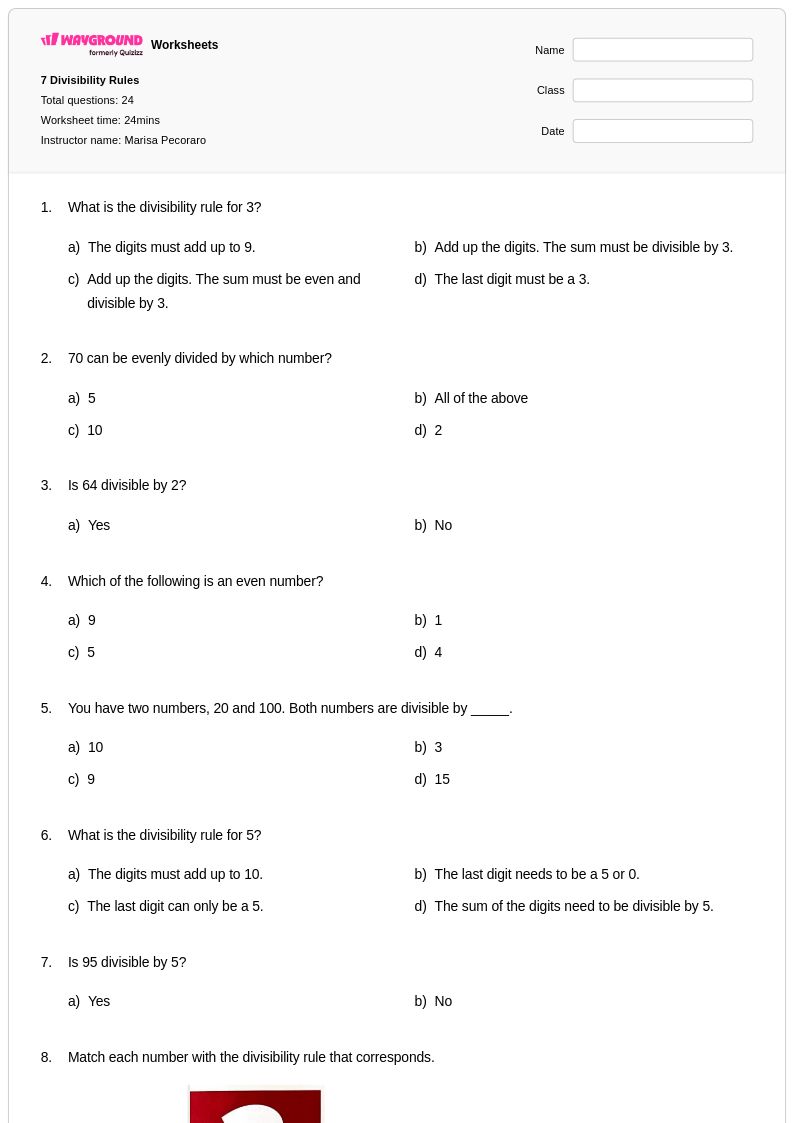
24 Q
4th
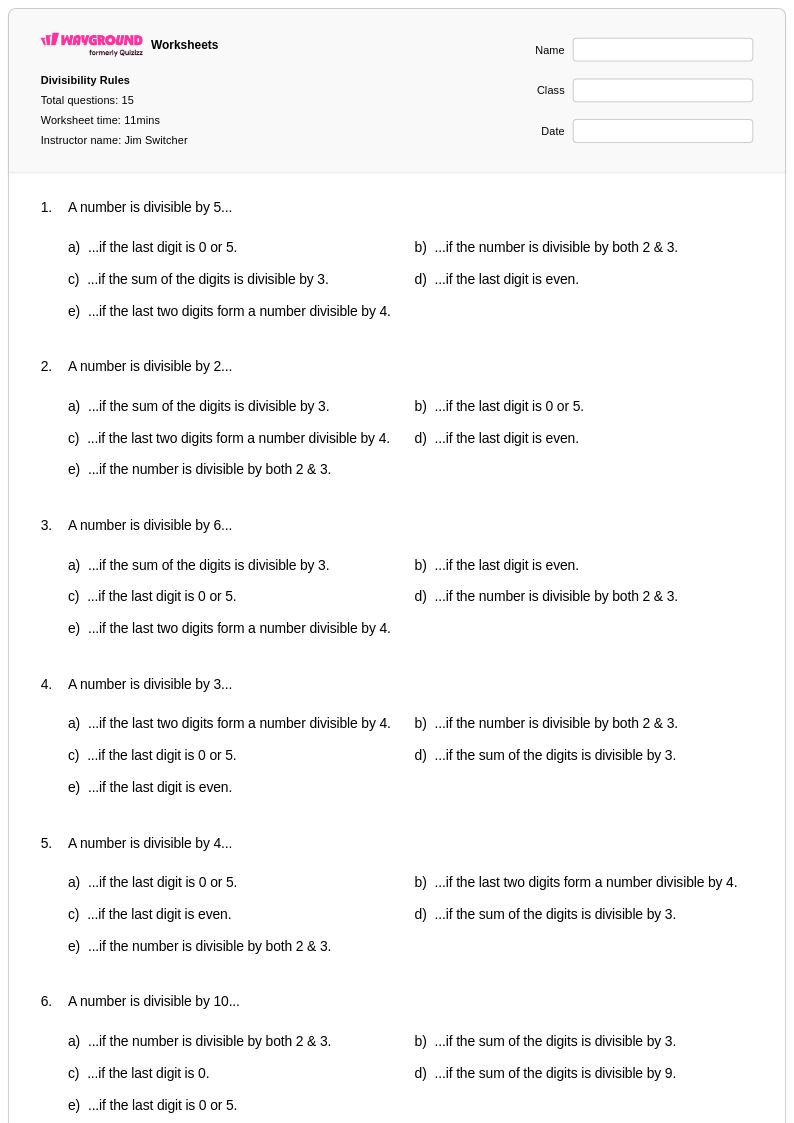
15 Q
5th
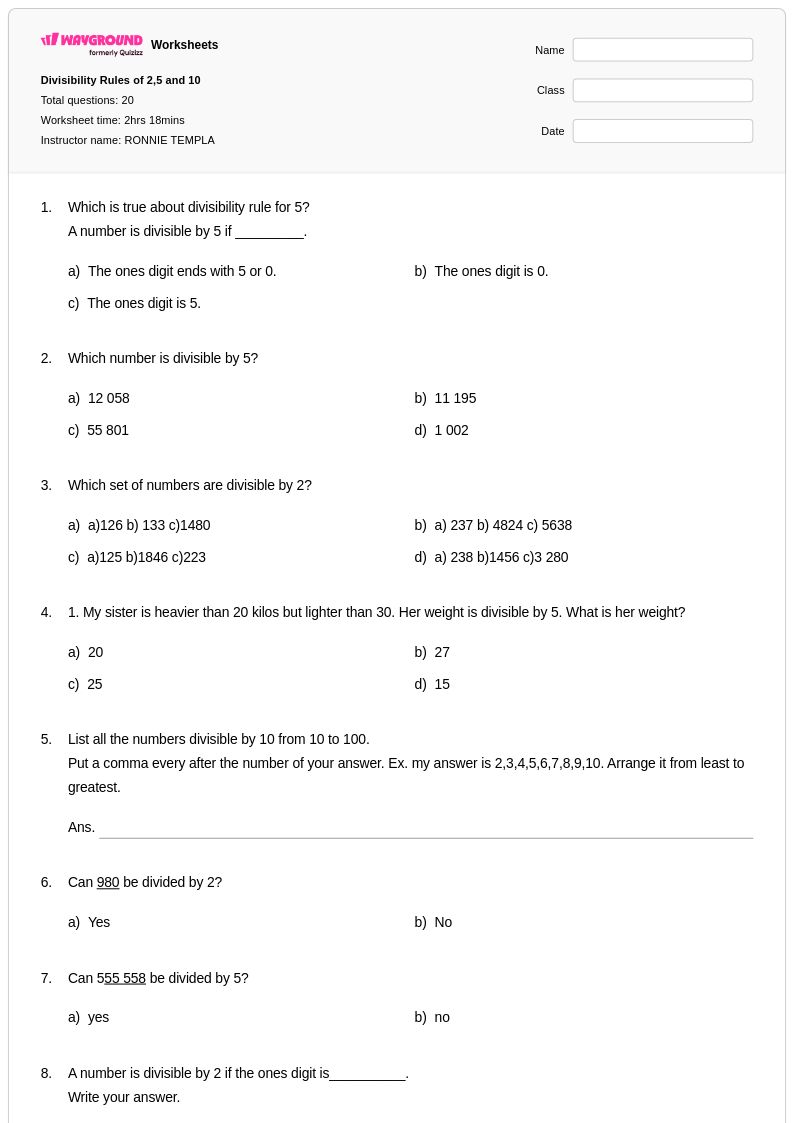
20 Q
3rd - 6th
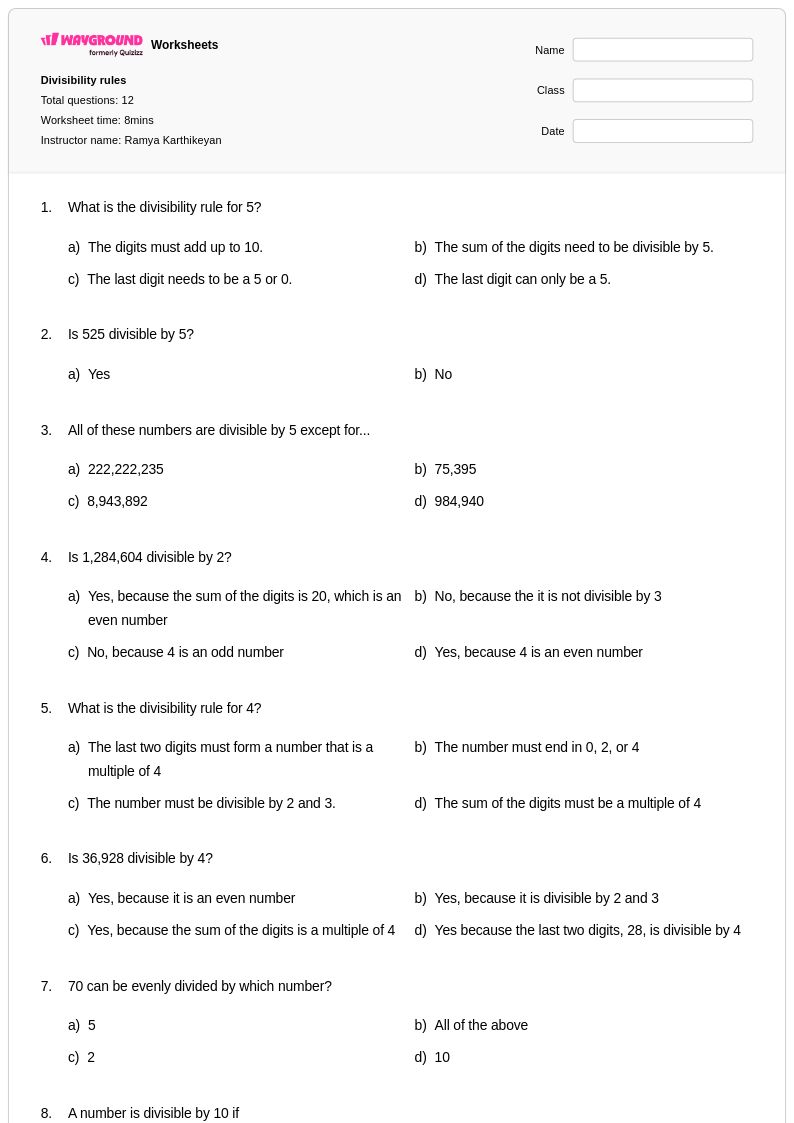
12 Q
5th - 10th
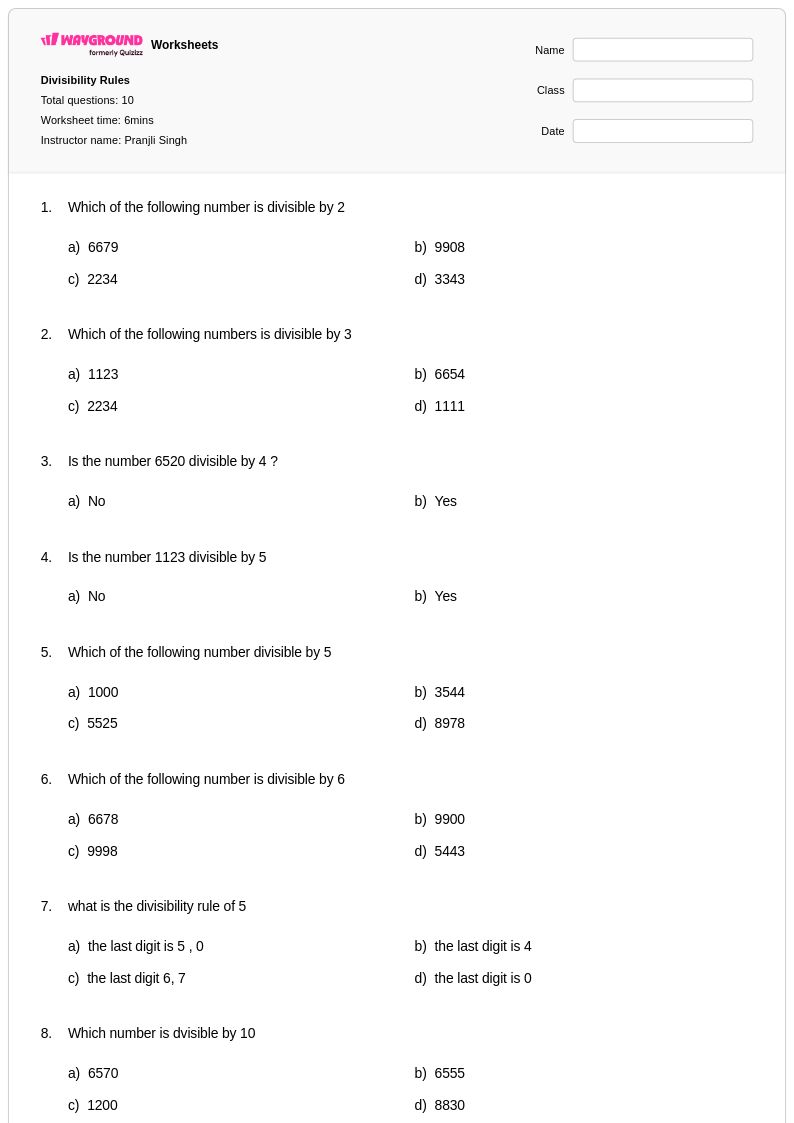
10 Q
4th - 6th
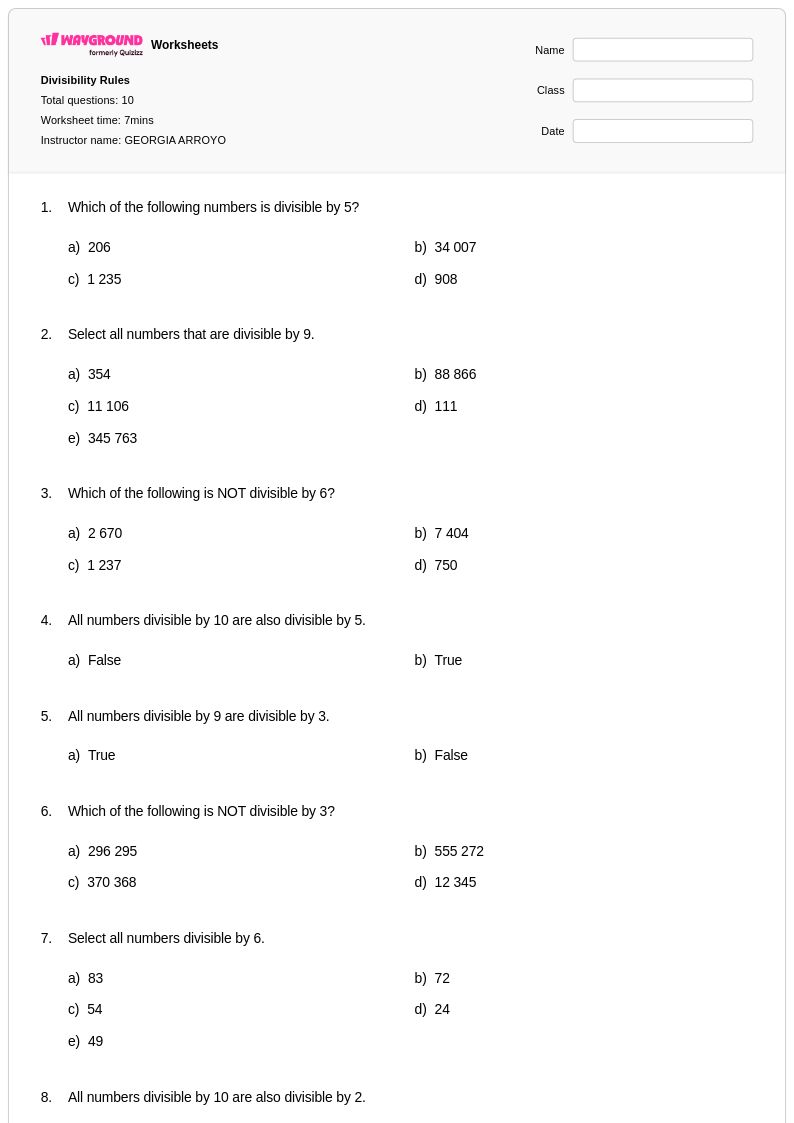
10 Q
5th
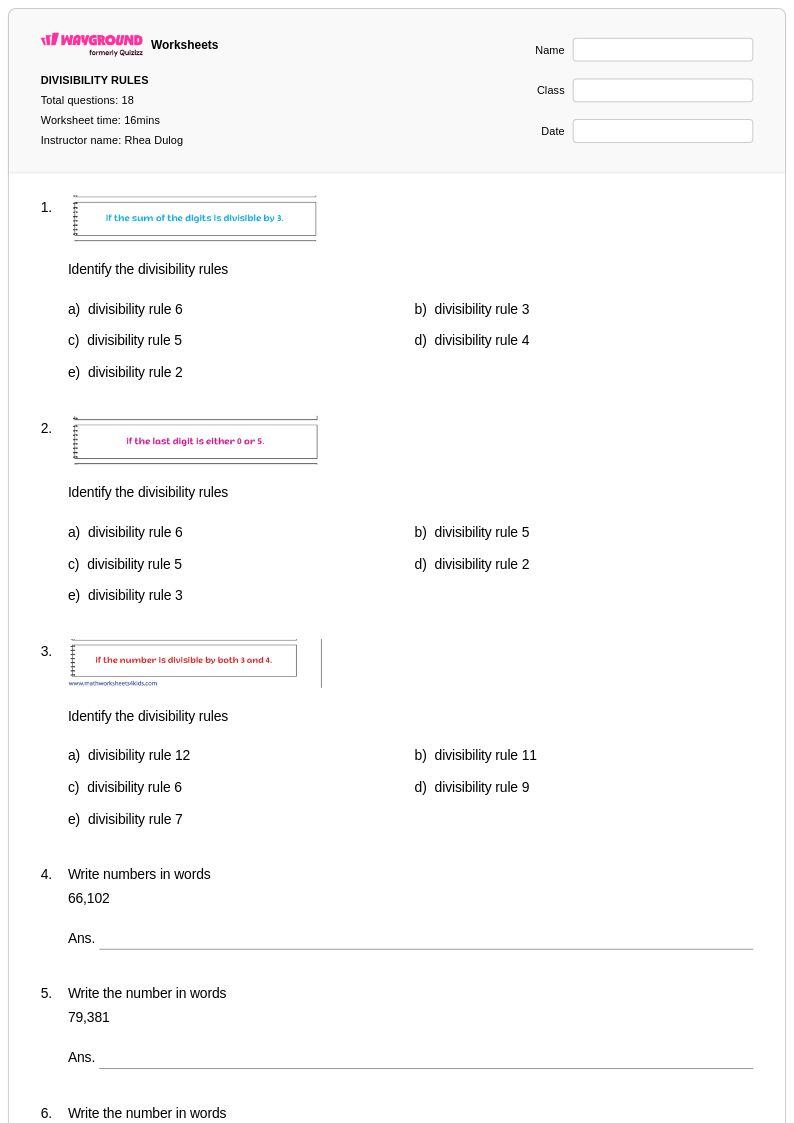
18 Q
4th
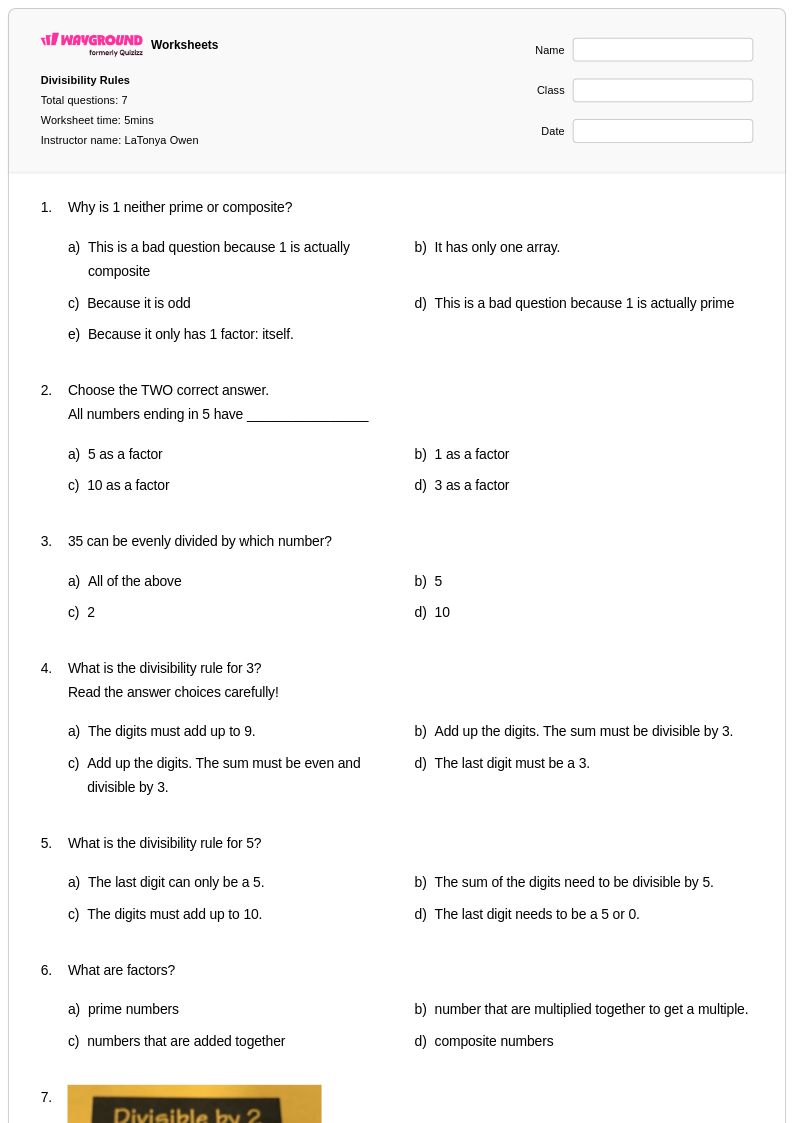
7 Q
4th - Uni
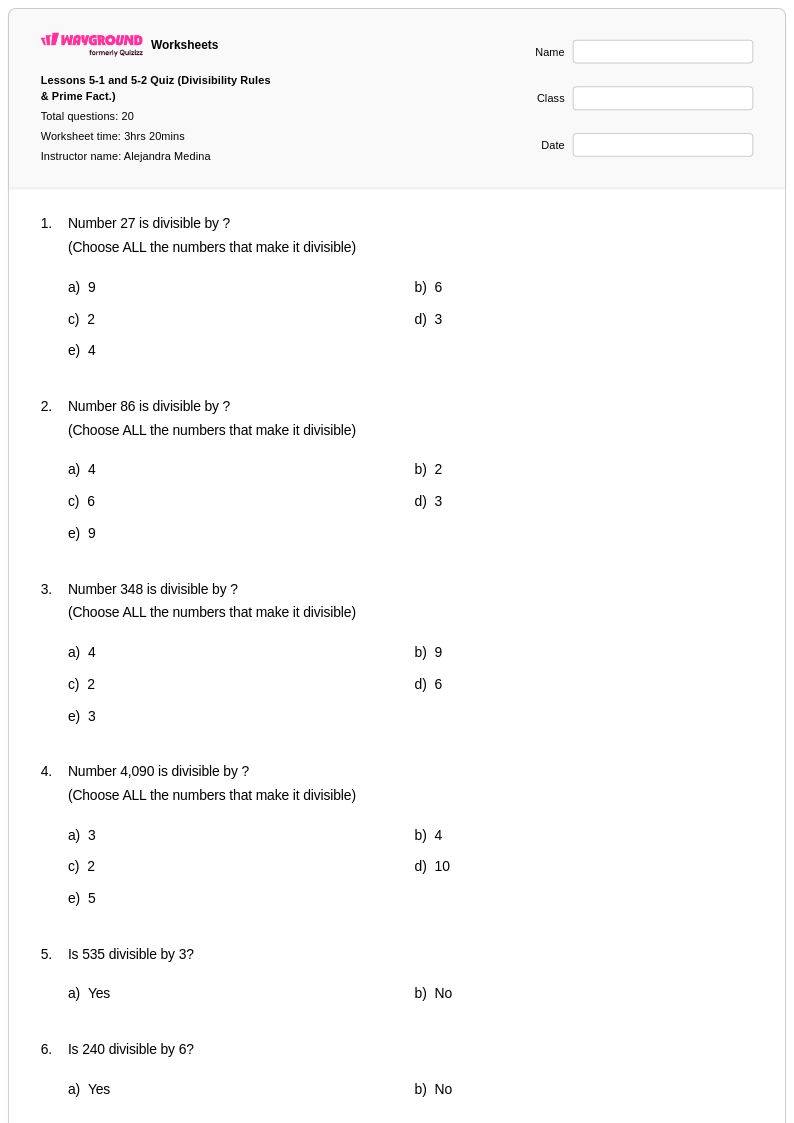
20 Q
6th
Explore Worksheets by Subjects
Explore printable Divisibility Rules worksheets
Divisibility rules worksheets available through Wayground (formerly Quizizz) provide students with structured practice in mastering essential mathematical shortcuts that determine whether numbers can be divided evenly without performing lengthy calculations. These comprehensive resources strengthen critical number sense skills by teaching students to recognize patterns and apply specific tests for divisibility by 2, 3, 4, 5, 6, 8, 9, 10, and other key numbers. Each worksheet includes carefully crafted practice problems that progress from basic single-digit divisors to more complex multi-step applications, complete with detailed answer keys that support independent learning and self-assessment. The free printable materials cover fundamental concepts like identifying even and odd numbers, applying the sum-of-digits rule for divisibility by 3 and 9, and using place value understanding to test divisibility by powers of 10.
Wayground (formerly Quizizz) supports mathematics educators with an extensive collection of teacher-created divisibility rules resources drawn from millions of high-quality materials that can be easily located through advanced search and filtering capabilities. Teachers benefit from standards-aligned content that connects divisibility concepts to broader mathematical reasoning skills, while built-in differentiation tools allow for customized instruction that meets diverse student needs within the same classroom. The platform's flexible format options include both printable pdf versions for traditional paper-and-pencil practice and interactive digital worksheets that provide immediate feedback, making these resources invaluable for lesson planning, targeted remediation of computational weaknesses, enrichment activities for advanced learners, and ongoing skill reinforcement across various mathematical contexts.