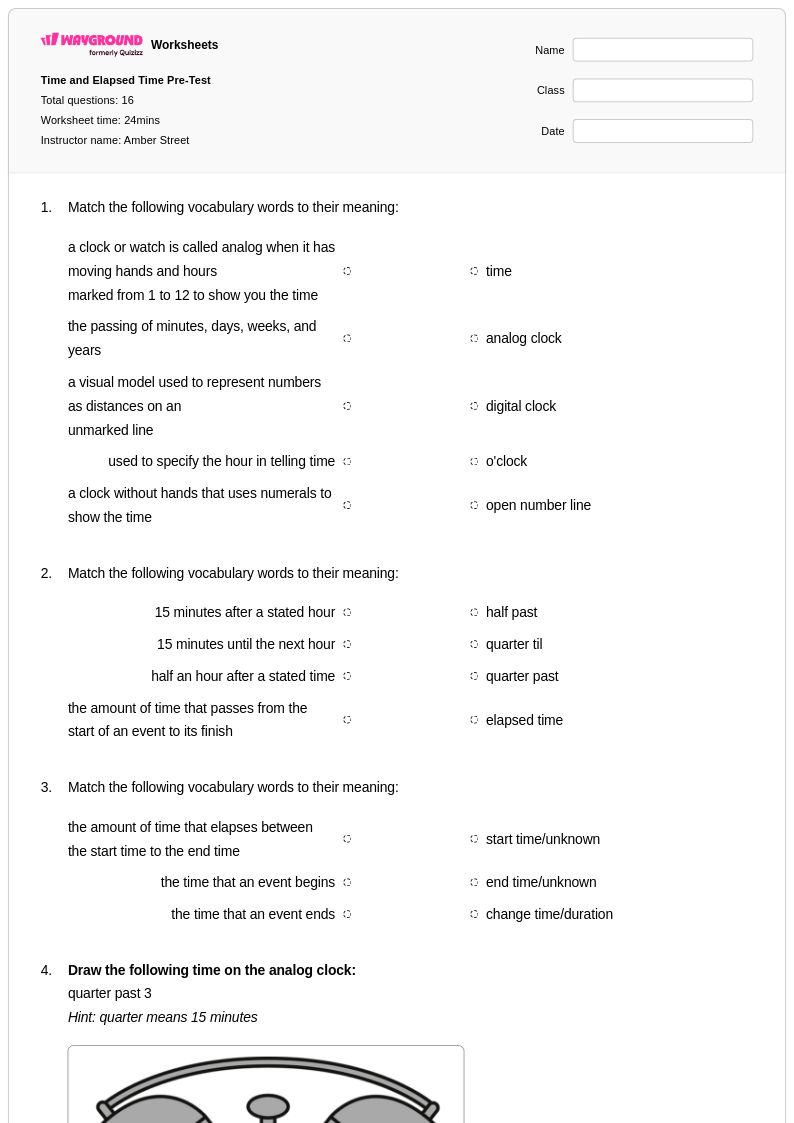
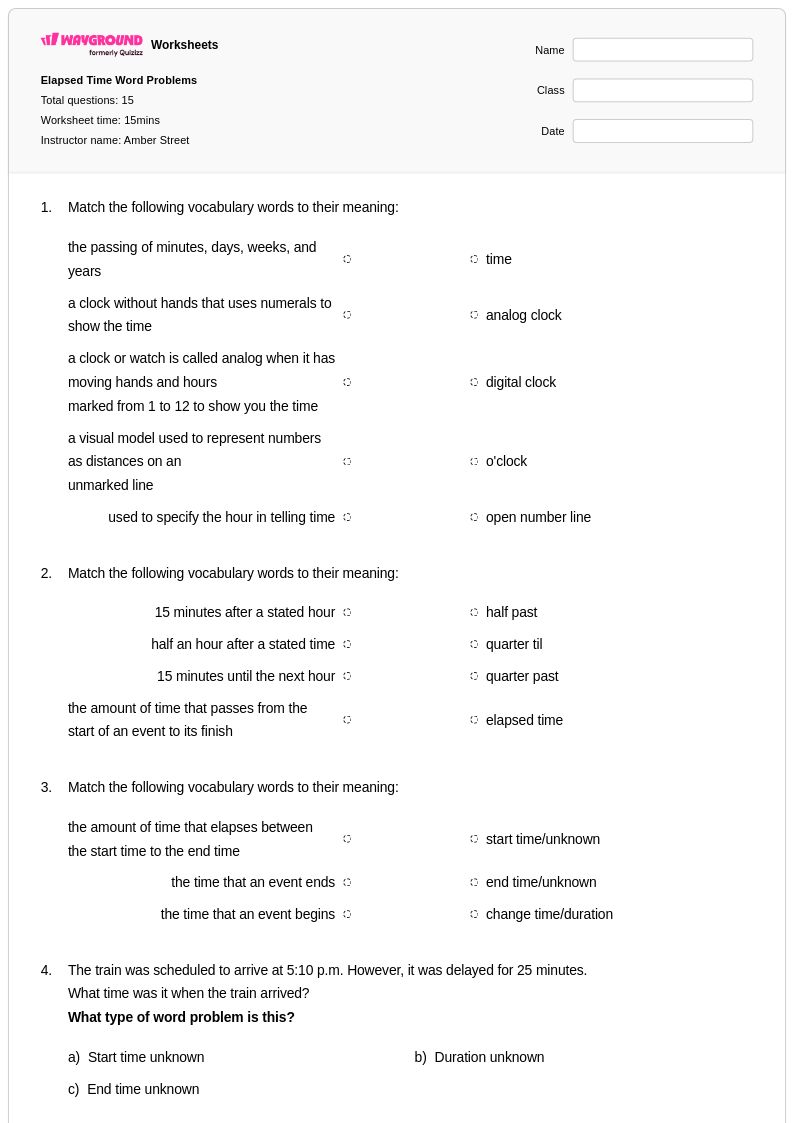
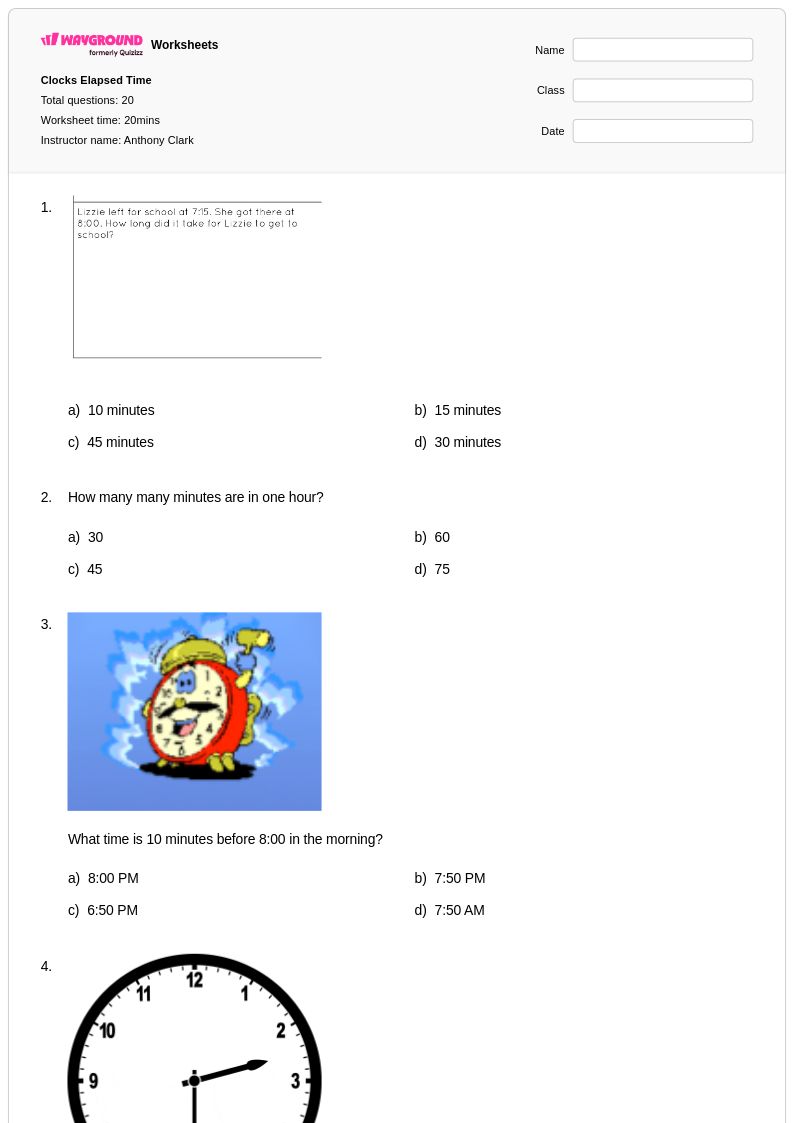
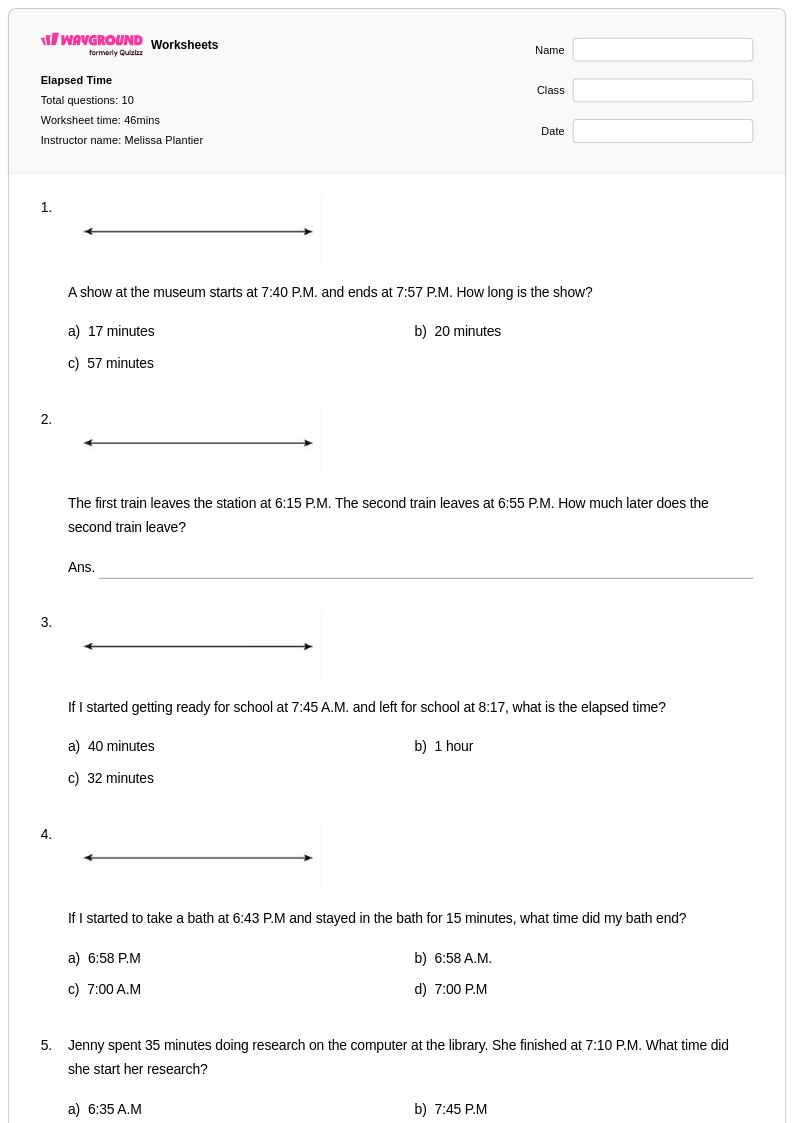
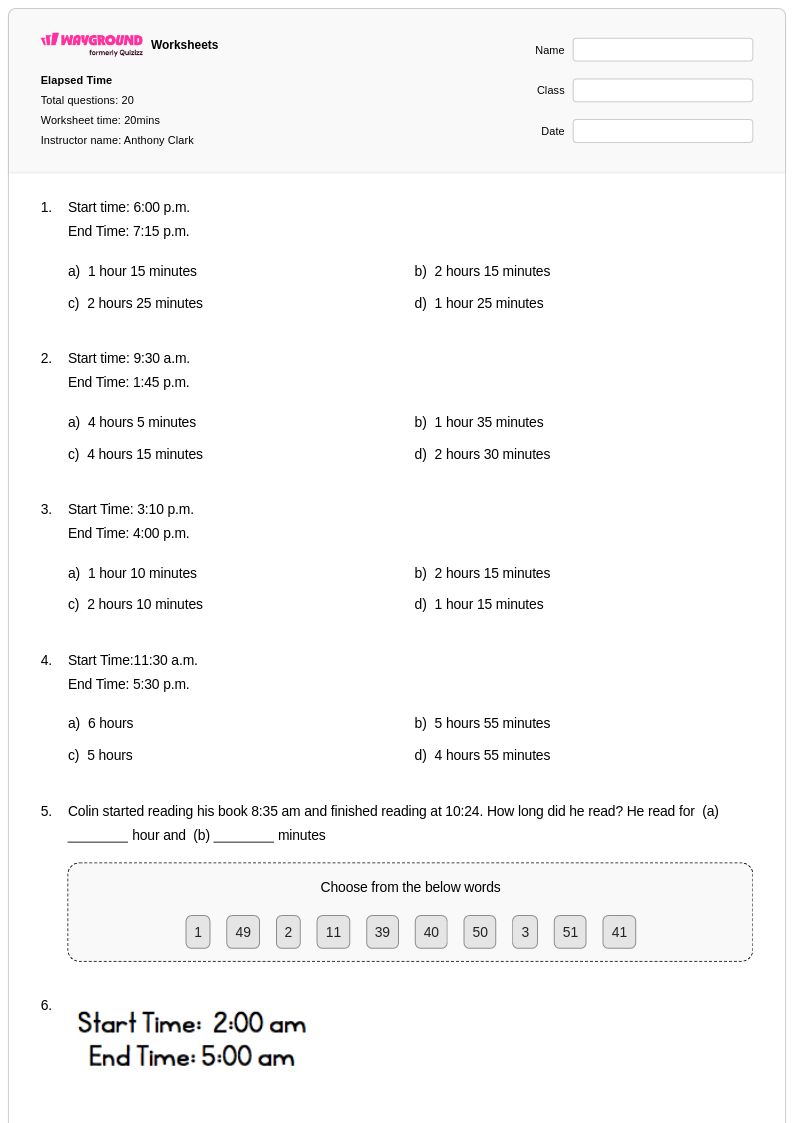
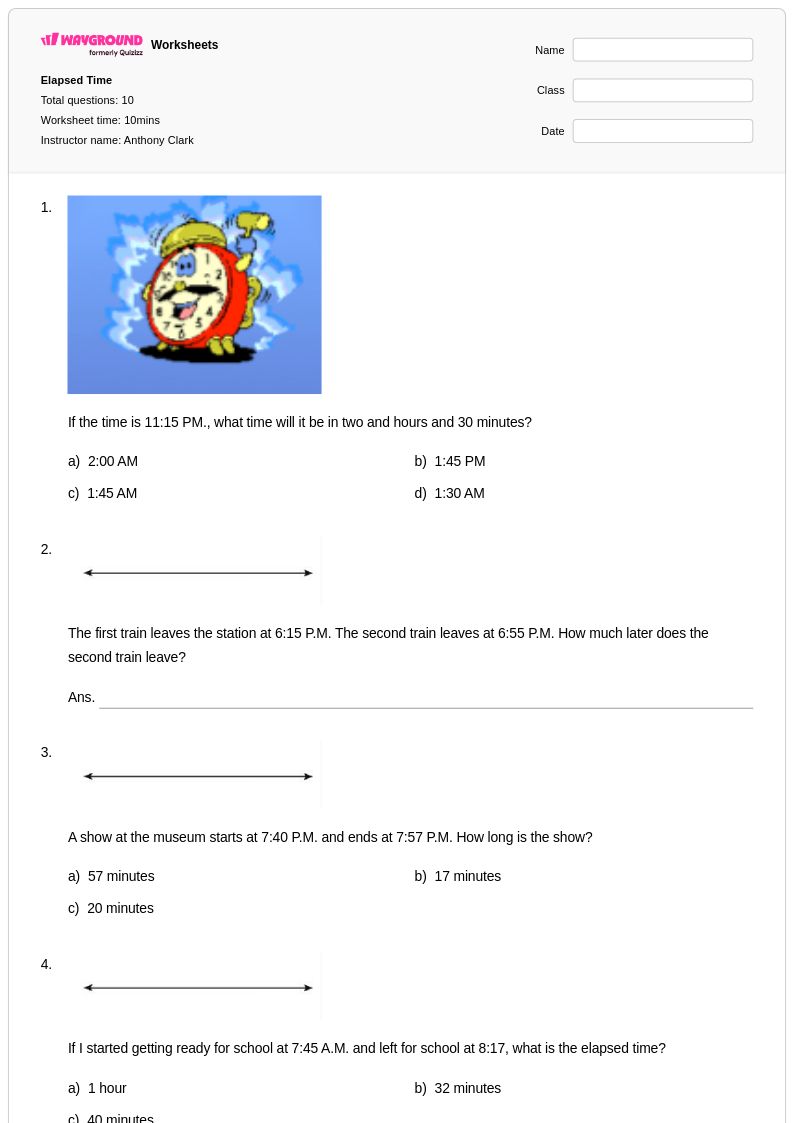
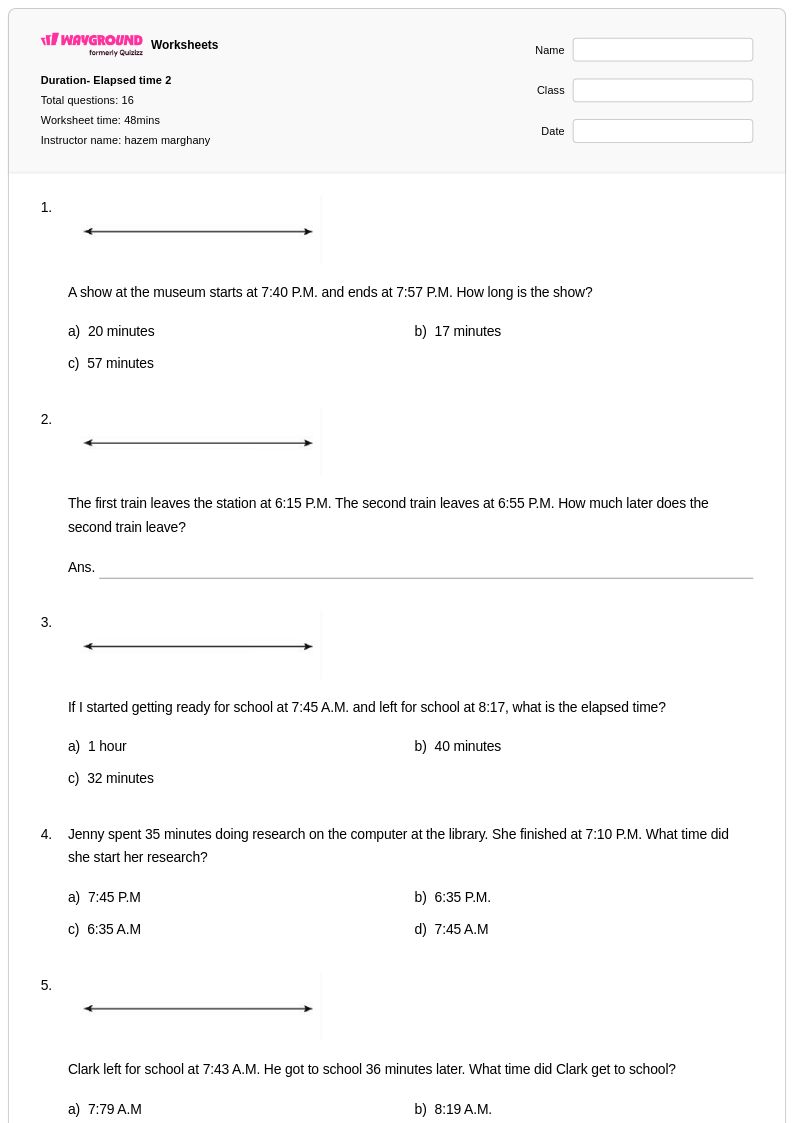
Free elapsed time worksheets and printables help students master calculating time intervals through engaging practice problems with step-by-step solutions and comprehensive answer keys.
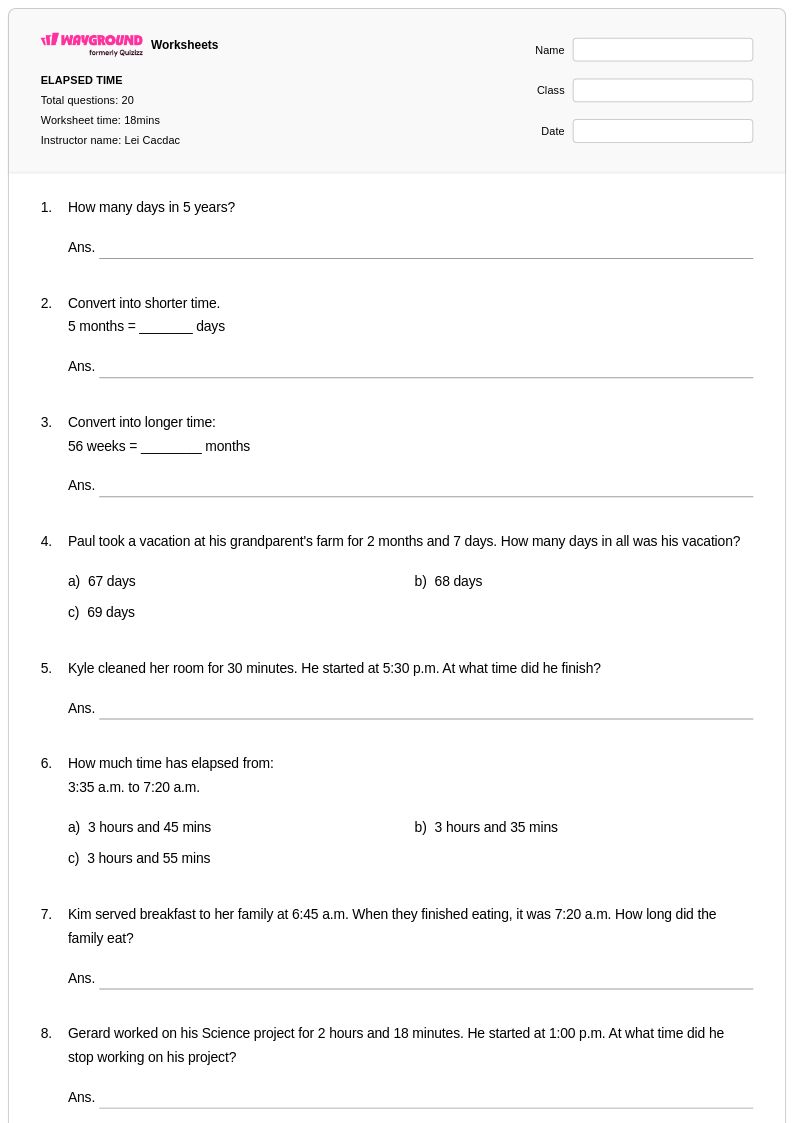
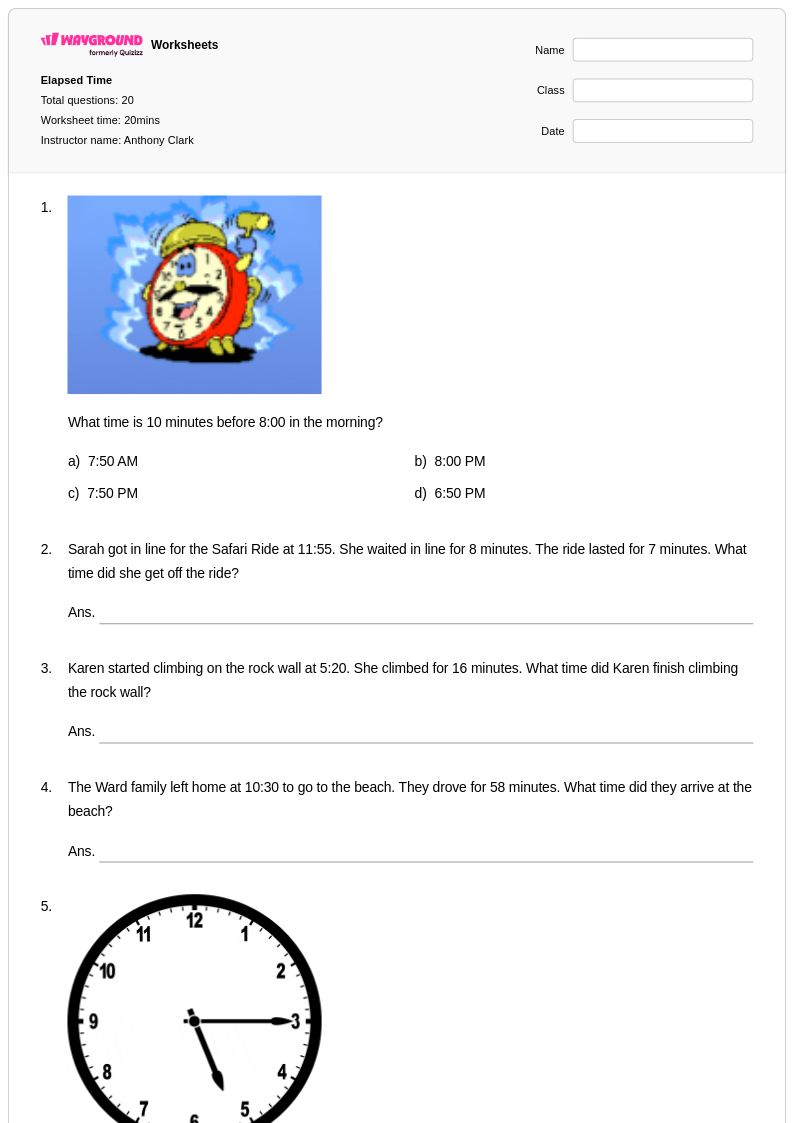
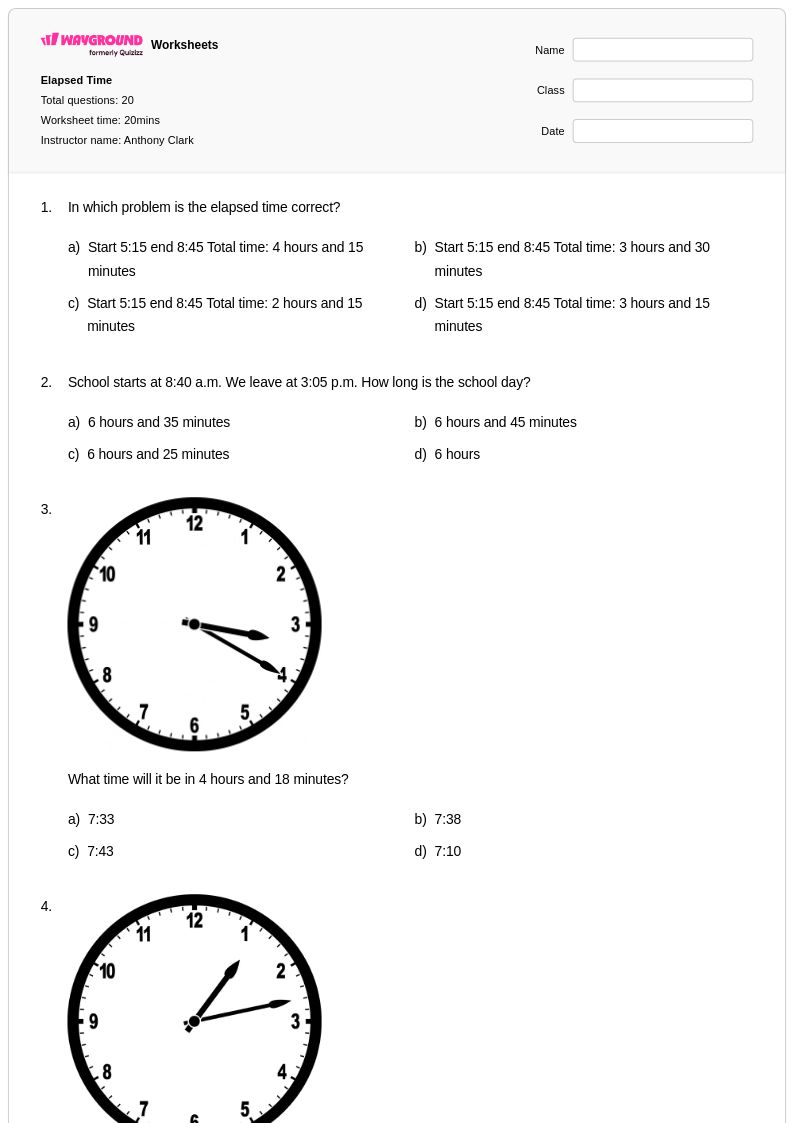
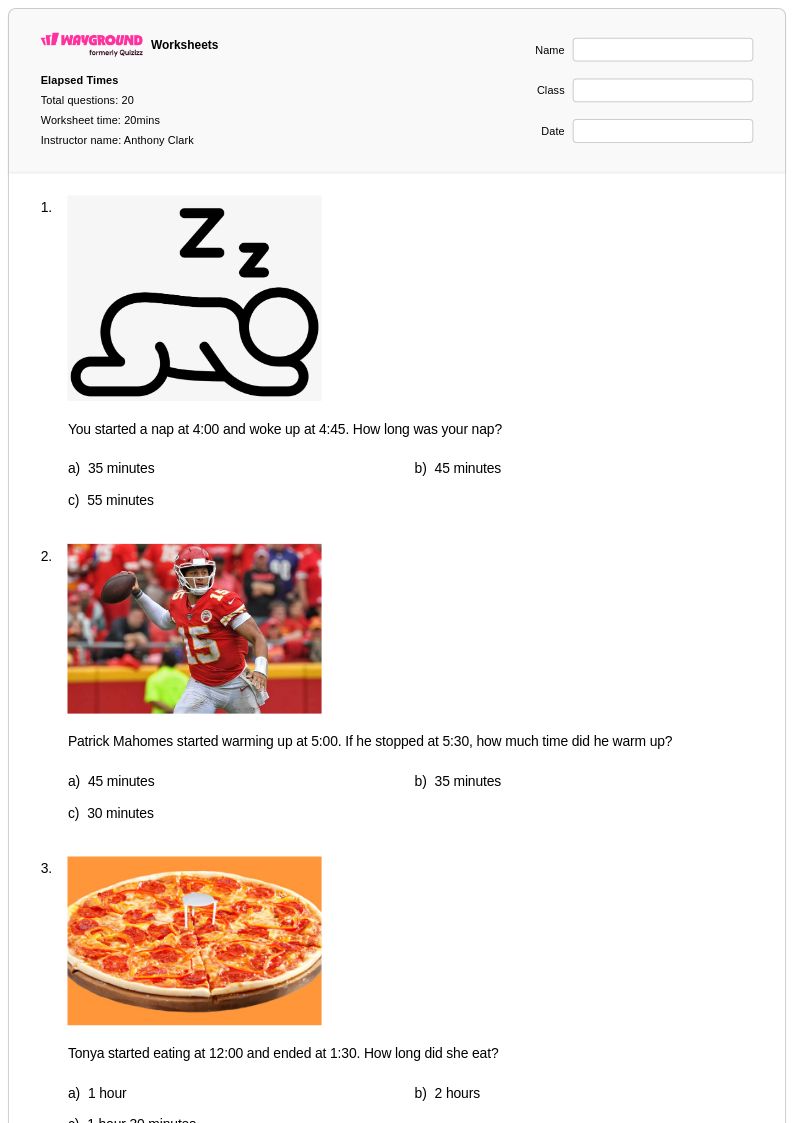
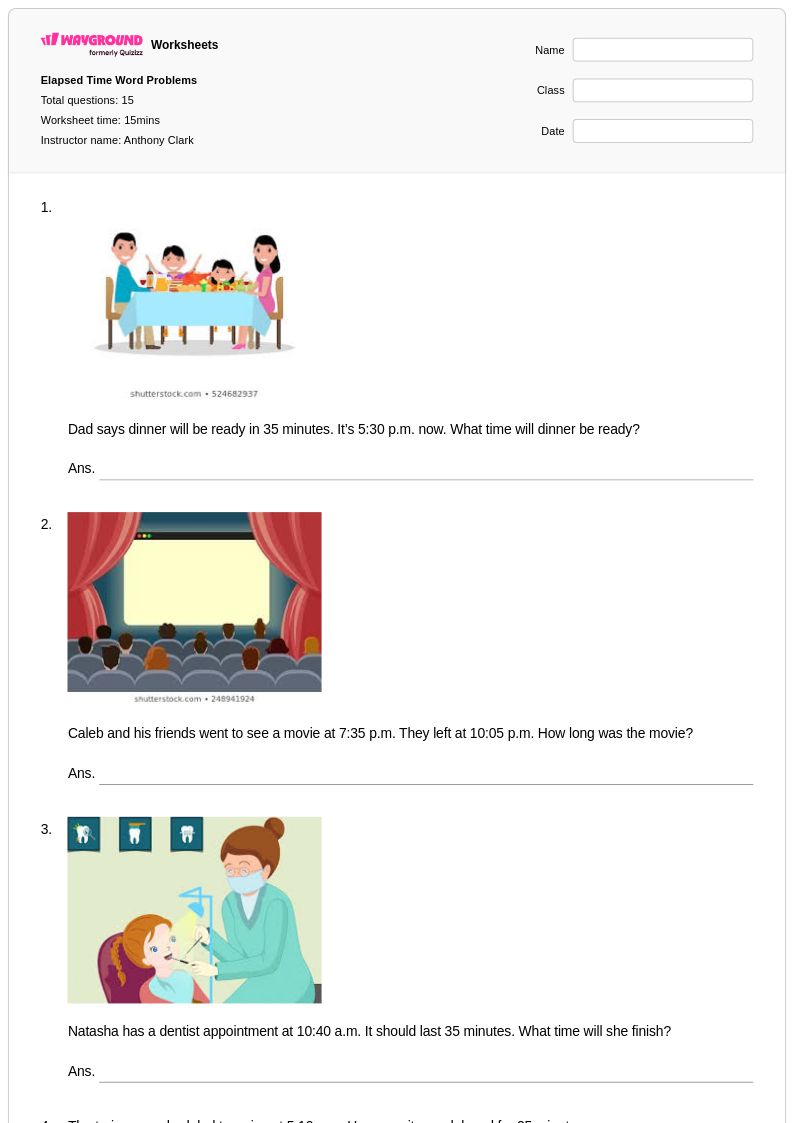
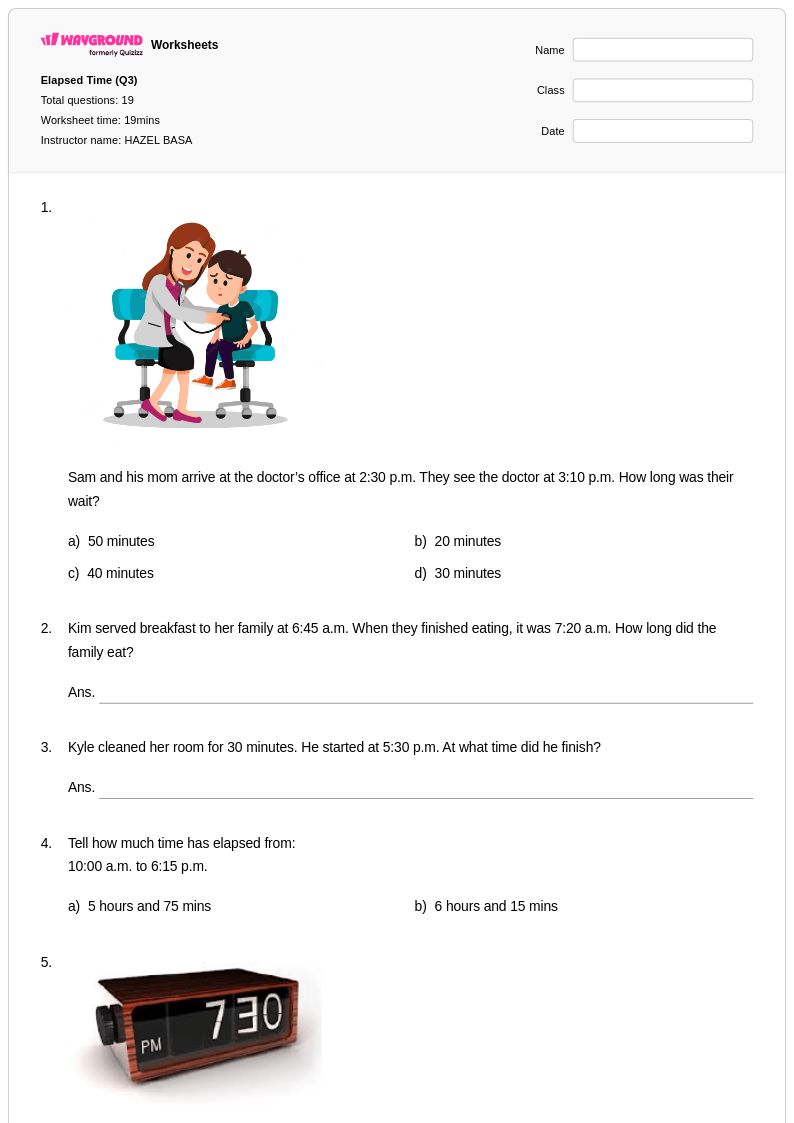
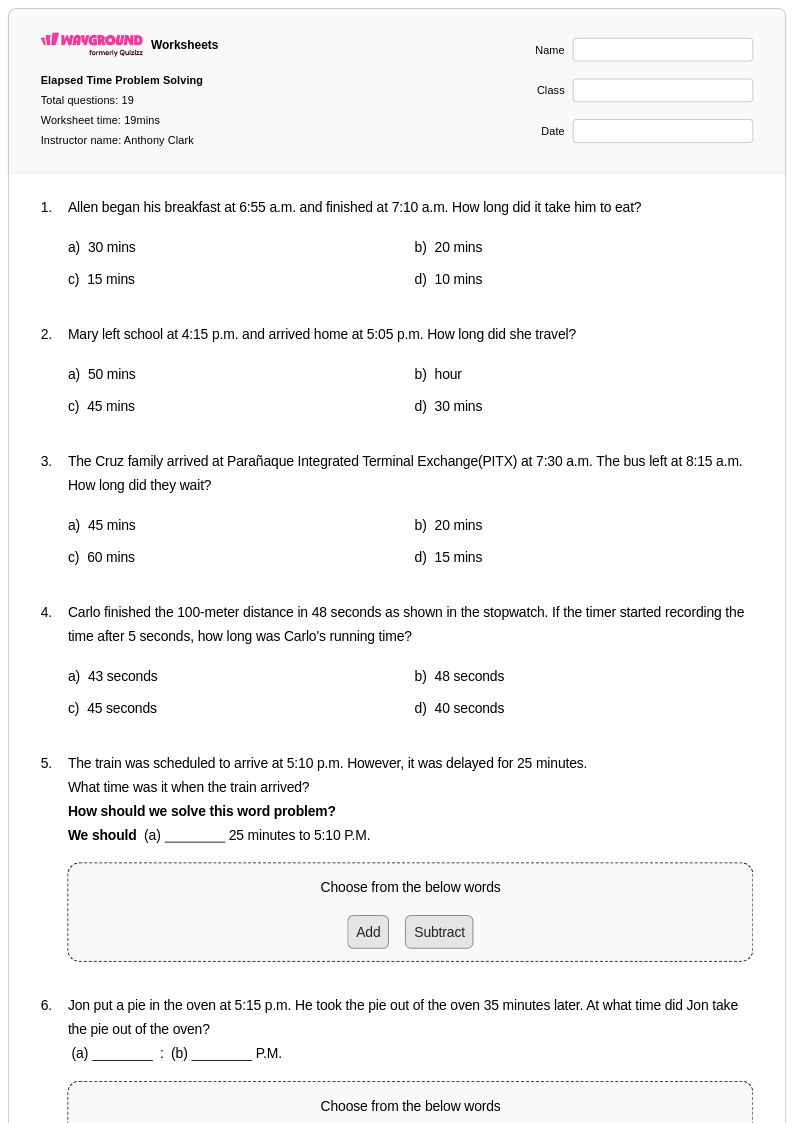
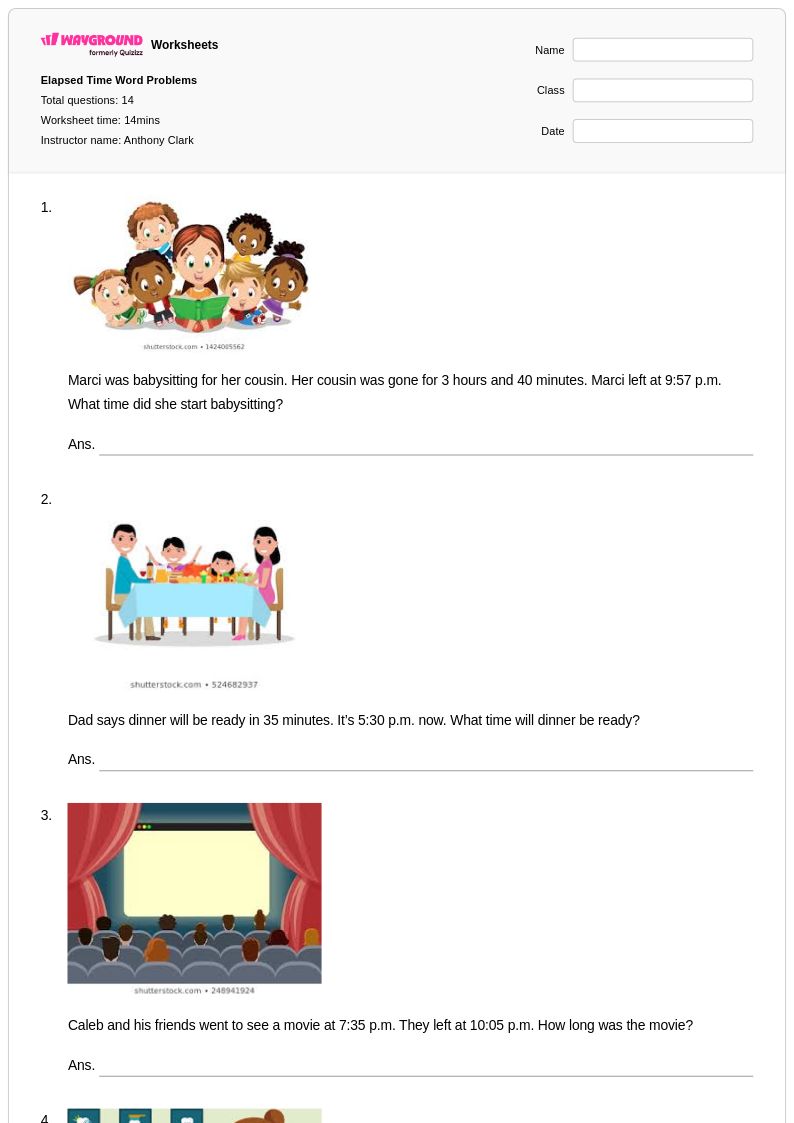
Elapsed time worksheets available through Wayground (formerly Quizizz) provide essential practice for students developing their ability to calculate the duration between two given times. These comprehensive mathematics resources strengthen critical time-telling skills by presenting varied scenarios involving hours, minutes, and seconds across different time formats including analog clocks, digital displays, and word problems. Students work through practice problems that range from simple hour-to-hour calculations to complex multi-step elapsed time scenarios involving time zones, AM/PM transitions, and real-world applications. Each worksheet collection includes detailed answer keys and is available as free printables in convenient PDF format, allowing educators to seamlessly integrate these materials into their existing curriculum while providing students with structured opportunities to master this fundamental mathematical concept.
Wayground (formerly Quizizz) supports teachers with an extensive collection of elapsed time worksheet resources created by millions of educators worldwide, ensuring access to diverse, high-quality materials that address varying skill levels and learning objectives. The platform's robust search and filtering capabilities enable teachers to quickly locate worksheets aligned with specific educational standards and differentiate instruction based on individual student needs. These customizable resources are available in both printable and digital formats, including downloadable PDFs, making them adaptable for in-class instruction, homework assignments, or remote learning environments. Teachers can effectively utilize these materials for lesson planning, targeted remediation with struggling students, enrichment activities for advanced learners, and ongoing skill practice, while the platform's organizational tools streamline the process of managing and distributing mathematics resources across different learning contexts.
FAQs
How do I teach elapsed time?
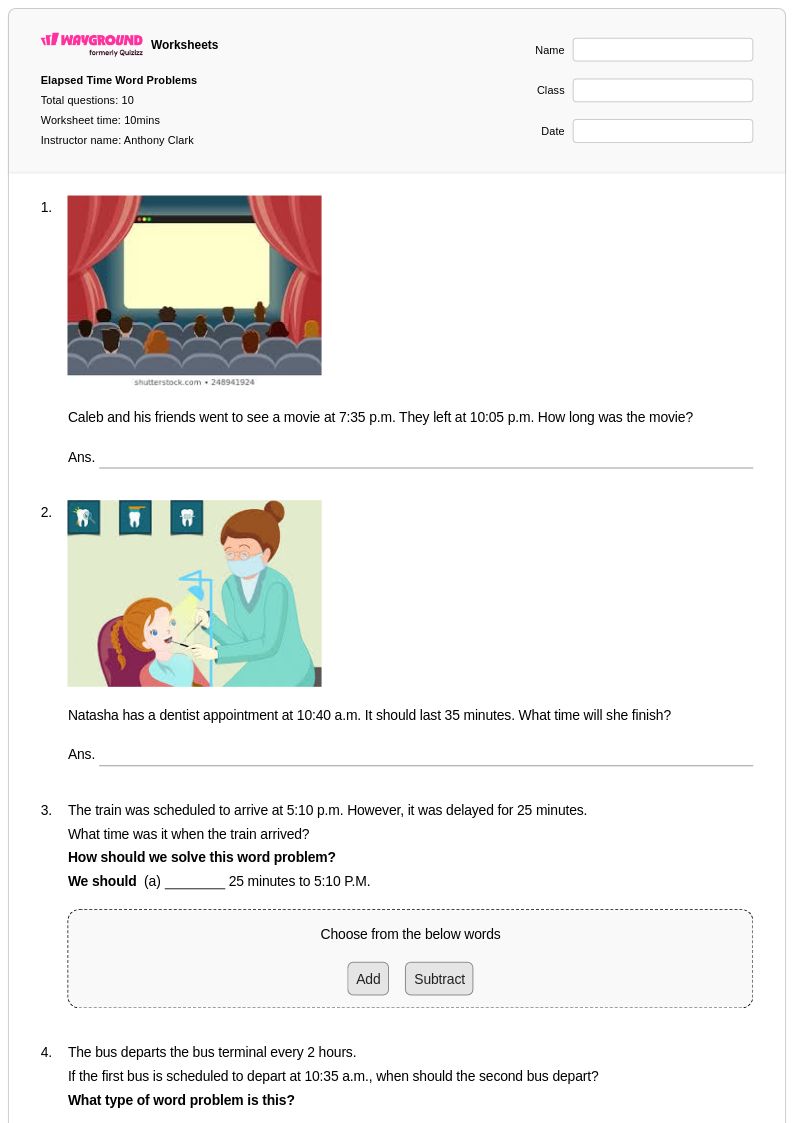
Start with a number line drawn horizontally — mark the start time on the left and the end time on the right, then have students count forward in friendly chunks (whole hours first, then leftover minutes). This "jump strategy" makes the counting visible and reduces the confusion that comes from trying to subtract times directly. Once students are comfortable with the number line, move to open clock faces and then to purely numerical problems. Real-world anchors help too: how long until lunch, how long did recess last.
What kinds of practice problems are on these elapsed time worksheets?
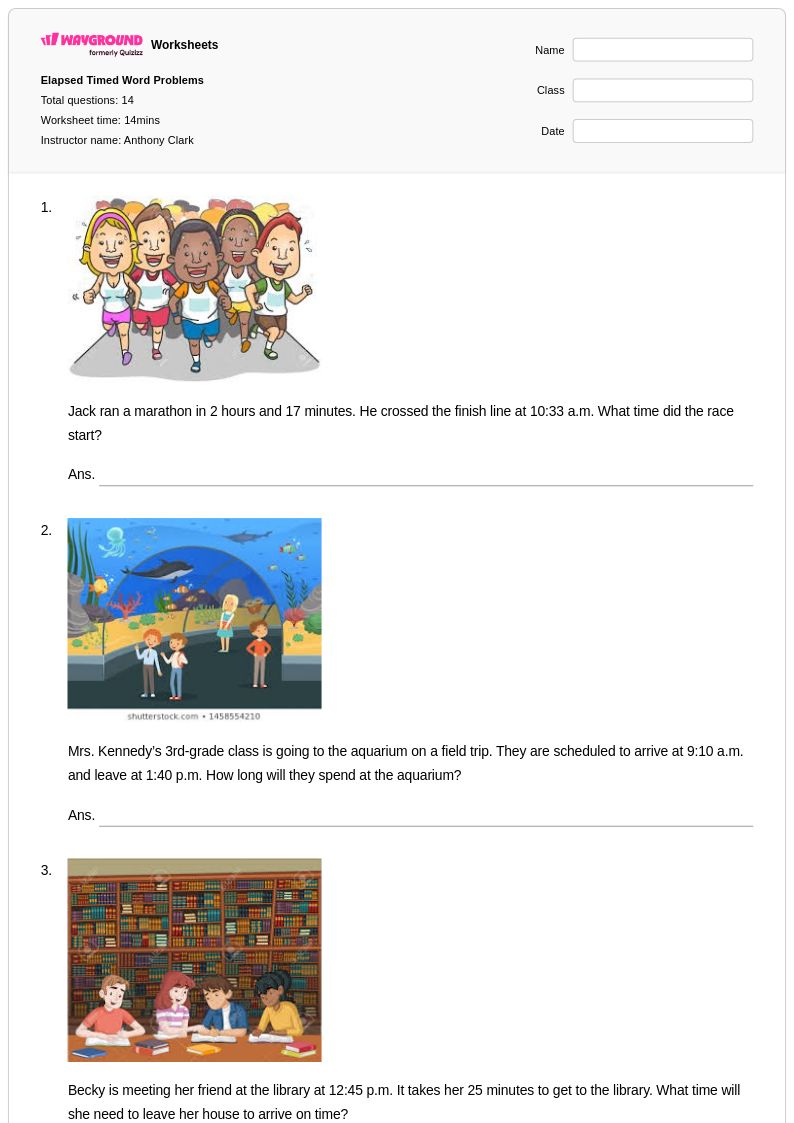
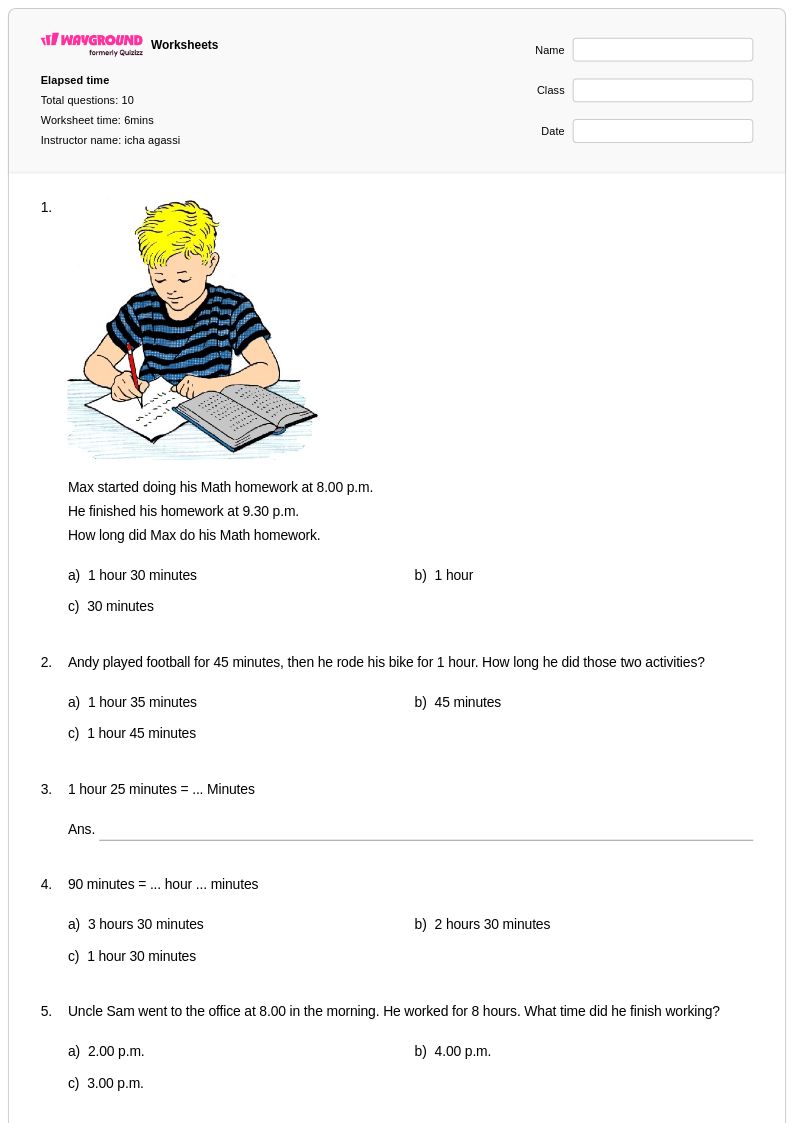
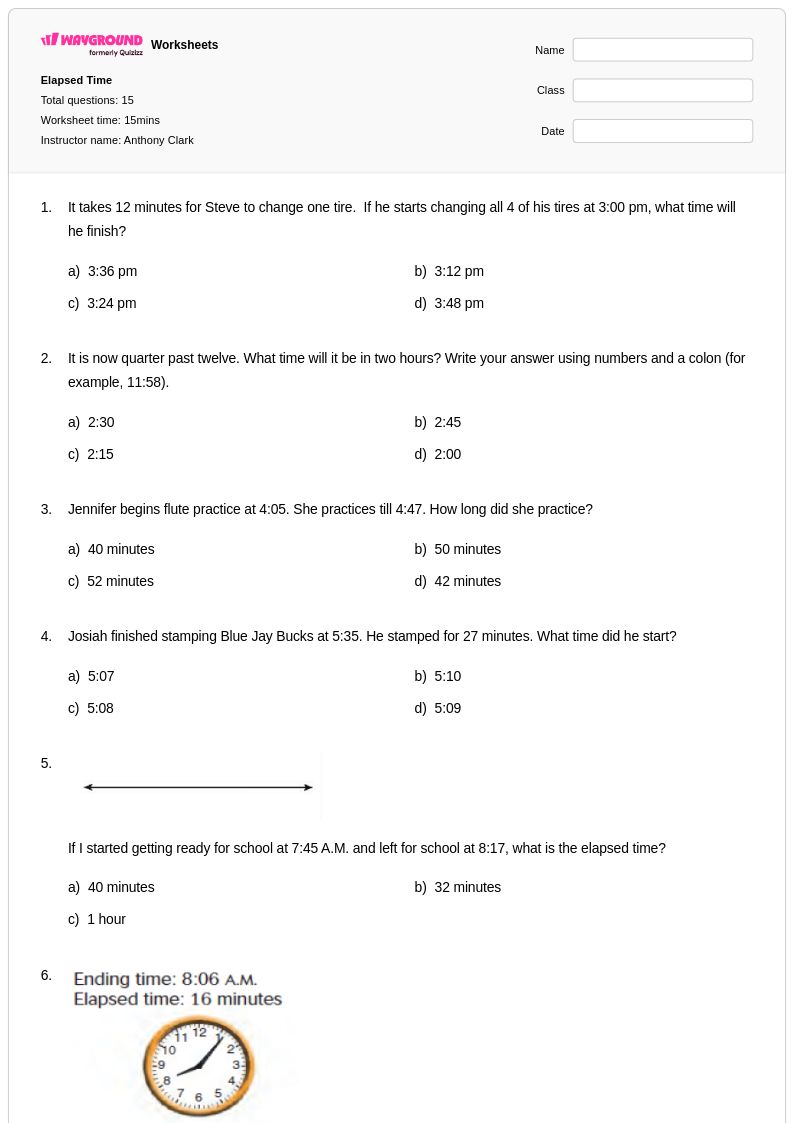
The worksheets cover a wide range: simple hour-to-hour calculations, problems involving AM/PM transitions, analog and digital clock formats, word problems set in real-world contexts, and multi-step scenarios that include time zones. That range makes them useful for initial practice and for pushing students who are ready for more complexity.
What mistakes do students commonly make with elapsed time?
Three errors come up constantly. First, students try to subtract times like whole numbers — subtracting 3:45 from 5:20 as if it were 520 minus 345. Second, they lose track of AM/PM crossings, especially on problems that span noon or midnight. Third, they miscount minutes on analog clocks, confusing the hour hand's position with the minute count. Catching the first error early is worth the most — once students understand that time doesn't work in base 10, the other errors become easier to address.
How do I use these elapsed time worksheets in my classroom?
Each worksheet includes a complete answer key, so you can assign it for independent practice and check work quickly. For digital use, you can host any worksheet as a quiz on Wayground — students submit answers online and you get instant results. If you prefer paper, download the PDF and print it; you can then grade submissions using the Wayground for Teachers app, which lets you scan or capture student work for grading without re-entering anything manually.
What grade level is elapsed time taught?
Elapsed time is introduced in Grade 1 and Grade 2 with simple hour and half-hour intervals, deepens in Grade 3 with minute-level precision, and extends into Grade 4 and beyond with multi-step problems and real-world applications. The worksheets on this page span that full range, so you can find material appropriate for wherever your students are.
Is elapsed time aligned to Common Core standards?
Yes. Common Core introduces telling and writing time in first and second grade, then shifts in third grade to solving elapsed time problems using number lines and other strategies — specifically the skill of finding how much time has passed between a start and end time given in hours and minutes. By fourth grade, students are expected to apply this fluently in multi-step word problems. These worksheets map directly to that progression, from basic clock-reading through the more complex interval calculations Common Core expects by the end of third grade.
How can I differentiate elapsed time practice for mixed-ability students?
For students who struggle with reading clocks in the first place, Wayground's Read Aloud accommodation removes the decoding barrier so they can focus on the time calculation itself. For students who need more processing time on multi-step problems, per-student extended time settings let you adjust without affecting the rest of the class. On the worksheet itself, you can generate an alternate version with a larger font size or a dyslexia-friendly font — same problems, more accessible layout.