
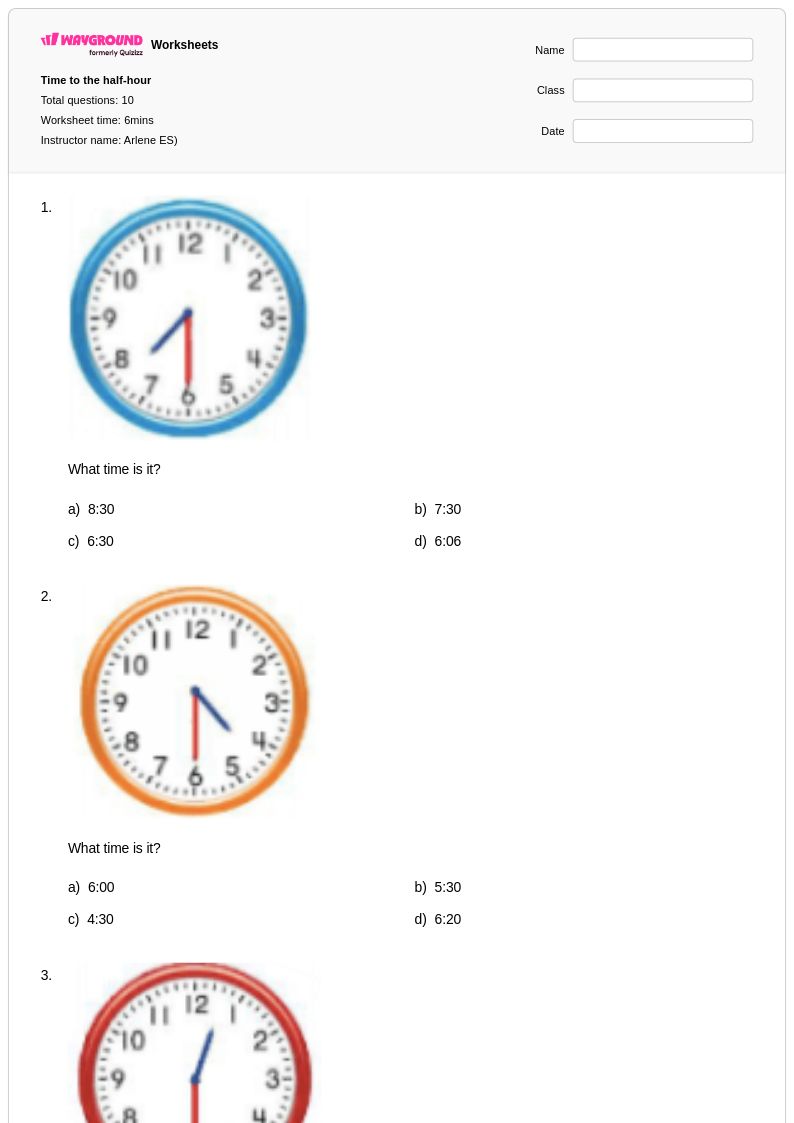
10 Q
1st
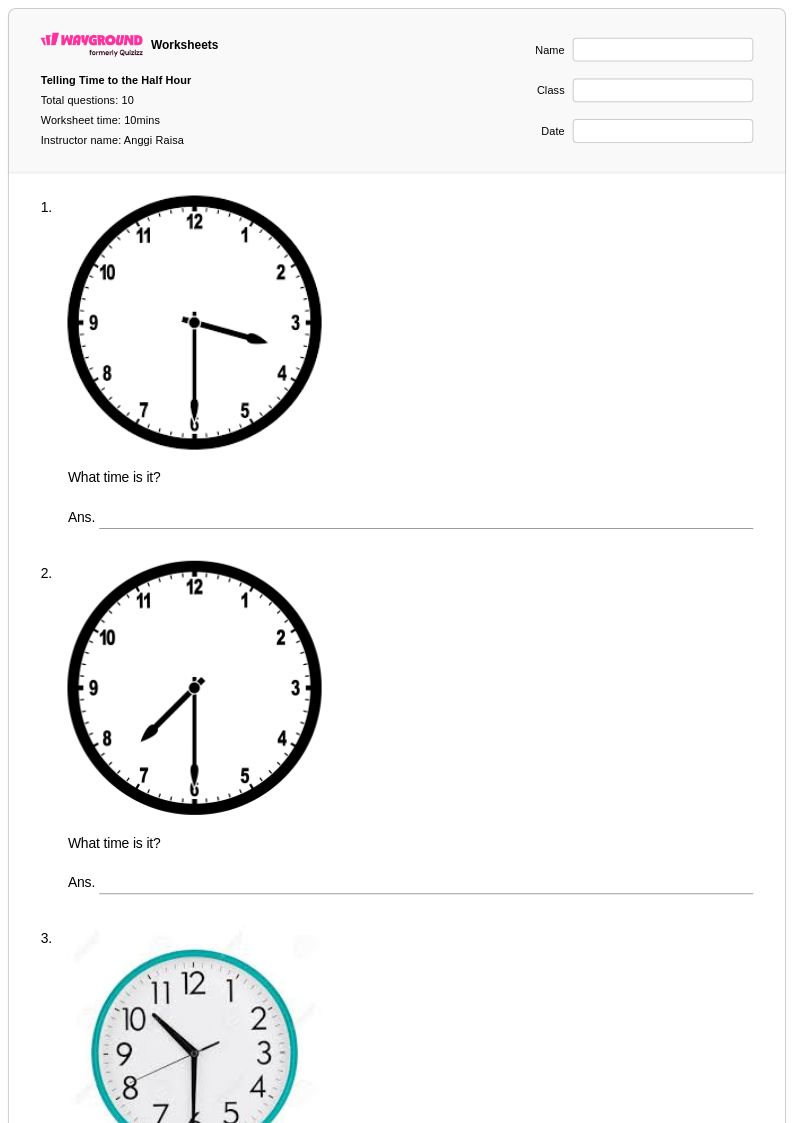
10 Q
1st
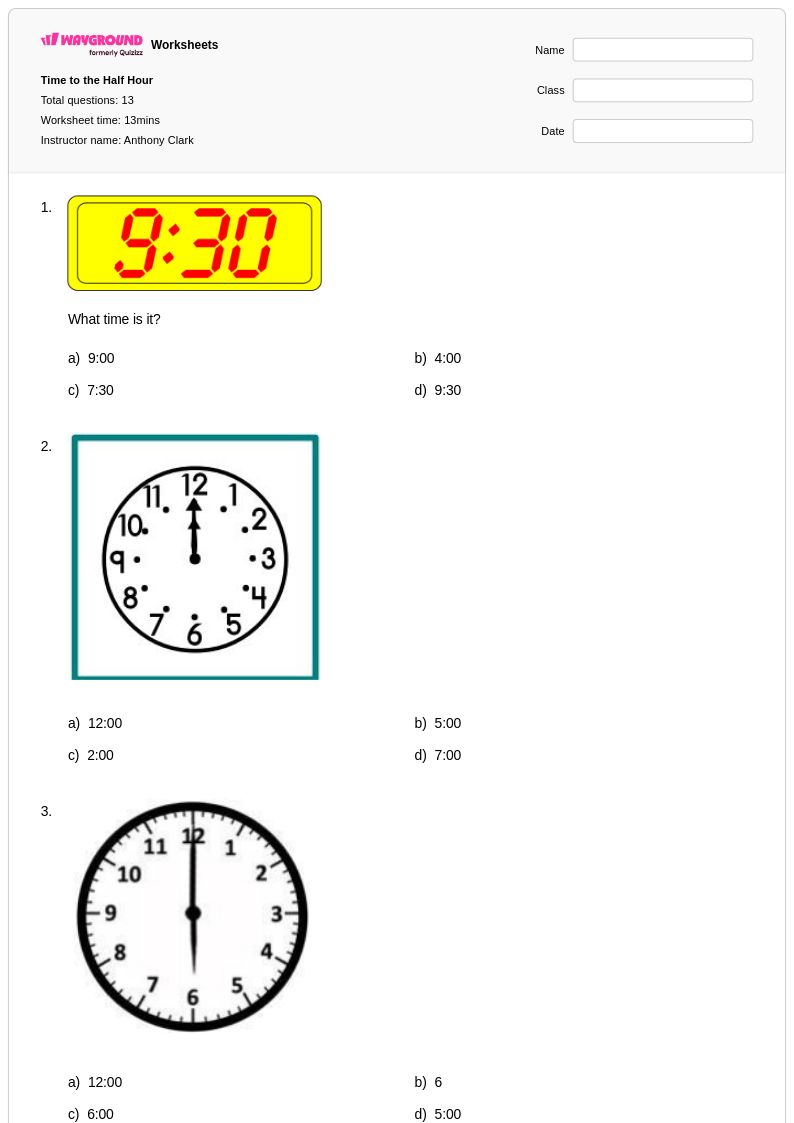
13 Q
1st - Uni
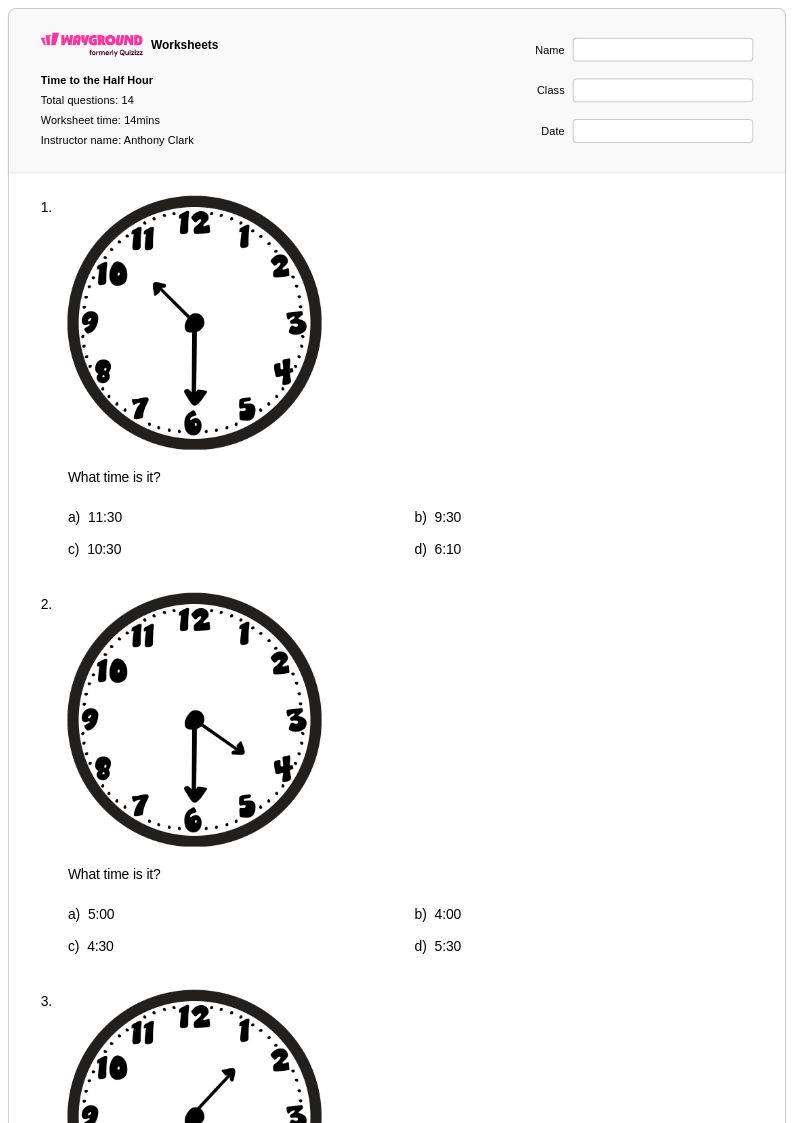
14 Q
1st - Uni
20 Q
2nd - Uni
10 Q
1st
10 Q
1st - 2nd
20 Q
1st - Uni
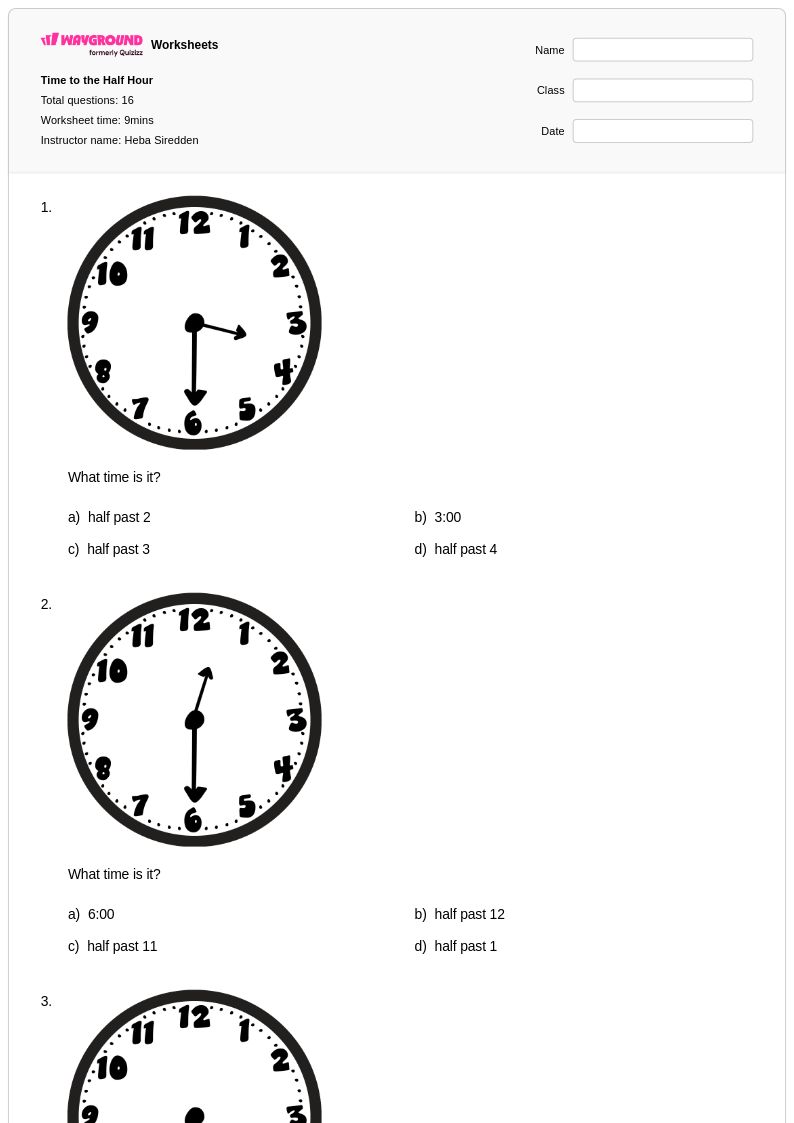
16 Q
1st
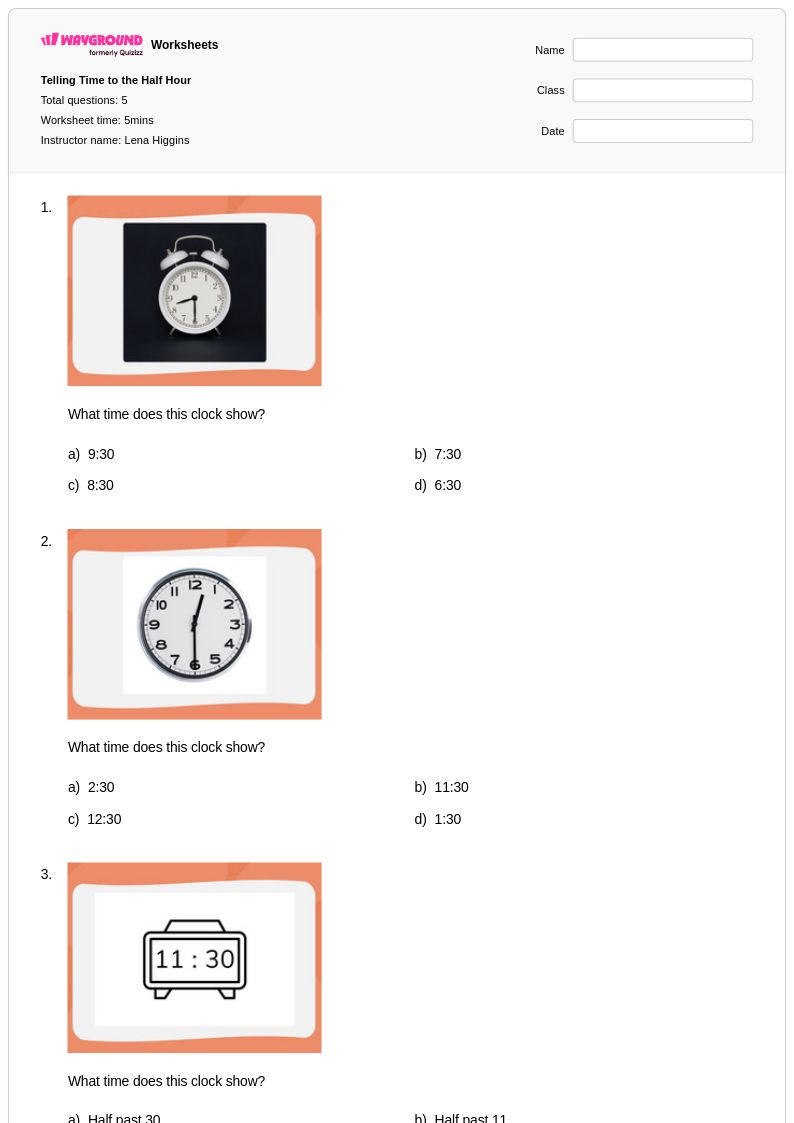
5 Q
1st
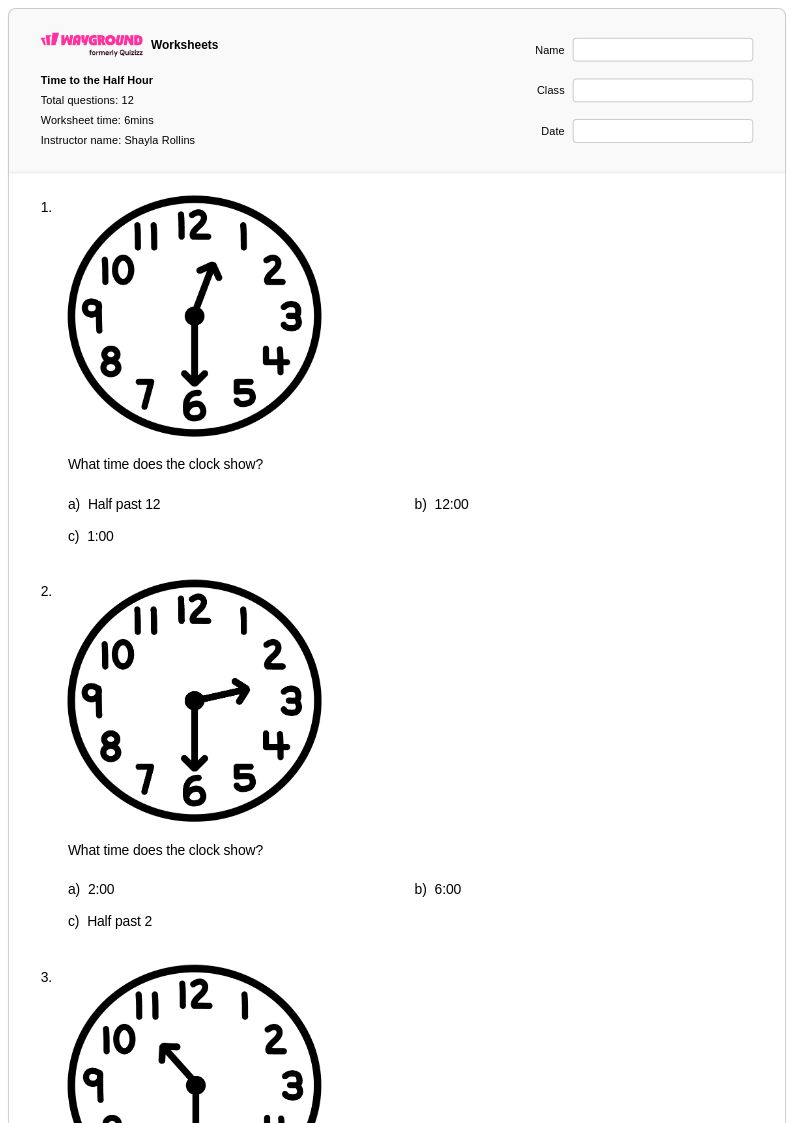
12 Q
1st
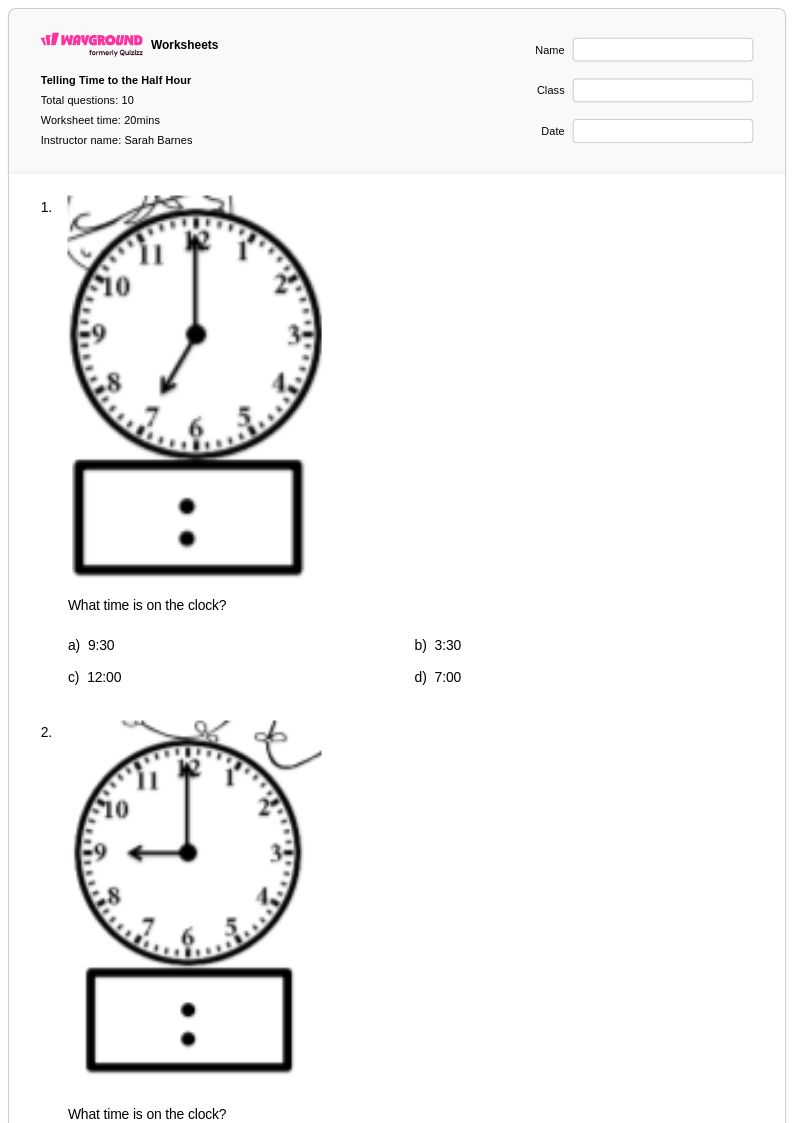
10 Q
1st
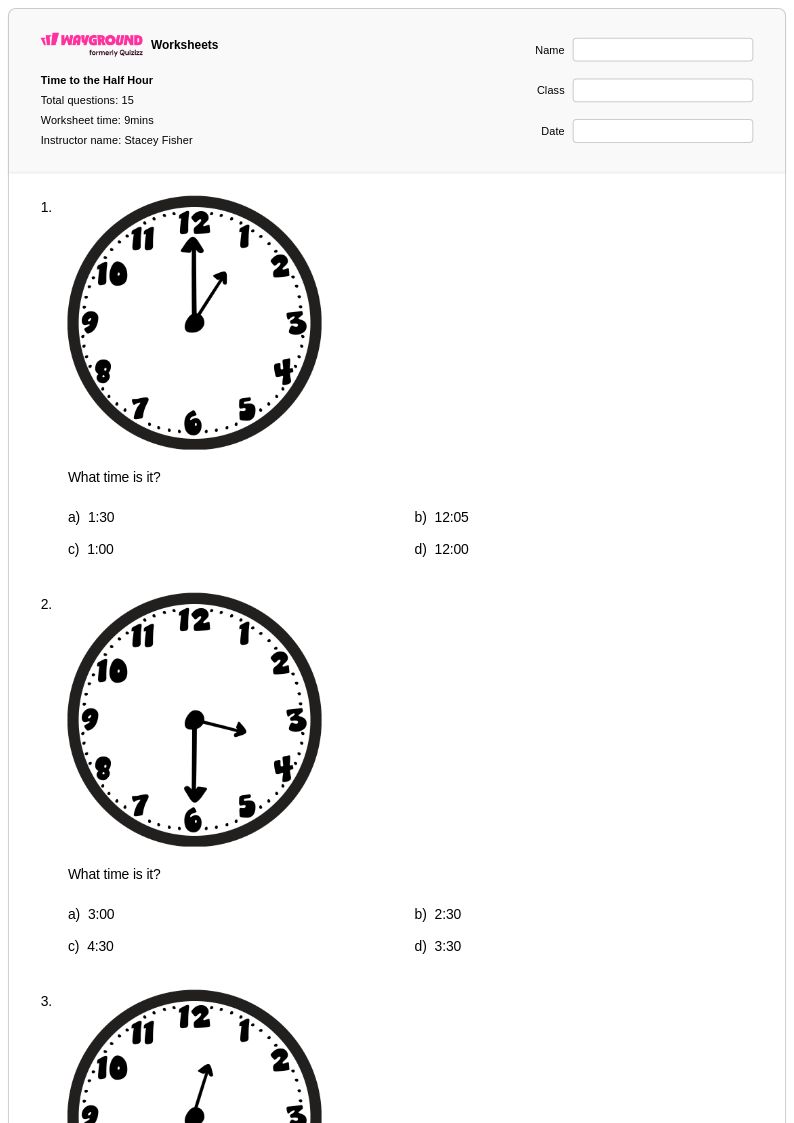
15 Q
1st - 3rd
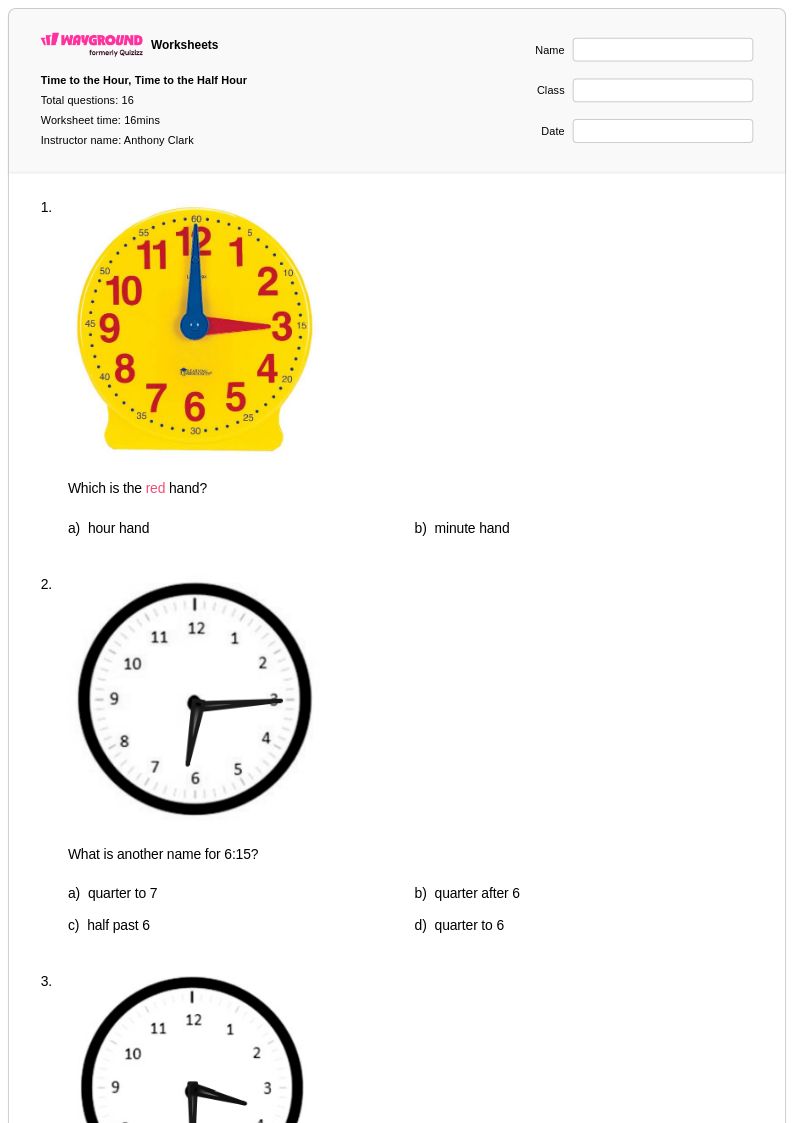
16 Q
2nd - Uni
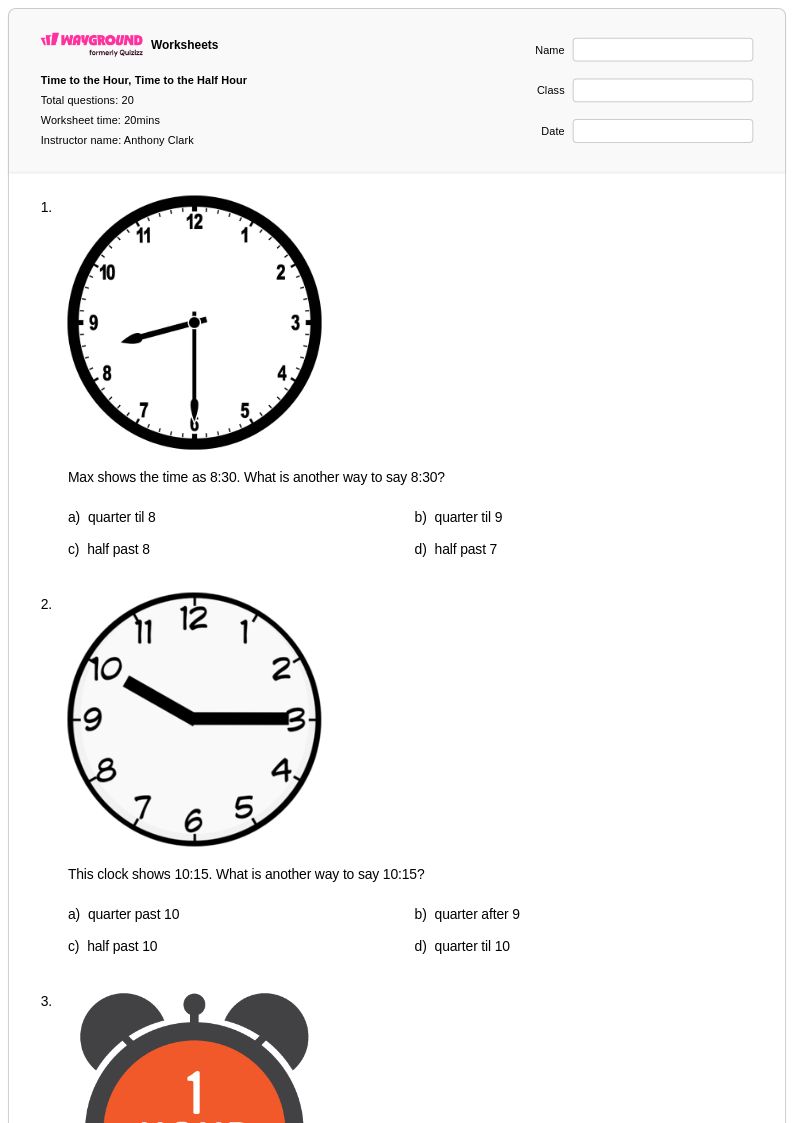
20 Q
2nd - Uni
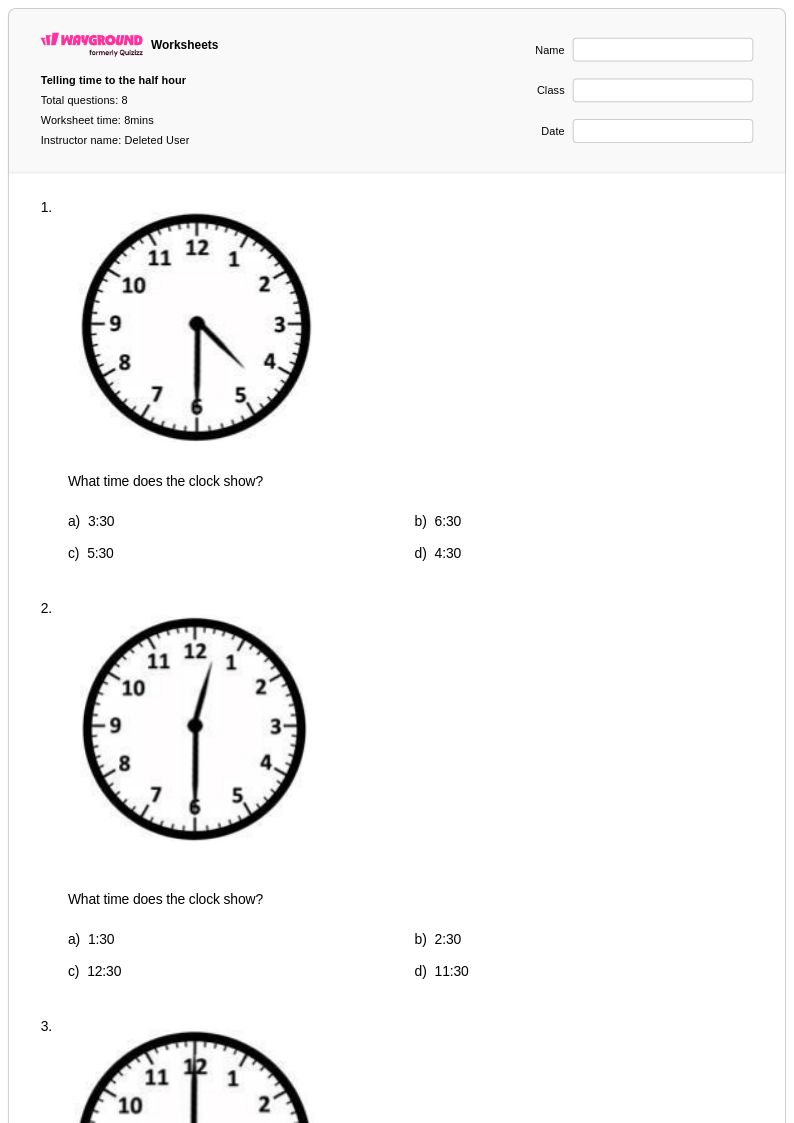
8 Q
2nd - 3rd
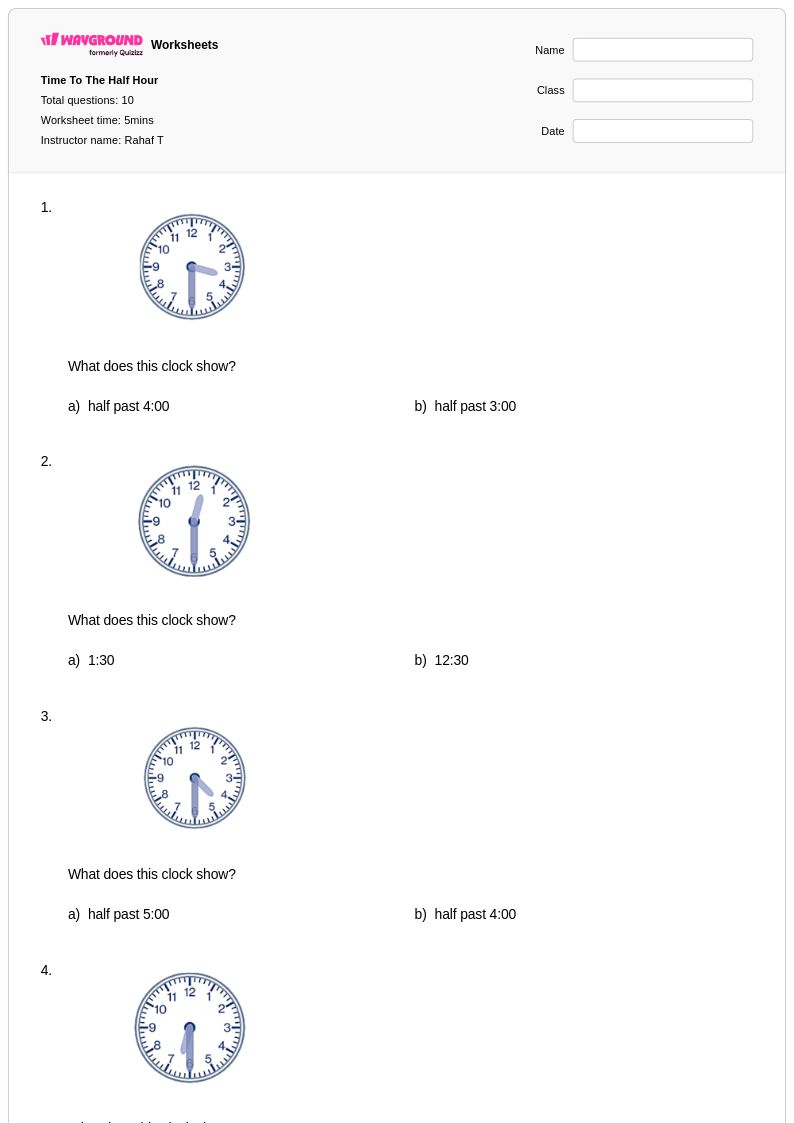
10 Q
1st
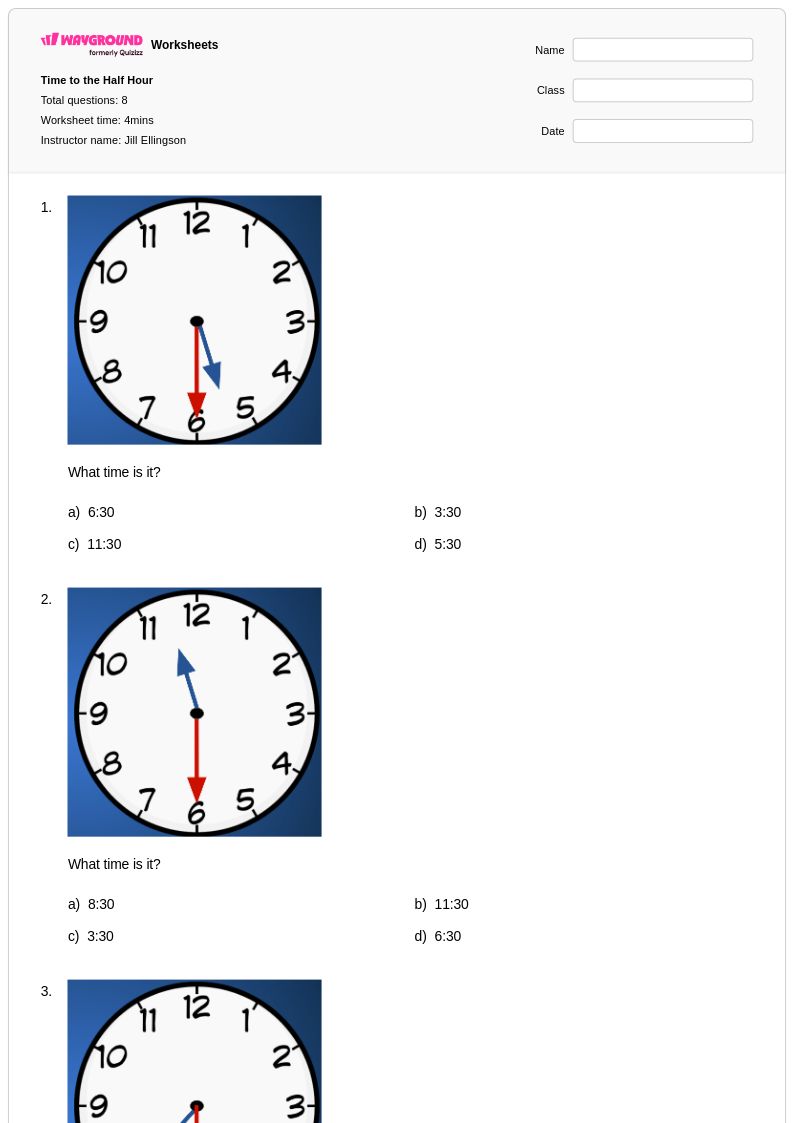
8 Q
1st
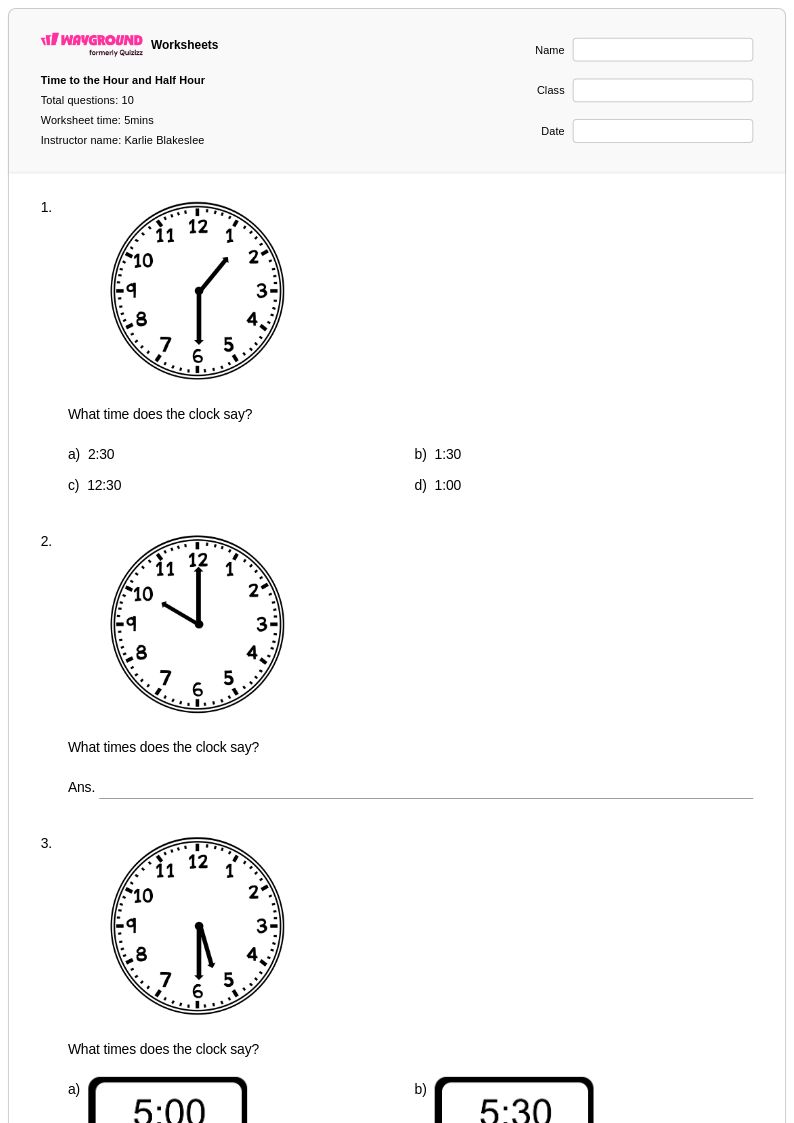
10 Q
1st
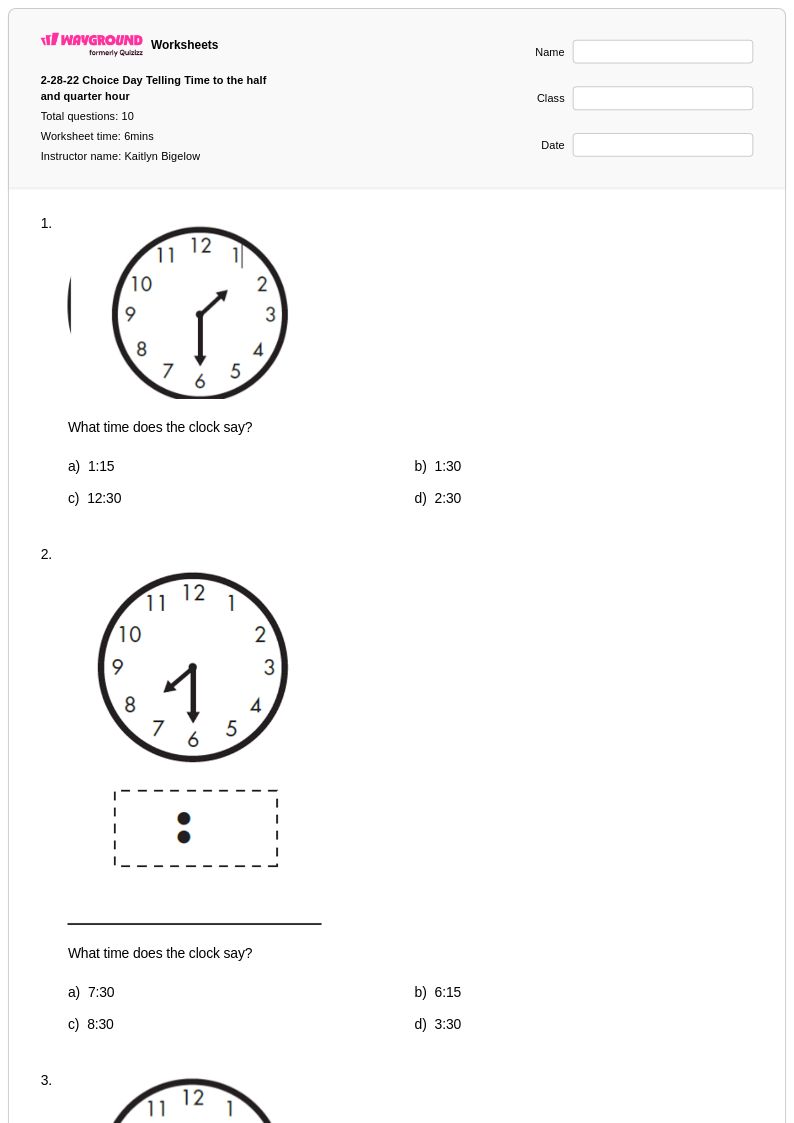
10 Q
2nd
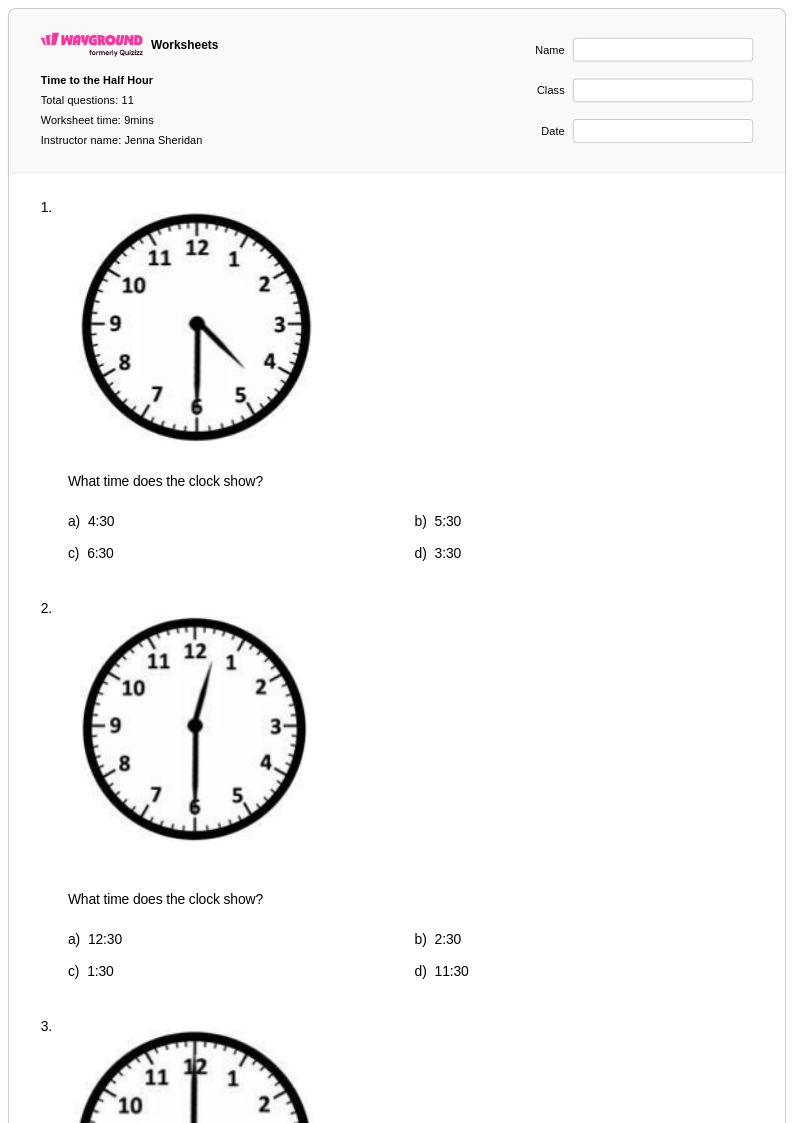
11 Q
1st - 2nd
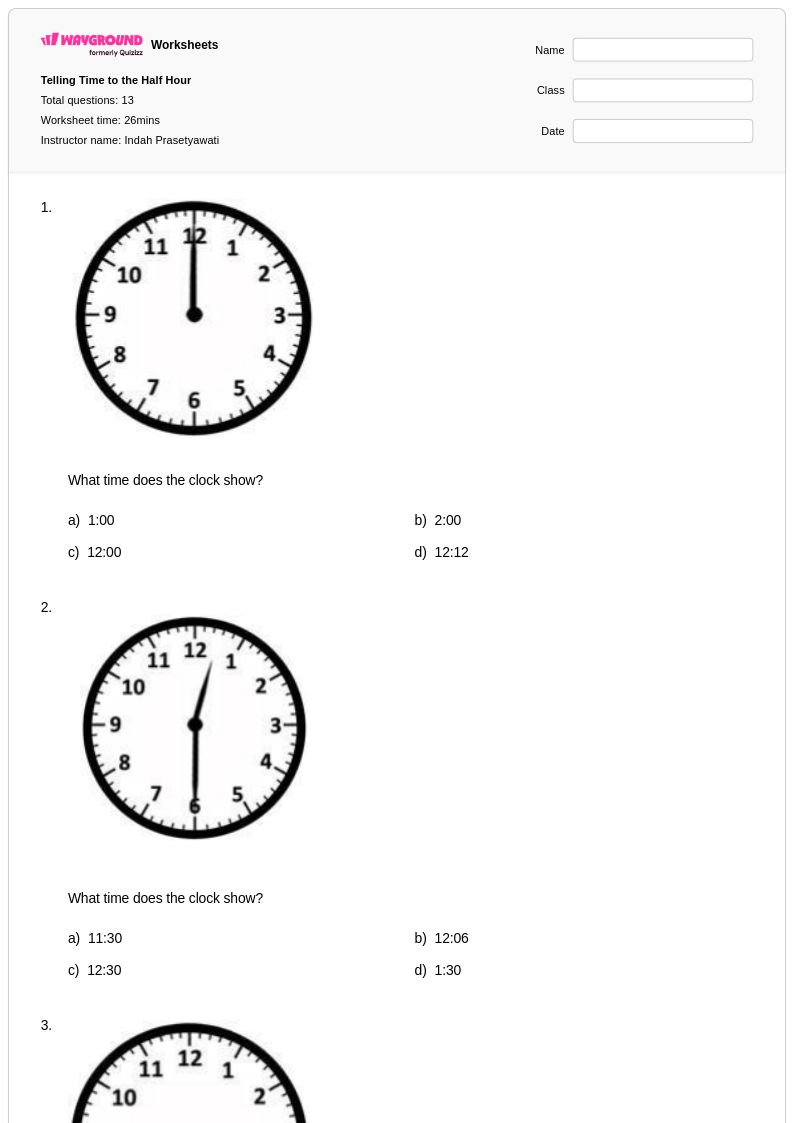
13 Q
1st
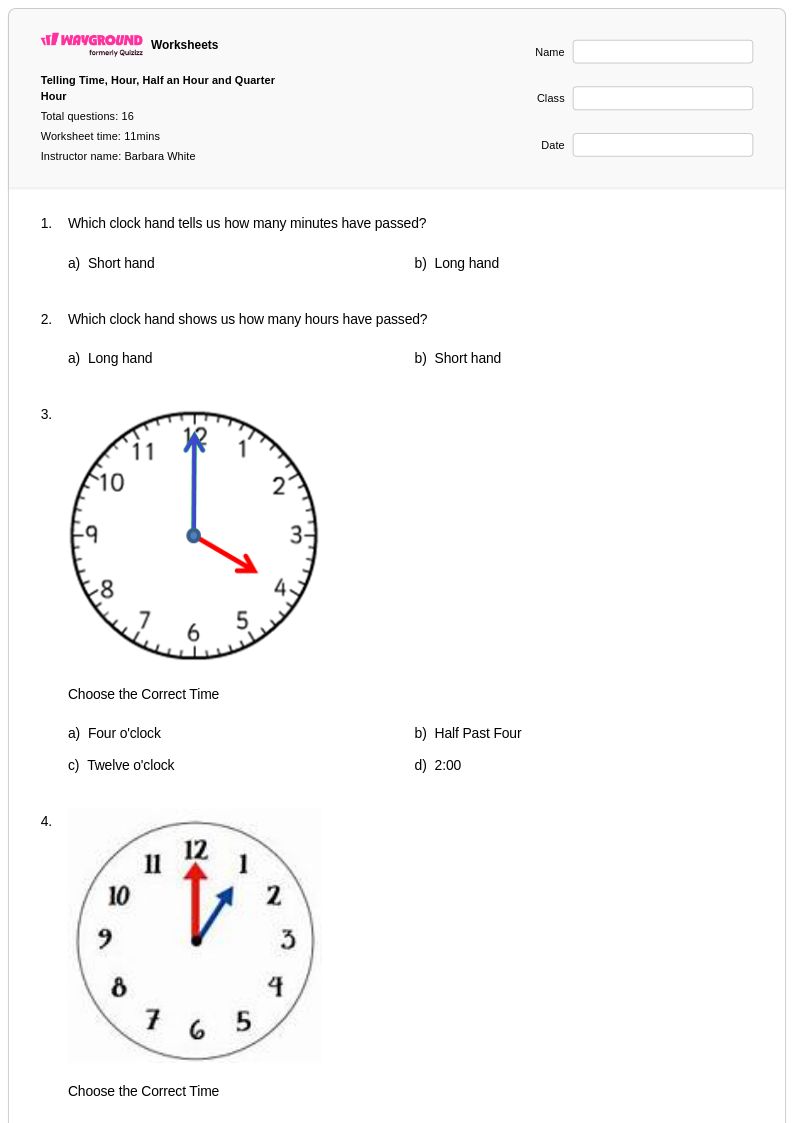
16 Q
2nd
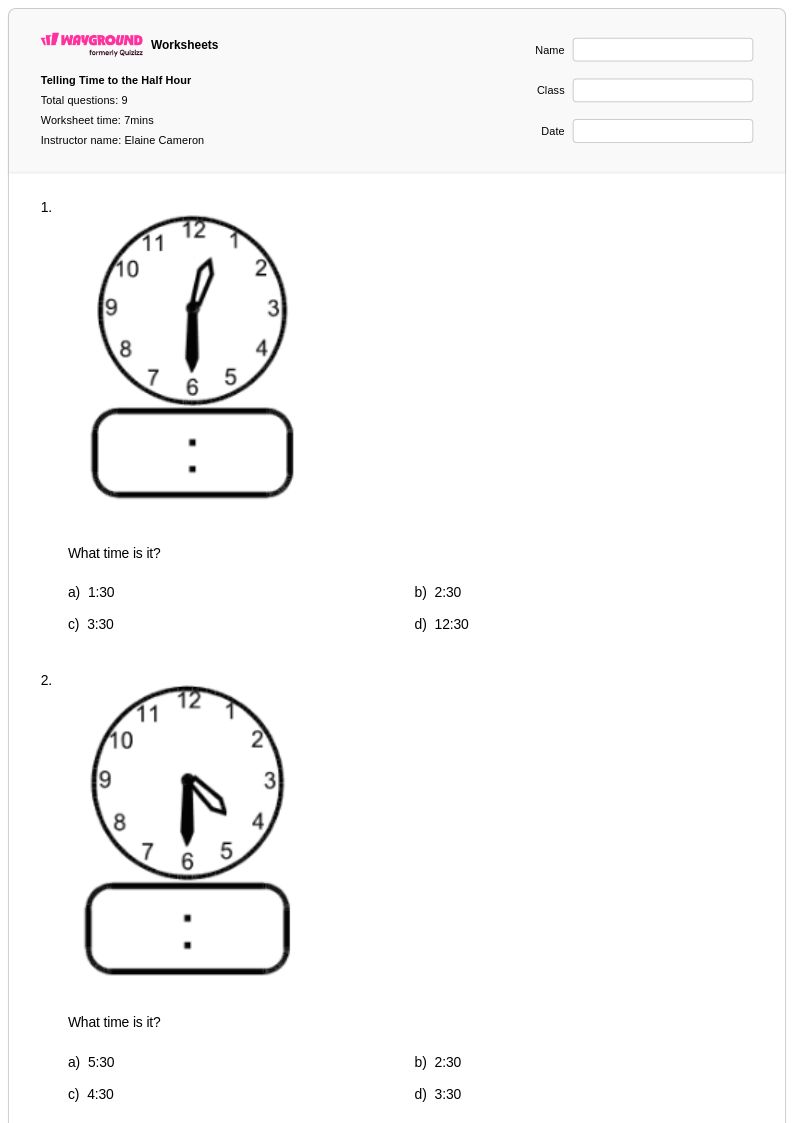
9 Q
1st
Explore Worksheets by Grade
Explore Worksheets by Subjects
Explore printable Time to the Half Hour worksheets
Time to the half hour worksheets available through Wayground (formerly Quizizz) provide essential practice for students developing fundamental time-telling skills. These comprehensive resources focus specifically on helping learners read analog and digital clocks when the minute hand points to the 6, representing thirty minutes past the hour. The worksheets strengthen critical mathematical concepts including number recognition, understanding of hour and minute hands, and the relationship between analog and digital time formats. Each collection includes varied practice problems that progress from basic identification exercises to more complex time-reading challenges, complete with answer keys and available as free printable pdf resources that educators can easily distribute and assess.
Wayground (formerly Quizizz) supports teachers with an extensive library of millions of teacher-created time to the half hour worksheet collections, featuring robust search and filtering capabilities that allow educators to quickly locate materials aligned with specific learning standards and student needs. The platform's differentiation tools enable teachers to customize worksheets based on individual student abilities, while flexible formatting options provide both printable pdf versions and interactive digital alternatives for diverse classroom environments. These comprehensive features facilitate effective lesson planning by offering immediate access to remediation materials for struggling learners, enrichment activities for advanced students, and consistent skill practice opportunities that reinforce time-telling mastery across multiple learning modalities and instructional contexts.