Free Printable Electron Arrangements Worksheets for Class 6
Enhance Class 6 students' understanding of electron arrangements with Wayground's comprehensive collection of free chemistry worksheets, featuring engaging practice problems, printable PDFs, and complete answer keys.
Explore printable Electron Arrangements worksheets for Class 6
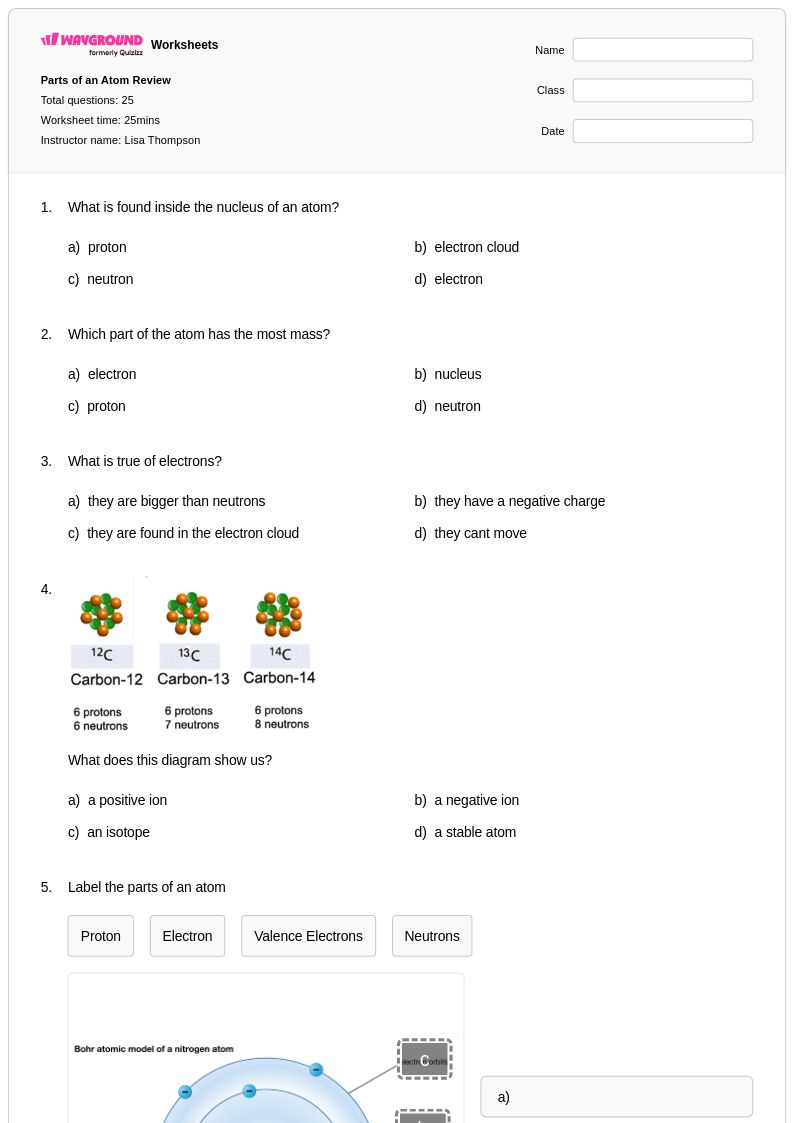
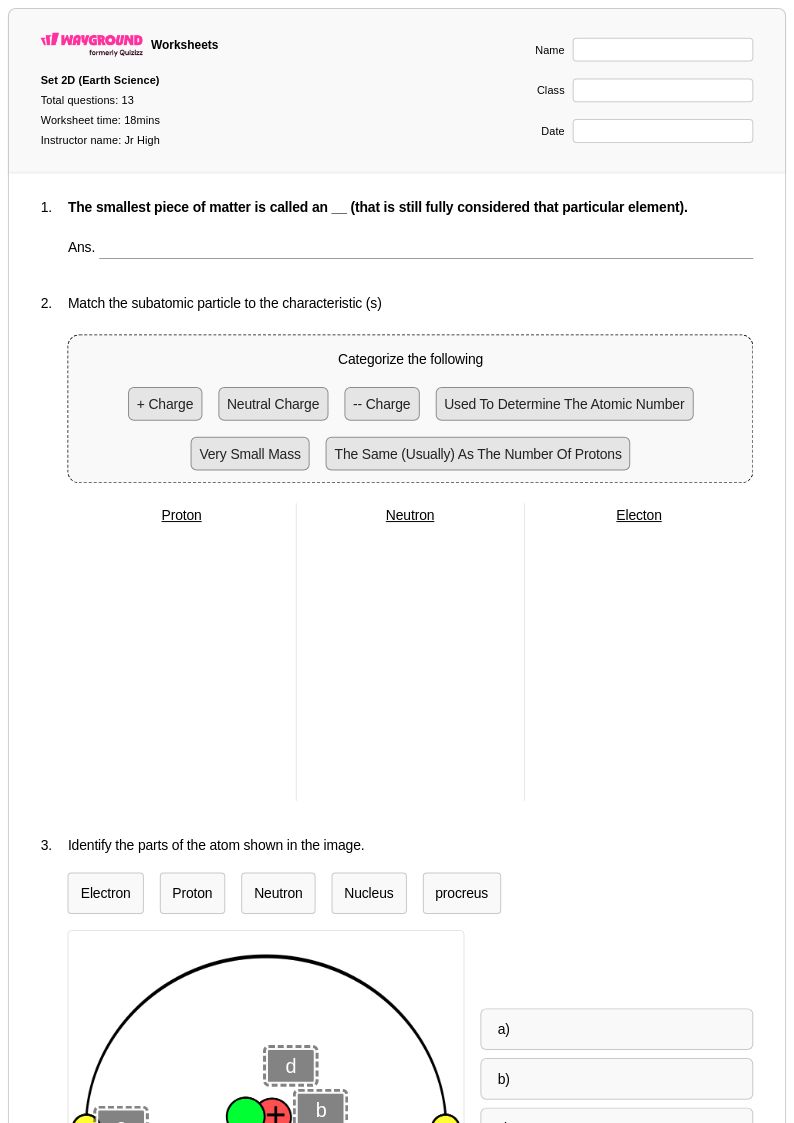
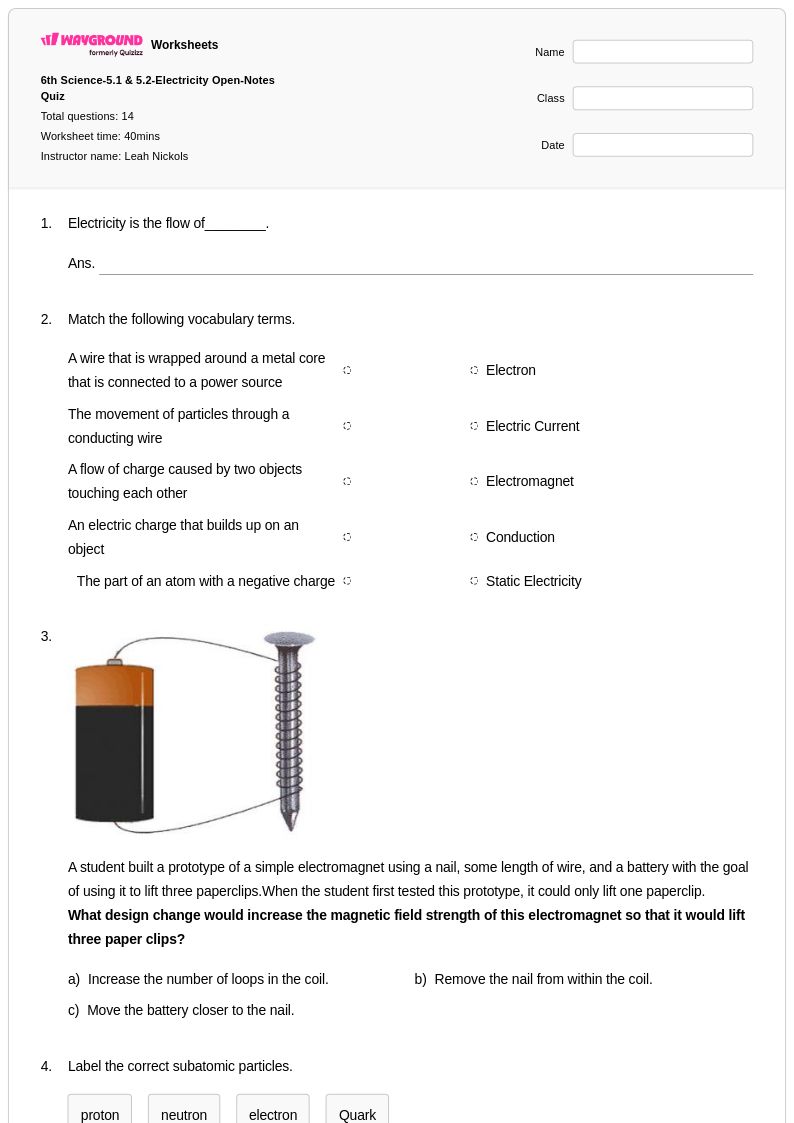
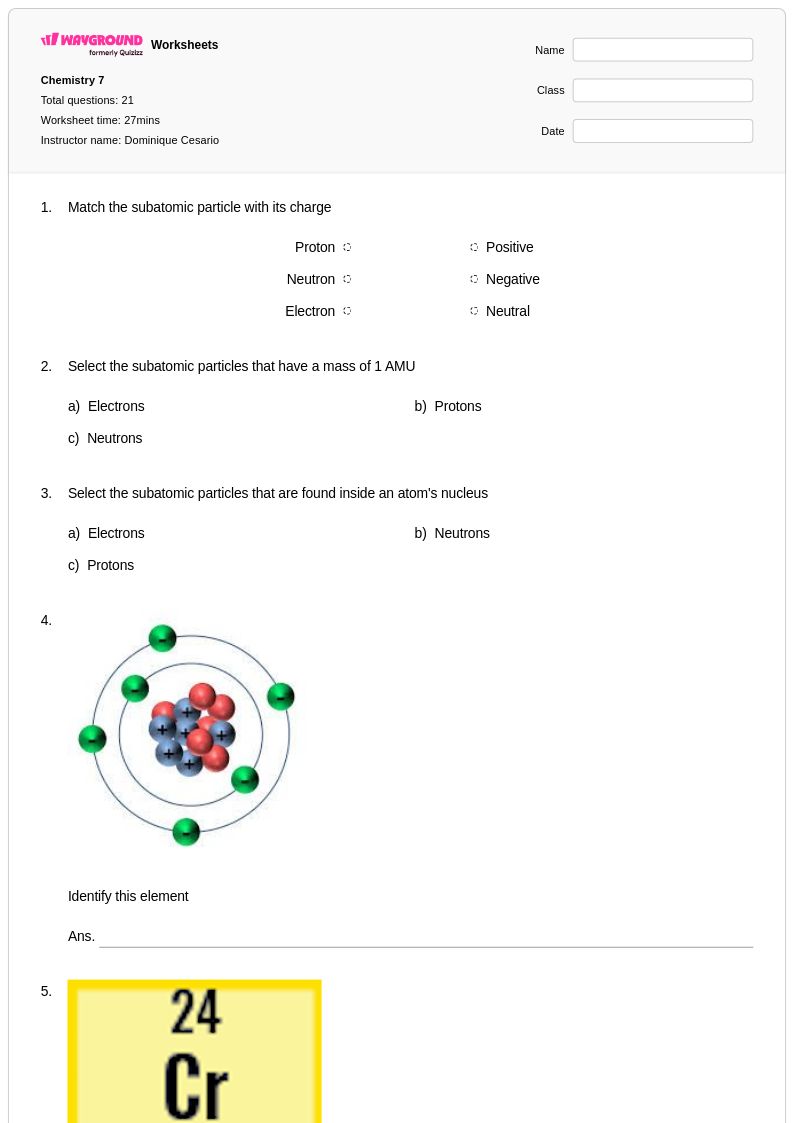
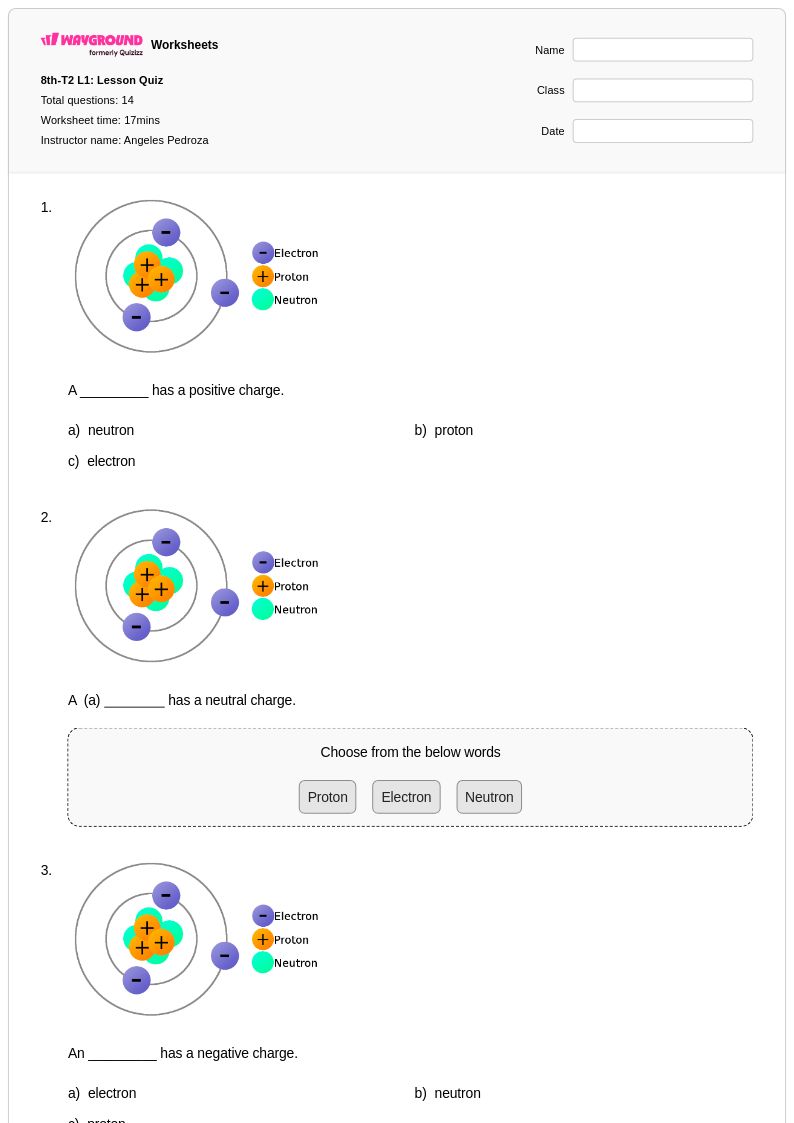
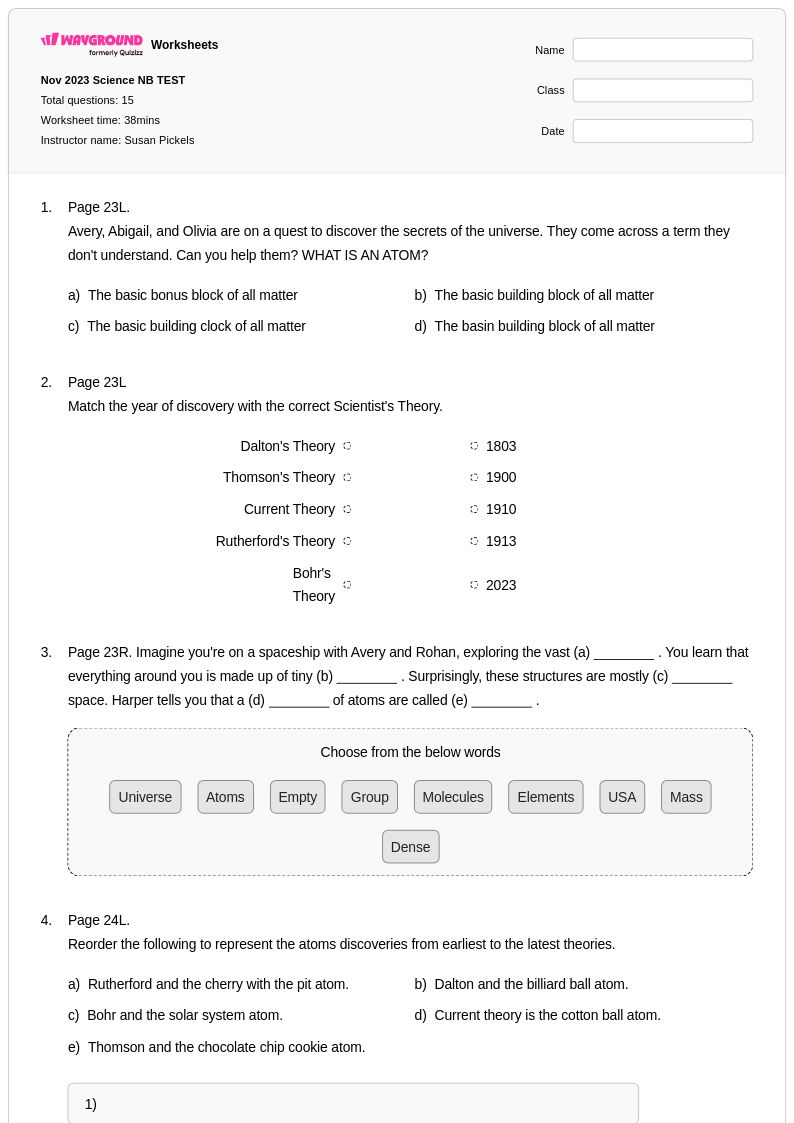
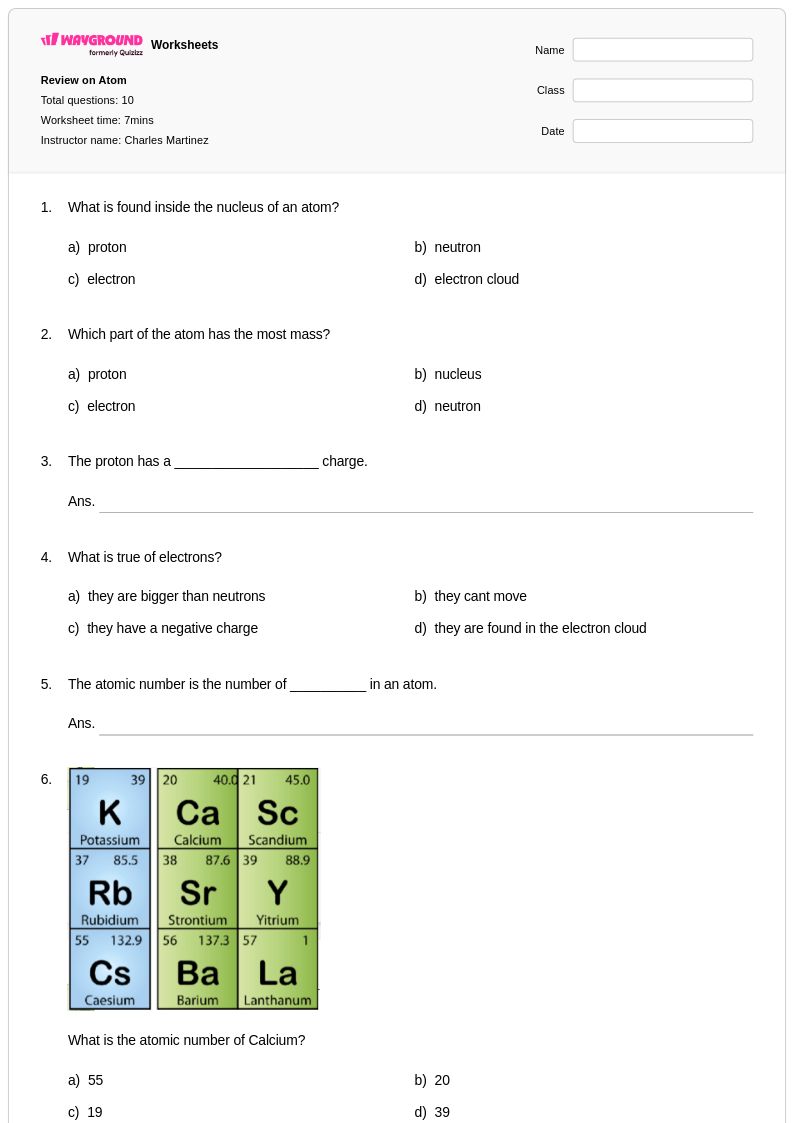
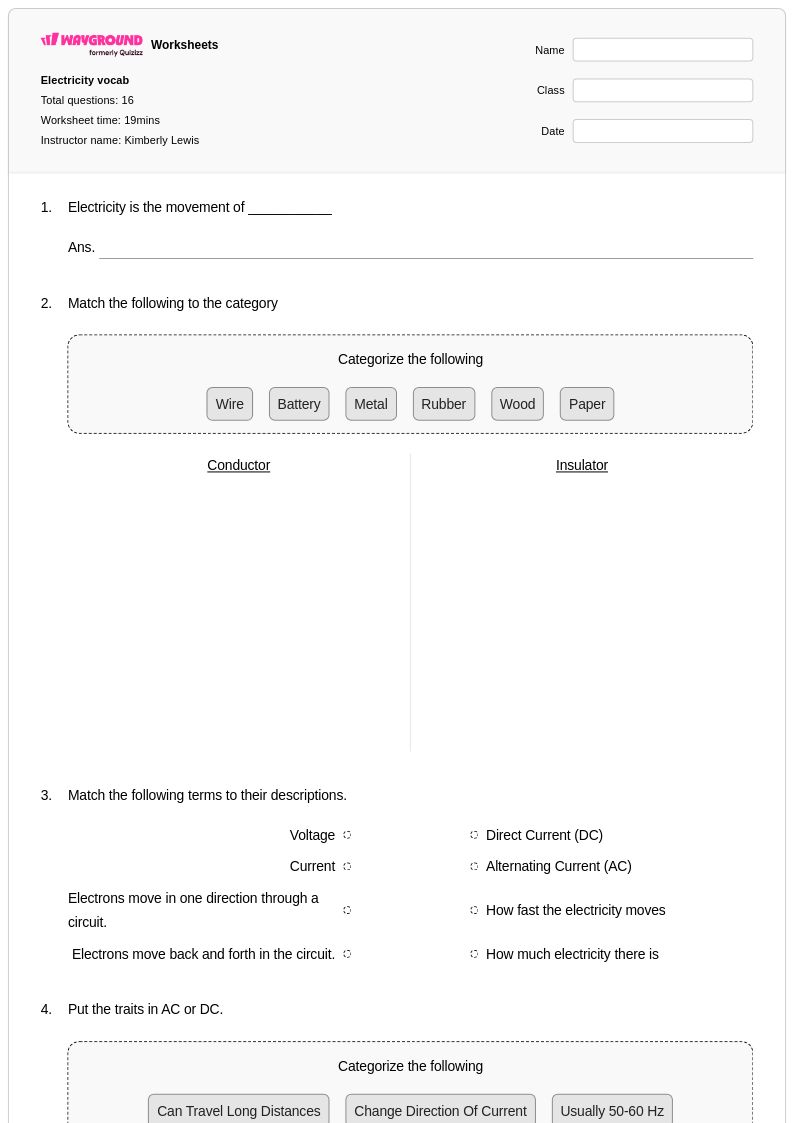
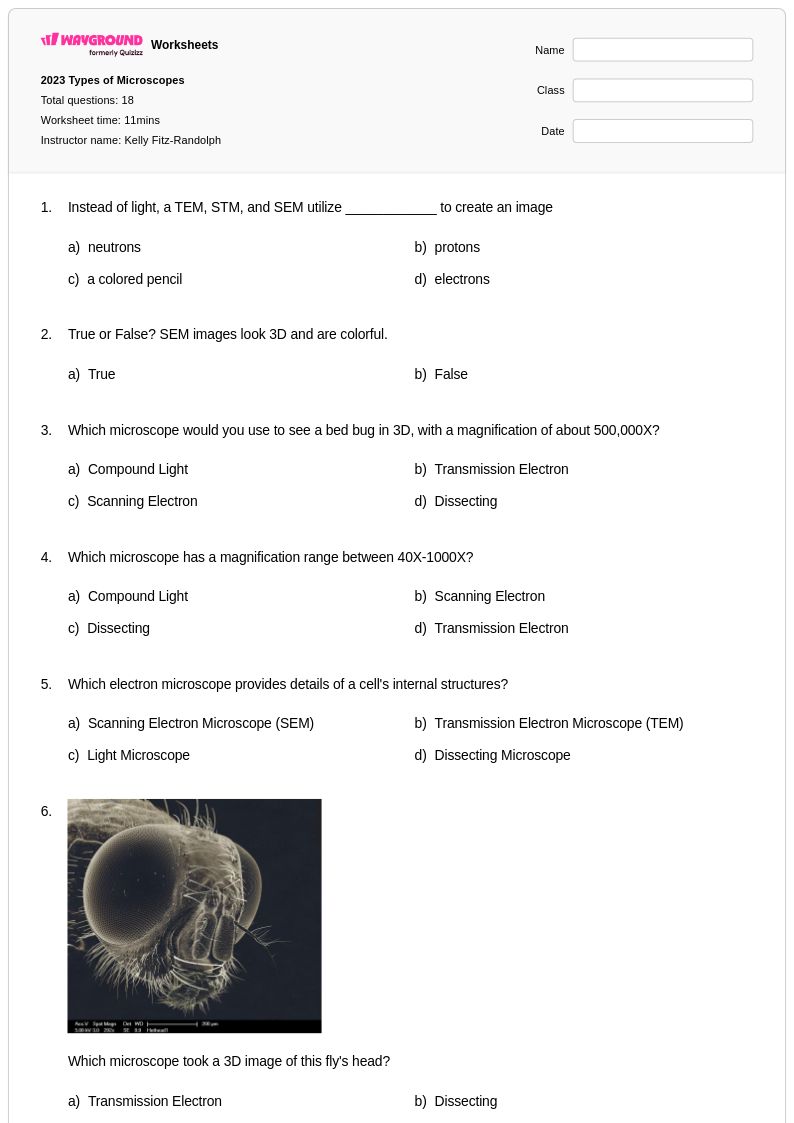
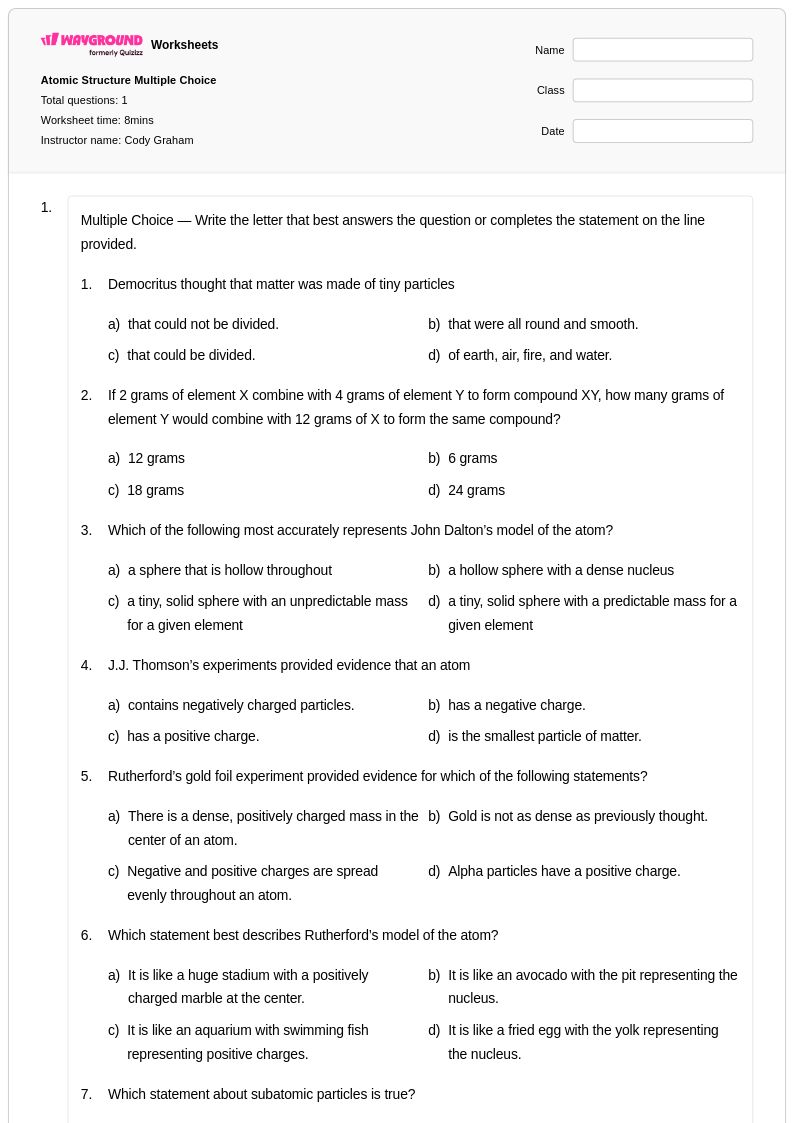
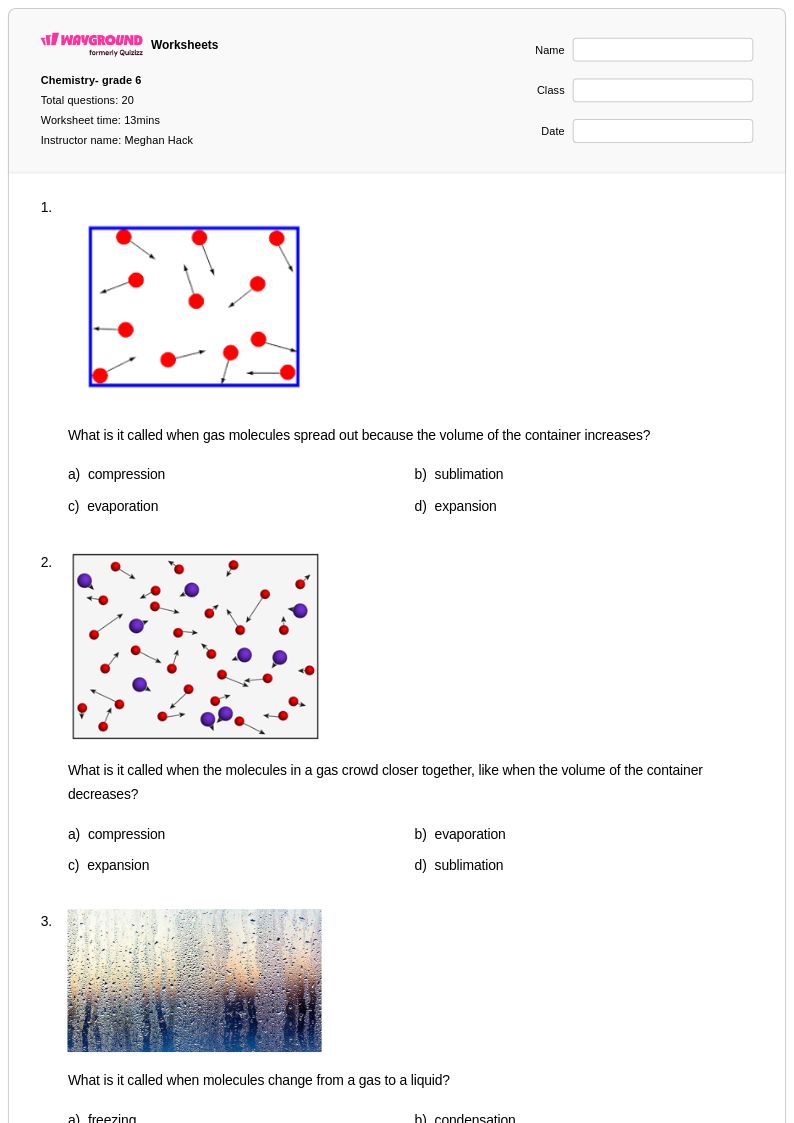
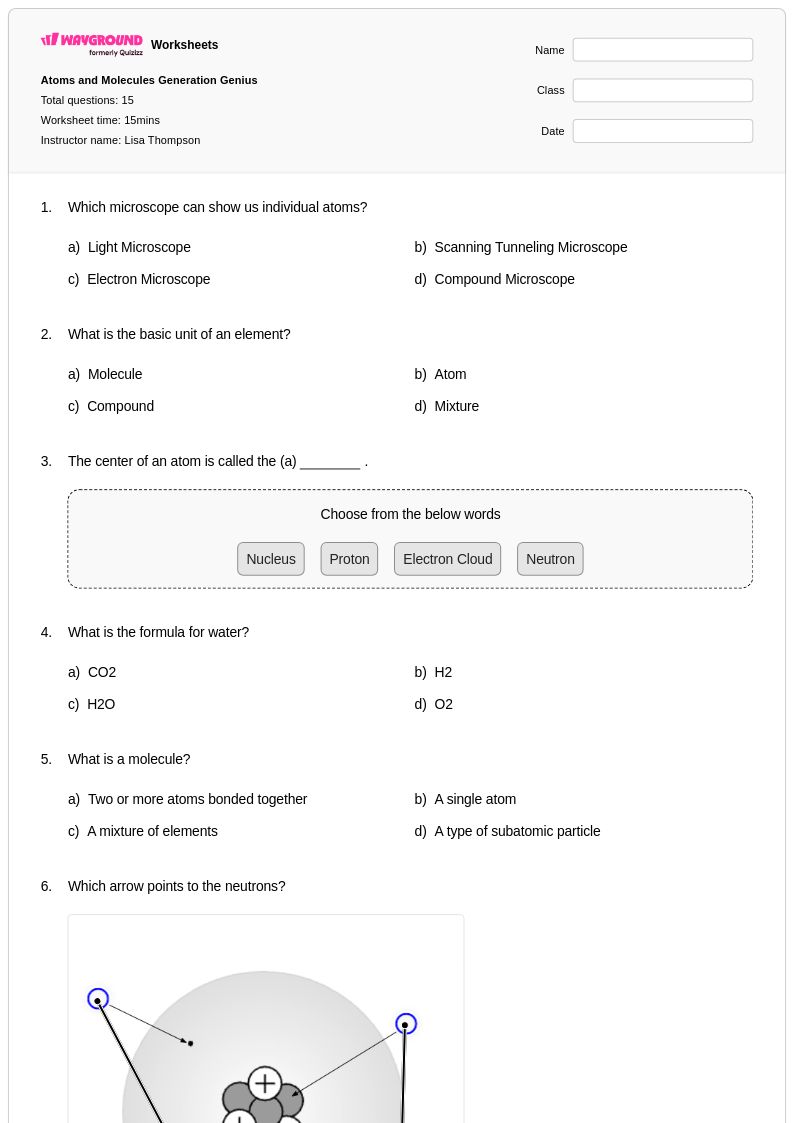
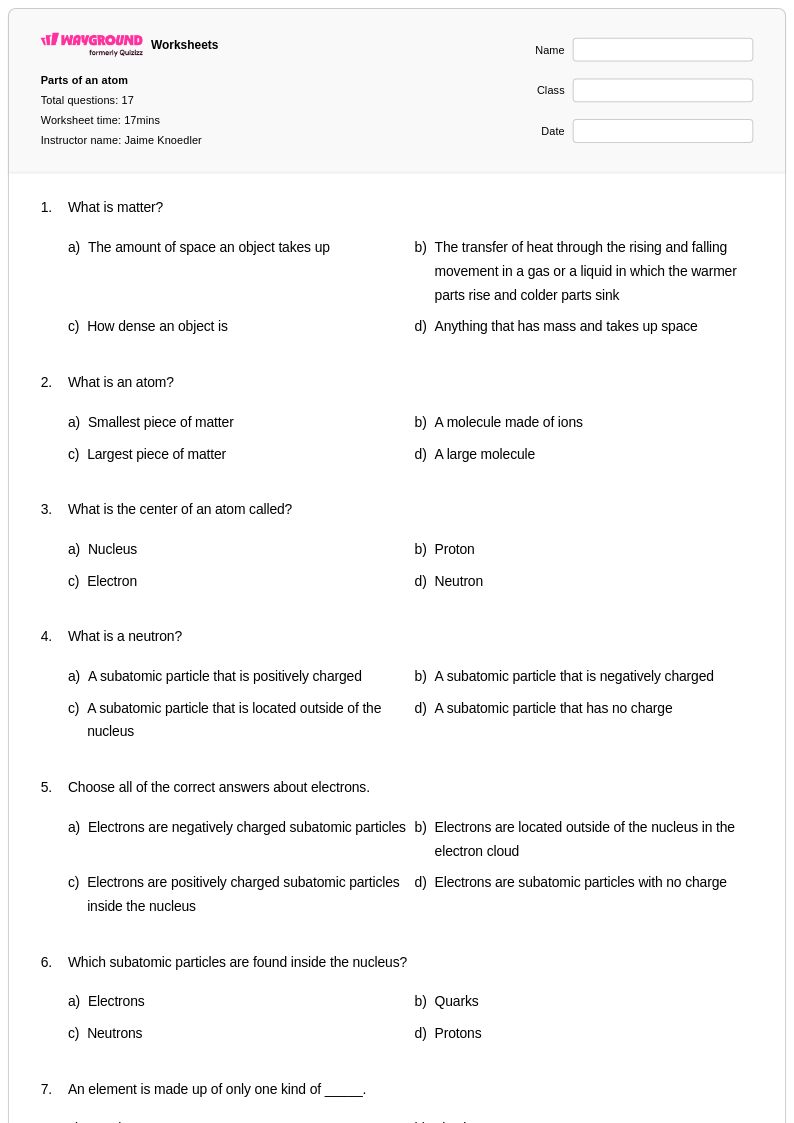
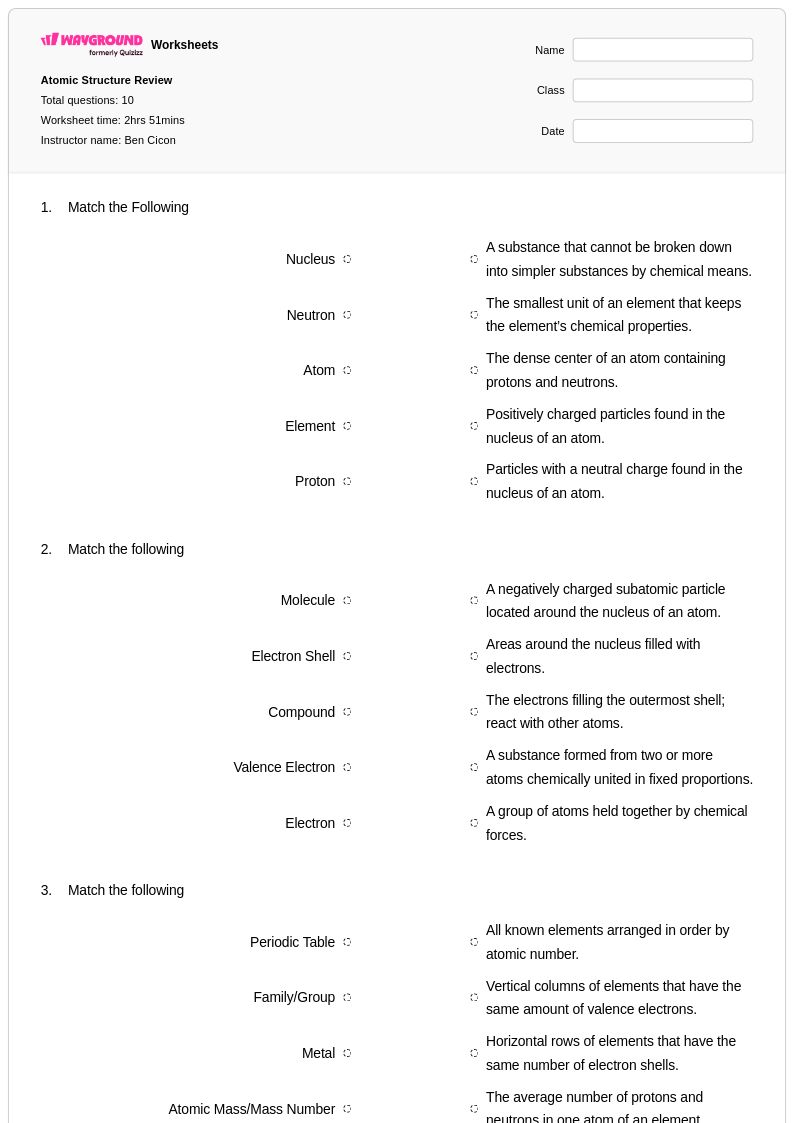
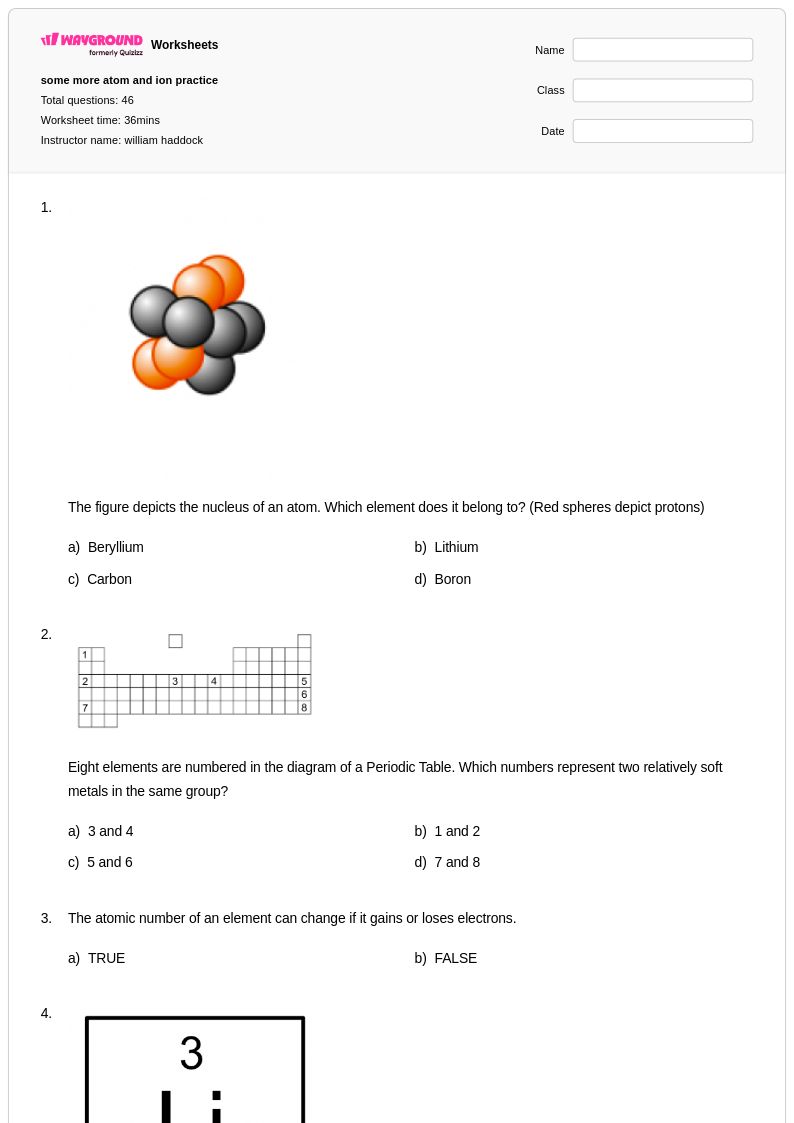
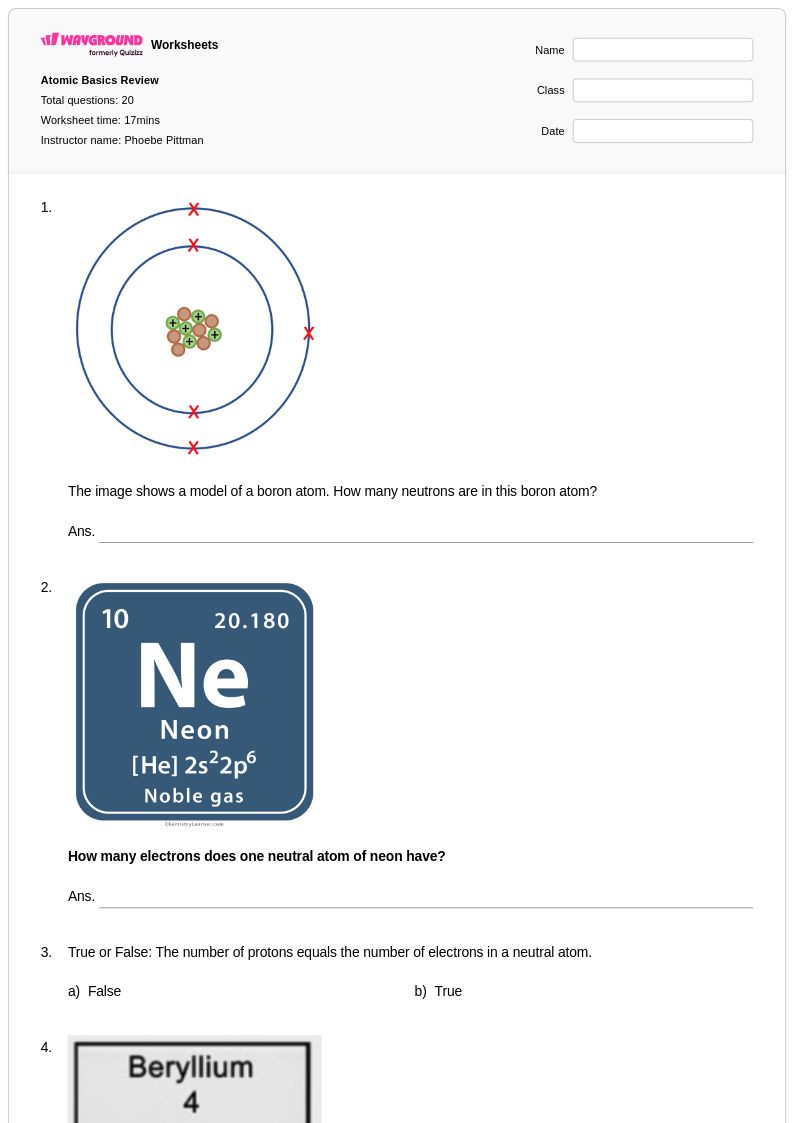
Electron arrangements worksheets for Class 6 students through Wayground provide comprehensive practice with understanding how electrons are organized around atomic nuclei. These carefully designed resources help students master fundamental concepts including electron shells, energy levels, and basic atomic structure through engaging practice problems and visual representations. The worksheets strengthen critical thinking skills as students learn to identify electron configurations, understand the relationship between atomic number and electron arrangement, and explore how electron placement affects an atom's properties. Each worksheet collection includes detailed answer keys to support independent learning, and the free printables offer teachers flexible pdf resources that can be easily integrated into lesson plans and homework assignments.
Wayground's extensive library contains millions of teacher-created electron arrangement worksheets that support educators in delivering effective Class 6 chemistry instruction. The platform's robust search and filtering capabilities allow teachers to quickly locate age-appropriate materials that align with curriculum standards and learning objectives. Teachers benefit from differentiation tools that help customize worksheets for varying skill levels, ensuring both remediation support for struggling learners and enrichment opportunities for advanced students. The flexible format options, including printable pdf versions and interactive digital worksheets, accommodate diverse classroom environments and teaching preferences. These comprehensive resources streamline lesson planning while providing targeted skill practice that builds student confidence in understanding atomic structure and electron behavior.
FAQs
How do I teach electron arrangements to chemistry students?
Start by grounding students in the structure of the atom before introducing the rules that govern electron placement: the Aufbau principle, Hund's rule, and the Pauli exclusion principle. Use orbital diagrams as a visual bridge before asking students to write configurations in longhand notation, then progress to noble gas shorthand. Connecting electron configurations to an element's position on the periodic table helps students see the pattern rather than memorize isolated facts.
What exercises help students practice writing electron configurations?
Effective practice moves through three stages: filling orbital diagrams by hand, writing full longhand configurations, and then condensing them using noble gas notation. Students should also practice identifying valence electrons from a configuration and predicting basic chemical behavior, such as reactivity or bonding tendencies. Worksheets that cover a range of elements, including transition metals and common ions, build the fluency students need for both assessments and applied chemistry work.
What mistakes do students commonly make with electron arrangements?
The most frequent errors occur with the 3d and 4s subshells, where students misorder filling based on energy level rather than principal quantum number. Students also frequently violate Hund's rule by pairing electrons before filling each orbital singly, and they struggle to adjust configurations correctly when writing ions. Practicing with answer keys that include step-by-step explanations helps students catch and correct these specific patterns before they become entrenched.
How do I use electron arrangements worksheets to differentiate instruction?
For students who are still building foundational skills, start with elements in periods 1 through 3, where configurations follow a straightforward pattern without d-block complications. More advanced students can work through transition metals, ions, and exceptions like chromium and copper. On Wayground, teachers can apply accommodations such as reduced answer choices or read-aloud support to individual students, allowing the same worksheet session to serve diverse learners without singling anyone out.
How can I use electron arrangements worksheets from Wayground in my classroom?
Wayground's electron arrangements worksheets are available as printable PDFs for traditional classroom use and in digital formats for technology-integrated environments, giving teachers flexibility for in-class instruction, homework, or test prep. Teachers can also host worksheets as a live quiz on Wayground, enabling real-time participation and immediate feedback. Both formats include complete answer keys, making them equally effective for guided practice or independent student work.
How do electron arrangements relate to the periodic table?
The periodic table is organized directly around electron configurations: the period number indicates the highest principal energy level occupied, and the block an element falls in reflects which subshell is being filled. Valence electron count, which determines chemical behavior and bonding patterns, can be read directly from the group number for main-group elements. Teaching students to decode the periodic table through the lens of electron arrangements turns memorization into reasoning.