Free Printable Equation of a Line Worksheets for Class 6
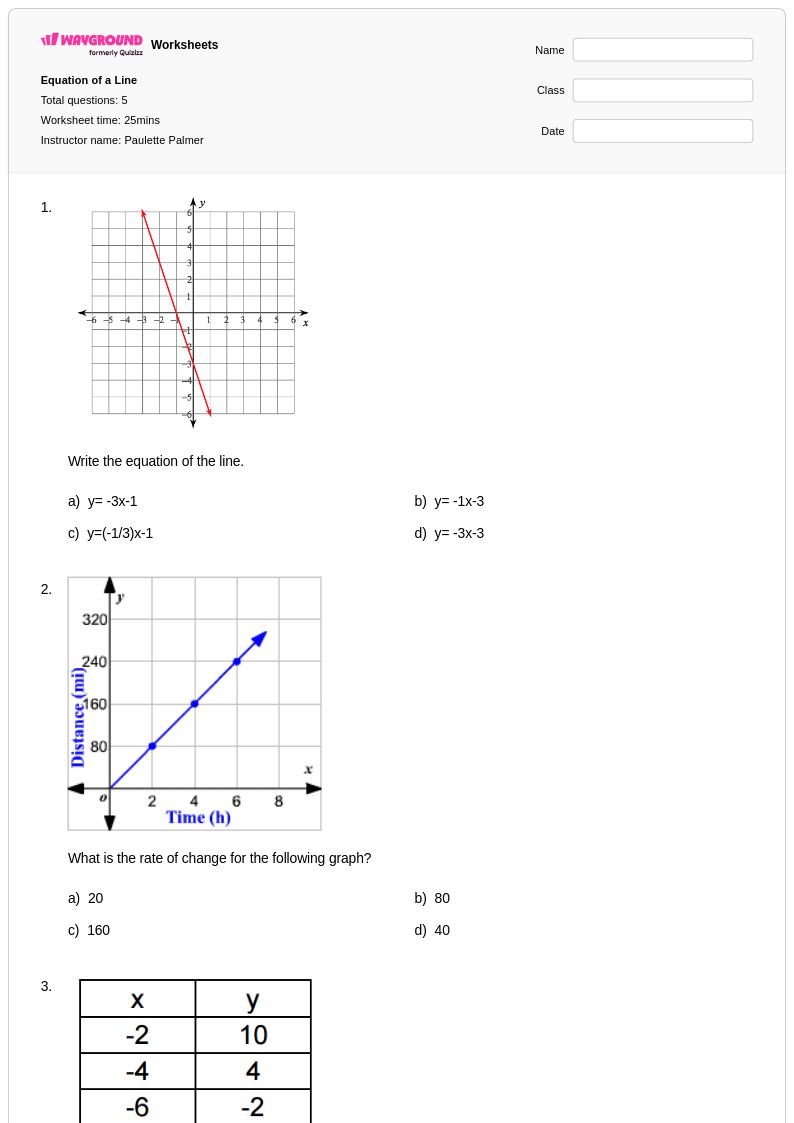
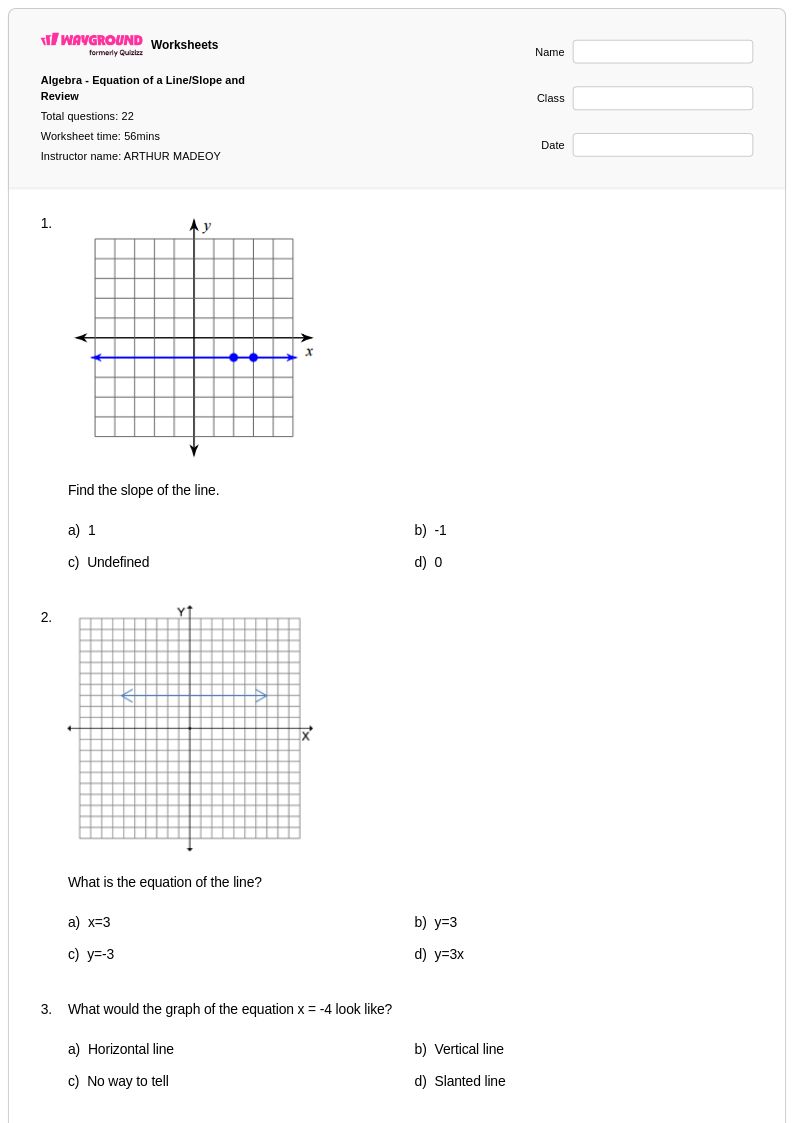
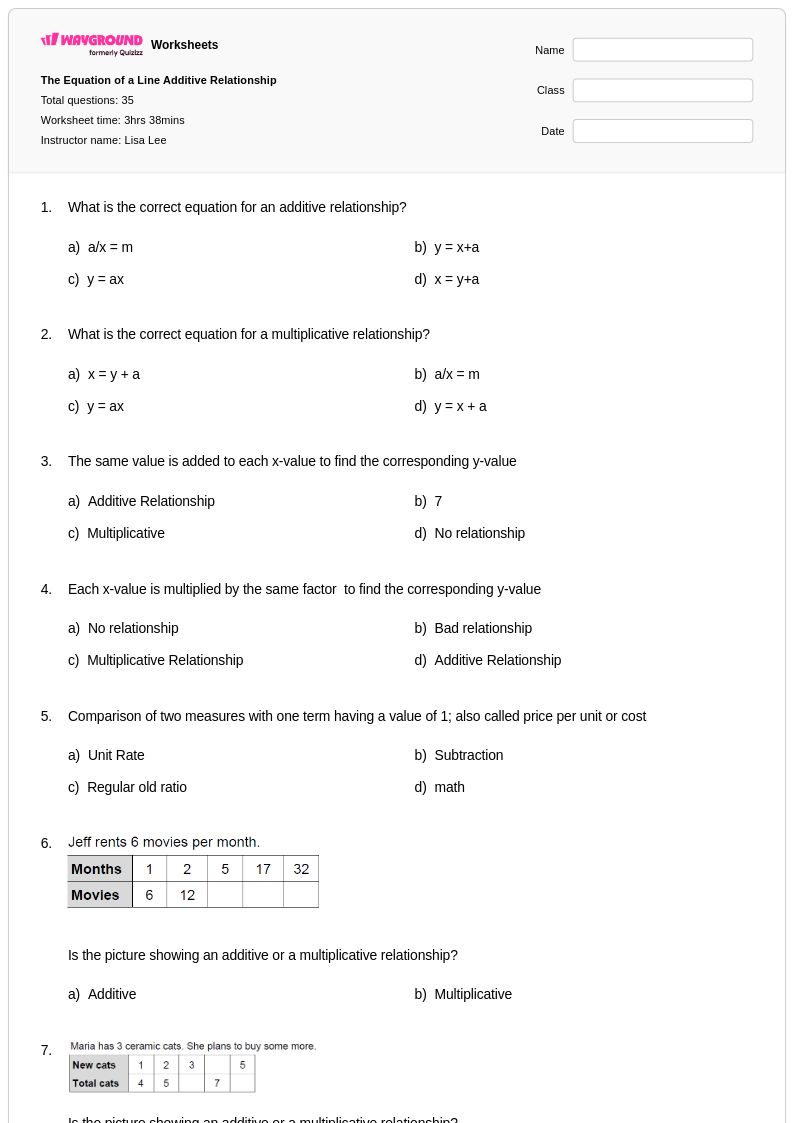
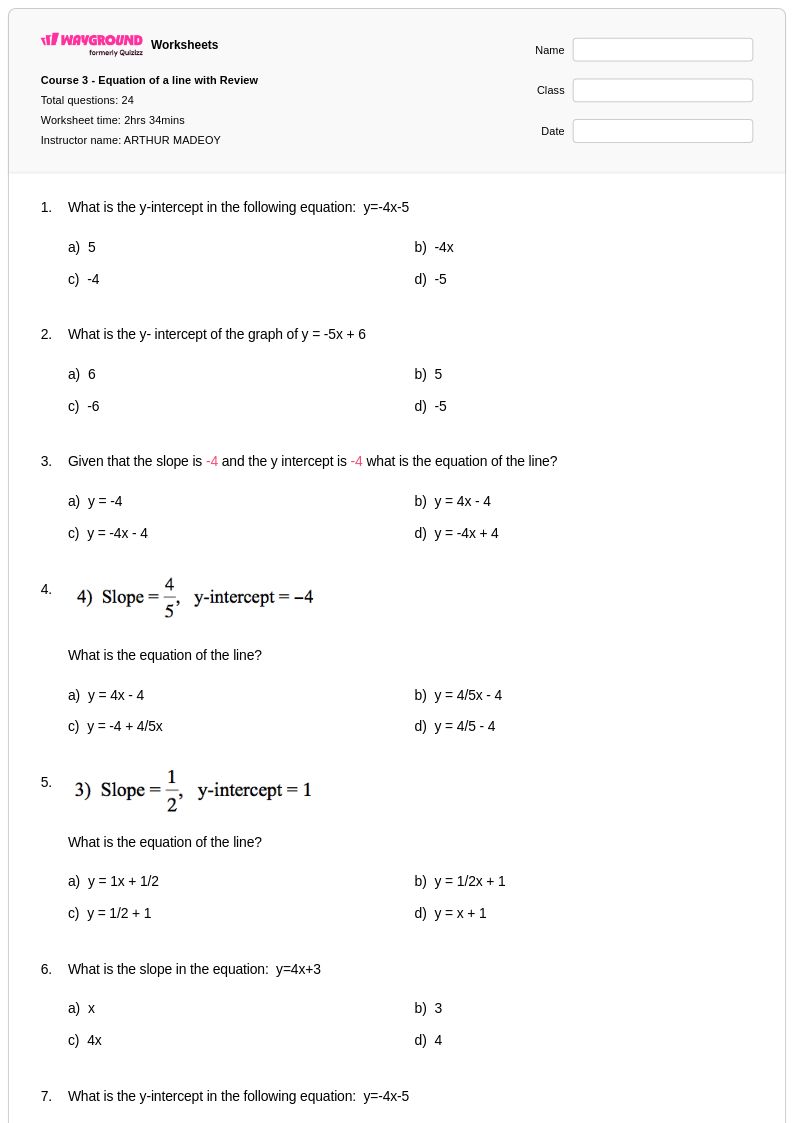
Class 6 equation of a line worksheets from Wayground provide free printable PDFs with practice problems and answer keys to help students master linear equations and graphing fundamentals.
Explore printable Equation of a Line worksheets for Class 6
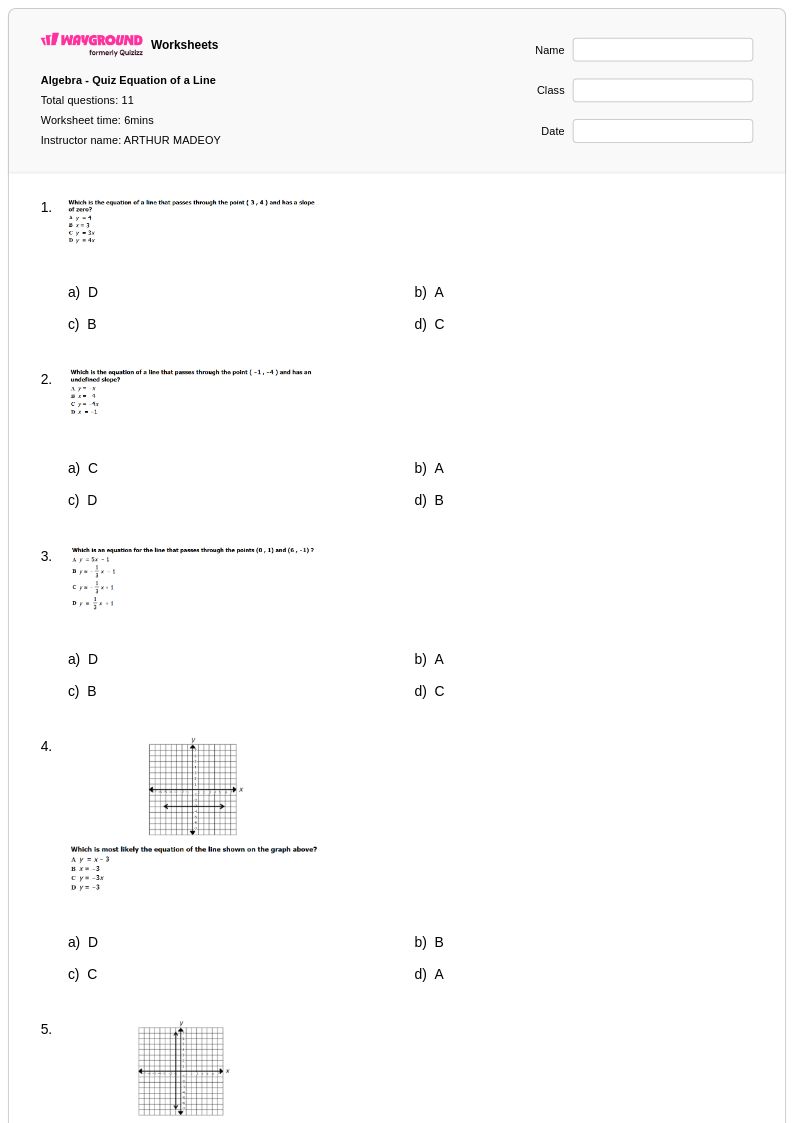
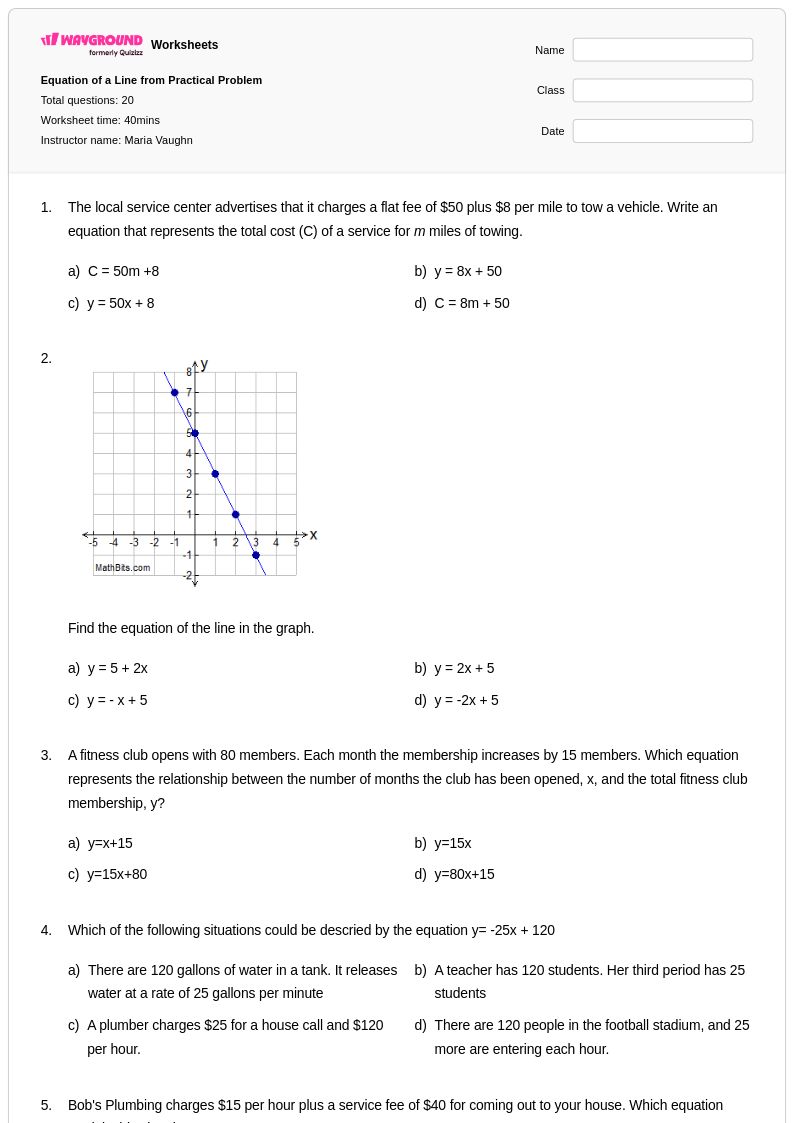
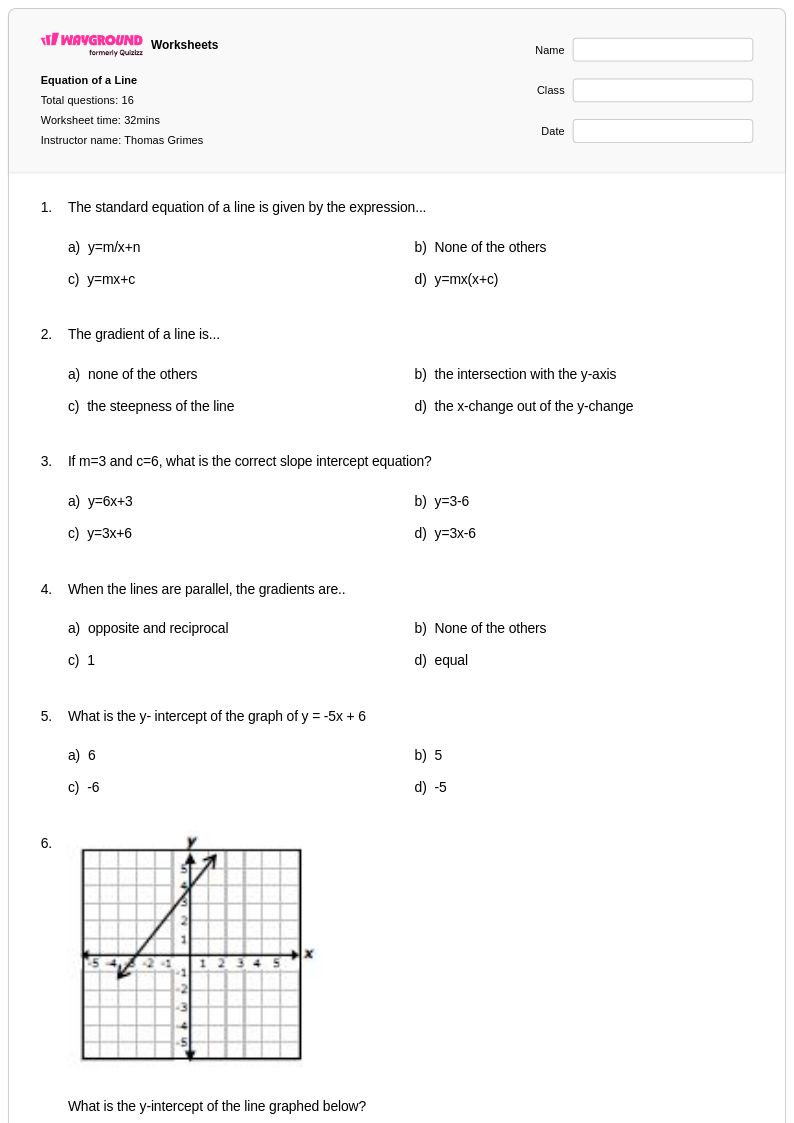
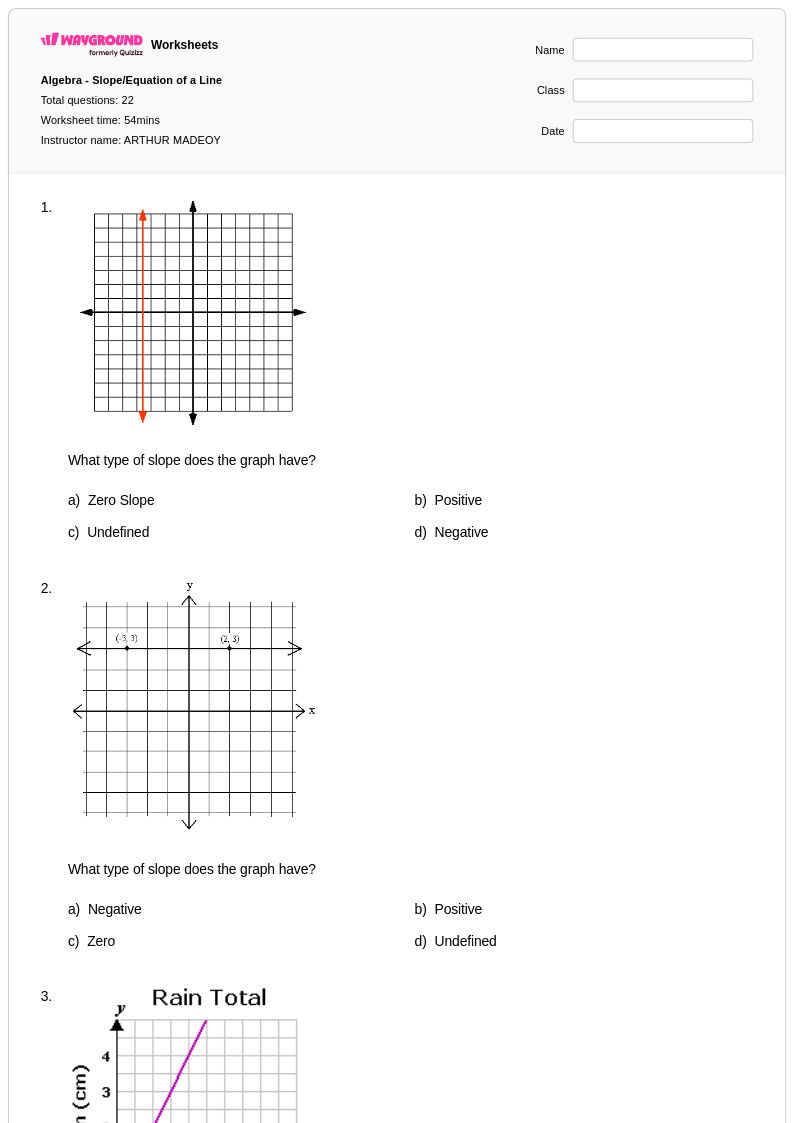
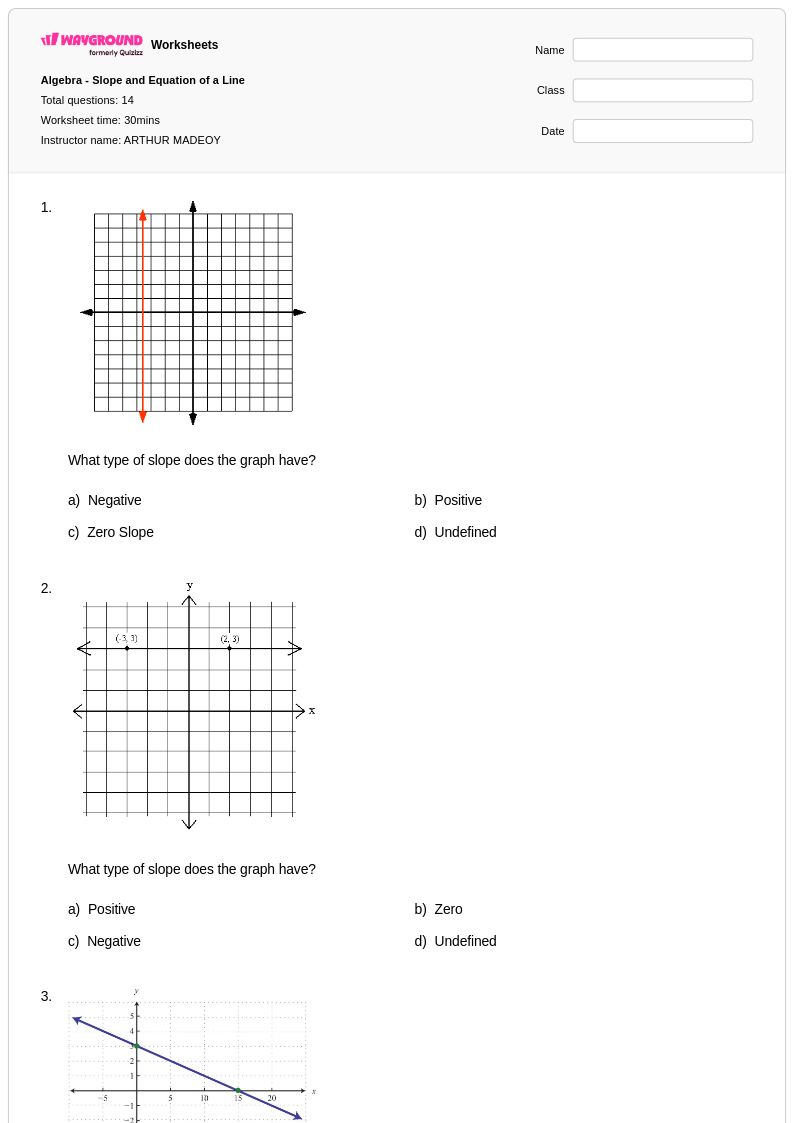
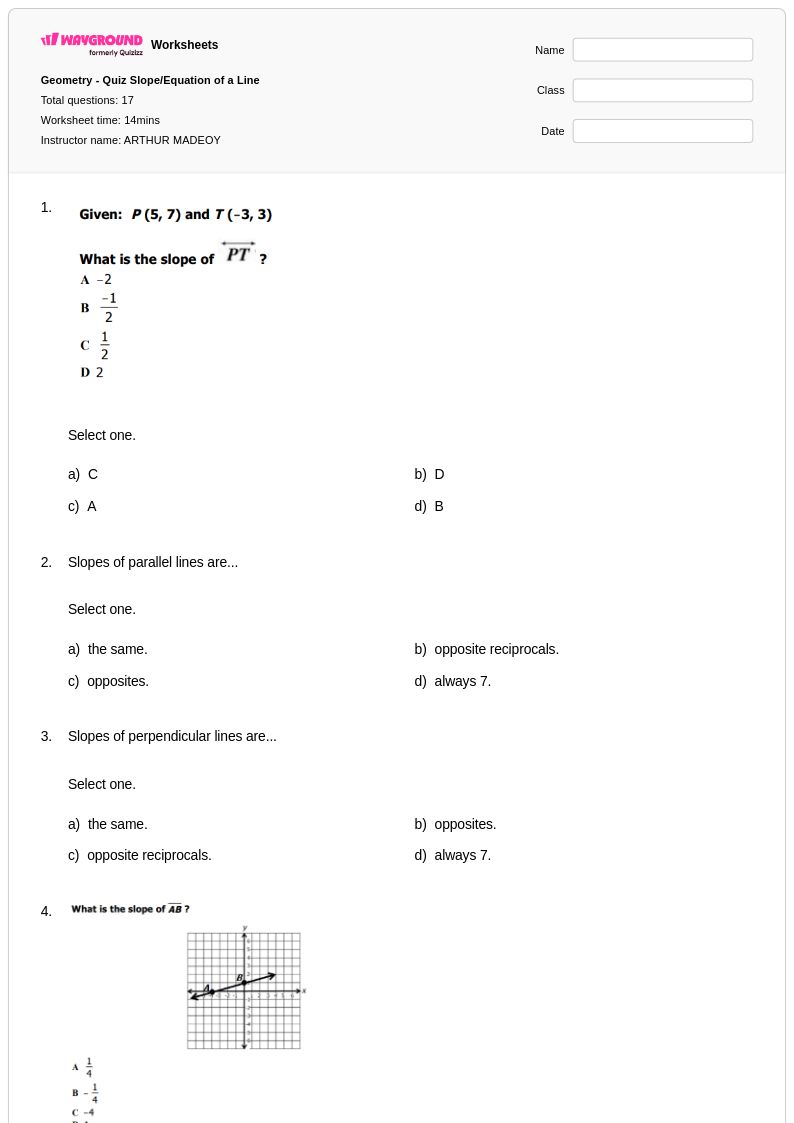
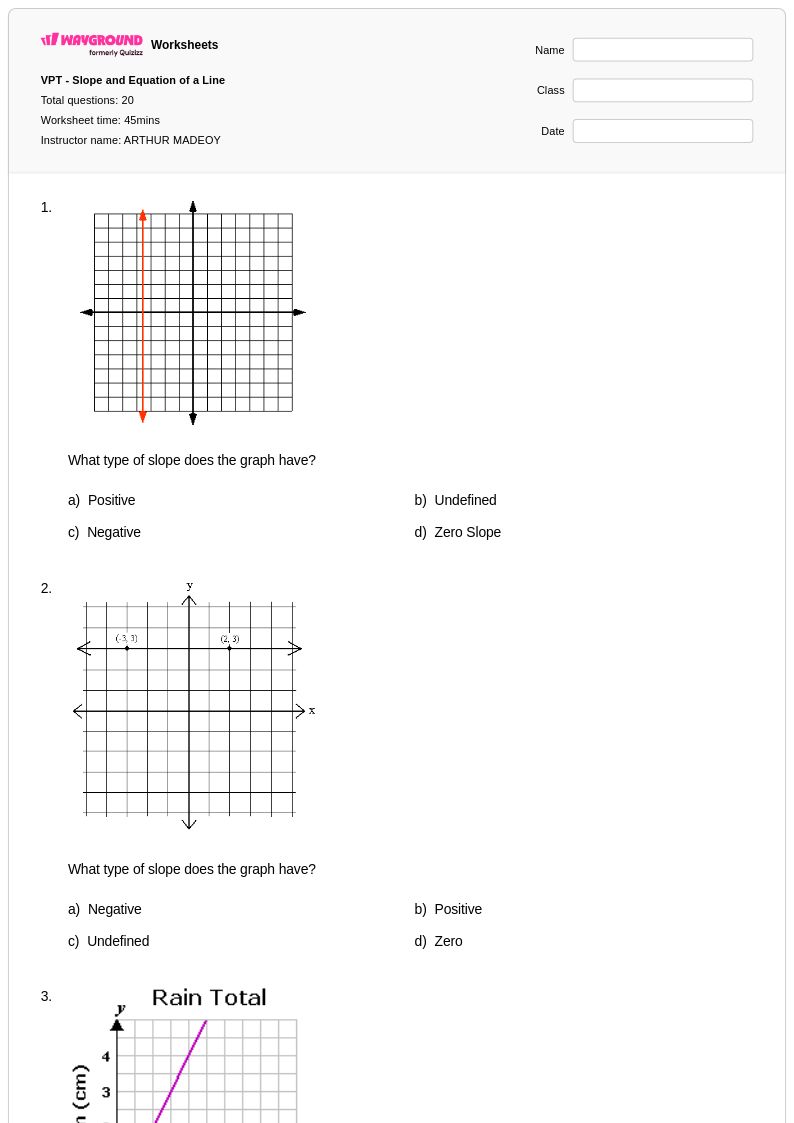
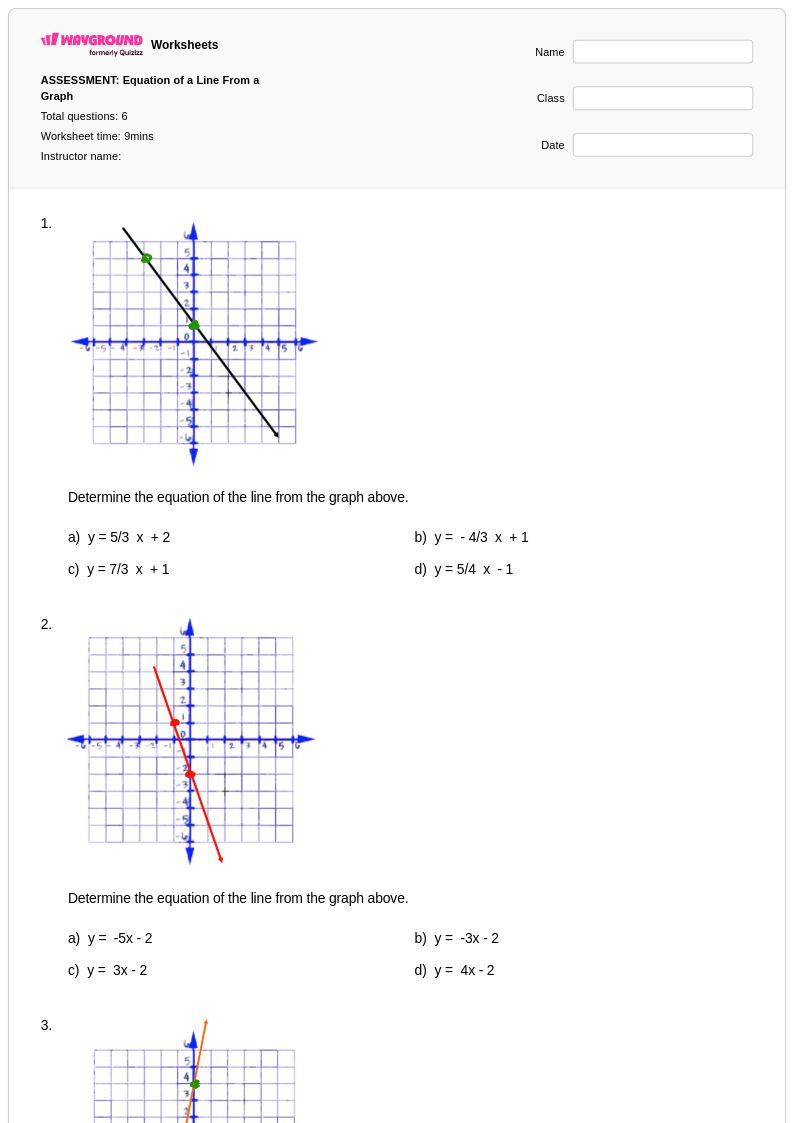
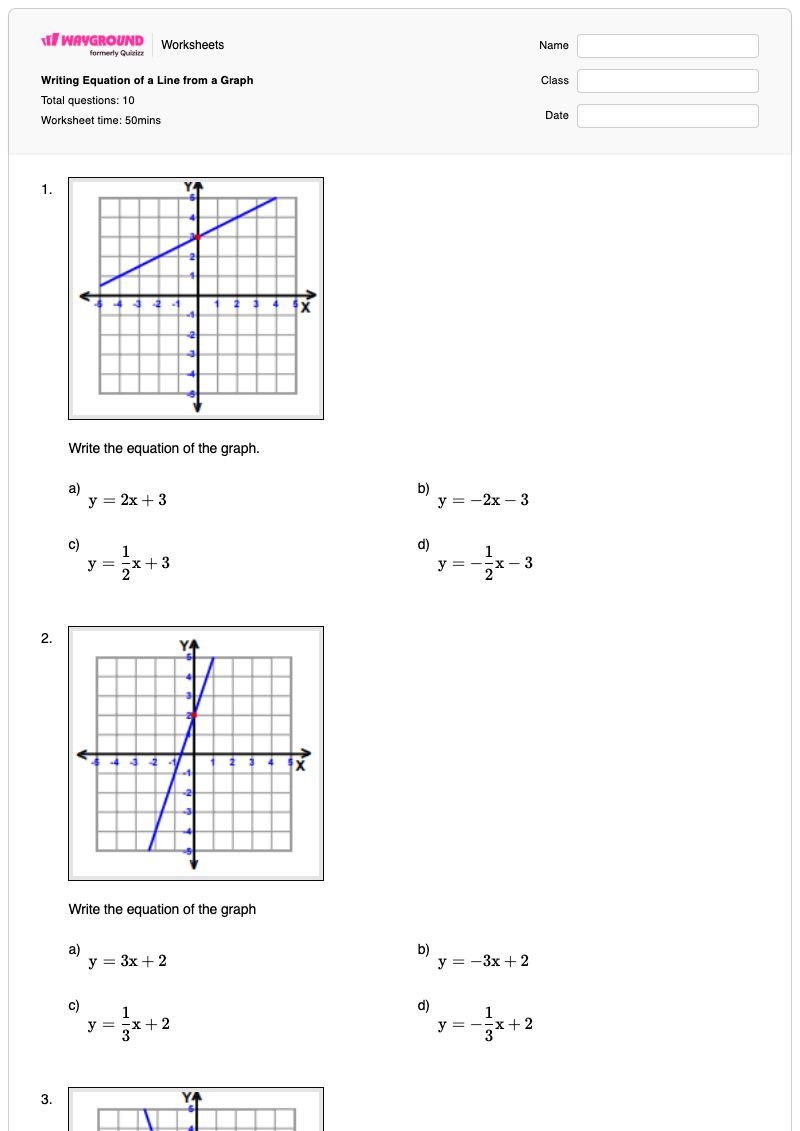
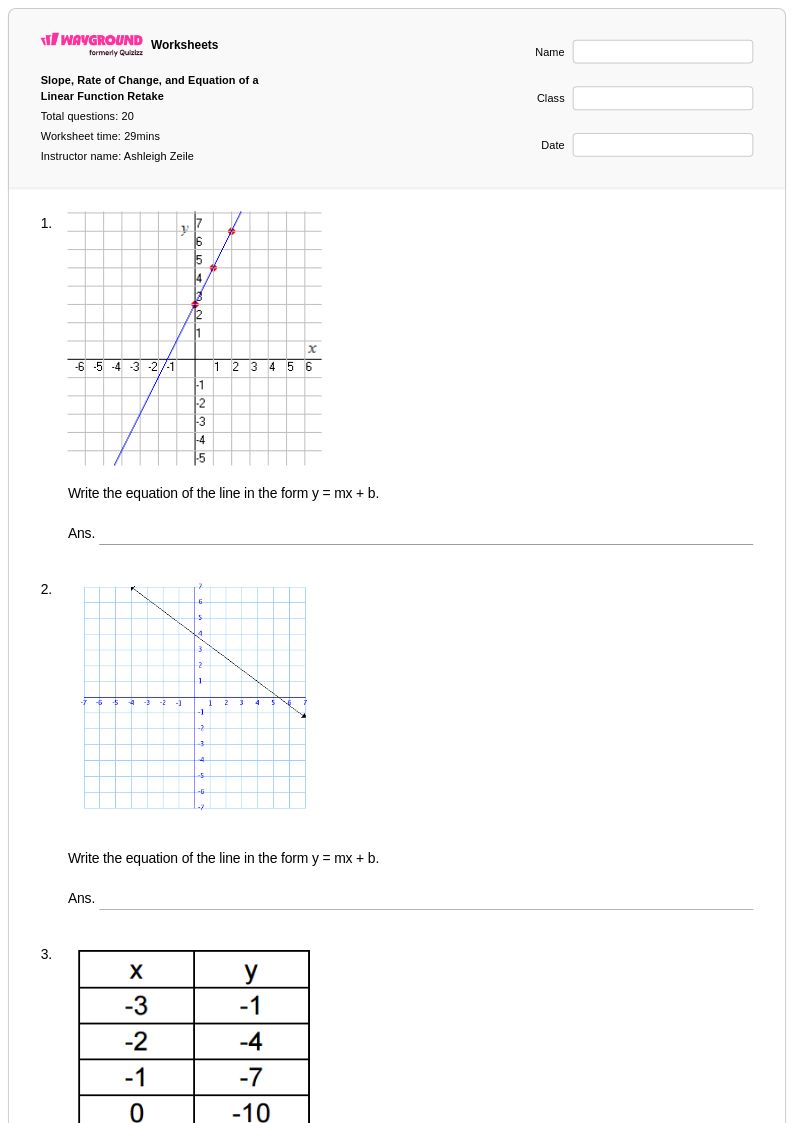
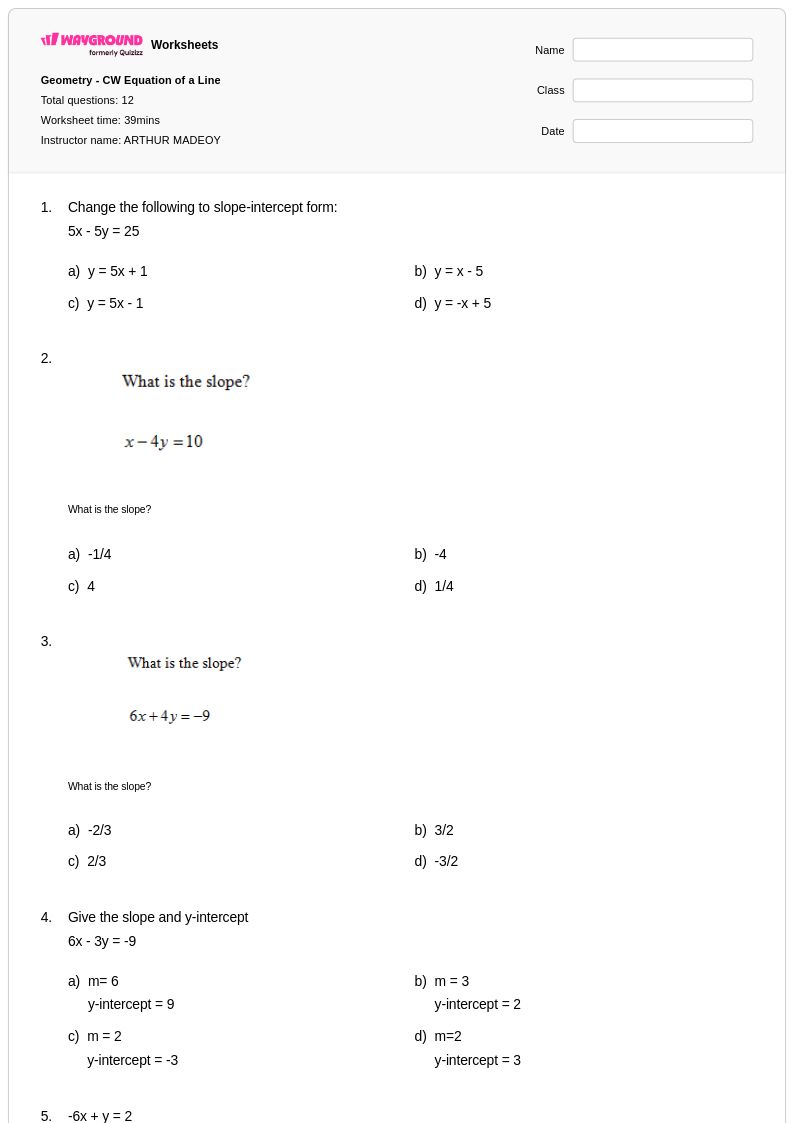
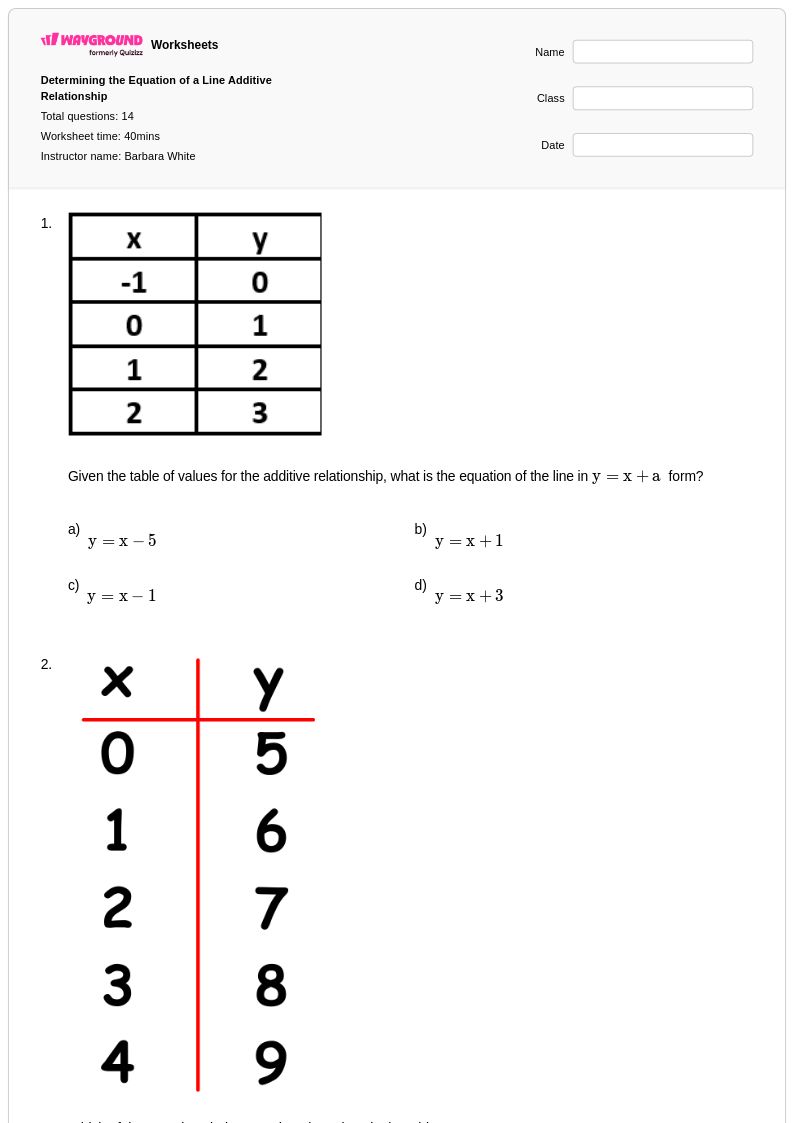
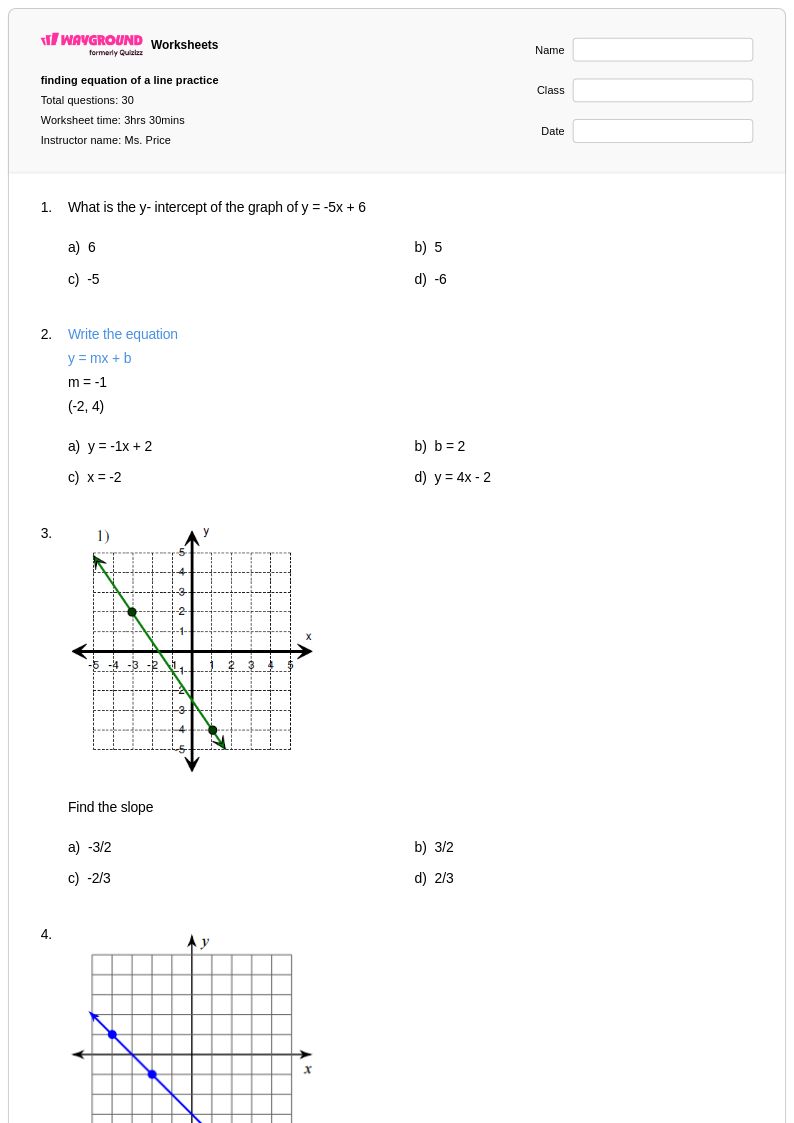
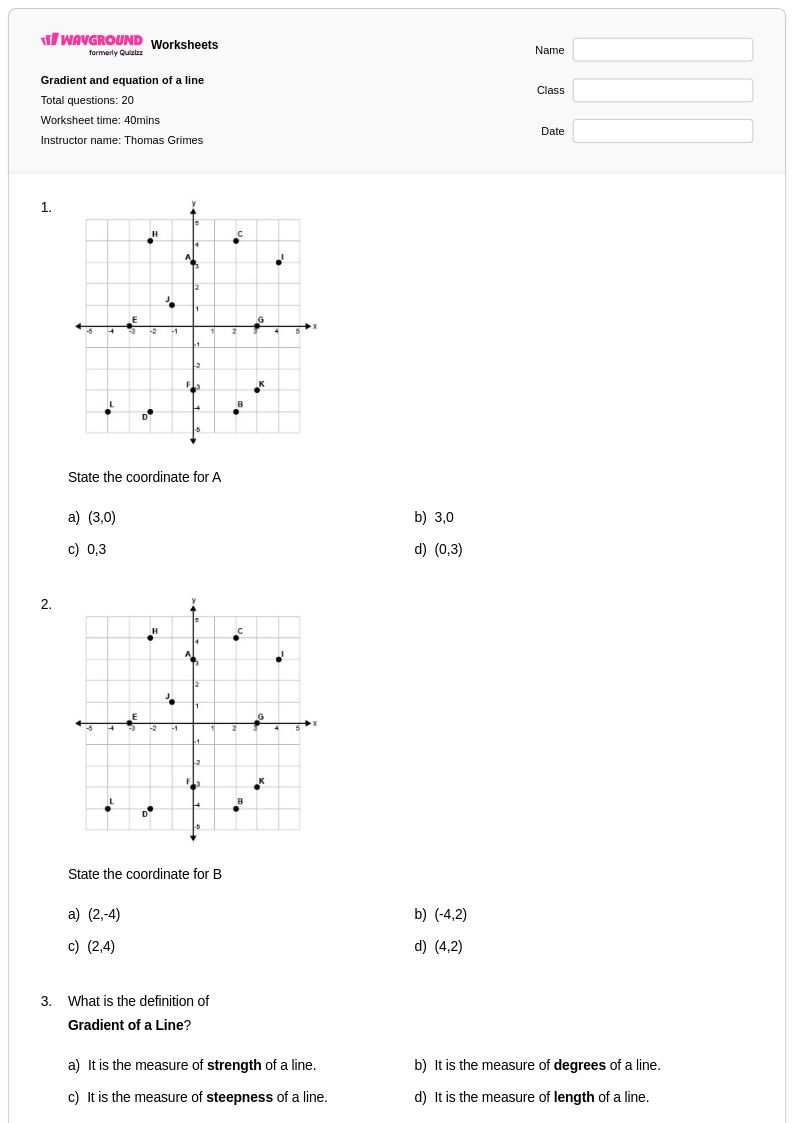
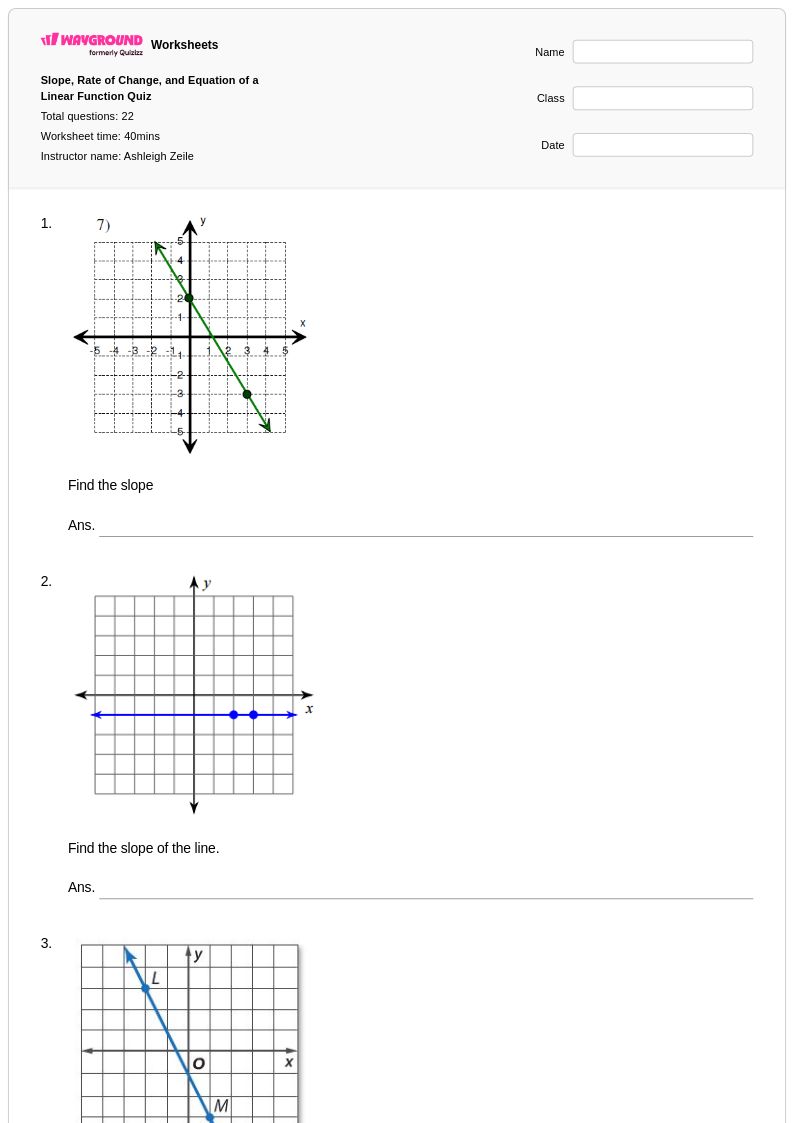
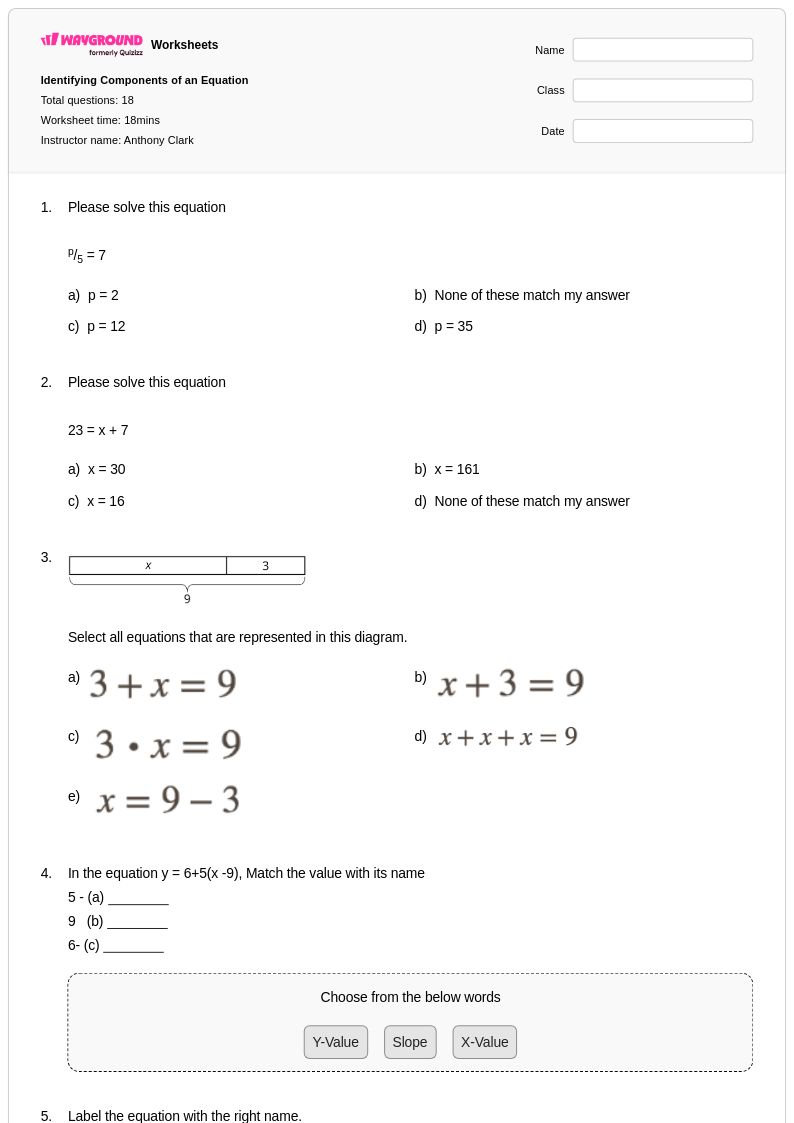
Equation of a line worksheets for Class 6 students provide essential foundational practice in understanding linear relationships and graphing concepts. These comprehensive worksheets available through Wayground (formerly Quizizz) focus on developing students' ability to identify, interpret, and work with linear equations in their most basic forms, including slope-intercept format and coordinate plotting. Students strengthen critical algebraic thinking skills as they learn to recognize patterns in data tables, graph points on coordinate planes, and understand the relationship between x and y variables. Each worksheet comes with a detailed answer key to support independent learning and self-assessment, while the free printable format ensures accessibility for all classrooms. These practice problems systematically build understanding of how equations represent straight lines, preparing students for more advanced algebraic concepts in later grades.
Wayground (formerly Quizizz) empowers educators with an extensive collection of teacher-created equation of a line resources, drawing from millions of high-quality worksheets that can be easily searched and filtered by specific learning objectives and skill levels. The platform's robust standards alignment ensures that Class 6 equation of a line materials meet curriculum requirements while offering powerful differentiation tools that allow teachers to customize content for diverse learning needs. Whether accessed as printable PDF worksheets for traditional classroom use or interactive digital formats for technology-enhanced learning, these resources support flexible lesson planning and targeted skill practice. Teachers can efficiently identify materials for remediation with struggling students, provide enrichment opportunities for advanced learners, and deliver consistent practice that reinforces the fundamental concepts of linear relationships and coordinate graphing essential for algebraic success.
FAQs
How do I introduce the equation of a line to 6th graders?
At Grade 6, the goal isn't the equation itself — it's building the intuition that a straight line represents a consistent relationship between two quantities. Start with tables of values: if x goes up by 1 and y always goes up by 3, students can see the pattern before they ever write y = 3x. Plotting those points and watching a line emerge connects the table, the graph, and eventually the equation as three views of the same relationship. Keep the focus on proportional relationships and coordinate plotting at this stage; formal slope notation can wait.
What should 6th graders practice to build toward linear equations?
Three skills do the most work at this level: plotting ordered pairs accurately on a coordinate plane, identifying and extending patterns in input/output tables, and recognizing that a proportional relationship produces a straight line through the origin. Worksheets that move students between a table, a graph, and a simple equation (like y = 4x) in the same problem are especially effective because they make the connections explicit rather than treating each representation as a separate exercise.
What misconceptions do 6th graders have about linear relationships?
The most persistent one is assuming every line passes through the origin. Students who've only seen proportional relationships expect y = 0 when x = 0, so a line like y = 2x + 3 genuinely surprises them. A second common issue is misreading coordinate pairs — students frequently reverse x and y when plotting, which produces a reflected graph and reinforces the wrong mental model. Catching both early saves a lot of reteaching in 7th and 8th grade.
How do I use Wayground's Grade 6 equation of a line worksheets?
You can assign them as a digital quiz on Wayground, where students complete the problems online and you see results right away, or print the PDF for paper practice — useful for classrooms limiting screen time. Every worksheet includes a full answer key, so students can self-check during independent work or you can use it for quick grading.
How does Common Core sequence linear relationships in Grade 6?
In Grade 6, Common Core focuses on ratios and proportional reasoning rather than formal linear equations — students work with unit rates and ratio tables, which are the conceptual foundation for slope. They also extend their work on the coordinate plane to all four quadrants. The explicit connection between proportional relationships and straight-line graphs is formalized in 7th grade, and writing equations of lines in slope-intercept form becomes a central 8th-grade standard. Grade 6 work is preparatory, but it's load-bearing: students who don't solidify ratio reasoning and coordinate plotting here struggle with slope later.
How can I support diverse learners with these Grade 6 worksheets?
For students who find coordinate graphing visually overwhelming, Wayground's worksheet-level tools let you increase font size or widen spacing to reduce clutter on the page. For English language learners, you can translate the worksheet directly within the platform. During digital sessions, Read Aloud can support students who struggle with reading the problem text independently — letting them focus their attention on the math rather than decoding the question.