Free Printable Expanded Notation Worksheets for Class 6
Class 6 expanded notation worksheets from Wayground help students master place value concepts through free printables with practice problems, detailed answer keys, and engaging PDF exercises.
Explore printable Expanded Notation worksheets for Class 6
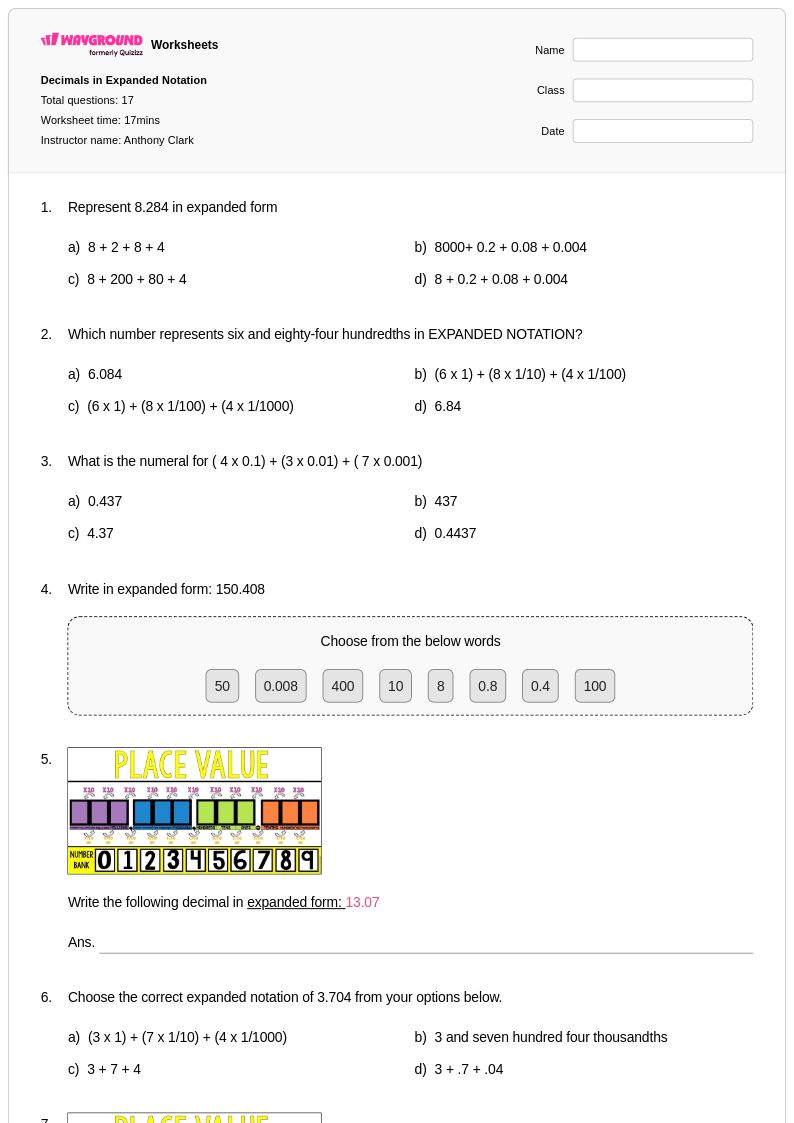
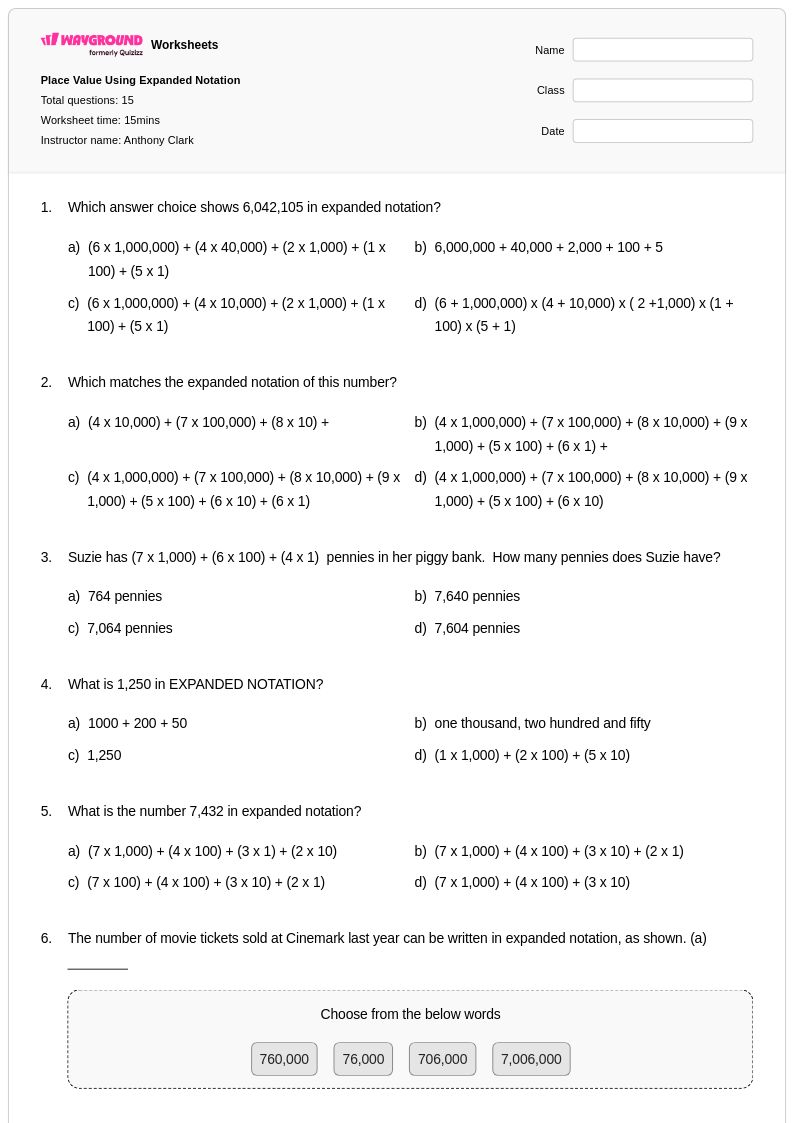
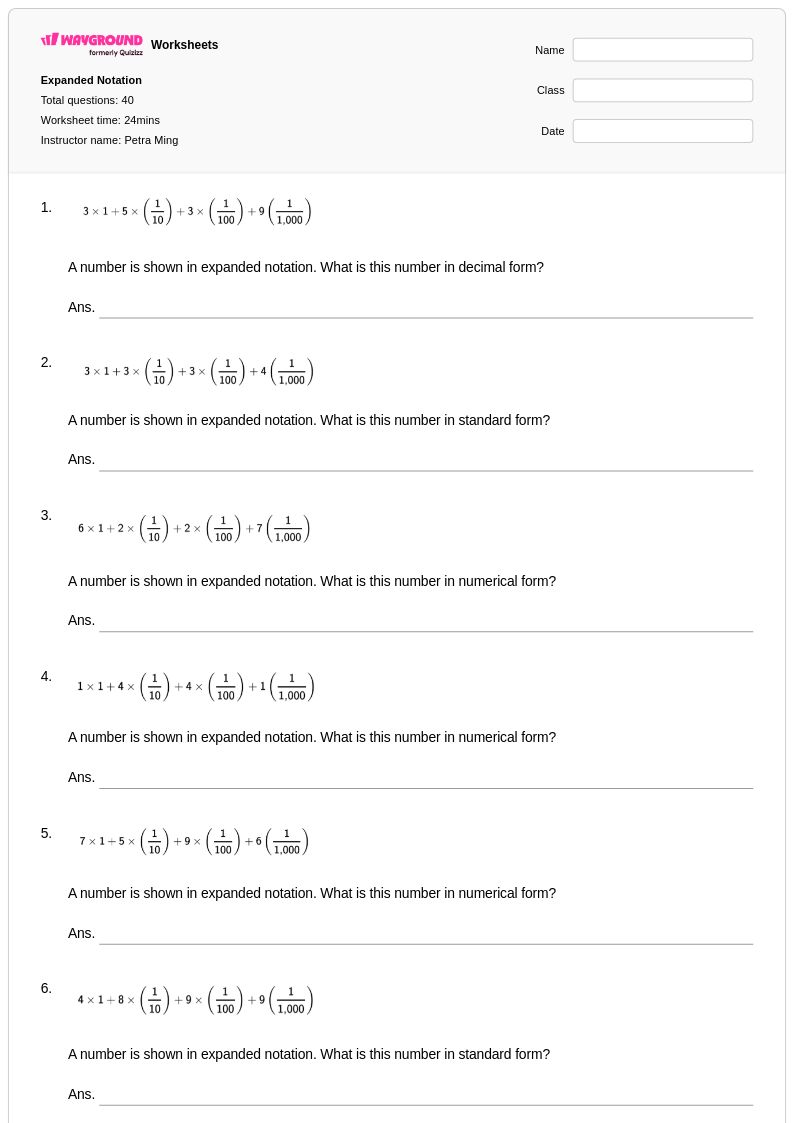
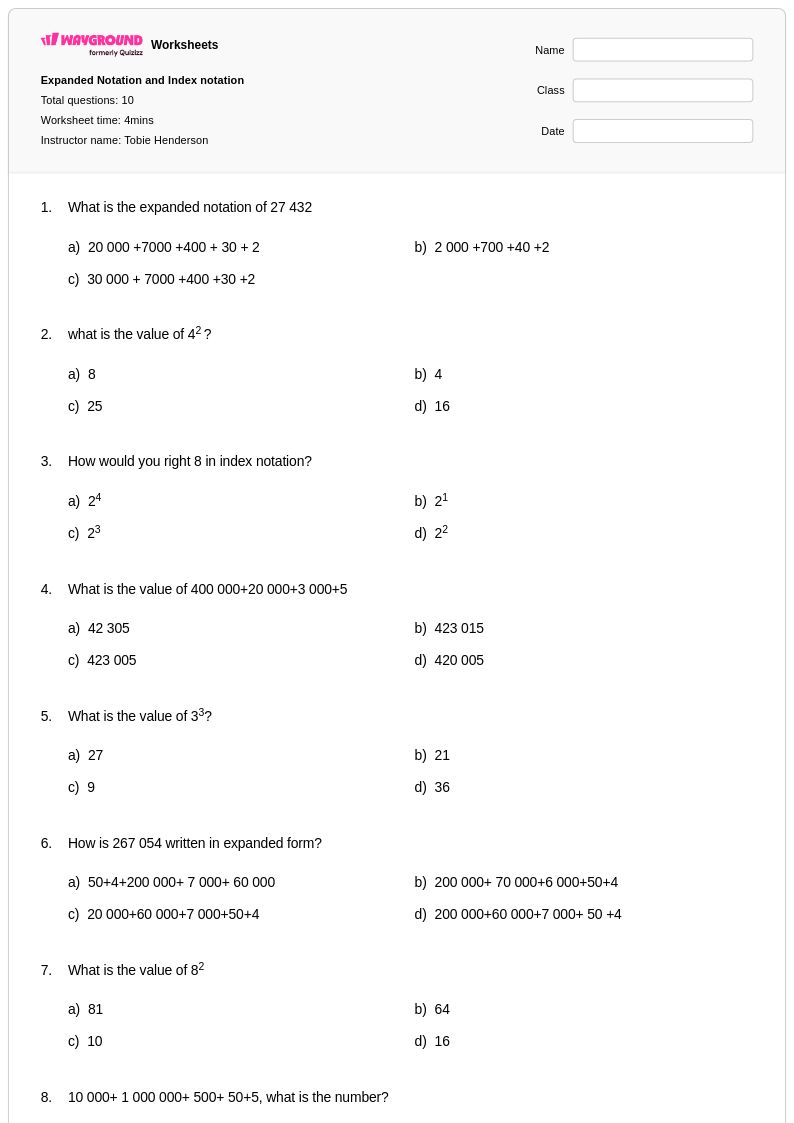
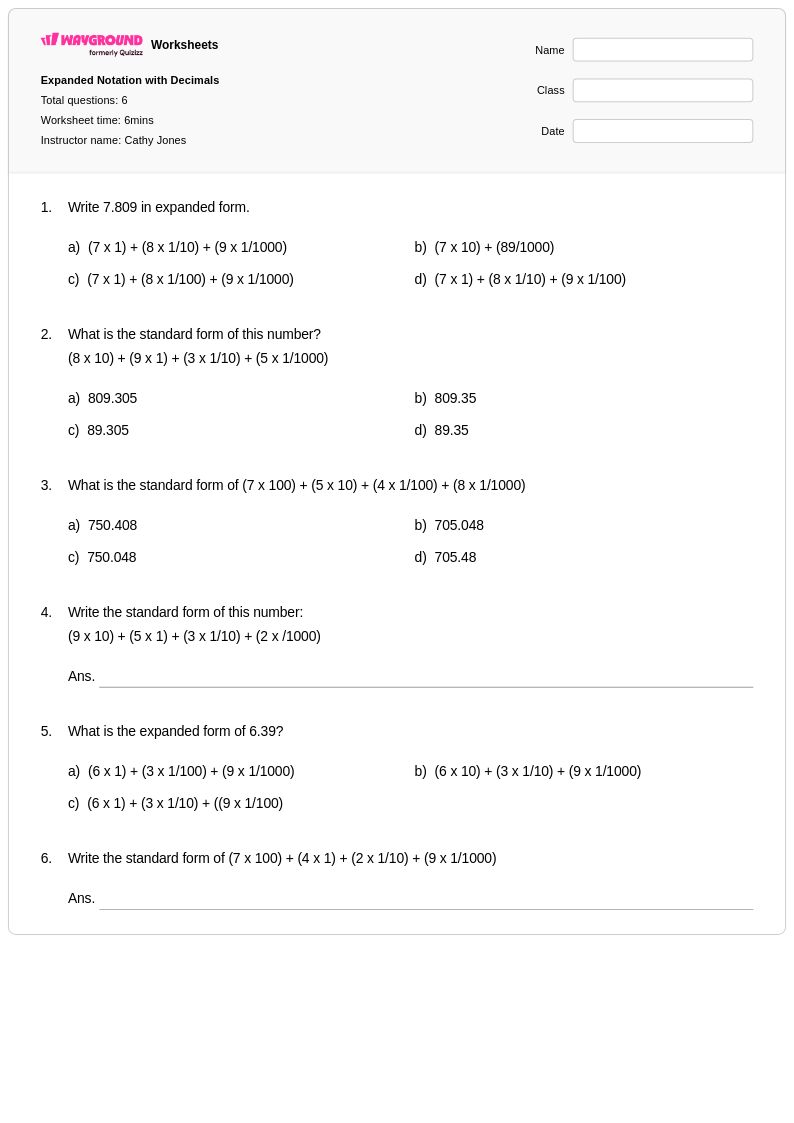
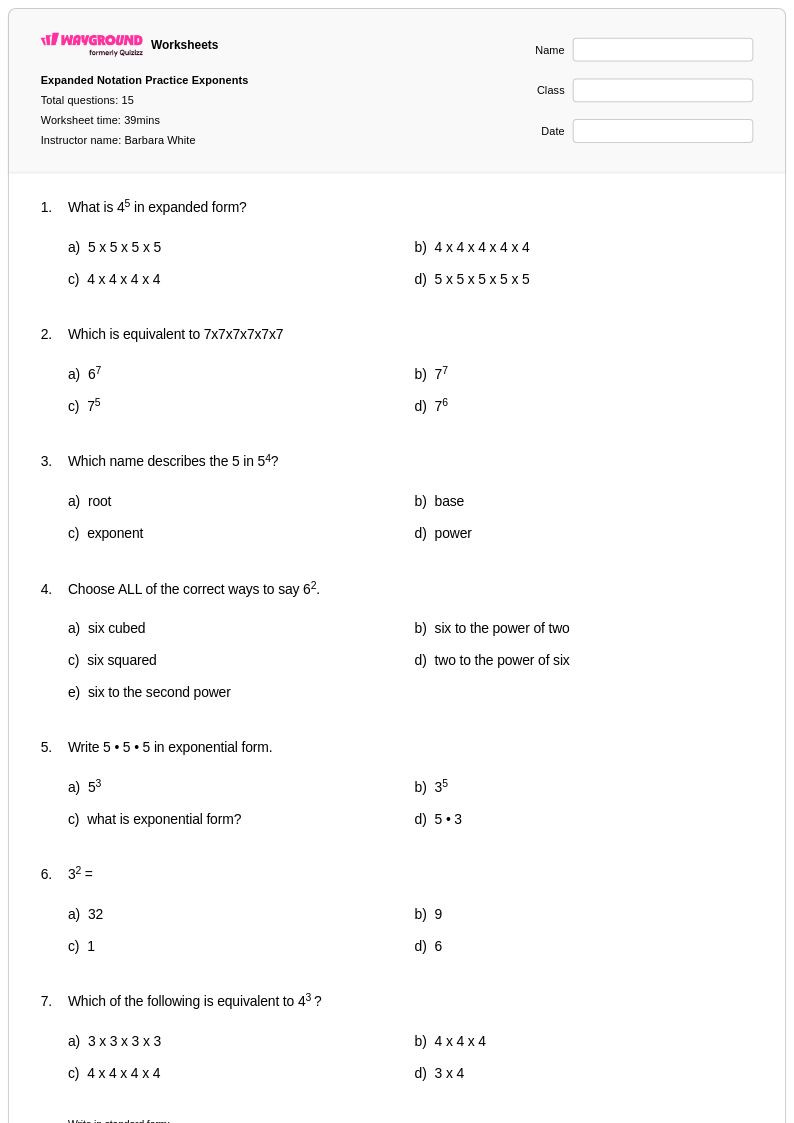
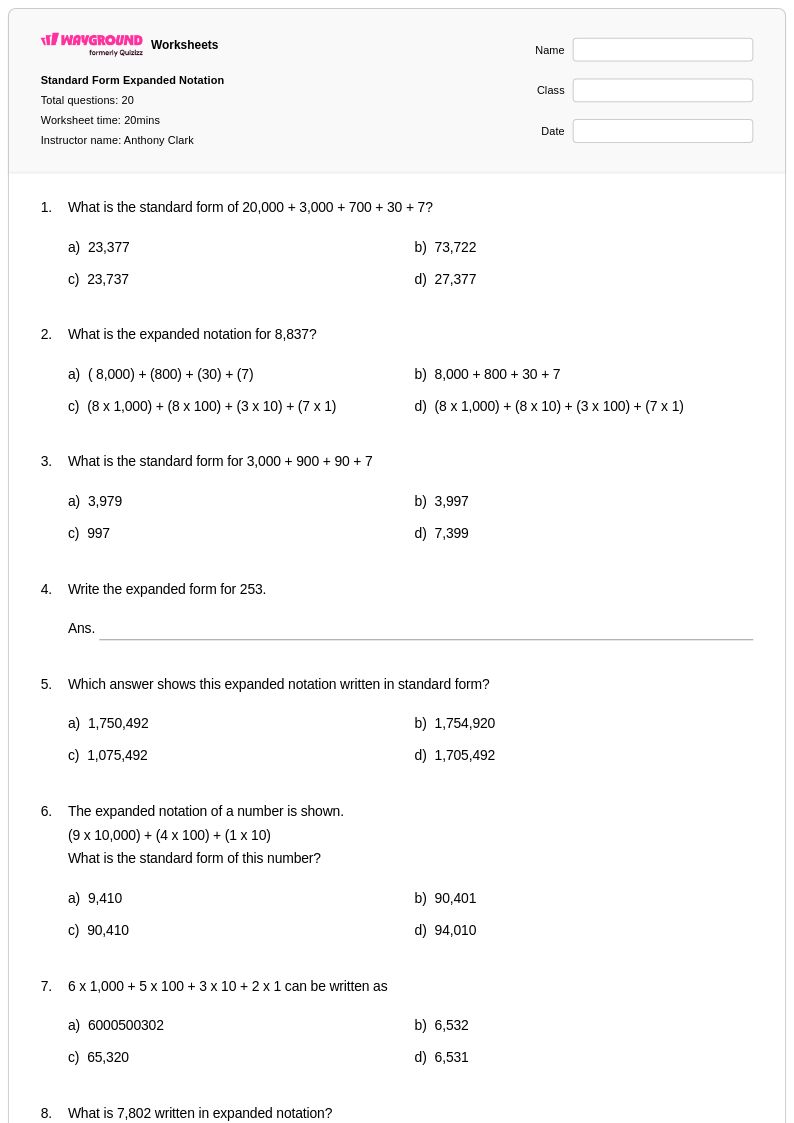
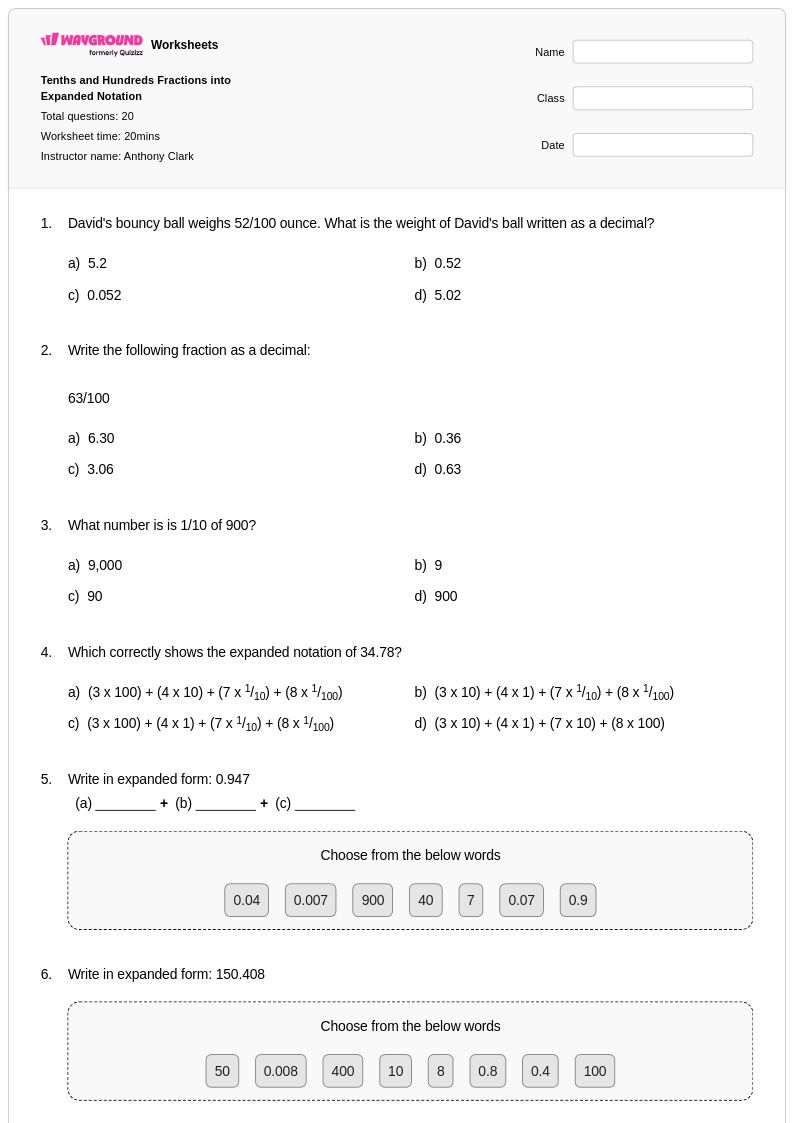
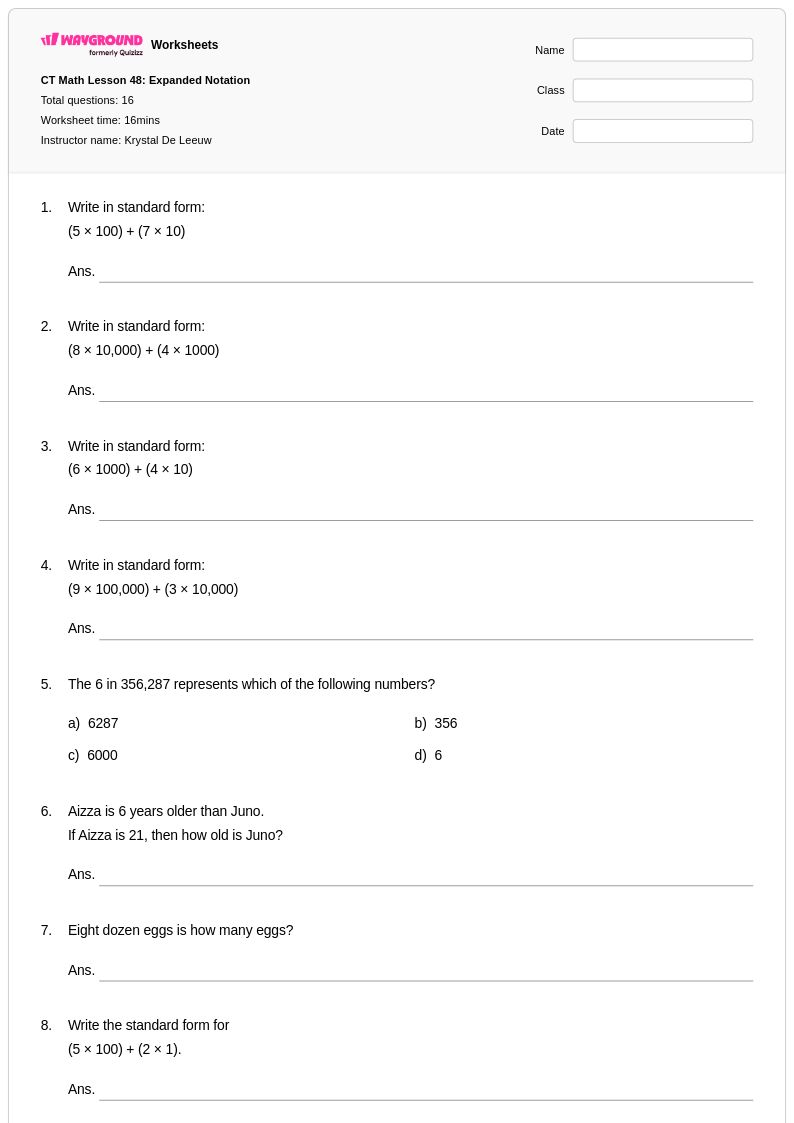
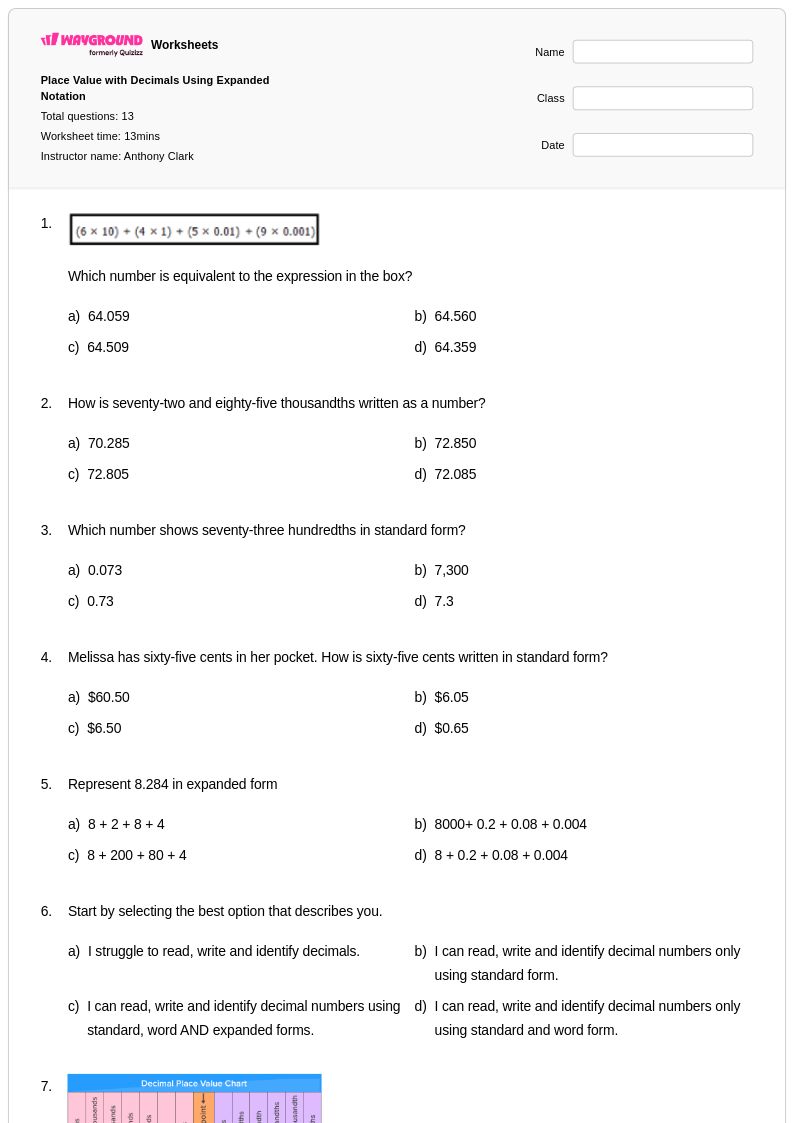
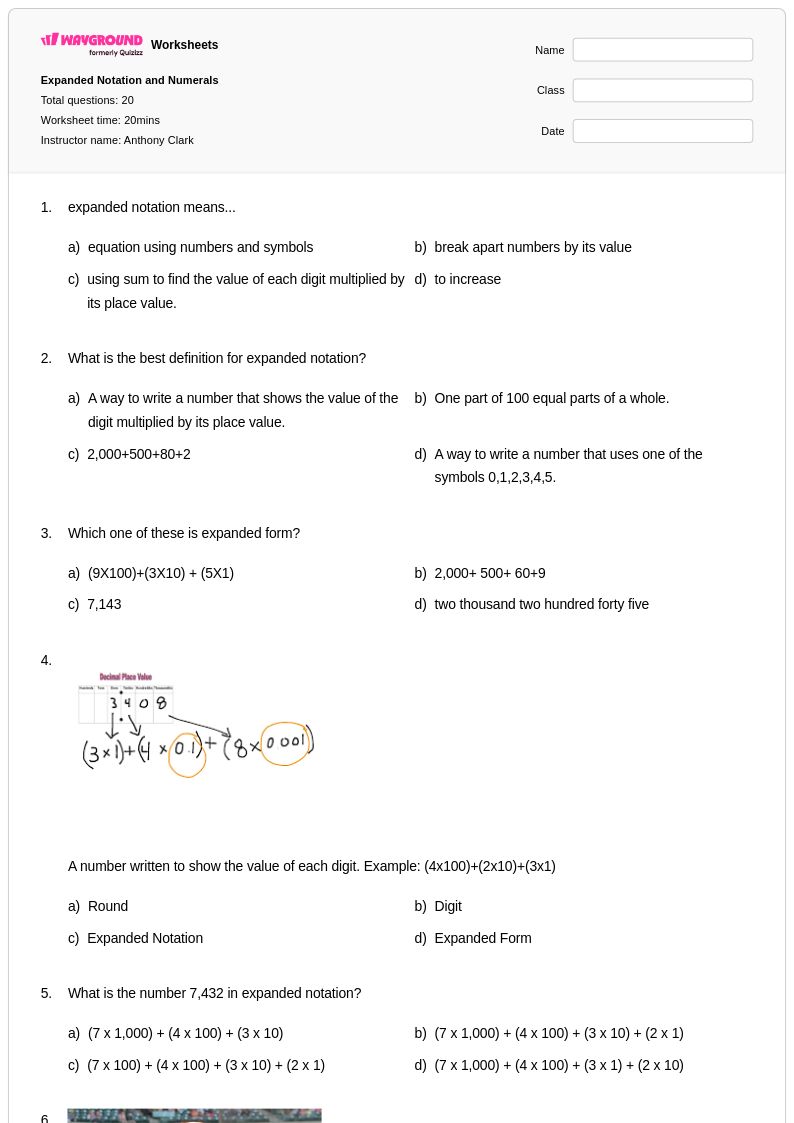
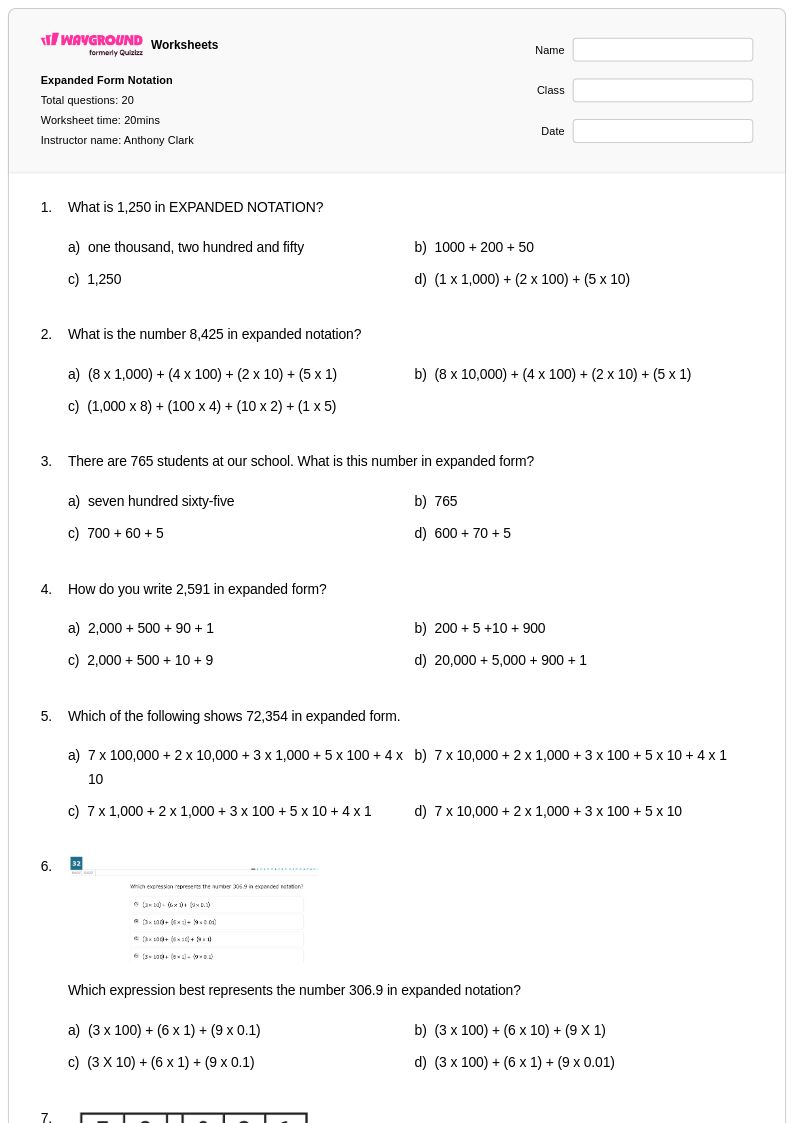
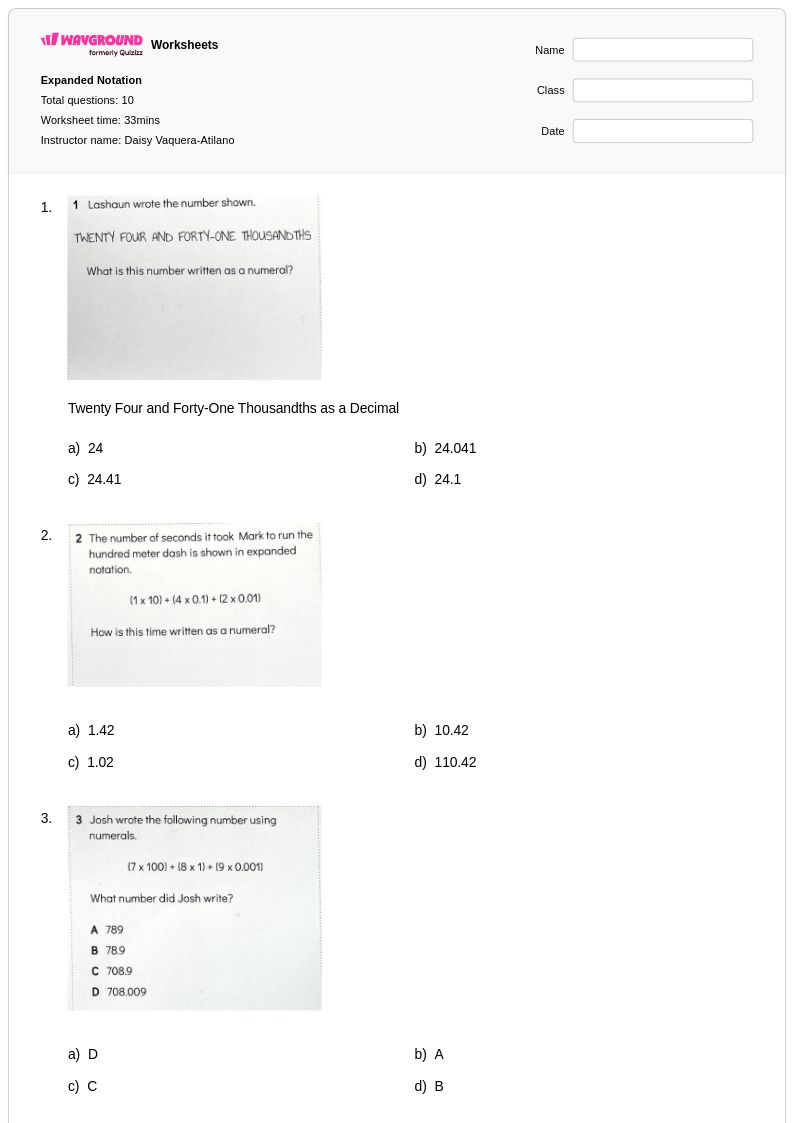
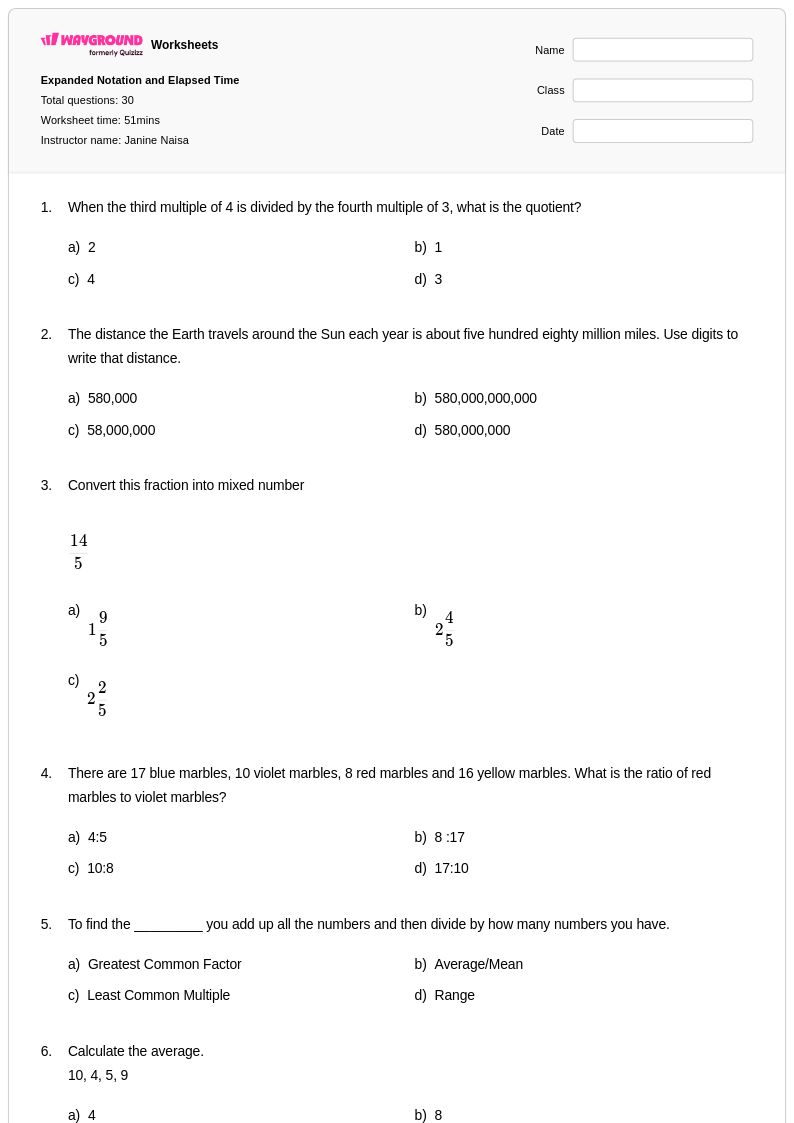
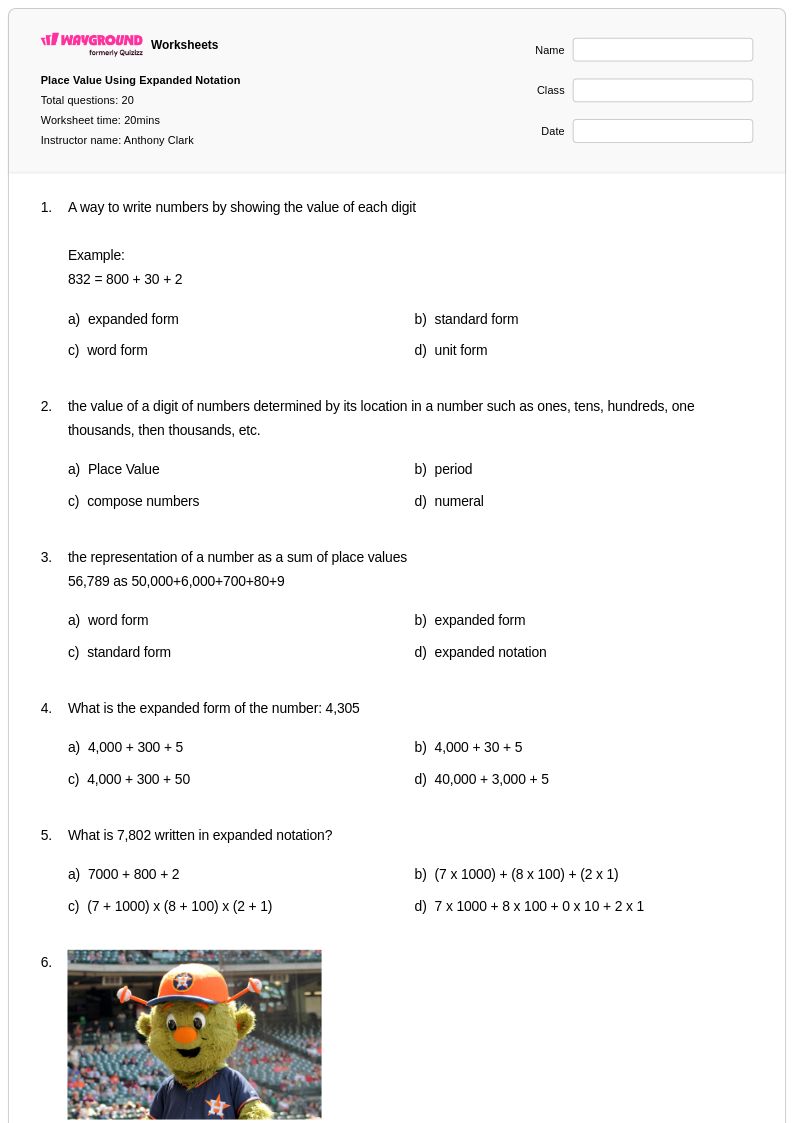
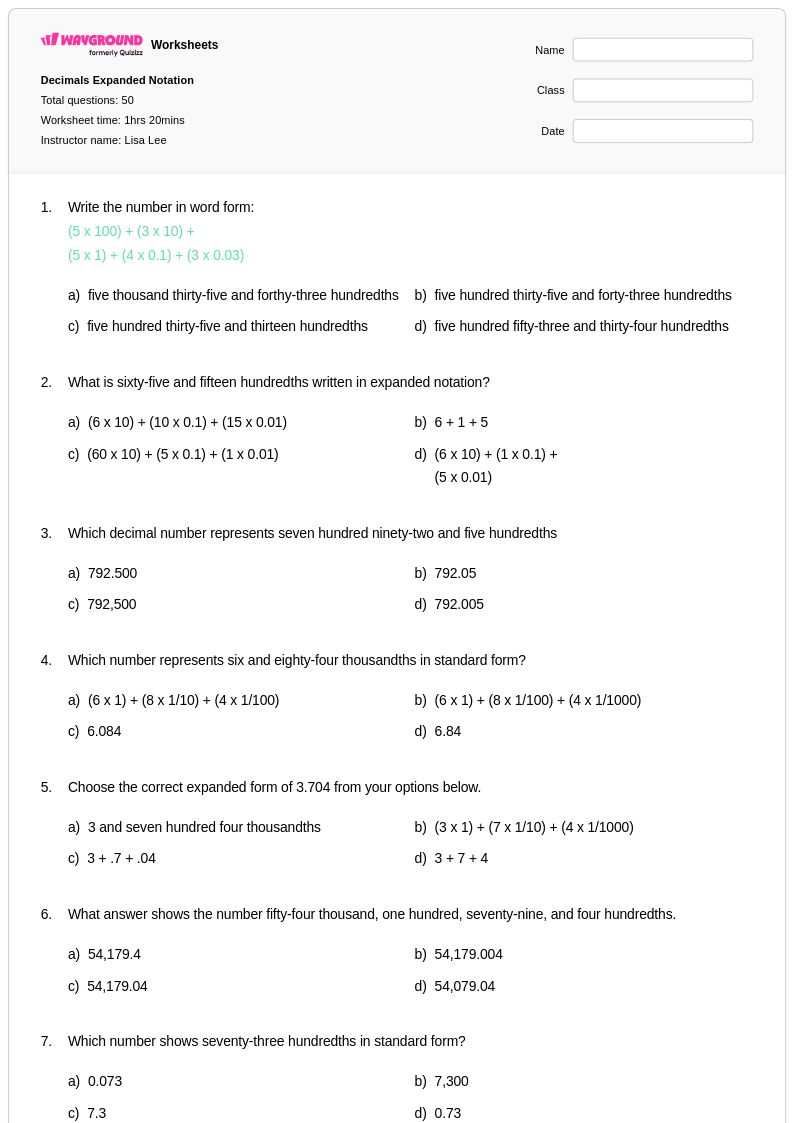
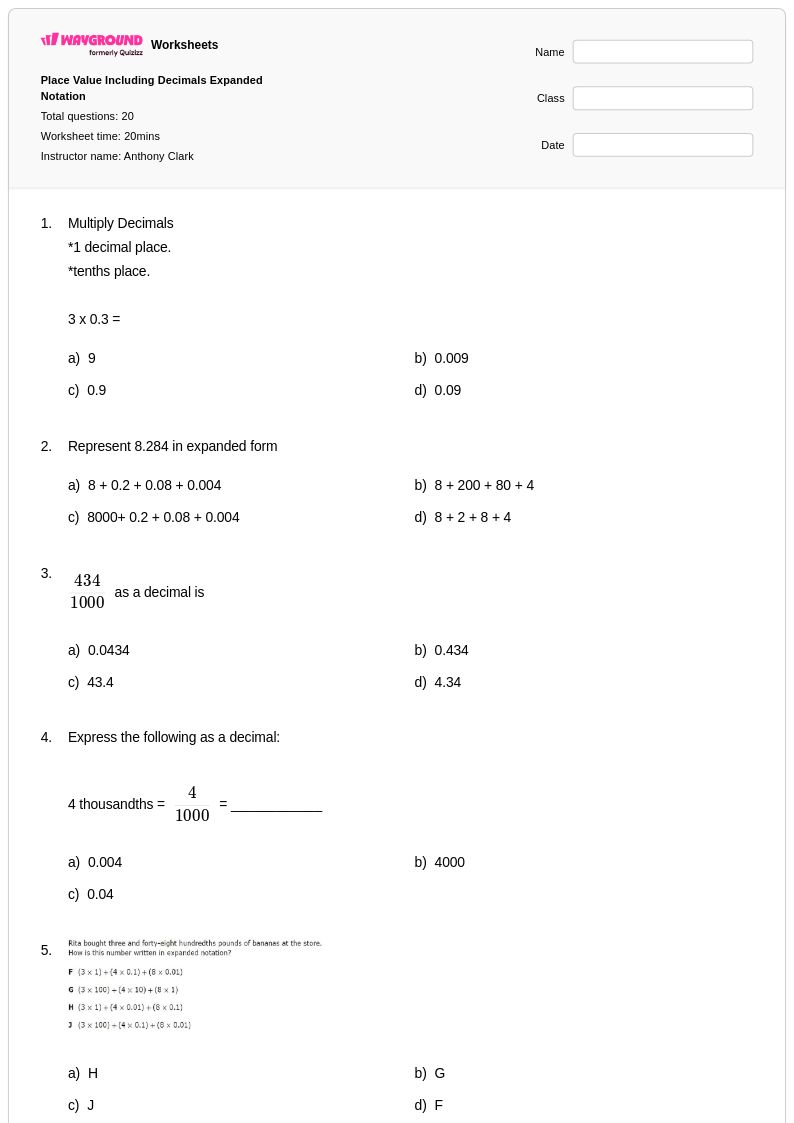
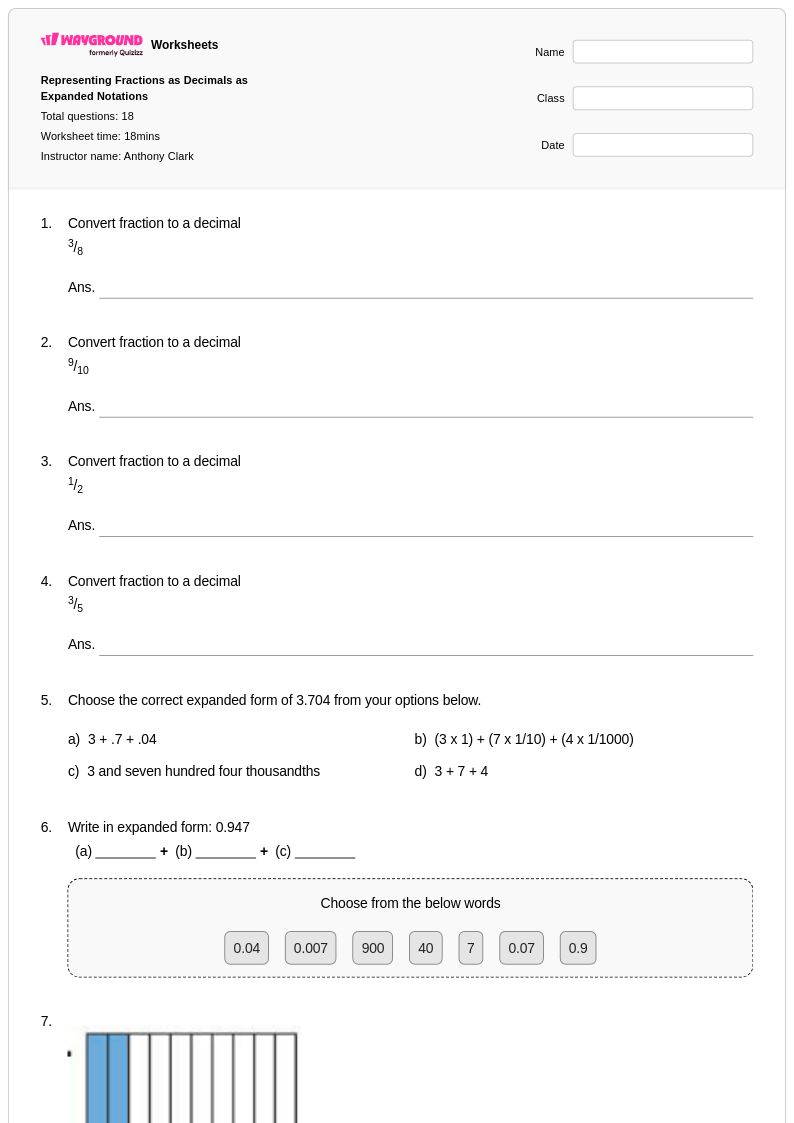
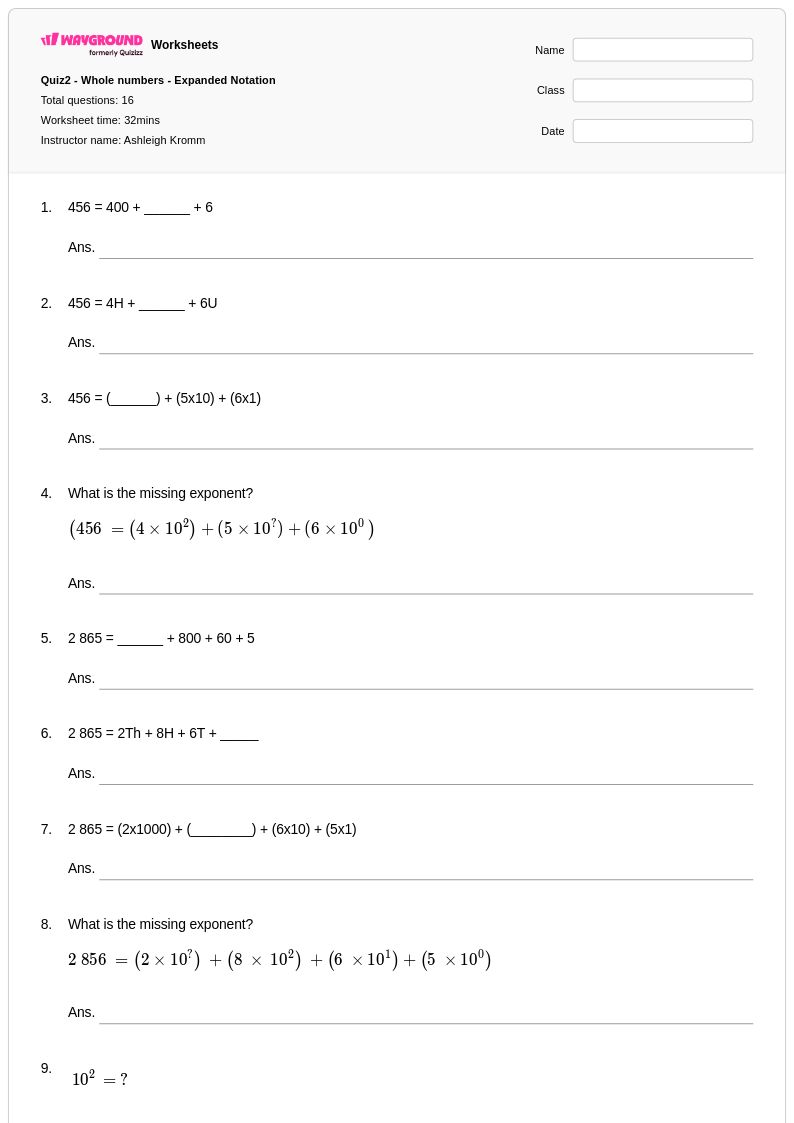
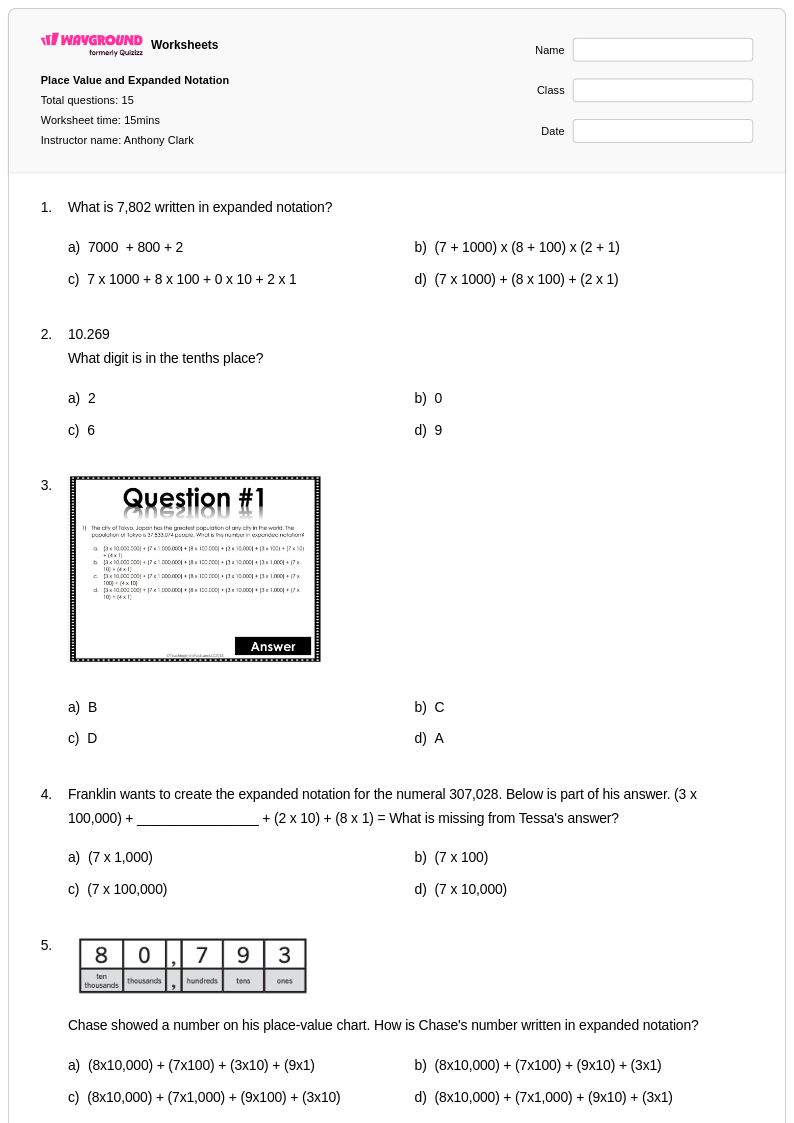
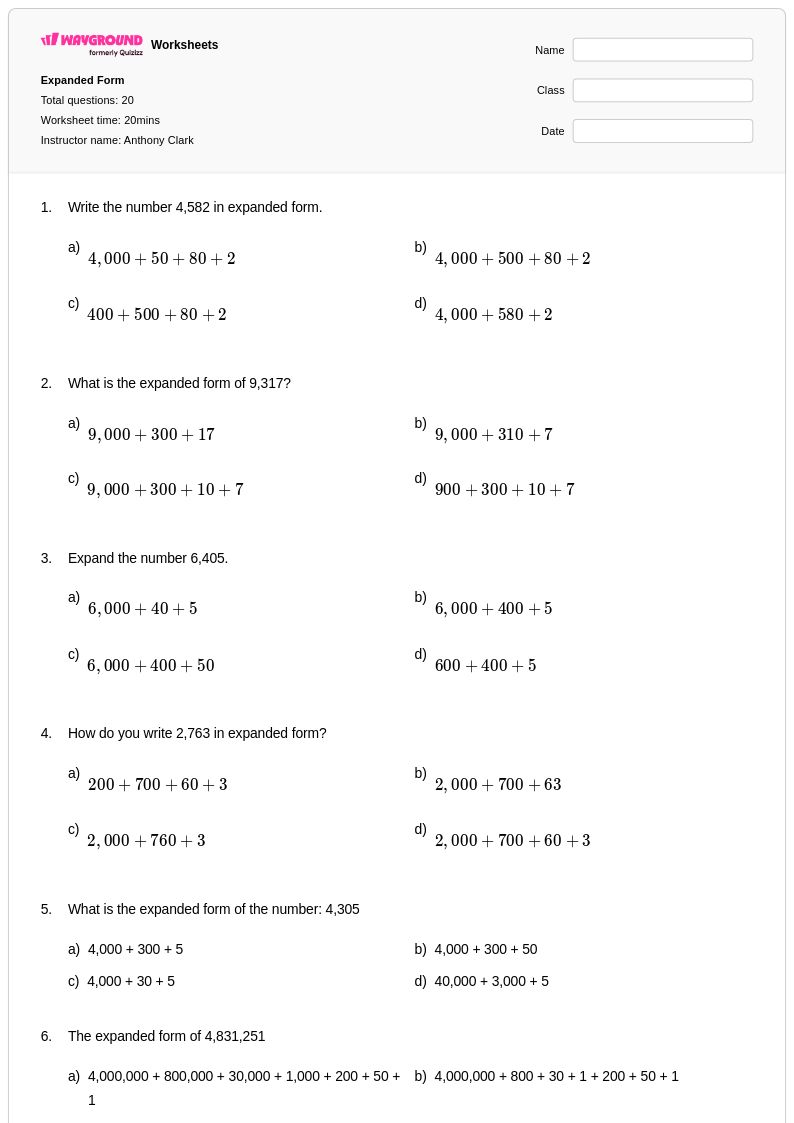
Expanded notation worksheets for Class 6 mathematics provide students with essential practice in breaking down numbers into their component place values, a fundamental skill that strengthens number sense and mathematical reasoning. These comprehensive worksheets guide sixth-grade learners through the process of expressing numbers in expanded form, helping them understand how digits function within the base-ten system and develop deeper comprehension of place value relationships. Each worksheet collection includes carefully structured practice problems that progress from basic three-digit numbers to more complex multi-digit integers, allowing students to master this critical mathematical concept through systematic repetition. Teachers can access complete answer keys alongside each printable resource, enabling efficient grading and immediate feedback, while the free pdf format ensures convenient distribution and homework assignments that support classroom instruction.
Wayground, formerly Quizizz, empowers educators with access to millions of teacher-created expanded notation resources specifically designed for Class 6 mathematics instruction. The platform's robust search and filtering capabilities allow teachers to quickly locate worksheets that align with specific curriculum standards and match their students' current skill levels, while built-in differentiation tools enable customization for diverse learning needs within the classroom. These versatile resources are available in both printable and digital formats, including downloadable pdf versions that facilitate seamless integration into lesson planning, remediation sessions, and enrichment activities. The extensive collection supports teachers in addressing varied instructional goals, from introducing expanded notation concepts to providing targeted skill practice for students who need additional reinforcement, ensuring that every sixth-grade learner can develop confidence and competency in this foundational mathematical skill.
FAQs
How do I teach expanded notation to 6th graders?
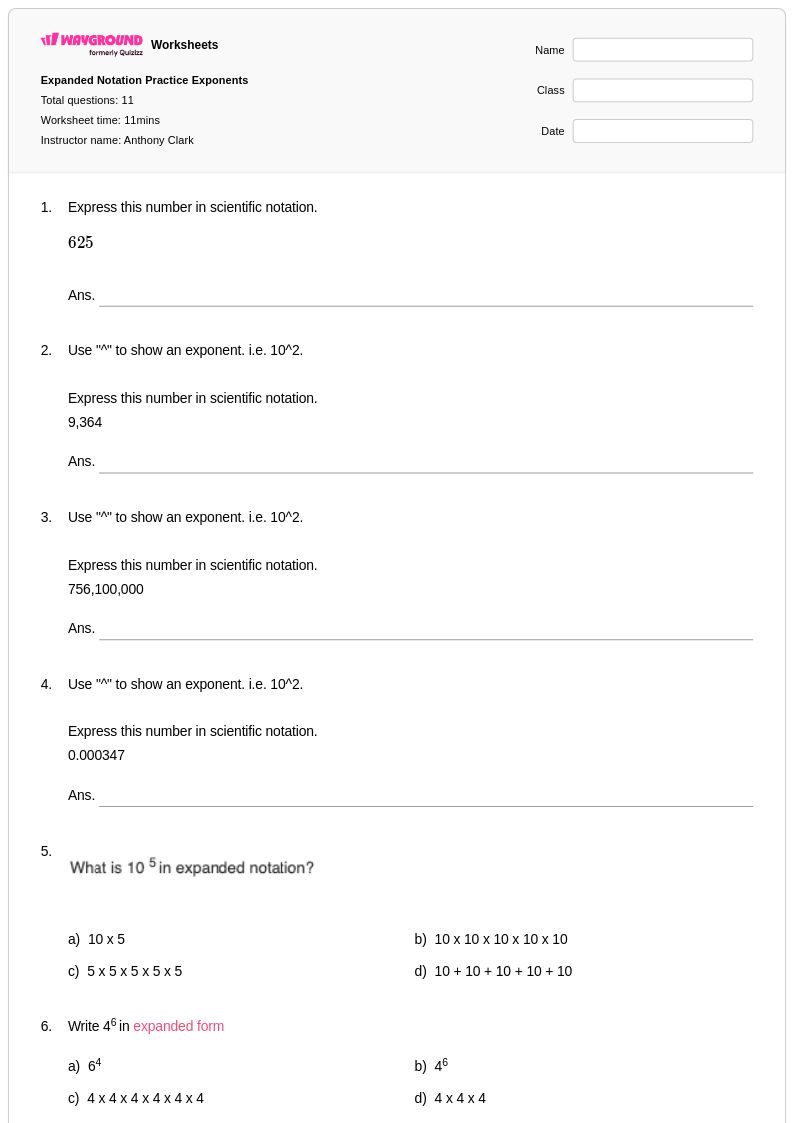
At Grade 6, expanded notation is less about introducing the concept and more about deepening it. Most students have seen standard expanded form before, so push them toward exponential notation and ask them to explain why each place value is a power of ten. Connecting this to the structure of the base-ten system — and previewing how the same logic applies to scientific notation — gives sixth graders a reason to care about a skill they might otherwise dismiss as review.
What exercises help 6th graders practice expanded notation?
The most productive practice at this level combines expanded form with operations: have students add or compare numbers written in expanded form before converting to standard form. It forces them to use the notation as a tool rather than just a format to memorize. These worksheets progress from three-digit numbers through complex multi-digit integers, giving you problems at the right level whether you're using expanded notation as a warm-up or as the main lesson focus.
What mistakes do 6th graders make with expanded notation?
Sixth graders who learned expanded notation procedurally in earlier grades often fall apart when the numbers get larger or include zeros in the middle. Writing 400,070 in expanded form, they'll either skip the zero places or write 400,000 + 70 + 0 without recognizing the missing ten-thousands and hundreds. The fix is to require students to account for every place value column, even when the digit is zero.
How do I use these Grade 6 expanded notation worksheets?
Print the PDF and assign it on paper — each worksheet comes with a complete answer key, so grading is straightforward. If you use the Wayground for Teachers app, you can scan student submissions directly for faster grading rather than marking each paper by hand. For a fully digital session, the same worksheet can be hosted as an online quiz on Wayground, which is useful when you want immediate class-wide data.
How does expanded notation fit into the 6th grade math curriculum?
By Grade 6, Common Core shifts the focus toward rational numbers, ratios, and expressions — but expanded notation underpins all of it. Students who can fluently decompose numbers by place value have a much easier time understanding why multiplying by 10 shifts digits left, which directly supports their work with decimals and later with scientific notation. At this grade, expanded notation also bridges into algebraic thinking: writing 3,247 as 3(1,000) + 2(100) + 4(10) + 7(1) is structurally the same as evaluating a polynomial expression.
How can I use these worksheets to support diverse learners in my 6th grade class?
For students who struggle with dense number formatting, adjusting font size and spacing in the printable version reduces the chance of misreading digits — especially important with six- and seven-digit numbers where place errors are easy to make. For students who need more support, Wayground's reduced answer choices option lowers the cognitive load on multiple-choice problems so they can focus on the place value reasoning rather than managing too many options at once.