
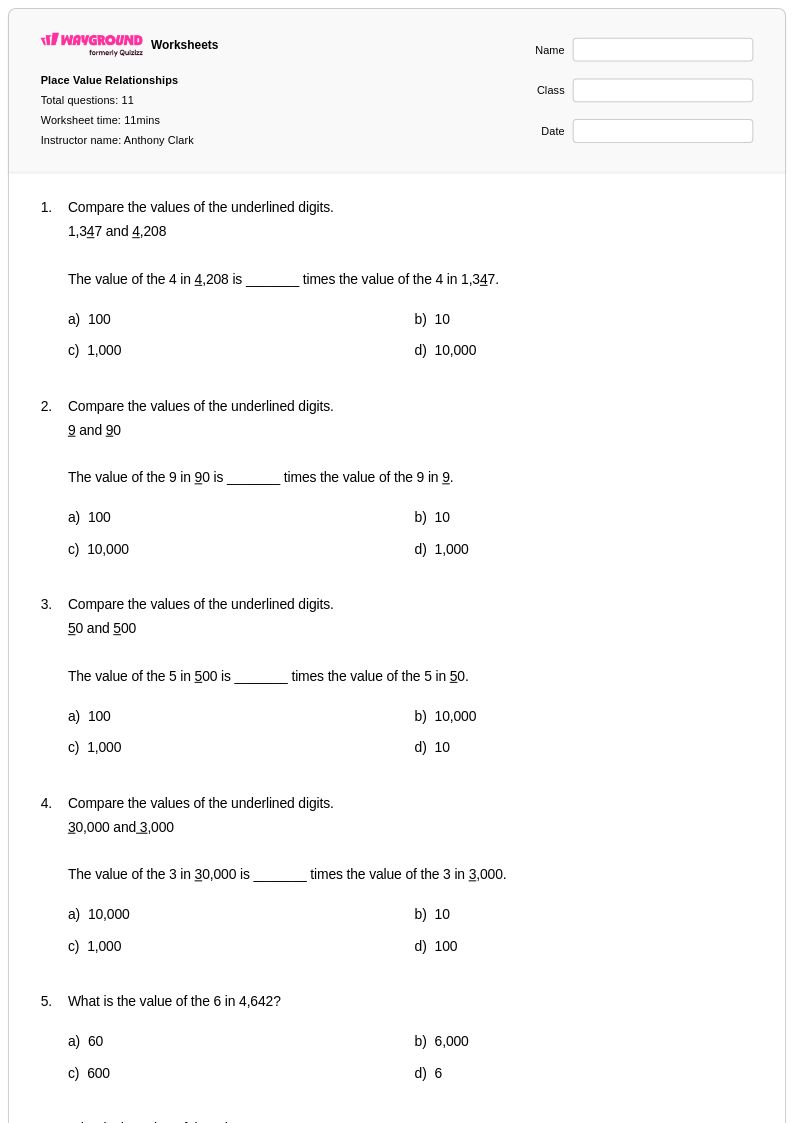
11 Q
4th - Uni
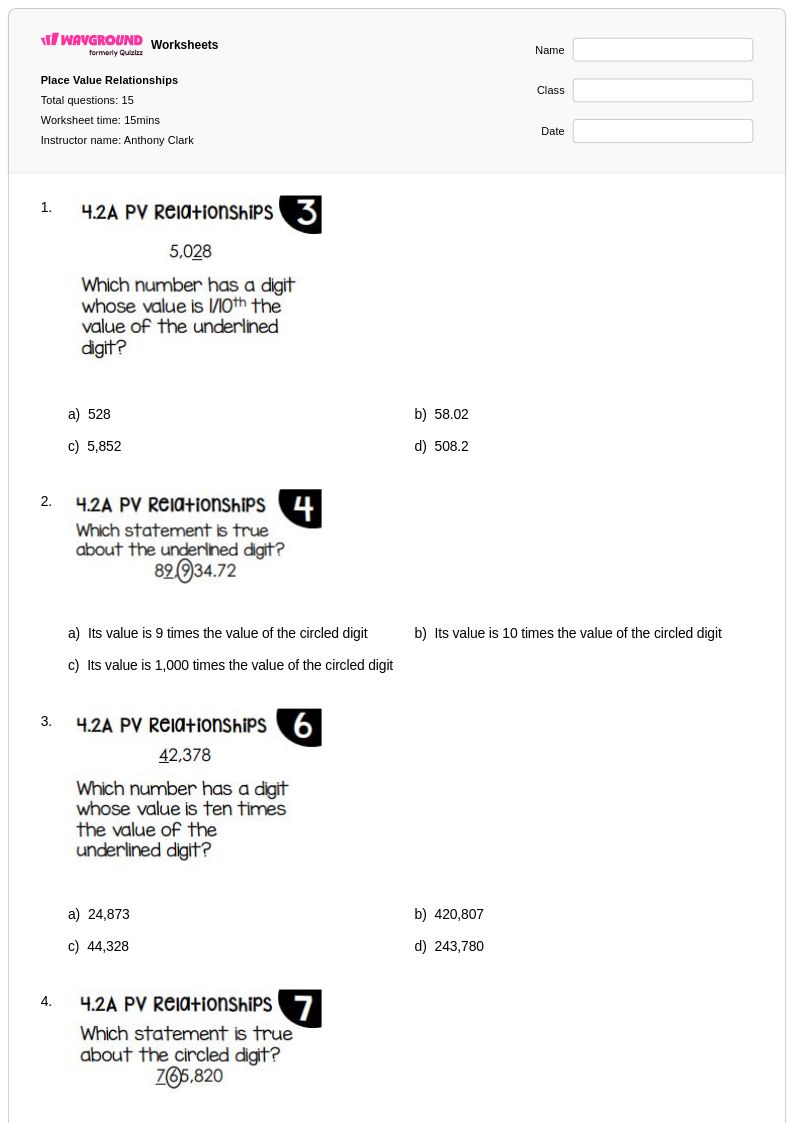
15 Q
4th - Uni
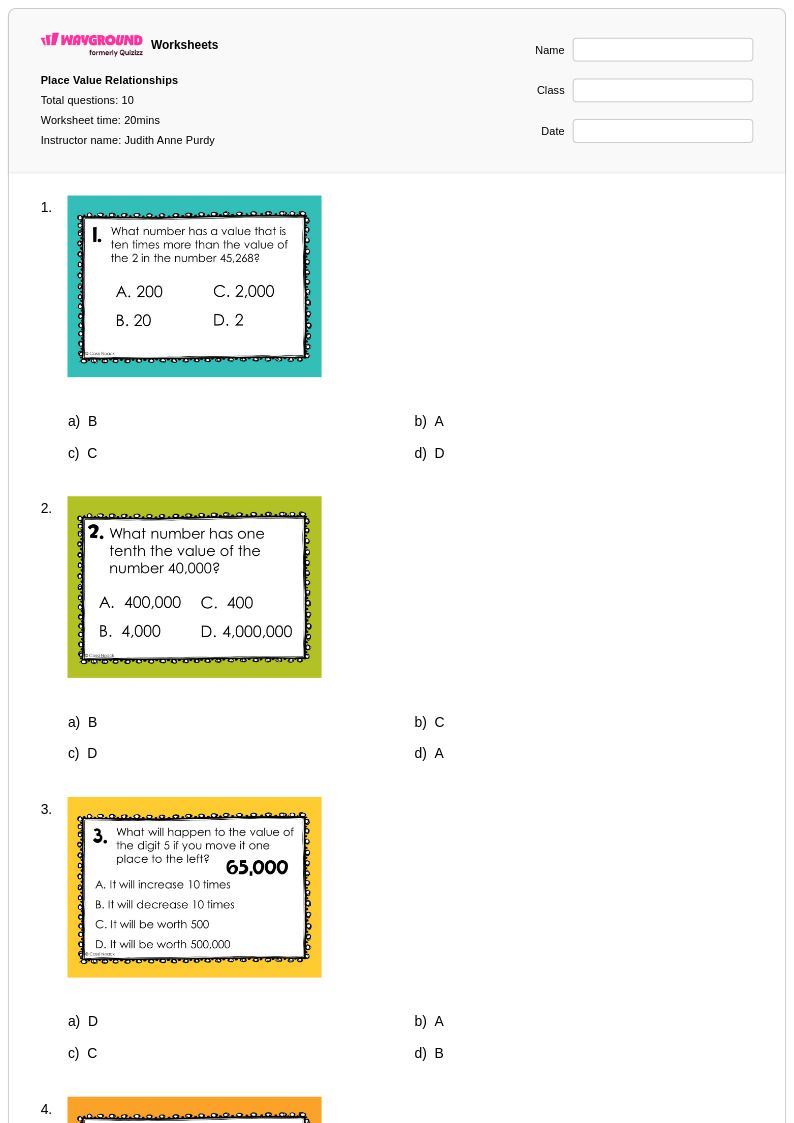
10 Q
4th - 6th
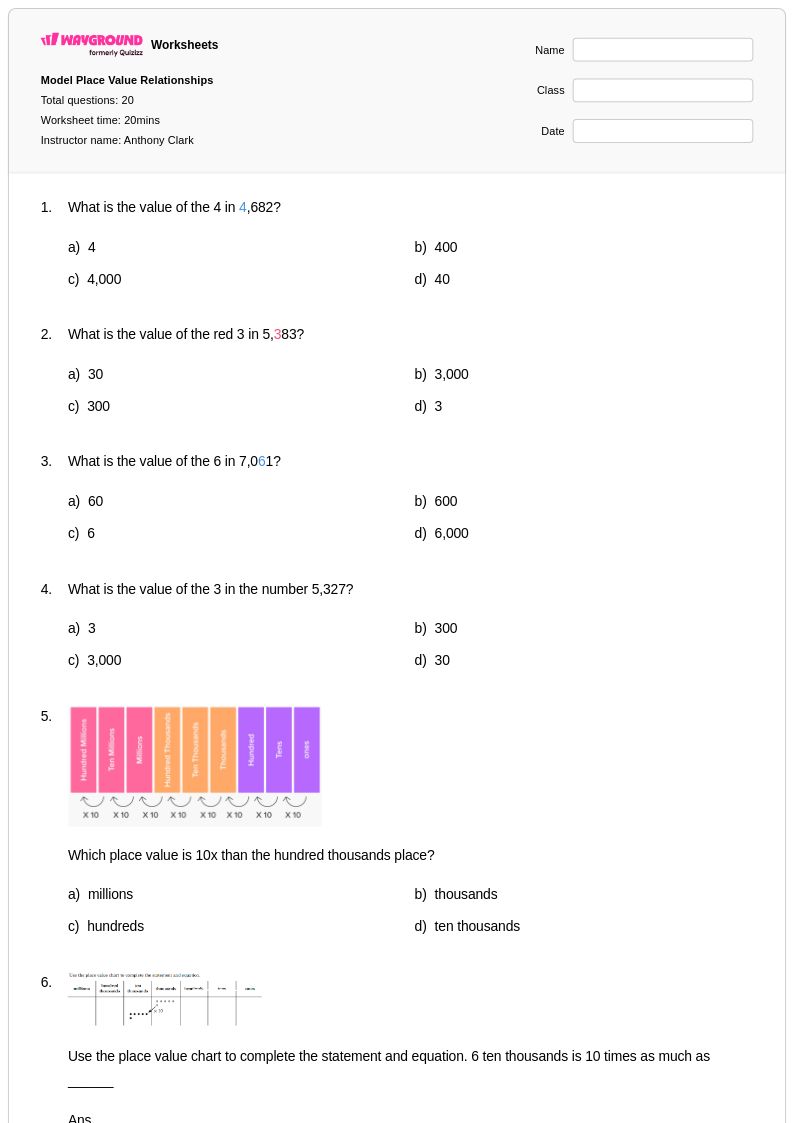
20 Q
4th - Uni
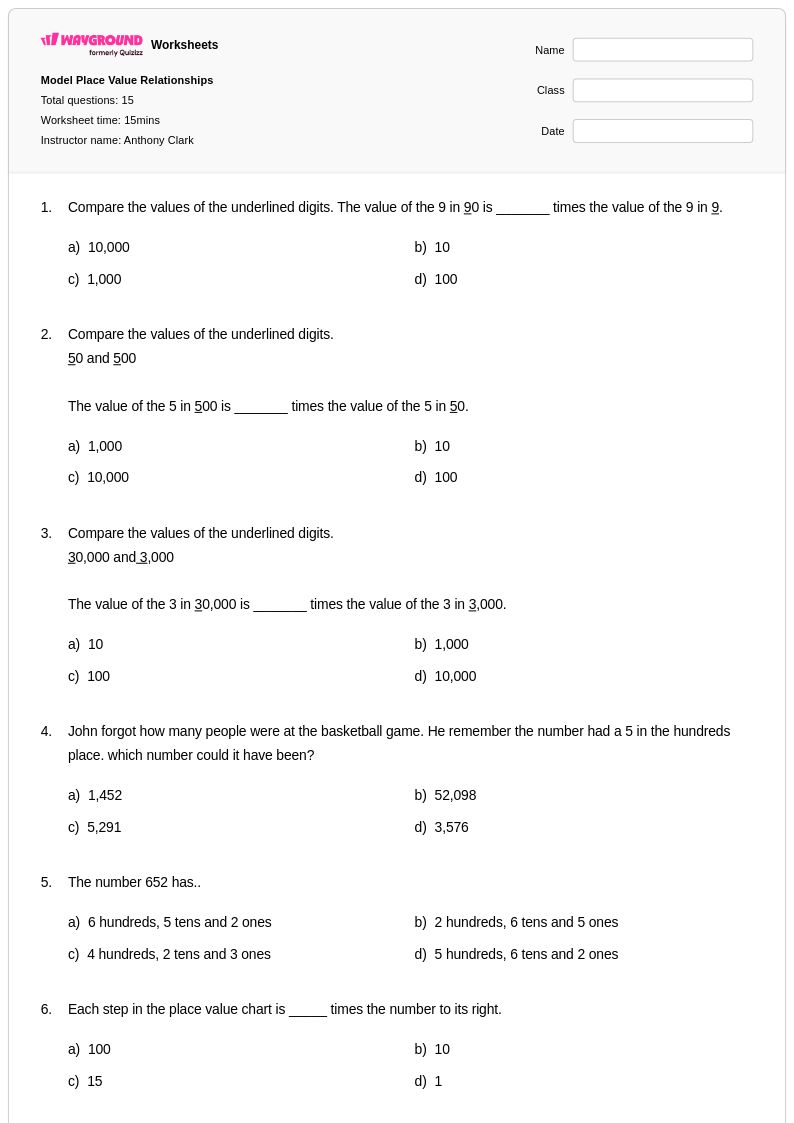
15 Q
4th - Uni
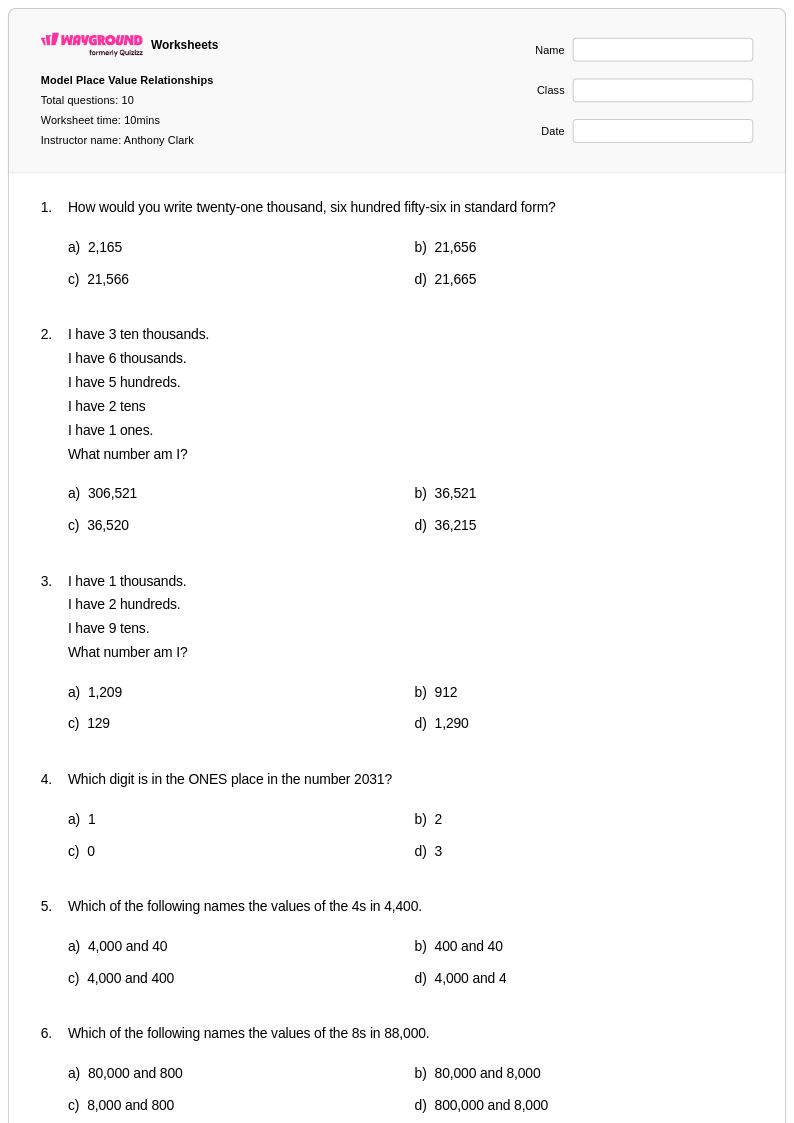
10 Q
4th - Uni
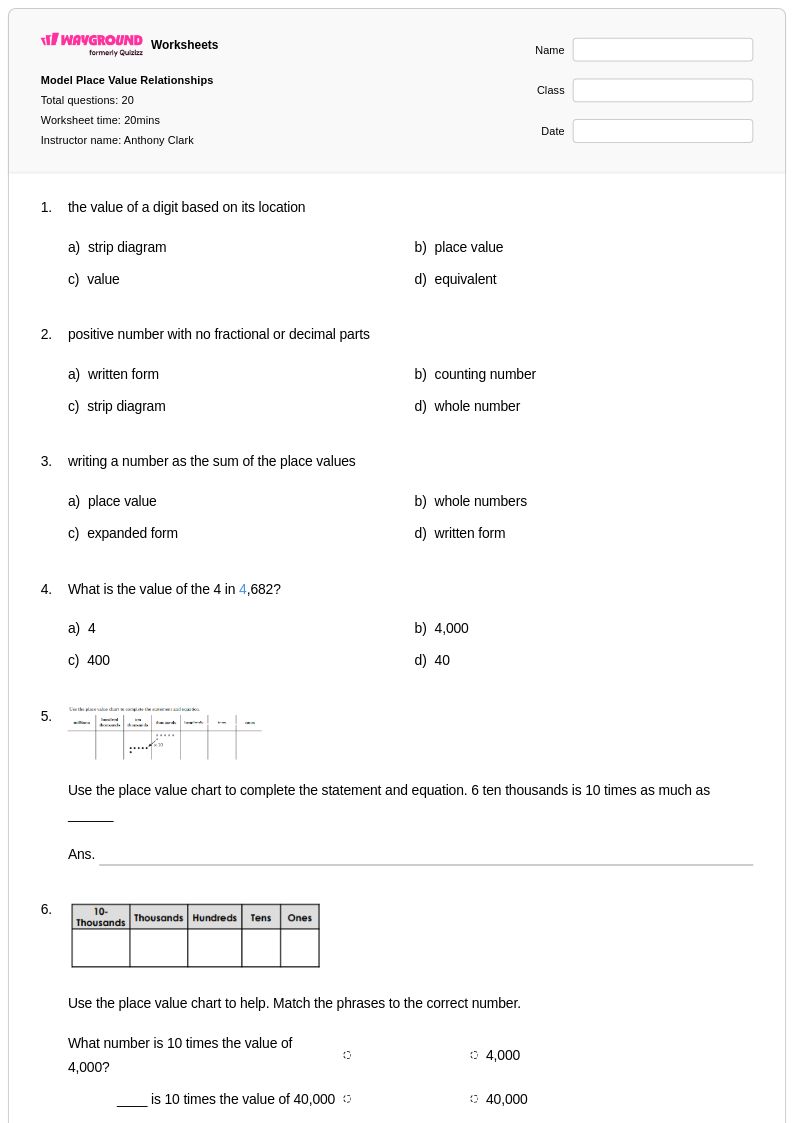
20 Q
4th - Uni
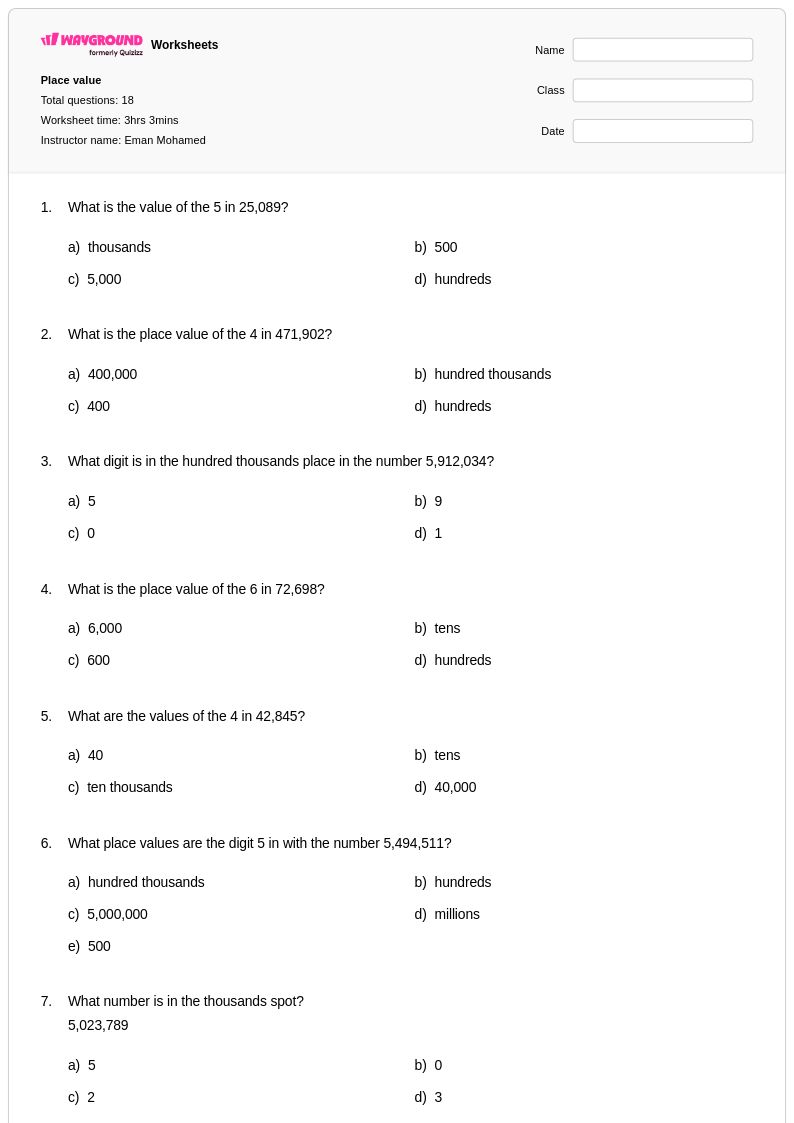
18 Q
6th
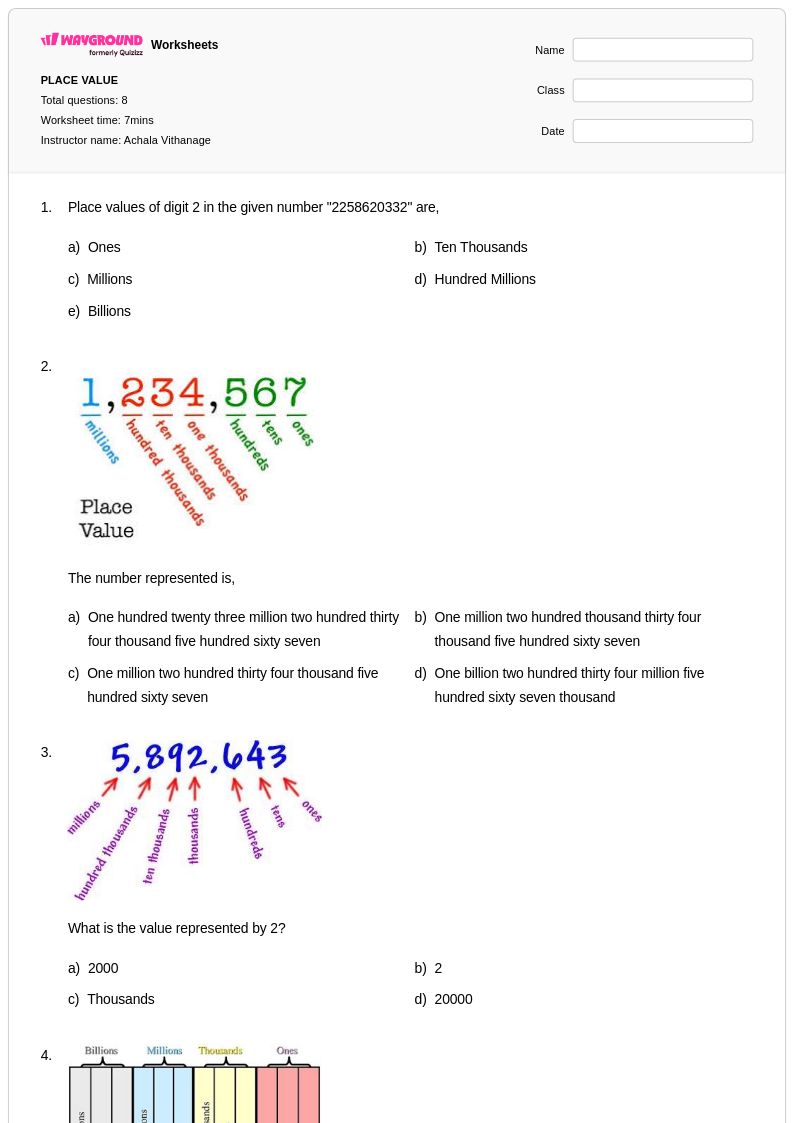
8 Q
6th
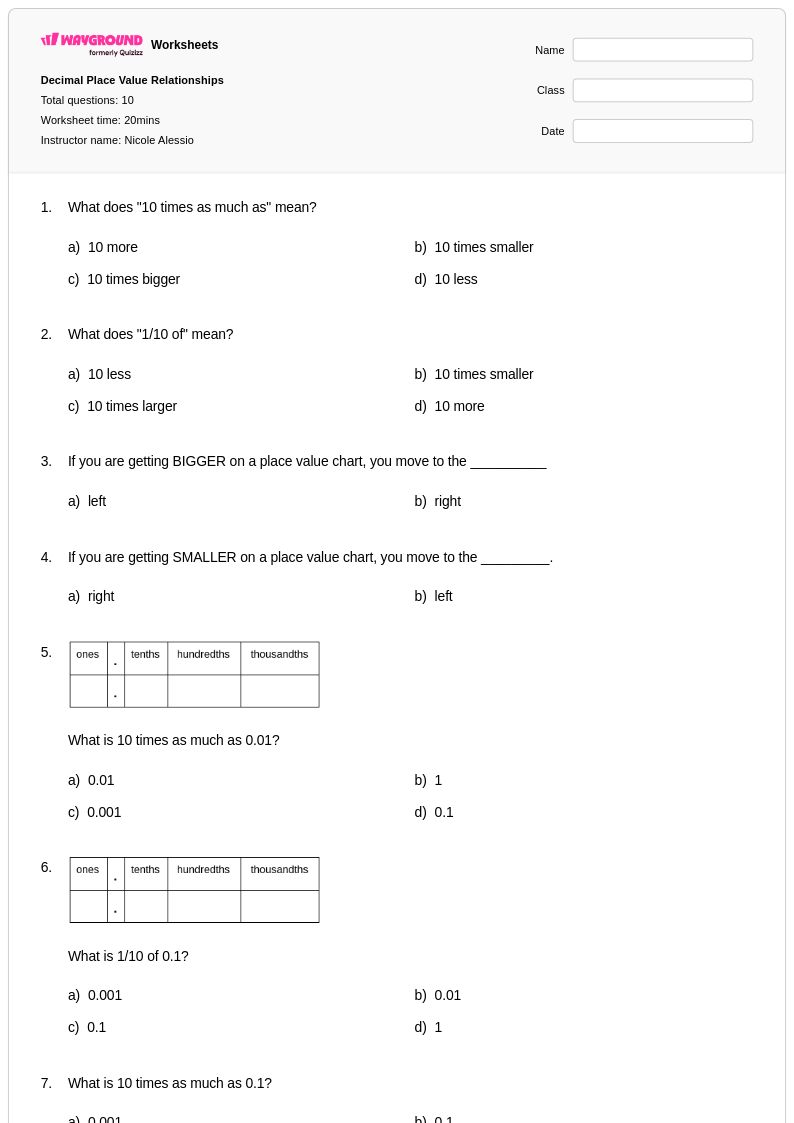
10 Q
5th - 6th
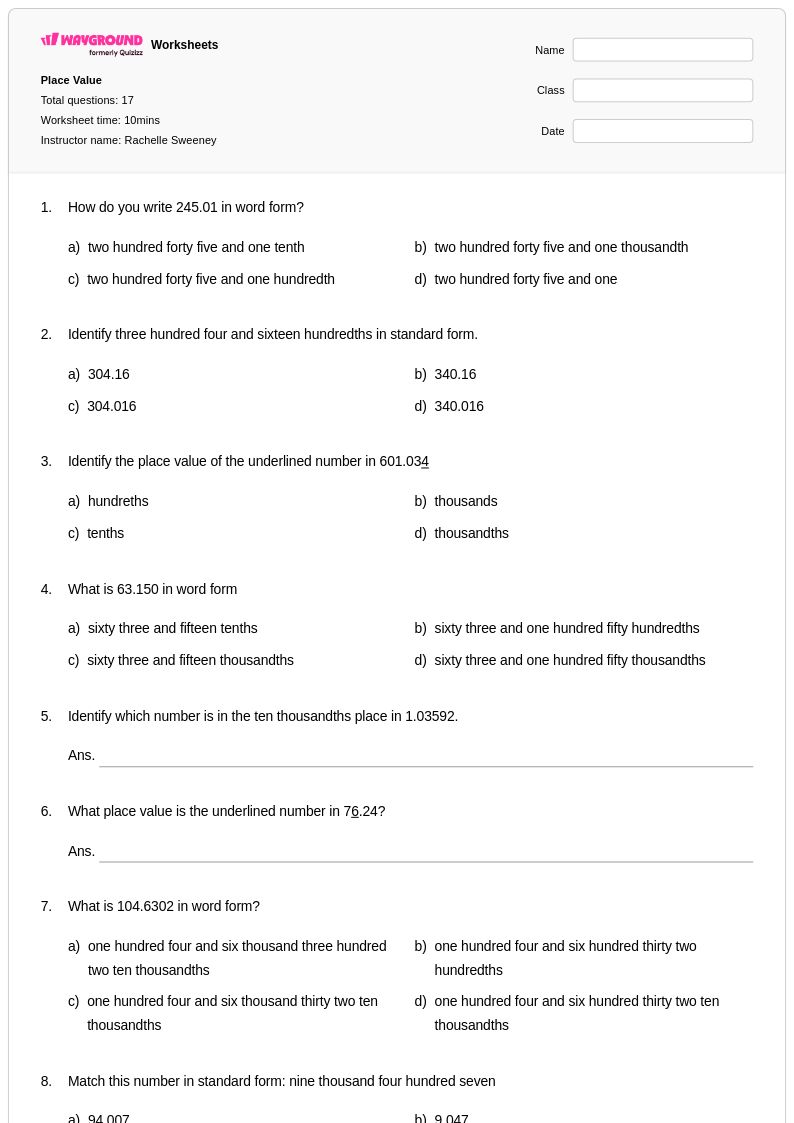
17 Q
6th
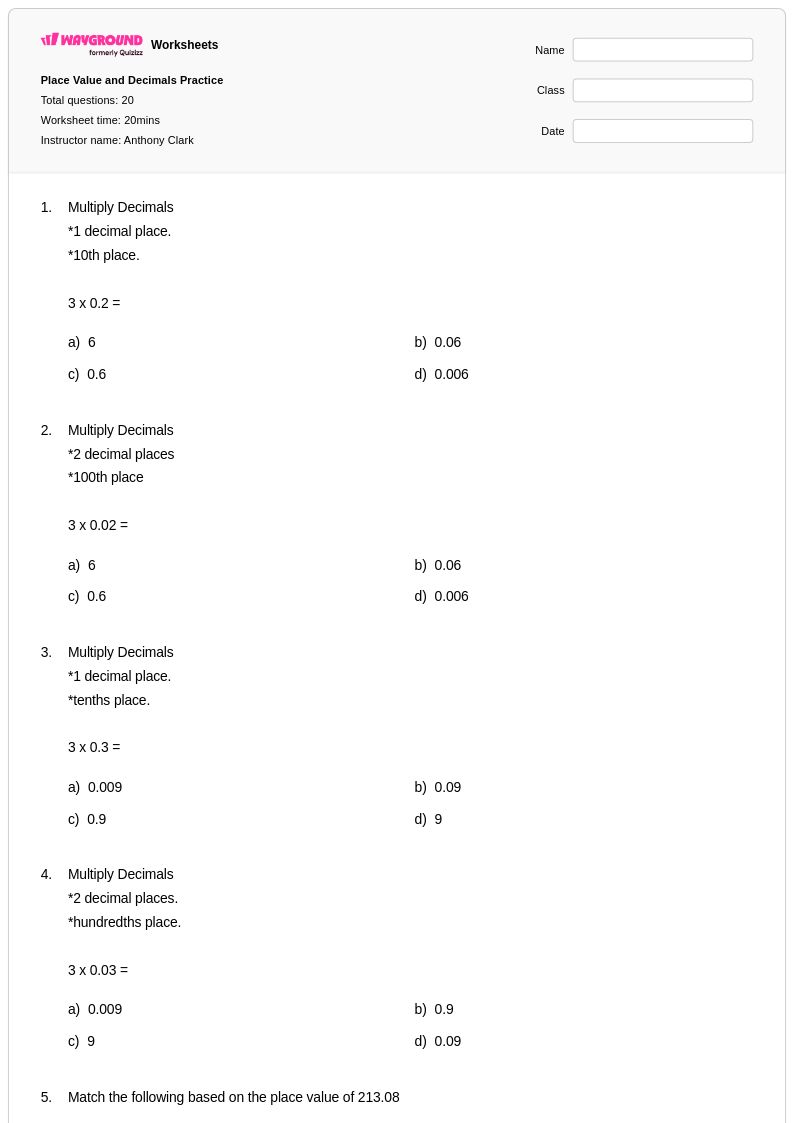
20 Q
4th - Uni
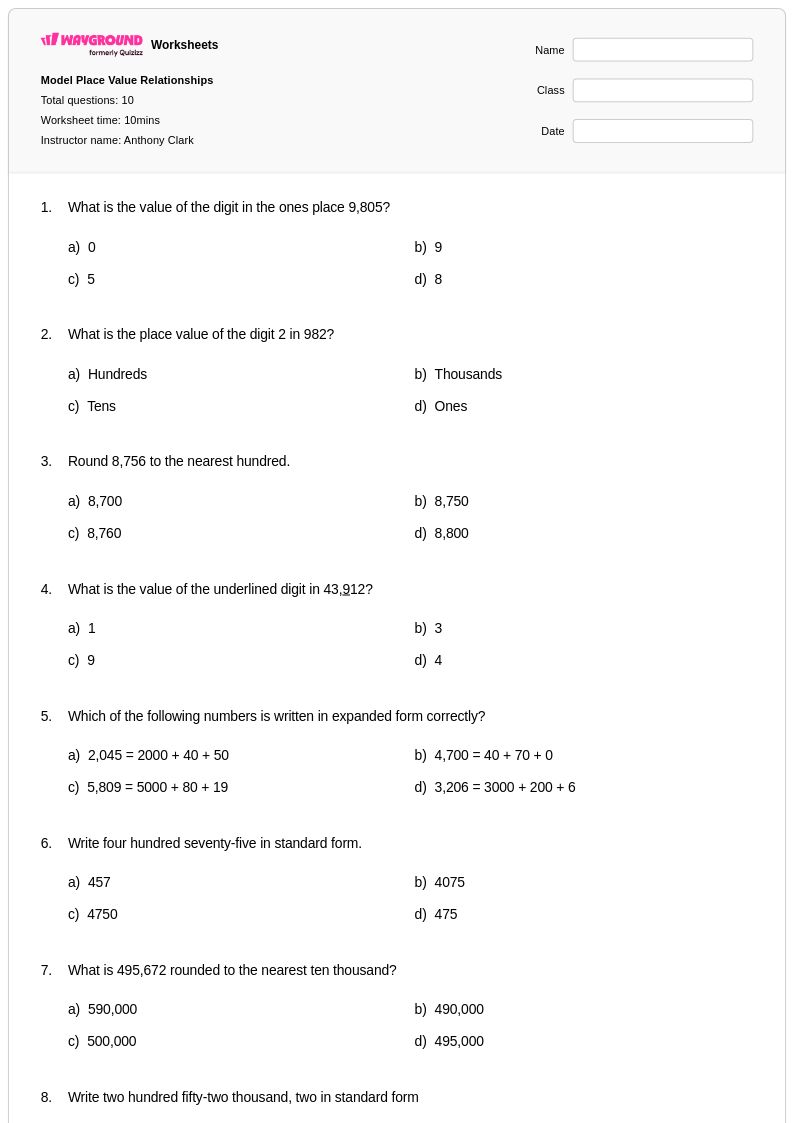
10 Q
4th - Uni
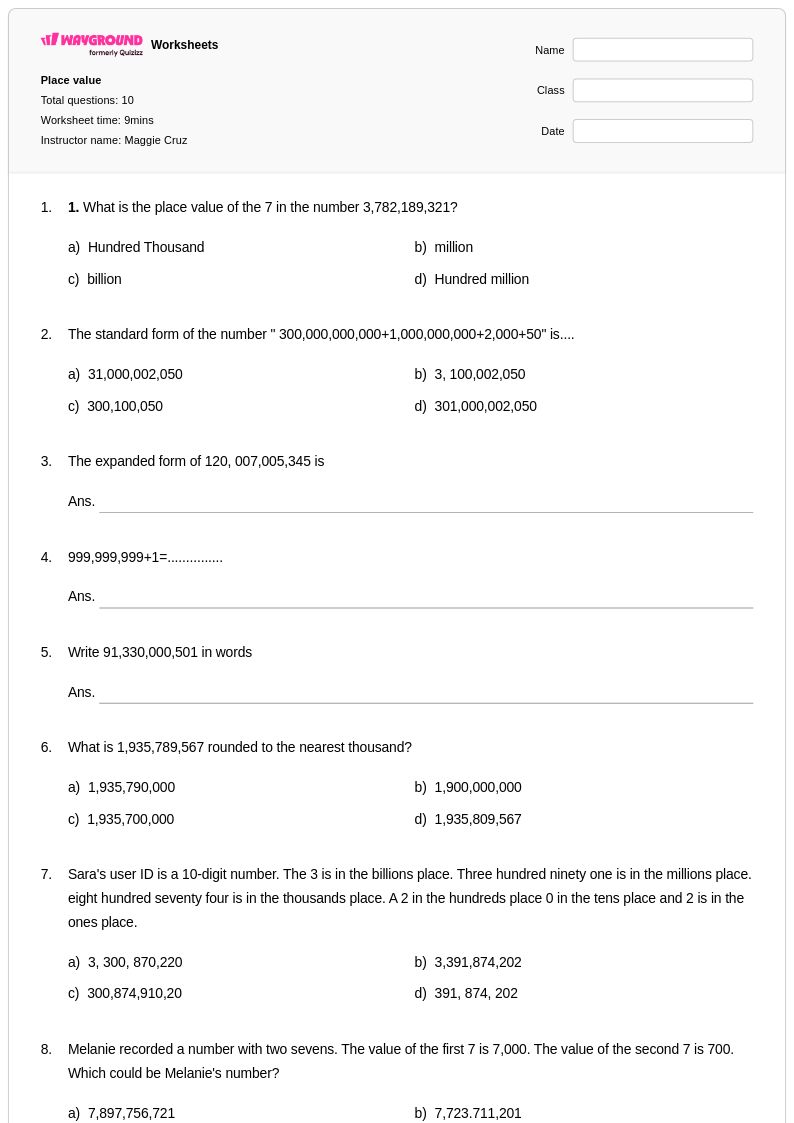
10 Q
5th - 6th
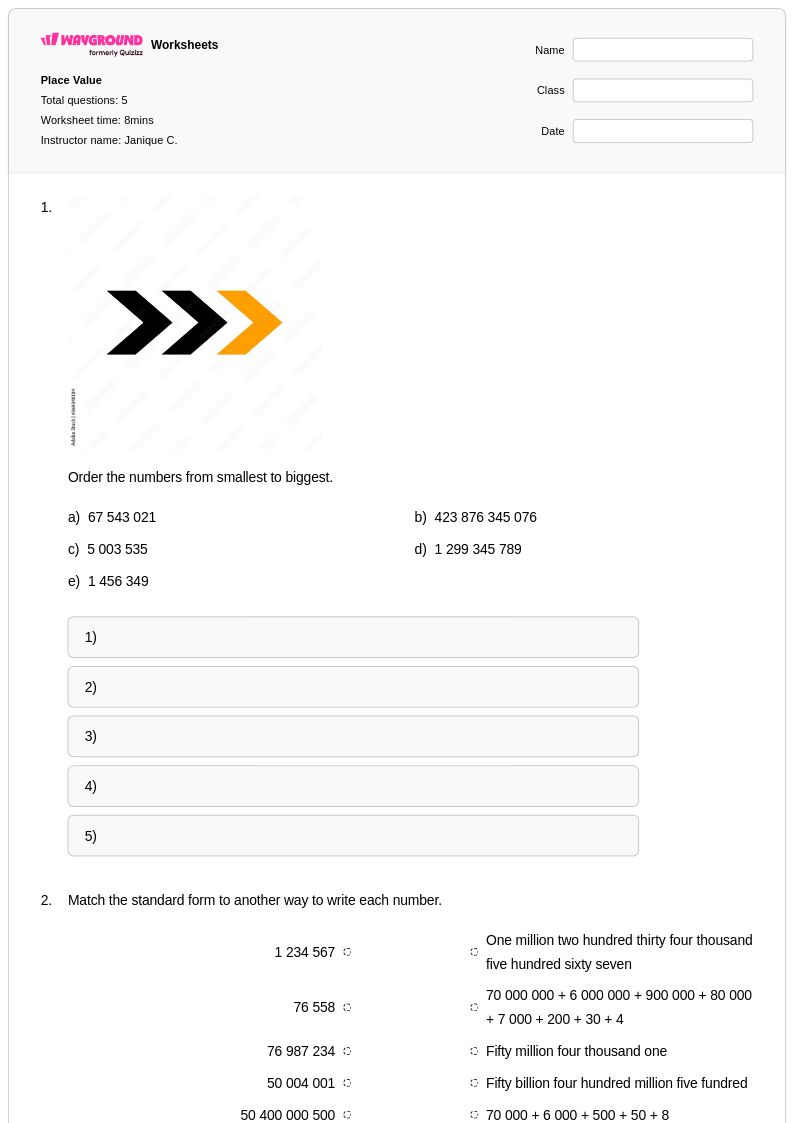
5 Q
6th
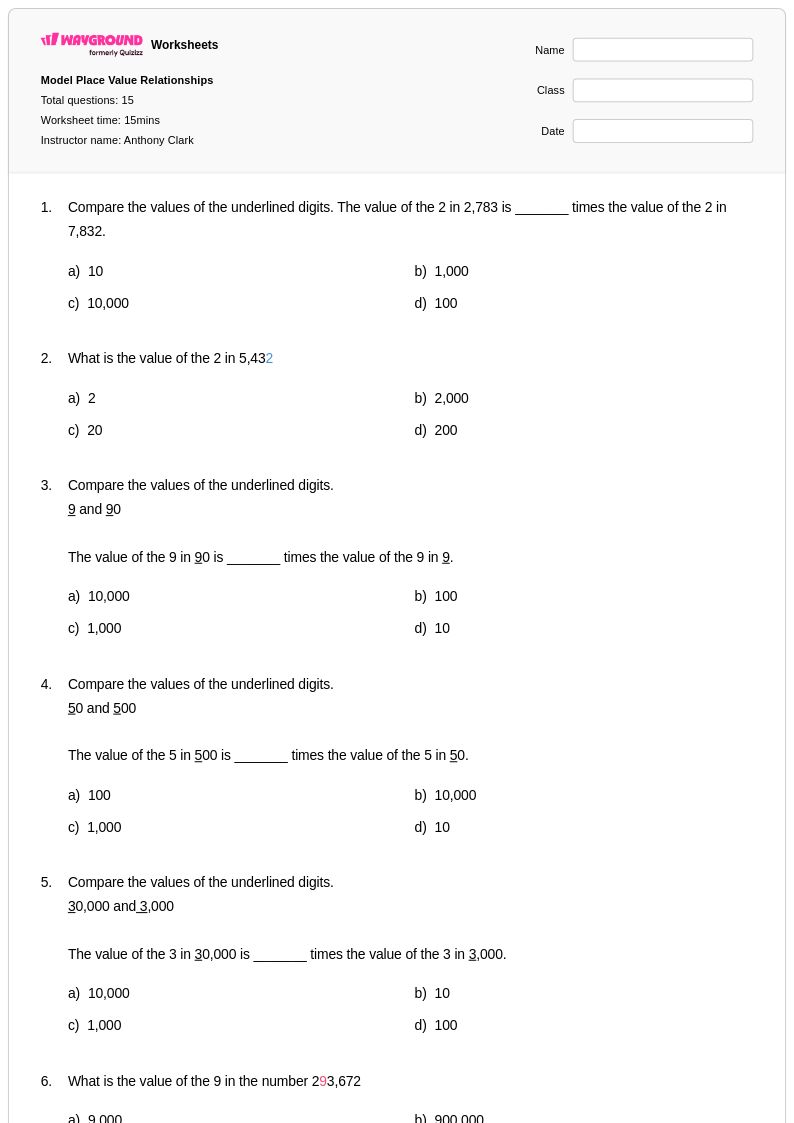
15 Q
4th - Uni
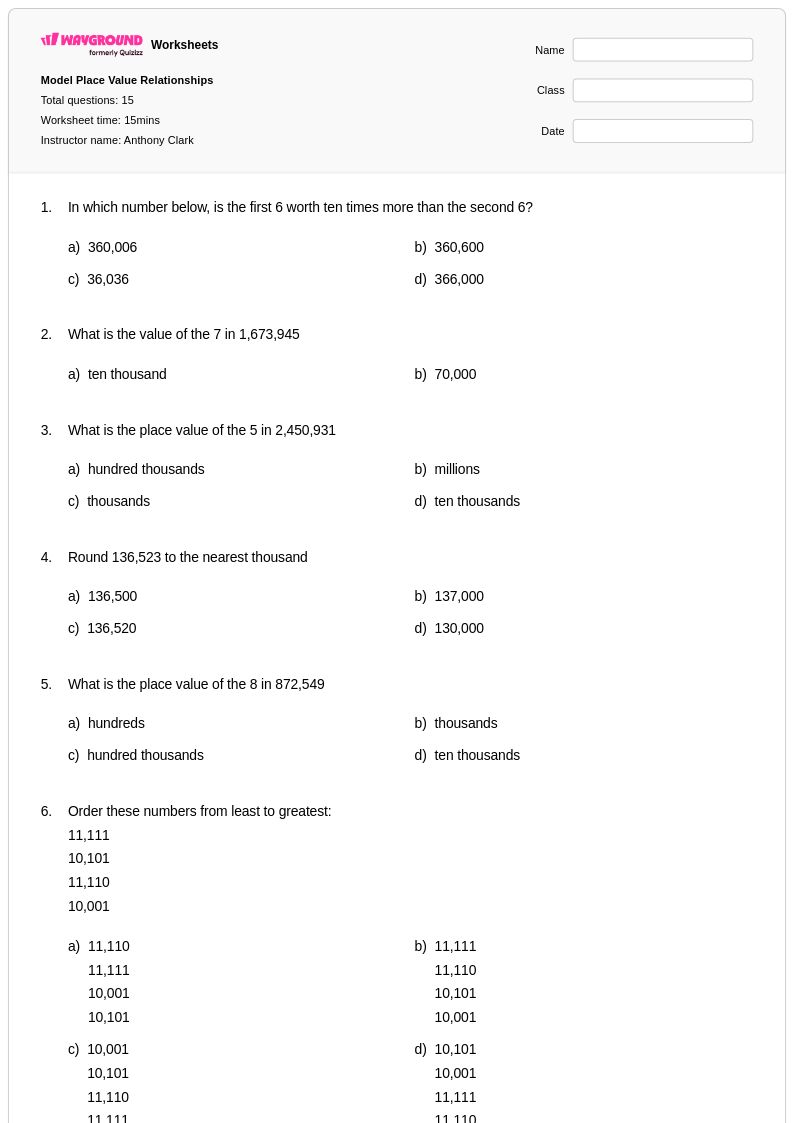
15 Q
4th - Uni
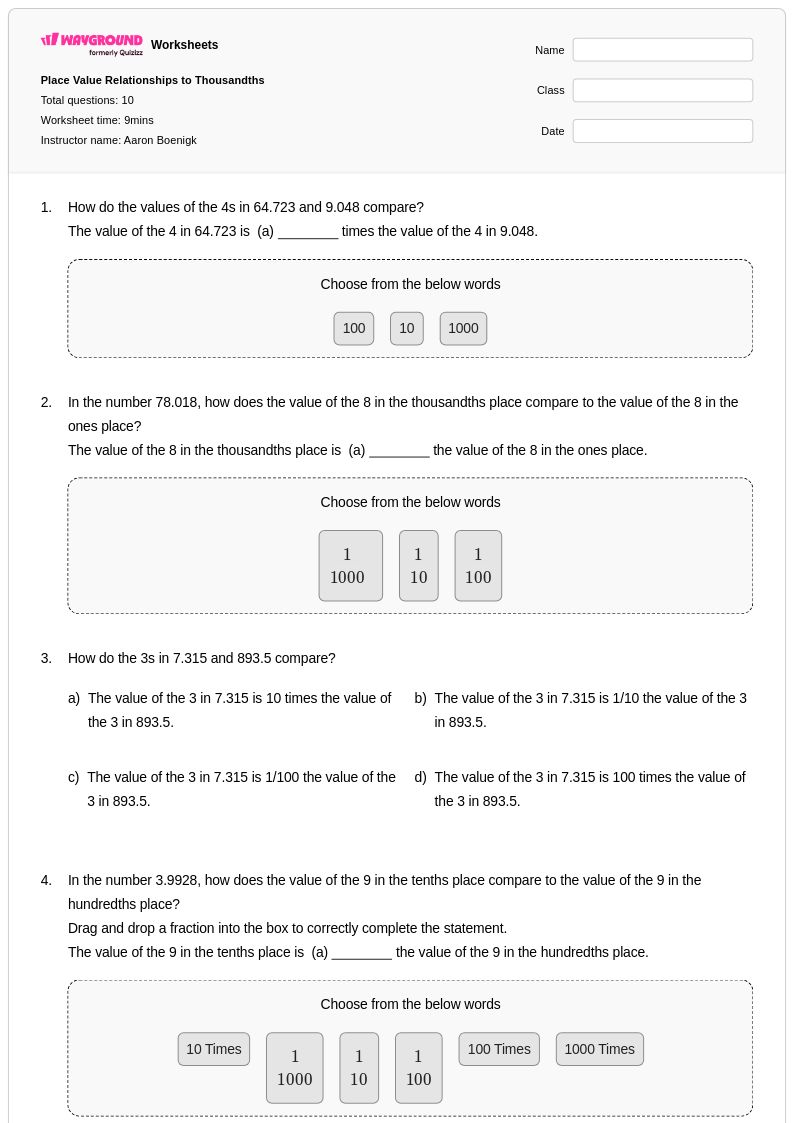
10 Q
5th - Uni
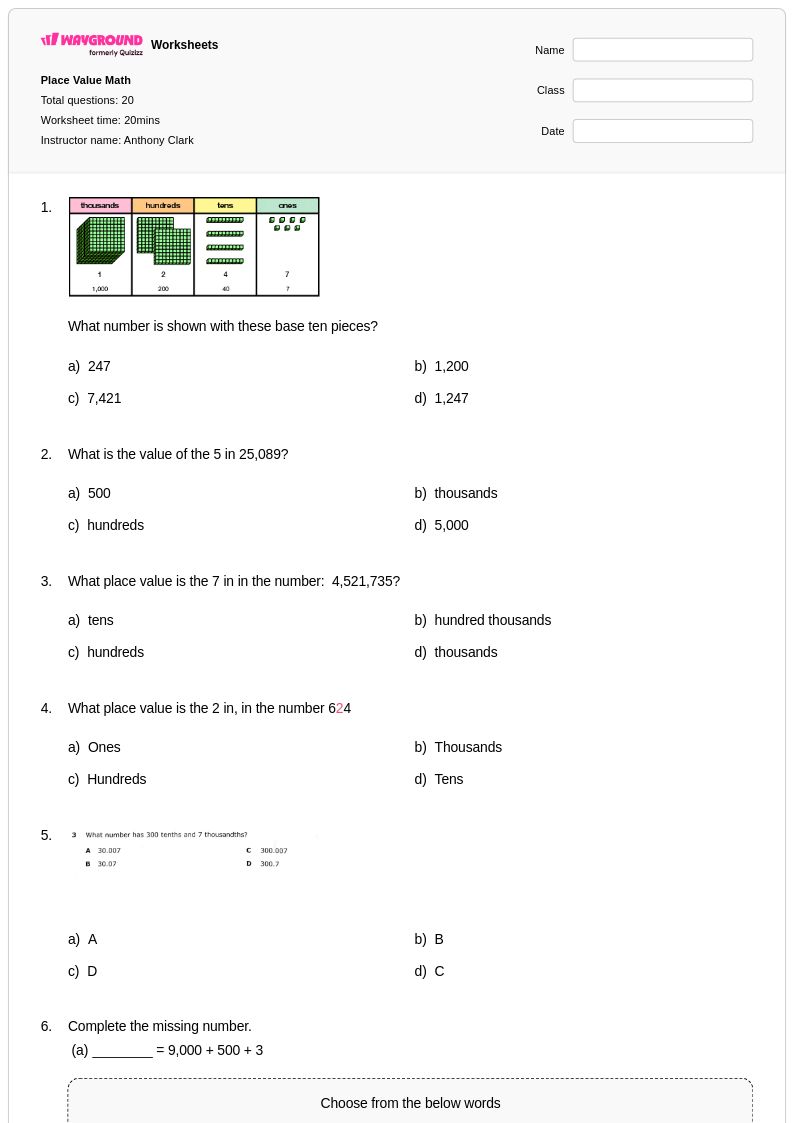
20 Q
4th - Uni
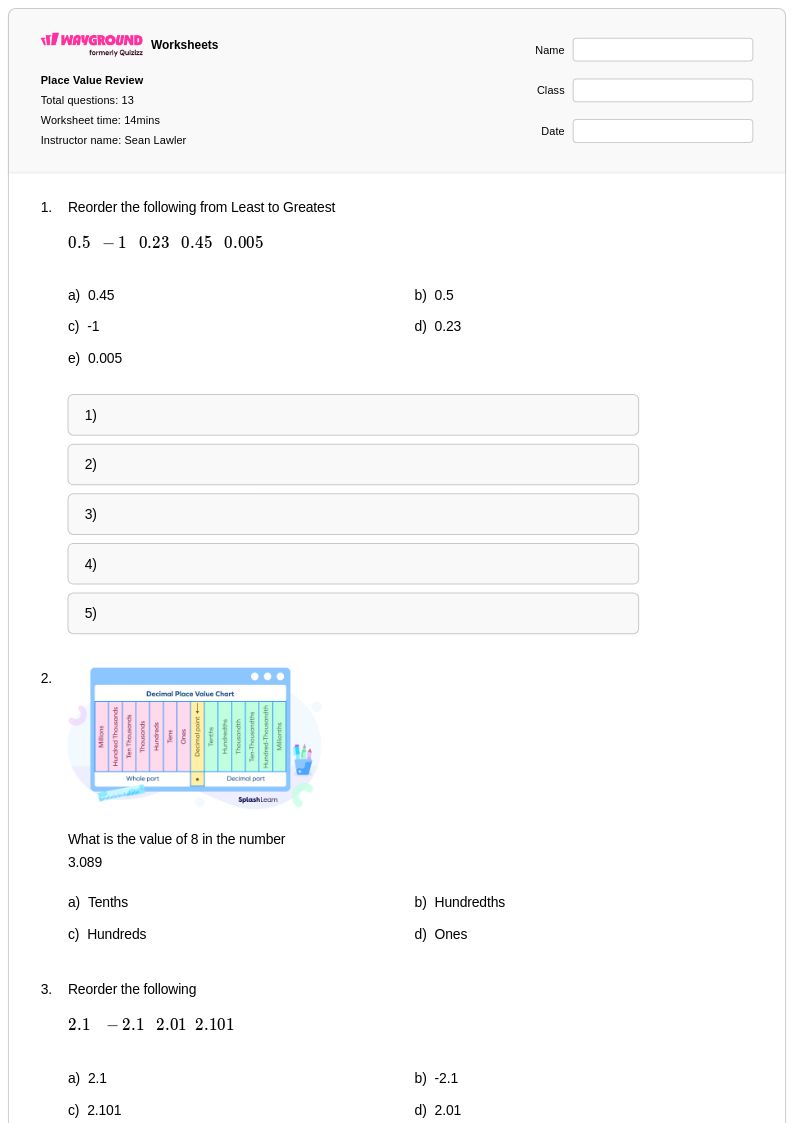
13 Q
5th - 8th
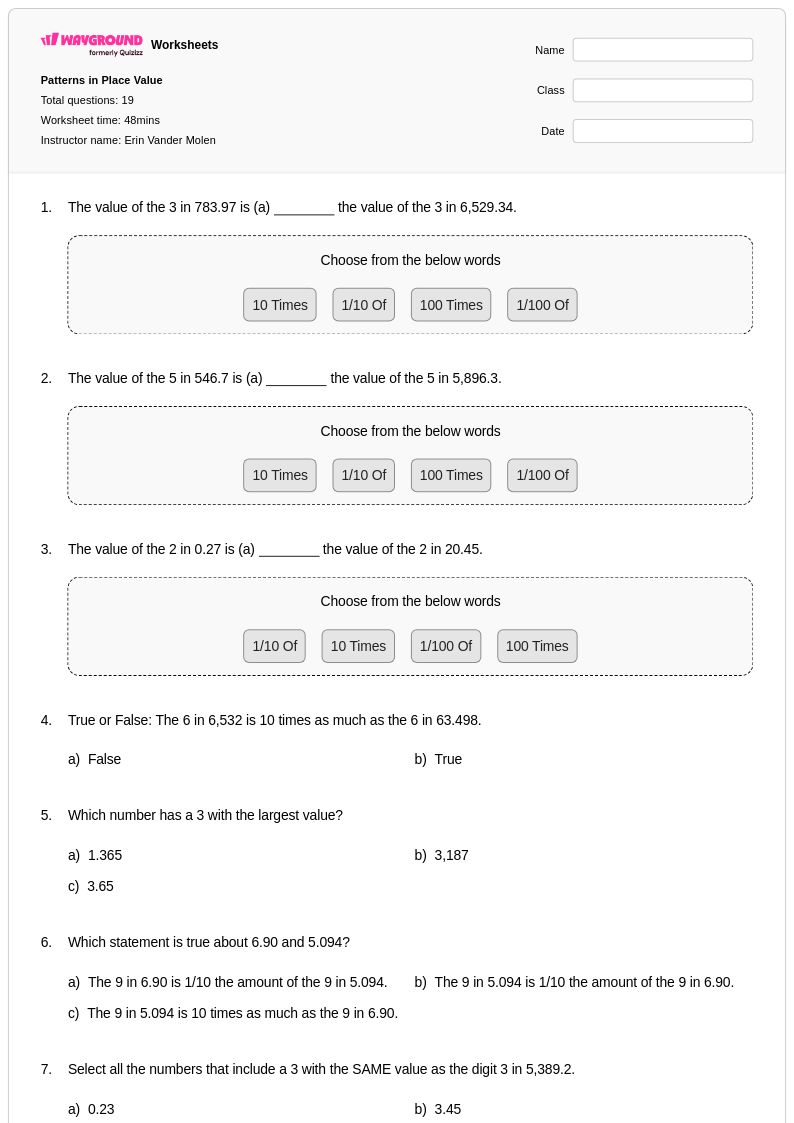
19 Q
5th - 6th
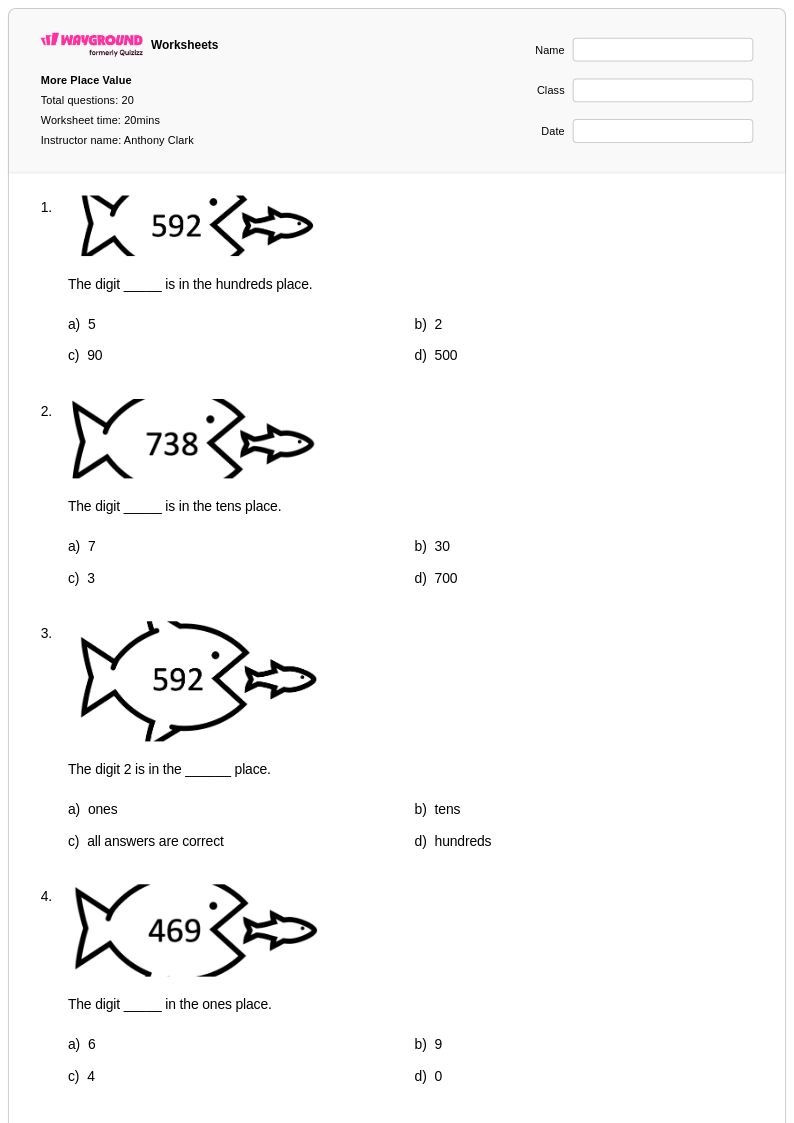
20 Q
2nd - Uni
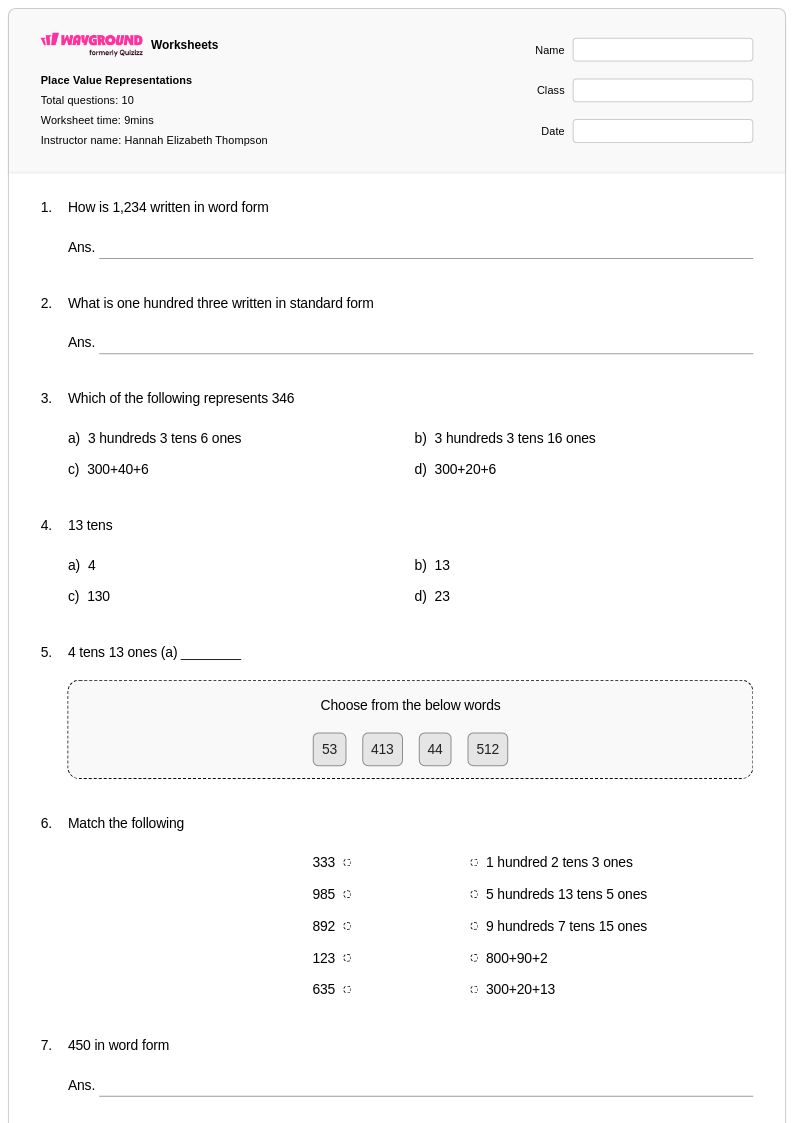
10 Q
3rd - Uni
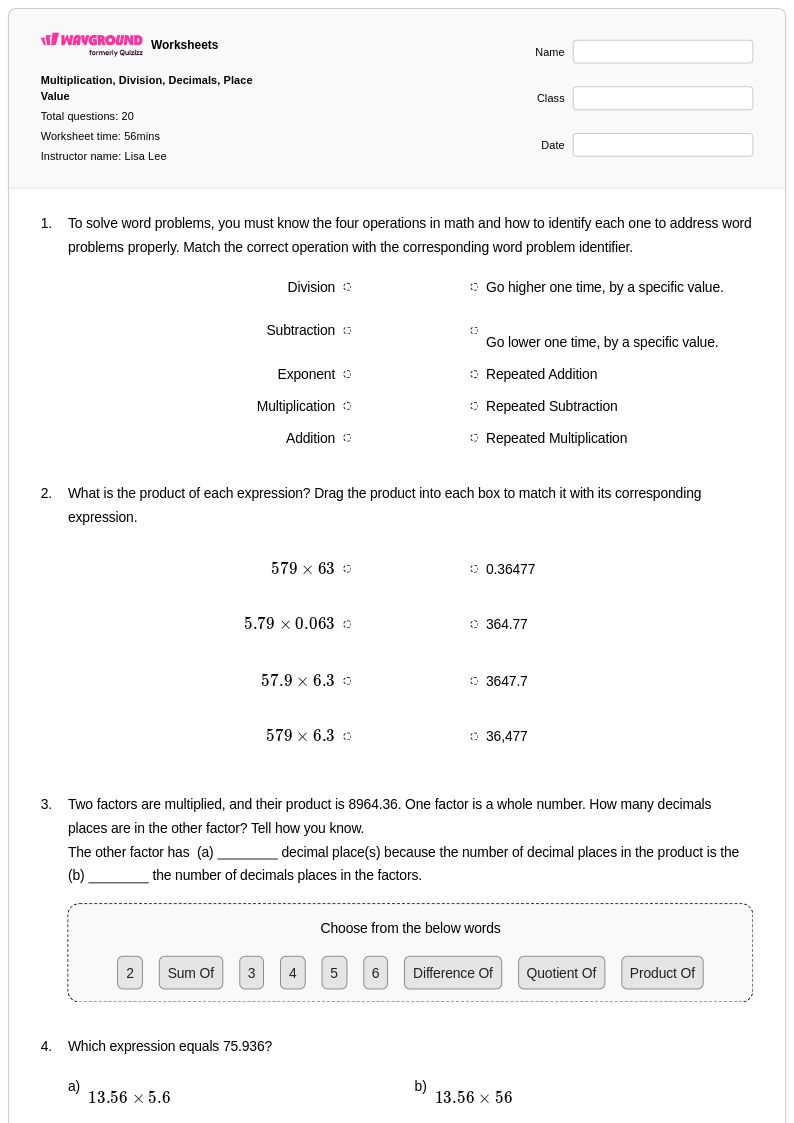
20 Q
6th
Explore Other Subject Worksheets for class 6
Explore printable Place Value Relationships worksheets for Class 6
Place value relationships form the cornerstone of mathematical understanding for Class 6 students, requiring mastery of how digits function within our base-ten number system across whole numbers, decimals, and increasingly complex numerical contexts. Wayground's comprehensive collection of place value relationships worksheets provides educators with expertly designed practice problems that guide students through understanding positional notation, comparing and ordering multi-digit numbers, recognizing patterns in powers of ten, and manipulating numbers through place value decomposition and composition. These free printables systematically build conceptual knowledge while offering varied problem formats, from visual place value charts to word problems requiring students to apply their understanding in real-world scenarios, with each worksheet including a detailed answer key to support both independent practice and teacher-guided instruction.
Wayground's platform, formerly Quizizz, empowers teachers with access to millions of educator-created resources specifically targeting place value relationships and broader Class 6 mathematics concepts, all searchable through intuitive filtering systems that allow for precise alignment with curriculum standards and individual classroom needs. The platform's robust differentiation tools enable teachers to customize worksheets for diverse learners, adjusting complexity levels and problem types to support both remediation for struggling students and enrichment for advanced learners, while the flexible format options include both printable pdf versions for traditional classroom use and digital formats for technology-integrated instruction. This comprehensive approach to place value relationships instruction supports systematic skill development, allowing teachers to efficiently plan targeted lessons, assess student progress, and provide focused practice that builds the numerical reasoning foundations essential for success in advanced mathematical concepts.
FAQs
Why is place value still important in Grade 6?
How can I connect place value to real-world contexts for 6th graders?
What types of problems are included in these 6th-grade worksheets?
What place value errors persist into middle school?
How can I use this Wayground worksheet with my 6th graders?
How does place value understanding support 6th-grade standards?