Free Printable Estimating Sums Worksheets for Class 6
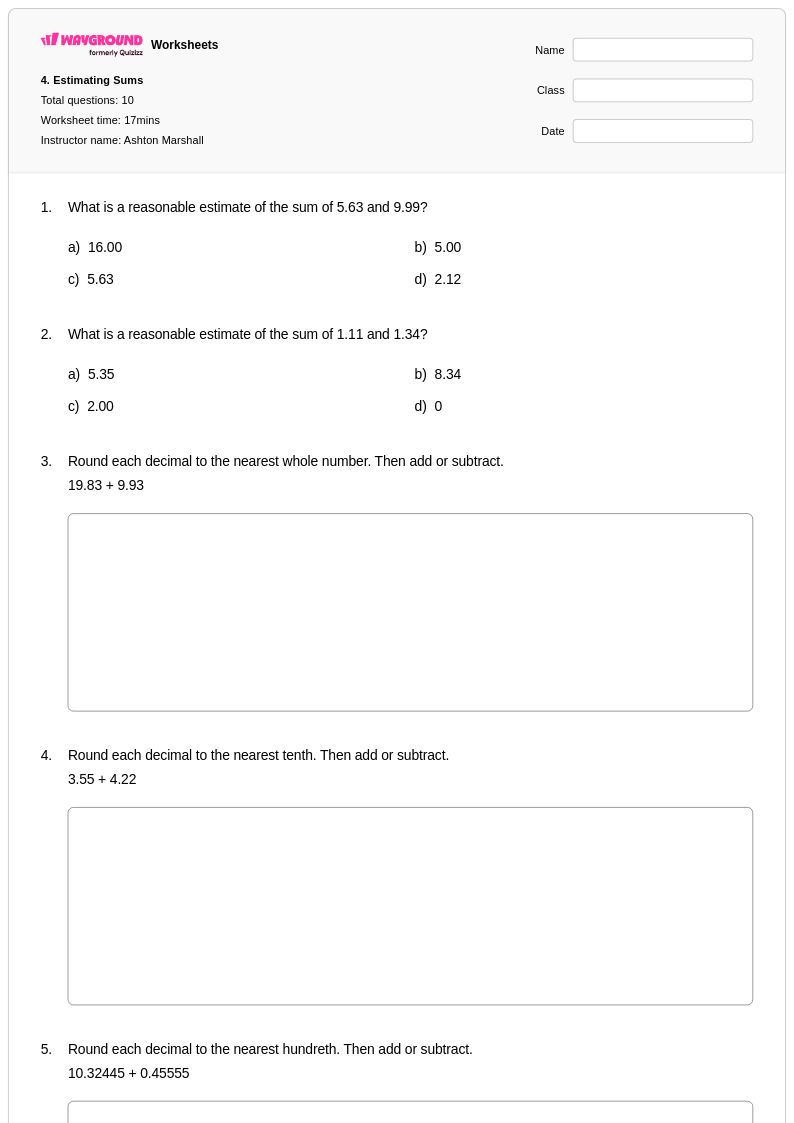
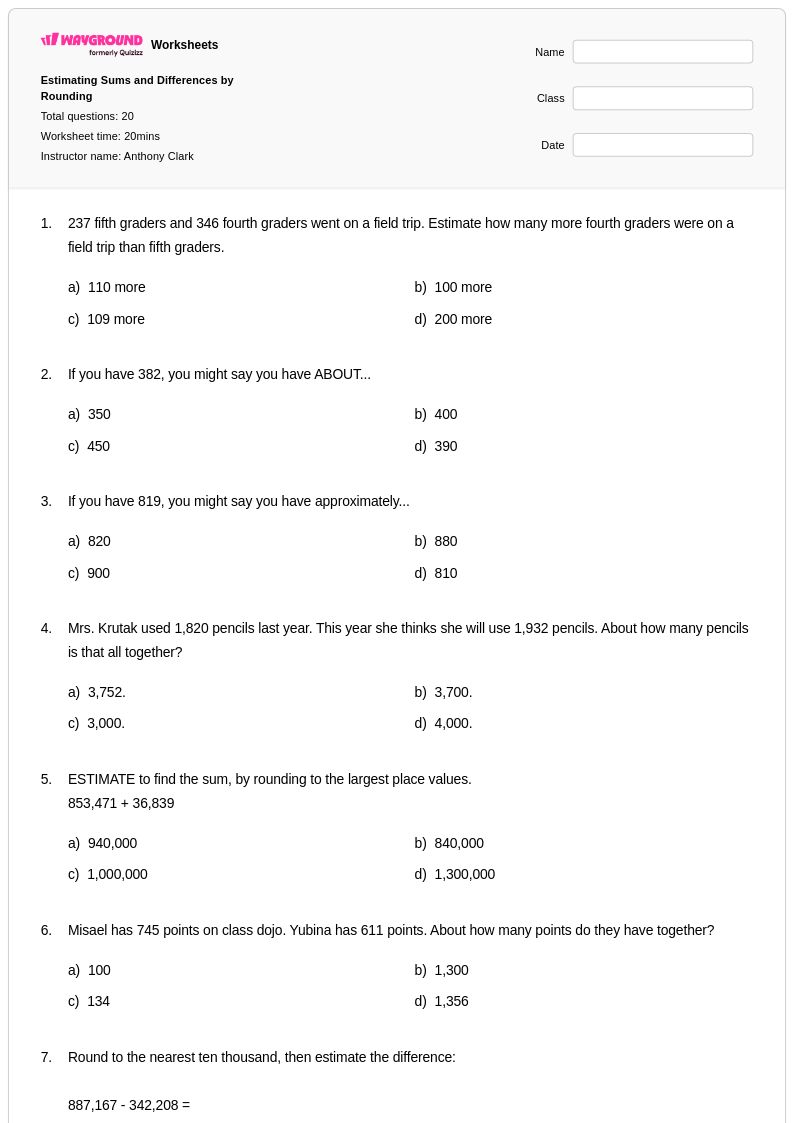
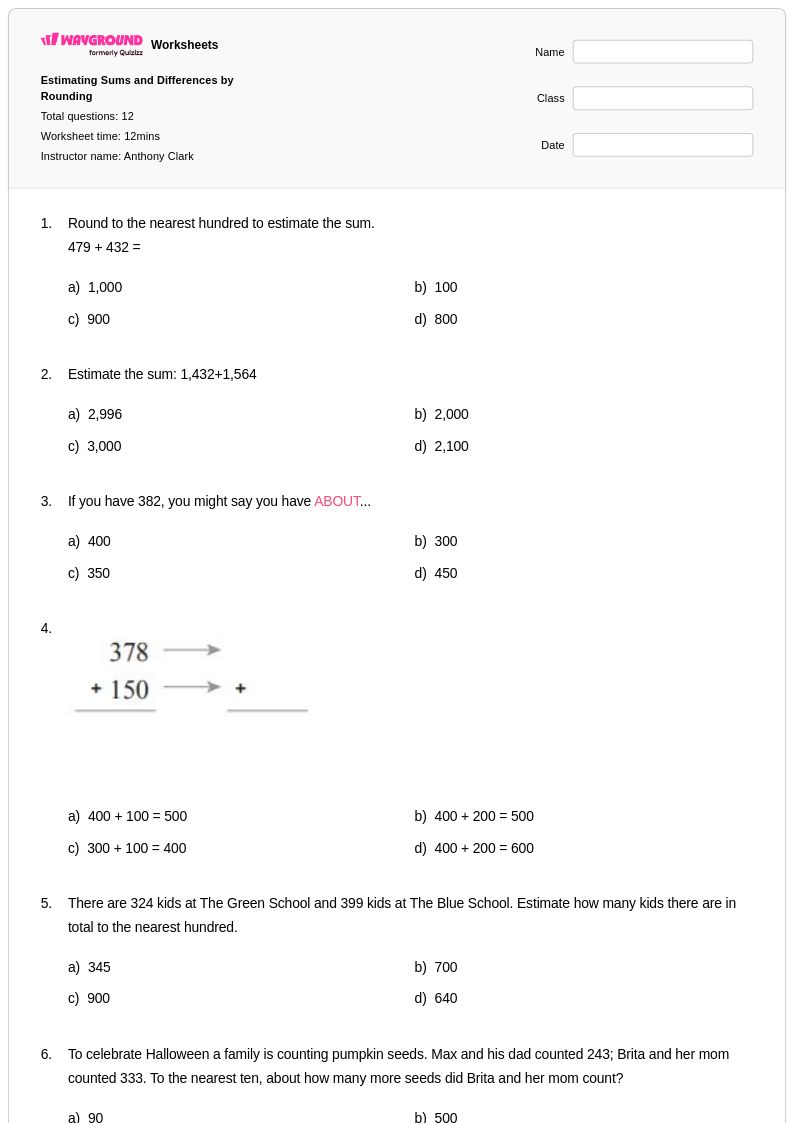
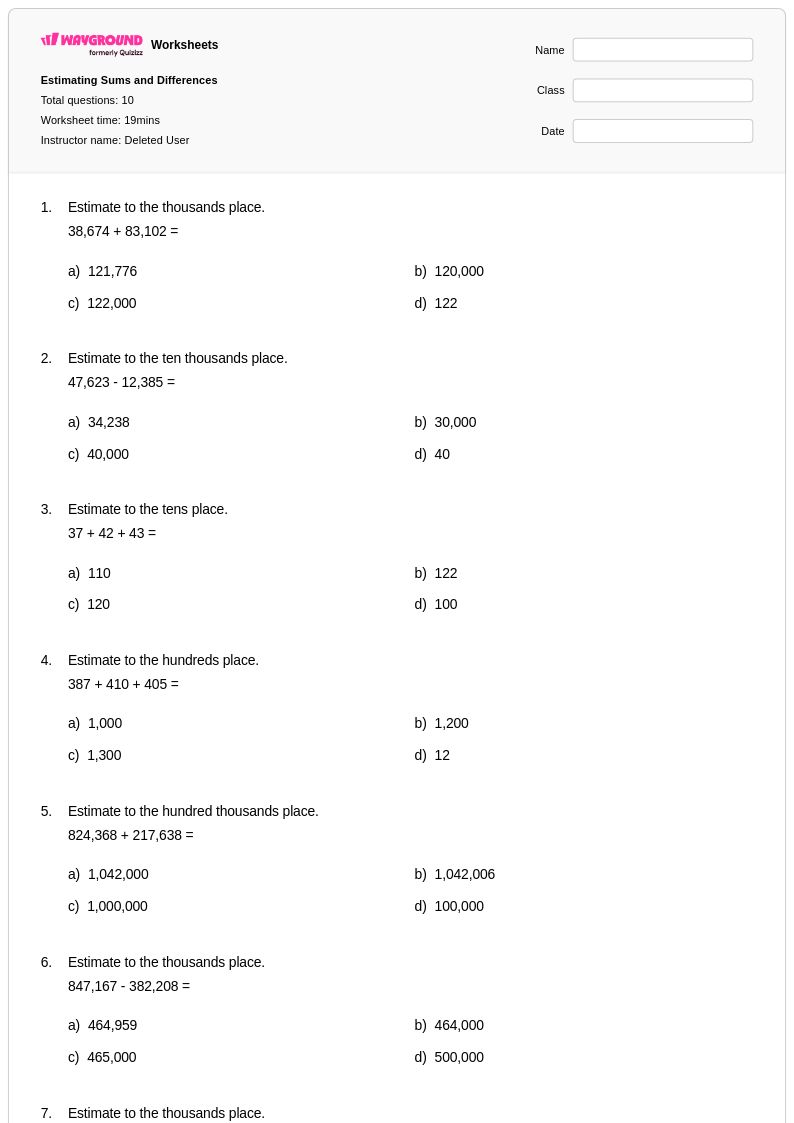
Class 6 estimating sums worksheets from Wayground provide free printables and practice problems to help students develop number sense skills through hands-on estimation activities with complete answer keys.
Explore printable Estimating Sums worksheets for Class 6
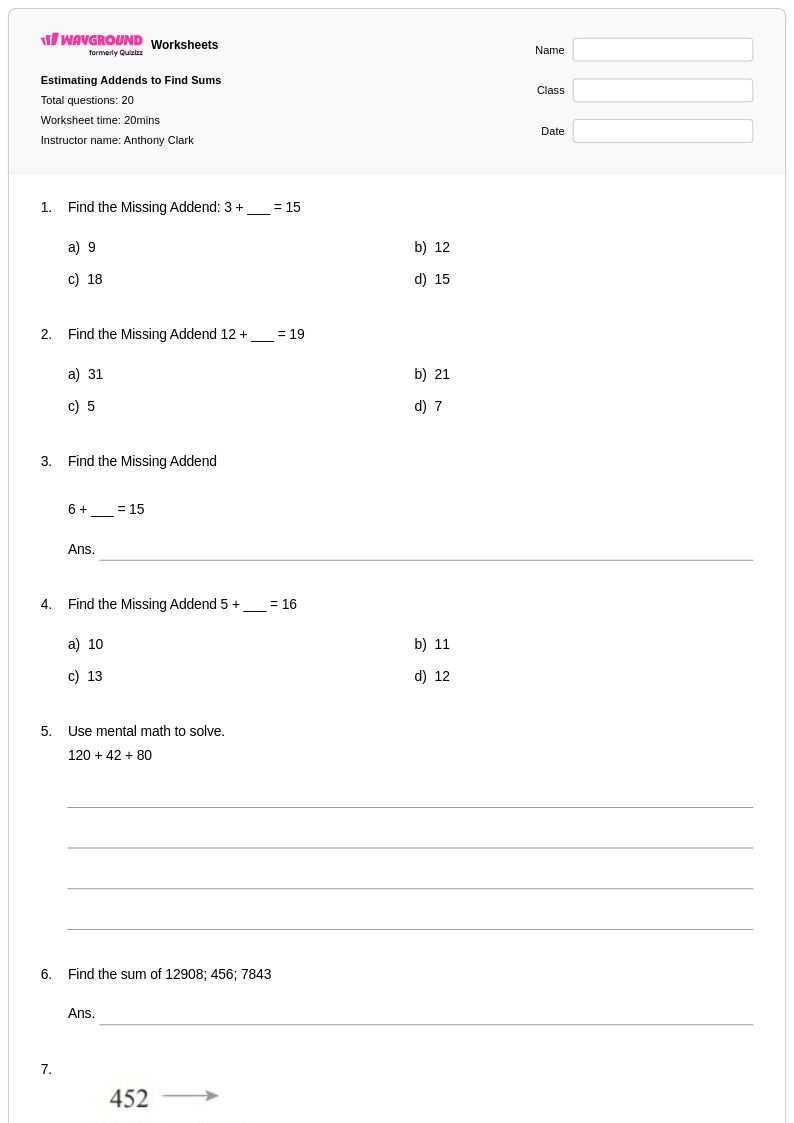
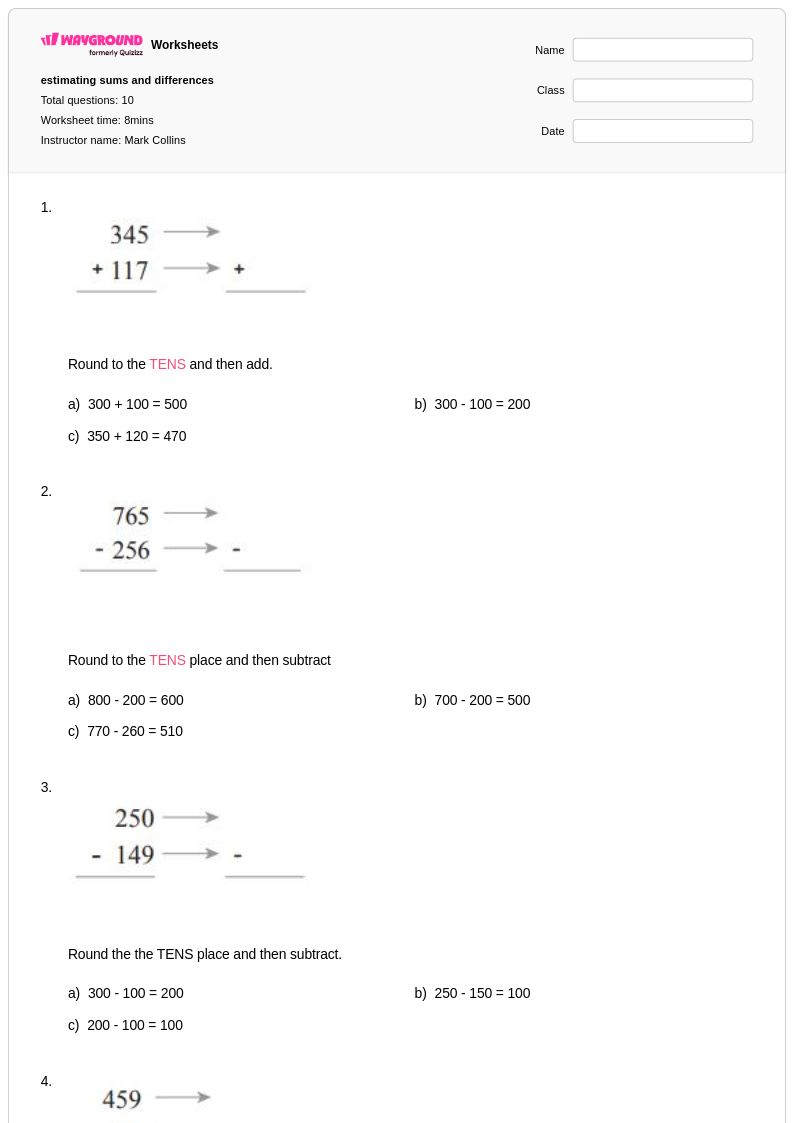
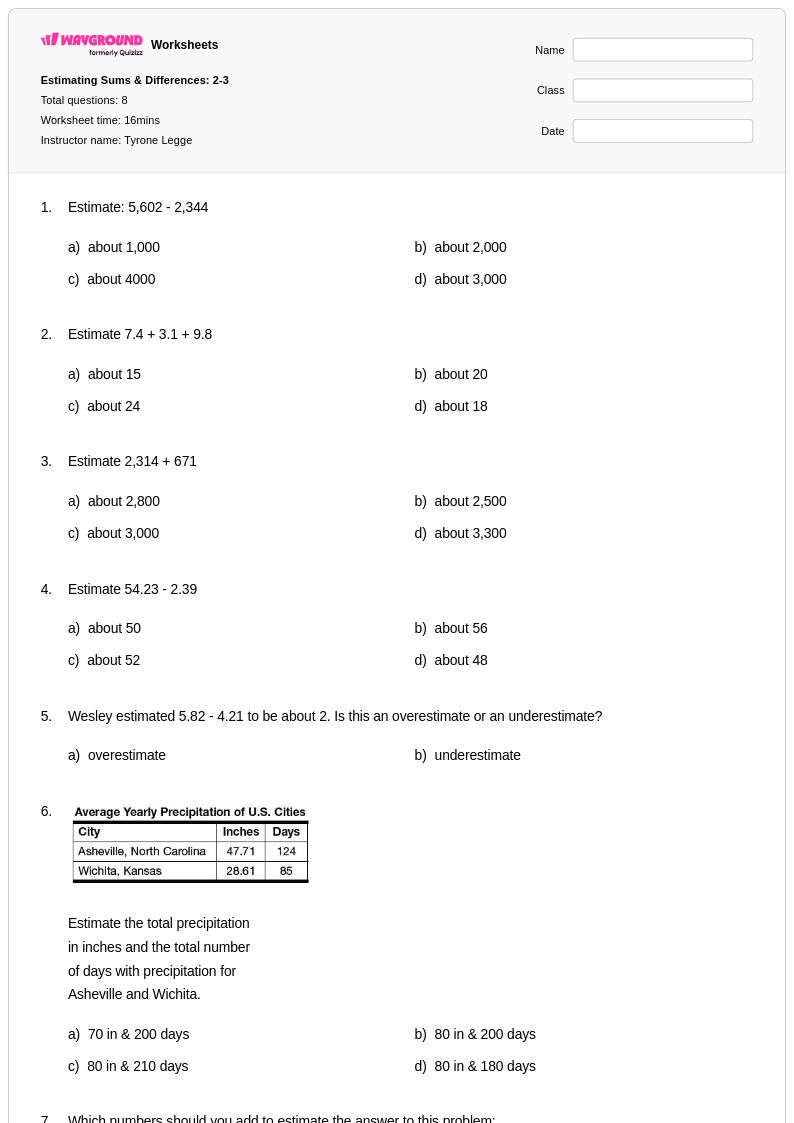
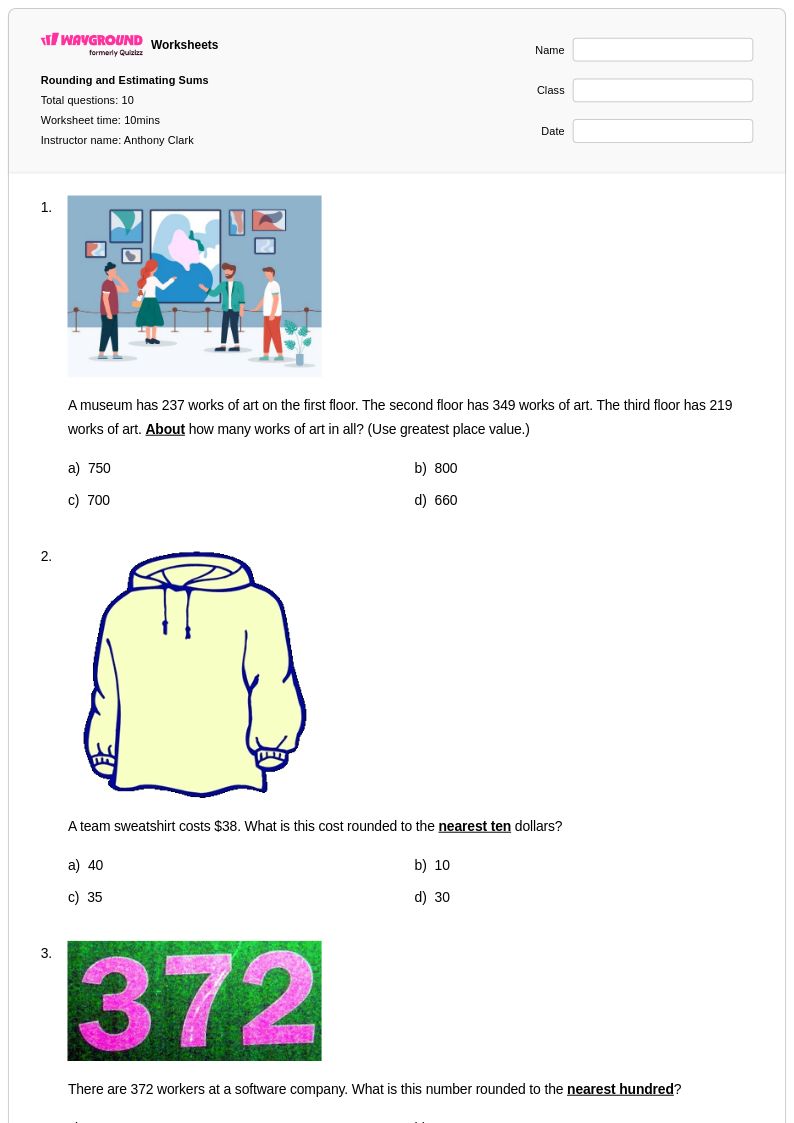
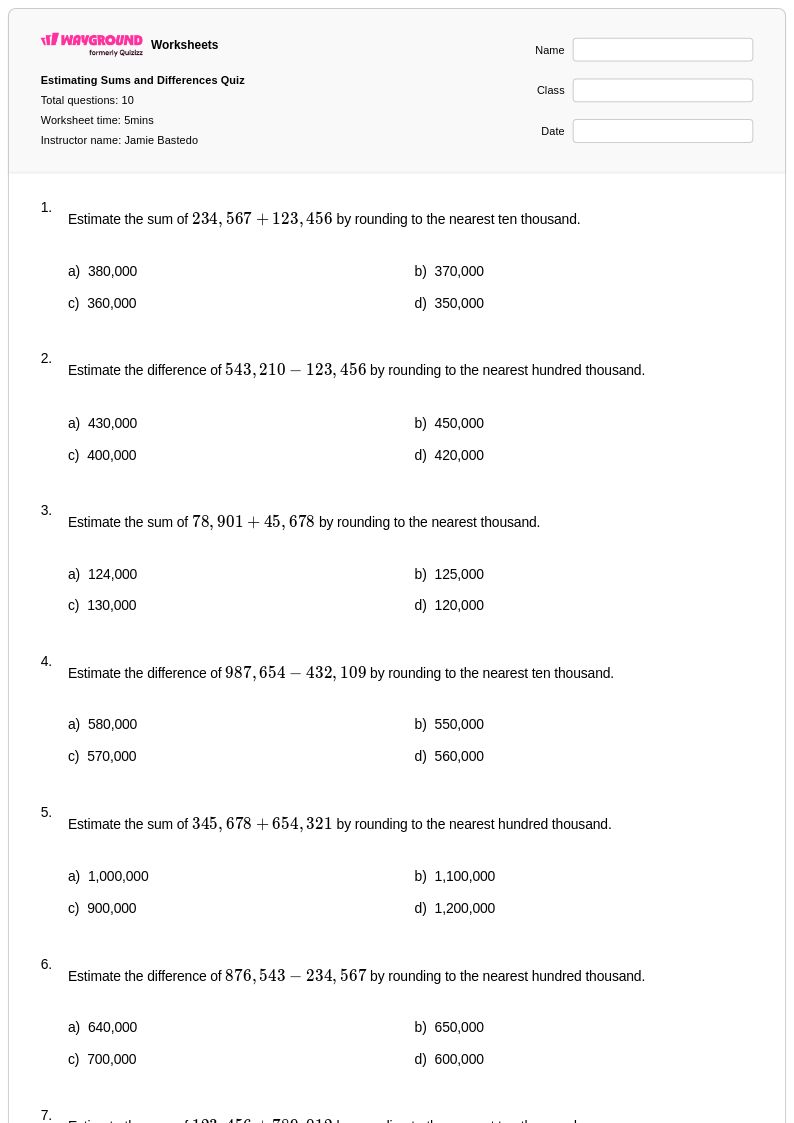
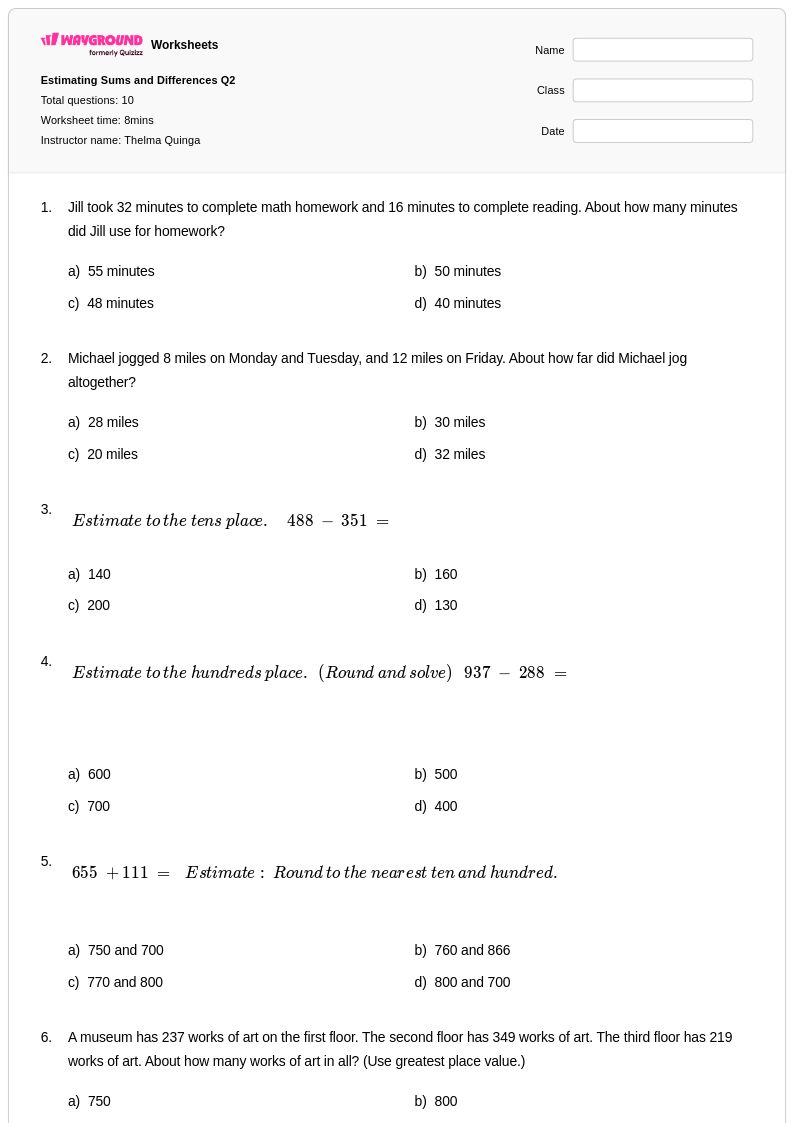
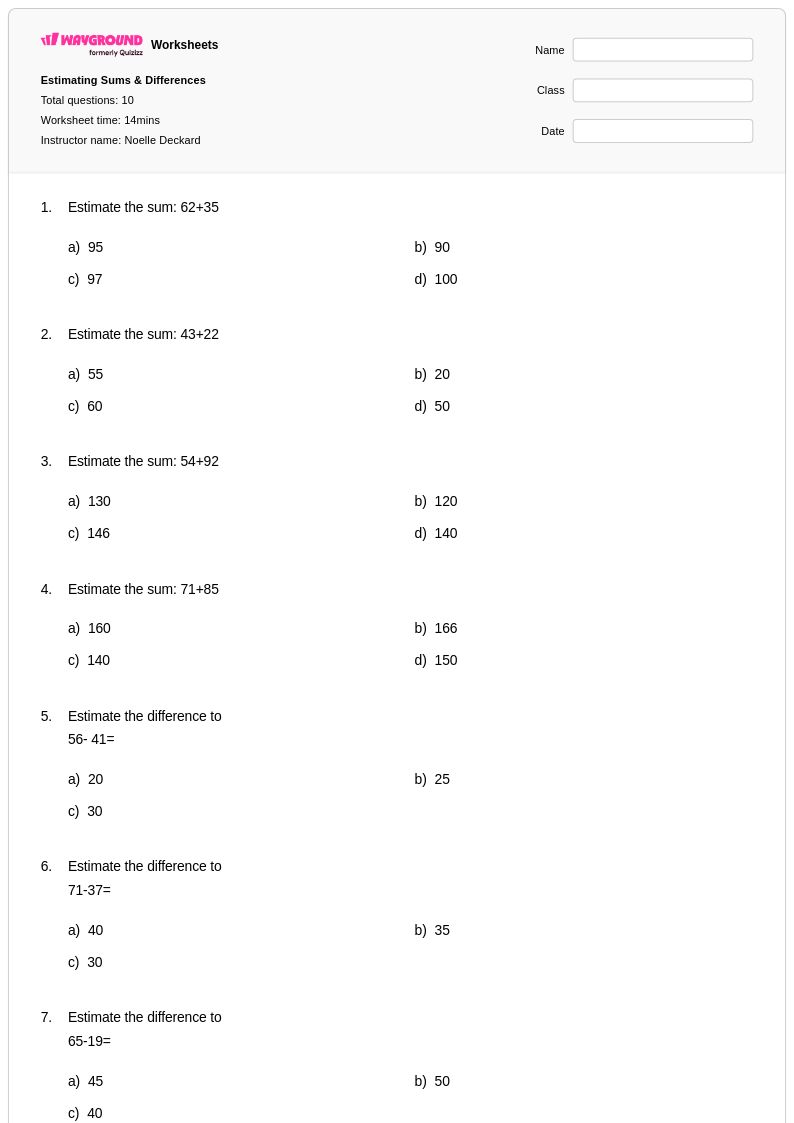
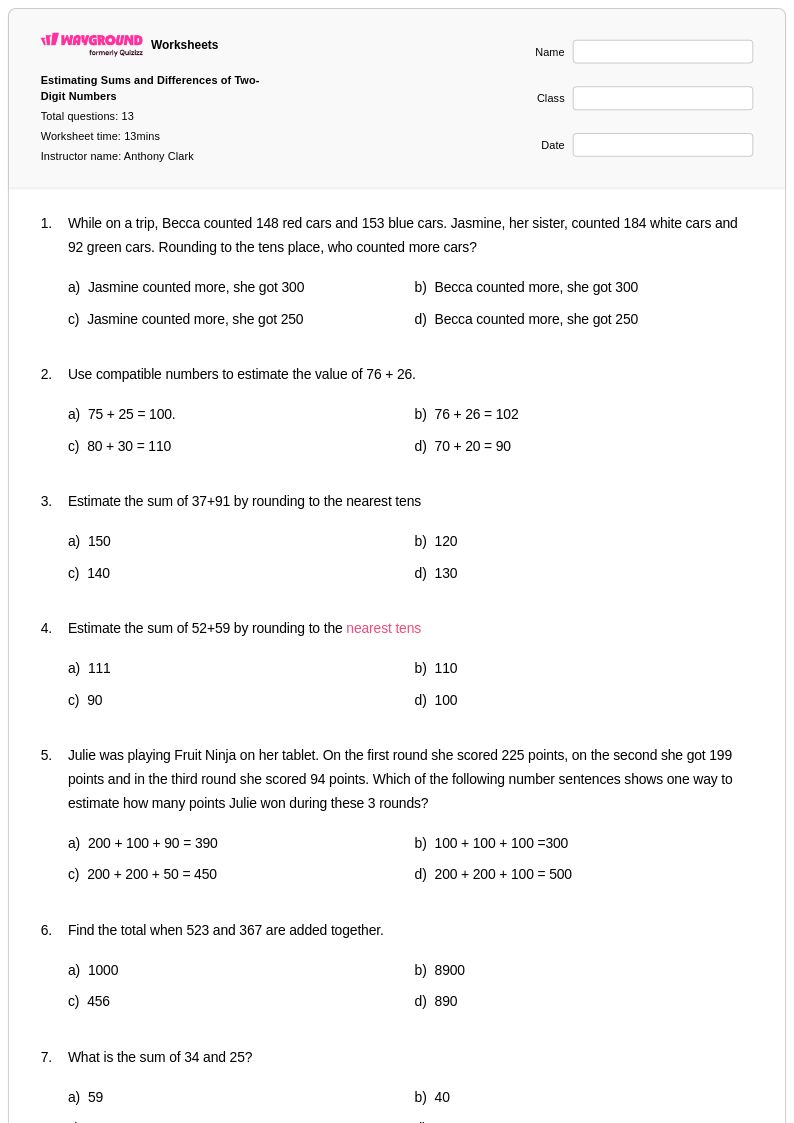
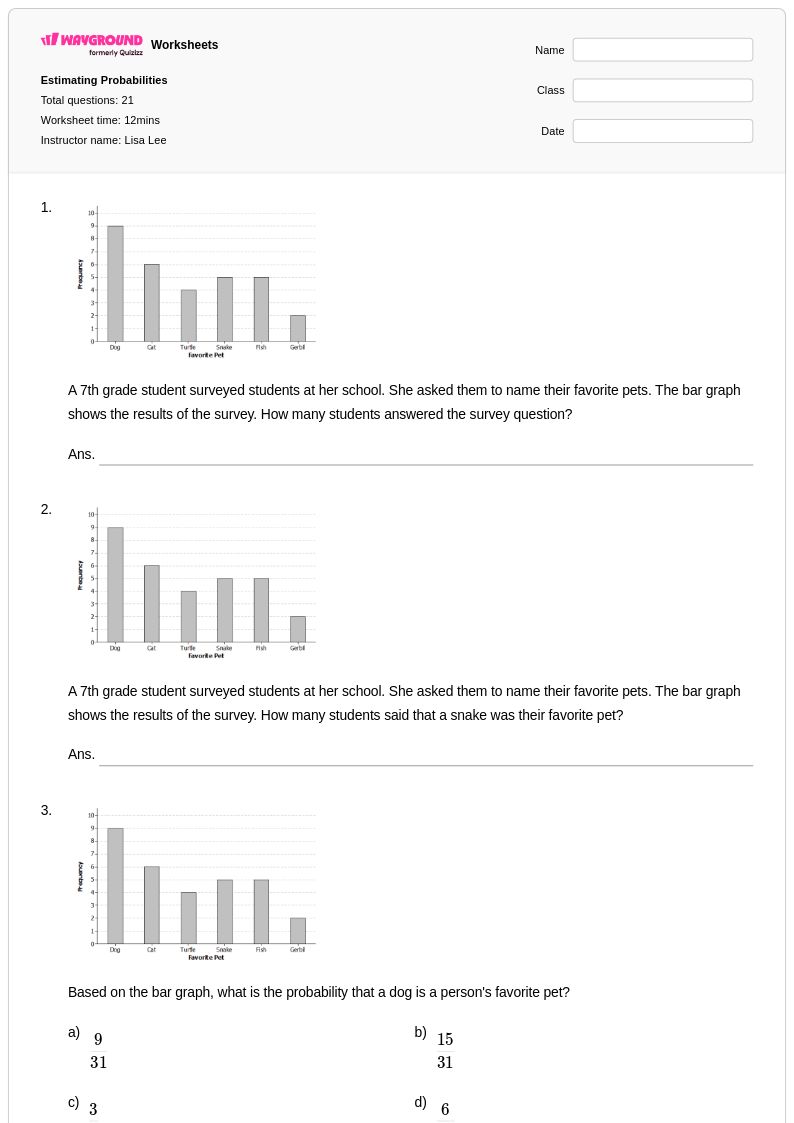
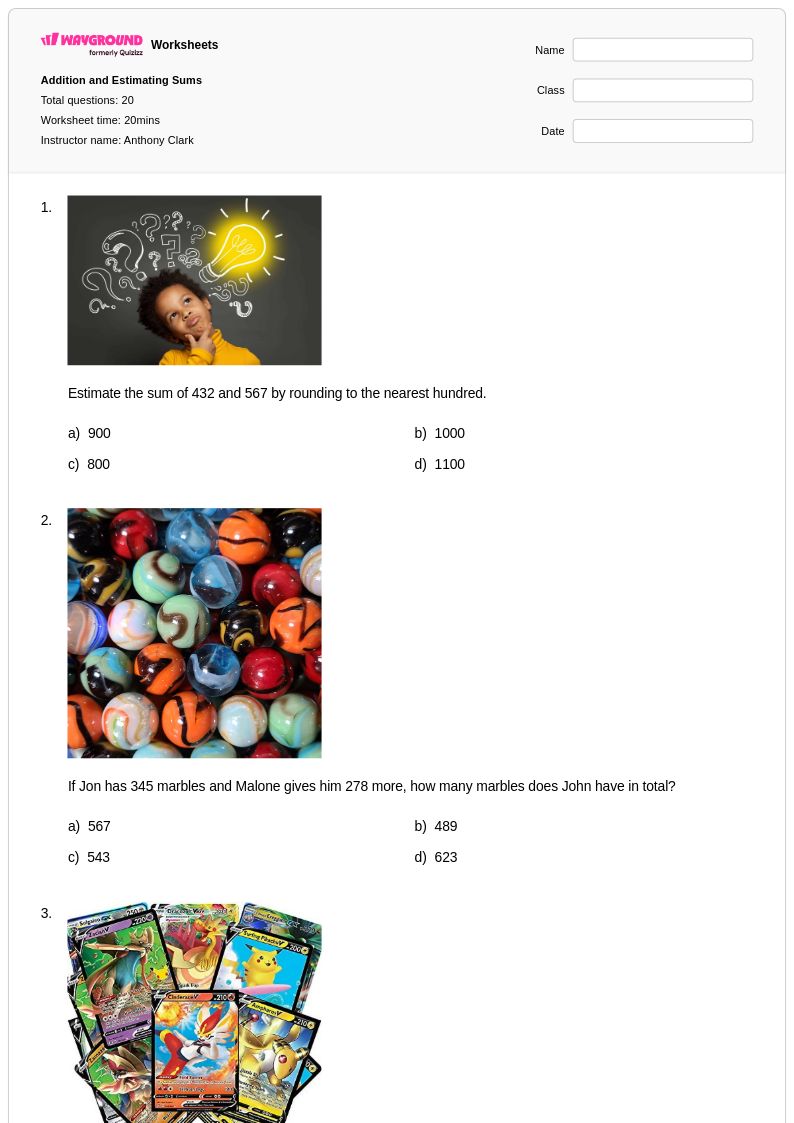
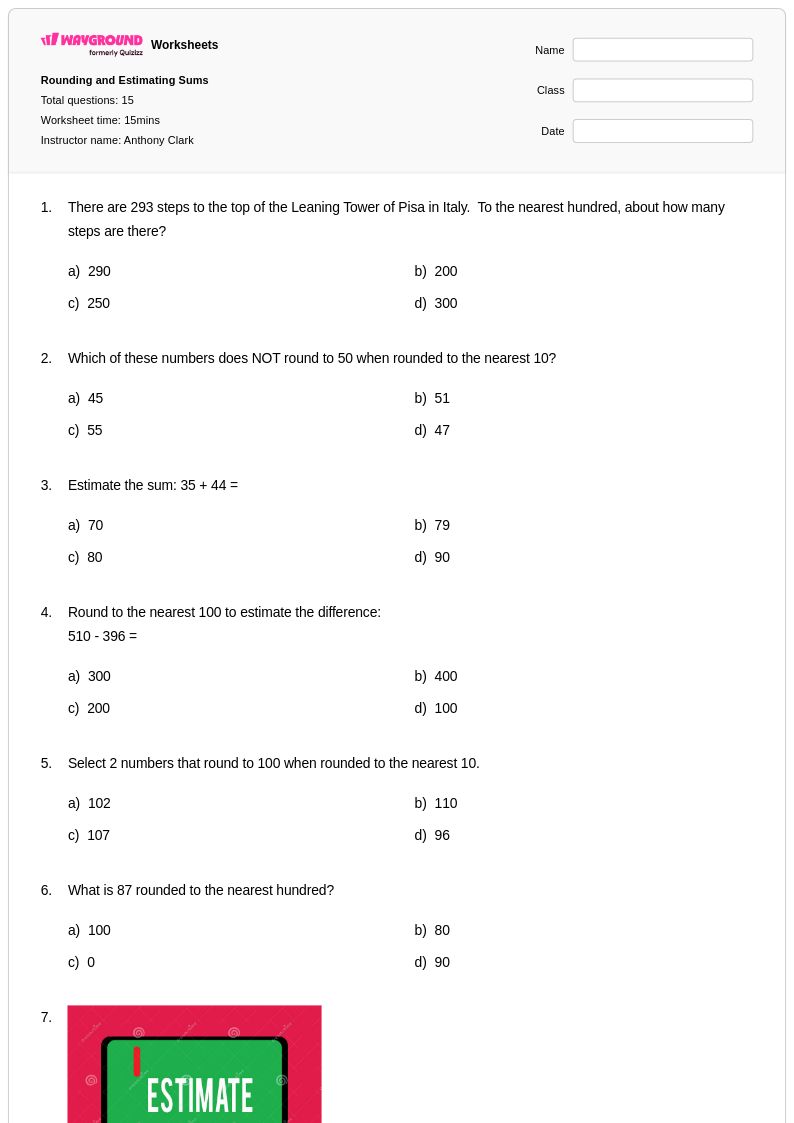
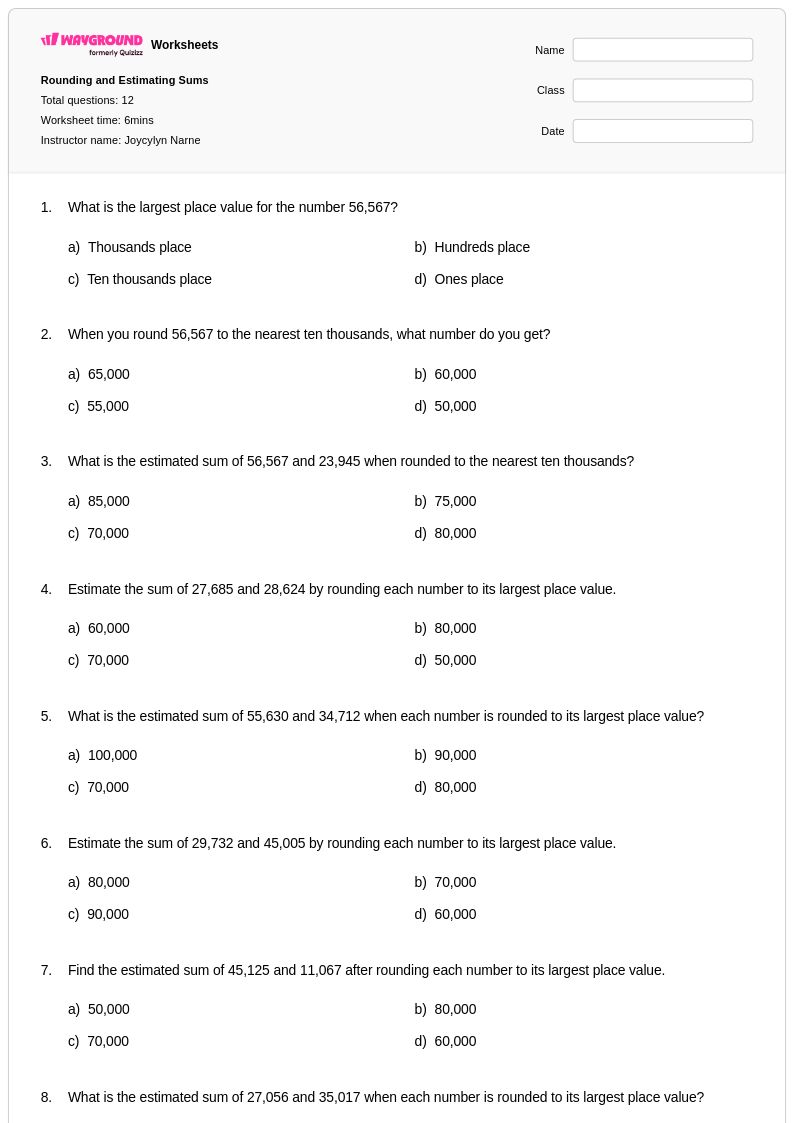
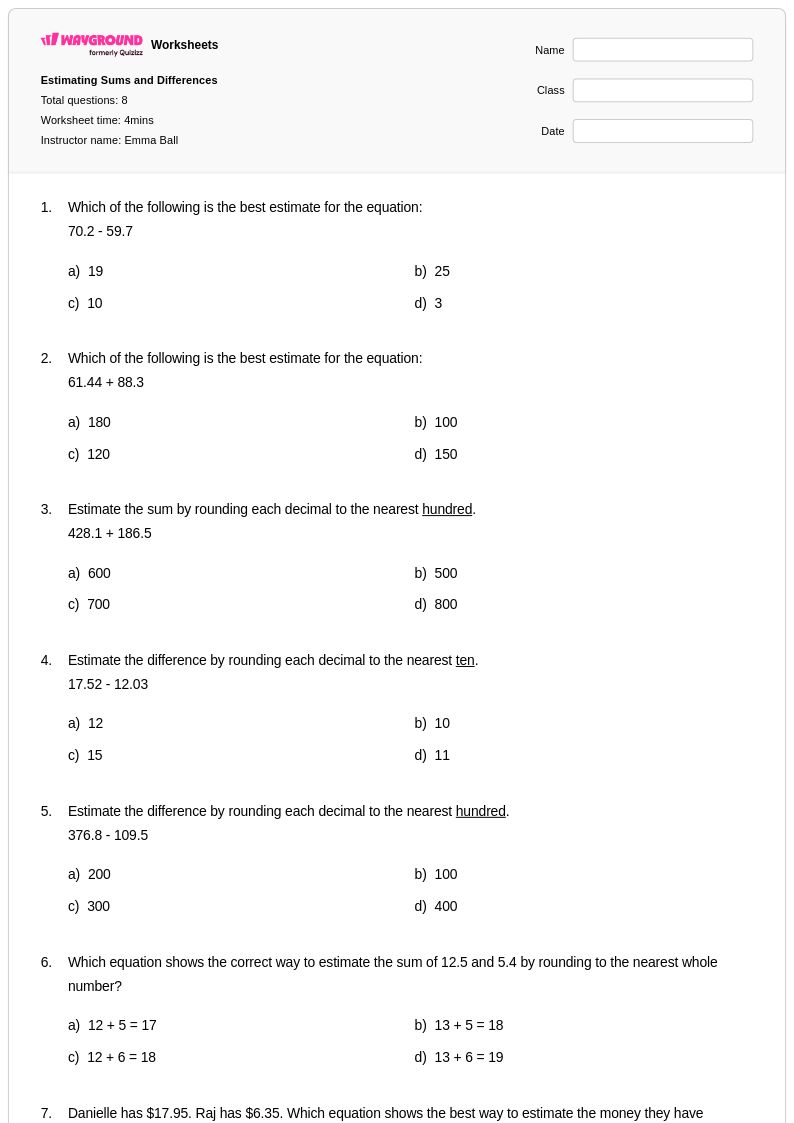
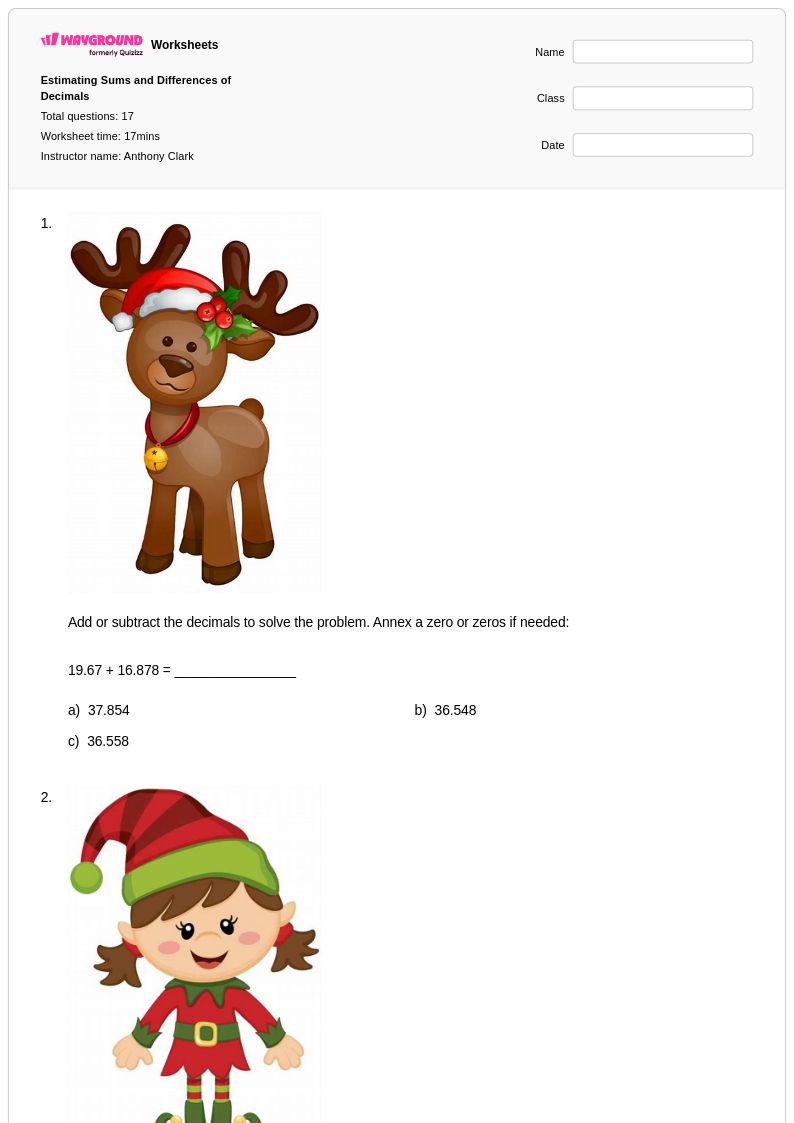
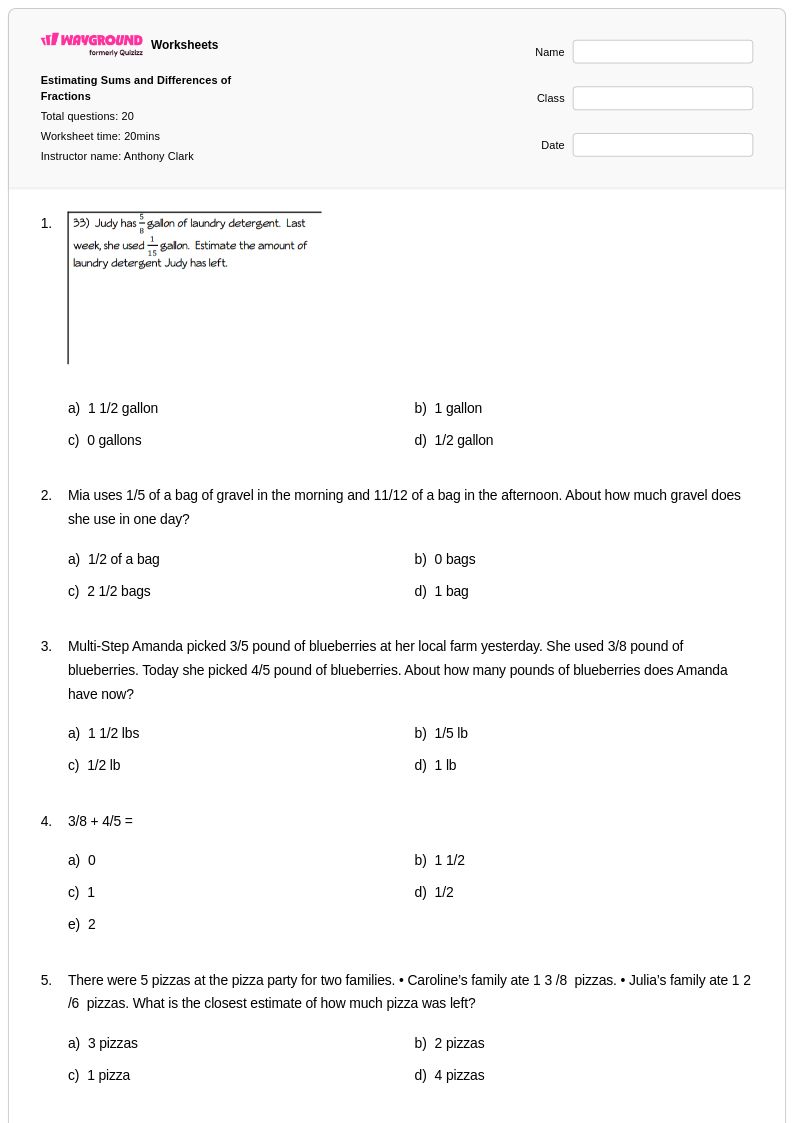
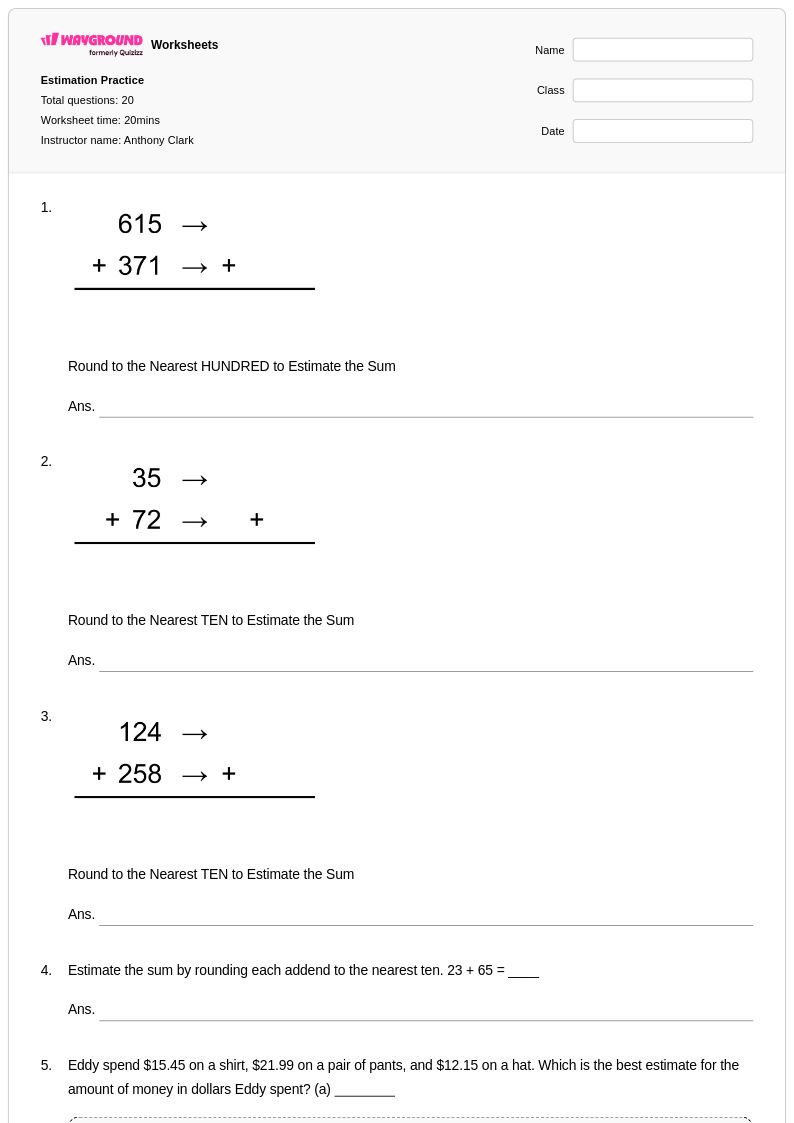
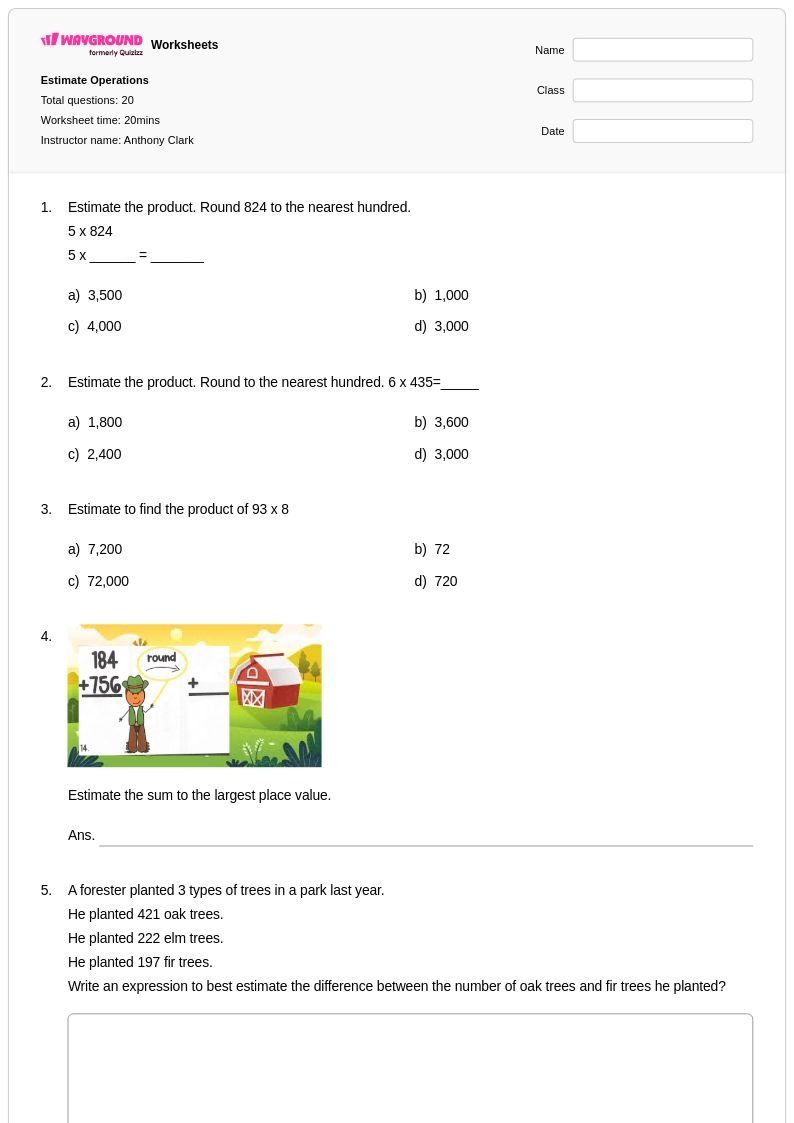
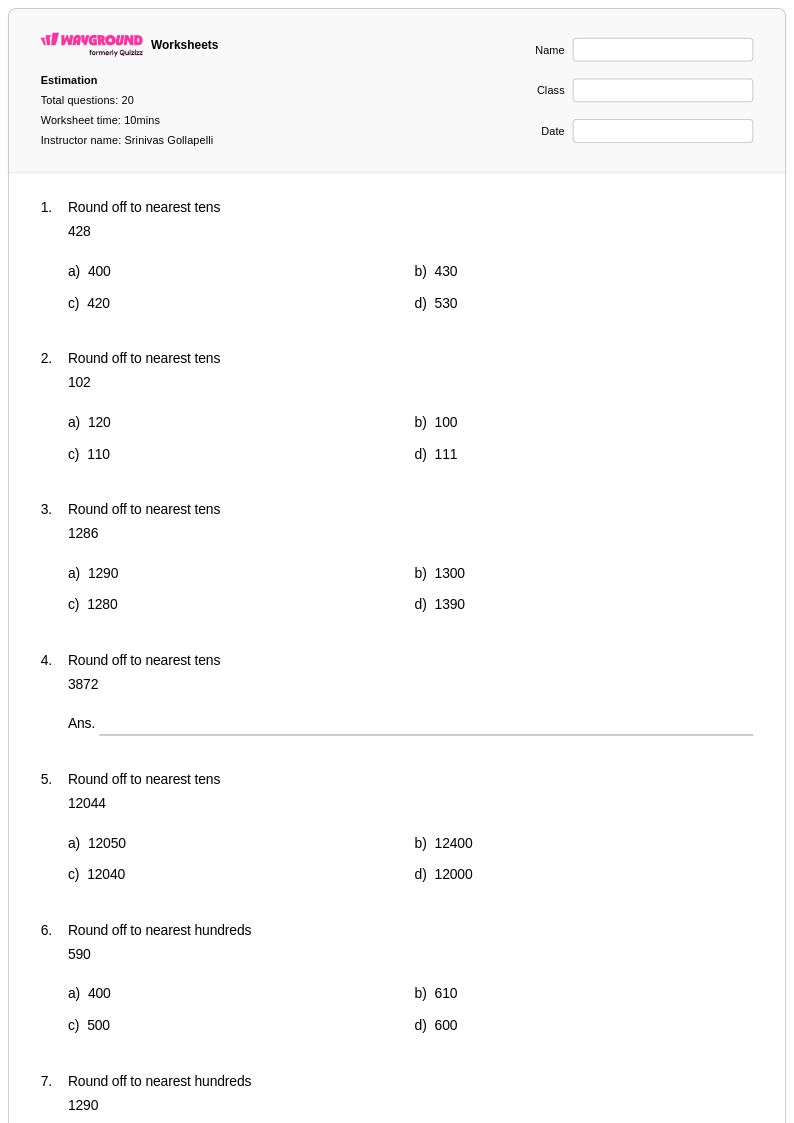
Estimating sums worksheets for Class 6 students available through Wayground (formerly Quizizz) provide comprehensive practice in developing critical number sense skills that form the foundation of mathematical reasoning. These carefully designed resources help students master the art of approximating addition problems by rounding numbers to convenient place values, using compatible numbers, and applying front-end estimation strategies. Students work through systematic practice problems that strengthen their ability to quickly assess whether calculated answers are reasonable, a skill essential for both academic success and real-world mathematical applications. Each worksheet collection includes detailed answer keys and is available as free printables in convenient PDF format, allowing educators to seamlessly integrate estimation practice into their mathematics instruction.
Wayground (formerly Quizizz) empowers teachers with access to millions of educator-created resources specifically designed to support Class 6 number sense instruction, including extensive collections of estimating sums materials that can be easily located through robust search and filtering capabilities. These worksheet collections align with curriculum standards and offer flexible customization options that enable teachers to differentiate instruction based on individual student needs and learning objectives. Available in both printable PDF and interactive digital formats, these resources support diverse classroom environments while providing teachers with the tools needed for effective lesson planning, targeted skill remediation, and enrichment activities. The platform's comprehensive organizational features allow educators to efficiently identify appropriate materials for specific estimation strategies, from basic rounding techniques to more sophisticated mental math approaches, ensuring that every student receives the targeted practice necessary to build confidence and competency in mathematical estimation.
FAQs
How do I teach estimating sums to sixth graders?
By sixth grade, students should be applying estimation to a wider range of number types — decimals, fractions, and negative numbers. The instructional emphasis shifts from 'how do I round?' to 'which strategy is most efficient here?' For example, compatible numbers often work faster than rounding when adding fractions with unlike denominators. A good classroom routine is to present a problem and ask students to name their strategy before they estimate, which makes the decision-making visible and discussable.
What exercises help sixth graders practice estimating sums?
At Grade 6, the most valuable practice involves number types beyond whole numbers: estimating sums of decimals, fractions, and mixed numbers. Front-end estimation and compatible numbers deserve more attention here than basic rounding, since they're faster for complex addends. Word problems that require students to choose a strategy — rather than being told which one to use — are especially effective because they build the judgment that makes estimation genuinely useful.
What mistakes do sixth graders commonly make when estimating sums?
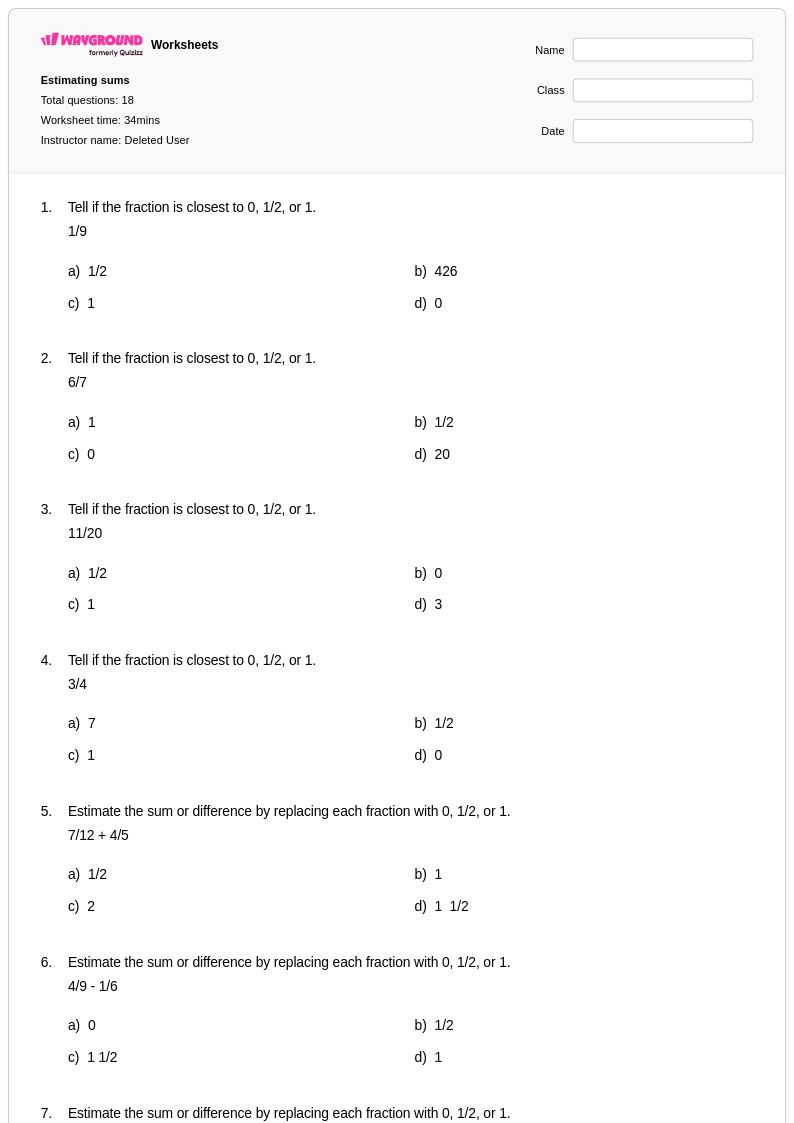
The most persistent error is applying whole-number rounding habits to fractions — for example, rounding 3/8 to 0 instead of recognizing it's close to 1/2. Students also tend to over-estimate precision, rounding to a place value that makes the mental math nearly as hard as the exact calculation. A useful correction: ask students to estimate the same sum two different ways and compare the results, which builds flexibility and exposes over-reliance on one method.
How do I use Wayground's Grade 6 estimating sums worksheets?
Each worksheet is available as a printable PDF and as a digital quiz you can host on Wayground, and every one includes a complete answer key. The digital format works well for immediate feedback during class; the printable is a good fit for independent work or assessments where you want students off devices. For grading paper submissions, the Wayground for Teachers app lets you scan student work directly rather than entering scores by hand.
How does estimating sums connect to the Common Core progression at Grade 6?
Common Core's Grade 6 number work introduces rational numbers fully — including negative numbers and operations with fractions and decimals — and expects students to apply estimation to assess the reasonableness of computed results. Estimating sums at this grade is less about learning a new procedure and more about extending a familiar one to unfamiliar number types. It also connects directly to ratio and rate reasoning, where students frequently need quick approximations to check whether a proportional relationship makes sense.
How can I differentiate estimating sums practice for my sixth-grade class?
For students still shaky on fraction benchmarks (like recognizing that 5/8 is close to 1/2), start with estimation problems that use unit fractions before moving to mixed numbers — the same Wayground worksheet can be filtered or swapped for a simpler version without building a new assignment. For English learners, Wayground's worksheet translation tool and Read Aloud feature keep the language barrier from blocking access to the math. Students who are ready for more can move into estimation with negative rational numbers, which the platform's search tools make easy to locate.