
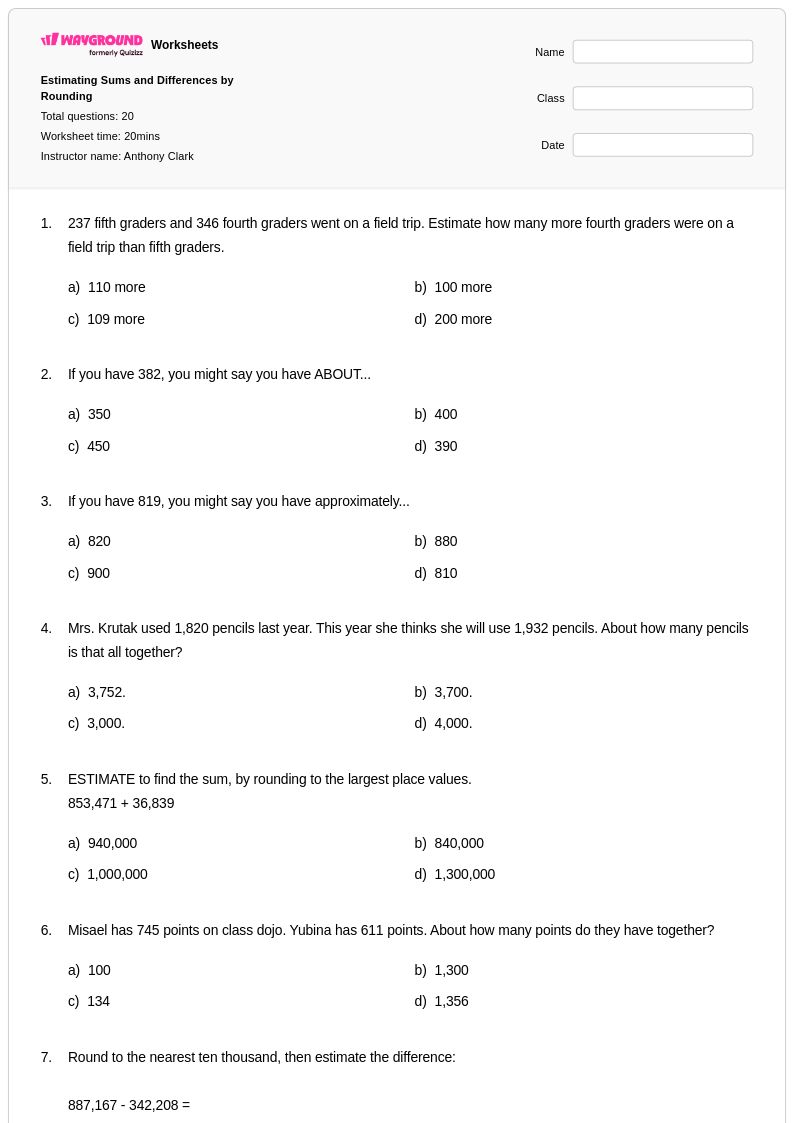
20 Q
4th - Uni
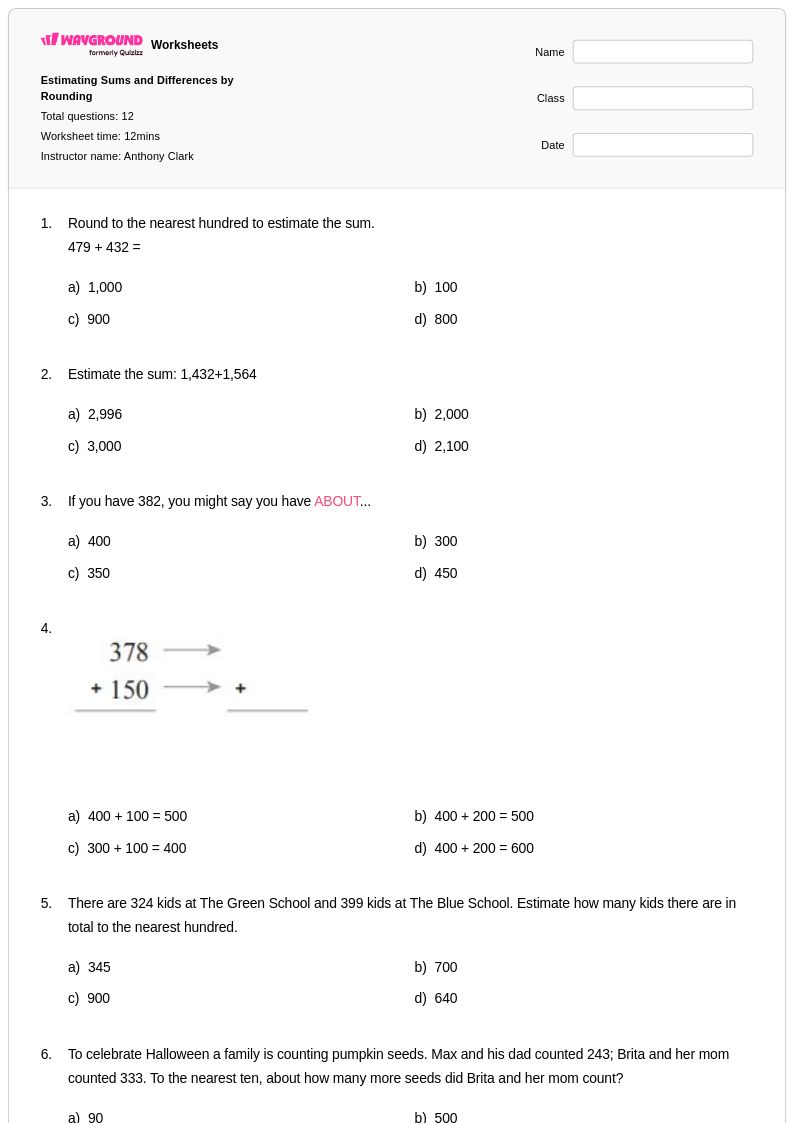
12 Q
4th - Uni
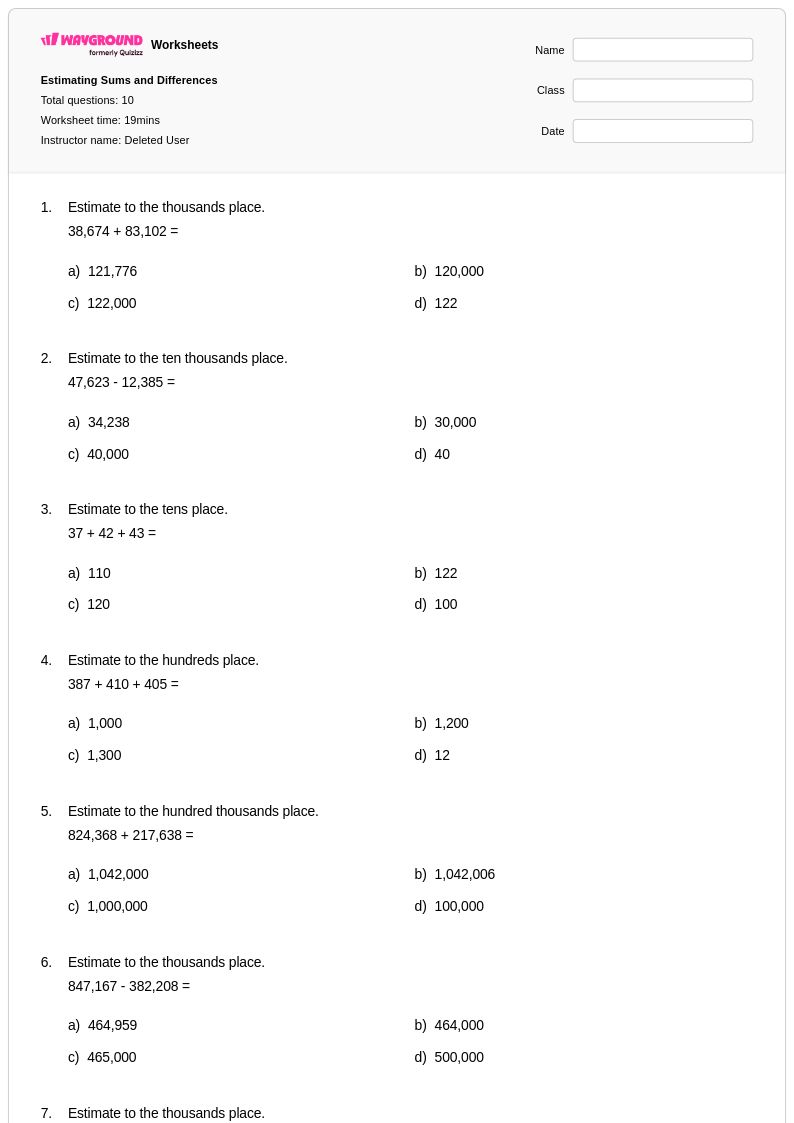
10 Q
4th - 8th
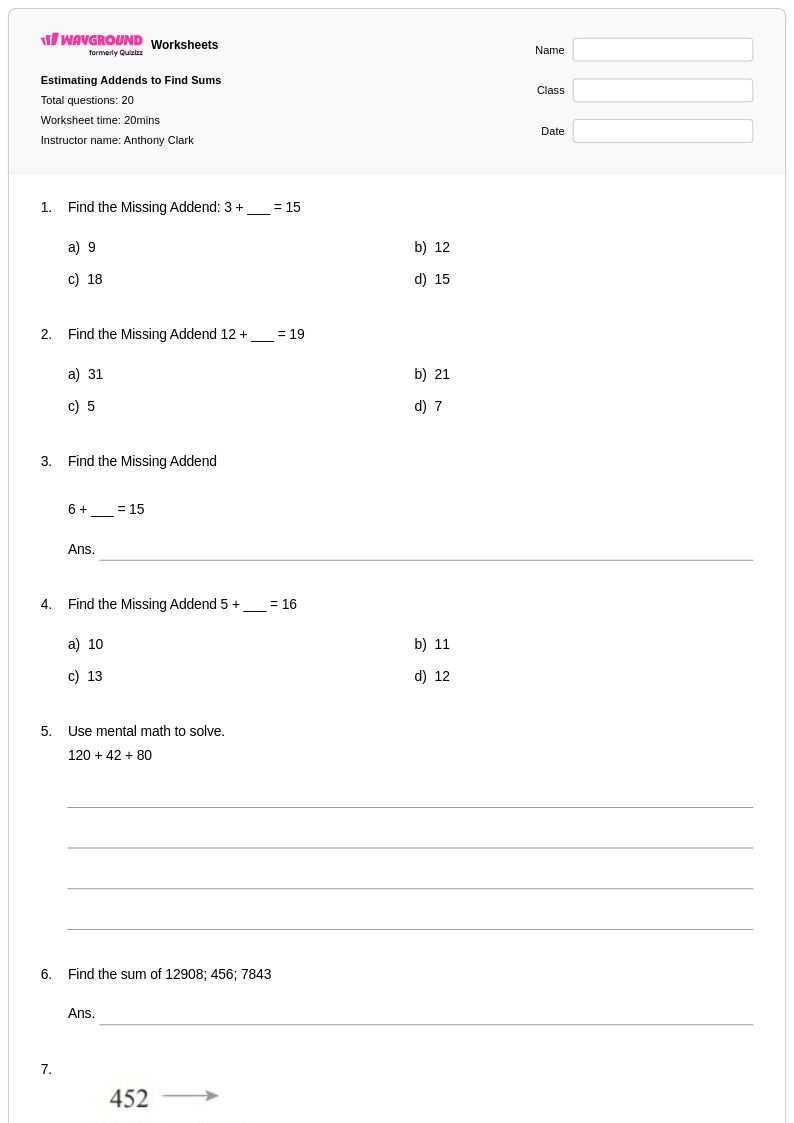
20 Q
4th - Uni
10 Q
3rd - 7th
10 Q
4th - Uni
10 Q
4th - Uni
15 Q
7th
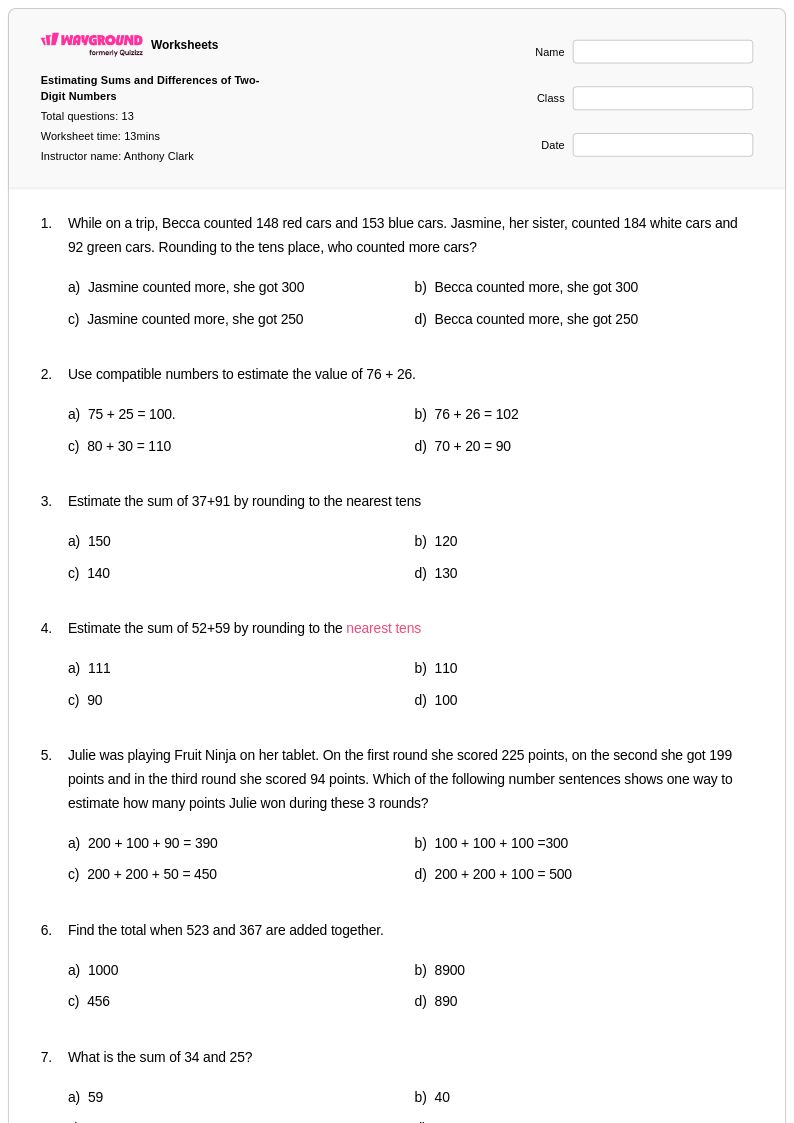
13 Q
4th - Uni
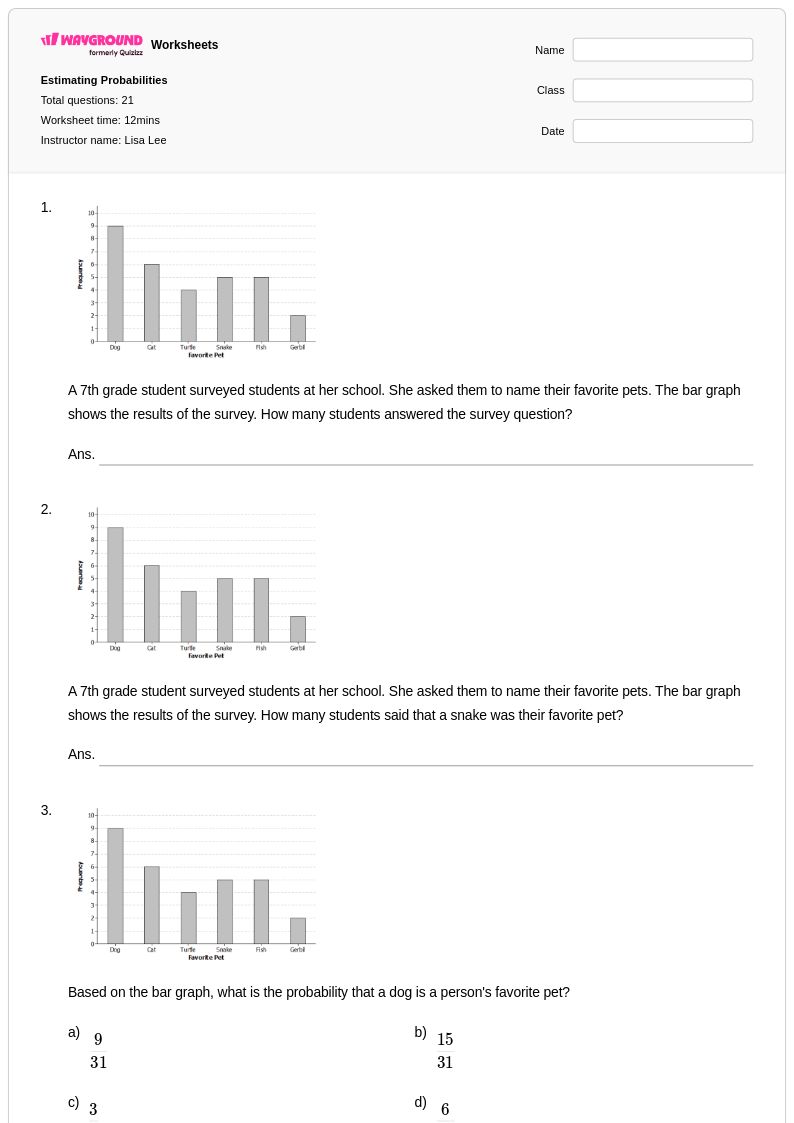
21 Q
6th - 8th
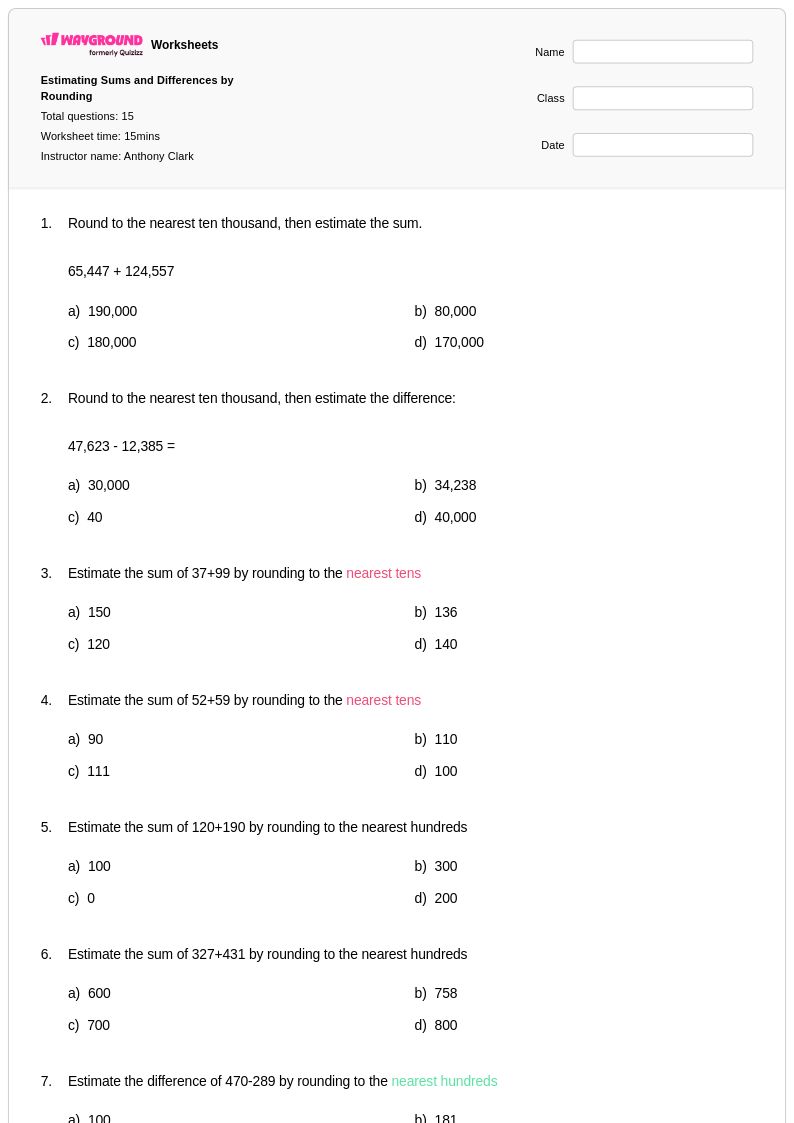
15 Q
4th - Uni
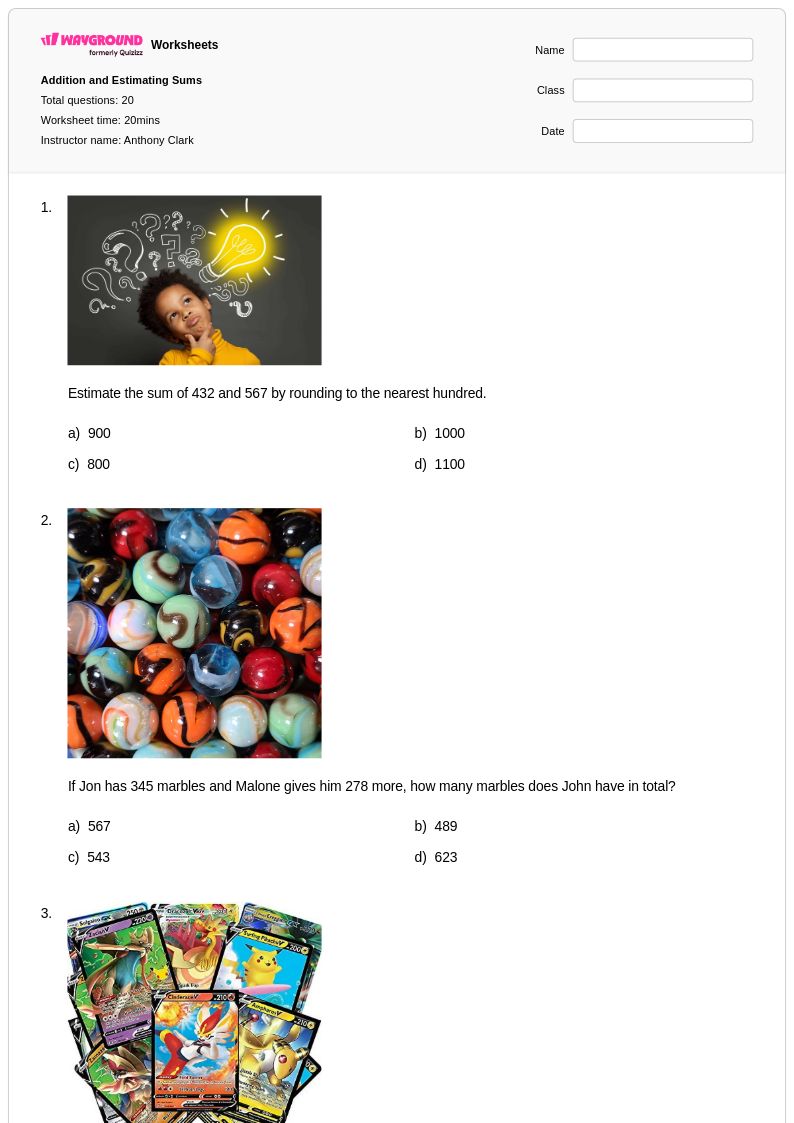
20 Q
2nd - Uni
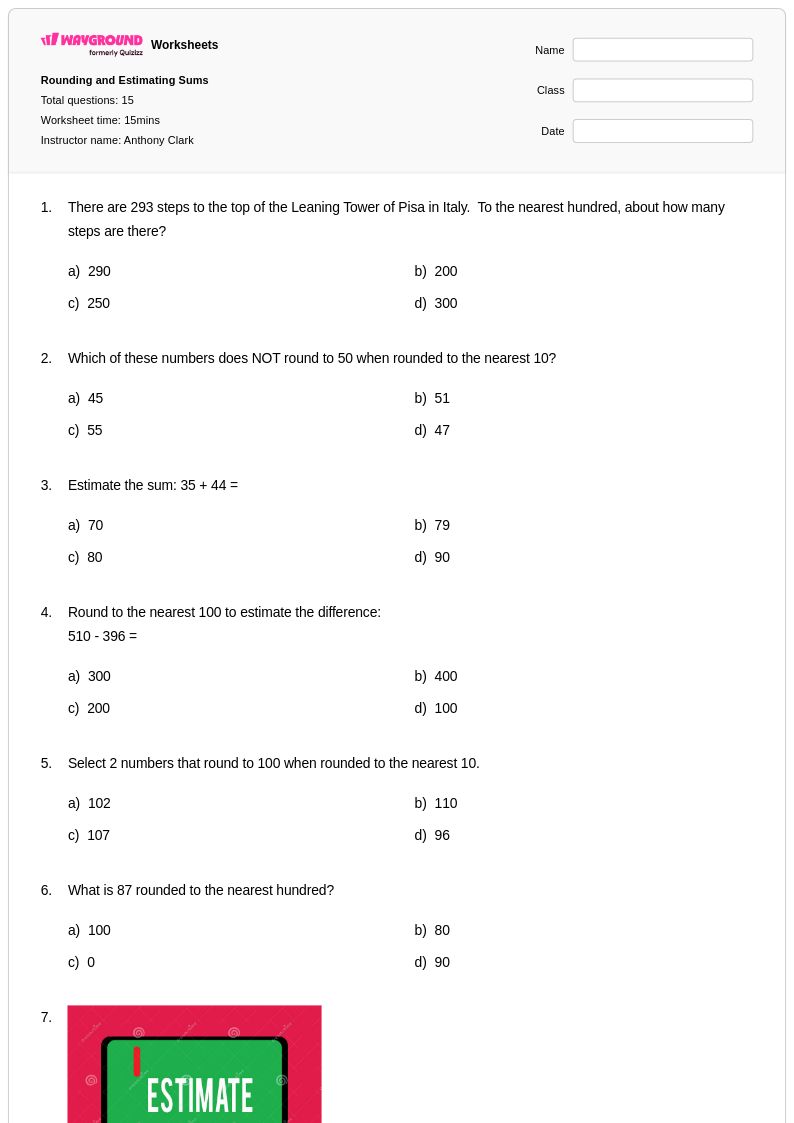
15 Q
4th - Uni
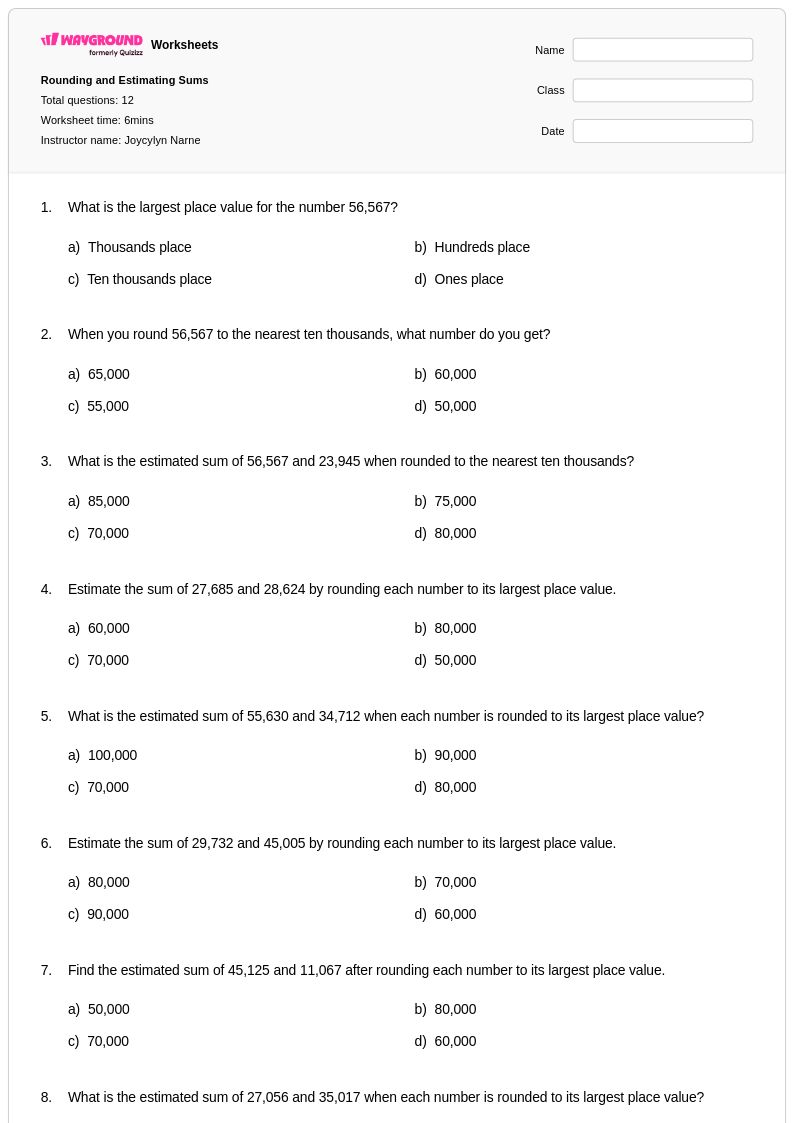
12 Q
4th - Uni
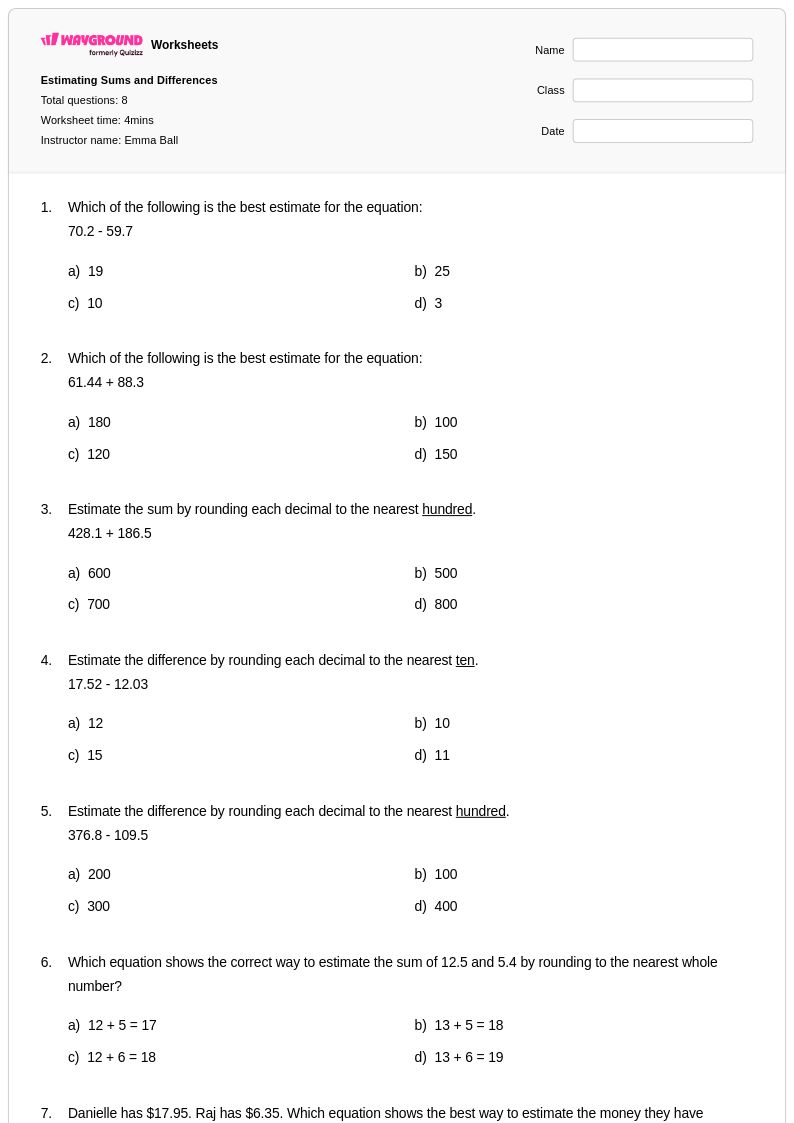
8 Q
5th - Uni
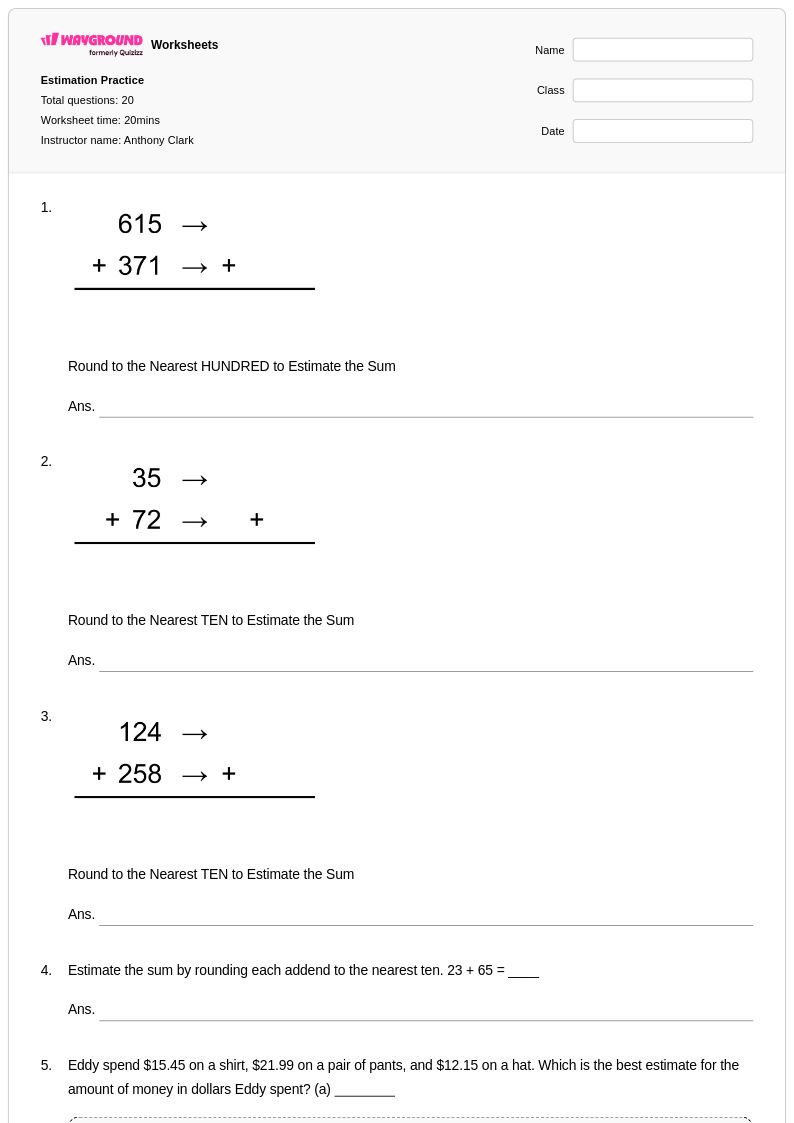
20 Q
4th - Uni
17 Q
5th - Uni
20 Q
5th - Uni
11 Q
5th - Uni
12 Q
7th
20 Q
5th - Uni
20 Q
5th - Uni
20 Q
3rd - Uni
23 Q
5th - 9th
Explore Other Subject Worksheets for class 7
Explore printable Estimating Sums worksheets for Class 7
Estimating sums represents a fundamental mathematical skill that Class 7 students must master to develop strong number sense and computational fluency. Wayground's extensive collection of estimating sums worksheets provides targeted practice opportunities that help seventh-grade students learn to quickly approximate addition problems using rounding, compatible numbers, and front-end estimation strategies. These comprehensive practice problems guide students through progressively challenging scenarios, from estimating sums of two-digit numbers to complex multi-step problems involving decimals and fractions. Each worksheet includes a detailed answer key that enables students to check their reasoning and refine their estimation techniques, while the free printable format ensures accessibility for both classroom instruction and independent study at home.
Wayground, formerly Quizizz, empowers educators with millions of teacher-created resources specifically designed to support Class 7 mathematics instruction in estimating sums and broader number sense concepts. The platform's robust search and filtering capabilities allow teachers to quickly locate worksheets that align with specific curriculum standards and match their students' current skill levels. These differentiation tools enable seamless customization of practice materials, supporting both remediation for struggling learners and enrichment opportunities for advanced students. Available in both printable pdf format and interactive digital versions, these resources streamline lesson planning while providing flexible options for skill practice, formative assessment, and targeted intervention that meets diverse classroom needs.
FAQs
How do I teach estimating sums to seventh graders?
What exercises help Grade 7 students practice estimating sums?
What mistakes do students make when estimating sums?
How can I use these estimating sums worksheets in class?
How does estimating sums fit into the Grade 7 Common Core math progression?
How can I differentiate estimating-sums practice for a mixed-ability class?
What grade do students learn to estimate sums?