Free Printable Financial Education Worksheets for Class 12
Enhance Class 12 students' financial literacy with Wayground's comprehensive collection of free financial education worksheets, featuring printable PDFs, practice problems, and answer keys to master essential money management skills.
Explore printable Financial Education worksheets for Class 12
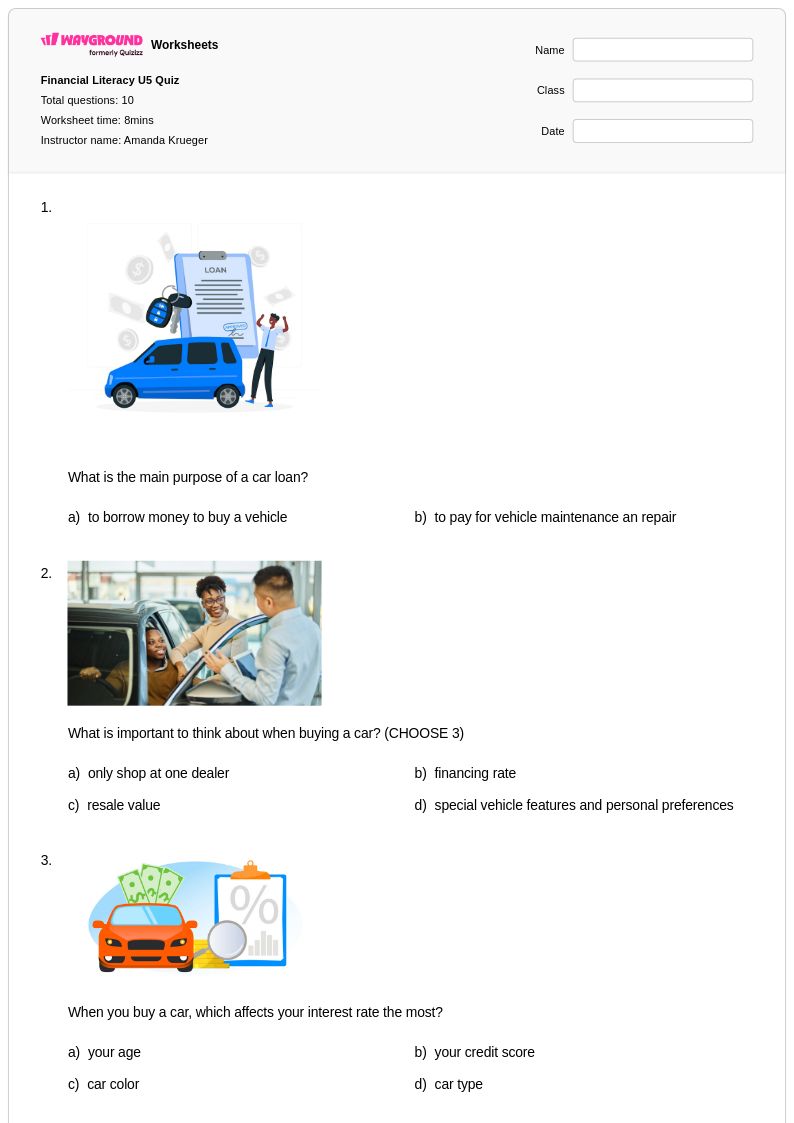
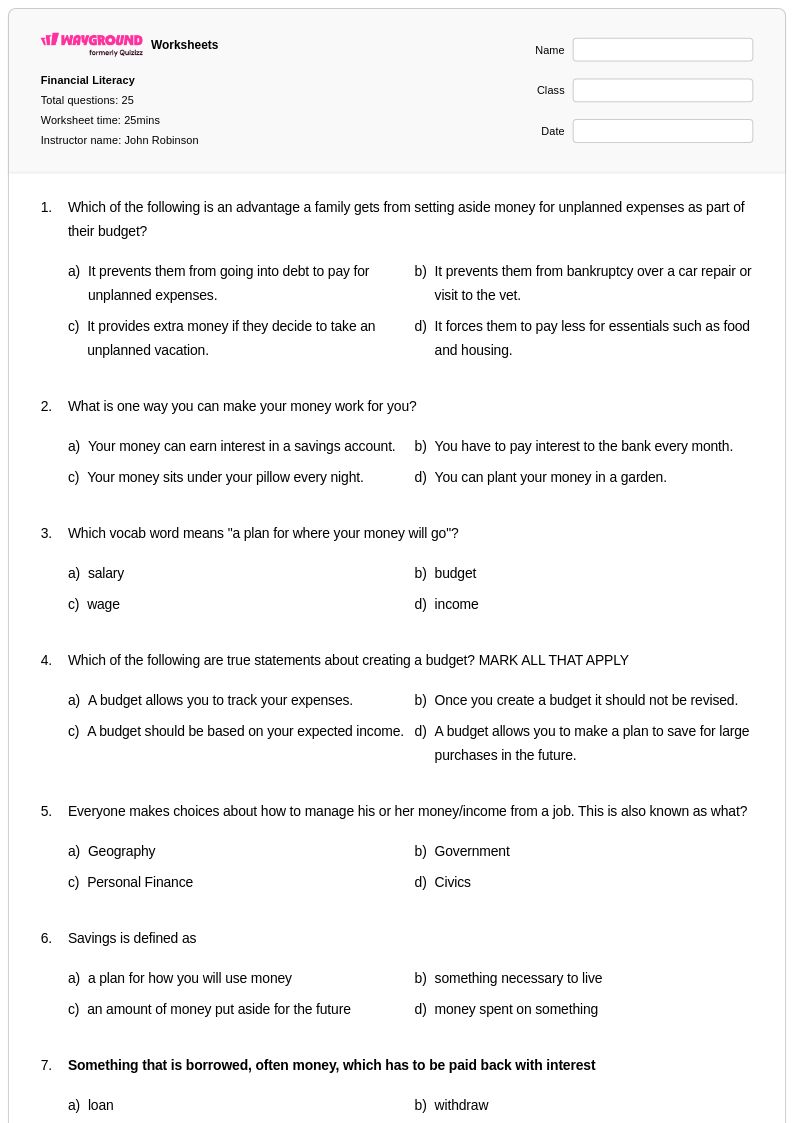
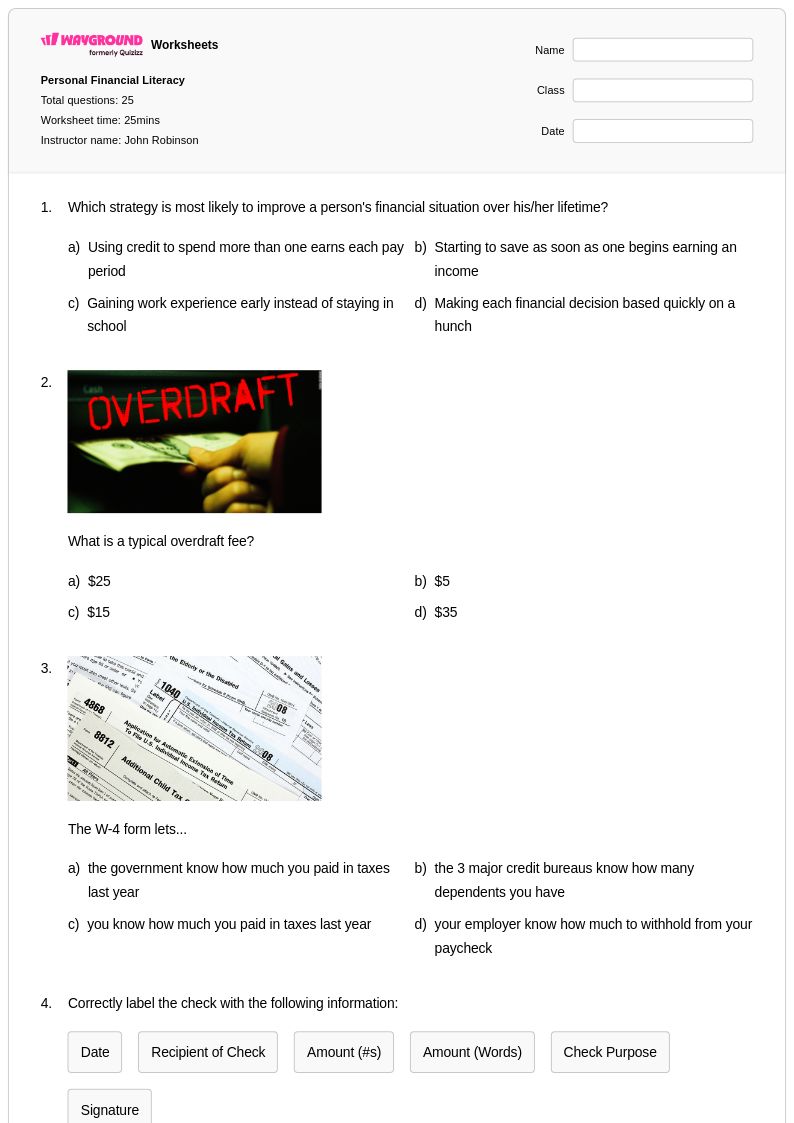
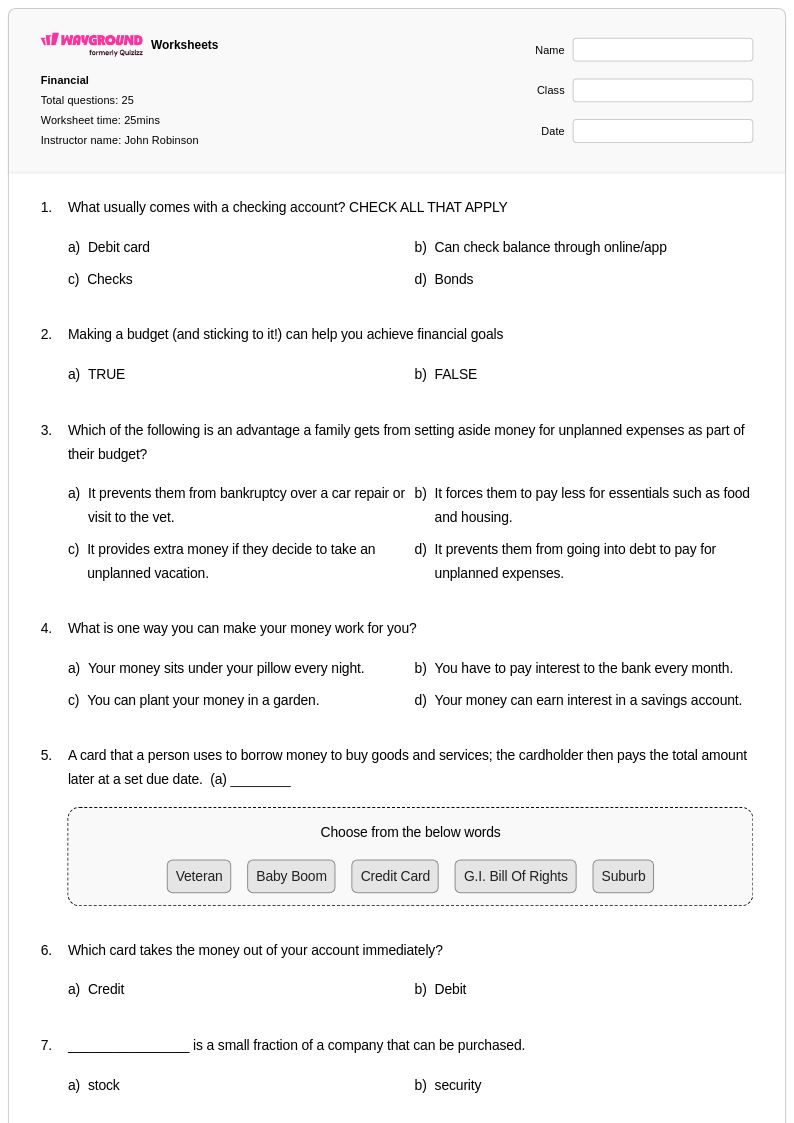
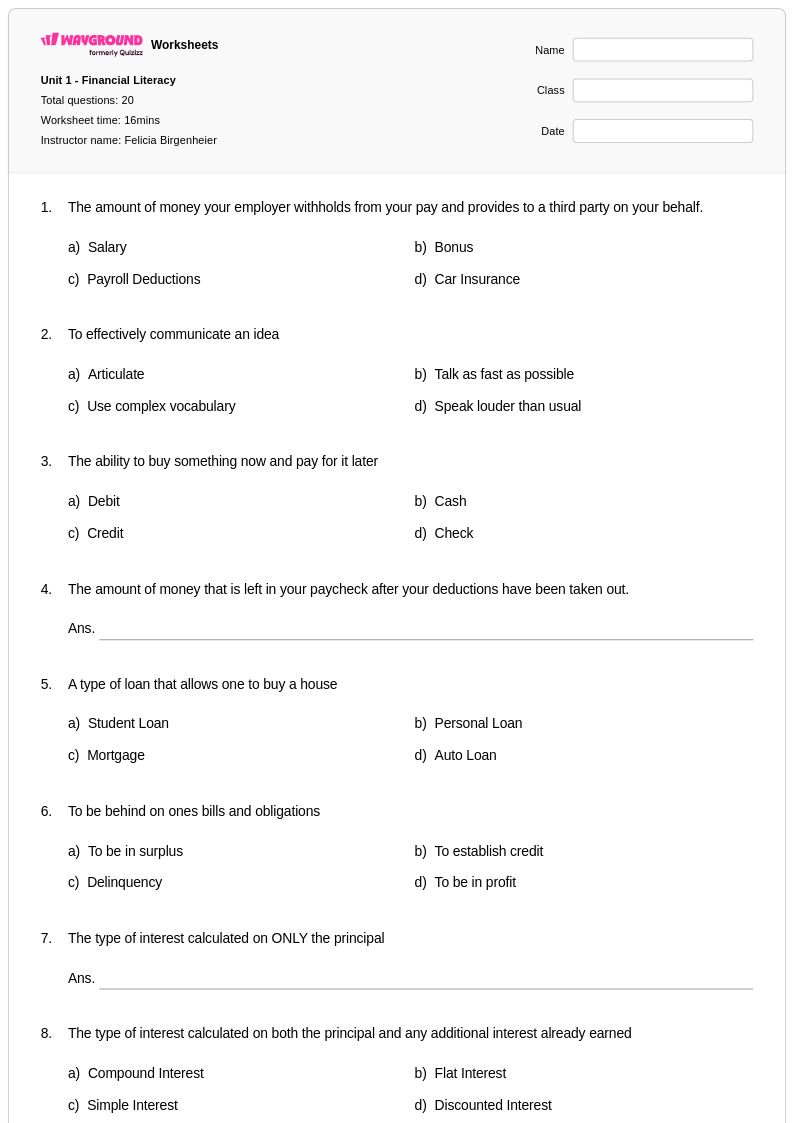
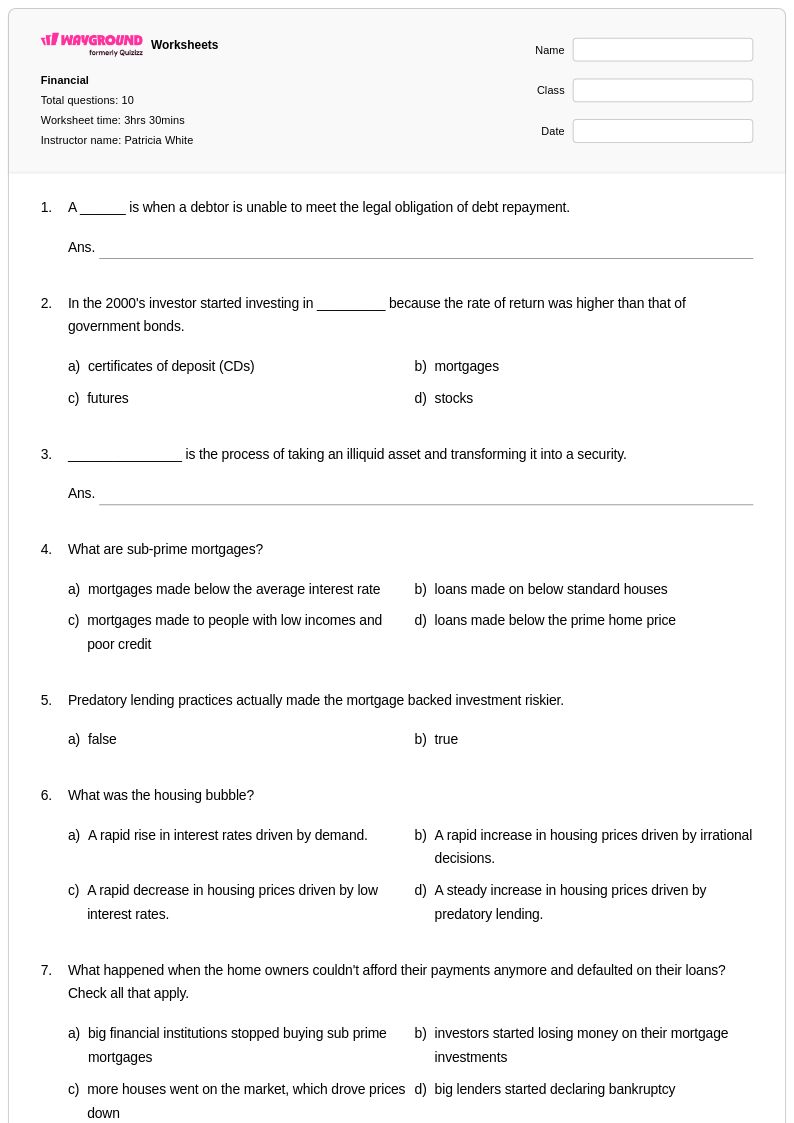
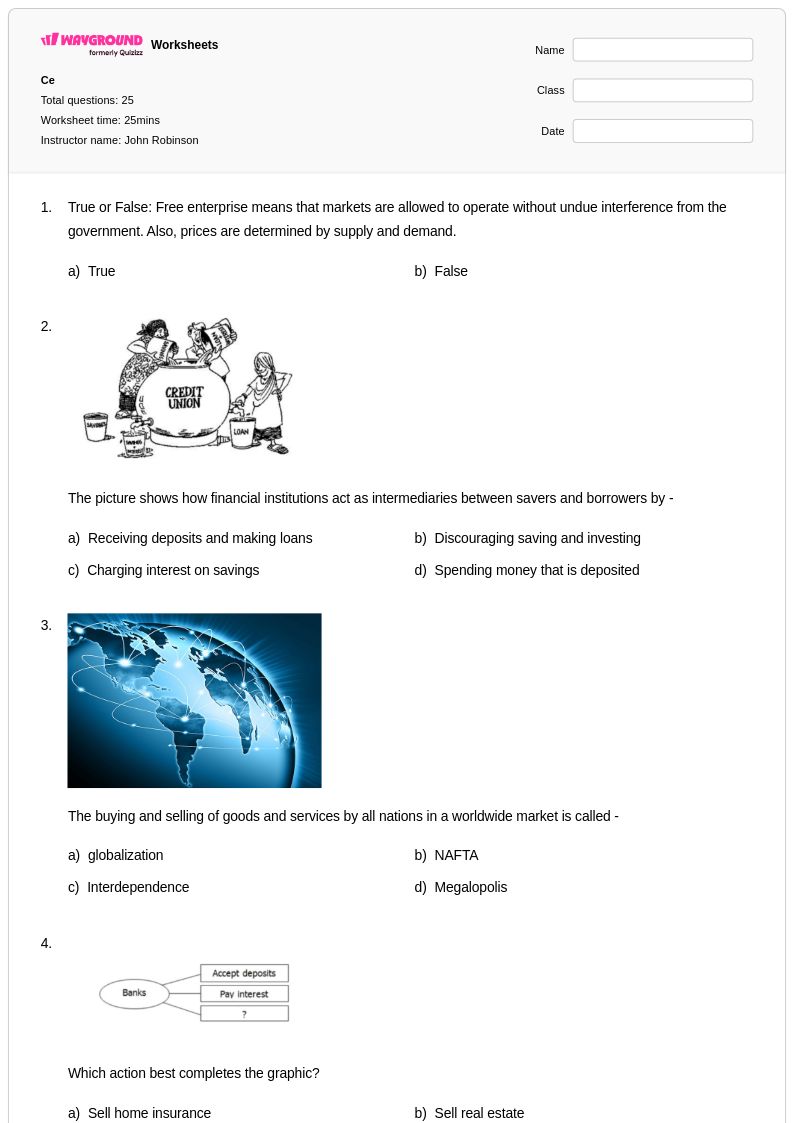
Financial education worksheets for Class 12 students through Wayground (formerly Quizizz) provide comprehensive coverage of essential money management concepts that prepare students for real-world economic decisions. These expertly designed resources focus on critical financial literacy skills including budgeting, credit management, investment strategies, loan calculations, and understanding complex financial instruments like mortgages and retirement accounts. Students engage with practice problems that simulate authentic financial scenarios, from analyzing interest rates and compound growth to evaluating insurance options and tax implications. Each worksheet includes detailed answer keys that support both independent learning and classroom instruction, with free printables available in convenient pdf format to accommodate diverse learning environments and teaching preferences.
Wayground (formerly Quizizz) empowers educators with millions of teacher-created financial education resources that streamline lesson planning and enhance student outcomes in Class 12 economics courses. The platform's robust search and filtering capabilities enable teachers to quickly locate worksheets aligned with specific financial literacy standards and curriculum requirements, while built-in differentiation tools allow for seamless customization based on individual student needs and learning objectives. Teachers can access materials in both printable and digital formats, including downloadable pdfs, making it easy to implement targeted remediation for struggling learners or provide enrichment opportunities for advanced students. This flexibility supports diverse instructional approaches, from traditional worksheet-based skill practice to technology-enhanced collaborative learning, ensuring that all students develop the financial competencies necessary for successful economic participation in their adult lives.
FAQs
How do I teach financial literacy to students who have no prior money management experience?
Start with concrete, familiar concepts like distinguishing between needs and wants, then build toward budgeting and saving before introducing more abstract topics like credit and investing. Anchoring lessons in real-world scenarios — such as planning a monthly budget on a simulated income — helps students connect financial principles to decisions they will actually face. Sequencing instruction from personal spending to broader economic concepts gives students a scaffold that makes each new topic feel accessible rather than overwhelming.
What exercises help students practice budgeting and personal finance skills?
Effective practice exercises include income-and-expense worksheets where students allocate a fixed monthly salary across categories like housing, food, transportation, and savings. Comparative shopping activities — where students evaluate unit prices, calculate total costs, or compare loan terms — reinforce both math skills and consumer decision-making. Scenario-based problems that introduce unexpected expenses or income changes push students to revise their budgets and think critically about financial trade-offs.
What mistakes do students commonly make when learning about credit and interest?
A frequent misconception is that a credit card balance is simply money owed rather than a loan that compounds over time — students often underestimate how quickly interest accumulates when only minimum payments are made. Many students also confuse APR with the actual monthly cost of carrying a balance, leading to incorrect calculations. Having students work through side-by-side comparisons of paying in full versus making minimum payments over 12 months makes the long-term cost of credit tangible and corrects this error effectively.
How do I differentiate financial education worksheets for students at different skill levels?
For students who need additional support, simplify the numbers used in budgeting problems and reduce the number of variables in a given scenario so they can focus on the core concept. Advanced students benefit from open-ended problems that require them to defend financial decisions or evaluate trade-offs without a single correct answer. On Wayground, teachers can apply accommodations such as reduced answer choices and extended time to individual students, allowing the same core financial literacy content to be accessible across a range of skill levels without singling out any student.
How do I use Wayground's financial education worksheets in my classroom?
Wayground's financial education worksheets are available as printable PDFs for traditional classroom use and in digital formats for technology-integrated environments, giving teachers flexibility depending on their classroom setup. Teachers can also host worksheets as a quiz directly on Wayground, making it straightforward to assign practice, collect responses, and review results in one place. Each worksheet includes a complete answer key, so financial literacy activities can be used for independent practice, small-group work, or formative assessment with minimal preparation time.
What financial education topics should I cover at the secondary level?
Secondary students are well-positioned to engage with budgeting, saving and compound interest, credit scores, basic investing concepts, and the mechanics of banking accounts including fees and interest rates. Consumer decision-making skills — such as evaluating contracts, understanding insurance basics, and comparing financial products — are especially valuable because they map directly to decisions students will face within a few years. Covering both the mathematical and behavioral dimensions of personal finance gives students a more complete and durable understanding than calculation practice alone.