Free Printable Mercantilism Worksheets for Class 12
Explore Class 12 mercantilism worksheets and printables through Wayground that help students understand economic theories of trade balance, colonial commerce, and wealth accumulation with comprehensive practice problems and answer keys.
Explore printable Mercantilism worksheets for Class 12
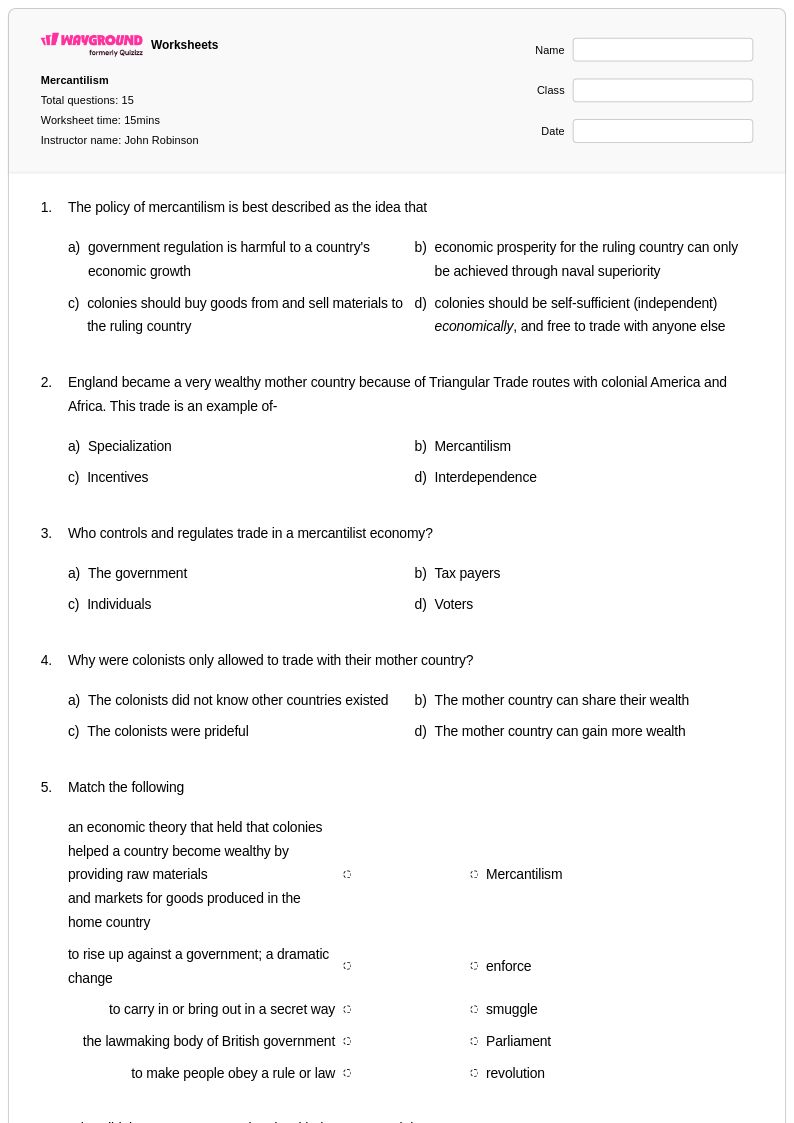
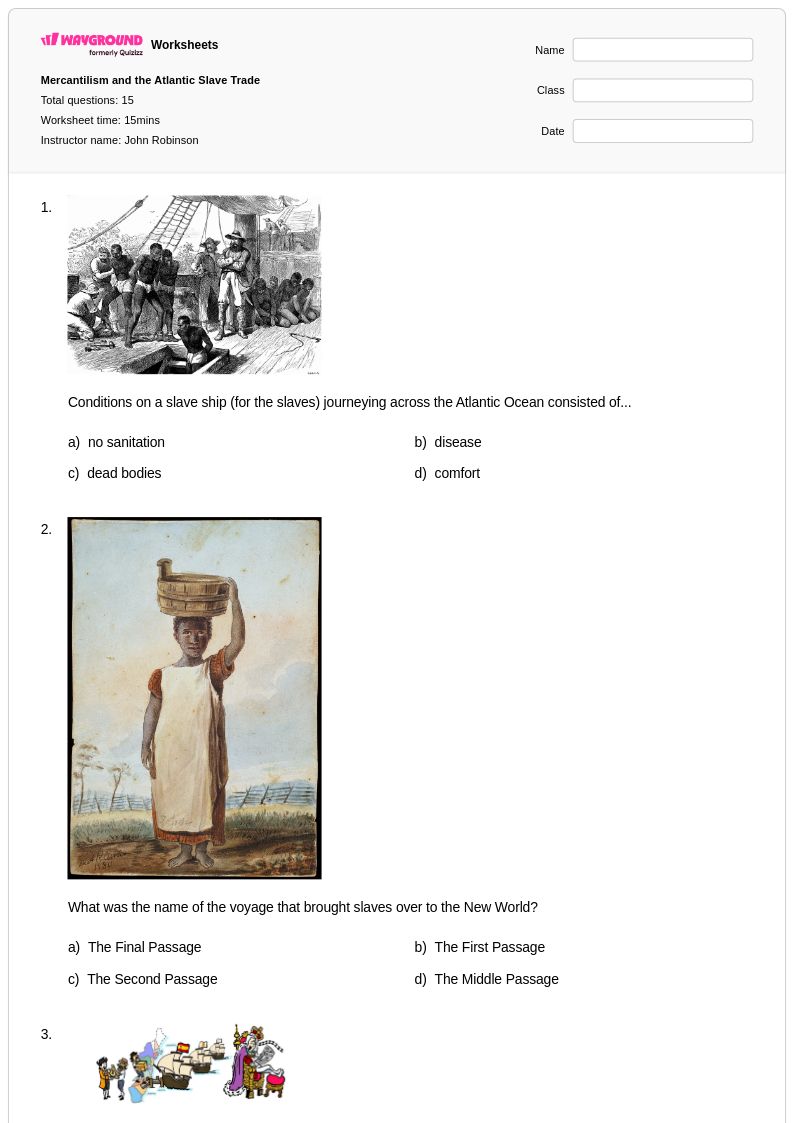
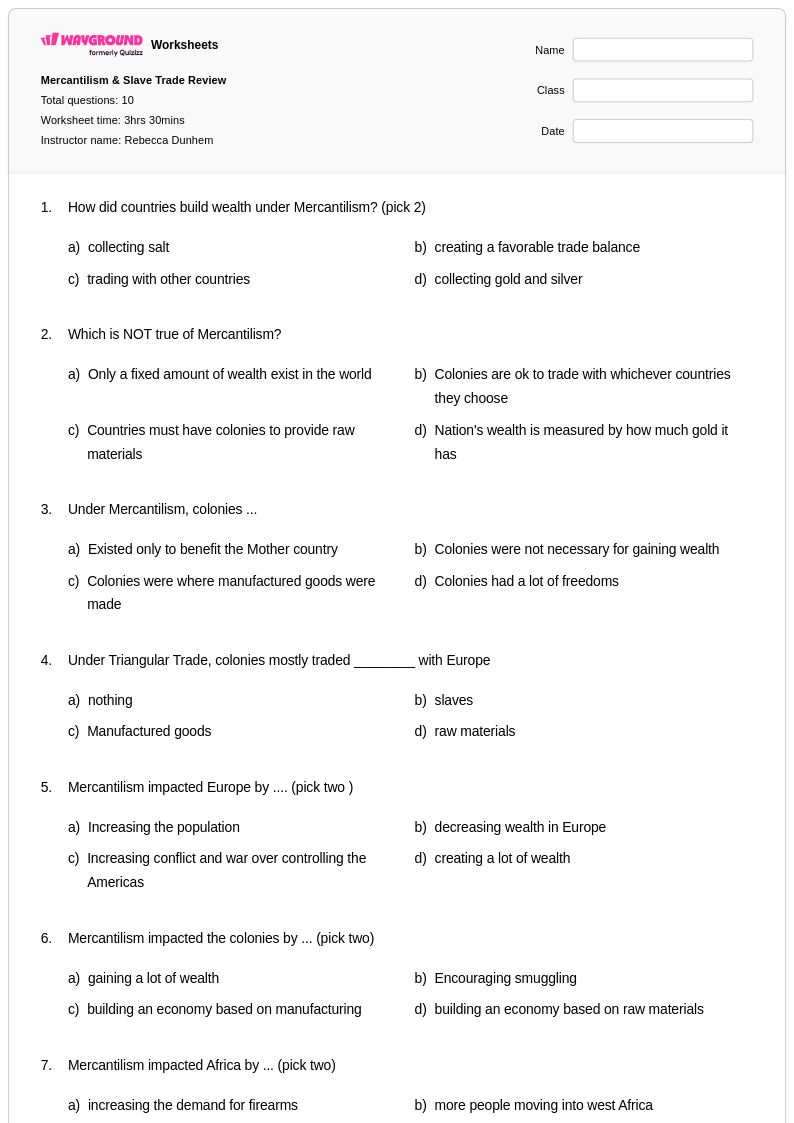
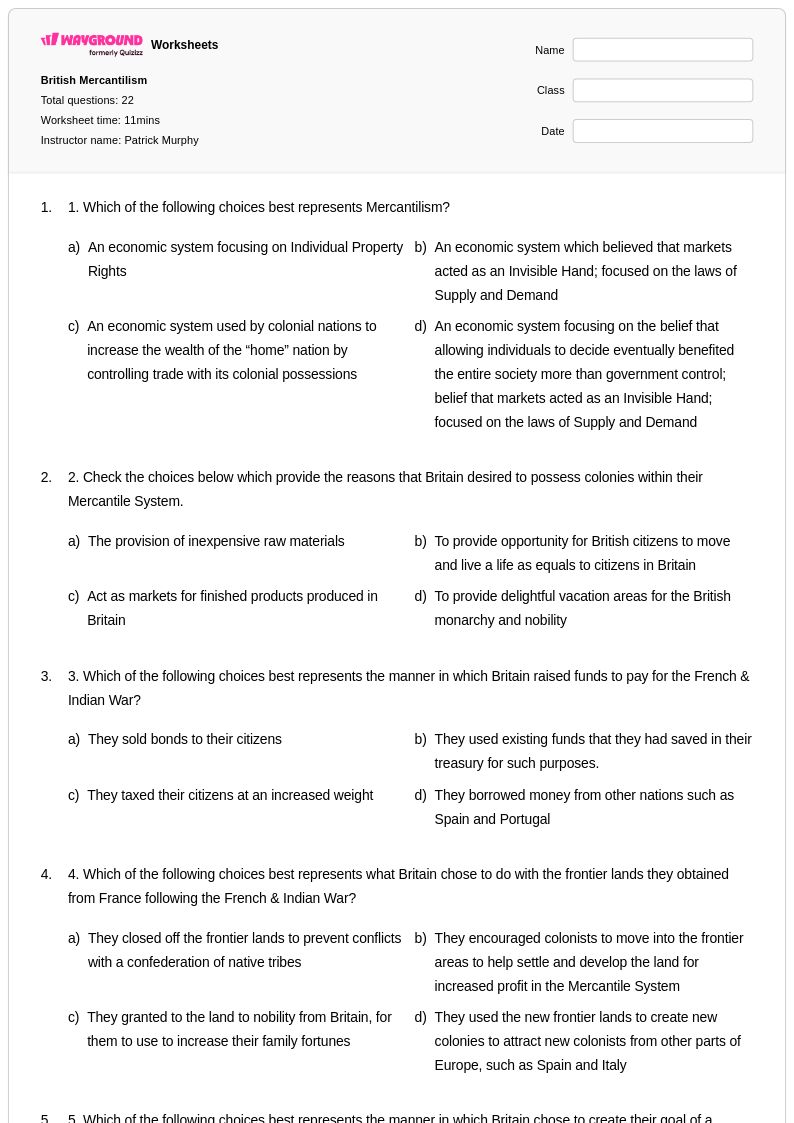
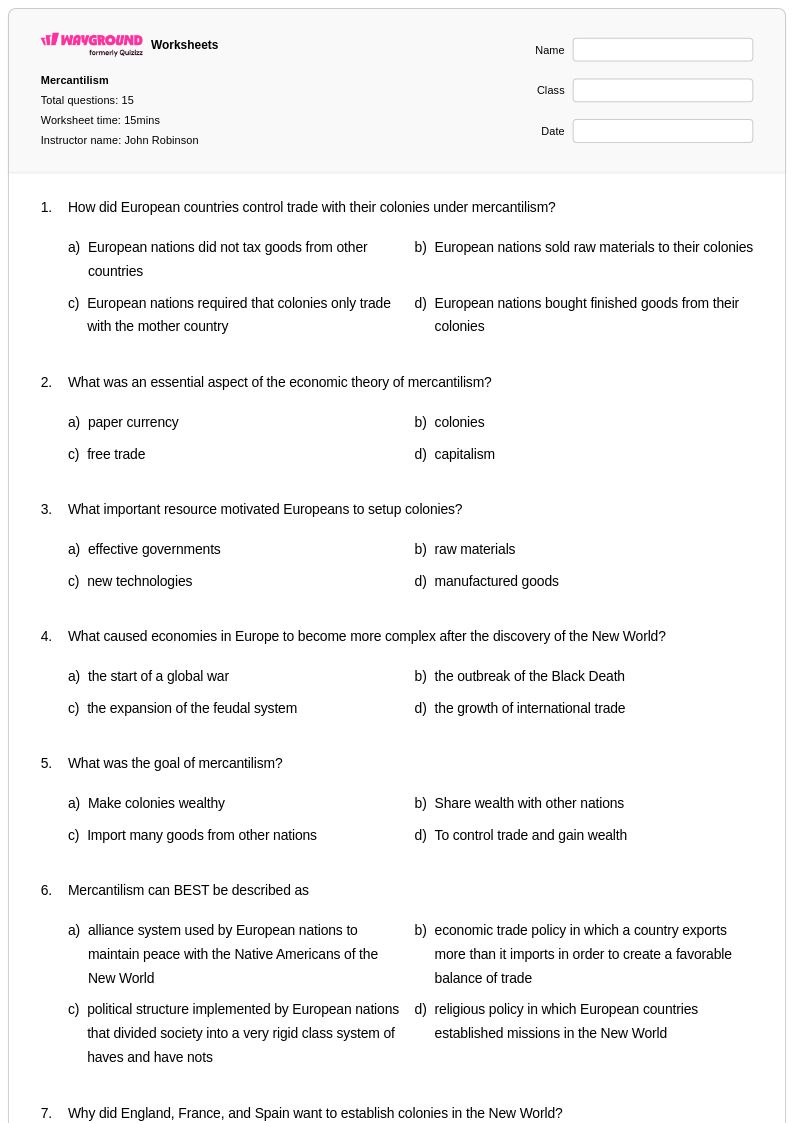
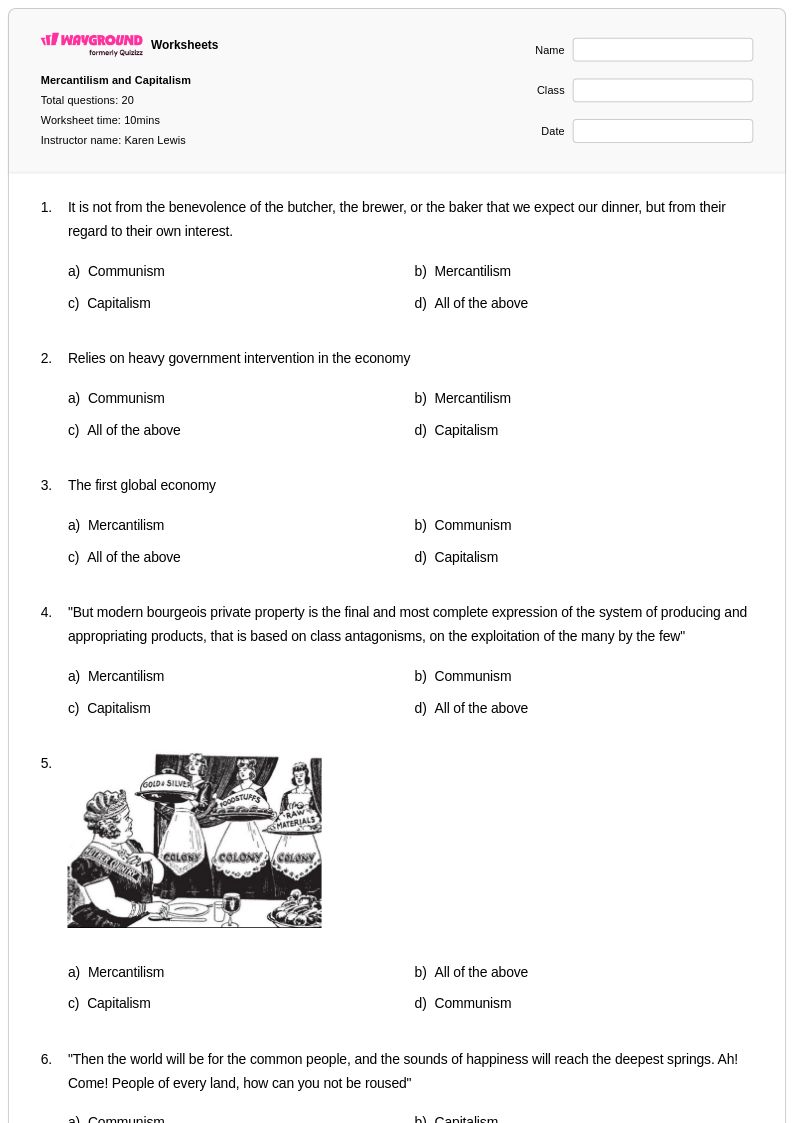
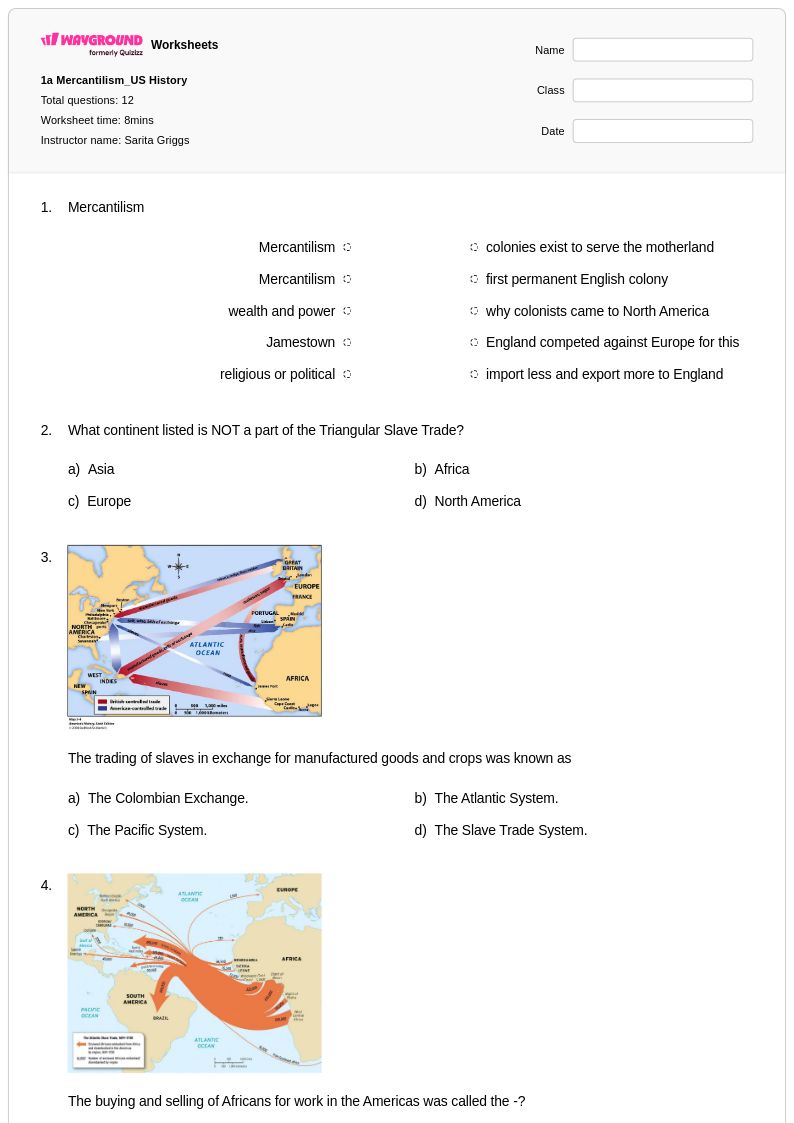
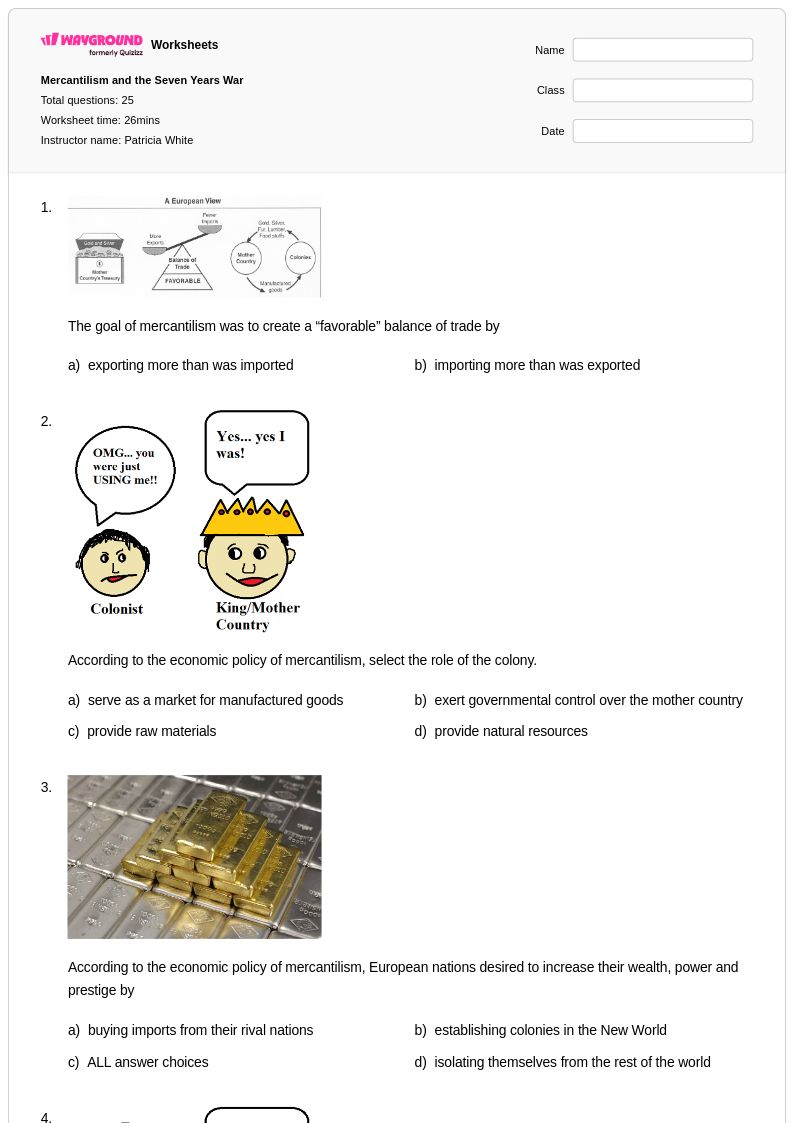
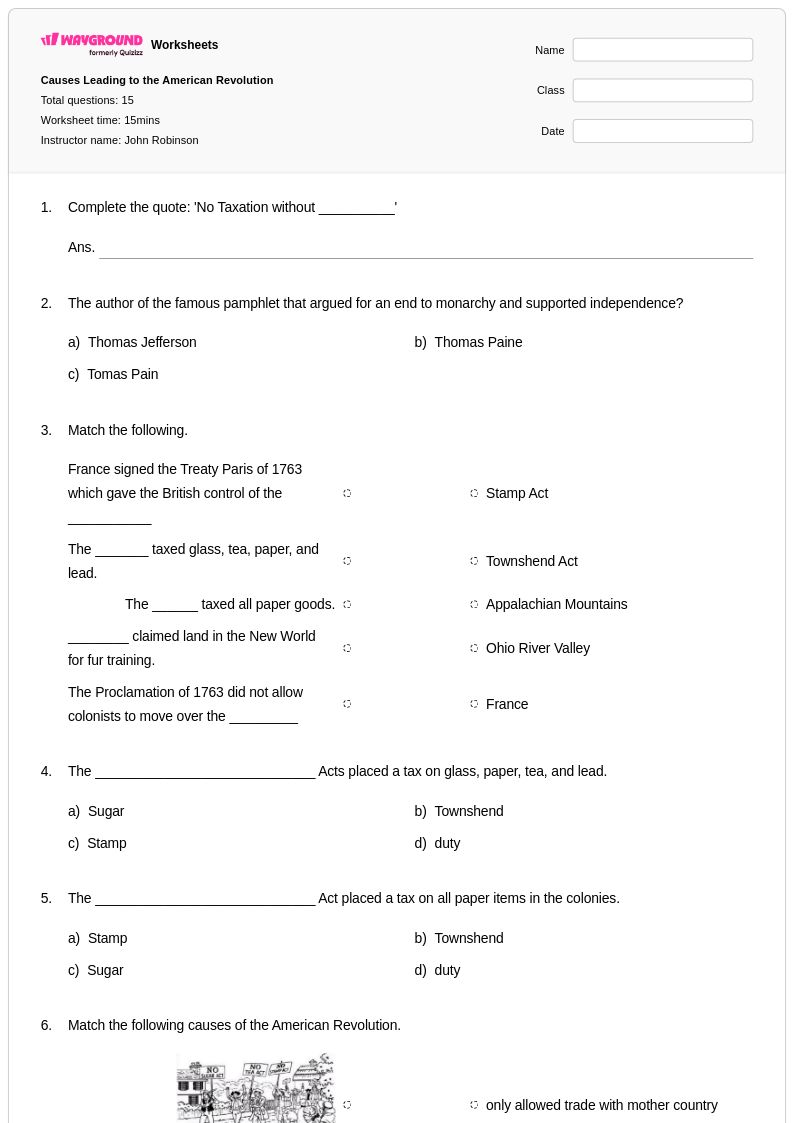
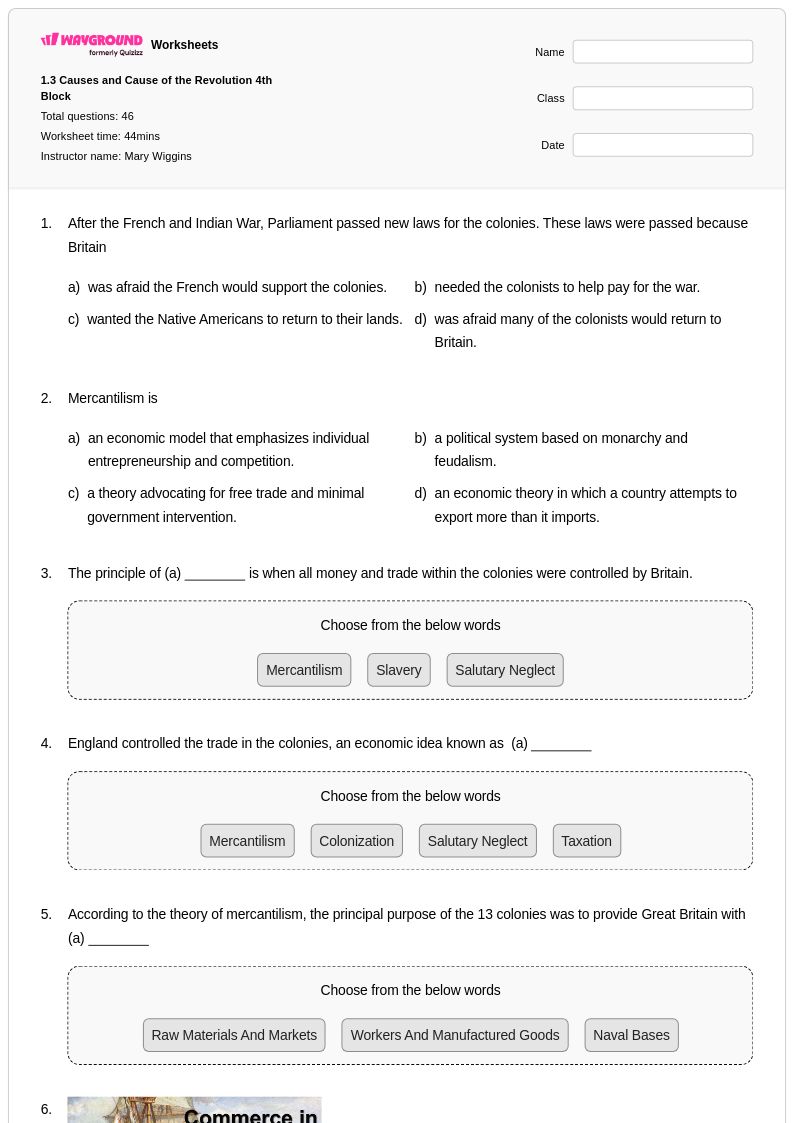
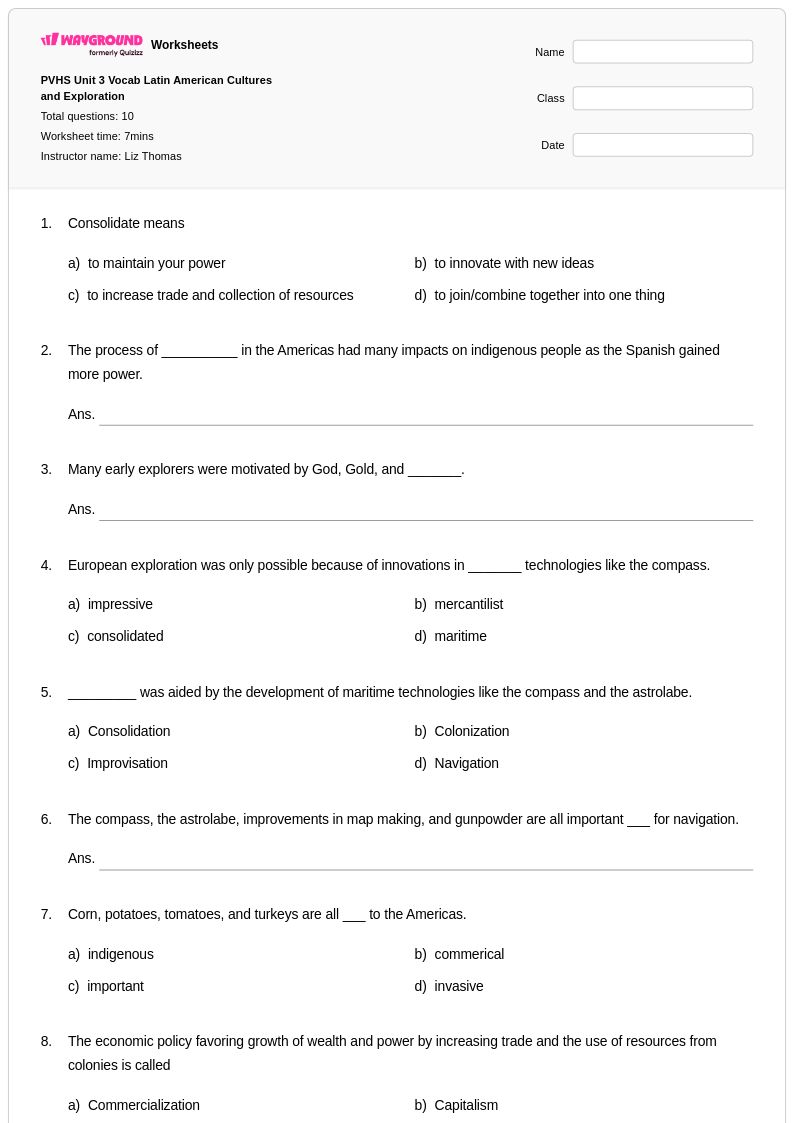
Mercantilism worksheets for Class 12 students available through Wayground (formerly Quizizz) provide comprehensive coverage of this foundational economic theory that dominated European thought from the 16th to 18th centuries. These expertly crafted resources help students analyze the core principles of mercantilism, including the belief that national wealth depended on accumulating precious metals, maintaining a favorable balance of trade, and establishing colonies to provide raw materials and markets for finished goods. Through carefully designed practice problems, students examine how mercantilist policies shaped global trade patterns, colonial relationships, and the development of modern capitalism. Each worksheet includes detailed answer keys that support independent learning and self-assessment, while the free printables in pdf format make these resources easily accessible for classroom use, homework assignments, and test preparation.
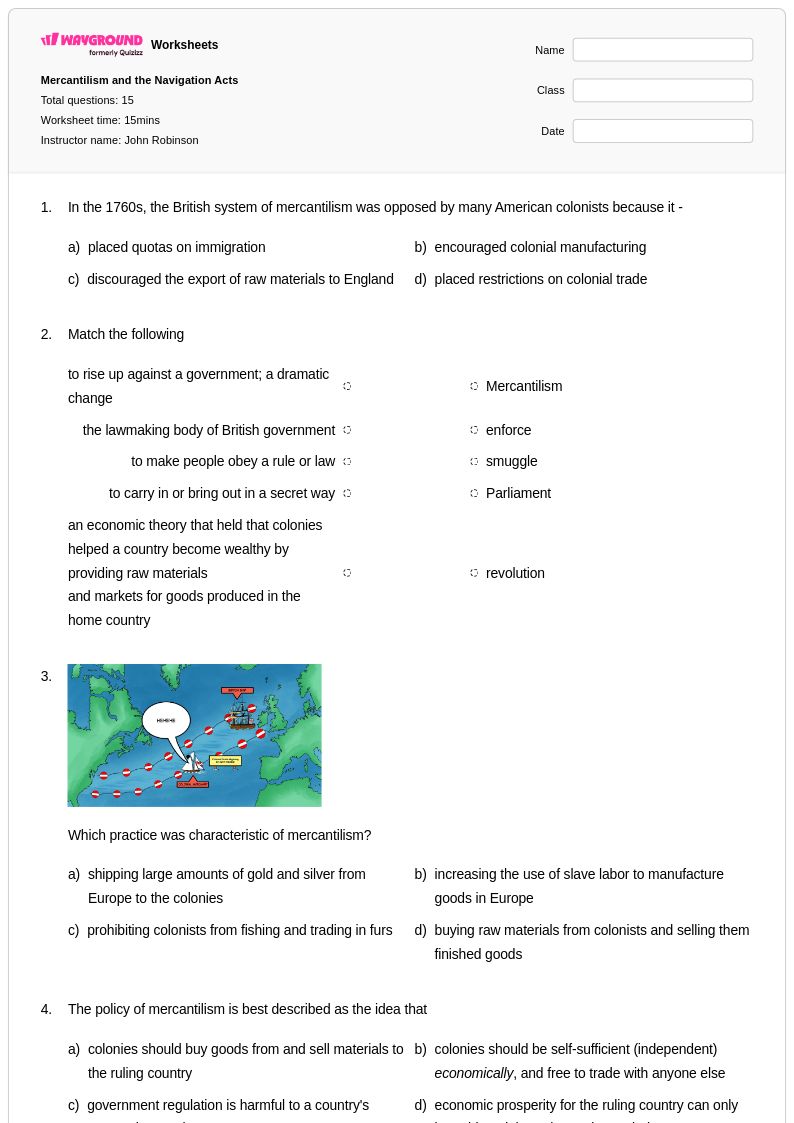
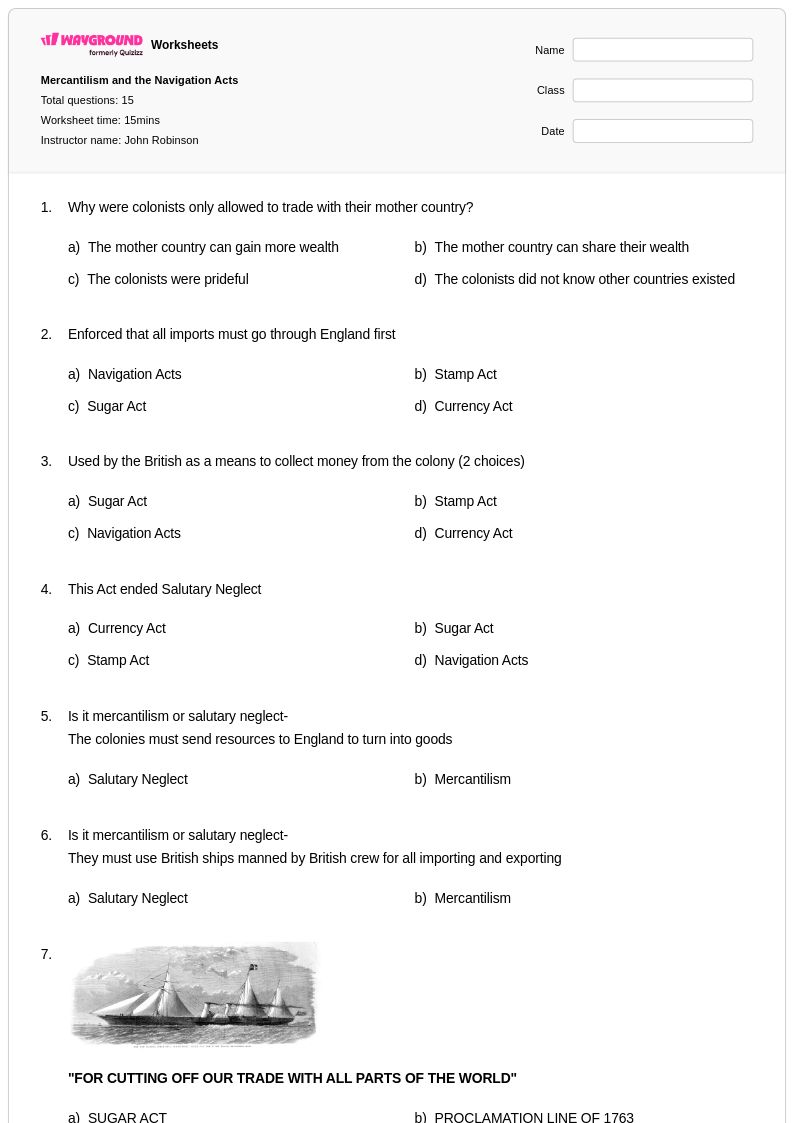
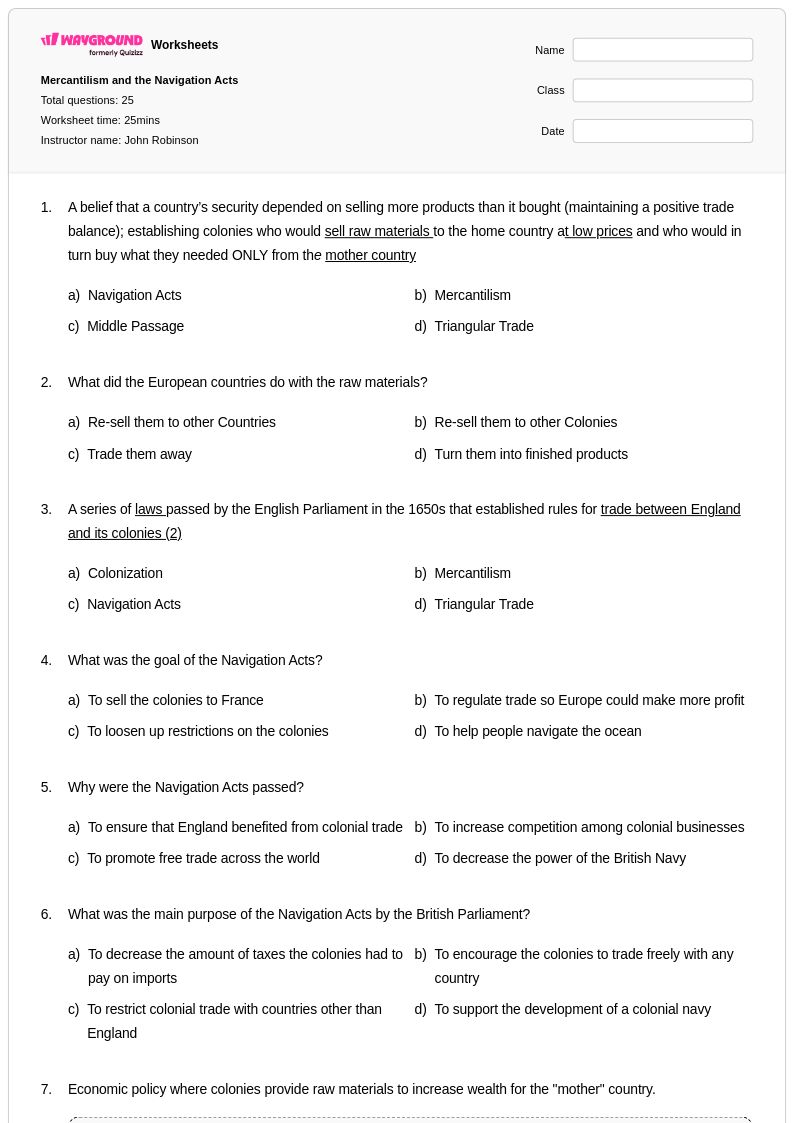
Wayground's extensive collection of teacher-created mercantilism worksheets draws from millions of educational resources, offering educators powerful search and filtering capabilities to locate materials perfectly suited to their Class 12 economics curriculum needs. The platform's standards alignment features ensure that selected worksheets meet rigorous academic requirements, while built-in differentiation tools allow teachers to customize content for varying student ability levels and learning styles. These versatile resources support comprehensive lesson planning by providing both printable and digital formats, enabling seamless integration into traditional classroom instruction, remote learning environments, and hybrid teaching models. Teachers can effectively use these worksheets for initial skill development, targeted remediation of challenging concepts like navigation acts and colonial economic policies, and enrichment activities that connect historical mercantilism to contemporary international trade debates and protectionist policies.
FAQs
How do I teach mercantilism to students who struggle with abstract economic concepts?
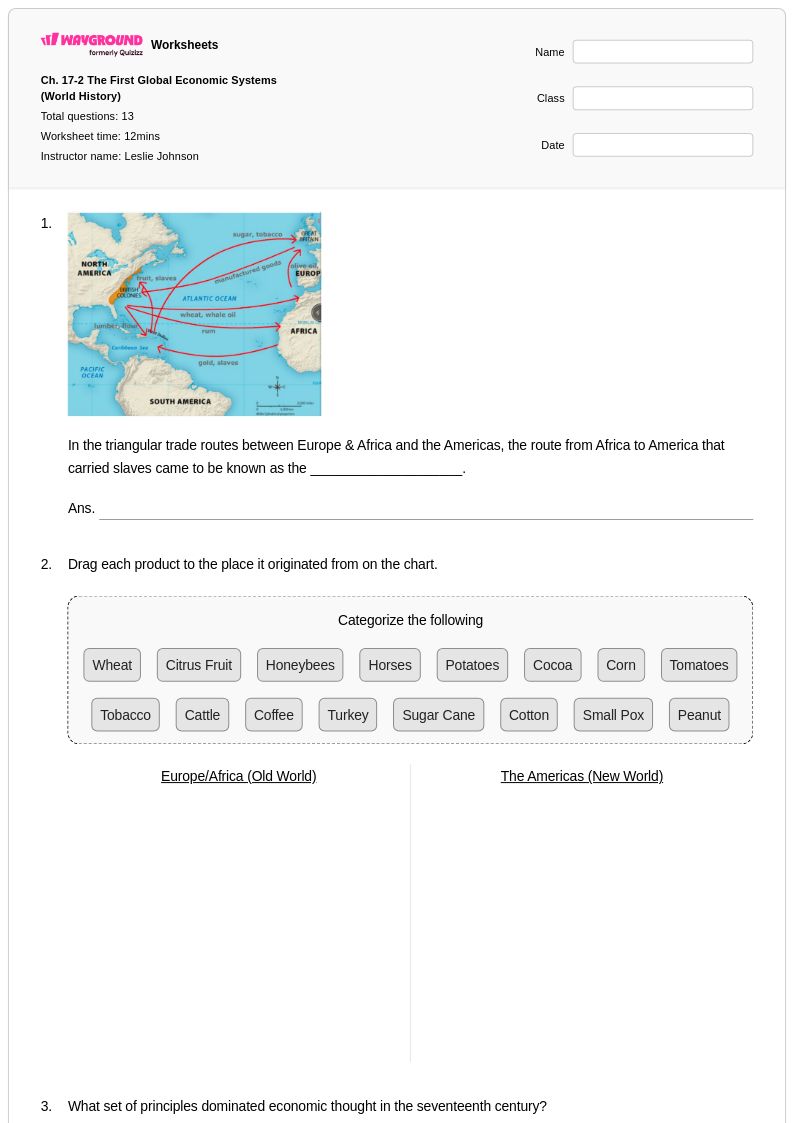
Anchor the concept in concrete historical examples before introducing theory. Start with the triangle trade or British navigation acts to show mercantilism in action, then work backward to the core principles: favorable trade balances, gold and silver accumulation, and colonial resource extraction. Once students can identify these elements in a historical scenario, they are ready to define and analyze mercantilism as a system.
What exercises help students practice understanding mercantilist policies?
Effective practice tasks include analyzing primary source documents such as colonial trade laws, completing cause-and-effect charts that connect mercantilist policies to colonial expansion, and comparing trade balance scenarios to determine which outcome a mercantilist government would favor. These exercises move students beyond memorization and into application of the theory's core logic.
What mistakes do students commonly make when learning about mercantilism?
The most common error is conflating mercantilism with general trade or capitalism. Students often fail to recognize that mercantilism is a zero-sum framework where one nation's gain requires another's loss, which is the key distinction from free trade theory. Another frequent misconception is treating colonies purely as geographic acquisitions rather than understanding their specific economic function as suppliers of raw materials and captive markets for finished goods.
How do I use mercantilism worksheets to compare economic theories in class?
Structure the comparison around a central question: how does each theory define national wealth? Mercantilism equates wealth with the stock of precious metals and a trade surplus, while free trade theory links wealth to specialization and mutual benefit. Worksheets that ask students to sort policy examples by economic theory or evaluate historical debates between mercantilist and free-trade thinkers work well for this kind of comparative analysis.
How can I use Wayground's mercantilism worksheets in my classroom?
Wayground's mercantilism worksheets are available as printable PDFs, making them straightforward to distribute for in-class work or homework assignments, and in digital formats that support technology-integrated learning environments. Teachers can also host the materials as a quiz directly on Wayground, enabling students to complete and self-assess work online. Wayground supports individual student accommodations including extended time, read-aloud, and reduced answer choices, which can be configured per student without disrupting the rest of the class.
How does mercantilism connect to European colonialism, and how do I teach that link?
Mercantilism is the economic engine behind European colonial expansion from the 16th through 18th centuries. Under mercantilist logic, colonies served two essential functions: they supplied raw materials that the home country converted into finished goods, and they acted as controlled markets for those goods, keeping the trade balance favorable. Teaching this connection works best through policy analysis tasks where students examine specific colonial trade regulations and identify the mercantilist principle each one enforces.