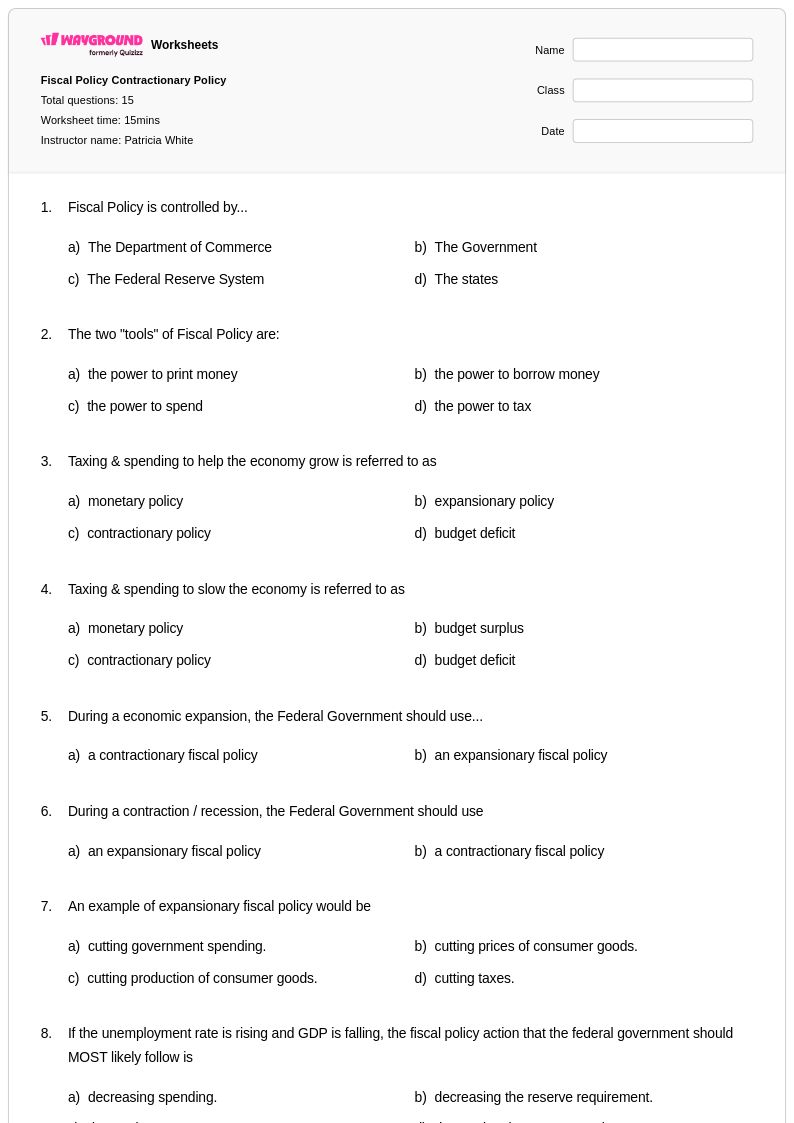
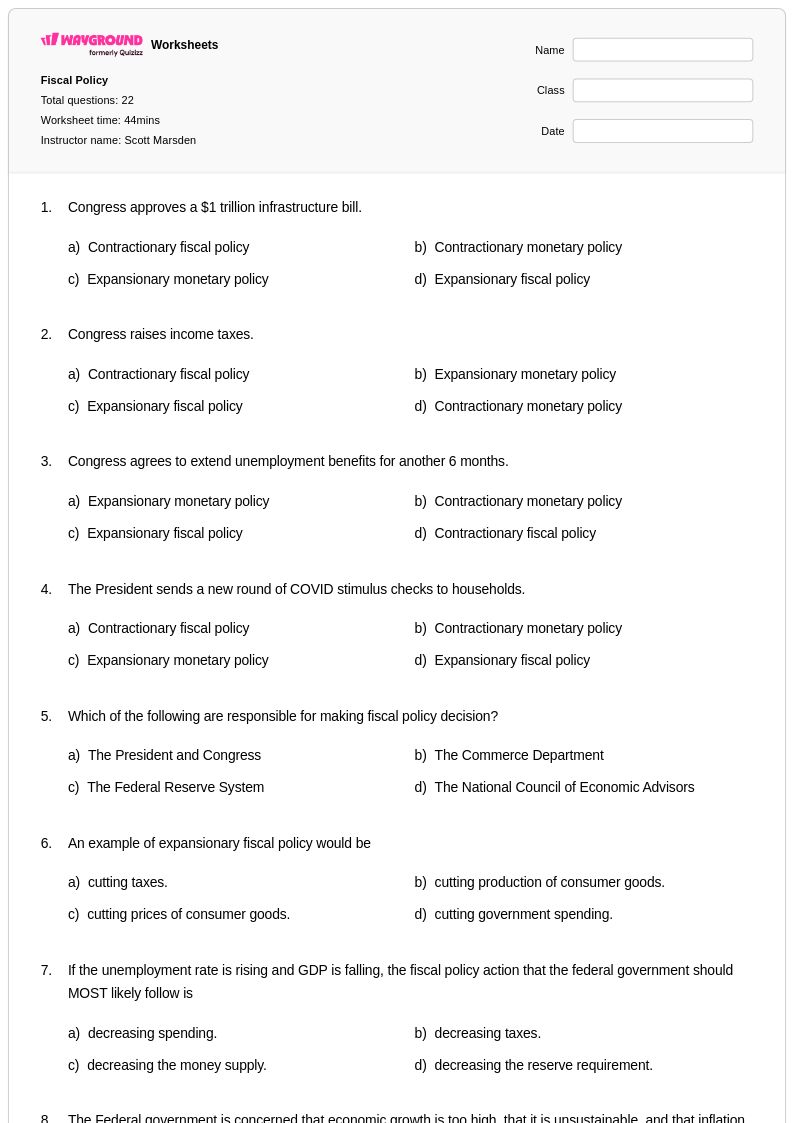
Free Printable Fiscal Policy Worksheets for Class 12
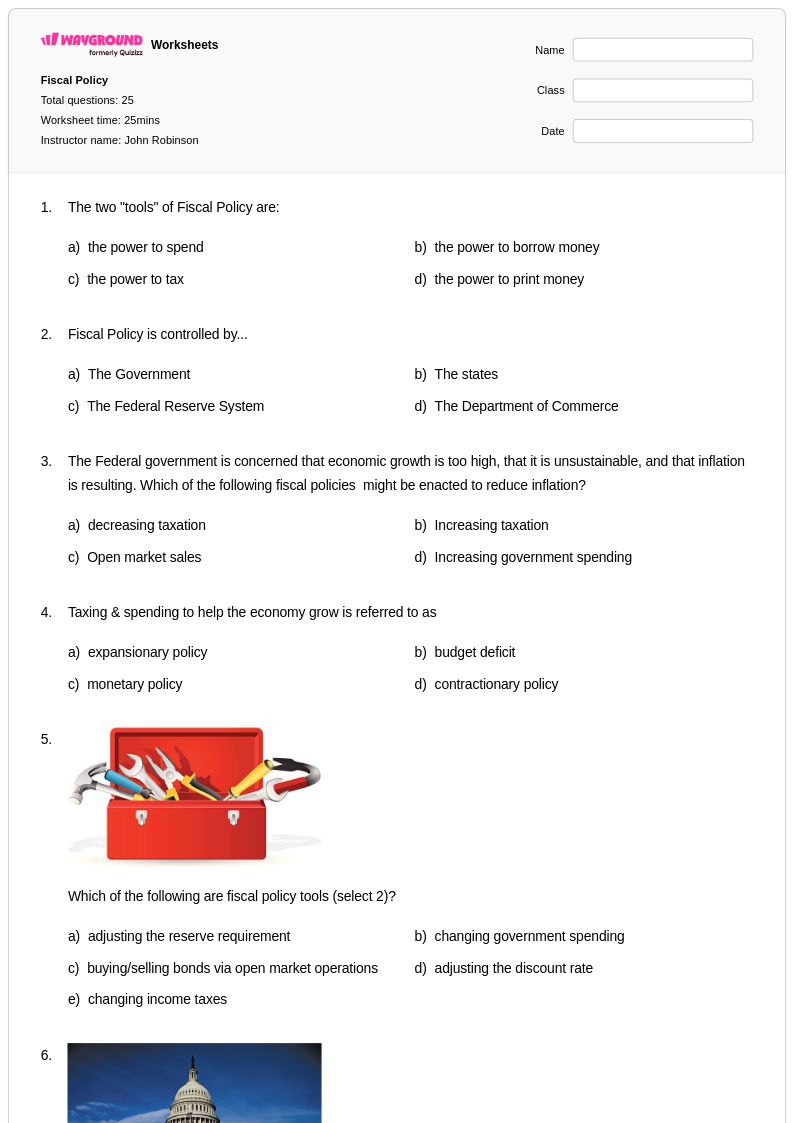
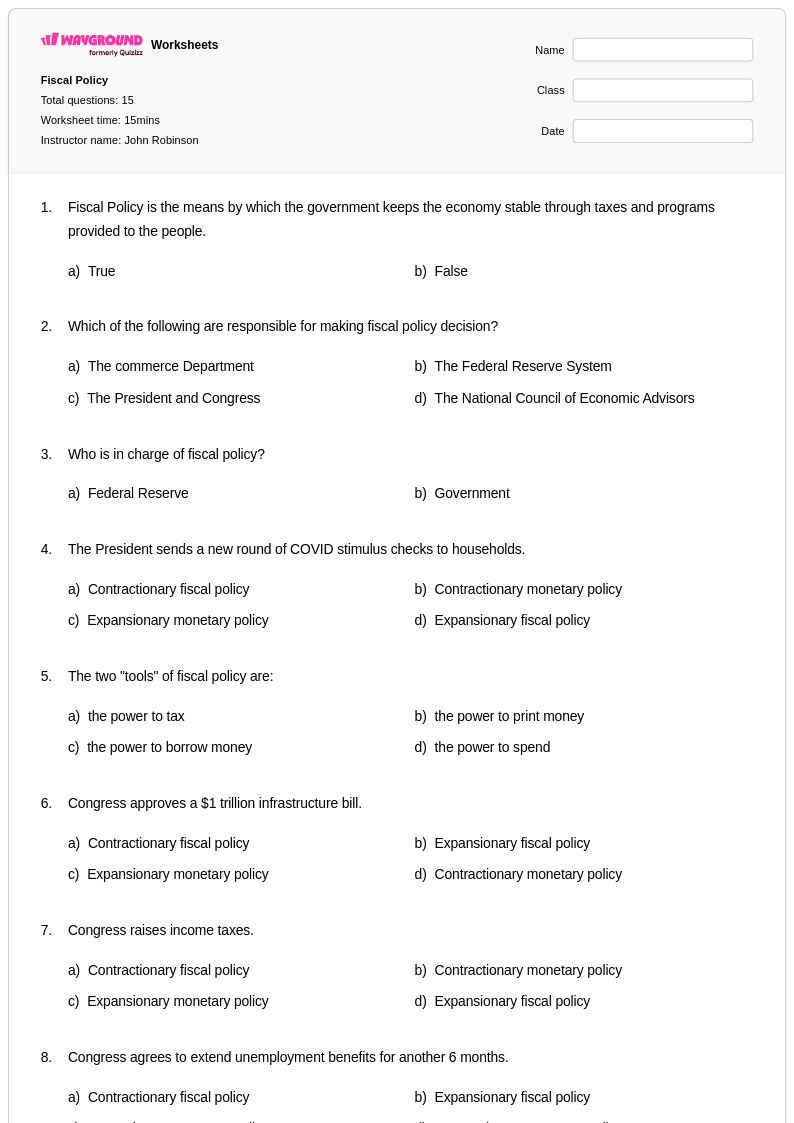
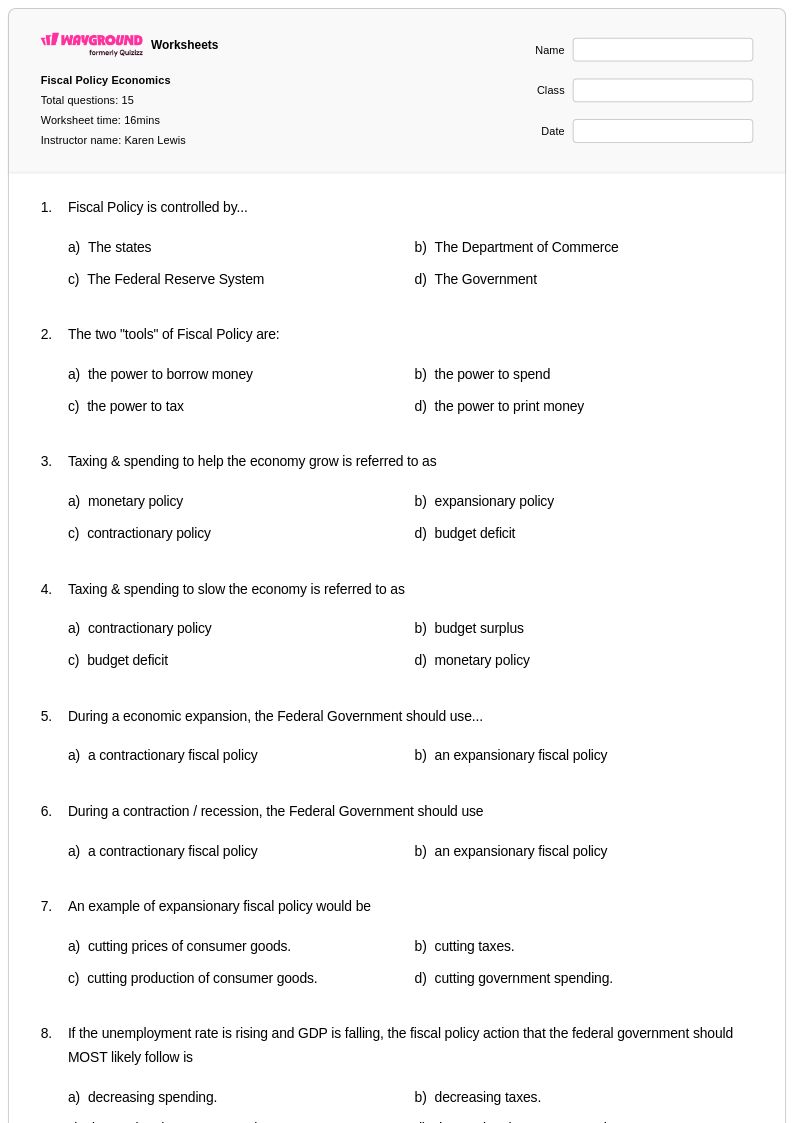
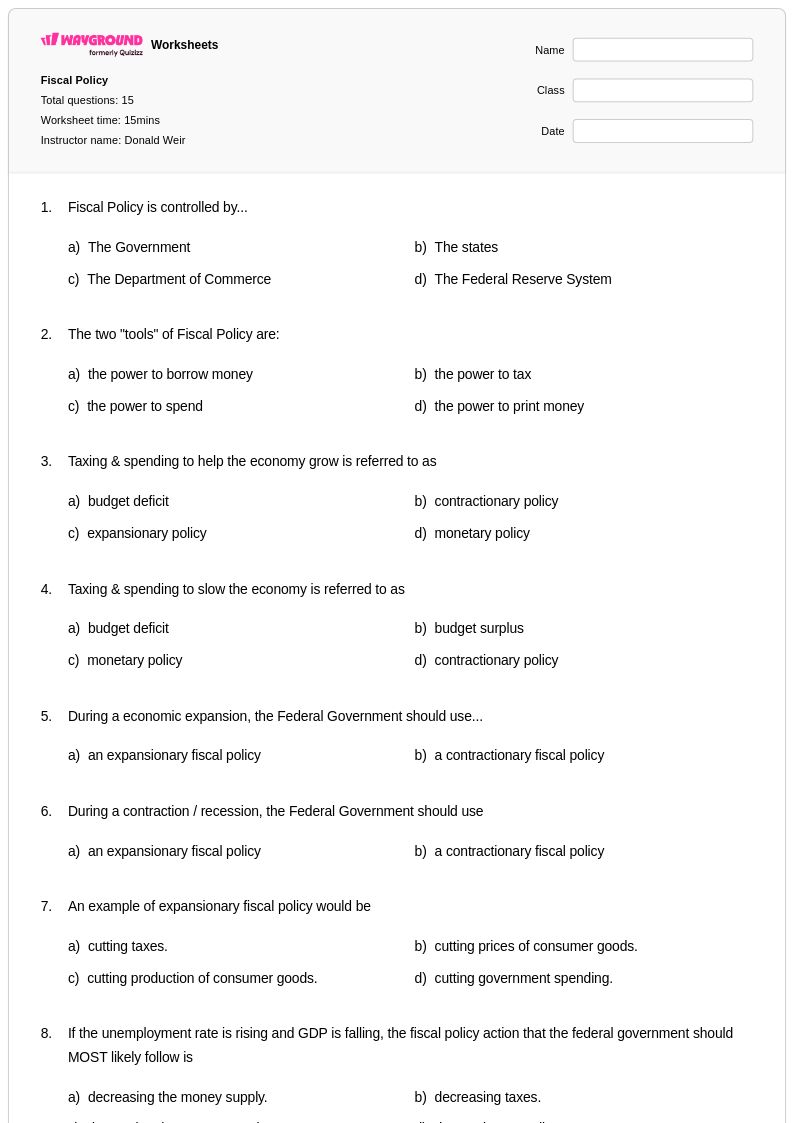
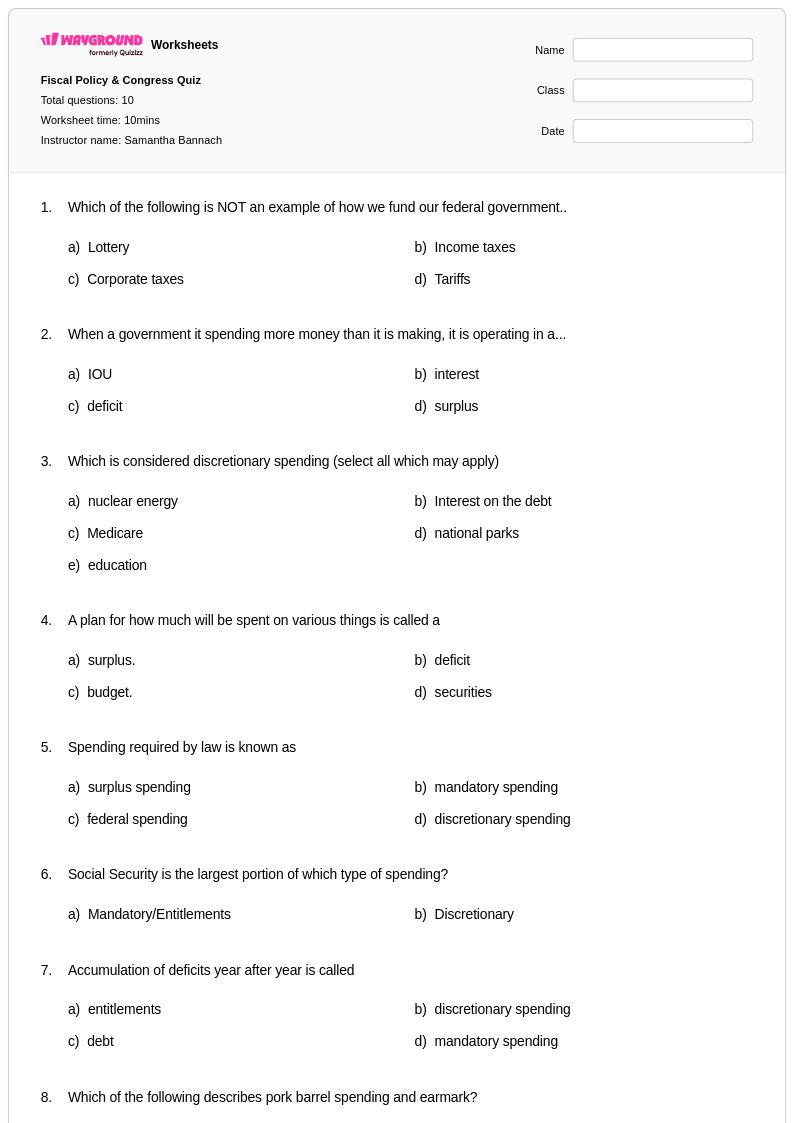
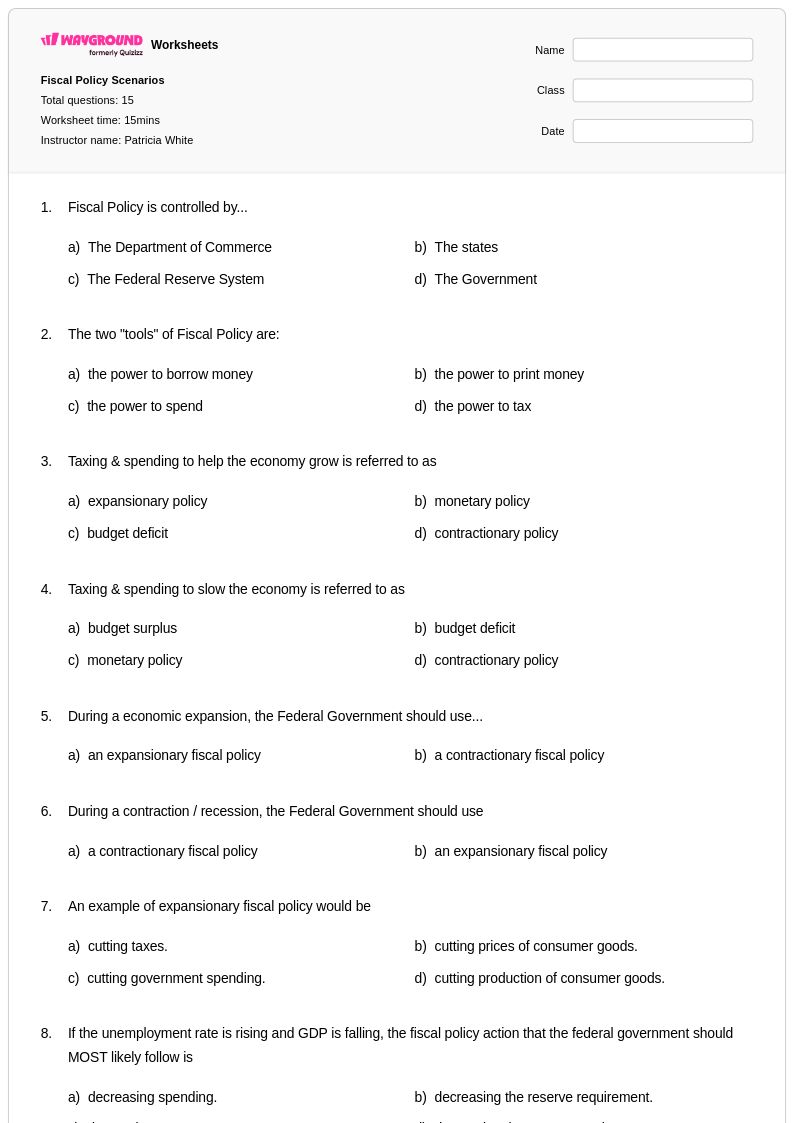
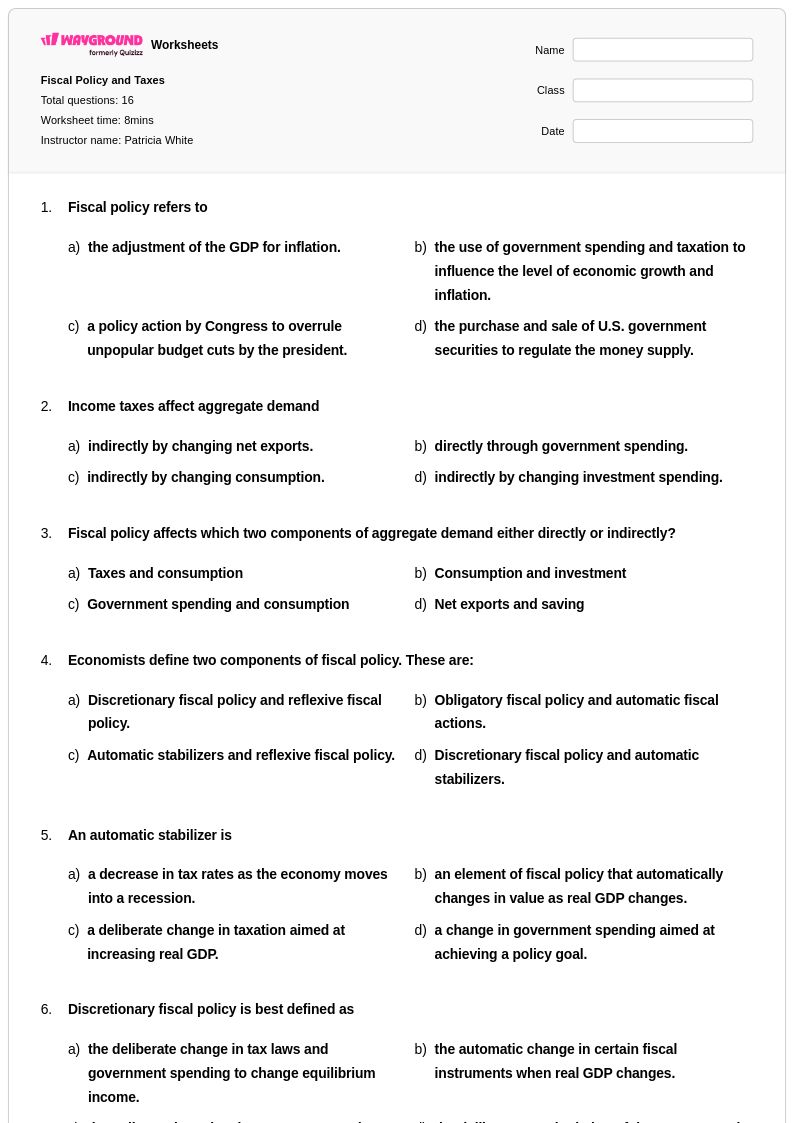
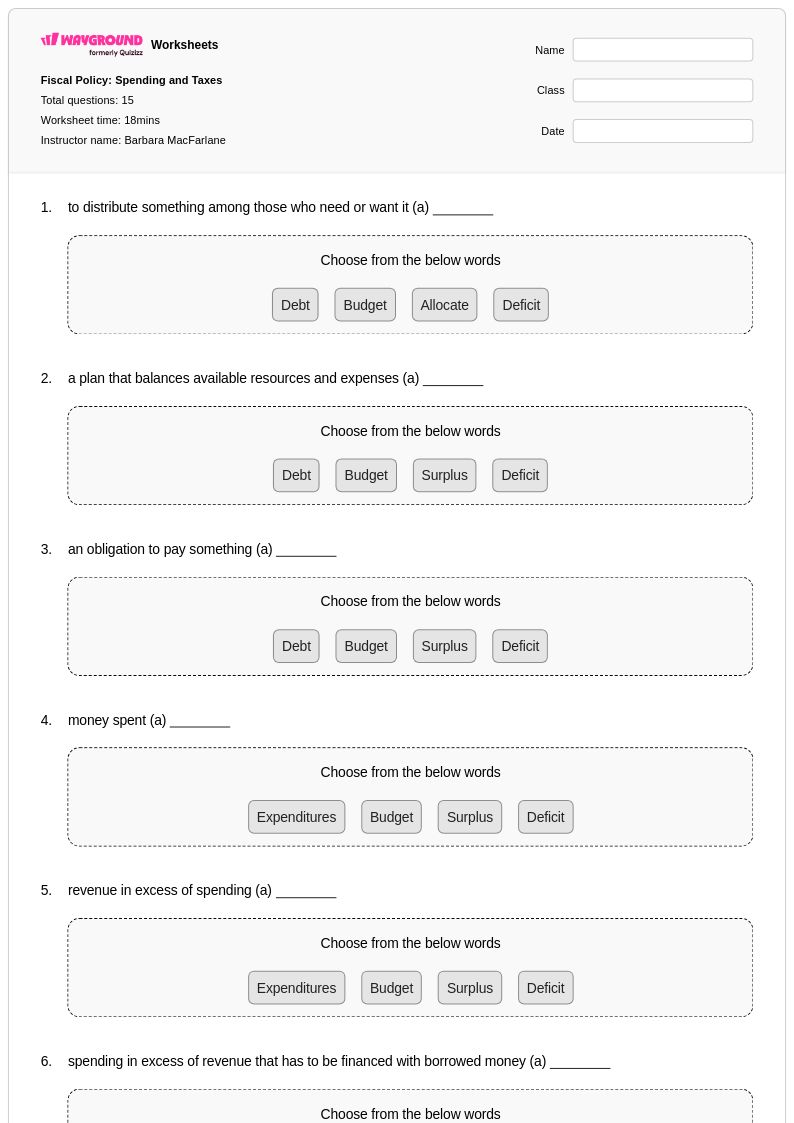
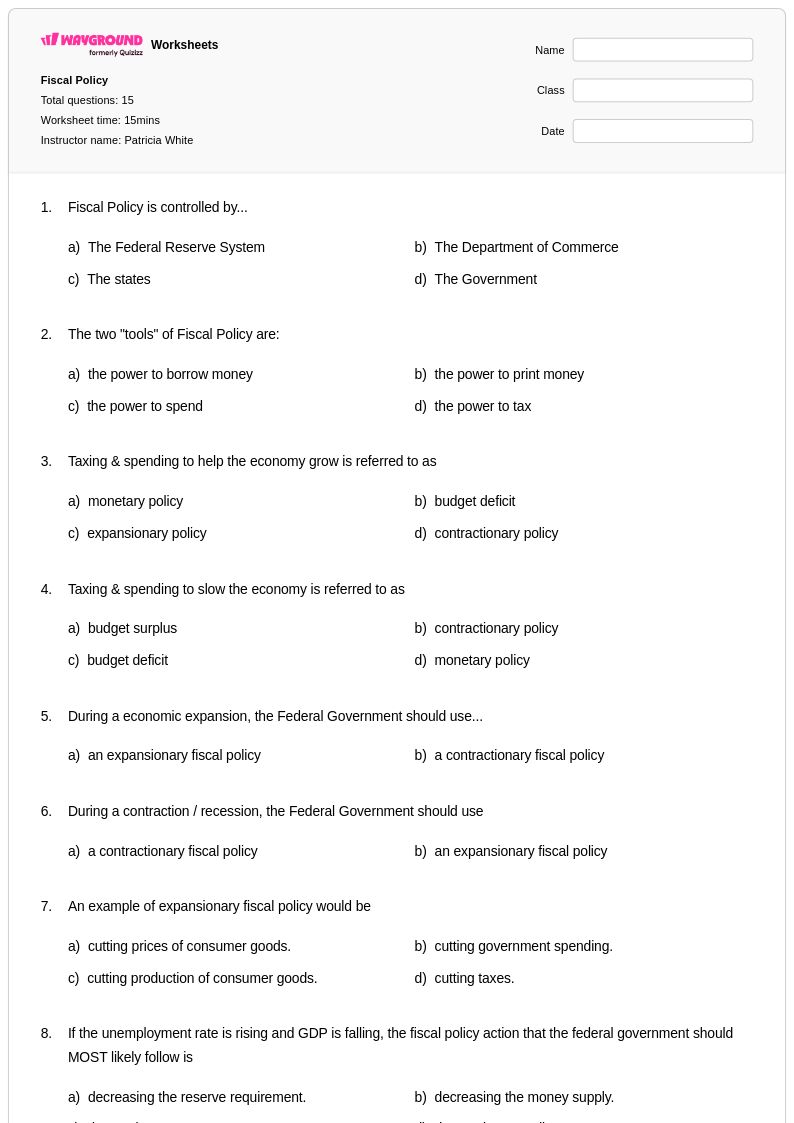
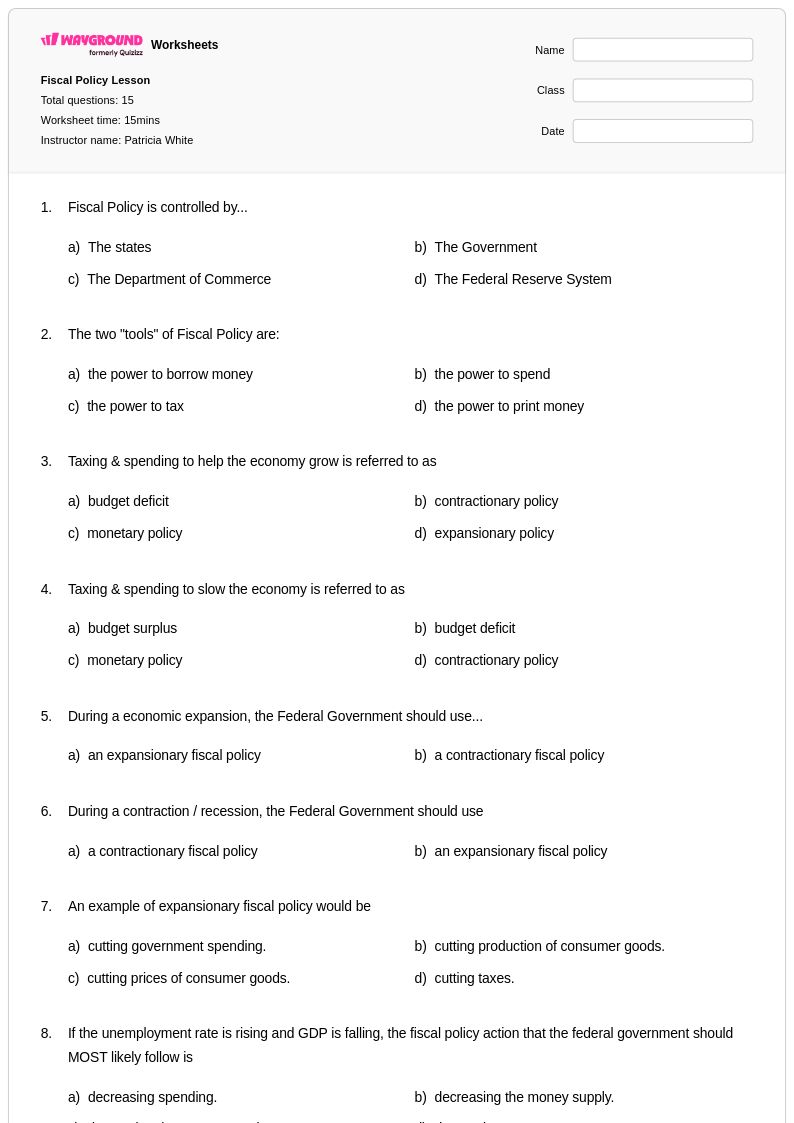
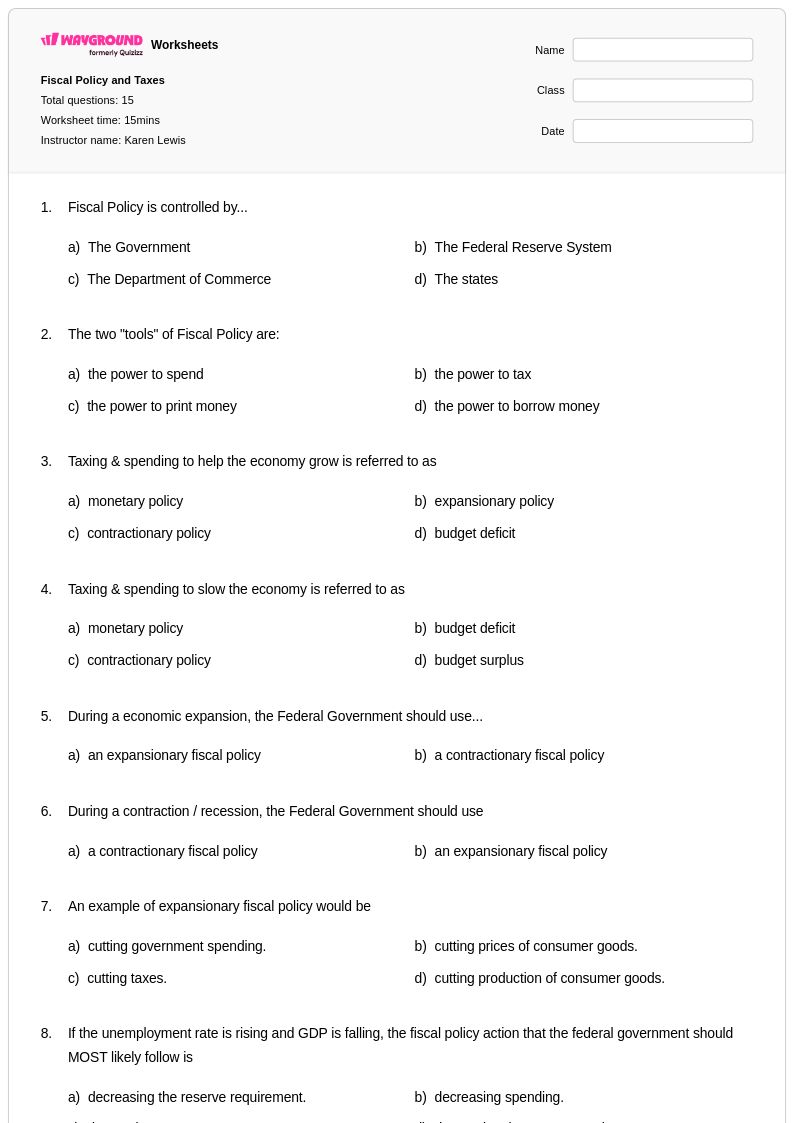
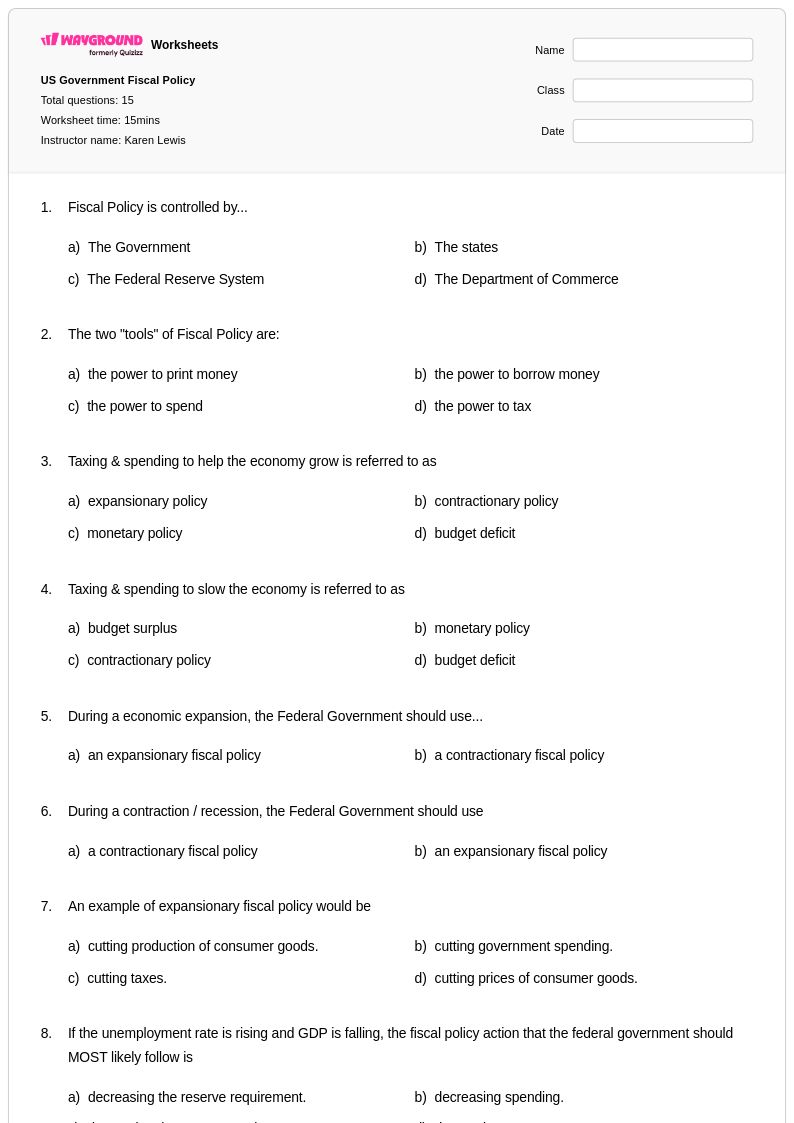
Class 12 fiscal policy worksheets from Wayground help students master government spending and taxation concepts through comprehensive printables, practice problems, and answer keys in convenient PDF format.
Explore printable Fiscal Policy worksheets for Class 12
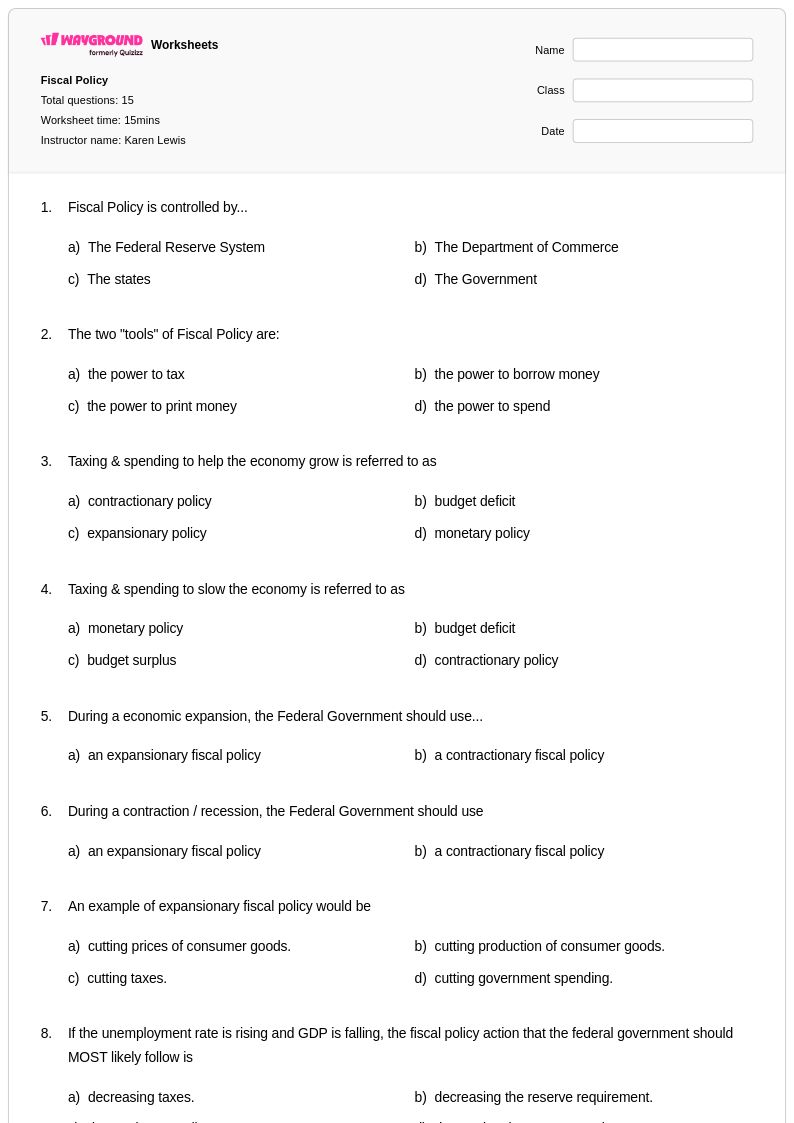
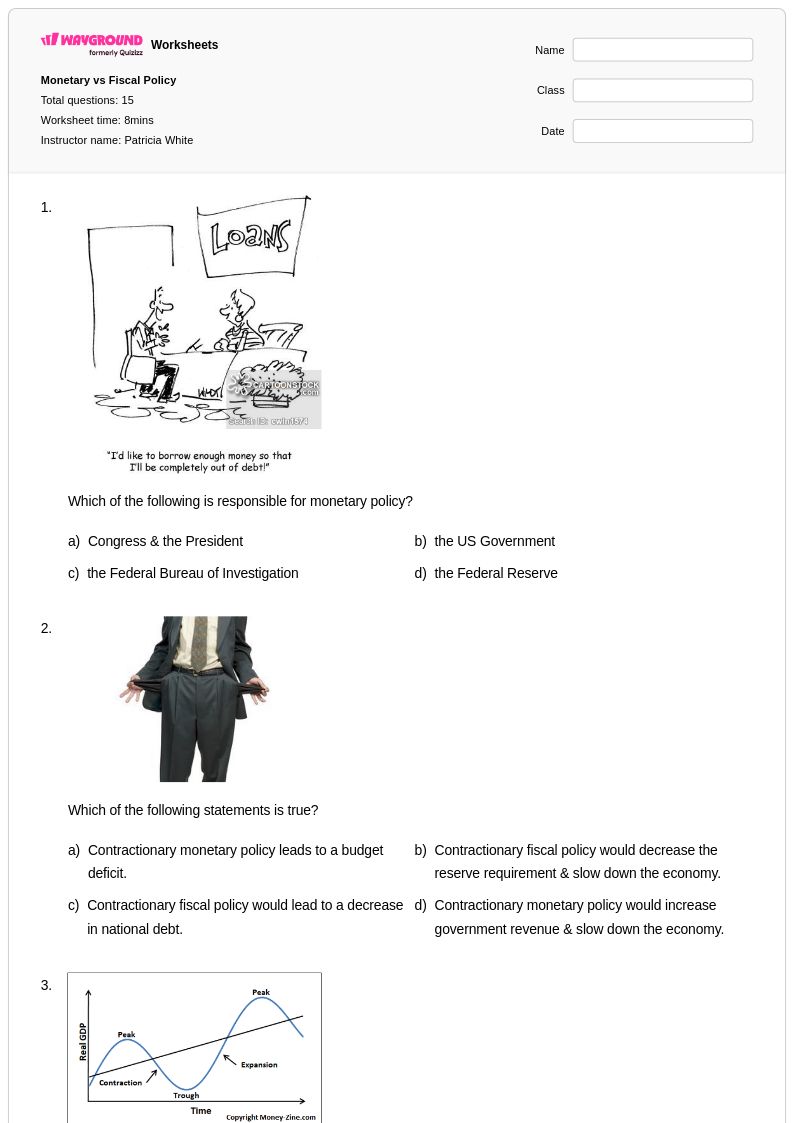
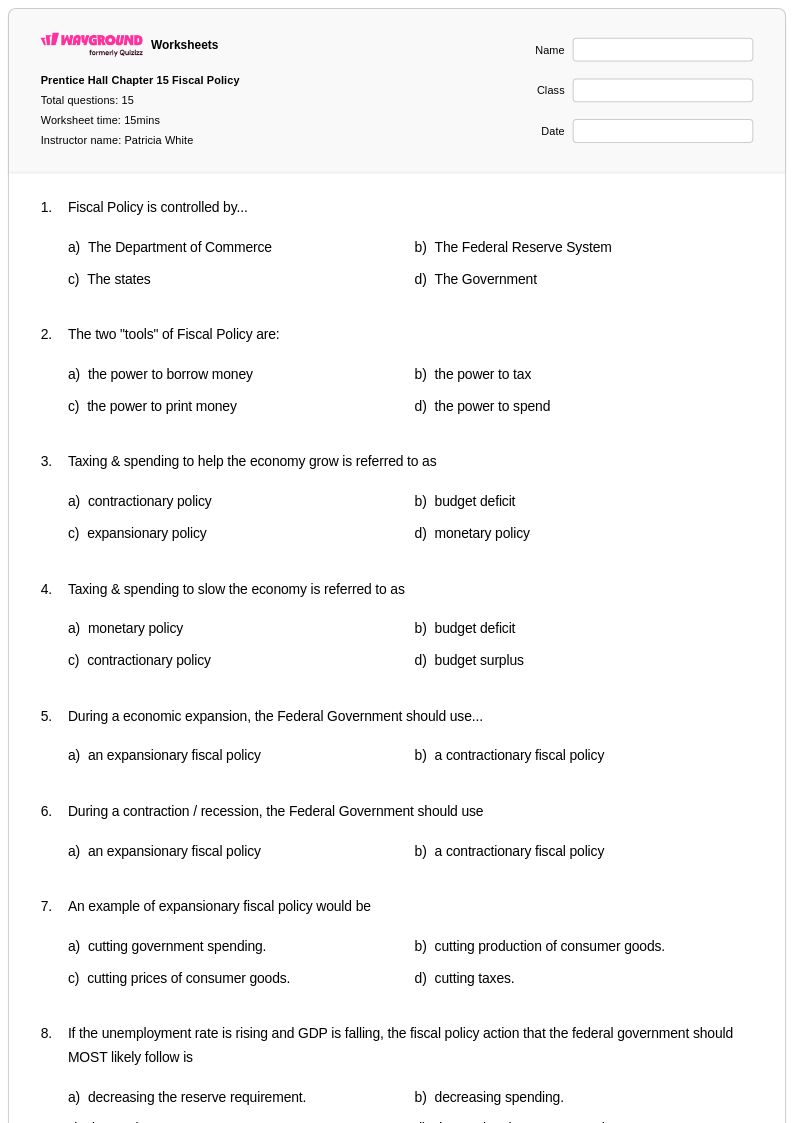
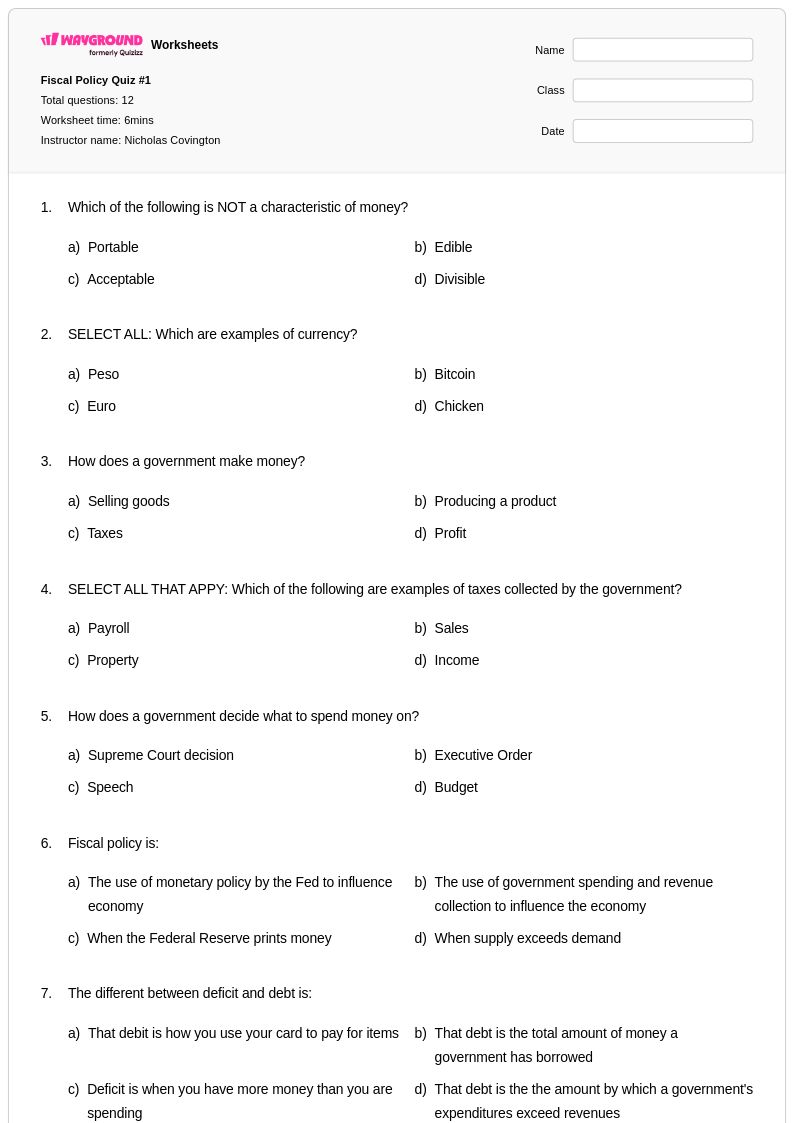
Fiscal policy worksheets for Class 12 students available through Wayground (formerly Quizizz) provide comprehensive practice with government spending and taxation decisions that shape economic outcomes. These carefully crafted resources strengthen students' analytical skills as they examine how federal budget policies influence economic growth, unemployment rates, and inflation levels. The worksheets guide students through complex scenarios involving expansionary and contractionary fiscal measures, helping them understand the multiplier effect, automatic stabilizers, and the relationship between fiscal policy and aggregate demand. Each printable resource includes detailed answer keys that support independent learning, while practice problems range from calculating the impact of tax changes on disposable income to analyzing government spending programs during economic downturns. Students develop critical thinking abilities as they evaluate the effectiveness of various fiscal tools and explore the political and economic constraints that policymakers face when implementing budgetary decisions.
Wayground (formerly Quizizz) empowers educators with millions of teacher-created fiscal policy resources that support diverse learning needs in Class 12 economics classrooms. The platform's robust search and filtering capabilities allow teachers to quickly locate worksheets aligned with specific standards and learning objectives, while differentiation tools enable customization for students with varying skill levels and learning styles. These comprehensive worksheet collections are available in both printable pdf format and interactive digital versions, providing flexibility for in-class instruction, homework assignments, and assessment preparation. Teachers can seamlessly integrate these resources into their lesson planning for skill practice sessions, targeted remediation for students struggling with economic concepts, and enrichment activities for advanced learners ready to explore sophisticated fiscal policy applications. The platform's extensive library ensures that educators have access to current, relevant materials that reflect real-world fiscal challenges and help students connect theoretical economic principles to contemporary policy debates.
FAQs
How do I teach fiscal policy to high school economics students?
Start by grounding students in the two core tools of fiscal policy: government spending and taxation. Use real-world examples like stimulus packages or tax cuts to illustrate expansionary policy, and budget cuts or tax increases to illustrate contractionary policy. Connecting these decisions to economic cycles — recession versus inflation — helps students understand why and when each approach is used. Practice problems that require students to evaluate the effects of specific policy choices on GDP, unemployment, and price levels solidify the conceptual framework.
What exercises help students practice expansionary and contractionary fiscal policy?
Scenario-based problems work best: present students with an economic condition (rising unemployment, inflation, budget deficit) and ask them to identify the appropriate fiscal response and predict its effects. Multiplier effect calculations are another effective exercise, requiring students to apply the spending multiplier to a given government expenditure and determine the resulting change in GDP. These practice types build both analytical reasoning and quantitative skills simultaneously.
What misconceptions do students commonly have about fiscal policy?
A frequent misconception is that government spending always stimulates the economy equally, without accounting for the size of the multiplier or crowding-out effects. Students also commonly confuse fiscal policy with monetary policy, conflating the roles of Congress and the Federal Reserve. Another common error is misidentifying a budget surplus as always economically positive, without recognizing that surpluses during a recession can deepen economic contraction.
How do I help students understand the difference between budget deficits and surpluses in fiscal policy?
Frame deficits and surpluses as intentional policy outcomes rather than accounting errors — governments run deficits during downturns to inject demand and surpluses during expansions to cool an overheating economy. Use timeline-based problems where students match fiscal decisions to economic conditions and evaluate the resulting budget position. Emphasizing that deficit spending is a tool, not a failure, is a key conceptual shift for many students.
How can I use Wayground's fiscal policy worksheets in my classroom?
Wayground's fiscal policy worksheets are available as free printable PDFs for traditional classroom instruction and in digital formats for technology-integrated or remote learning environments. Teachers can also host worksheets as a quiz directly on Wayground, enabling real-time response tracking and immediate feedback. Each worksheet includes a complete answer key, making them efficient tools for formative assessment, targeted remediation, or enrichment for advanced learners. The platform's filtering tools allow teachers to search by specific economic standards or learning objectives, so it's straightforward to find materials that align with your current unit.
How do I differentiate fiscal policy instruction for students at different skill levels?
For students who need additional support, reduce the complexity of scenarios by isolating one policy variable at a time and using guided graphic organizers to map cause-and-effect relationships. For advanced learners, introduce multi-variable problems that require weighing trade-offs between fiscal and monetary responses. On Wayground, teachers can apply individual accommodations such as reduced answer choices or extended time to specific students, so the same digital worksheet can serve the full range of learners without requiring separate materials.