
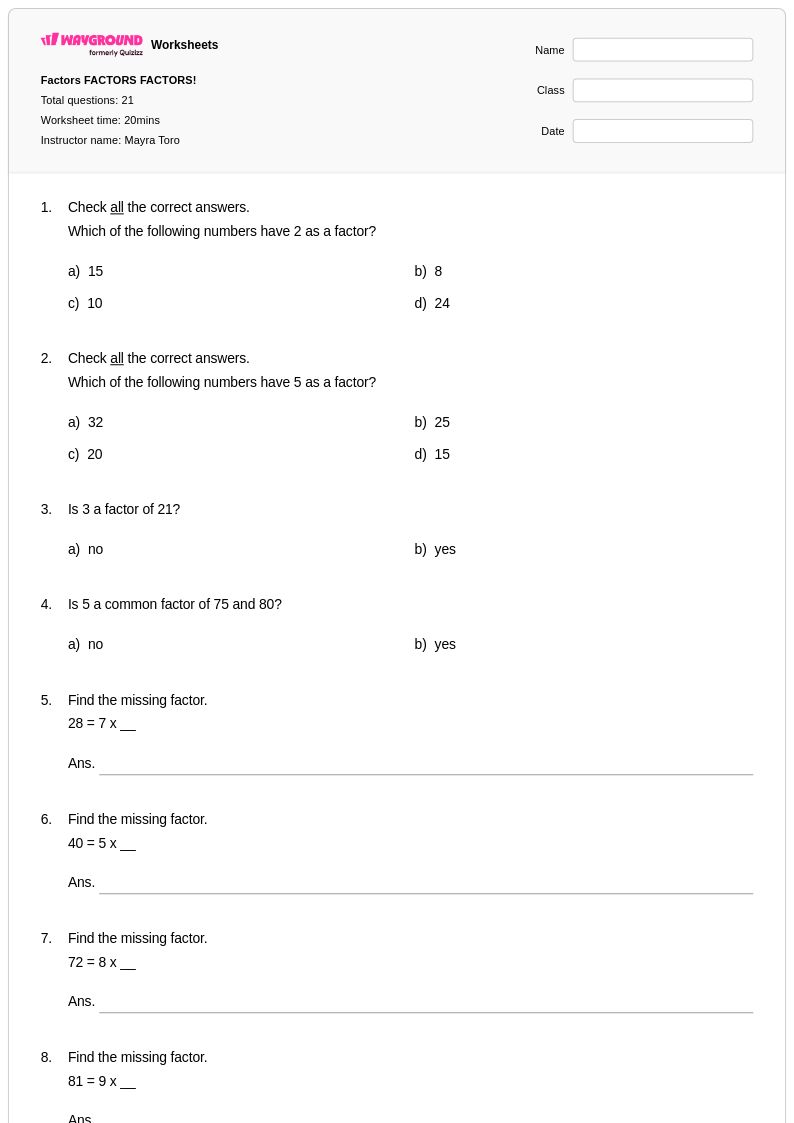
21Q
5th - 7th
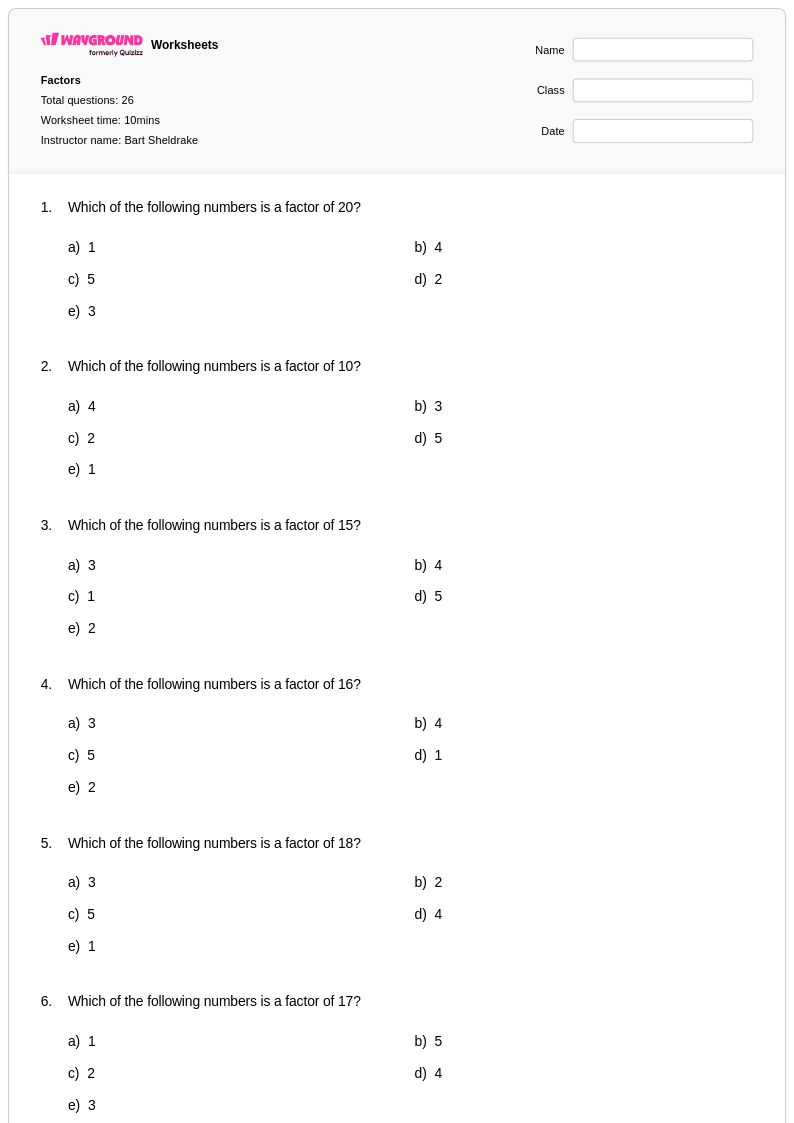
26Q
6th - 8th
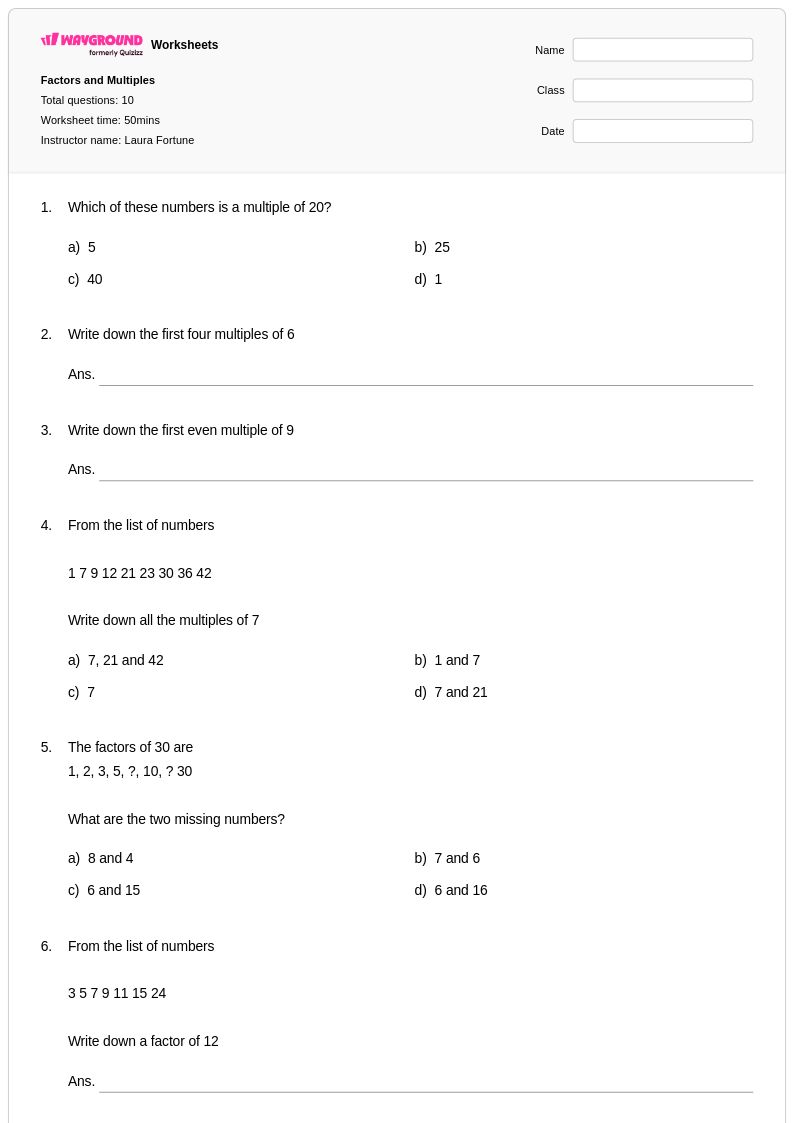
10Q
7th
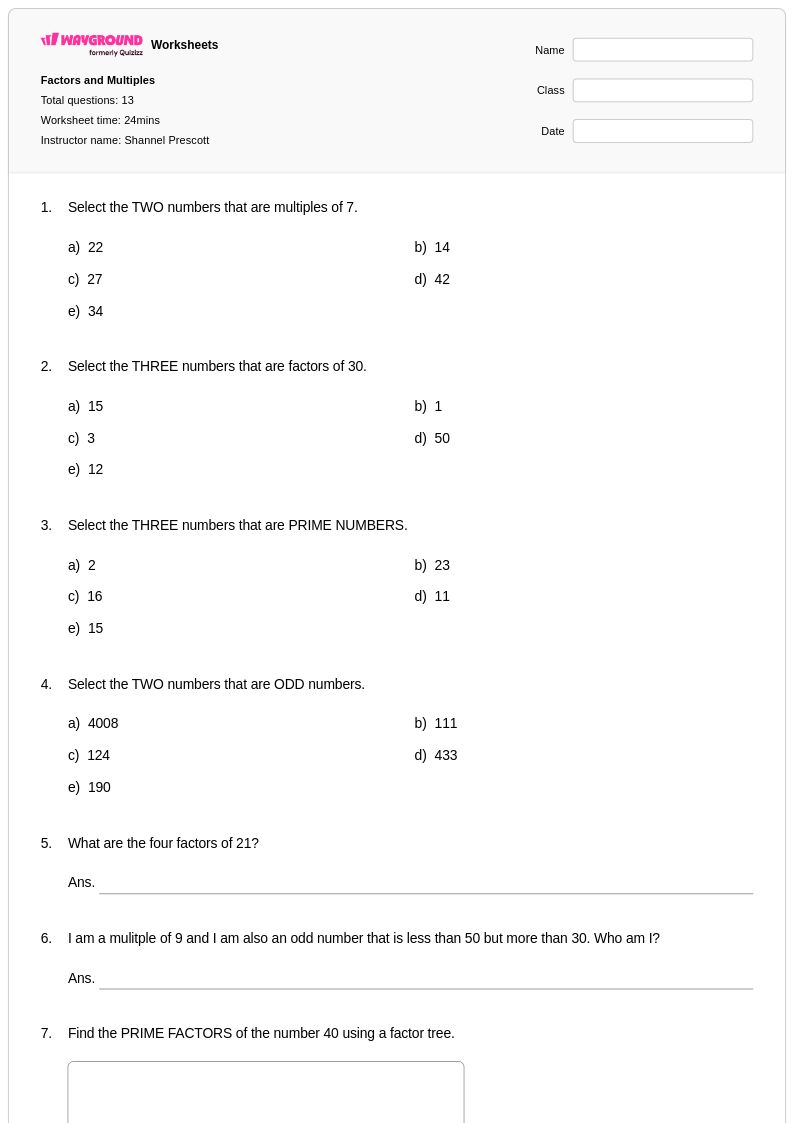
13Q
7th
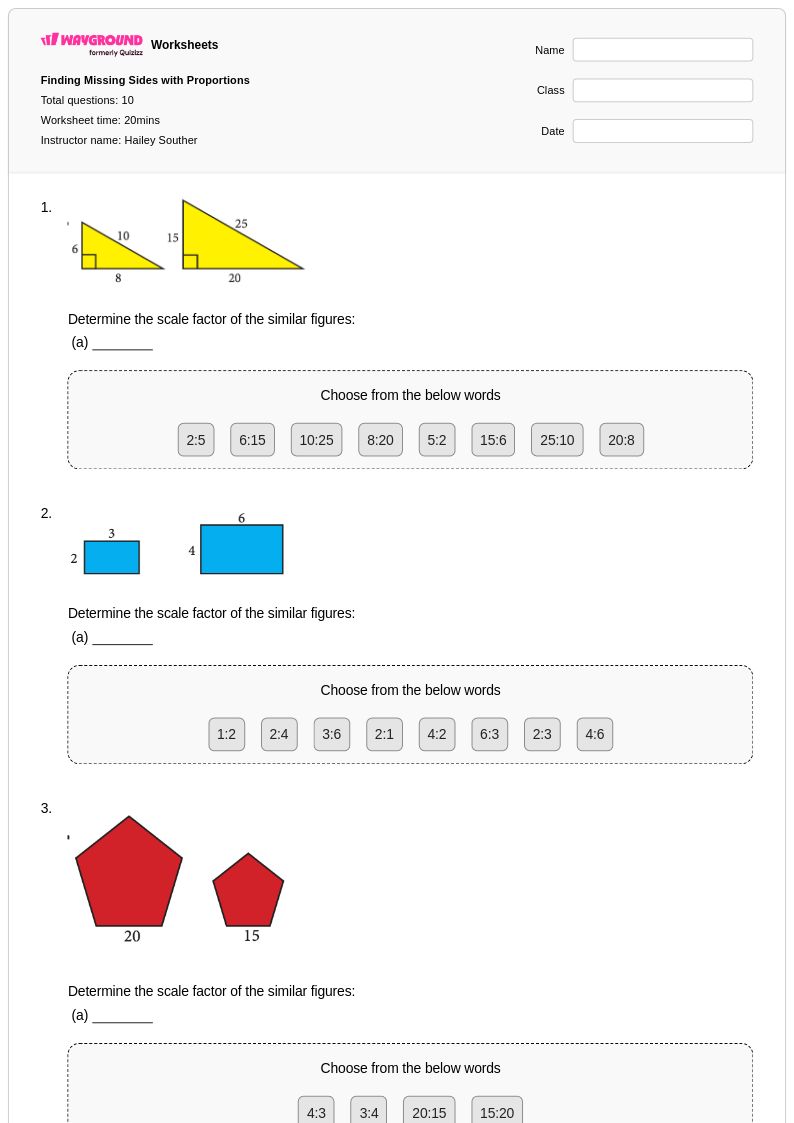
10Q
7th
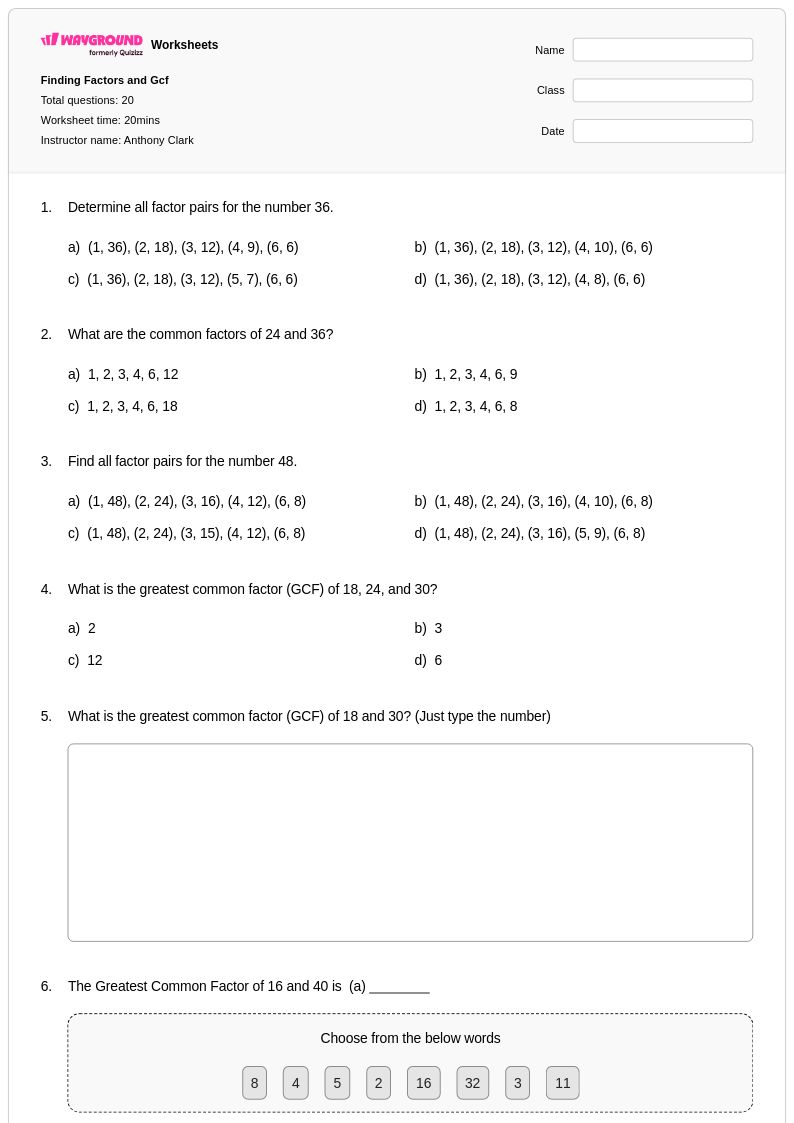
20Q
6th - Uni
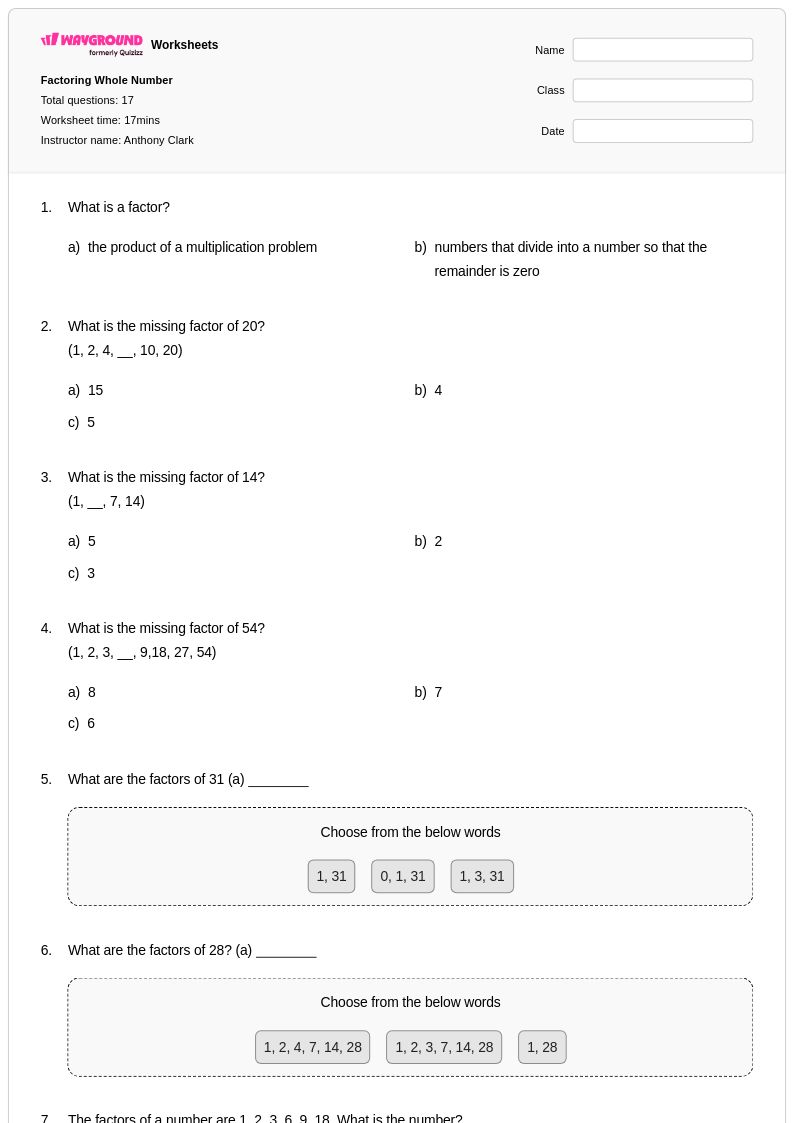
17Q
6th - Uni
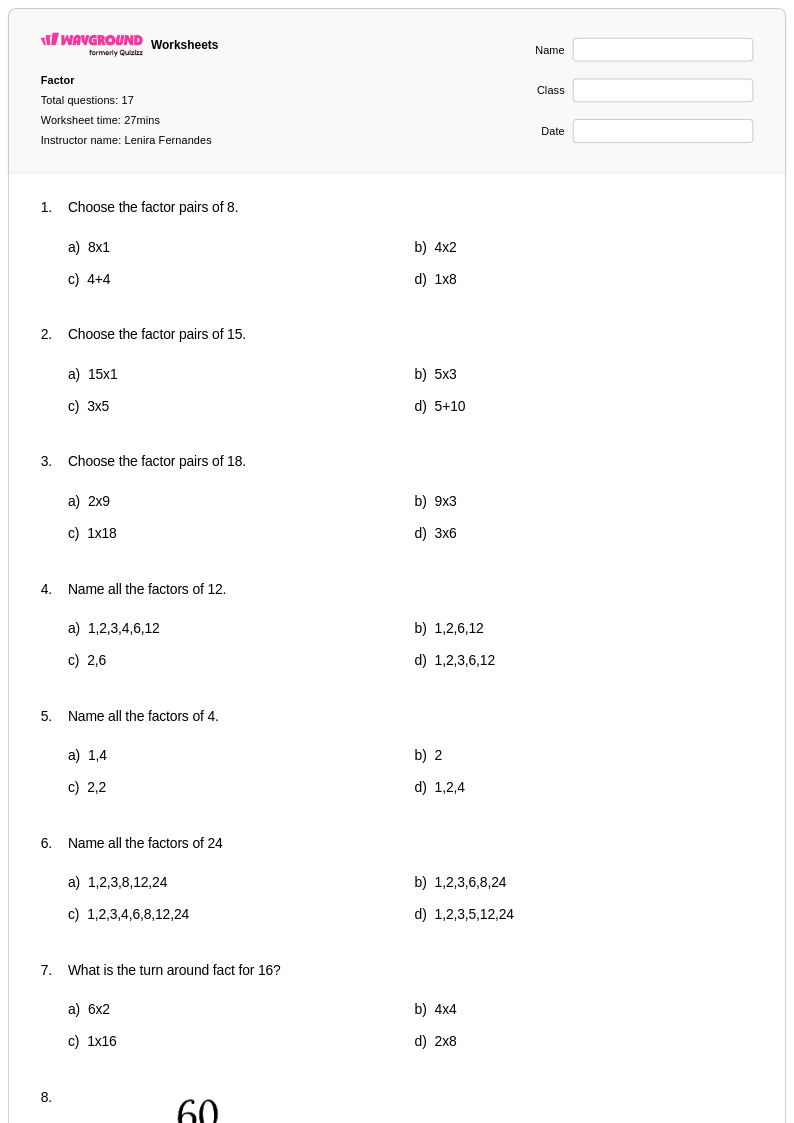
17Q
6th - 7th
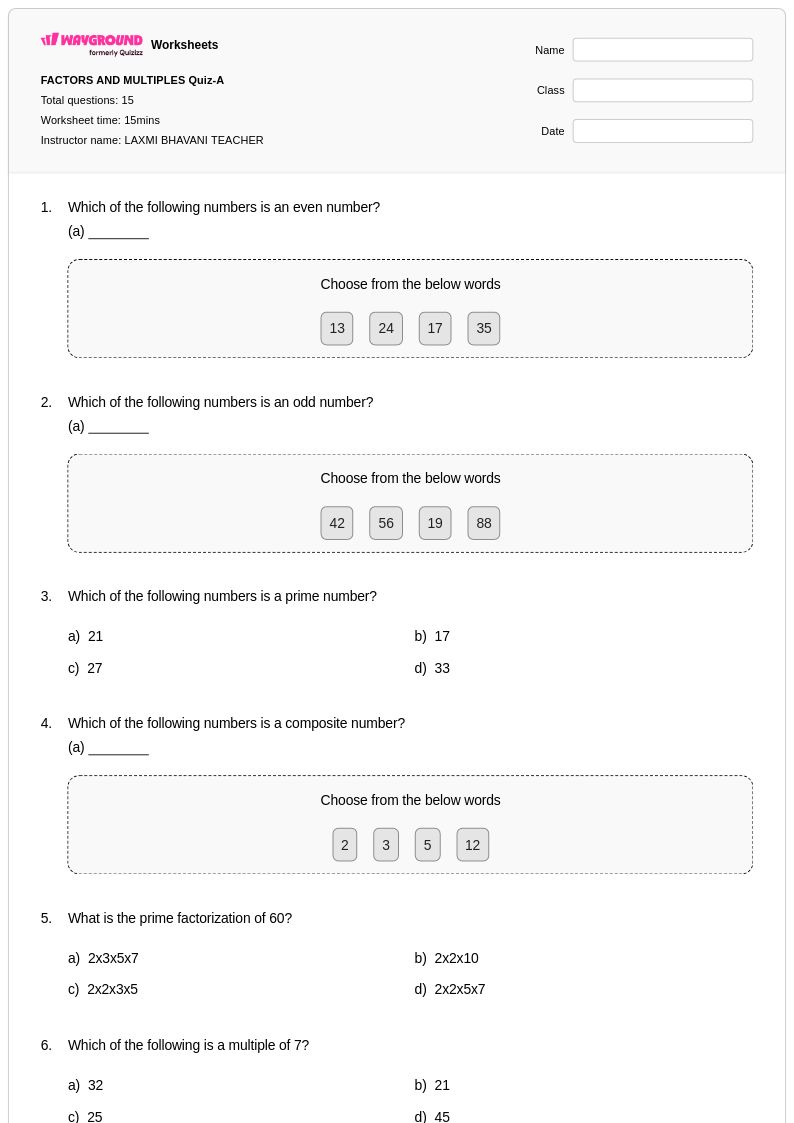
15Q
6th - Uni
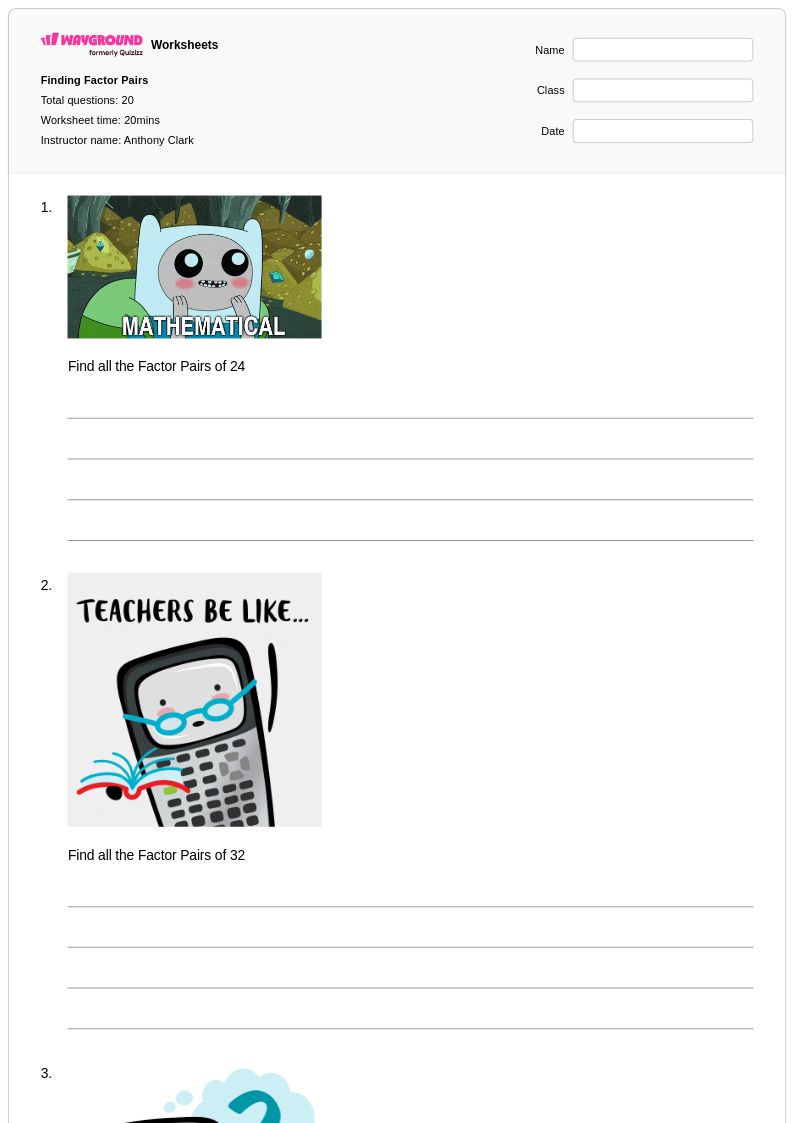
20Q
4th - Uni
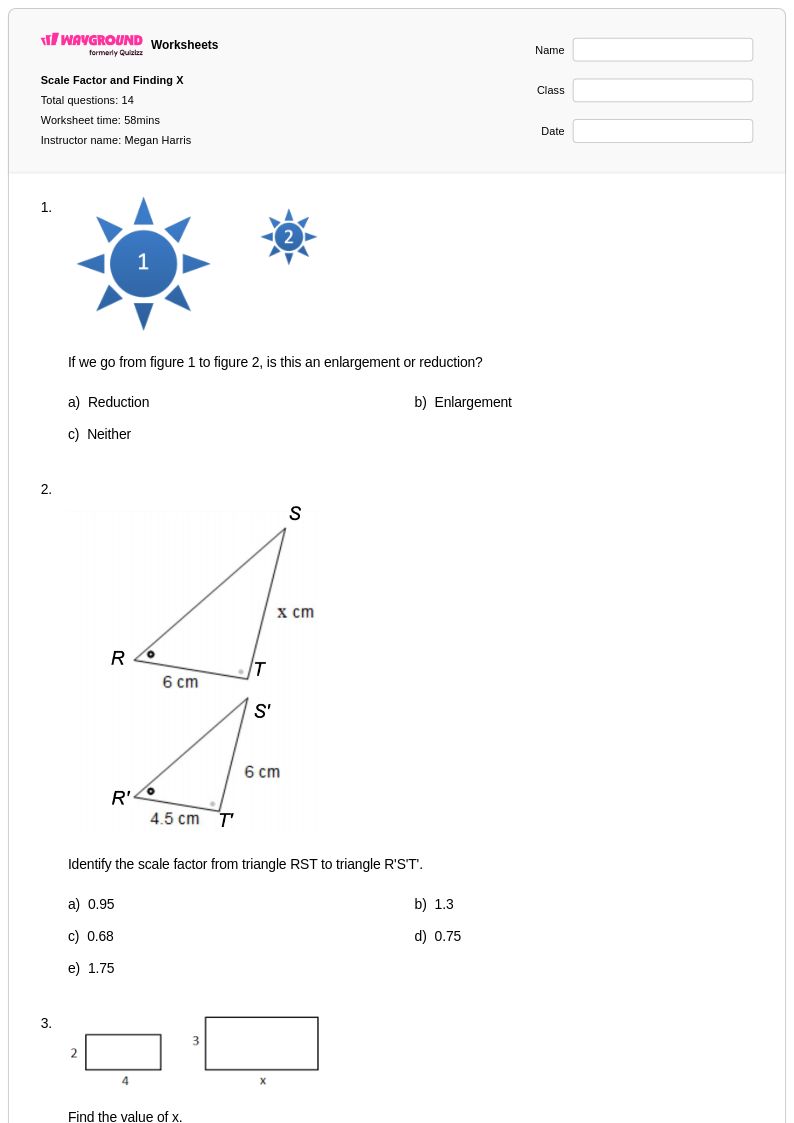
14Q
7th
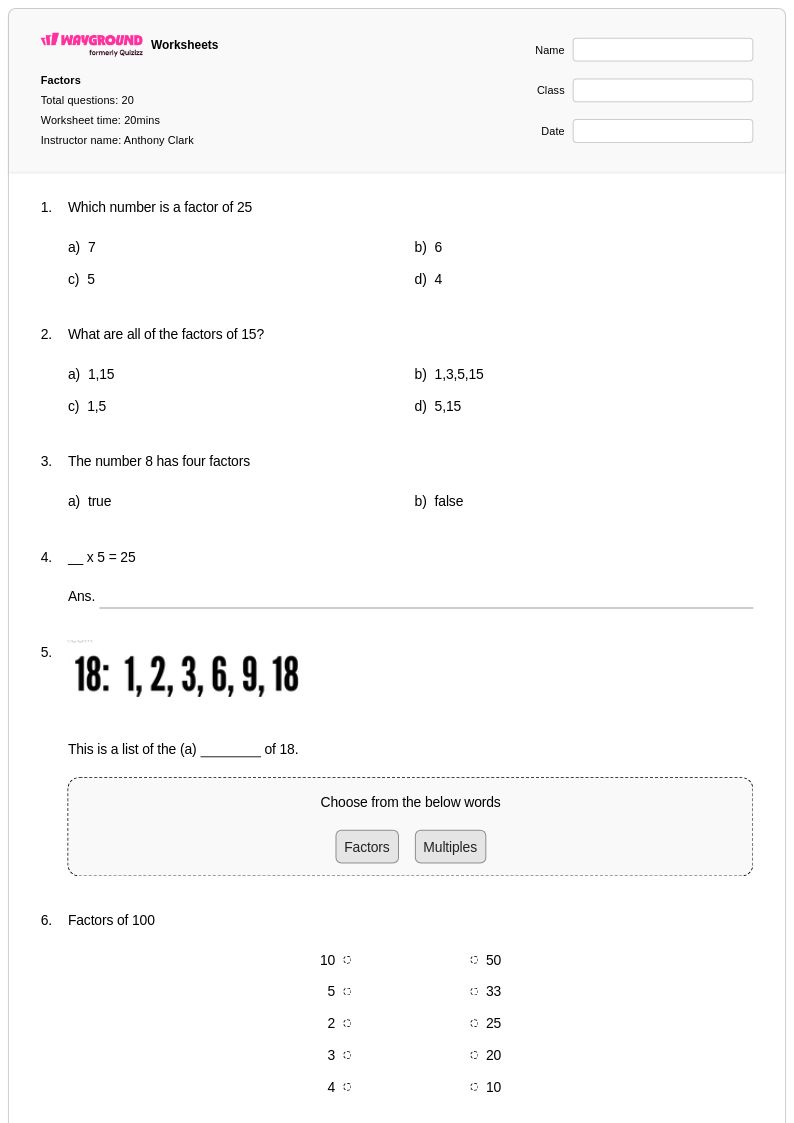
20Q
5th - Uni
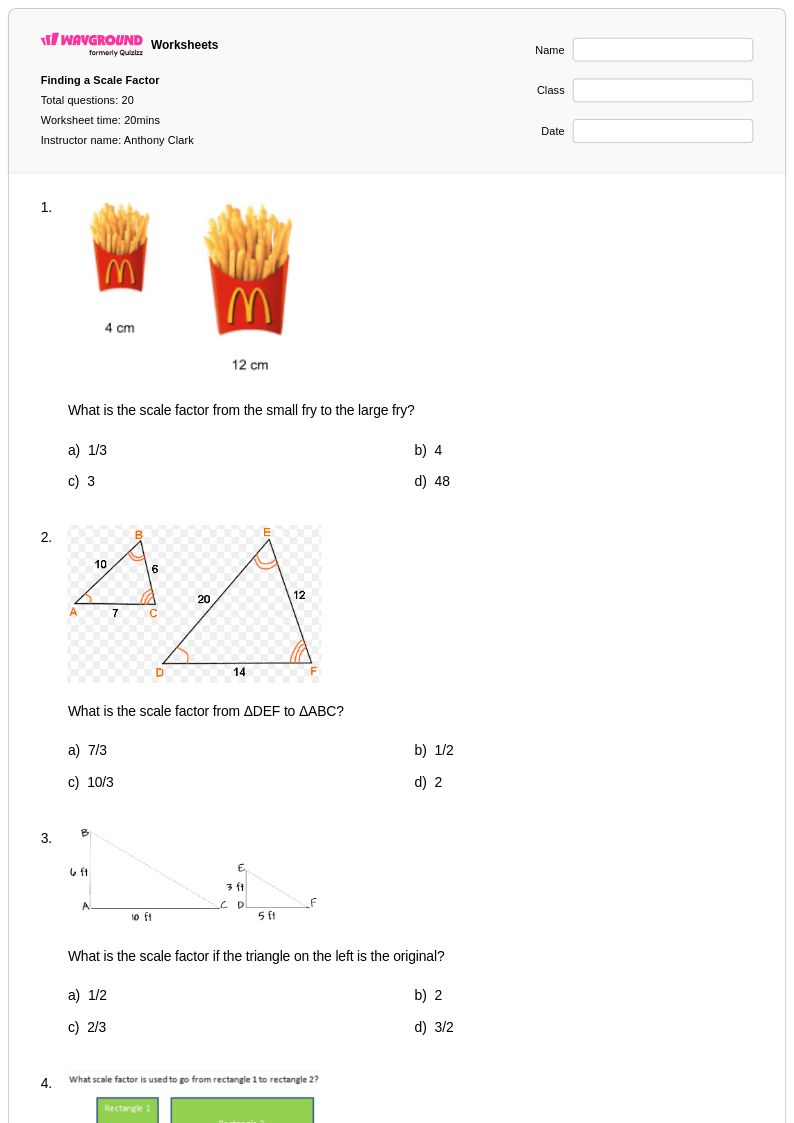
20Q
7th - Uni
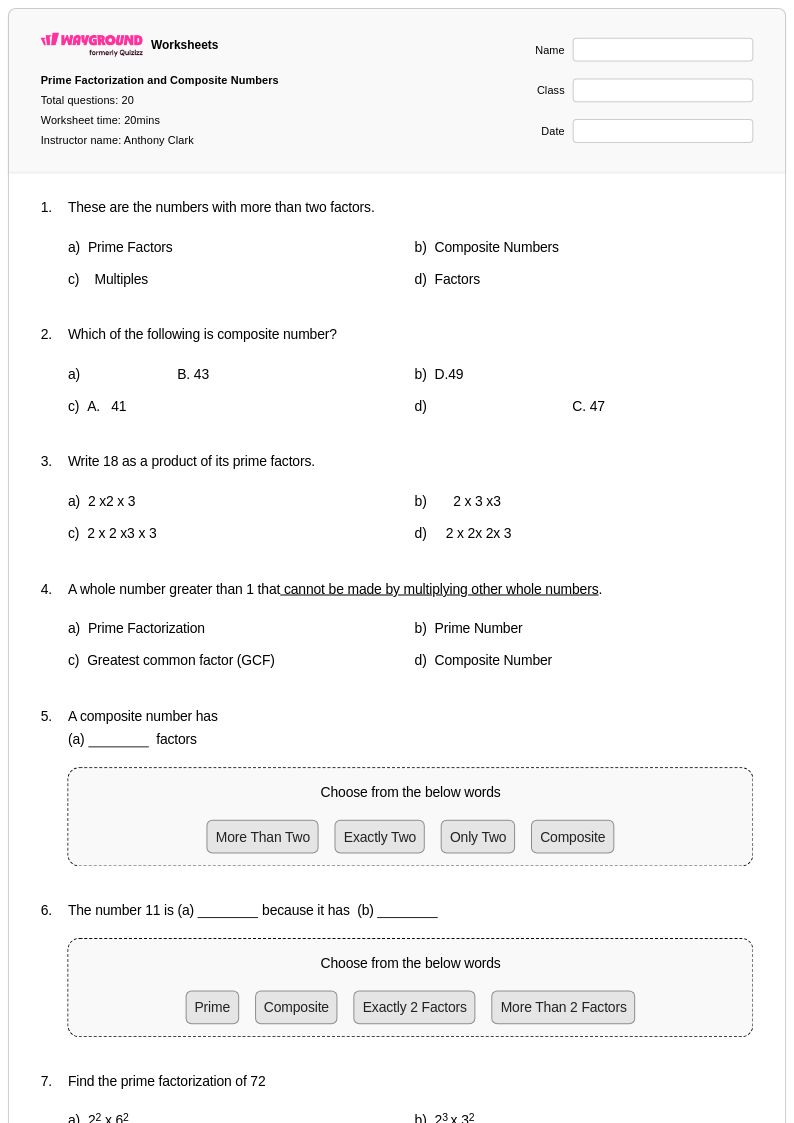
20Q
6th - Uni
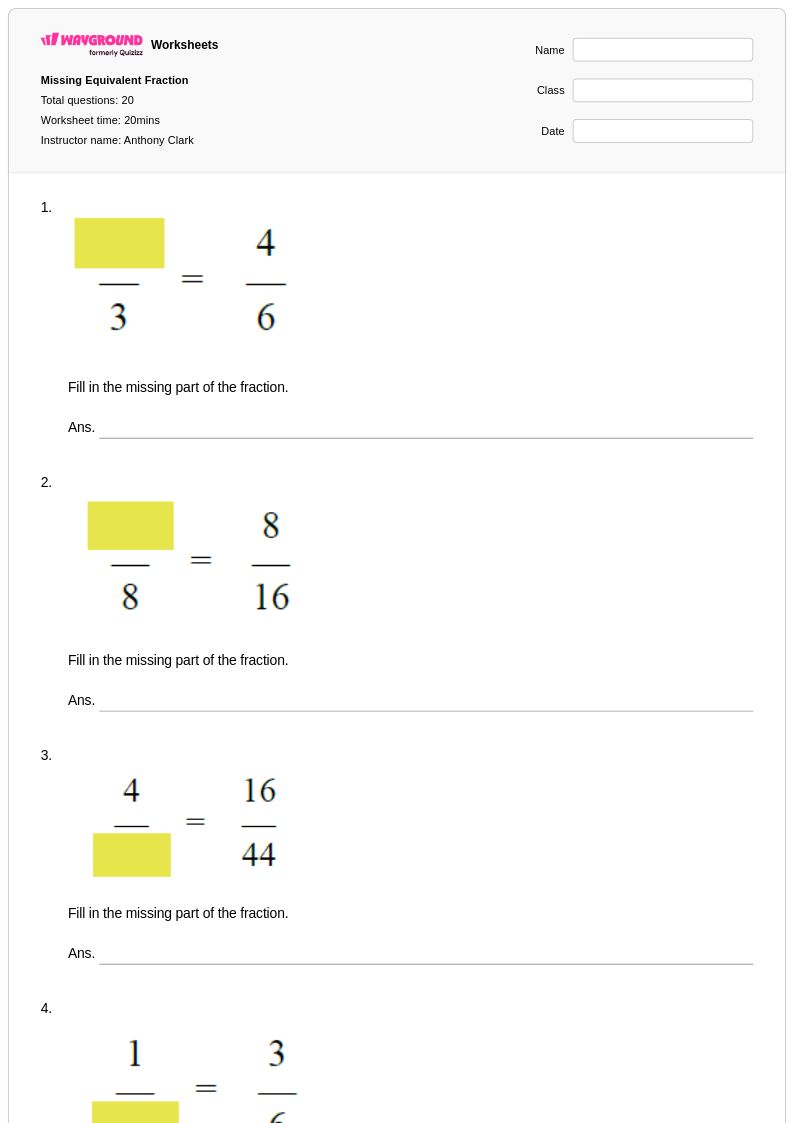
20Q
5th - Uni
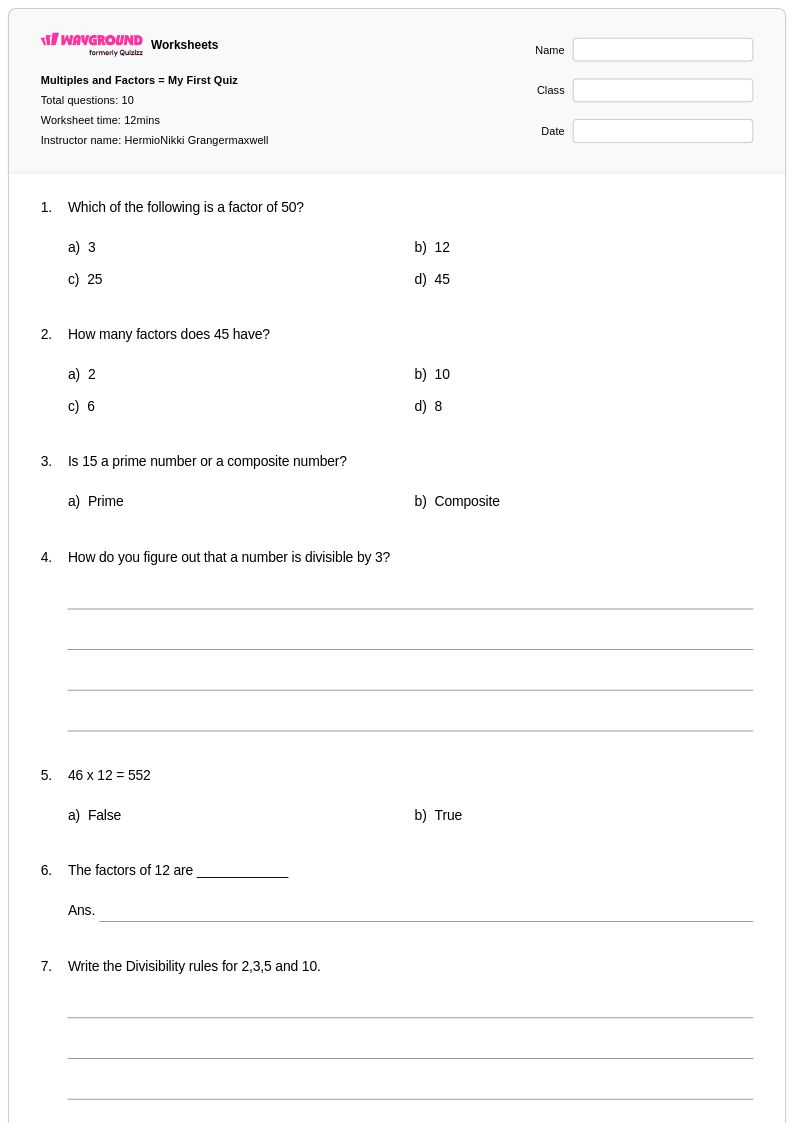
10Q
4th - 12th
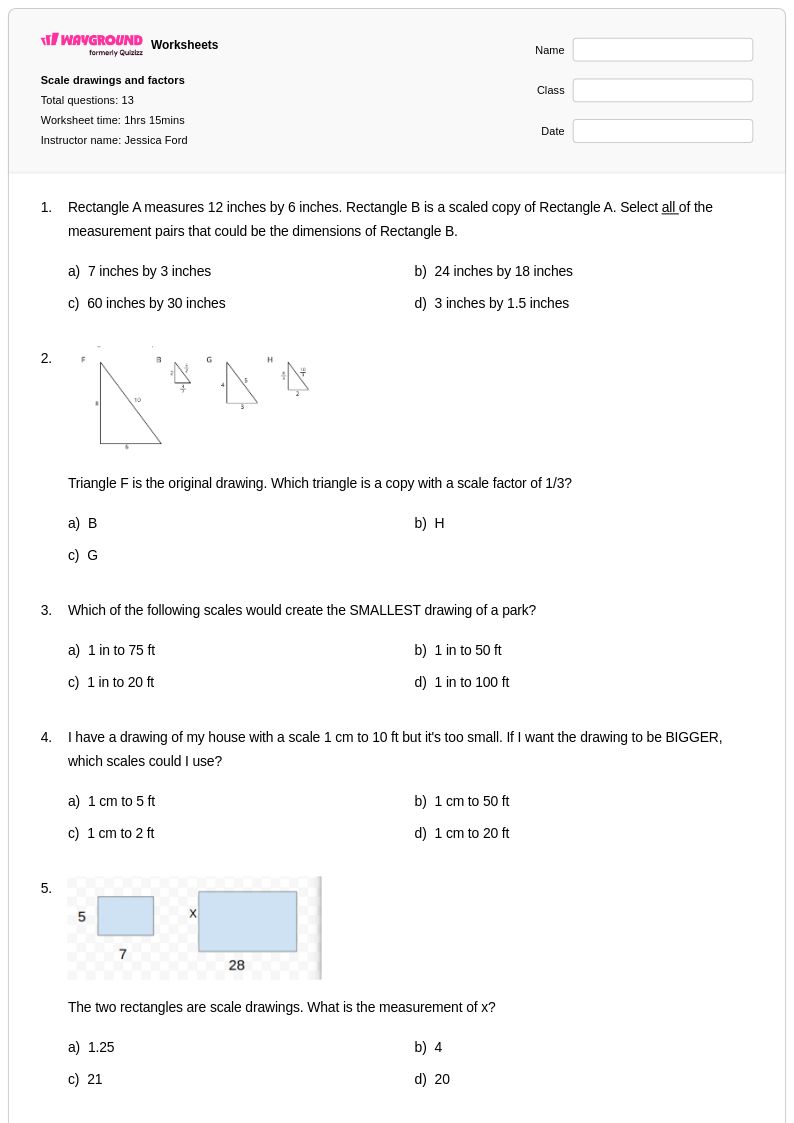
13Q
7th
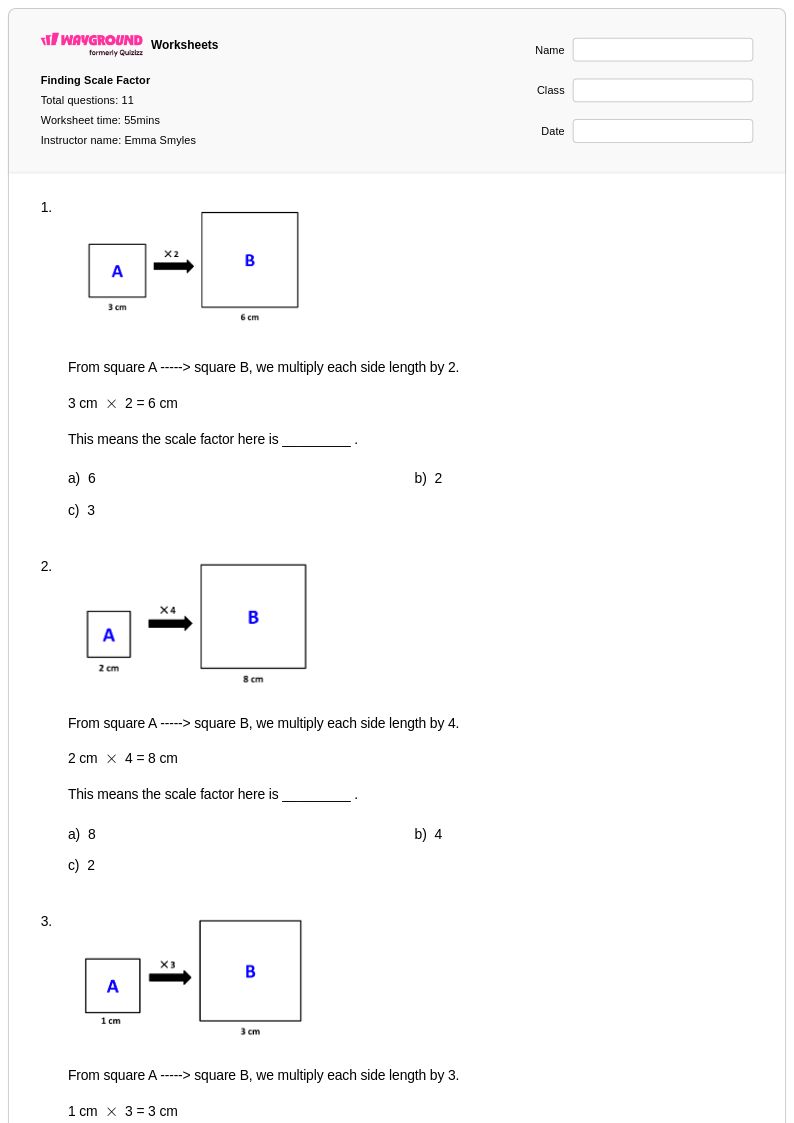
11Q
7th
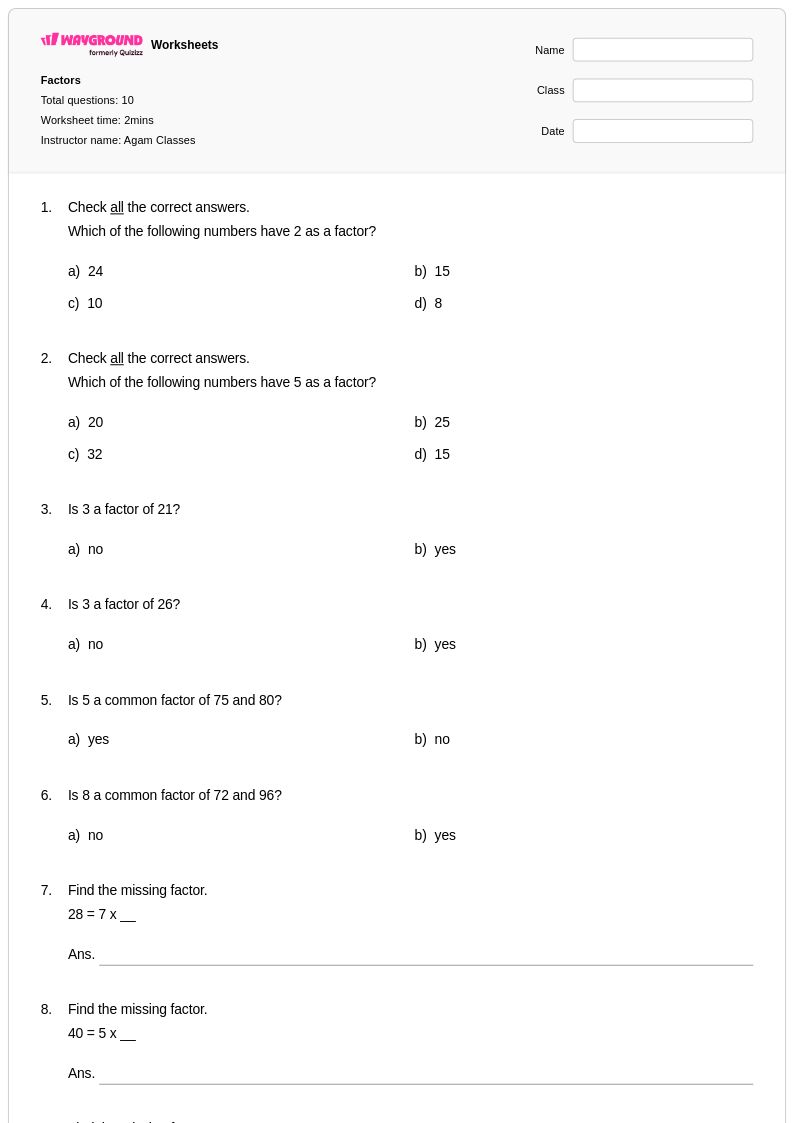
10Q
4th - 7th
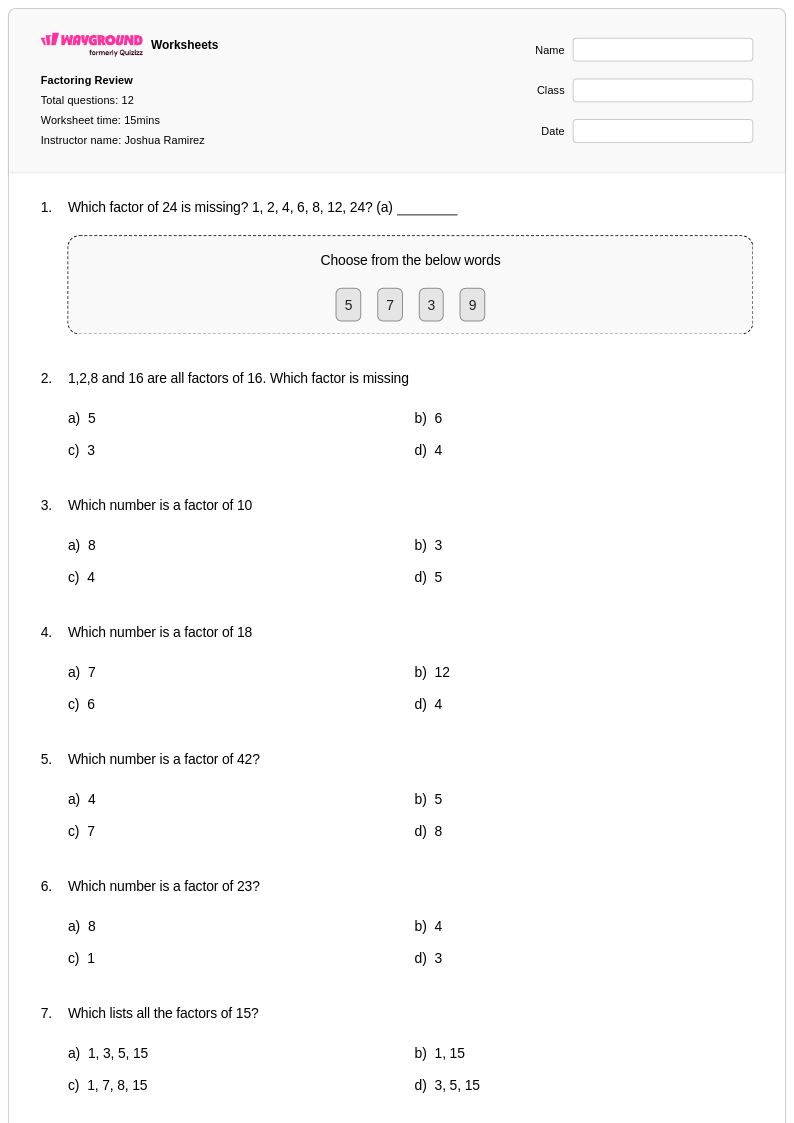
12Q
7th
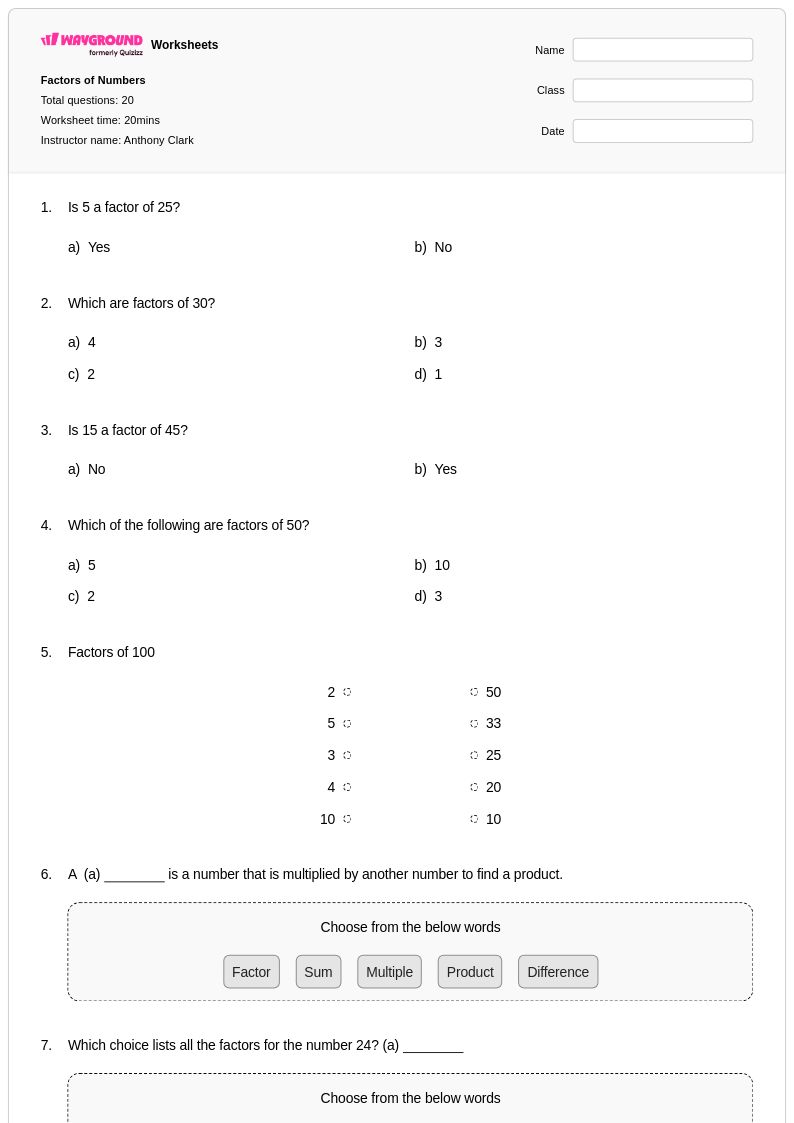
20Q
4th - Uni
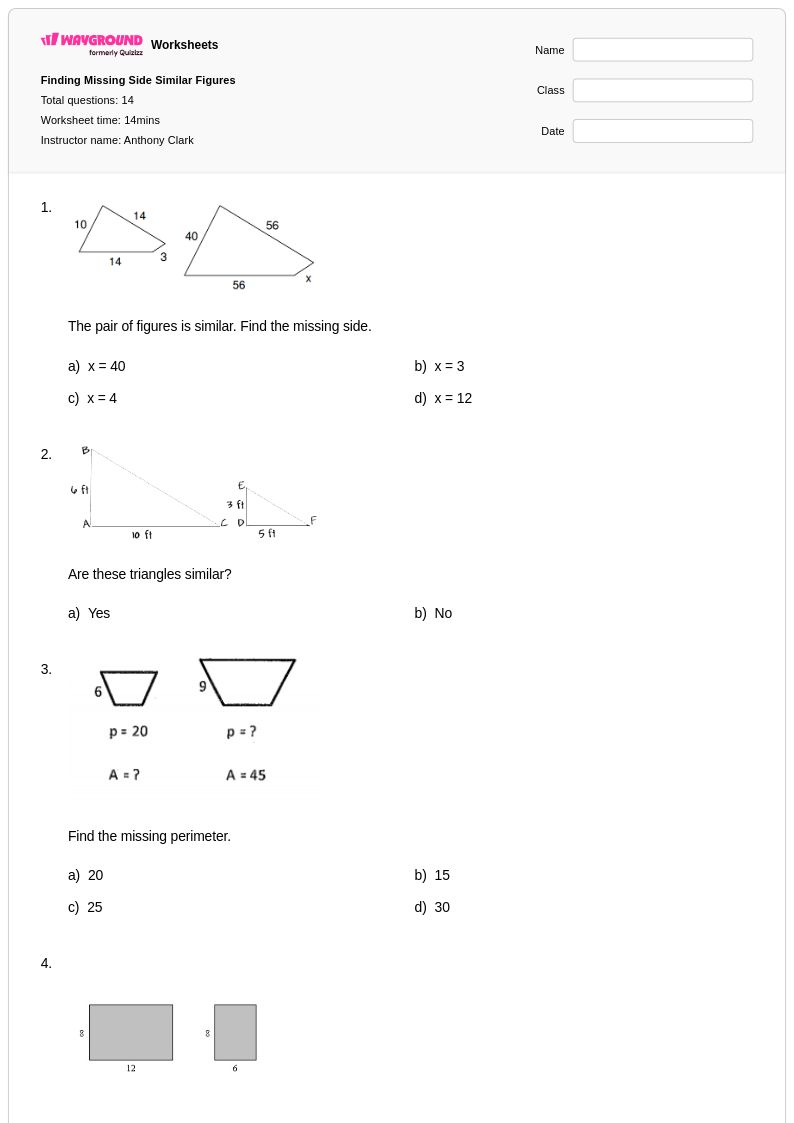
14Q
7th - Uni
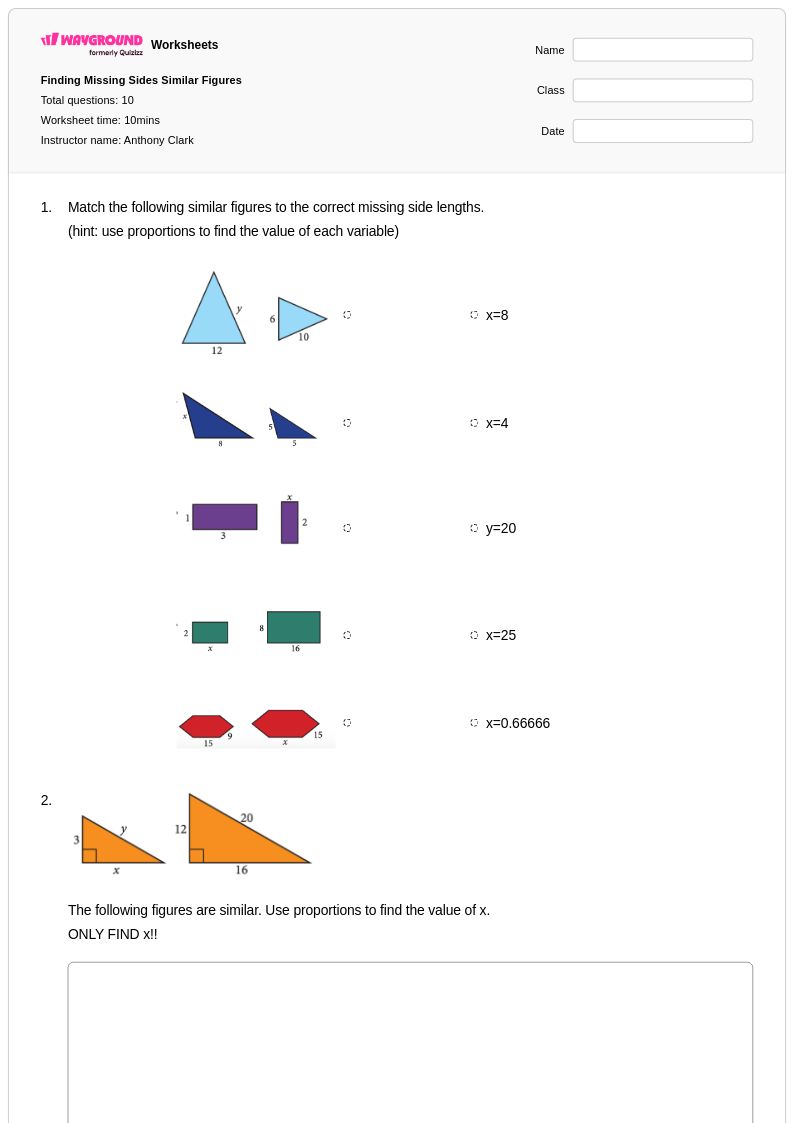
10Q
7th - Uni
Explore outras planilhas de assuntos para class 7
Explore printable Finding Missing Factors worksheets for Class 7
Finding missing factors worksheets available through Wayground (formerly Quizizz) provide Class 7 students with targeted practice in reverse multiplication problem-solving, a critical algebraic thinking skill that bridges arithmetic and pre-algebra concepts. These comprehensive printables challenge students to identify unknown factors when given a product and one known factor, strengthening their understanding of multiplicative relationships and division as the inverse operation of multiplication. Each worksheet collection includes carefully scaffolded practice problems that progress from single-digit missing factors to more complex multi-digit scenarios, complete with detailed answer keys that allow students to check their work independently. The free pdf resources emphasize strategic thinking approaches such as using factor trees, prime factorization, and mental math strategies to systematically determine missing values in multiplication equations.
Wayground (formerly Quizizz) empowers educators with access to millions of teacher-created finding missing factors resources that align with Class 7 mathematics standards and support diverse learning needs in the classroom. The platform's robust search and filtering capabilities enable teachers to quickly locate worksheets that match their specific curriculum requirements and student ability levels, while built-in differentiation tools allow for seamless customization of problem difficulty and quantity. These versatile materials are available in both printable pdf format for traditional paper-and-pencil practice and digital formats for interactive learning experiences, making them ideal for lesson planning, targeted remediation sessions, enrichment activities for advanced learners, and regular skill practice assignments. Teachers can efficiently adapt these resources to support individual student progress while maintaining consistent practice with this foundational algebraic concept across different instructional settings.
FAQs
How do I teach Grade 7 students to find a missing factor?
What exercises help students practice finding missing factors?
What mistakes do Grade 7 students make when finding missing factors?
How can I use these finding missing factors worksheets in class?
How does finding missing factors fit into the Grade 7 Common Core math progression?
How can I differentiate missing-factor practice for a mixed-ability class?
What grade do students learn to find missing factors?