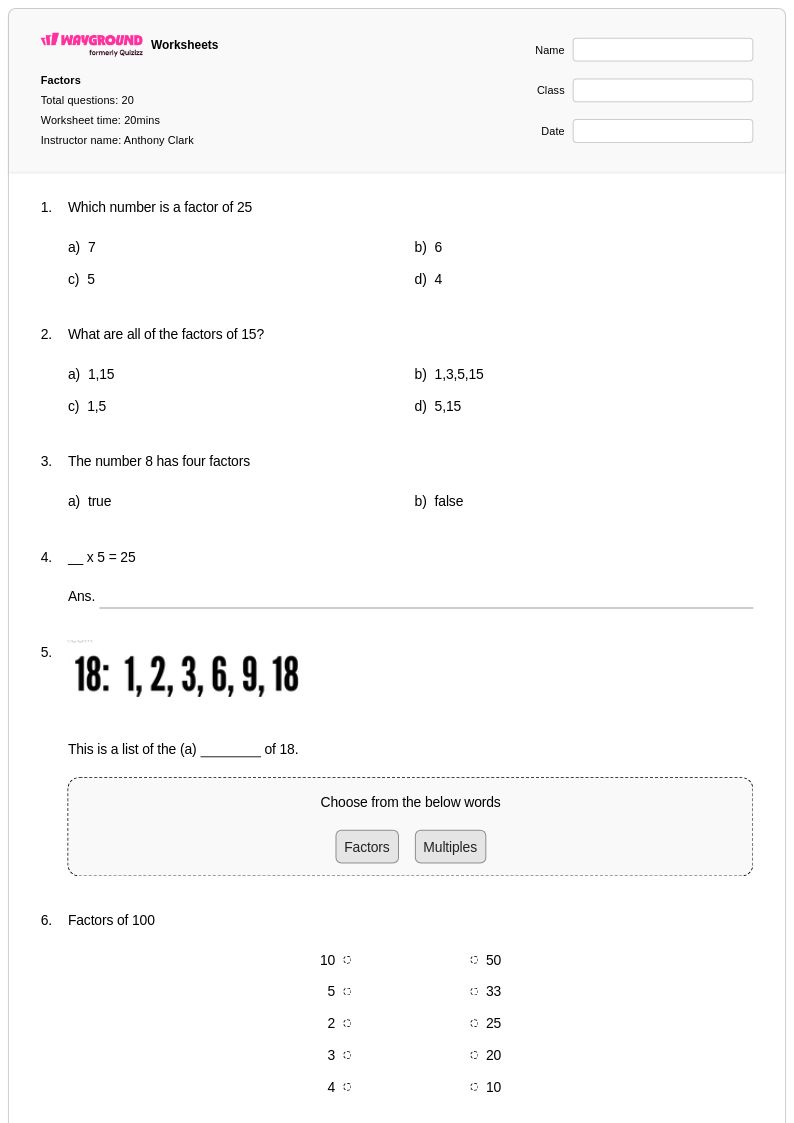
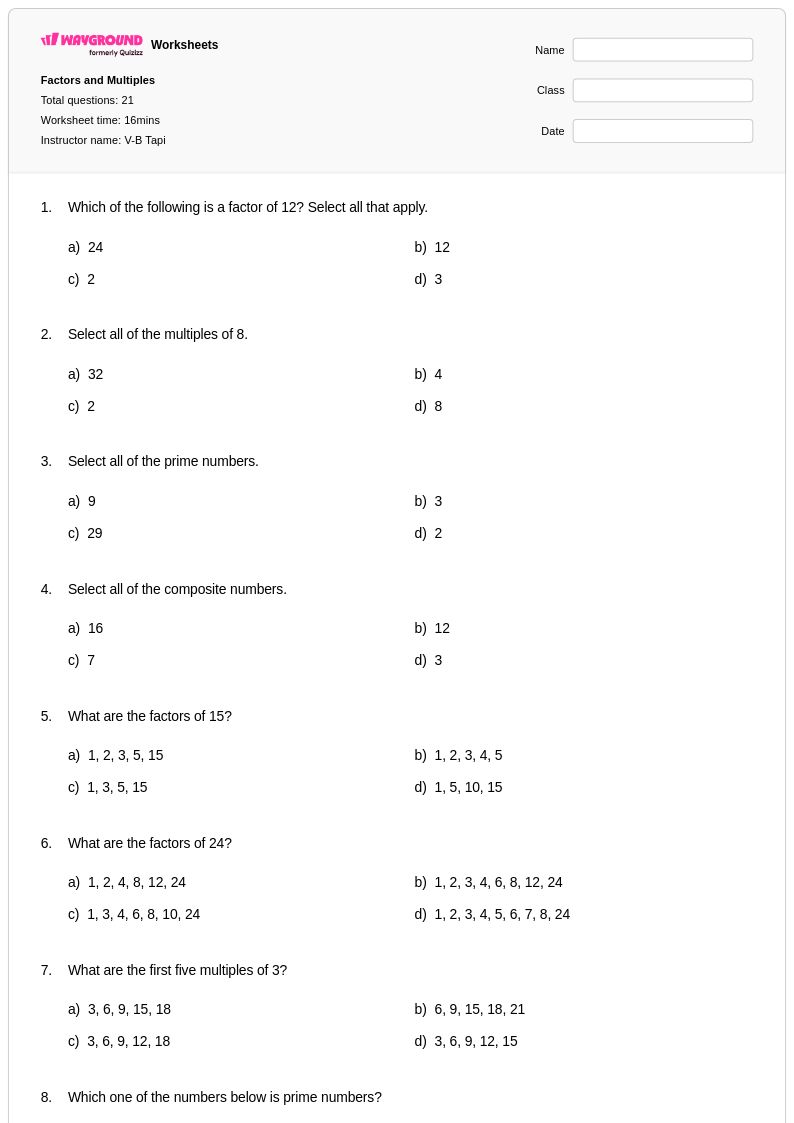
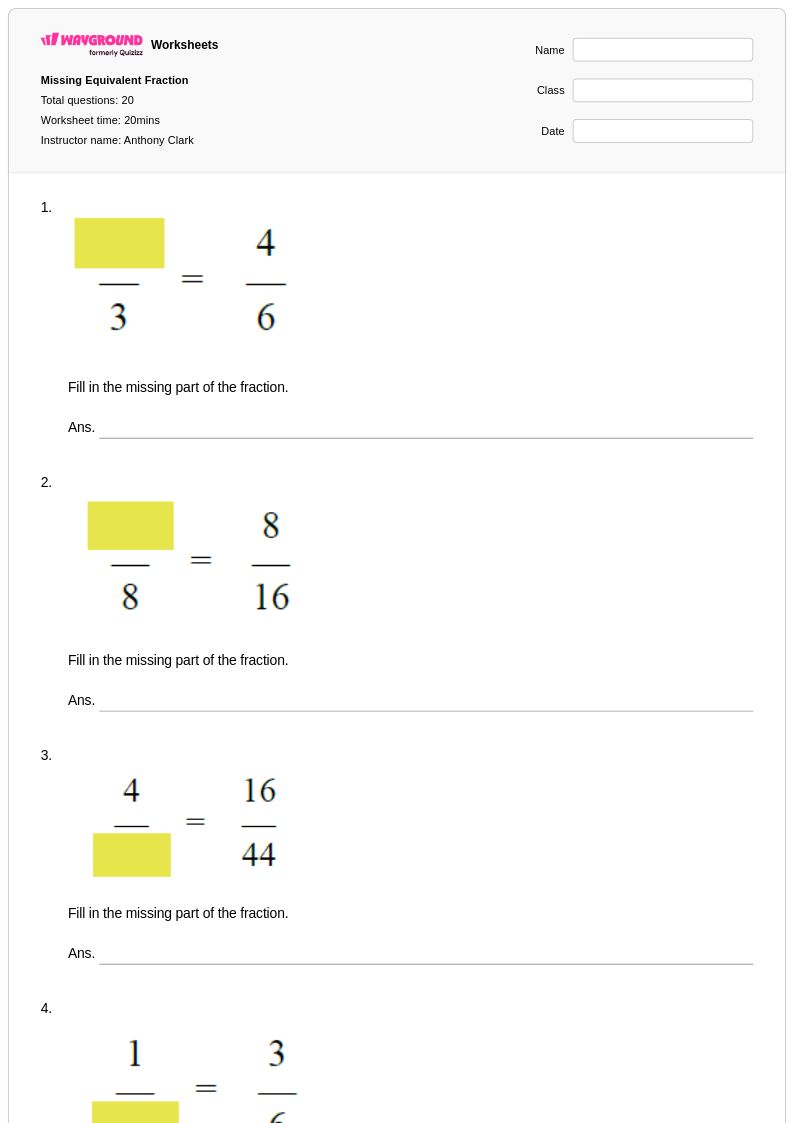
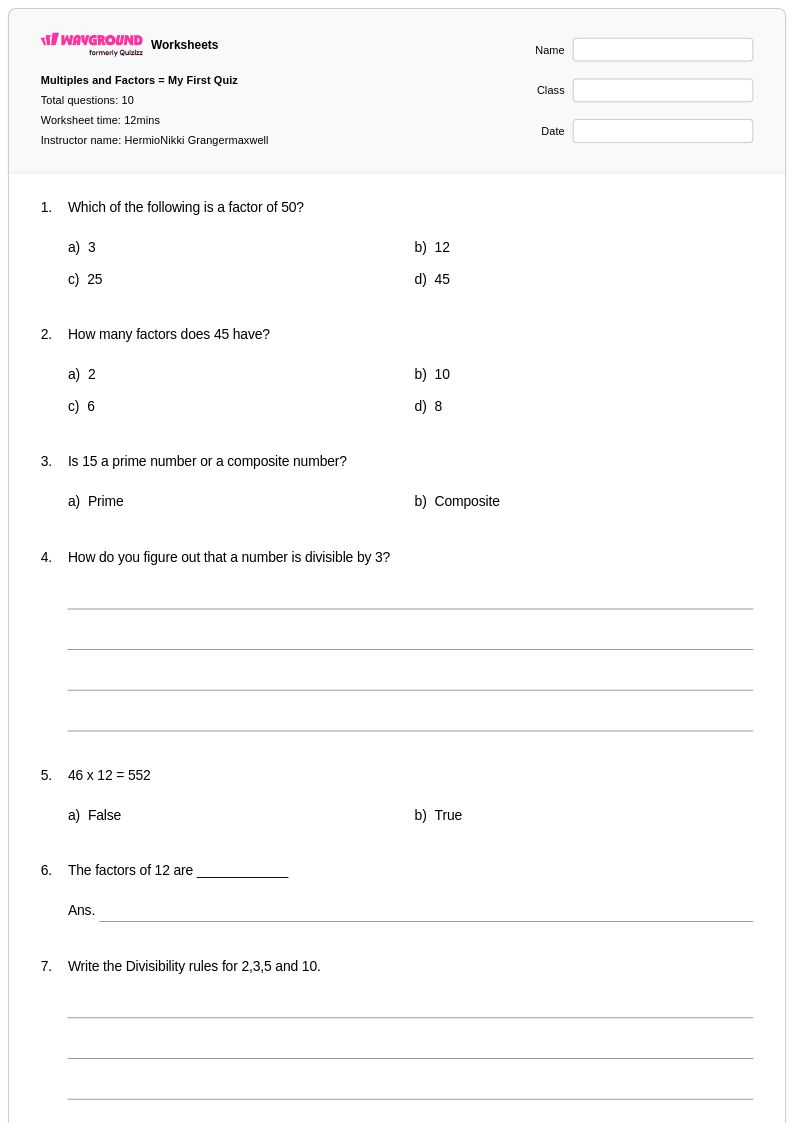
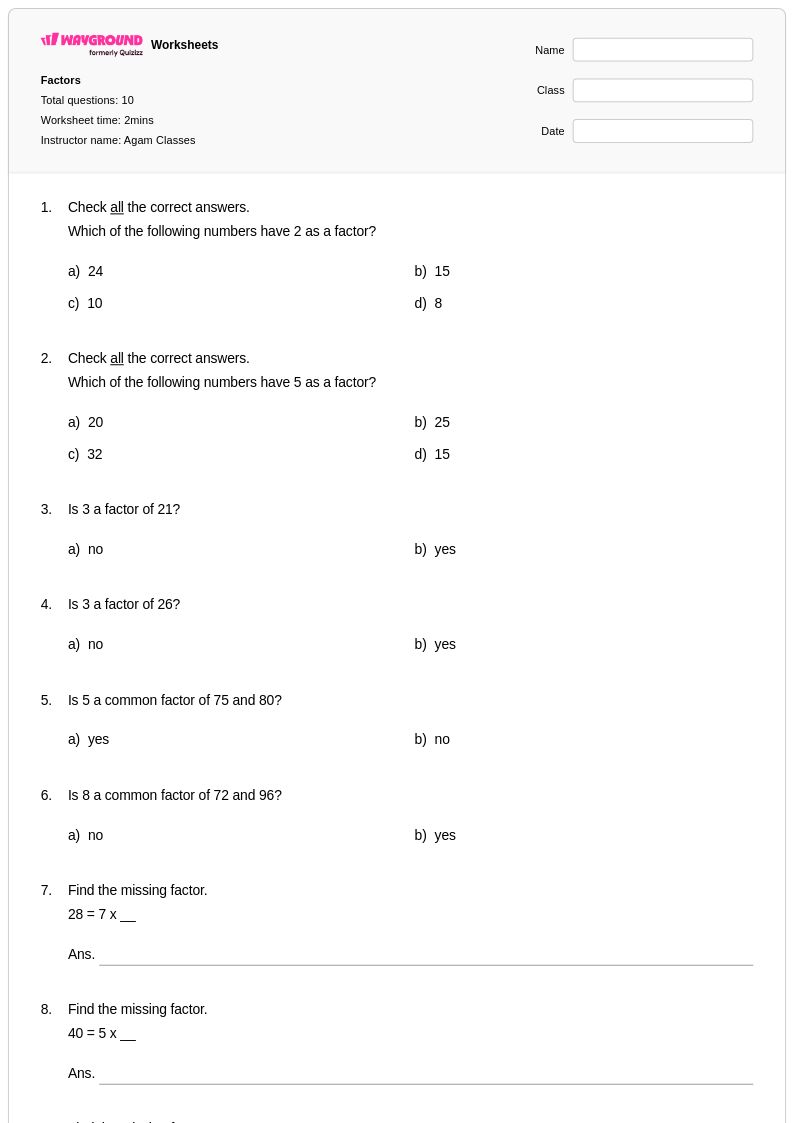
Free Printable Finding Missing Factors Worksheets for Class 5
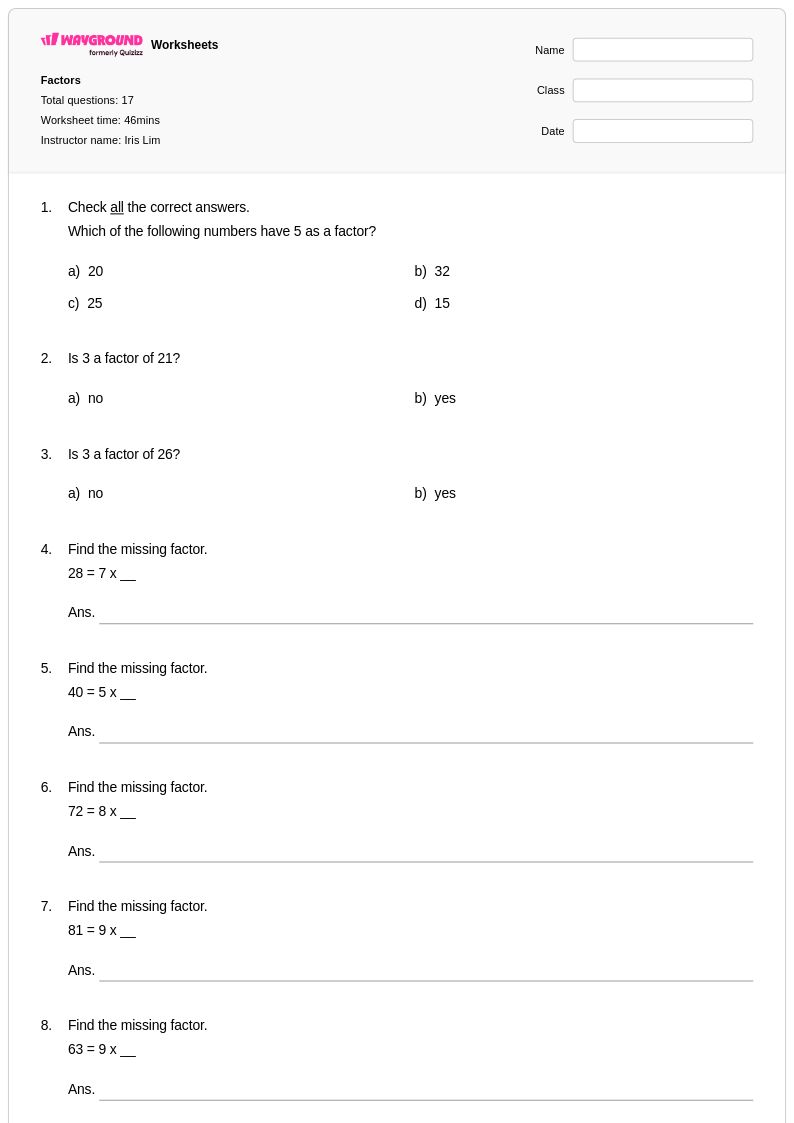
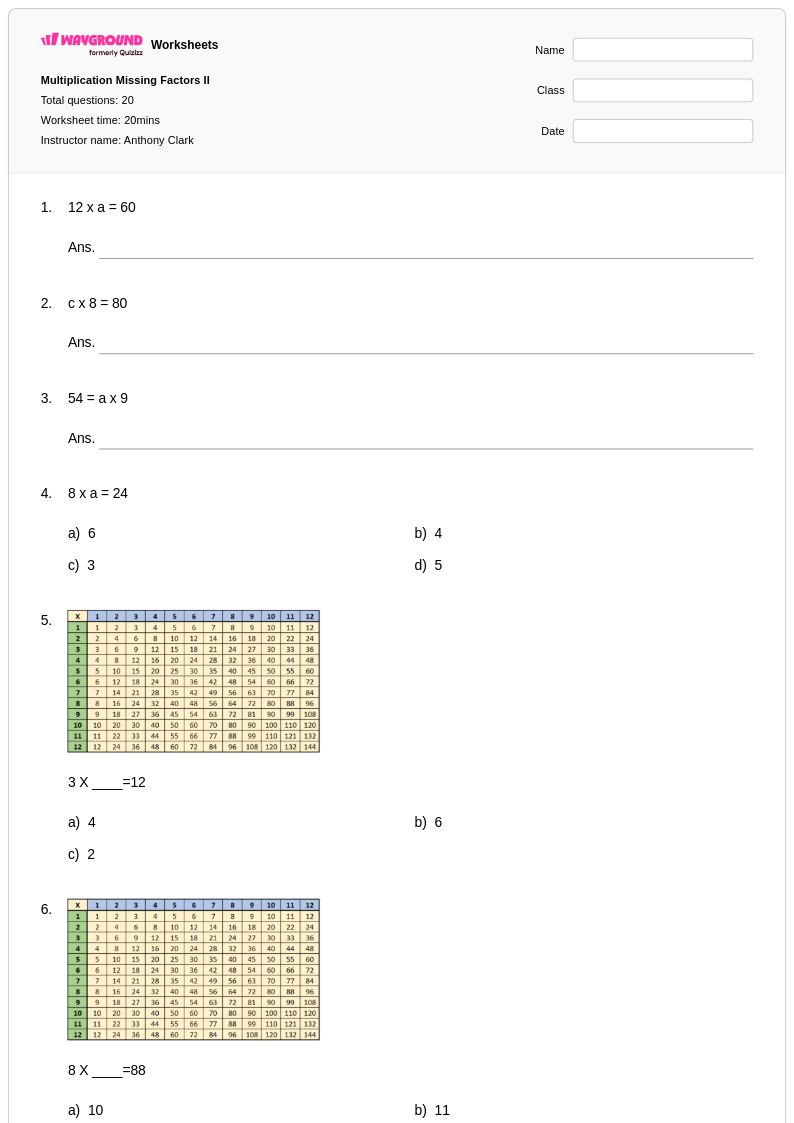
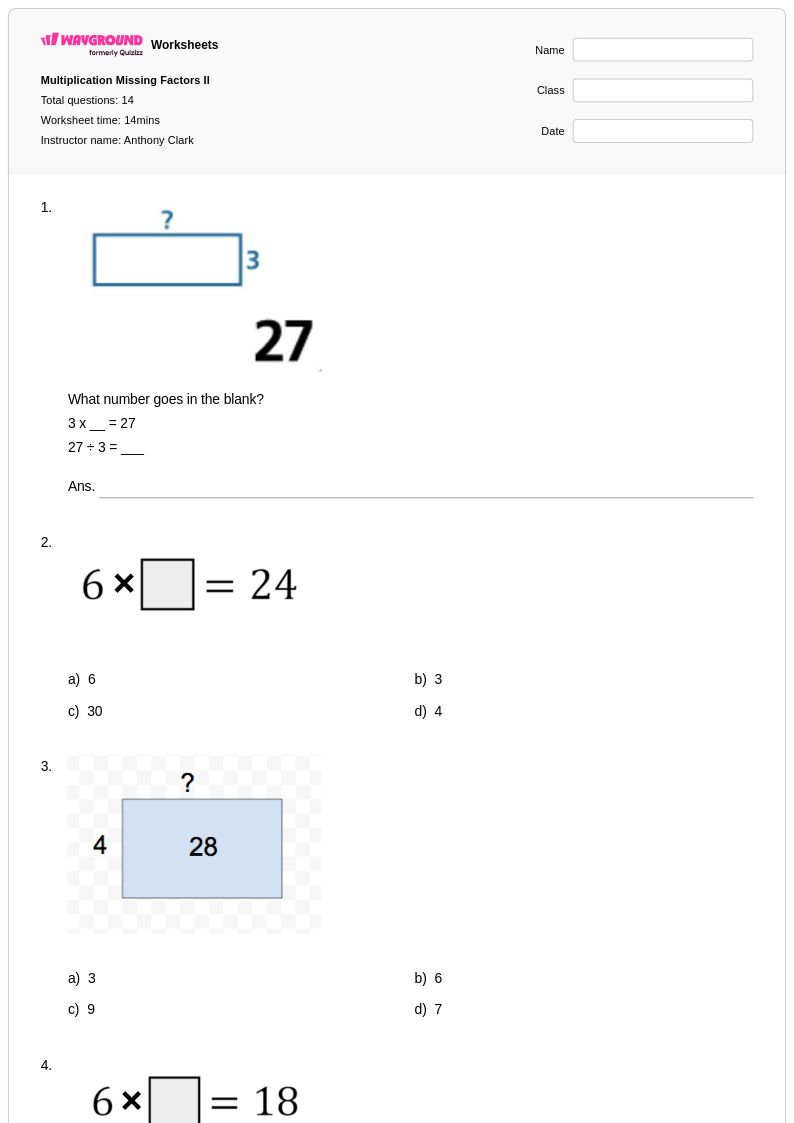
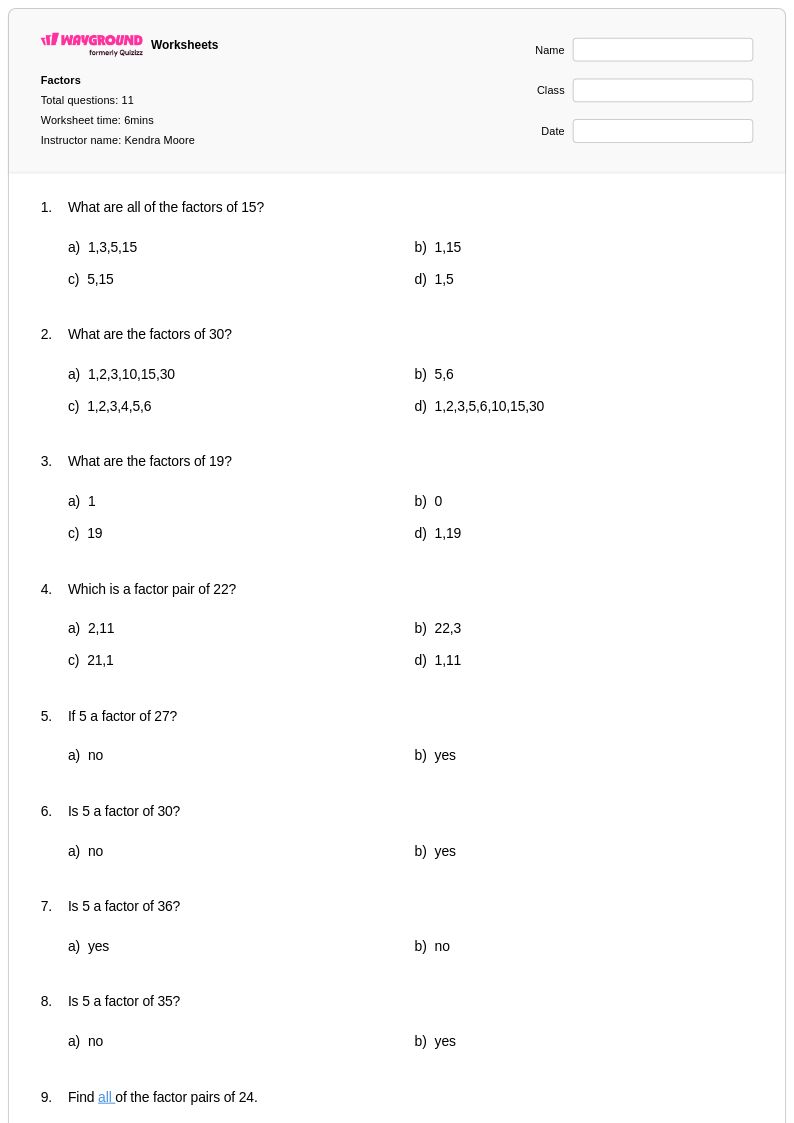
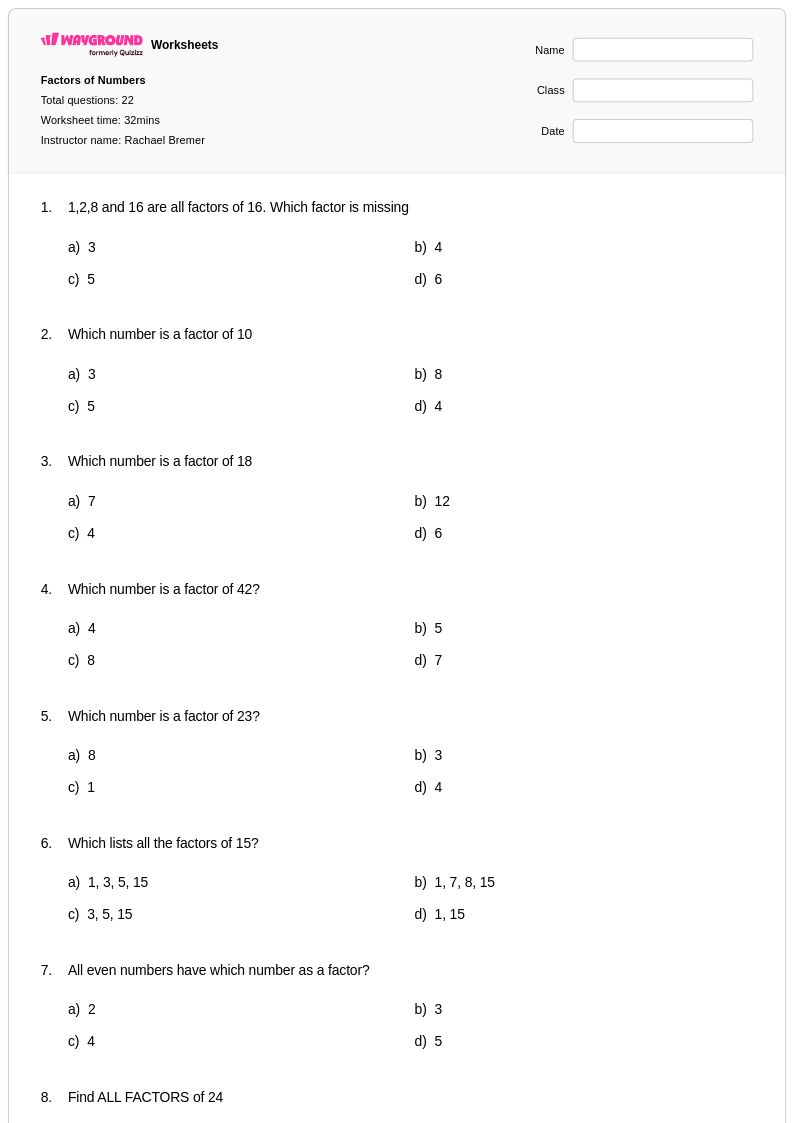
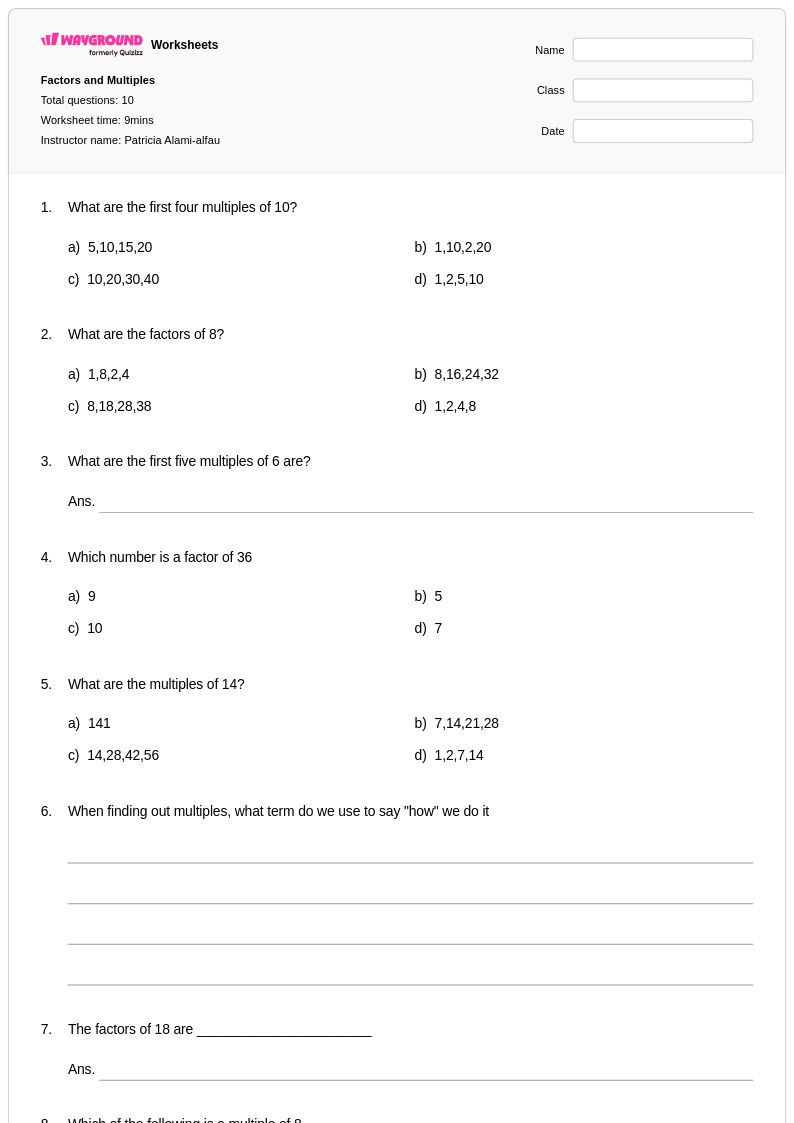
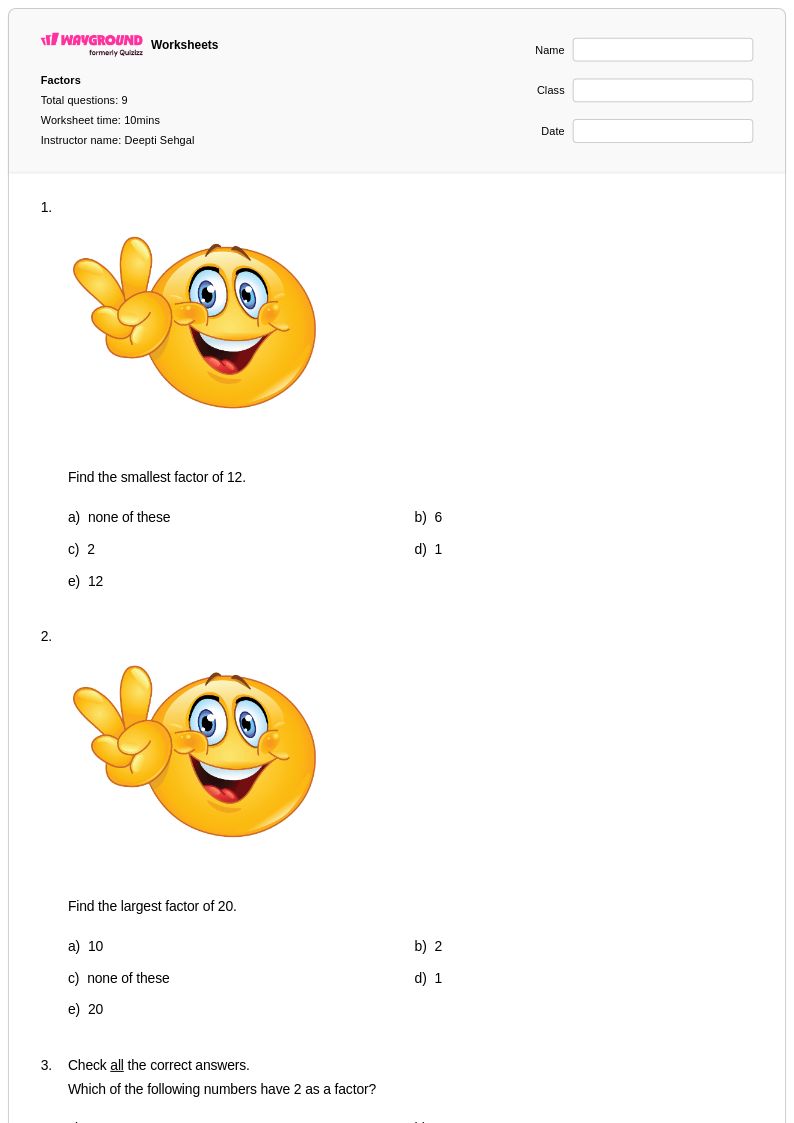
Class 5 finding missing factors worksheets provide free printables and practice problems to help students master identifying unknown factors in multiplication equations, complete with answer keys for effective learning.
Explore printable Finding Missing Factors worksheets for Class 5
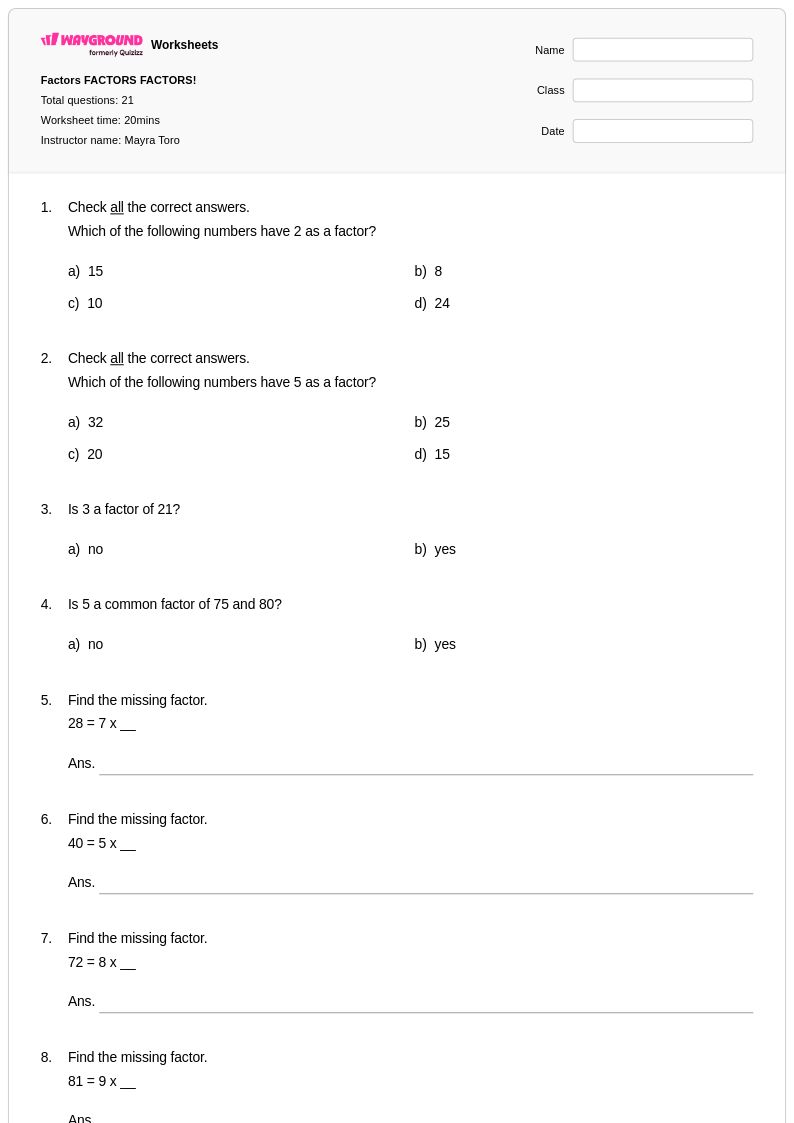
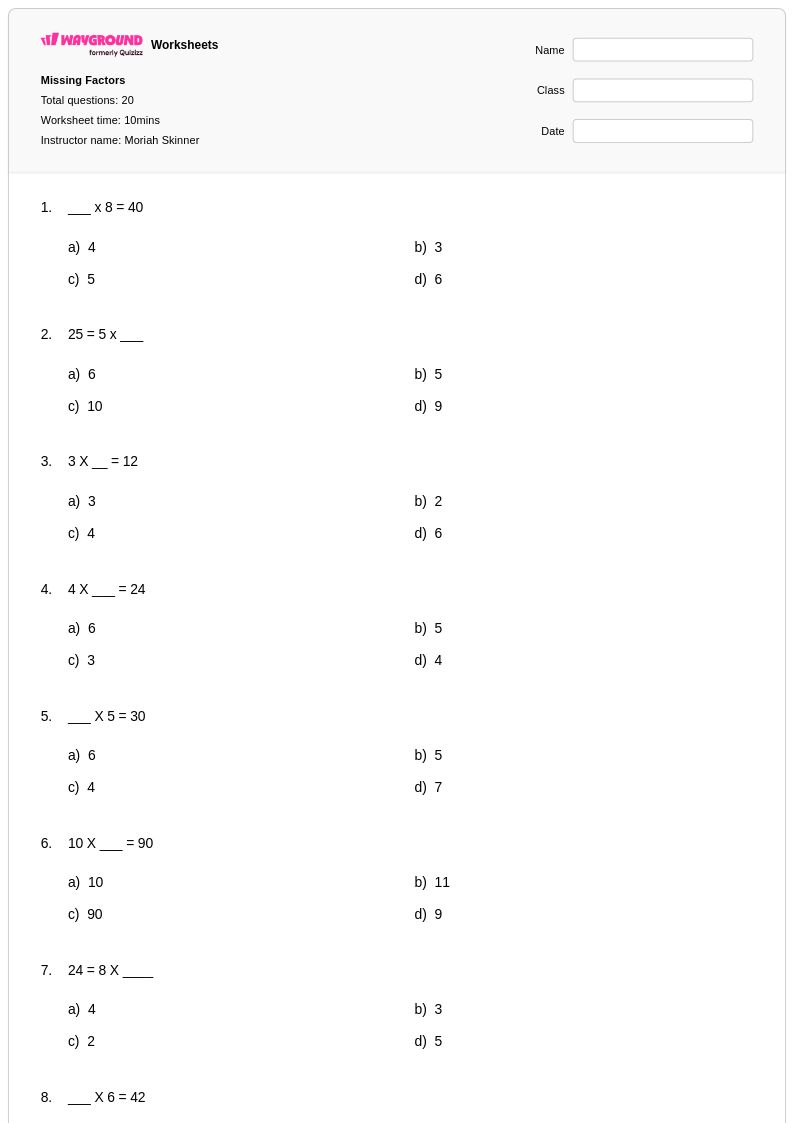
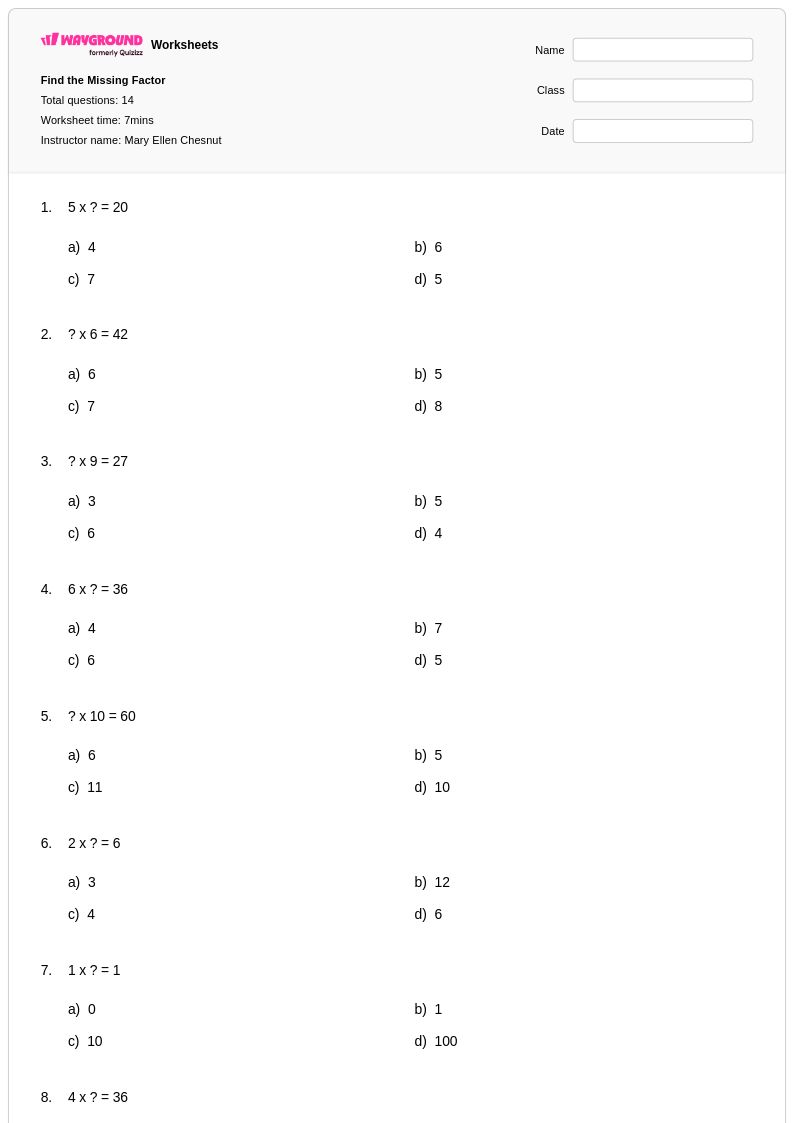
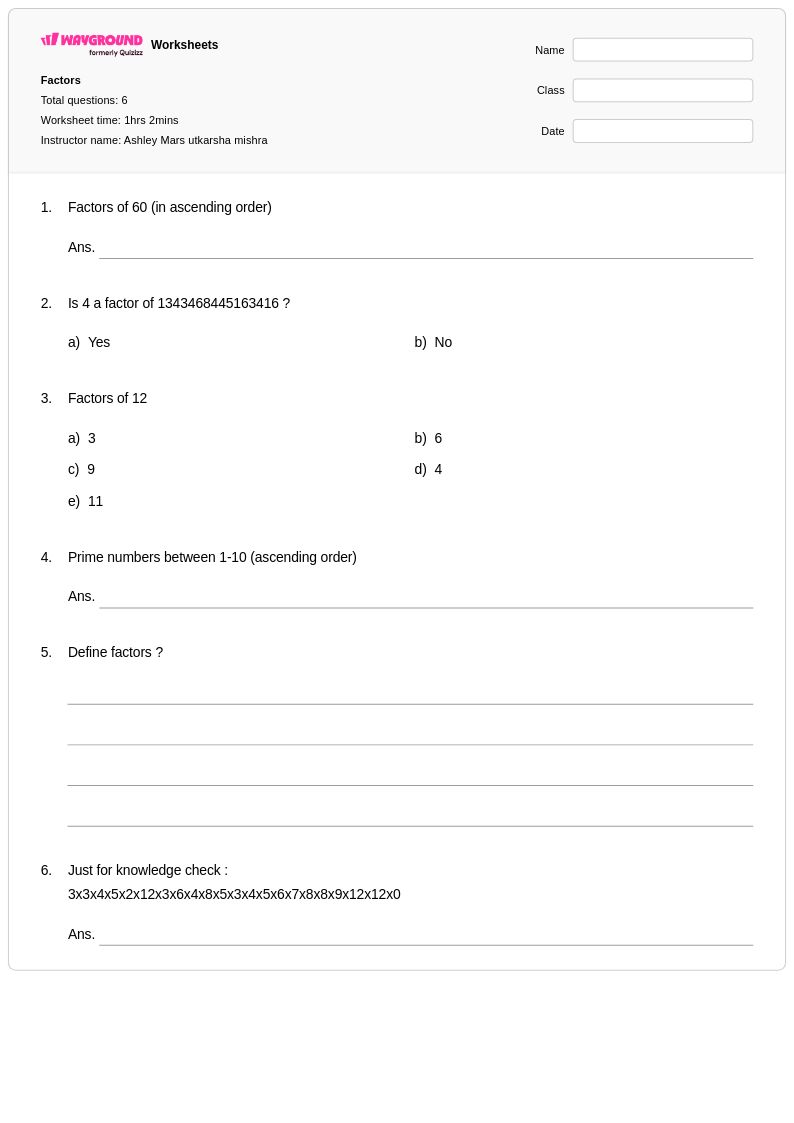
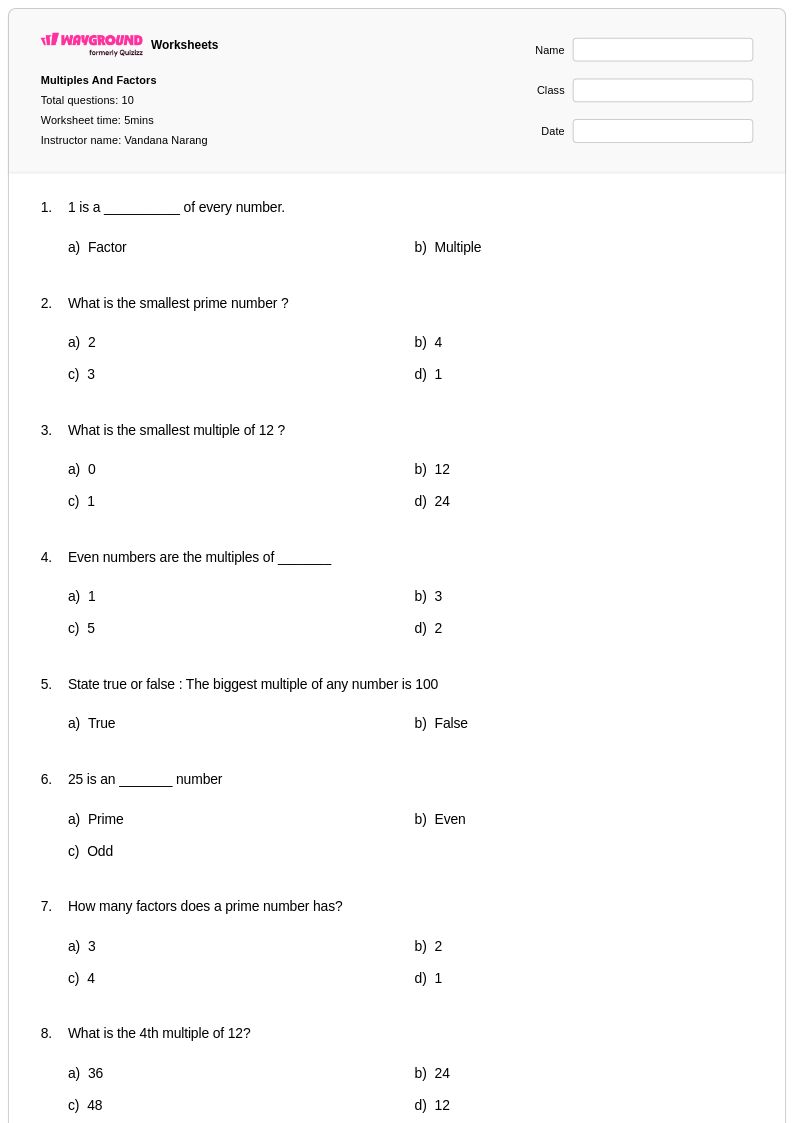
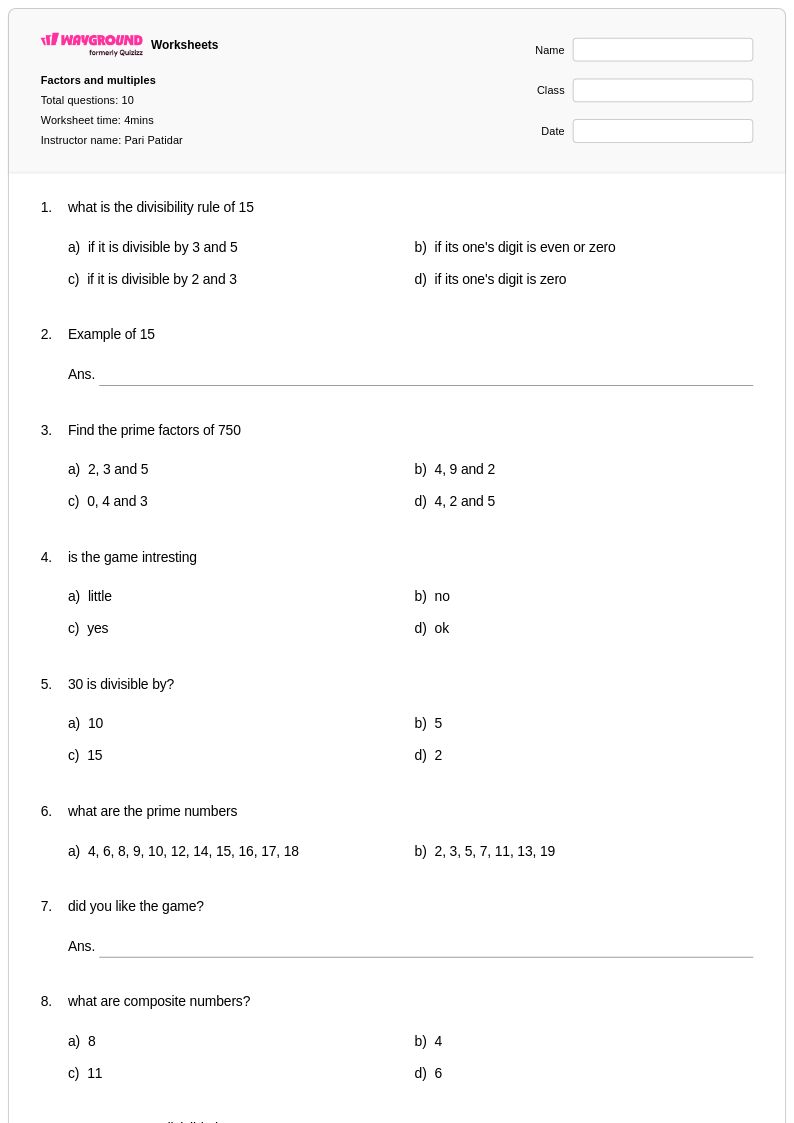
Finding missing factors represents a crucial mathematical concept for Class 5 students, building upon their foundational multiplication skills to develop deeper number sense and algebraic thinking. Wayground's extensive collection of finding missing factors worksheets provides systematic practice opportunities that strengthen students' ability to work backwards from products to identify unknown multiplicands or multipliers. These comprehensive resources include varied problem types ranging from basic single-digit missing factors to more complex multi-step scenarios, complete with detailed answer keys that support both independent learning and classroom instruction. The free printable worksheets offer structured practice problems that help students recognize multiplication patterns, understand the inverse relationship between multiplication and division, and develop critical problem-solving strategies essential for success in intermediate mathematics.
Wayground's robust platform, formerly known as Quizizz, empowers educators with access to millions of teacher-created resources specifically designed for finding missing factors instruction at the Class 5 level. The platform's advanced search and filtering capabilities enable teachers to quickly locate worksheets that align with specific curriculum standards and learning objectives, while built-in differentiation tools allow for seamless customization based on individual student needs and skill levels. These finding missing factors materials are available in both printable PDF format and interactive digital versions, providing flexibility for various classroom environments and teaching approaches. Teachers can effectively utilize these resources for targeted remediation with struggling learners, enrichment activities for advanced students, or regular skill practice sessions that reinforce conceptual understanding and computational fluency in multiplication relationships.
FAQs
How do I teach finding missing factors to Grade 5 students?
At Grade 5, the concept itself isn't new — the challenge is applying it to larger and more complex numbers. Focus on making the division strategy automatic: any missing-factor equation is a division problem, full stop. Then push into multi-step scenarios where finding a missing factor is one step inside a larger problem. This is also a good moment to preview algebraic notation: writing 6 × n = 84 instead of 6 × ___ = 84 prepares students for the variable language they'll see in sixth grade.
What exercises help Grade 5 students practice finding missing factors?
Grade 5 practice should go beyond single-step equations. Include problems with multi-digit factors, missing factors embedded in word problems, and equations where students have to identify the operation before solving. Wayground's Grade 5 worksheets range from straightforward missing-factor equations to more complex multi-step scenarios, giving students practice with the full range they'll encounter on assessments.
What mistakes do Grade 5 students commonly make with missing factors?
Two errors show up most at this level. First, students who are shaky on long division make computational errors even when they understand the concept — the missing factor is wrong because the division is wrong, not because they misread the problem. Second, in multi-step problems, students sometimes solve for the wrong unknown because they don't slow down to identify which value is actually missing. Annotating the problem before solving — circling the unknown, labeling the product — reduces both errors.
How do I use Wayground's Grade 5 missing factors worksheets in my classroom?
These worksheets are available as printable PDFs and as digital quizzes hosted on Wayground. The digital format gives you instant results and is easy to assign for independent practice or homework. Every worksheet includes a complete answer key — useful whether students are self-checking or you're grading a class set. For paper submissions, the Wayground for Teachers app lets you scan and grade student work without re-entering scores by hand.
How does finding missing factors connect to the Grade 5 Common Core math progression?
Common Core builds toward fifth graders writing and interpreting numerical expressions, and finding missing factors is a direct precursor to that work. By Grade 5, students are expected to apply multiplication and division fluently to multi-digit numbers — missing-factor problems are where that fluency gets tested in reverse. The skill also bridges directly into sixth-grade work on solving one-variable equations, where 6 × ___ = 84 becomes 6x = 84 and students use the same division logic to isolate the variable.
How can I differentiate missing factors practice for Grade 5 students at different levels?
For students still consolidating multiplication facts, Wayground's Read Aloud feature removes the reading barrier so they can focus entirely on the math. For students who are ready to be challenged, the same missing-factor structure applies to larger multi-digit problems — no new worksheet format needed. Wayground also lets you translate worksheets into another language, which is particularly useful at Grade 5 when the problems start including more written context and word problems.