Free Printable Five W's Questions Worksheets for Class 1
Class 1 Five W's Questions worksheets from Wayground help young learners master who, what, when, where, and why questioning skills through engaging printables, practice problems, and free PDF resources with complete answer keys.
Explore printable Five W's Questions worksheets for Class 1
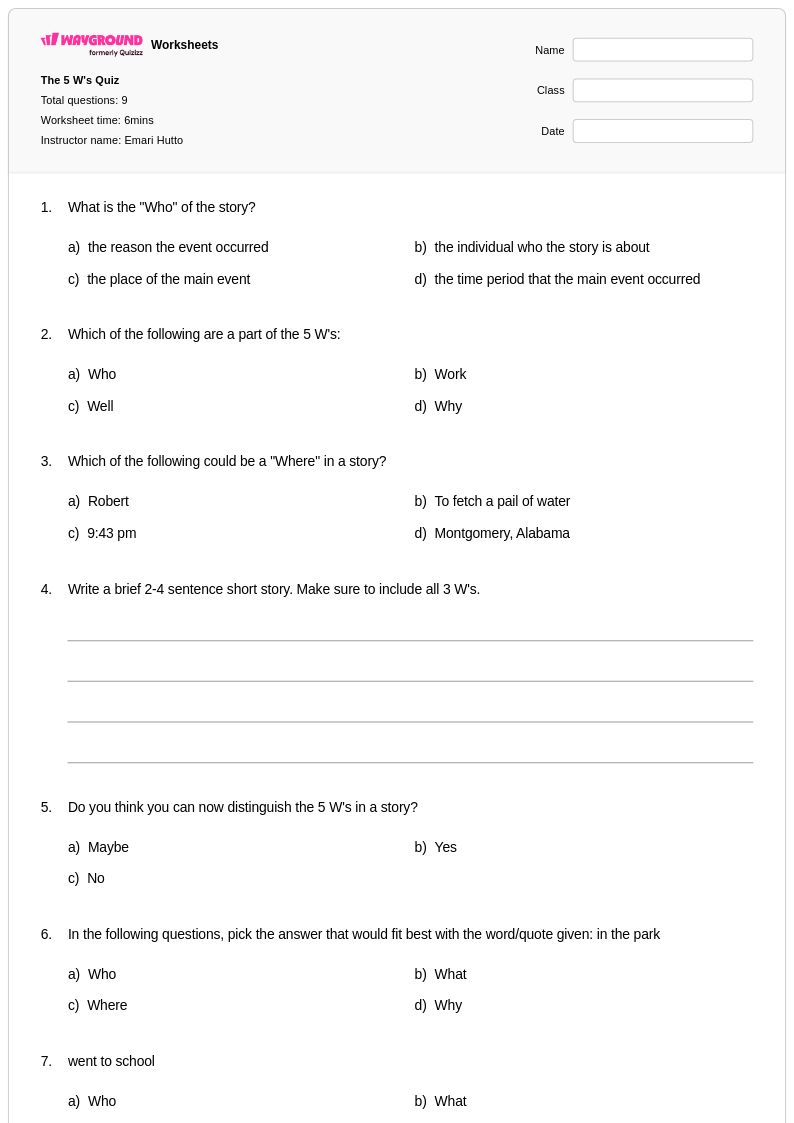
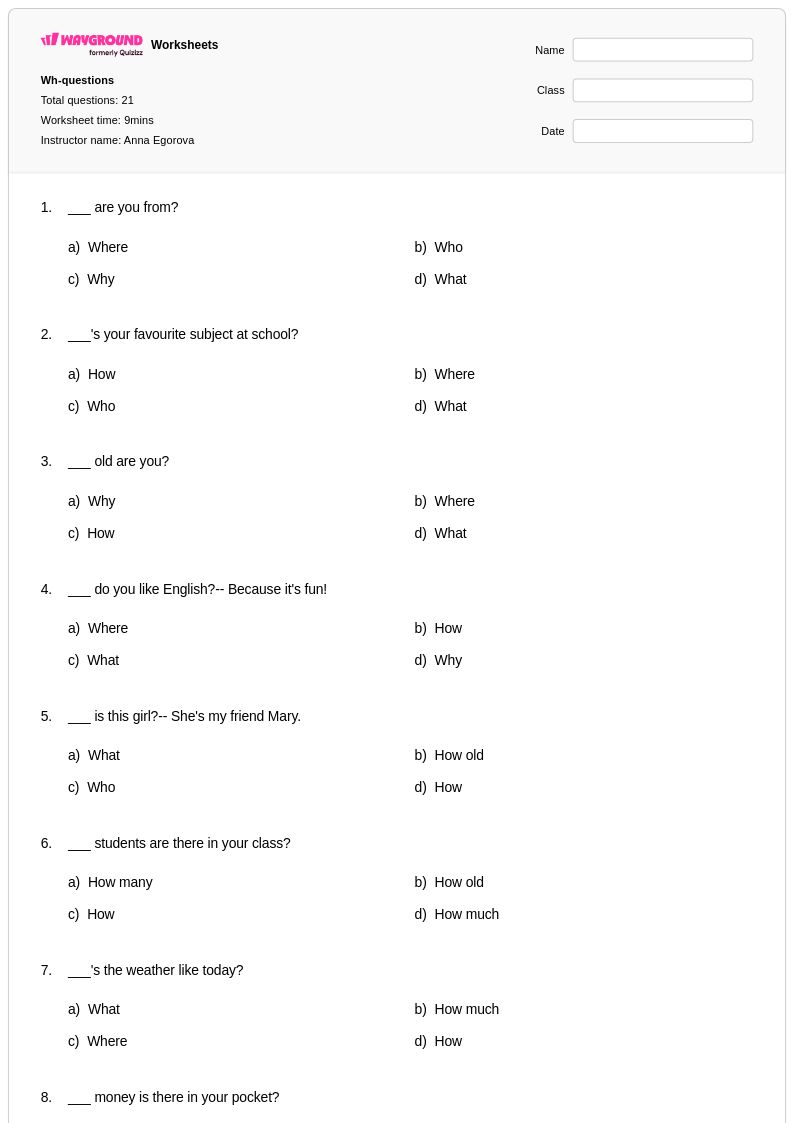
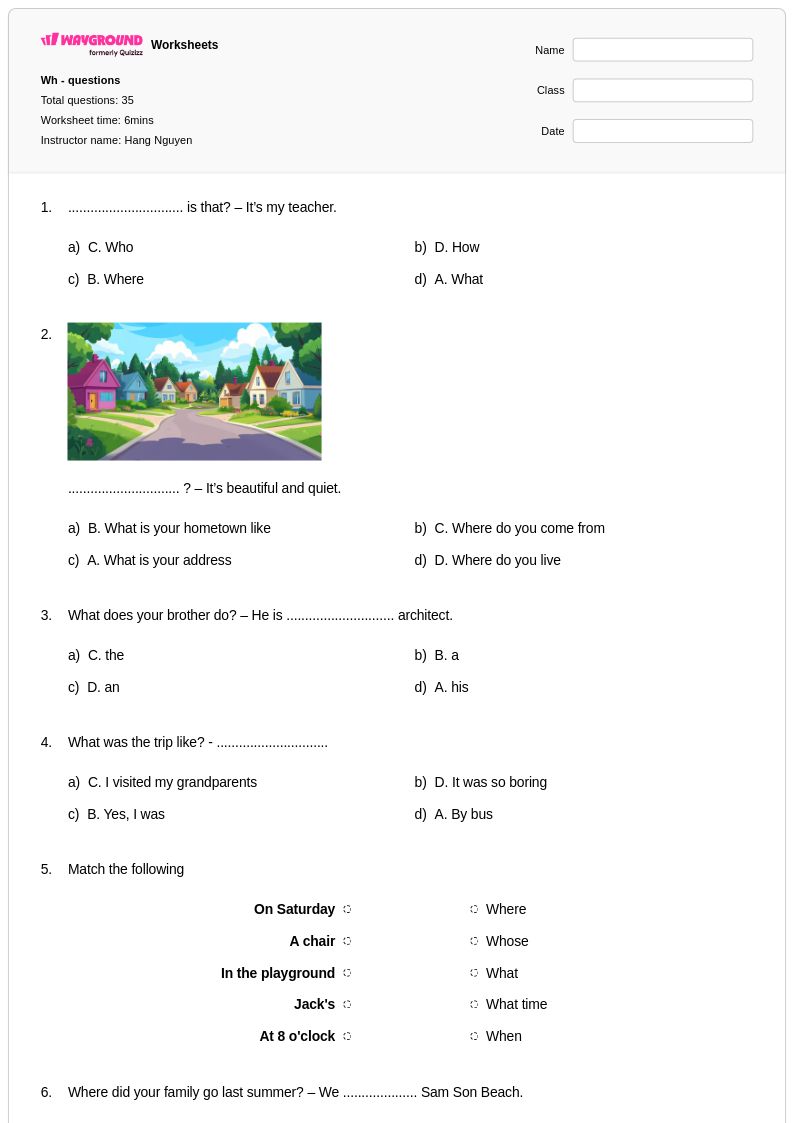
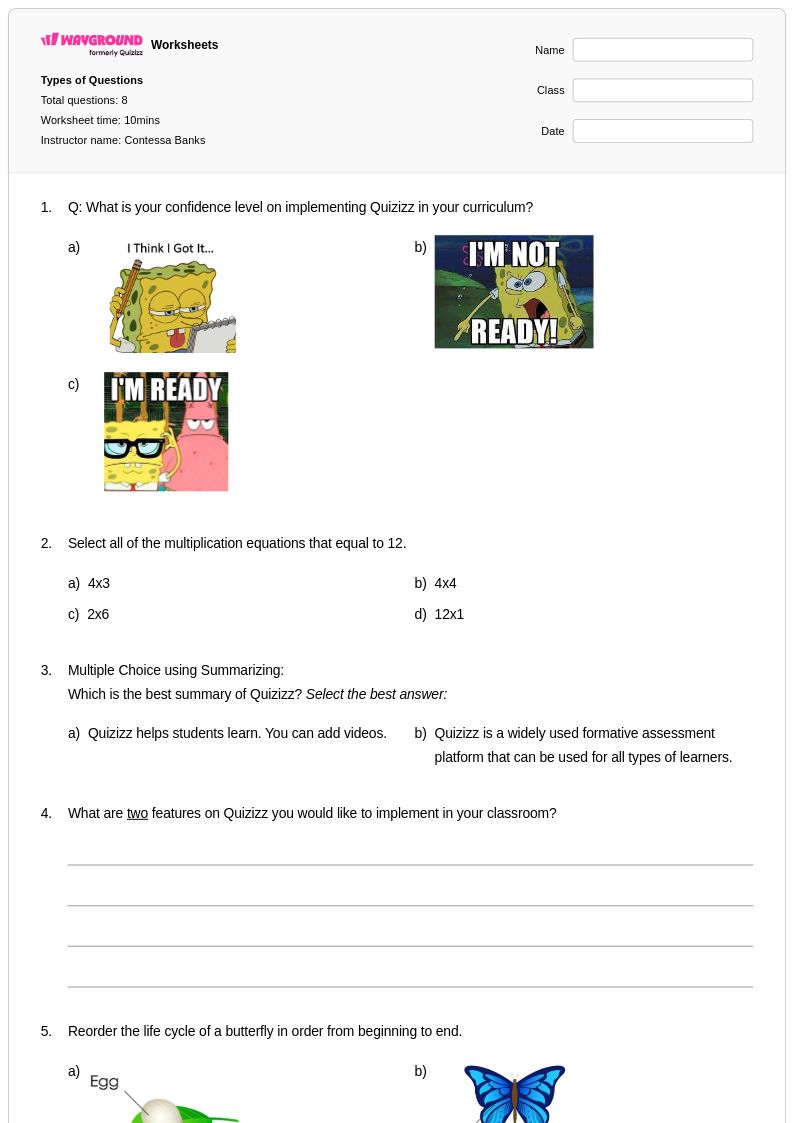
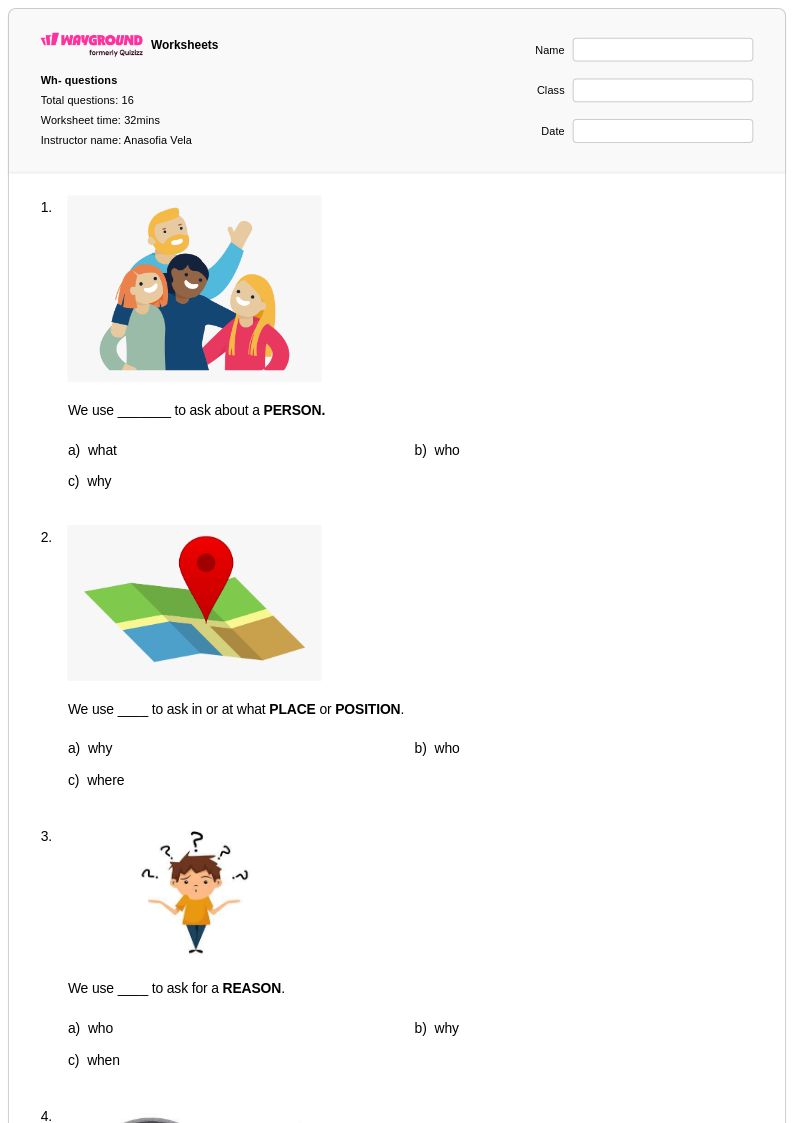
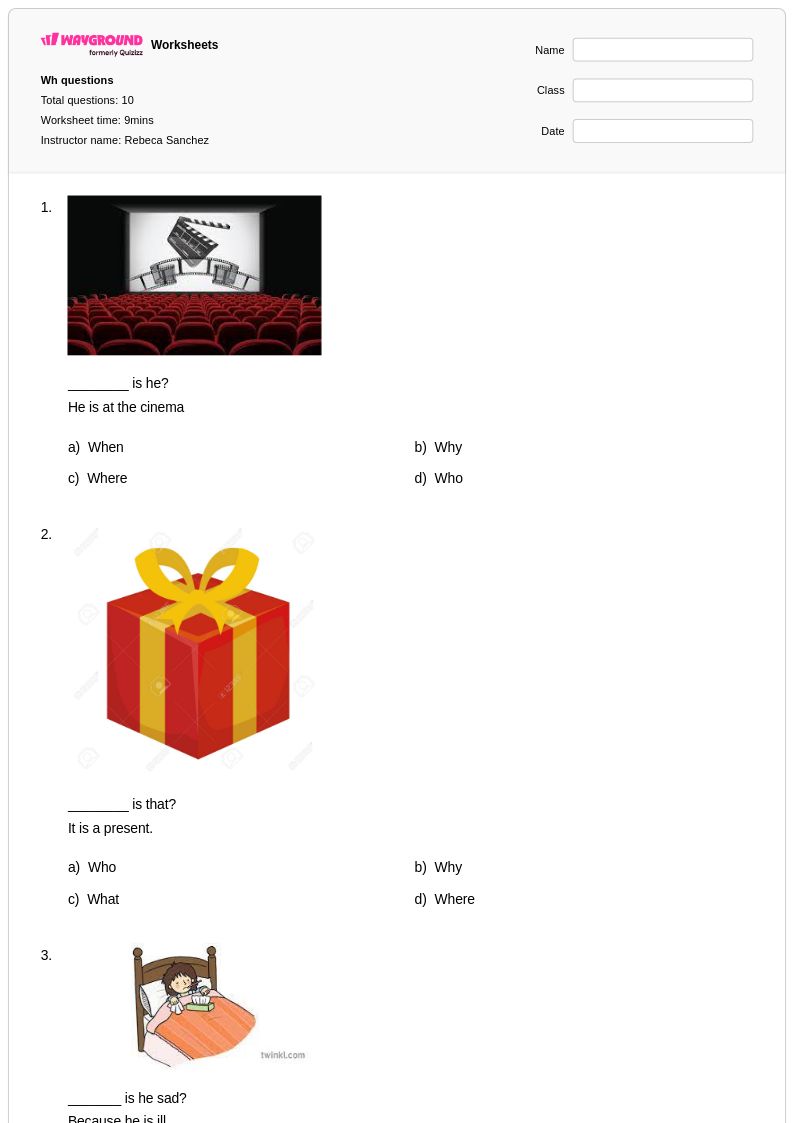
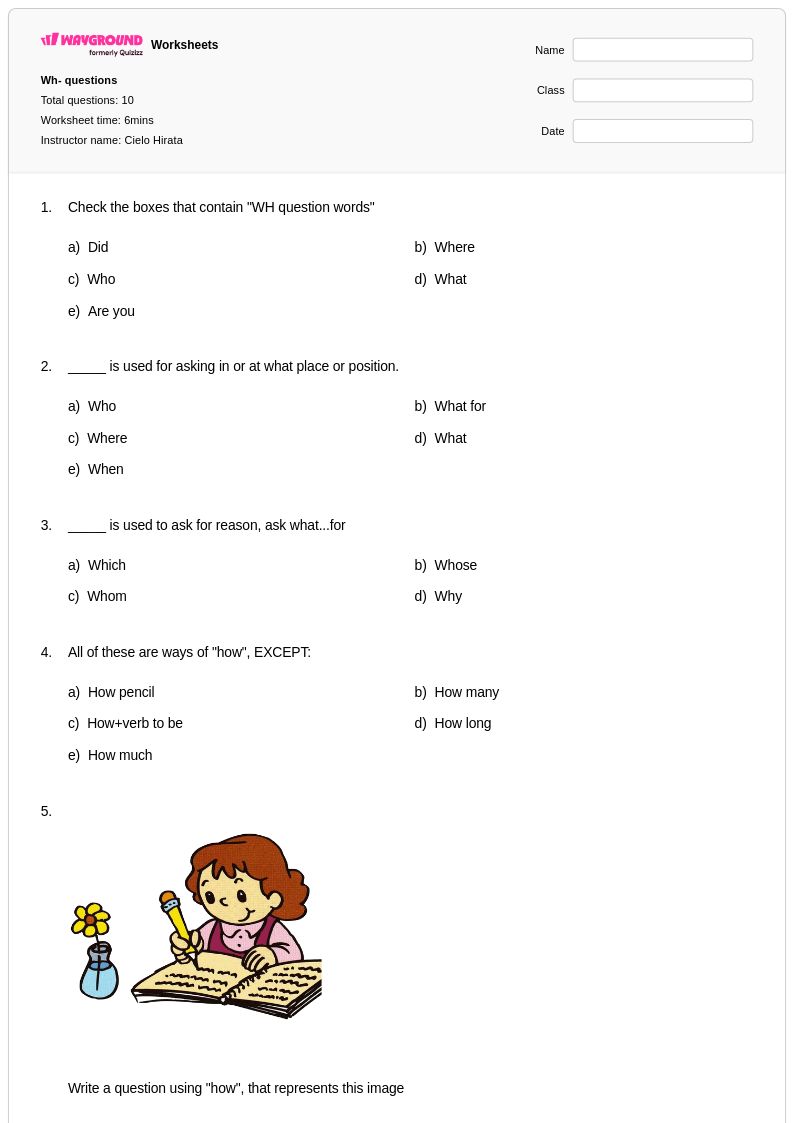
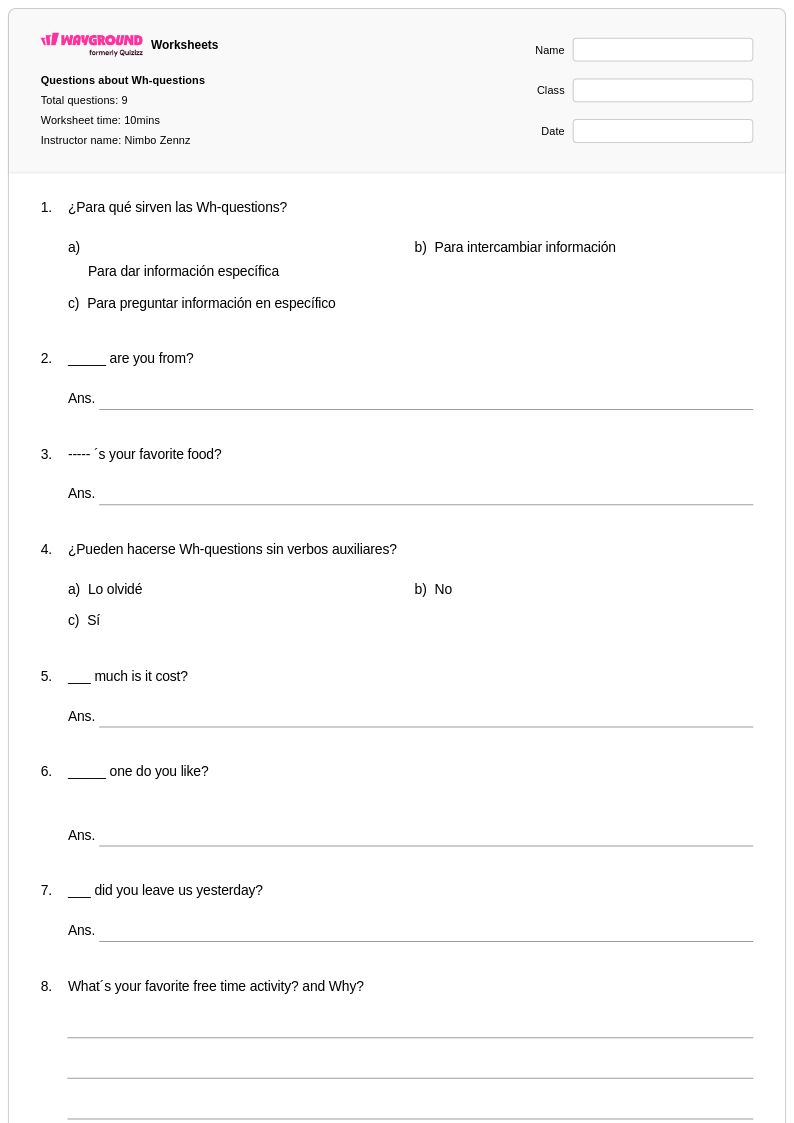
Five W's Questions worksheets for Class 1 students available through Wayground (formerly Quizizz) provide essential reading comprehension practice that builds critical thinking skills from an early age. These carefully designed printables help young learners identify and extract key information from texts by focusing on who, what, when, where, and why elements within stories and passages. Each worksheet includes age-appropriate content with clear answer keys that enable both independent practice and guided instruction, making these free resources invaluable for developing foundational literacy skills. The practice problems systematically introduce first-grade students to analytical reading strategies while strengthening their ability to locate specific details and understand story structure through engaging pdf formats that can be easily accessed and distributed.
Wayground (formerly Quizizz) empowers educators with millions of teacher-created Five W's Questions resources specifically tailored for Class 1 instruction, featuring robust search and filtering capabilities that allow quick identification of materials aligned with specific learning standards and objectives. The platform's differentiation tools enable teachers to customize worksheets for varying ability levels within their classrooms, supporting both remediation for struggling readers and enrichment opportunities for advanced students. Available in both printable and digital formats, these comprehensive worksheet collections facilitate flexible lesson planning whether teachers need immediate pdf downloads for homework assignments or interactive digital versions for classroom engagement. The extensive library ensures educators can provide consistent skill practice across multiple texts and genres, helping students master the fundamental questioning strategies essential for reading comprehension success.
FAQs
How do I teach the Five W's to students?
Start by introducing each question word (who, what, when, where, why) with a clear, concrete example from a familiar story or news article. Anchor charts work well for early exposure, giving students a visual reference they can return to independently. Once students can identify each W in guided examples, move them toward generating their own questions from a given text. The Five W's framework is most effective when taught as a transferable reading strategy, not a one-time activity, so repeated practice across different text types builds lasting comprehension habits.
What exercises help students practice identifying the Five W's?
Structured worksheets that present a short passage followed by targeted prompts for each question word are among the most effective practice formats. Students benefit from exercises that progress from simple identification (circling who or when in a sentence) to more complex tasks like completing a Five W's graphic organizer after reading an informational text. Varying the text types across fiction, nonfiction, and news articles ensures students can apply the skill flexibly rather than relying on a single format.
What mistakes do students commonly make when answering Five W's questions?
A common error is confusing 'what' and 'why' answers, particularly when a text describes both an event and its cause in close proximity. Students also frequently give incomplete 'who' answers by naming a character without specifying their role in the event. For 'when' and 'where,' students sometimes copy an entire paragraph rather than isolating the specific detail. Targeted practice with answer-checking against a key helps students self-correct these patterns before they become habitual.
How do the Five W's connect to writing and research skills?
The Five W's serve as a structural scaffold for both informational writing and research because they train students to ask the same questions a writer must answer before drafting. Students who can reliably identify who, what, when, where, and why in a source text are better equipped to synthesize information, write summaries, and construct evidence-based arguments. Practicing the Five W's as a reading strategy therefore directly reinforces the planning and organization skills students need for academic writing across subjects.
How can I use Five W's worksheets in my classroom?
Five W's worksheets on Wayground are available as printable PDFs for traditional classroom use and in digital formats for technology-integrated or remote learning environments, including the option to host them as a quiz directly on Wayground. Printable versions work well as independent reading response activities, exit tickets, or small-group practice tasks, while digital formats allow for real-time progress monitoring. Wayground also supports student-level accommodations such as Read Aloud and extended time, which can be assigned individually so that all learners engage with the same content at an appropriate level of support.
How do I differentiate Five W's instruction for students at different reading levels?
Scaffolding the complexity of the source text is the most direct differentiation lever: below-level readers benefit from short, single-paragraph passages with straightforward answers, while advanced students can work with longer, multi-event texts where the W answers require inference. Sentence frames (e.g., 'The who in this text is ___ because ___') reduce language barriers without removing the cognitive demand of the skill. On Wayground, teachers can also enable reduced answer choices or Read Aloud for individual students, allowing the same worksheet to serve the full range of learners in one classroom.